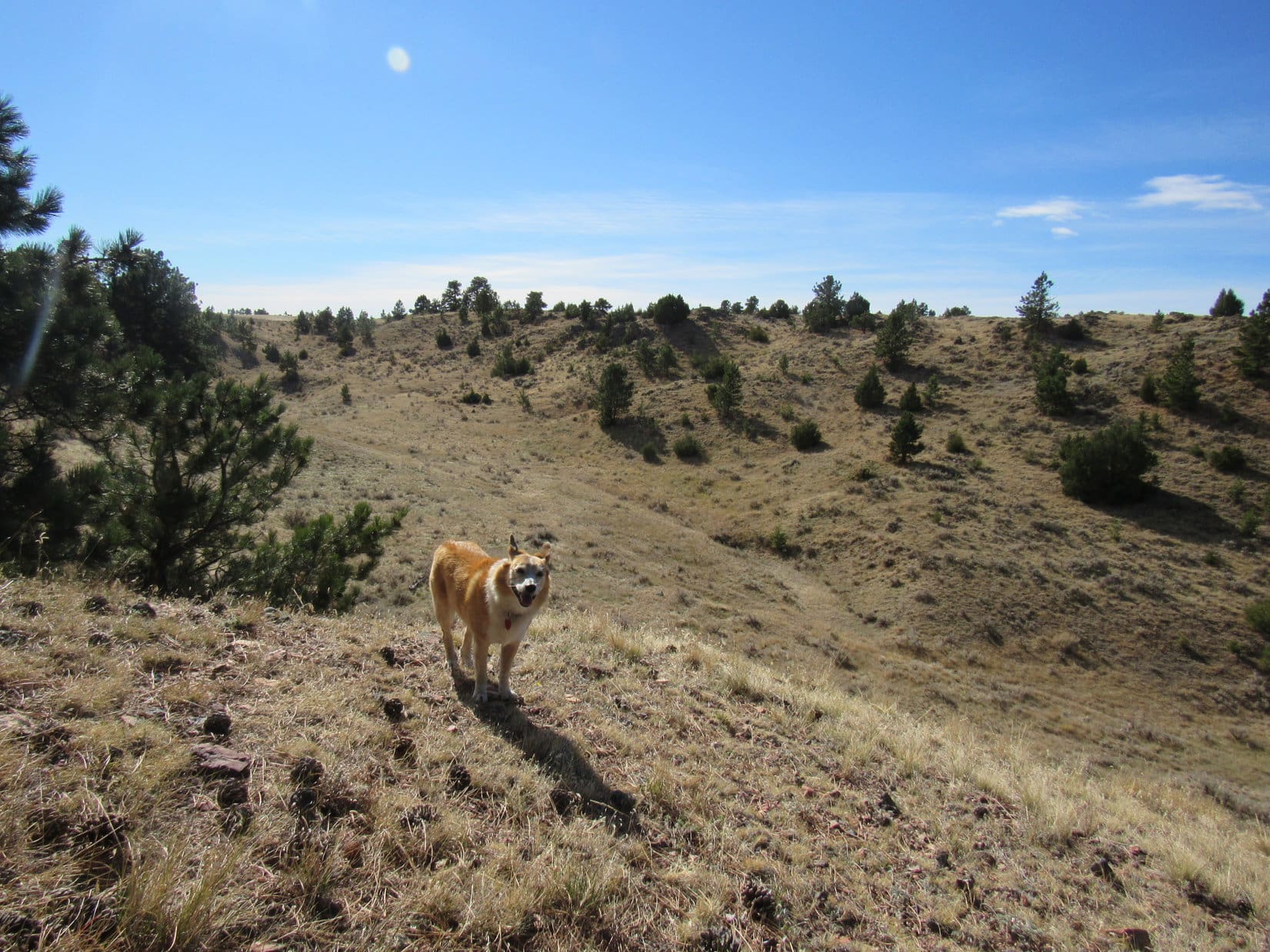
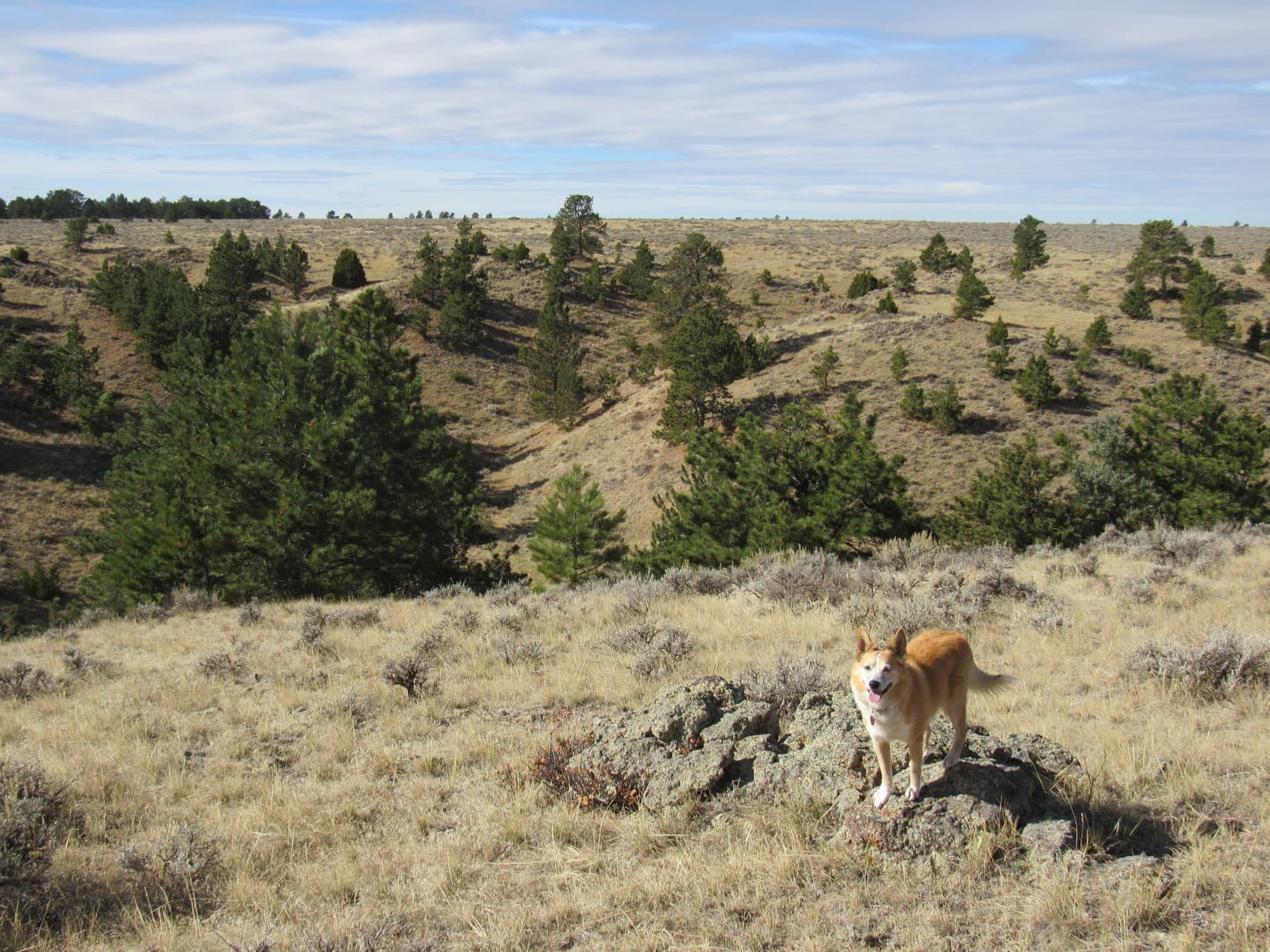
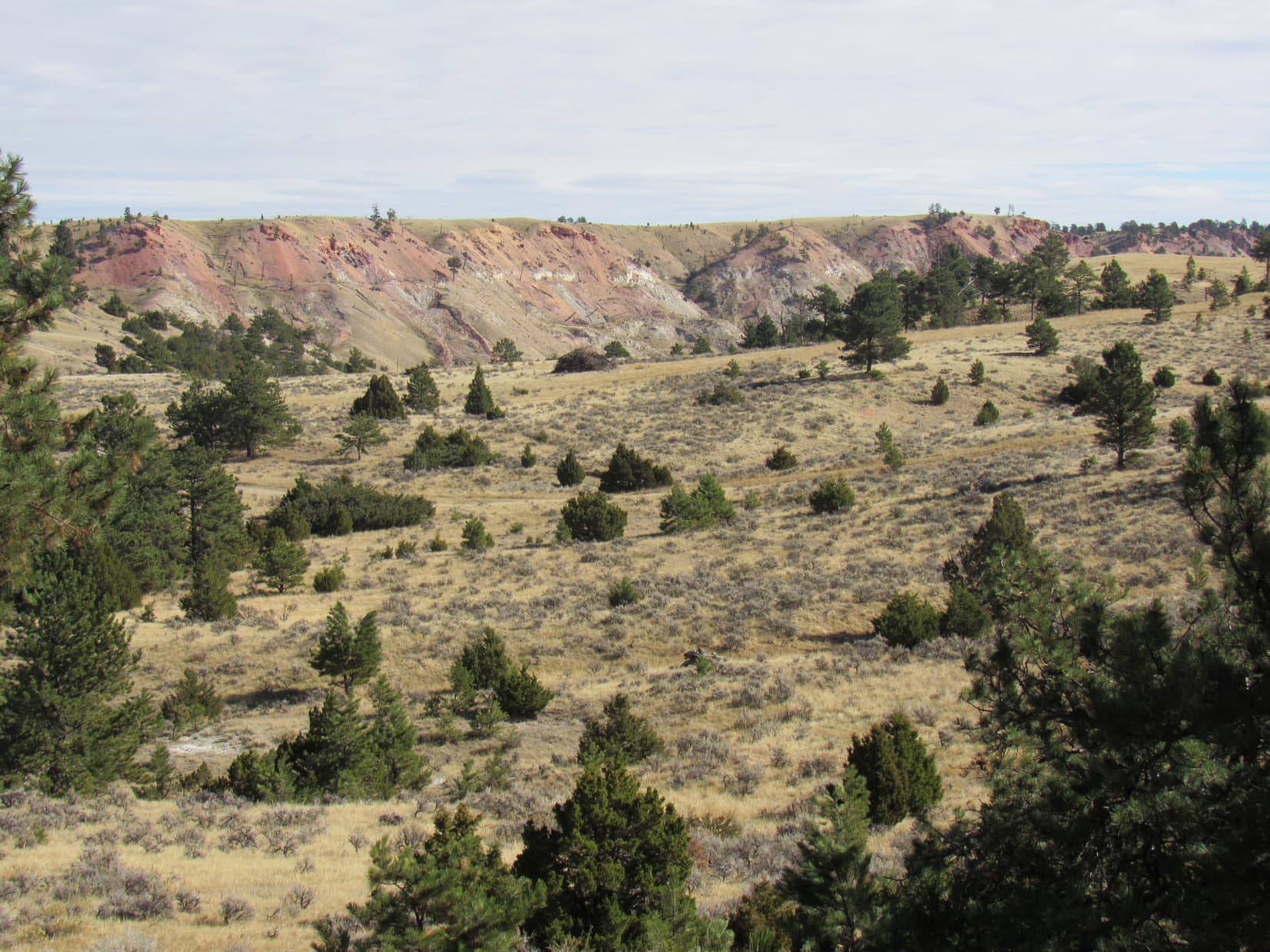
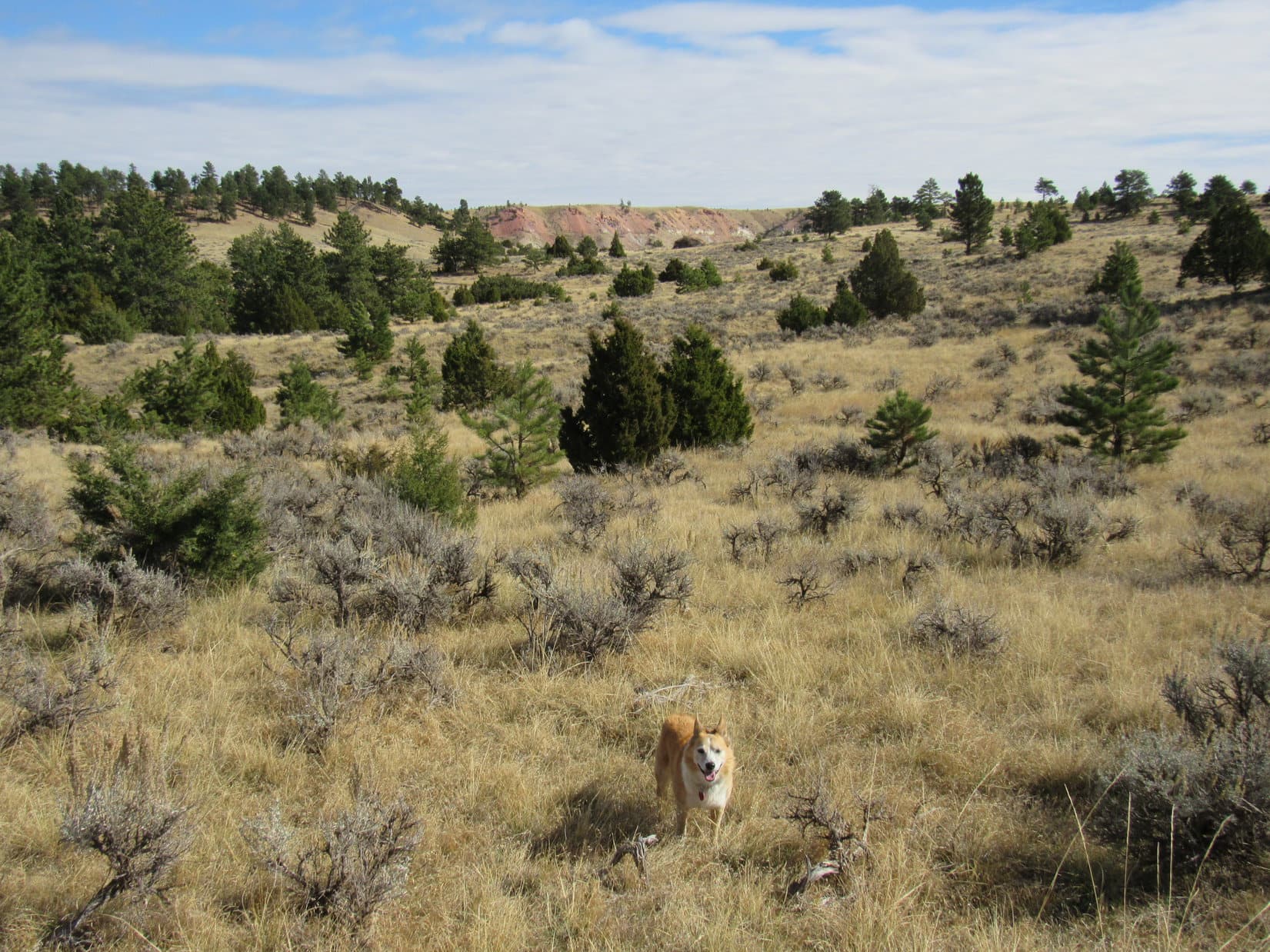
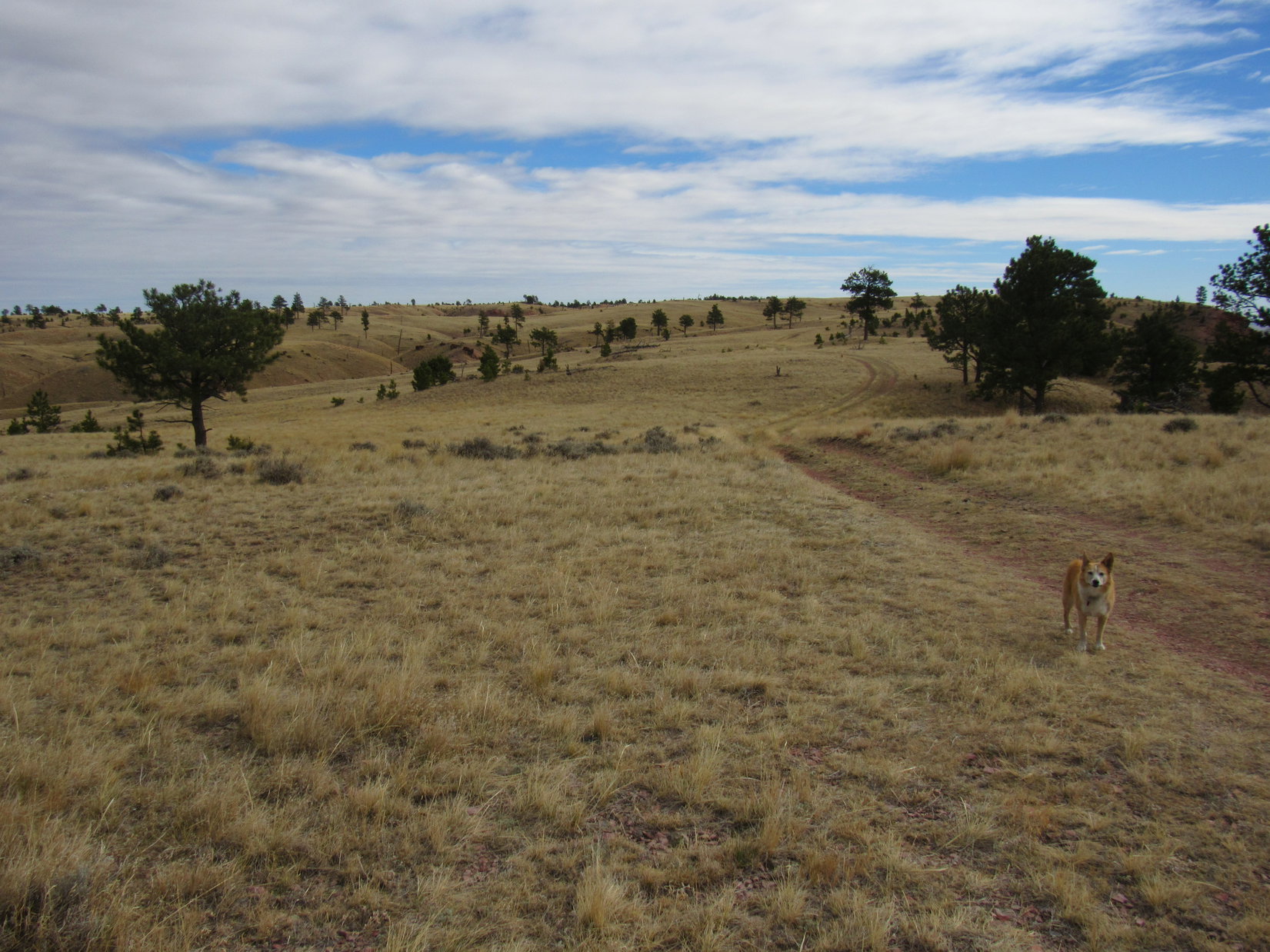
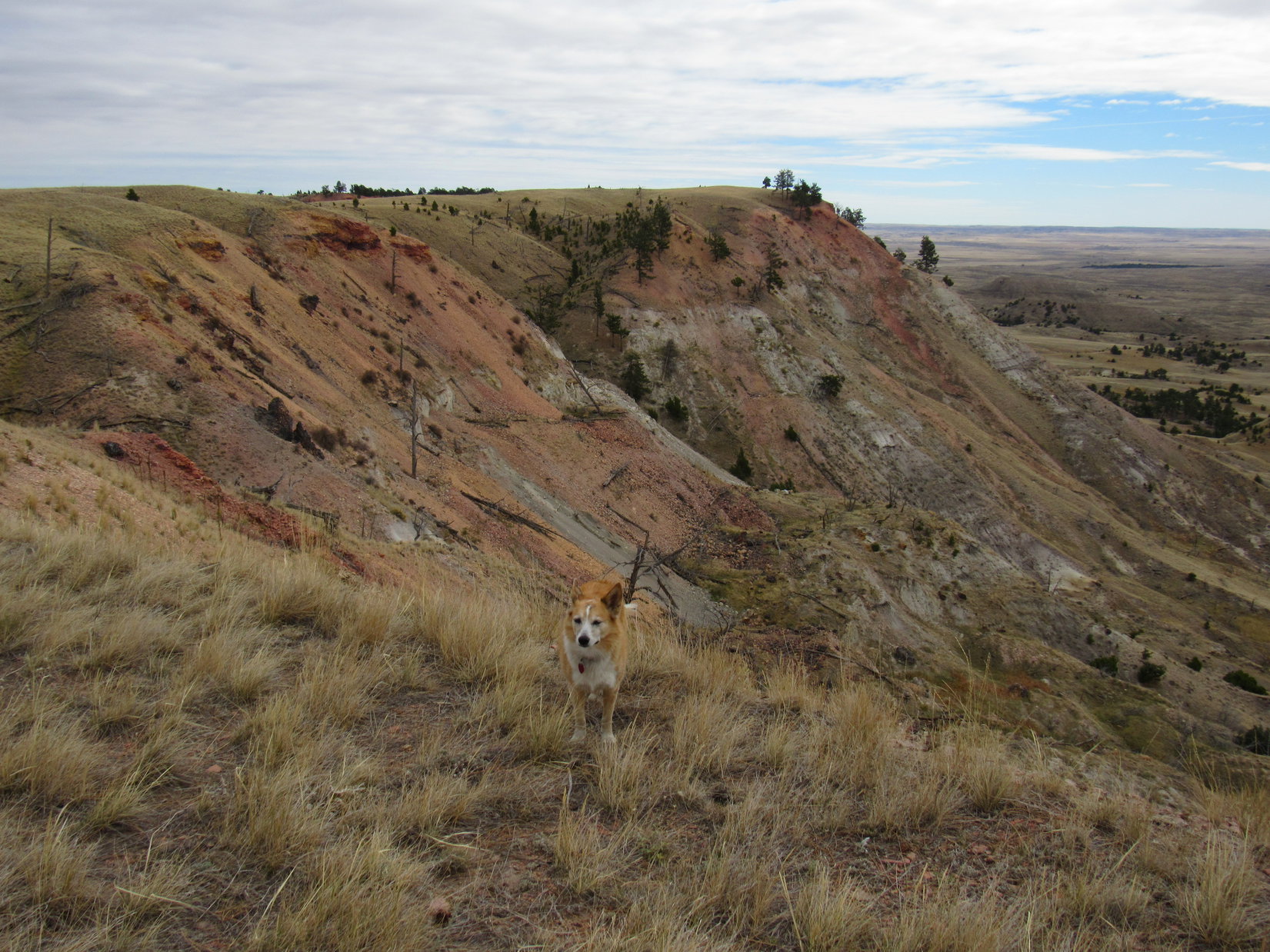
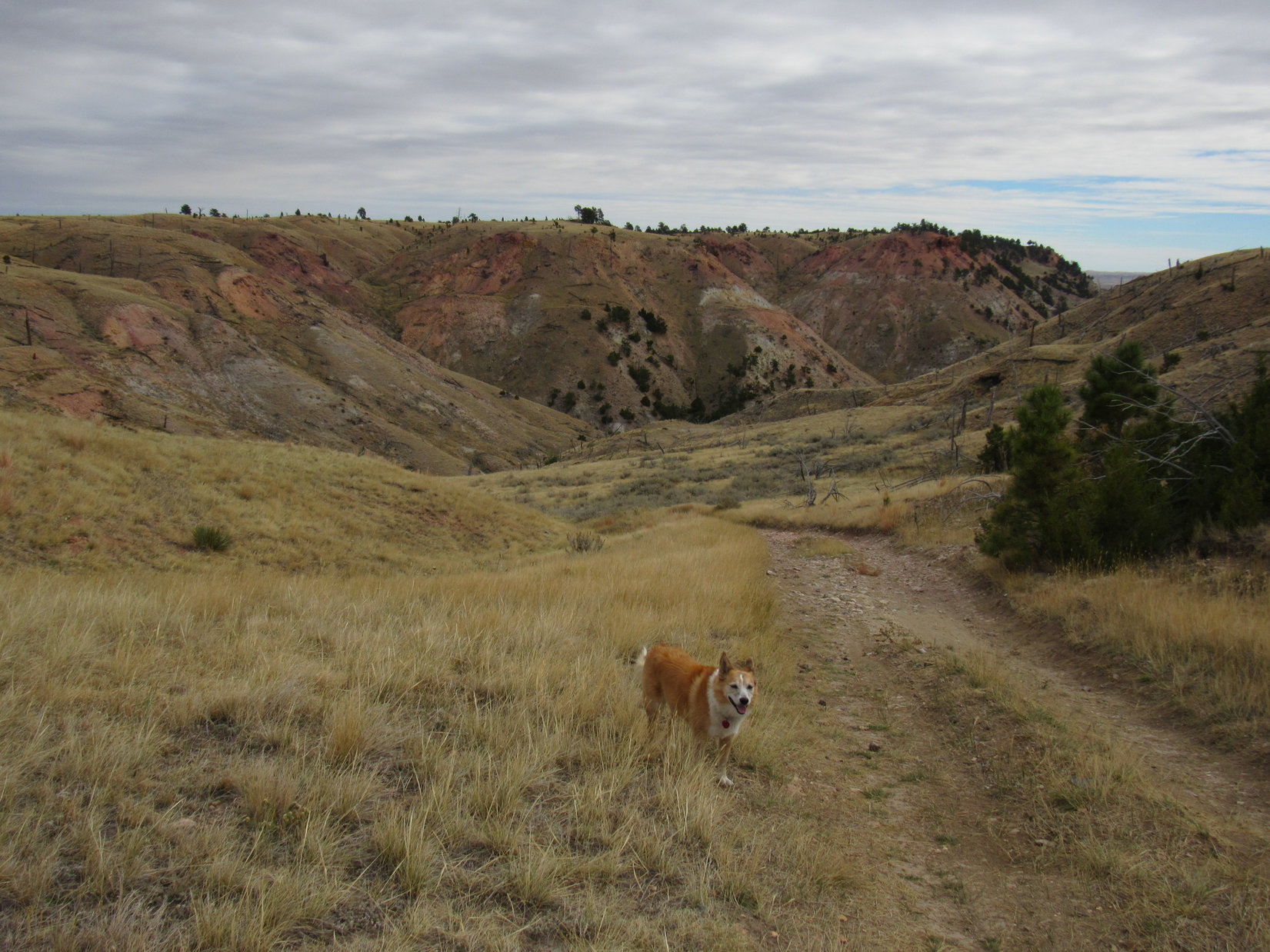
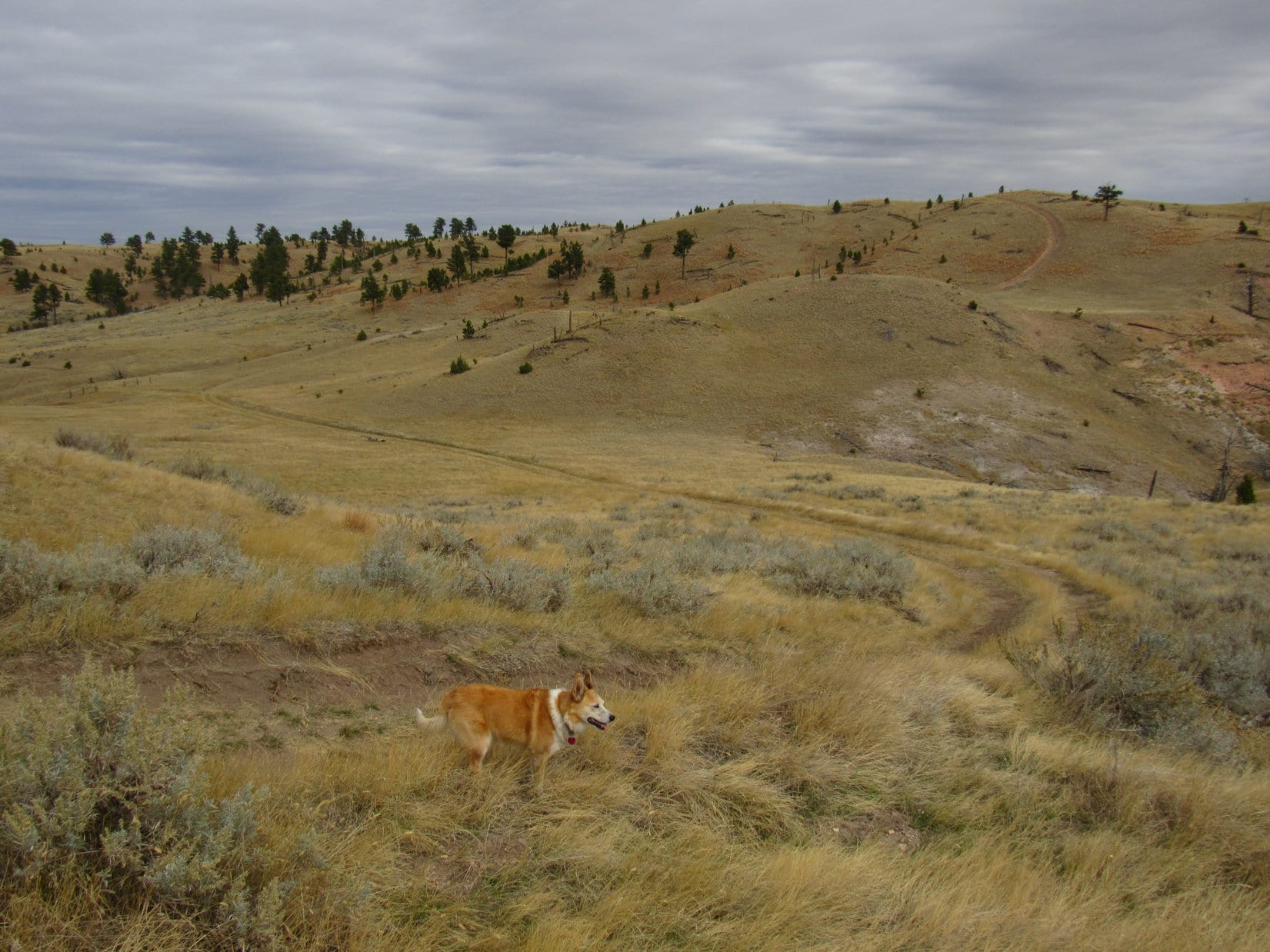
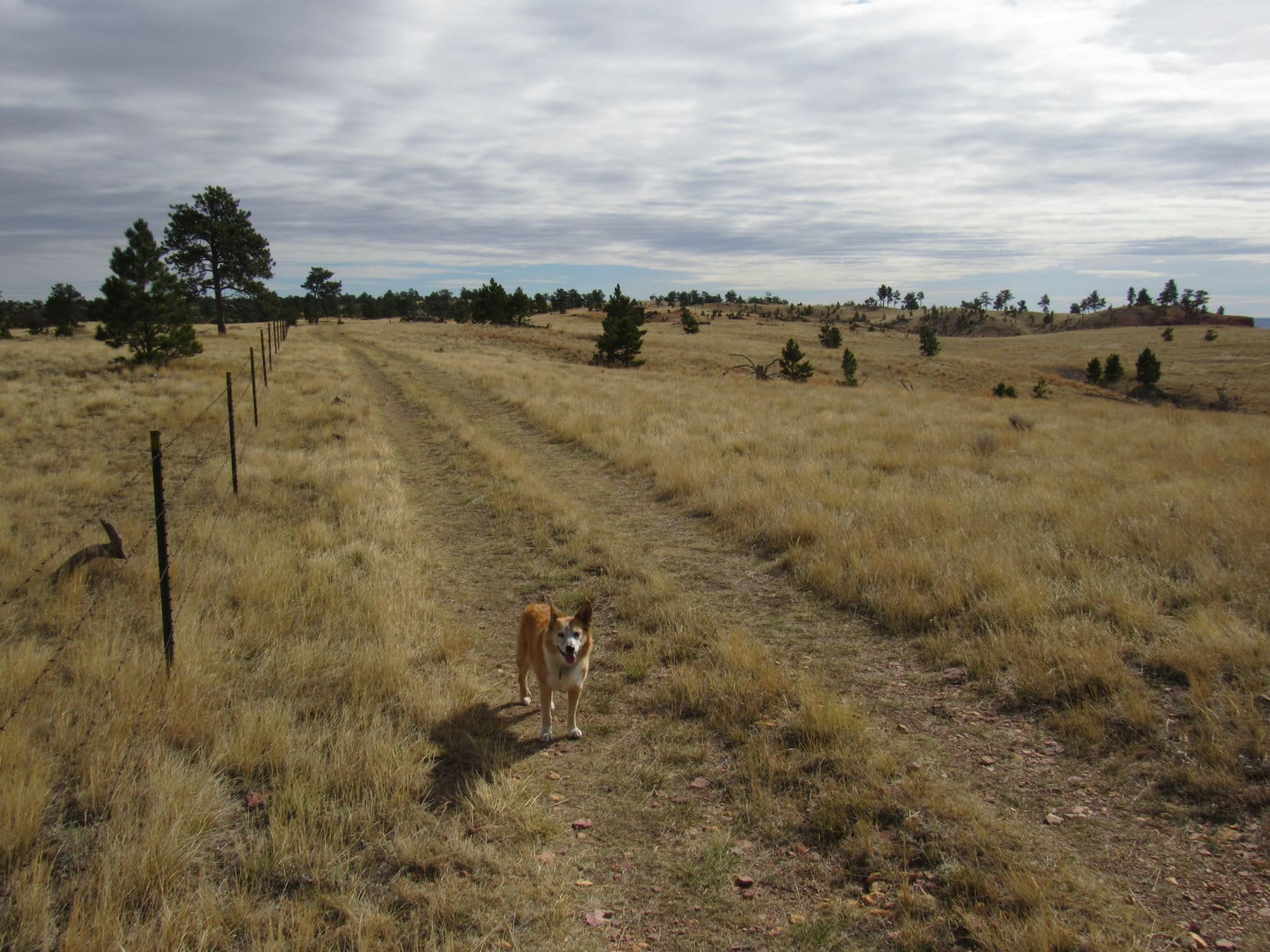
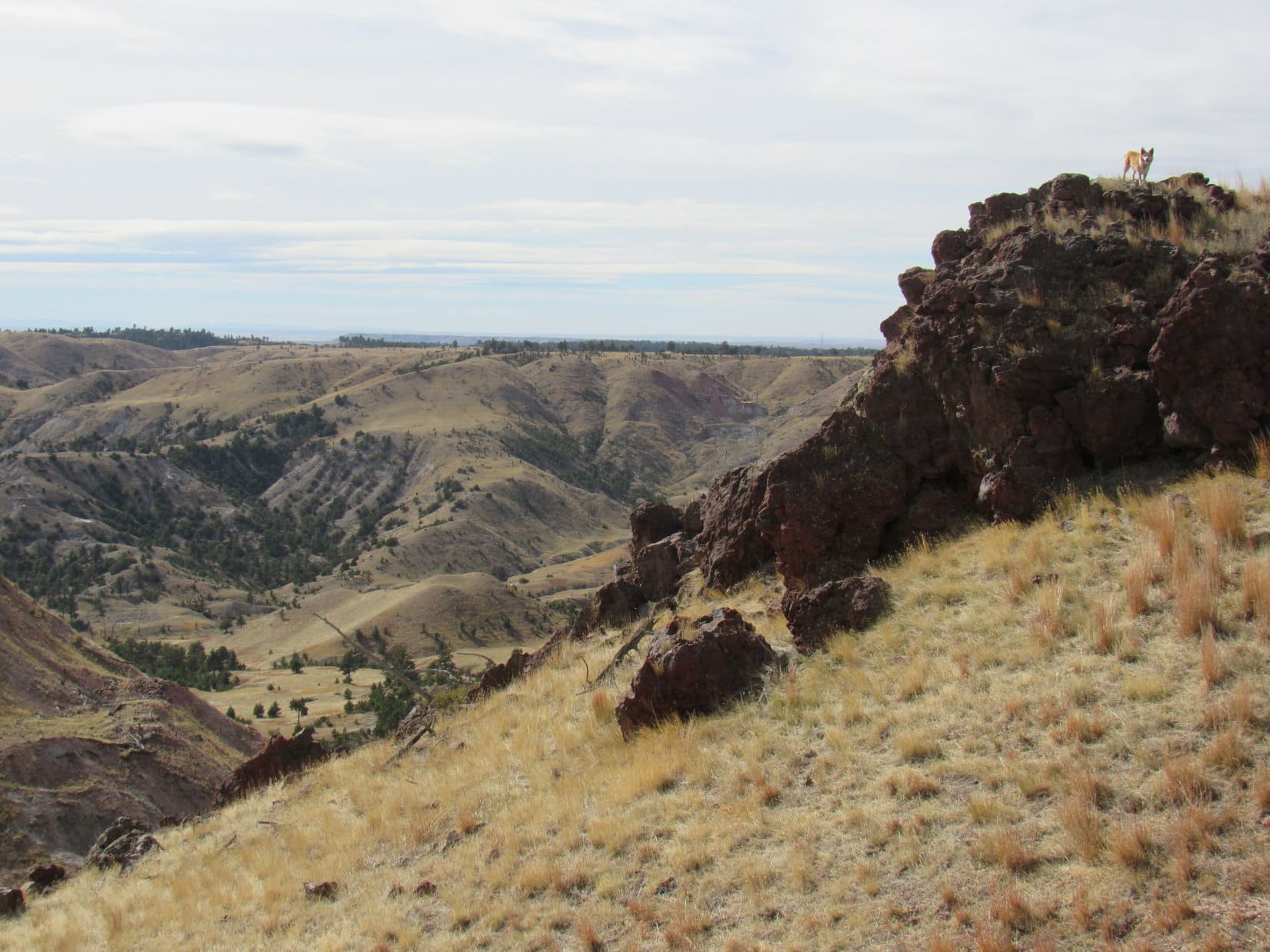
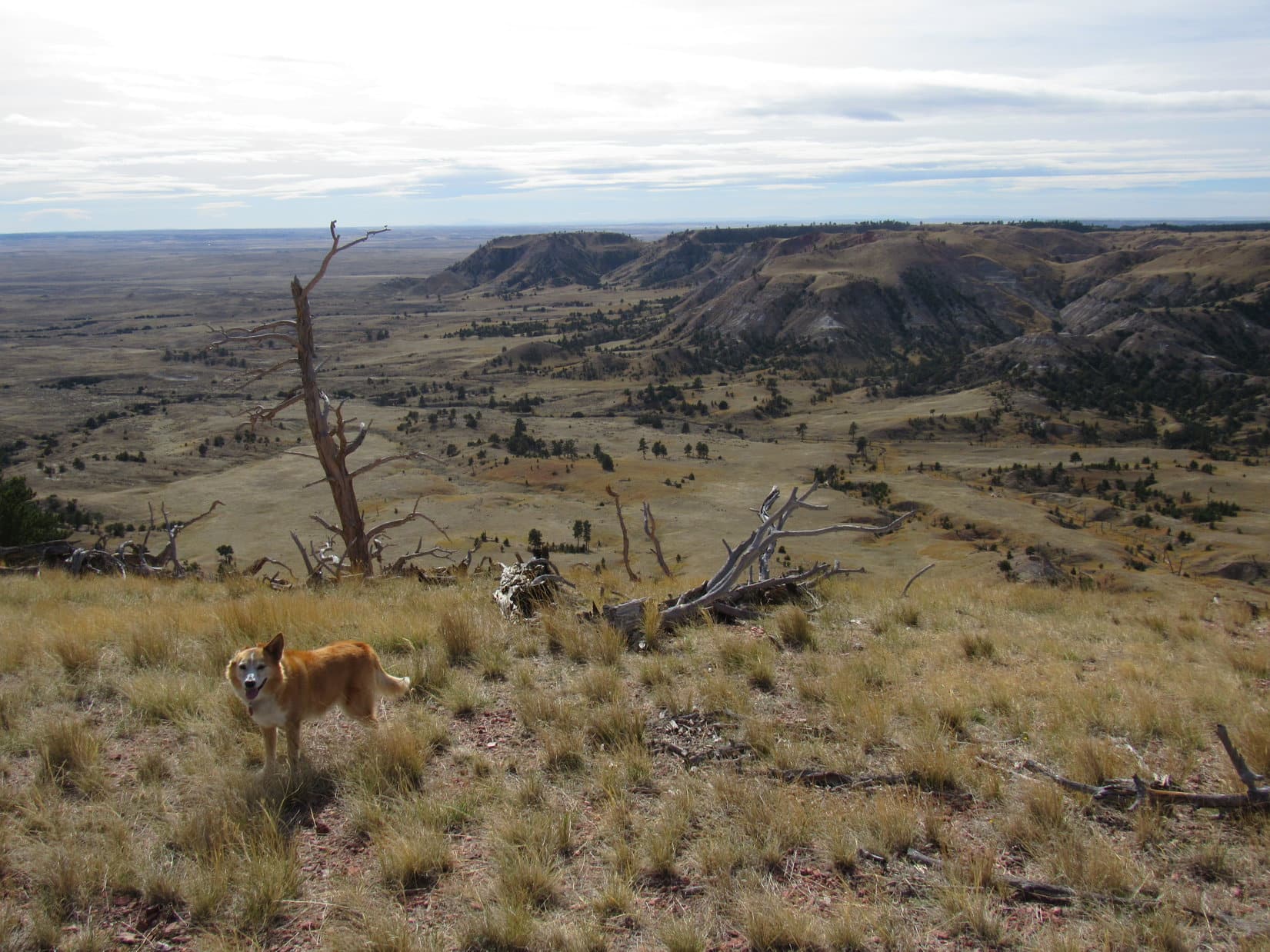
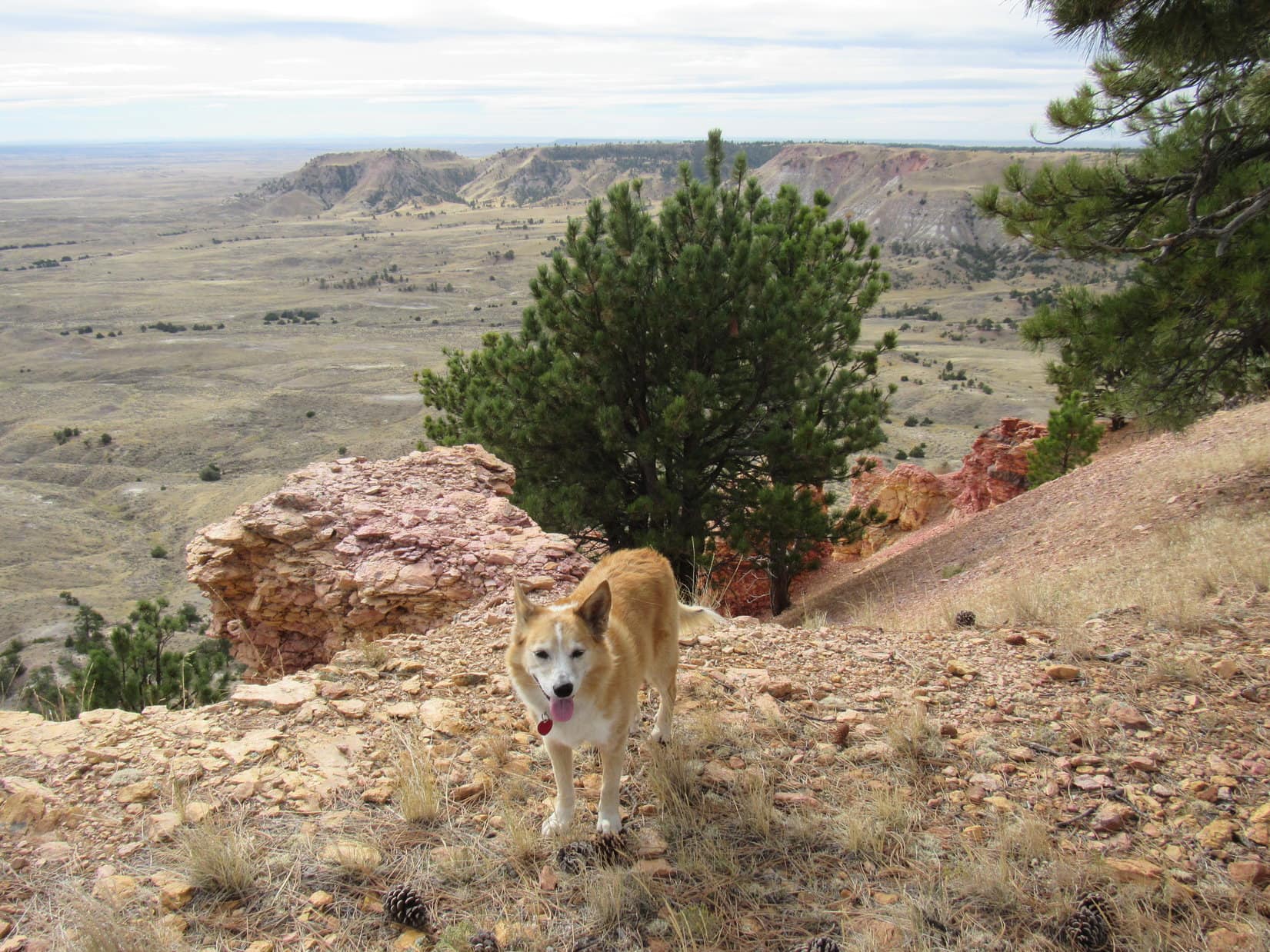
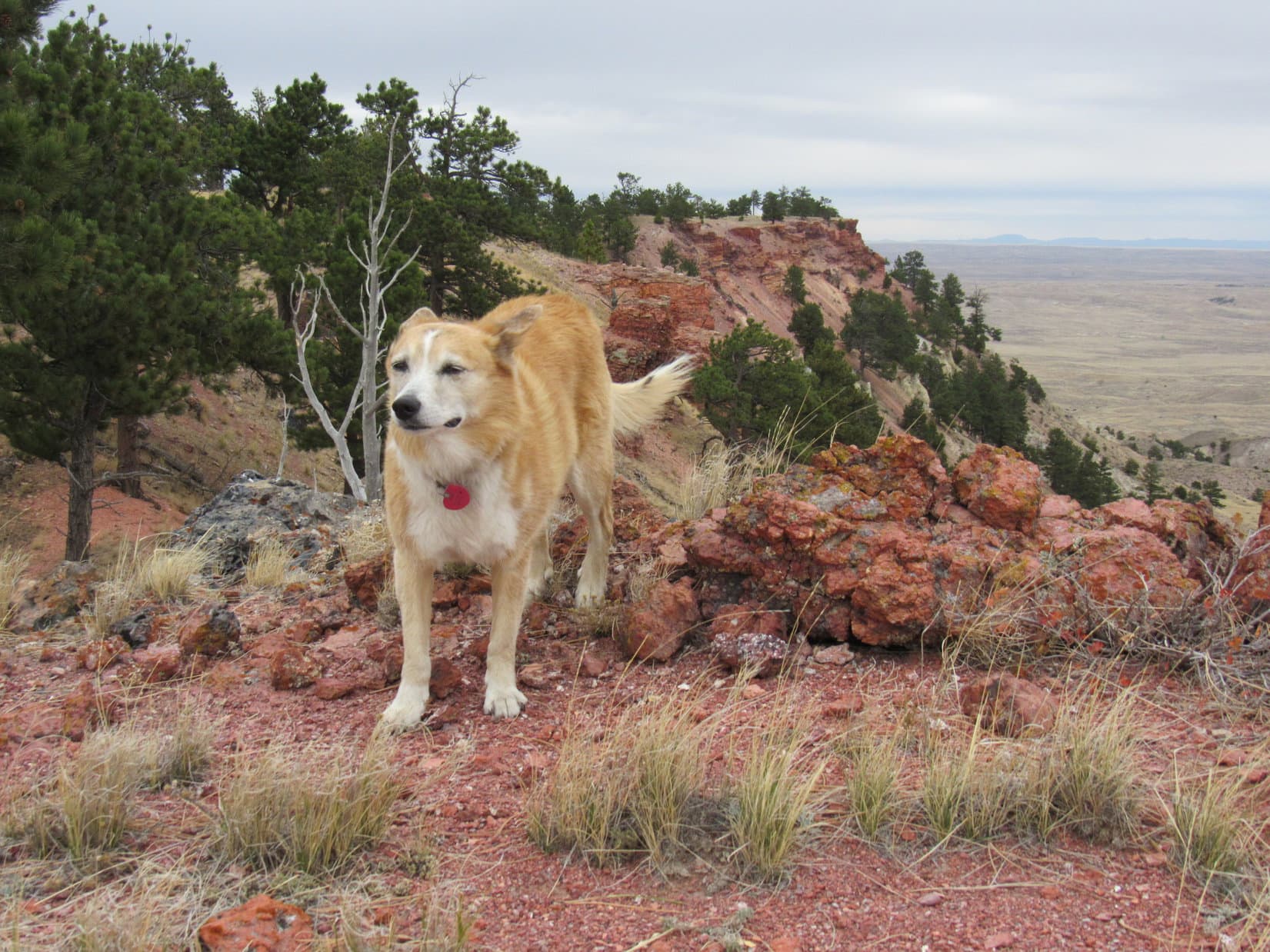
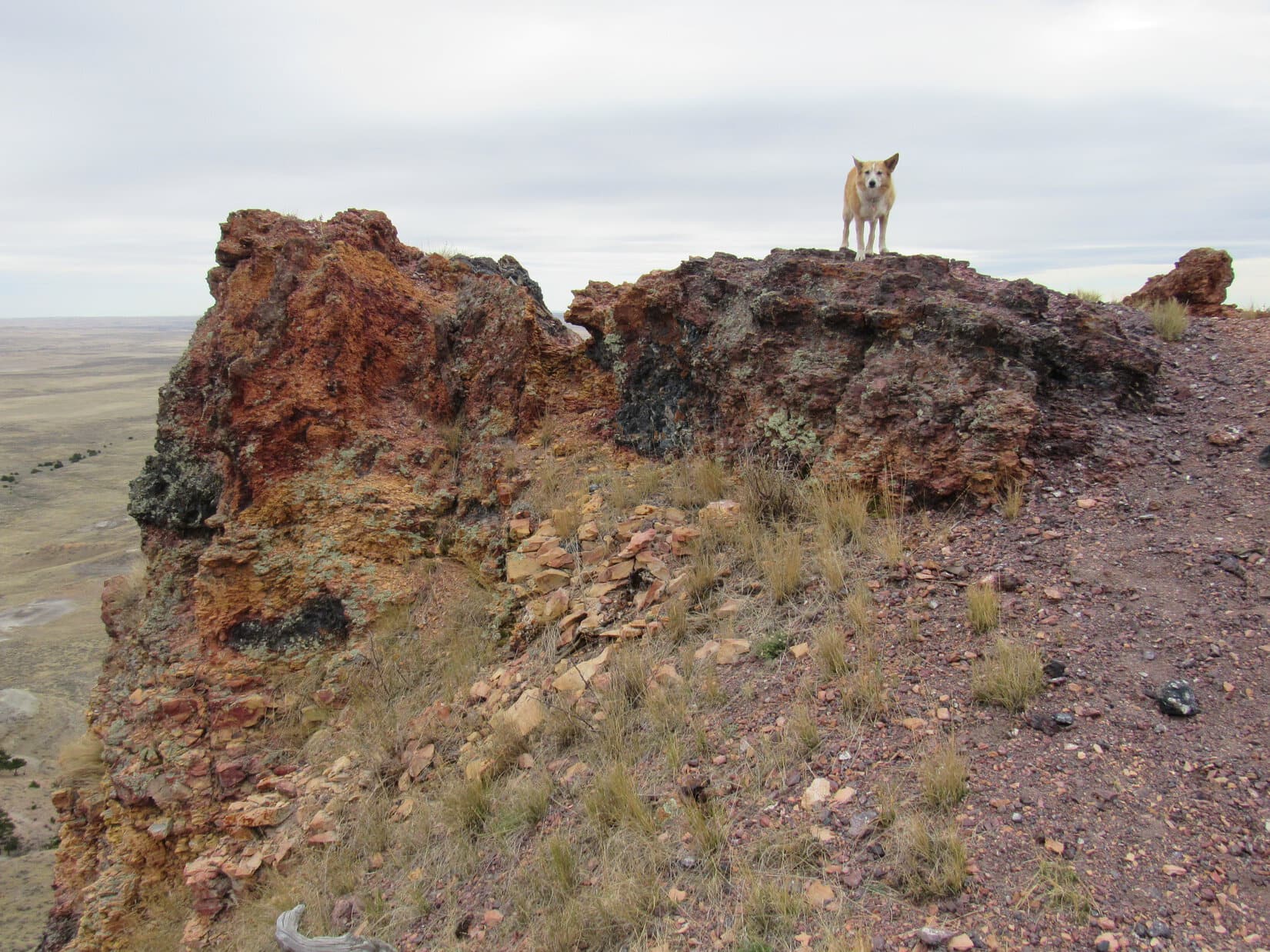
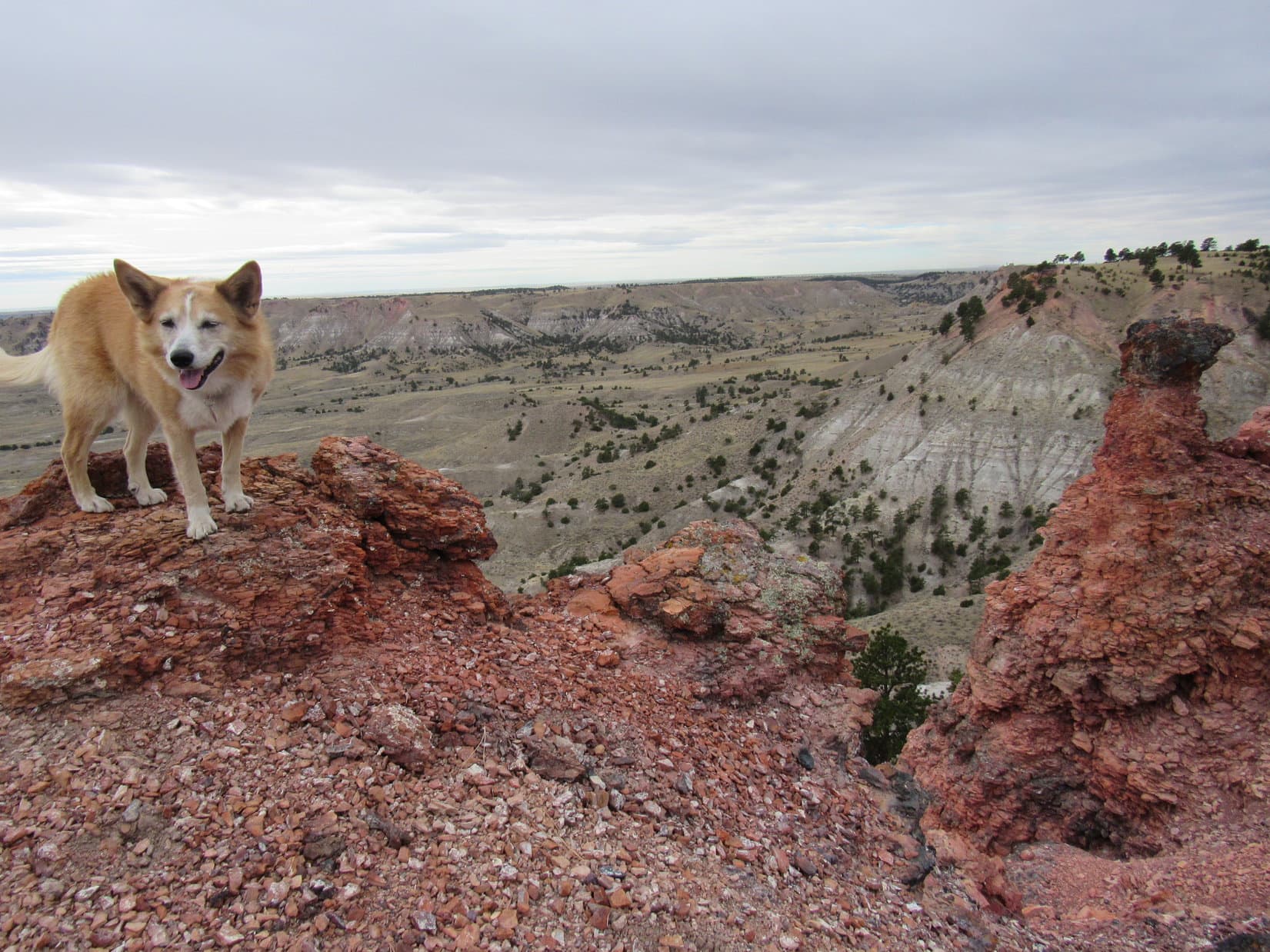
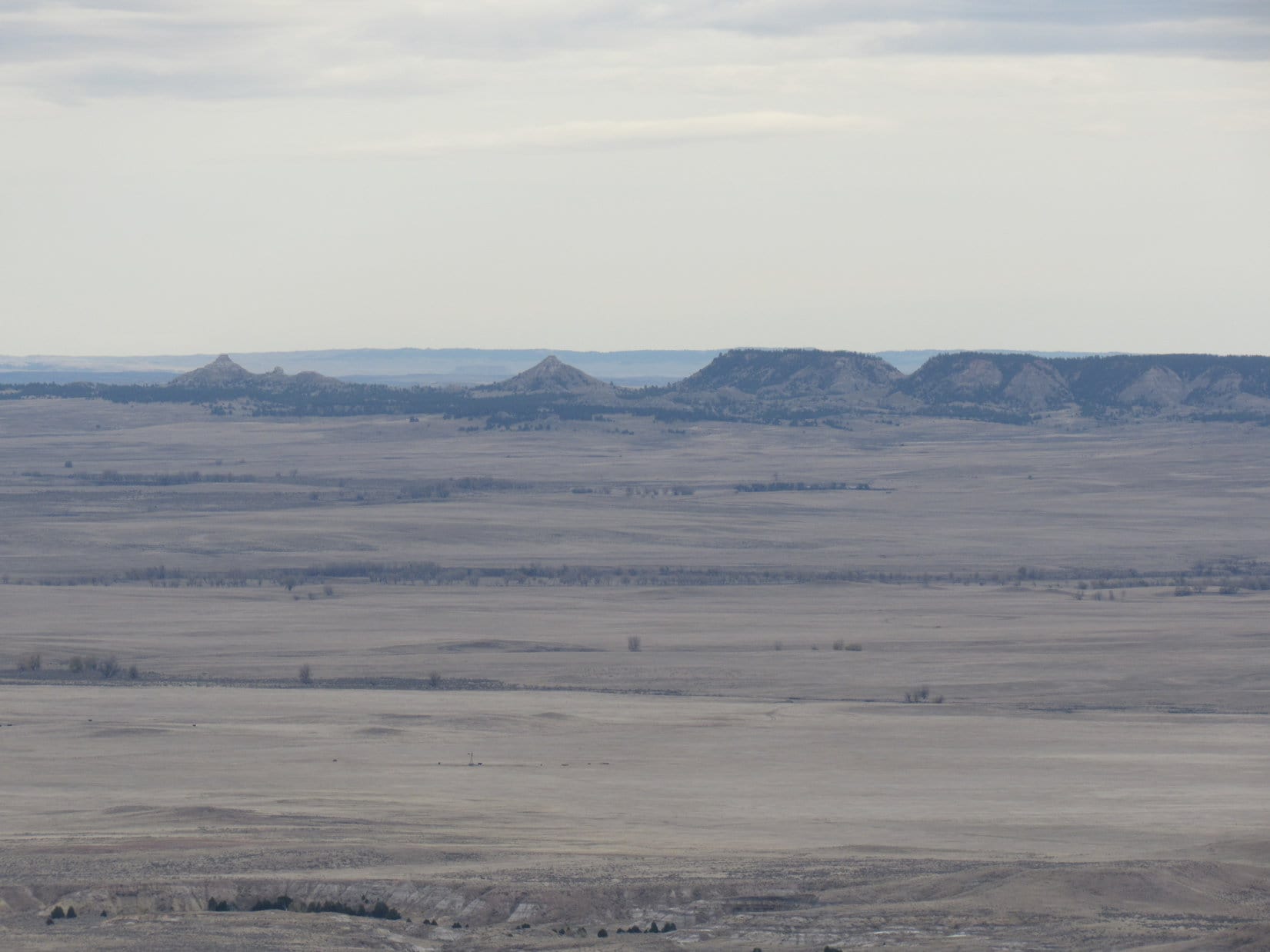
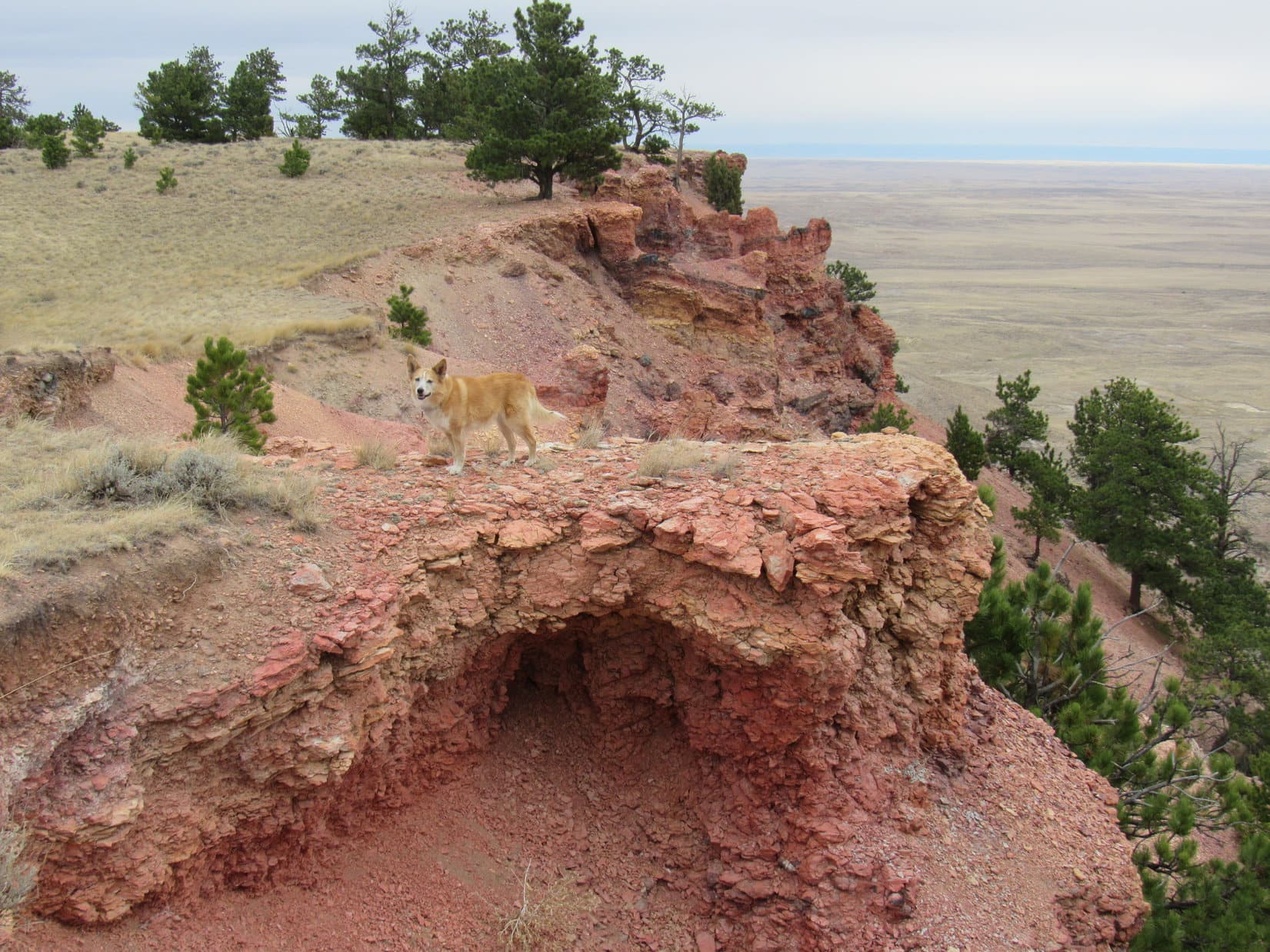
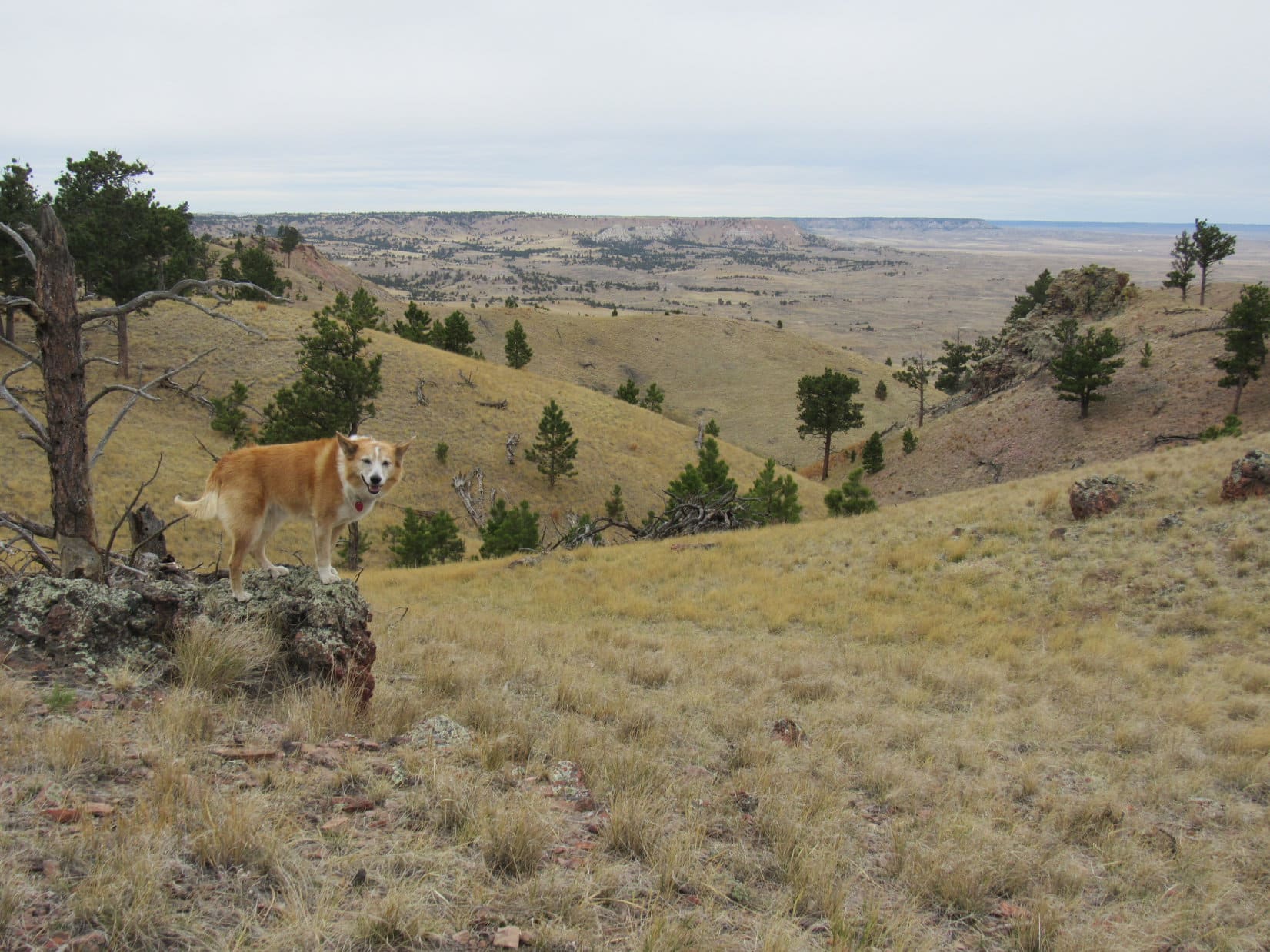
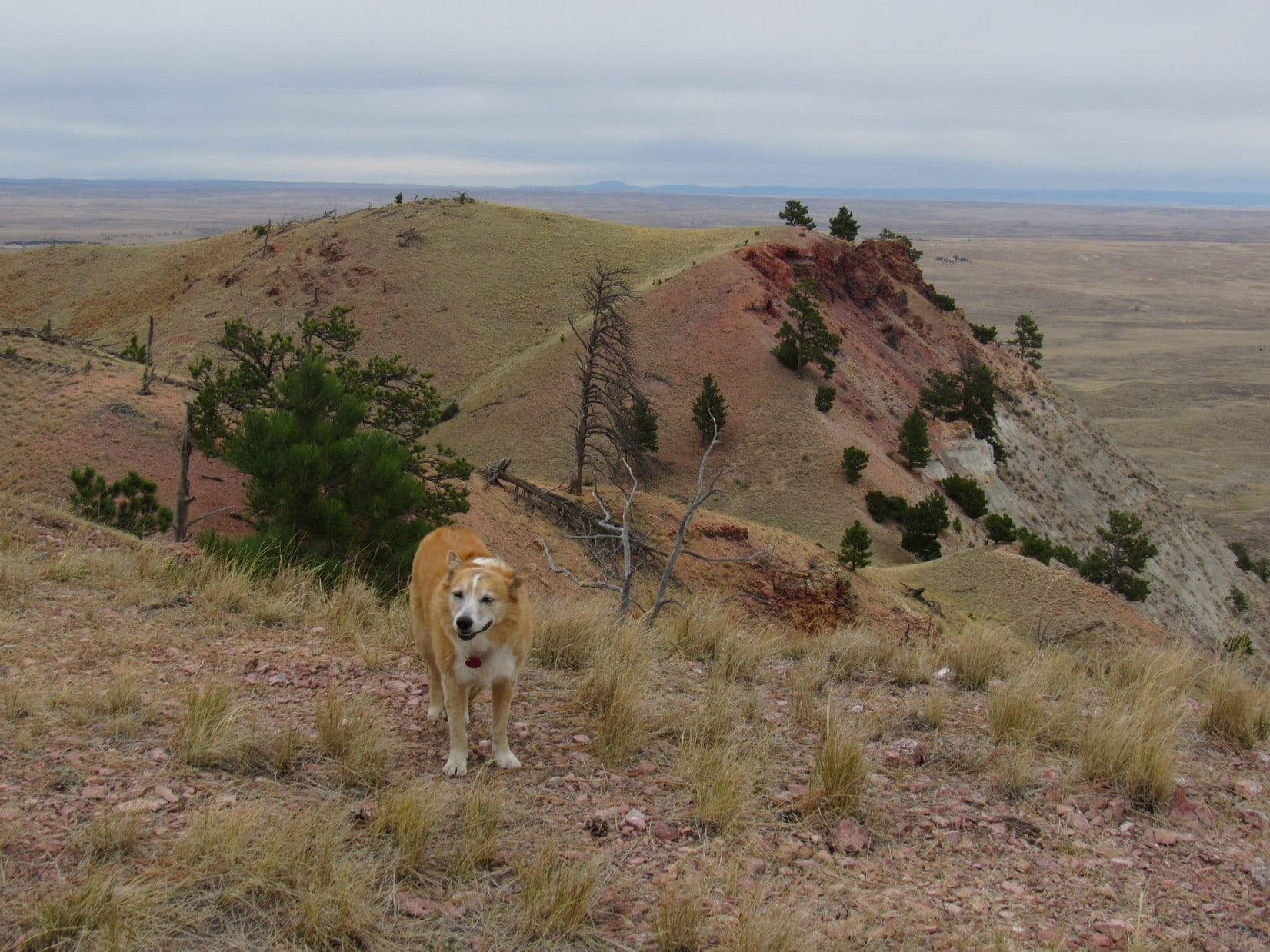
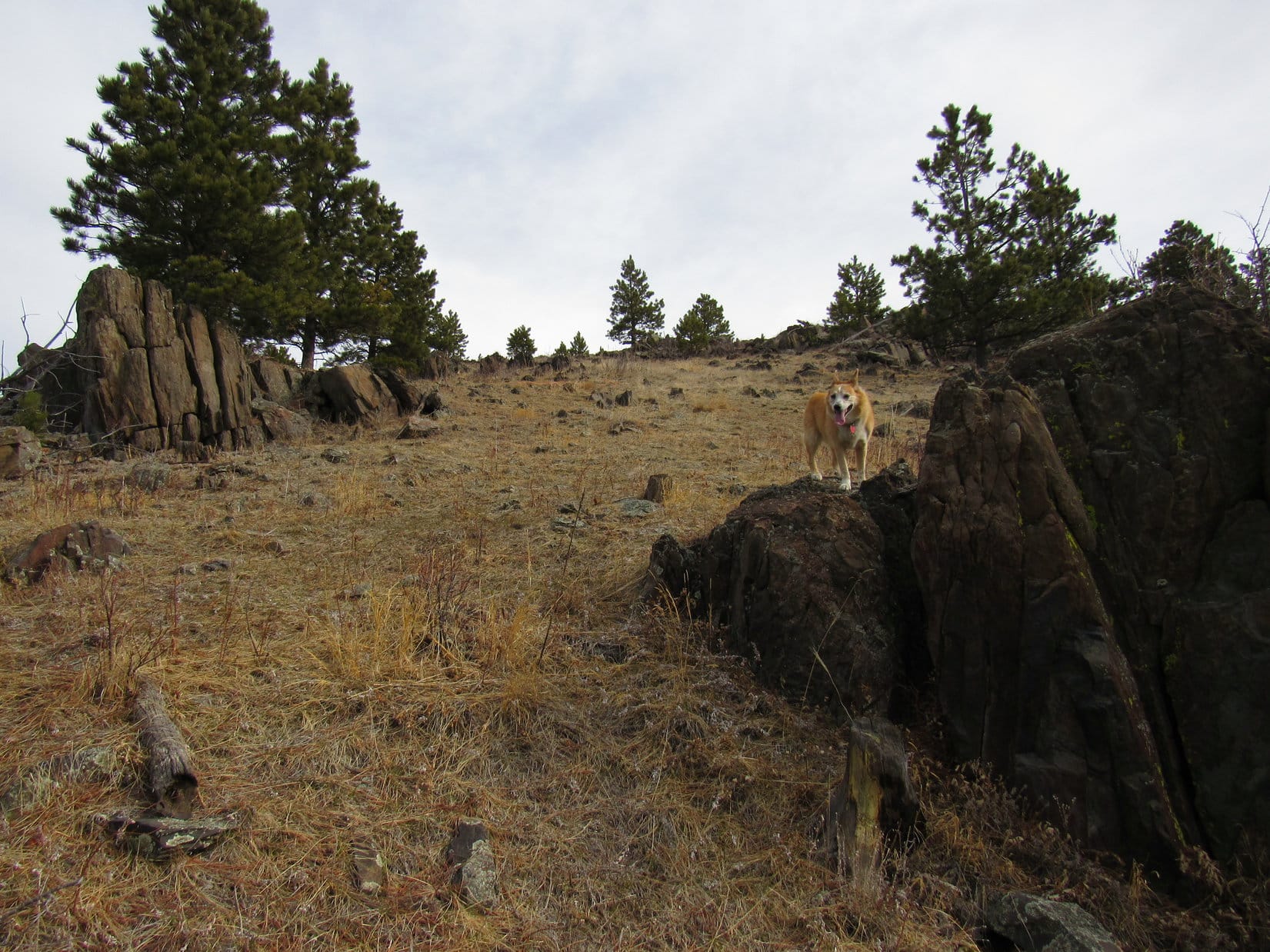
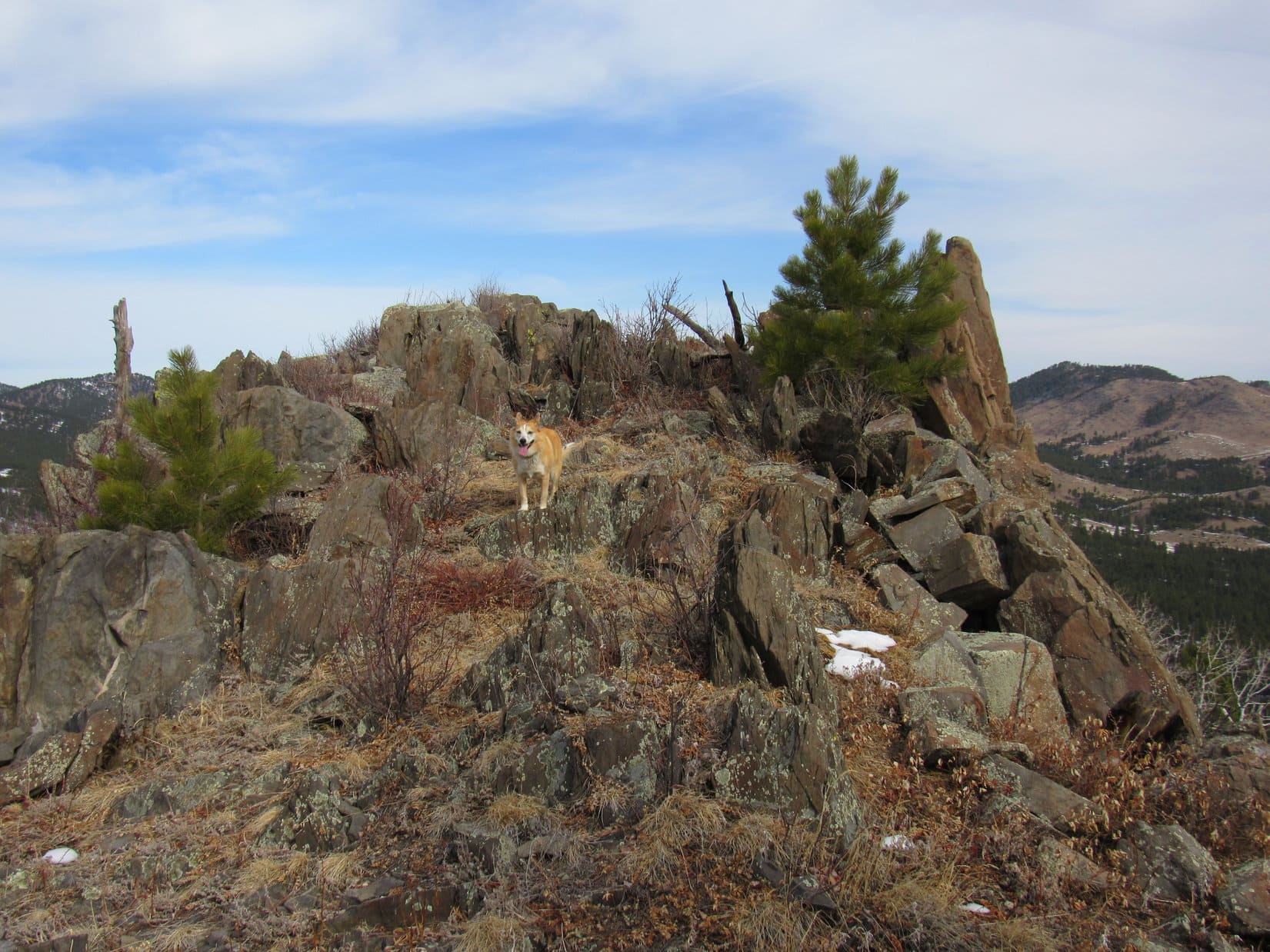
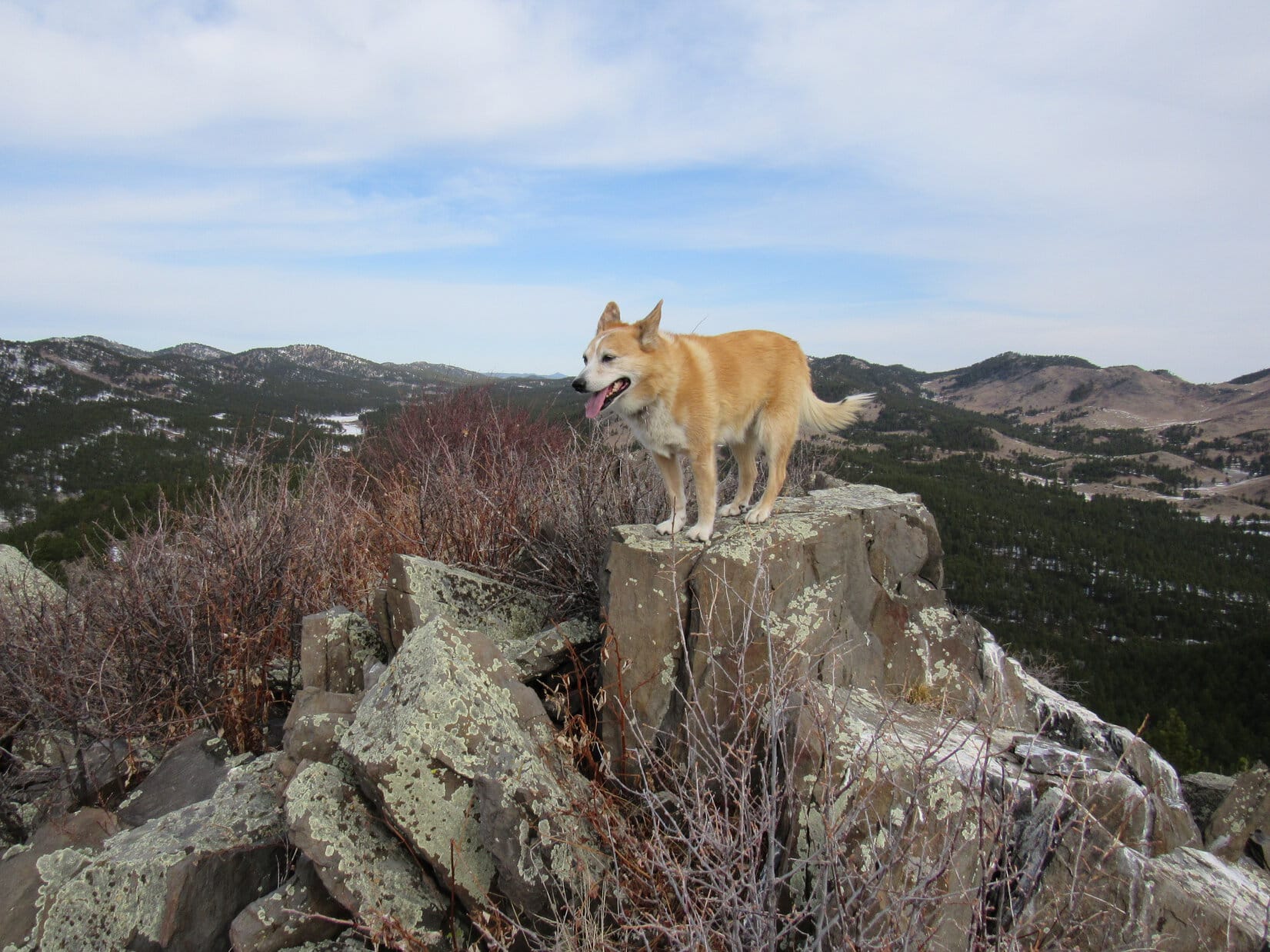
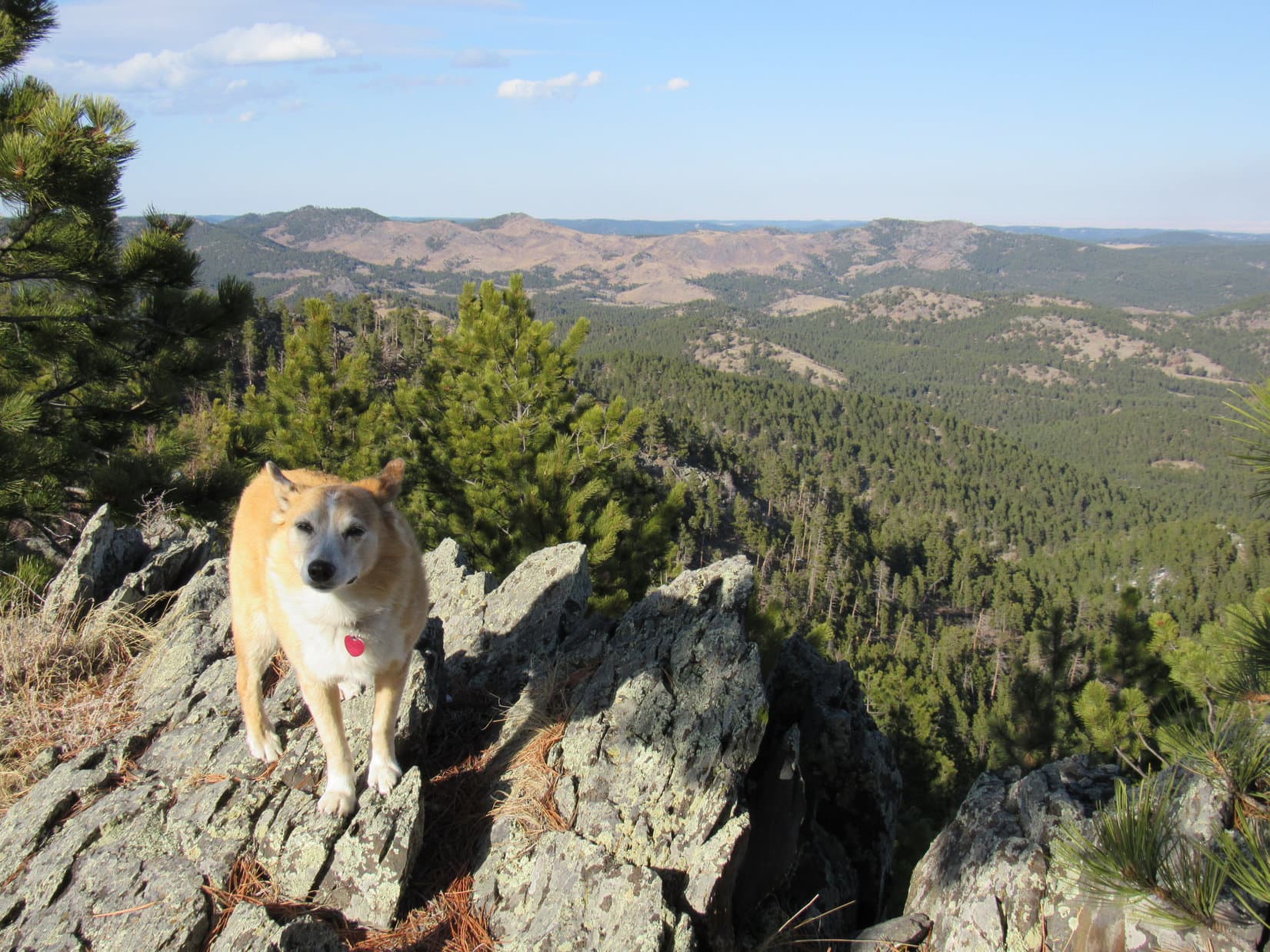
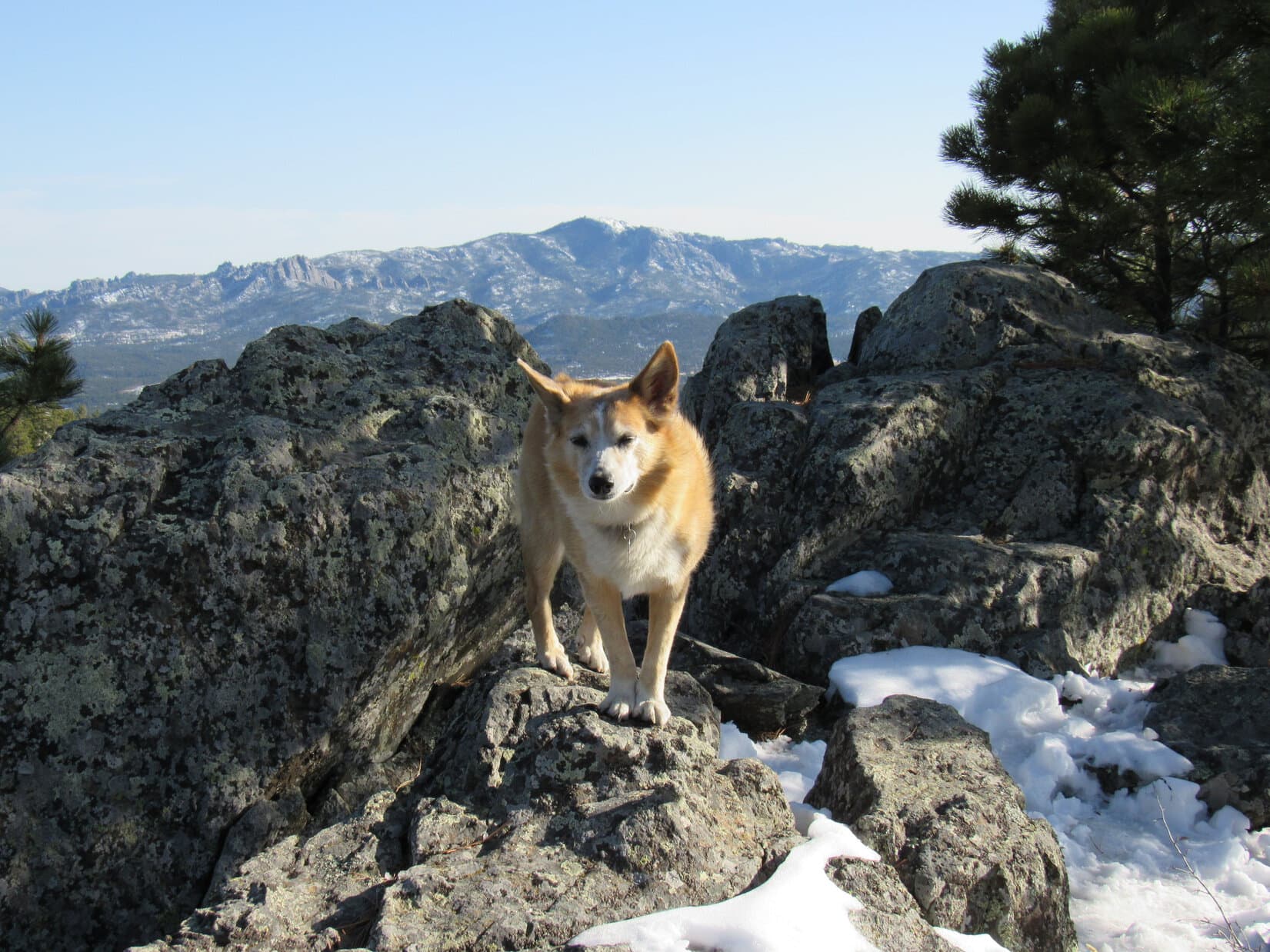
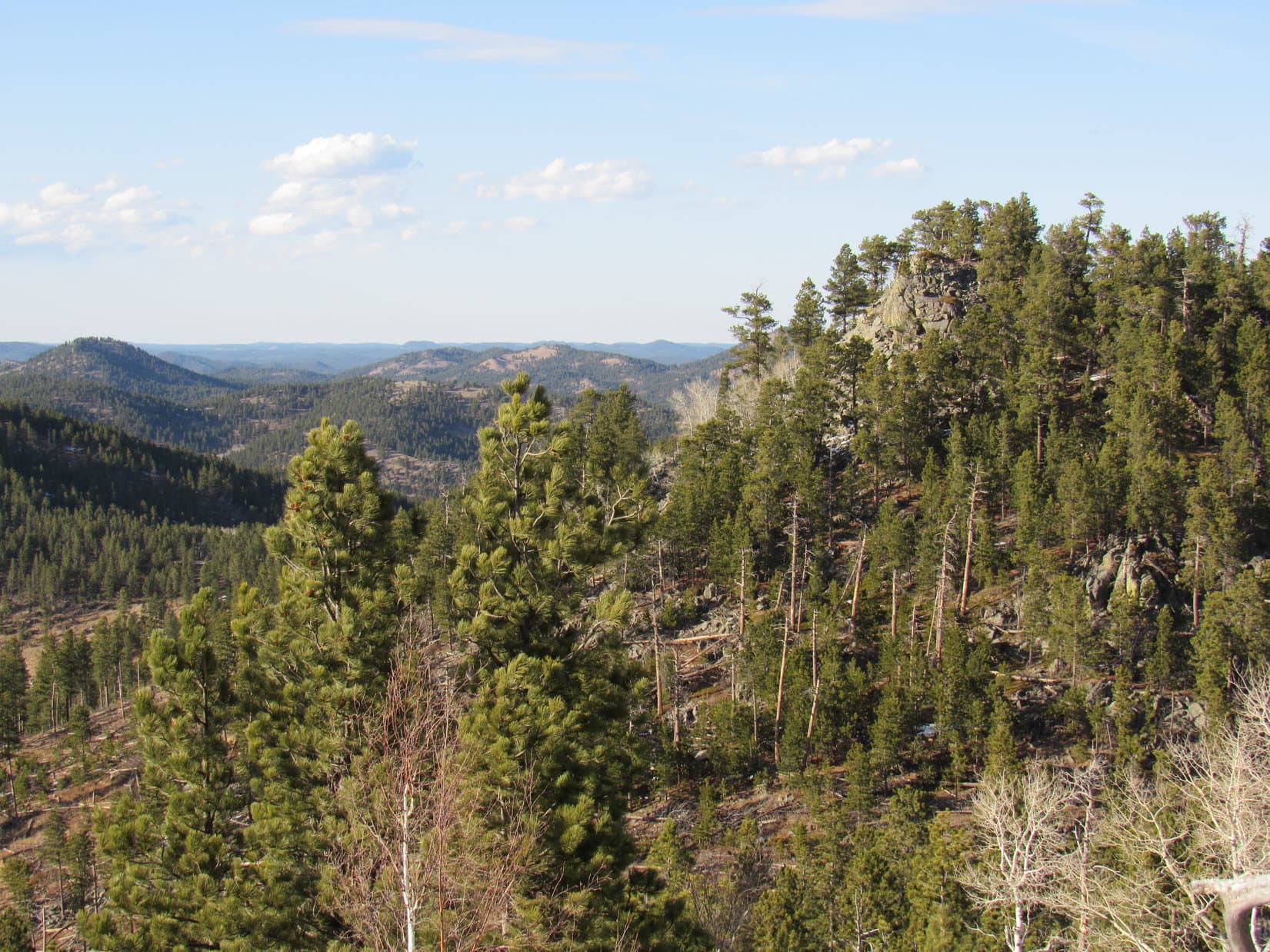
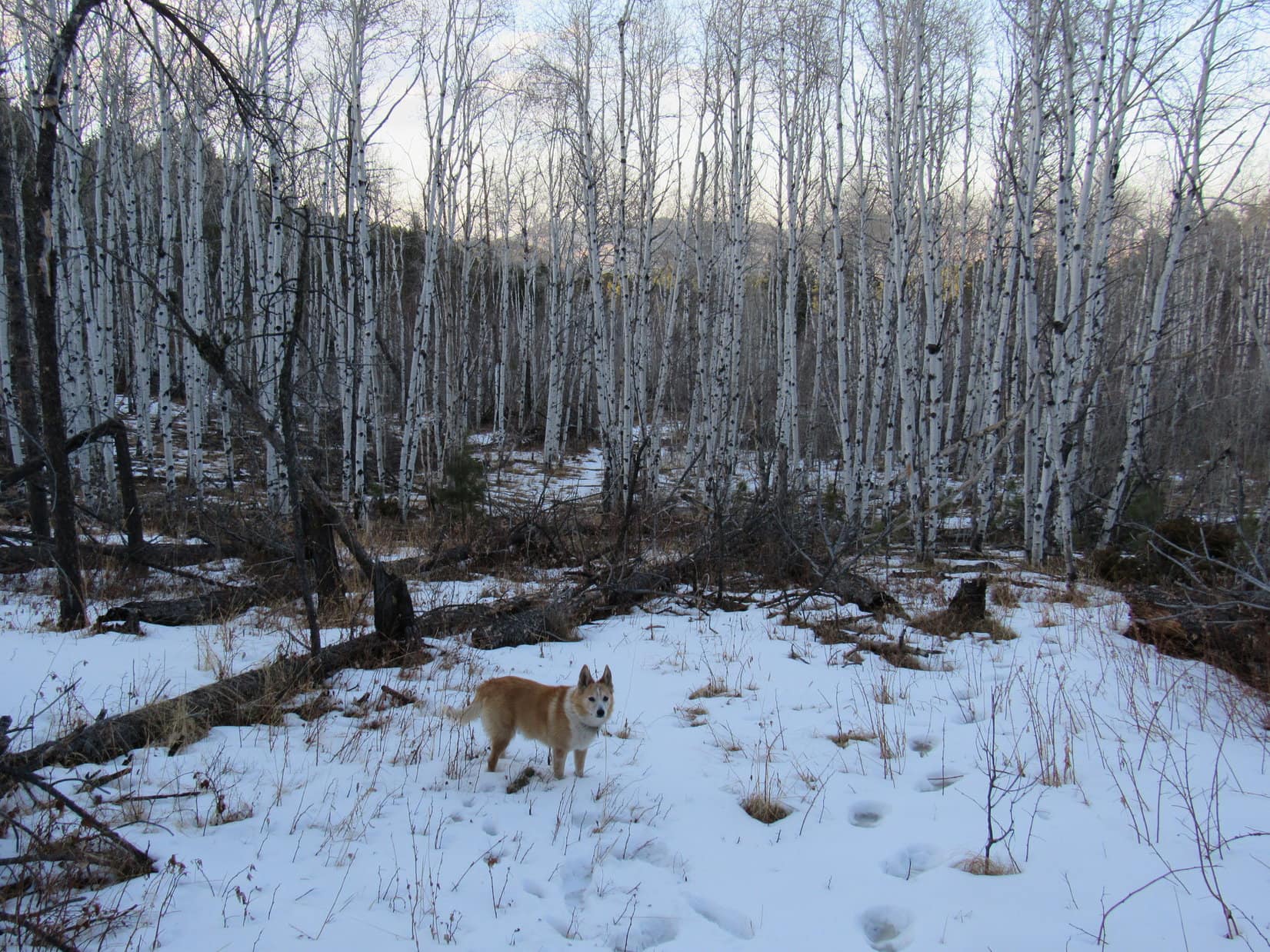
Mile High Hill in the Rochelle Hills, Wyoming (10-16-20)

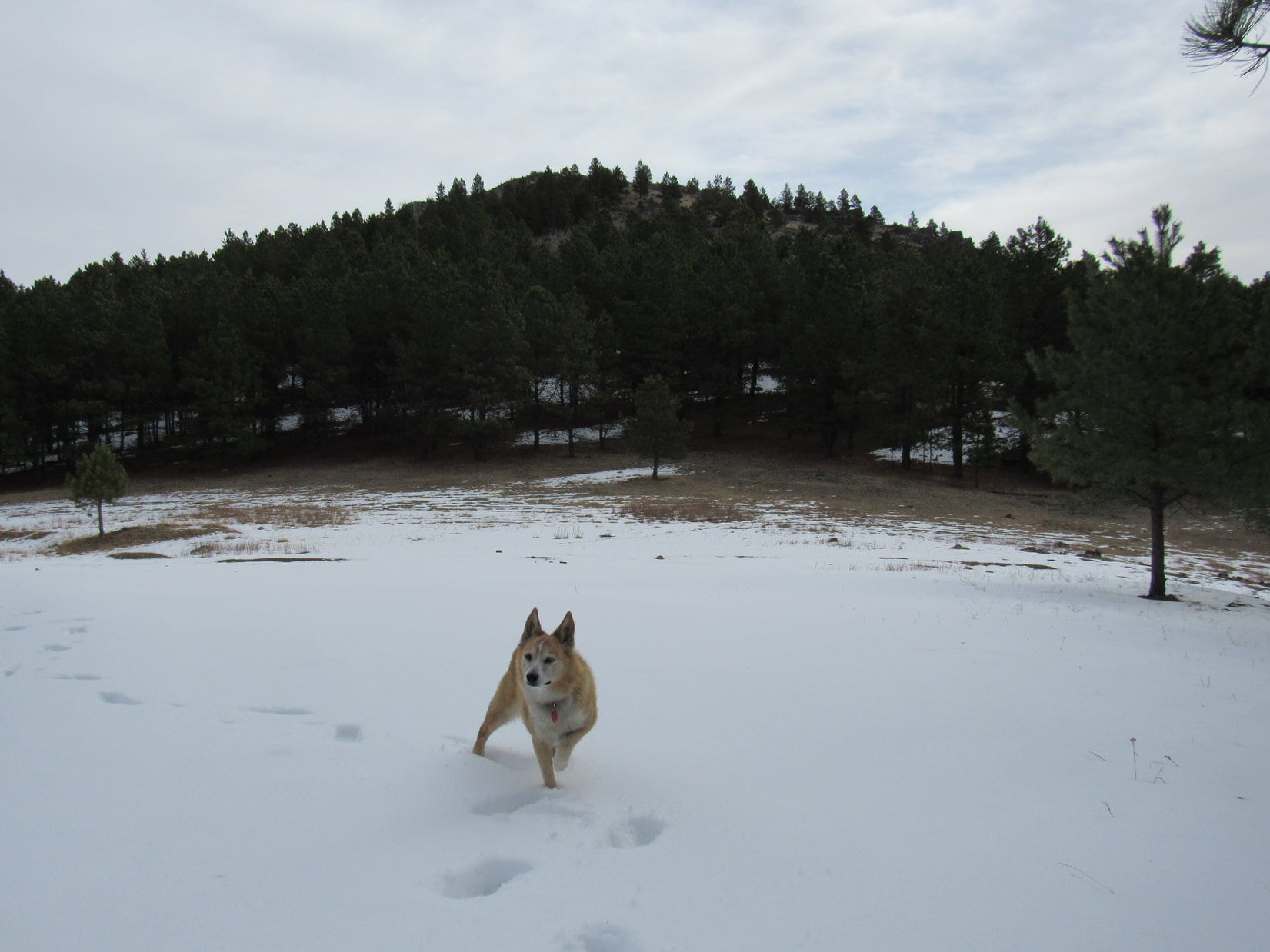
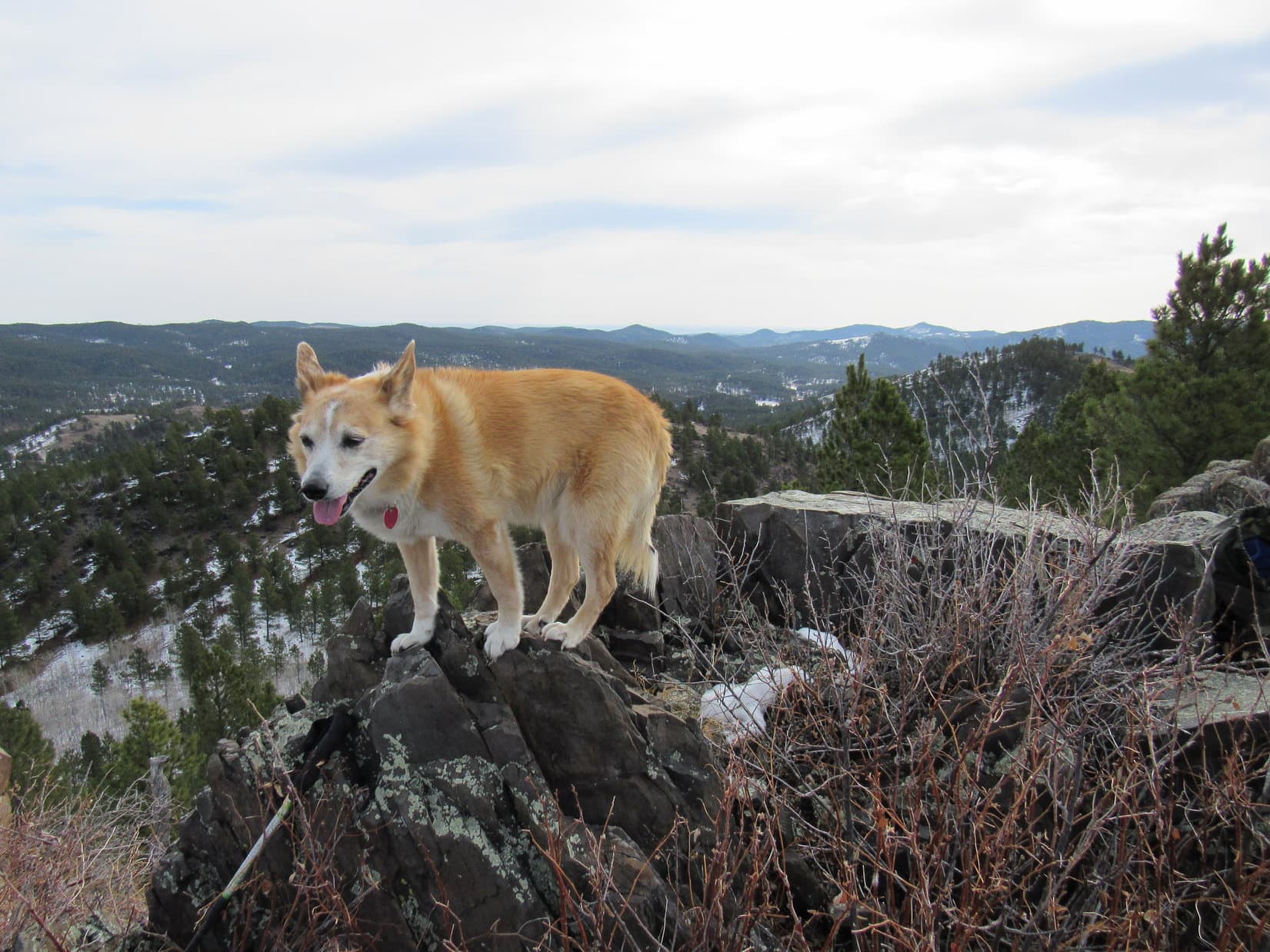
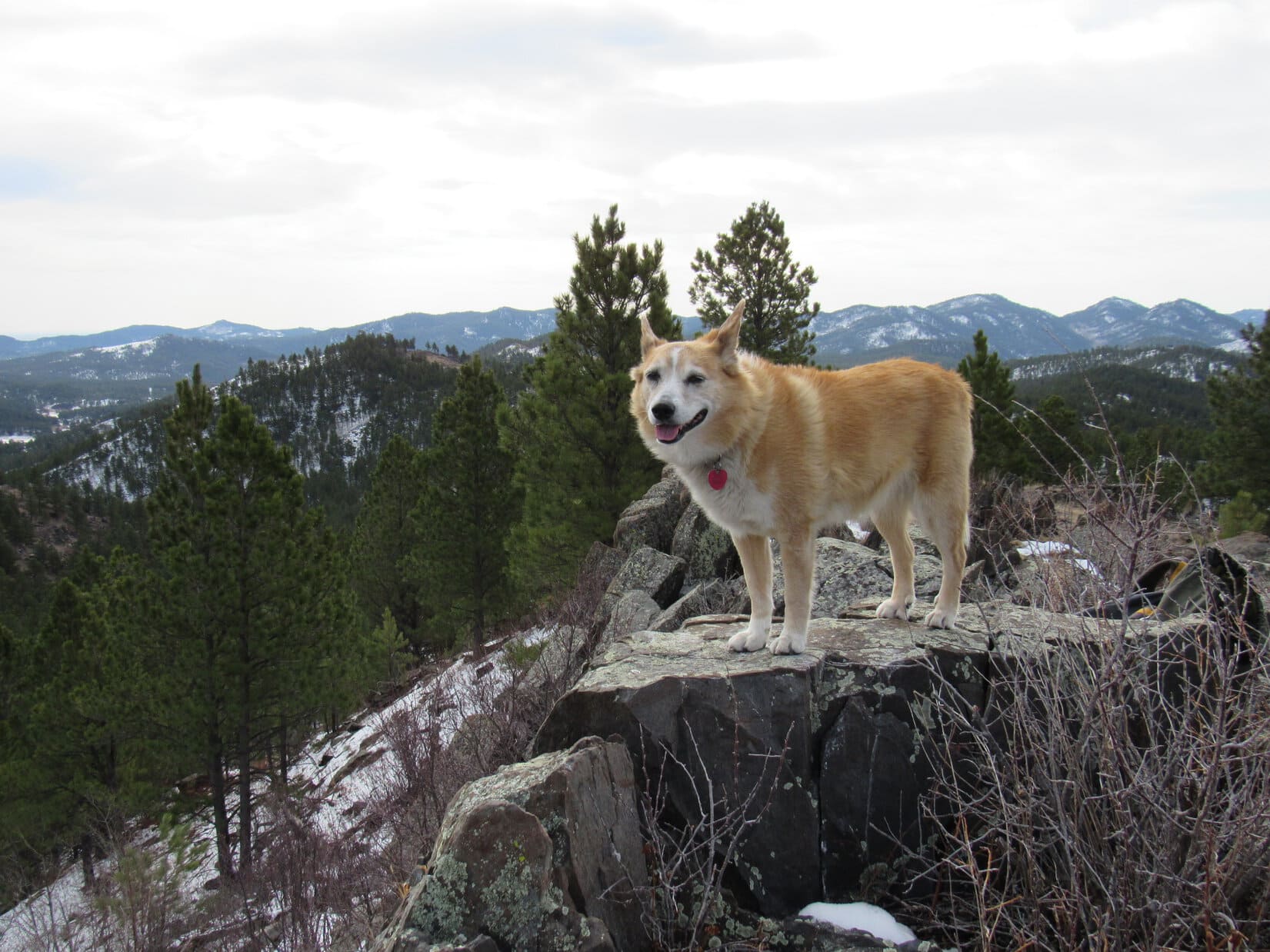
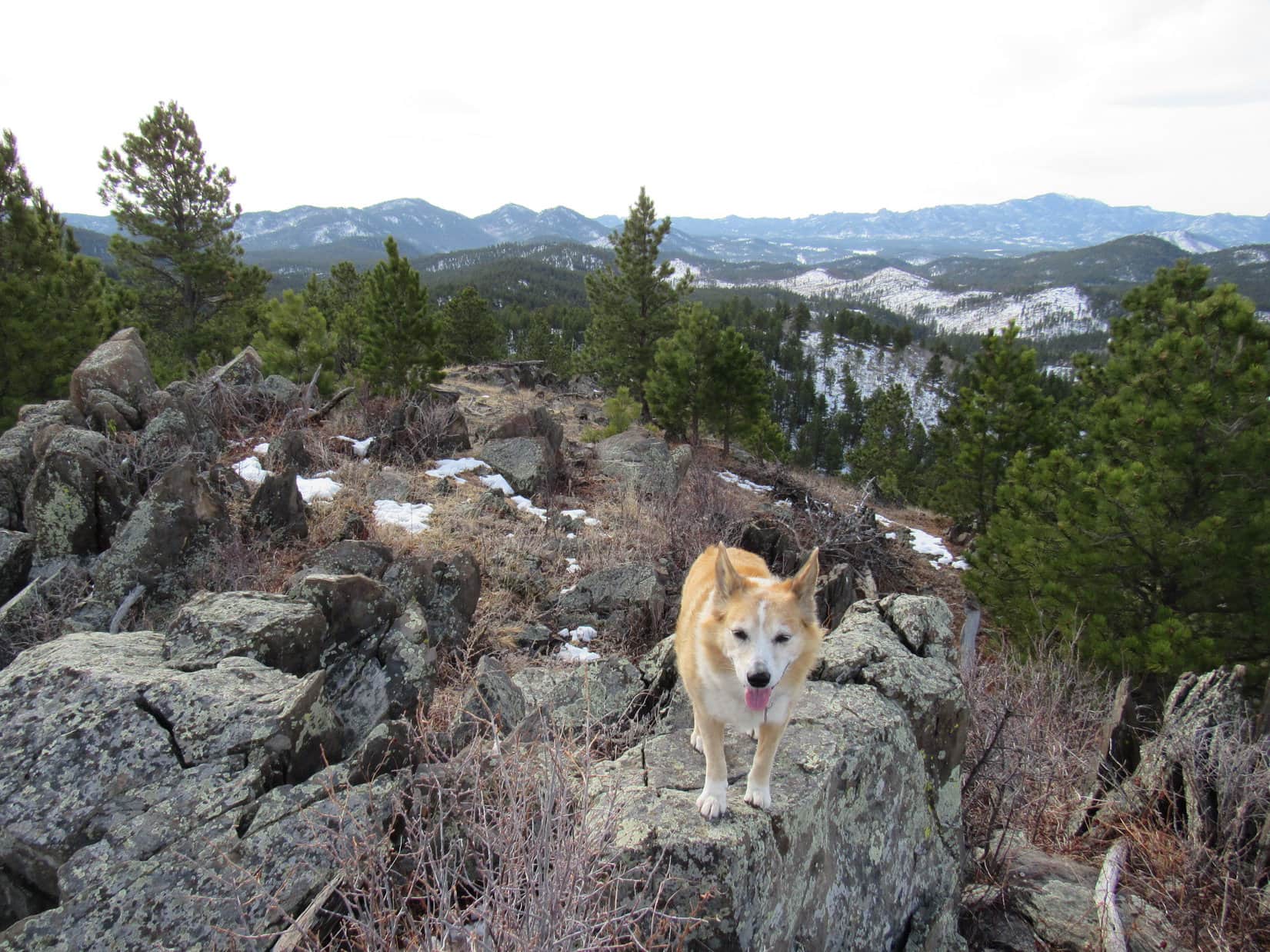
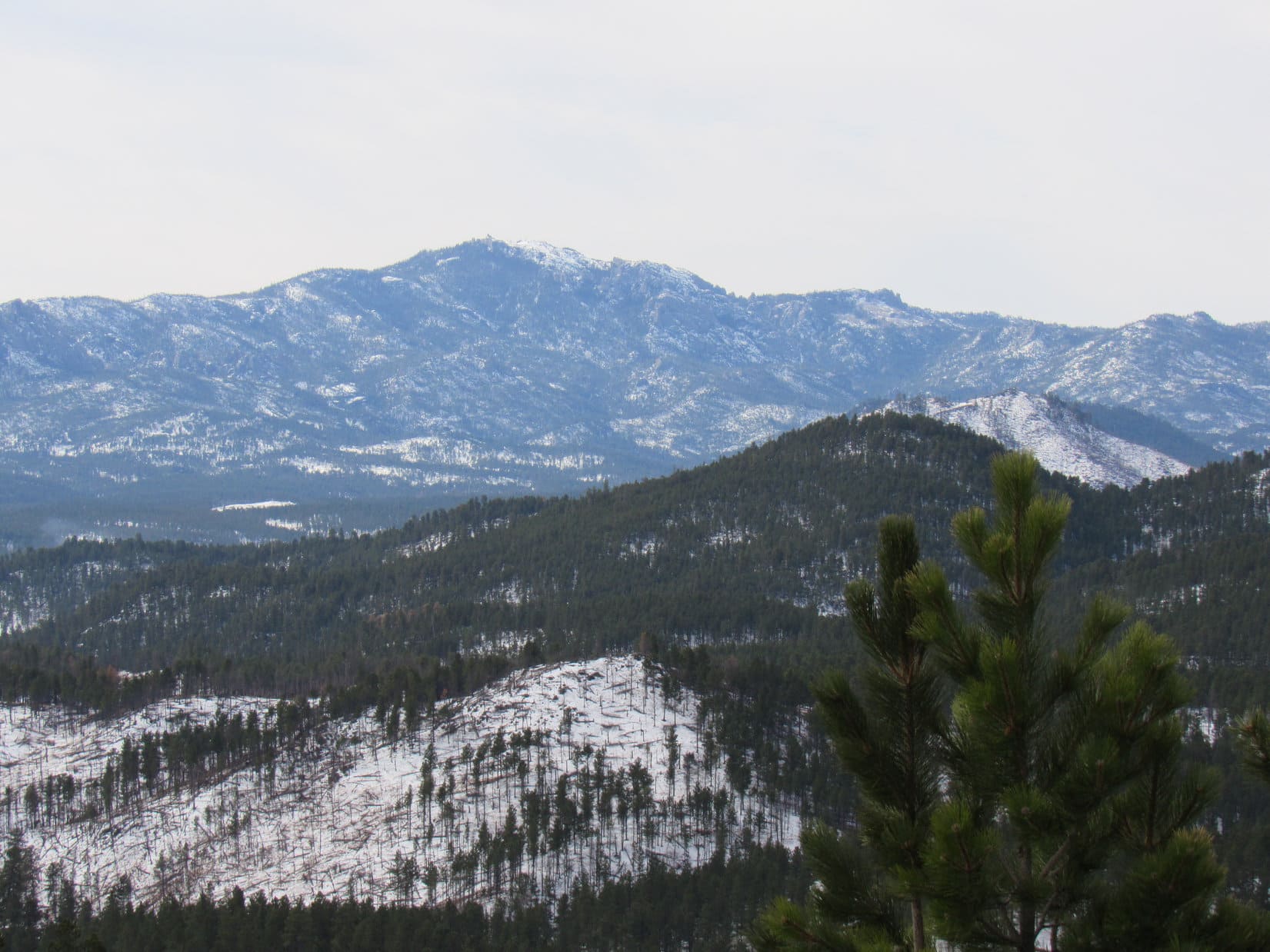
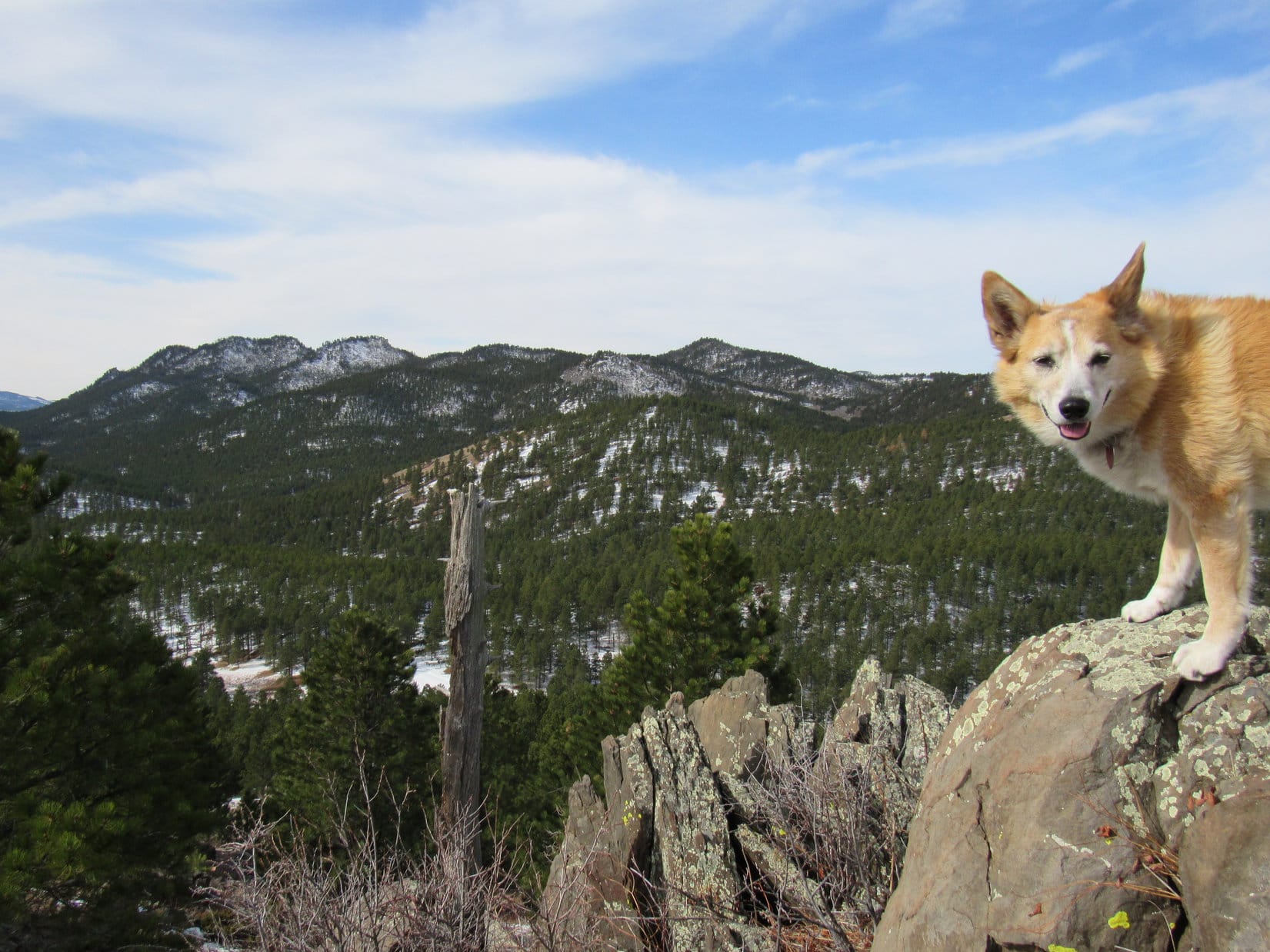
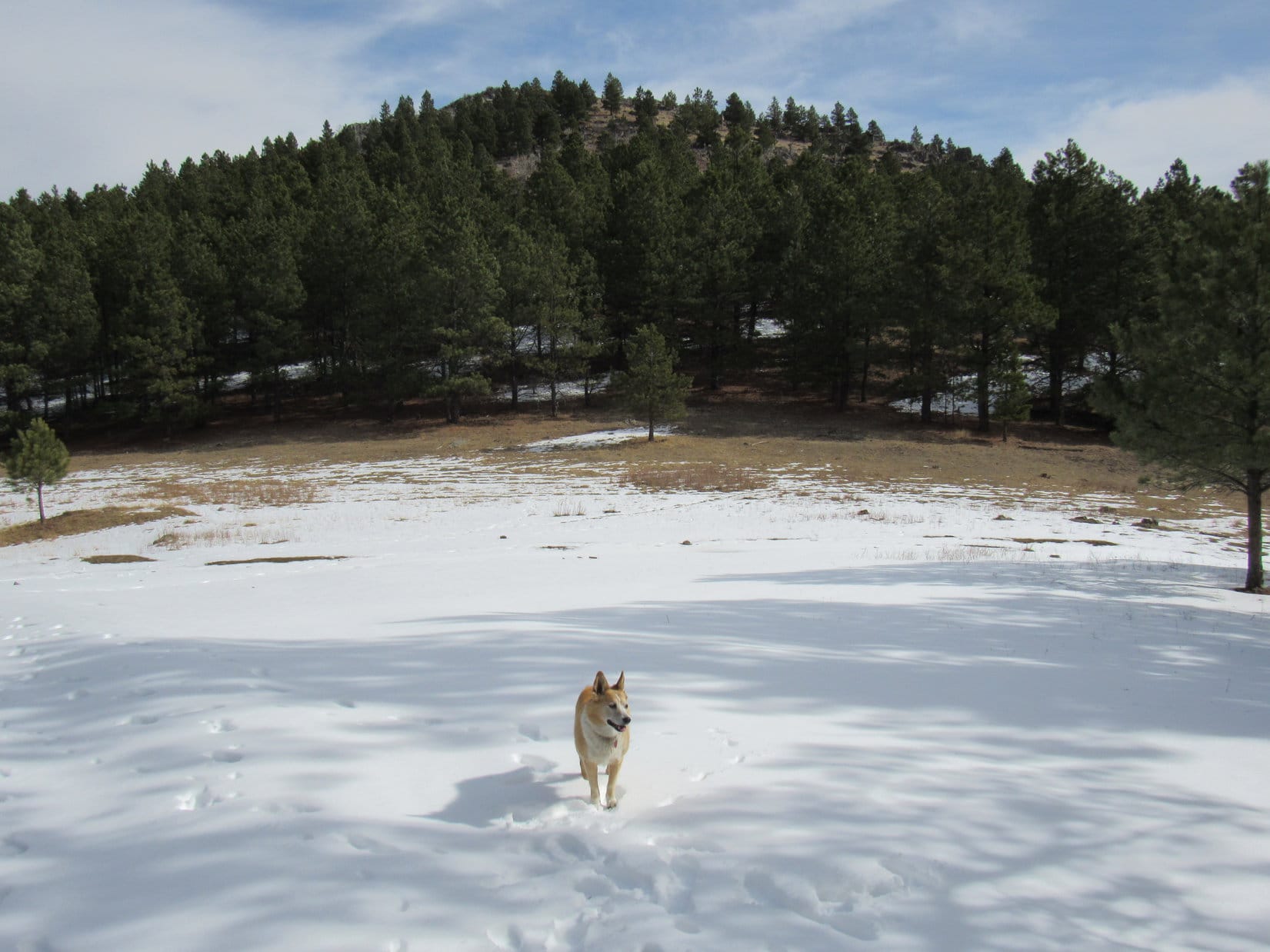
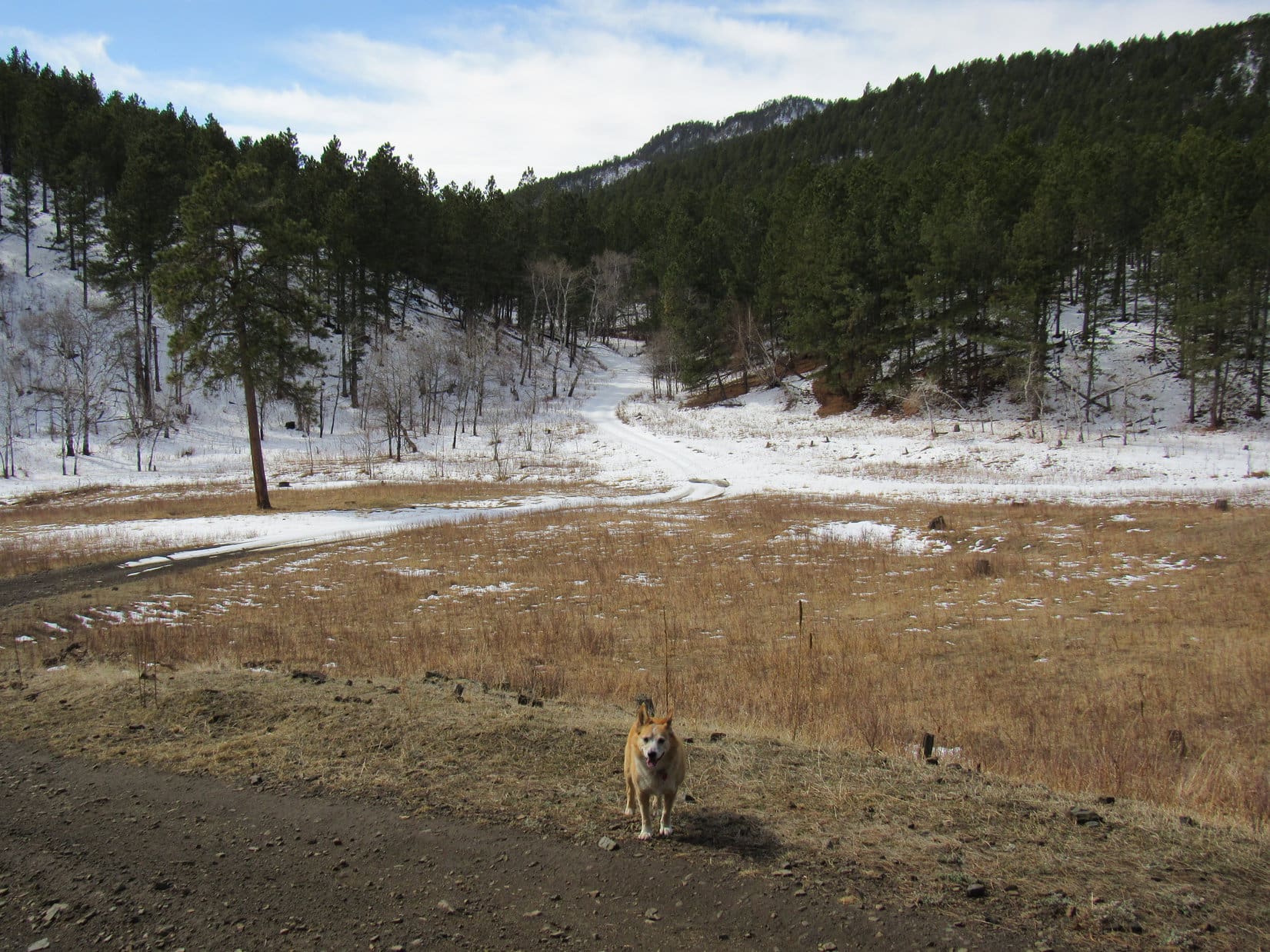
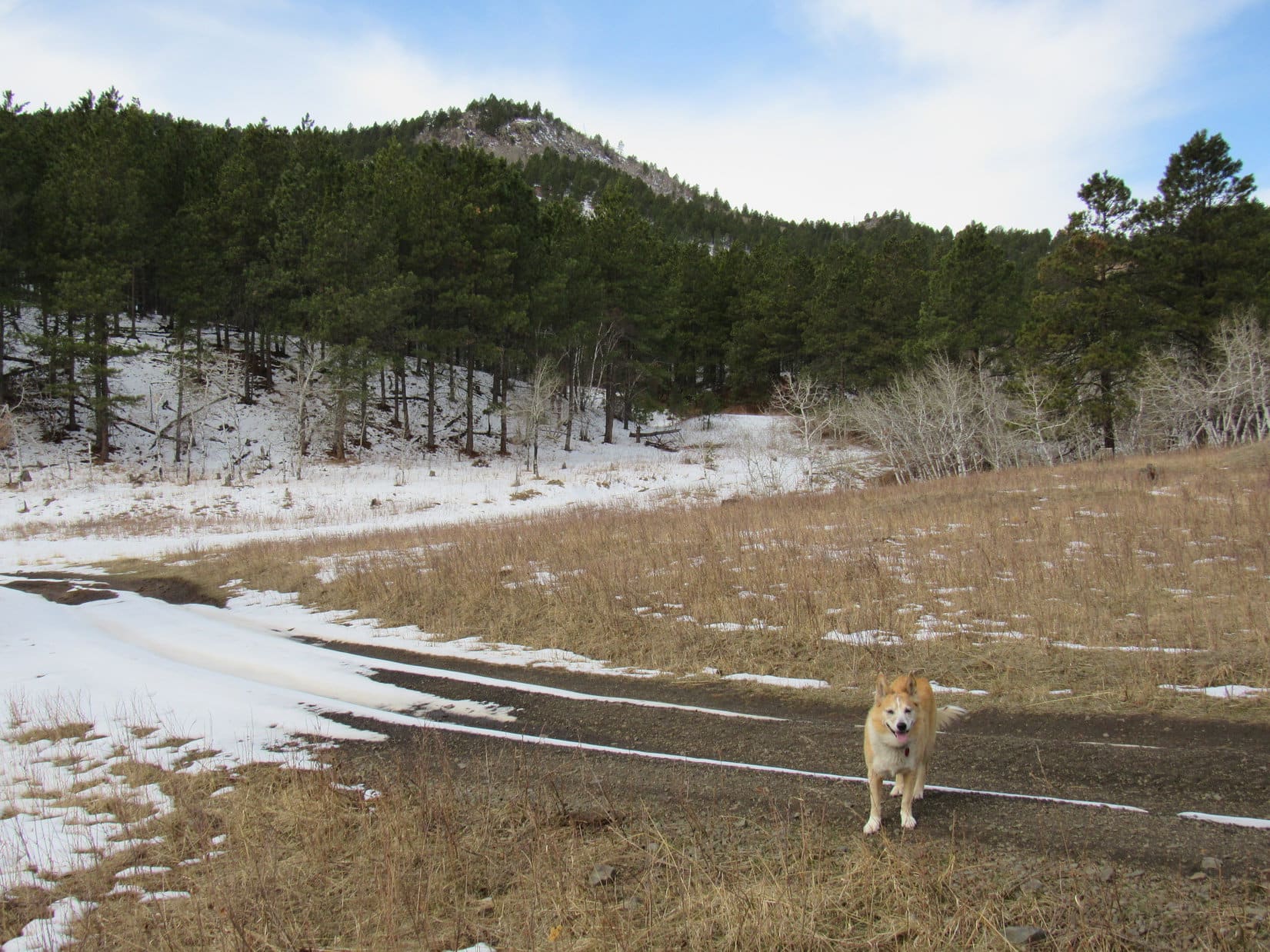
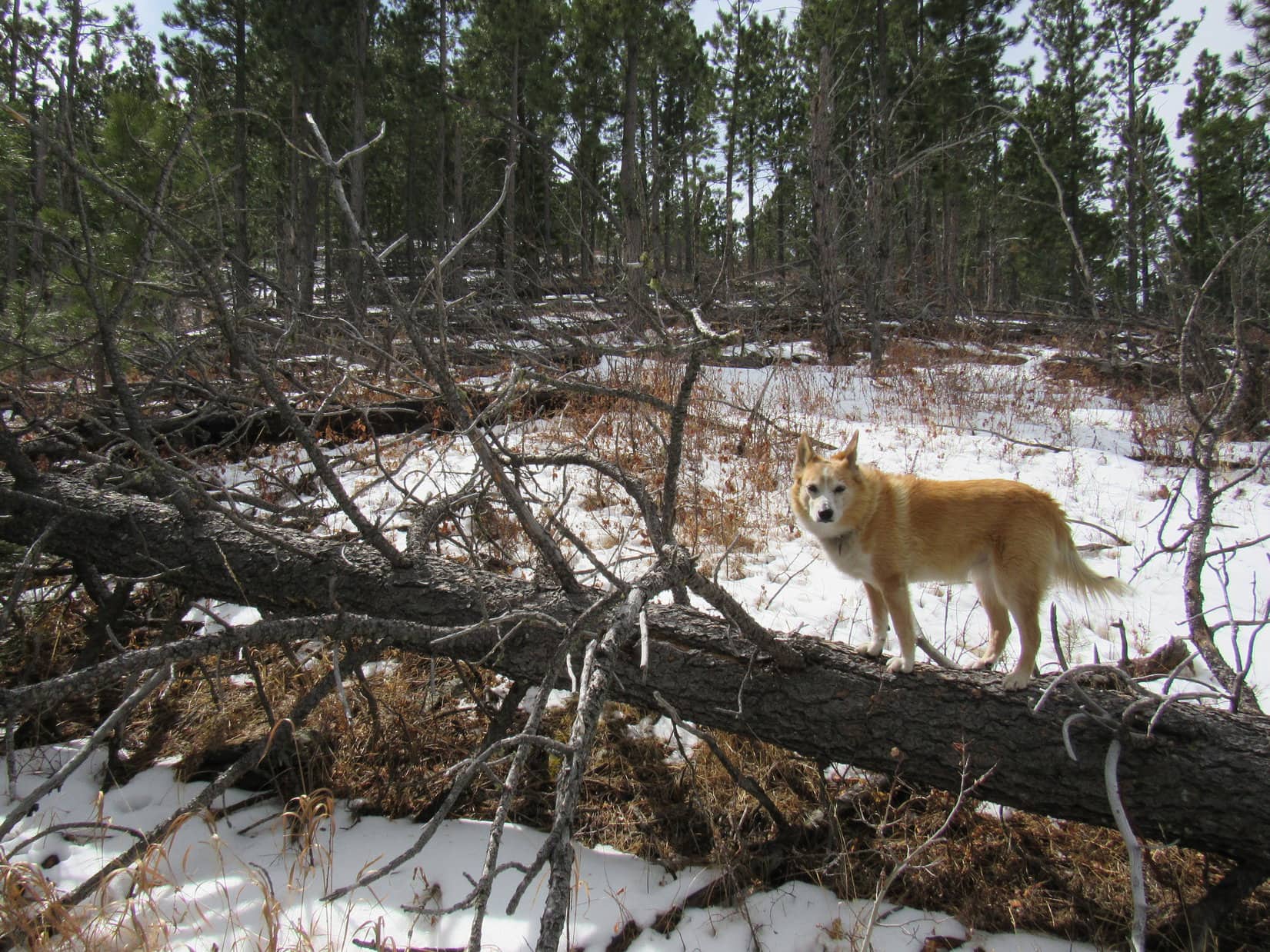
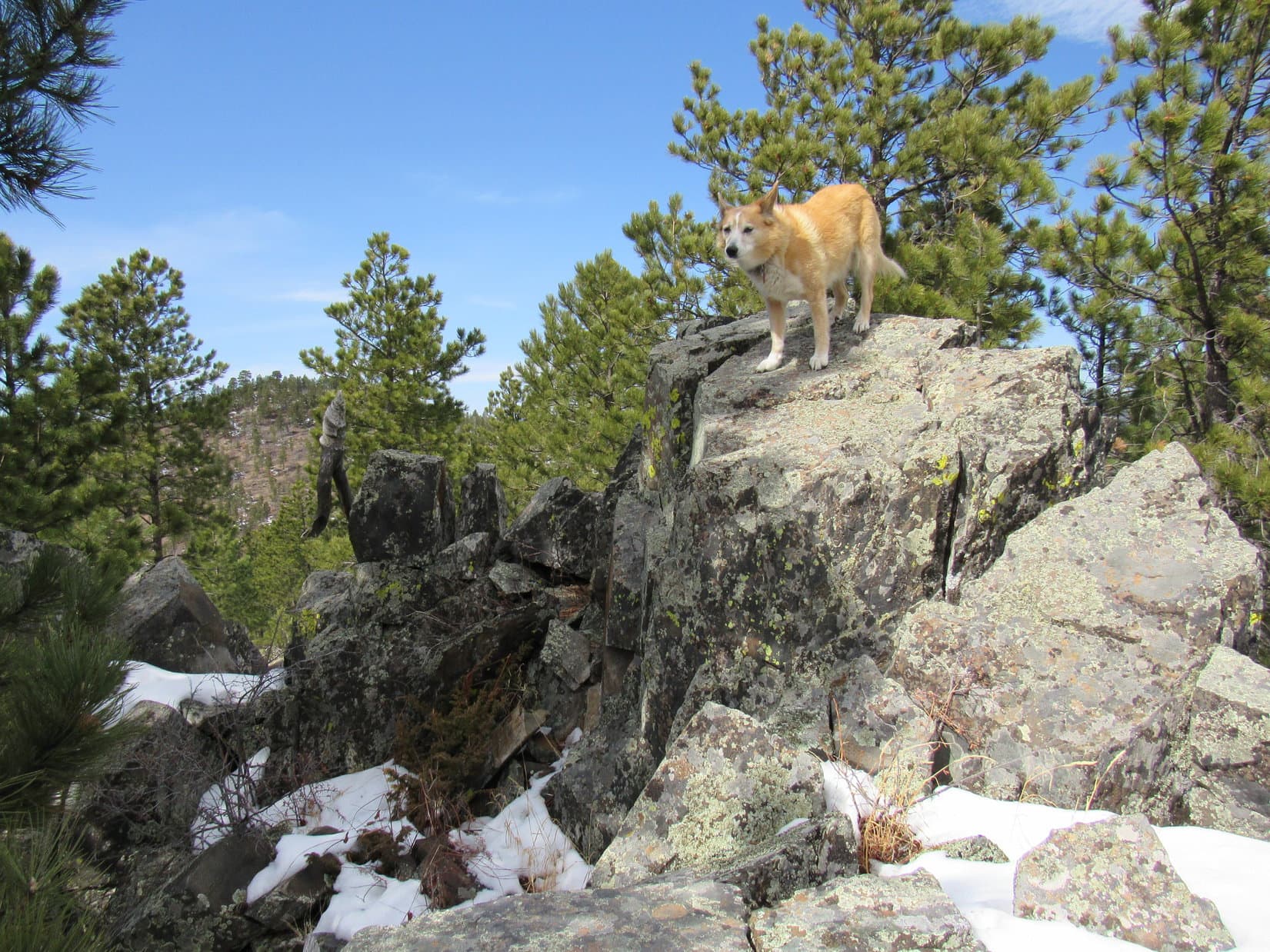
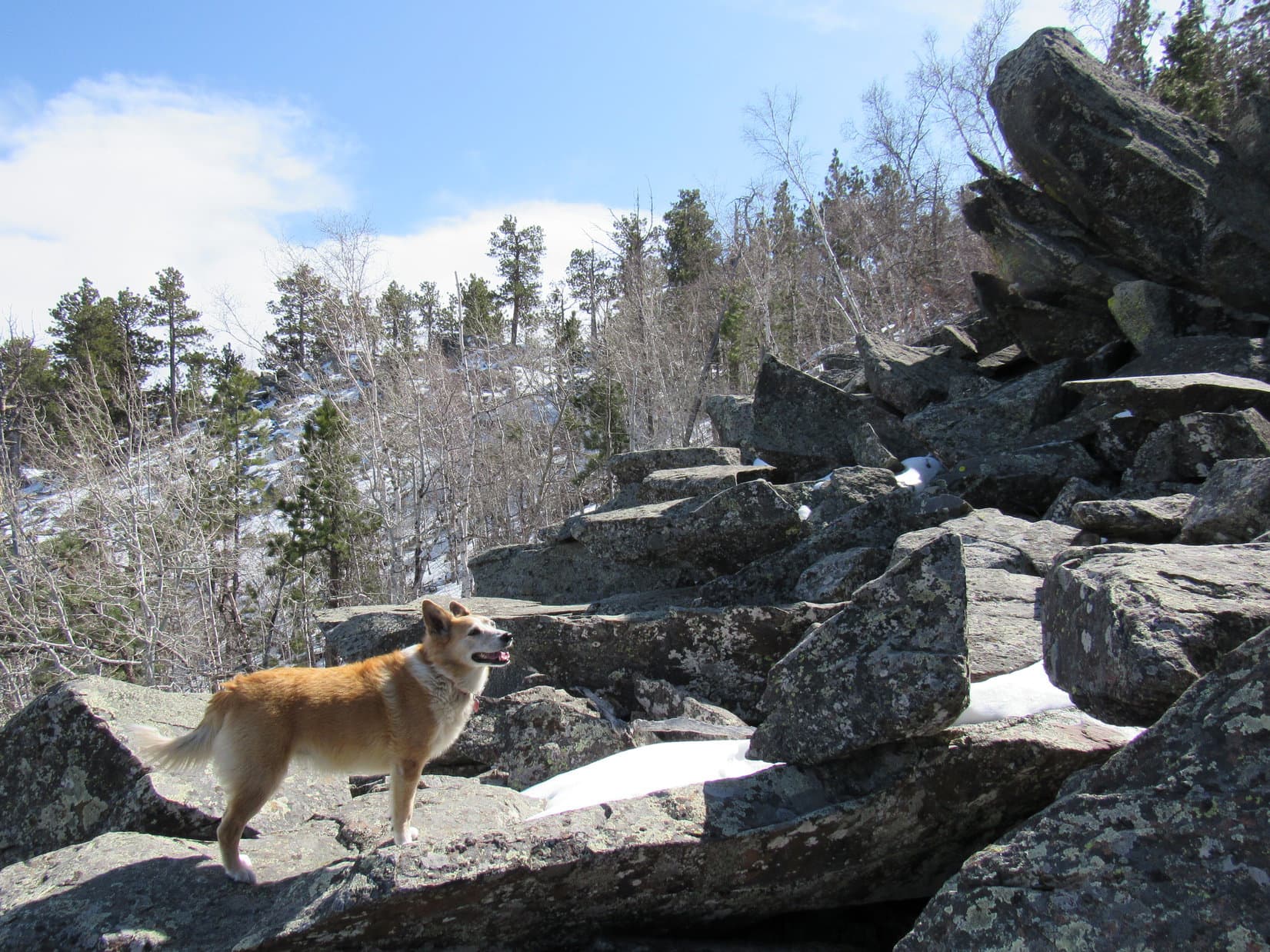
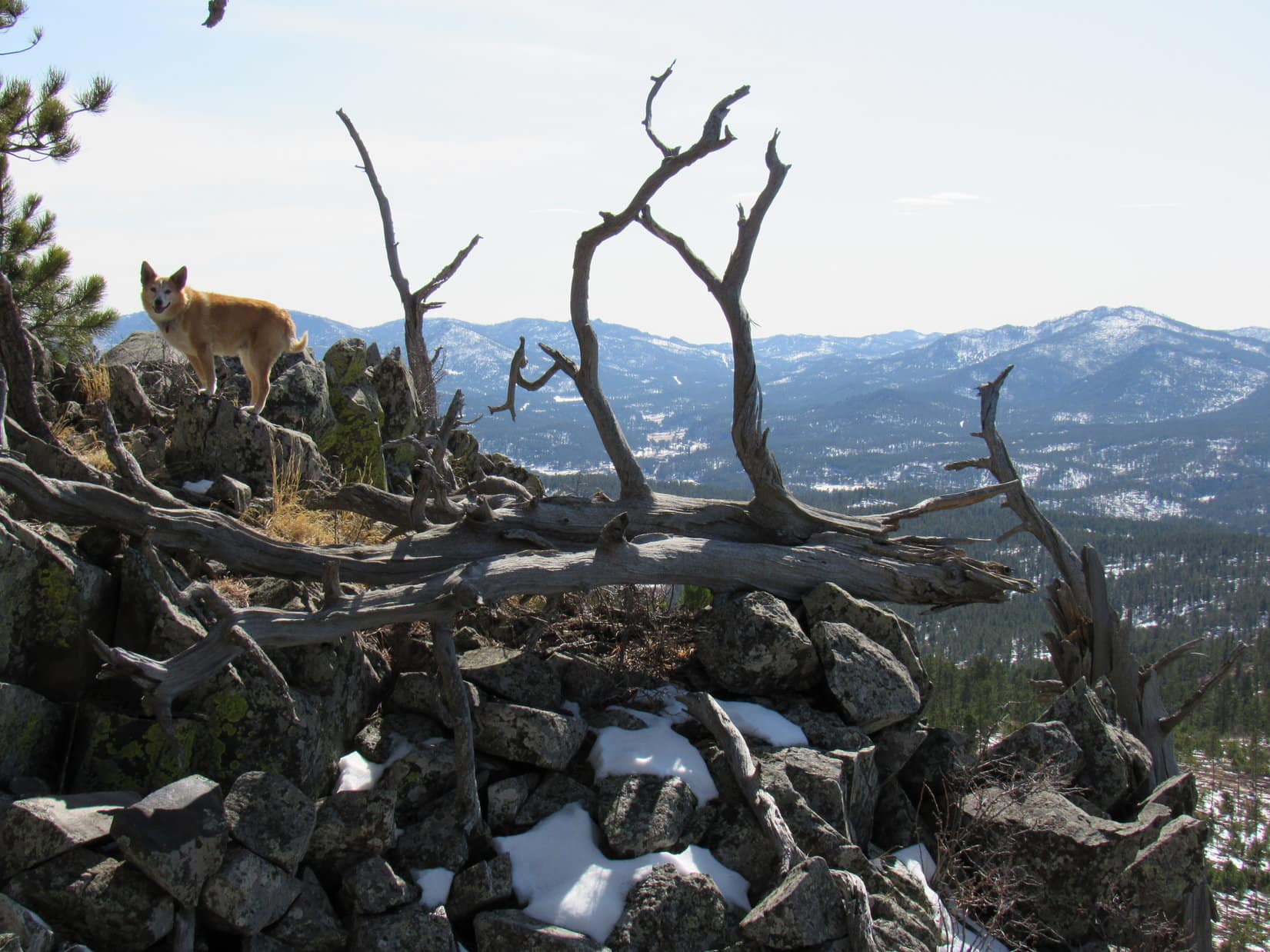
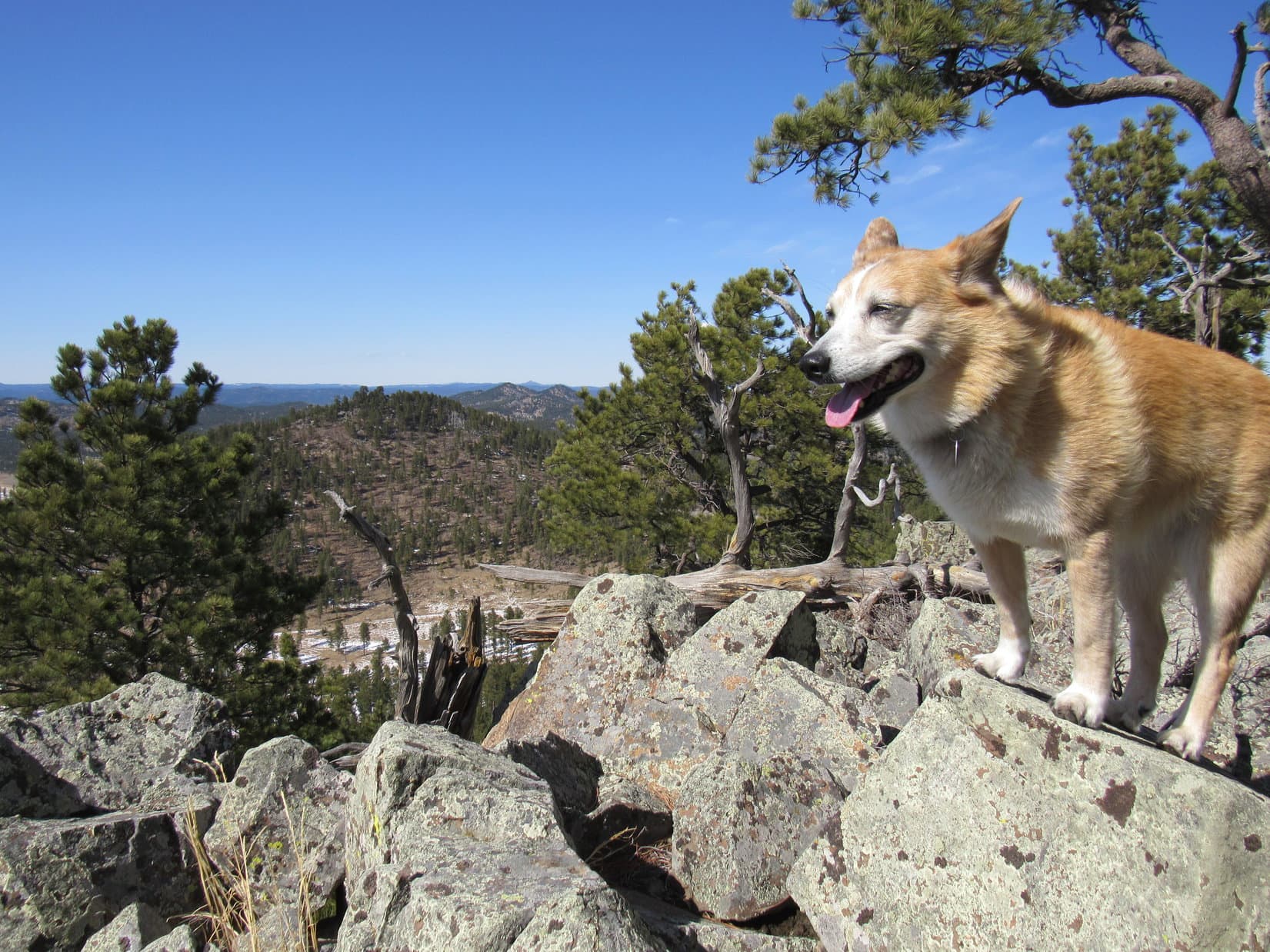
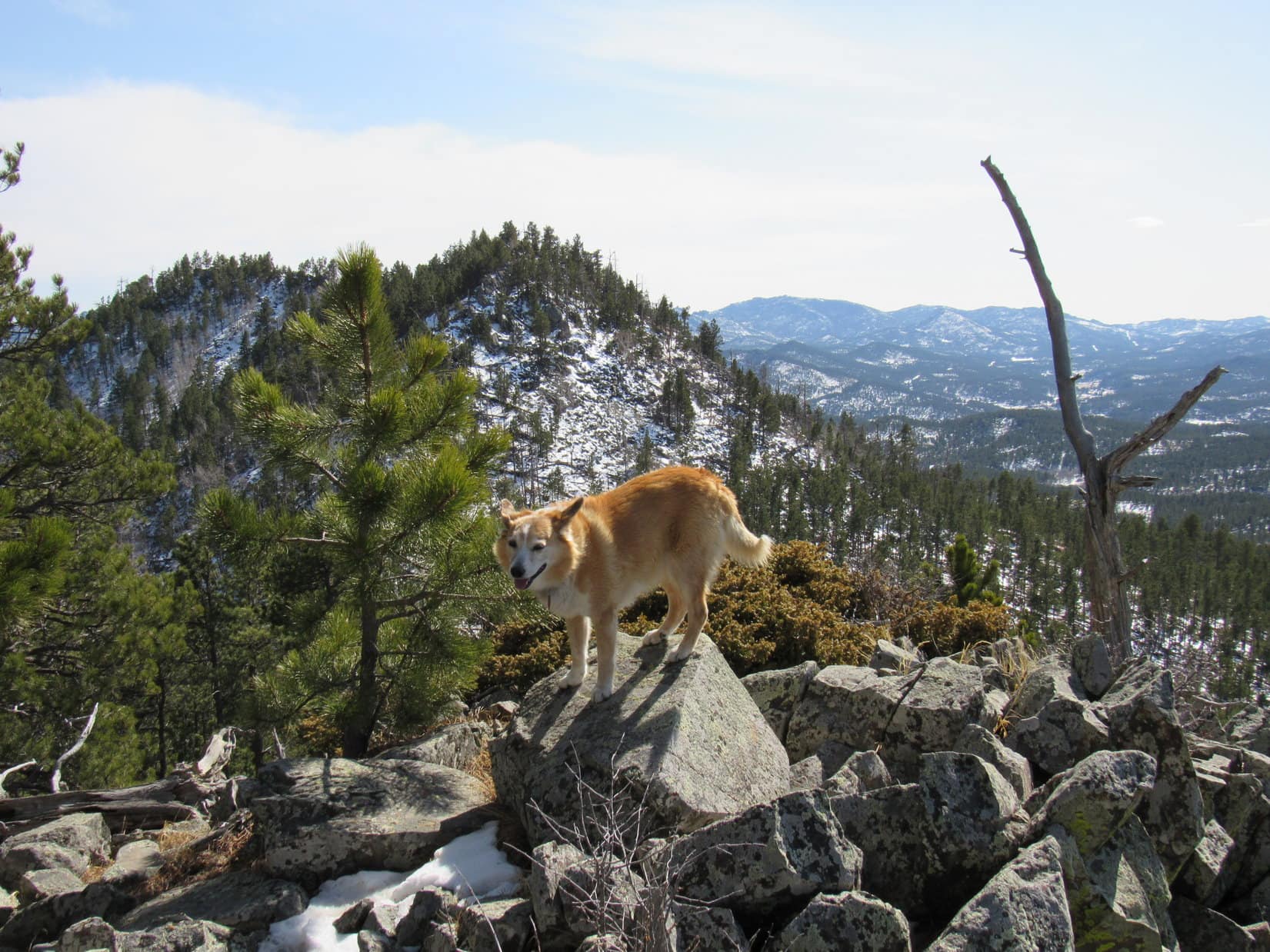
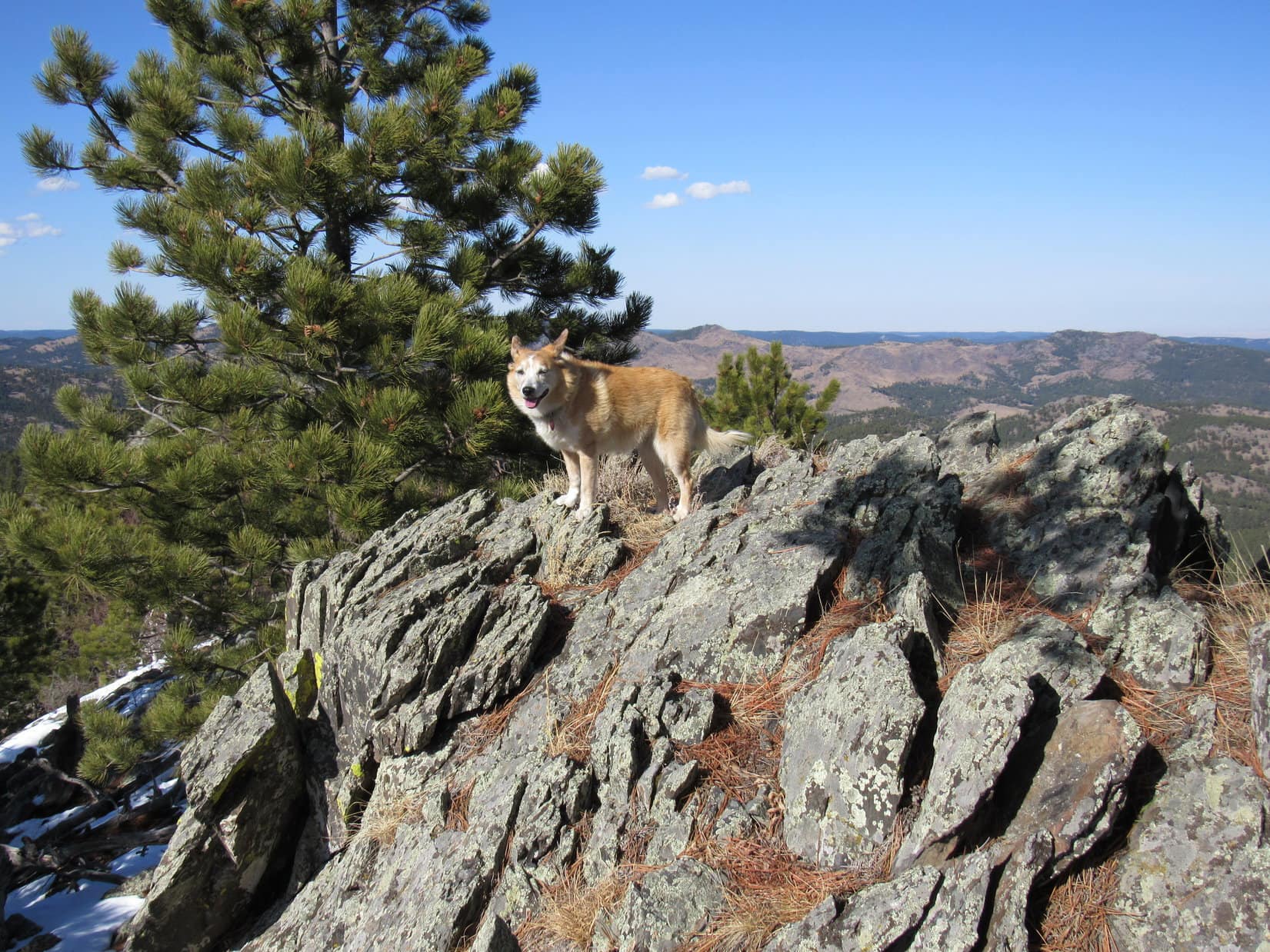
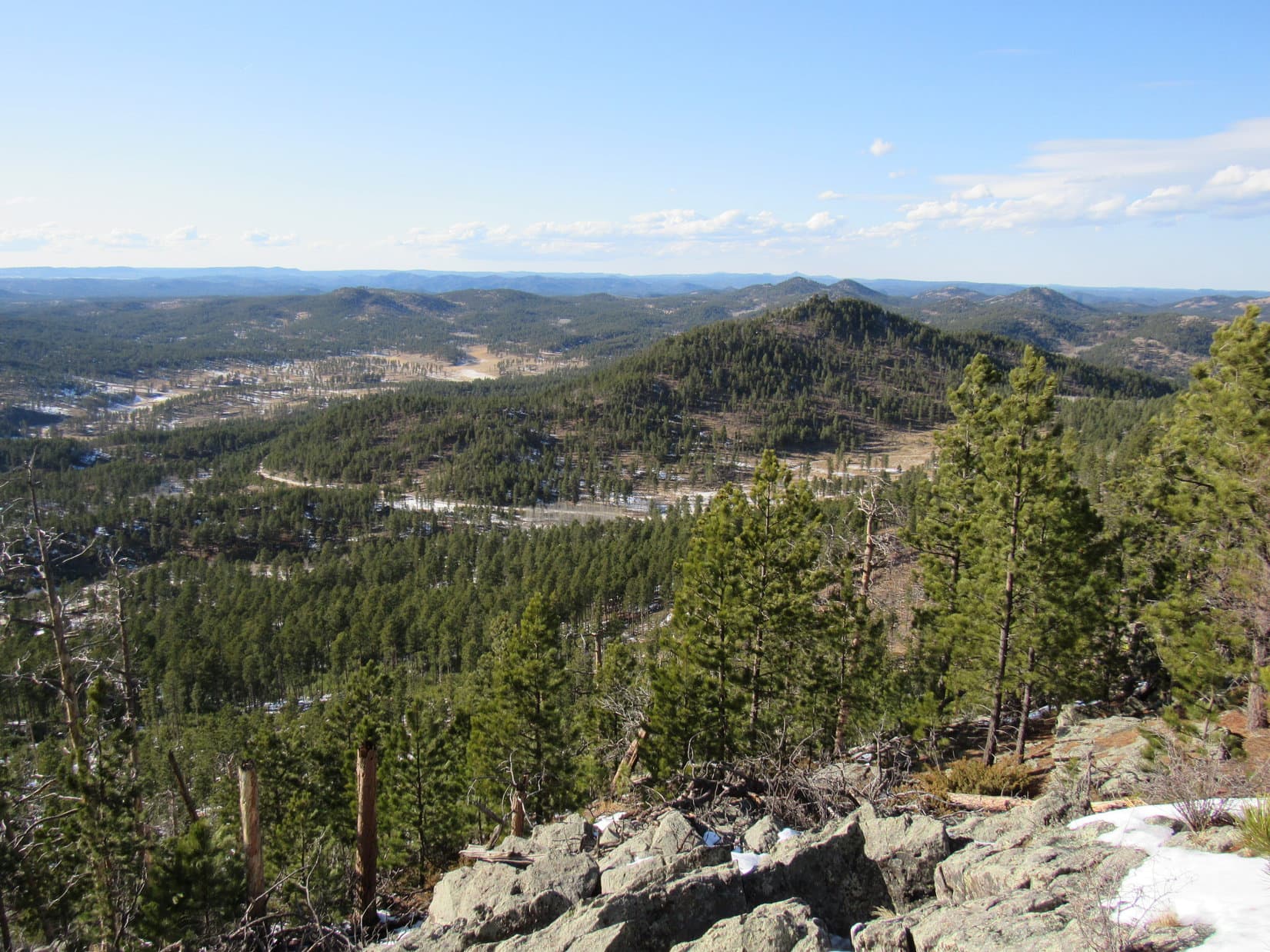
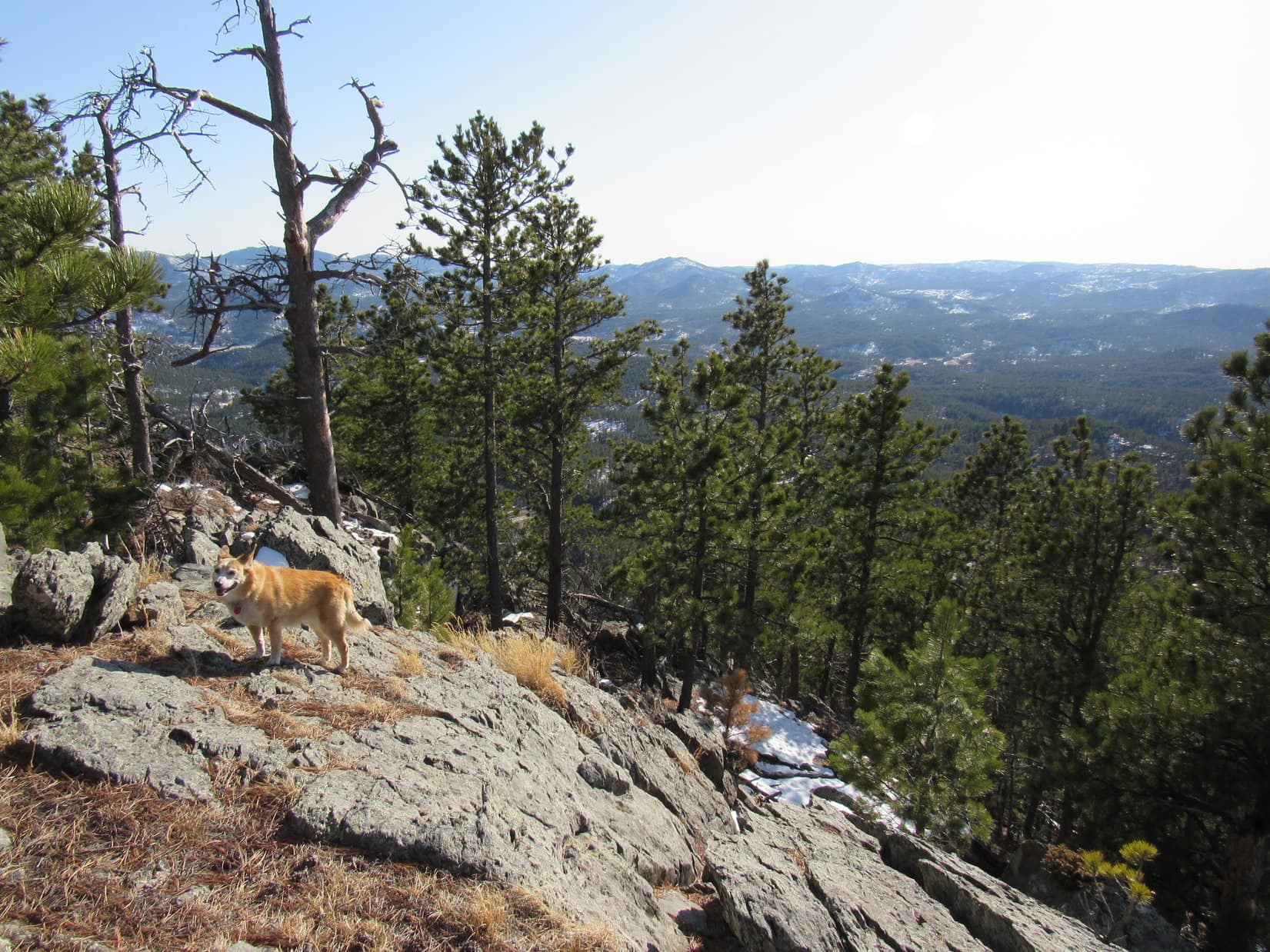
7:42 AM, 20ºF, Black Hills, USFS Road No. 282 just N of Hwy 16, W of Jewel Cave National Monument – A bank of fog filled the valley beyond the hill Lupe now stood on, paws in an inch of new snow that must have fallen overnight.  It had been 37ºF when the G6 pulled out of the driveway this morning, with a high in the 50’s expected.  So much for that.  20ºF here!

SPHP hadn’t bothered to check the forecast for anywhere else.  After passing Crazy Horse, everything had changed on the way into Custer.  Snow on the ground, and the temperature plunged as SPHP drove into a dense fog.  Stayed that way W of Custer, but this hill was a high point.  High enough to be above the fog.

I don’t know, Loopster!  Had no idea it was going to be like this.

We’re going to keep going aren’t we, SPHP?

I suppose.  Newcastle isn’t that much farther.  Guess we can go see how things are down on the plains, but if it’s all socked in, or any colder than this, that’ll be it.  No sense in doing Mile High Hill (5,280 ft.) in the fog!
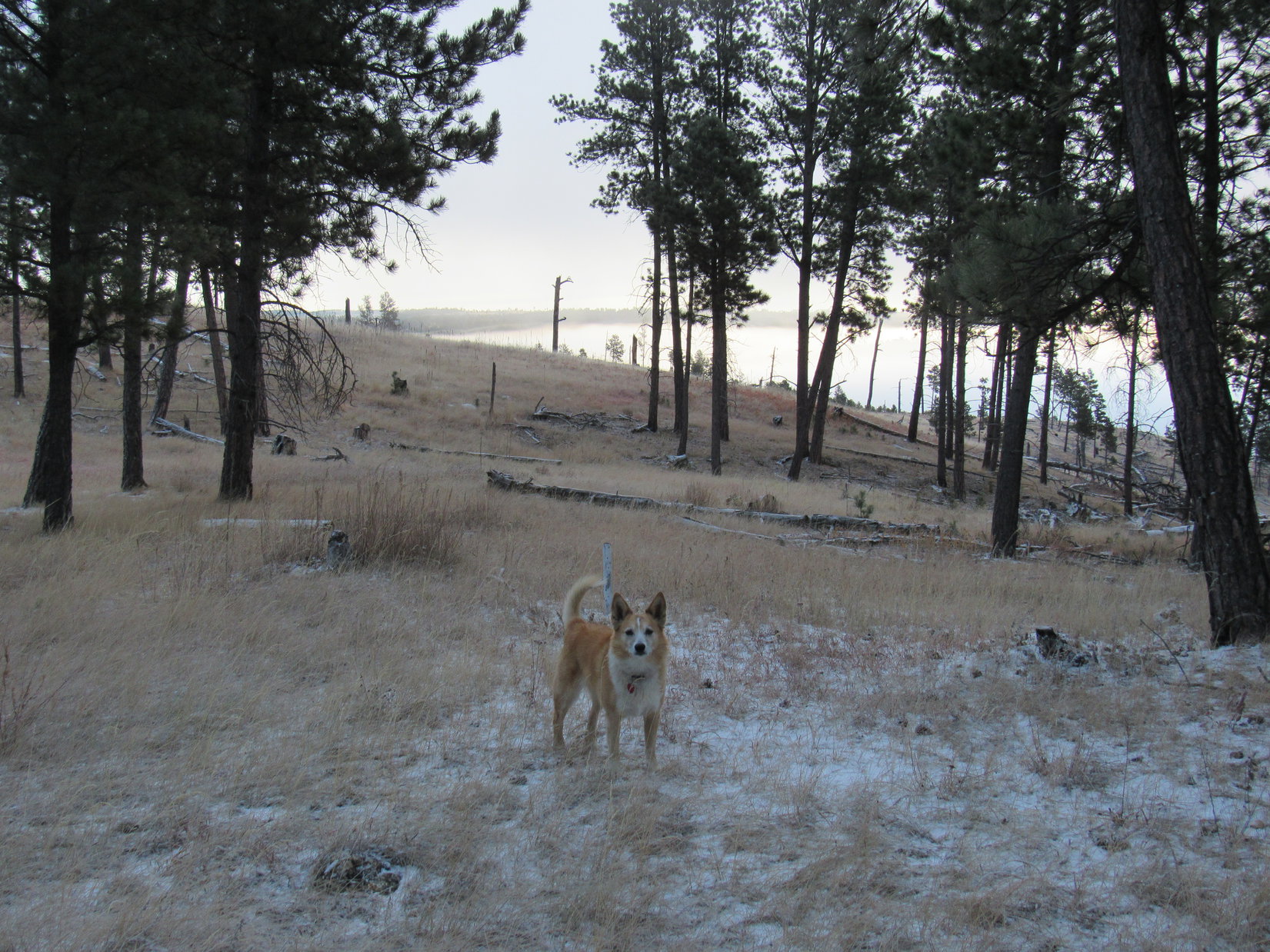
A frigid start for mid-October!

9:01 AM, 32ºF, corner of Lynch Road & Piney Creek Road – A mile back, SPHP had turned S off Hwy 450 at MP 37.1.  Now Lupe stood near the old Darlington school.  Conditions were considerably improved.  What had ultimately proven to be merely an extensive ground fog had broken up on the way here.  Blue sky now!  A heat wave, too, at a balmy 32ºF.

Lupe had been at this intersection several times in the past few years, as SPHP tried to figure out if it was even possible for the American Dingo to get to Mile High Hill.  This was as far as she’d ever gotten, but a little new information had been gleaned during each visit.  Last time Loopster had been here a few months ago, Piney Creek Road had been a sea of mud, but not now.  Mile High Hill was a go!

The big question was how close the G6 could get to it.  Piney Creek Road (Piney Canyon Road on the topo map) might still be 4WD territory.
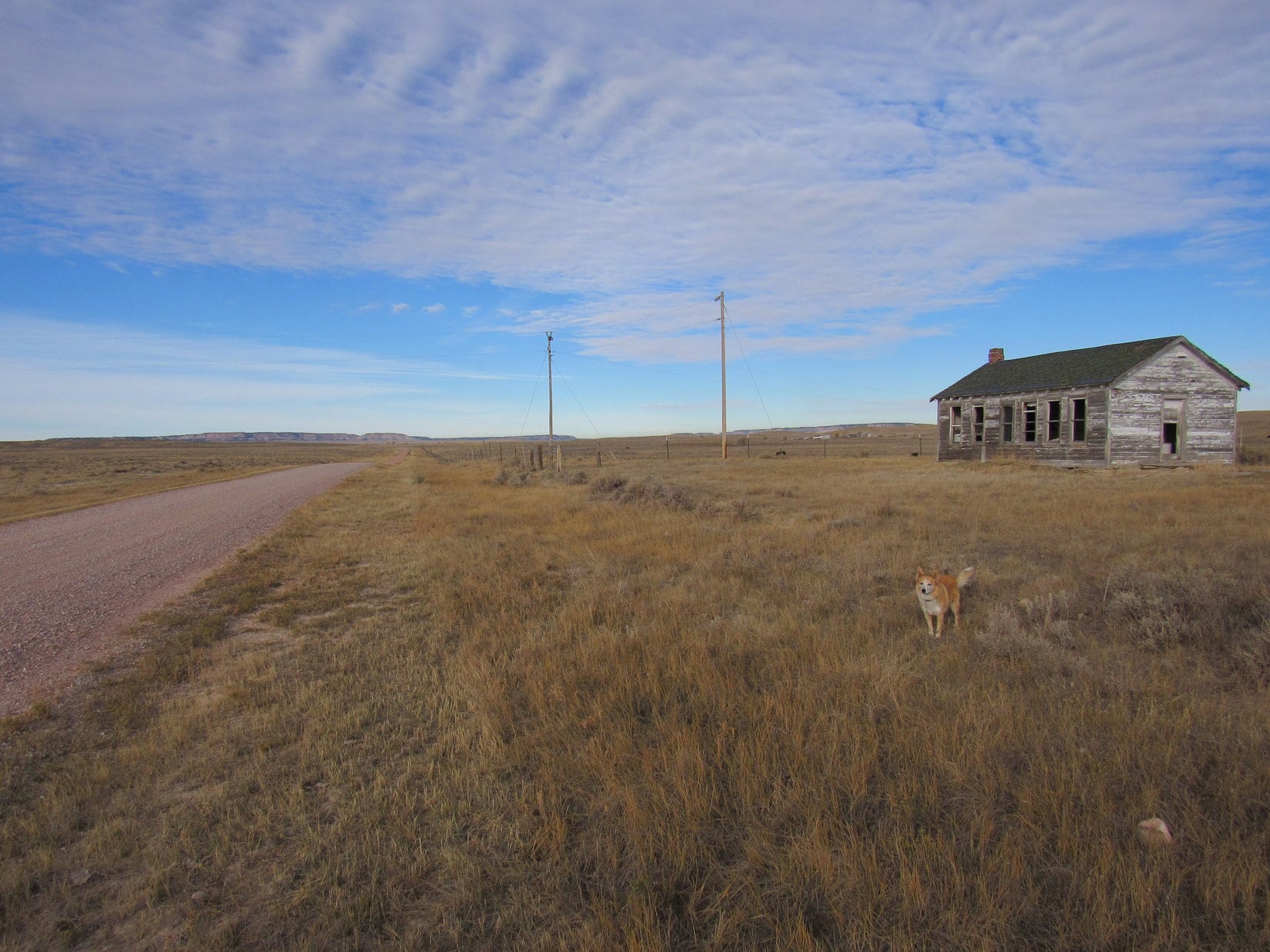
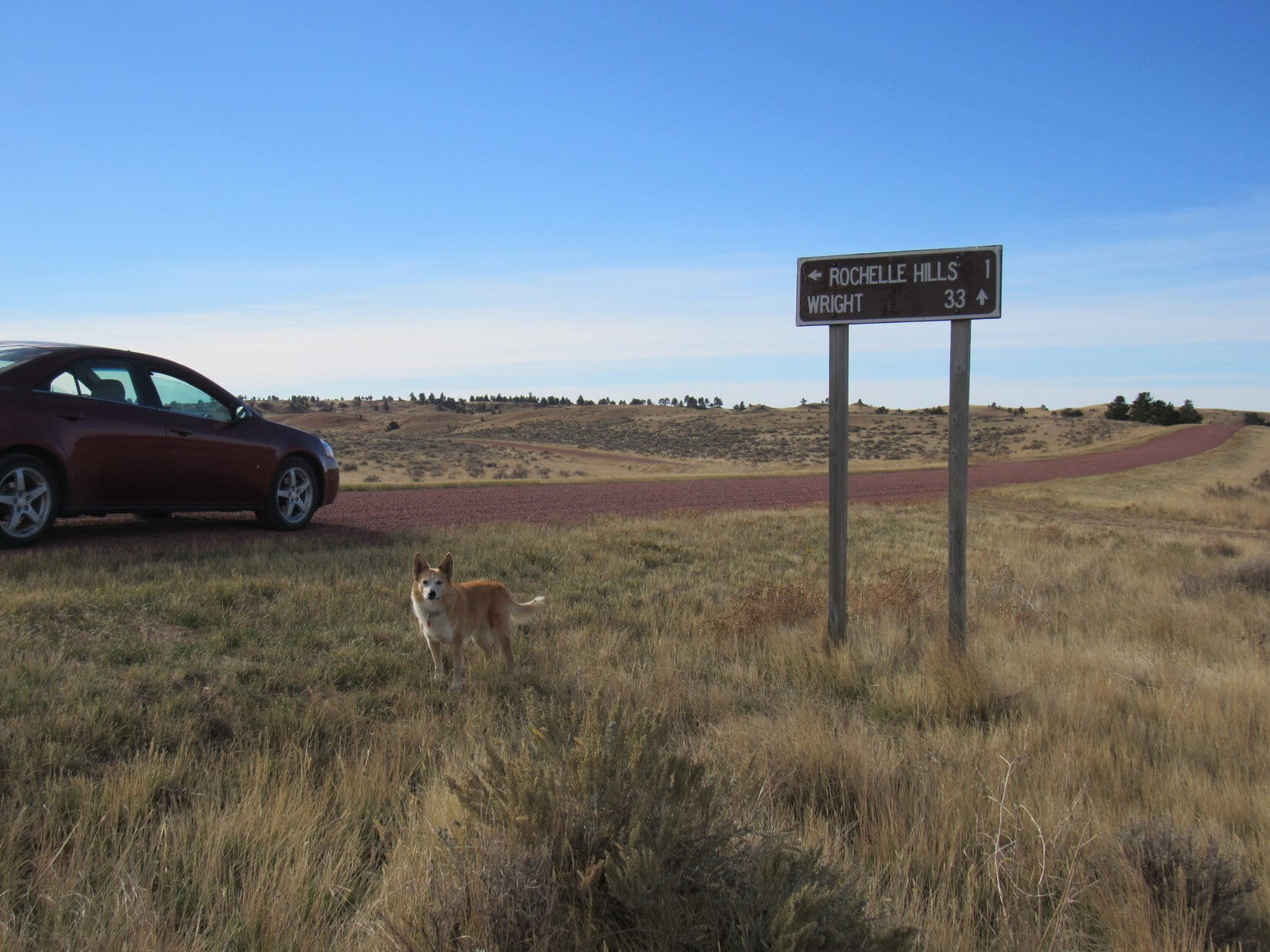
Piney Creek Road (L) and the old Darlington school (R) from the junction with Lynch Road. Photo looks W.

Still 9 or 10 miles to go just to get to the Rochelle Hills, a region of flat-topped ridges hundreds of feet high.  Incredibly, as the high point of the Rochelle Hills, Mile High Hill’s claim to fame was that it was one of only 19 “peaks” in the entire mountainous state of Wyoming with at least 25 miles of isolation, meaning no higher ground in a 25 mile radius in any direction.

Not expecting much of a climb, Lupe had plenty of time to stop at scenic points along the way.
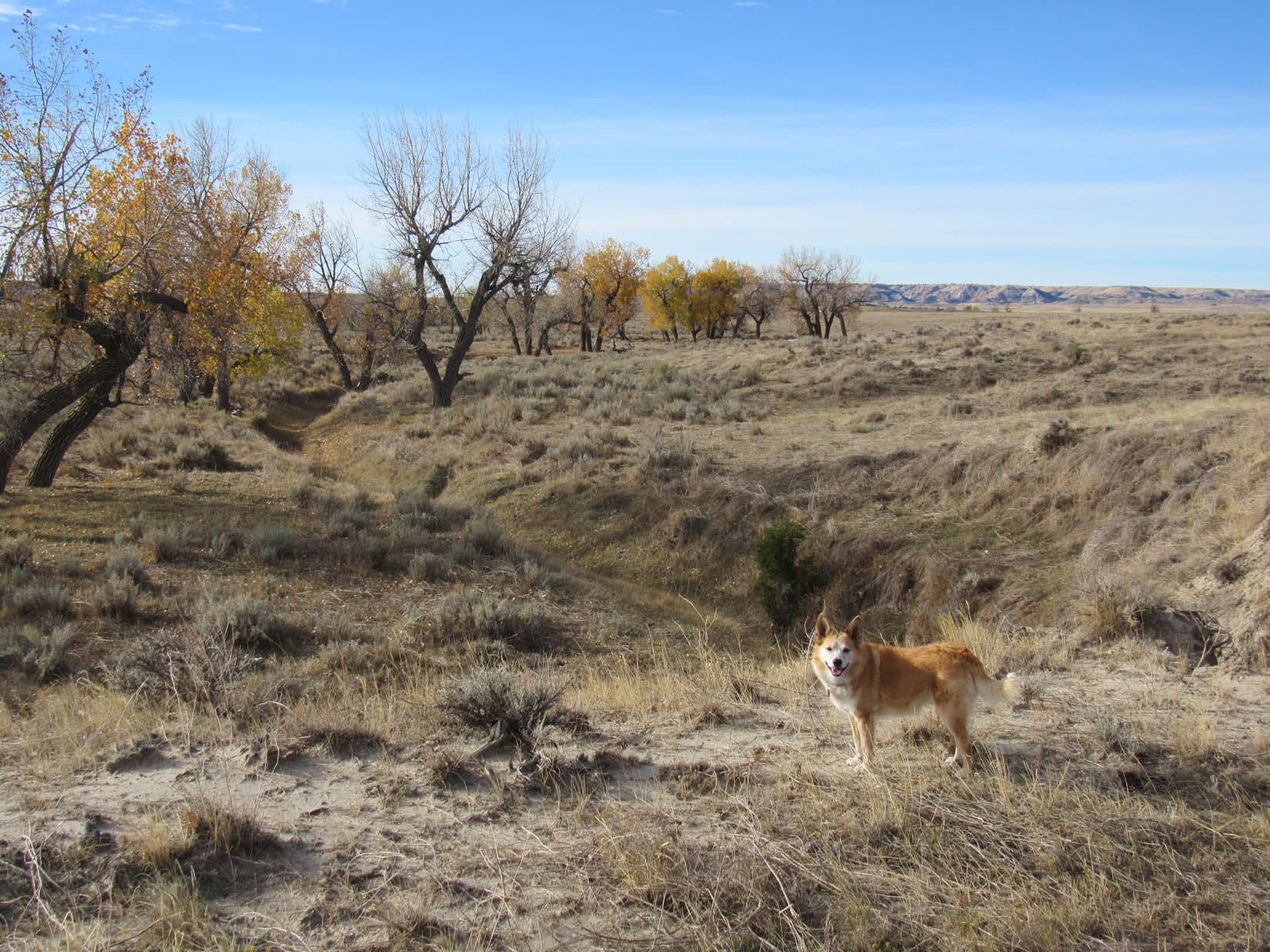
Looks like Piney Creek is all dried up this time of year! Photo looks SSW.
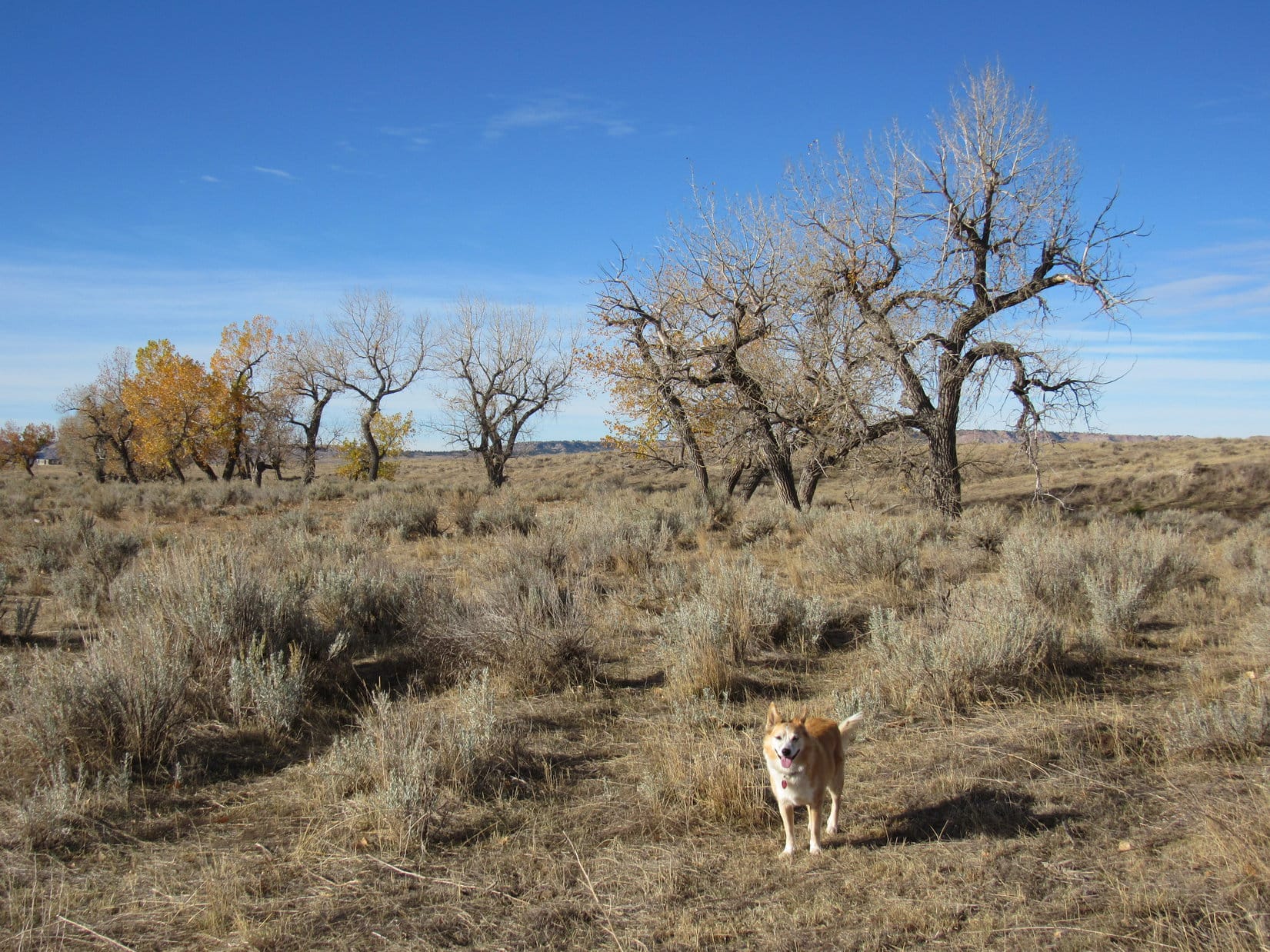
Love the old cottonwoods!
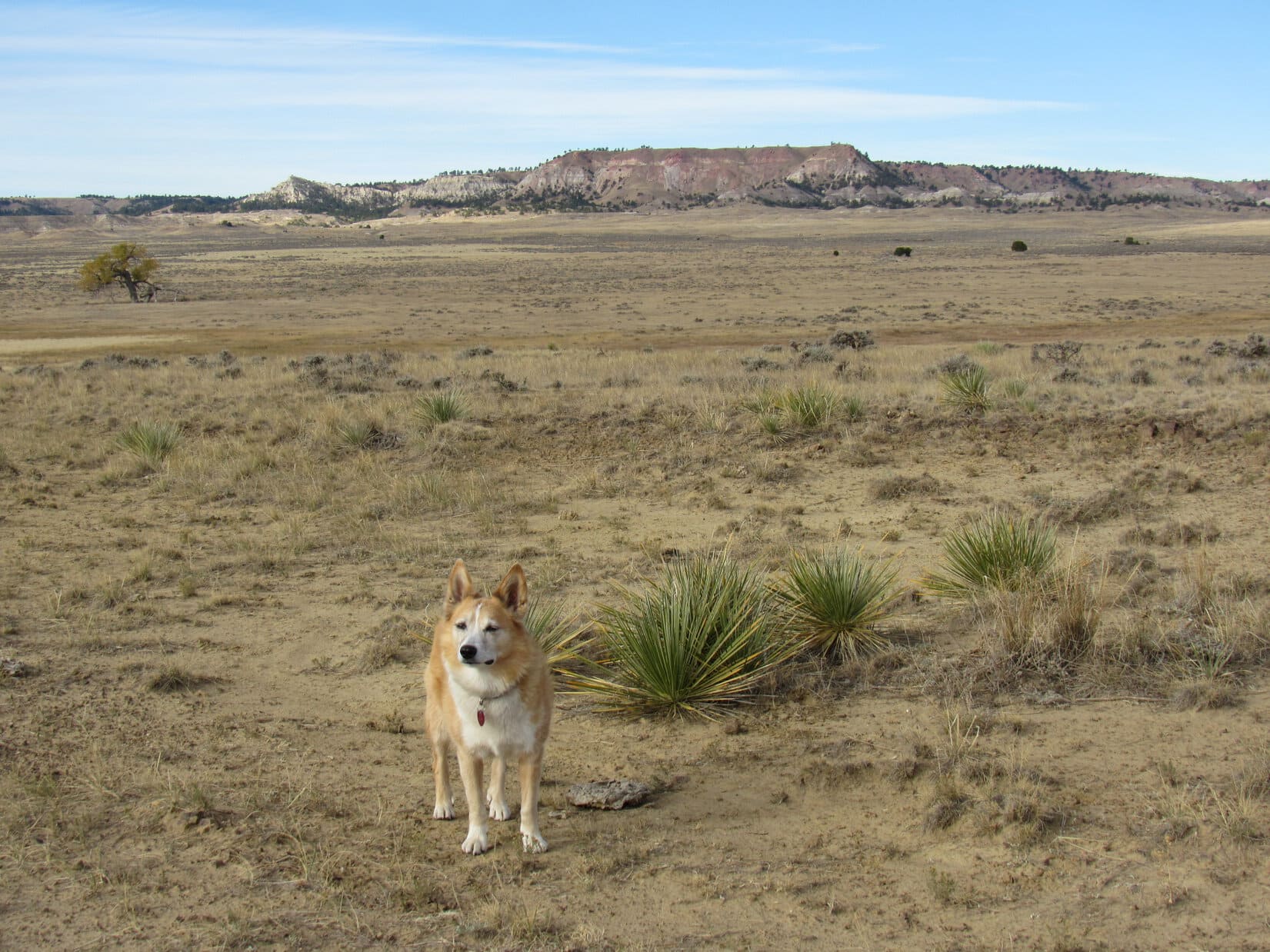
Approaching the Rochelle Hills. Photo looks WSW.
Mile High Hill is somewhere back in there! Photo looks S.

Piney Creek Road was fine for miles, although gravel so coarse that the G6 occasionally scraped bottom had been dumped in various low spots.  These points were all passable, but the whole road eventually began to deteriorate once it turned S a couple of miles from the Rochelle Hills.

However, the road soon turned W again, starting up Piney Canyon.  Here, Piney Creek Road had recently been repaired with a fine layer of reddish gravel.  Smooth sailing for the G6 the rest of the way up to the junction with Rochelle Hills Road!

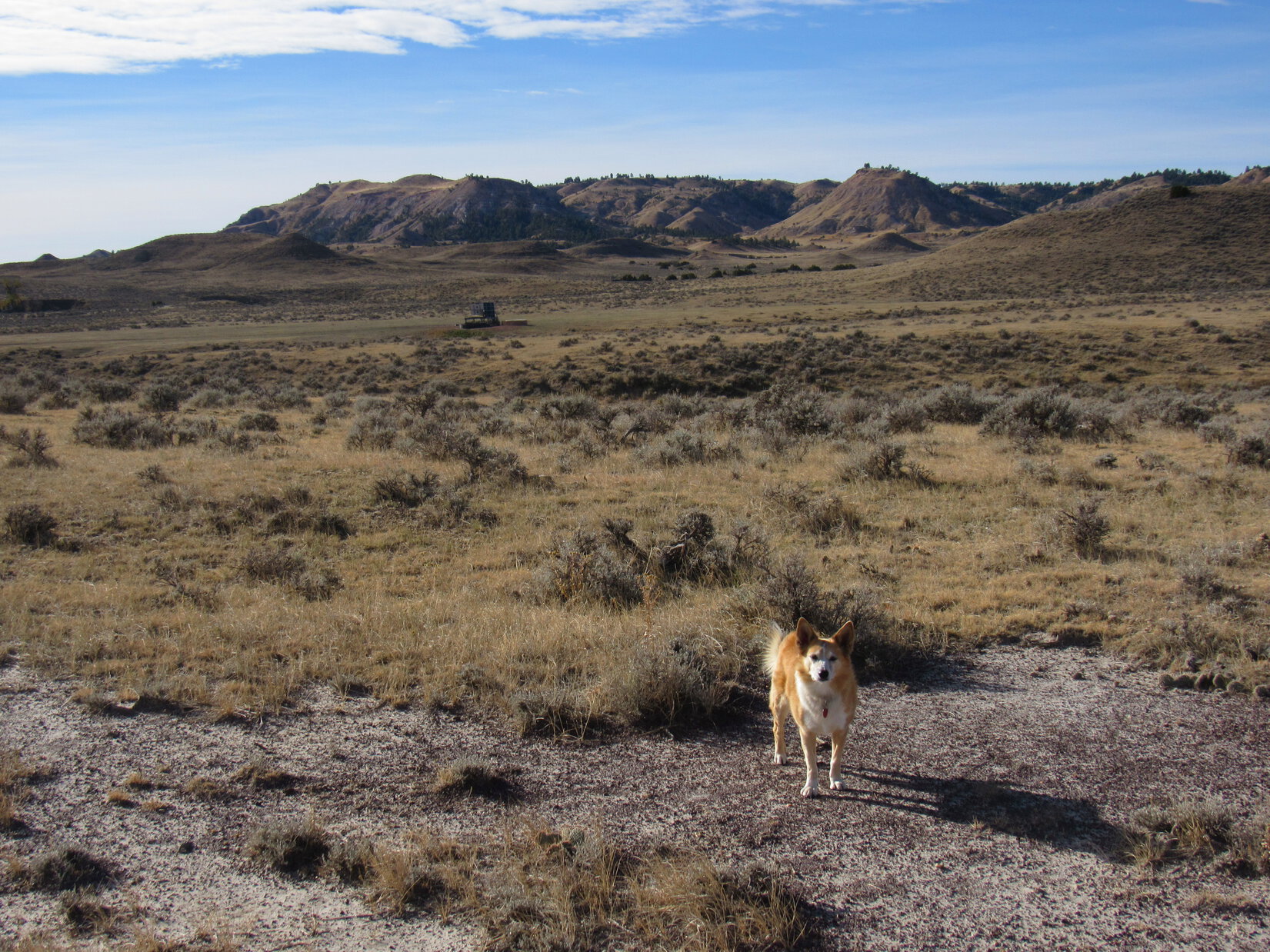
Heading up Piney Creek Canyon. Photo looks WSW.
Up on the plateau, near the junction with Rochelle Hills Road. Photo looks S.

13 miles from the Darlington school, right after Piney Creek Road went over a buried pipeline, the G6 reached the junction up on a plateau of sagebrush grasslands and scattered stands of junipers.

Turning SE on Rochelle Hills Road, SPHP drove slowly.  Rochelle Hills Road wasn’t nearly as good as Piney Creek Road had been.  Rocky and pot holey in spots, but still quite passable for the G6.  Although Mile High Hill was supposed to be on USFS land, “No Hunting or Fishing without permission on the Two Rivers Ranch” signs were posted on barbed wire fences.  The road crossed a couple of cattle guards along fence lines.

SPHP was watching for a 4WD road that veered off to the L.  This road was shown less than 2 miles from Piney Creek Road on the topo map, and went all the way to Mile High Hill.  Unfortunately, no sign of it.

At about 2 miles, SPHP did pass a road on the R (S) with a brown wand saying “1171D”, which seemed right, and shortly after “1171D”, a road appeared on the L marked “1171”, but the map showed nothing here, and that was the reverse of the expected order.  Off to the E, a tower could be seen at the far end of a vast field.

Maybe “1171” went over to the tower, which might have been installed since the map was created?  In any case, it was clear that Rochelle Hills Road was soon about to head down off the plateau.  Turning around, SPHP drove NW very slowly.  Nothing seemed any different than before, and the lack of any definitive landmarks other than some convoluted ravines made it hard to tell exactly what was what.

Back at Piney Creek Road, another check of the map yielded no further clues.  Turning around again, SPHP drove SE on Rochelle Hills Road once more, this time parking the G6 at a big flat area just past an open green gate.  This was a high spot (Point 5145 on the topo map) which couldn’t be too far W of where the missing road to the L was delineated on the map.  Lupe hopped out.

You seem to be lost, SPHP!

Yes, and no, Looper!  We’ve got to be close to where I thought we could just follow the 4WD road shown on the map all the way to Mile High Hill, but I haven’t seen it.  Might have to just head NE from here.  See that reddish road heading up onto a ridge about a mile away?  A couple of big ravines between here and there, but if we can get to it, I’m thinking that might be the road that goes to Mile High Hill.

The sign doesn’t help?

Sign?  What sign?

The big one on the green gate.

Huh?  Oh!  That sign.  Actually, I hadn’t noticed it, Loop, was always busy looking the other way for the non-existent 4WD road.  Let’s check it out!
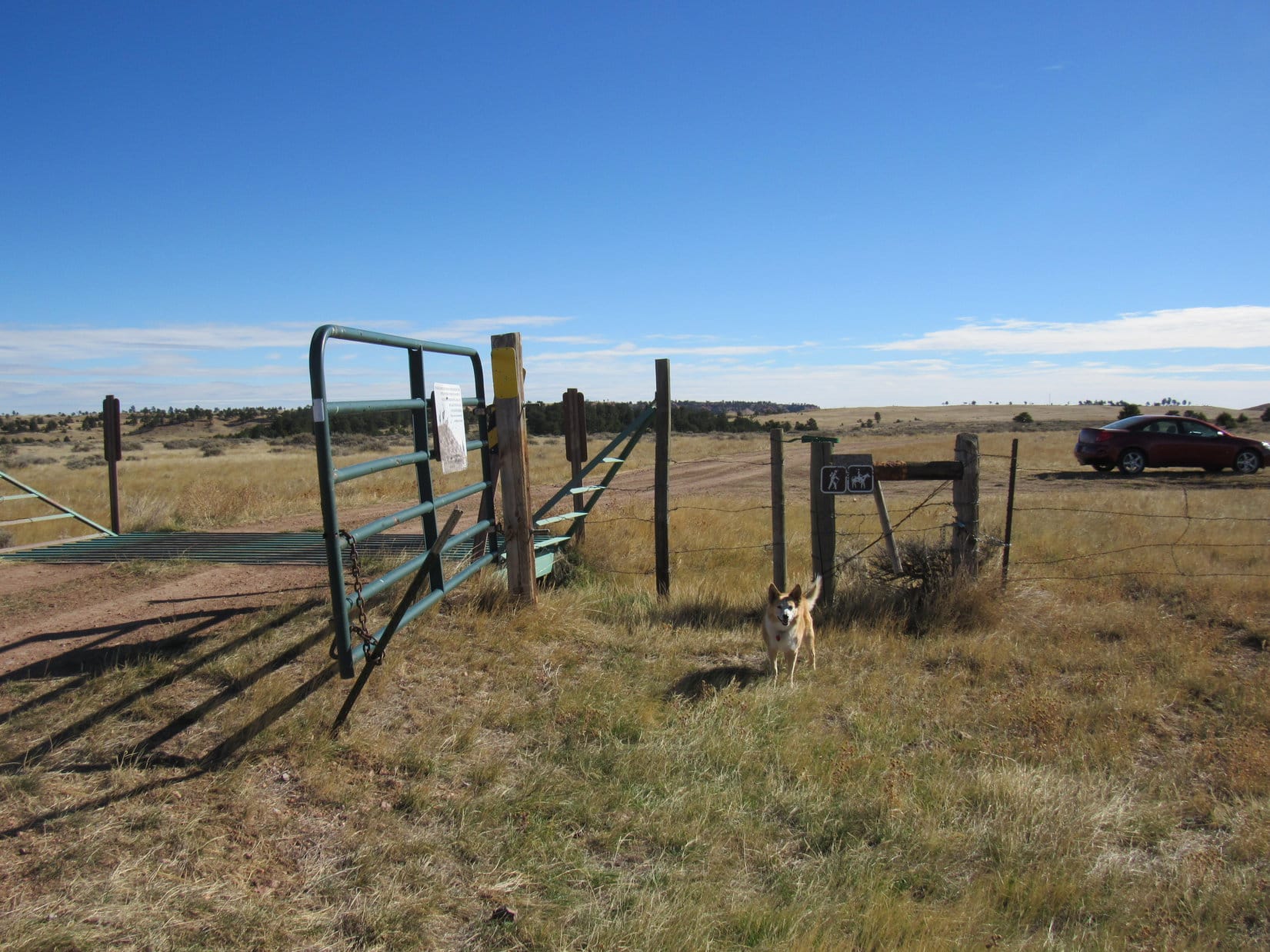
At Point 5145 along Rochelle Hills Road. Photo looks E.
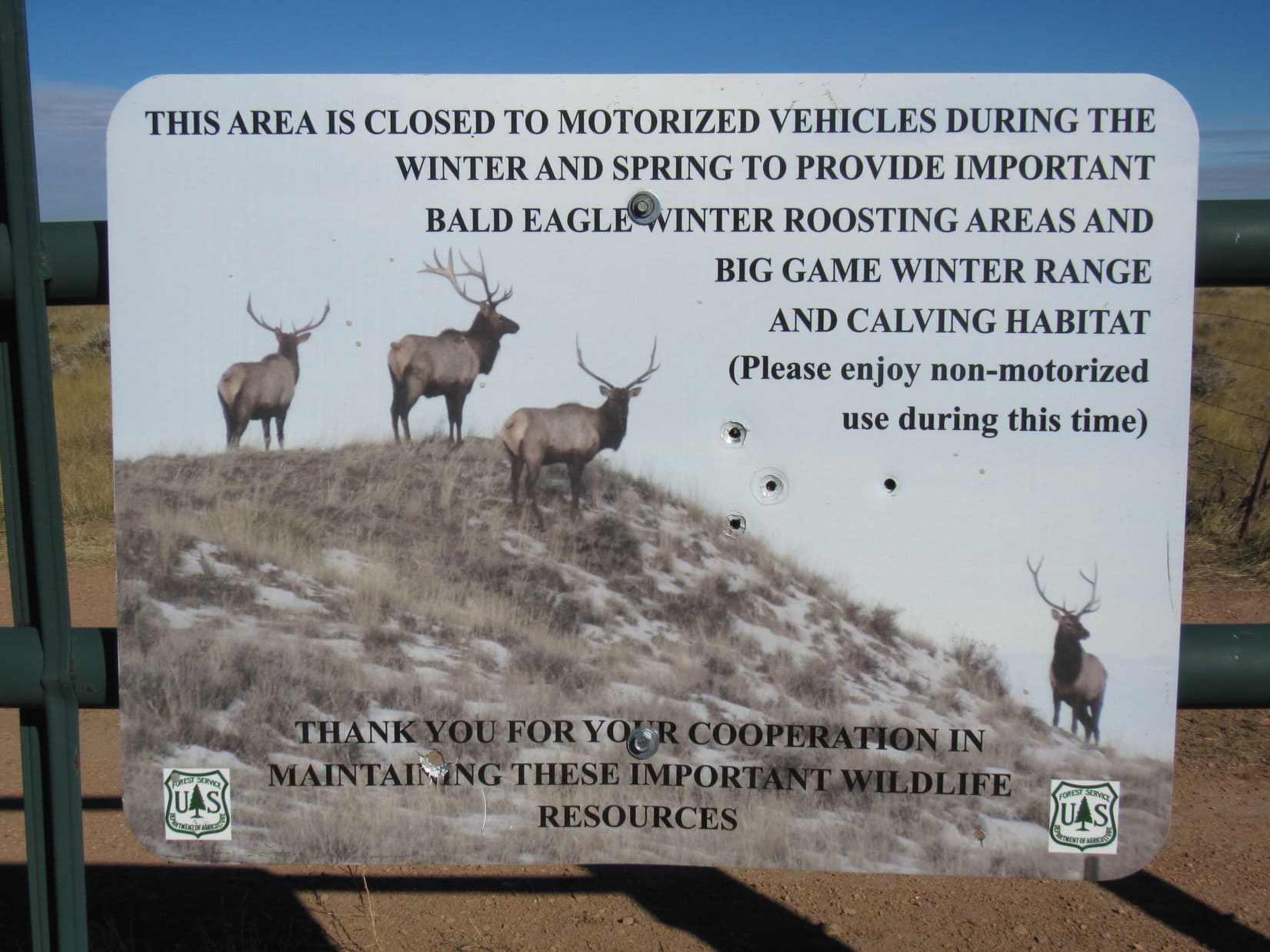
USFS sign on the gate.

In addition to the sign on the green gate, two smaller brown signs were along the barbed wire fence.  Hiking and horseback riding permitted.

Glad you pointed this sign out, Loopster!  Doesn’t explain what happened to our missing road, but at least I’m now 100% certain we’re parked on USFS land, and not on the Two Rivers Ranch.

So we’re going to start for Mile High Hill (5,280 ft.) from here?

Yeah, seems to be the thing to do.

11:02 AM, 38ºF, Rochelle Hills Road, green gate at Point 5145Crossing Rochelle Hills Road, Loopster set out heading NE across a grassy plain.  Sagebrush was ahead, and beyond it a ravine draining to the N.  Worried about cactus for Looper’s sake, SPHP was relieved to see little or none.

Upon reaching the sagebrush, the Carolina Dog turned E.  Descending a small side ravine, she followed it down to the big one, crossed it, and started up the other side.
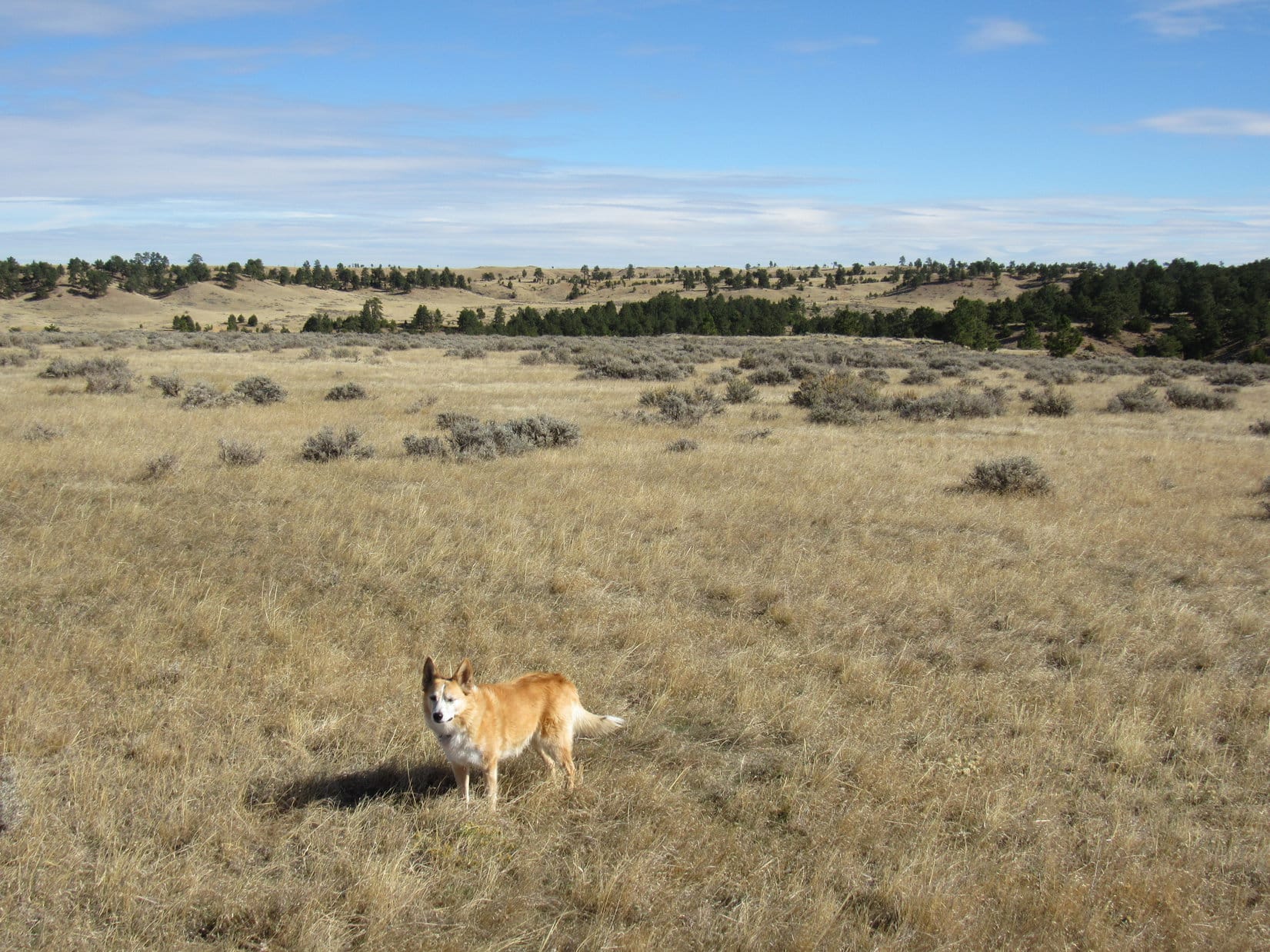
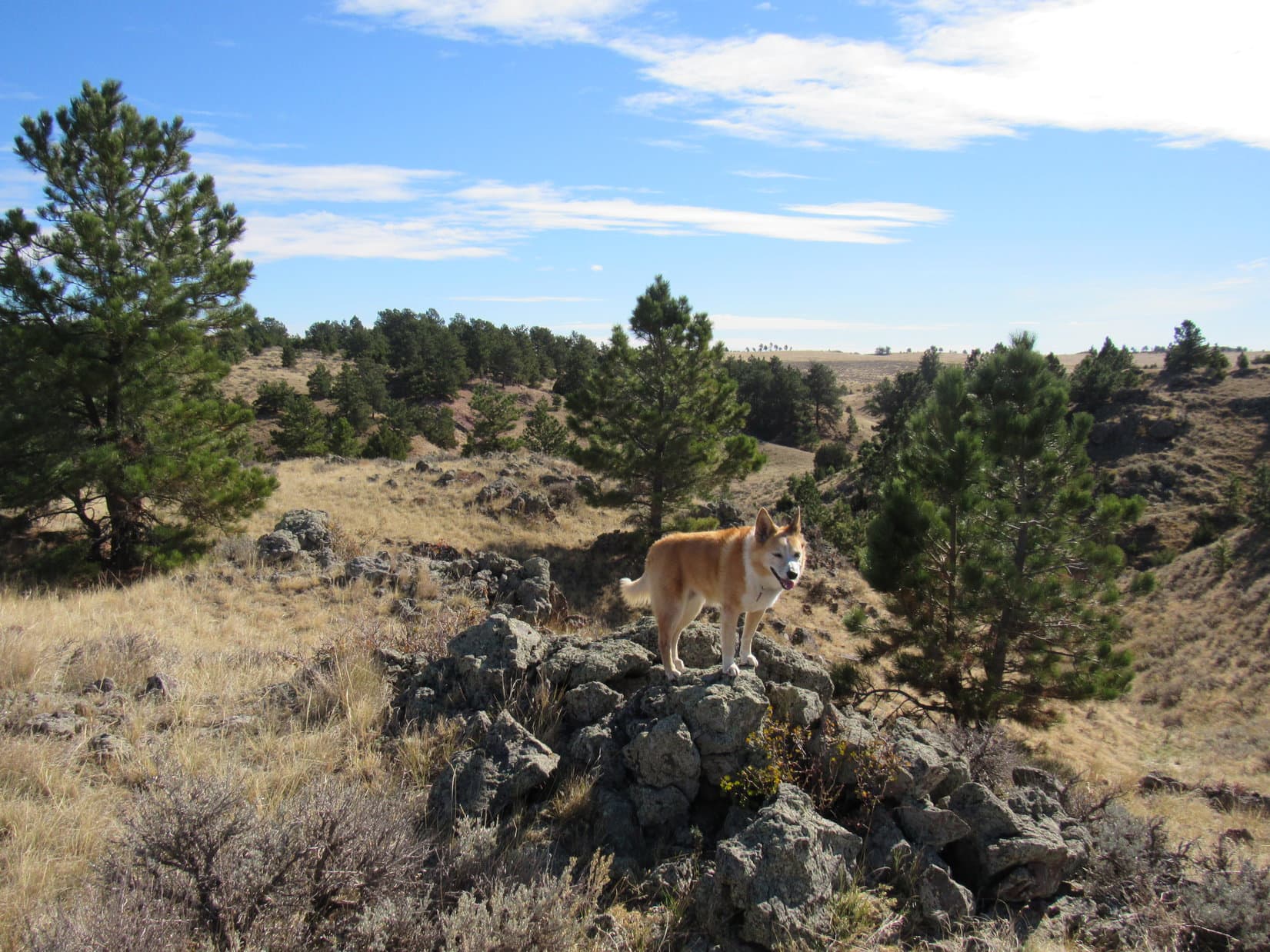
Heading out across the grassy plain. Photo looks NE.
About to descend into the side ravine (R). Photo looks E.
The main ravine after crossing it from the R. Photo looks SSE.
Looking SW back across the main ravine.

Continuing E through pine forest over a small hill, Lupe soon saw a gray and pink-sided ridge in the distance.  A road was already in sight not too far away!  Loop headed down to it.

Starting down the other side of the hill after crossing it. Photo looks ENE.
The gray and pink-sided ridge, with the road in the foreground. Photo looks ENE with help from the telephoto lens.
Heading for the road. Photo looks ENE.

Didn’t take Loop long to reach the road.  Well, that was easy!  No worries about cacti now!  This road might even be No. 1171, if it curved this way instead of going to the tower?  Lupe could check that out on the way back.  In the meantime, she followed the road N.  Near the bottom of a gentle slope was a marker for the buried pipeline.
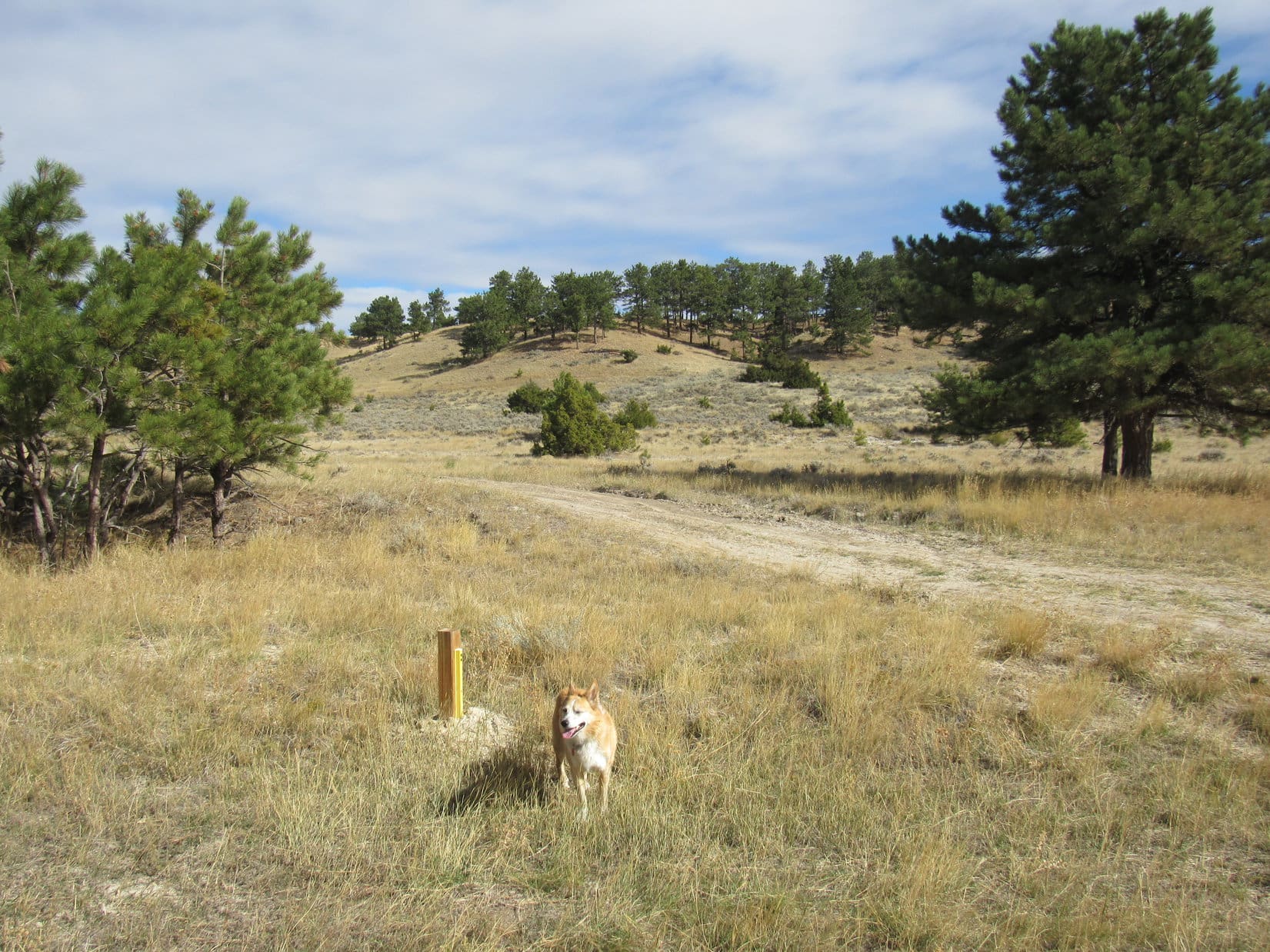
By the buried pipeline marker. Photo looks NNE.

Continuing N, the American Dingo passed W of low pine-forested hills.  The road then began to curve NE.  Directly ahead was the reddish road SPHP had seen from the G6.

Approaching the reddish road visible from back at the start. Photo looks NE.

Beyond the reddish segment, which led up onto a ridge, the road curved SE climbing more slowly.  Things were matching up with the topo map.  Seemed like Loop must be on the right track!  SPHP felt confident that the Carolina Dog really was on the road to Mile High Hill.

A high spot was ahead.  The road curved N again just before getting to it.  Looper left the road to take a look, and was rewarded with impressive views of the upper NW Keyton Creek drainage.
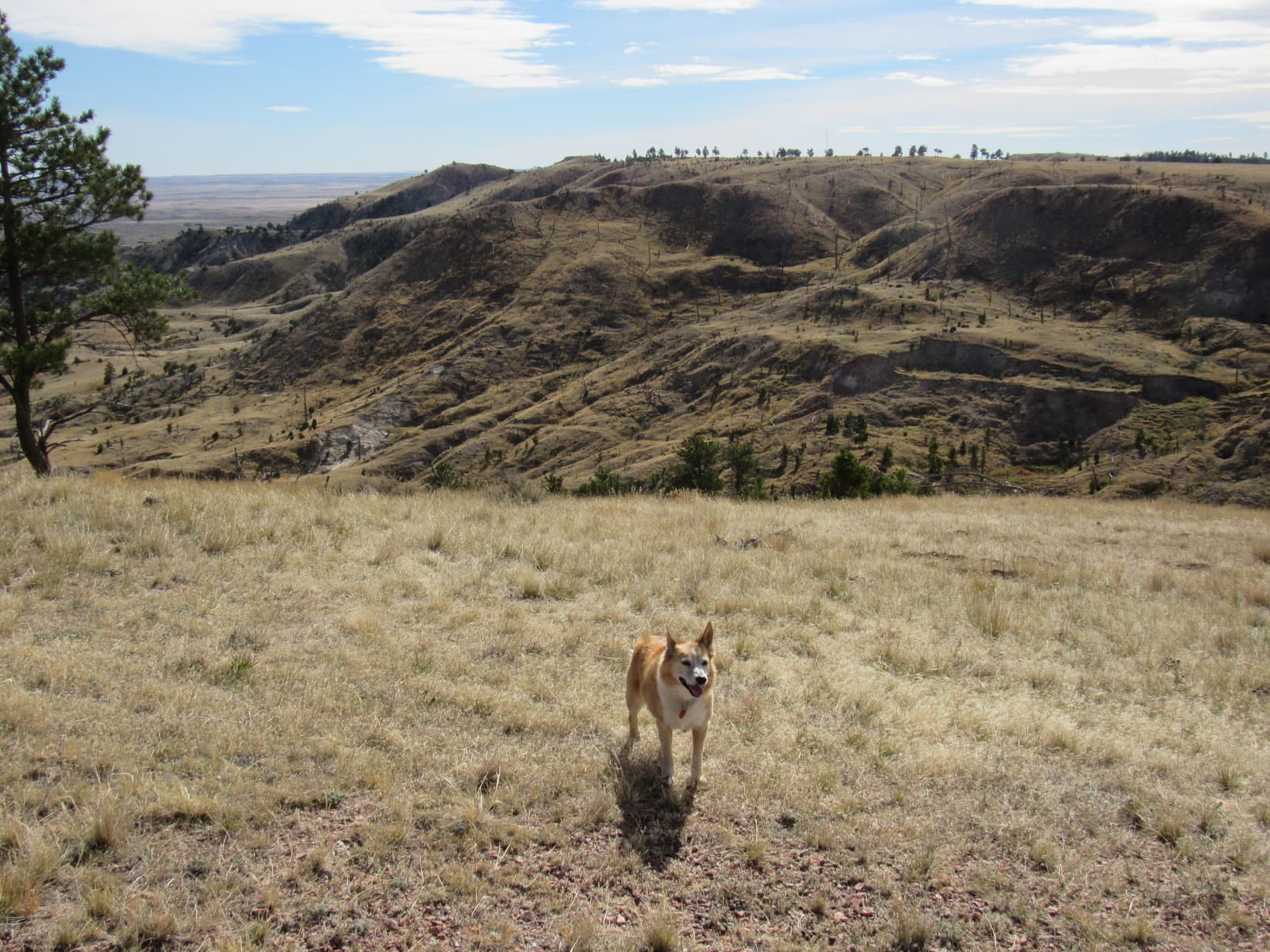
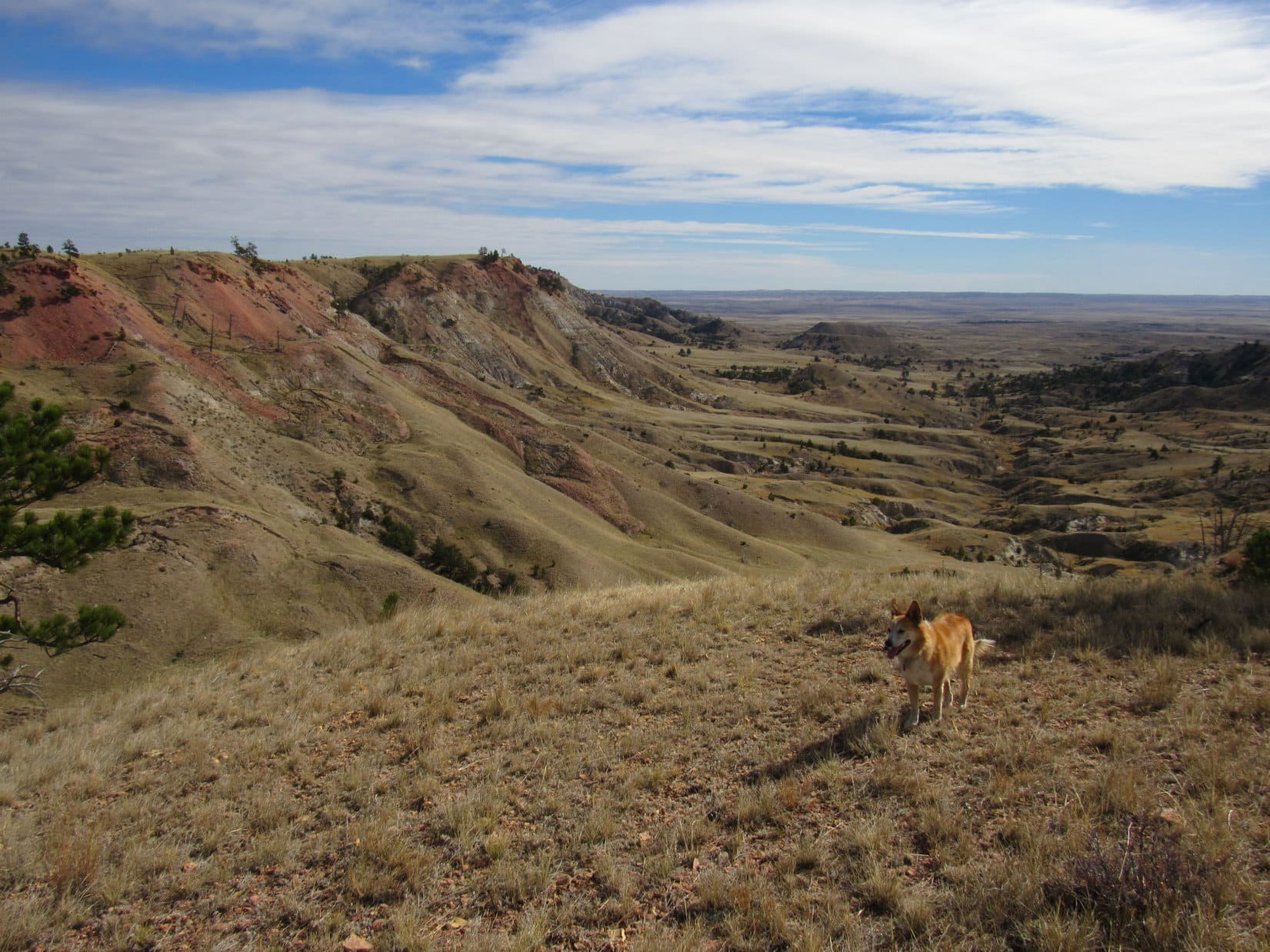
Looking S across part of the Keyton Creek drainage. The tower Lupe had seen earlier from the G6 was visible to the naked eye on the far plateau (Center).
Looking SE down Keyton Creek (R).

Returning to the road, it immediately swooped down into a minor saddle to the N.  After climbing up onto a plateau on the far side, the road again resumed a SE course.  A vast region was visible ahead.
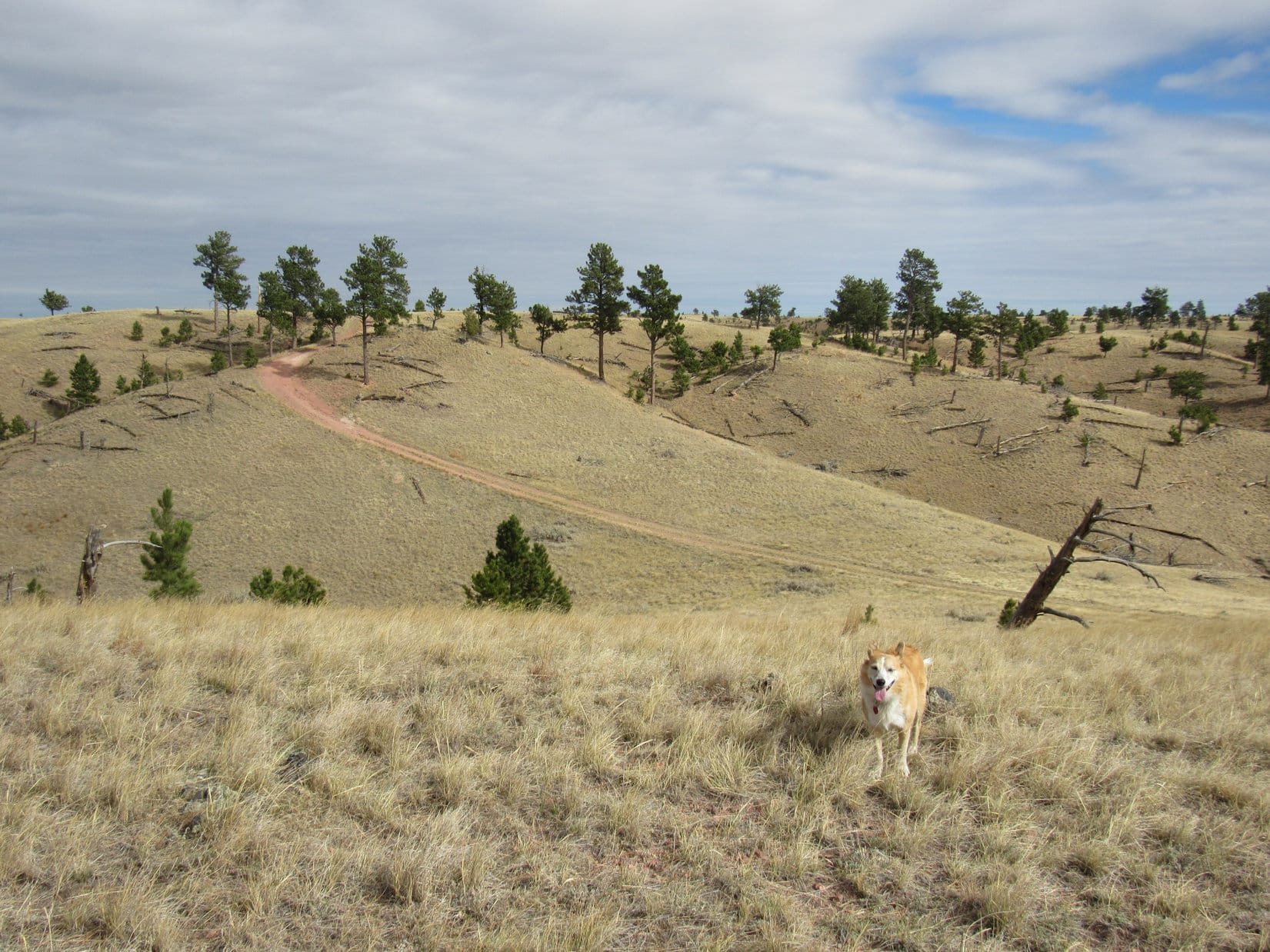
About to venture down into the saddle. Photo looks NE.
Up on the next plateau. Photo looks SE.

After a longer trek SE along this plateau, the pattern repeated.  The road again curved N.  Lupe again left to take a look from a high point near the edge, before returning to head N.
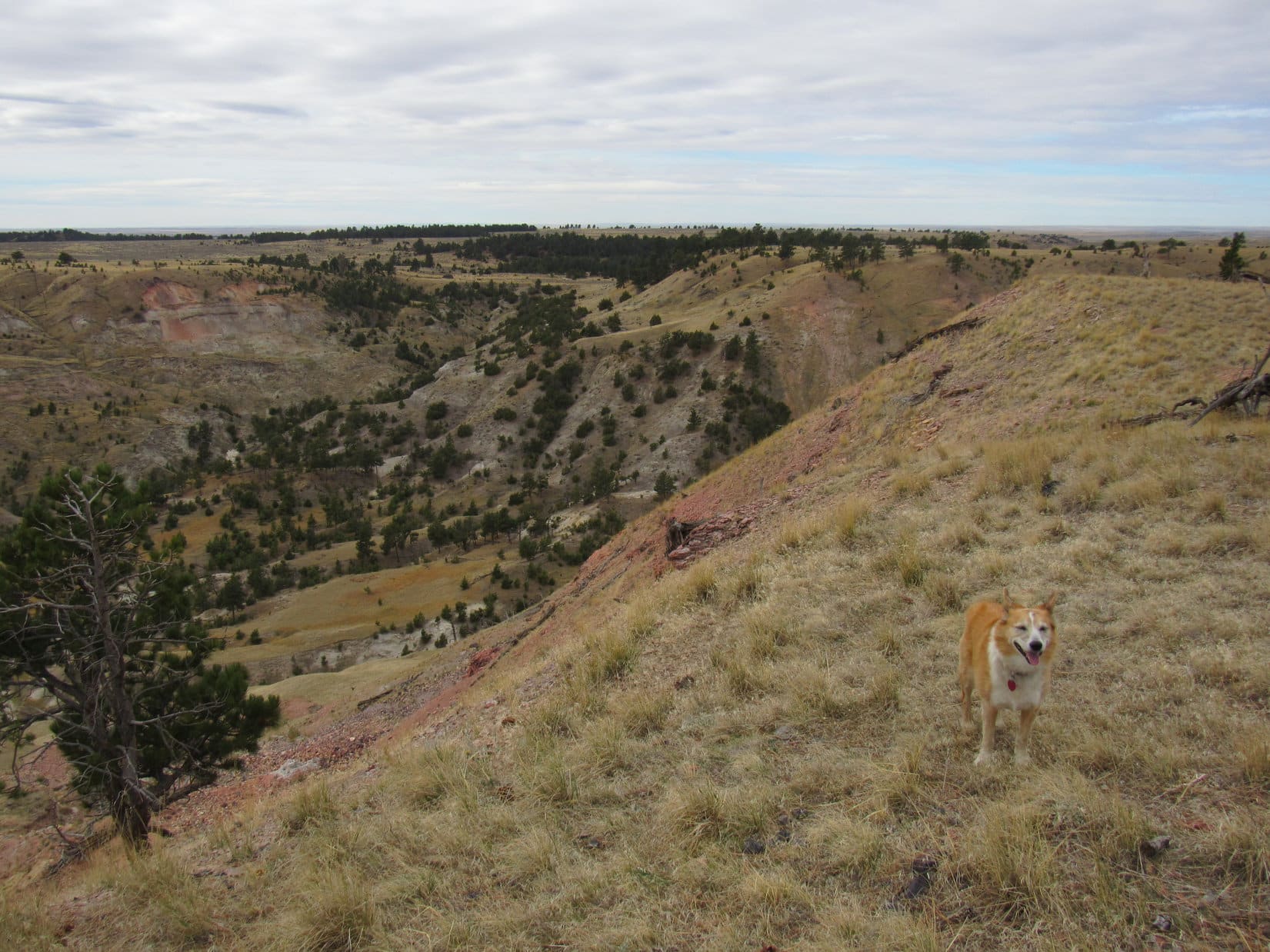
Upper Keyton Creek drainage (L). Photo looks WSW.
Looking SE along the edge of the plateau.

After passing a minor grassy drainage beyond which a long ridge, one of the Pumpkin Buttes (6,052 ft.), could be seen on the far horizon, Looper came to a little hill.  From here, the road wound down into a deeper and wider saddle than the first one.
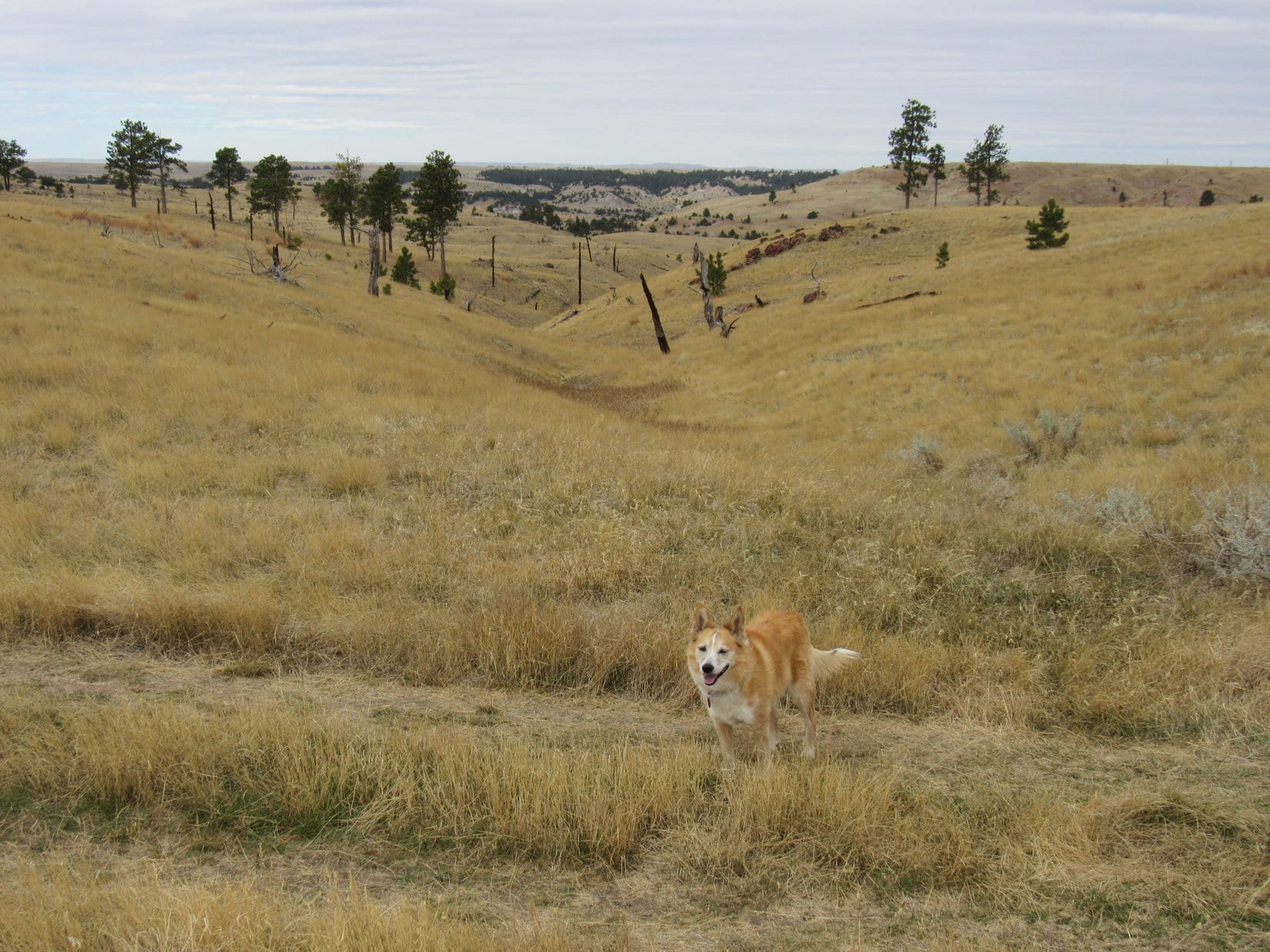
The grassy draw Lupe passed shortly after turning N again. Photo looks NW.
Starting down into the next saddle. Photo looks ENE.
The big saddle and the ridge beyond. Photo looks NE.

Once up onto the next ridge, the road turned SE for a third time.  While the road had never ventured far from the S edge of the high country, the Keyton Creek valley was now so close that Lupe could sometimes see down big side ravines.  A NW/SE oriented fence appeared, and the road ran straight alongside it for a while.
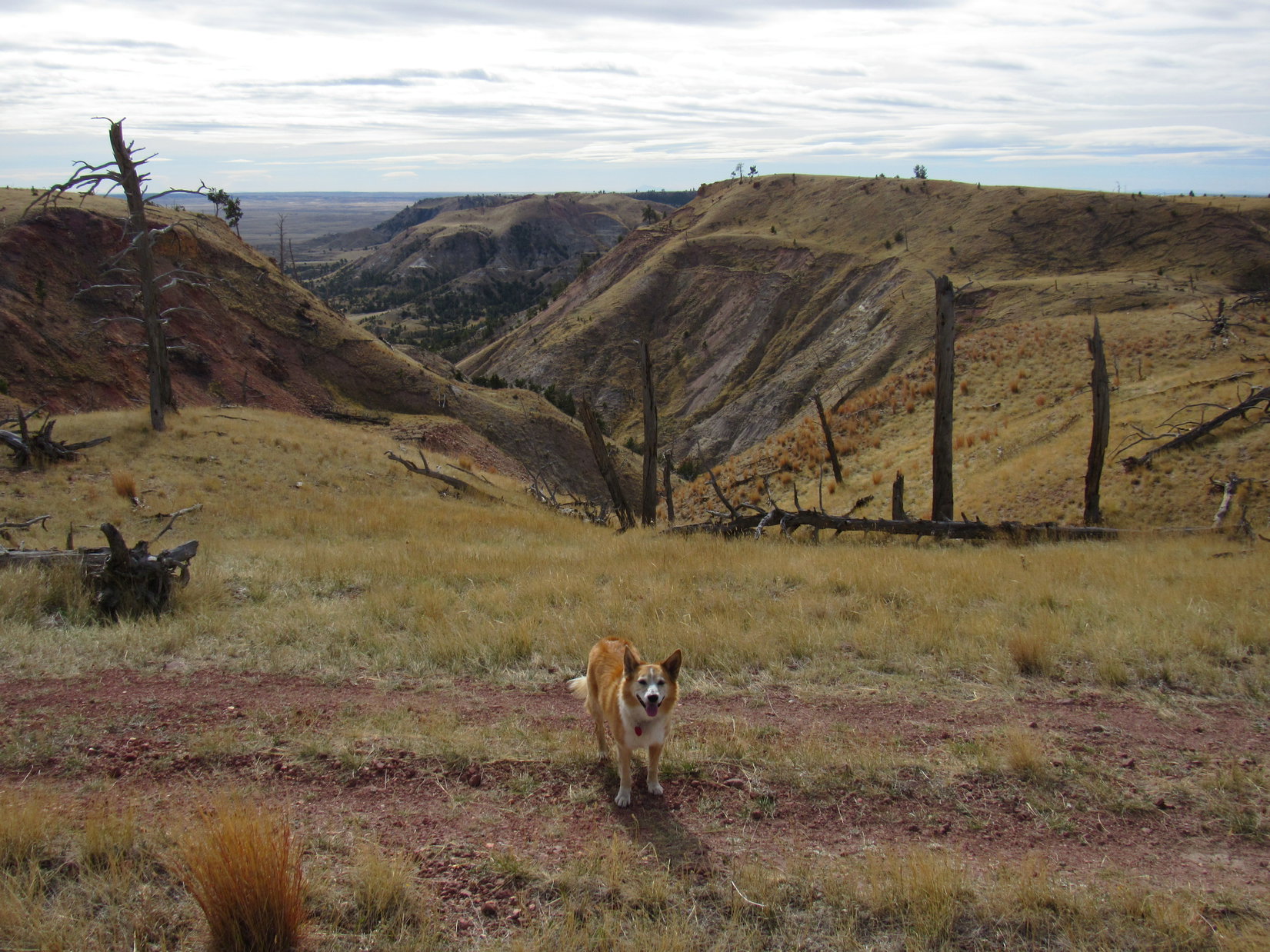
Getting mighty scenic from right here on the road! Photo looks S.
Following the fence. Photo looks SE.

The road eventually curved S away from the fence after getting past a large ravine.  This region featured the first significant rock formations Lupe had come to.  She snooped around a bit before continuing on.
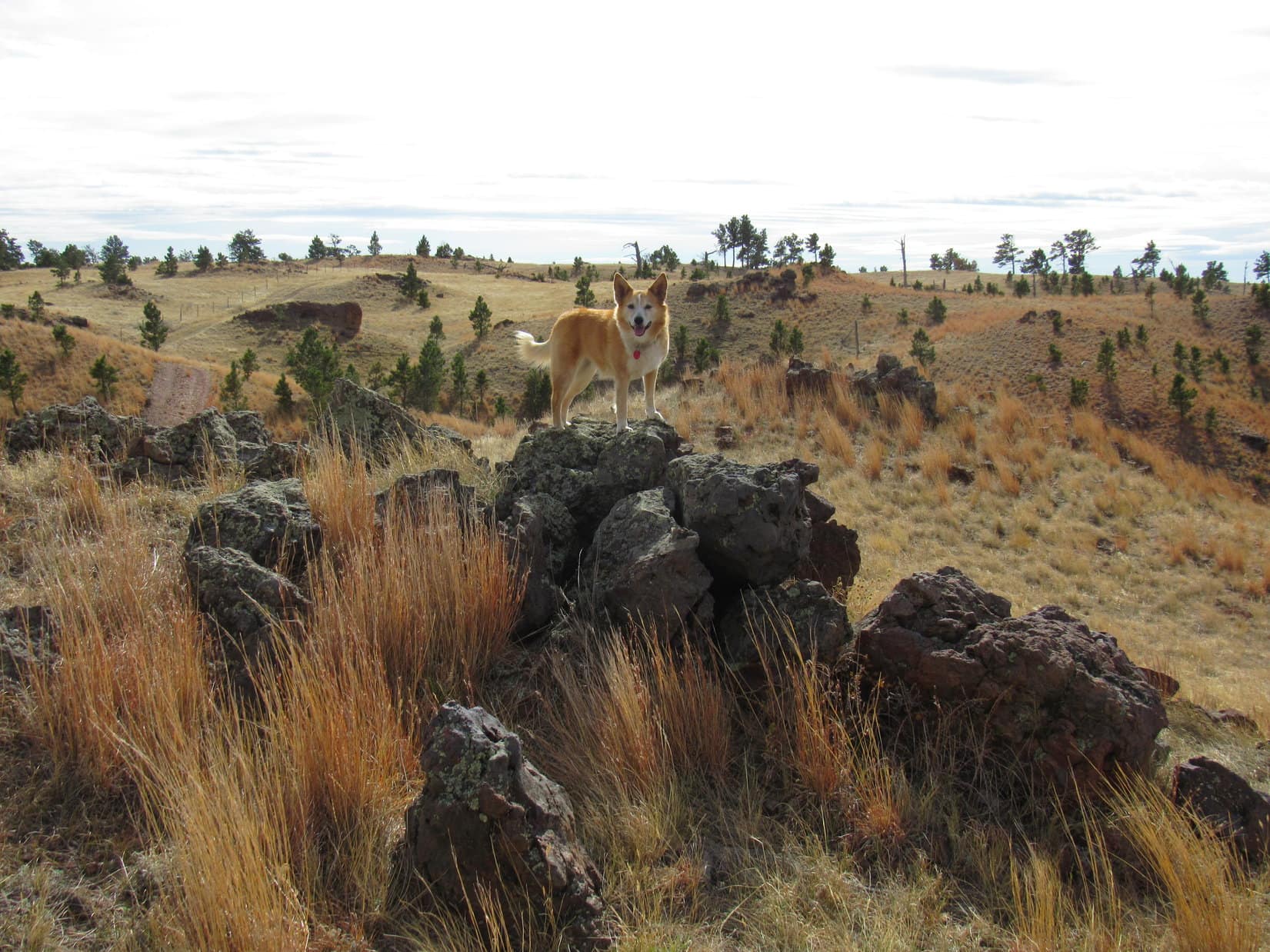
First big rocks we’ve come to! Photo looks SSE.
On a dramatic point overlooking part of the Keyton Creek valley. Photo looks SW.

The road now wound S or E for a while, always staying fairly close to the edge of the plateau.  Lupe was now getting E of the Keyton Creek valley where it broadened out onto the wide open plains beyond the Rochelle Hills.  Periodically checking on the views, it was amazing how beautiful it all looked from up here!
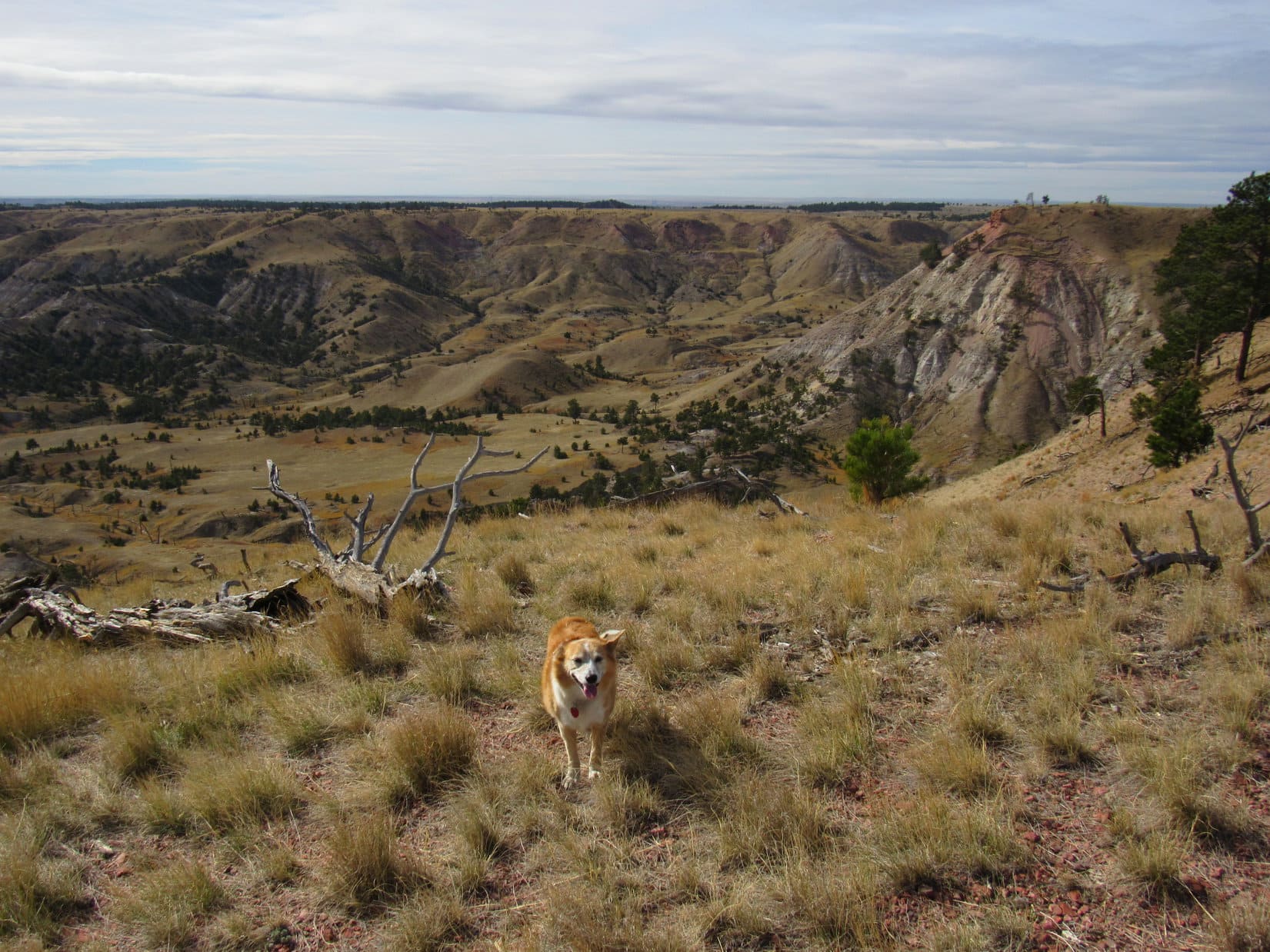
W end of the Keyton Creek valley. Photo looks WSW.
E end of the valley with the Rochelle Hills beyond. Photo looks SW.

On a stretch heading E, the road eventually came to the fence line again.  This time, there was a gate.  After going through the gate, the road again paralleled the fence for a while, but on the other side.
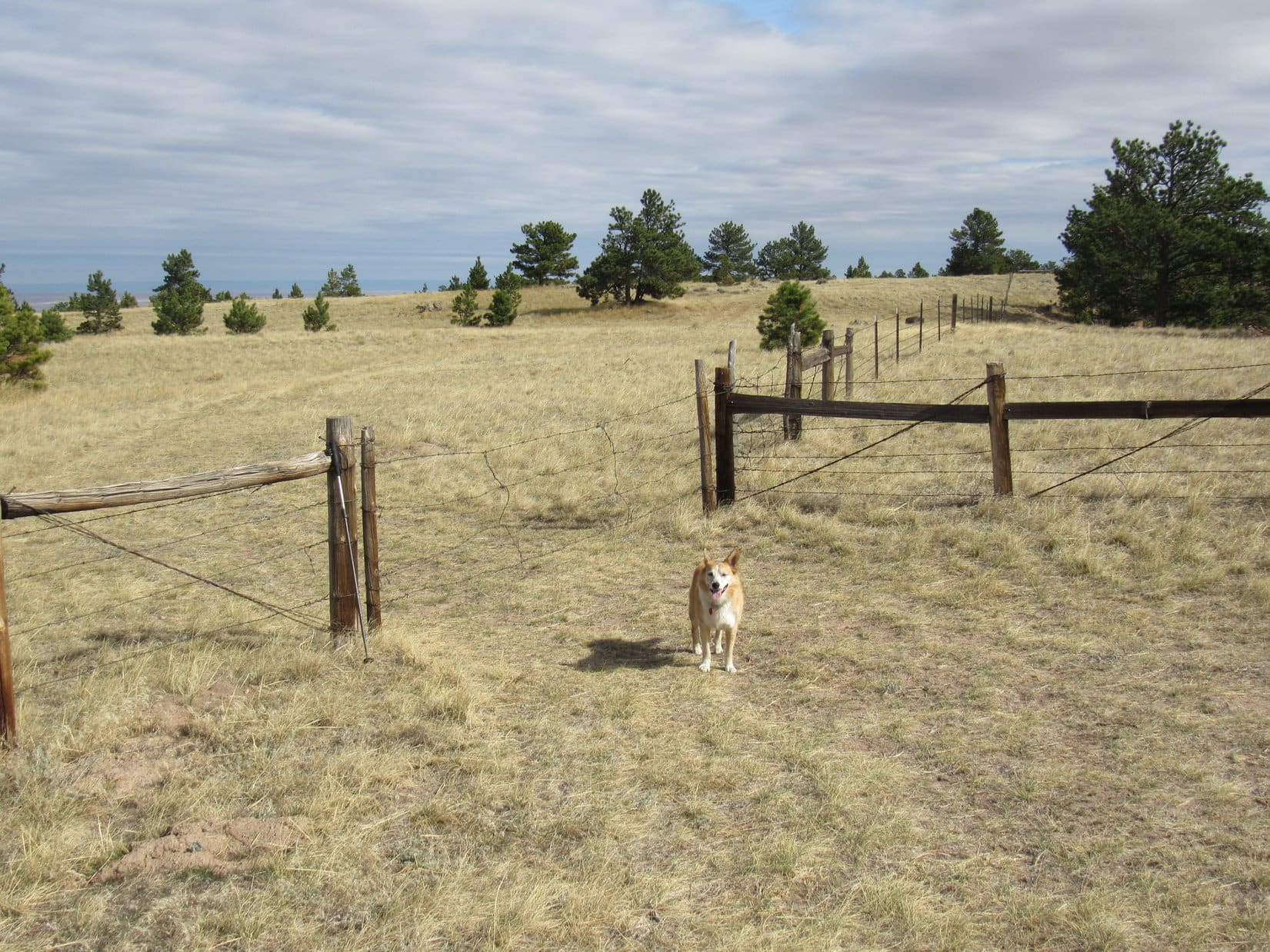
No signs! Guess it’s OK to go through. Loop at the gate. Photo looks E.

Before going too much further, the fence turned NE in order to avoid the edge of the plateau.  The road turned, too, staying within the fence.

By now, Lupe had come a long way.  She was easily 4 or 5 miles from the G6, perhaps more the way the road had wound around.  Couldn’t be too much farther to Mile High Hill.  Ducking under the fence, the Carolina Dog continued a short distance SE, venturing out to a point.

Along the edge here, the upper layers of rock looked volcanic – brittle and laden with unusual minerals.  Bright oranges and yellows!  Deep reds and purples!  About 0.33 mile E, across a deep ravine, was another point.  This point was topped with a layer of intensely red-orange stone.  Nearly surrounding it, steep slopes dropped to a band of chalky white cliffs, and thence to the prairie 600 feet below.

A narrow ridge connected Red Point to a slightly higher, forested plateau only a short distance to the N.  Mile High Hill (5,280 ft.)!

Red Point (straight up from Loop) and Mile High Hill (far L). Photo looks E.
Colorful rocks (R) along the edge of this first point. Photo looks SW.

Close to her destination, Lupe returned to the road, which went N a short distance before winding E.  The plateau was narrower along in here, but soon broadened out.  The American Dingo had reached Mile High Hill.
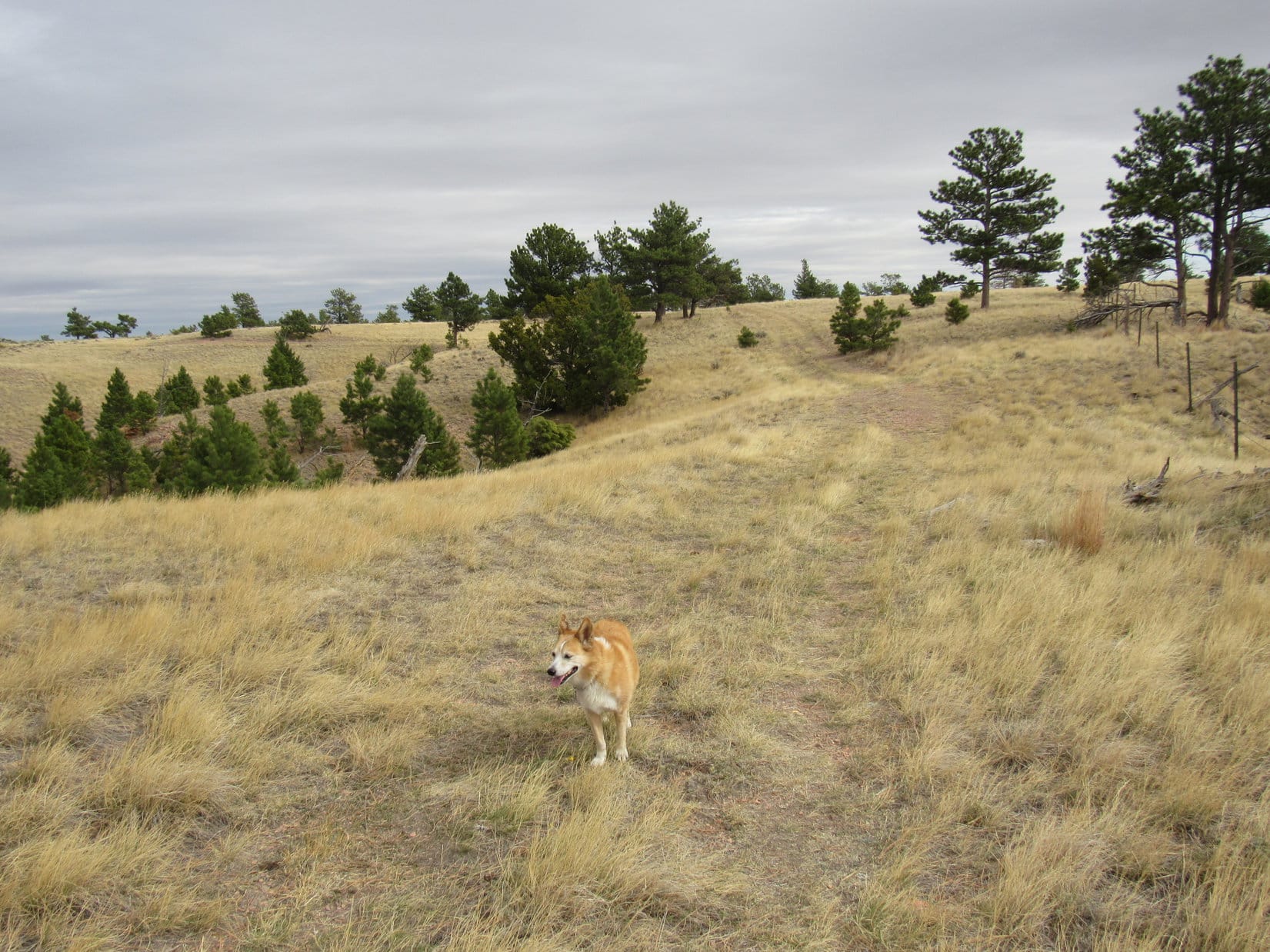
Approaching Mile High Hill. Photo looks E.

Mile High Hill was scarcely any higher than the approach to it.  Toward the N, a spacious area of grasslands dotted with pines sloped gradually downhill.  Since the road curved that way, this was the end of the road trek.  Slightly higher ground was to the SE, so Lupe headed that way looking for the true summit.
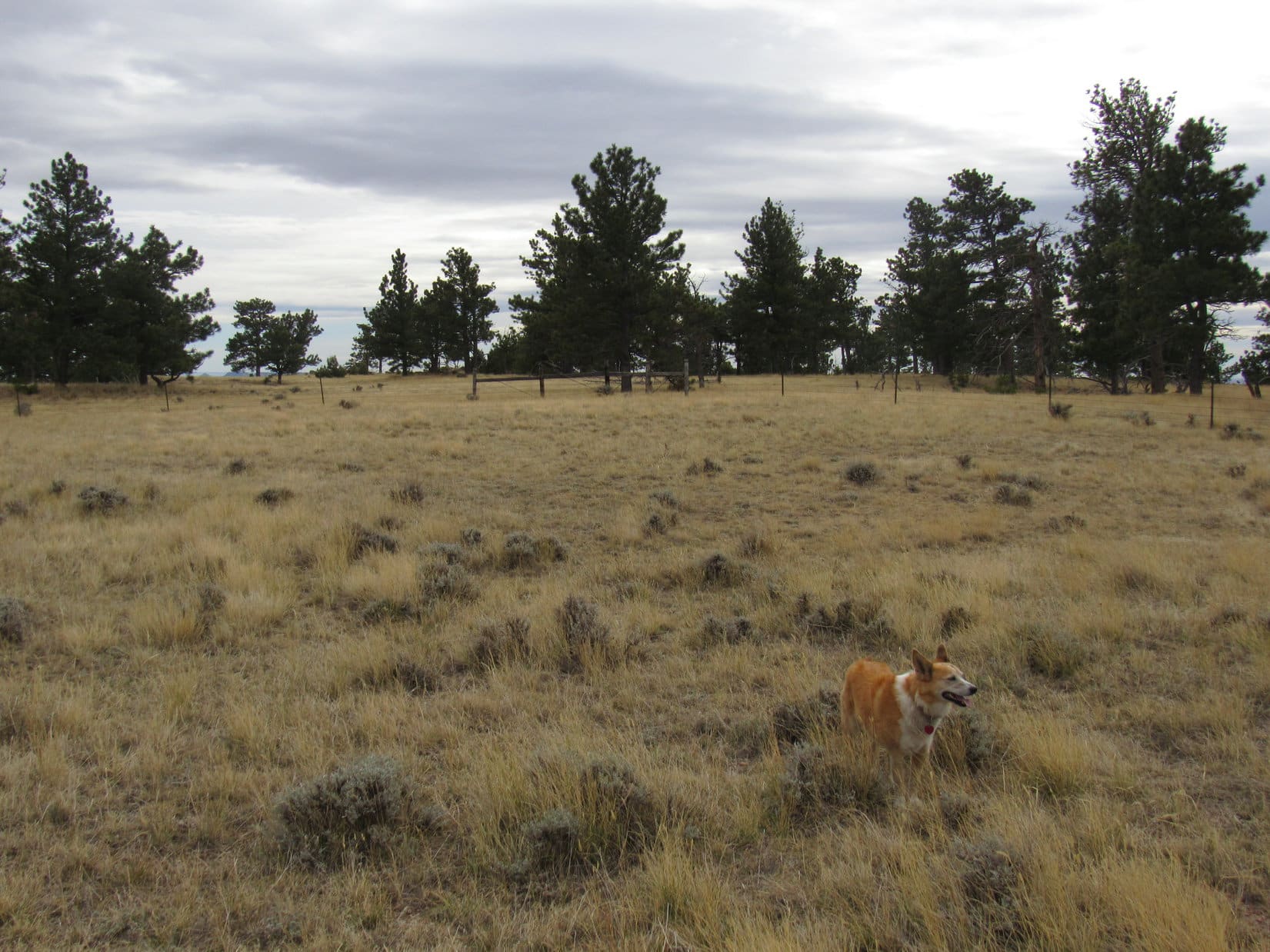
On Mile High Hill, heading off in search of the true summit. Photo looks SE.

Ducking under the fence again, Loopster caught sight of a giant deer!  Startled by her approach, the giant deer took off, racing away through an open forest.  In seconds, it vanished below the edge of the plateau.  A brief, but exciting introduction to Mile High Hill for the Carolina Dog!  However, the giant deer had been alone.  Loop encountered no more during her search for the true summit.
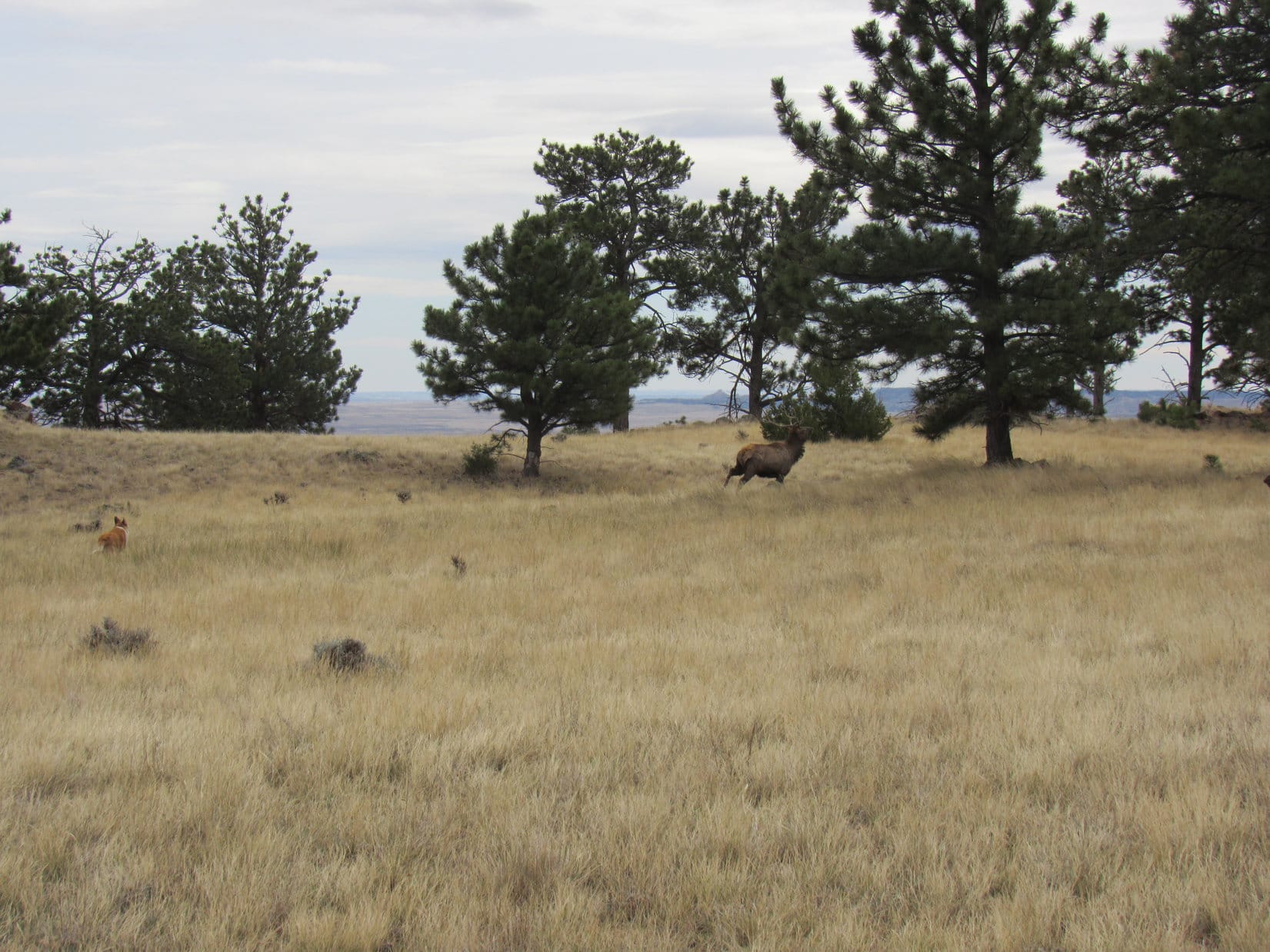
The giant deer races away!

The region in the biggest 5,280 foot contour on the topo map, where the true summit was marked on Peakbagger.com, was flat as a pancake.  No cairn or any discernable highest spot.  However, along the SE edge of the plateau were several rock outcroppings.  Lupe visited what appeared to be the highest one, easily scrambling to the top.  Whether it was any higher than the pancake was debatable.
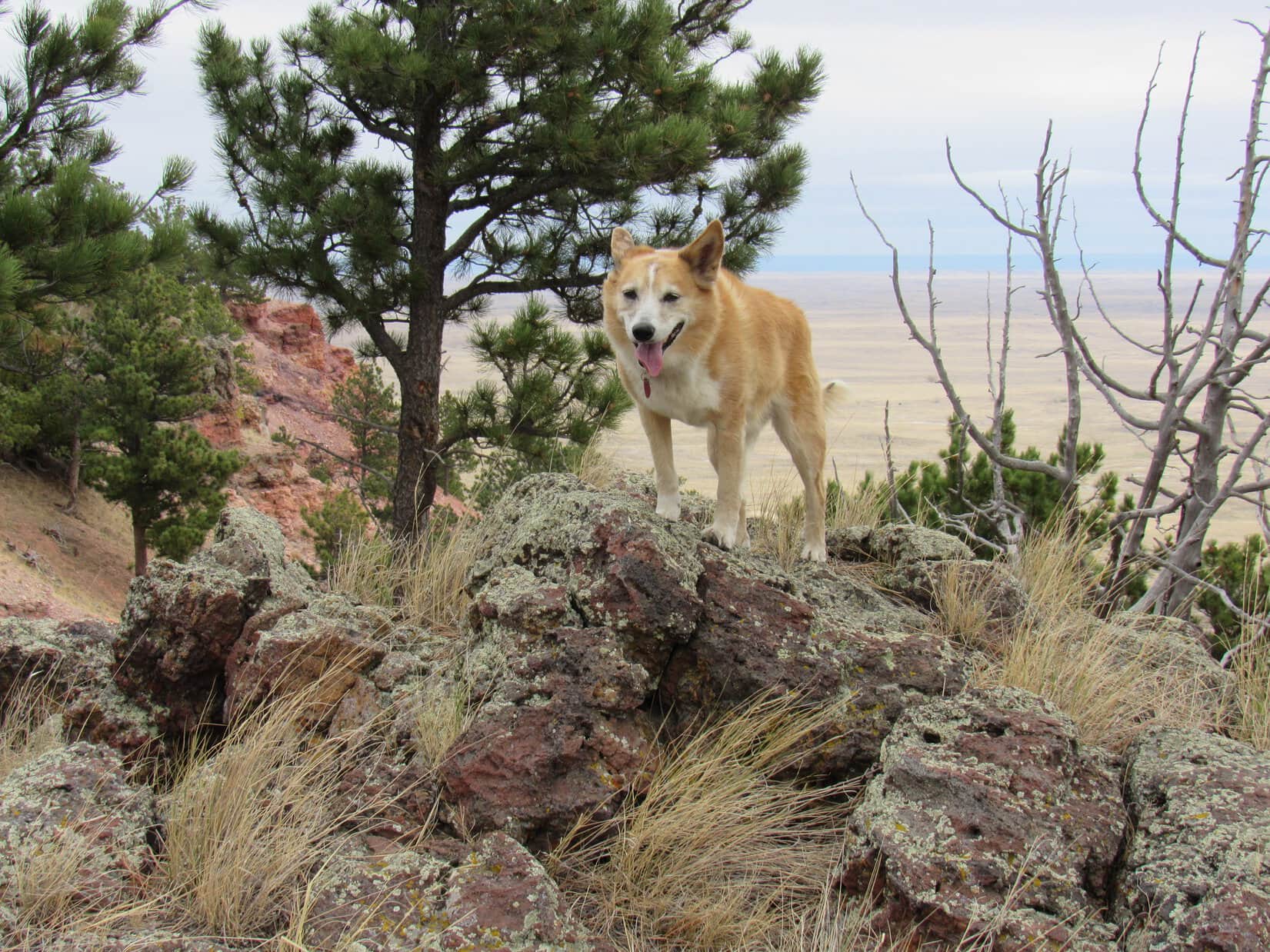
On a possible true summit location along the E edge. Photo looks NE.

The second largest 5,280 foot contour shown on the map was near the S end of the plateau.  Continuing in that direction, Lupe came to a mound of stones 4 or 5 feet high, topped by the gray, weathered branches of a dead tree.

Impossible to say for sure, Looper, but I think this is it!

The true summit of Mile High Hill, SPHP?

If I had to guess, and I do, since the trees prevent us from having a clear view of the other high spots, yes, I’d say this pile of stones is the summit.  Congratulations on reaching the top of Mile High Hill (5,280 ft.)!
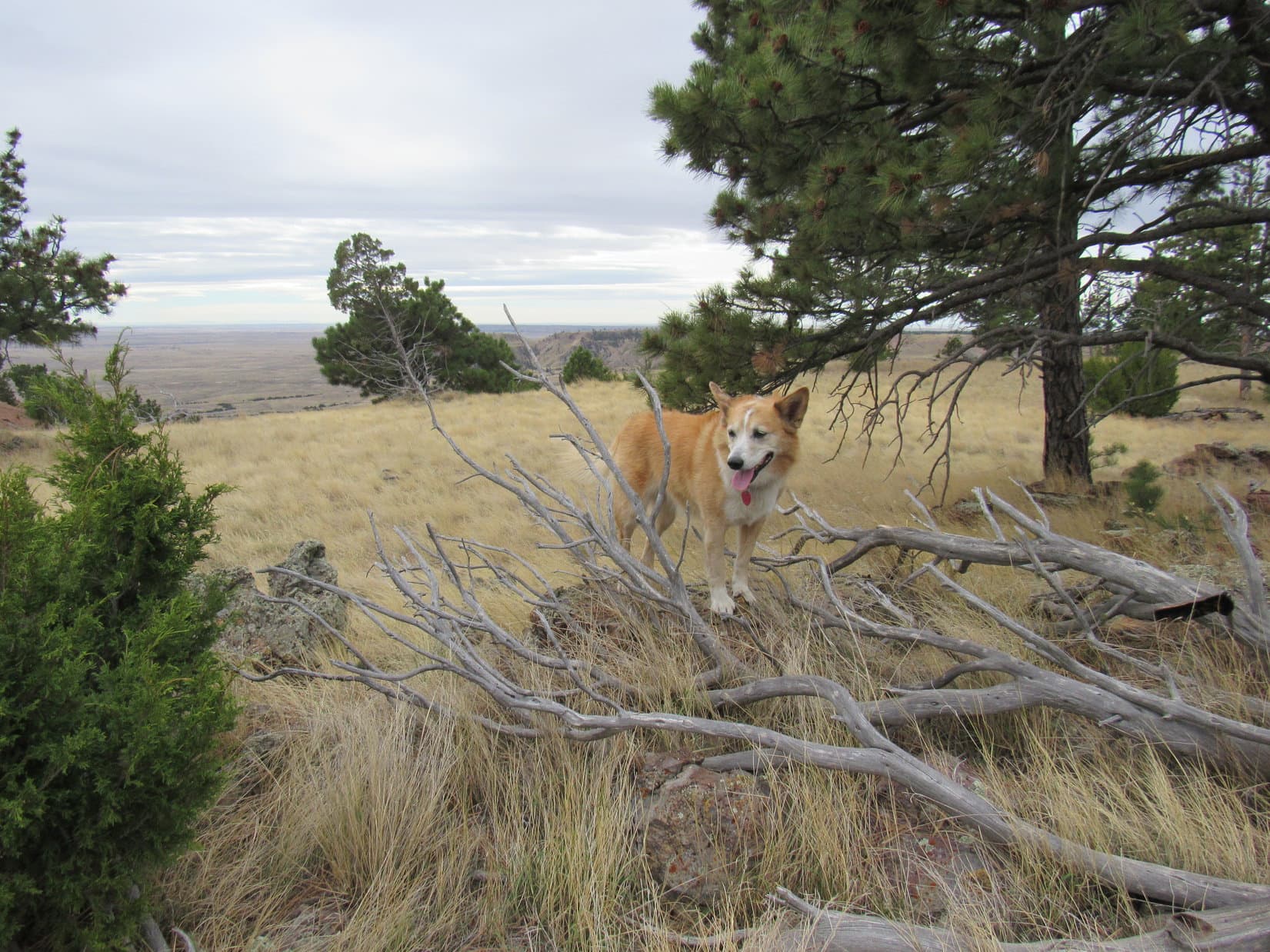
The true summit of Mile High Hill, as near as SPHP could determine. Photo looks SW.

40 or 50 feet from the edge of the plateau, the true summit wasn’t much of a viewpoint.  Lupe continued S to the edge where the ridge leading to Red Point was in sight.
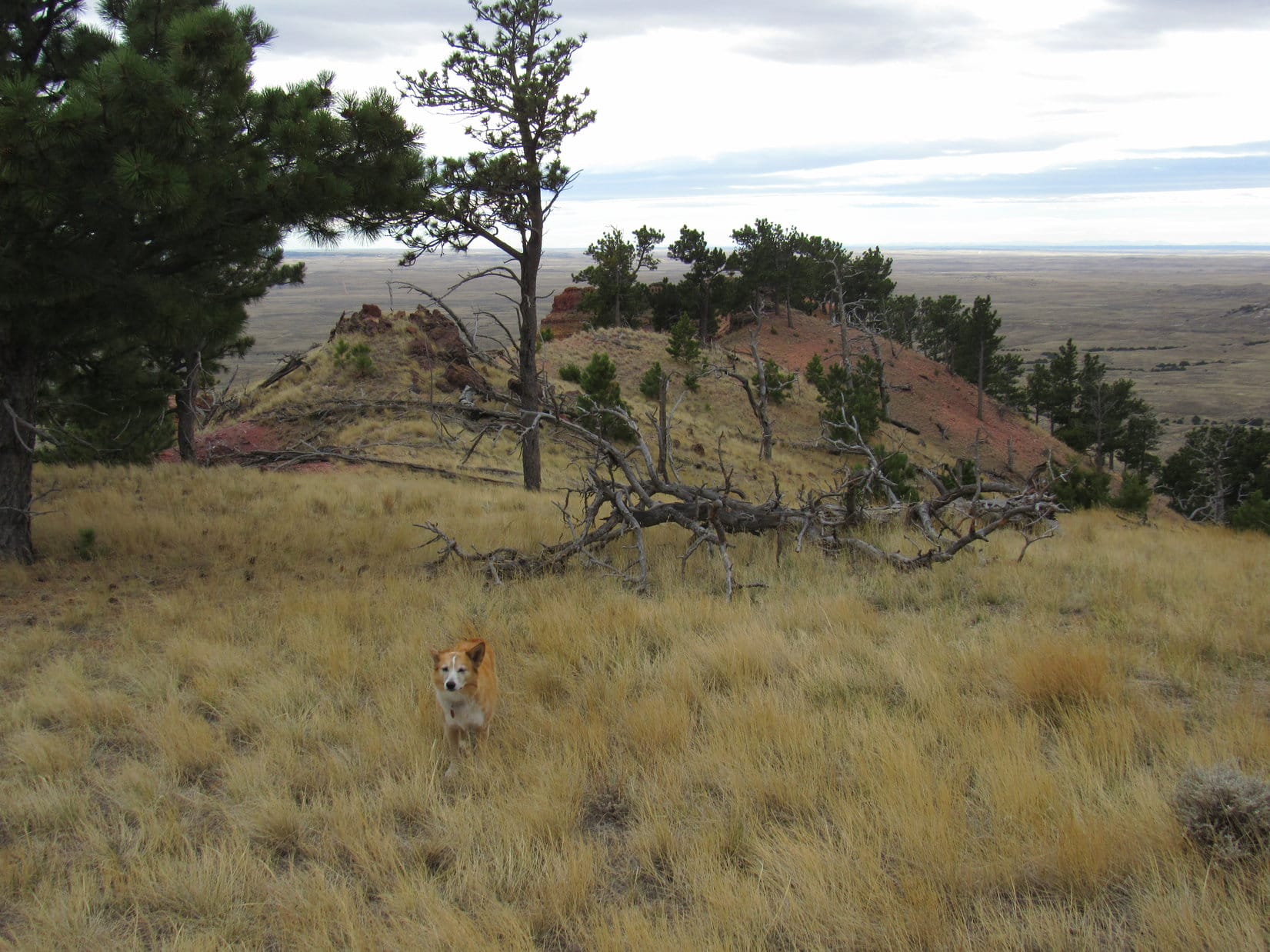
Approaching the ridge leading to Red Point. Photo looks S.

Gone were the morning’s blue skies!  The ground fog hadn’t returned, but high overhead a vast mournful blanket of dismal gray increased a sense of ancient remoteness, silence, and loneliness.  The wind picked up, gusting unpredictably out of the W at 15 mph, seemingly purposely gathering and concentrating its force in sudden blasts designed to thwart Lupe’s advance as she headed for Red Point.
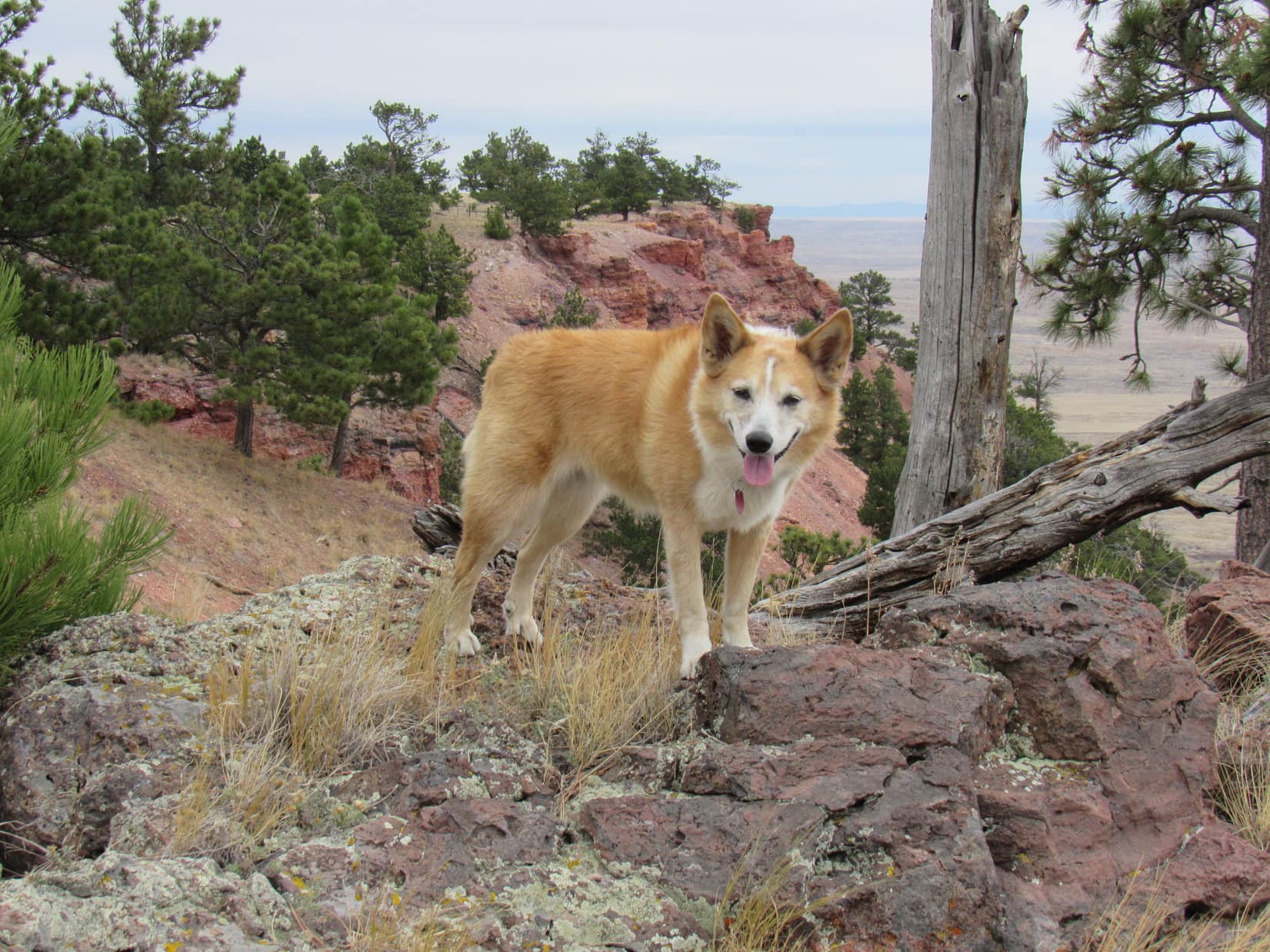
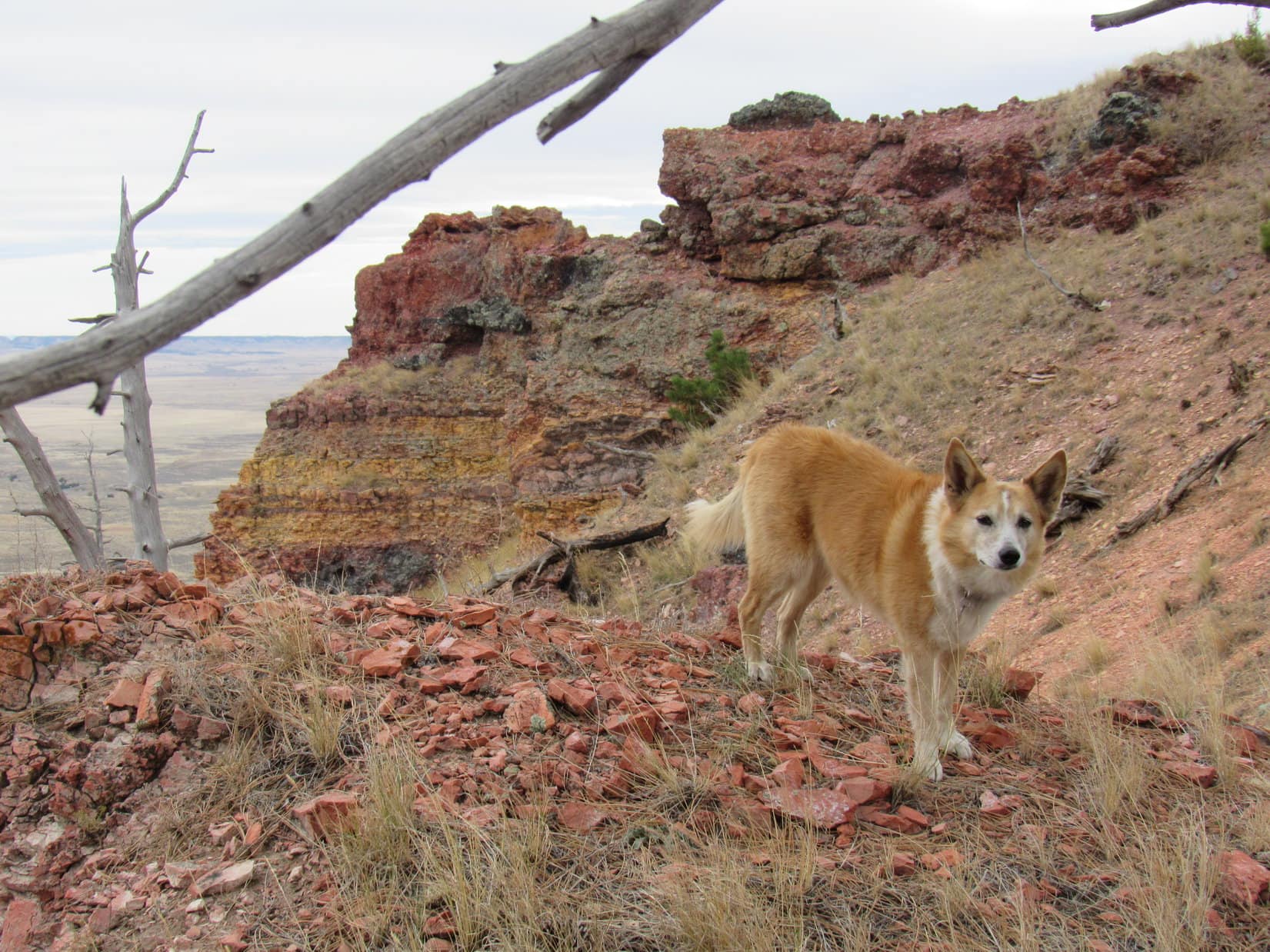
At an initial high spot along the ridge leading to Red Point. Photo looks NNE.
Not far from the end after a short downclimb for a better look at the colored rock. Photo looks S.
In the wind at Red Point. Photo looks NNE.

Most of the ridge was forested.  Lupe was already close to the end when she reached a flat spot beyond the last of the trees.  Bordered by colorful rock formations, gritty red soil and tufts of grass covered Red Point.

Just ahead, a short, gravelly red sand slope led SE down to a smaller airy platform at the far end of the ridge.  The multi-colored rocks down there were every bit as impressive as the sweeping views.
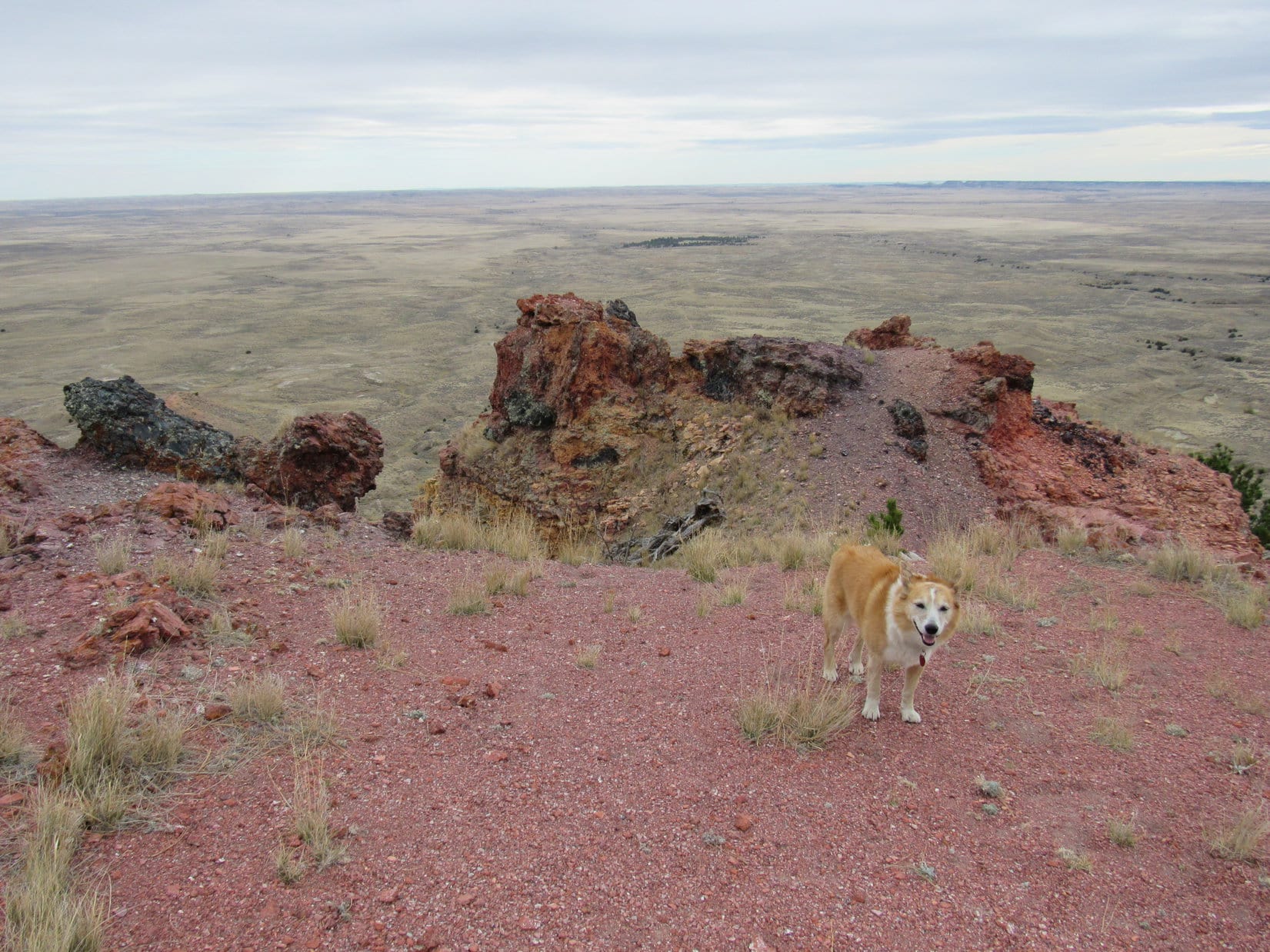
Might as well go down to the very end, don’t you think? Photo looks SE.
At the SE end of Red Point. Photo looks S.
Looking SW toward the Keyton Creek valley.

Going back up to the larger high spot where the precipices weren’t quite so close, Lupe curled up on SPHP’s lap.  55ºF, certainly warm enough, but the wind still made it seem a bit cool.  What a vantage point, though!

The E edge of the Rochelle Hills region stretched miles away to the SW, well beyond the lower end of the Keyton Creek valley.  To the SE, a tan plain broken by long gullies extended to the horizon.  The Miller Hills, a smaller line of ridges than the Rochelle Hills, were visible to the SSE.
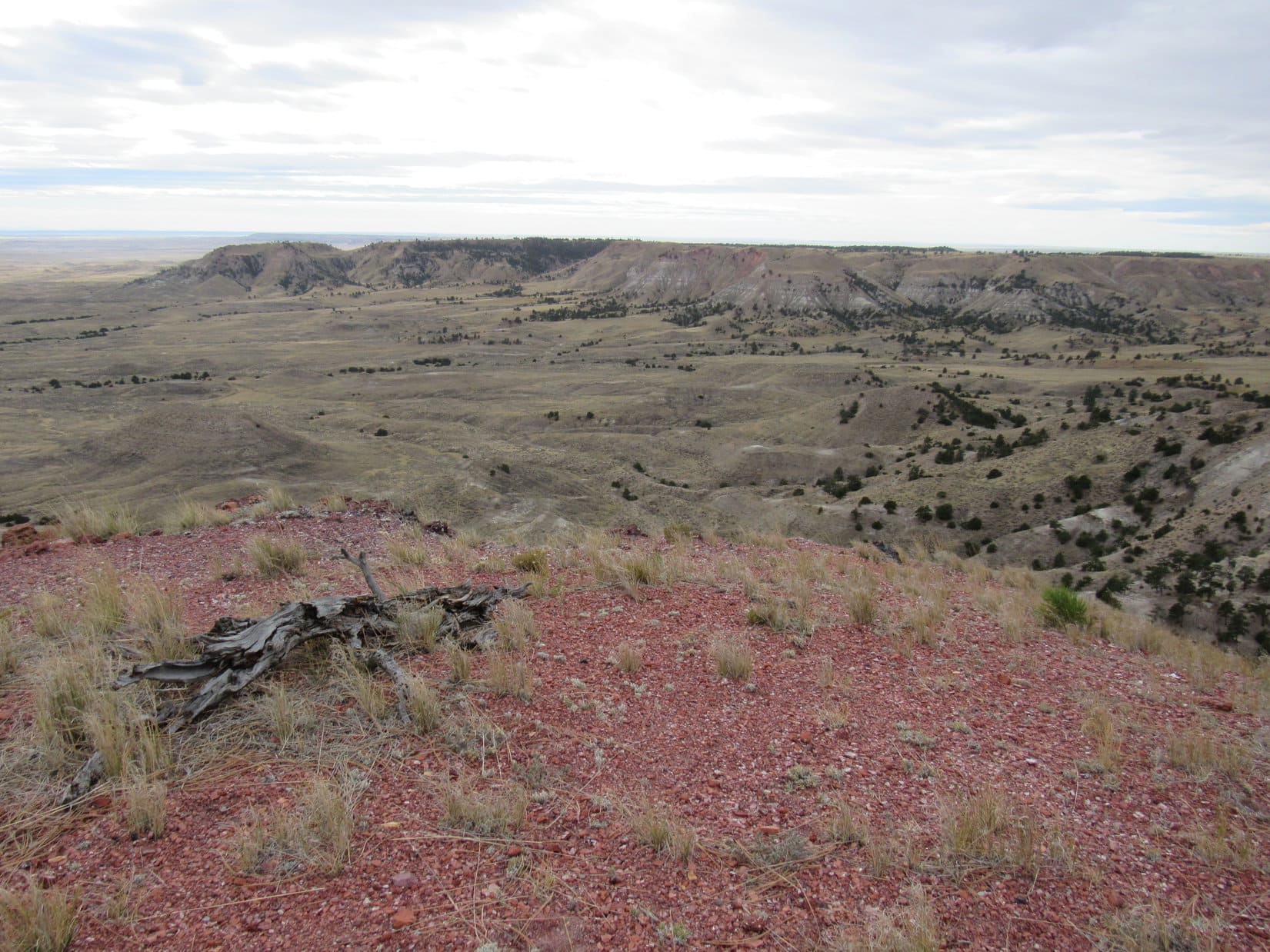
Rochelle Hills from Red Point at the far S end of Mile High Hill. Photo looks SW.
Miller Hills. Photo looks SSE with help from the telephoto lens.

To the W, Lupe could see the region where the giant deer had run off to and some of the territory she’d been by on the way here, including the point where she’d first seen Mile High Hill and Red Point.
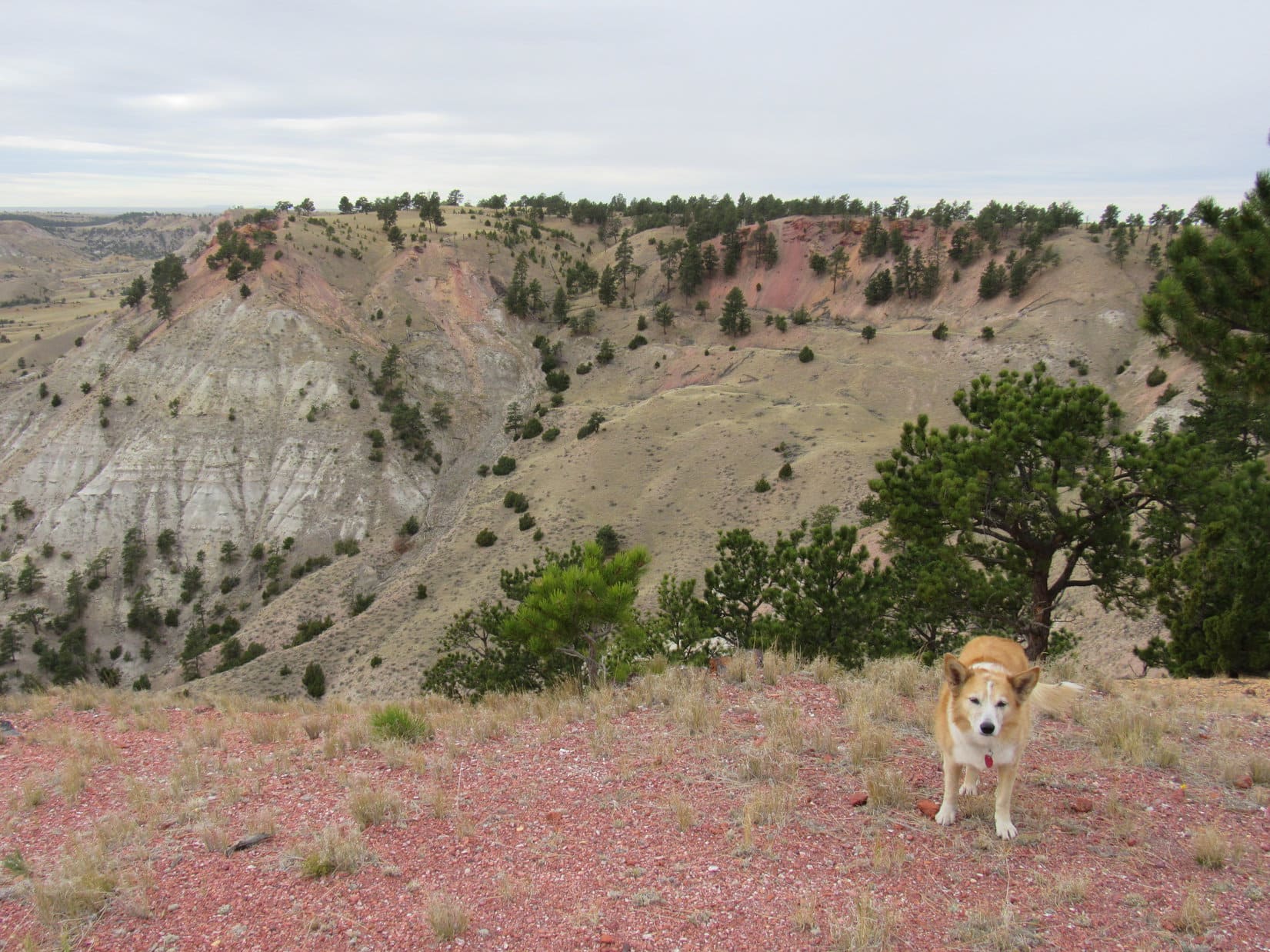
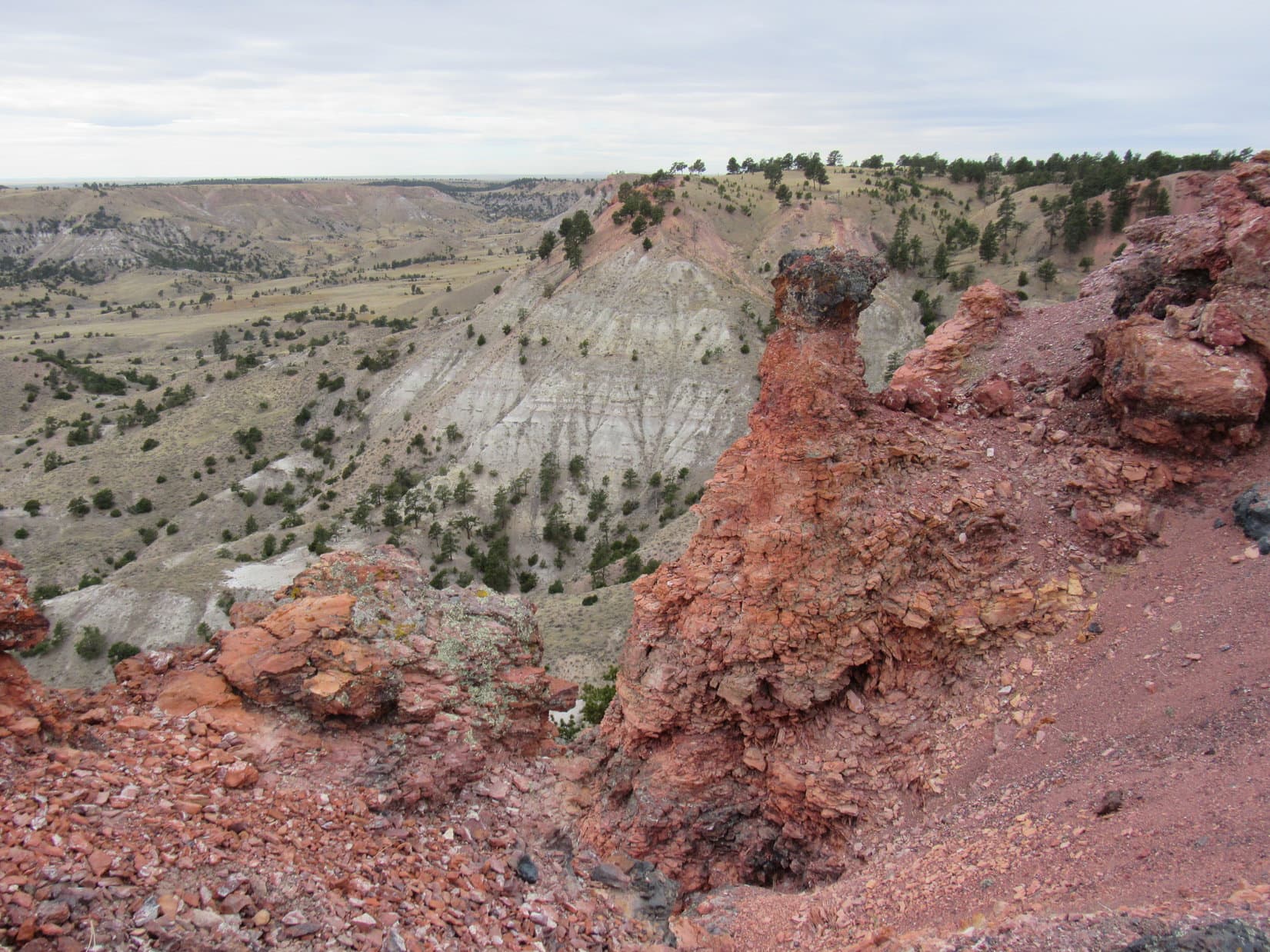
Looking W at the region Lupe had come from on her journey to Mile High Hill.
Rochelle Hills from Red Point at the S end of Mile High Hill. Photo looks WSW.

A glorious half hour spent in grand isolation at Red Point shot by.  Time to move on.  More to see up on Mile High Hill!  Returning briefly to the true summit, Lupe then explored N along the E rim, stopping at various high points and scenic spots along the way.
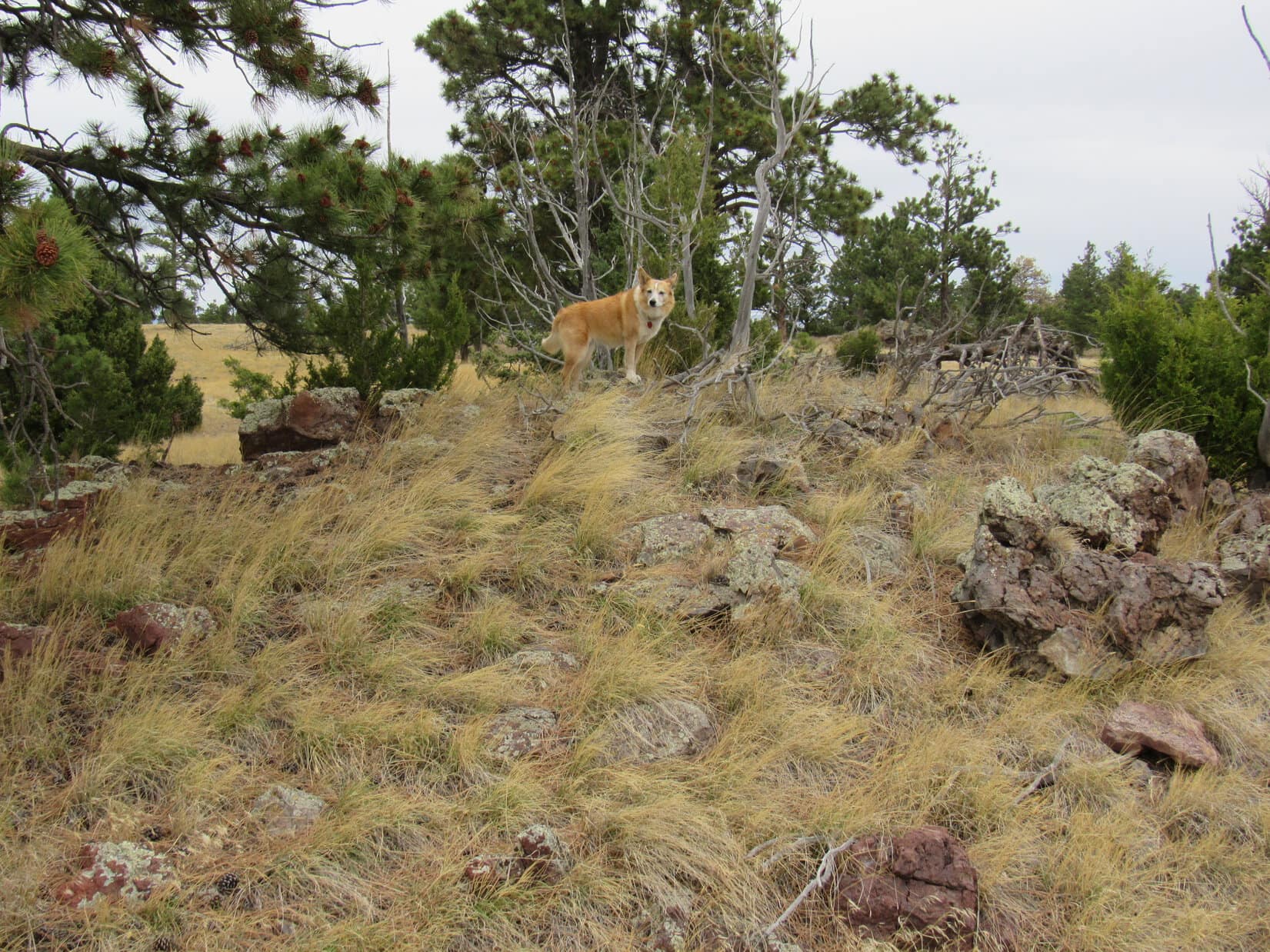
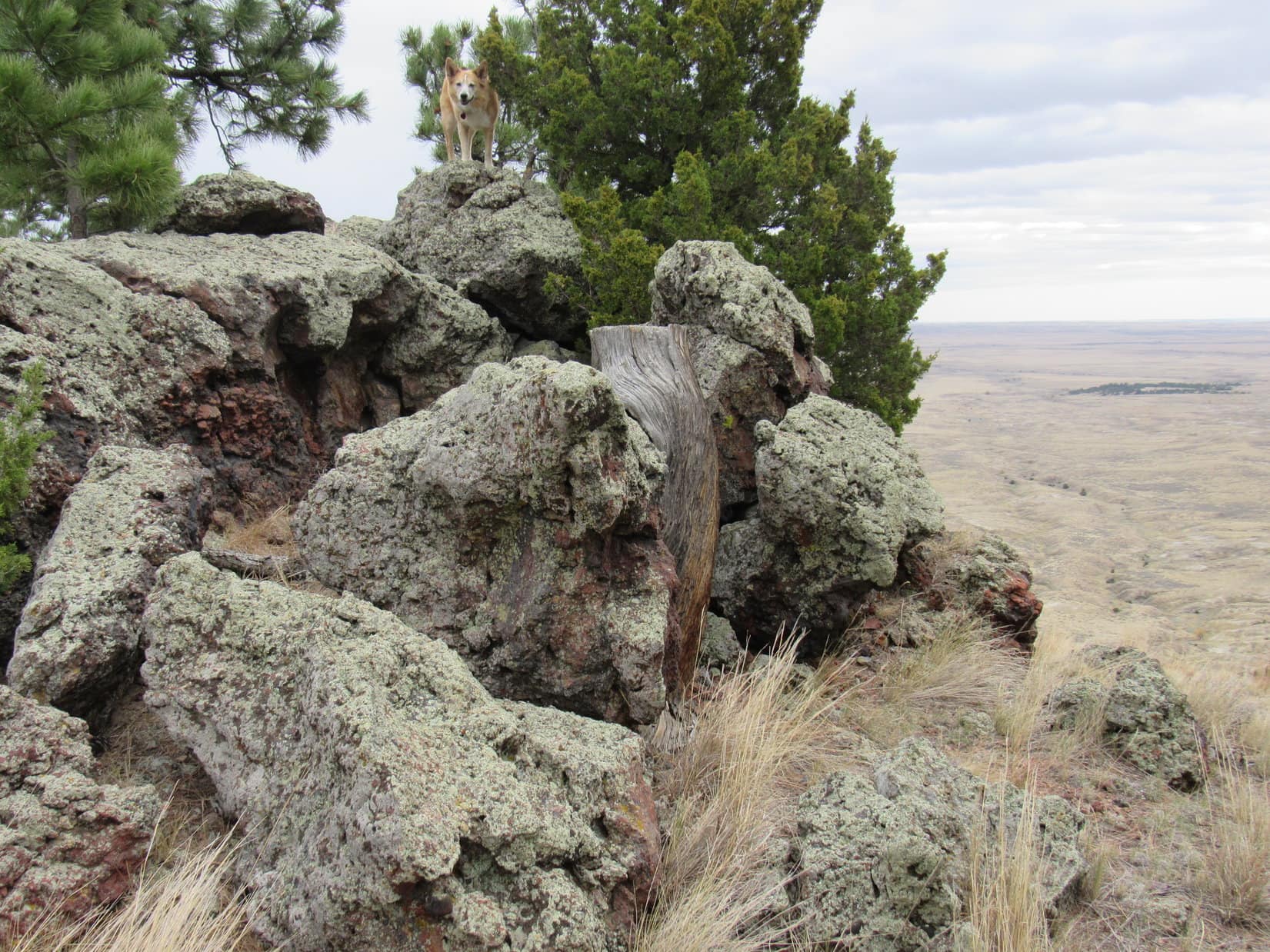
Back at the true summit of Mile High Hill. Photo looks N.
At a rocky high point along the E edge. Photo looks E.
Scenic spot along the E rim. Photo looks NE.

One more sizable 5,280 foot contour existed on Mile High Hill.  It was N of Point 5272 along the E rim, well to the N of the other high points Lupe had visited.  Loop went all the way to it, posing on a small rock near the fence that seemed to be the highest point.  She then kept going N until it was clear nothing higher was out this way.

On the horizon, beyond a nearby lower hill, was the long blue line of home.  The Black Hills!
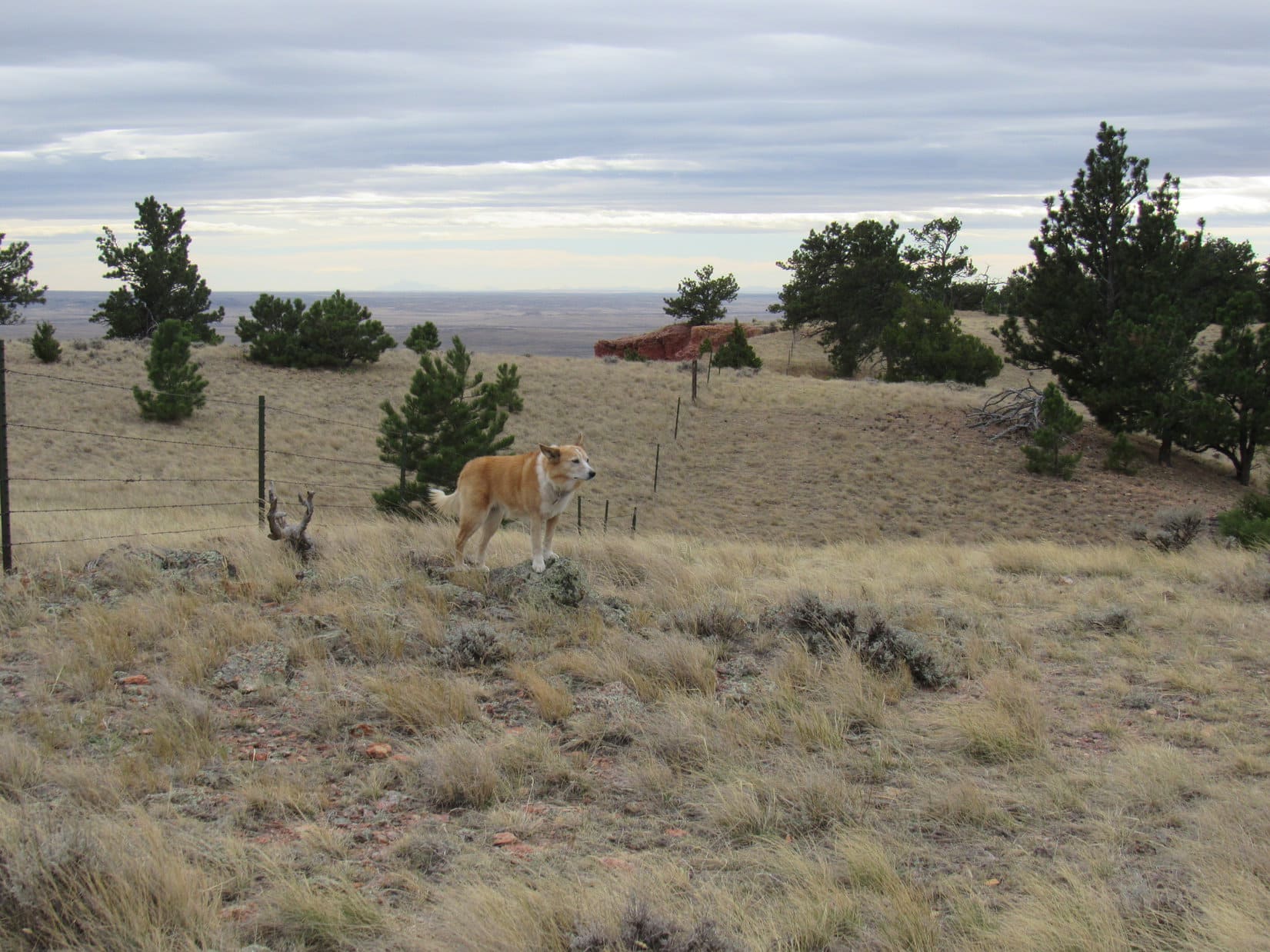
At the NE high point. Possibly the real true summit, but who knew? Photo looks S.
Look! More hills and ridges to the N! Wonder if it’s all officially part of the Rochelle Hills? Photo looks NNW.
As far NE as Lupe went on Mile High Hill. Black Hills (Center & R) on the horizon. Photo looks NE.

Home.  Nearly 3:00 PM already.  Probably time to start back.

Mile High Hill had been fun!  A great, easy trek, and surprisingly scenic, an unexpected delight.  SPHP was glad the American Dingo had finally made it here.

The wind weakened.  Only a gentle breeze as Loopster crossed the long plateaus on the way back.  Never really was much cactus to speak of.  The Carolina Dog roamed fearlessly, pausing every now and then to see the sights.  Far to the NW, long ridges of the Pumpkin Buttes came into view for a while.

Glad we finally made it to Mile High Hill! What a beautiful place! Photo looks NNW.

Loop followed the road all the way.  In the end, it did hook into Rochelle Hills Road.  Yup, she’d been on No. 1171 all this time.
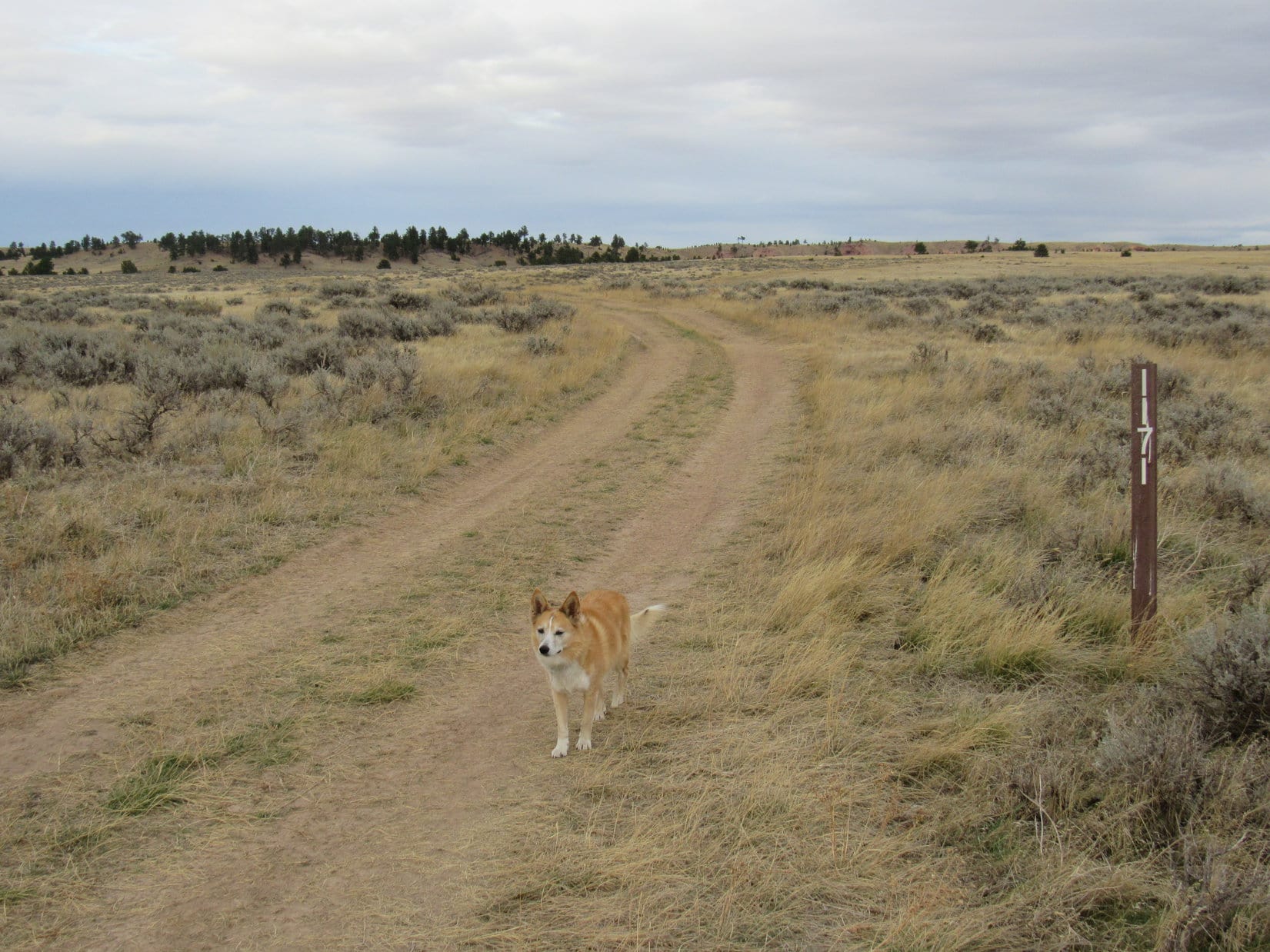
At the start of No. 1171 just off Rochelle Hills Road. Photo looks NE.

Nothing left except a 0.60 mile march on Rochelle Hills Road to HP5145, the green gate, and the G6.  Curly tail held high, the Carolina Dog trotted NW, her fabulous Mile High Hill adventure, years in the making, finally complete.  (End 4:43 PM, 59ºF)

Mile High Hill in the Rochelle Hills, Wyoming 10-16-20

Links:

Next Adventure                         Prior Adventure

Want more Lupe adventures?  Choose from Lupe’s Summer of 2020 Dingo Vacations to Wyoming, Utah & Montana Adventure IndexDingo Vacations Adventure Index or Master Adventure Index.  Or subscribe free to new Lupe adventures.

Black Hills, SD Expedition No. 270 – Peak 5520 & Five Points (3-20-21)

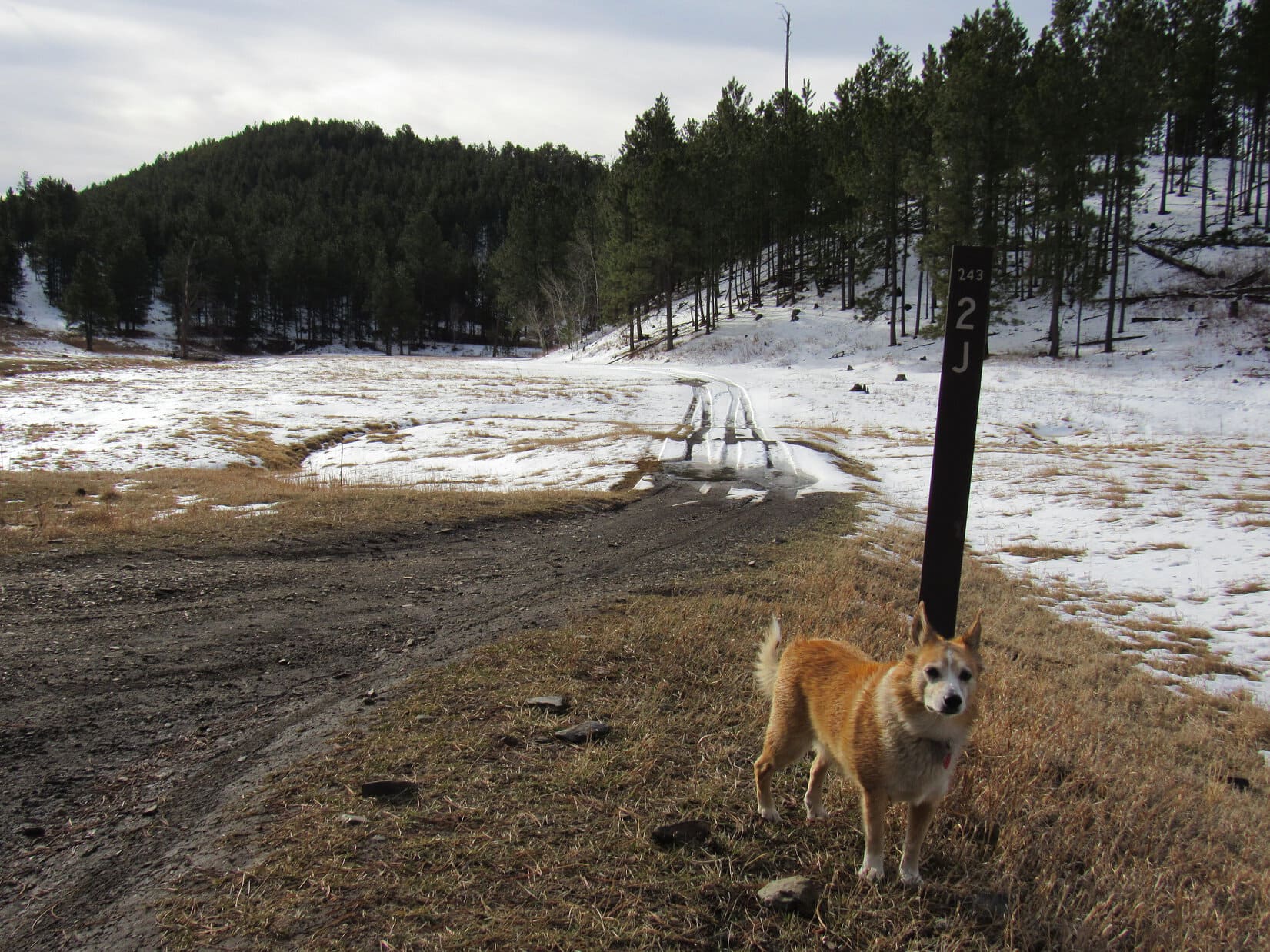
8:52 AM, 46ºF, junction of Horse Creek Road & USFS Road No. 243.2J – The snow was crunchy underpaw as Lupe set out.  Gonna warm up, though!  Supposed to be quite a nice day.  Soon enough the snow would start turning to slush.

At the start of USFS Road No. 243.2J. Photo looks SE.

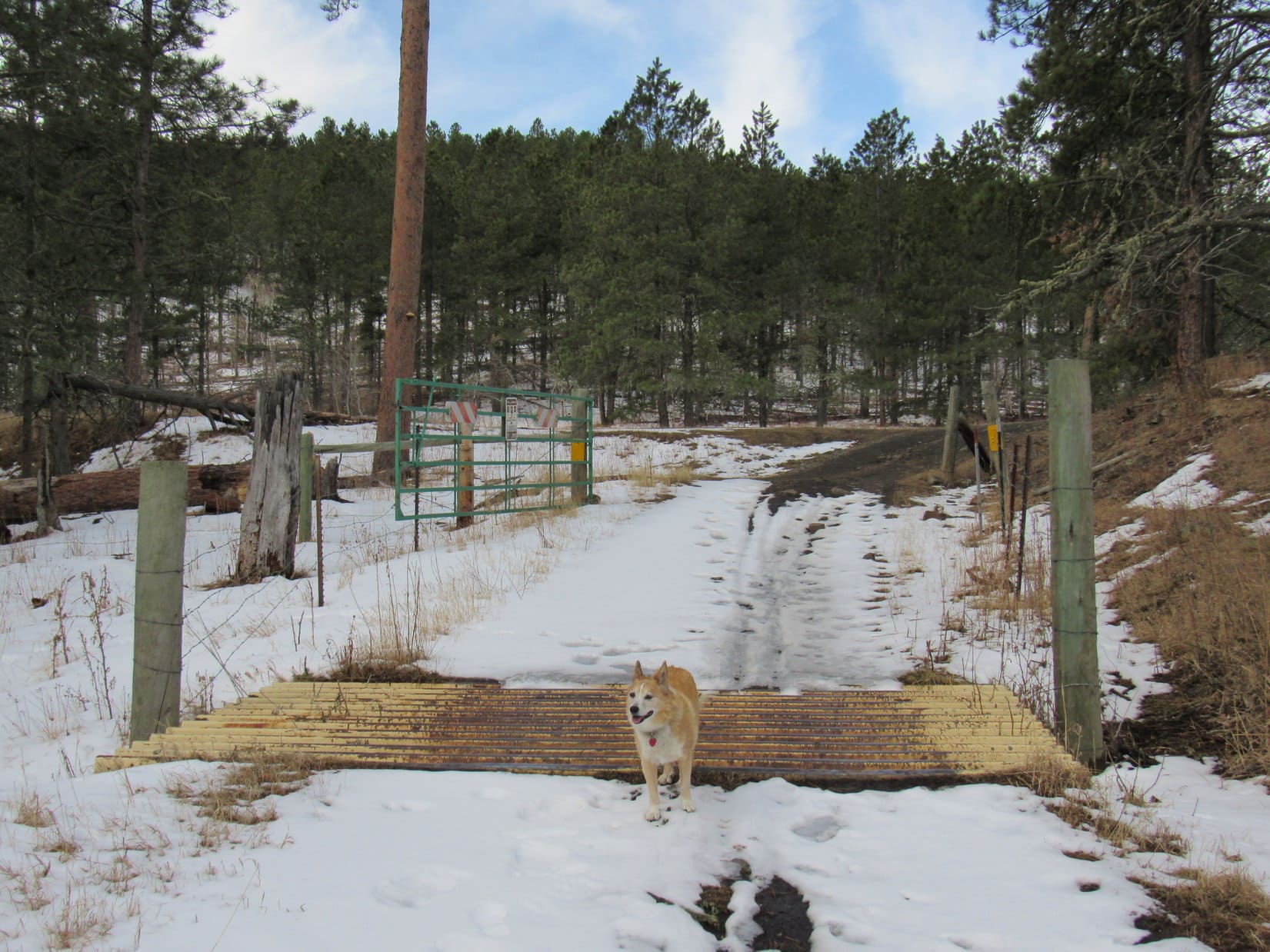
Lupe was in fine spirits!  Deer around the first bend only brightened the mood further.  USFS Road No. 243.2J wound SE down a valley, crossing Horse Creek 3 times.  Only the second crossing had any flow.  After 0.5 mile, the road curved SW and started uphill.  Ahead was a cattle guard, and beyond it, a green gate.
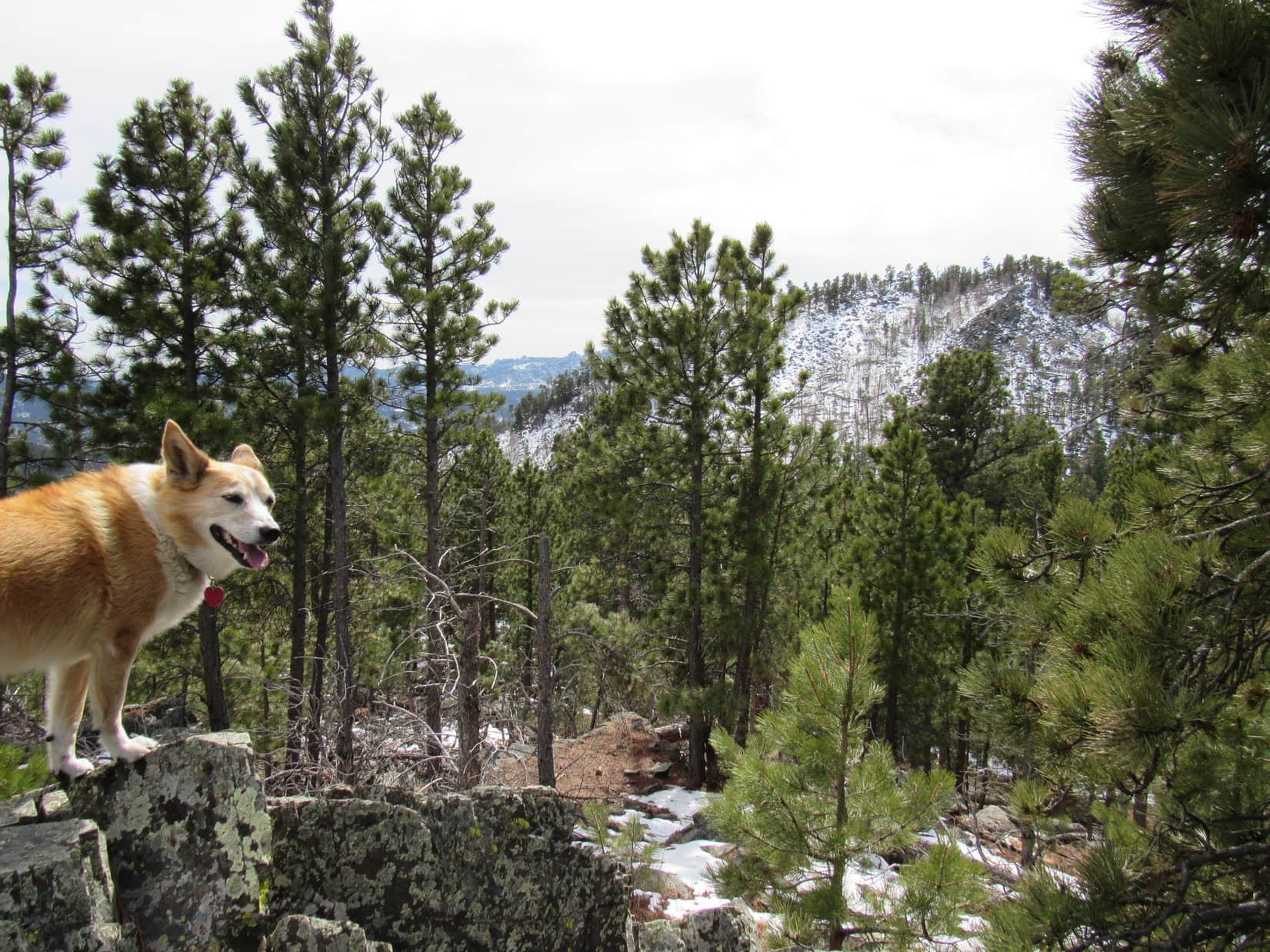
Heading down the Horse Creek valley. Photo looks SW.

Will wonders never cease?  Look at that, Looper!  The gate is open!

What do you suppose it means, SPHP?  It’s never been open before.

Who knows?  Except that we don’t to have to crawl under or over the fence for once.

By the cattle guard with the marvelous open green gate beyond it. Photo looks WSW.

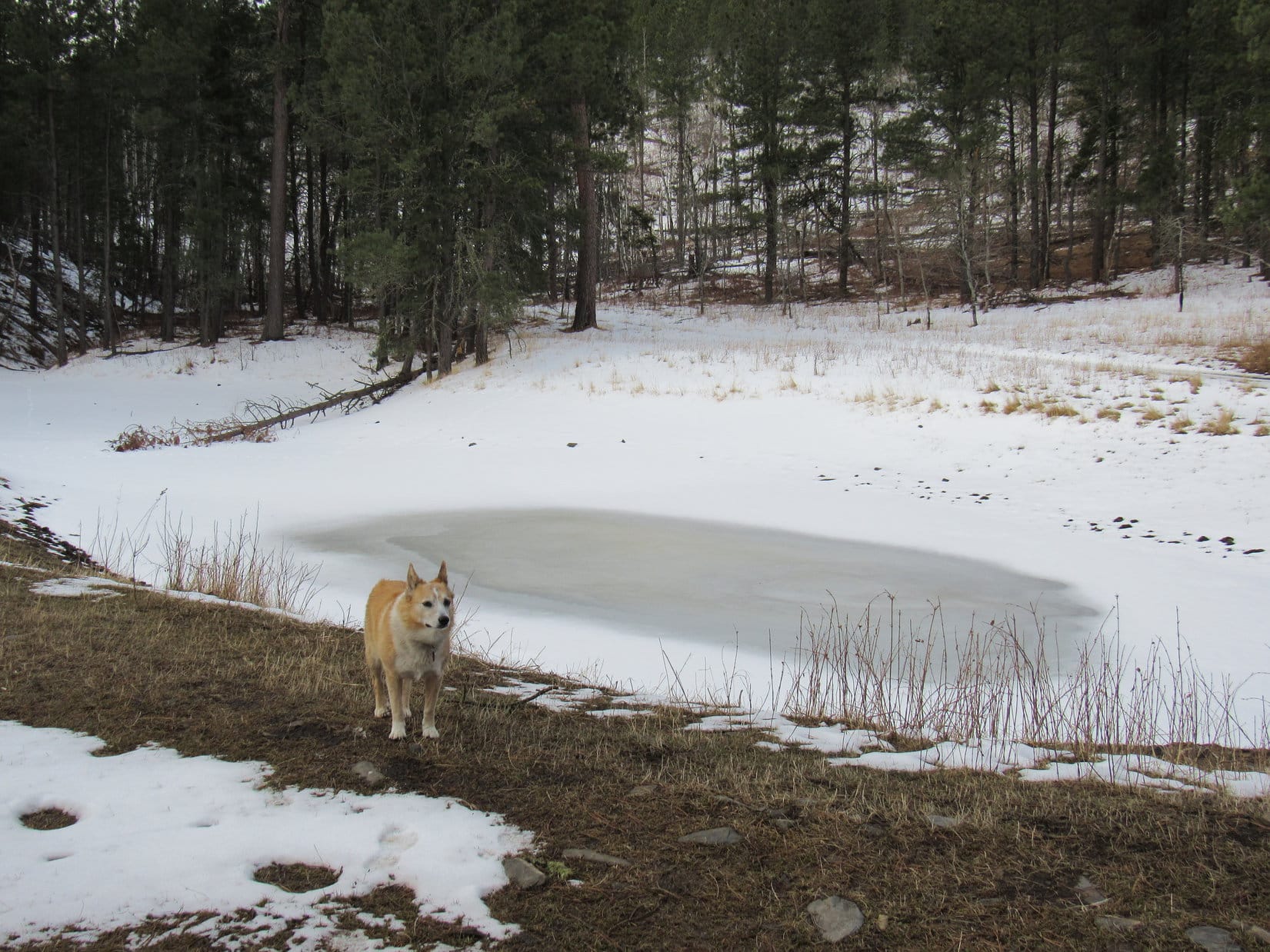
Immediately beyond the gate was a tiny pond Lupe had seen many times before, and beyond it, a junction with USFS Road No. 669.  After checking out the frozen pond, Lupe headed for No. 669.

By the frozen pond. Photo looks S.

W as usual, SPHP?

Not this time, Loop.  Go S!

S!  Really?  We never go S here.

Oh, yes we do.  You went all the way down Gordon Gulch once.

Gordon Gulch?  That was forever ago!  We’re going back there?

Only to a little part of it.

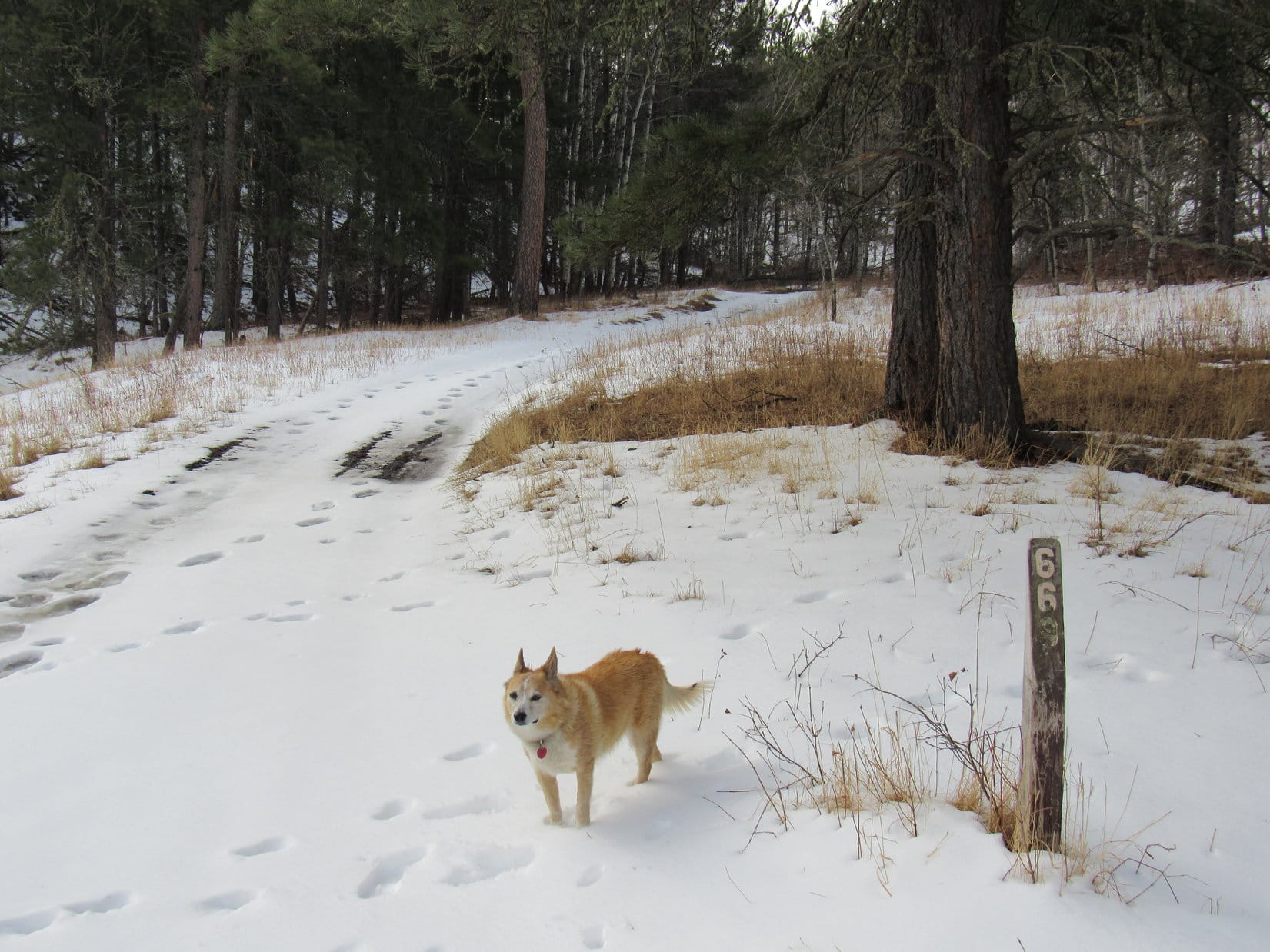
About to head S on USFS Road No. 669. Photo looks SE.

Climbing gradually, USFS Road No. 669 got snowier and snowier as it wound SE up a little valley.  Before long, a hill could be seen on the L.

That must be it, Loop!

We’re going to climb that hill, SPHP?

Most definitely!  That’s Peak 5520!

Another Lists of John peak?

Yes.  Gives us something new to shoot for.
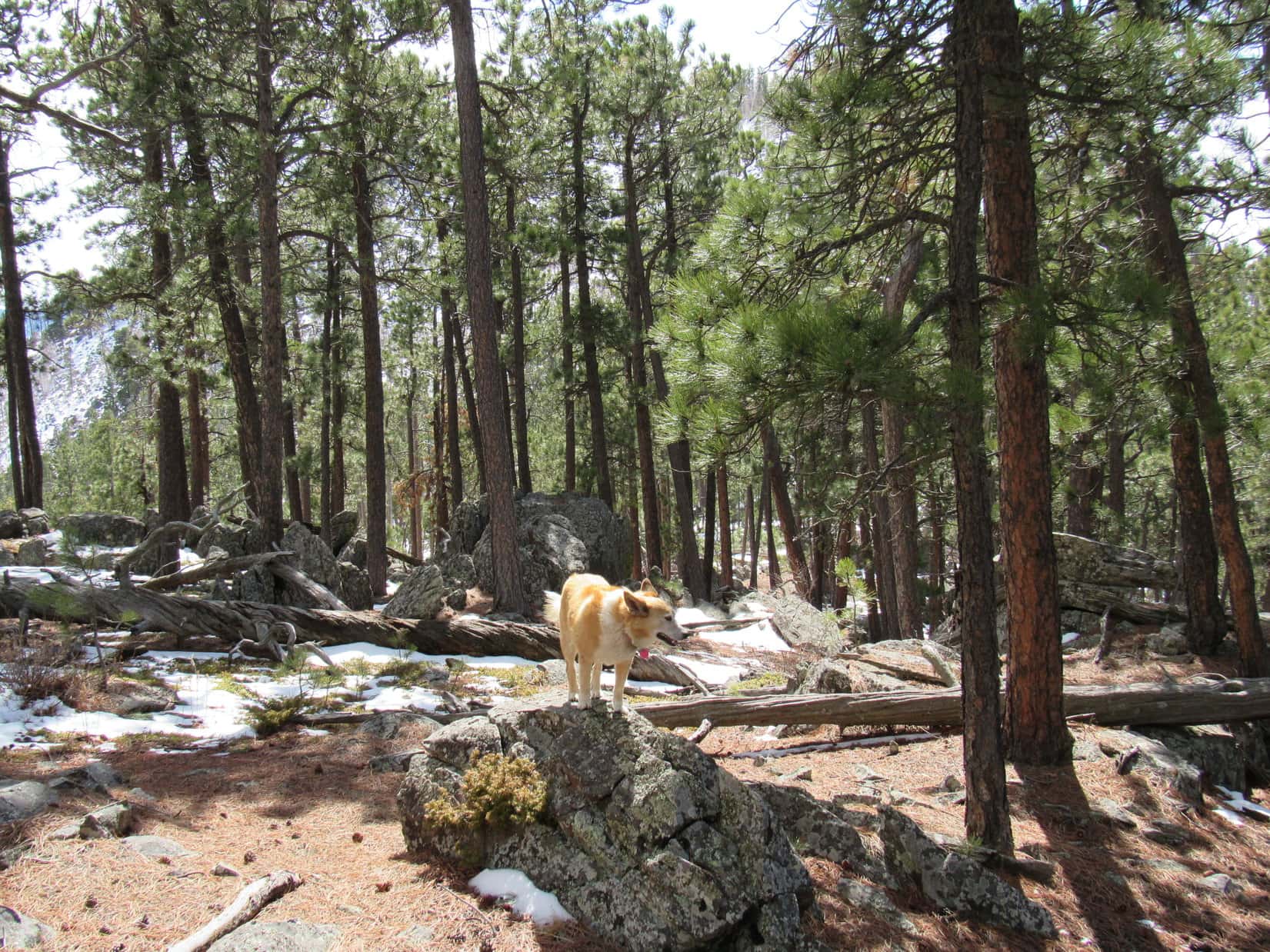
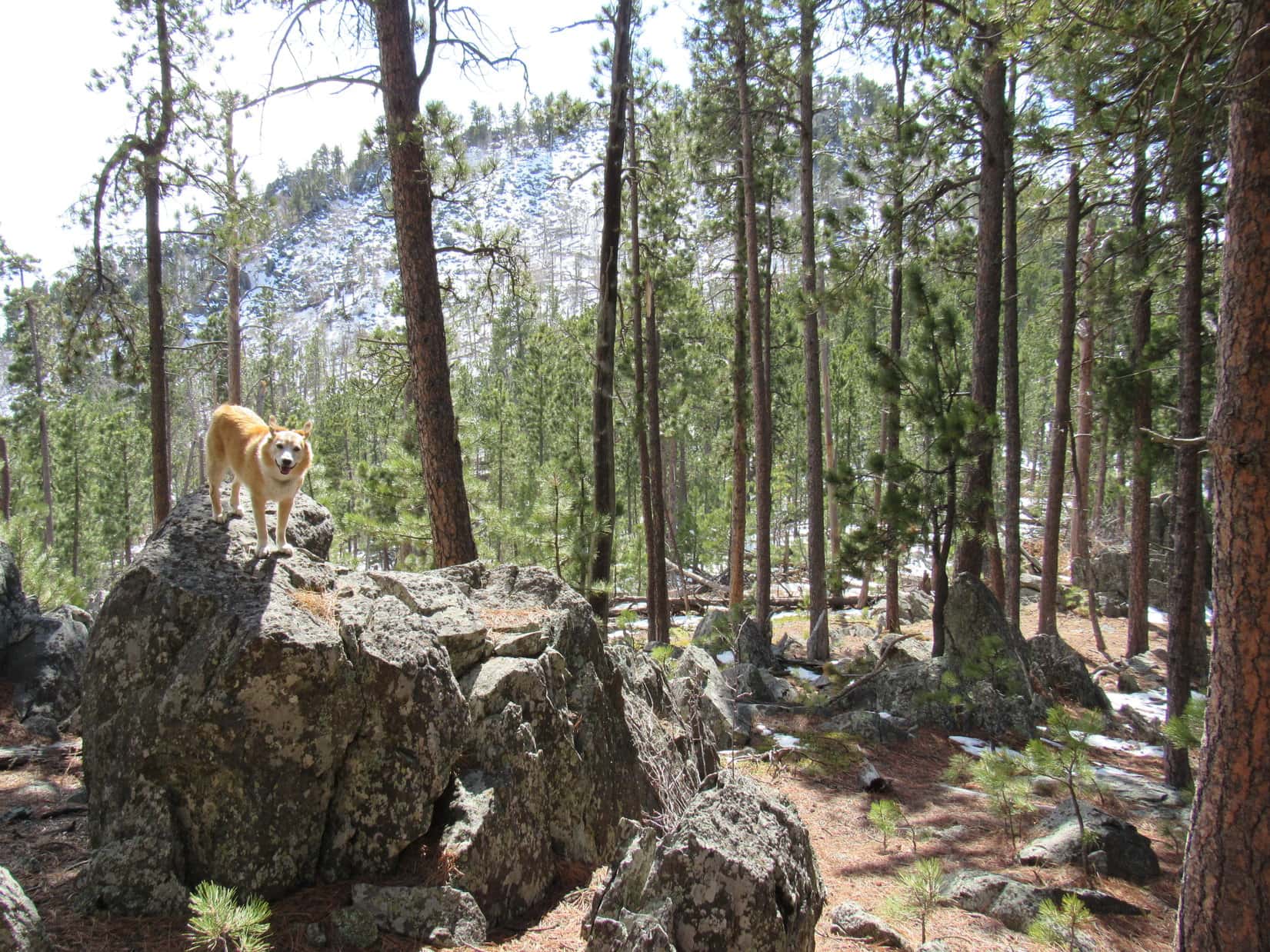
Heading up USFS Road No. 669. Photo looks SSE.
A first glimpse of Peak 5520 (Center). Photo looks ESE.

Sticking with the road, Lupe reached a spacious clearing at a pass 0.5+ mile from the frozen pond.  The clearing provided an unobstructed view.

Peak 5520 (Center) from the pass. Photo looks NE.

Looks pretty easy, SPHP!

Duck soup, Looper!  Nothing wrong with that!

A short climb through the forest led to surprisingly open ground only partway up.  Lupe was excited to see several deer bound away.  A mighty nice view of Black Elk Peak (7,231) appeared before she even got close to the top.

Even easier than it looked! Partway up Peak 5520. Photo looks N.
Black Elk Peak (Center). Photo looks S.

The climb wasn’t a big one.  Approaching the summit, Loopster entered a region of scattered pines and rock formations.  The summit, at the N end of a sloping ridge, proved to be the rockiest part of the mountain.

Getting close to the top. Photo looks N.
Peak 5520’s summit region. Photo looks NW.

The top of the mountain was a jumble of rocks and bushes.  One of the very highest rocks had a nice flat top.  Lupe got up onto it.

Summit of Peak 5520. Photo looks NNW.

Congratulations, Loopster!  Another peak climbed!

Thank you, SPHP!  Nothing to it!  Quite the views up here!

I’ll say!  Rather surprising.  Guess it’s because there are hardly any trees.  Hey, this rock is a few inches higher than the one you’re on.  Mind moving over to it?

Maybe for a minute or two.

At the true summit, a somewhat more precarious perch. Photo looks E.
This platform rock is better! Mount Warner (R), Peak 5741 (far R), with Samelias Peak between them. Photo looks SE.

Success was celebrated with a chocolate coconut bar, but not right up at the true summit.  Retreating a little to the S, Lupe and SPHP found a more comfortable spot to hang out.  Even though Peak 5520 wasn’t all that high, the views really were quite impressive.  The American Dingo enjoyed a panorama of higher peaks in virtually every direction.

Highlights to the N included New Year’s Eve Peak (6,046 ft.), Peak 5917, and Peak 5800Black Elk Peak (7,231 ft.) dominated the S horizon.  Mount Warner (5,889 ft.) and Samelias Peak (5,856 ft.) were visible to the SE.

New Year’s Eve Peak (L), Peak 5917 (Center) and Peak 5800 (far R). Photo looks NNE.
New Year’s Eve Peak (R) and Peak 5917 (far R). Photo looks N.
The 3 peaks L of Center are Mount Warner (L), Samelias Peak (Center), and Peak 5741 (R). Black Elk Peak (far R) on the horizon. Photo looks SSE.
Black Elk Peak. Photo looks S with help from the telephoto lens.

The chocolate coconut bar was gone in a flash.  Lupe and SPHP lounged about for a while.  To the SW was a view of special interest.

Peak 5520 is a fabulous spot, SPHP, but what’s next?

Look over there, Loopster!  See the big lumpy ridge?  That’s gotta be the best view we’ve ever had of Five Points (6,221 ft.).  Somewhat to the N of it you see False North Point (6,130 ft.).  There is another Lists of John peak, Peak 6040, off to the W that we can’t see from here.  False North Point is sort of on the way to it.

Oh, I get it!  So you’re thinking we’ll just tag False North Point on the way to Peak 6040.

Exactly!

Are we going to hit Five Points, too?

Nope!  Won’t have time for that.  Peak 6040 is far enough away so that we’ll be doing good if we can get False North Point, too.

Ready? Let’s go! Five Points (L) and False North Point (Center). Photo looks SW.
Five Points (L) and False North Point (R). Photo looks SW with help from the telephoto lens.

Lots more adventure ahead!  Departing Peak 5520, Lupe returned to USFS Road No. 669.  The road divided at the pass into 2 unmarked branches, one continuing SSE straight down into Gordon Gulch.  The Carolina Dog took the other branch heading SW instead.

A final look at Peak 5520 from back at the pass. Photo looks NE.
Looking SW, the direction Lupe was about to go.

Descending into a shallow valley, one of several comprising the upper reaches of Gordon Gulch, the road going SW quickly turned S.  After 0.33 mile, it again angled SW and climbed a little.  Loop arrived at a high spot where the road divided again, one branch going L, the other continuing SW.

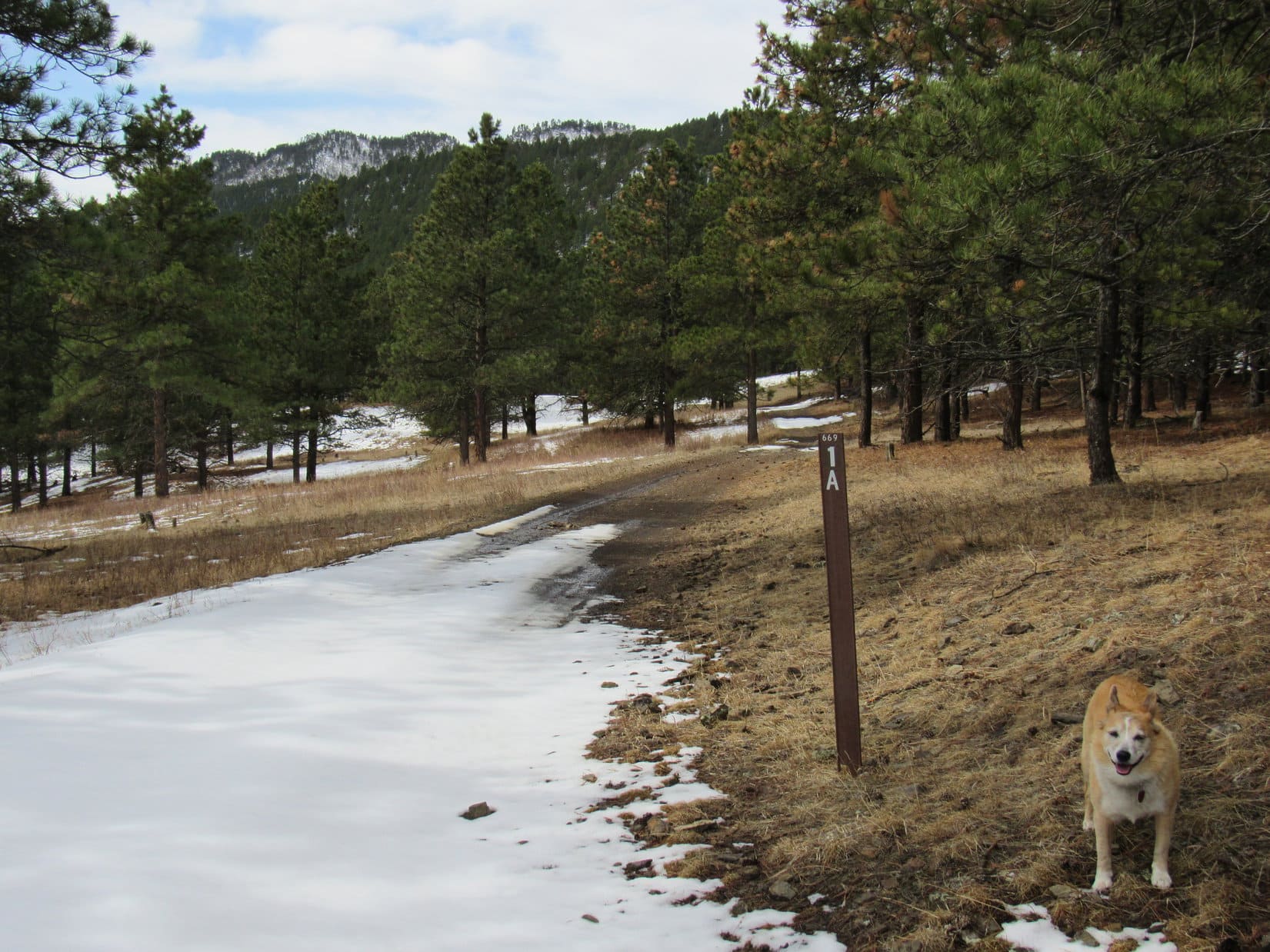
This time there was a marker.  A wand next to the road continuing SW indicated that this was USFS Road No. 669.1A.

Heading down the shallow valley. Photo looks SSW.
At the high spot next to the No. 669.1A wand. Five Points (L). Photo looks SW.

Go straight, SPHP?

Yes, I think so, but hang on a minute, Loop!  Let me check the topo map!  Somewhere along in here we need to turn W or NW, and I haven’t noticed a road or valley going that way yet.  Want to make sure we haven’t missed it already.

Checking the map, it seemed pretty clear that this junction was at the crest of a little ridge extending SE from Peak 5549.

So, what does the map say, SPHP?

Says to keep going straight like you thought, Looper.  Shouldn’t be too far to the next valley.  We’ll turn NW there.

Which is how it all turned out.  No. 669.1A did lead down into another valley, which it immediately crossed before continuing SW up the far side.  Abandoning No. 669.1A, Lupe instead turned NW following a fainter unmarked road up the valley.

In the next valley. USFS Road No. 669.1A continues up the other side. Photo looks SW.
On USFS Road No. 669.1A, which Lupe abandoned to head NW staying to the R of the peak seen L of Center. Photo looks WNW.
Starting up the valley on the fainter road. Photo looks NW.

The valley Lupe was going up now wasn’t as shallow as the others she’d passed through on the way here.  The sides were steeper and higher, but the road was decent and headed in the right direction.  For a while, Loop made good progress, gaining elevation at an easy pace.

However, the situation was deteriorating by the time the road began to curve W.  The faint road was getting fainter, and Lupe was coming to more and more deadfall.  No sign that anyone had been here in ages!

Forcing a way through the steadily worsening deadfall rapidly turned into tedious work.  The road became intermittent, then vanished.  The N half of the valley, where the road had been, was largely snow-free, but choked with dead pines.  The S side still had a foot of snow blanketing the ground amid a dense stand of aspens, but far less deadfall.

Giving up on the non-existent road, Lupe switched to traveling through the aspens.  Not a great route, but definitely easier than contending with all the deadfall!

Among the aspens. Photo looks WSW.

The snowy trudge among the aspens went on and on.

How much farther to False North Point (6,130 ft.), SPHP?

Not entirely sure Loop.  It’s off the edge of the map that I printed out.  Don’t think it’s too much farther, though.

Off the edge of the map?

Yes.  Think we need to turn S pretty soon.  Watch for a valley we can take to the L.

A valley did eventually appear on the L.  Lupe turned up it, still traveling amid the dense aspens.  This valley climbed at a somewhat faster rate.  SPHP kept expecting the American Dingo to come to a pass, but stopped her before she did.

What’s up, SPHP?

Not sure, Loop.  We can’t be too far from False North Point, but this valley doesn’t seem quite right.  Maybe we ought to start climbing out of it?  I was going to wait until we got to a pass, but it’s taking longer than I thought it would.

So, head up the hill here?

Yeah, let’s try that.  I think this is actually all part of False North Point.  We’ll recognize it once we get to the top.

Lupe started up the pine-covered slope on the R side of the valley.  The Carolina Dog was soon leaping over deadfall again.

Back in the pines and deadfall. Photo looks SW.

Looper kept climbing, but nothing seemed familiar.  She hadn’t been to False North Point in 2 years.  SPHP remembered even more deadfall and a steeper route than this, but maybe she wasn’t on quite the same part of the mountain?

Oh, here we are, SPHP!  Made it to the top!

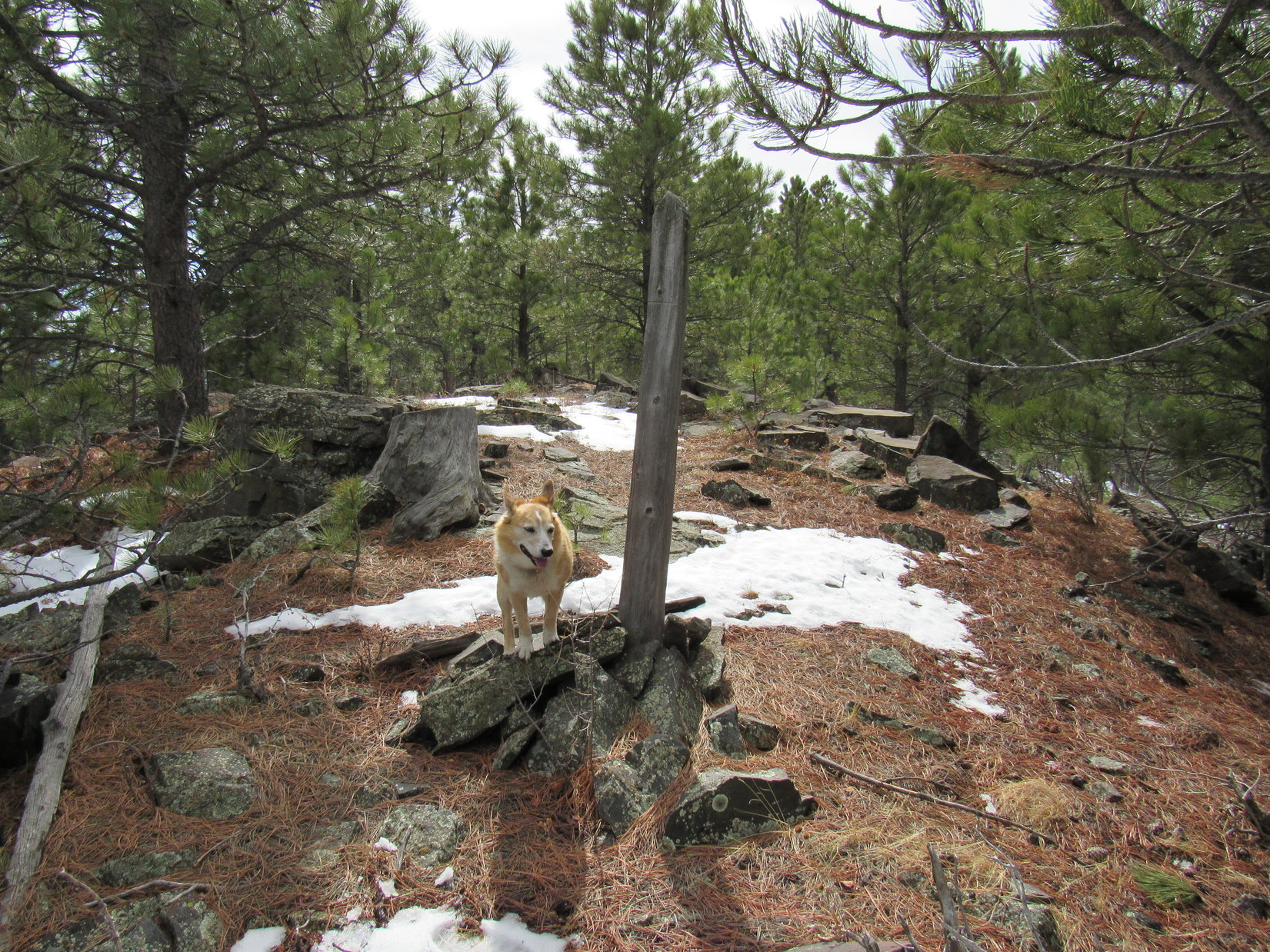
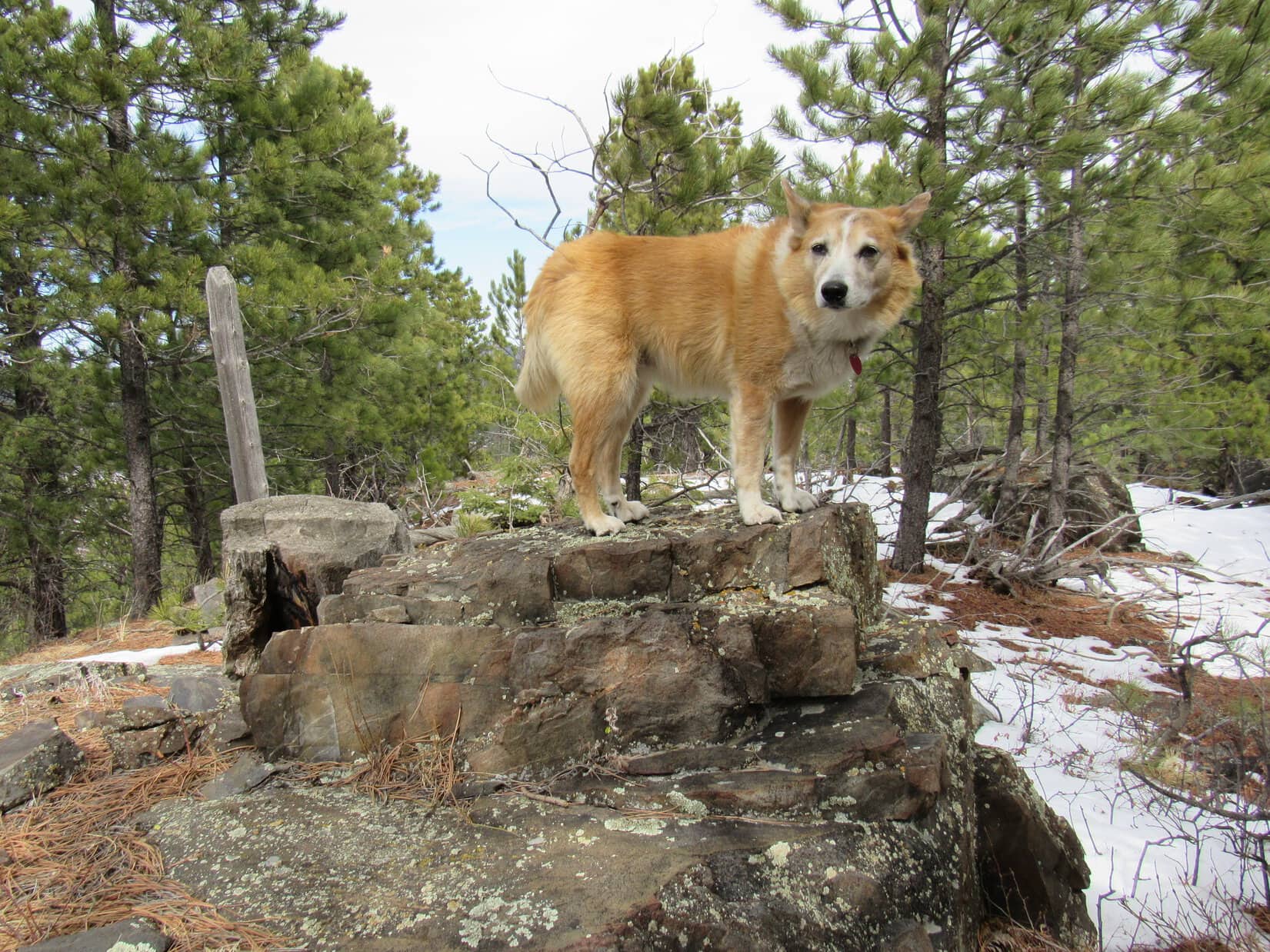
A tall wooden pole stuck up out of a cairn, the true summit rock sitting off to the L 10 feet beyond it.

By the wooden pole. Photo looks SSW.

Congratulations again, Loopster!  Mighty fine job!

So, where are we, SPHP?  This isn’t False North Point (6,130 ft.)!

No, it’s not!  It’s around here somewhere, though.  Want to take a break?

Got any more chocolate coconut bars?

The chocolate coconut bar supply hadn’t run out yet, so Loop did get to split another one with SPHP.  She also had some Taste of the Wild and water, while SPHP munched an apple.  Moving around a bit, a higher peak could be glimpsed to the W between the trees.

That looks suspiciously like False North Point, doesn’t it, SPHP?

Indeed it does.  Seems we’ve climbed the wrong mountain.

False North Point (Center). Photo looks WSW.

So, are we going to go over there, SPHP?

Yeah, I suppose.  Climb up on the top rock here for a moment, then we’ll keep following this ridge.  It’ll probably take us down to an easier route over to False North Point.

At the true summit of wherever this was. Photo looks NNE.

As expected, Lupe lost a little elevation as she continued along the ridge past the high point, but the terrain then flattened for a while.

Look, SPHP!  There’s higher ground ahead!

Huh!  So there is.  Keep going, Loop!  Maybe this really is False North Point, and we just haven’t gone far enough yet?

Higher ground ahead. Photo looks S.

Lupe kept going.  The terrain kept rising.  She reached a second high point.  Although Loop had netted a fair amount of elevation gain since leaving the cairn with the post, a glance back to the WNW showed she still wasn’t quite as high as the peak she’d seen before.

At the second high point. False North Point (L). Photo looks WNW.

Directly ahead, still some distance away, there was an even higher peak.

Another mountain ahead, SPHP! Photo looks SSW.

Next time I better print out more of the topo map.  Somehow we’re way off course, Looper!  That’s got to be Five Points (6,221 ft.) ahead!

So, False North Point actually is behind us now?  We’re between them?

Afraid so, Loop.

Are we turning around then, SPHP?

No.  Since we’re this close, let’s skip False North Point and continue on to Five Points.  Been a long time since we’ve been there.

On the easy, scenic trek down to the saddle leading to the next peak, Lupe lost more than 100 feet of elevation.  Not much deadfall to contend with, and a variety of interesting rocks were scattered among the trees.

Heading for the next peak. Photo looks S.
Getting closer. Photo looks S.

At the base of the next mountain, Loop faced a very steep climb.  At first, she had to leap over deadfall.  Higher up, she came to a boulder field.  The overall scale of the mountain wasn’t nearly as large, but rocks were so big, it almost felt like she was in the Bighorns.

Heading up. Photo looks S.
Quite the scramble for the Black Hills! Photo looks SSE.

At one point, it almost looked like Lupe was stuck.  Fortunately, swinging around to the E a bit revealed an acceptable route higher.  The American Dingo was soon approaching the summit.  A bleached branch sporting several vertical limbs was perched along the W edge.

Oh, I remember that branch!  Don’t you, SPHP?  To think that it has still been sitting up here all this time!

I do remember it, Loop!  Quite distinctive!

By the distinctive branch. Photo looks SW.

Lupe went on to the highest rock, which was just beyond the distinctive branch.  The views were terrific!   It was easy to see that she was well above False North Point now.

At the top. False North Point (L). Photo looks NNW.

Congratulations on climbing Five Points (6,221 ft.), Loopster!  That was some scramble, wasn’t it?  Well worth it, though!  This is fabulous!

Why, thank you, SPHP!  Mind if I ask a question?

Of course, not!  Fire away!

If this is Five Points, what’s that over there?

Oh, good grief!

Due S, 0.25 mile away, was a higher peak.

Five Points summit (L of Center). Photo looks S.

We climbed the wrong mountain again, SPHP?

Yes and no!  I’m a dope.  It all makes perfect sense.  That’s the true summit of Five Points over there.  We’re actually on North Point here, or what you might call True North Point.

So, this is part of the Five Points region, but not the highest point?

Correctamundo, as we can plainly see.

True North Point was a great spot, and it had been quite the little jaunt getting here.  Loop might as well take another break and enjoy the views for a while.  No chocolate coconut bar this time around, though.  Only one left.  Going to save it for either Five Points or Peak 6040.  Lupe had to settle for more Taste of the Wild.

Union Hill (6,120 ft.) (R of Center). Photo looks W with help from the telephoto lens.

A pleasant half hour shot by.  Decision time!  Five Points or Peak 6040?  Not enough daylight remaining for both.

Wasn’t the plan, Loop, but we’re not getting this close to Five Points and not doing it.  That OK with you?

Peak 6040 isn’t going anywhere, SPHP.  We can climb it another time.

Onward, then!  Puppy, ho!

Next stop, Five Points summit (Center)! Photo looks S.

The S slope of True North Point was steep, but the descent was easier than expected.  The S exposure meant little or no snow.  Lots of deadfall, but not until Lupe was already almost down to the saddle leading to Five Points.  Crossing the saddle in nothing flat, the Carolina Dog started up Five Points’ N slope.

Snowy, steep, and badly infested with deadfall about sums it up.  The climb was a slow trudge higher, but True North Point had actually been tougher.  Five Points became a rocky scramble, too, but not until Lupe was already fairly close to the top.

Above the deadfall, high on Five Points’ N slope. Photo looks SW.
Near the top. Photo looks S.

3:56 PM, 58ºFFive Points (6,221 ft.) had 2 rocky high spots separated by 100 feet.  The American Dingo reached the one at the N end first.  Whether it was any higher or lower than the one at the S end was hard to say.  Trees prevented any direct visual comparison, partially blocking the views in other directions as well.

Five Points, at the N end. Photo looks NE.
At the S high spot. Photo looks S.
Black Elk Peak (Center). Photo looks S with help from the telephoto lens.

Finally made it, Looper!  Congratulations, again!  More to Five Points than this, but I’m pretty sure you’ve hit the true summit at one of these spots.

Glad to hear it, SPHP!  Now, about that last chocolate coconut bar!

In a sunny spot between the two high points, Lupe curled up on SPHP’s lap.  Provisions disappeared, and a while was spent contemplating the big view of snowy hills and ridges to the W.

Looking SW from Five Points.

At last, a breeze began to blow out of the SW.  Lupe stirred, too.  Getting to be that time.  Sniffing back and forth along the summit ridge, Loop took in the sights and scents of Five Points.

False North Point (L of Center) in the foreground. Photo looks NNW.
A more open view. False North Point (R of Center). Photo looks NNW.
Looking SSW.

Before it was over, Loop returned to both high points several times.

New Year’s Eve Peak (L), Peak 5917 (L of Center) and Peak 5800 (R) from the N high spot. Photo looks NE.
Black Elk Peak (Center) from the S high spot. Photo looks S.

Exactly an hour after arriving, Looper left Five Points picking her way down the very steep NW slope through heavy deadfall.

True North Point (R) during the descent. Photo looks N.

A time-consuming descent!  Even after the slope began to diminish, the deadfall remained thick for a long way before it finally came to an end.  In filtered evening sunlight, Lupe explored animal trails NW through the snowy forest.

Upon reaching USFS Road No. 249, Lupe followed it NE.  The road soon bent sharply W.  Loop left it, heading NNE across a field toward the pass between False North Point and the ridge she’d traveled earlier that led to the true one.  Up at the pass, Loop and SPHP ducked under a fence.

A need for speed now!  The sun was sinking.  Ahead was a long valley filled with aspens, another part of the same aspen-filled valley Lupe had been in earlier.  Following a snowy path, the American Dingo plunged into the thick of it.

The path disappeared.  Lots of deadfall, but most of it wasn’t big.  Lupe leapt over countless downed trees.  More than 0.33 mile from the pass, she turned NW and went over another one.  Oh, of course!  This was it!  This was the pass where Loop had begun her last ascent of False North Point more than 2 years ago.

Beyond the pass, Loopster entered another valley, one she was familiar with.  USFS Road No. 669 went through here.  This was the upper end of the route W of the frozen pond.

1.5 miles back to the frozen pond!  Another 0.5 mile back to the G6.  No worries now, on a known route.  Light fading, curly tail held high, Lupe trotted down the quiet valley leaving deep impressions in the slushy-soft snow.  (End 7:38 PM, 41ºF)

Heading into the aspens on the way back, Black Hills of South Dakota 3-20-21

Links:

Next Black Hills Expedition                        Prior Black Hills Expedition

Black Hills, SD Expedition No. 144 – Five Points (10-31-15)

Want more Lupe adventures?  Check out Lupe’s Black Hills, SD & WY Expeditions Adventure Index, Master Adventure Index, or subscribe free to new Lupe adventures!