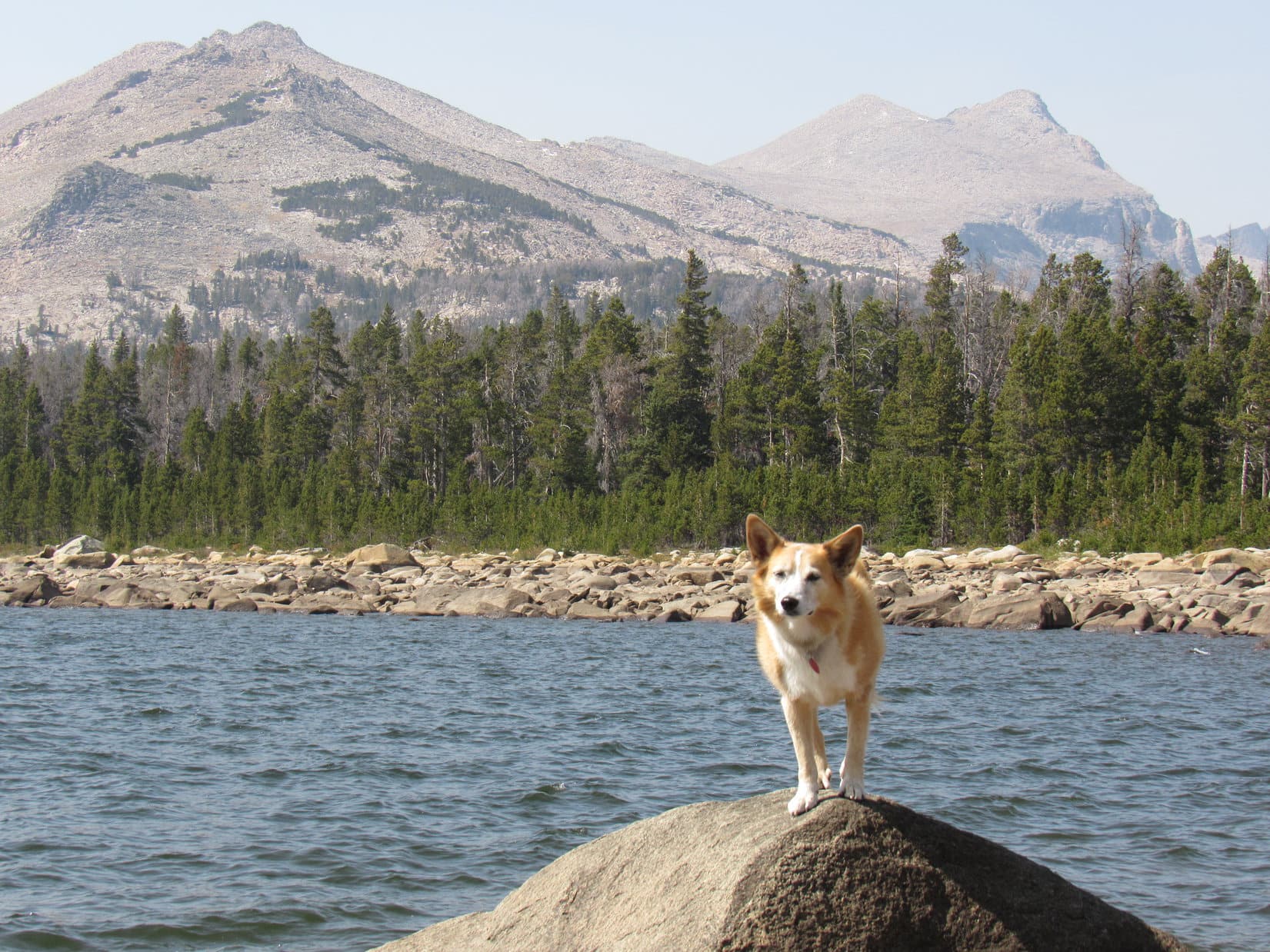
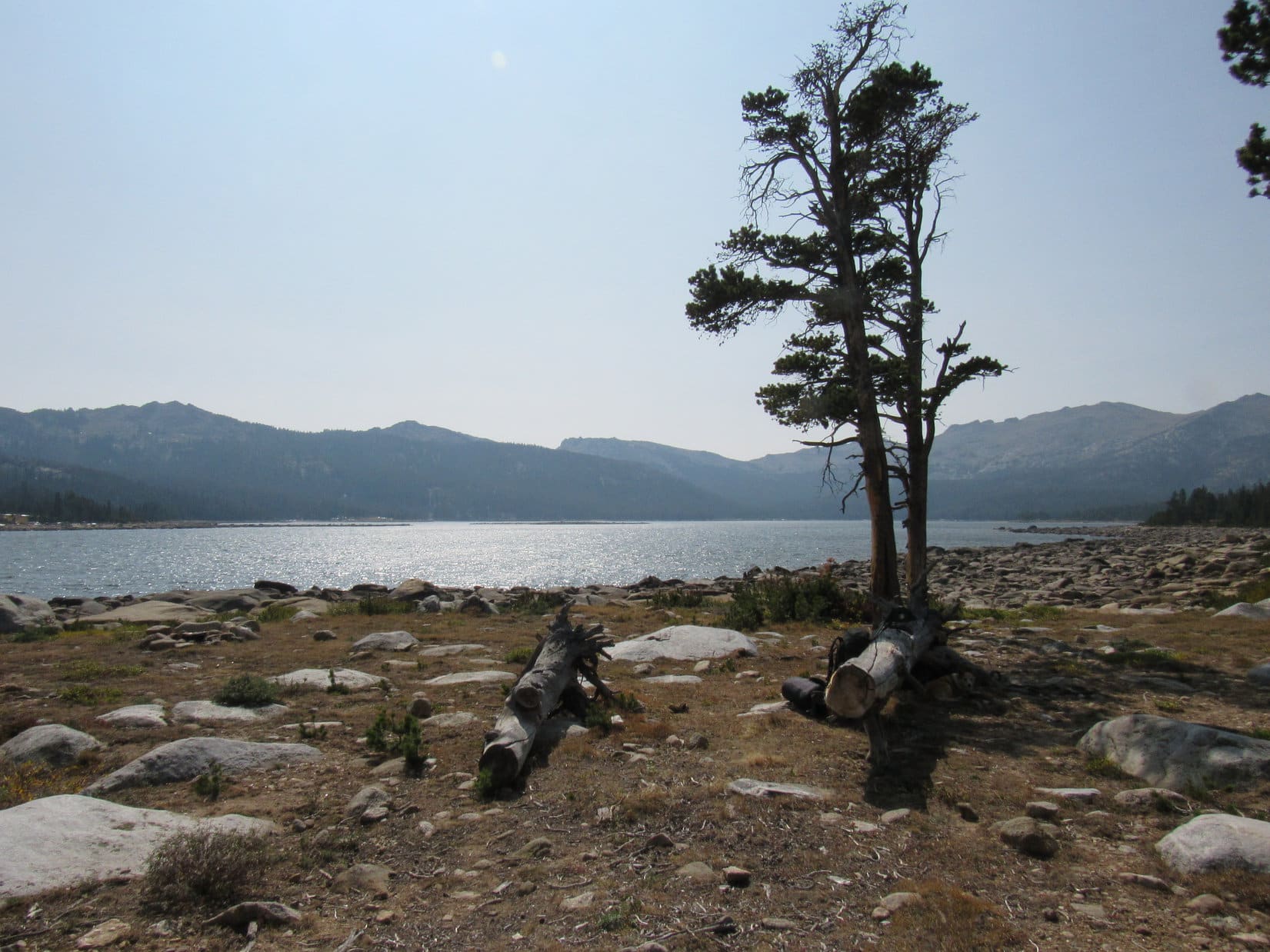
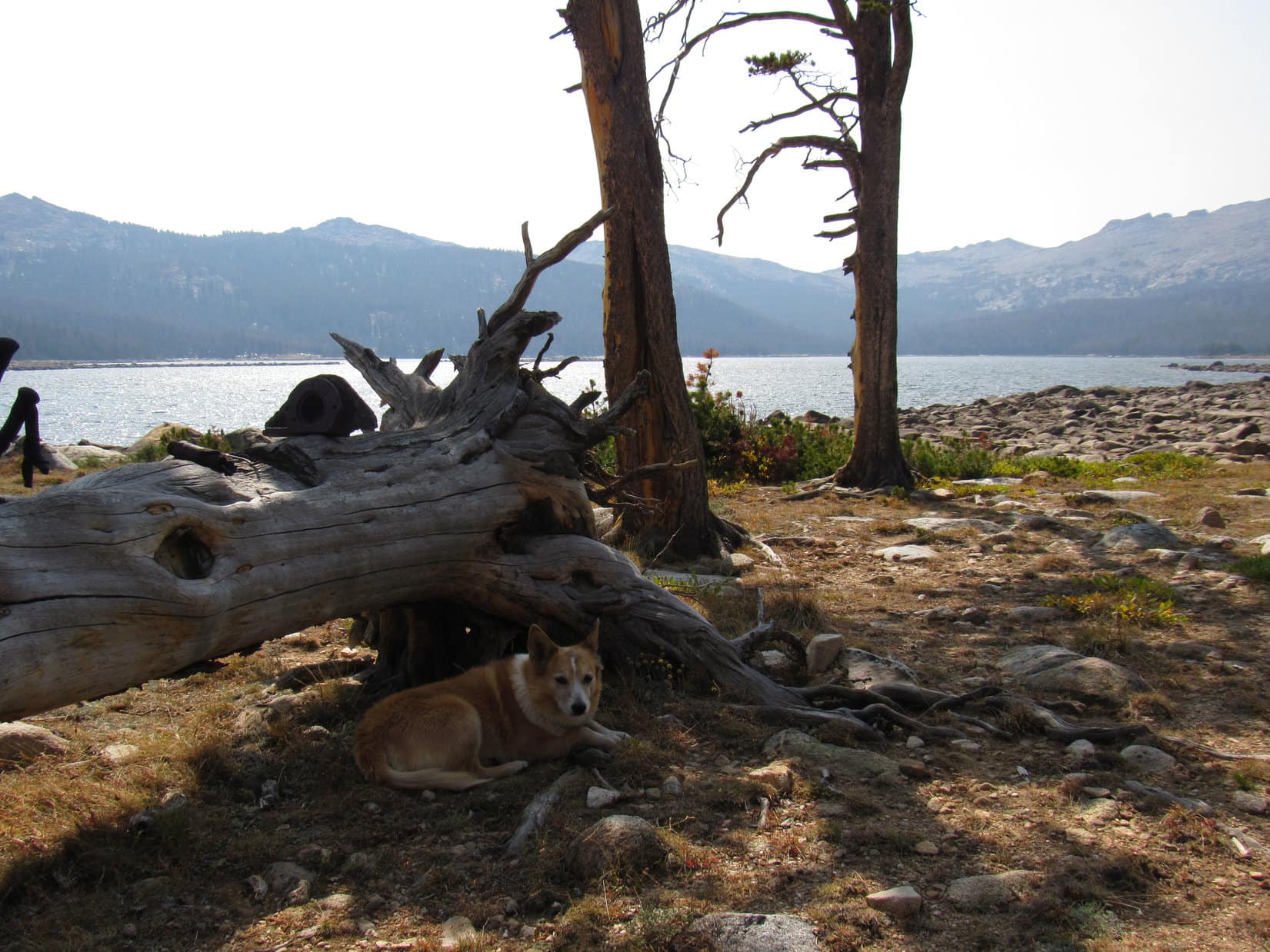
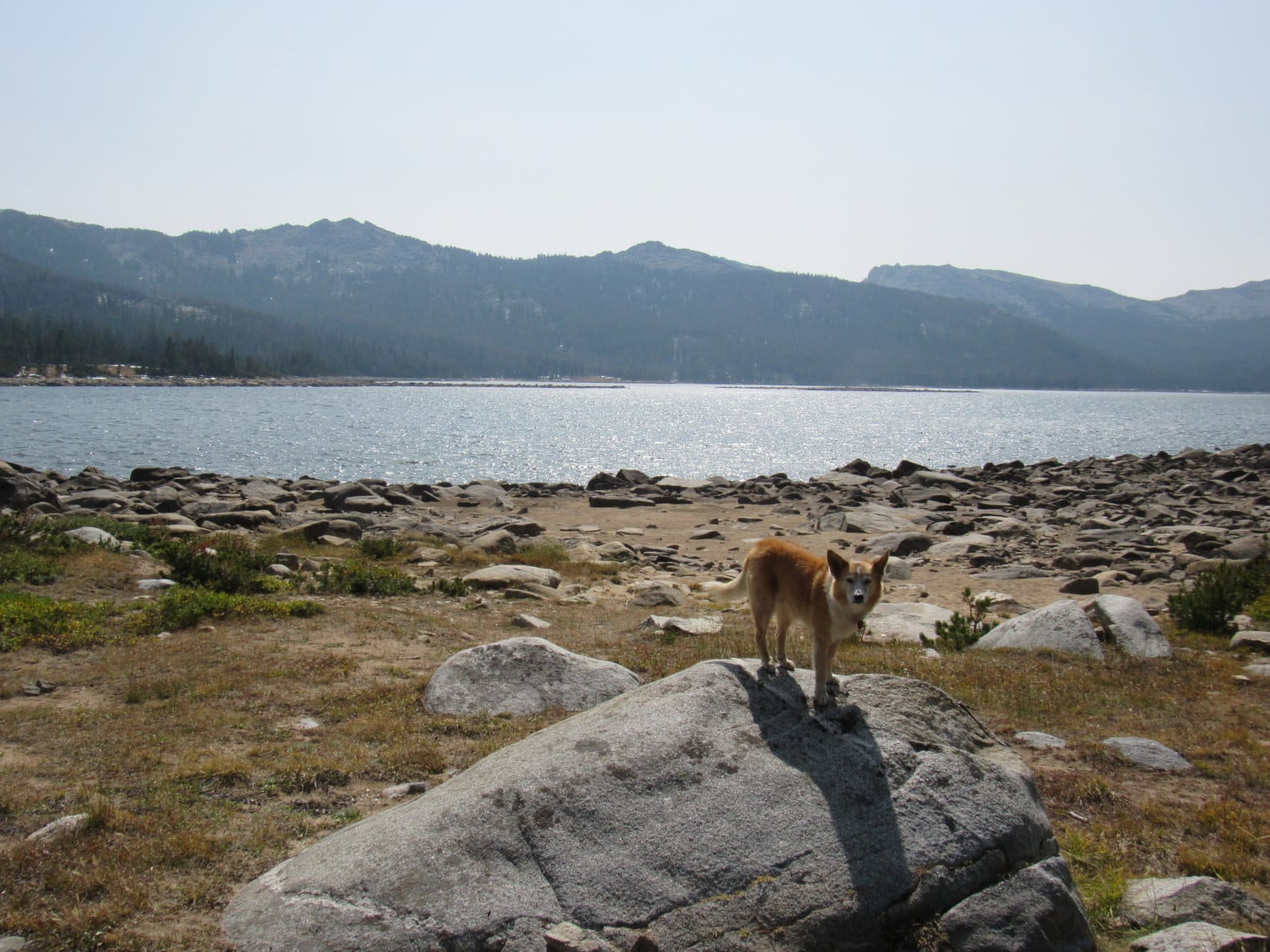
Black Hills, SD Expedition No. 269 – Peak 5581 & Scruton Mountain (3-12-21)

9:14 AM, 41ºF, Pactola Reservoir S boat launch – Several people were out on frozen Pactola Lake when the Carolina Dog sprang from the G6.

Ice fishing!  Are we going ice fishing, SPHP?
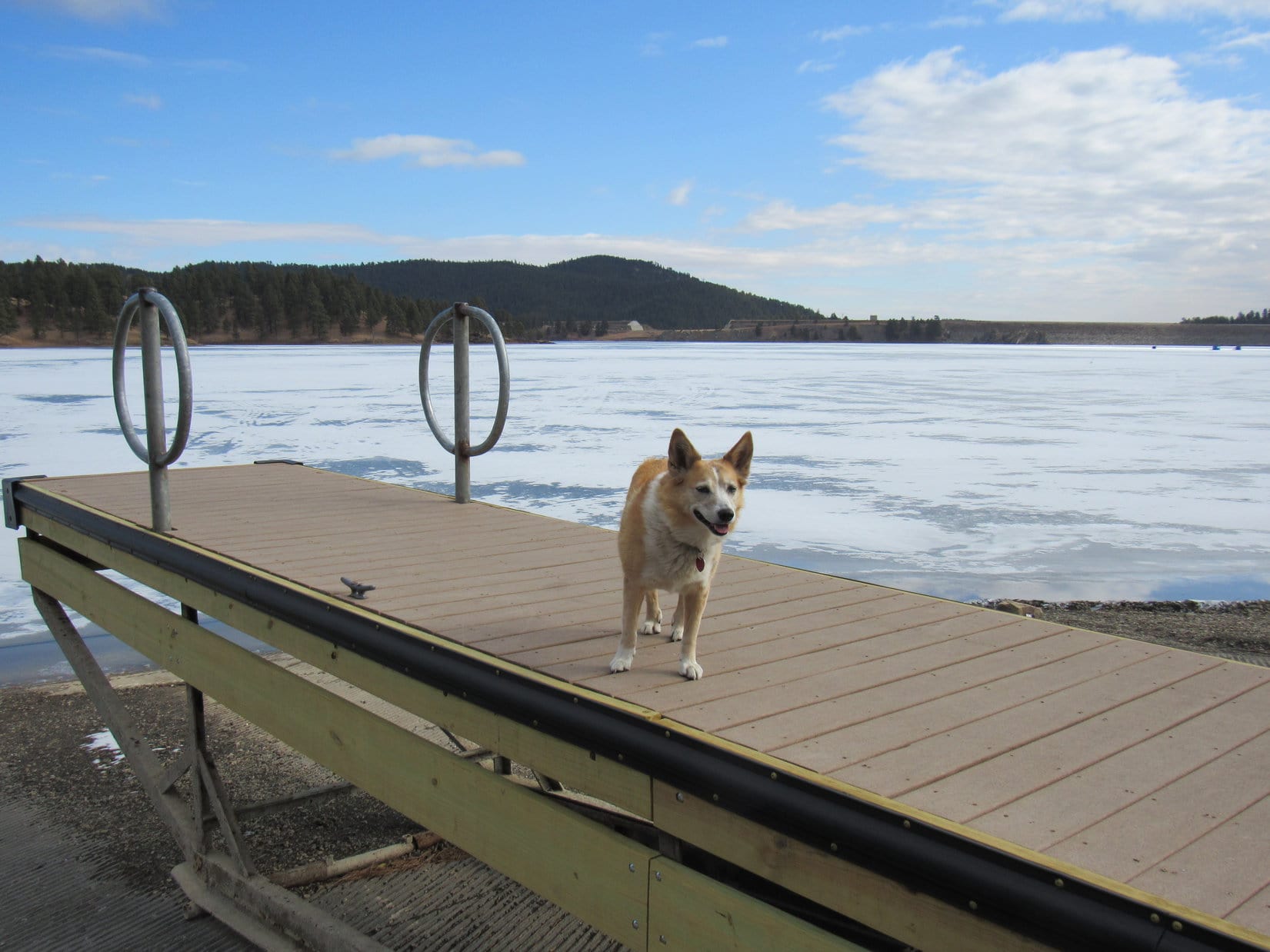
S boat launch at Pactola Lake. Perrin Mountain (5,212 ft.) (Center). Photo looks NE.

That would be a new one, wouldn’t it?  But no ice fishing for us, Loopster!  Your mission, should you decide to accept it, is to find and climb Peak 5581.  Maybe a couple of other peaks, too, if that goes well.

Mission impossible, unless you brought a map, SPHP.  Never heard of Peak 5581 before.

I just so happen to have a topo map of the relevant territory, lucky Dingo!  Peak 5581 is only about a mile SW of here.  Shall we?

A mile SW?  Follow me, SPHP!

Taking the boat launch access road, Lupe headed SW back up through the Pactola campground, then plunged into the forest.
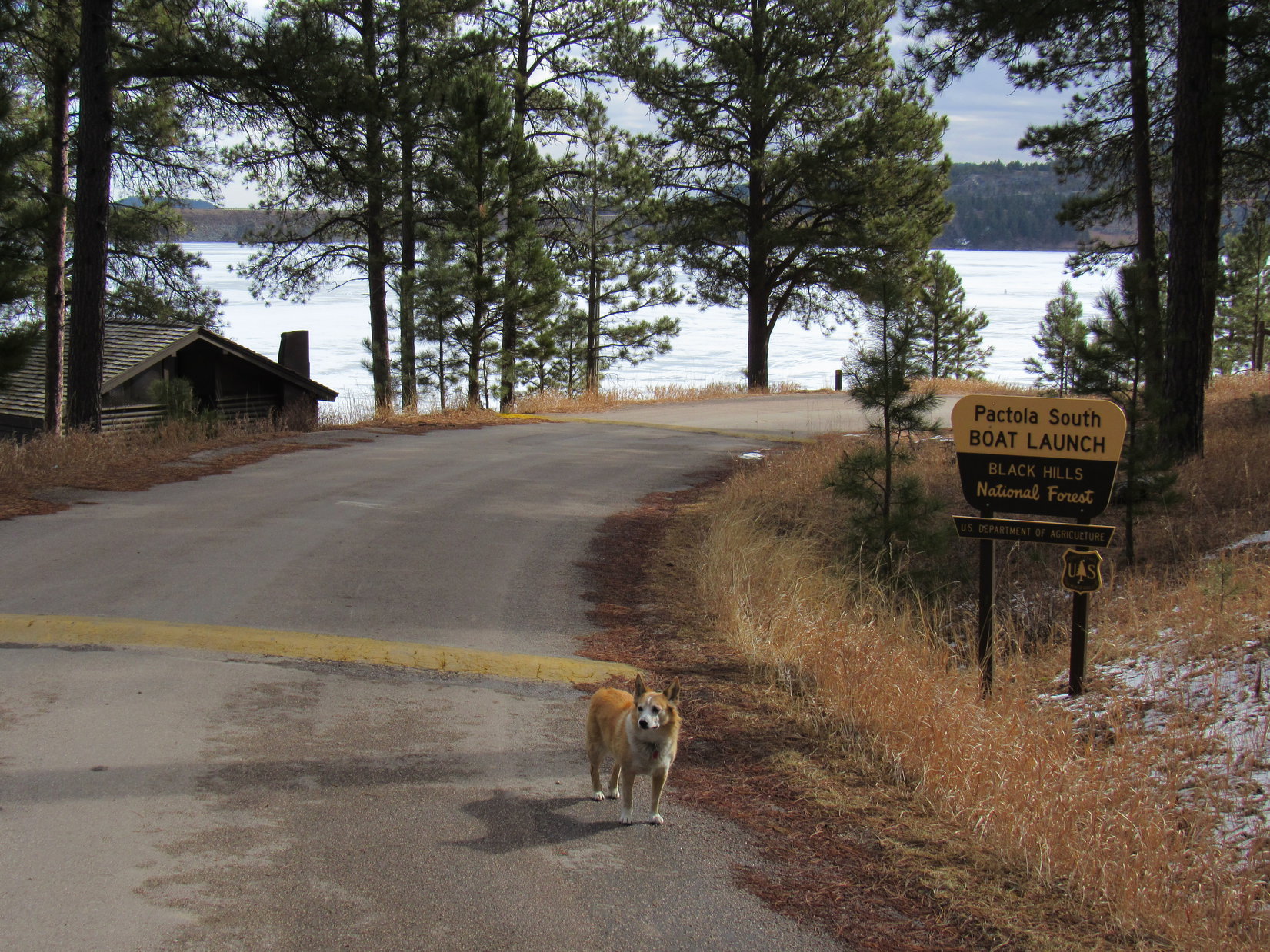
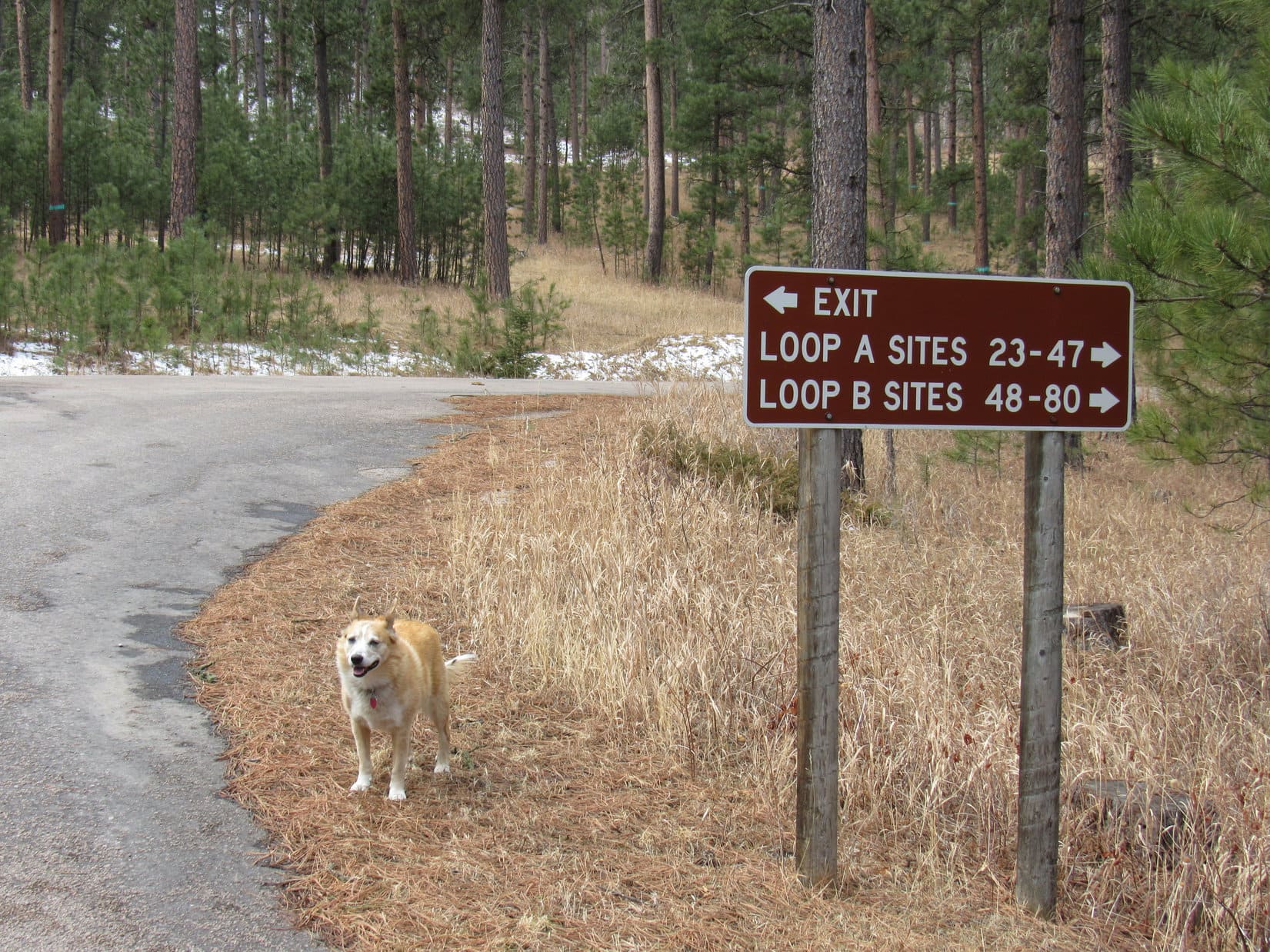
Leaving the S boat launch area. Photo looks ENE.
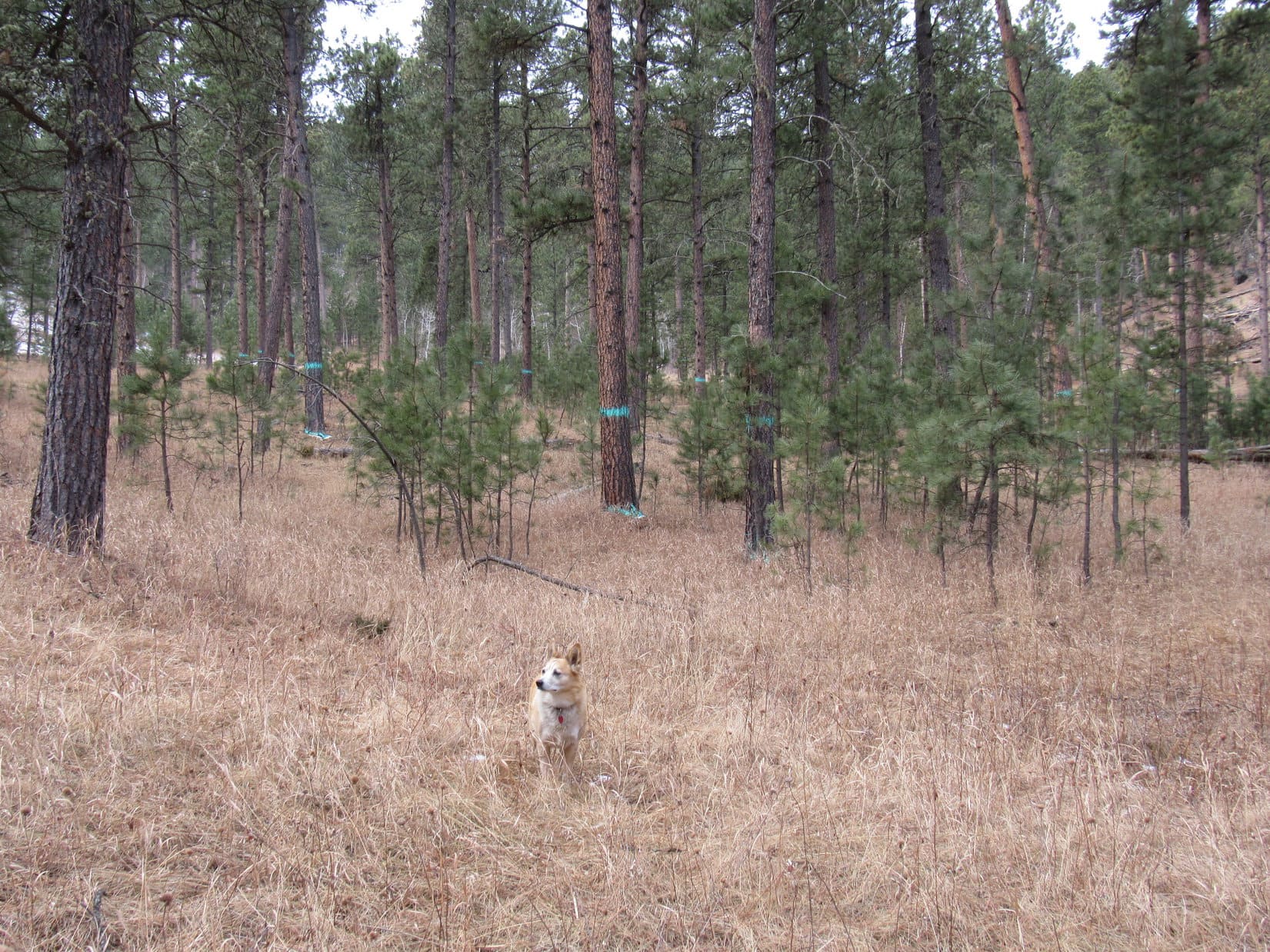
Loopster headed straight into the forest from here. Photo looks SW.
The search for Peak 5581 begins! Photo looks SW.

Shortly after leaving the pavement, Lupe came across a faded remnant of a road on the SE side of a sloping, grassy valley.  Following it farther up into the forest, she soon had a decision to make.  Directly ahead was a very steep hill.  L or R to try to get around it?  SPHP consulted the map.
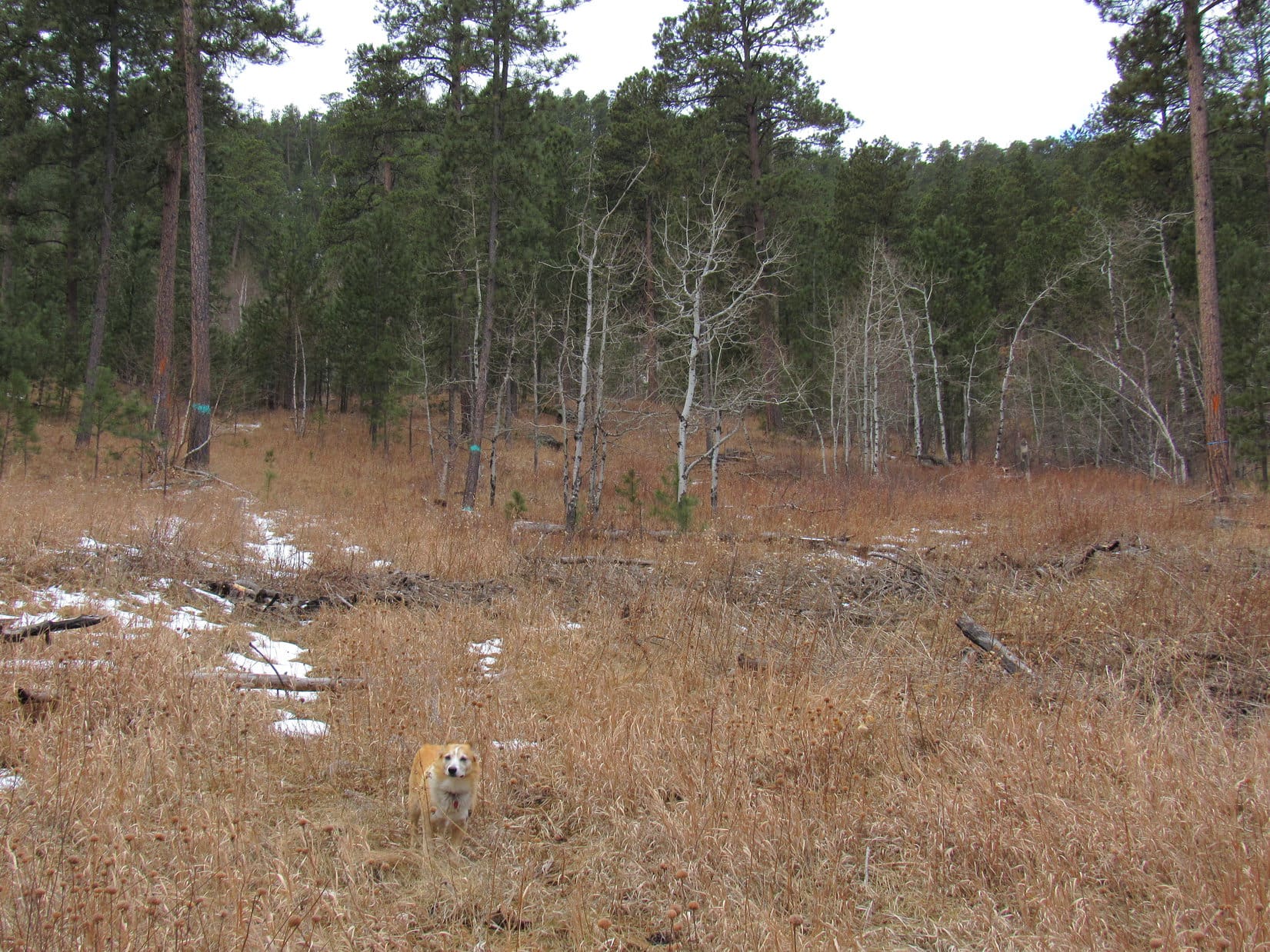
On the barely detectable road. Photo looks SW.

Go R, Looper!

This is going to be easy with the map, isn’t it, SPHP?

Should be!  That’s why I almost always bring one.
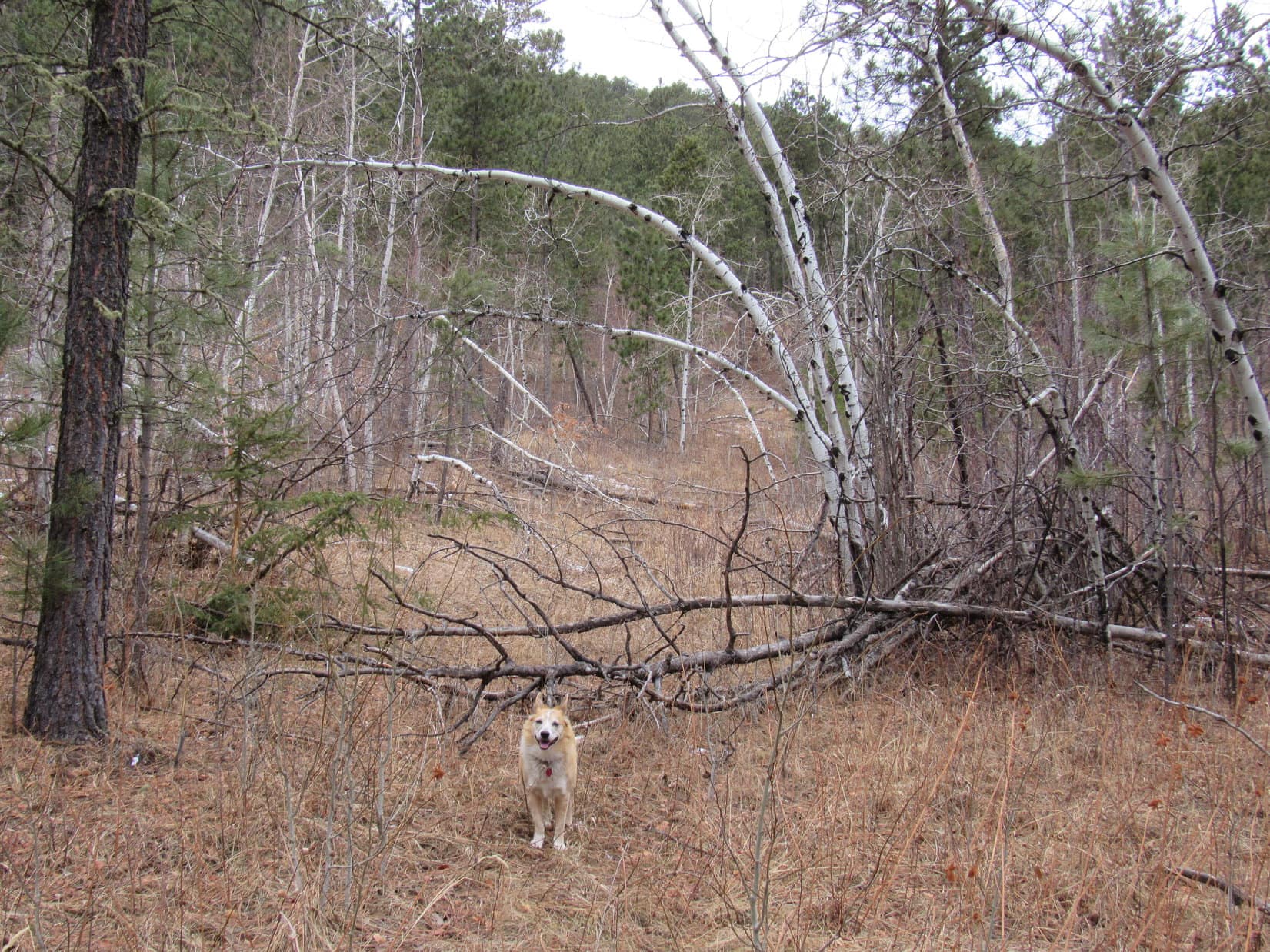
We’ll head W from here. Photo looks WSW.

The terrain steepened as Lupe turned W.  More hills boxed in the upper valley.  A ravine toward the S looked like the best route higher.  The first part of the ravine was full of small pines.  Before long they gave way to rock outcroppings and more open terrain toward the N.
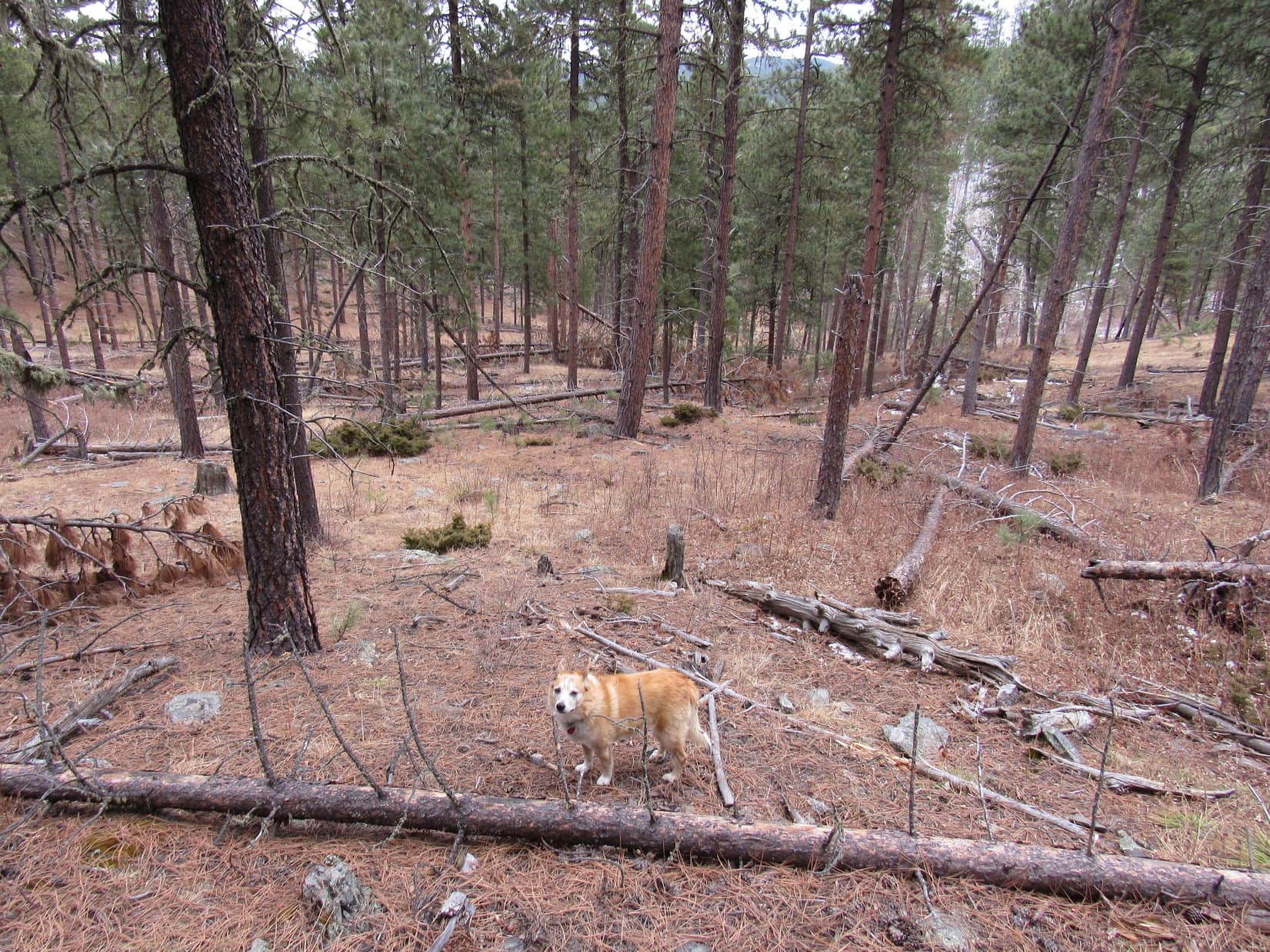
Glancing back down the slope before entering the ravine. Photo looks ENE.
Starting up the ravine. Photo looks WSW.
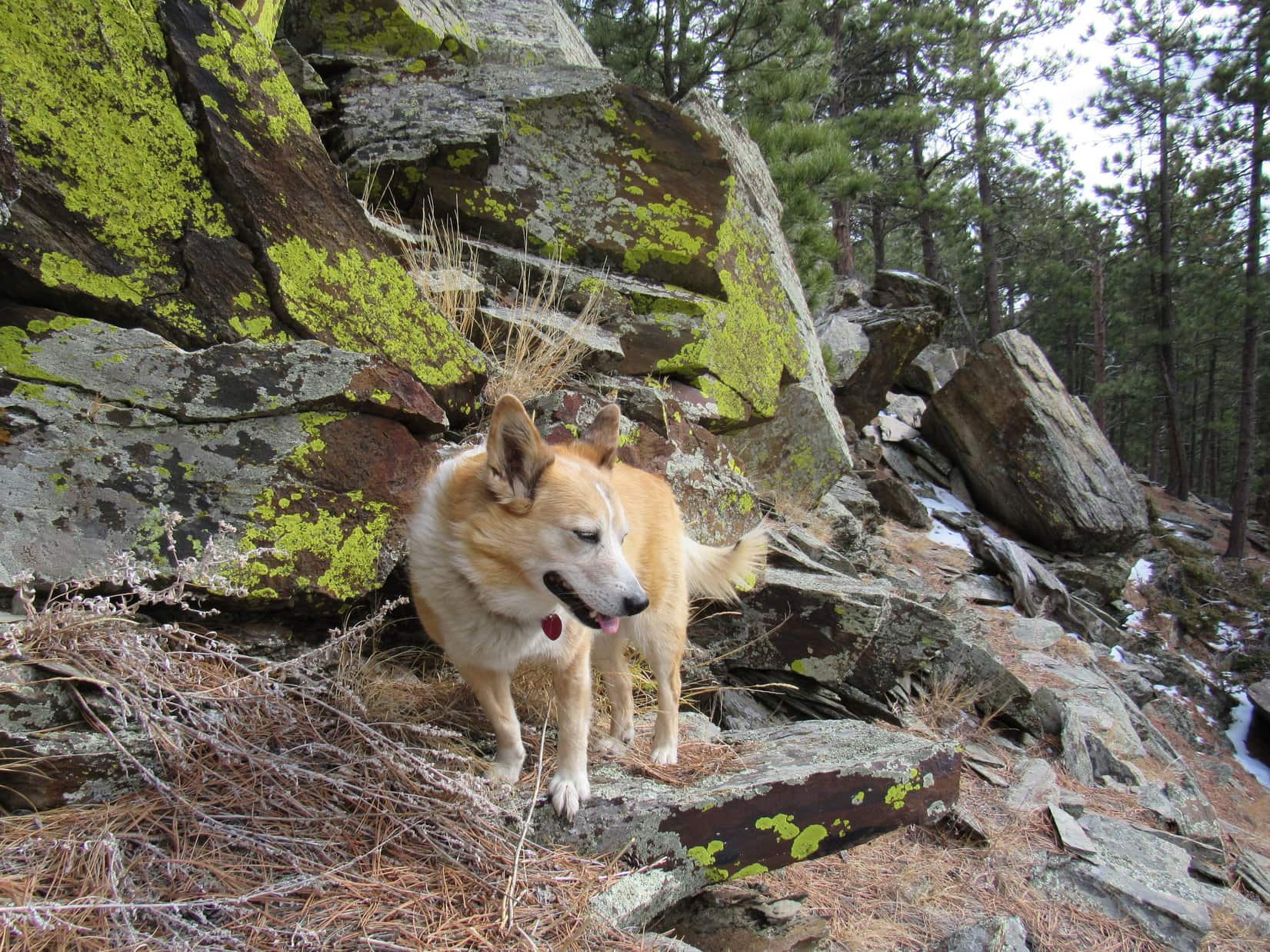
Near some of the rock formations. Photo looks N.

A minor saddle soon appeared on the N side of the ravine.  Lupe went up to it.  Some flat ground, and a small rocky hill to the E.  Very little in the way of views due to the trees, but this spot was identifiable on the map.

Trending WSW from the saddle, Lupe sniffed her way higher staying N of the ravine.  No big rock formations along in here, but plenty of rocks were strewn about the forest.
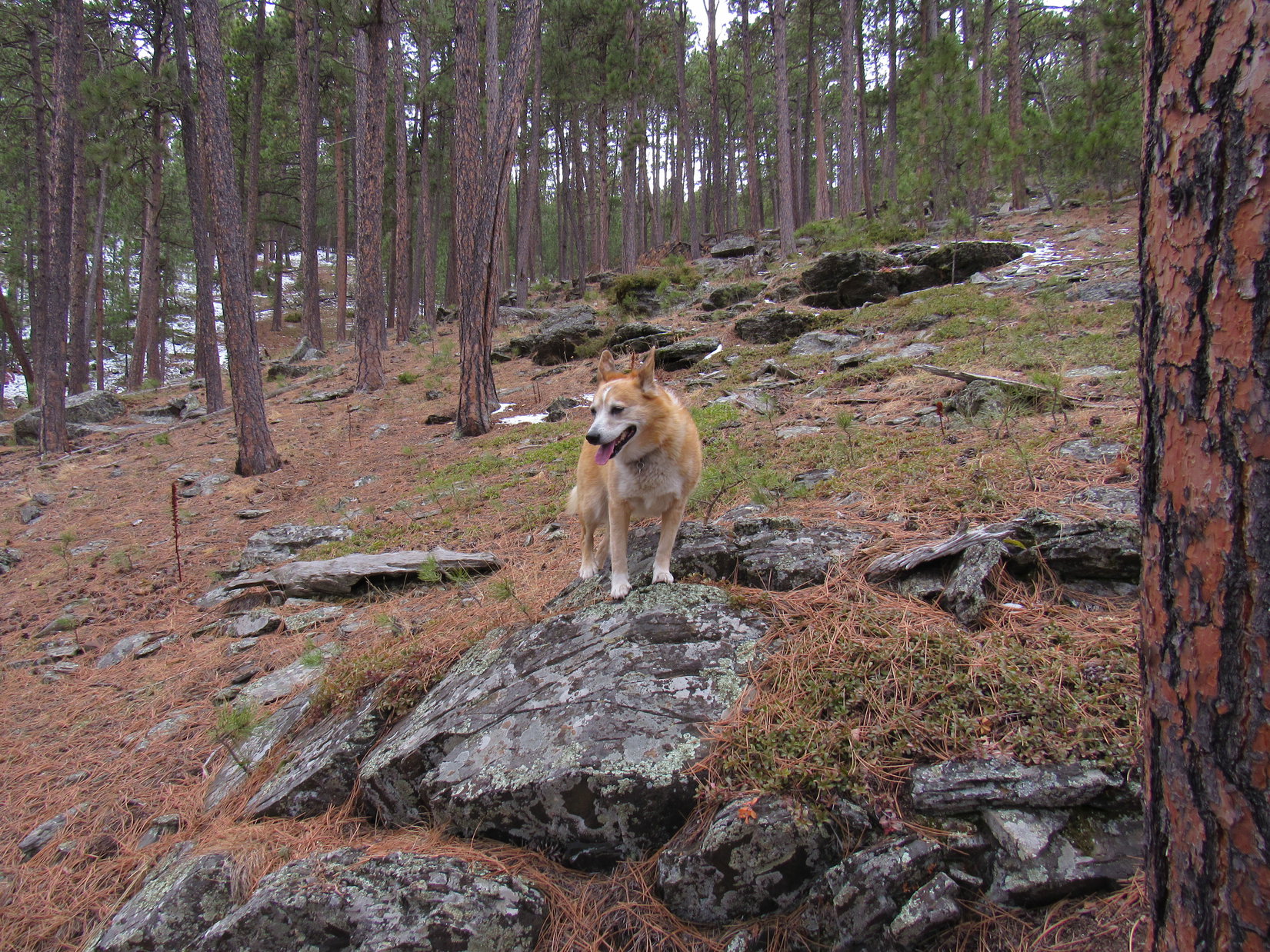
Past the minor saddle following the N side of the ravine (L). Photo looks SW.

The trek became easier and easier.  Making good progress, Loop came to Kinnikinnick Park, a gently sloping region where the forest must have been thinned years ago.
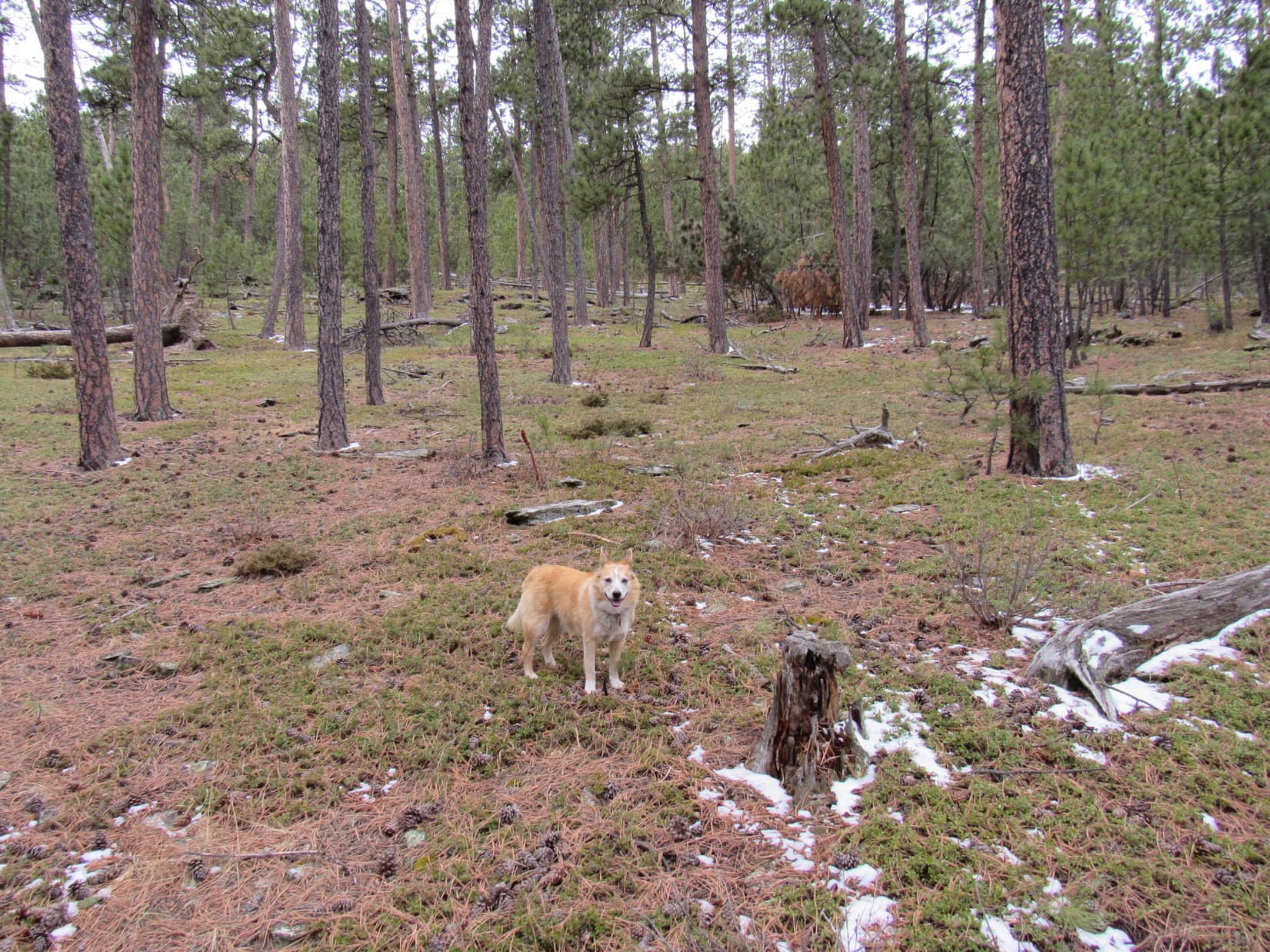
Kinnikinnick Park, named after the abundant low ground cover. Photo looks SW.

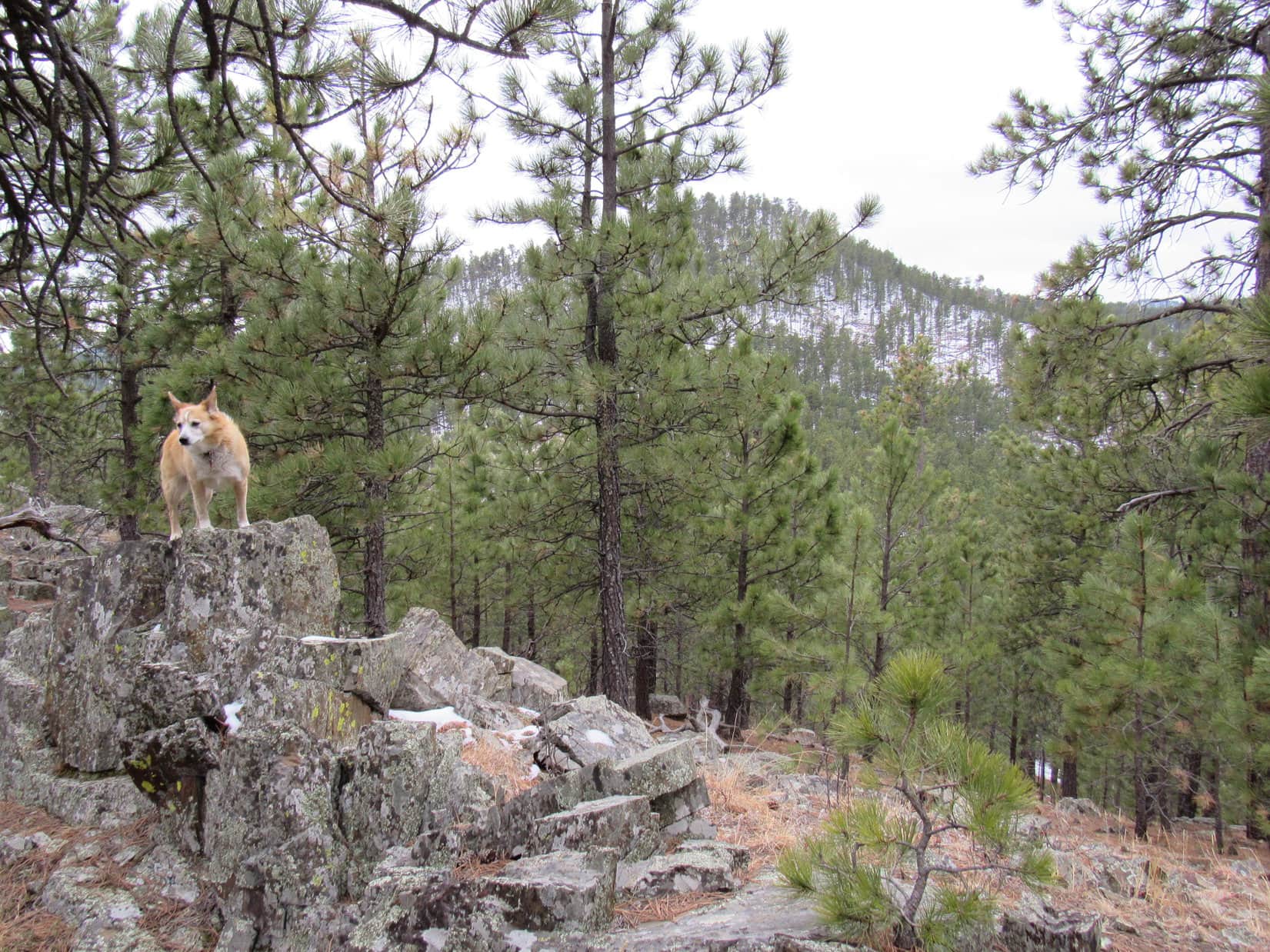
After crossing Kinnikinnick Park, the terrain steepened again.  By now the ravine had disappeared.  Entering denser forest, Looper climbed nearly to the top of a ridge.  Reaching some rock formations at the SE end, Boulder Hill (5,331 ft.) and Silver Mountain (5,405 ft.) were on the SE horizon.
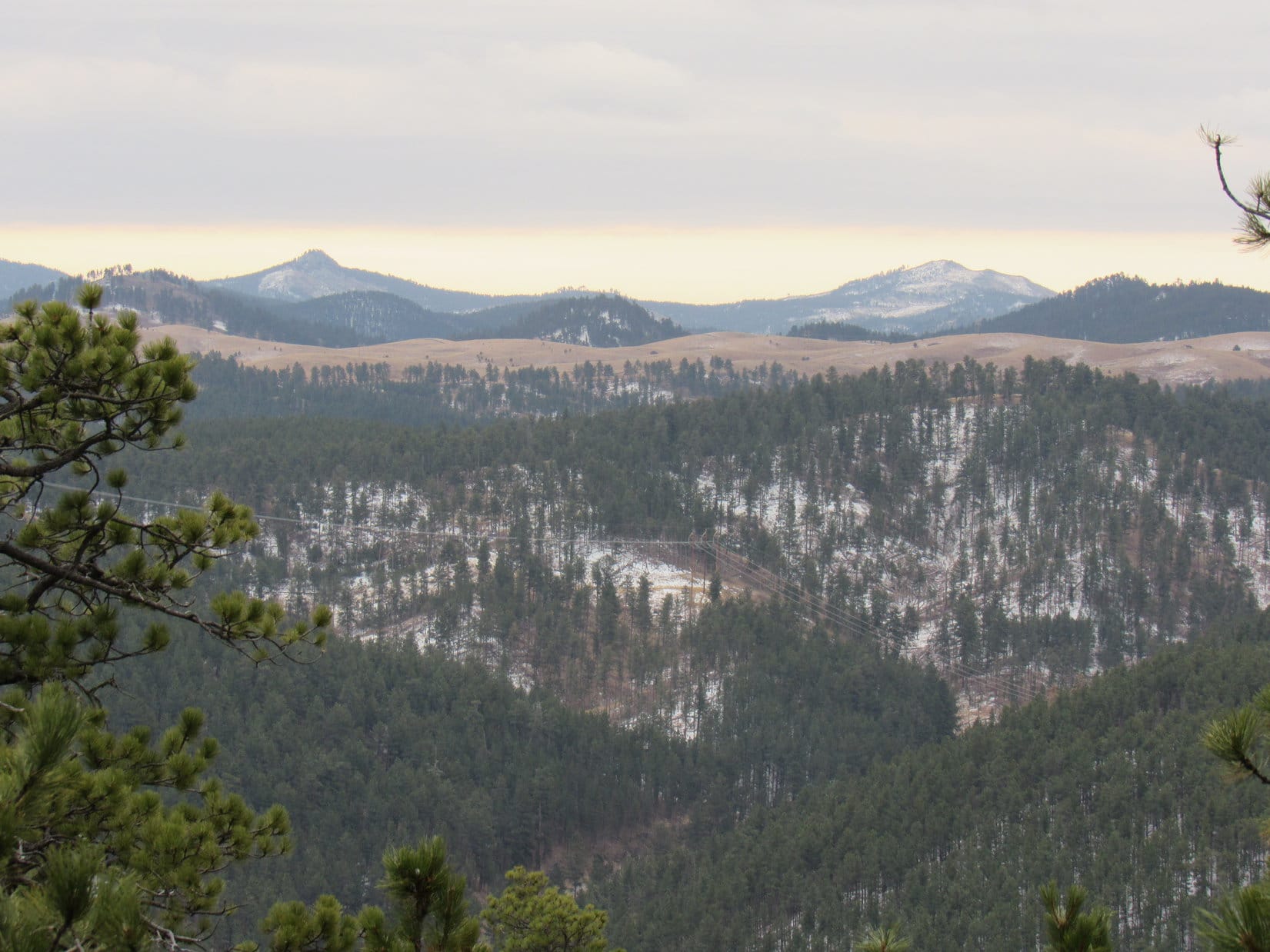
Boulder Hill (L) and Silver Mountain (R). Photo looks SE with help from the telephoto lens.

A point of more immediate interest was visible 0.5 mile SSW.

Peak 5581!  That has to be it, doesn’t it, SPHP?

Yup!  I think so, Looper.  You’ve found it, all we need to do now is climb it!
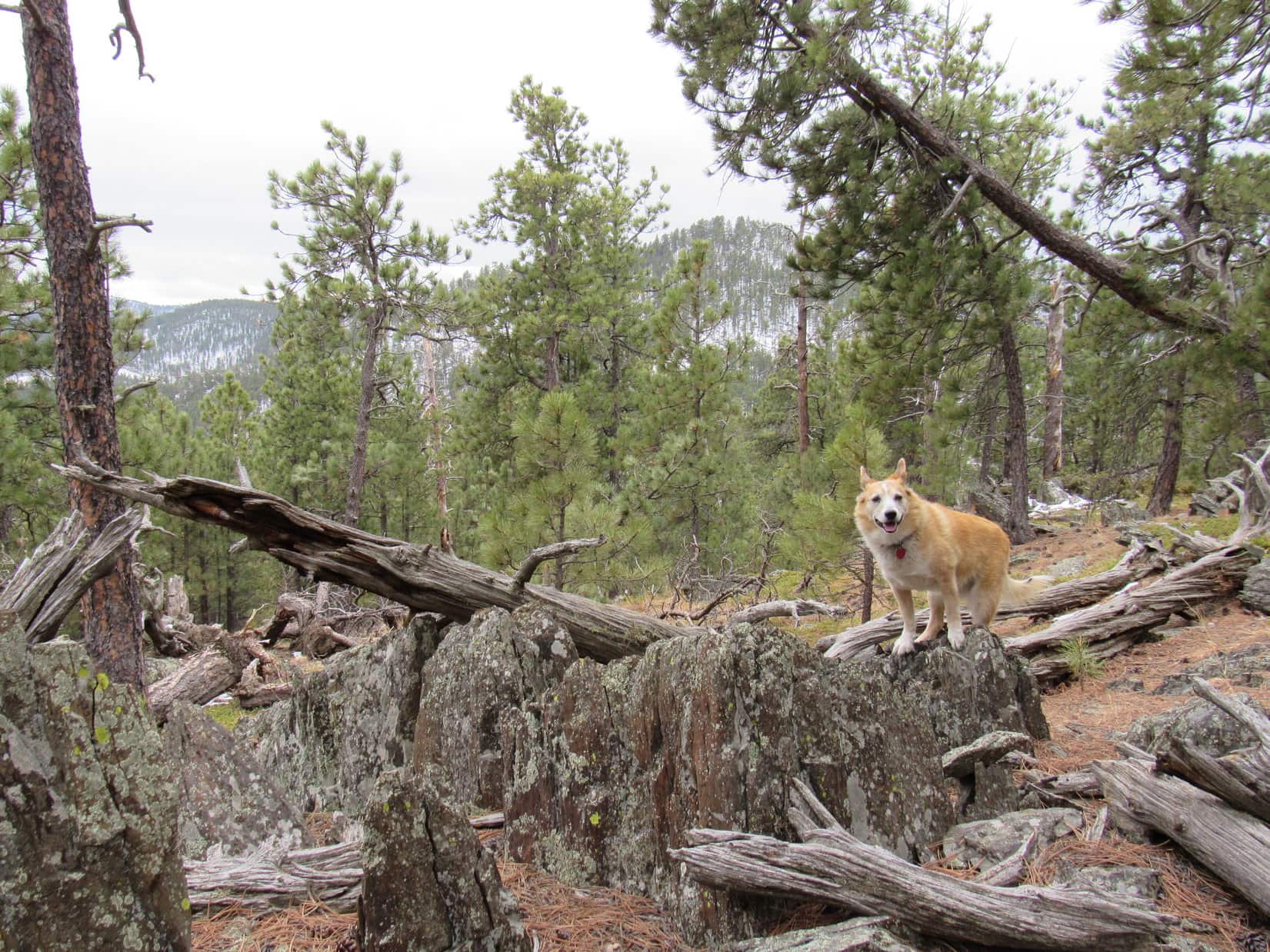
There it is! Peak 5581! Photo looks SSW.

200+ feet of elevation had to be lost to get over to the base of Peak 5581.  The map showed a steady march down to a saddle along the mountain’s N flank, but reality was more complicated than that.  A descent of only 100 feet led to an initial low point.  Surprisingly, this was followed by an ascent of a modest intervening hill not shown on the map.

On the way down to the first low point. Photo looks S.
Peak 5581 (Center) from the intervening hill. Photo looks SSW.

A second descent of at least 100 feet ensued.  This region seemed to be very remote, but loggers must have been scoping out the area recently.  Many of the larger trees were marked with fresh orange or pink paint.  Following a line of pink trees, Loop reached the saddle immediately N of Peak 5581, where hundreds of tiny pines were growing in a clearing.
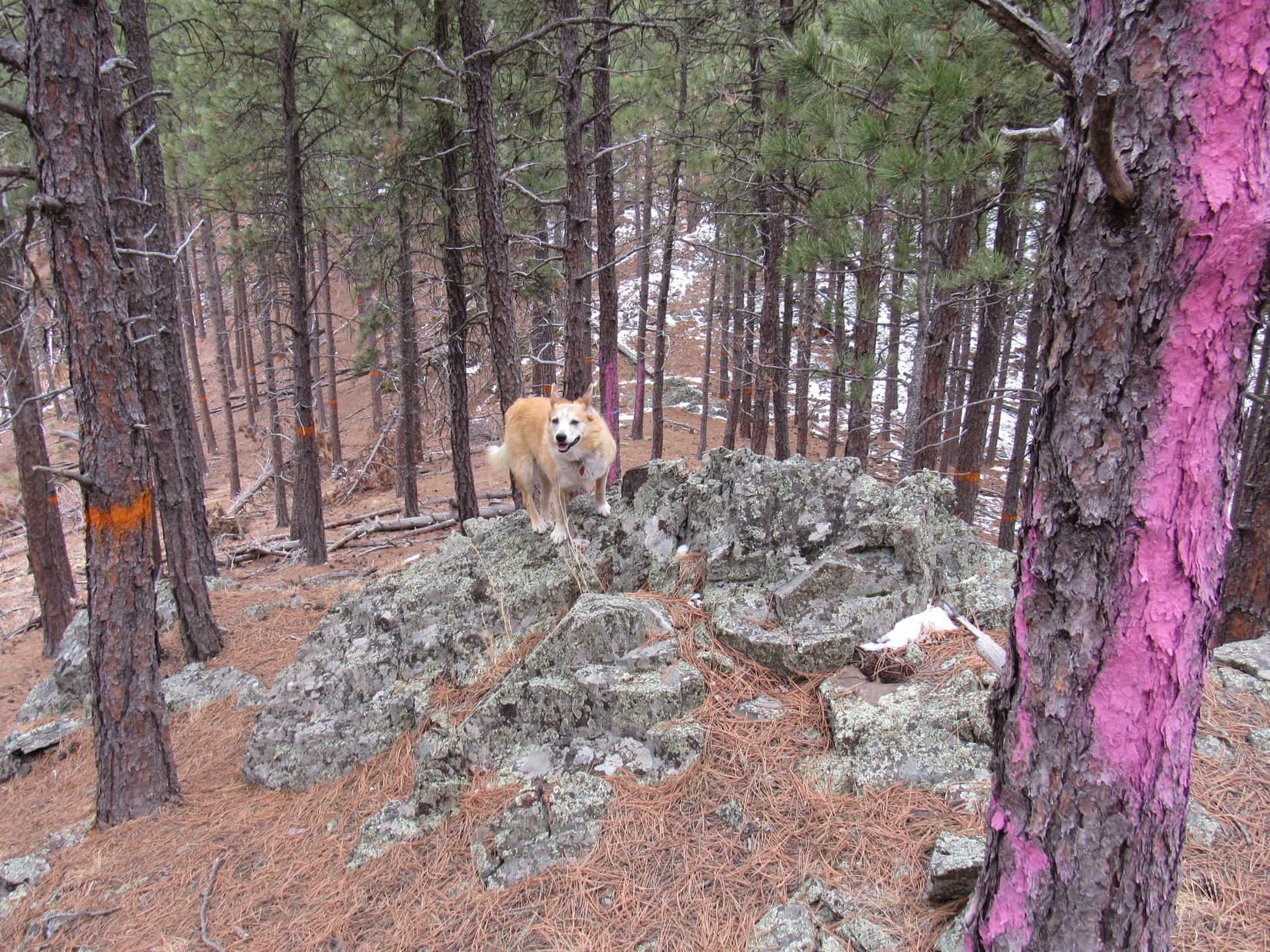
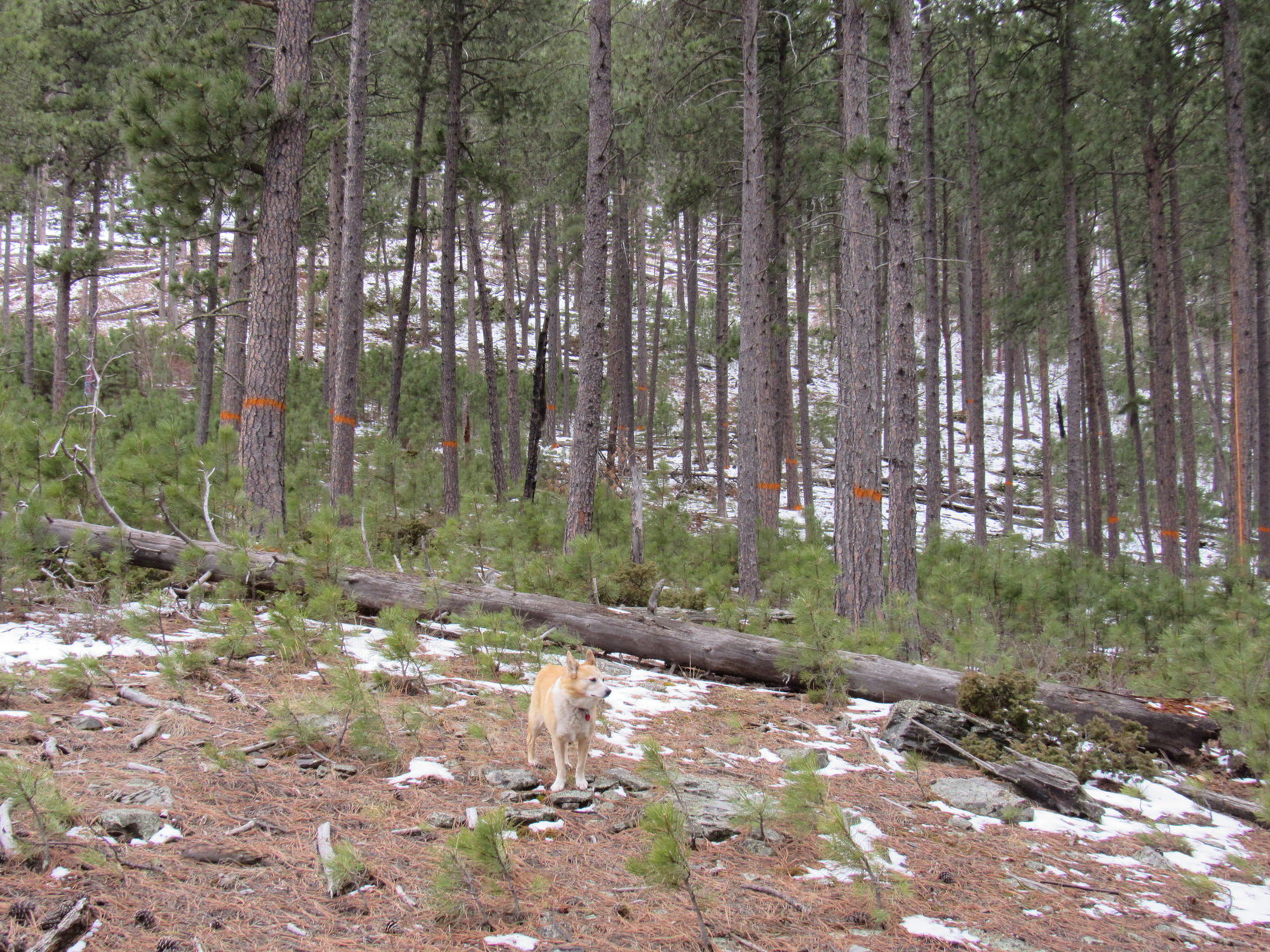
Getting closer! Keep following the pink trees! Photo looks S.
At the saddle N of Peak 5581. Photo looks S.

Glimpses of Peak 5581’s upper N face on the way over here had looked pretty steep.  SPHP thought the NW ridge might be somewhat easier, so the American Dingo angled toward it as she began her ascent.
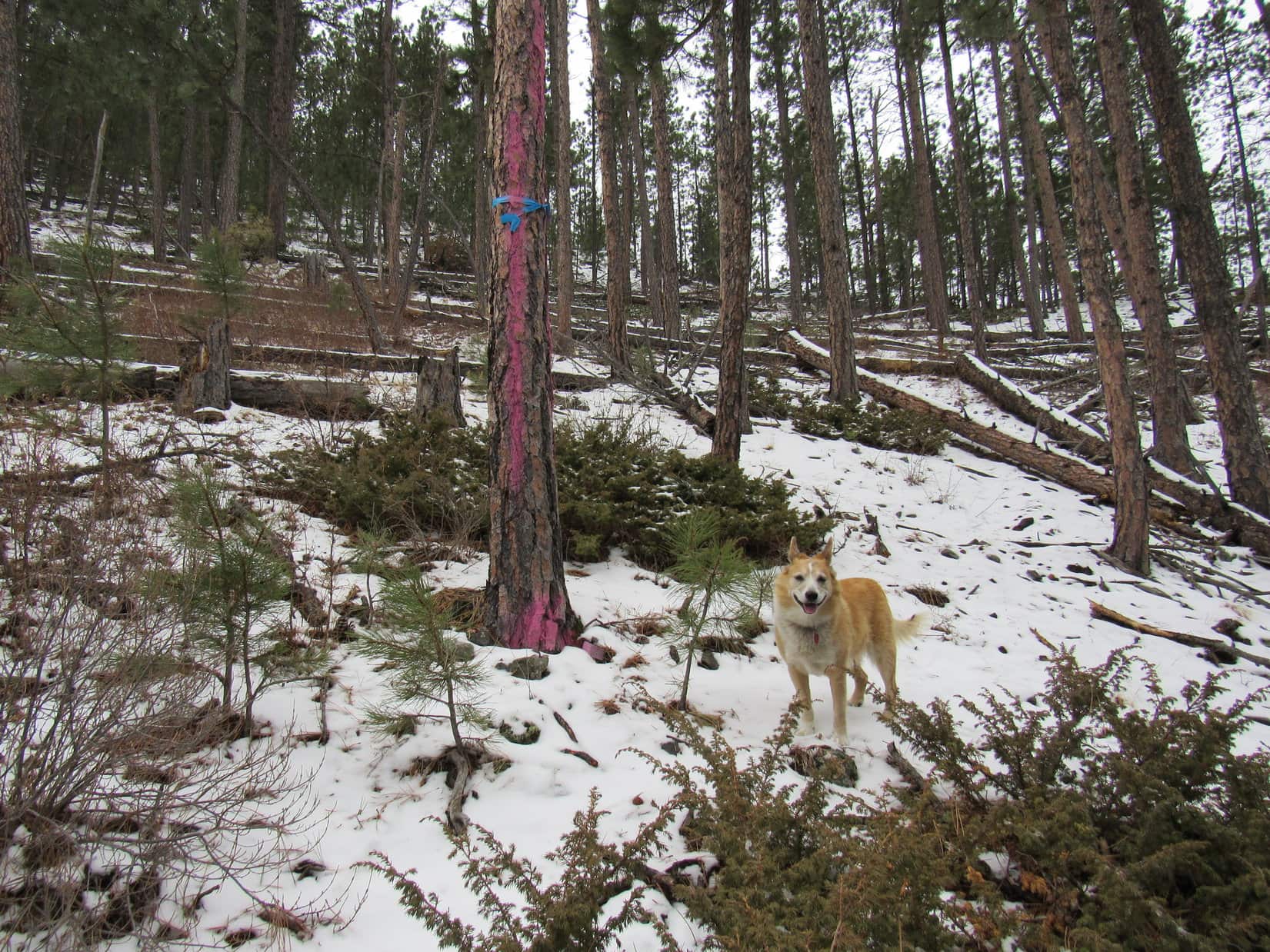
Heading for the NW ridge. Photo looks SW.

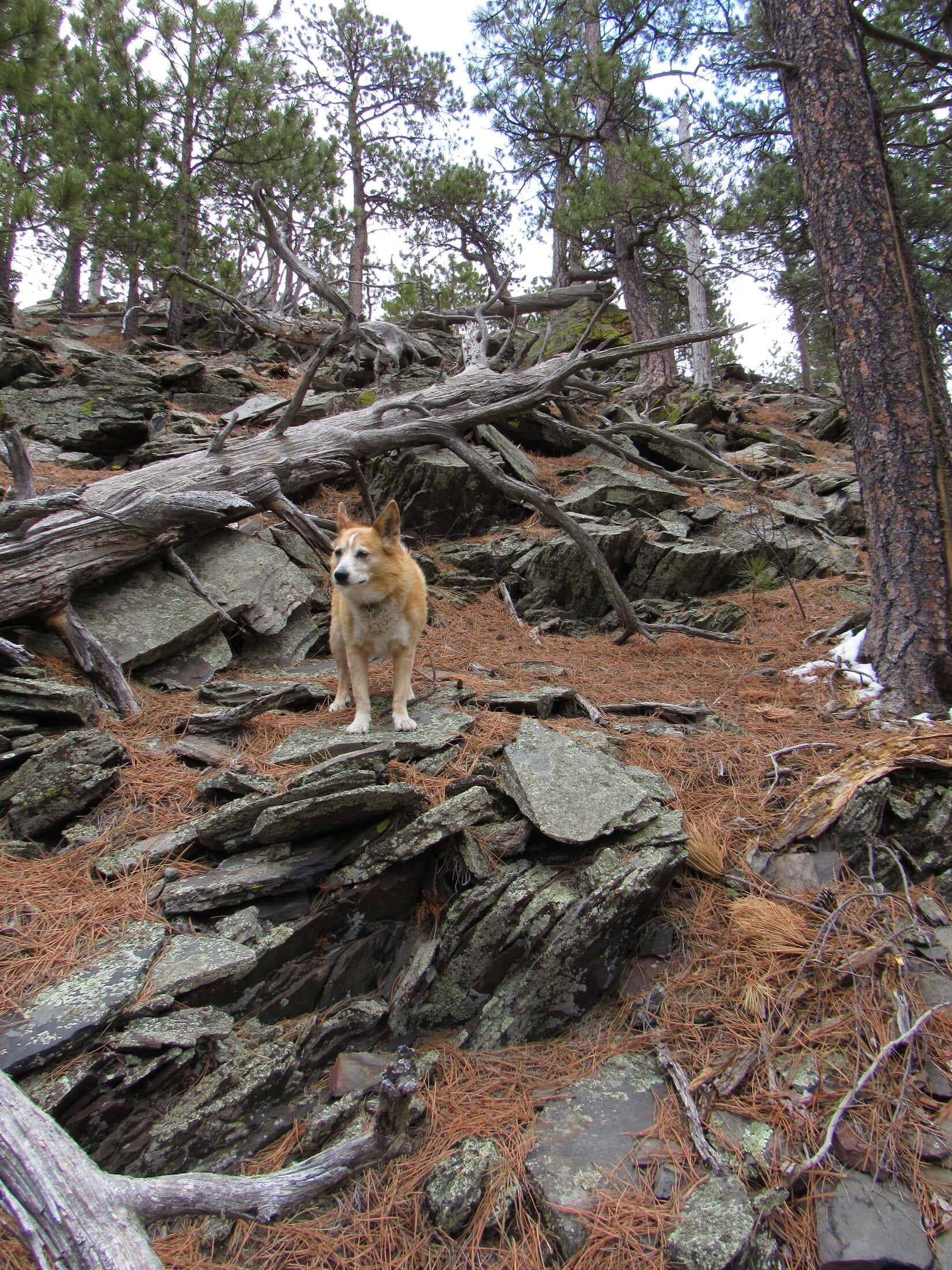
A fairly steep rocky spine ran straight up the NW ridge.  With her 4 on the floor, Lupe had no problem, but 0.5″ of snow was enough to make the ascent slippery for SPHP.

On the rocky spine of the NW ridge. Photo looks SSE.

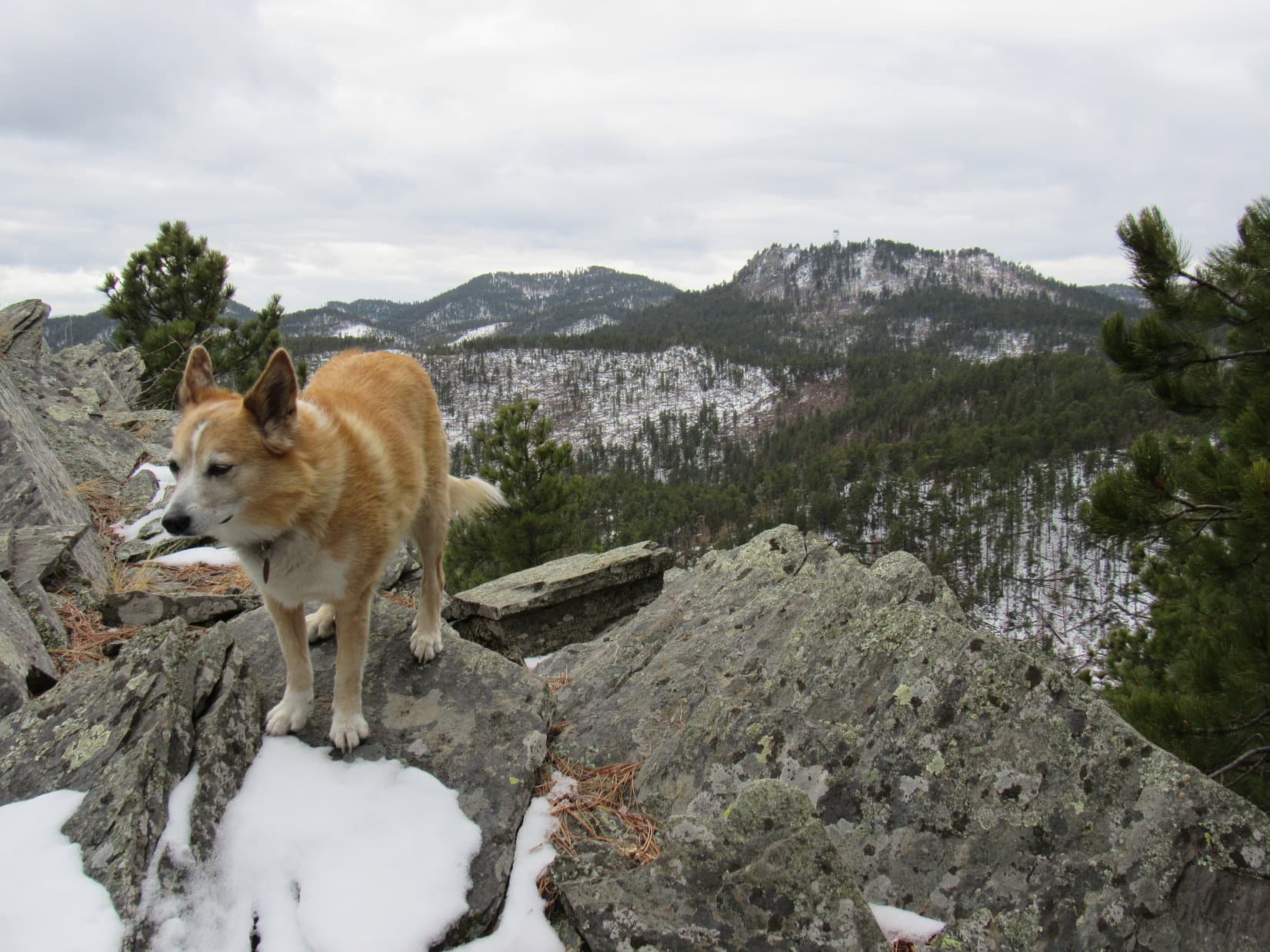
The rocky spine went all the way to the top.  The Carolina Dog reached a 100 foot long summit ridge that sloped up to the SE.  Loopster was on her way to the high point when she came to a nice opening with a great view of Scruton Mountain (5,922 ft.) and New Year’s Eve Peak (6,046 ft.).
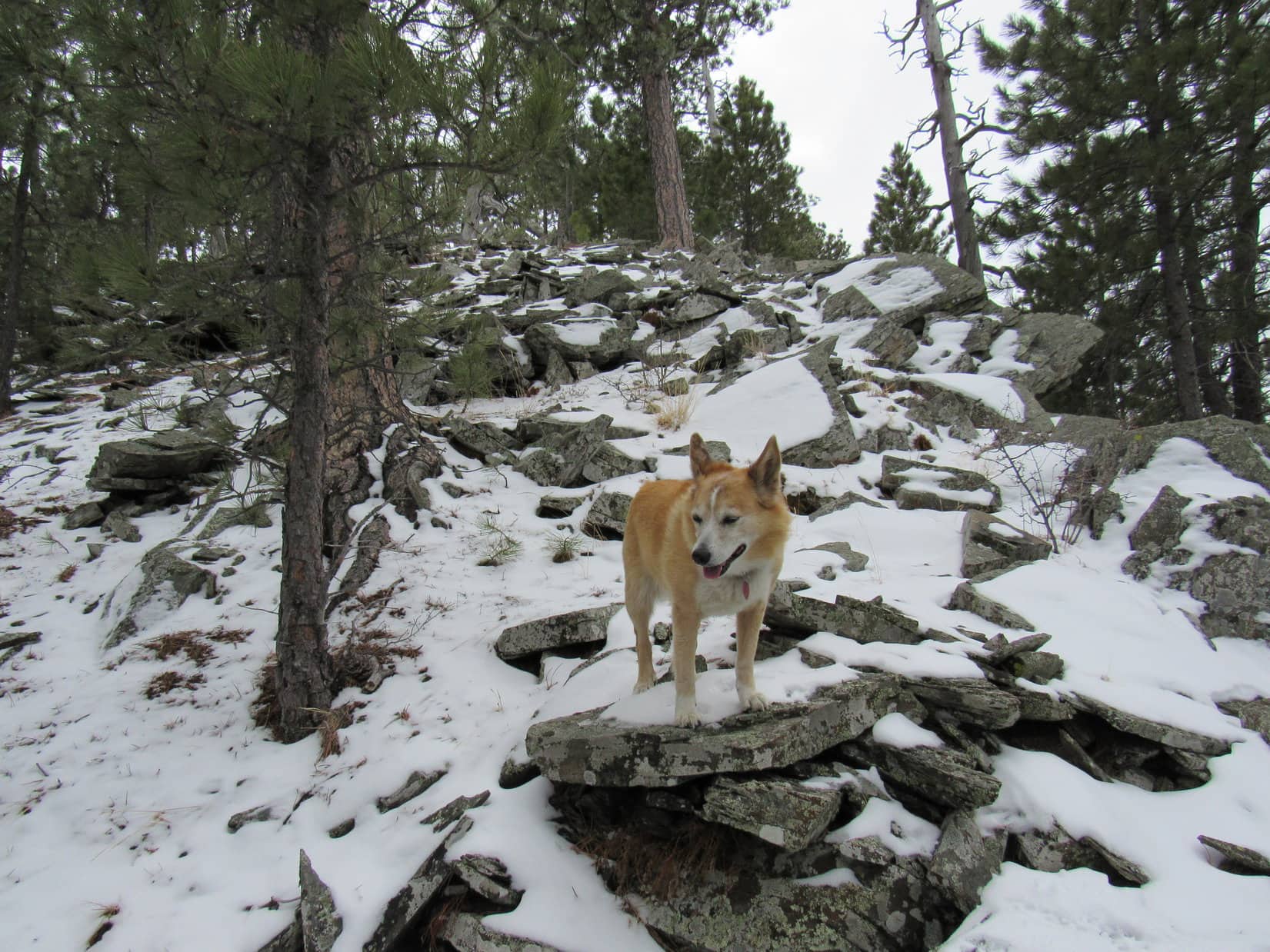
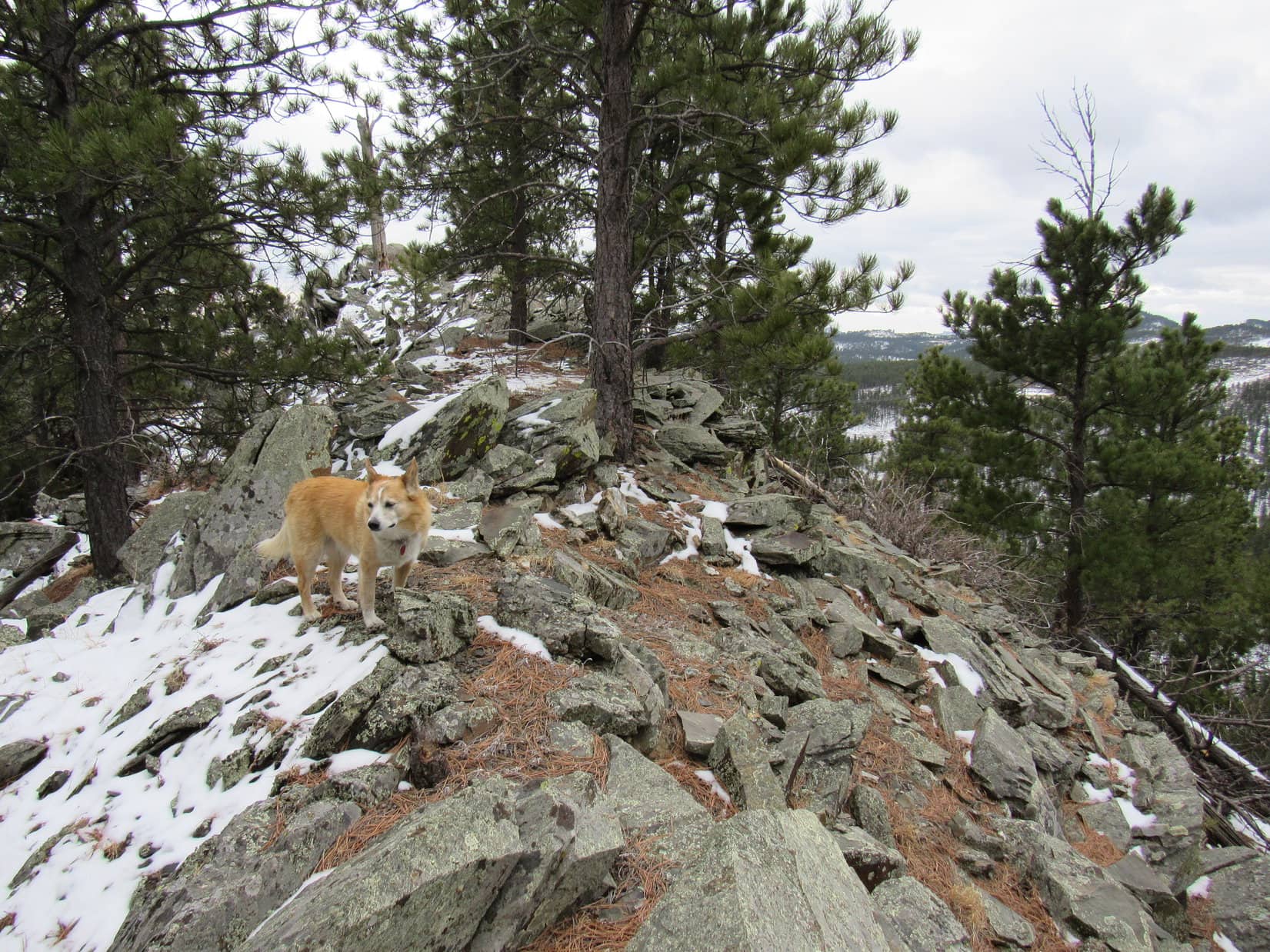
Getting close to the top. Photo looks SSE.
Peak 5581’s summit ridge. Photo looks SE.
New Year’s Eve Peak (Center) and Scruton Mountain (R). Photo looks SSW.

Going all the way to the SE end of the ridge, the true summit turned out to be a skinny rock standing on end that stuck up several inches higher than any of the others.  Lupe tapped the top of it with her paw, but it was much too small to stand on.  Bigger rocks nearly as high had to serve for her summit photos.
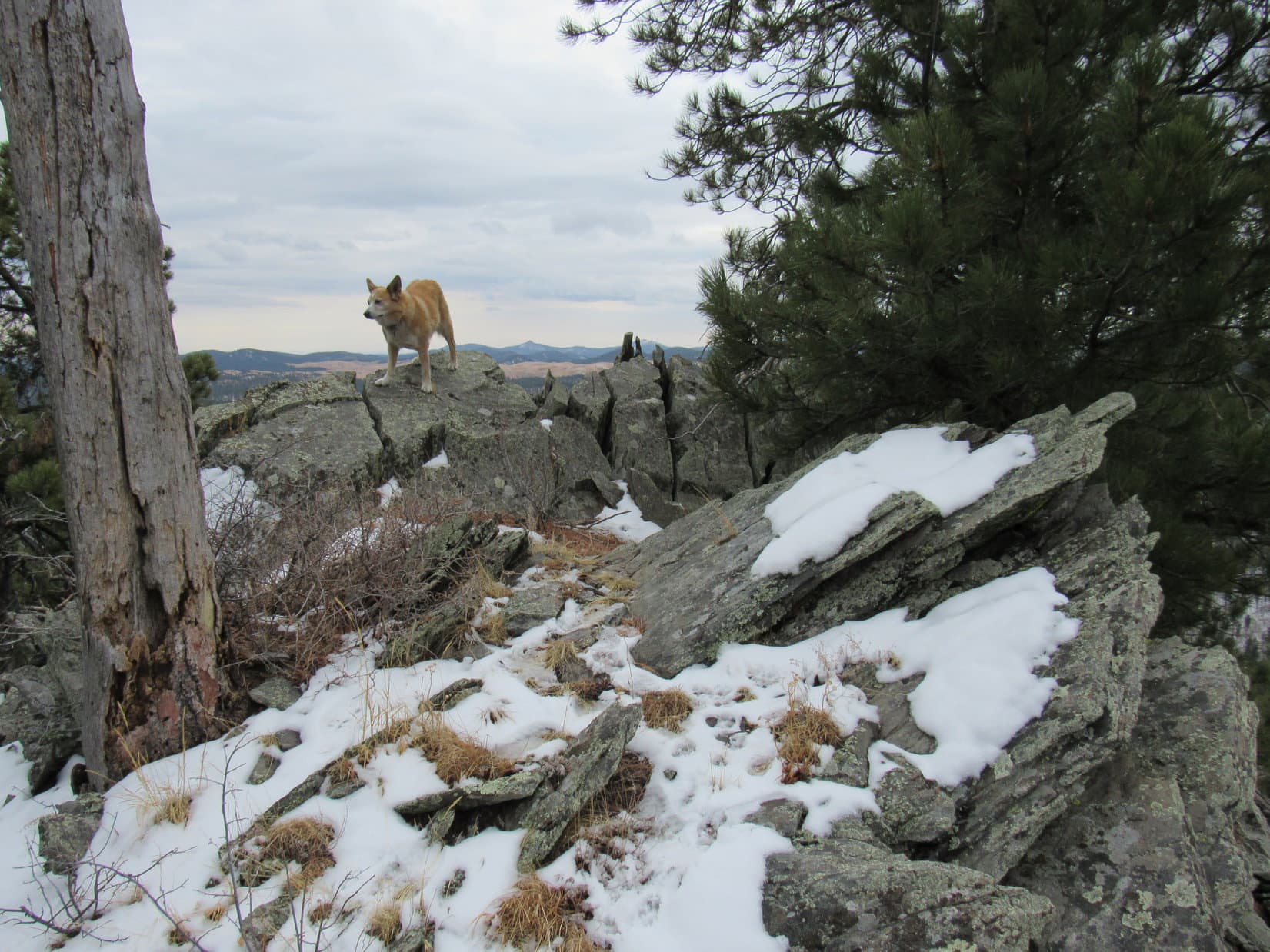
At the true summit. Well, actually the skinny rock at center is it, but close enough! Photo looks SE.
Peak 5581. Photo looks SE.

The best spot to sit near the true summit was just past the highest rocks.  Lupe curled up on SPHP’s lap.  The big view from here was of Boulder Hill and Silver Mountain miles beyond the barren Bald Hills.
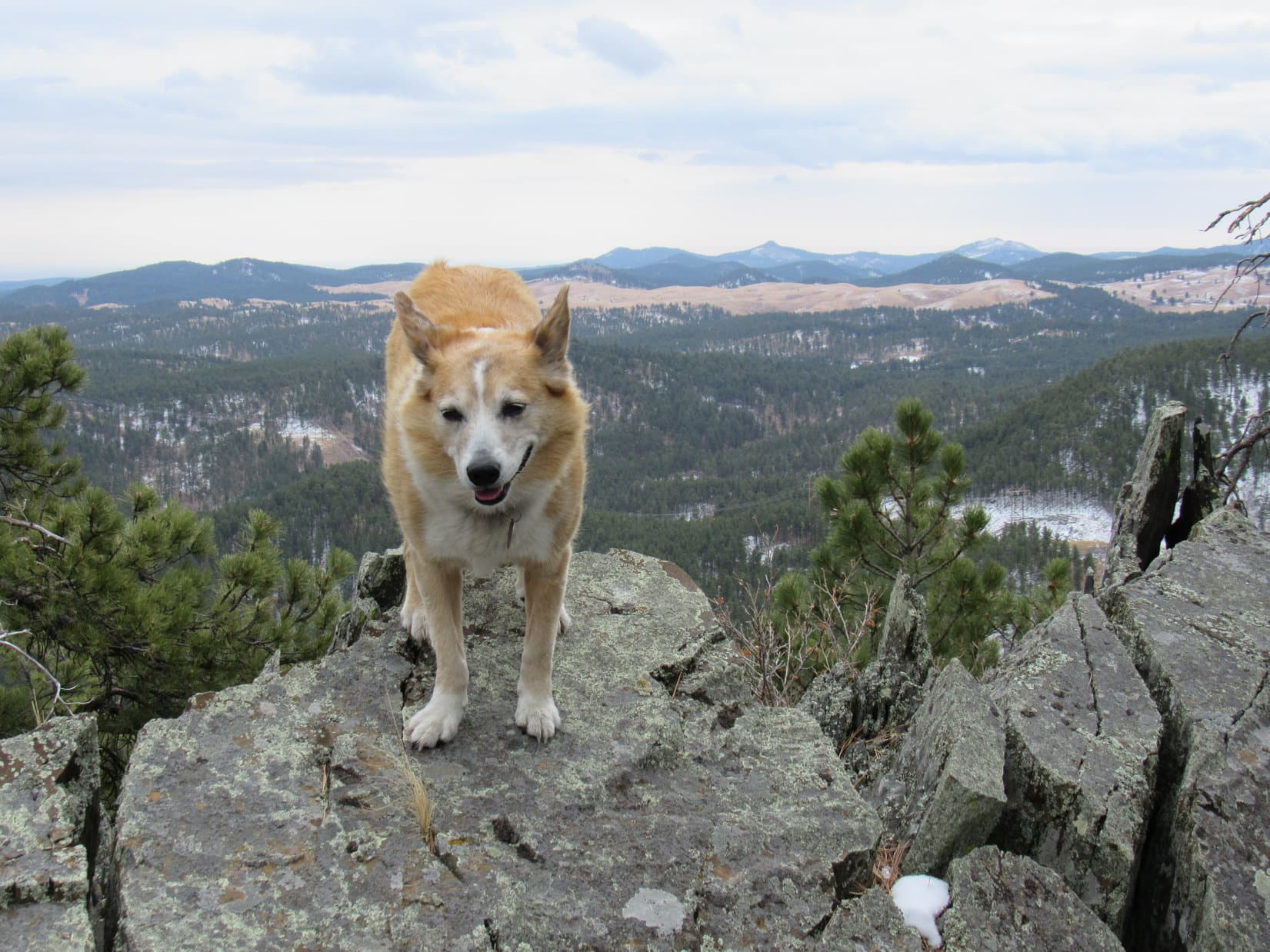
Storm Hill (5,192 ft.) (Center), Boulder Hill (R of Center), and Silver Mountain (R). True summit (far R). Photo looks SE with help from the telephoto lens.

So is Peak 5581 one of your Lists of John peaks, SPHP?

Yes, it is, Loop.  Not bad, is it?  Bet hardly anyone ever comes here!

How much prominence?

321 feet.  So, not much above our 300 foot minimum cutoff.  Want to split a chocolate coconut bar to celebrate your successful ascent, Looper?

Thought you’d never ask!
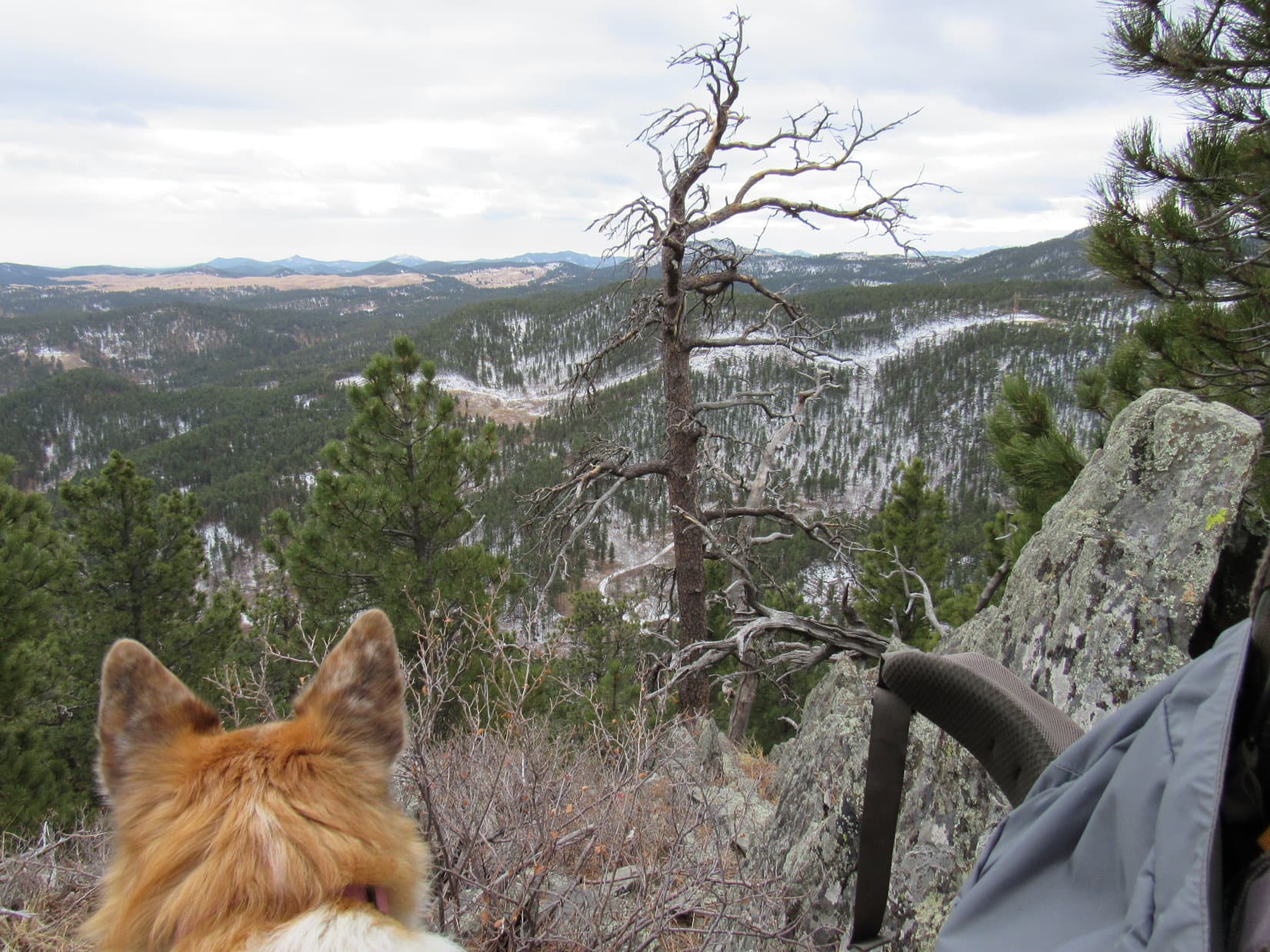
Break time on Peak 5581. Photo looks SE.

Supposed to be sort of a warm day, but it sure wasn’t up here.  Not much above freezing.  The sky was now completely overcast, and every time the SW breeze stirred it felt rather chilly.  45 minutes went by.  Plenty of time yet.  Loop might as well have a go at Scruton Mountain (5,922 ft.).
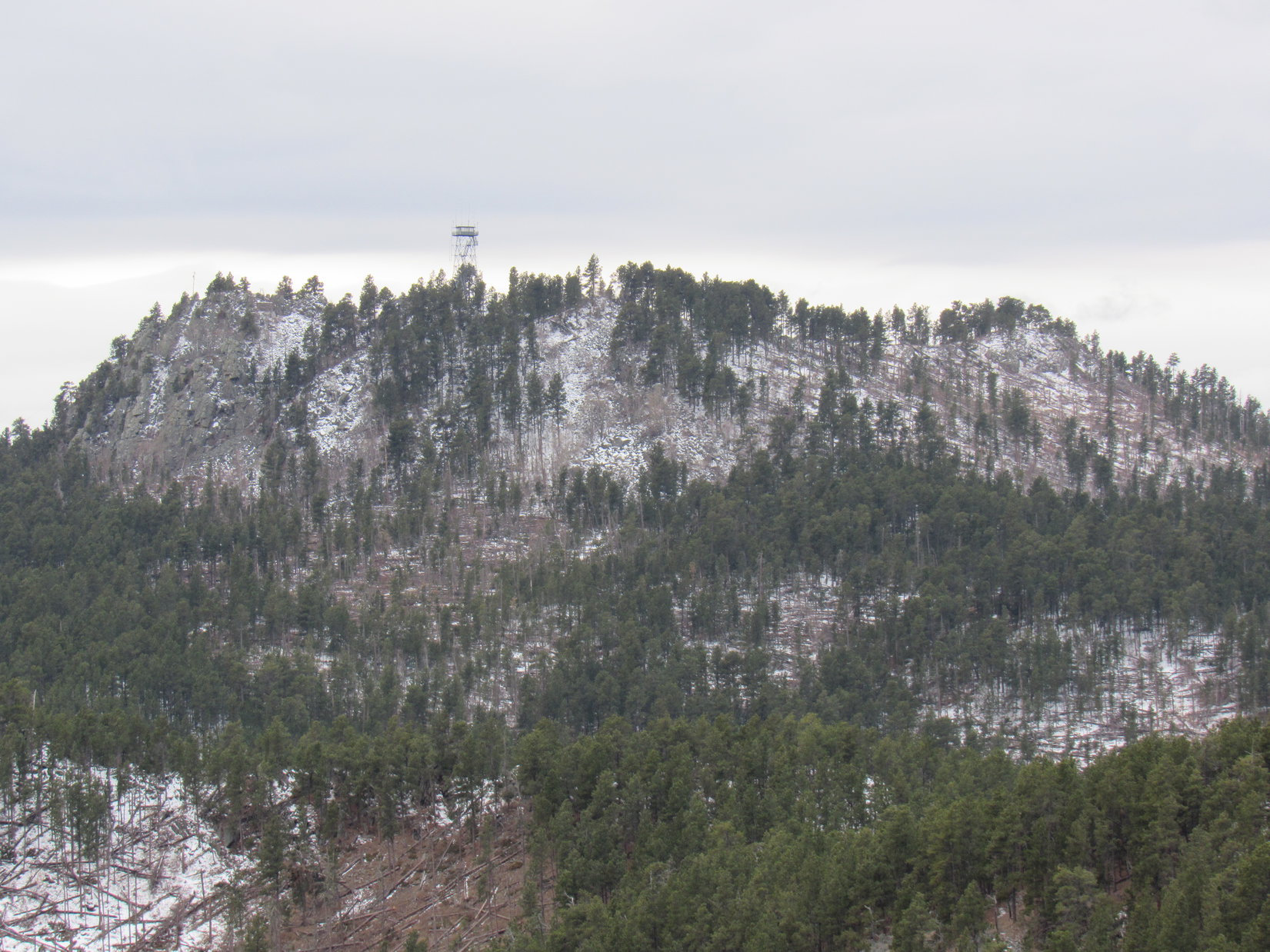
Scruton Mountain from Peak 5581. Photo looks SW with help from the telephoto lens.

SPHP wasn’t really looking forward to going back down Peak 5581’s slick NW ridge, but the rest of the mountain was even steeper.  Staring down the S slope, though, SPHP got the idea that maybe it wasn’t all that bad?  No snow with the S exposure, which would make a huge difference, and a more direct route to Scruton Mountain, too.

Lupe started down.
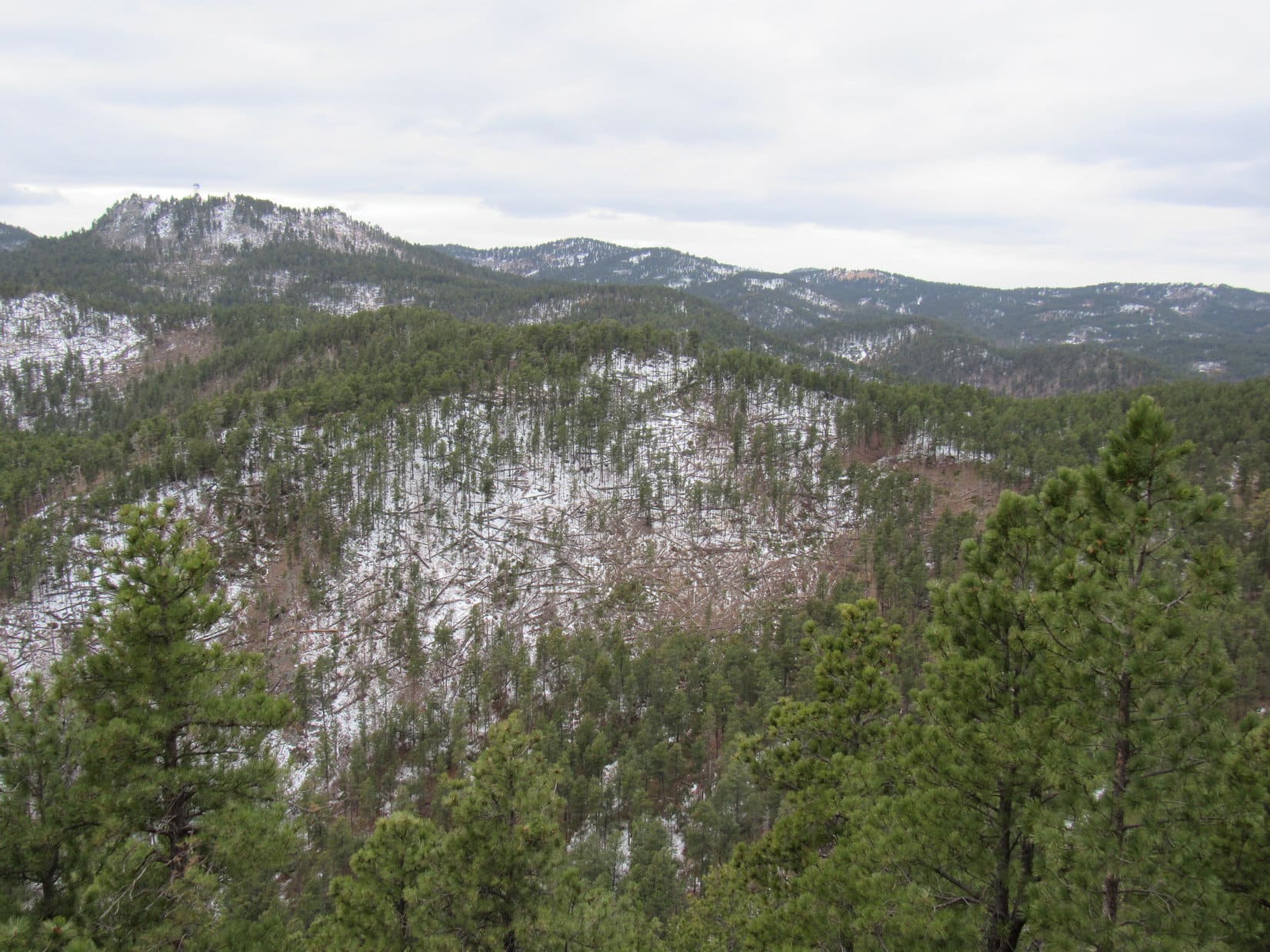
Scruton Mountain (L) and the territory Lupe would have to cross to get to get there. Photo looks SW.
Starting down Peak 5581’s S slope. Photo looks NE.

Loose, flat stones and steep for a long way, but the S slope went fine.  Lupe angled toward the saddle W of Peak 5581.  Once SPHP got there, the Carolina Dog crossed the saddle and began climbing SW up the next ridge.  Upon reaching the ridgeline, she turned SE.  Still climbing, Loop made it to a high point where there was a sizable rock formation.
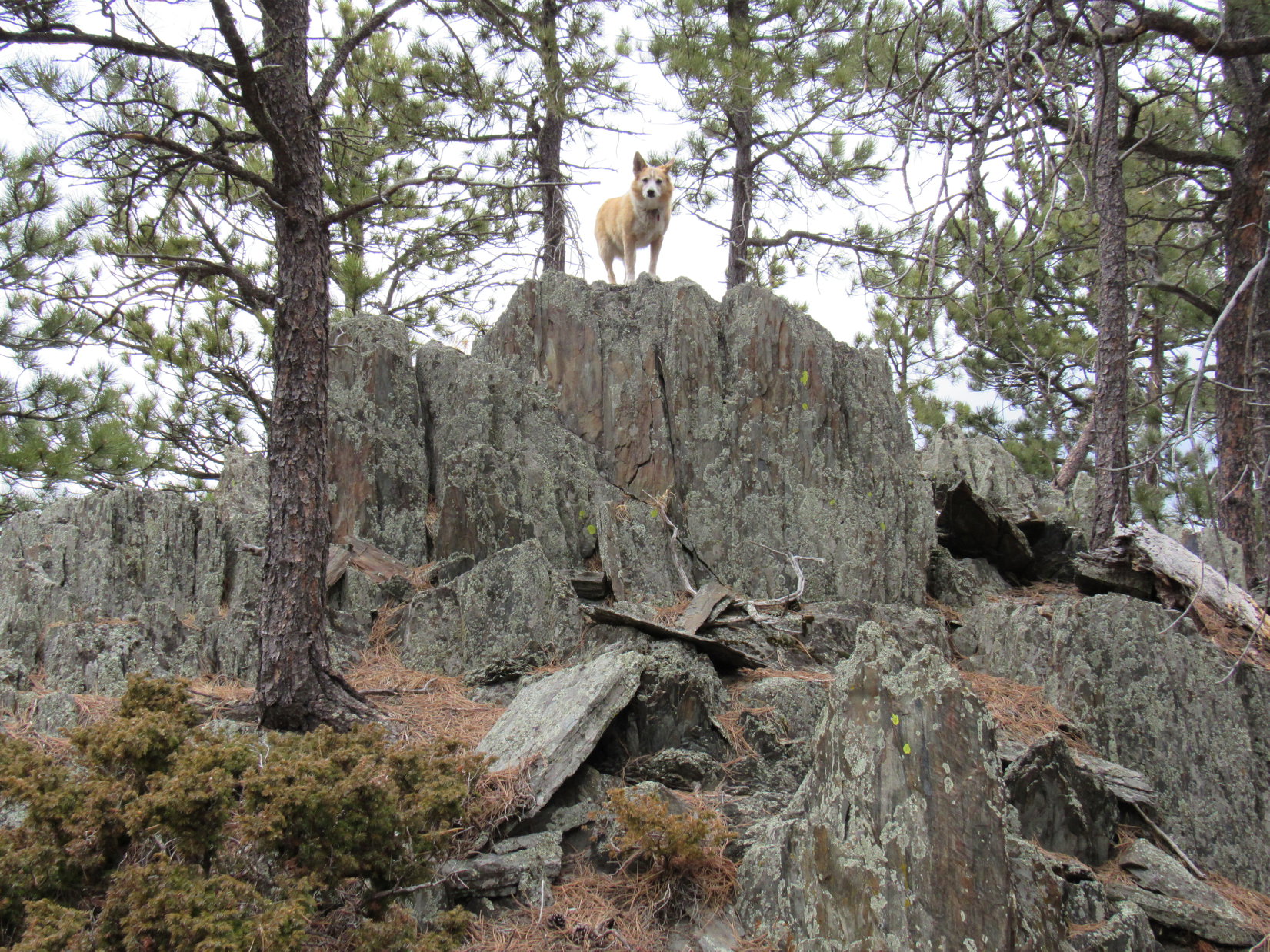
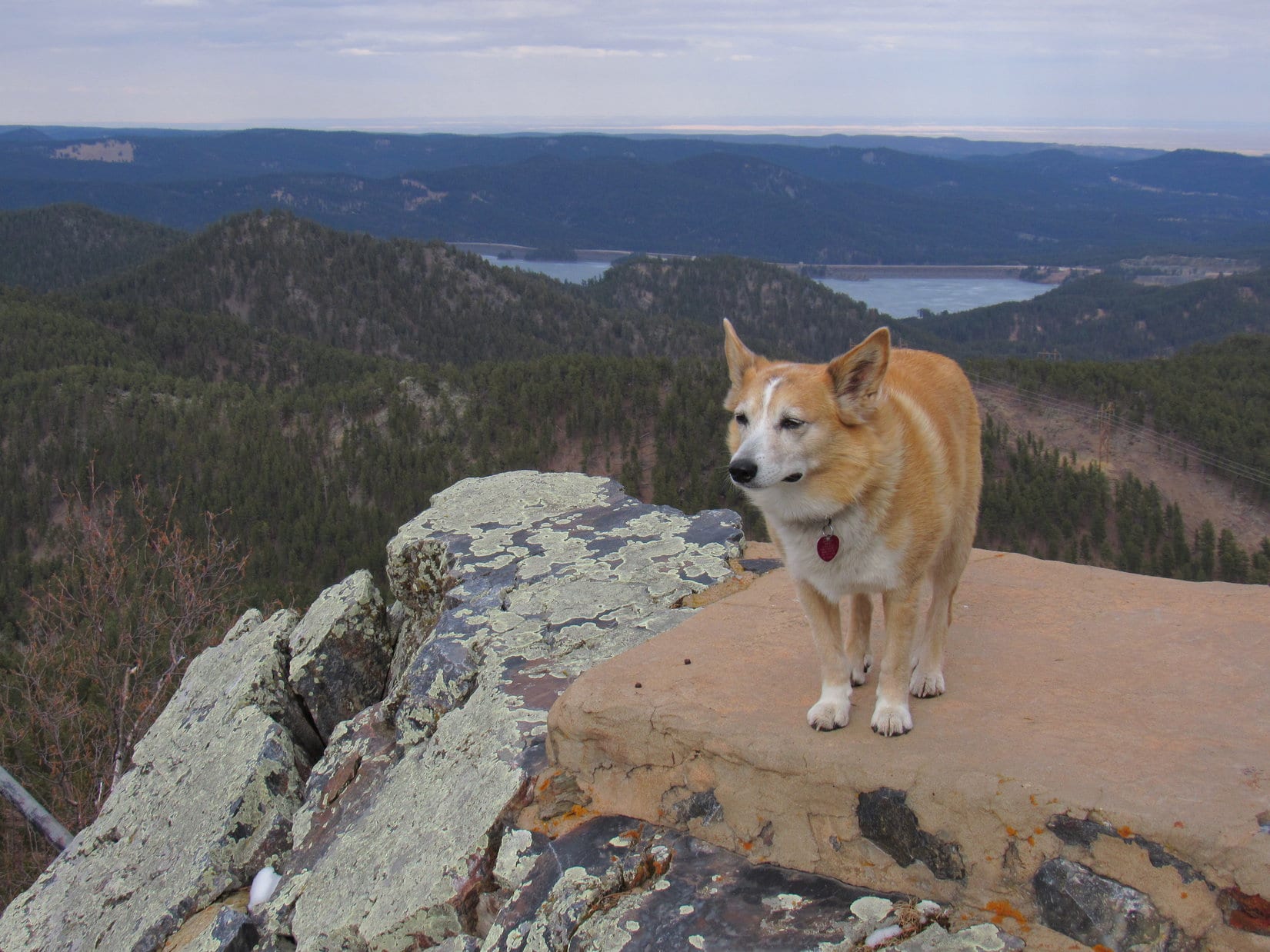
At a high point 0.3 mile SW of Peak 5581. Photo looks NNW.

The ridge headed SSW from here.  At first, Loopster lost elevation as she followed the ridge through the forest, but soon found herself climbing to another even higher spot.  A line of rocks at this second high point wasn’t as impressive.

At the second high point. Photo looks NNE.

A deeper dip in the ridge lay beyond this second high point, but Lupe soon regained part of this elevation loss, too.  The ridge turned SE again, and became a narrow line of layered boulders inclined at a sharp angle.

The American Dingo leapt among the boulders toward a higher, wider part of the ridge.  However, SPHP tired of the scramble, and dropped down to easier terrain SW of the ridgeline.
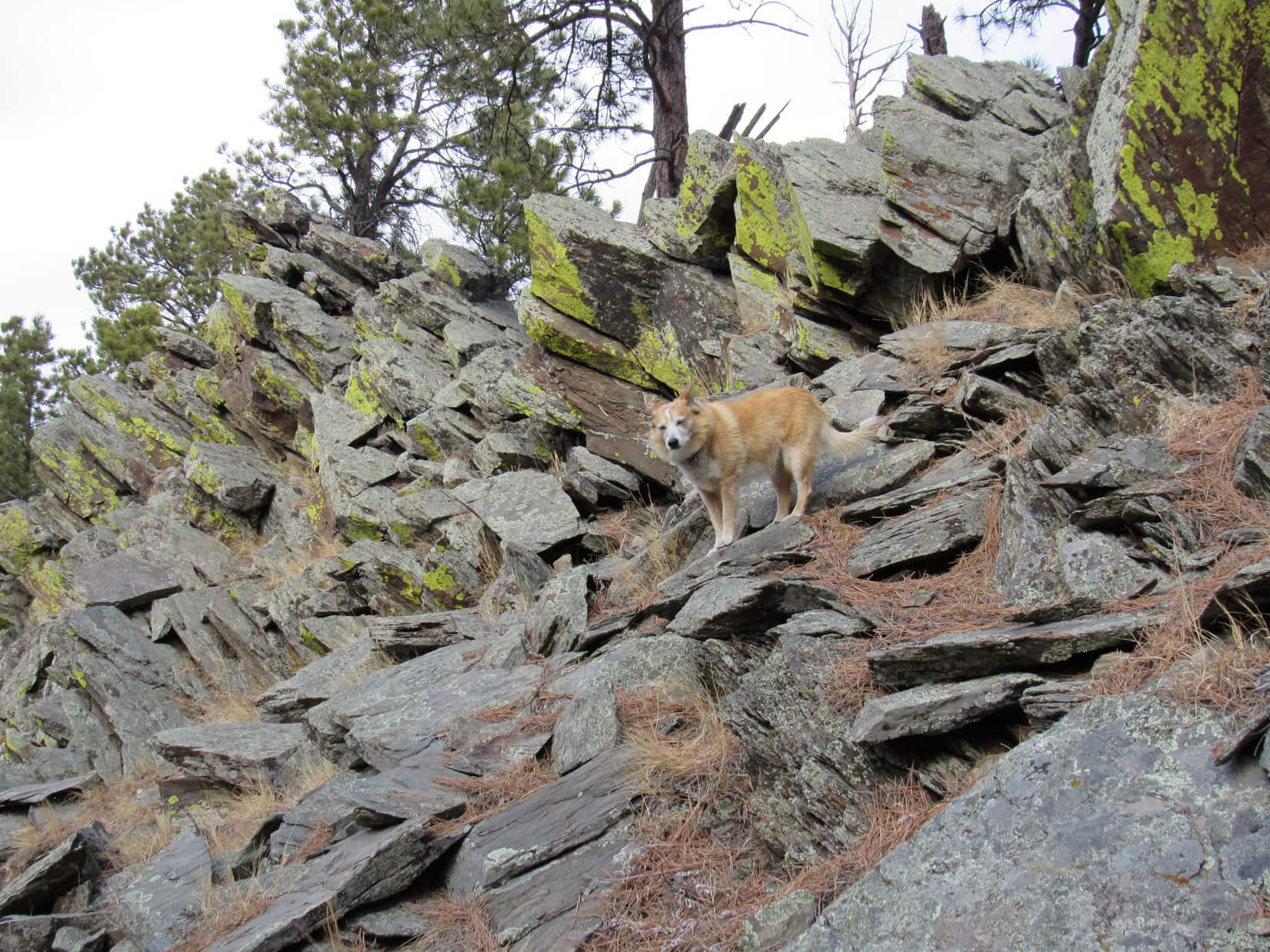
Leaving the ridgeline. Photo looks N.
Just below the big rocks. Photo looks SE.

The situation was much better below.  Heading SSE, Loop reached a flat region between the ridge she’d been on and Scruton Mountain.  SPHP paused beneath a pine tree, taking another break.  Lupe was content to rest for a while, but was ready to go when SPHP began to stir again.
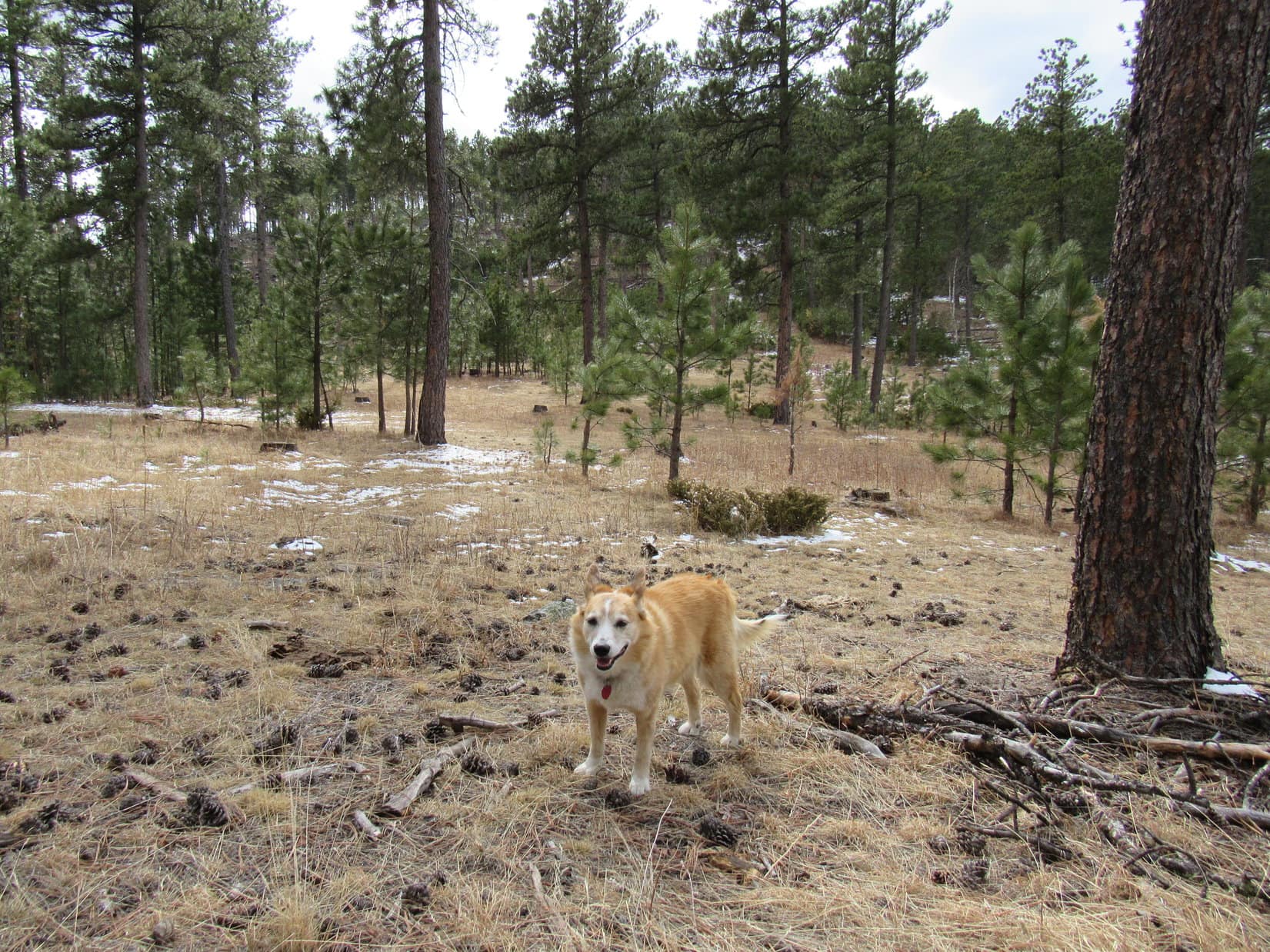
Ready to leave the saddle for Scruton Mountain! Photo looks SW.

By now Scruton Mountain (5,922 ft.) was only 0.4 mile SW as the crow flies.  If Lupe went just a little SE, she would run into an access road that wound more than twice that far up to the Seth Bullock fire lookout tower on top.  However, it seemed more fun to explore the territory N of the mountain than to trudge along a road.  Loop headed SW into the forest.
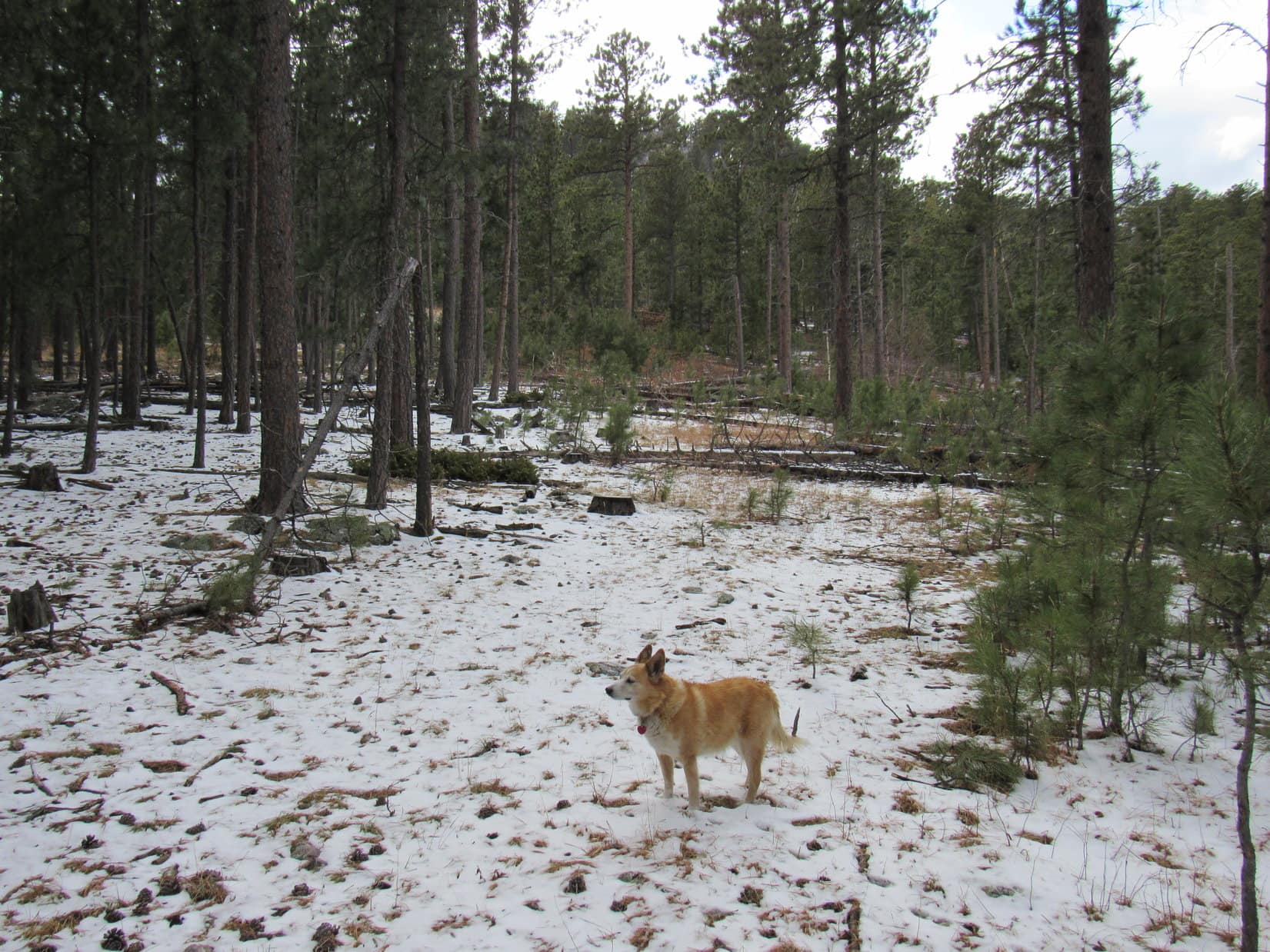
Exploring the forest. Photo looks SW.

At first it was pretty easy, but large quantities of deadfall were an issue as Lupe got closer to the mountain.  Scruton’s NW slope wasn’t quite as steep as the N face, so the Carolina Dog worked her way over to it.  Still a fairly steep climb with plenty of deadfall, but Loop made it to the top.
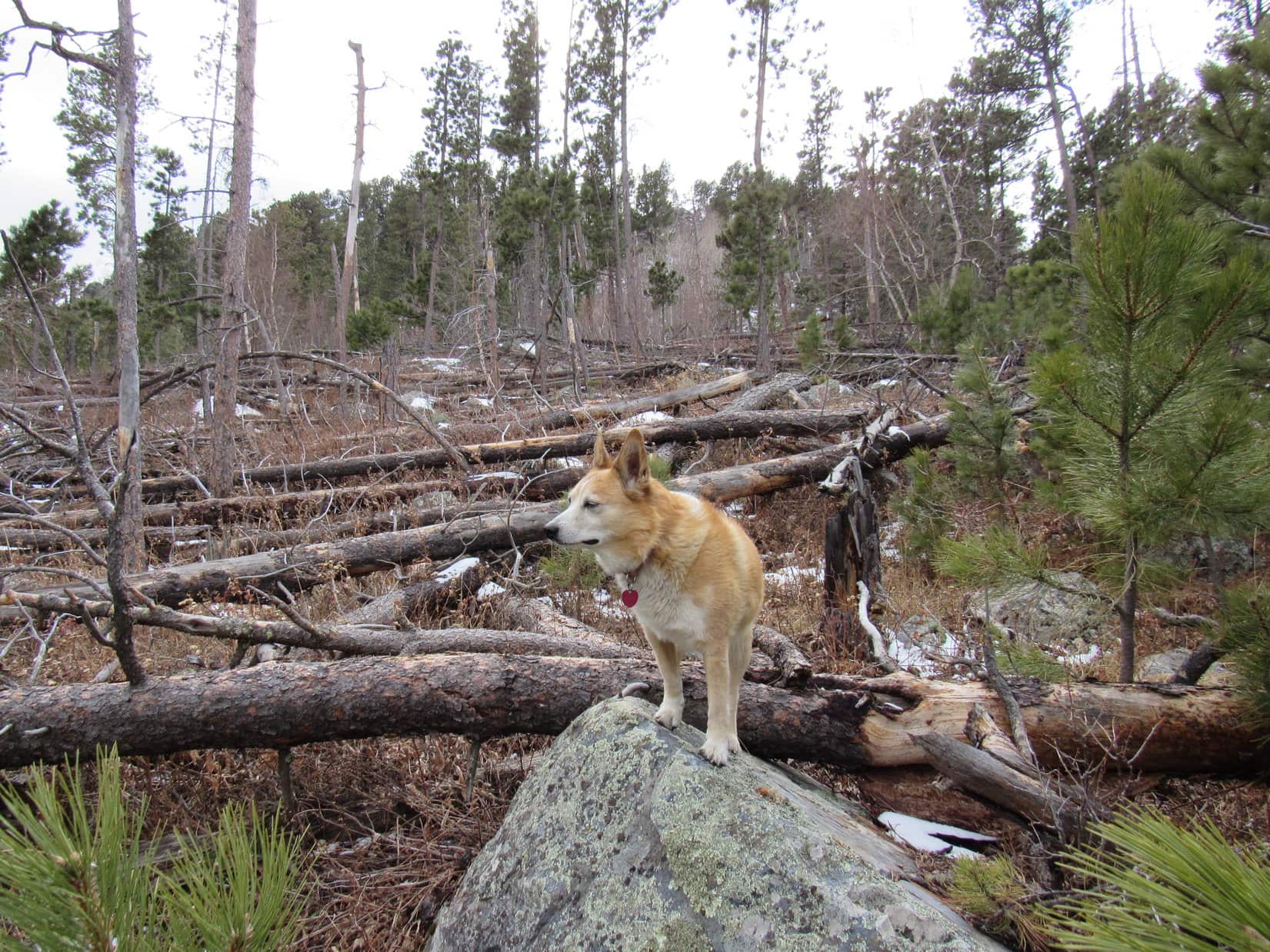
Deadfall N of Scruton Mountain. Photo looks S.
Approaching the Seth Bullock fire lookout tower. Photo looks E.

A tall, chain-link fence denied access to the lookout tower.  Lupe had come up W of it, but it looked like there was higher ground on the other side.  Circling around the S side of the fence, Loop scrambled up to the highest rocks just E of the tower.  Here she had a great view to the S of New Year’s Eve Peak (6,046 ft.) and False North Point (6,130 ft.).
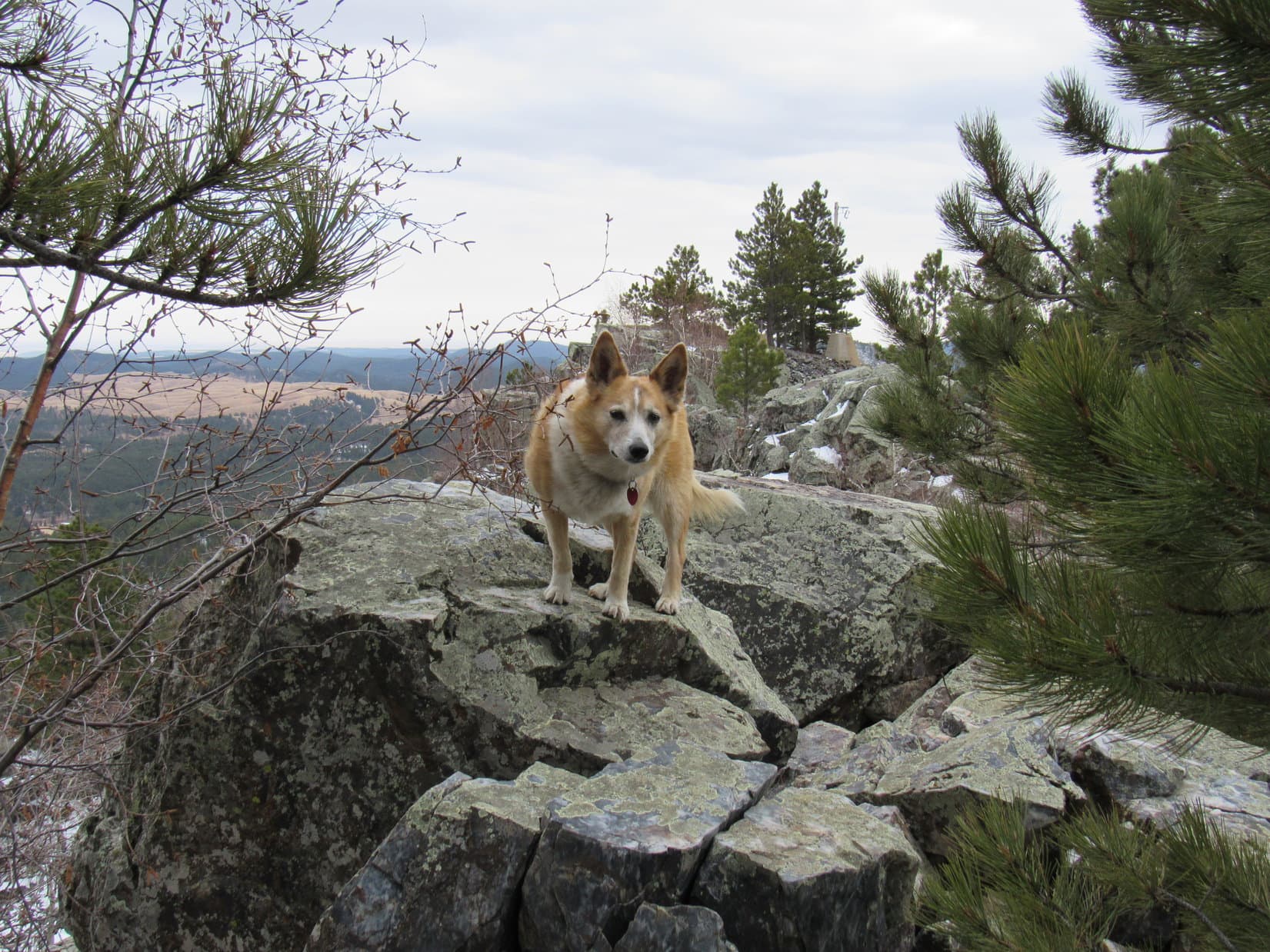
E of the lookout tower. Photo looks SE.
New Year’s Eve Peak (Center) and False North Point (R) in the gap. Photo looks SSE.

The rocky ridge Lupe was on extended another 200 feet SE.  Looked like the highest rocks were somewhere over close to the far end.  Scrambling all the way back down and heading in that direction, Looper discovered a trail to the true summit.
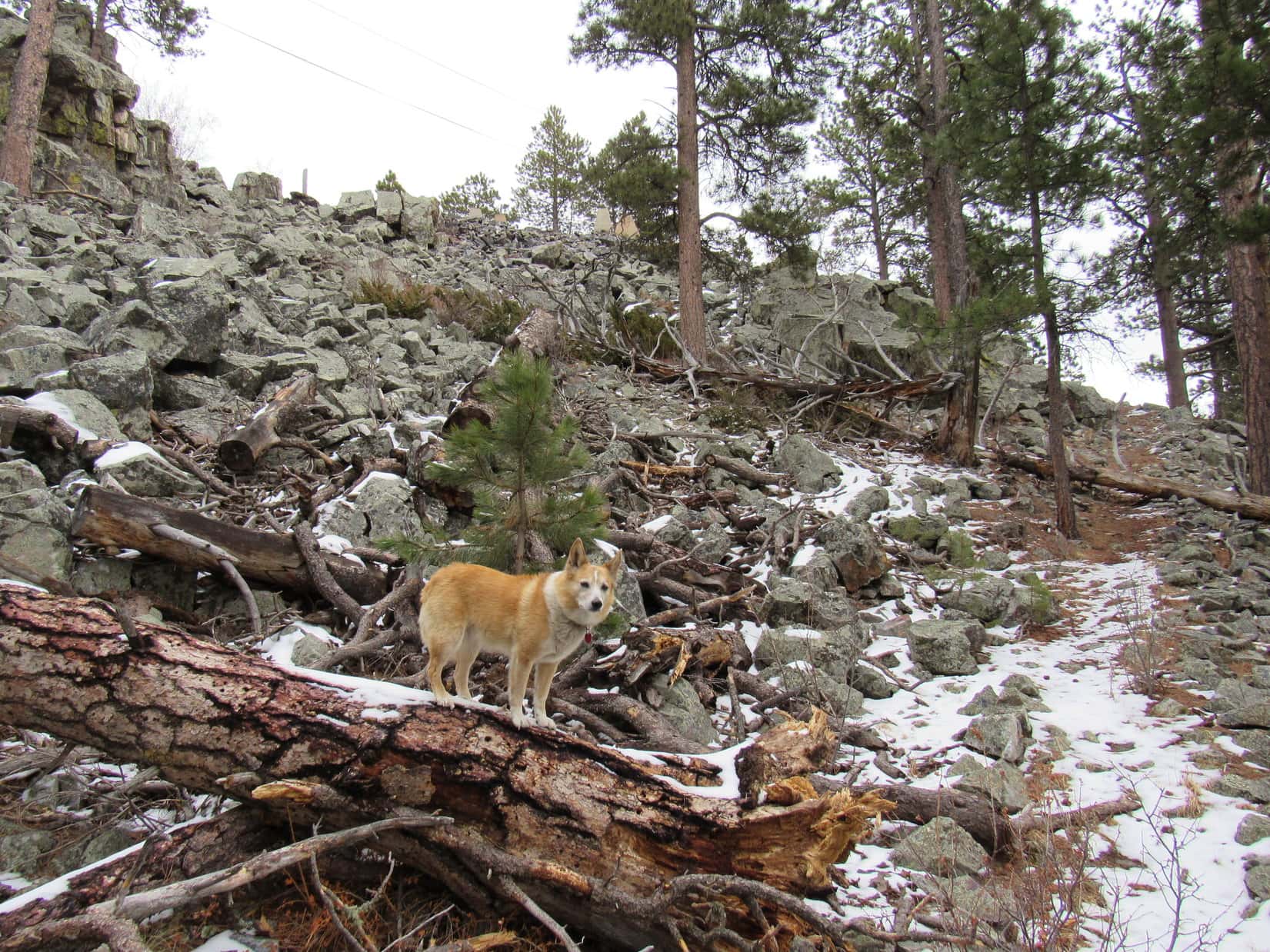
Near the trail to the top (R). Photo looks E.

Tucked back in among a few trees, the true summit was a rock barely any higher than some of the others.  Judging from some old stone steps and various concrete supports and pads, there must have been a cabin and some other USFS installations up here at one time.

Far more interesting were the views of Peak 5581 and the Seth Bullock lookout tower.  Surprisingly little of Pactola Reservoir was in sight from Scruton Mountain (5,922 ft.), only the part near the dam.
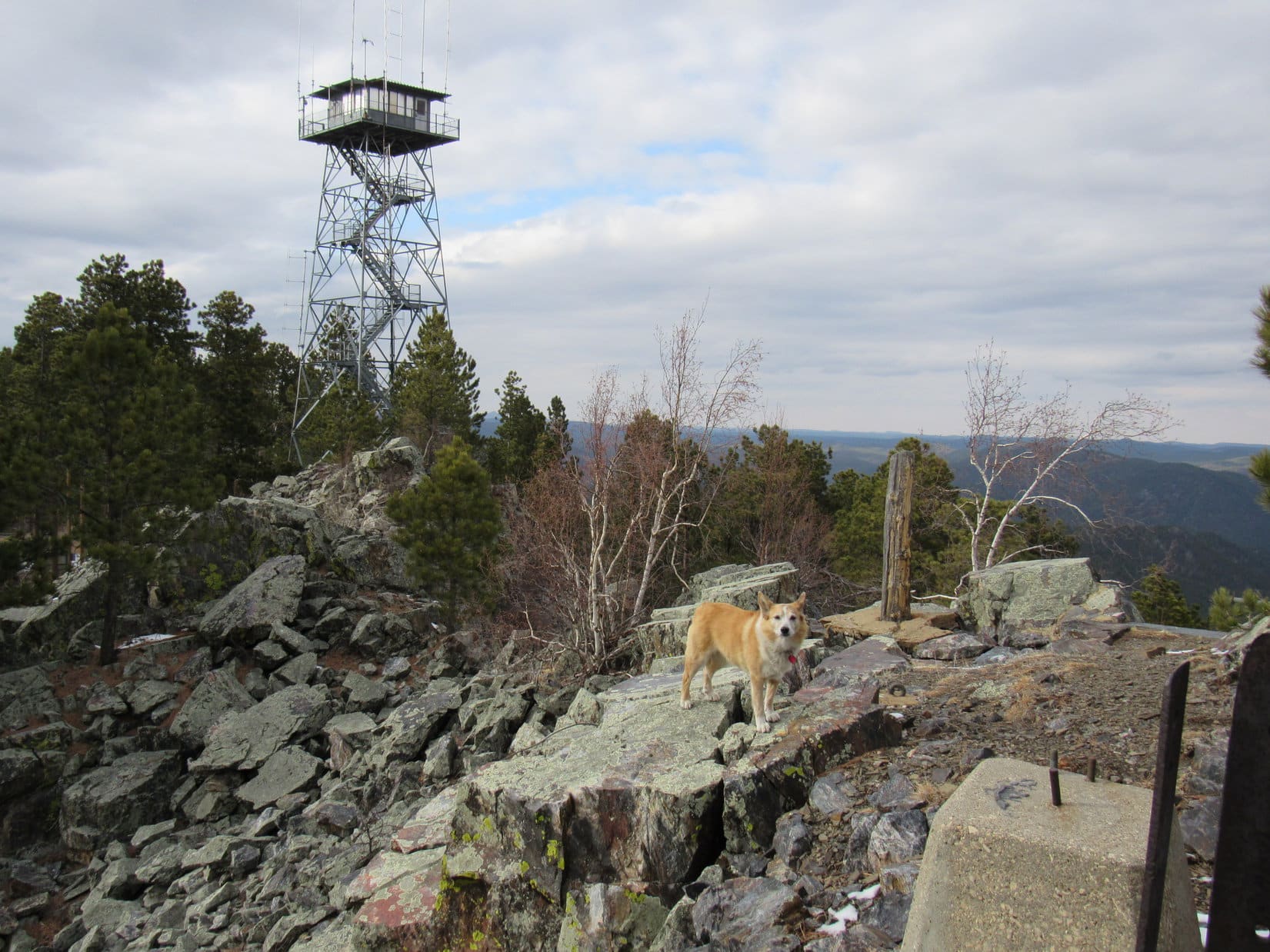
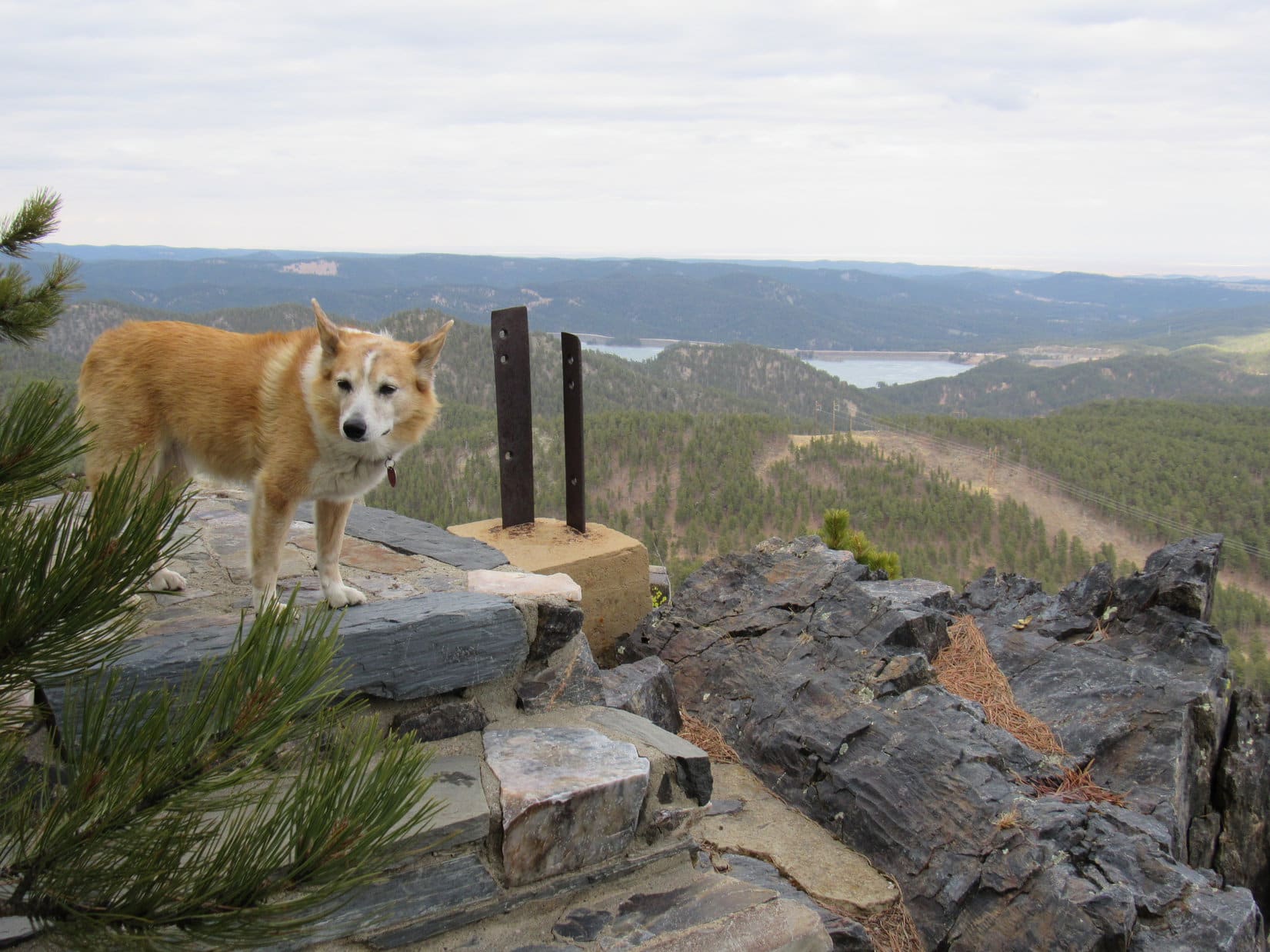
The Seth Bullock fire lookout tower from the true summit region. Photo looks NW.
Pactola Lake from the stone steps. Photo looks NE.
Peak 5581 (L) and Pactola Lake (R). Photo looks NE with help from the telephoto lens.

Chocolate coconut bar time, SPHP!

Sounds like a plan, Loop!

The chocolate coconut bar wasn’t the only victim as Lupe curled up on SPHP’s lap.  Most of the Taste of the Wild and the last apple disappeared, too.  Plenty of water leftover, though.  Lupe had been eating snow, and it was still chilly enough so that SPHP didn’t need much water, either.

After being overcast for hours, the sun was trying to break through the clouds.  Scattered patches of blue sky were slowly spreading.  Whenever the sun shone on Scruton Mountain, Lupe and SPHP hopped up hoping to get some better photos.

Opportunities were fleeting.  More often than not, the favorable light vanished almost immediately.  Loopster had some success, including a particularly nice look at Peak 5800 and Peak 5917.
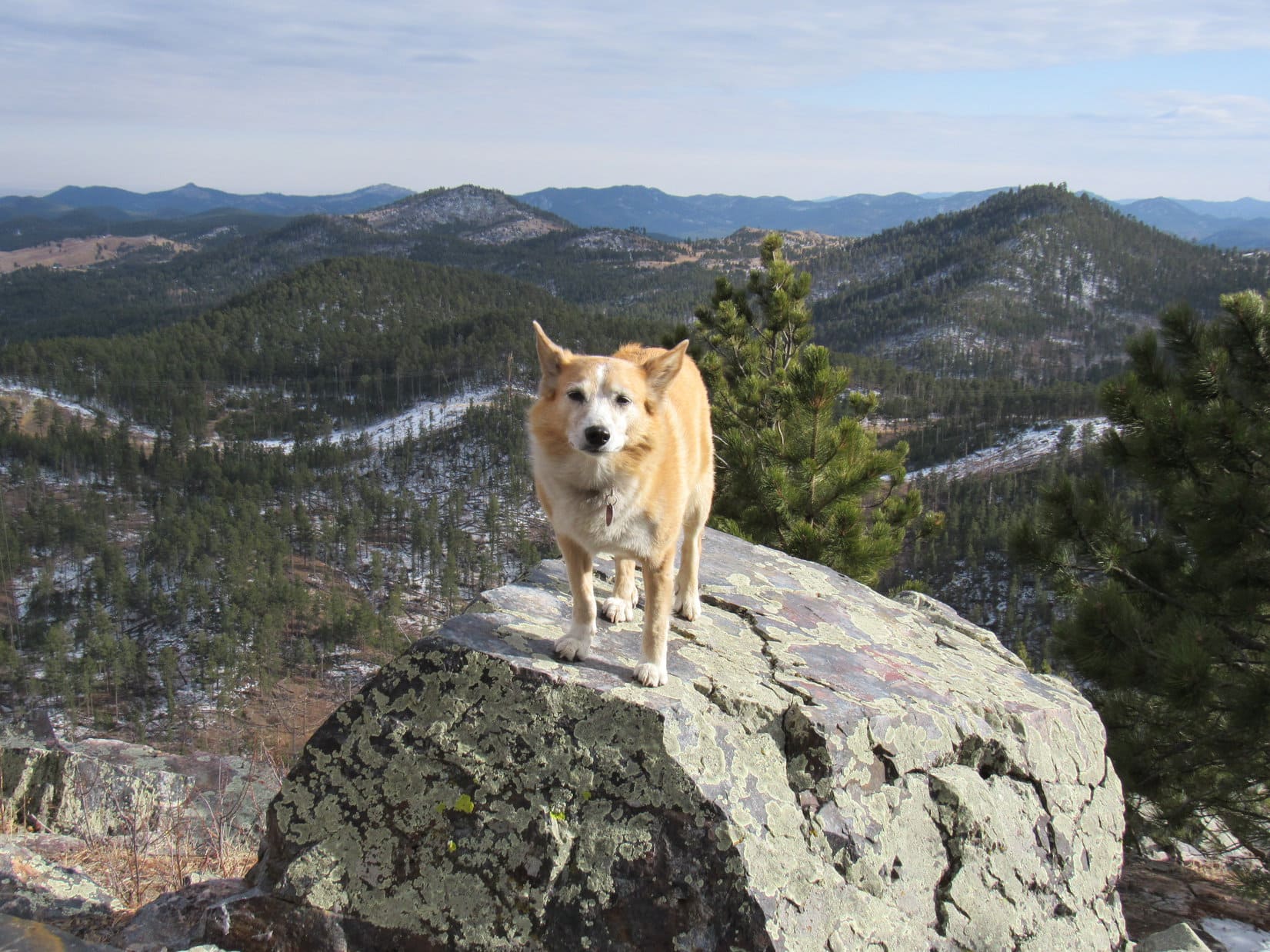
Peak 5800 (L of Center) and Peak 5917 (R). Photo looks SE.
Blue skies beyond the lookout tower. Photo looks NW.

Peak 6070 might have been in the cards, if it had been a little warmer out.  Late enough now, though, so that would have inevitably meant a long march back in darkness.  Still would have been feasible, since roads went all the way back to Pactola Lake.  SPHP dithered before deciding against it.

So Lupe lingered on Scruton Mountain in a chilly SW breeze enjoying the peace, views, and solitude.  An hour and 20 minutes after arriving, the Carolina Dog again stood W of the lookout tower.  Starting down the access road, she stopped at a beautiful view of green pine-scented hills stretching away to the NW.
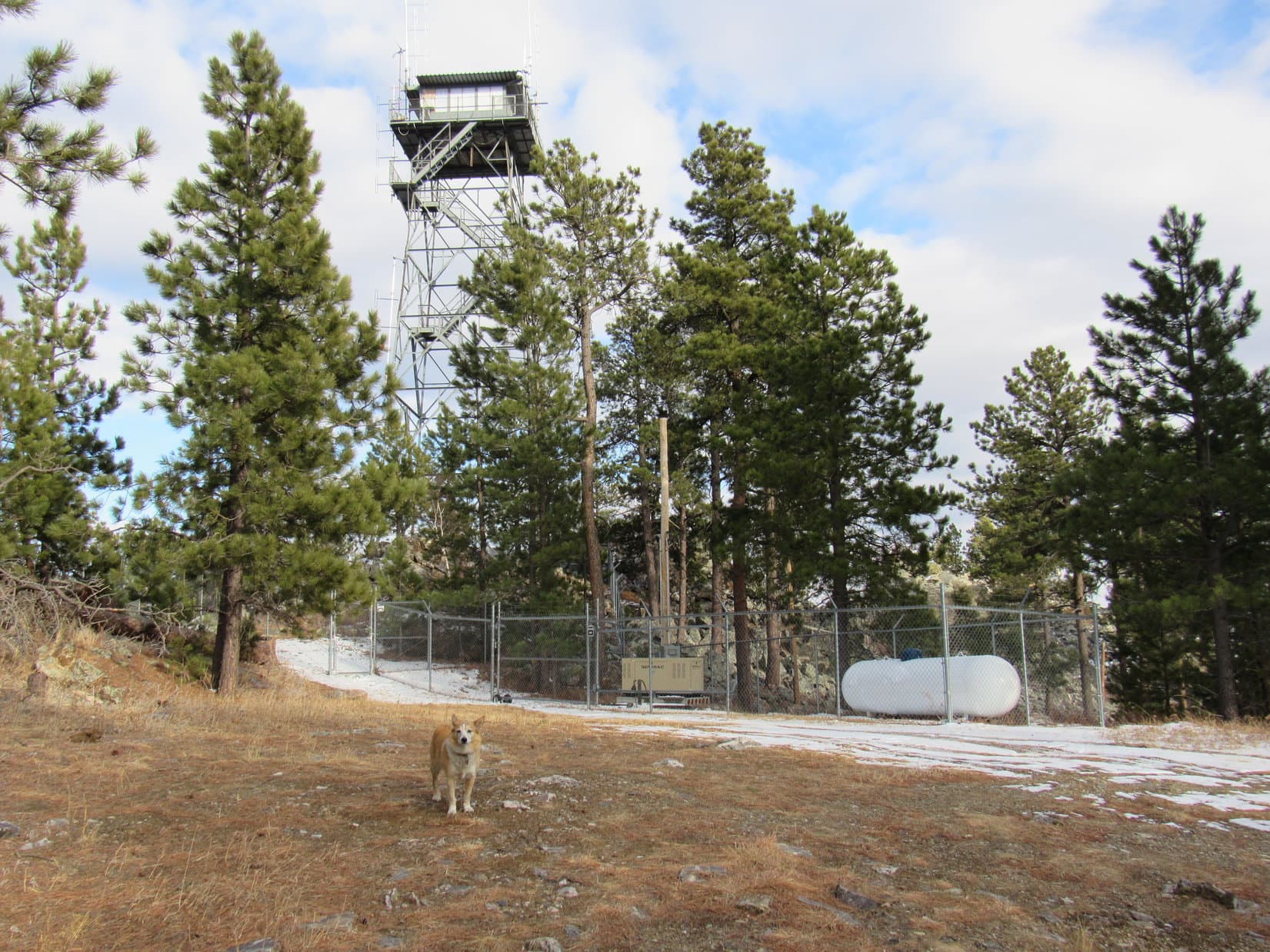
About to depart. Photo looks E.

Look at that, SPHP!  We’ll always have more to explore in the Black Hills, won’t we!

Forever and ever, sweet Dingo!  Happy days!  (End 5:59 PM, 38ºF)  
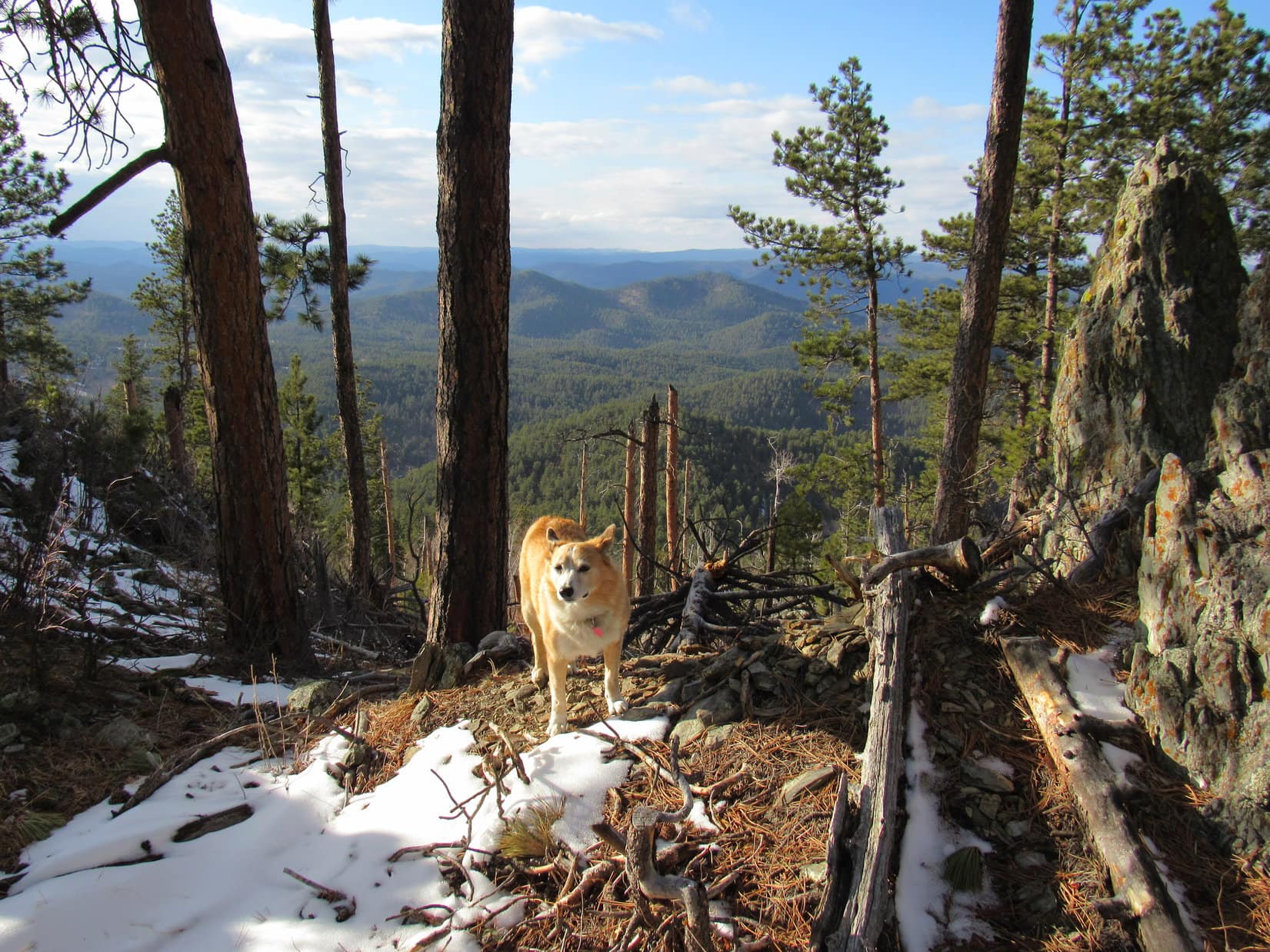
Scruton Mountain, Black Hills of South Dakota, 3-12-21

Lupe treasures collected along the roads on the way back to Pactola Lake: 1 glass bottle, 8 aluminum cans, 1 tin can, 2 metal filter housings. 

Links:

Next Black Hills Expedition                      Prior Black Hills Expedition

Scruton Mountain on SummitPost.org

Want more Lupe adventures?  Check out Lupe’s Black Hills, SD & WY Expeditions Adventure Index, Master Adventure Index, or subscribe free to new Lupe adventures!

Atlantic Peak, Wind River Range, Wyoming – Part 1: The Christina Lake Trail & Beyond to Atlantic Lake (9-14-20)

Days 1 & 2 of Lupe’s 5th Summer of 2020 Dingo Vacation to Wyoming!

9-13-20, 3:20 PM, 85ºF, Lander city park – Only 6 days ago, Lupe had left Lander intent upon climbing Atlantic Peak (12,490 ft.).  Instead, she’d wound up fleeing S into Utah in a futile attempt to avoid a freak Labor Day blizzard.  Well, guess what?  85ºF!  Summer of 2020 was back, and the American Dingo was, too!

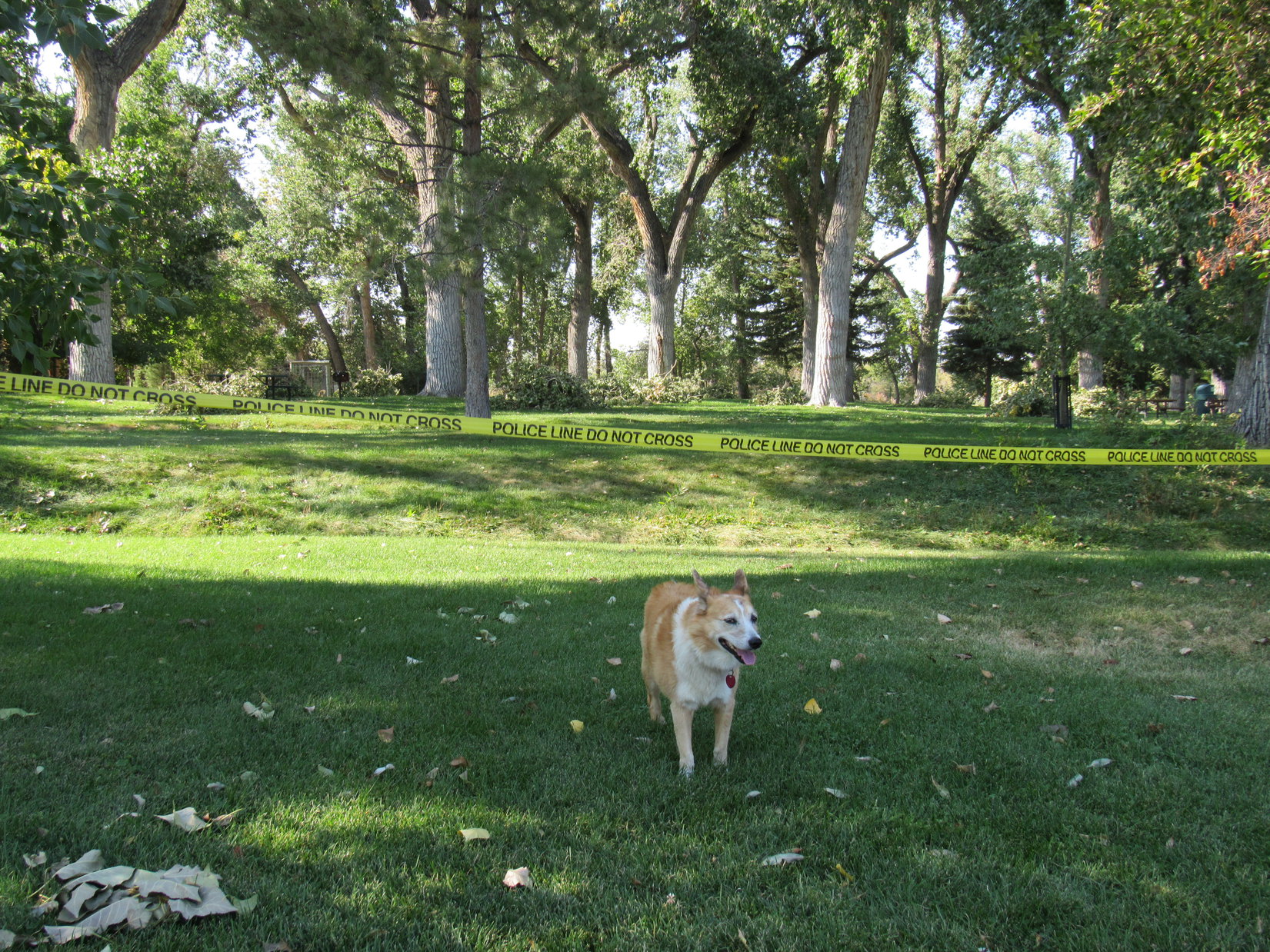
“Police Line Do Not Cross” said a plastic yellow streamer cordoning off most of the deep green lawn beneath the big old cottonwood trees.  Piles of broken branches, damage from the recent storm, were heaped up throughout the park awaiting removal.

Didn’t matter.  Loopster loves Lander City park!  Free camping and squirrels!  Going to be home for tonight.  Tomorrow morning she would head up into the SE end of Wyoming’s mighty Wind River Range.

Return of the Dingo! Back at Lander city park.
9-14-20, 9:49 AM, Christina Lake trailhead just off County Road No. 300 – The W was still on fire.  The blizzard may have cleared the air for a while, but smoke was already drifting back into the Wind River Range.  Didn’t seem to be too bad.  Nothing to be done about it in any case.

Smoky or not, Looper was doing this!  Just getting to the trailhead this morning was as close to Atlantic Peak as she’d made it this summer.  Her first “attempt” had been back in July, when it turned out that the access road, County Road No. 300, had been closed for repairs.  Then, of course, there was the Labor Day blizzard, which had once again forced a retreat before the Carolina Dog ever even left the highway.

3rd time’s a charm, Loopster!  C’mon, let’s hit it!

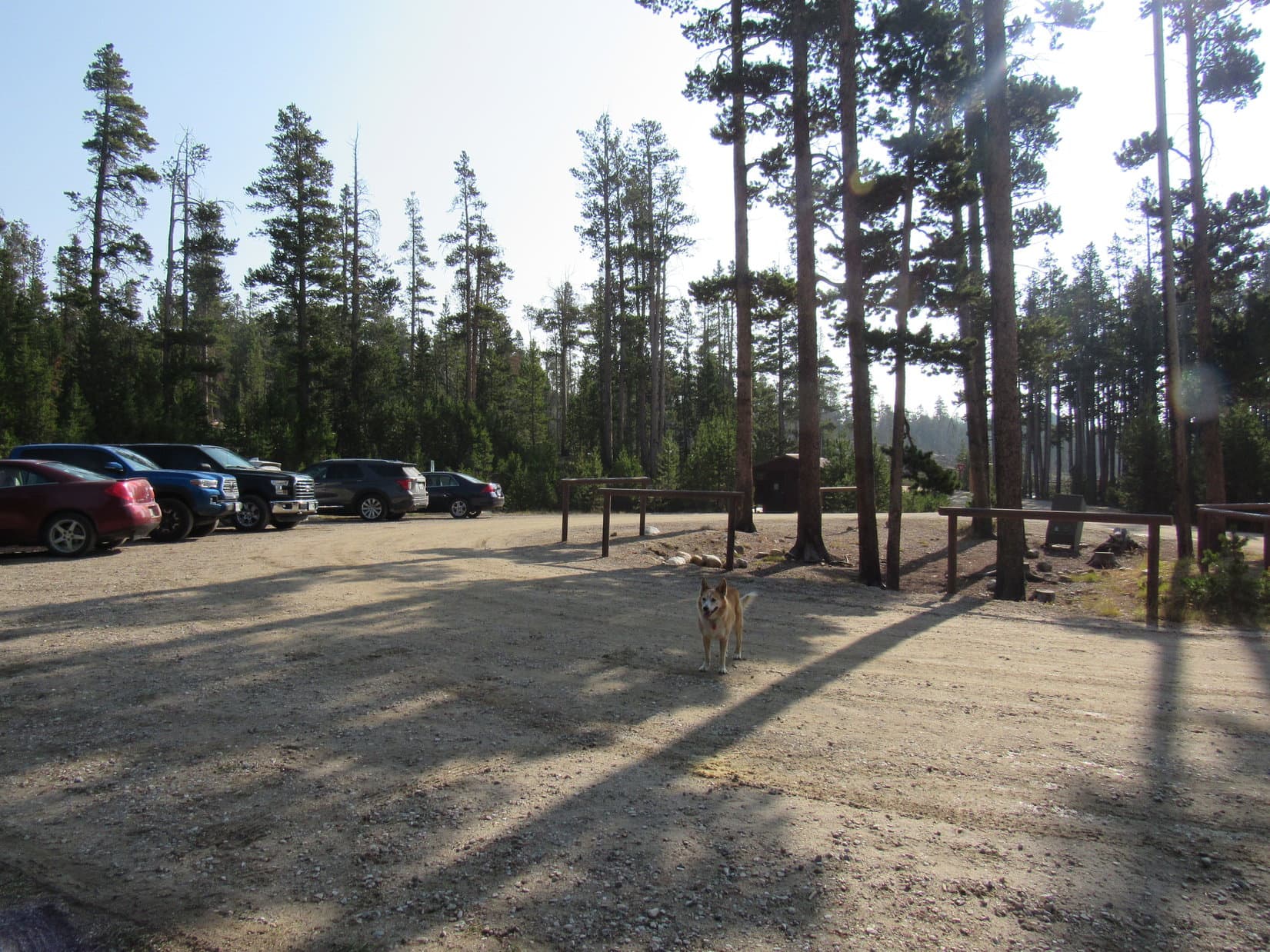
At the Christina Lake trailhead off County Road No. 300, just S of Fiddlers Lake.

Near a small corral, Christina Lake trail No. 721 left the trailhead as a stony path heading N up into the forest.  The trail turned W after a brief climb, leveling out before getting quite to the top of a minor ridge.  The topo map showed Fiddlers Lake nearby, likely just on the other side.

Here now!  Might as well take a look!  Lupe left the trail, angling NW up onto the ridge.  Sure enough!  There was Fiddlers Lake.  A rocky dam was visible not too far away along the SW shore, which ought to be a good viewpoint.  Loop sniffed her way over to it.

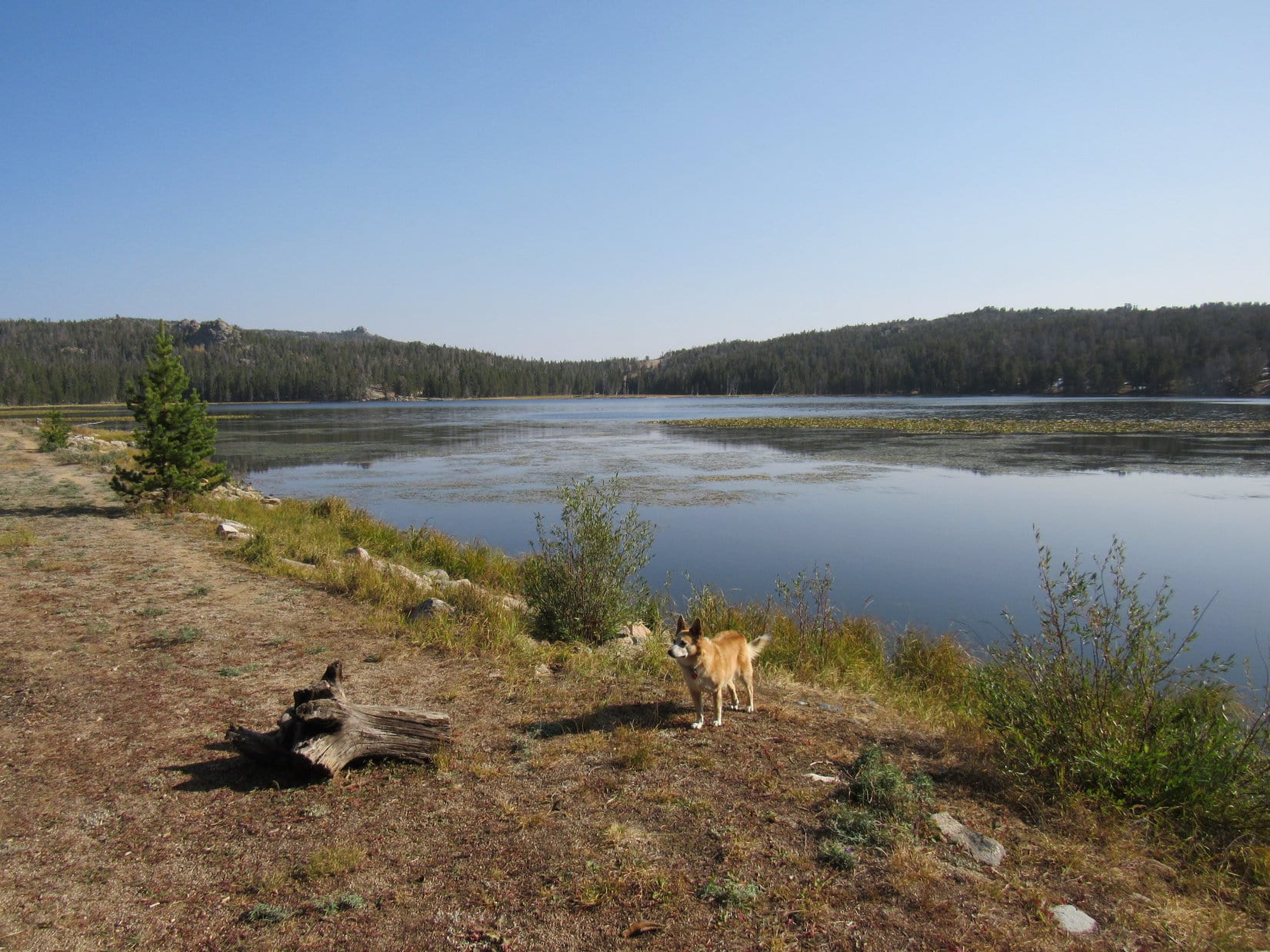
Near the dam, Fiddlers Lake was calm and weedy.  Looked like there were lots of lily pads farther out before reaching truly open water.  Nice, but not super impressive.  Fiddlers lake resembled an overgrown pond.  Most of it probably wasn’t very deep, but maybe the fishing was good?

Carolina Dogs don’t fish much.  Lupe returned to the Christina Lake trail.

Leaving the Christina Lake trailhead. Photo looks N.
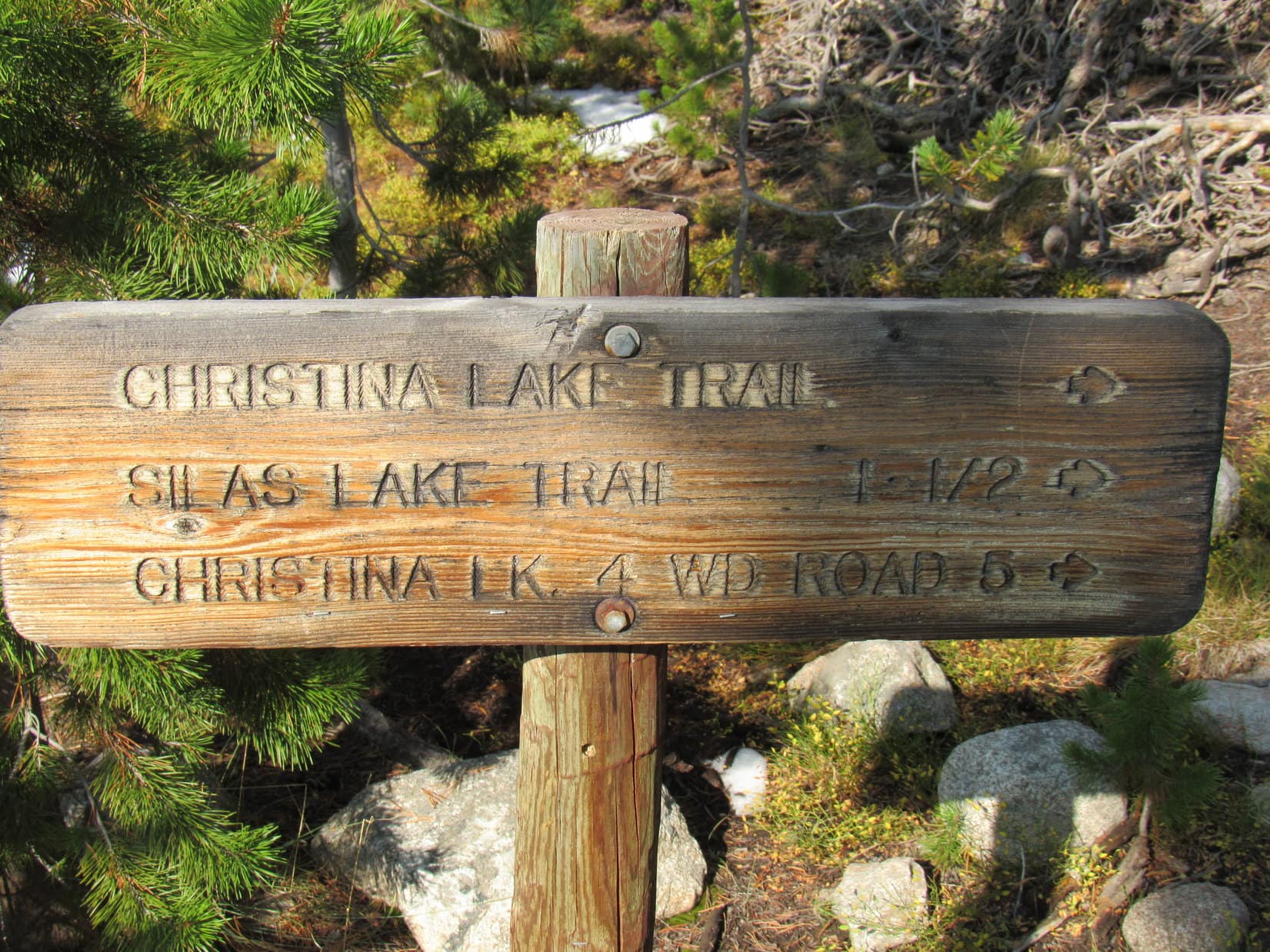
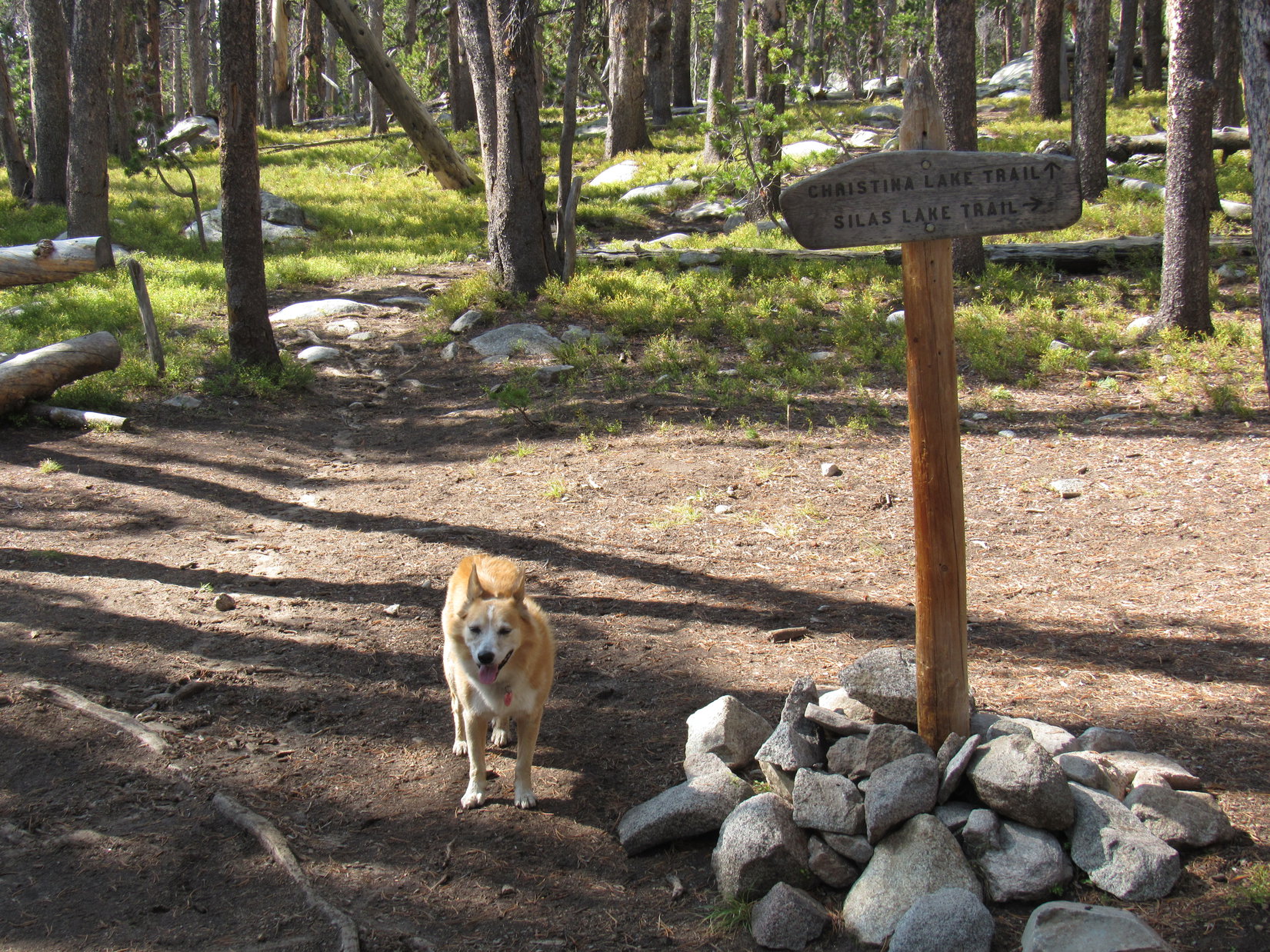
Sign at the start.
Fiddlers Lake. Photo looks NE.

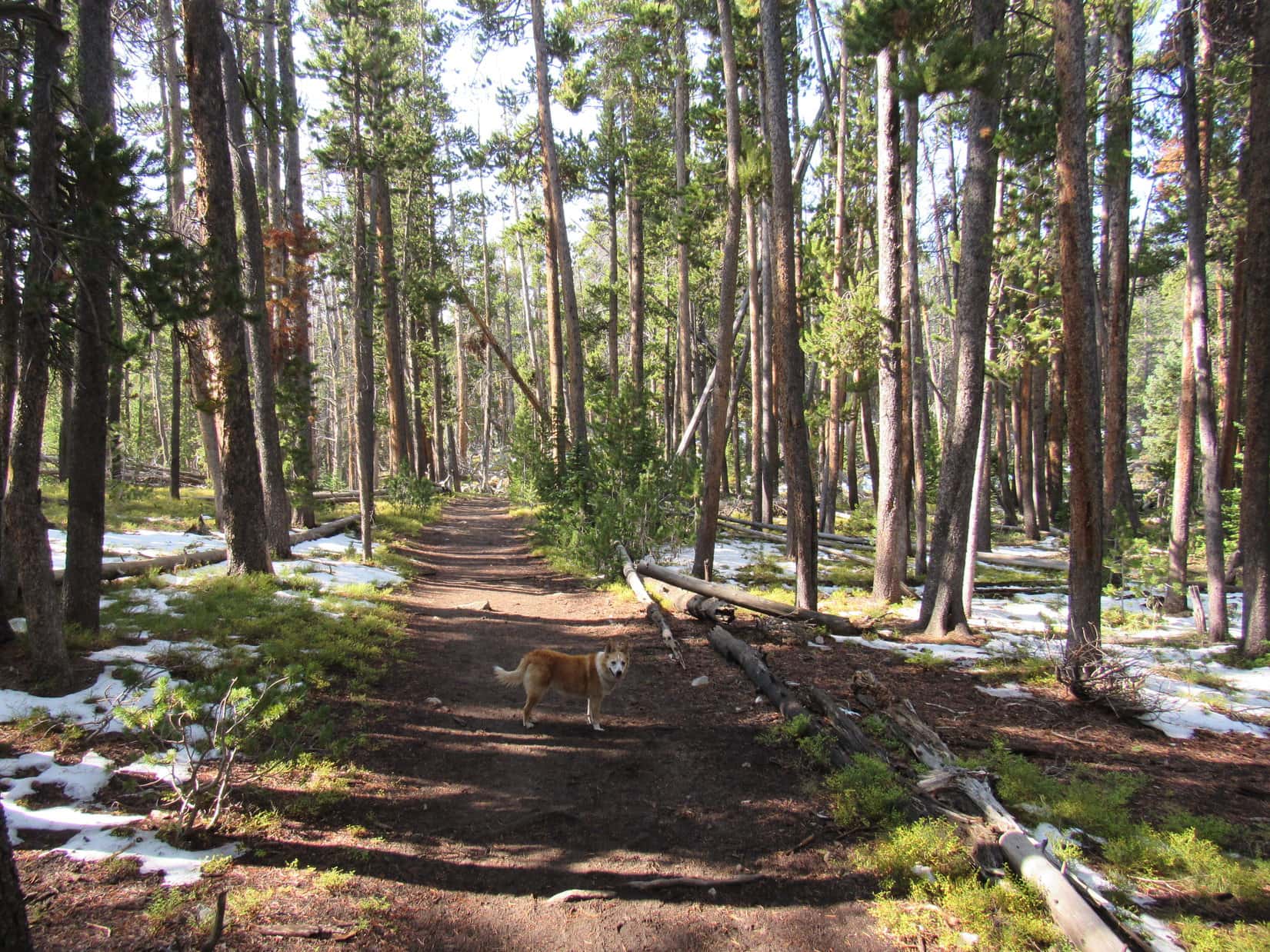
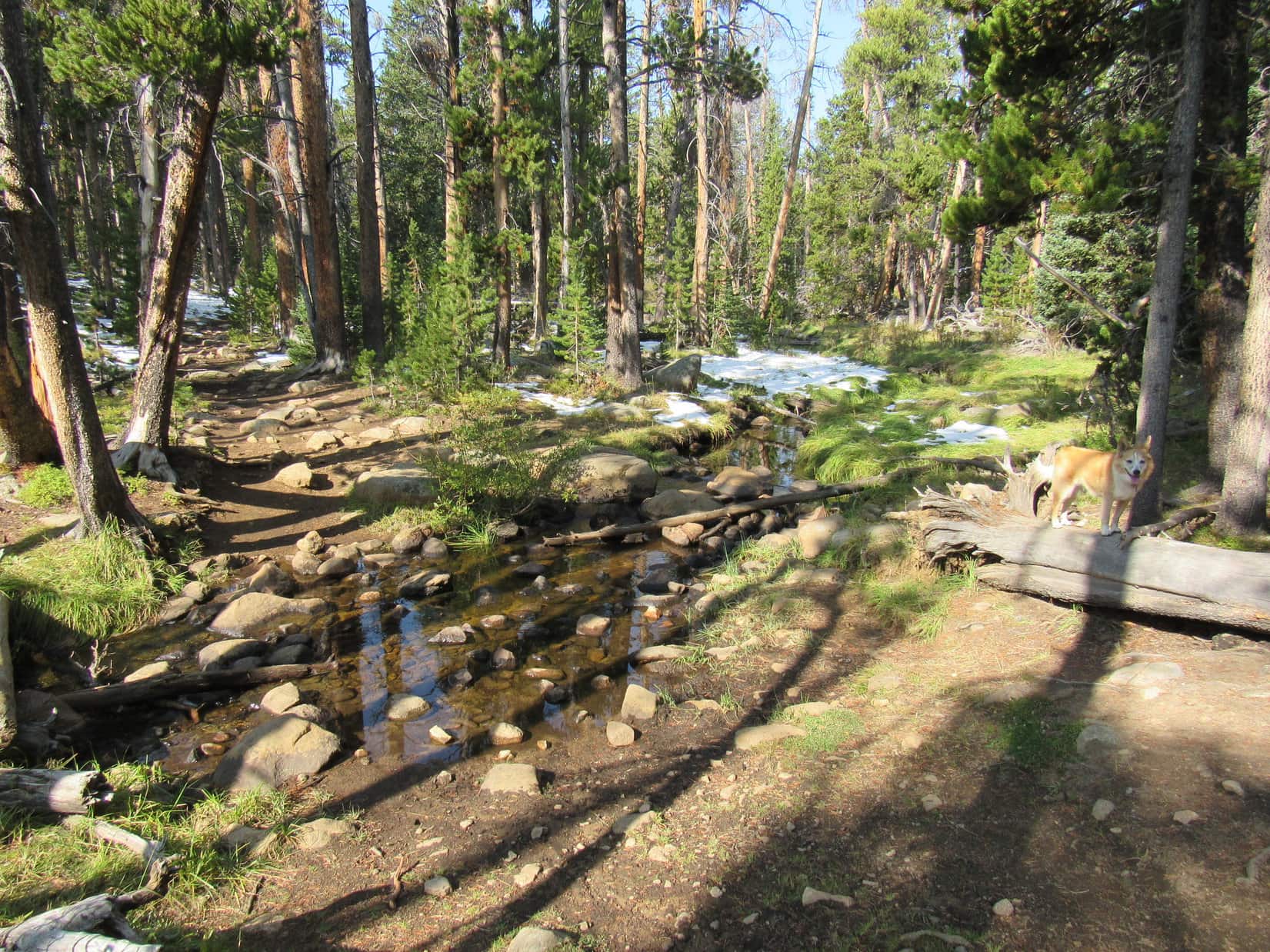
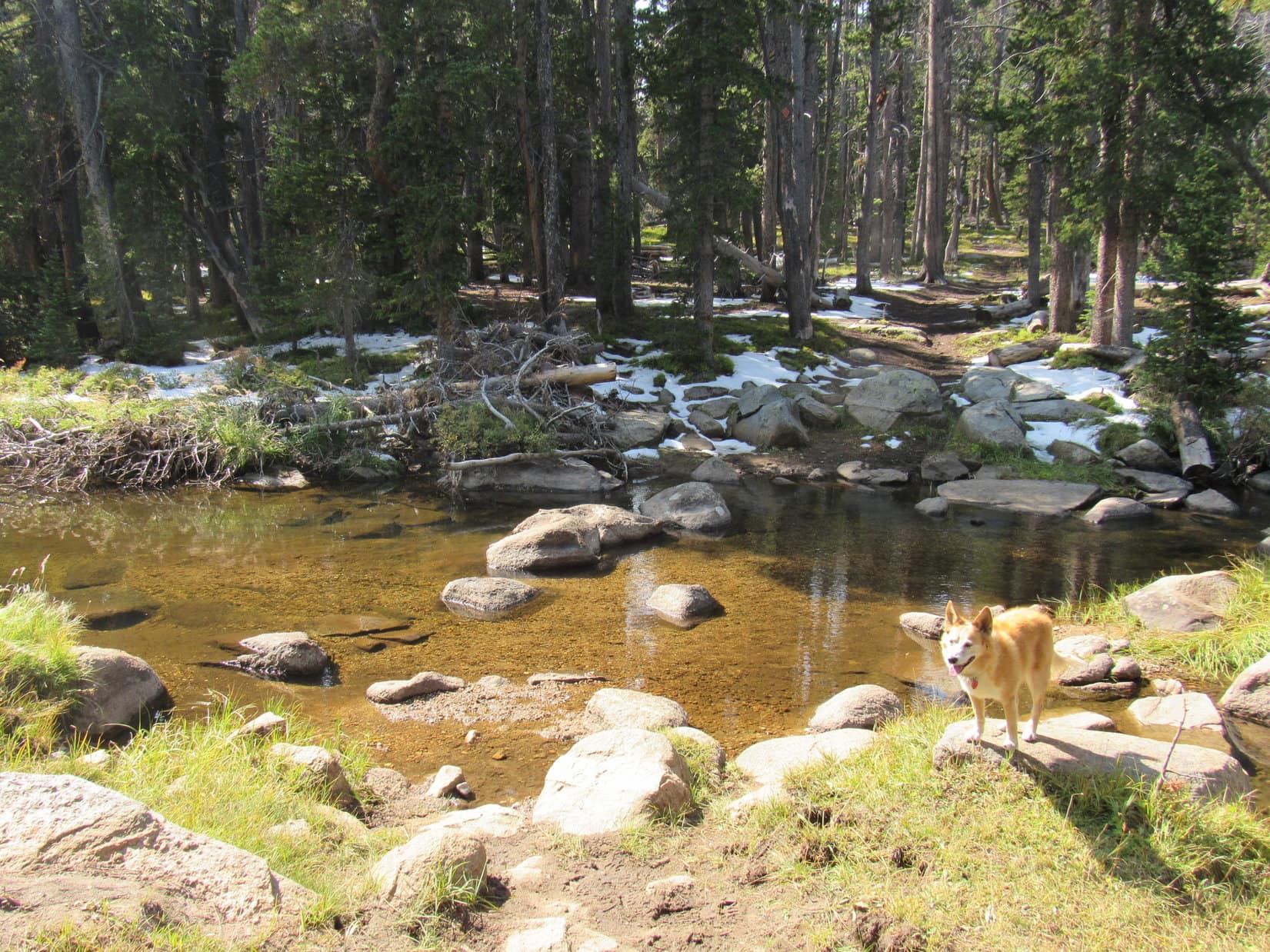
Morning sunlight streamed through the trees.  The air was humid and fresh.  Scattered patches of snow melting in the forest made it feel more like spring than mid-September.  Easy to follow, the Christina Lake trail bounced along neither gaining nor losing much elevation.  Less than 0.5 mile from the trailhead, Lupe reached Fiddlers Creek.  No bridge, but Fiddlers Creek was too small to present any difficulties.

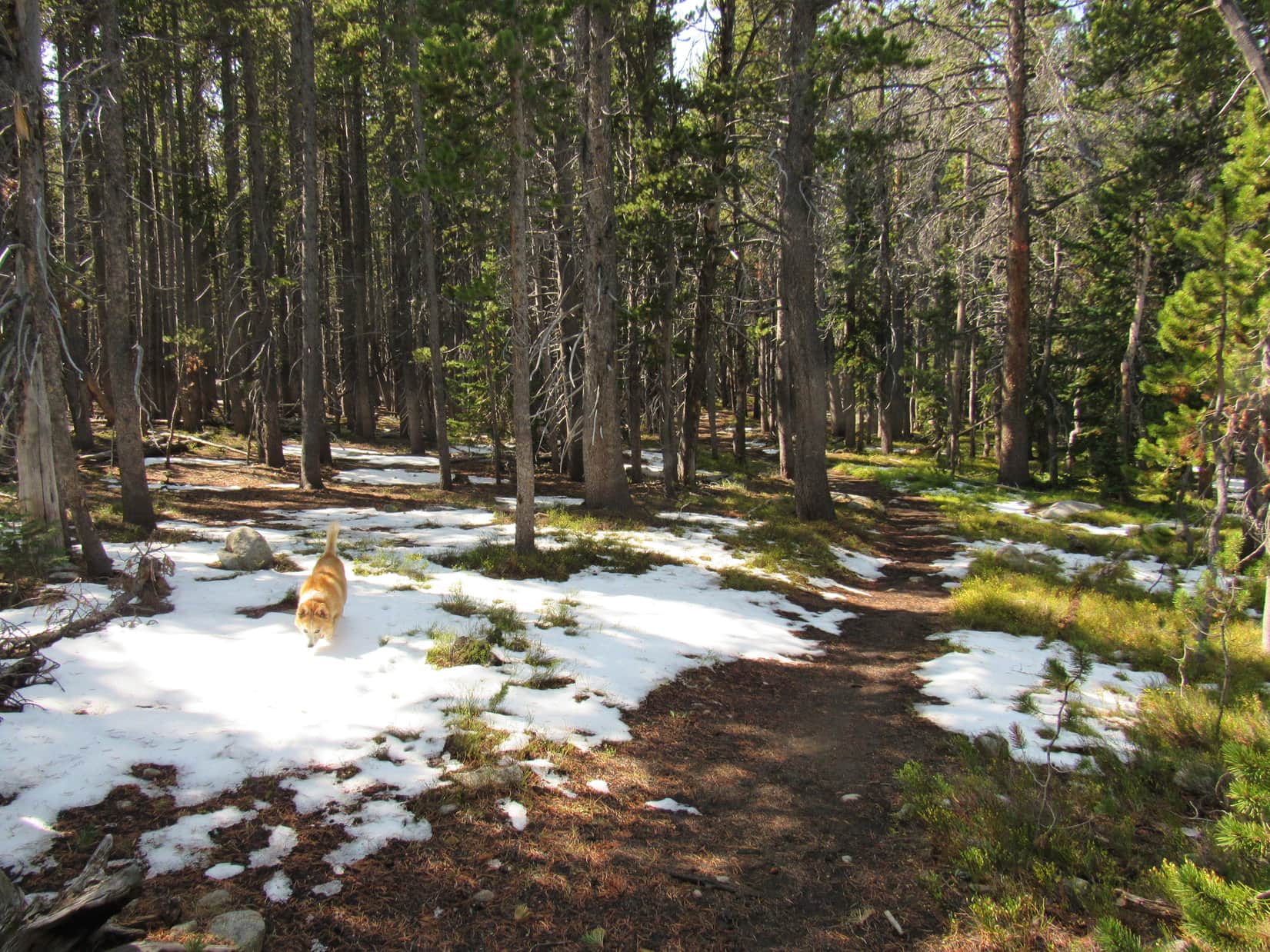
Feels like spring with all this melting snow! Christina Lake trail No. 721.
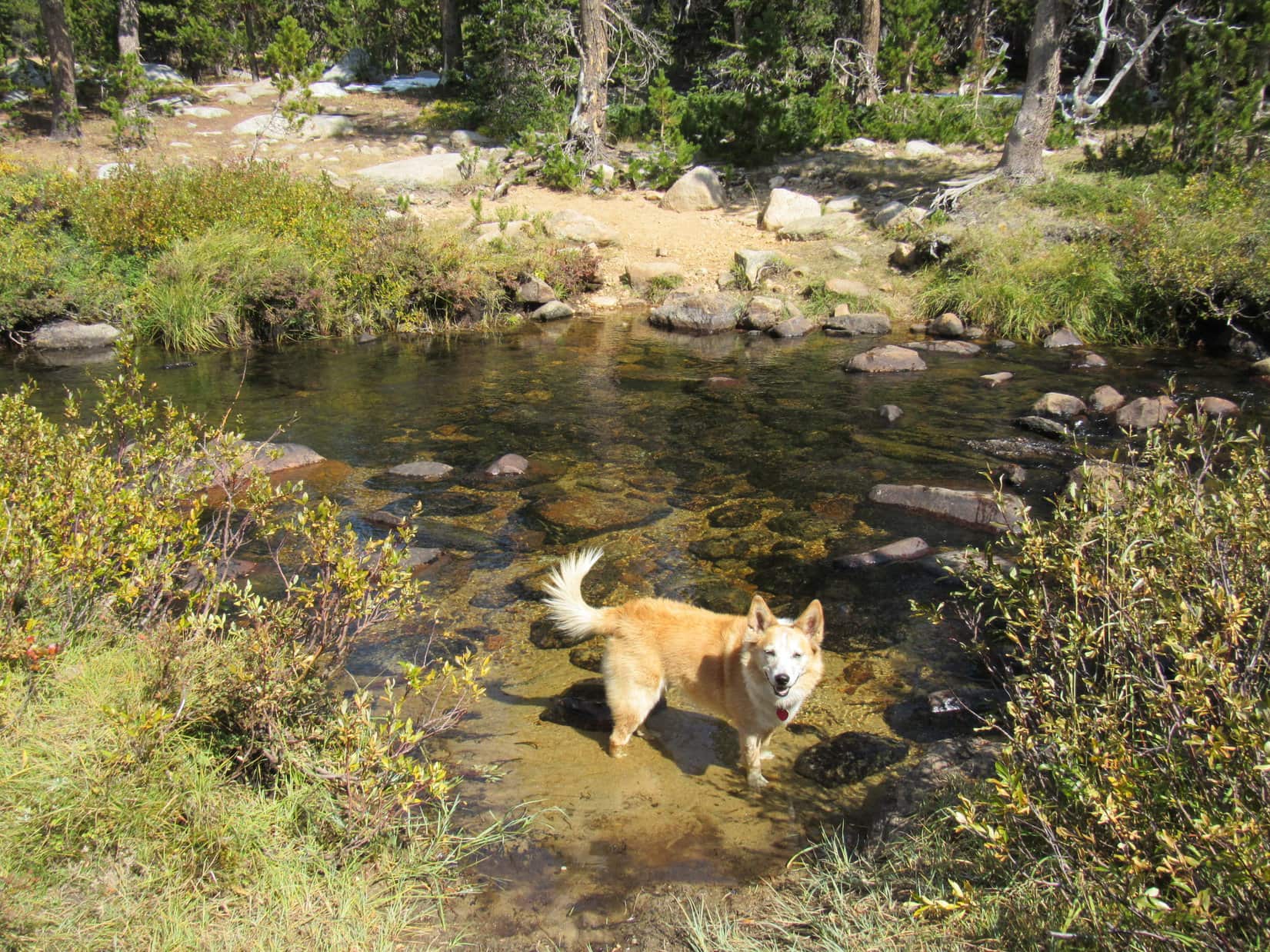
Fiddlers Creek.

After crossing Fiddlers Creek, Lupe gained 200 feet of elevation before the trail leveled out again.  Proceeding SW, a gradual downhill section led to several more streams, all mere trickles.  After another modest climb, the trail straightened and flattened well up on the side of a steep slope.  At the end of this straightaway came a curve to the R.  Beyond it, Loop arrived at a junction.

Silas Lake trail No. 722 headed off to the W (R) here on its way to Upper Silas Lake, a popular destination judging from the registry 1.5 miles back at the trailhead.  Lupe, however, didn’t need to go to Upper Silas Lake.  Sticking with the Christina Lake trail, she continued on.

At the junction with the Silas Lake trail.

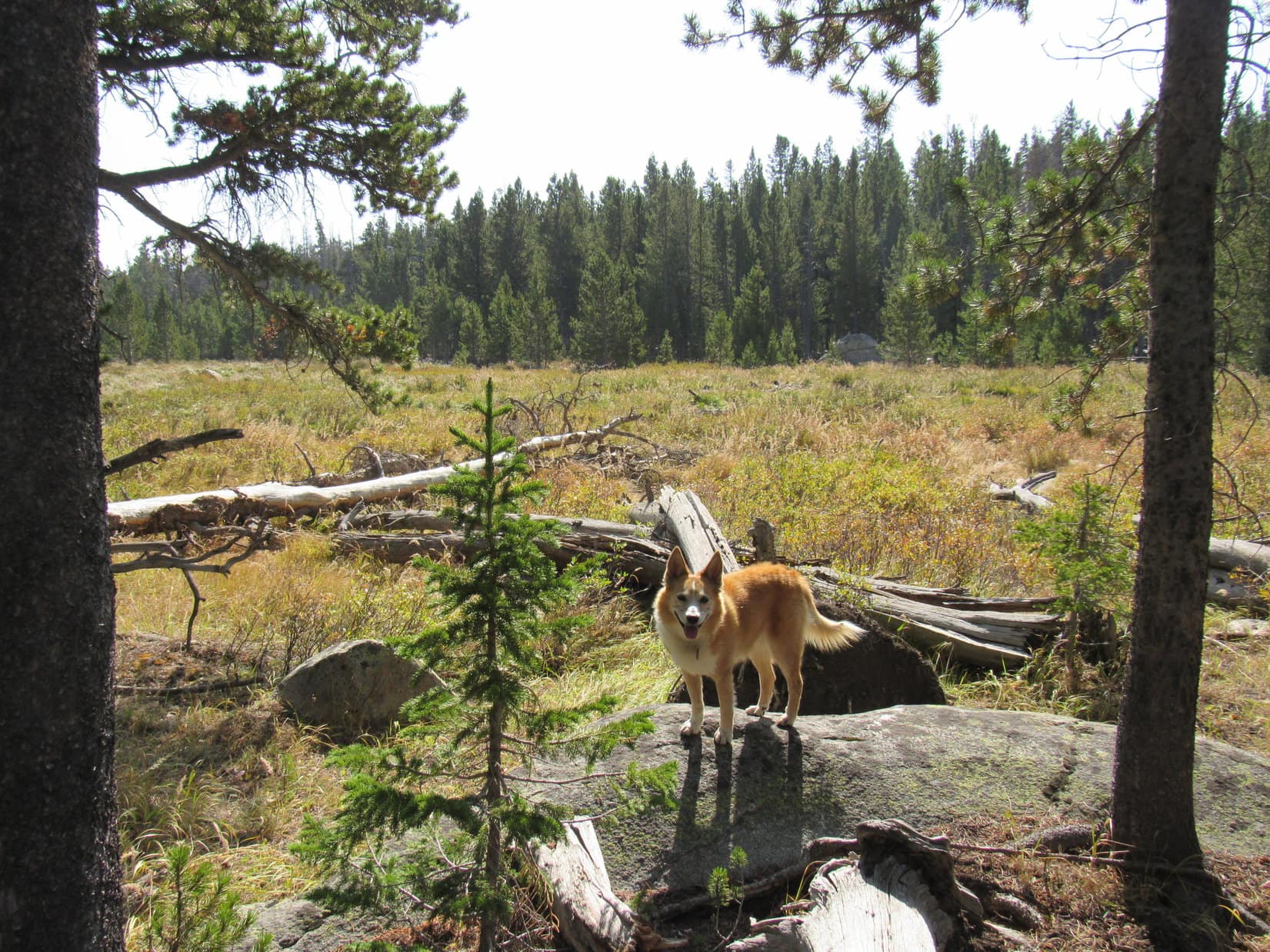
Occasionally, small clearings had been visible off to one side or another, most of which looked like boggy regions.  20 minutes past the Silas Creek trail junction, the largest clearing yet appeared on the L.  A little beyond it, Lupe reached Silas Creek, the biggest stream she had come to so far.

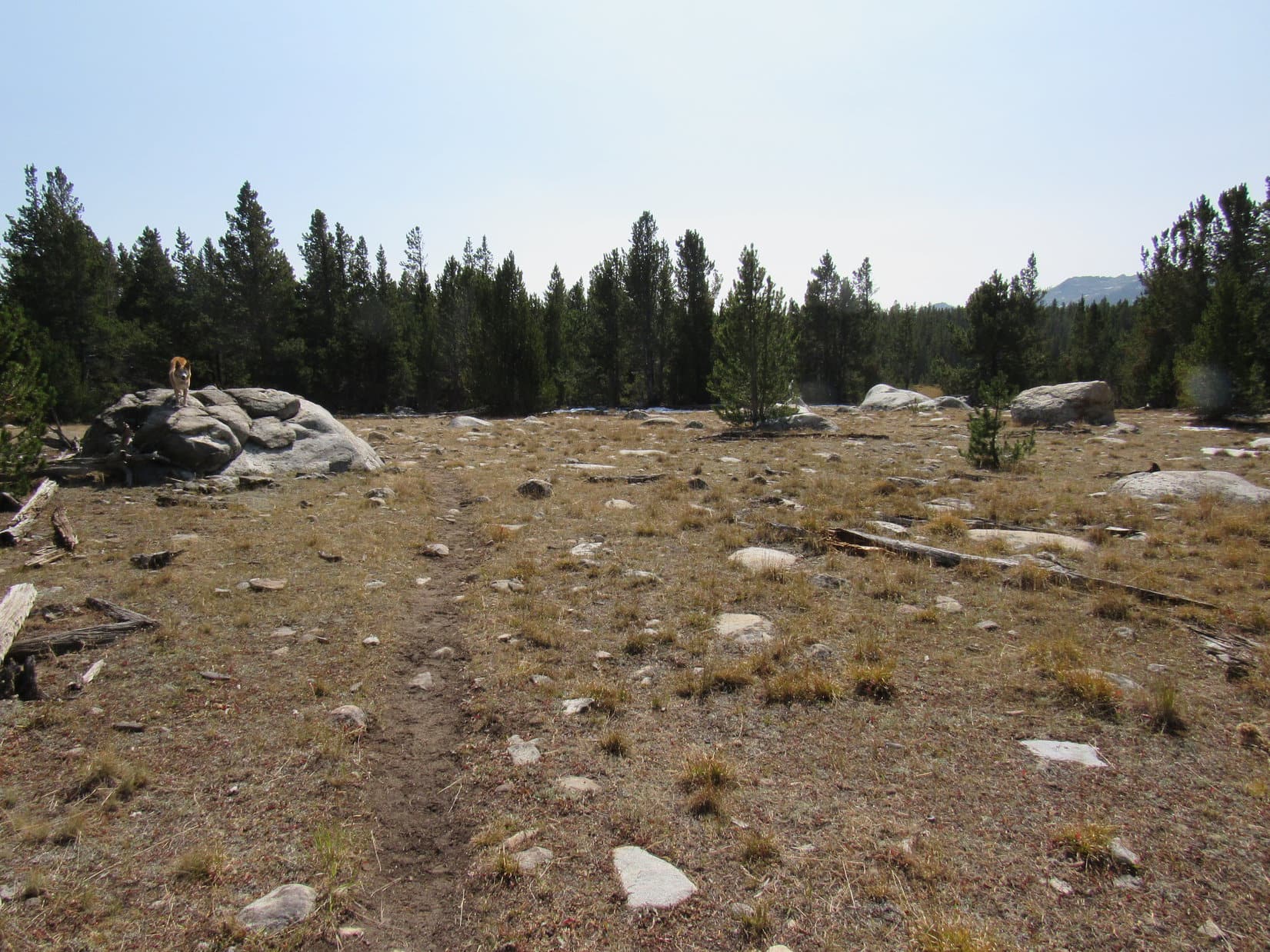
Glimpse of the big clearing on the L side of the trail. Photo looks S.
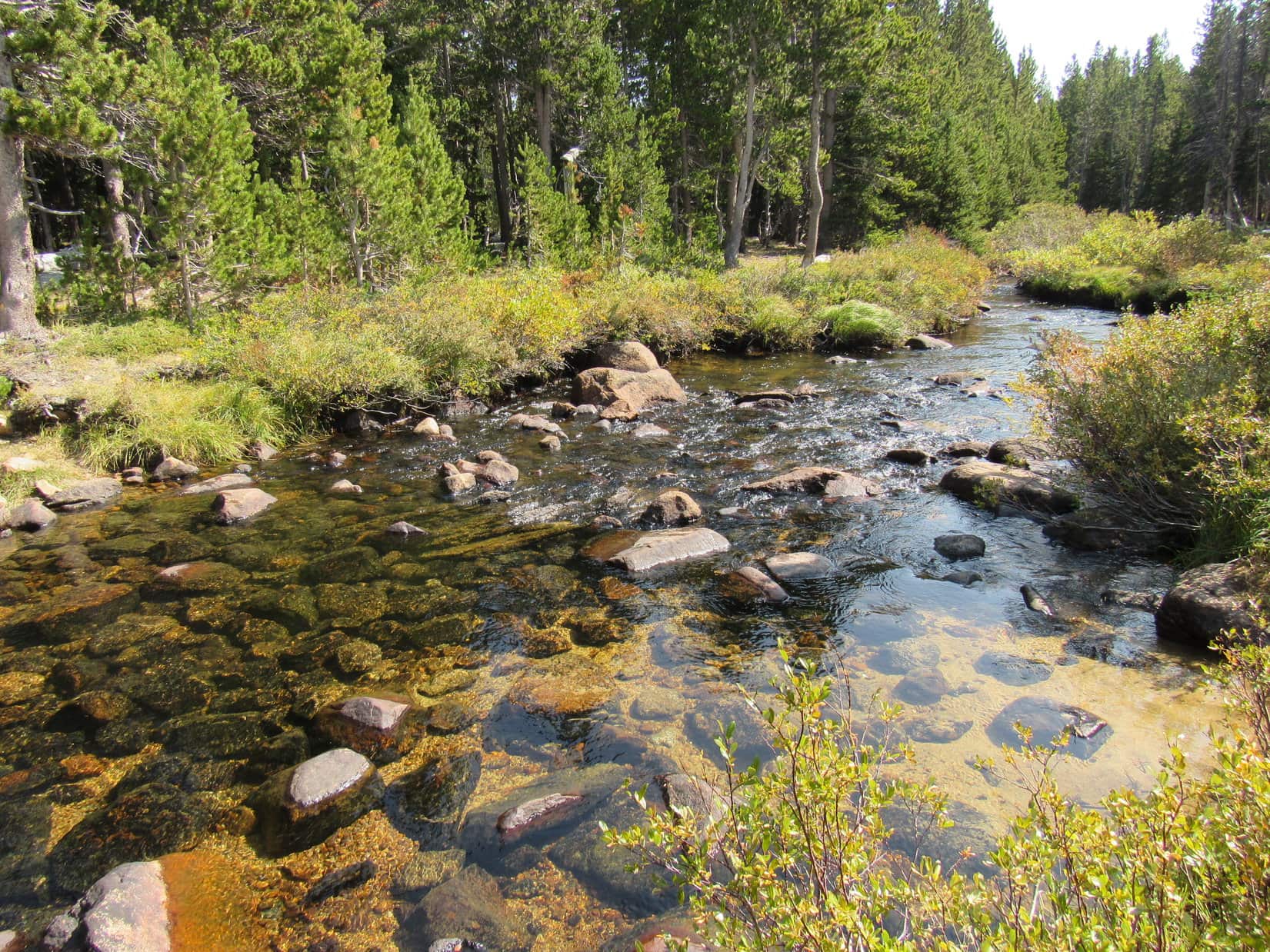
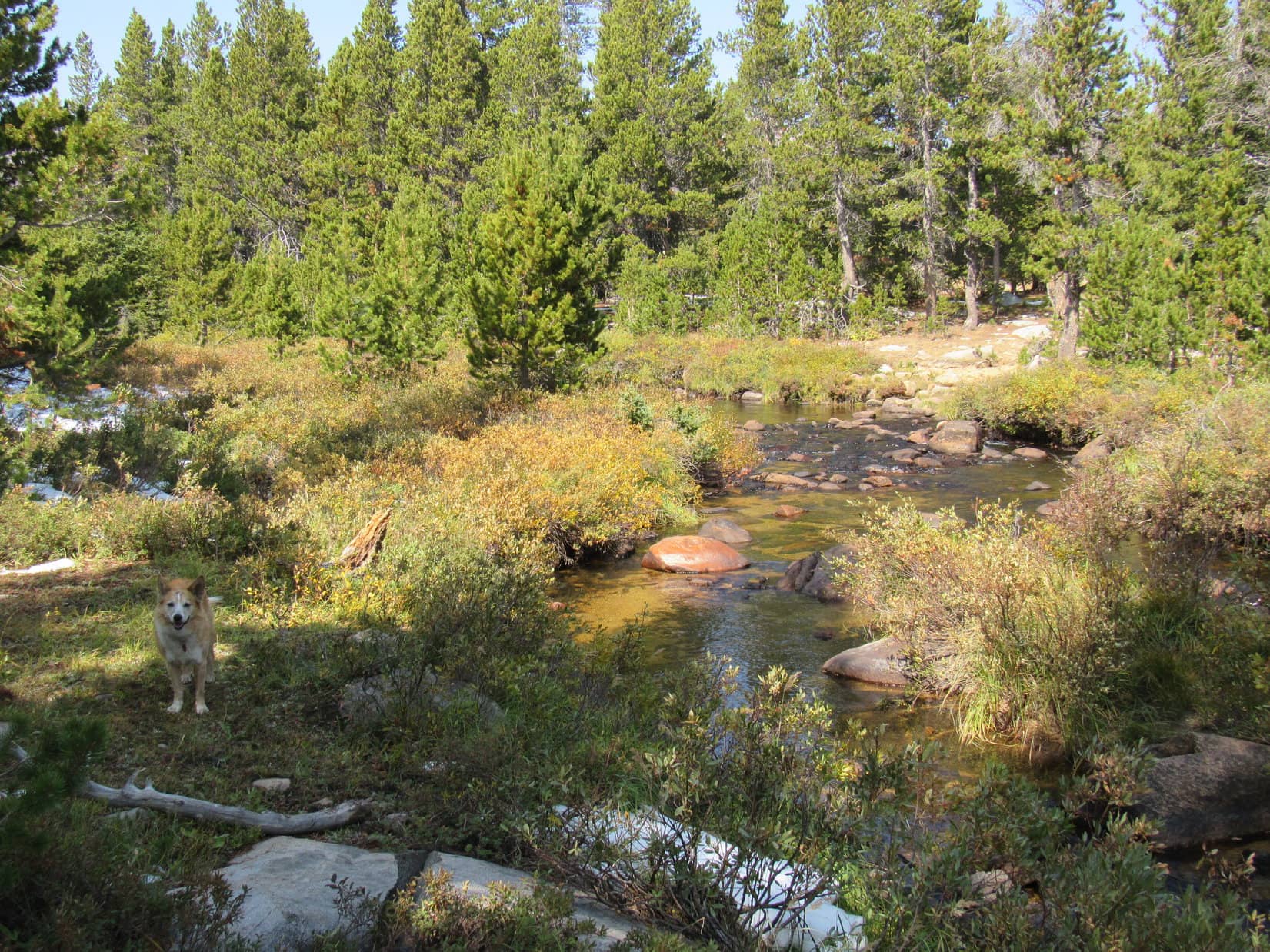
Silas Creek.

Silas Creek wasn’t all that big, either, but was fairly wide where the trail crossed it.  Many rocks were in the stream, both upstream and down, but a quick check didn’t reveal any spots where they were arranged quite fortuitously enough to permit a rock hop.  Oh, well!  Shedding boots and socks, SPHP waded across.  Lupe followed after.

That was easy enough!  However, the American Dingo didn’t get much farther before coming to an even larger stream.  Atlantic Creek had twice, maybe triple, the flow that Silas Creek did.  The bottom of Silas Creek had been sand and gravel, but Atlantic Creek was rocky.  As much as 2 or 3 feet deep, the prospect of wading across Atlantic Creek’s stony bottom wasn’t too attractive.  Fortunately, the water was just low enough to permit a rock hop on stones barely protruding above the surface.

Atlantic Creek.
SPHP’s such a tenderpaw! Nothing to it!
Looking back after crossing Atlantic Creek. Photo looks NW.

Shortly after leaving Atlantic Creek, the Christina Lake trail went over a minor rise, passing through a clearing strewn with rocks and several large boulders.  Beyond this clearing, the trail re-entered the forest going gradually downhill.  At a low spot, the Carolina Dog came to the edge of an enormous field.  This field looked grassy and dry, but was actually quite soggy.

While looking upstream back at Atlantic Creek, Loopster had caught a glimpse of a high mountain.  SPHP had wondered at the time if it might have been Atlantic Peak?  A much better view of that same mountain, plus a number of peaks along a ridge S of it, was now available.  A quick check of the topo map convinced SPHP that the high mountain probably really was part of Atlantic Peak (12,490 ft.).

Crossing the rocky clearing.
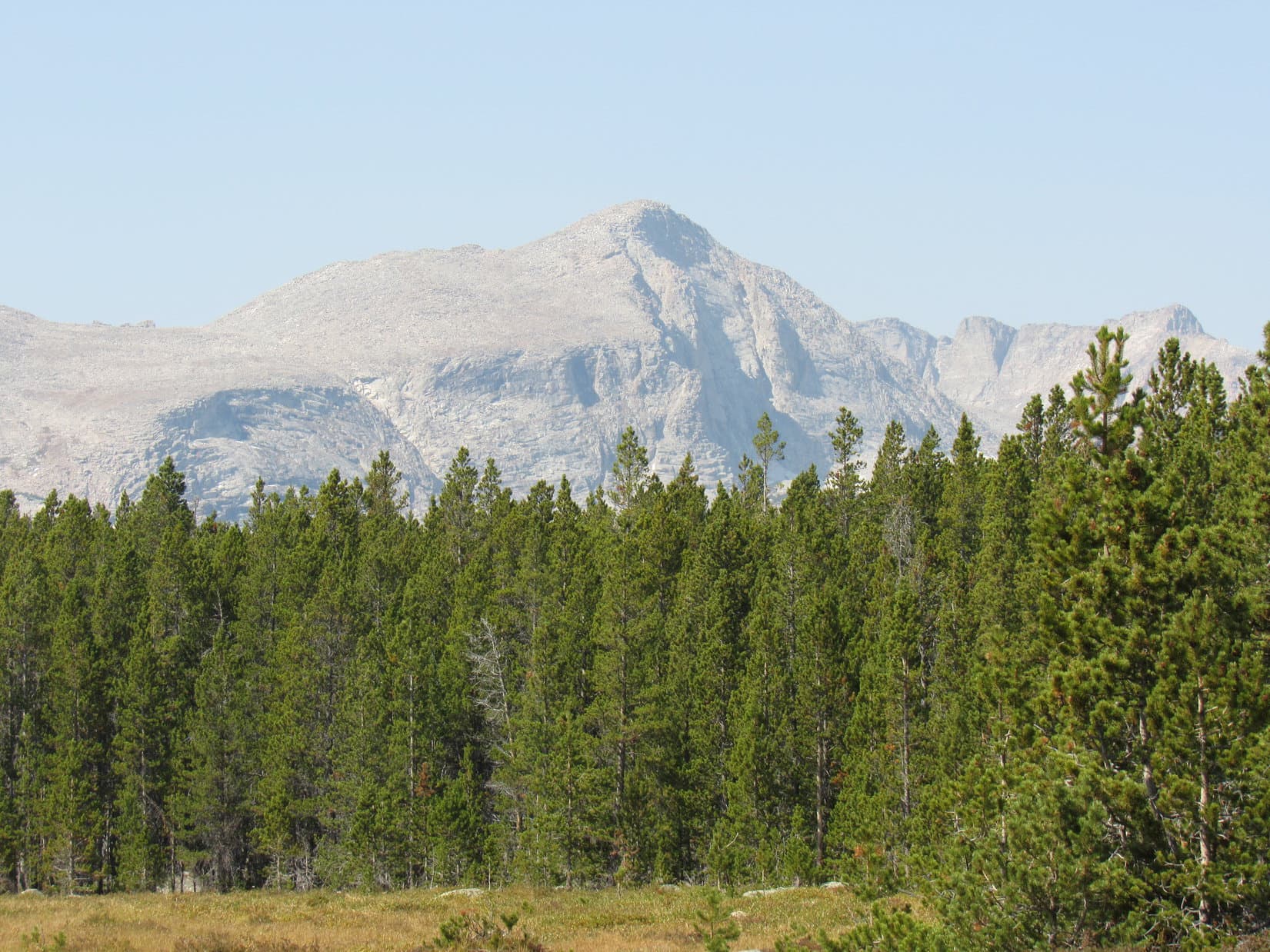
That’s HP12261, the E end of Atlantic Peak behind me! Photo looks WNW.
HP12261 (Center). Photo looks WNW with help from the telephoto lens.

Staying near the edge of the damp field, the American Dingo followed the Christina Lake trail through a boggy depression before returning to drier ground in the forest.  For a little way, the trail paralleled the field closely enough to still see it between the trees.  After that, Lupe roamed SW at will for another mile.  Meanwhile SPHP had an easy time, making good progress on a gradual incline.

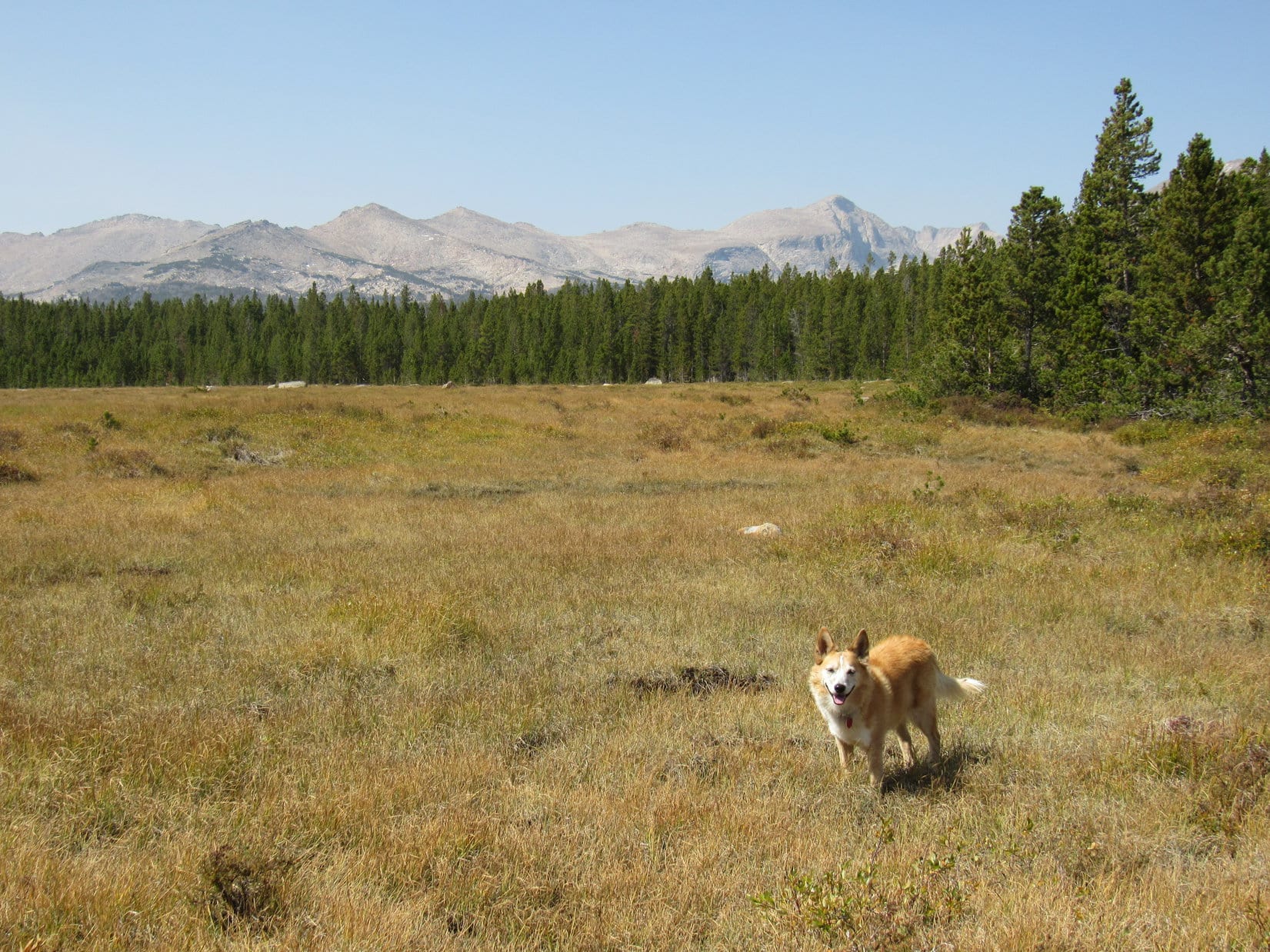
Enjoying an easy trek through the forest.

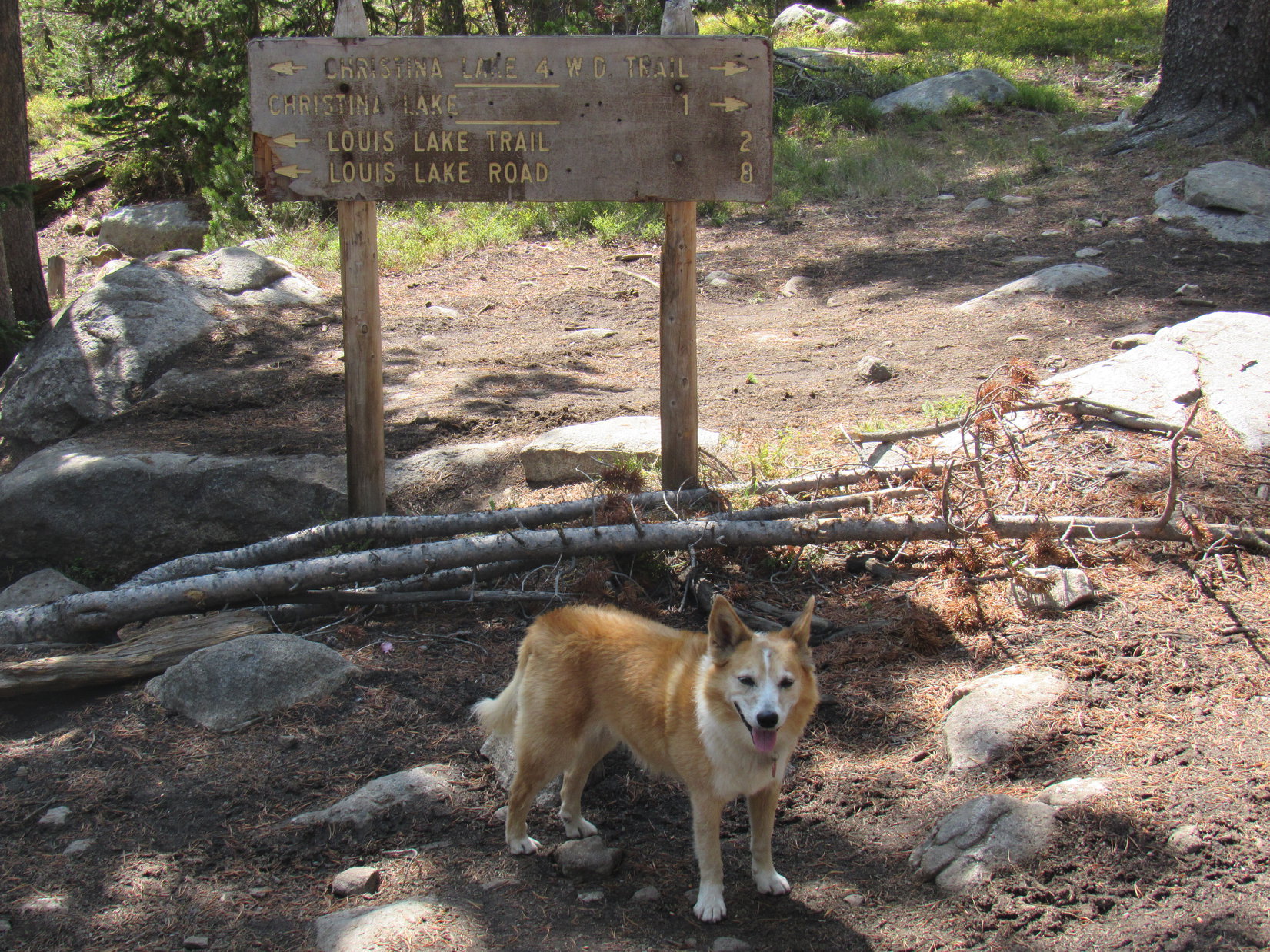
Christina Lake trail No. 721 ended as a single track at a “T” junction with the Christina Lake 4WD trail, a dirt road liberally endowed with plenty of protruding boulders and an ample assortment of mud puddles.

Signage at the junction with the Christina Lake 4WD trail.
Not exactly G6 territory! Christina Lake 4WD trail.

This junction was very close to where the 4WD trail crossed the Little Popo Agie River.  SPHP had originally intended for Lupe to get here by taking Louis Lake trail No. 724 to the Christina Lake 4WD trail, but had ultimately decided against it, leery of what Loop might have to face in order to get across the Little Popo Agie.  The Christina Lake trail avoided this necessity entirely, and also had the additional advantage of saving an extra 800 feet of elevation gain required coming from Louis Lake.

Ditching the backpack for the moment, SPHP led Loop down to the Little Popo Agie River, 150 feet away.  One look, and SPHP was thrilled!  The decision to come by way of Christina Lake trail No. 721 had been a great call.  No bridge, and the Little Popo Agie River was 5 to 10 times the size Atlantic Creek had been.

Hah!  Don’t get too used to it, Looper, but every now and then I do manage to do something right!

You know what they say, SPHP!  Even a broken clock is … well, never mind.  Good call, SPHP!

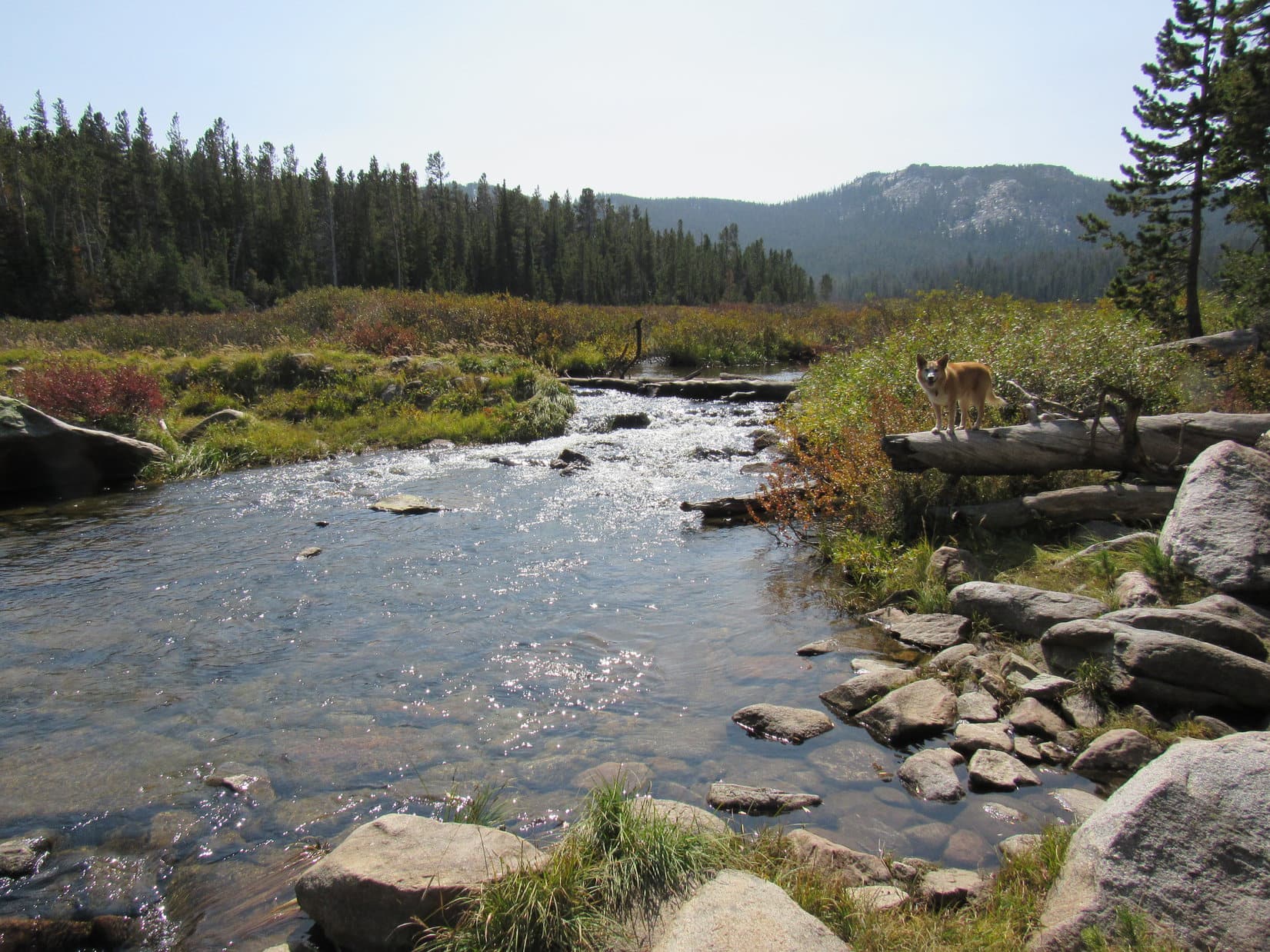
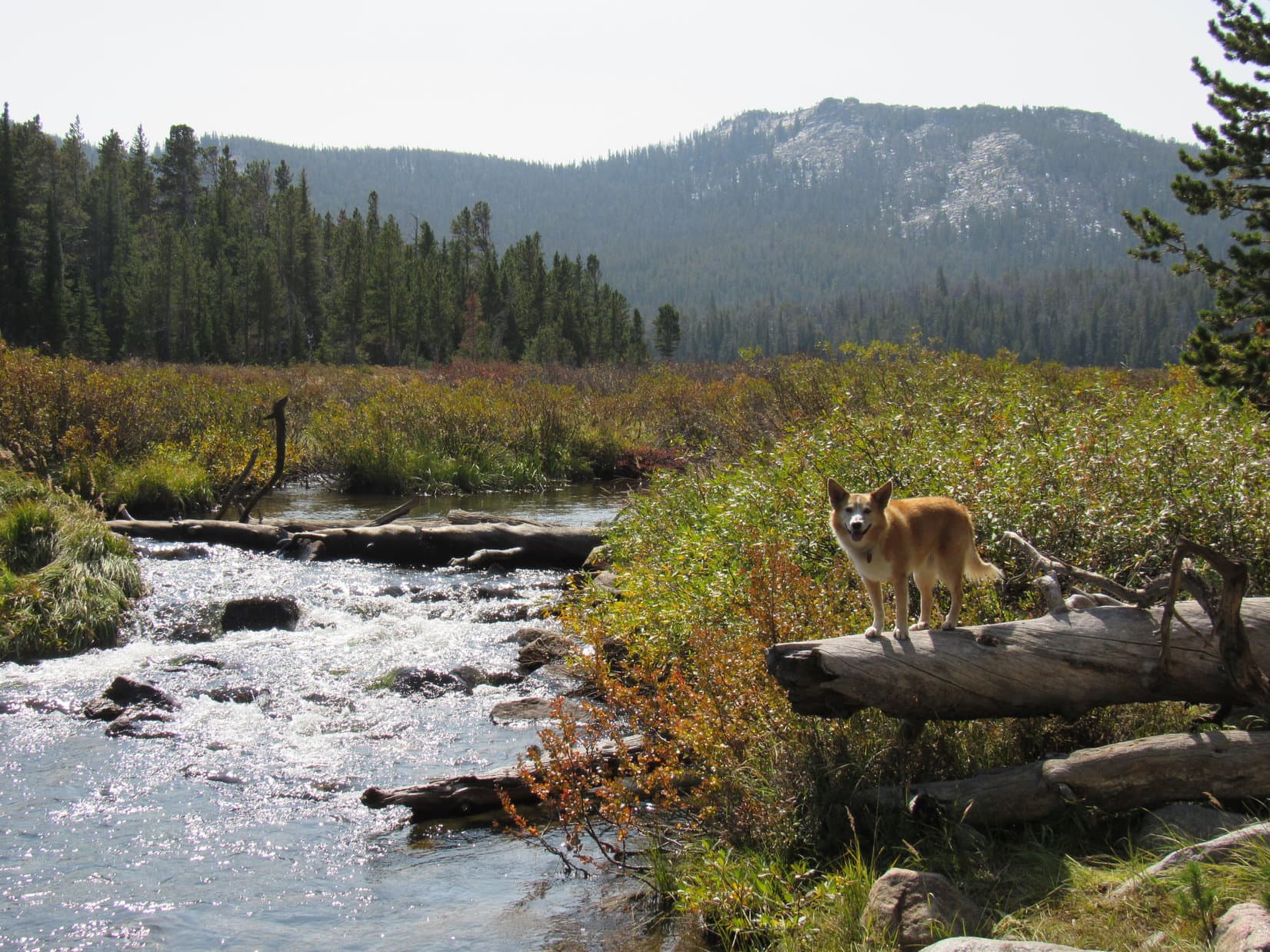
Never would have rock hopped this baby! Little Popo Agie River. Photo looks SSW.
Of course, maybe crossing that little log jam would have worked! I could have done it!

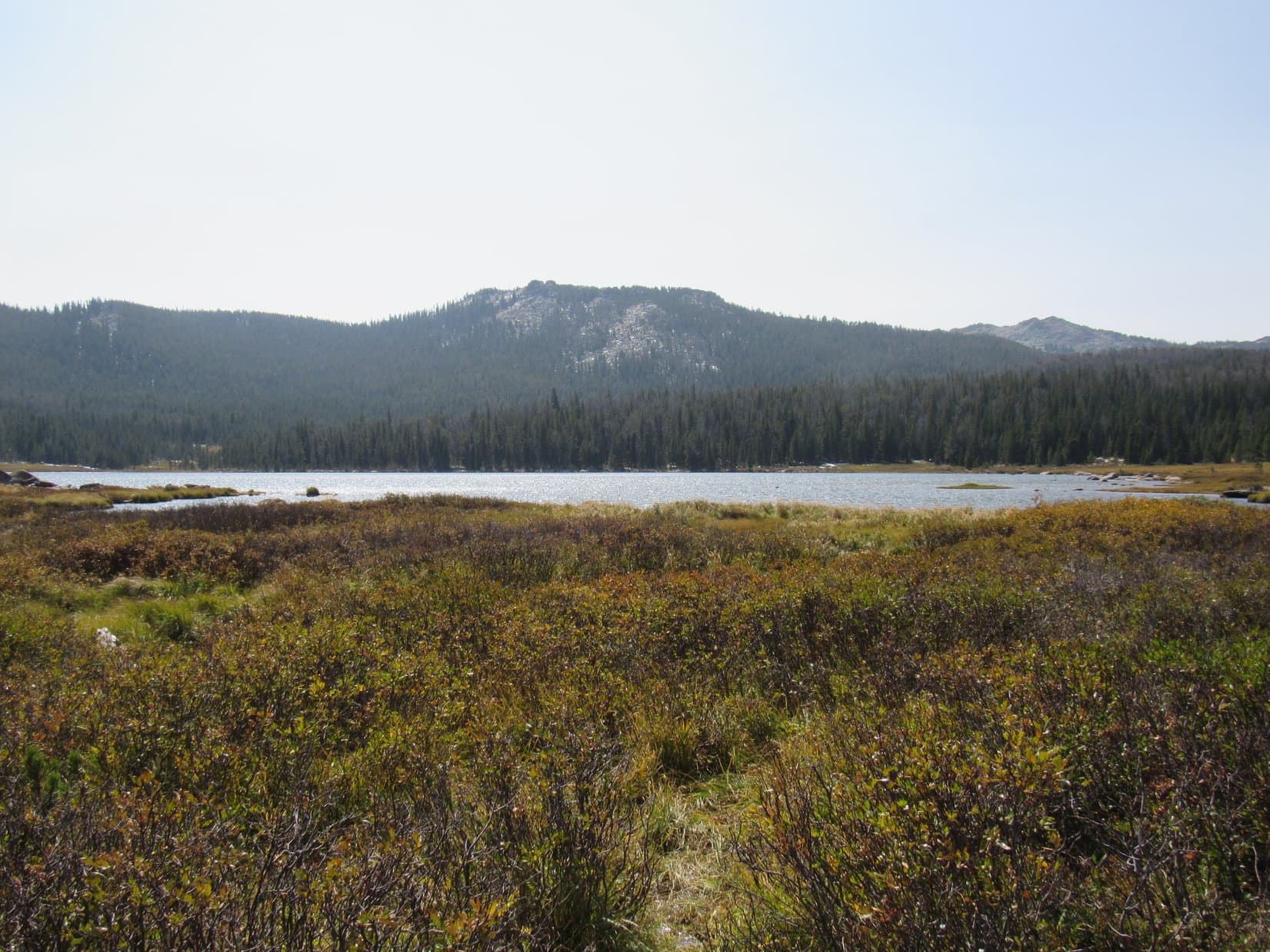
Since Gustav Lake was only a little farther upstream, Lupe might as well have a look at it, too.  However, Gustav Lake proved to be surrounded by bushes and marshy ground.  Getting all the way to the shoreline wasn’t going to be possible.

Gustav Lake. HP10669 (Center) beyond it. Photo looks SSW.

Returning to the junction, SPHP grabbed the pack.  Lupe now headed W on the Christina Lake 4WD Trail.  The road would have been a G6 killer, but was fine as a hiking trail.  Only 0.5 mile to Christina Lake!

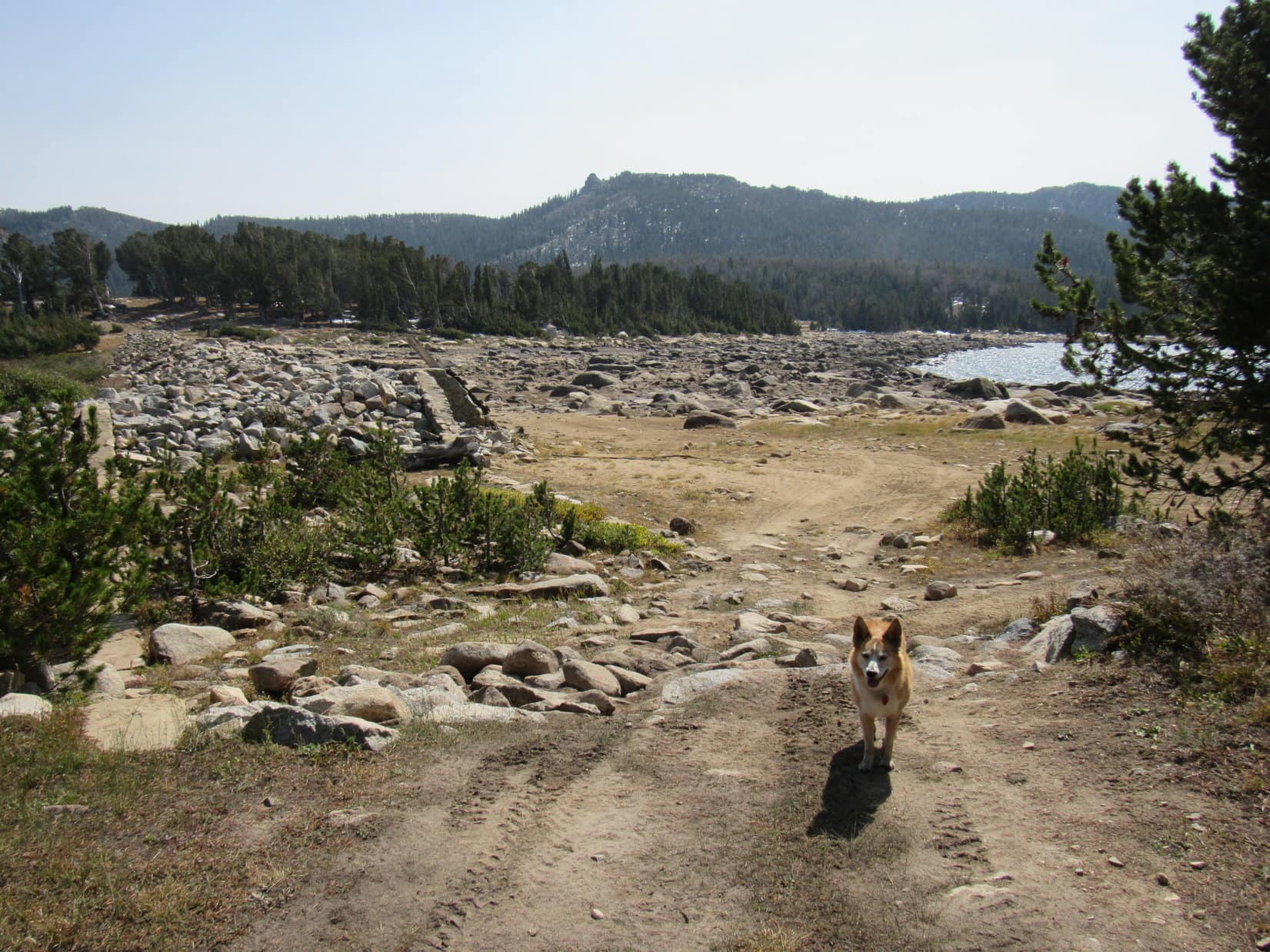
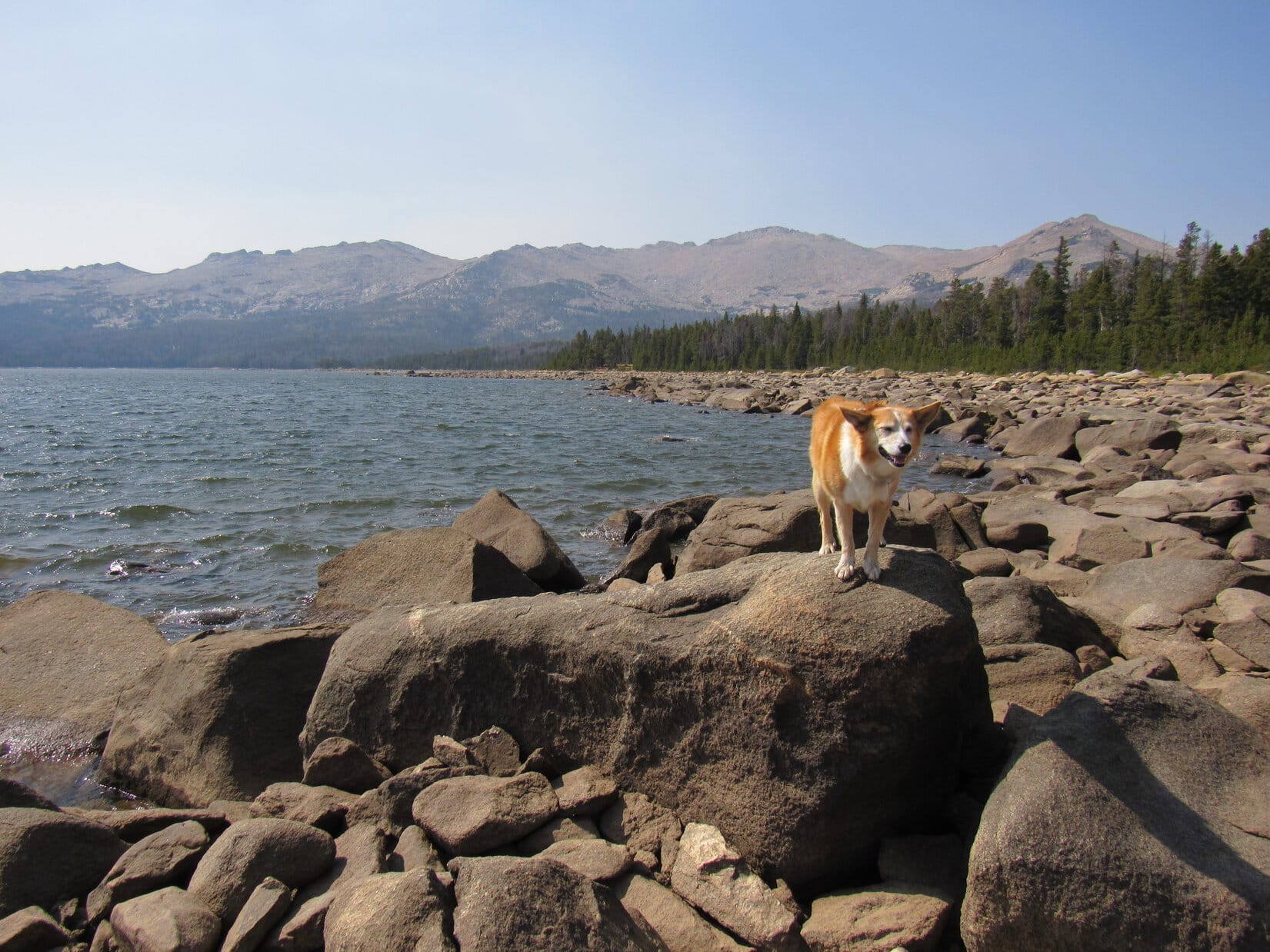
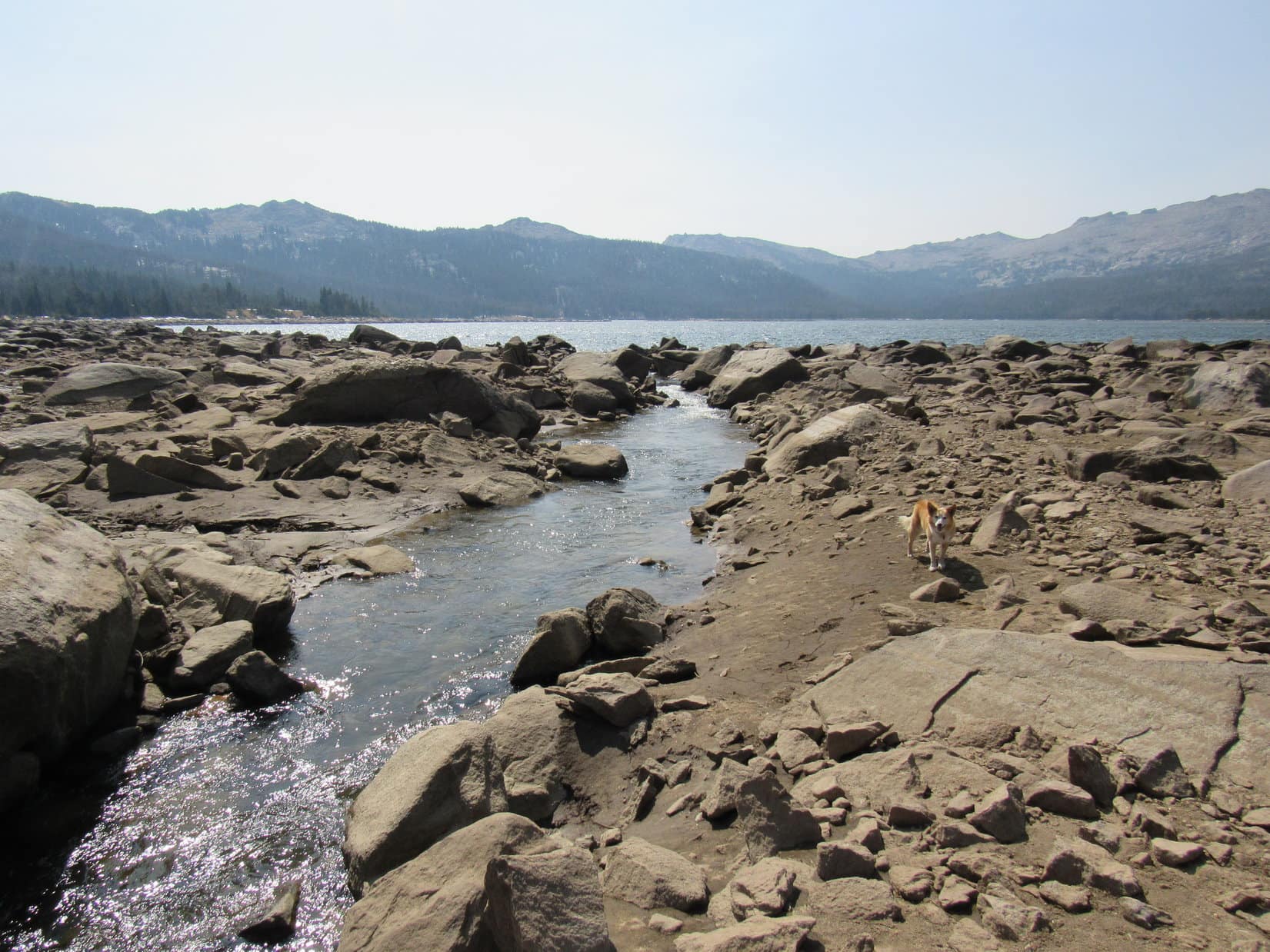
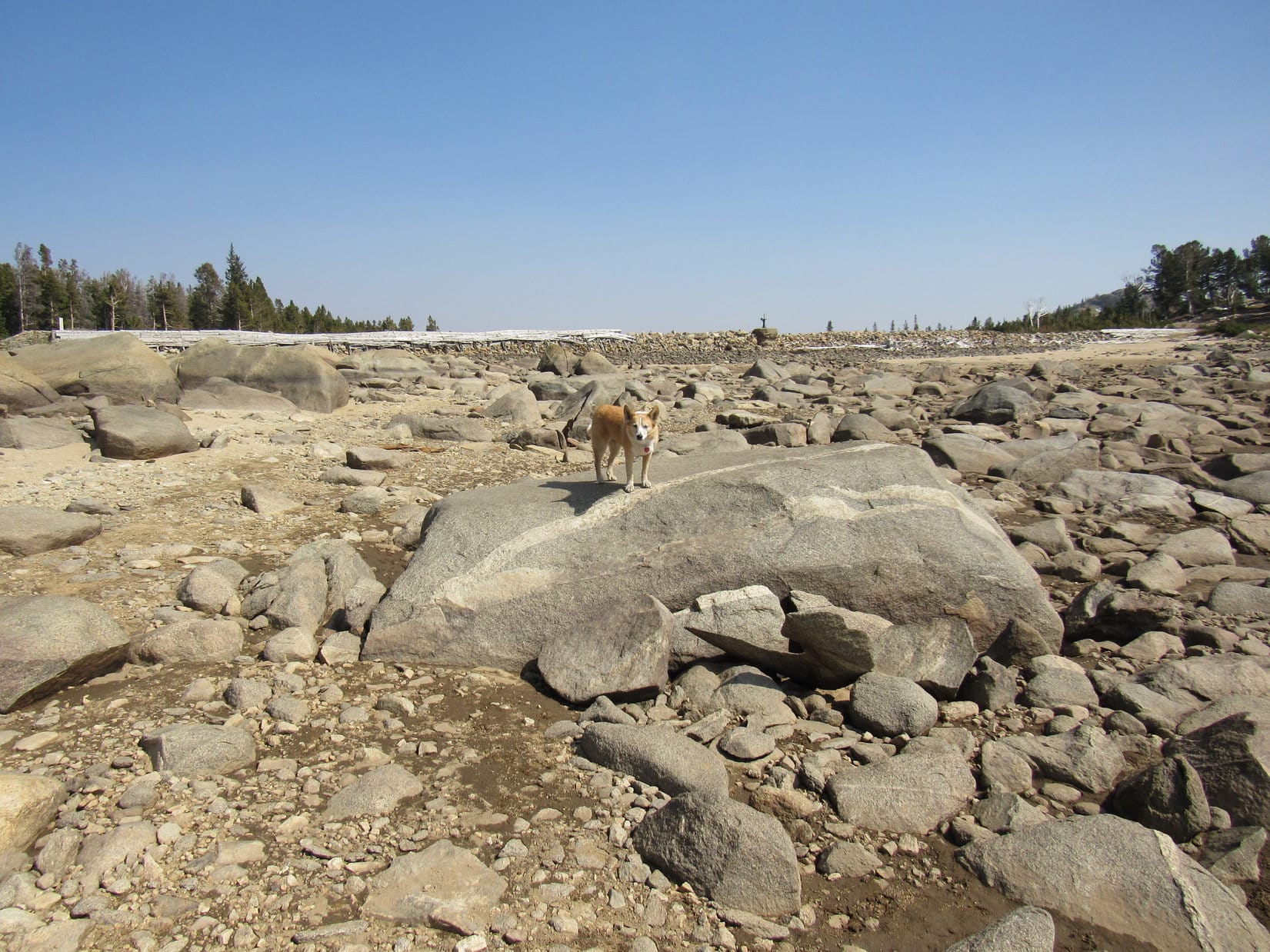
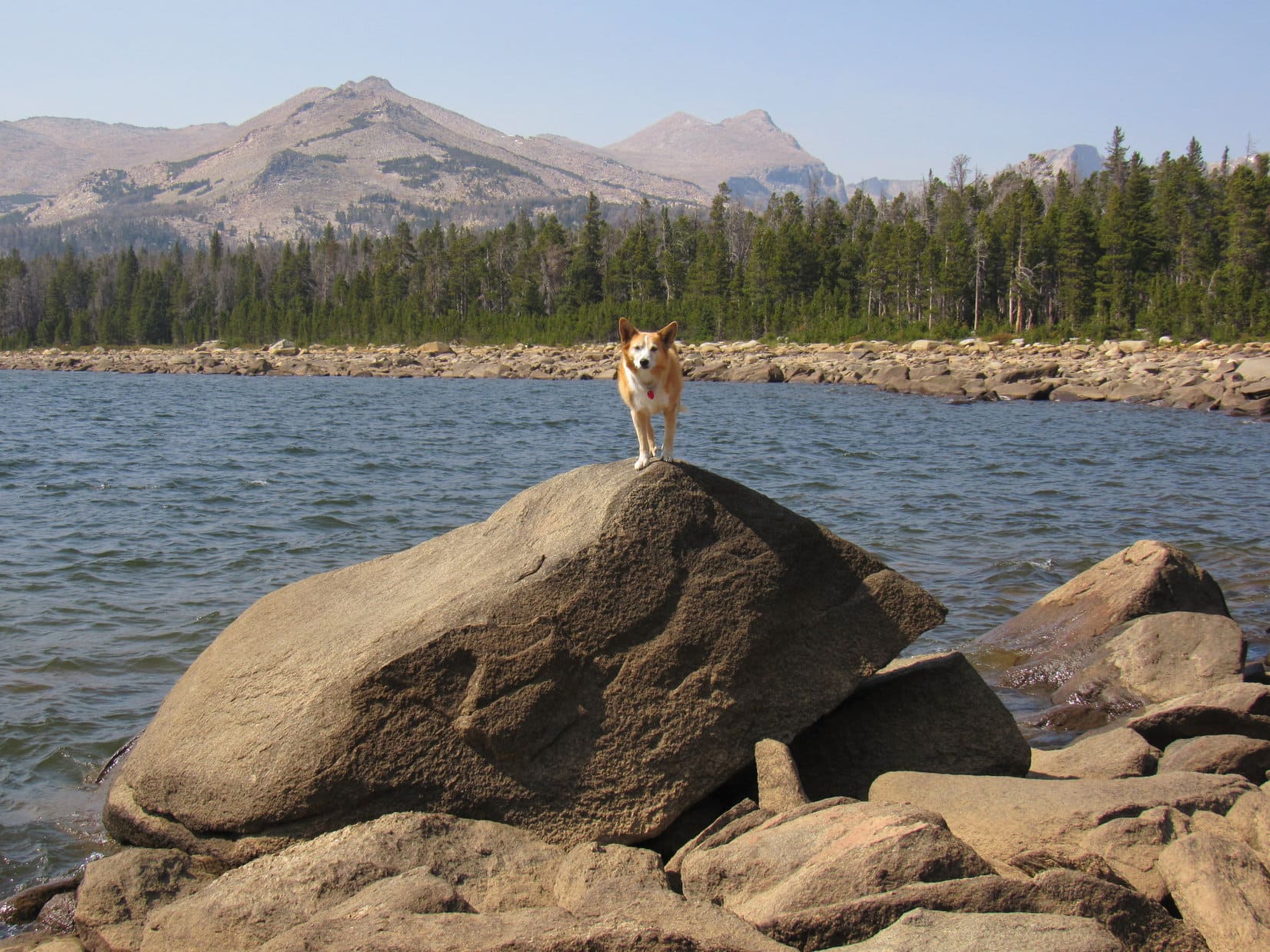
9-14-20, 1:31 PM, Christina Lake – A spur off the 4WD trail led to a long rock dam at the NE end of Christina Lake.  It was immediately apparent that the big lake was far below capacity.  The shoreline wasn’t even close to the dam.  Christina Lake was surrounded by a broad swath of sand and boulders exposed below the normal high water mark.

Arriving at Christina Lake. HP10669 (Center). Dam (L). Photo looks SSE.

A little off to the W along the N shore was an open flat region with a great view.  SPHP stashed the backpack against a sun-bleached log here.  About time for a rest break, but Lupe was going to do a little exploring first.  As soon as SPHP was ready, she wandered down to the beach.

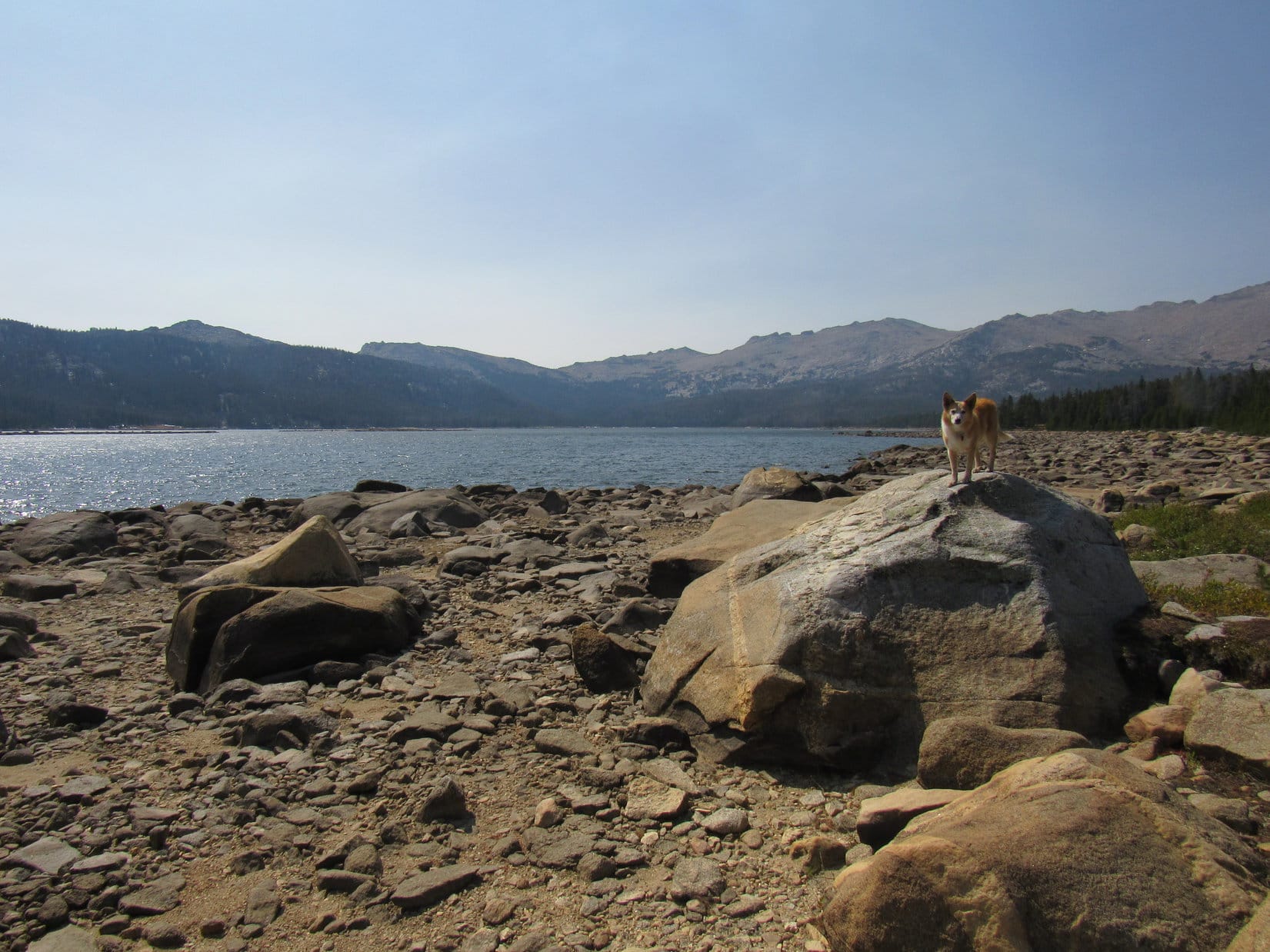
At capacity, Christina Lake is more than a mile long, and still must have been close to that big even now.  Flanked by mountains to the S and W, Christina Lake was much larger and far more impressive than Fiddlers Lake had been.

Christina Lake. Peak 11448 (R) beyond Lupe. Photo looks SW.

Atlantic Peak (12,490 ft.) was in sight.  However, it was clear that Loop would be able to get a better look at it if she went farther SE.  Continuing in that direction, she soon came to a narrow channel that the Middle Popo Agie River was surging through.  Following the channel E toward the dam, the whole river disappeared into a hole.

Christina Lake was being drained like a bathtub!  Up on top of the dam, a valve could be seen, no doubt used to control the flow.

Atlantic Peak (R). Photo looks WNW.
By the Little Popo Agie River as it drains out of Christina Lake. Photo looks SW.
Approaching the dam. Flow control valve (R of Center) up on top. Photo looks E.

Once S of the Little Popo Agie River channel, Lupe ventured down to the lake again.  From here she could see the true summit of Atlantic Peak, still 4 miles away.

Atlantic Peak (Center) from Christina Lake. Photo looks NW.
Atlantic Peak (straight up from Lupe) with help from the telephoto lens.

Satisfied with having gotten about as good a look at Atlantic Peak from Christina Lake as possible, Lupe and SPHP returned to the backpack.  A pleasant half hour was spent having lunch and resting in the shade of a couple of large pines while enjoying the view.

Christina Lake as seen during a break for lunch. Photo looks SW.
Relaxing in the shade.

Nearly an hour after arriving at Christina Lake, it was about time to press on.  Lupe hopped up on a boulder for a final look around before returning to the Christina Lake 4WD Trail.  Heading W, the road forked almost immediately.  Loop took the L branch paralleling Christina Lake’s N shore.  However, the lake was seldom seen, since the road stayed back in the forest as much as several hundred feet from the shoreline.

After nearly 0.5 mile, the road curved N away from Christina Lake shortly before ending at a sign for Atlantic Lakes trail No. 723.

About to depart from Christina Lake.
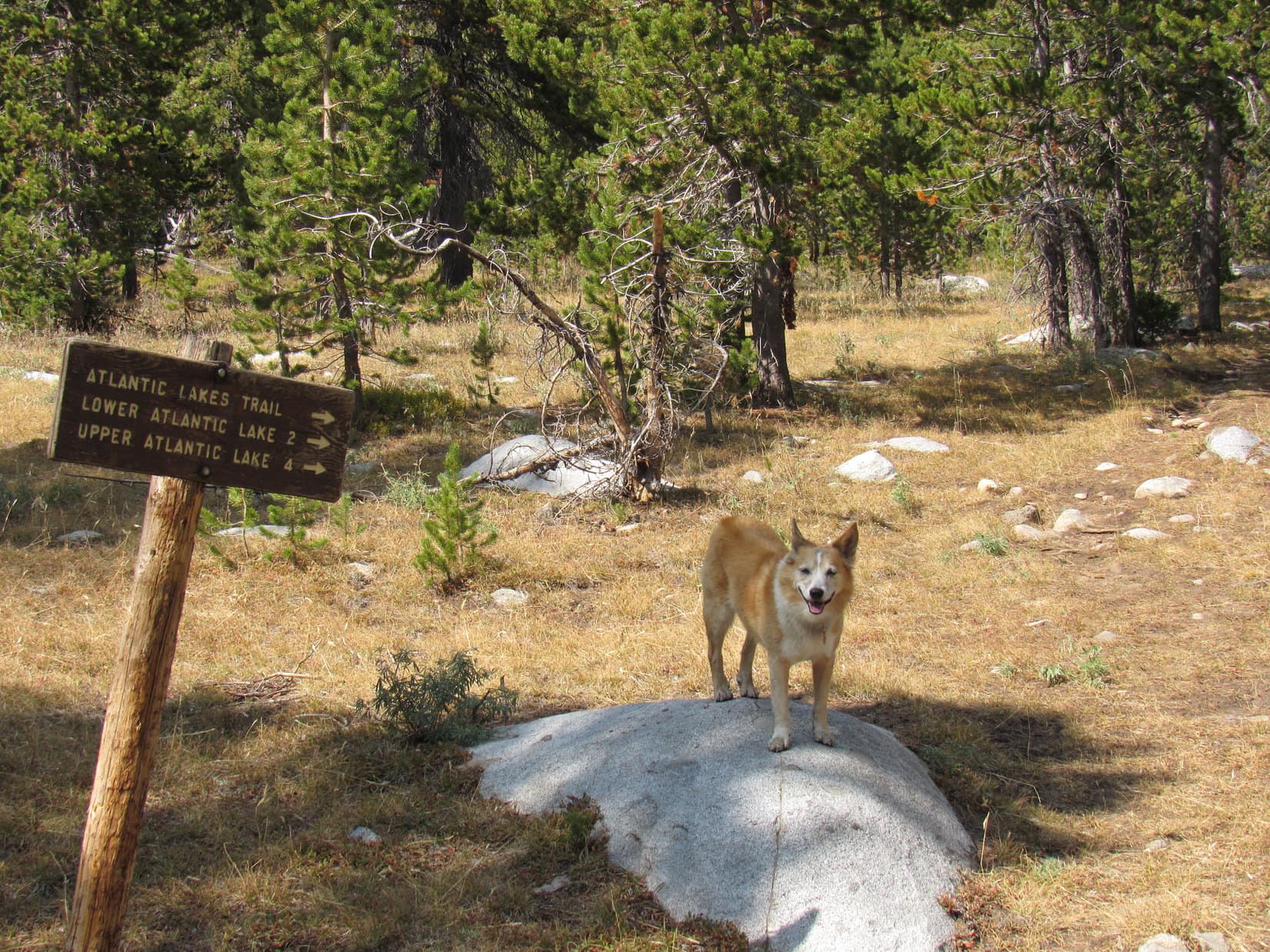
Start of the Atlantic Lakes trail.

Somewhat unexpectedly, the sign said it was 2 miles to Lower Atlantic Lake, or 4 miles to Upper Atlantic Lake.  Hmm.  SPHP didn’t remember seeing more than one Atlantic Lake on the topo map.  A quick re-check confirmed the existence of only one lake named “Atlantic Lake” as far as the map was concerned, which had to be the lower one referred to by the sign, since it wasn’t any more than 2 miles away.

Heading N deeper into the forest as a faint single track, the Atlantic Lakes trail was a bit worrisome at first.  Before long, though, the route became clearer and stayed that way, the trail ultimately proving to be easy to follow.

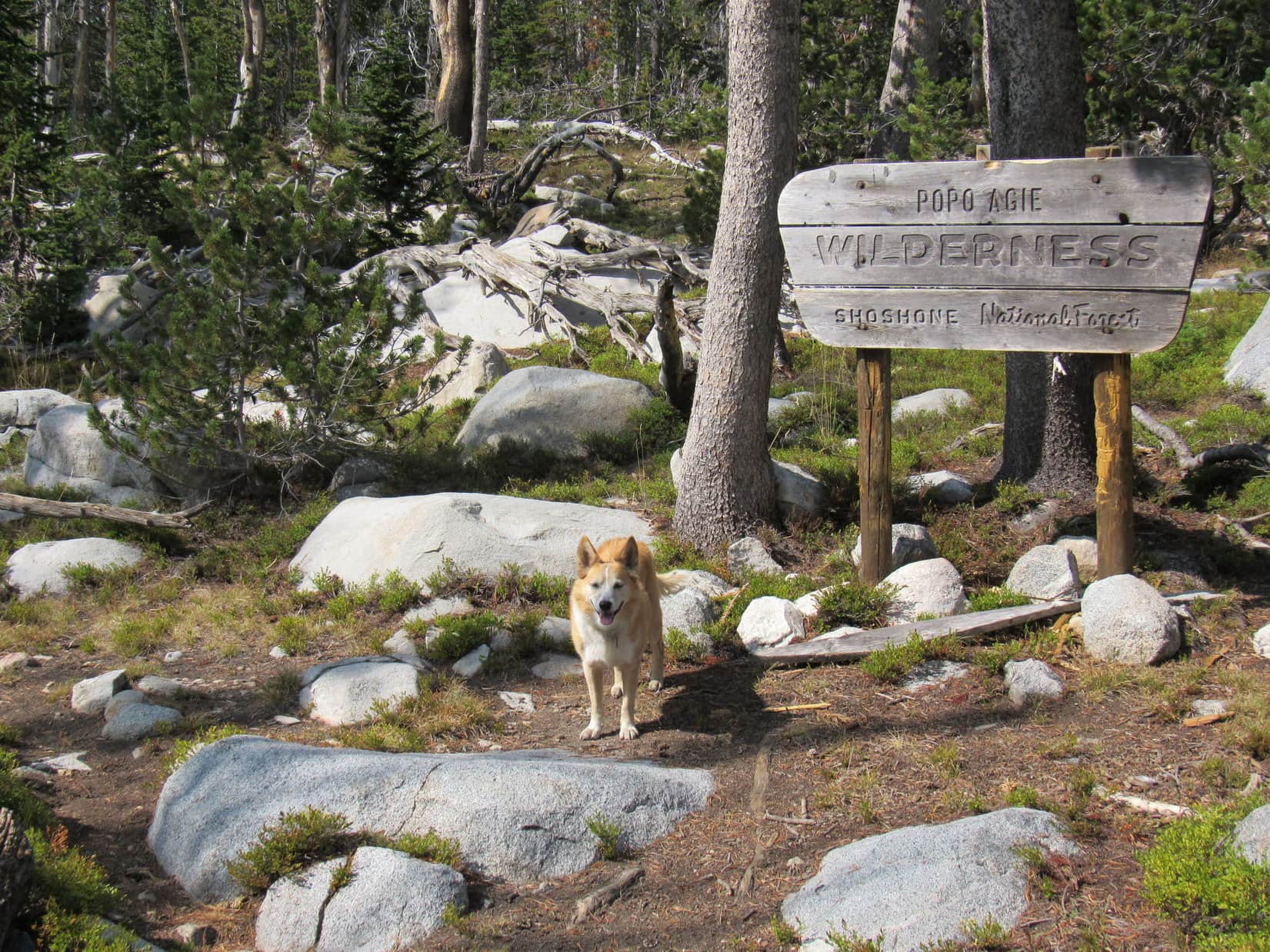
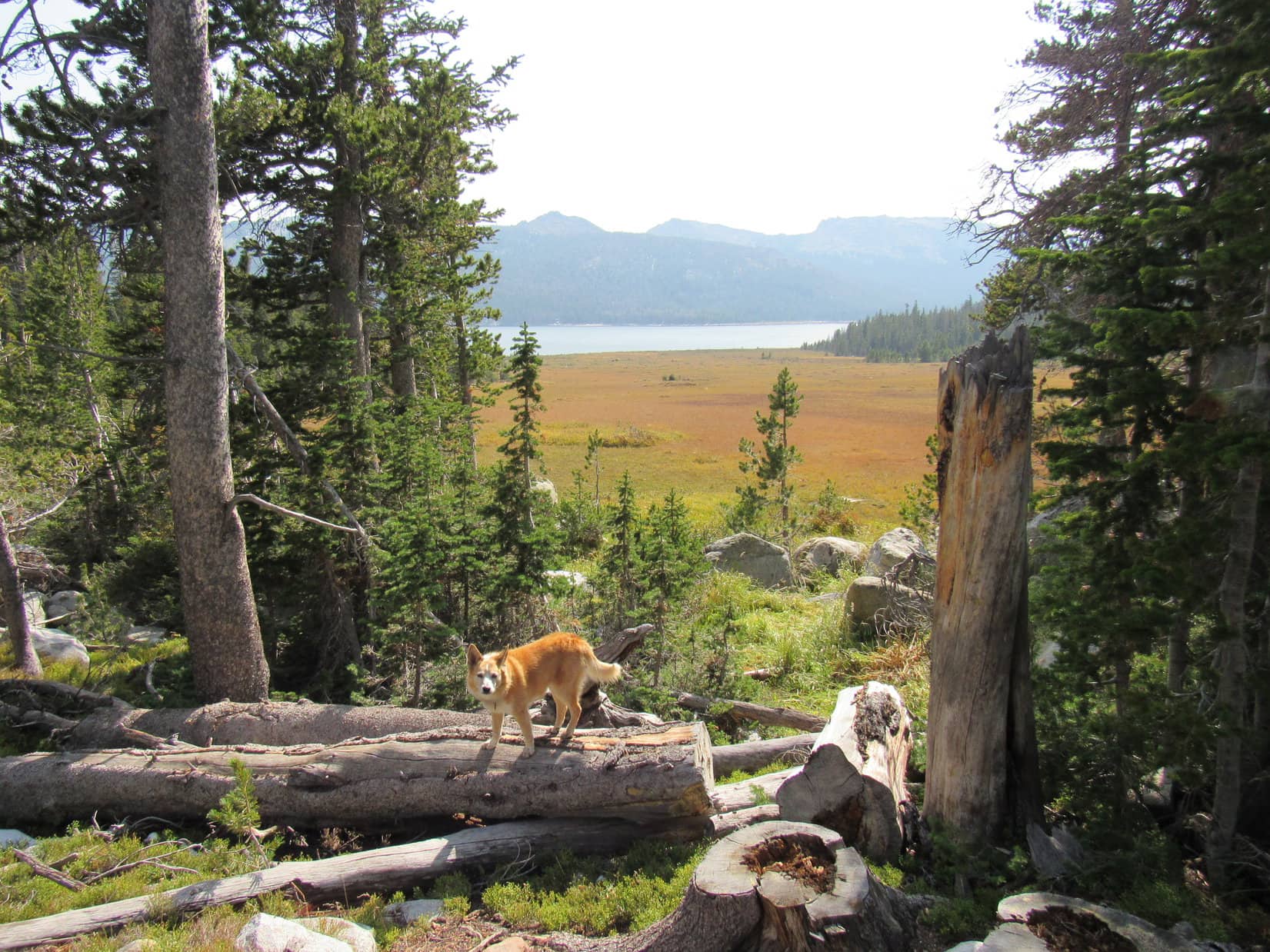
Gradually gaining elevation, the trail soon curved NW.  Lupe came to a sign for the Popo Agie Wilderness.  She’d barely left the sign behind, when a last glimpse of Christina Lake appeared.

Entering the Popo Agie Wilderness.
The only glimpse of Christina Lake from Atlantic Lakes trail No. 723. Photo looks S.

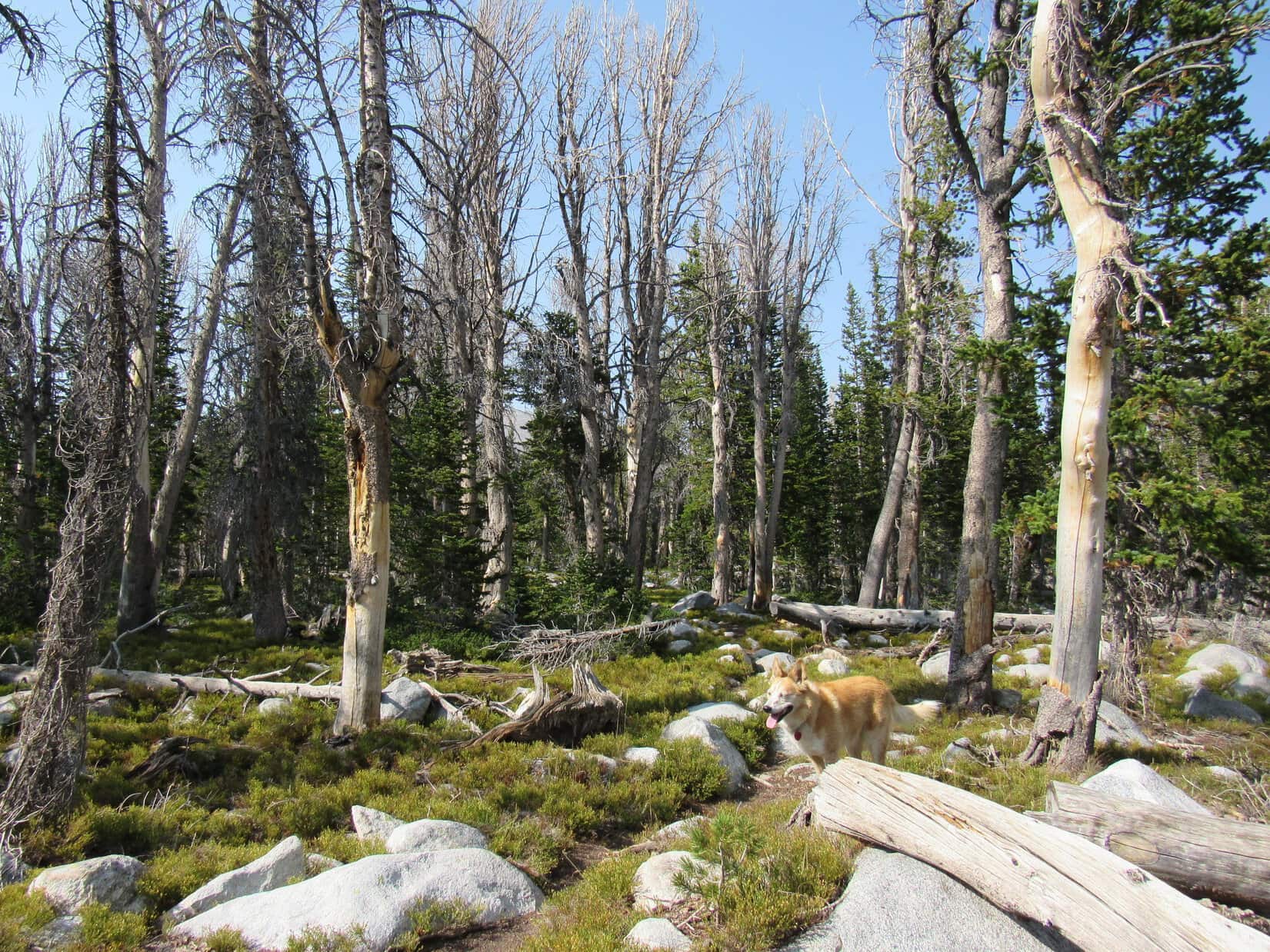
The Atlantic Lakes trail continued NW through a featureless forest, still slowly gaining elevation most of the time.  The forest contained many dead trees.  Plenty of rounded light-gray boulders were scattered about.  Small plants provided a bright green ground cover.

After a while, the trail passed a rocky depression on the R, then leveled out.  A dip led to a tiny stream, the only water seen along the way.

Dead trees and scattered boulders along the Atlantic Lakes trail.
Exploring the forest.

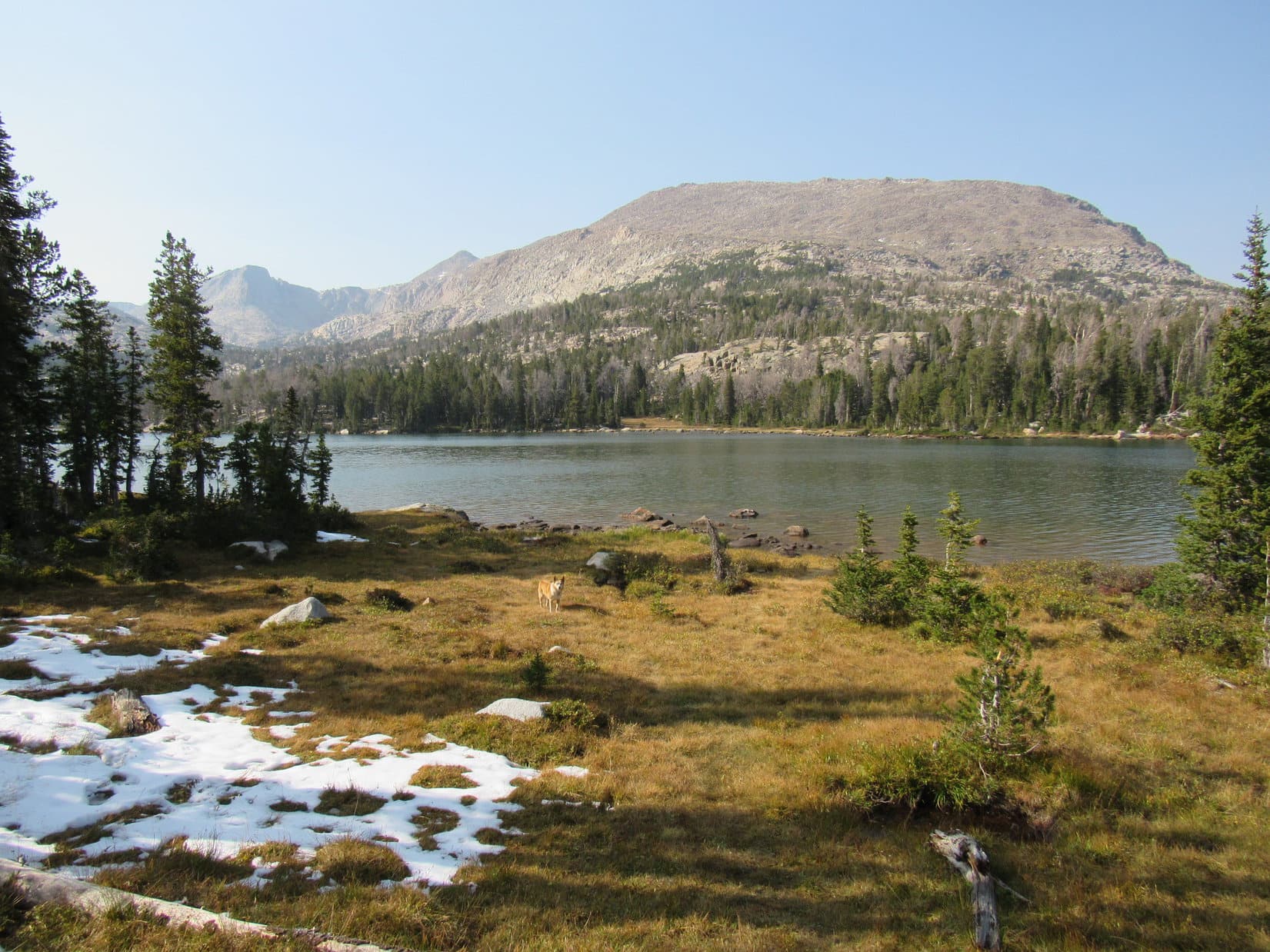
9-14-20, 3:54 PM, Atlantic Lake – Between the trees on the N (R) side of the trail Lupe could see a clearing, and beyond it, water.  This must be it!  Leaving the trail, Loop and SPHP went down for a look.  A little under 0.5 mile long, and not nearly as wide, Atlantic Lake wasn’t anywhere close to being as large as Christina Lake had been, but tucked in among big mountains at the SE end of Atlantic Canyon, it was even more scenic.

2 miles to the NW, the summit of Silas Peak (12,248 ft.) was sight.  From the shoreline, Atlantic Peak (12,490 ft.) was also visible to the WNW.

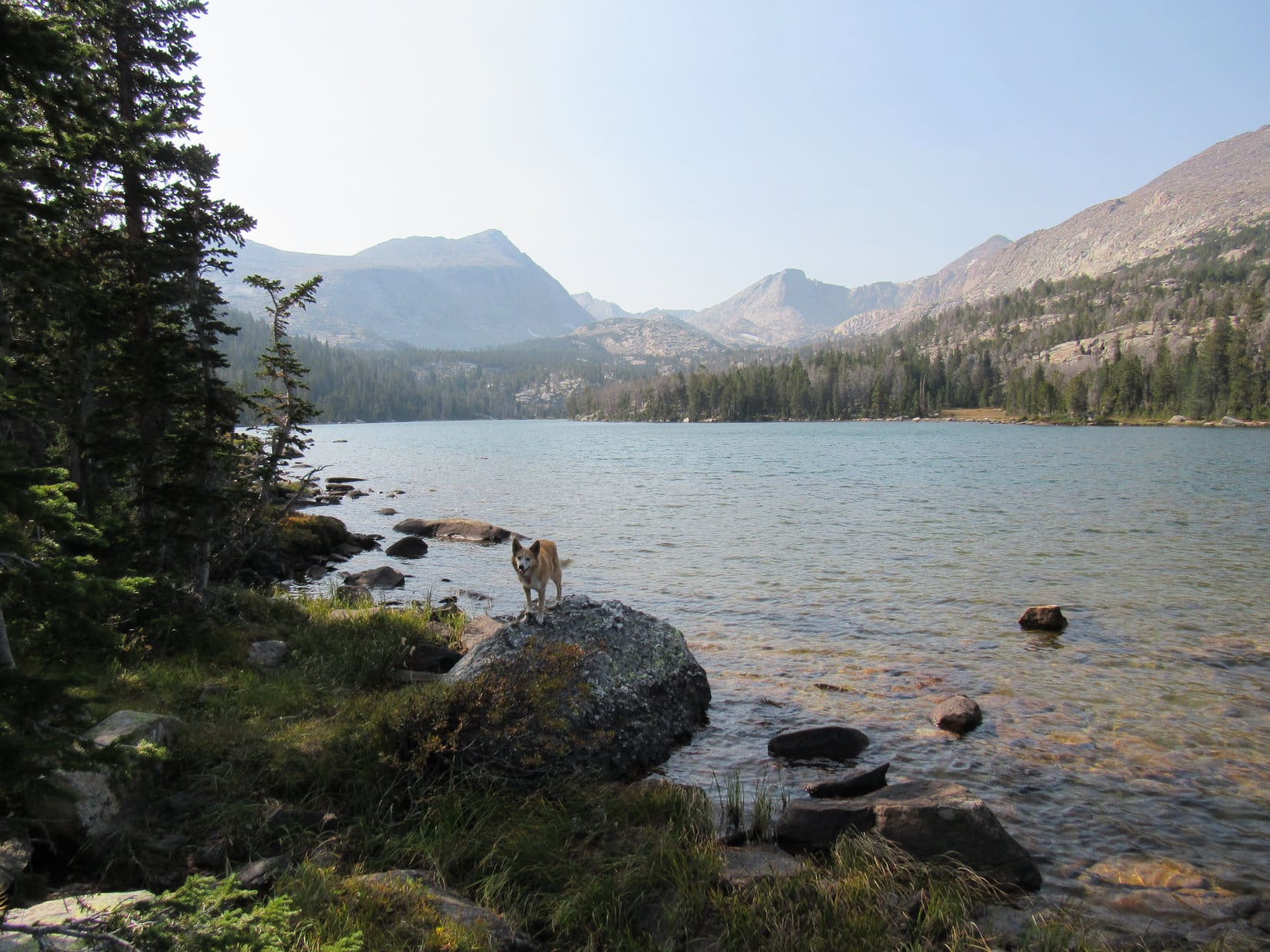
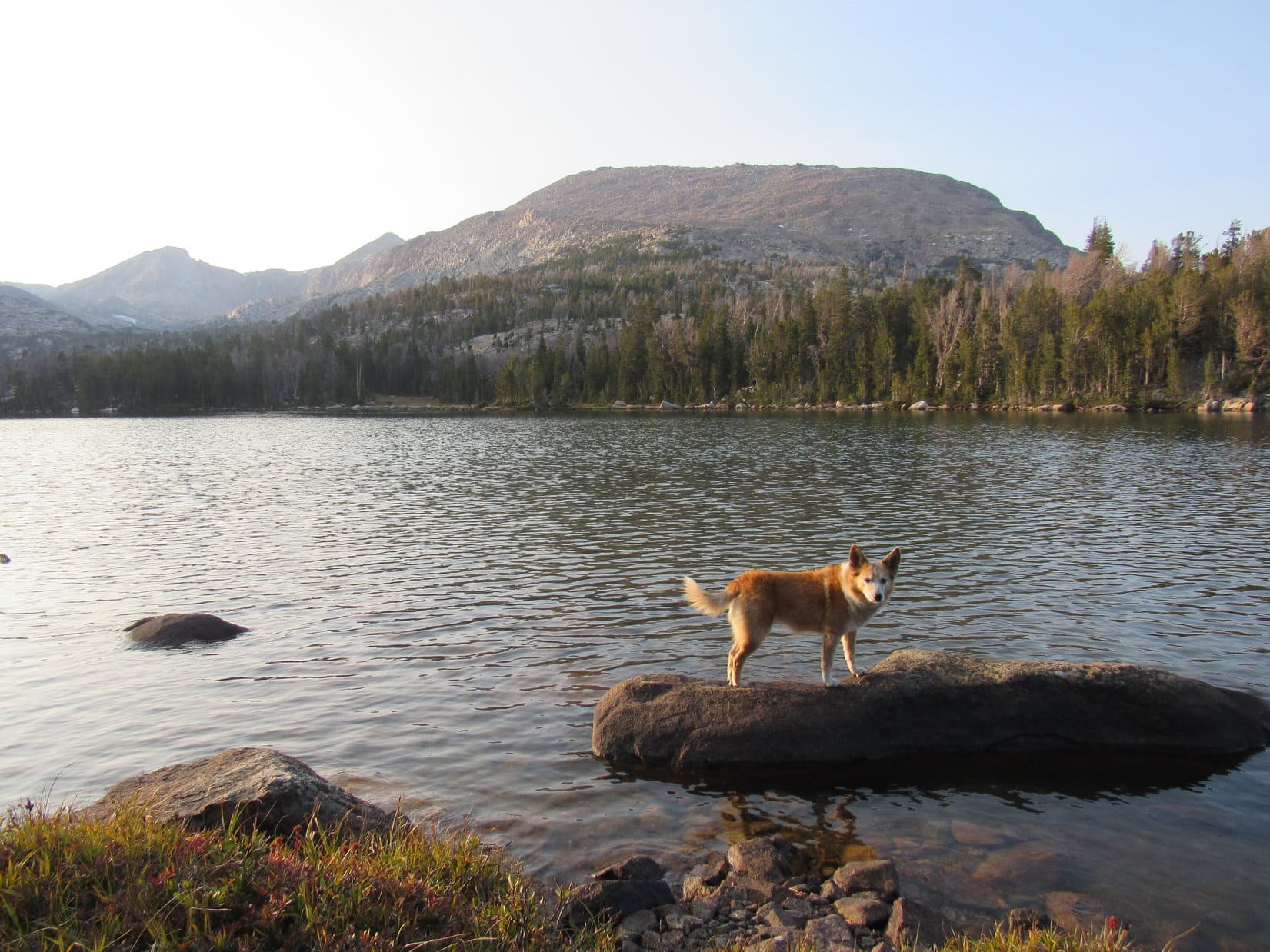
Atlantic Lake. Silas Peak poking up L of Center. Photo looks NW.
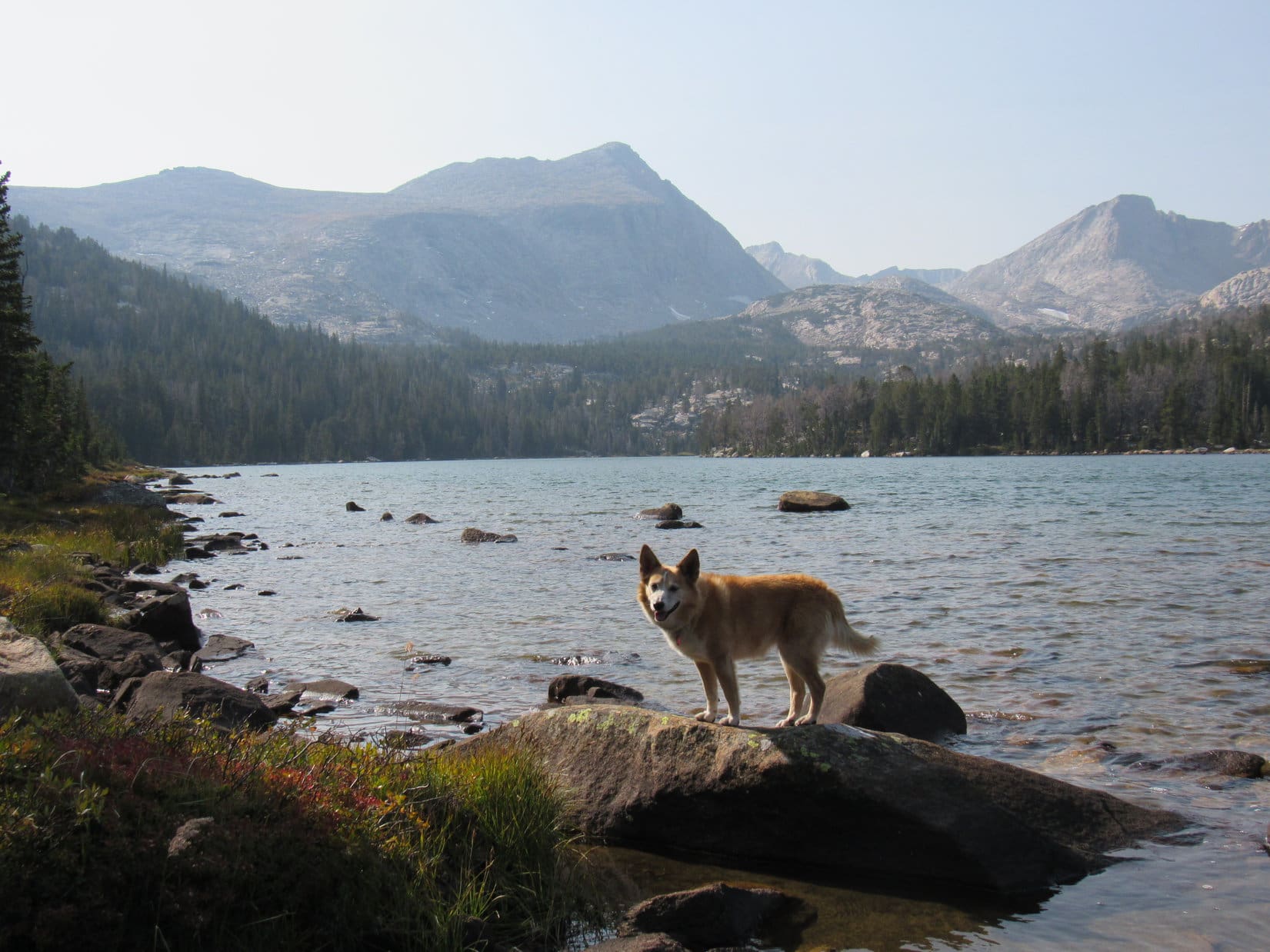
Atlantic Peak (L) and Silas Peak (R) from Atlantic Lake. Photo looks WNW.

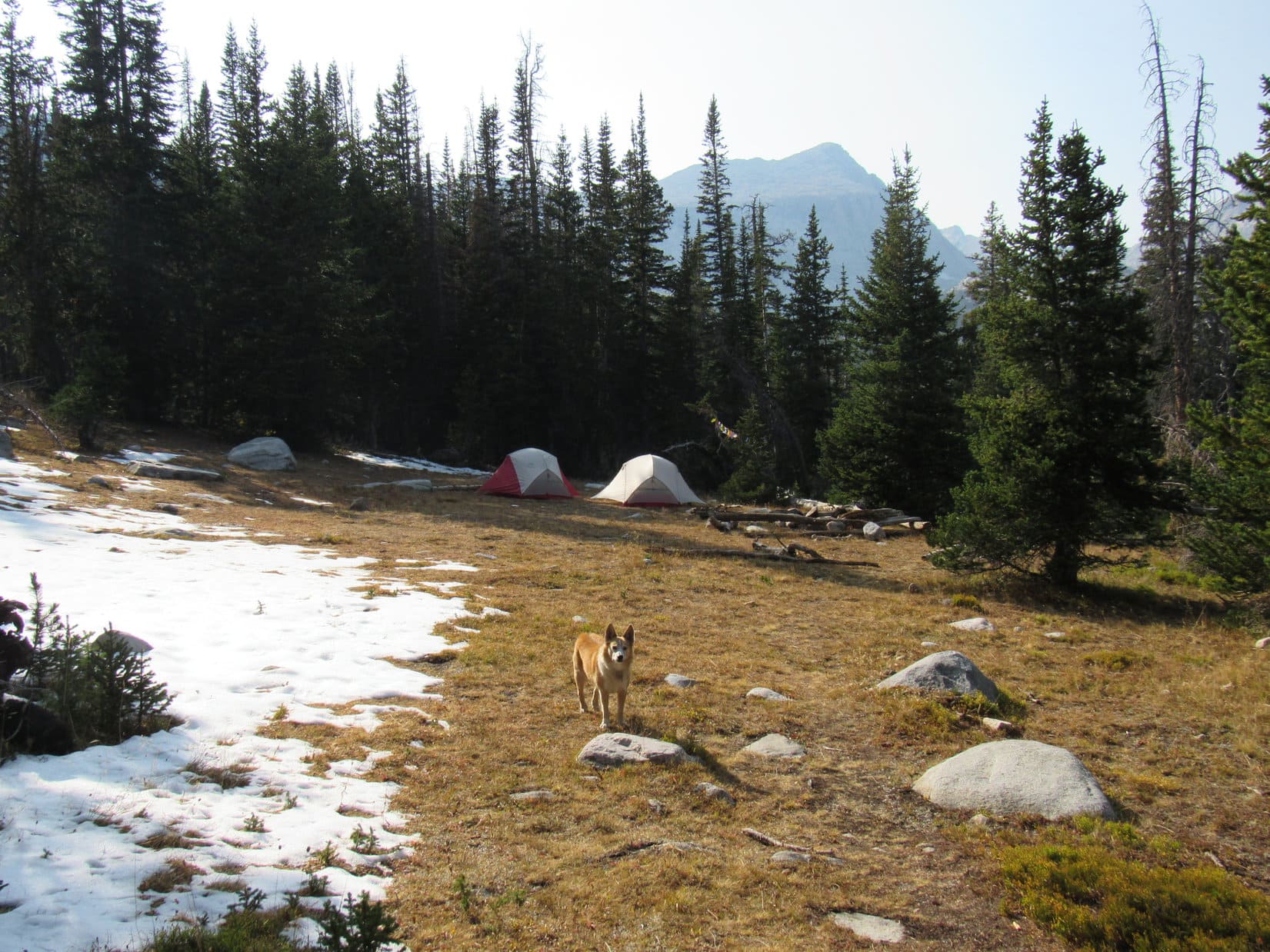
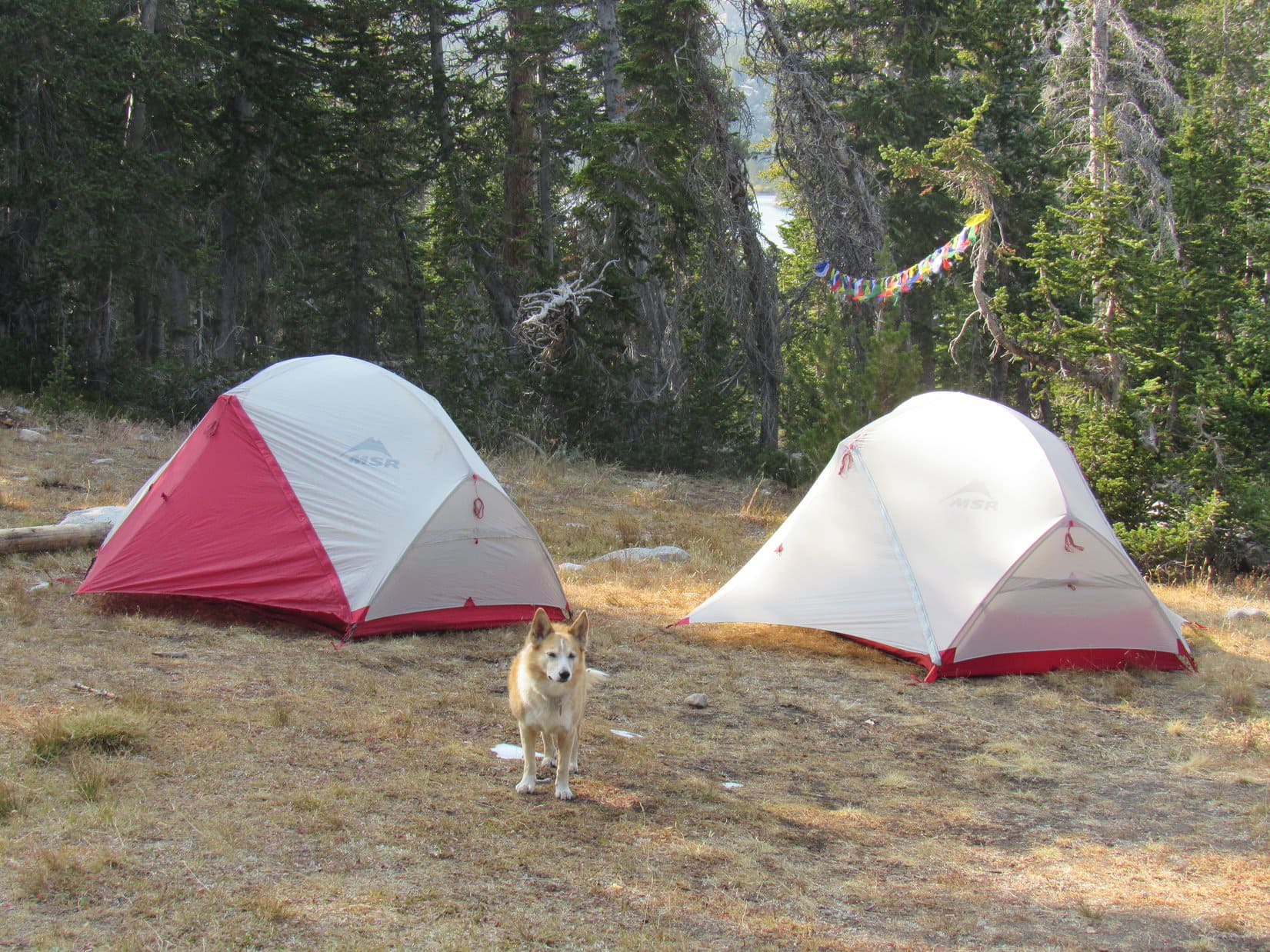
Returning to the trail, Lupe continued W.  A few hundred feet farther, the Atlantic Lakes trail appeared to end at a clearing.  Back from the lake a little way, this clearing would have been an ideal spot to pitch Looper’s tiny house, but SPHP was surprised to see that it was already taken.

With the exception of a forest ranger riding an ATV, Loop hadn’t seen anyone at all since leaving the Christina Lake trailhead this morning.  No one was here at the moment, either.  After a brief search, SPHP settled on another spot to pitch the tiny house.

What a great spot! Atlantic Peak (R). Photo looks WNW.
No one around at the moment, but they’ll be back sooner or later!
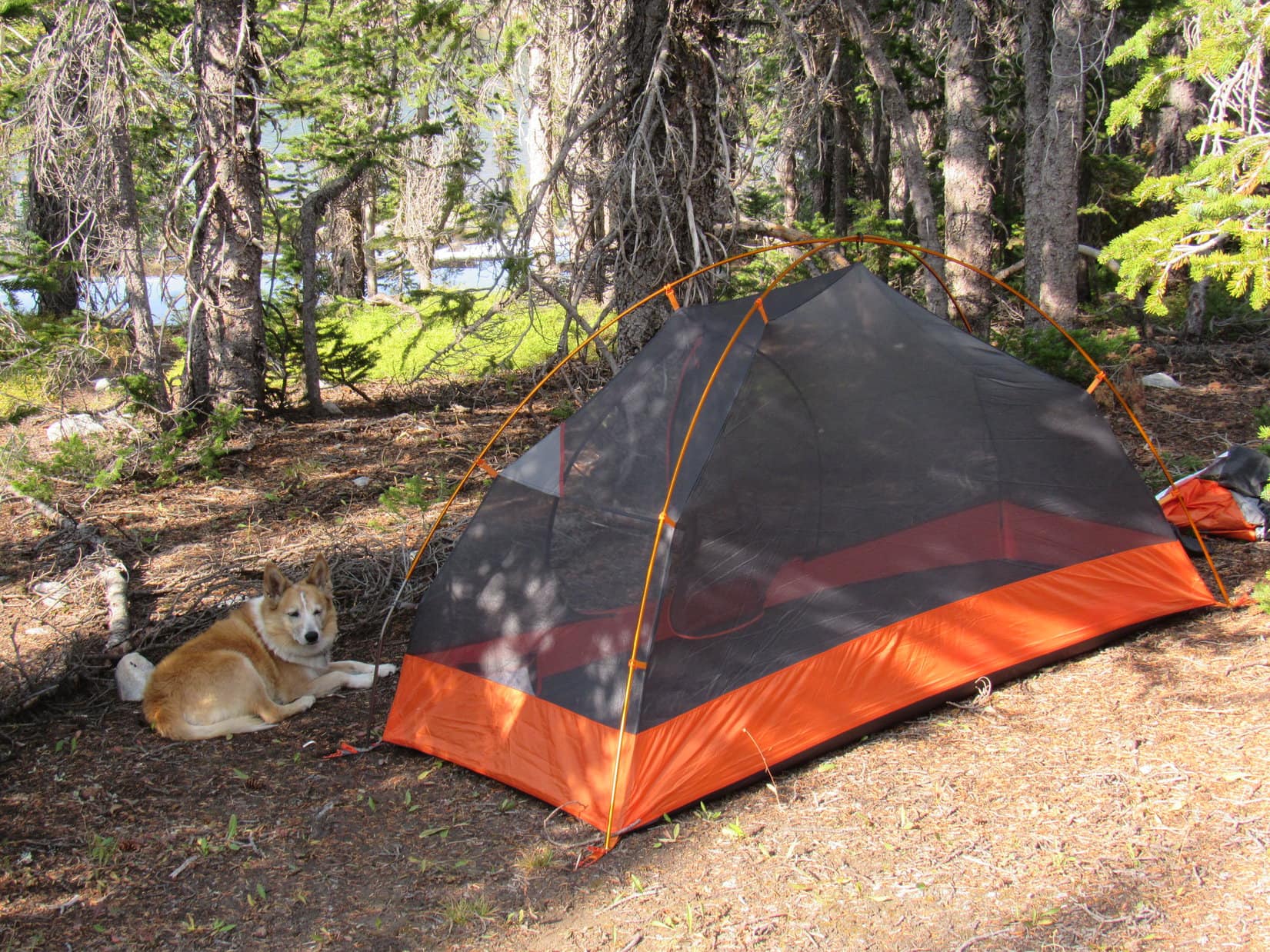
Not as nifty as that clearing was, but this will work!

After dinner, Lupe was free to enjoy the rest of the evening.  She spent most of it exploring, or just relaxing along the S shore of Atlantic Lake.

On Dingo Island! Photo looks NW.
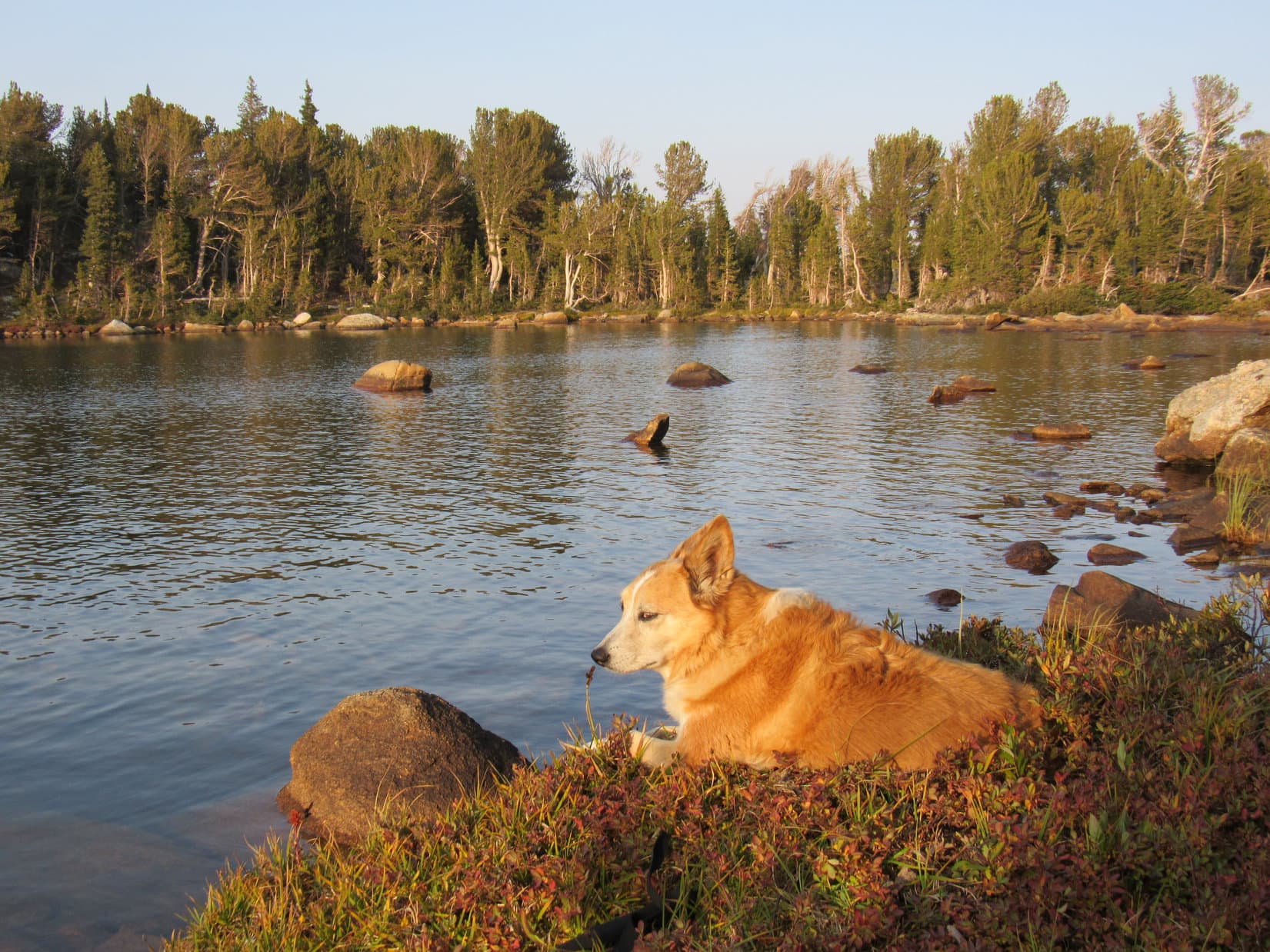
E end of Atlantic Lake from the S shore. Photo looks NE.

What a fun day this had been!  Atlantic Lake was roughly 7 miles from the trailhead where Lupe had started out this morning – 5 miles to Christina Lake, and another 2 miles to get here, yet this had been about as easy a mountain trek as the American Dingo had ever been on.  Only 800 feet of net elevation gain, good trails the entire way, and no steep sections at all.

Tomorrow would be different.  More than 2,200 feet of elevation gain in a little over 2 miles to get to Atlantic Peak (12,490 ft.)!

Watching the sun sink behind her ultimate destination as she rested by Atlantic Lake’s S shore, Lupe didn’t have to think about that yet.  Dusk was deepening when a man appeared a few hundred feet away.  The other campers must have returned!  Whether he saw Looper or not, wasn’t certain, but he gave no indication of it.

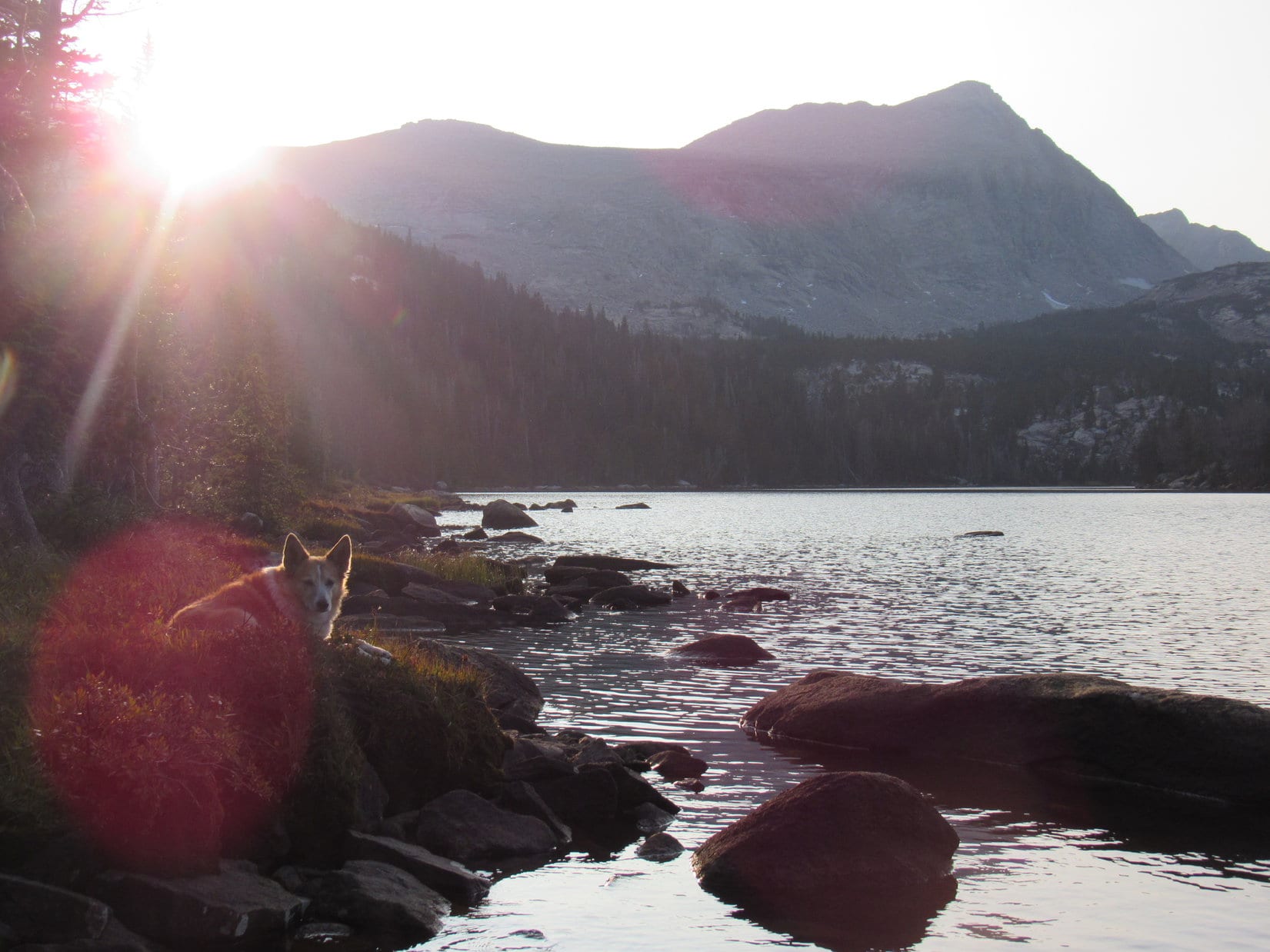
Evening repose at Atlantic Lake. Atlantic Peak (R). Photo looks W.

Shortly after the man disappeared again, Lupe retired to her tiny house, hoping for blue skies in the morning.  Not too likely with all the wildfires out W, but hope springs eternal.  With a little luck, sometime tomorrow an American Dingo would stand atop Atlantic Peak!

That’s where were going next! Hope you will return to join us for Atlantic Peak!

Links:

Next Adventure                          Prior Adventure

Want more Lupe adventures?  Choose from Lupe’s Summer of 2020 Dingo Vacations to Wyoming, Utah & Montana Adventure IndexDingo Vacations Adventure Index or Master Adventure Index.  Or subscribe free to new Lupe adventures.