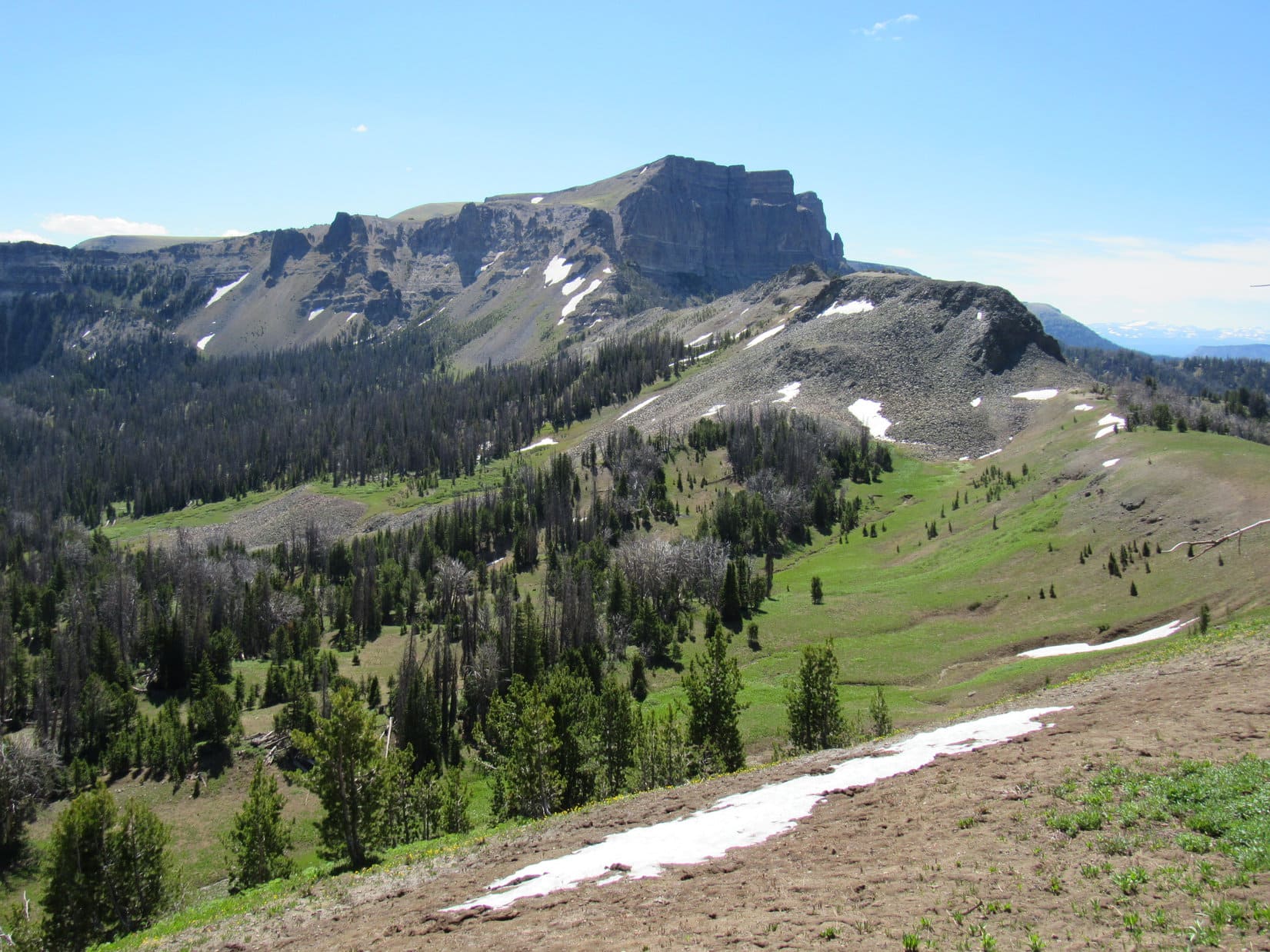
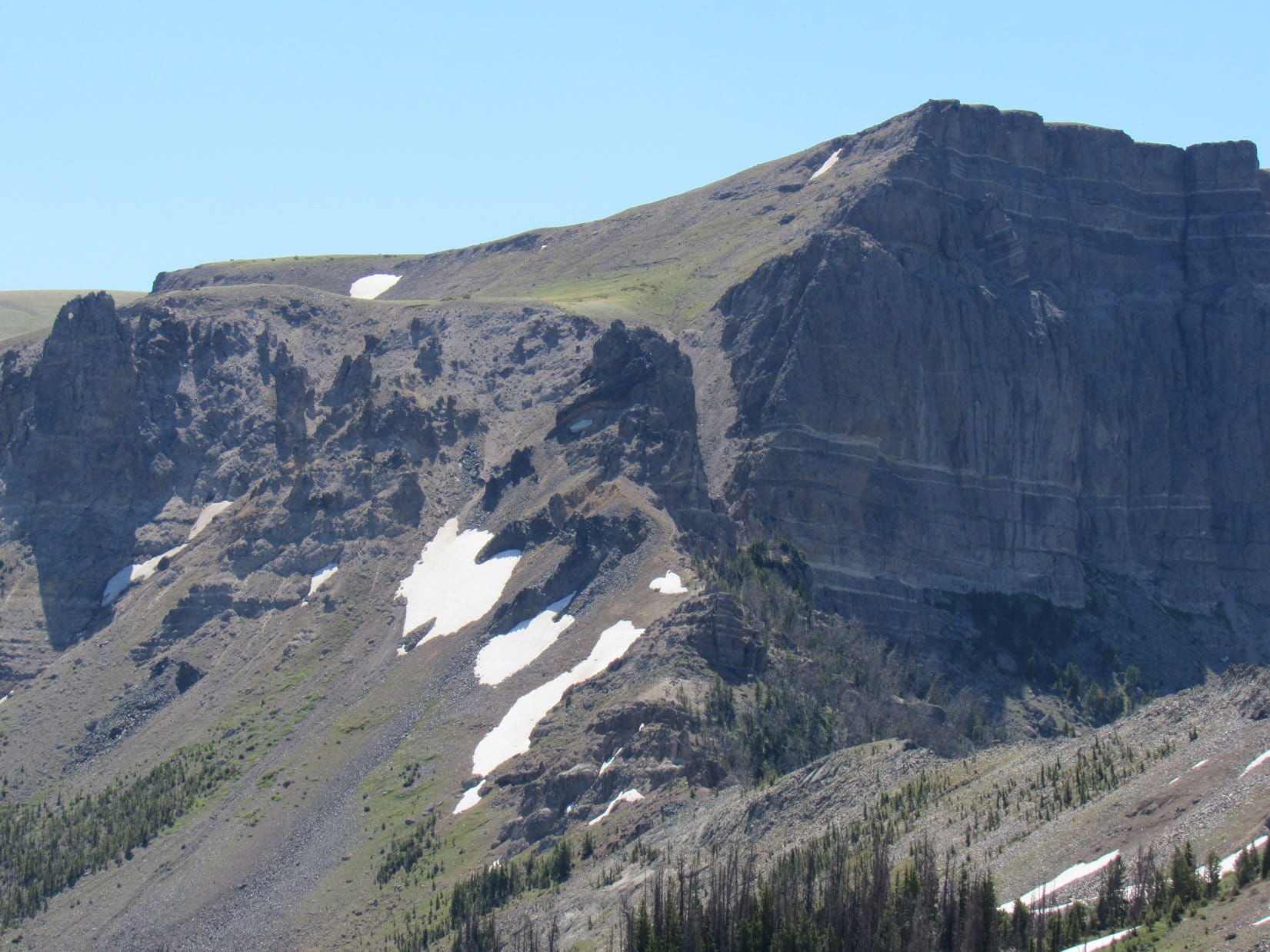
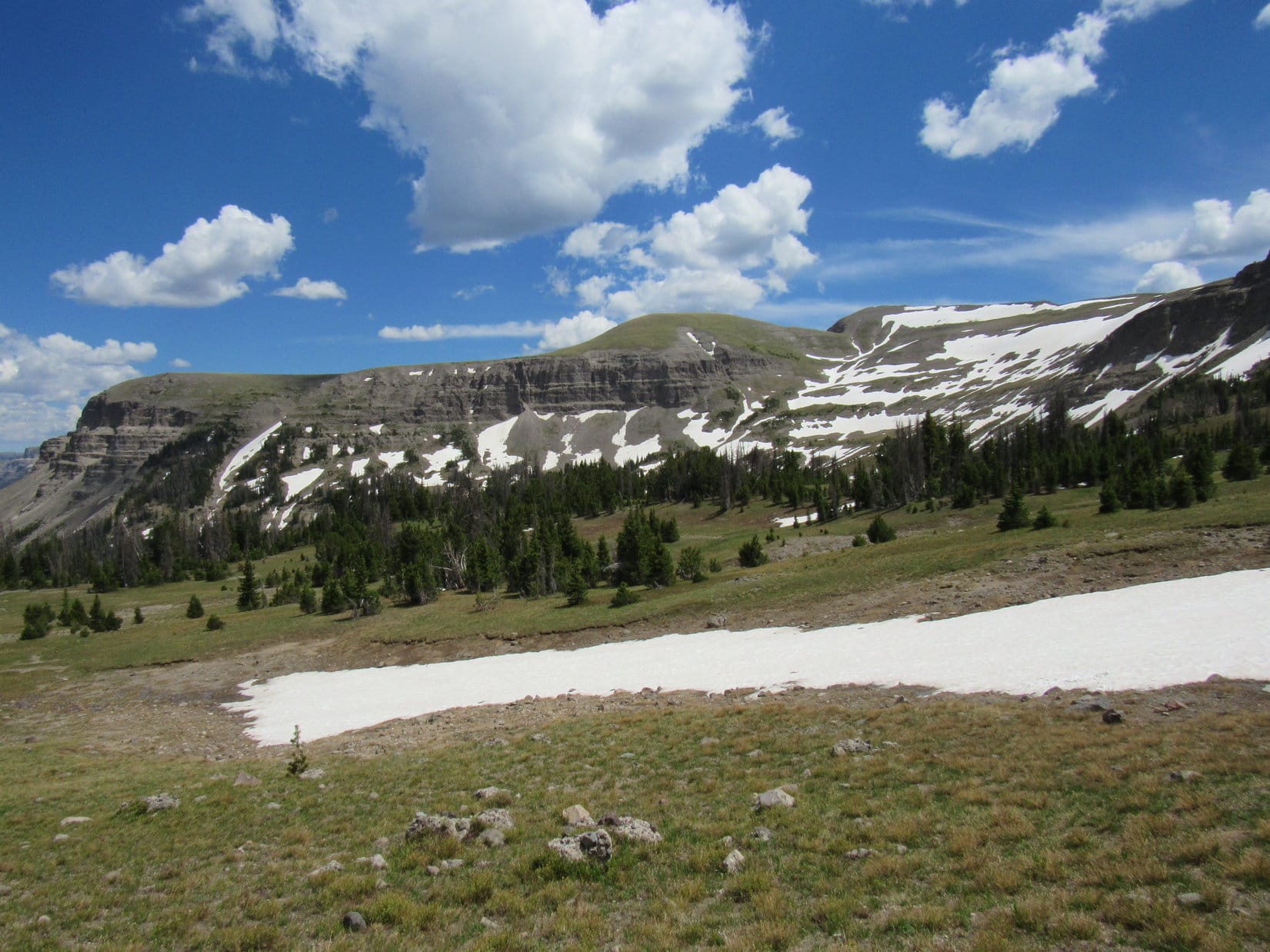
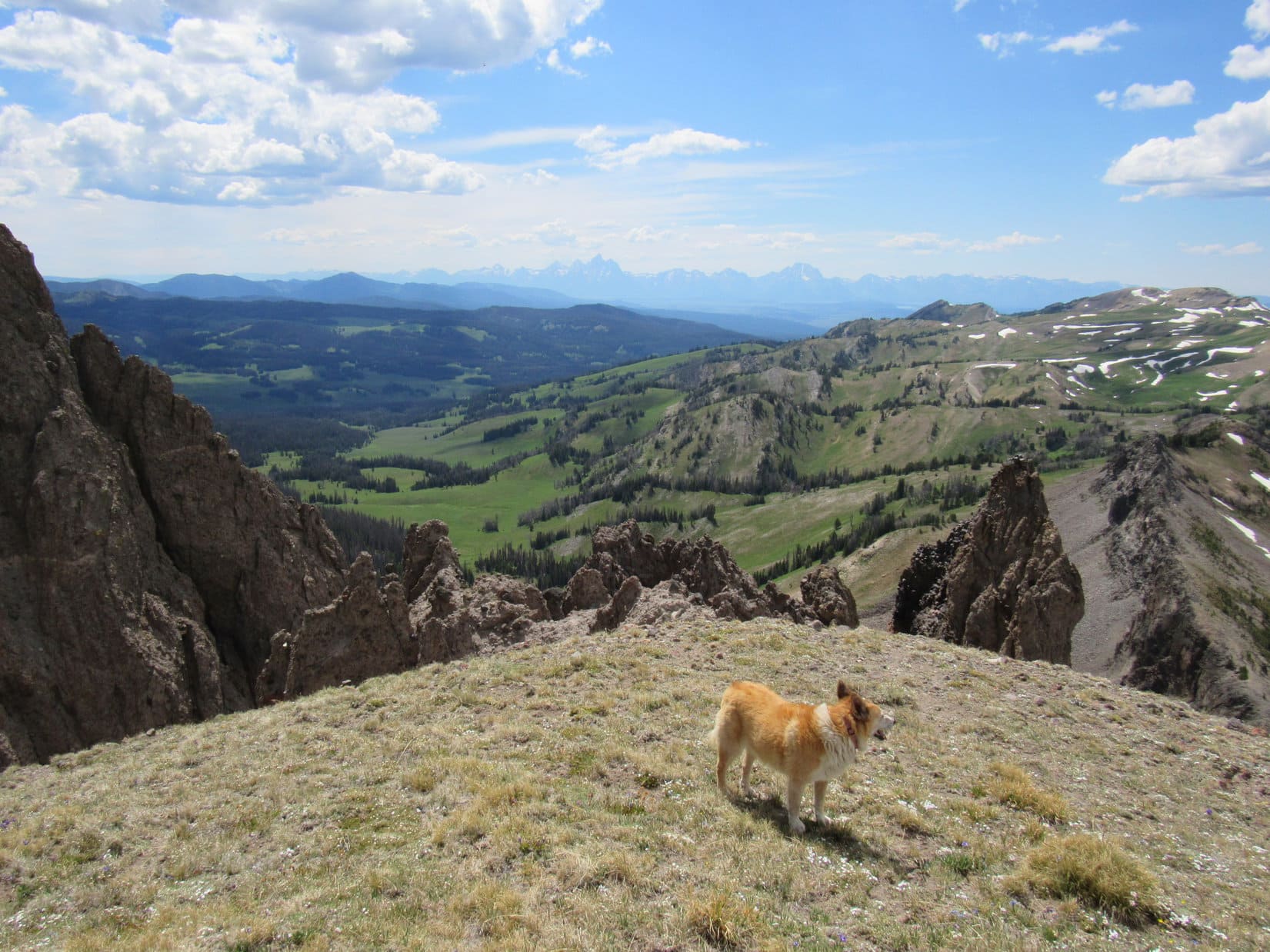
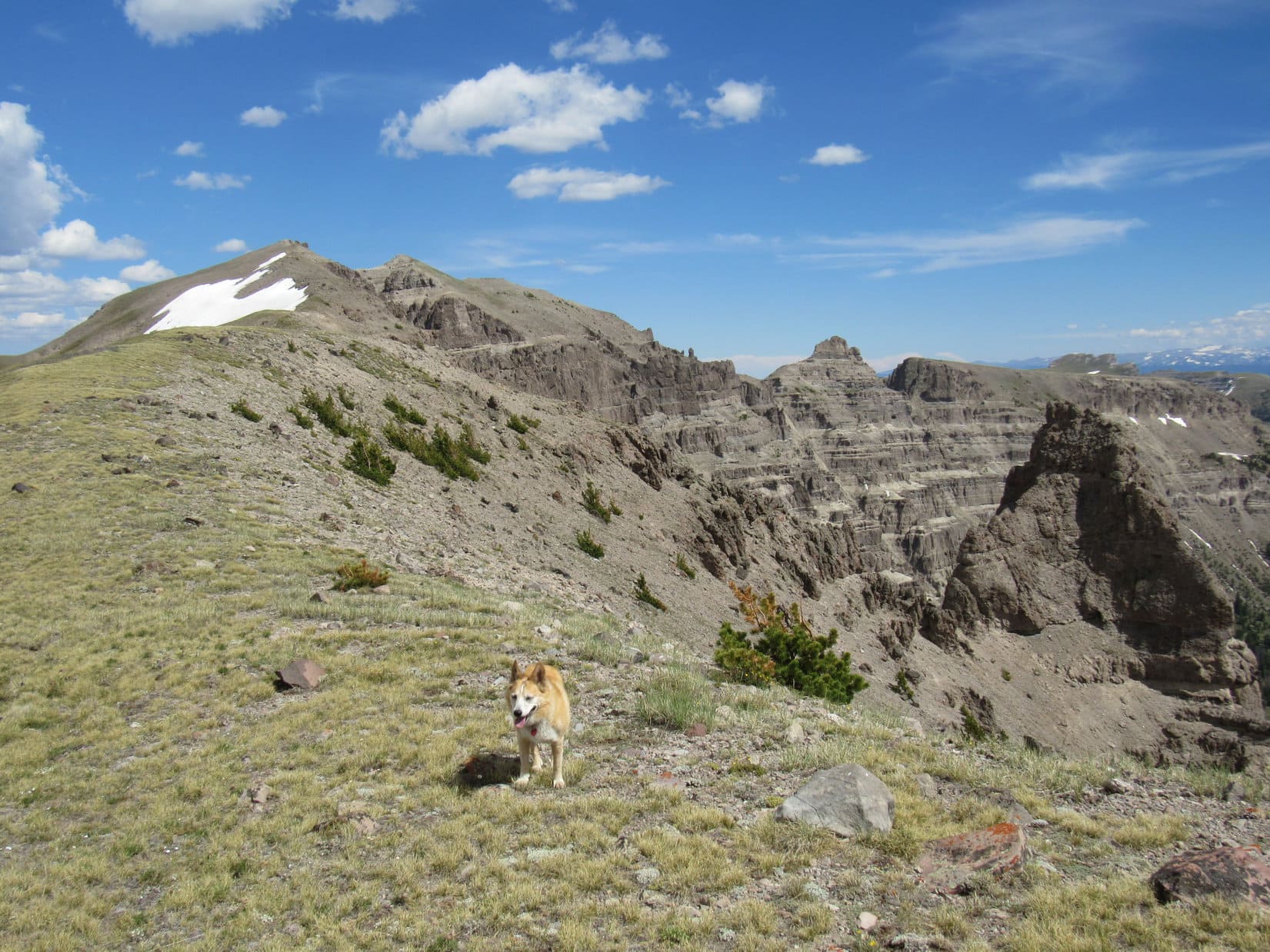
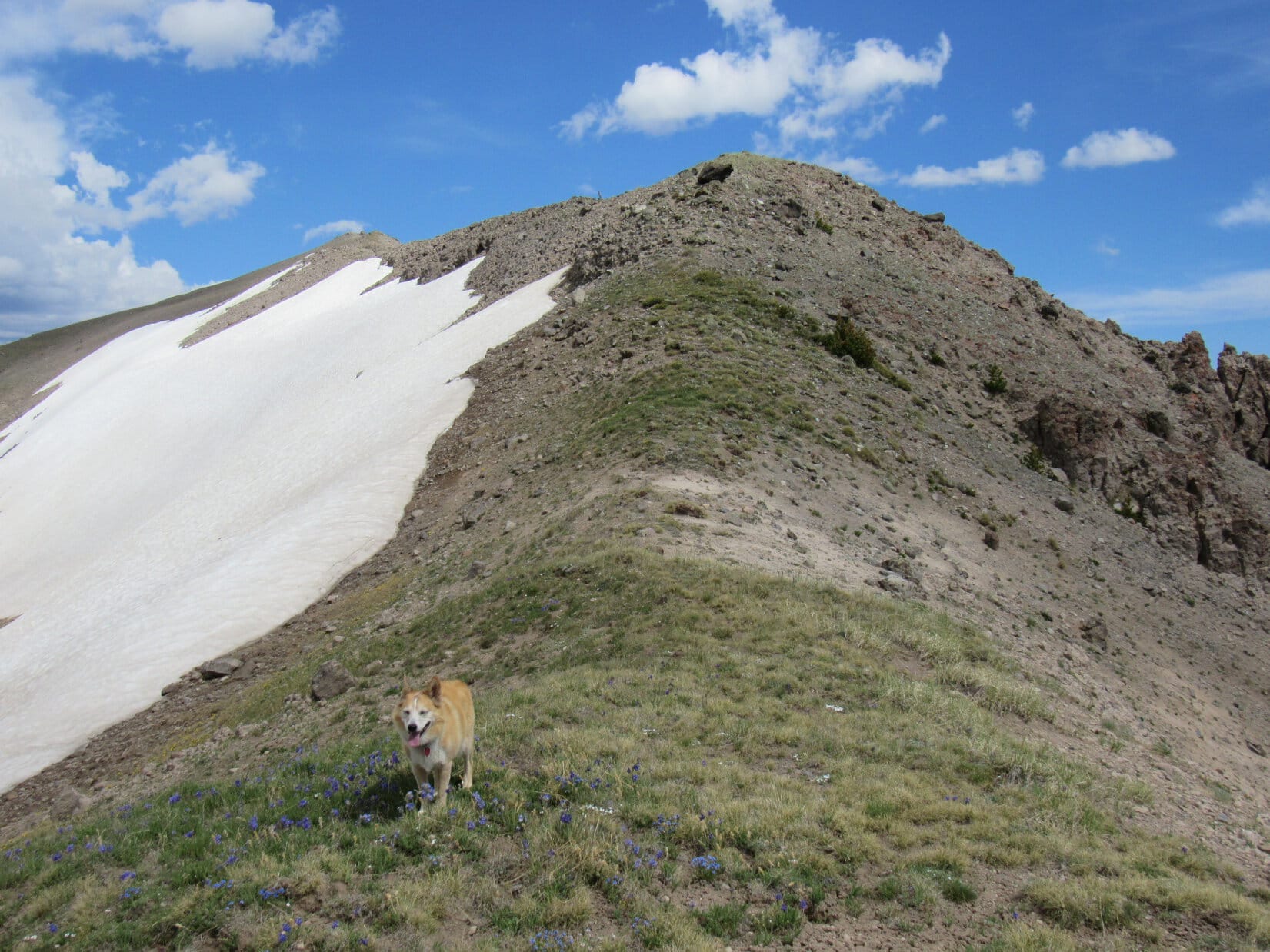
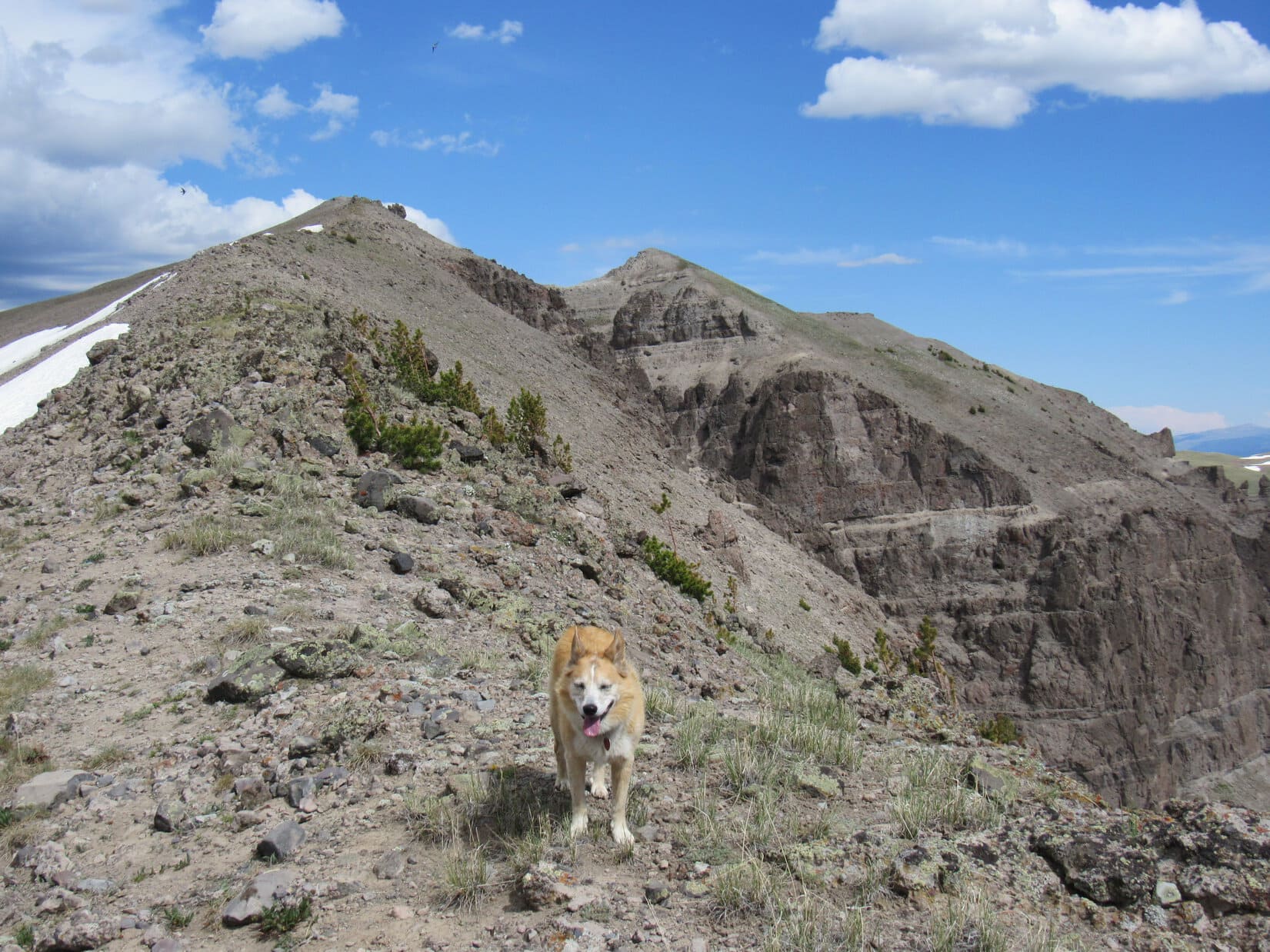
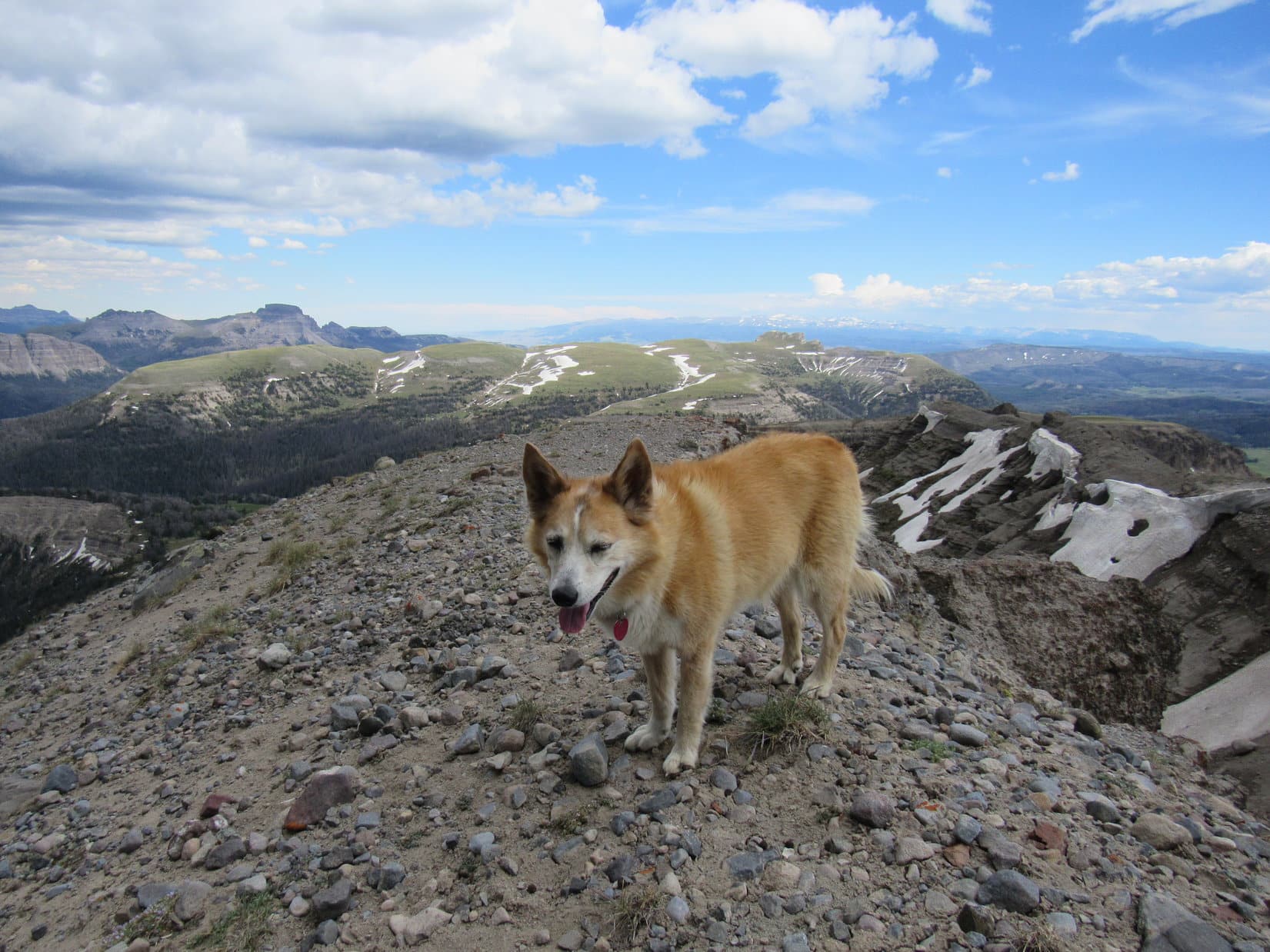
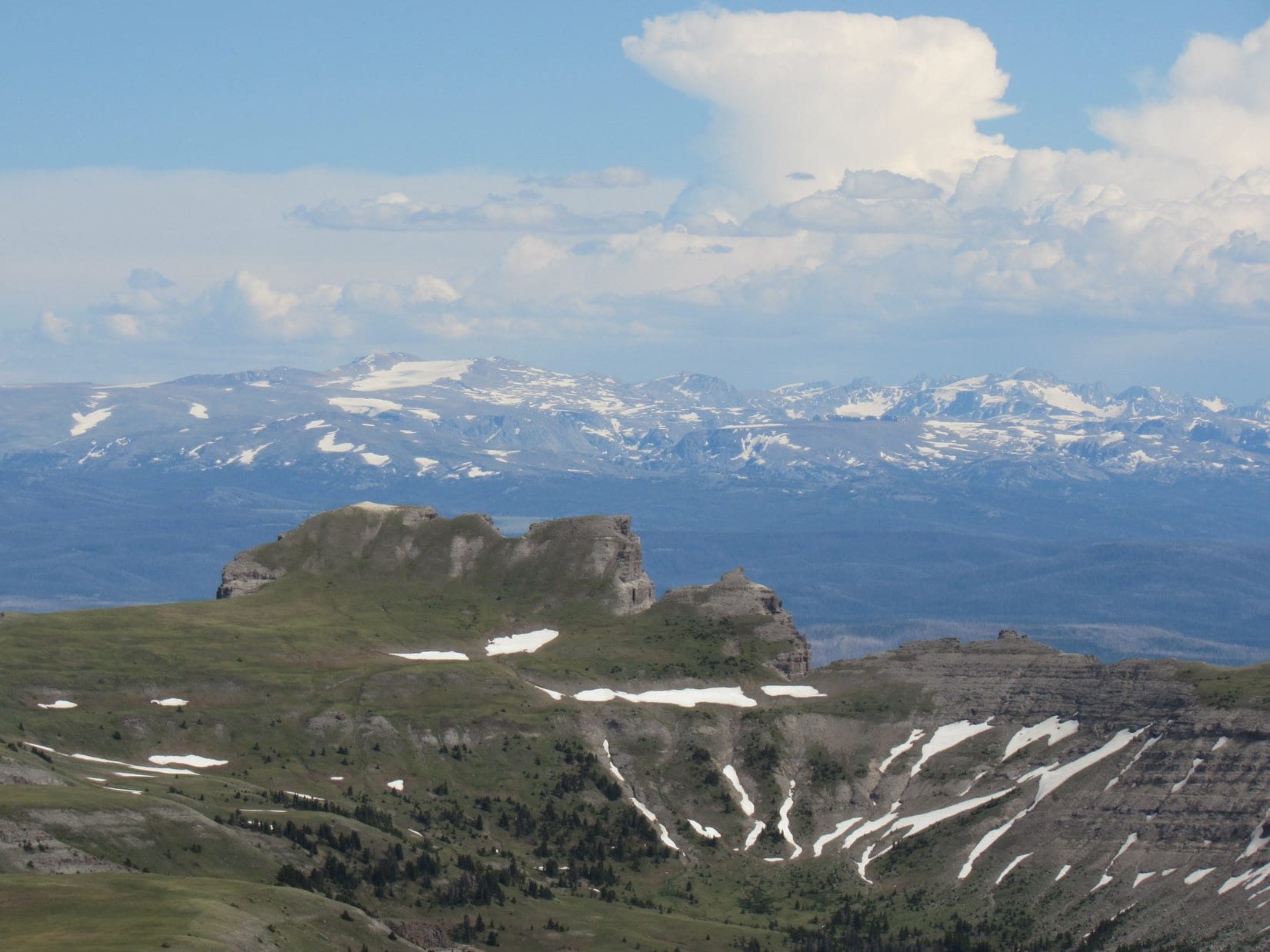
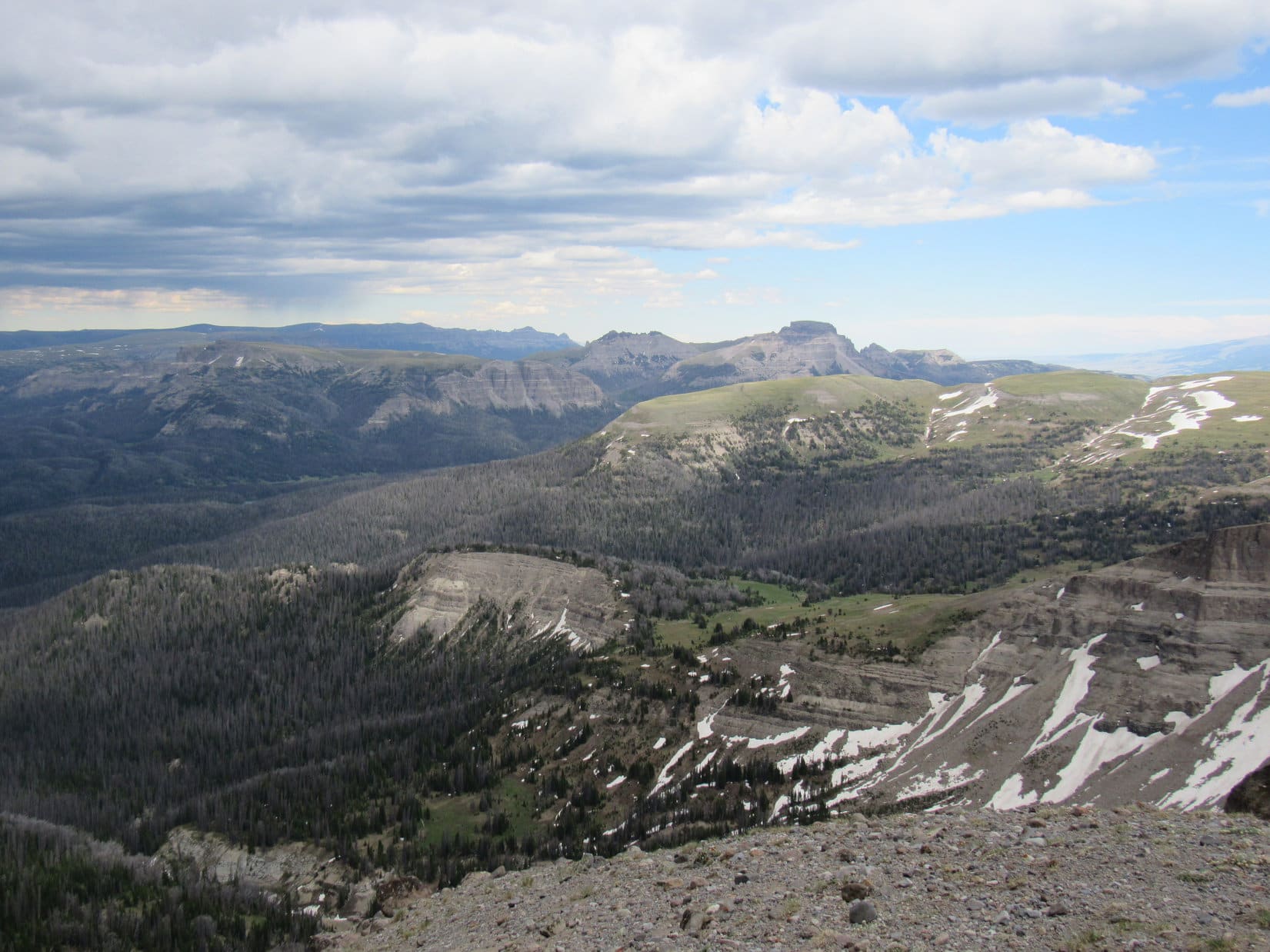
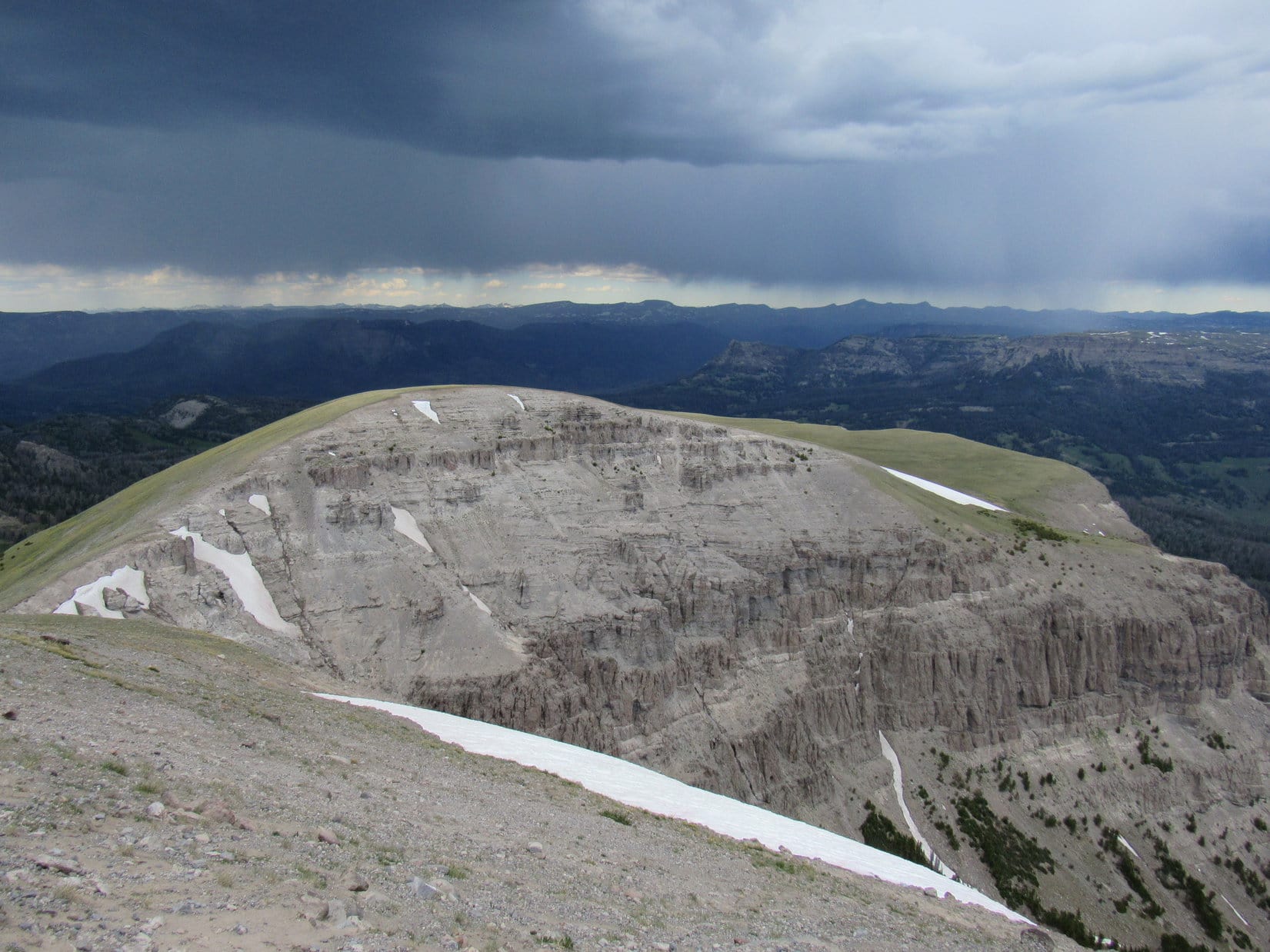
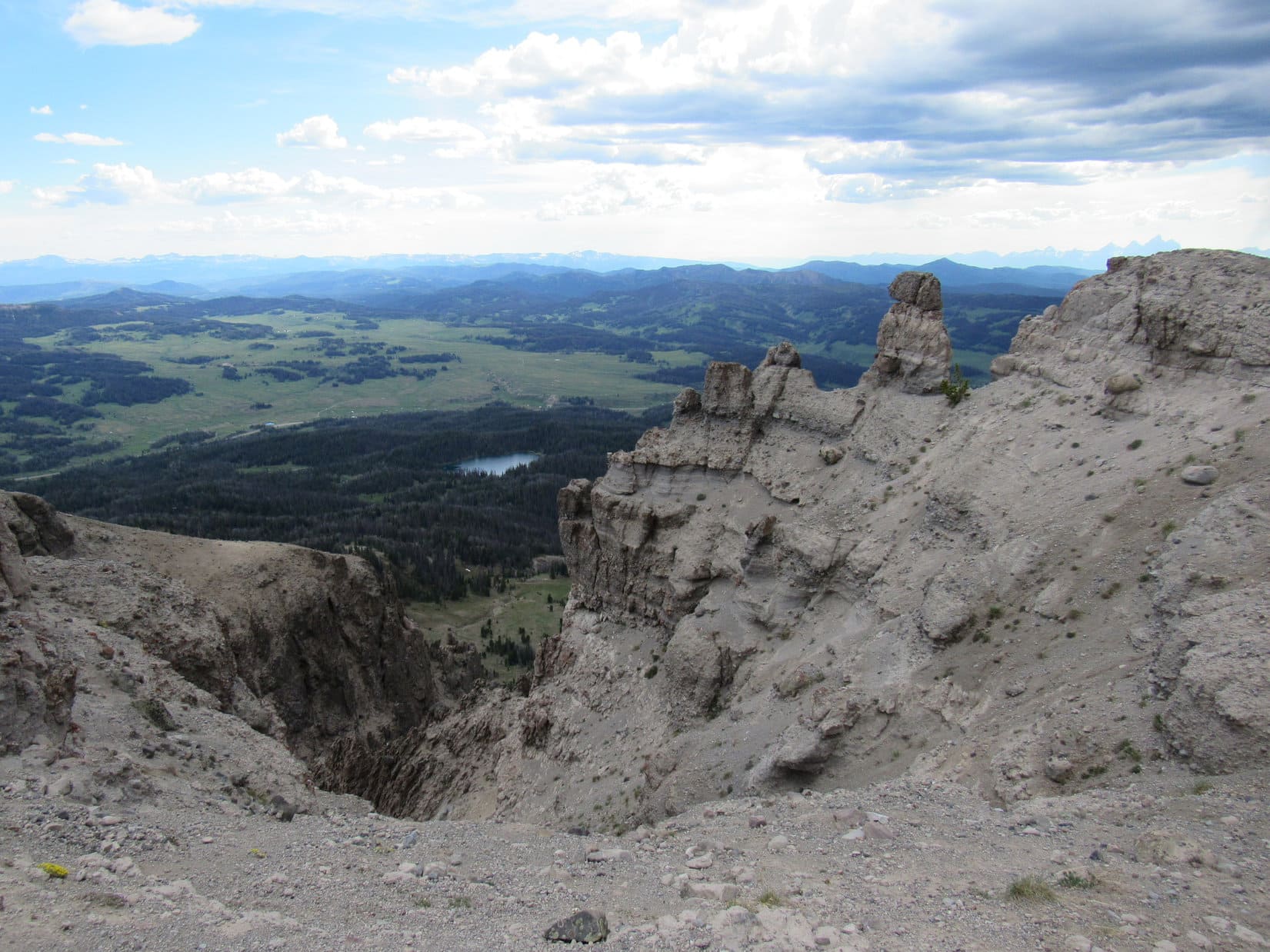
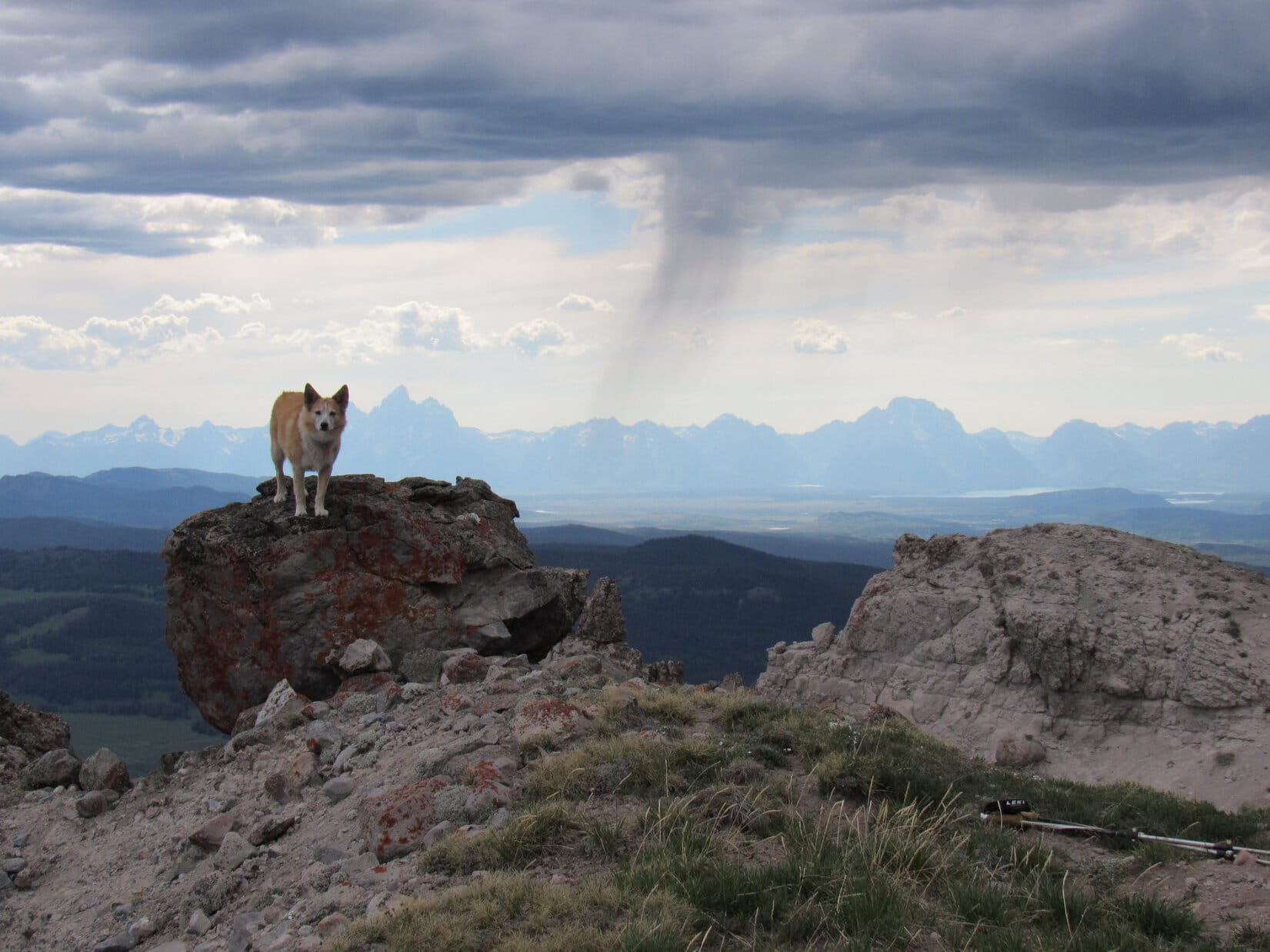
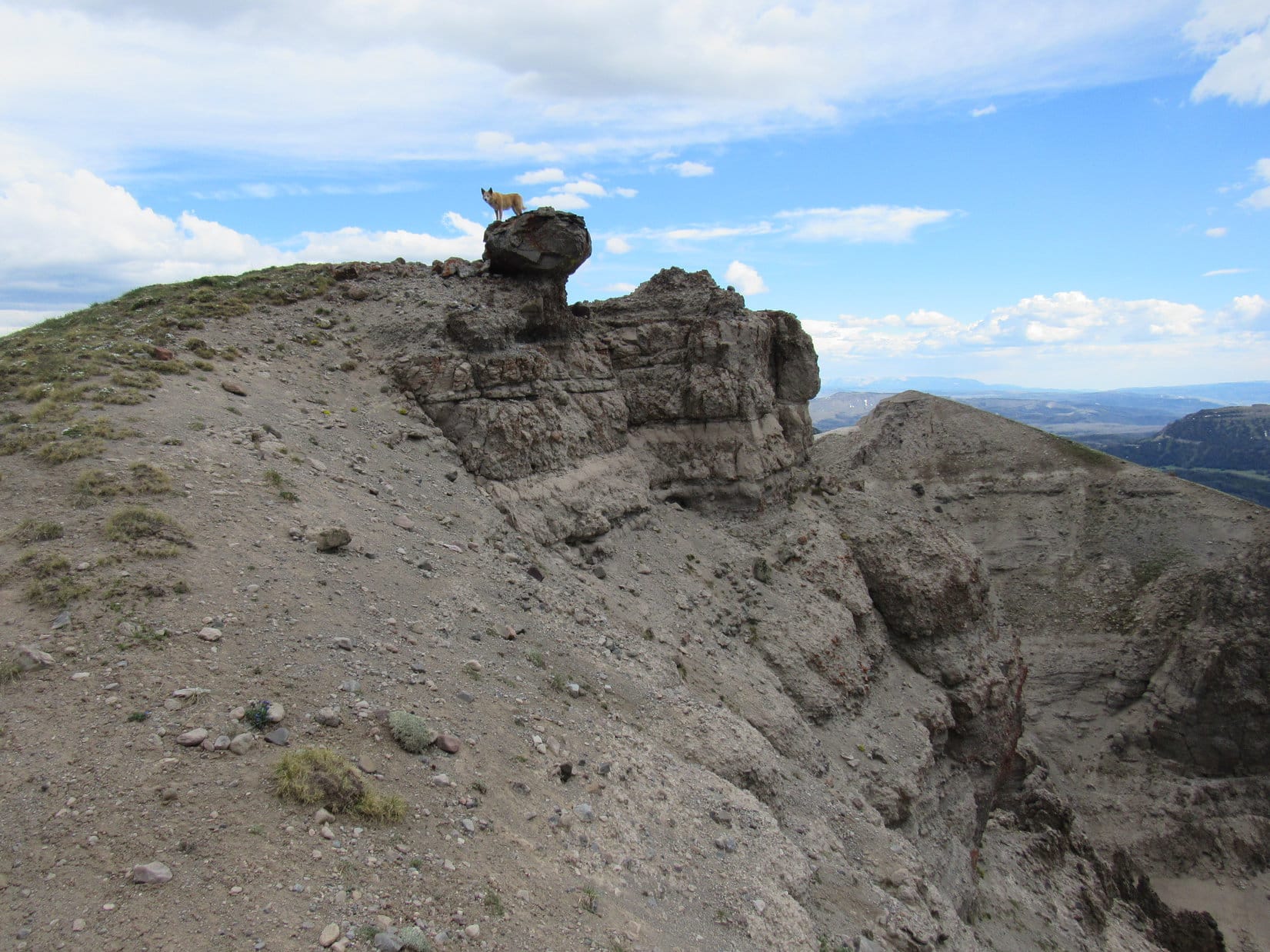
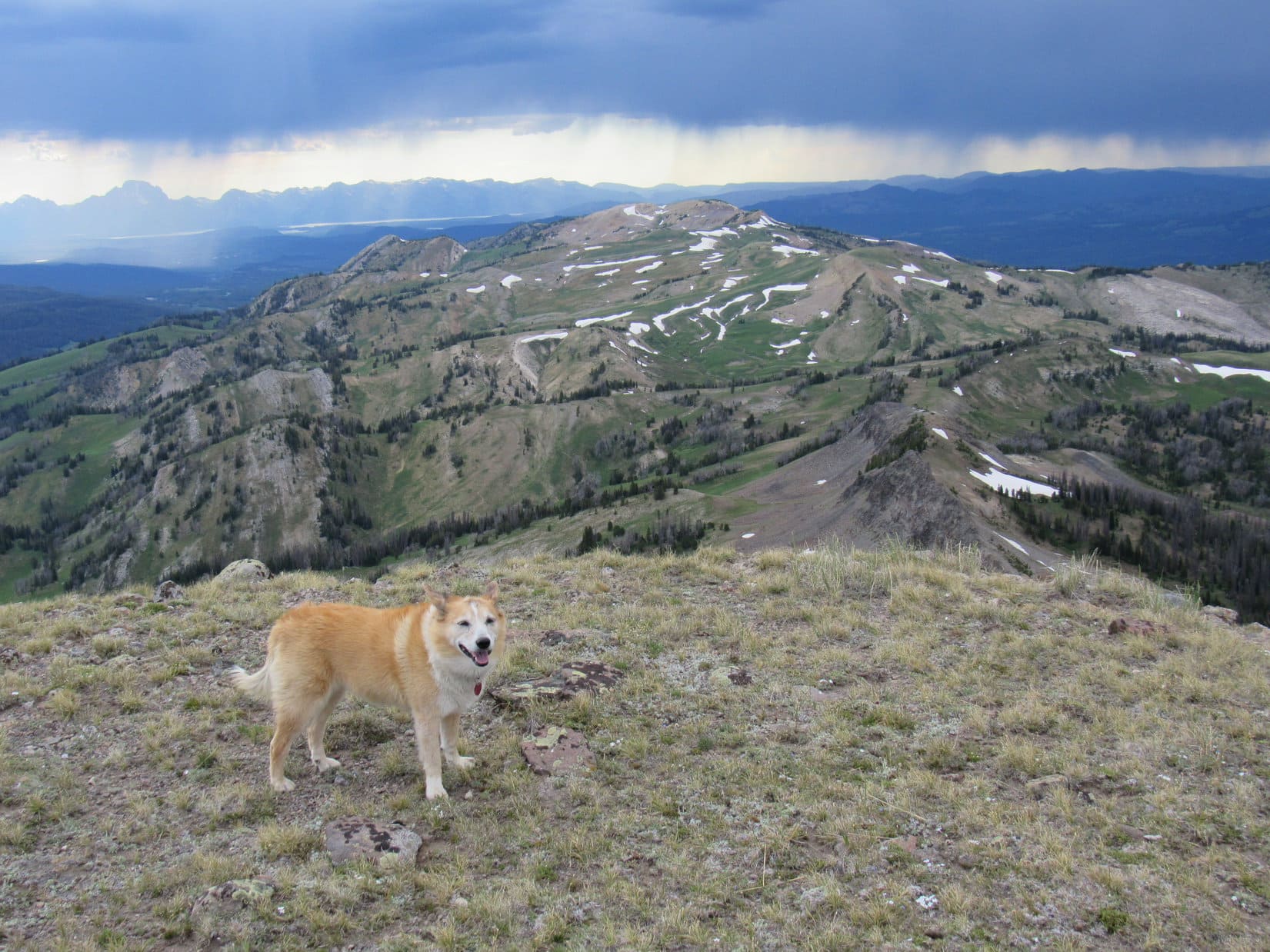
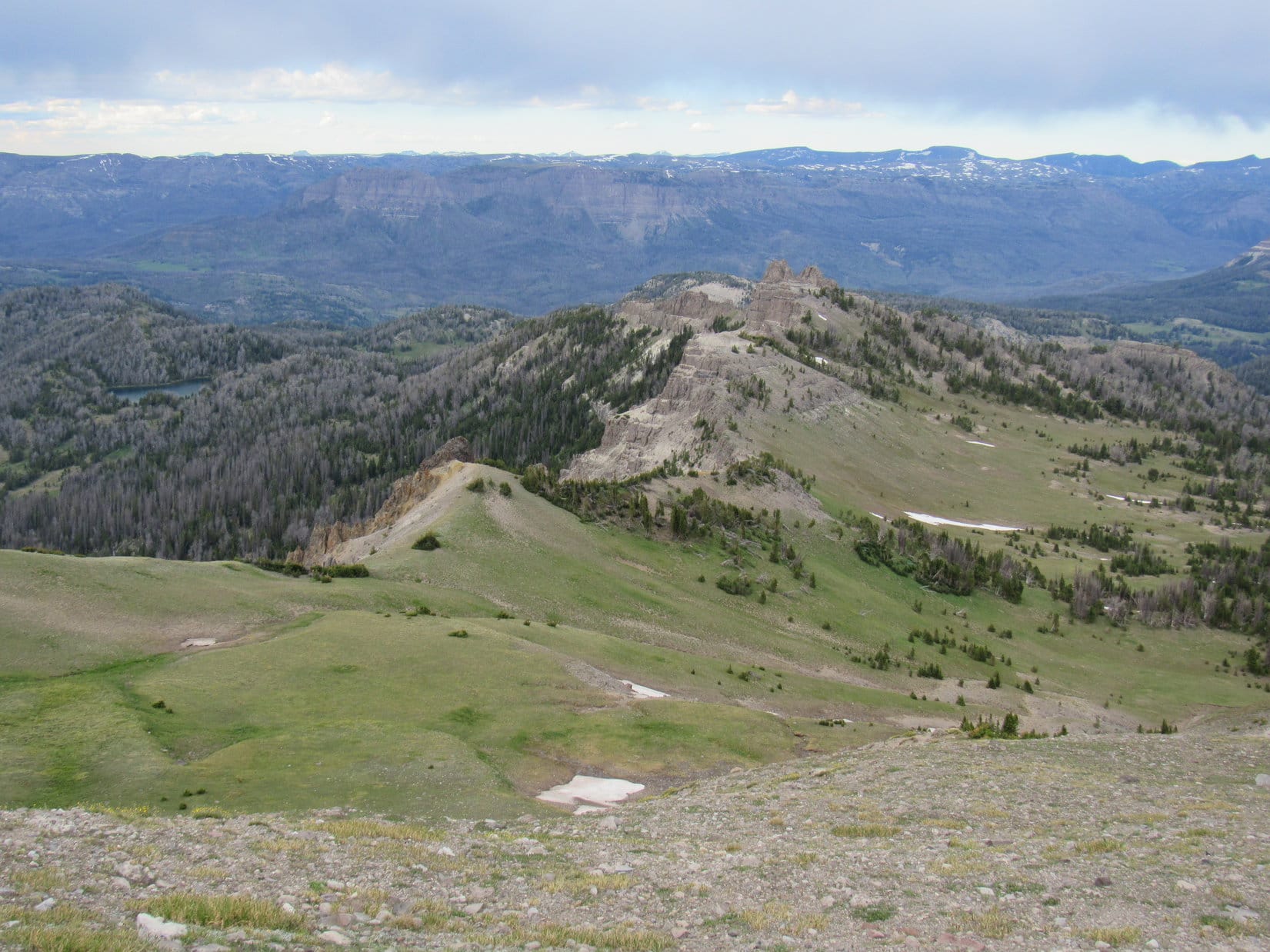
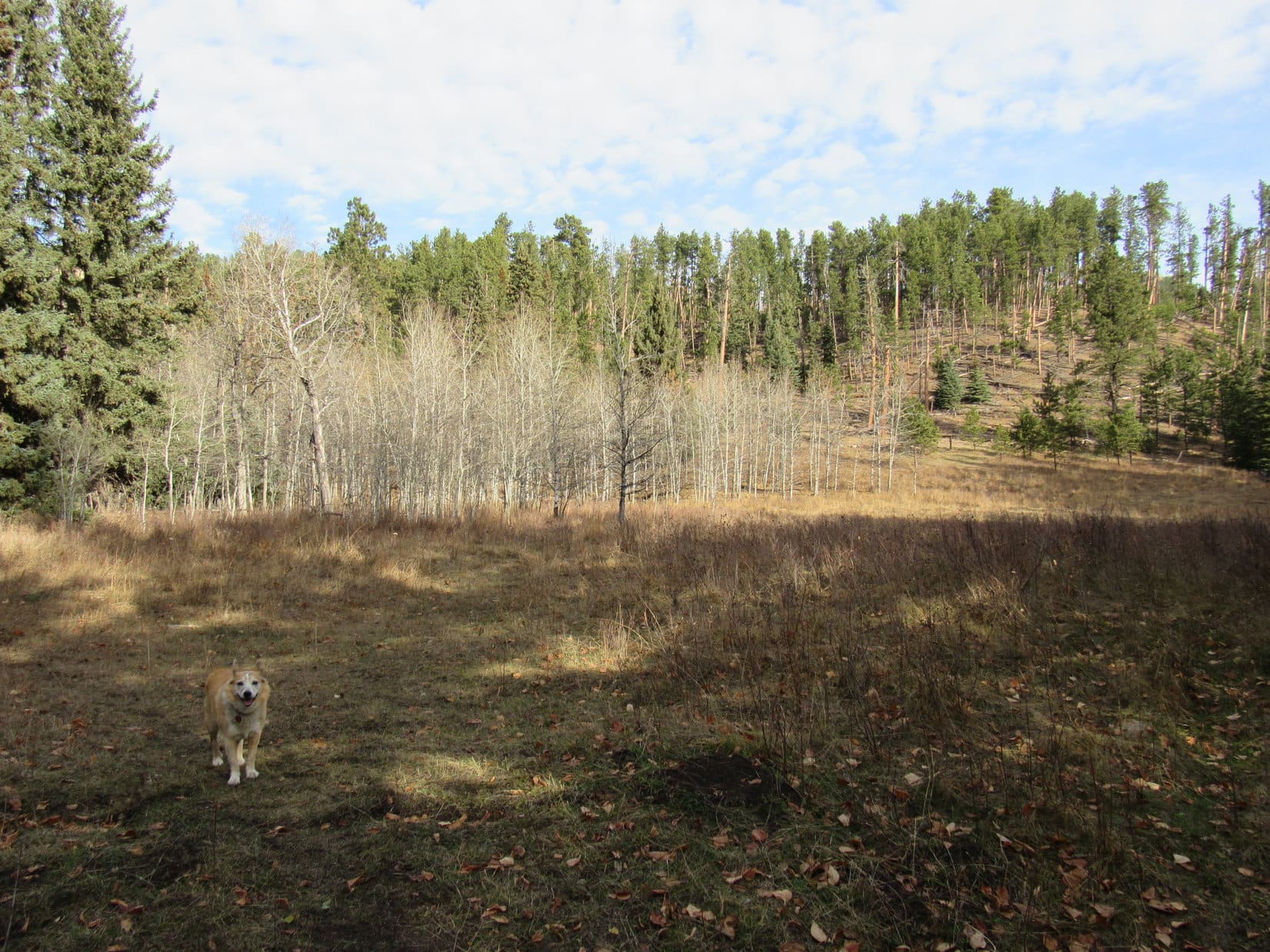
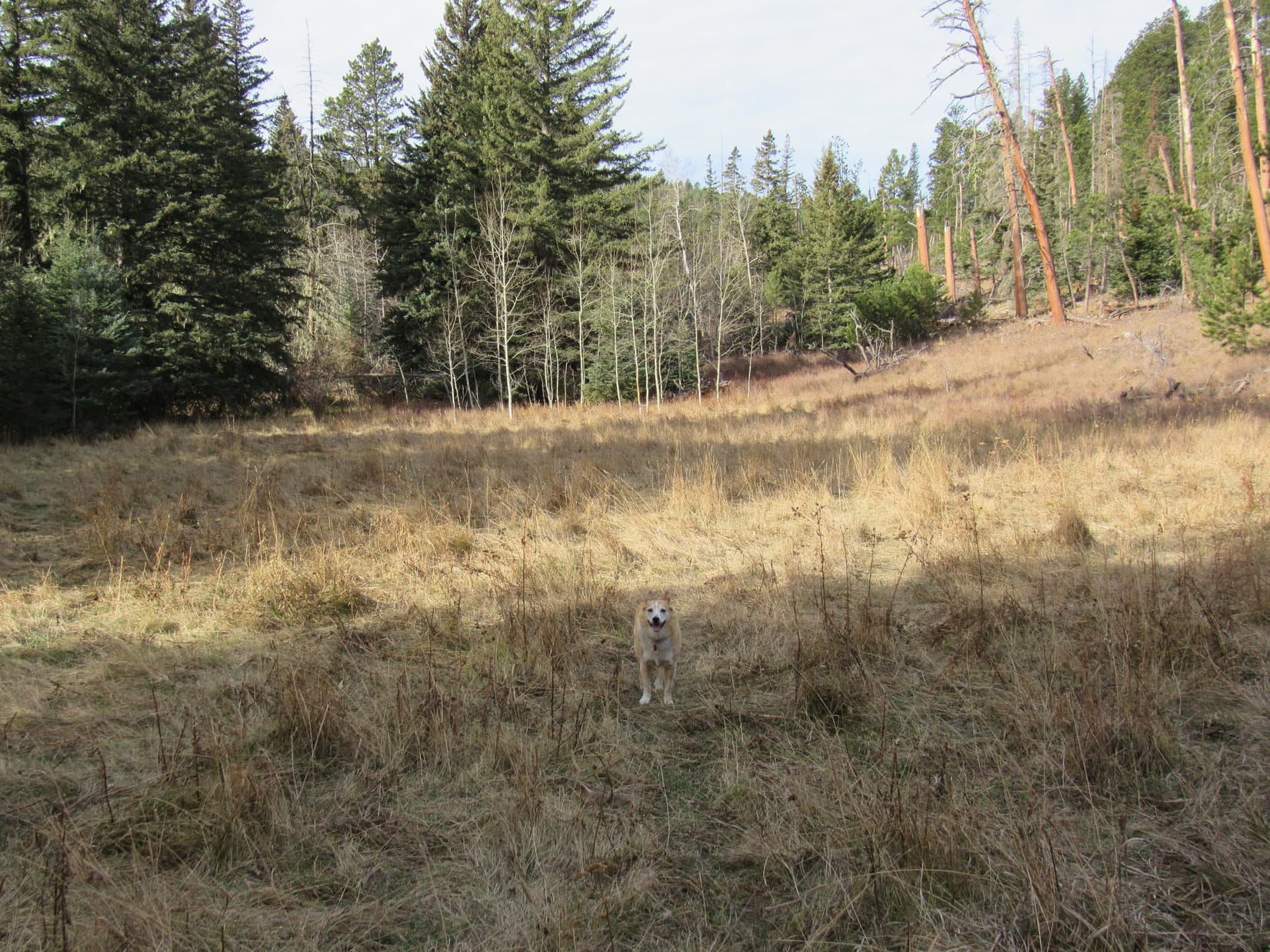
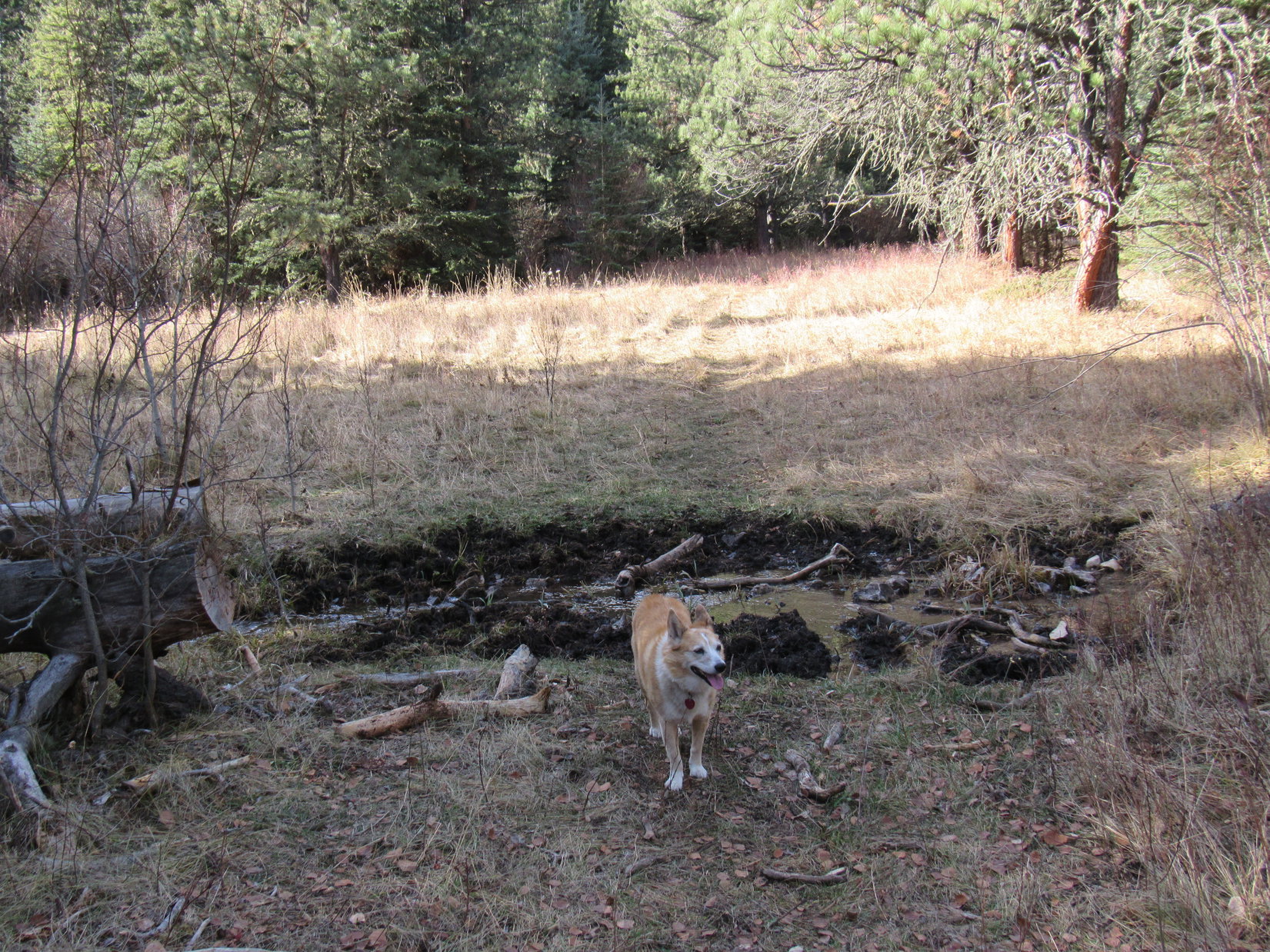
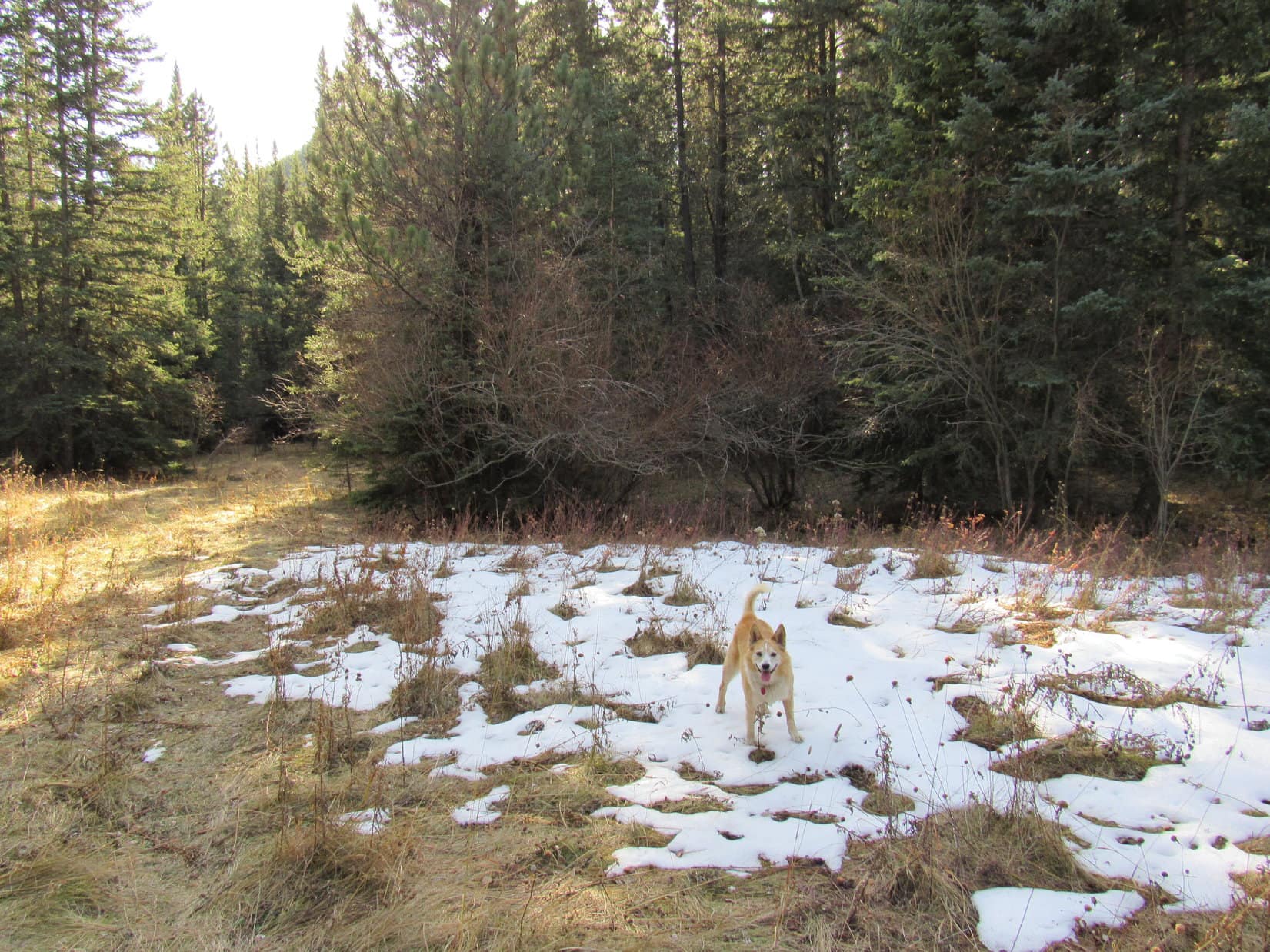
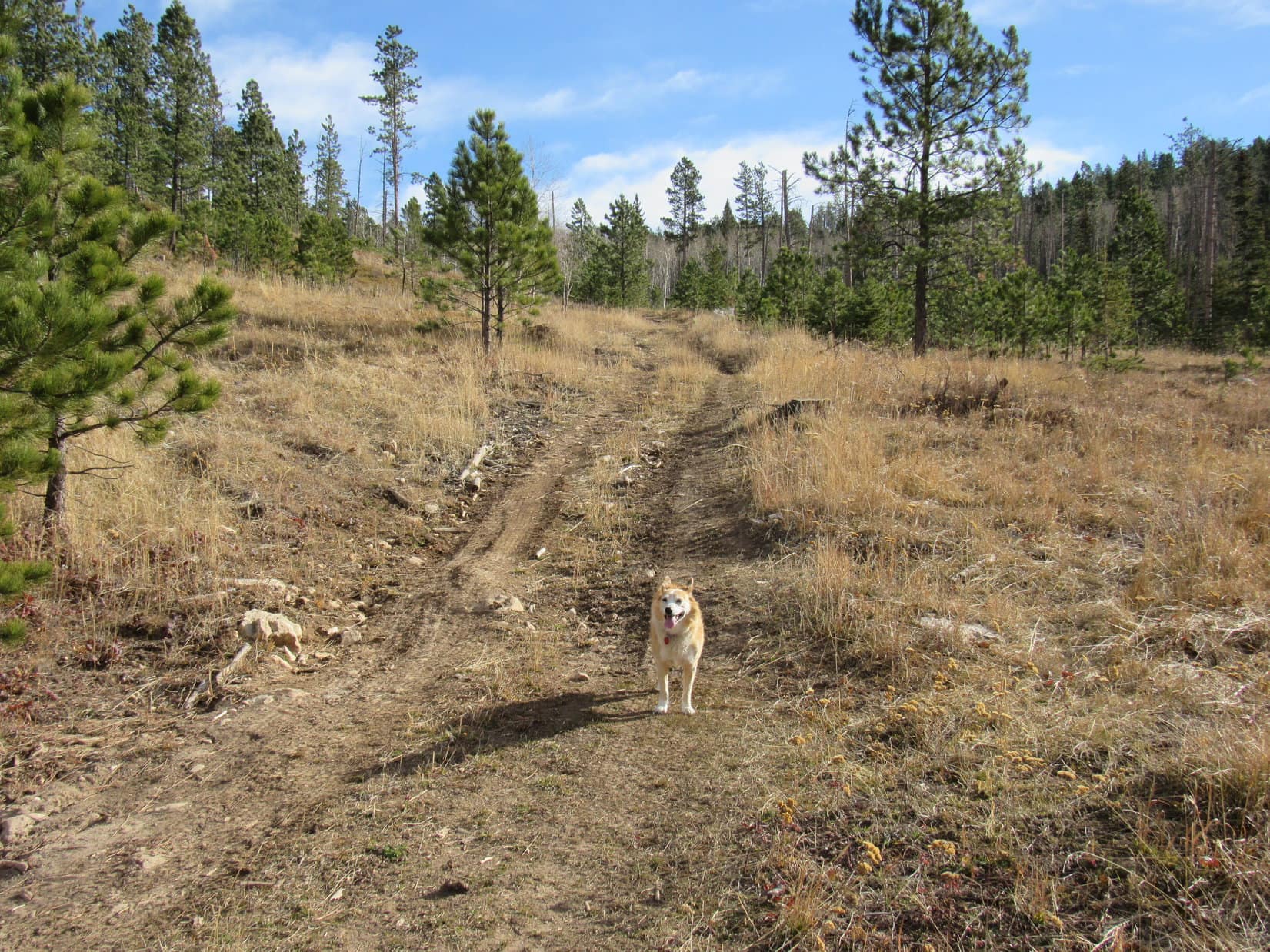
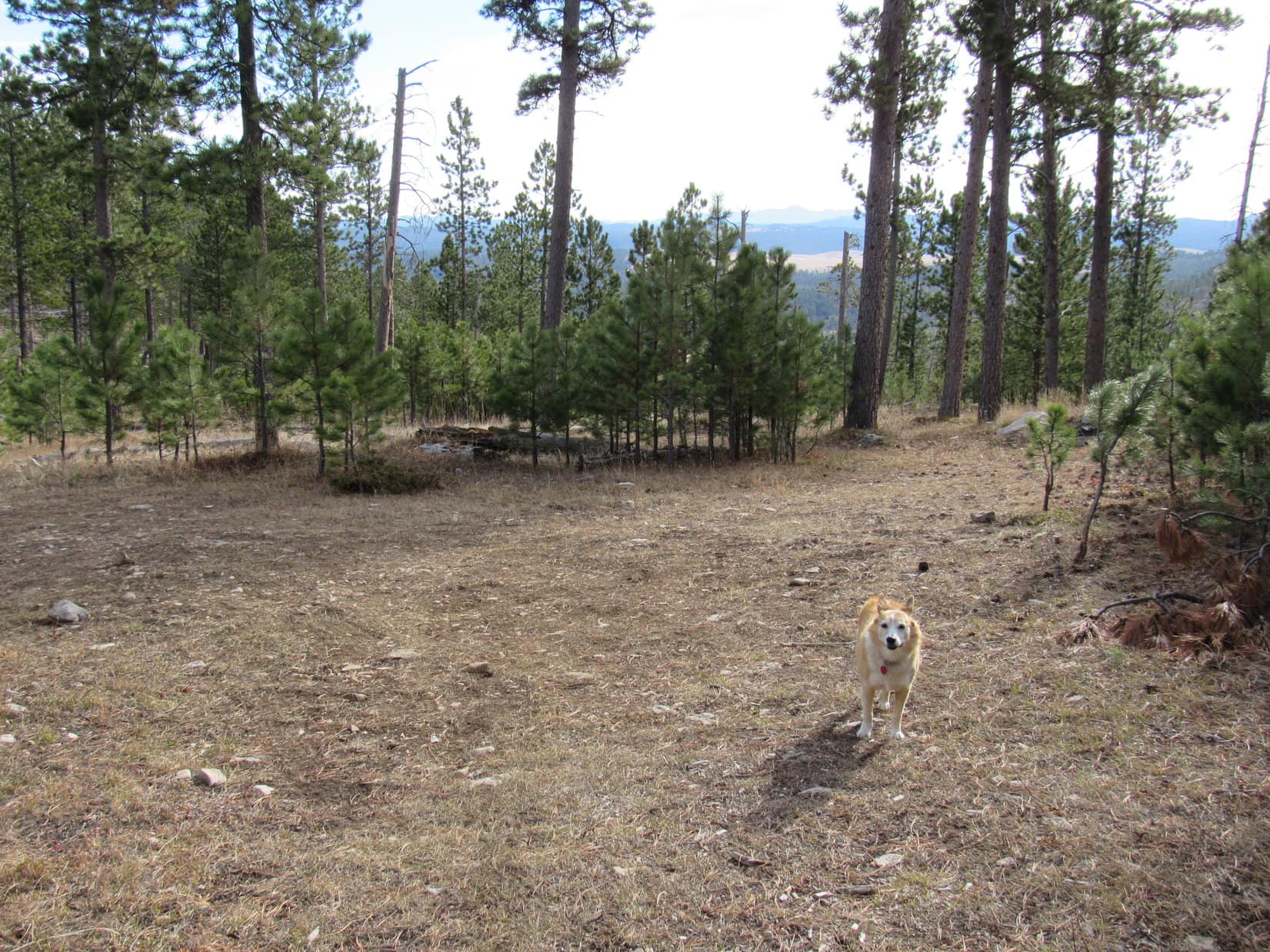
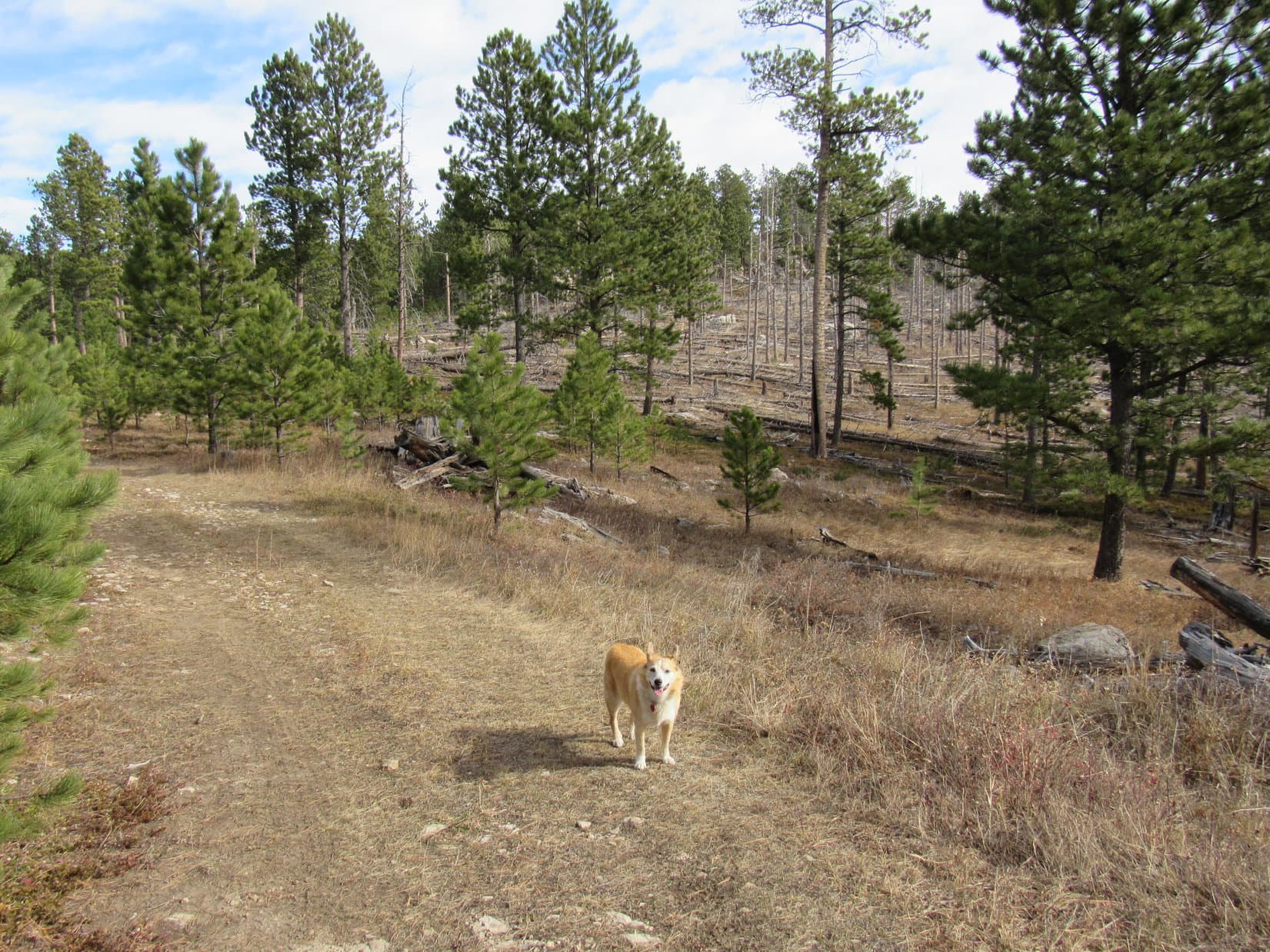
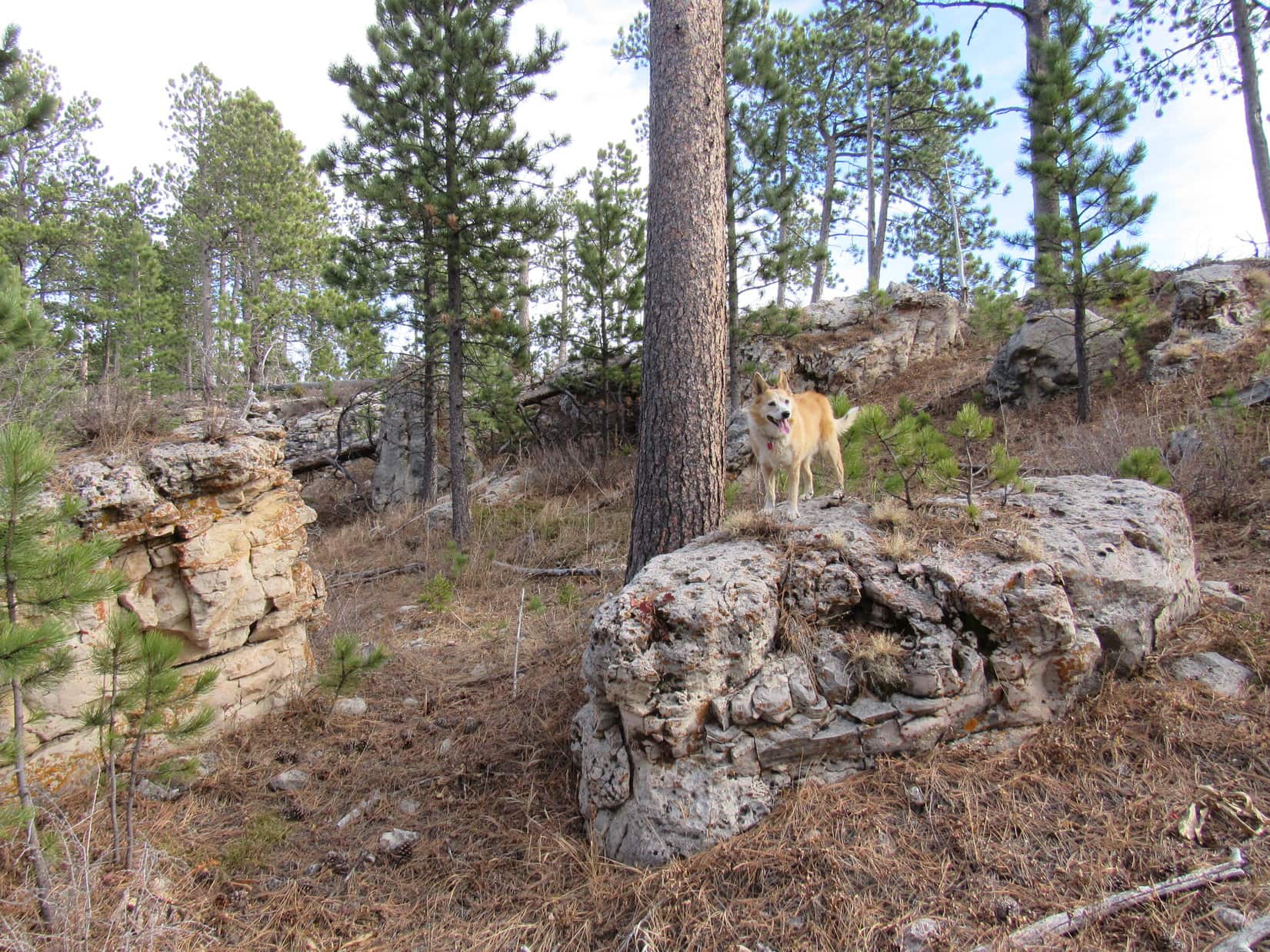
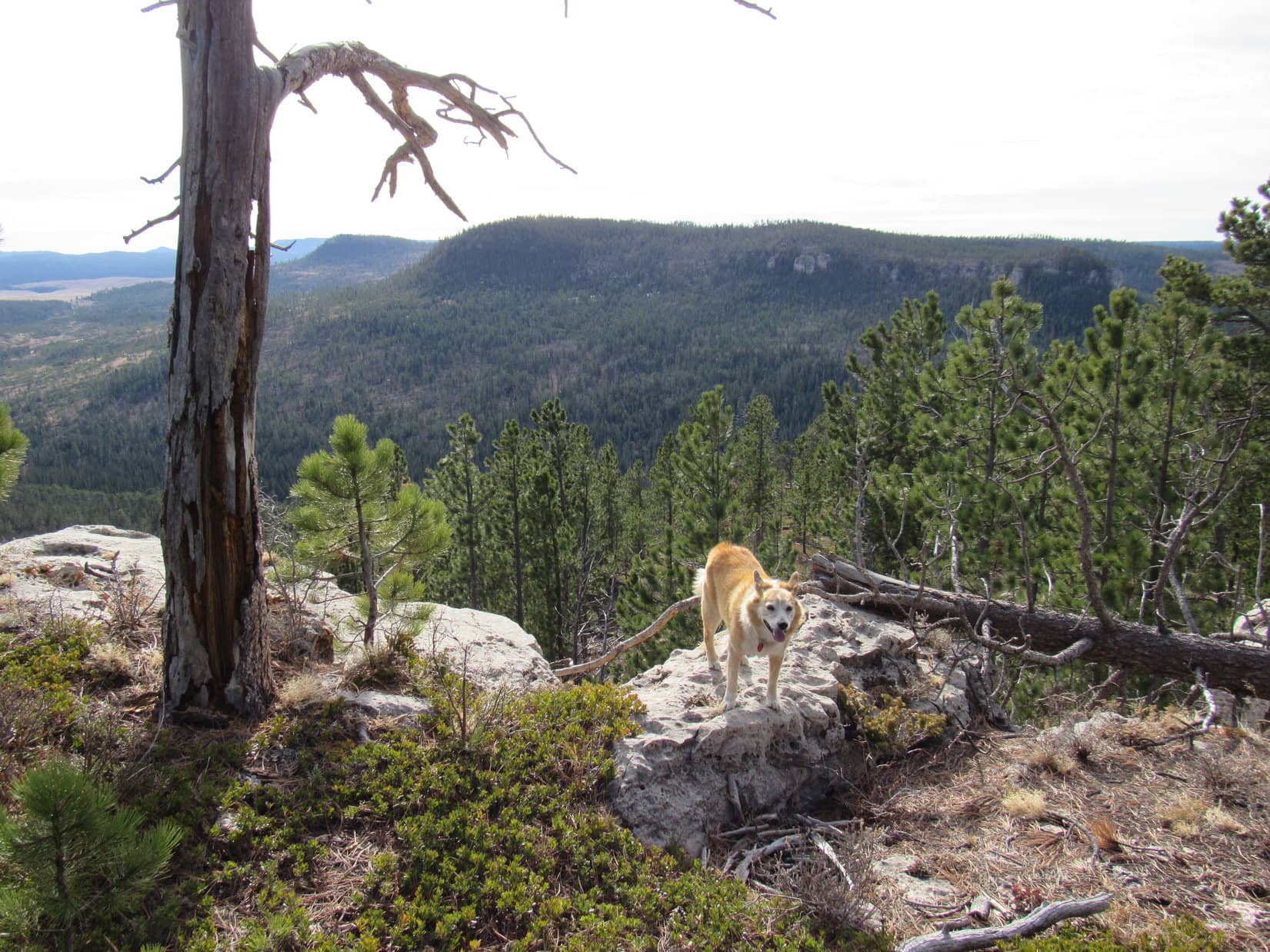
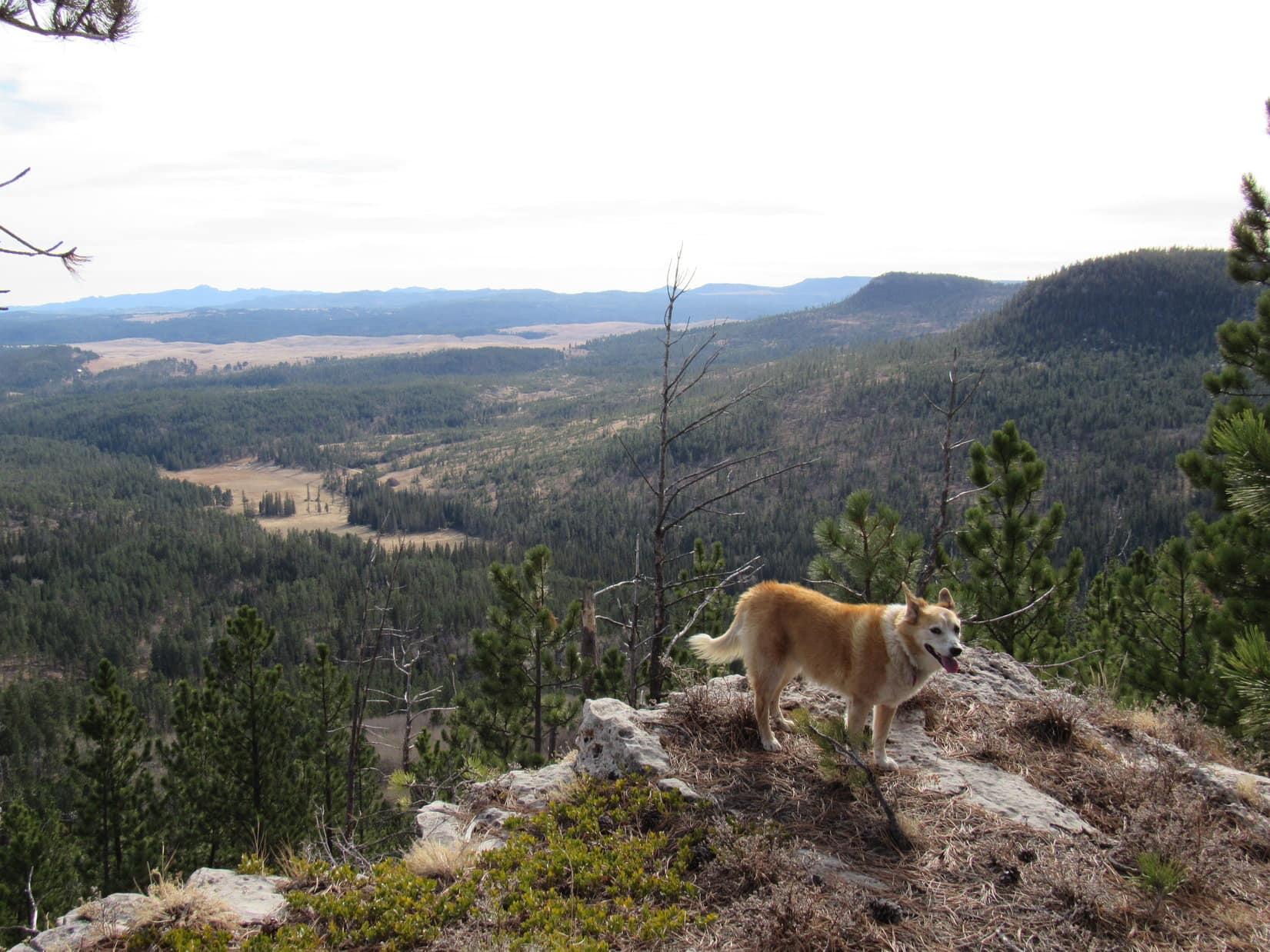
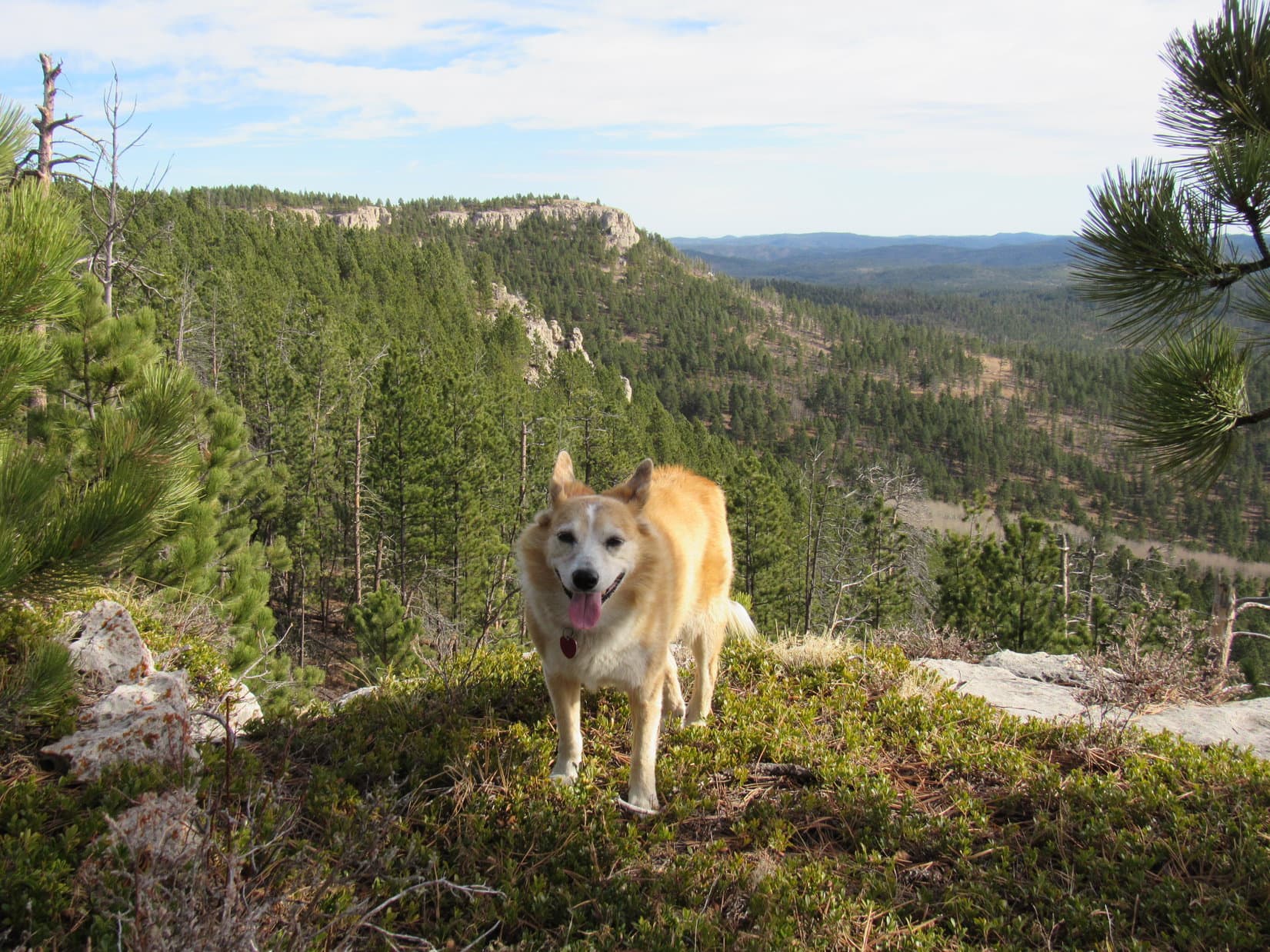
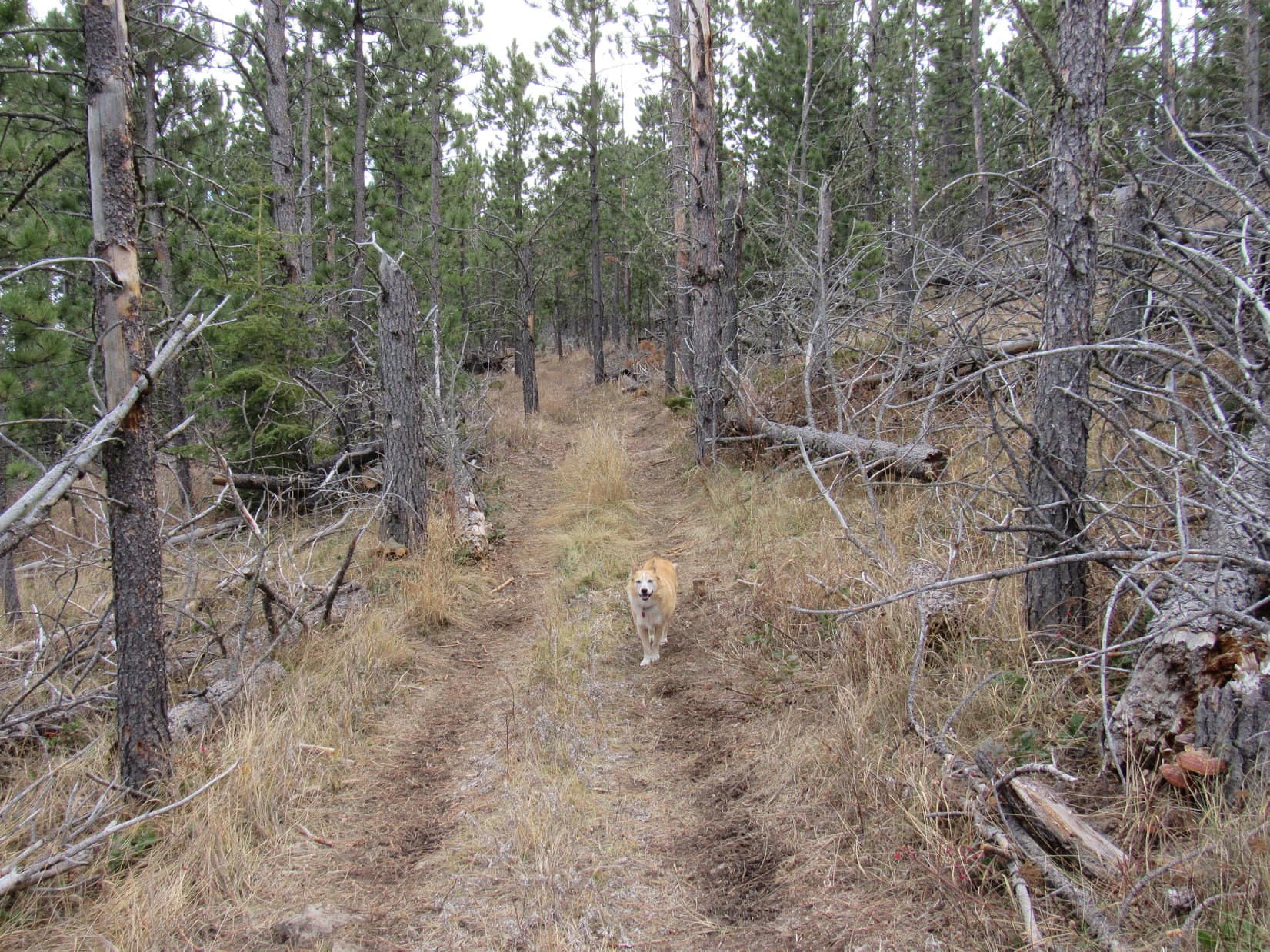
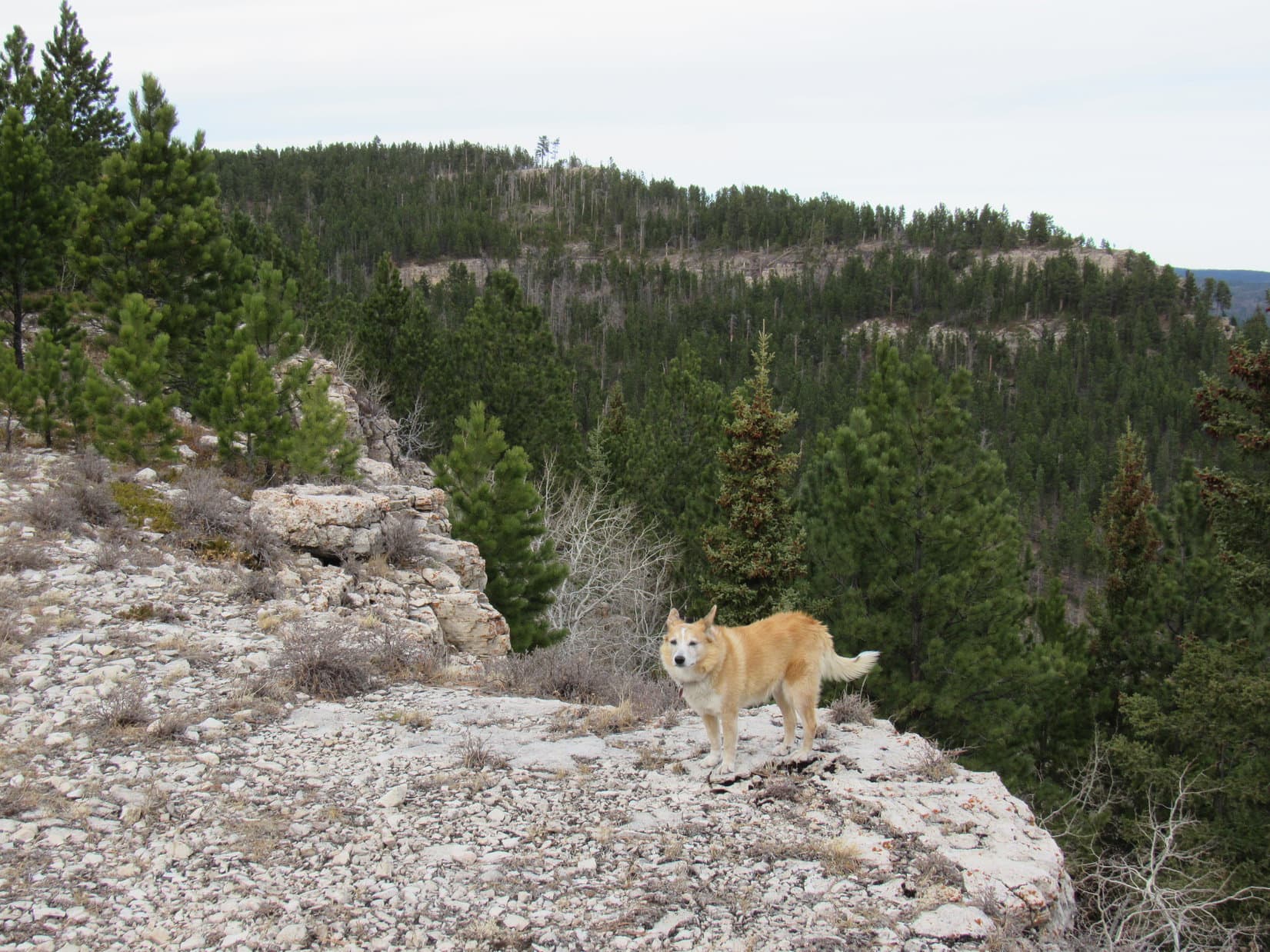
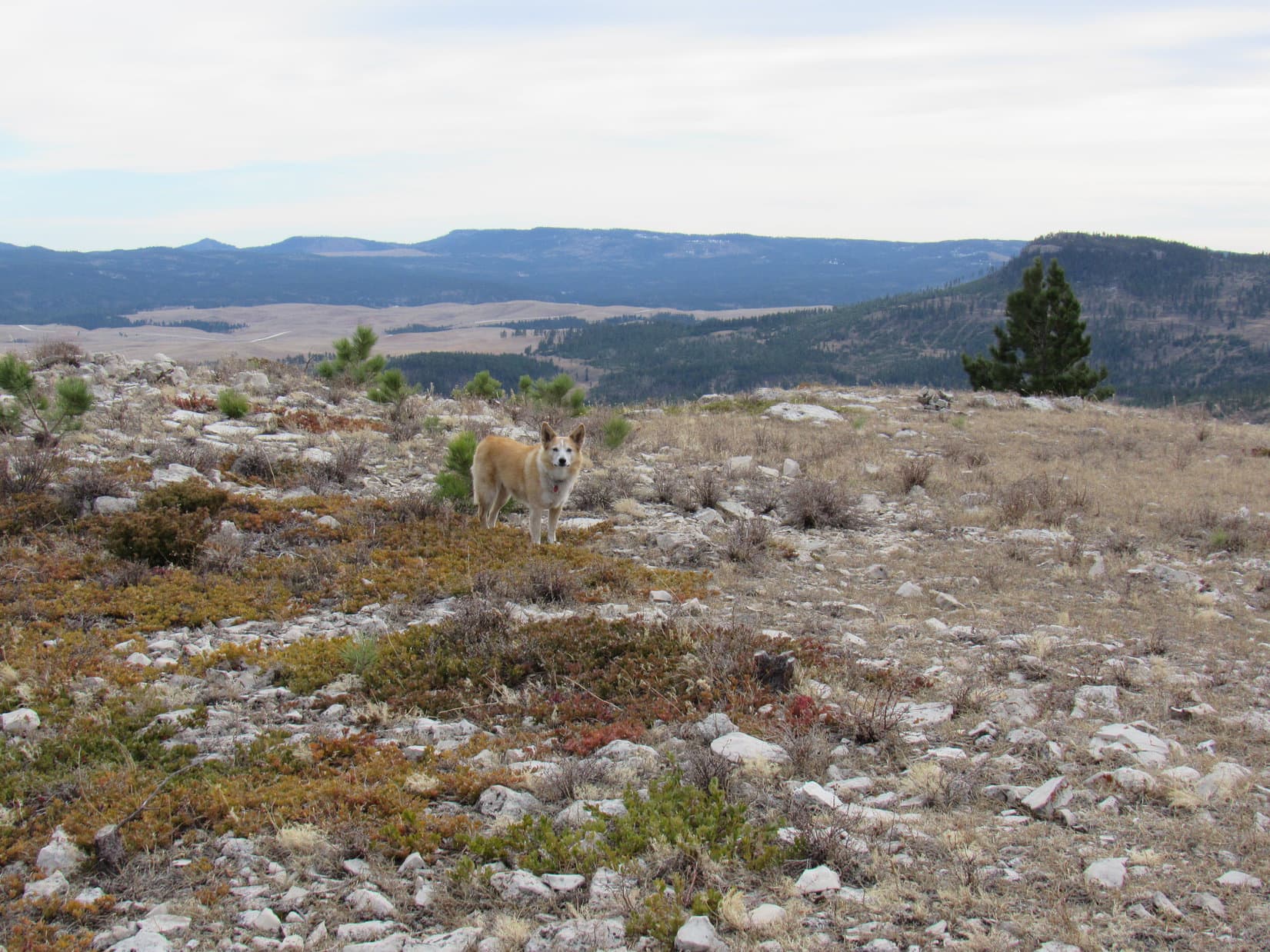
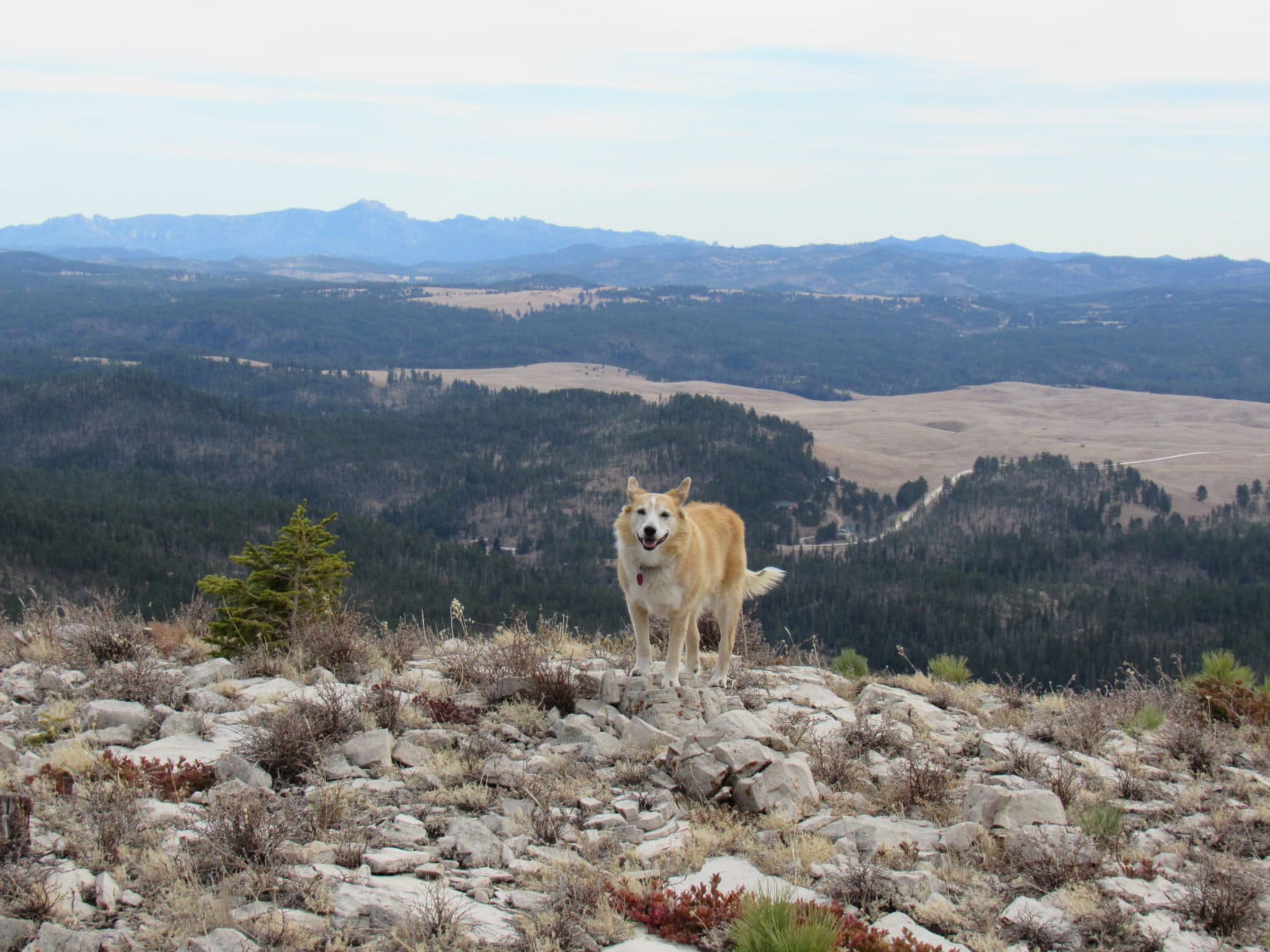
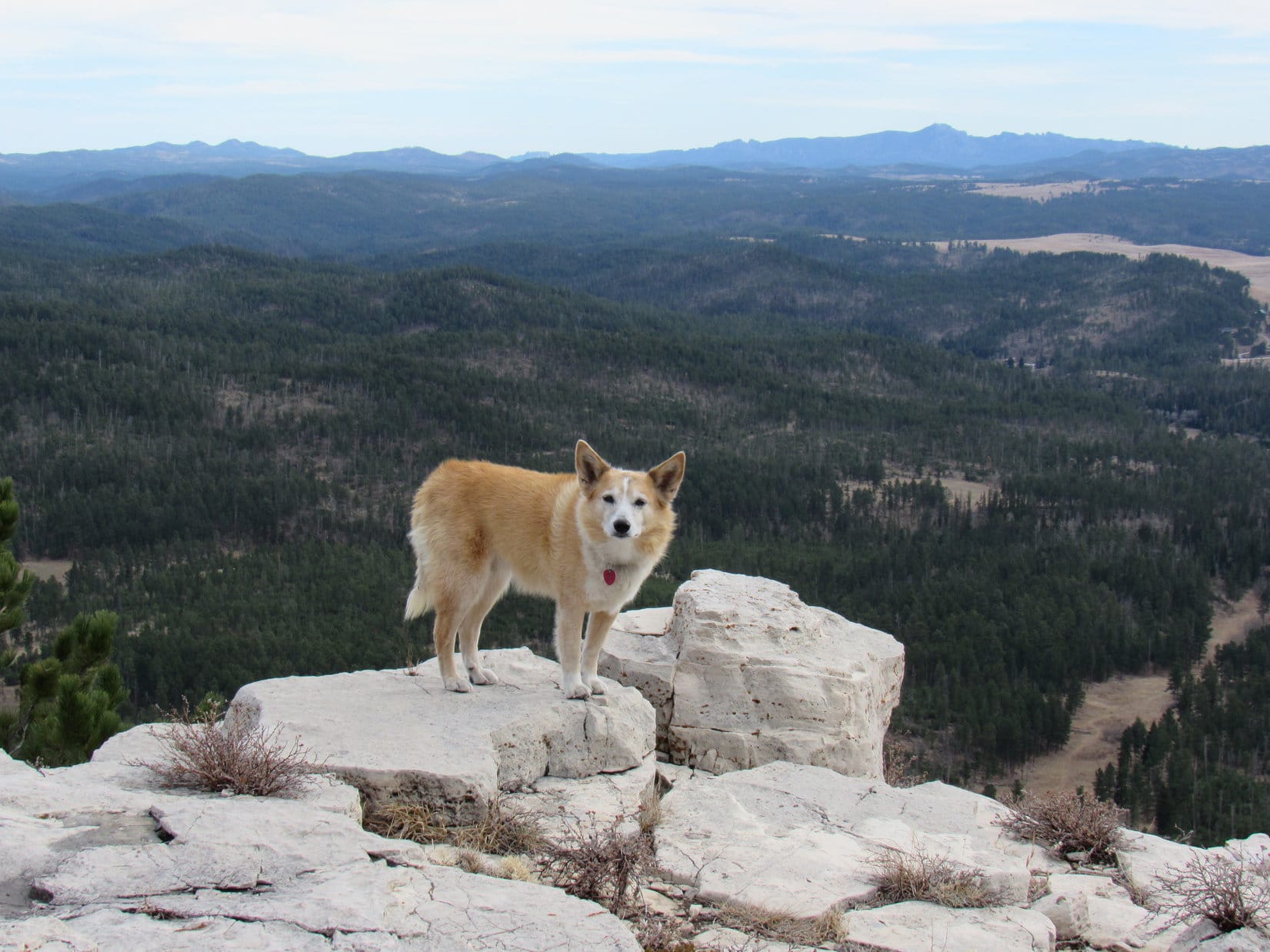
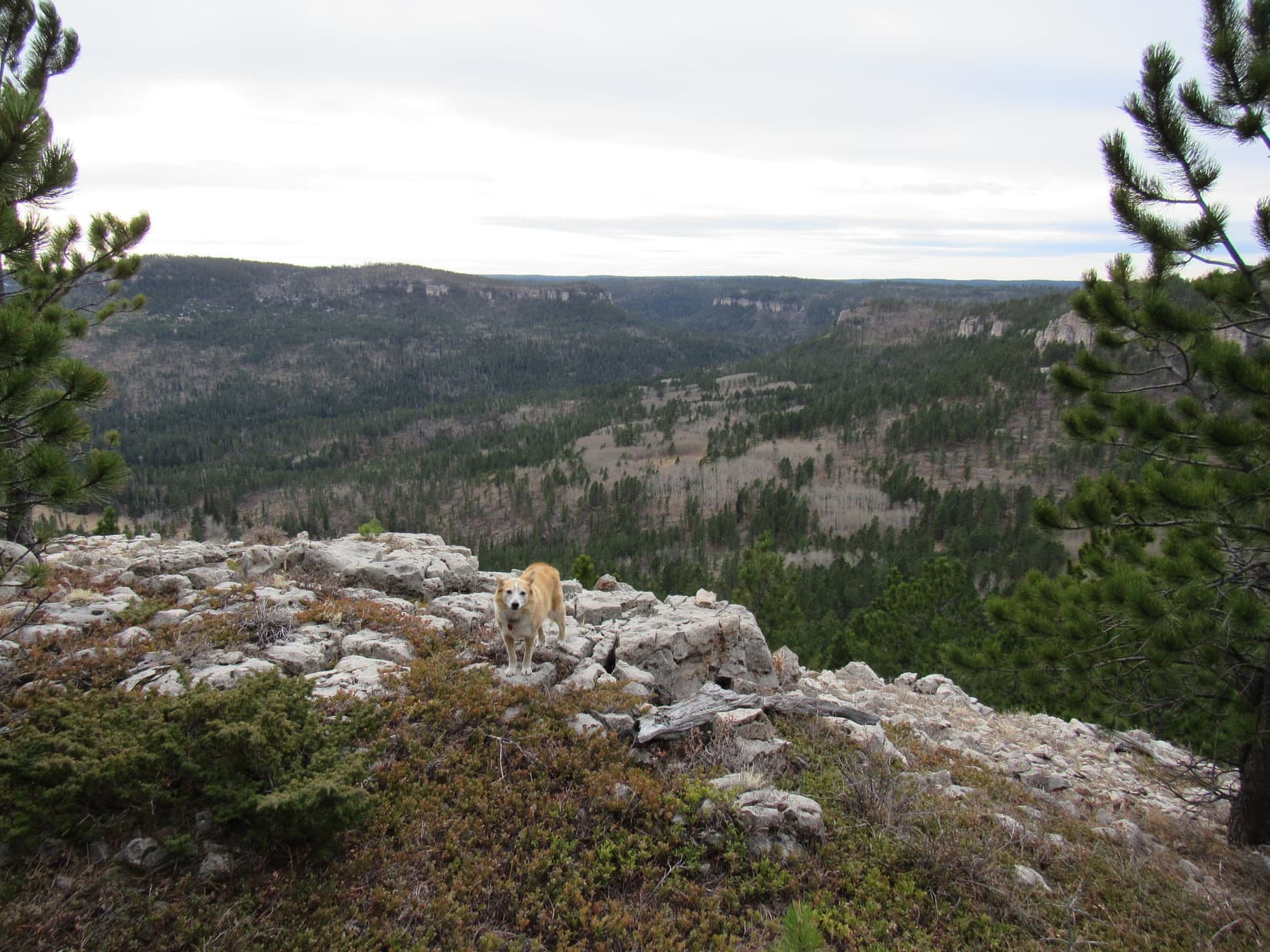
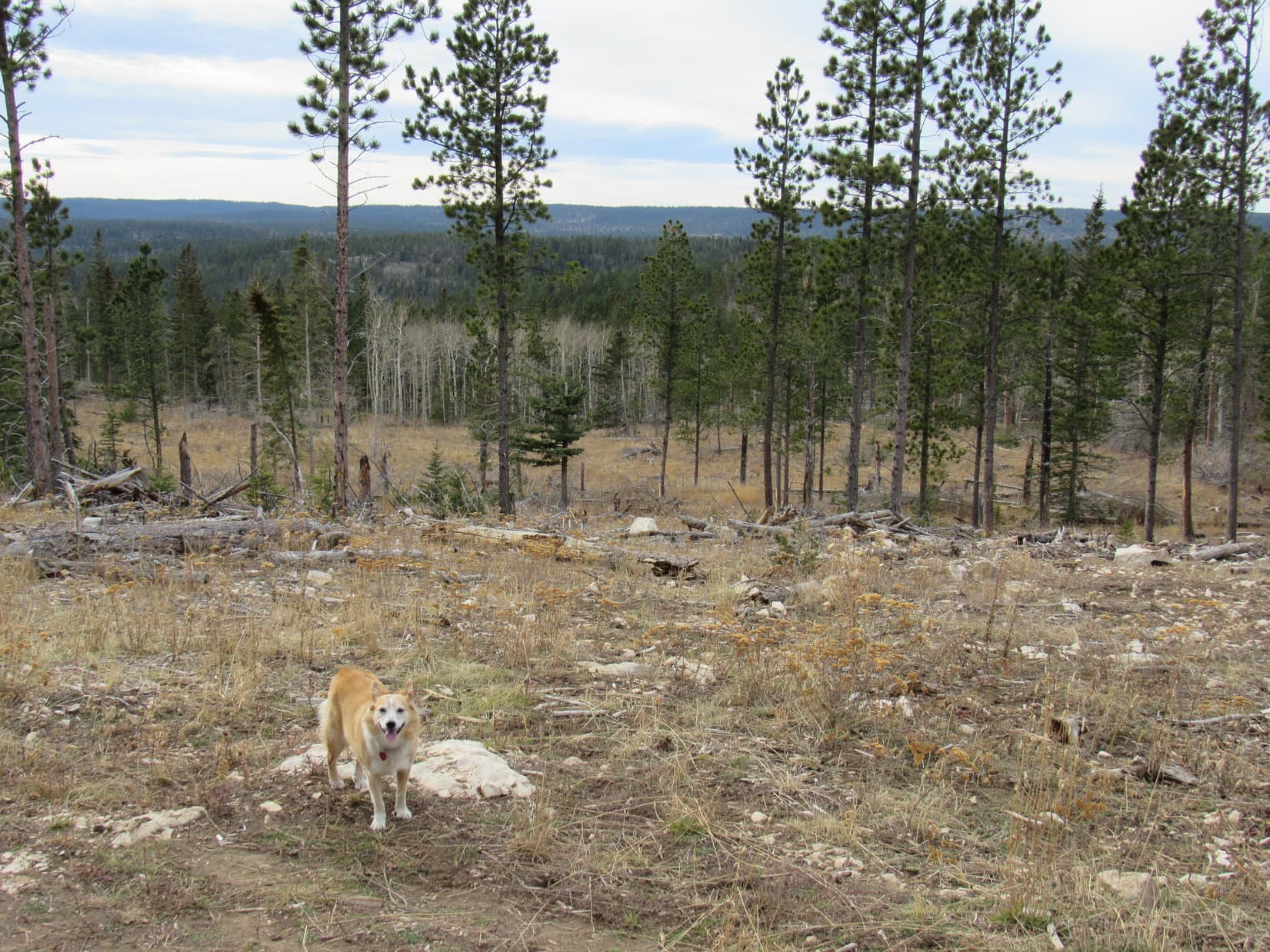
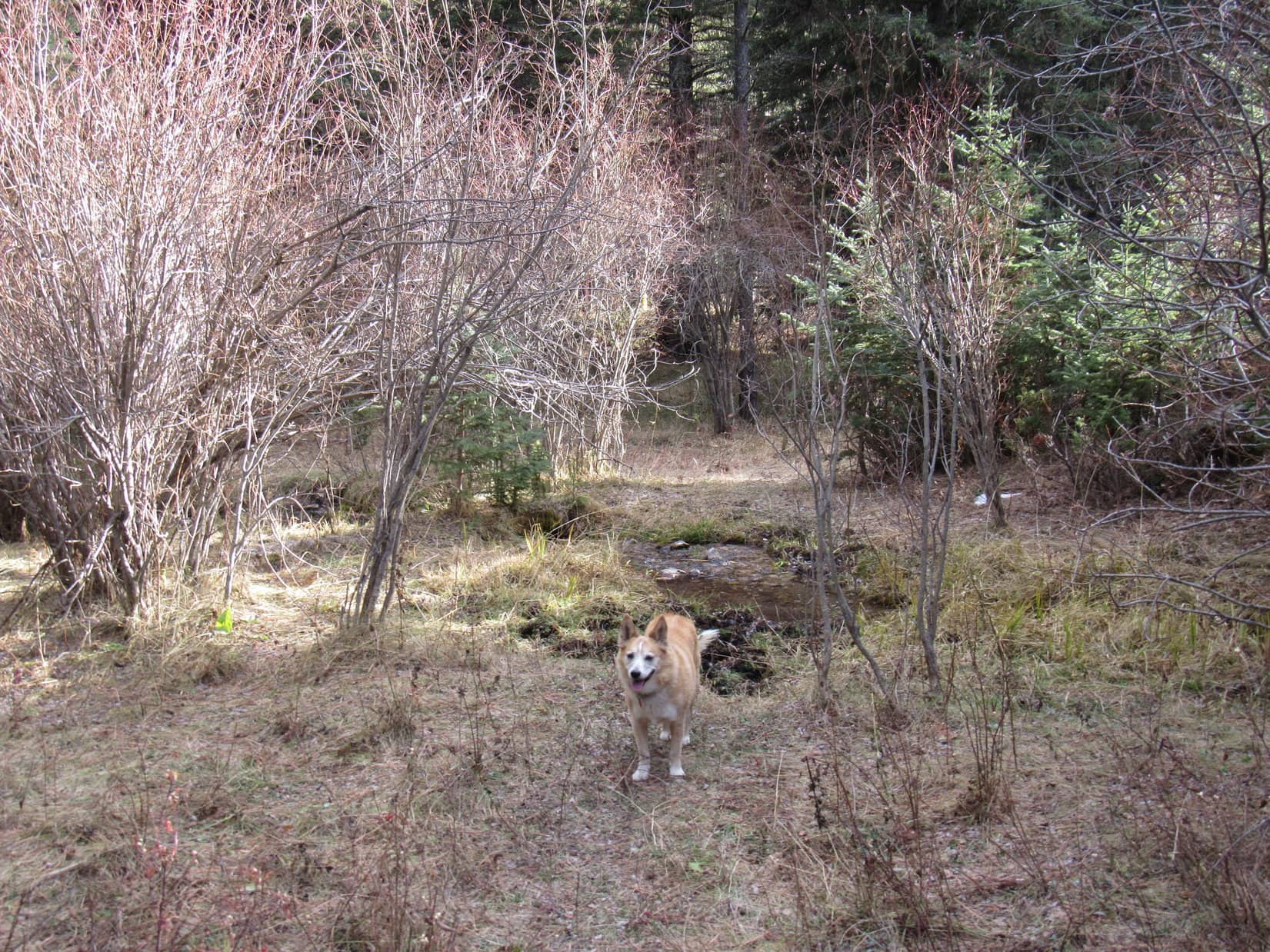
North Breccia Cliffs, Absaroka Range, Wyoming 6-30-21

Days 8 & 9 of Lupe’s 2nd Summer of 2021 Dingo Vacation to Wyoming!

6-29-21, early, Reef Creek Picnic Area, Chief Joseph Scenic Highway – After pulling a piece of paper out of a back pocket, SPHP was stunned.

Loopster!  Guess what!  You won’t believe this.  I had it all along!

Had what, SPHP?

The Windy Mountain topo map.  Had it the whole time yesterday!  It was in my back pocket.  Sure would have made things a lot easier, if I’d known that.

SPHP, you mean to tell me that you didn’t check all of your pockets, and never actually lost the map?

Crazy, I know!  I thought I’d looked everywhere, but, yeah, that’s the case.  Just found it.

So we did all that steep off-trail wandering for no reason at all?

Seems that way, Loop.  I guess you could say that.

You’re right, SPHP!  I can hardly believe it.  You may not have lost the map, your mind on the other paw, I’m not so sure about.

Without the map yesterday, Windy Mountain (10,262 ft.) had turned into somewhat of an ordeal.  Didn’t matter now, though.  Lupe had made it to the top even without the map, and today was a rest day.  She could snooze as much as she wanted to while SPHP drove.  At a stop at Dead Indian Pass for a photo looking back at Windy Mountain, the American Dingo didn’t even bother getting out of the RAV4.
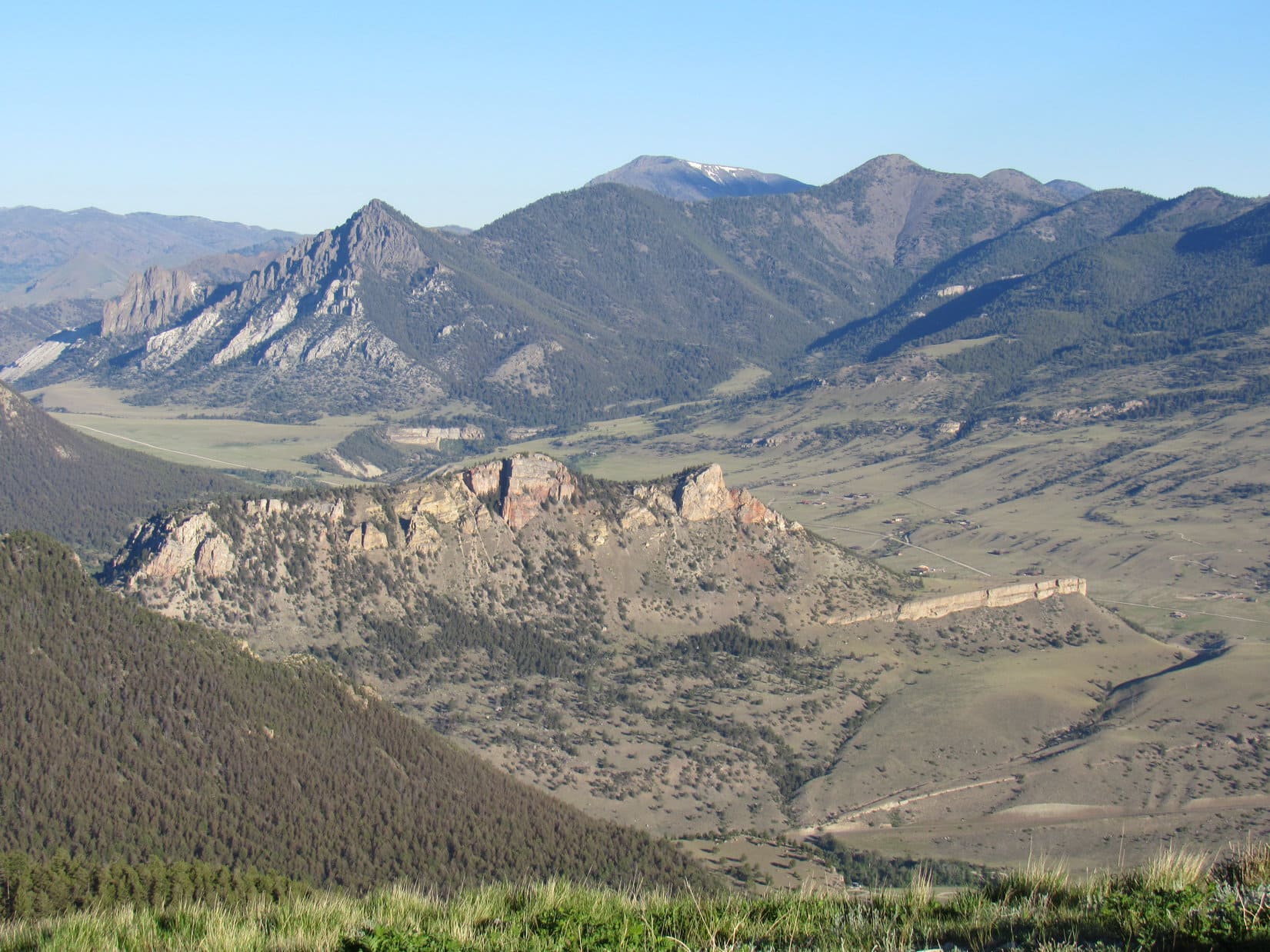
Windy Mountain (Center) from Dead Indian Pass. Photo looks WNW with help from the telephoto lens.

By noon, the snoozing was about over.  S of Thermopolis, Lupe waded in the Wind River while SPHP went for a swim in Rattler Whirlpool.  Cows and horses on the drive to Lander provided too many frenzied barking opportunities to even think about passing out.
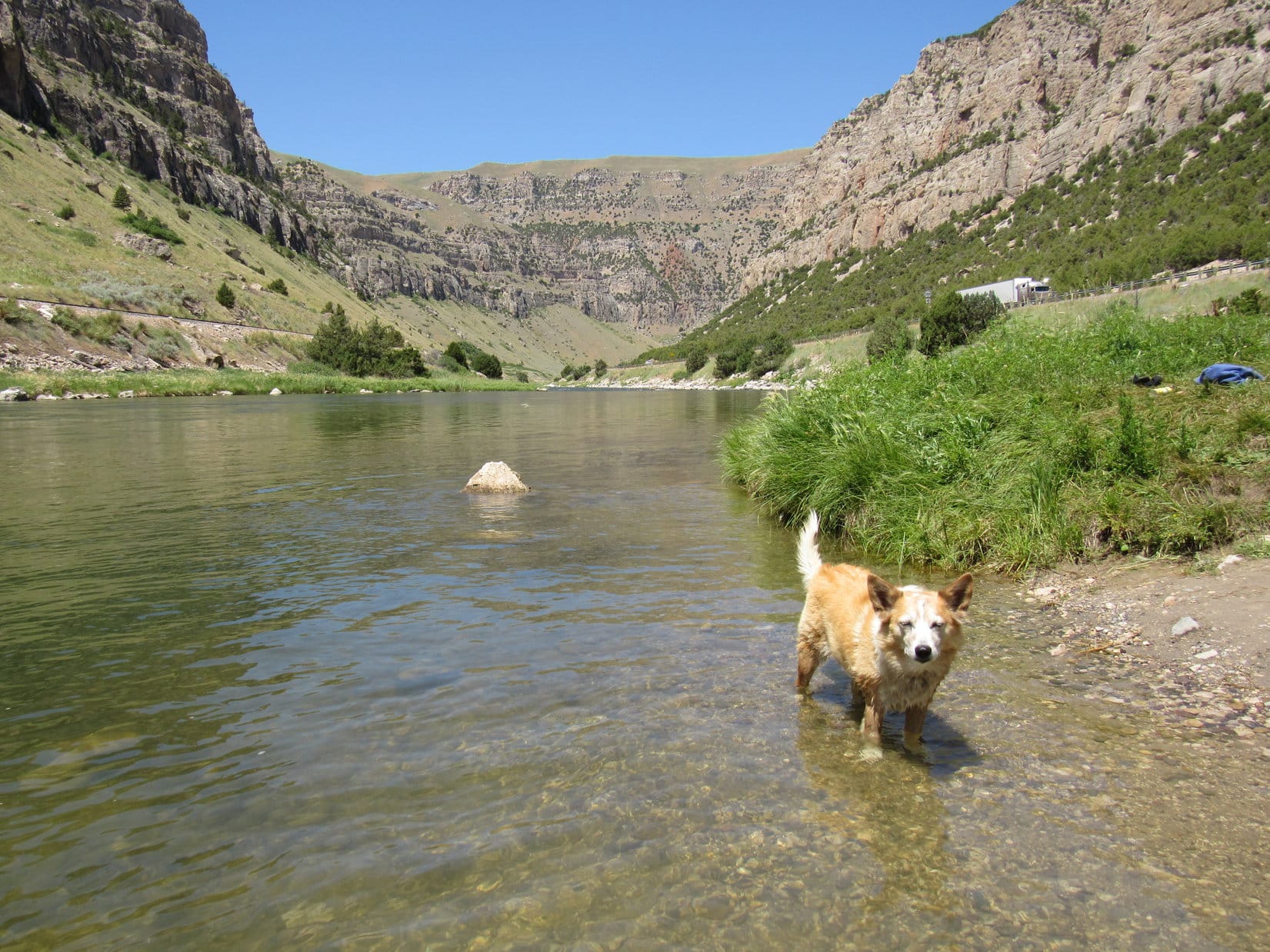
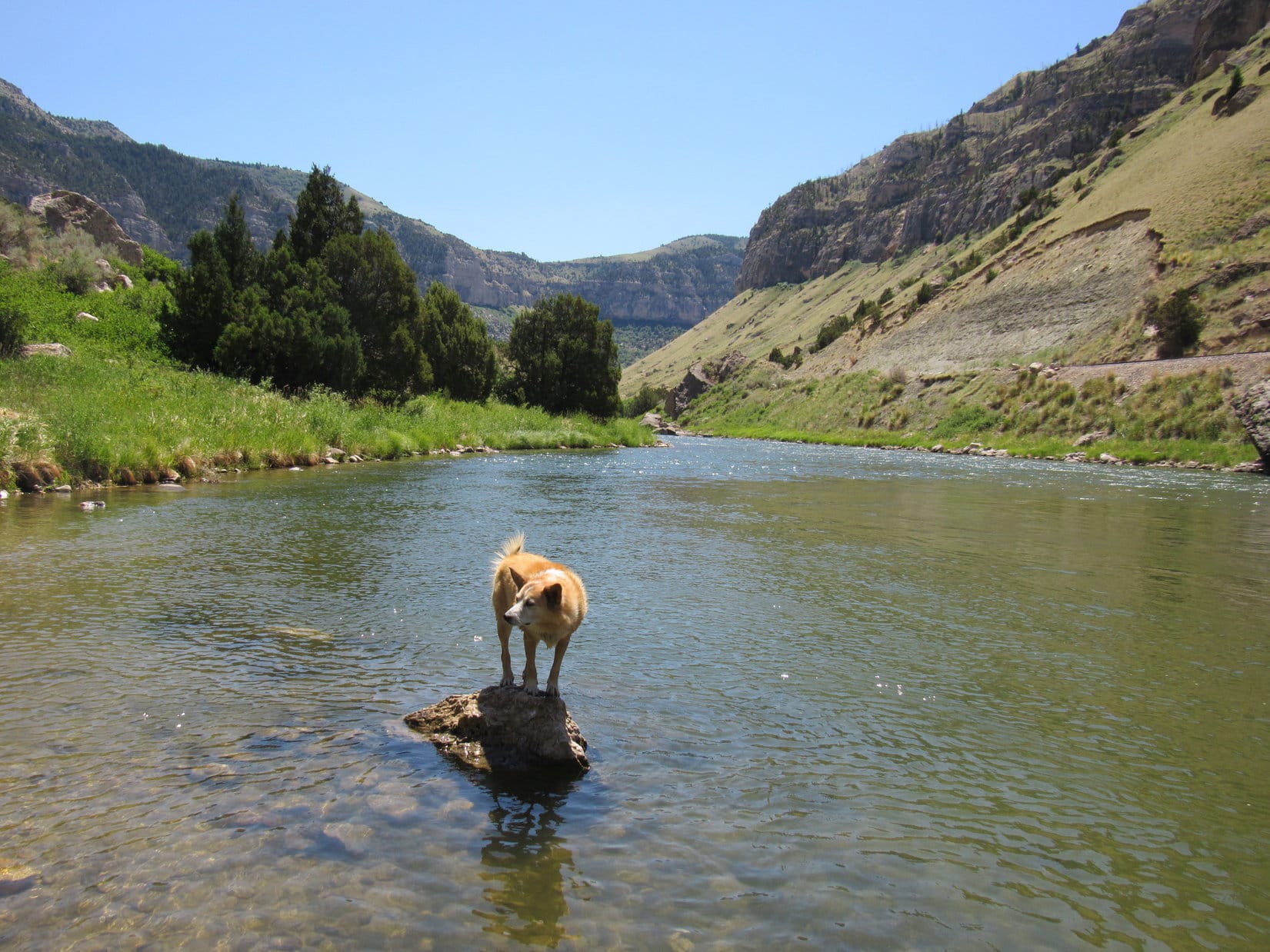
Wading in the Wind River at Rattler Whirlpool. Photo looks downstream.
Rattler Whirlpool. Photo looks upstream.

6-29-21, 2:20 PM, 80ºF – Lander city park!  Lupe recognized it instantly.  Always a good time, the rest of the day would get spent right here.  The Middle Popo Agie River sure looked low for this time of year, but the park was still full of soft green grass beneath the old cottonwoods.  SPHP worked on the trip journal.  Meanwhile, Looper watched squirrels and sniffed with other dogs until it got dark.
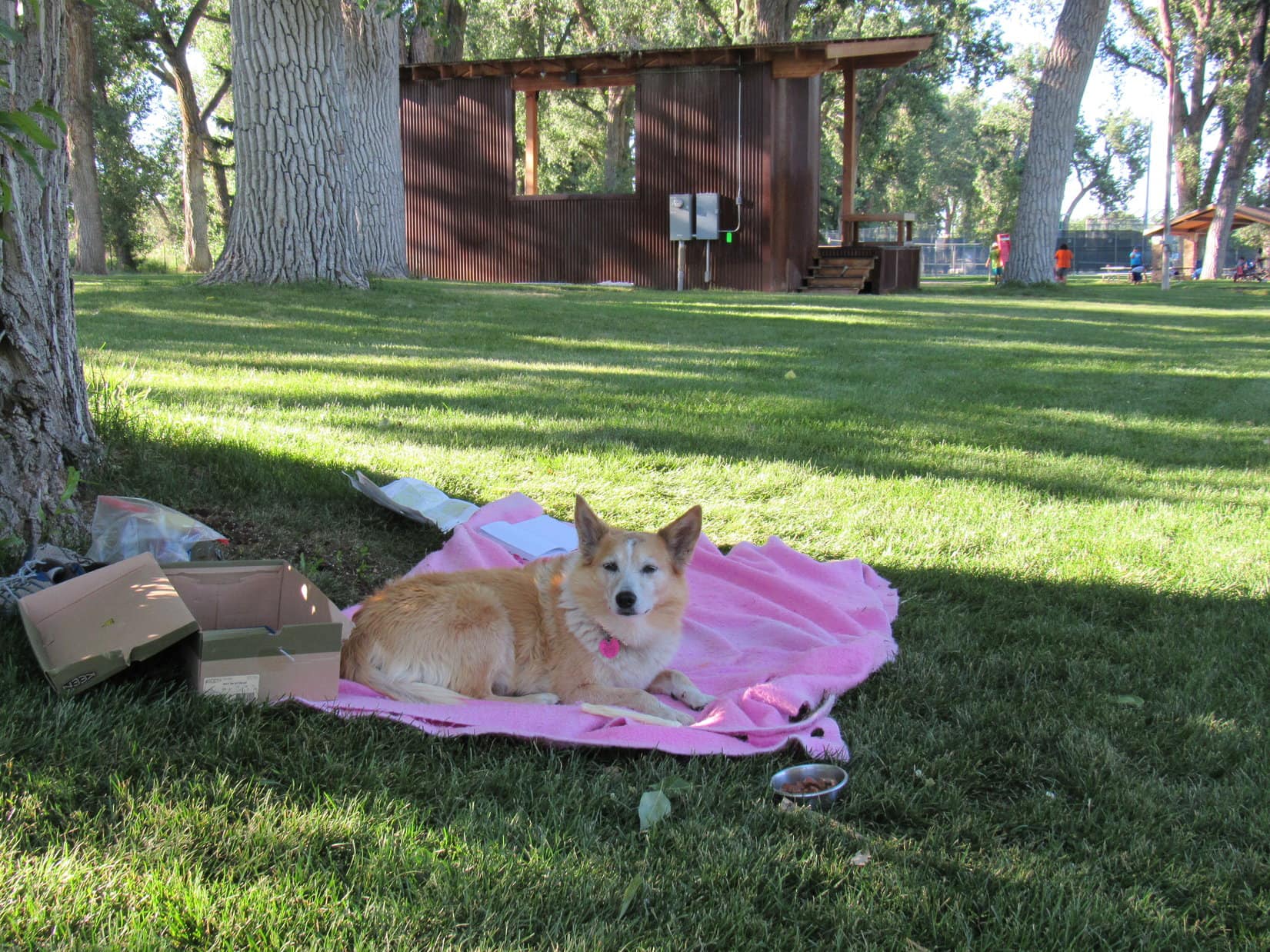
Taking it easy in Lander City Park.

6-30-21, 8:23 AM, Hwy 287/26 NW of Dubois near Togwotee Pass  –  Several miles ahead, a massive ridge stood N of the highway.

Hope you got all rested up yesterday, Looper, cause I think that’s it!

That’s North Breccia Cliffs (11,240 ft.), SPHP?

Believe so, Loop!

Going to be a long day, isn’t it?

Especially the way we’re going to go about it, Loopster!  Big Chicken route, here we come!
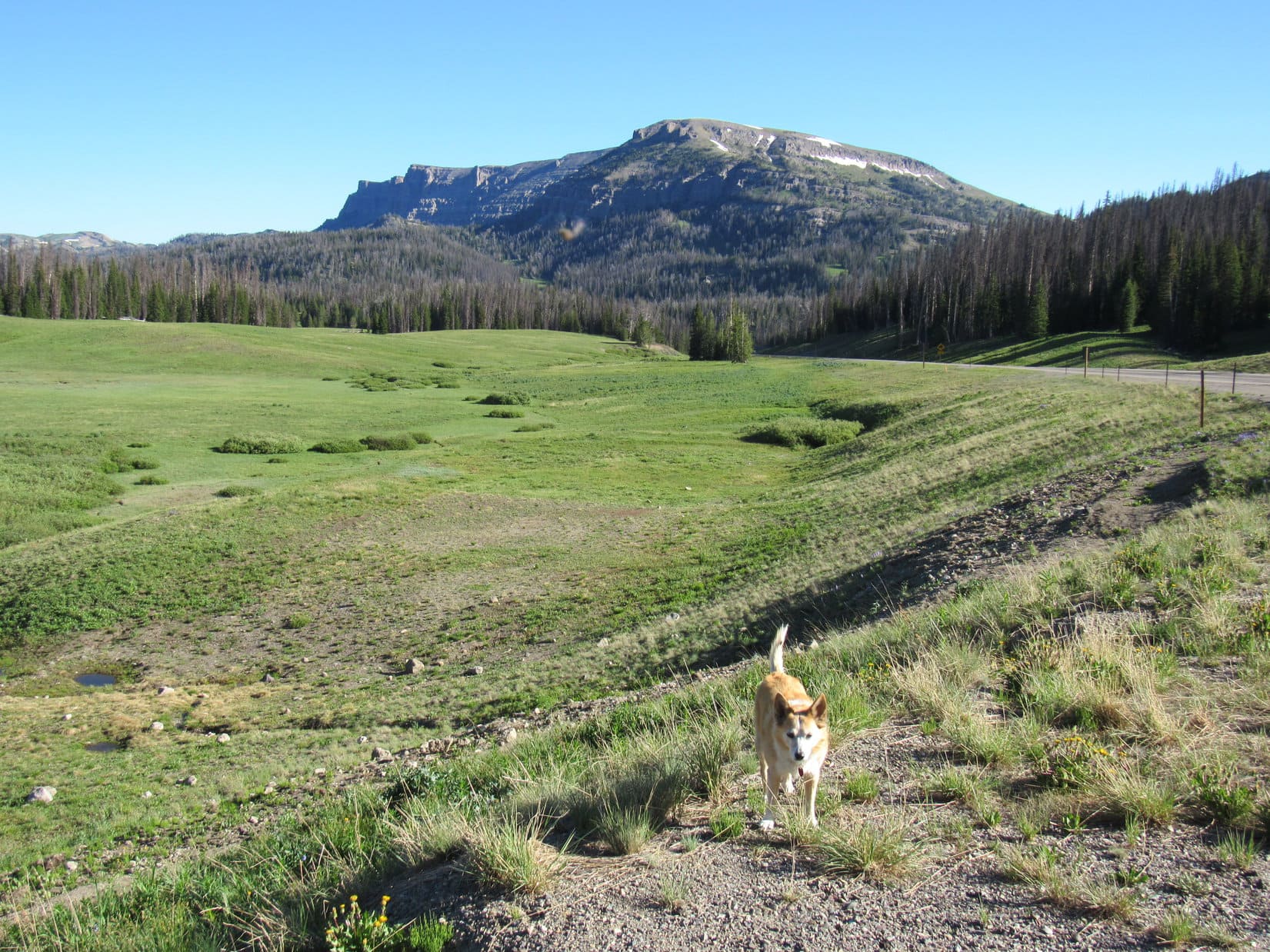
North Breccia Cliffs (Center) from the Togwotee Pass region. Photo looks N.

5 miles NW of Togwotee Pass, SPHP started looking for a R turn onto USFS Road No. 30042.  A gravel road appeared almost immediately.  No sign, but SPHP tried it.  Ahh, there was a sign right after making the turn!  “Holmes Cave T.H.”  This was it!

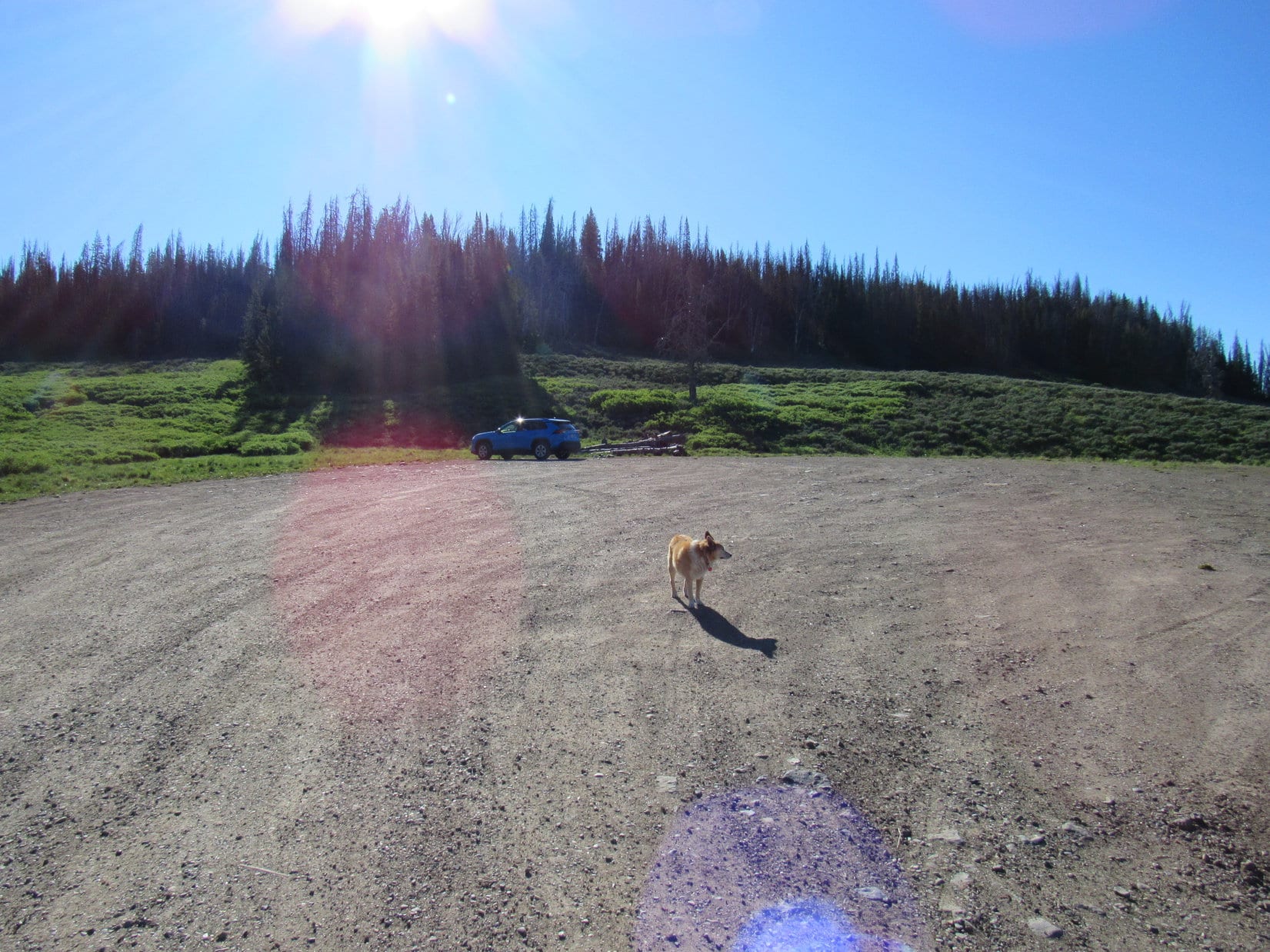
The huge trailhead proved to be only 0.1 mile from the highway.  Good thing the trailhead was so big, because the joint was jumping when Lupe arrived on this beautiful morning at the end of June.  With a little luck, SPHP managed to find a spot to squeeze the RAV4 into the mix.  Excited, the American Dingo leapt out to mingle with the crowd.

By the Holmes Cave trailhead sign. Photo looks N.
Actually the crowd was running a little late. Holmes Cave trailhead.

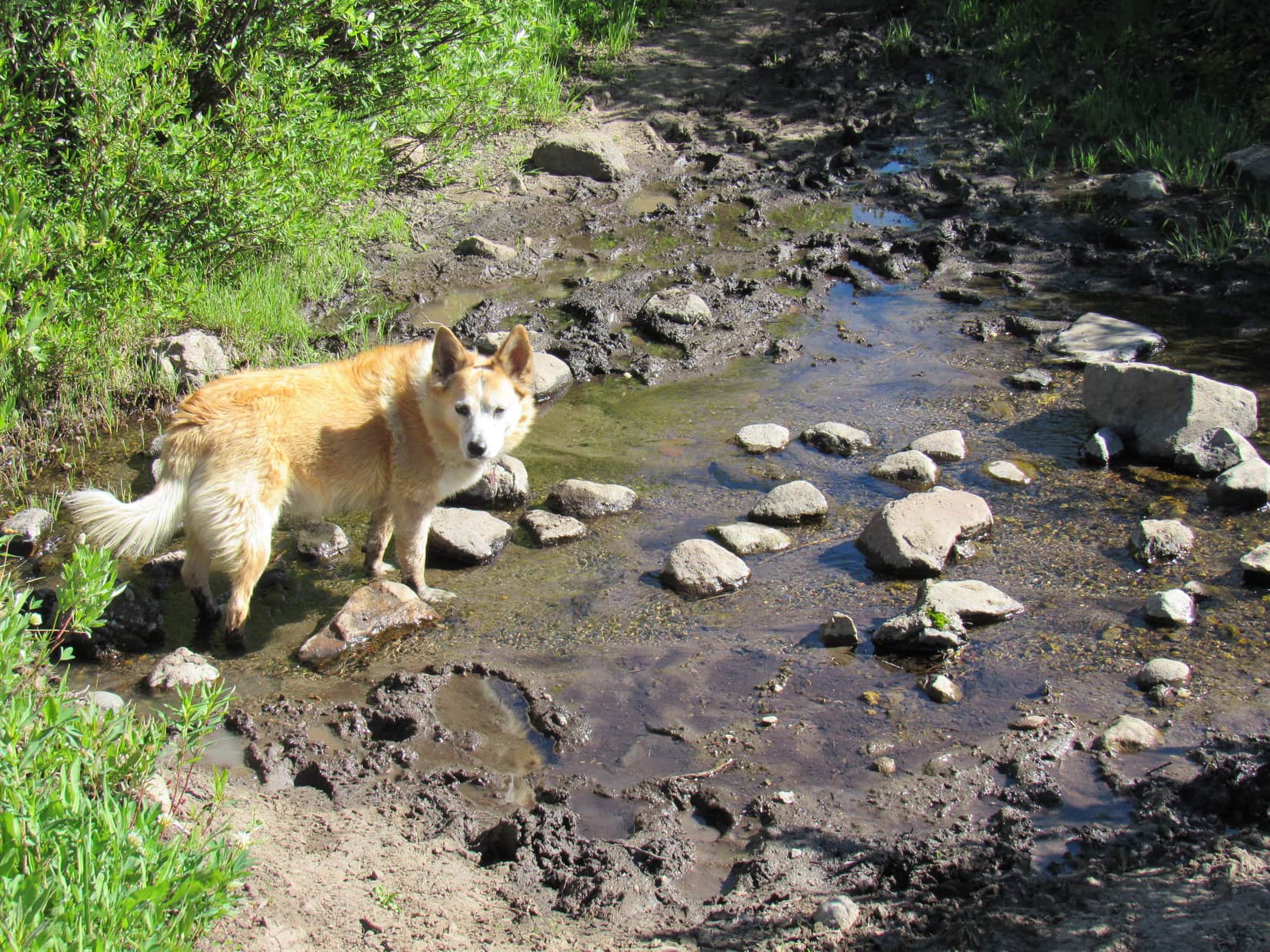
6-30-21, 9:05 AM, 57ºF, Holmes Cave trailhead, 5 miles NW of Togwotee Pass – Taking USFS Road No. 30042, Lupe set out for North Breccia Cliffs, pausing almost right away for a drink out of a big mud puddle fed by a tiny trickle of a stream.  From the puddle, the road went NE up a gentle rise, quickly topping out and turning N.

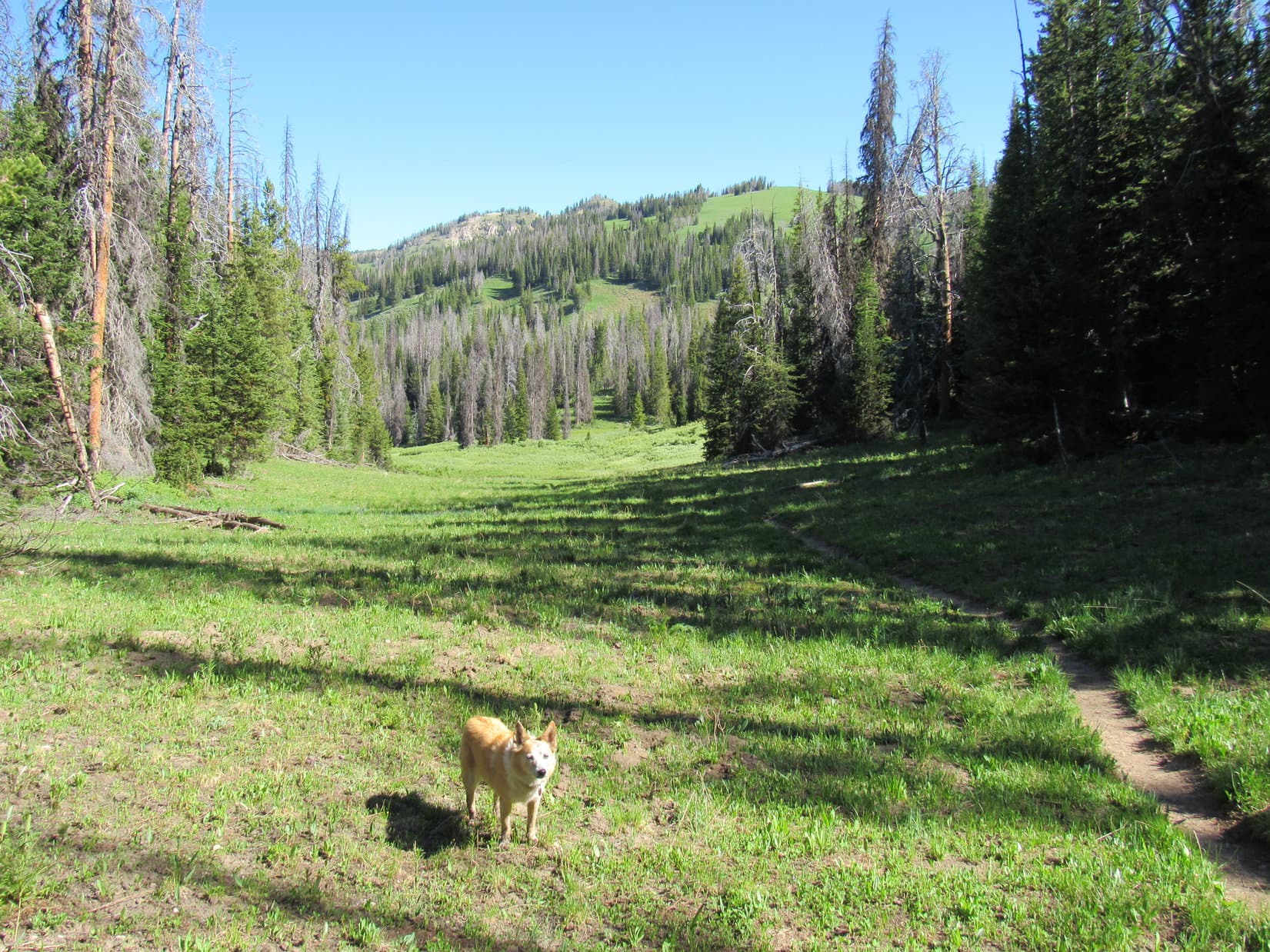
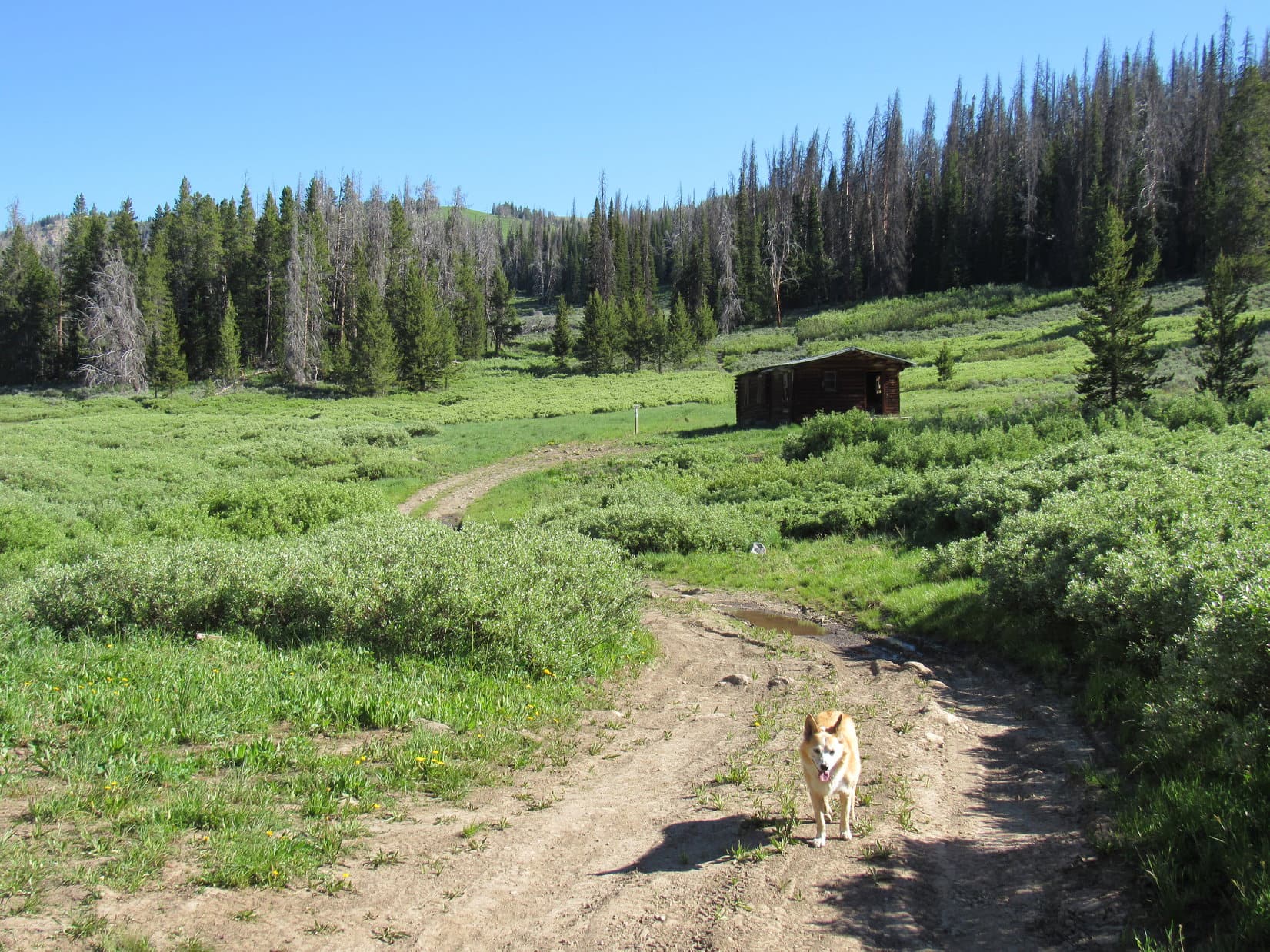
An ancient cabin was just ahead beyond a somewhat larger stream, which was easily crossed on a few decaying boards of dubious strength that served as a bridge.  The road ended at the cabin, but Holmes Cave Trail No. 6057 continued N.  After a gradual gain of more than 200 feet of elevation, Lupe reached a minor pass.  Partially forested hills were in sight beyond the pass, as the trail began a gentle descent into a valley.
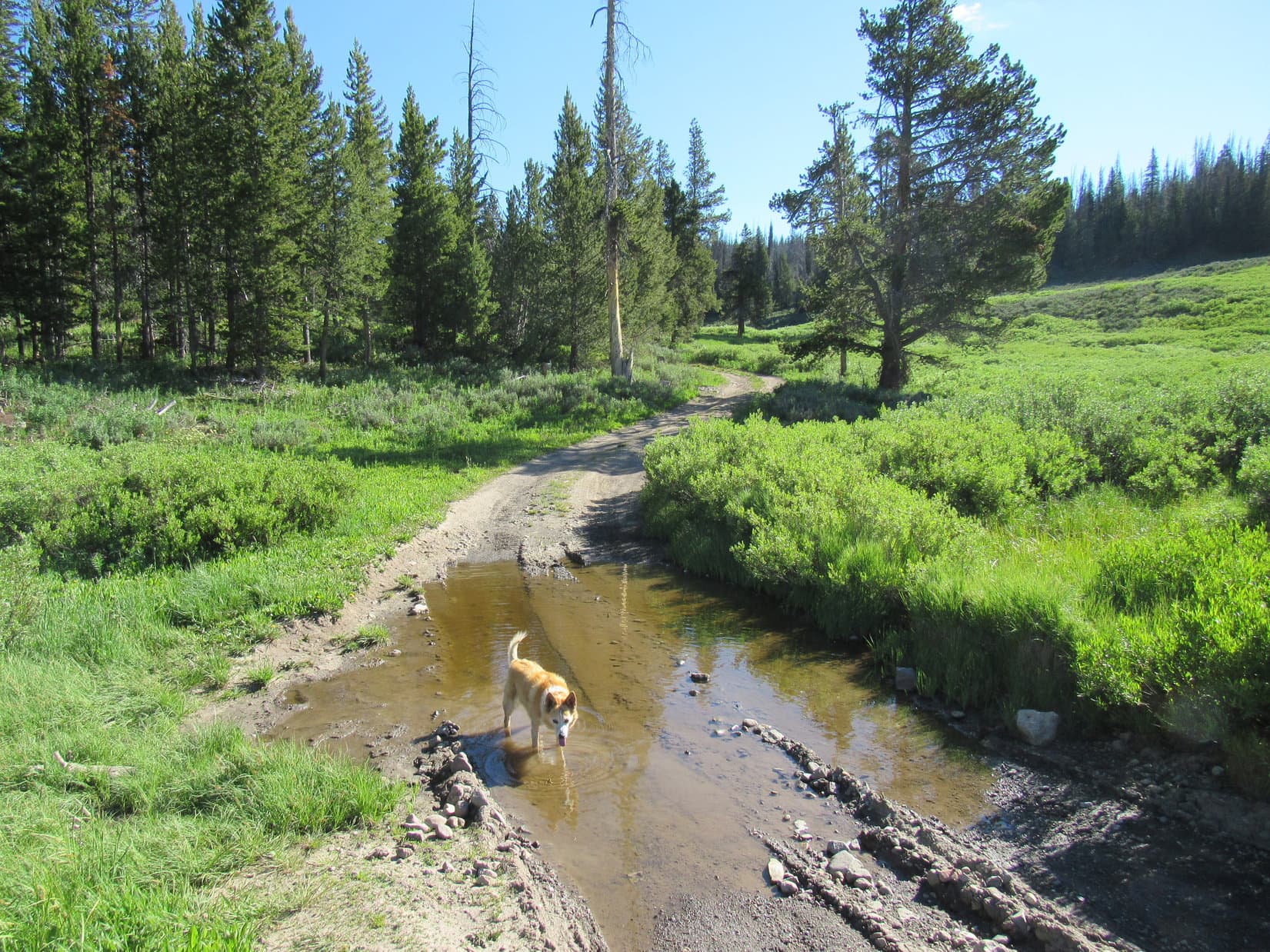
Setting out on USFS Road No. 30042. Photo looks NE.
Approaching the ancient cabin at the end of the road. Photo looks N.
At the start of Holmes Cave Trail No. 6057. Photo looks N.
Heading up to the first minor pass. Photo looks N.
At the pass with a view of the next valley. Photo looks NNW.

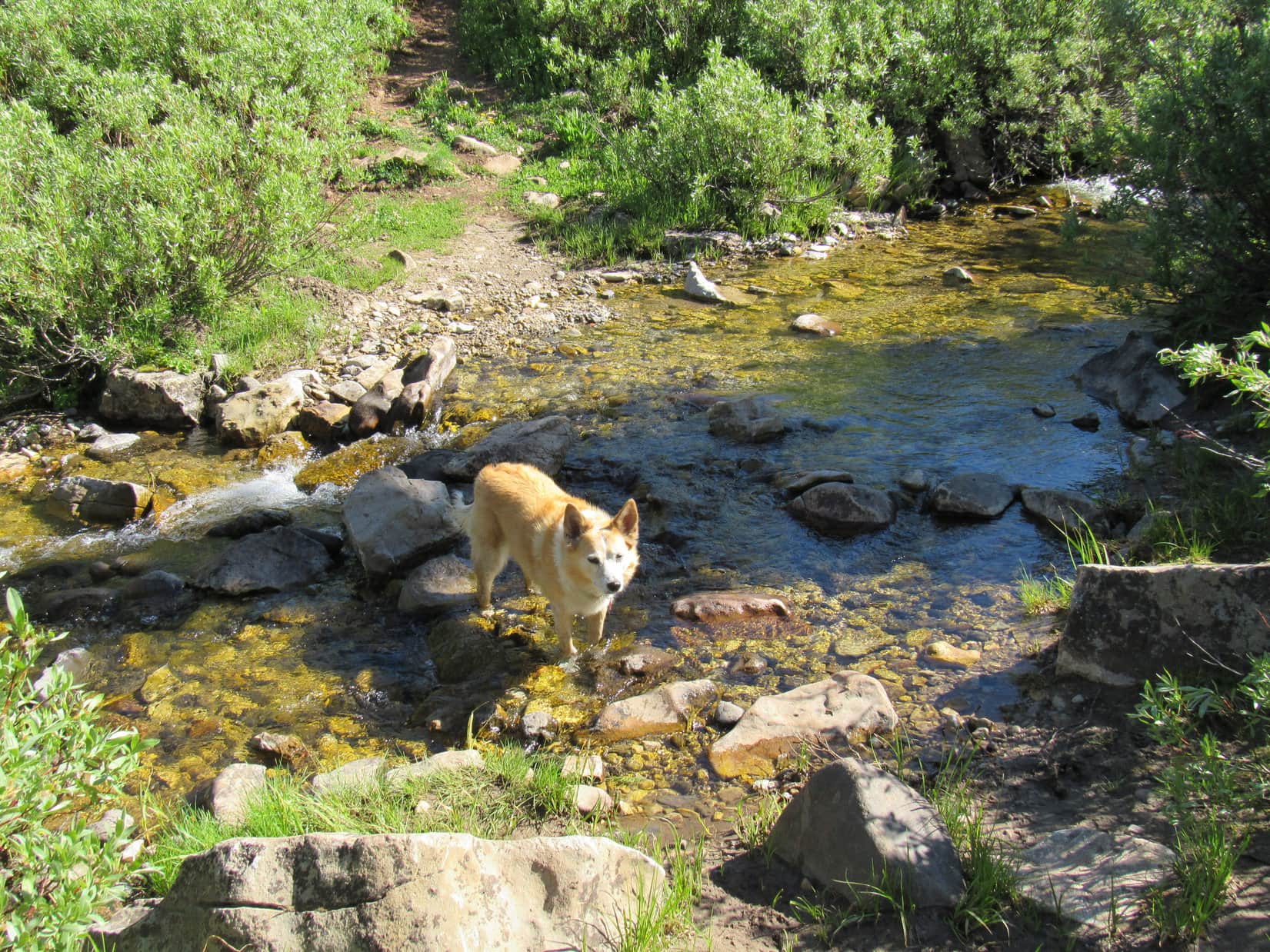
After losing some elevation, the trail began curving NE again.  Lupe came to a region of low bushes.  The Carolina Dog passed a mucky area along a seeping hillside before reaching a small stream.  This was soon followed by another stream, the largest one yet, but it still wasn’t very big.  Loop waded across while SPHP easily rock-hopped it.

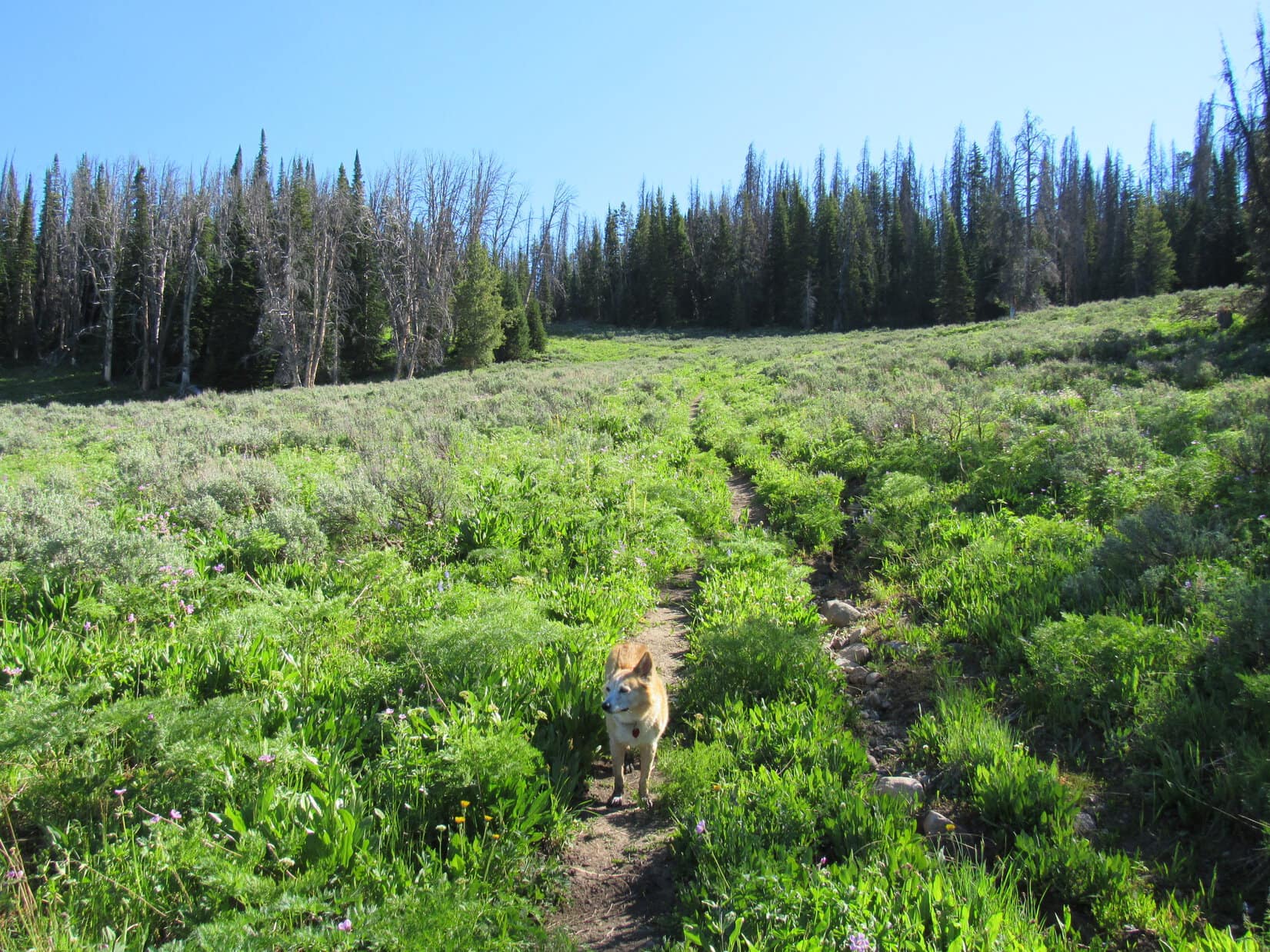
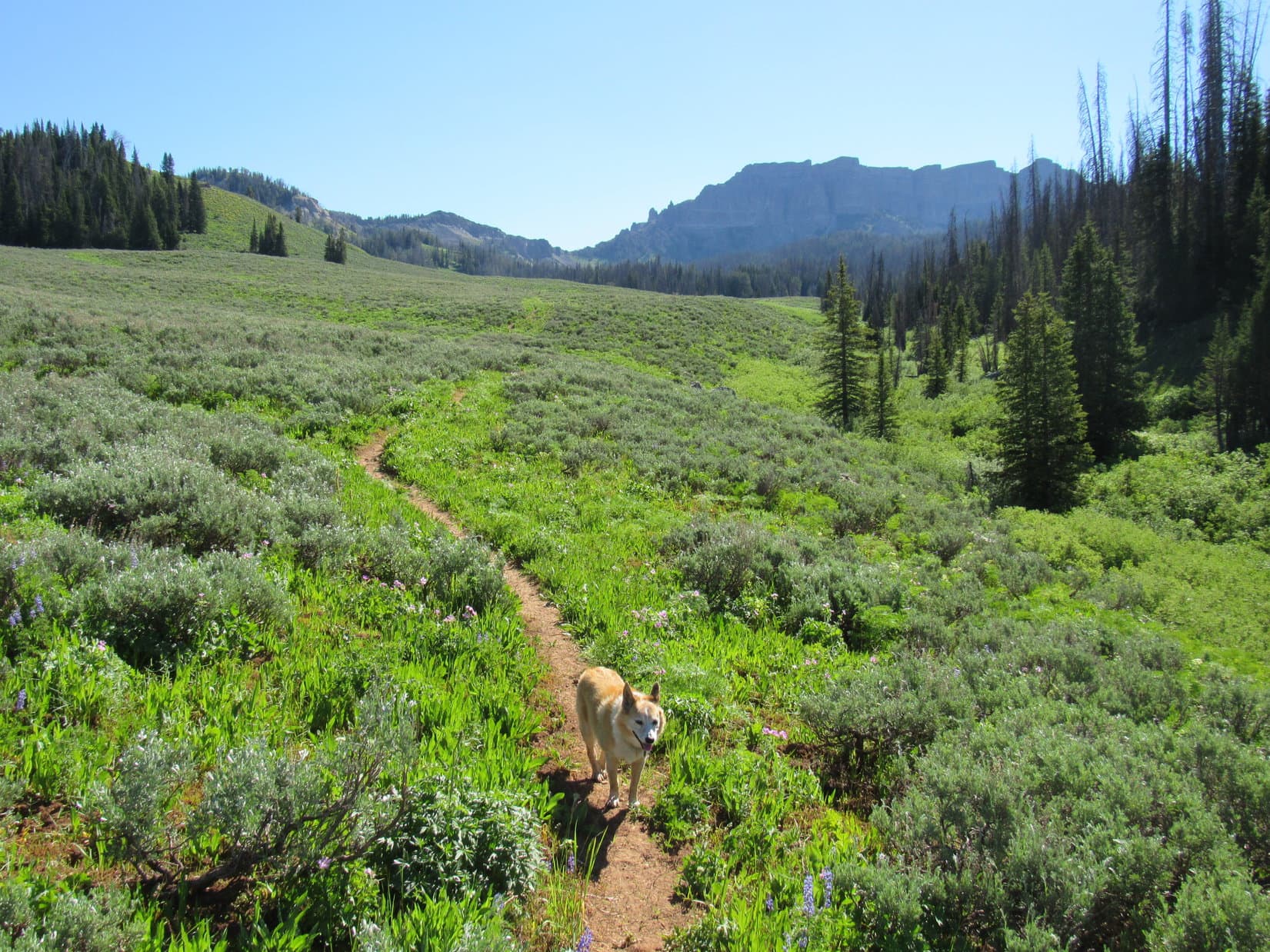
Beyond the streams, Holmes Cave Trail No. 6057 continued NE, now heading up a beautiful, green valley.  Even the sagebrush looked great!  Part of the meadow contained an enormous dense stand of bushes chest high on SPHP, a veritable jungle to Lupe where she couldn’t see a thing.  Fortunately, other than another muddy stretch, the trail was good as it passed through this huge thicket before crossing another small stream.  By now, the NW end of North Breccia Cliffs (11,240 ft.) was in view.

Beyond the minor pass as the trail heads NE. Photo looks NE.
At the first little stream beyond the mucky stretch.
Crossing the next, and largest, stream so far.
The NW end of North Breccia Cliffs (R) comes into view. Photo looks ENE.

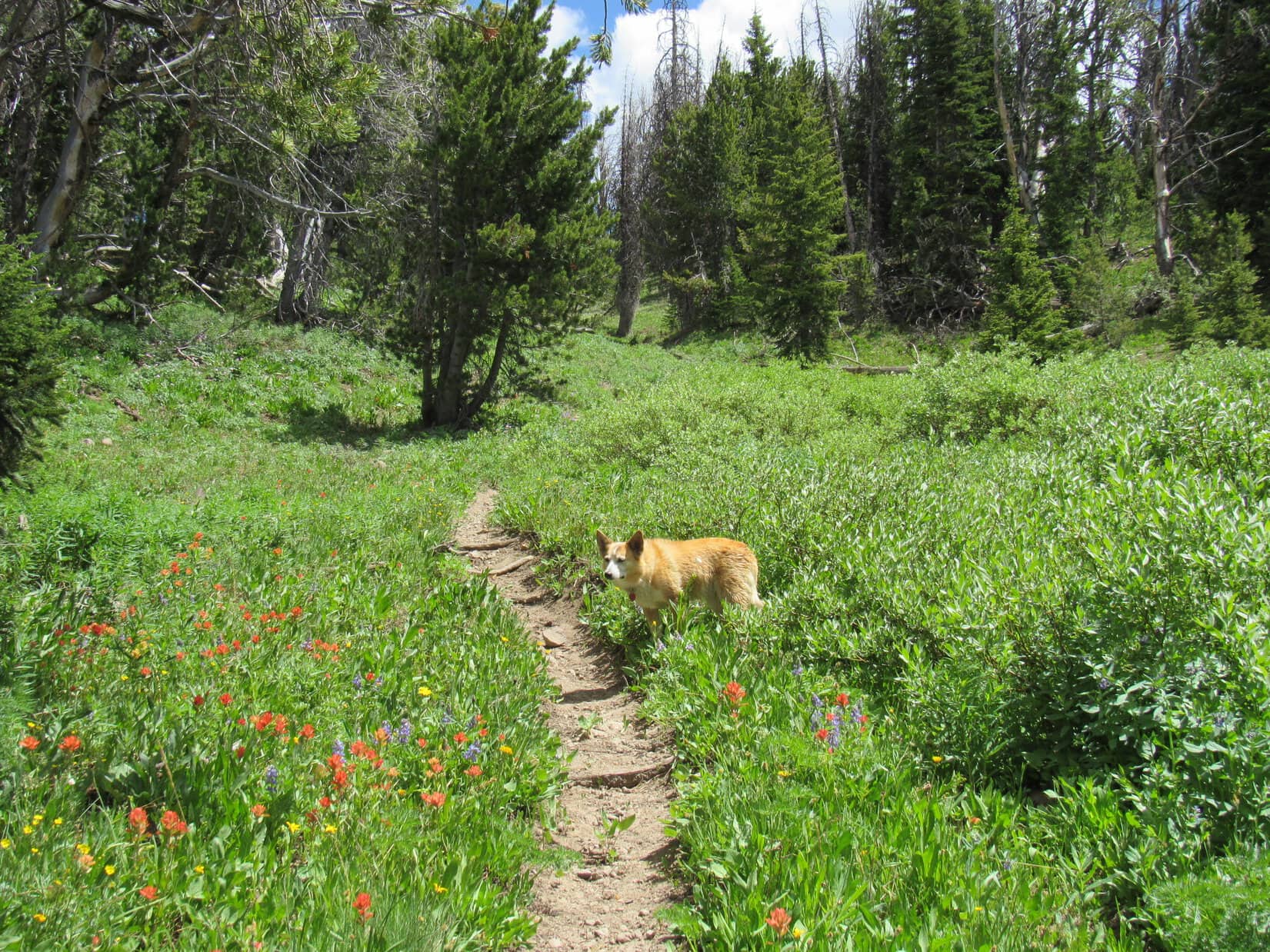
Swarms of butterflies flitted and danced among countless wildflowers as the trail proceeded toward the still distant cliffs.  Several big yellow and black Swallowtails were among them.  Passing a small pond on the R (S), SPHP dubbed it Swallowtail Pond.
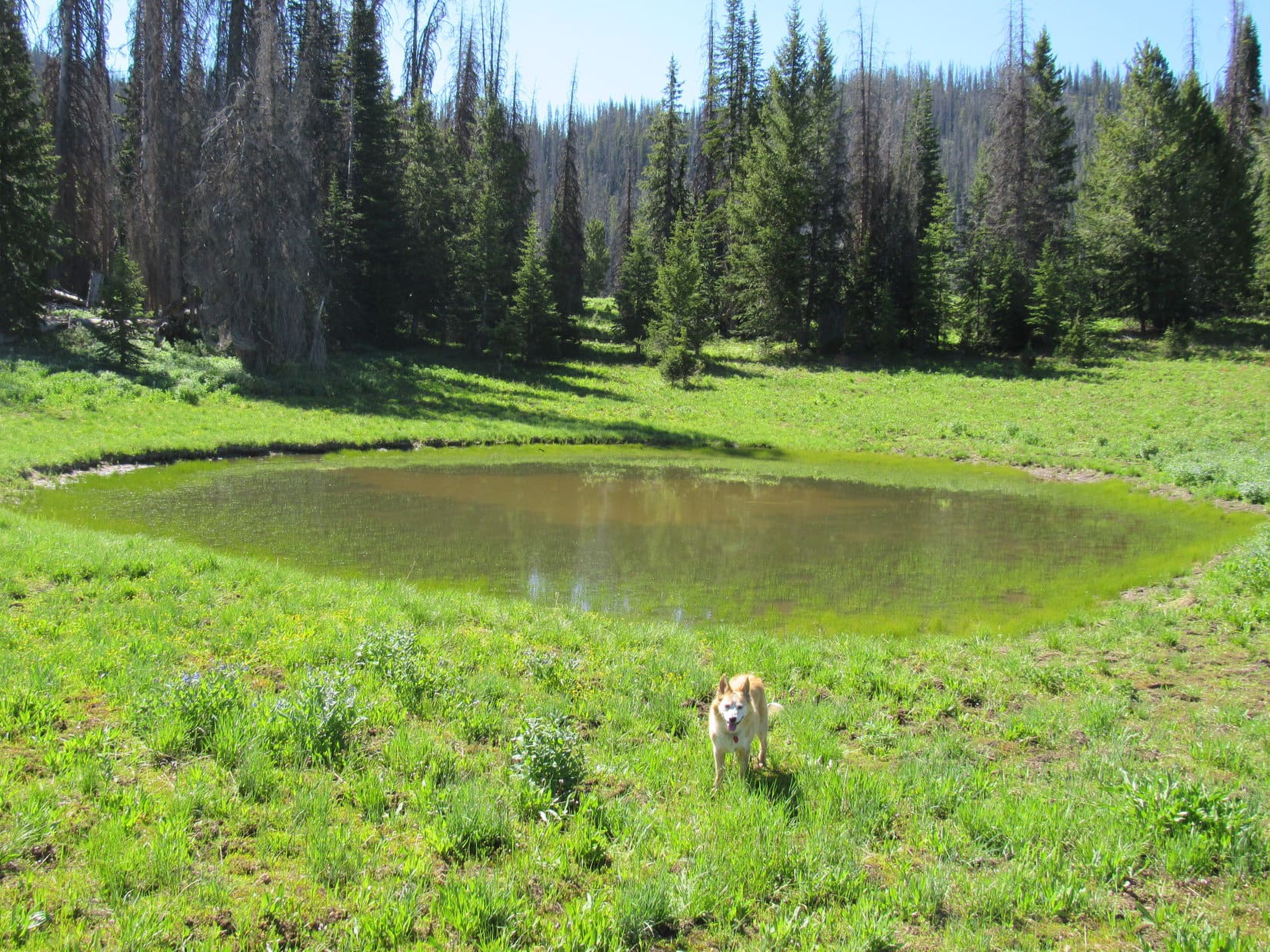
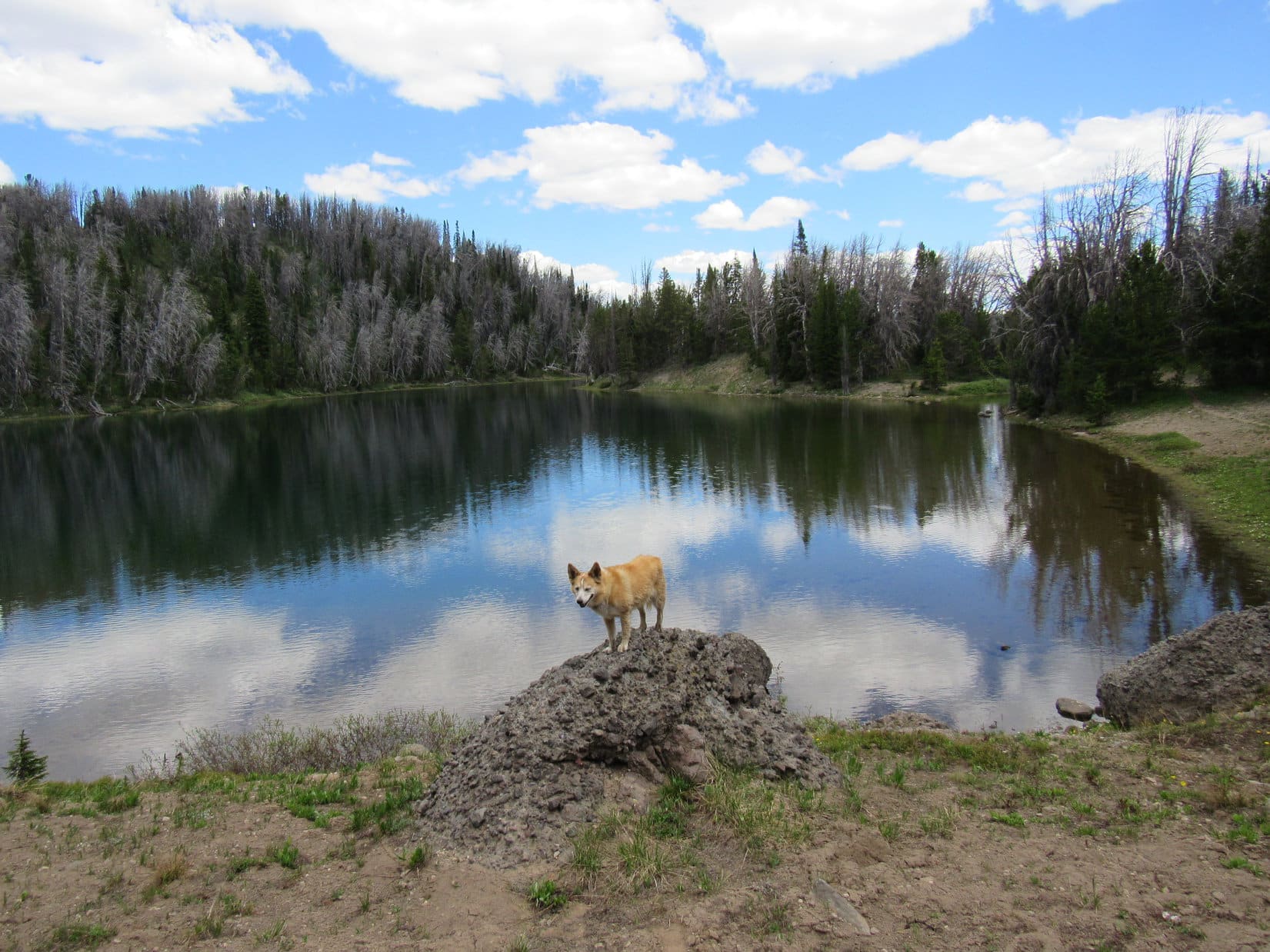
By Swallowtail Pond.

Beyond Swallowtail Pond, instead of continuing toward North Breccia Cliffs, Holmes Cave Trail No. 6057 began curving N, steepening as it started a long climb out of the valley.

If we were like most climbers, Looper, we’d probably leave the trail along in here and head straight for the NW end of North Breccia Cliffs.  That’s the popular short route I’ve read about online.

But we’re going the long way because you’re a big chicken, right SPHP?

Exactly!  The direct route is a good 4 miles shorter one way than what we’re going to attempt, but involves heading up a long chute of loose rock.  I’m under the impression that the chute is only class 2+, but the pictures I’ve seen freak me out.  Appears to be incredibly steep!  No doubt you could make it, Loop, but I’m not having anything to do with that crazy chute.

The sun felt hot on the trudge up out of the valley.  As Lupe got higher, the popular climber’s chute SPHP was scared of came into view.  Still a mile off, but checking it out with the help of the camera’s telephoto lens didn’t change SPHP’s opinion.  Nope, not doing that!
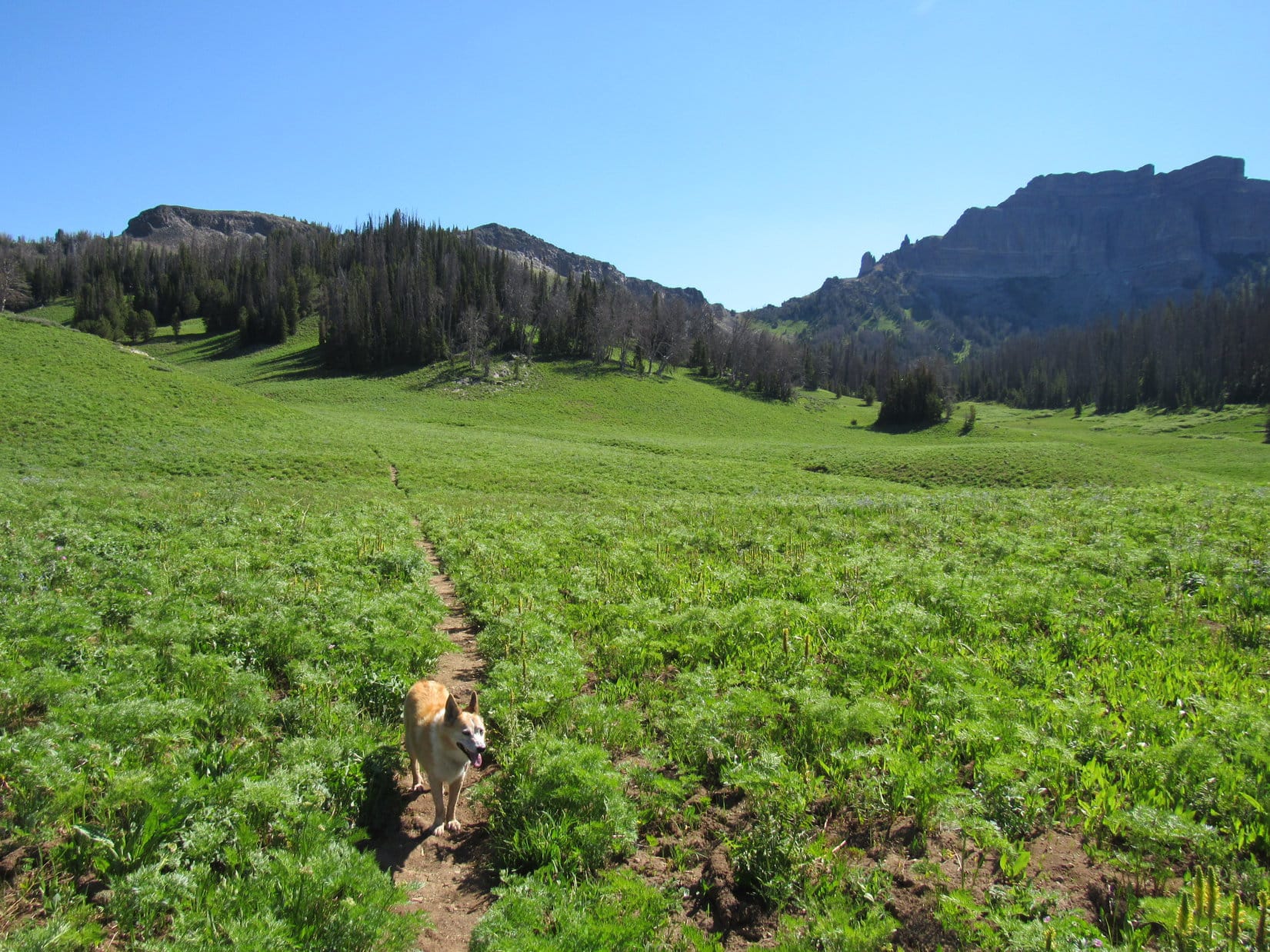
Beyond Swallowtail Pond. Peak 10385 (L of Center), North Breccia Cliffs (R). The most popular climber’s route up North Breccia Cliffs leaves the trail and heads for the pass seen ahead on the R. Photo looks NE.
Climbing out of the valley. Photo looks N.
The steep climber’s chute (Center) comes into view. Peak 10385 (L of Center), North Breccia Cliffs (R). Photo looks ESE.
Peak 10385 (L), North Breccia Cliffs climber’s chute (R). Photo looks ESE with lots of help from the telephoto lens.

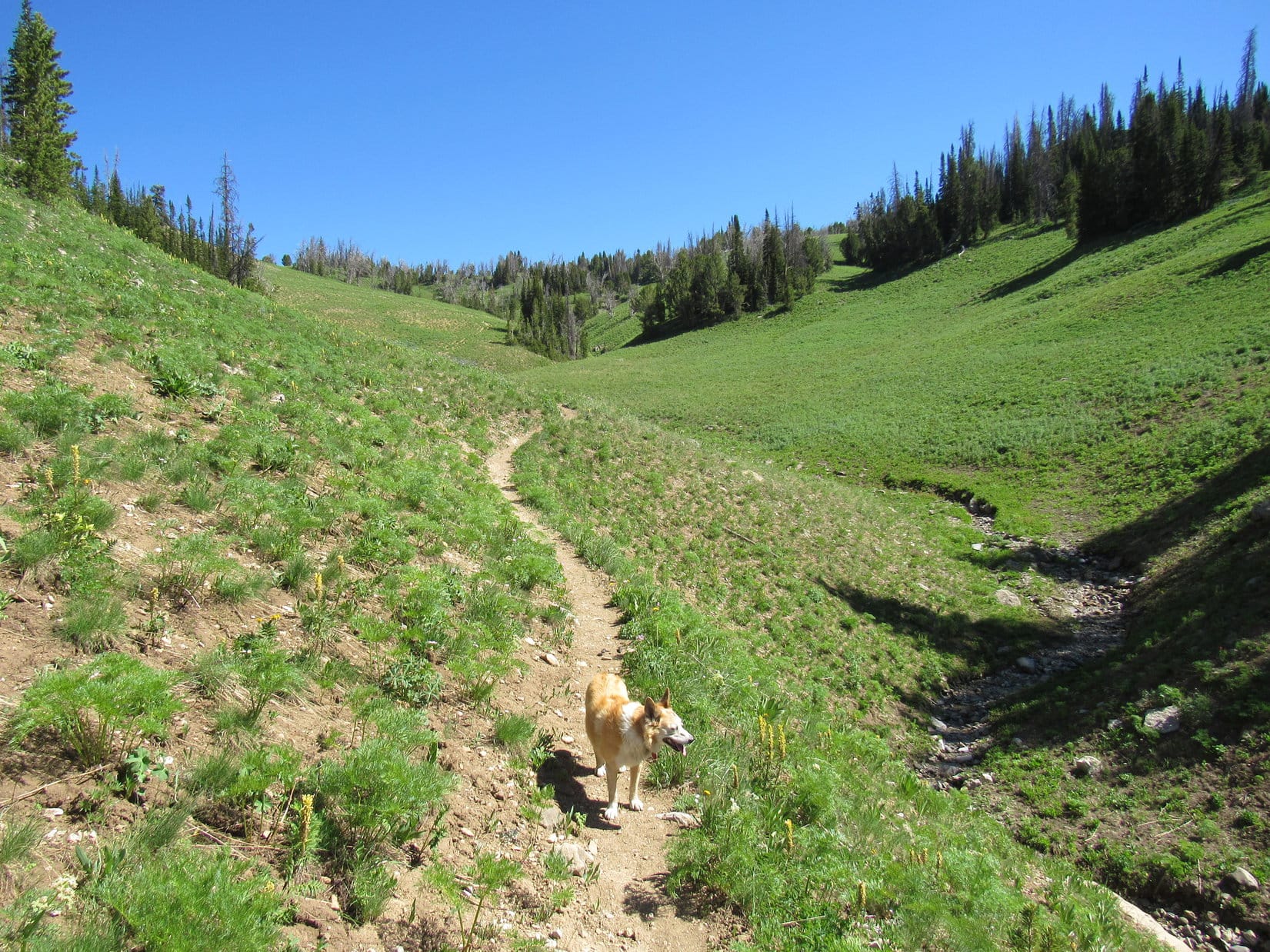
The sunny trudge N continued for 0.67 mile to a pass where Holmes Cave Trail No. 6057 topped out on an open slope just W of HP10218.  Ahead was a gradual descent toward the saddle leading to HP10392, which was now in sight directly ahead.
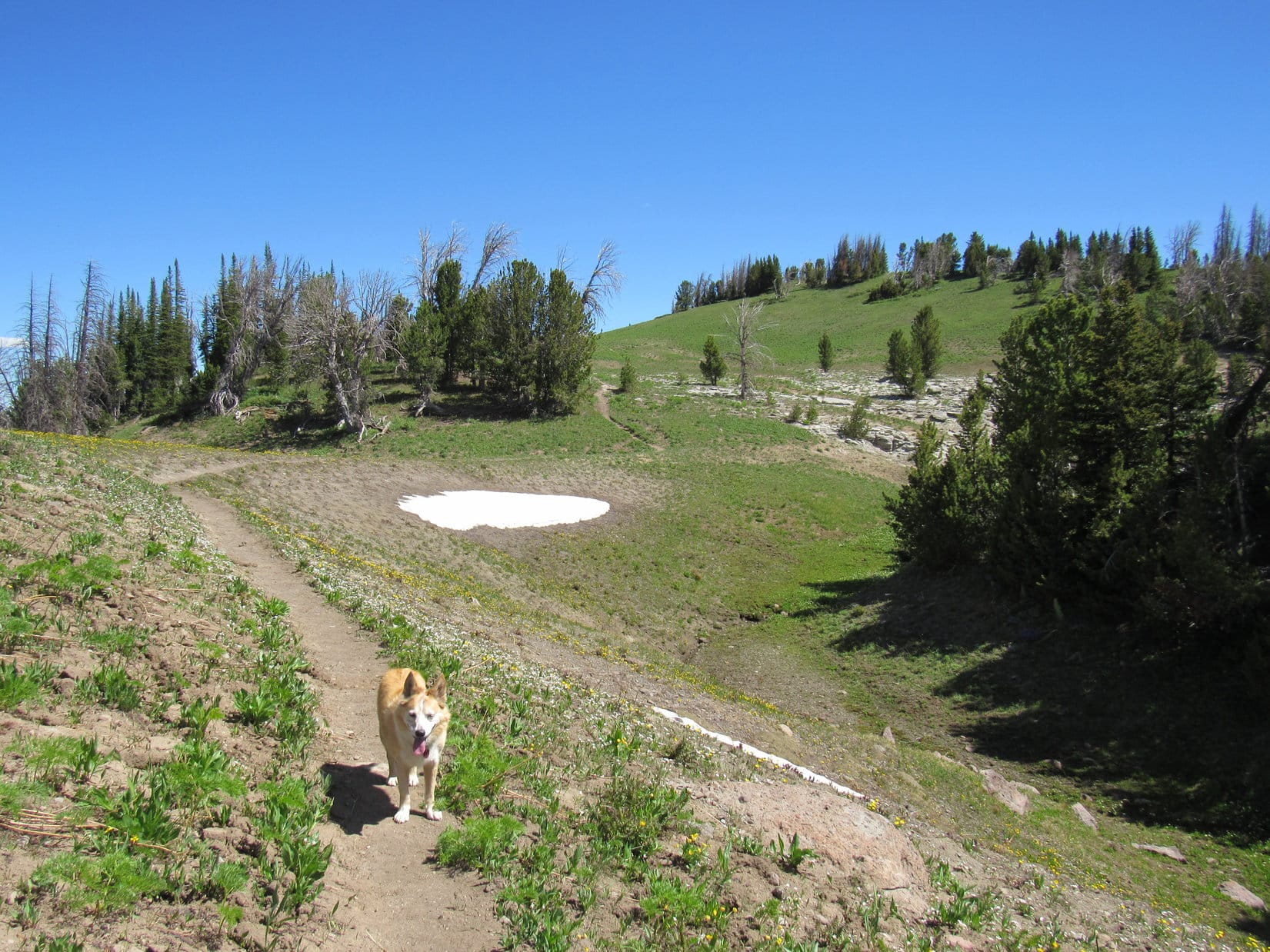
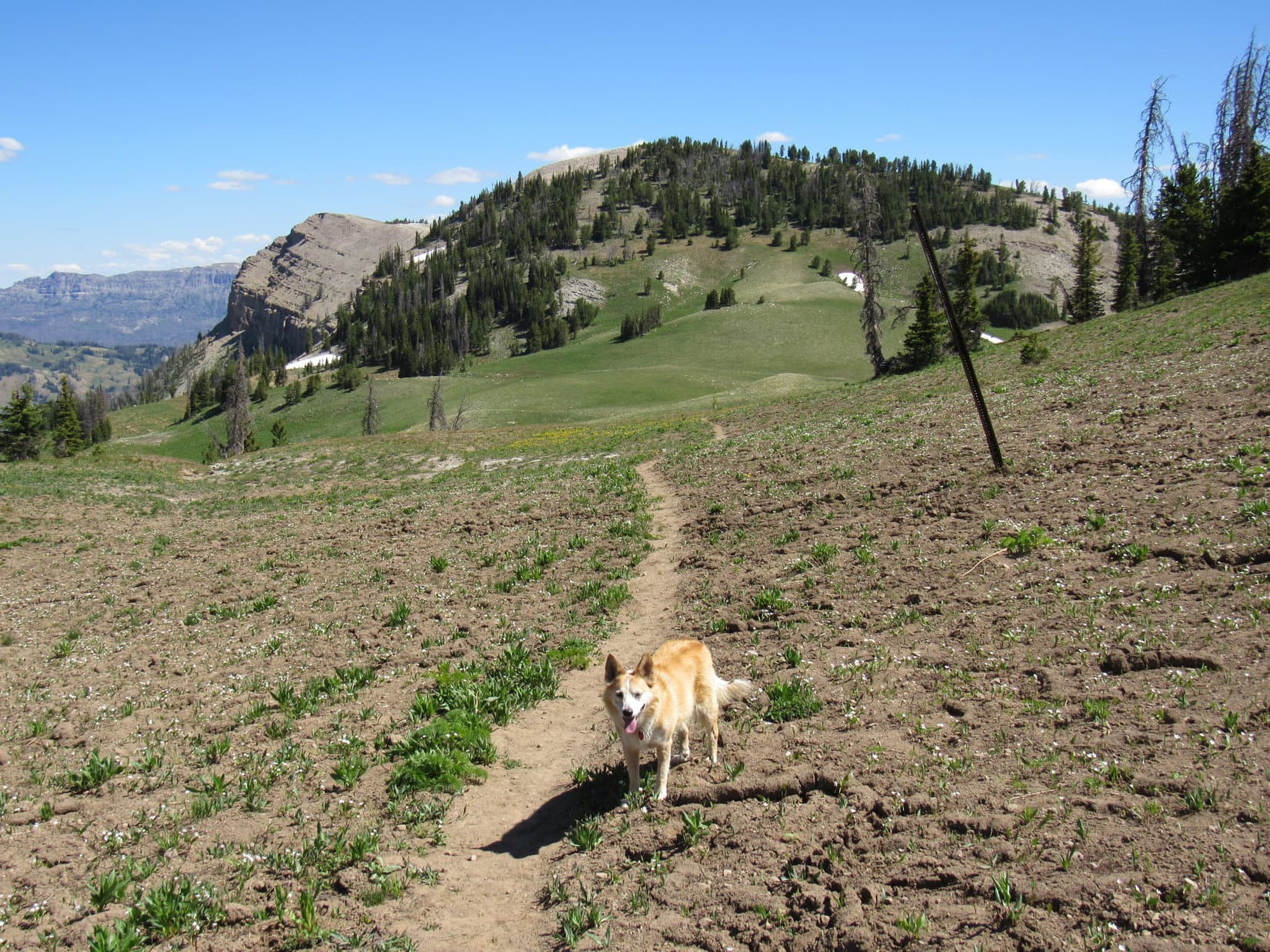
Approaching HP10218 (R). Photo looks N.
At the pass just W of HP10218. HP10392 (Center) dead ahead! Photo looks N.

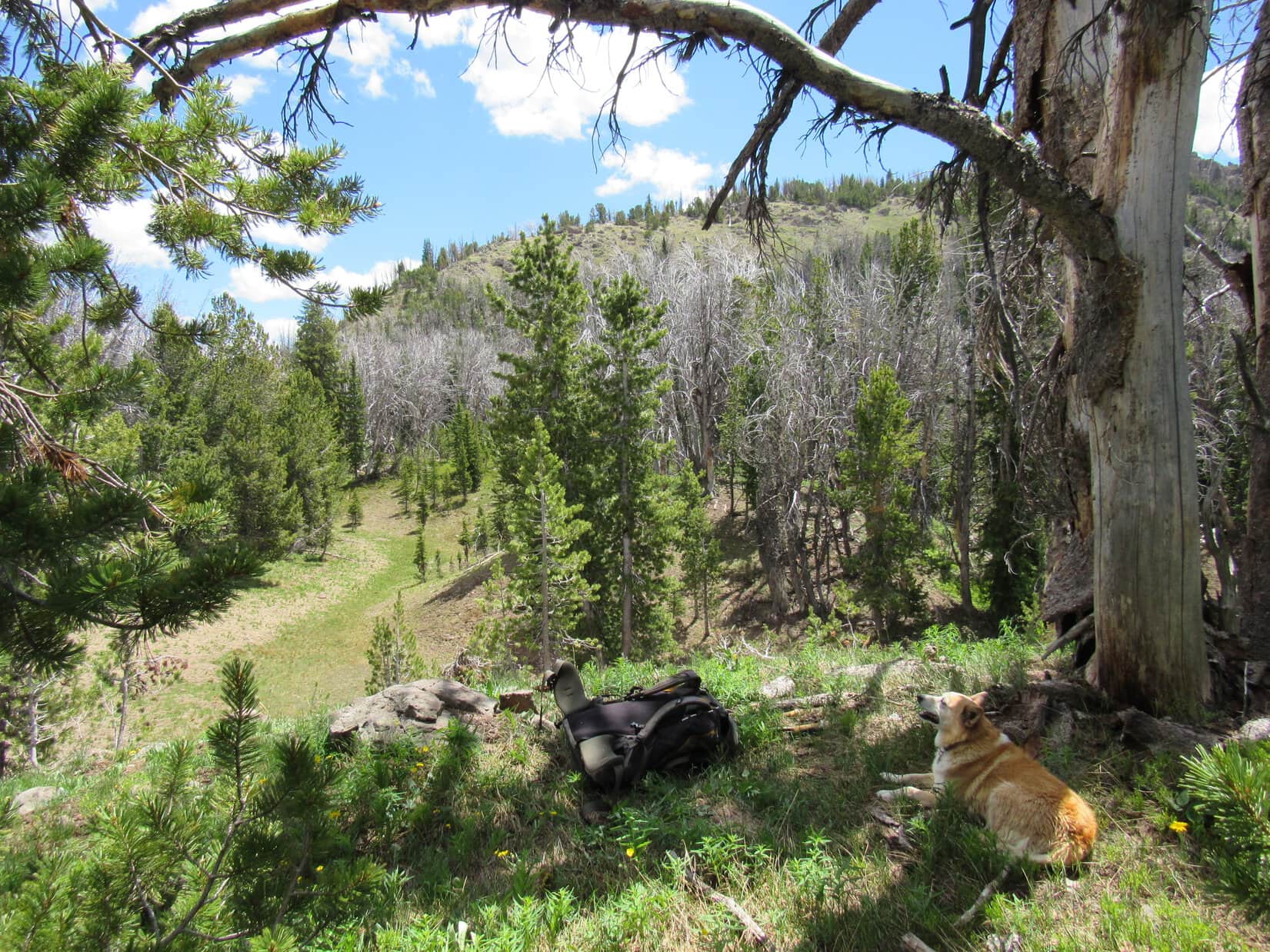
Getting to be about time for a break, SPHP!  Since we’re so close and there are some trees up there, why don’t we check out HP10218?  We can sit in the shade and have a look around.

Sounded good!  The Carolina Dog was soon relaxing up on HP10218.

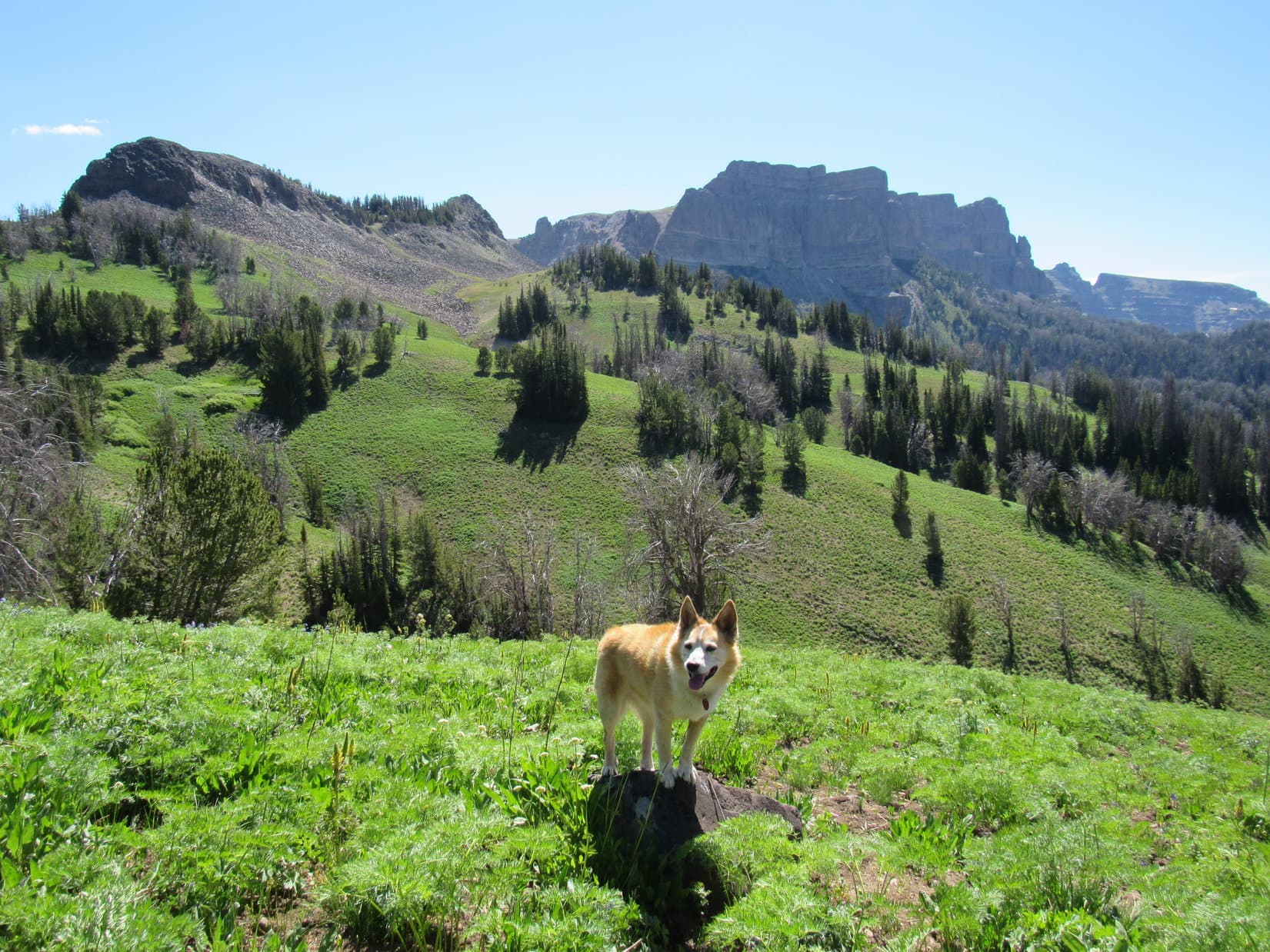
As expected, HP10218 was a terrific viewpoint!  Off to the SE was a great look at the long ridge leading to the NW end of North Breccia Cliffs, plus the best view yet of the feared Class 2+ chute.  To the N was a nice look at HP10392.  Mighty Grand Teton (13,770 ft.) was even in sight far beyond the rolling country WSW of HP10218.
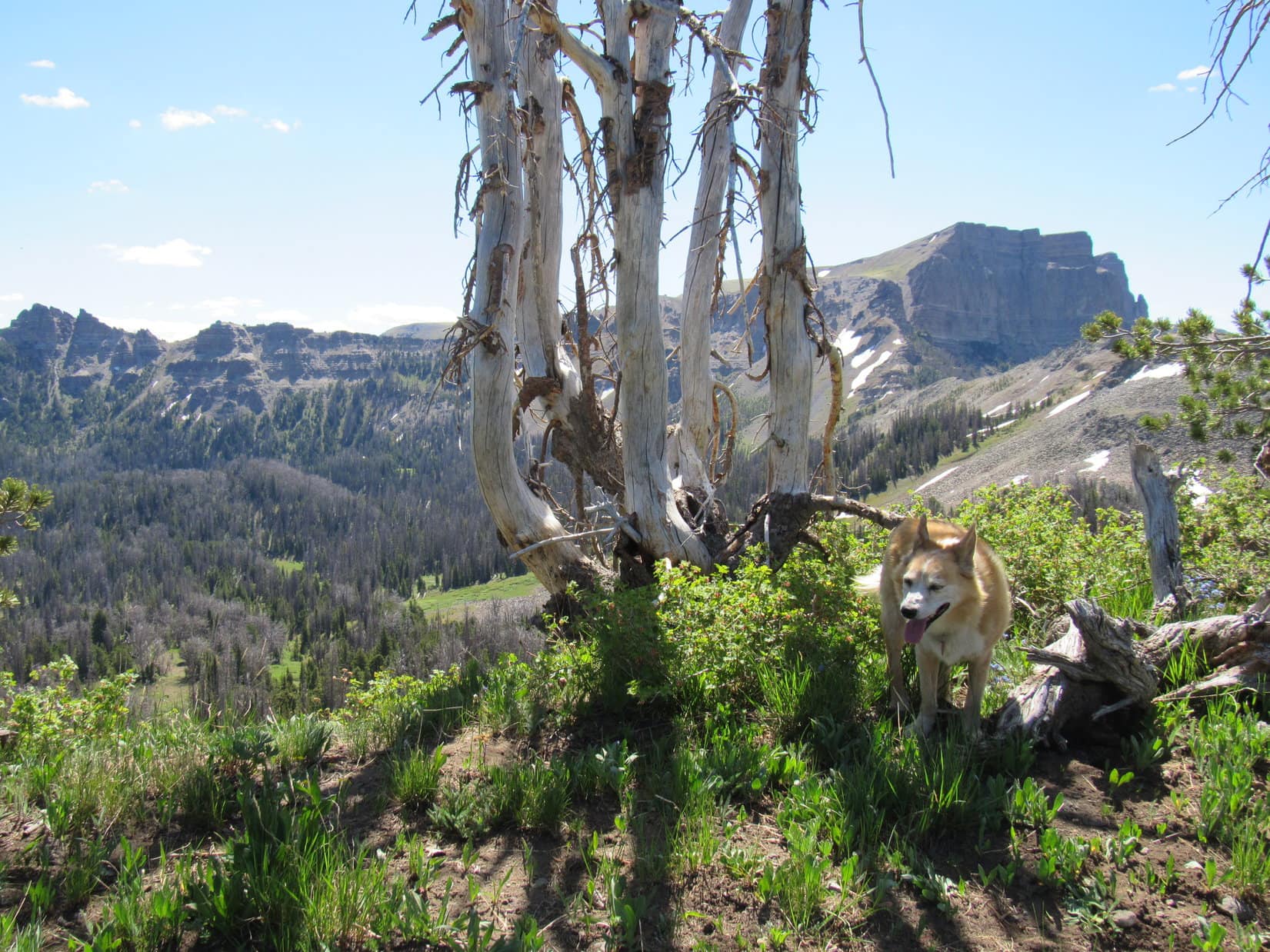
On HP10218. NW end of North Breccia Cliffs (R). Photo looks SE.
NW end of North Breccia Cliffs (Center), Peak 10385 (R). Photo looks SE.
Zoomed in on the climber’s chute (Center). Photo looks SE.

A blue speck was visible in the forest beyond a broad valley to the NE.  That was Holmes Cave Lake, where Lupe was headed next.  As soon as break time was over, the American Dingo returned to Holmes Cave Trail No. 6057, which would take her right to it.
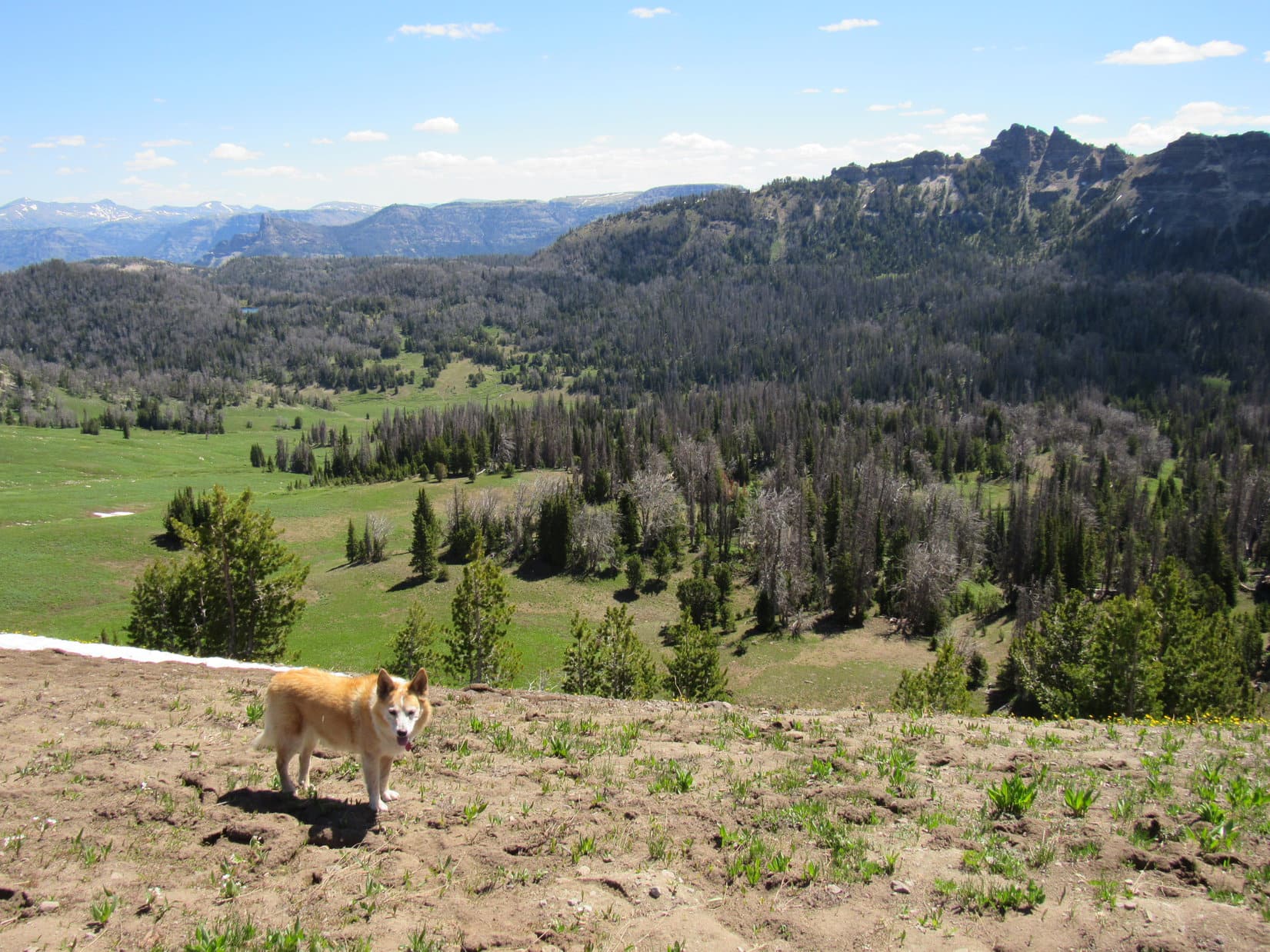
Holmes Cave Lake (L) barely visible in the forest. North Breccia Cliffs’ long N ridge (R). Photo looks ENE.

On the way down to the saddle leading to HP10392, the trail vanished in a vast field of yellow and purple wildflowers.  A few cairns marked the way as the route turned E leaving the saddle.  Small springs seeped from an enormous hillside, creating a creek.  After crossing a muddy region, Loop picked up the trail again as it reappeared heading ENE down into the huge drainage N of Peak 10385.
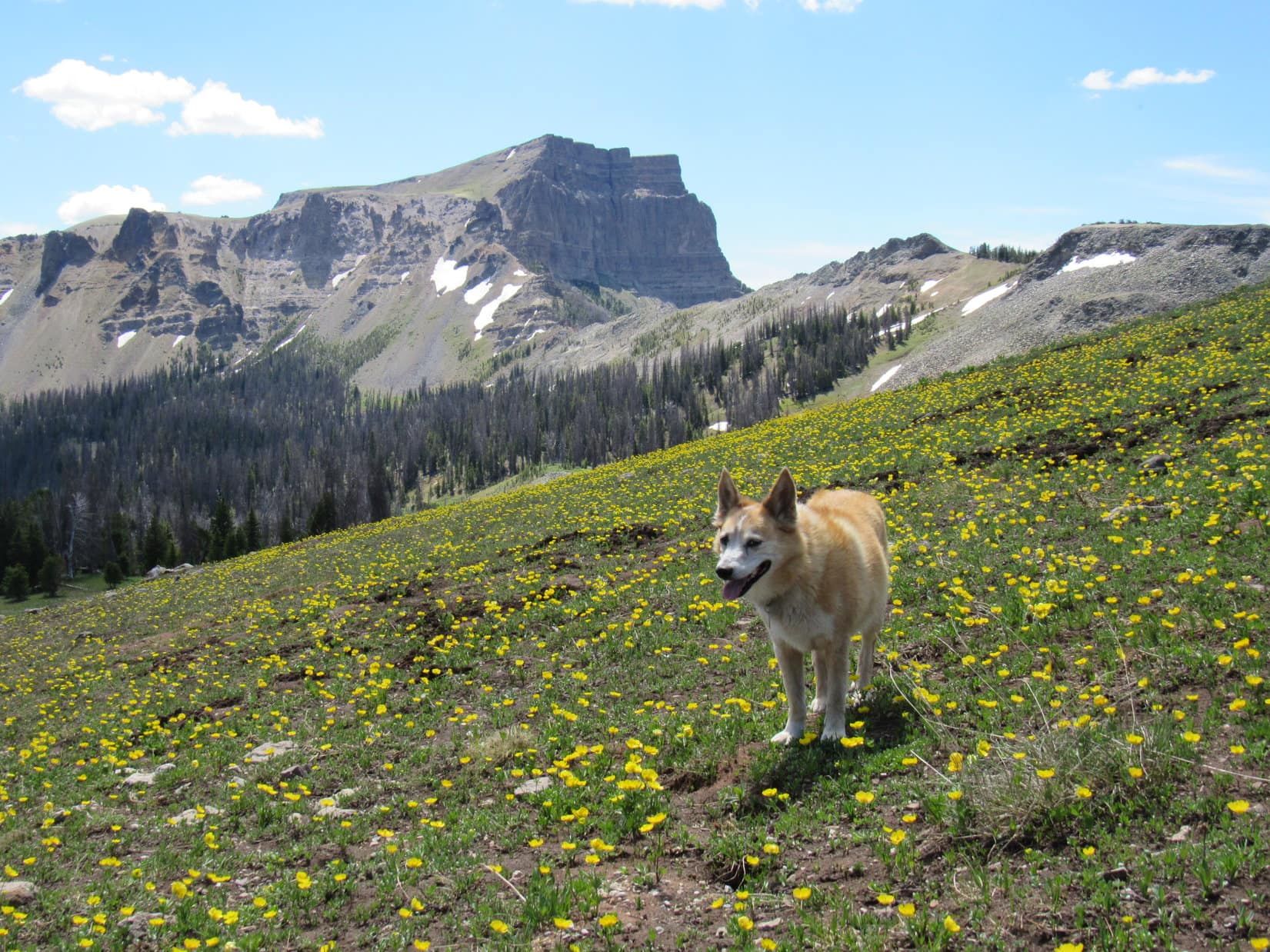
Among the buttercups. NW end of North Breccia Cliffs (Center). Peak 10385 (R). Photo looks SE.

An easy 0.67 mile trek led down to a sparkling shallow stream.  Beyond this low point, the trail continued NE up into the forest.  After regaining 200 feet of elevation over 0.3 mile, Lupe arrived at Holmes Cave Lake.
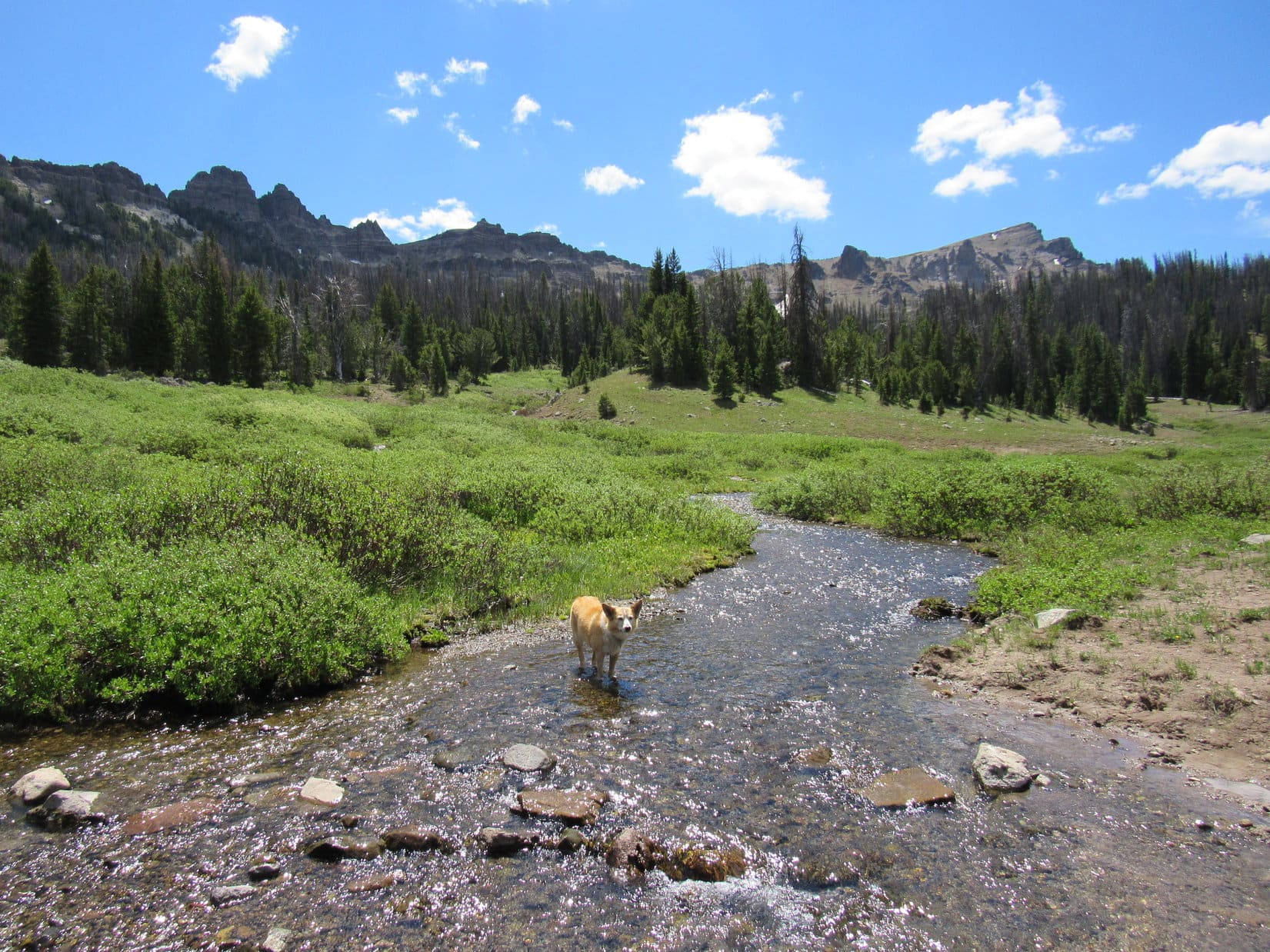
Crossing the stream. Photo looks SSE.
Starting up to Holmes Cave Lake. Photo looks NE.
Holmes Cave Lake. Photo looks NNE.

The little lake was lovely, but the air was humming with what initially appeared to be giant mosquitoes.  Turned out they were actually some kind of super-sized gnats.

These gnats are driving me crazy, SPHP!

Yeah, me too, Loop!  Thought we’d take another little break here, but let’s keep going.  This is it for Holmes Cave Trail No. 6057, though.  Head E!

No it isn’t!  The trail keeps going right past the lake, SPHP!

I know.  It goes to Holmes Cave, which is only another 0.5 mile, but we don’t need to go there.

All this way, and we aren’t going to get to see the cave?

Nope, not unless we still have the daylight and oomph for it on the way back.  Still a long way to North Breccia Cliffs.  Like I said, head E!  Time to find out if my Big Chicken route avoiding that chute is going to work!

Leaving the S end of Holmes Cave Lake, the Carolina Dog went E toward a scraggly looking forest half full of dead trees.  A minor climb led to a lumpy region of small hills and valleys.  Lupe tried to take a break on one of the first hills, but this forest harbored real mosquitoes, which soon put an end to that notion.

The far N end of North Breccia Cliffs’ long N ridge was already in sight.  Steep, but it didn’t look too bad.
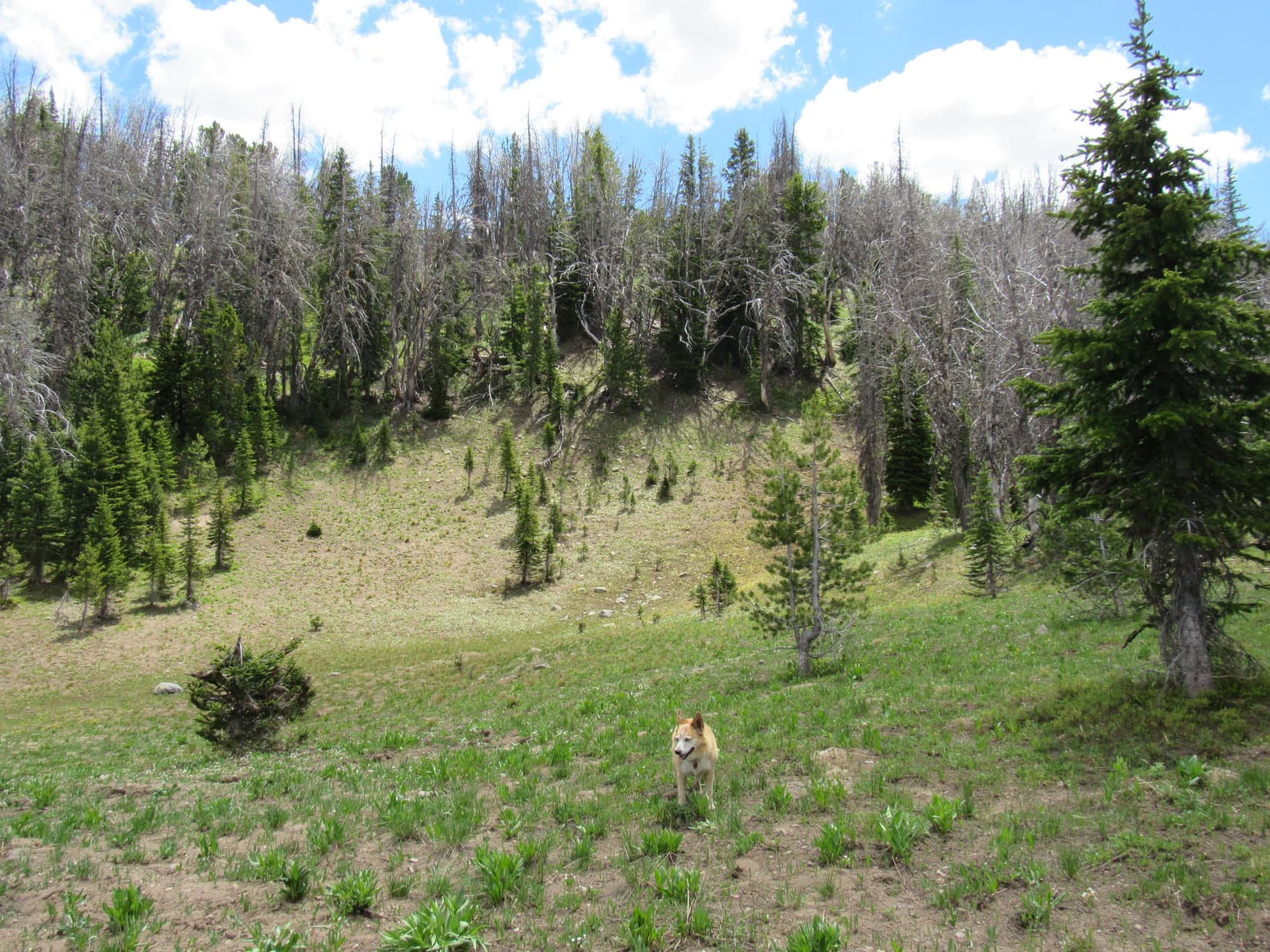
Heading into the scraggly forest E of Holmes Cave Lake. Photo looks E.
N end of North Breccia Cliffs’ long N ridge from the exceptionally short break spot. Photo looks E.

Climb that ridge, SPHP?

No.  Don’t think so, Loop.  Saw some impossible rocky terrain along that ridge on the way here.  Let’s try going around the N end.  Farther E, the topo map looks like there might be an easier way.

On the way over to the N end of the ridge, Looper made an unexpected and welcome discovery.  A trail!  Looked seldom used, but it was good enough to follow and going the right way.
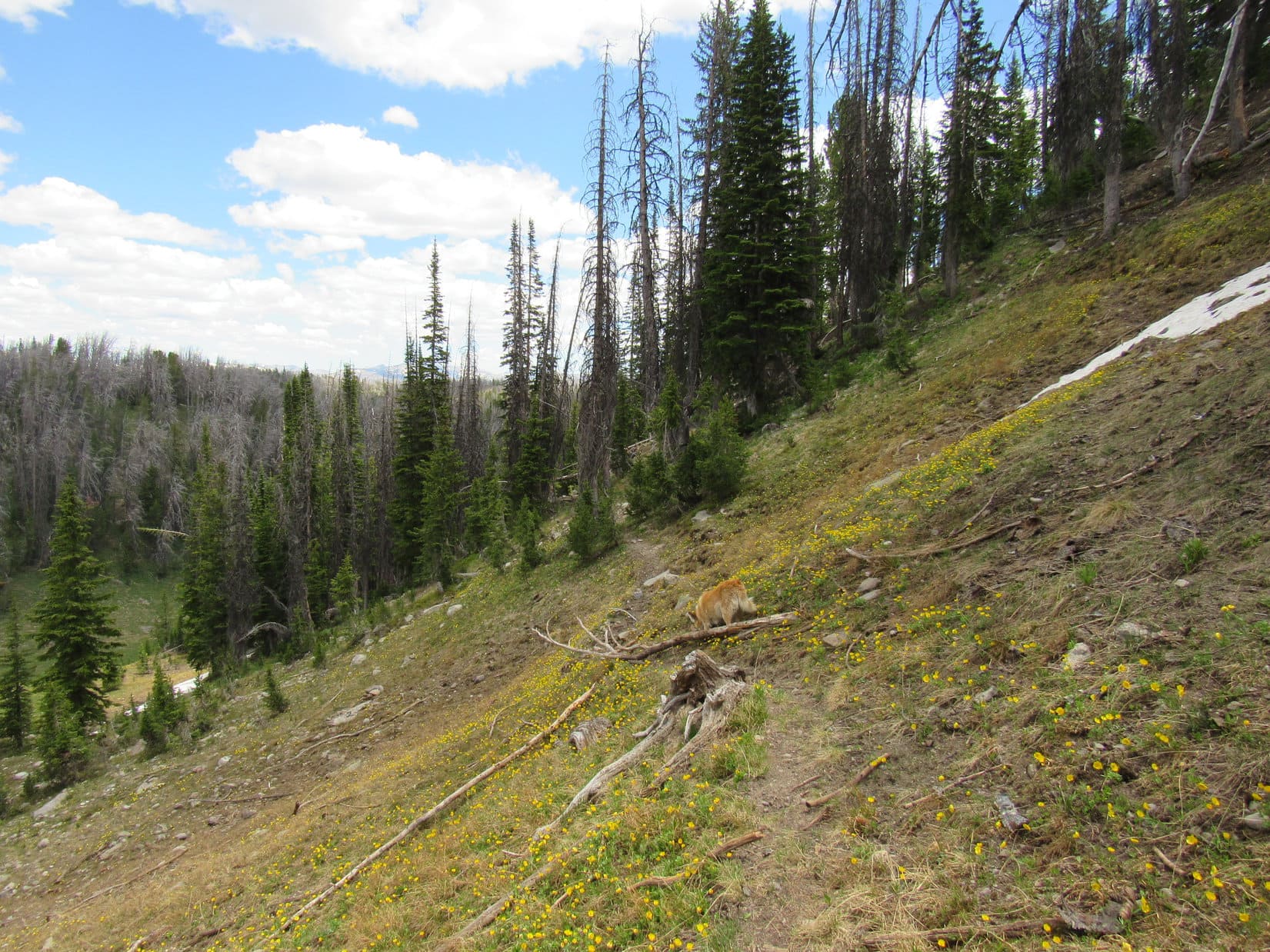
Following the faint trail around the N end of the N ridge. Photo looks E.

At first the trail was level, but it soon began a slow descent.  Looked like it might be destined to go all the way down into the valley to the N.  Not good!  However, after only a relatively minor drop, the trail leveled out again before beginning to climb a bit.

Soon Lupe was past the end of the first big ridge she was trying to get around.  Still following the faint trail, which now trended SE, she gained a little more elevation before reaching a clearing where it faded away completely.  Looking S, a steep route higher was visible between the N ridge and a big rock formation to the E.  Might work!
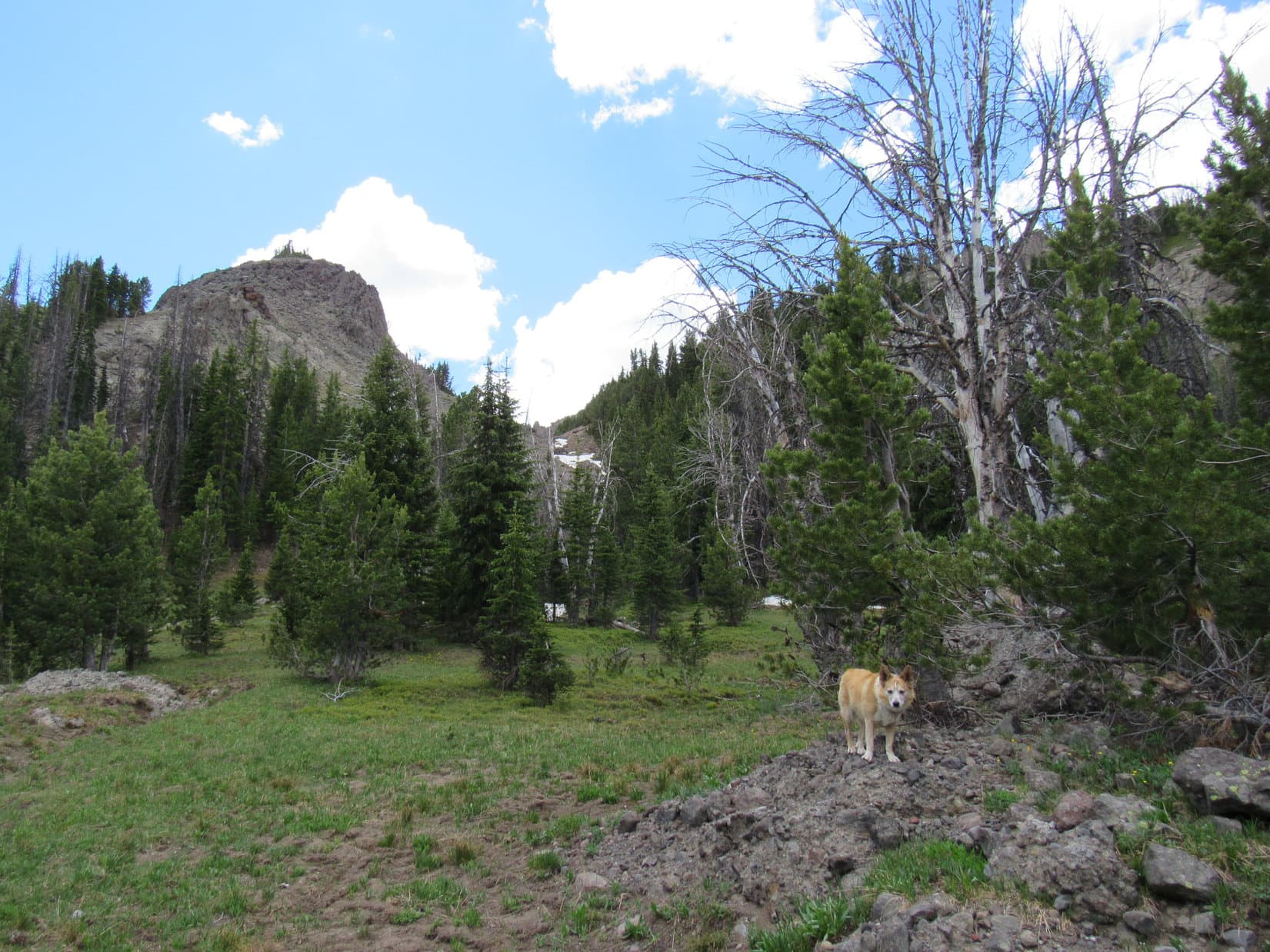
Just E of the main N ridge (R) with a potential route higher (Center). Photo looks S.

However, this first route looked pretty steep.  Another potential route S was a little farther E.  Perhaps a bit easier?  Loopster gave it a go.
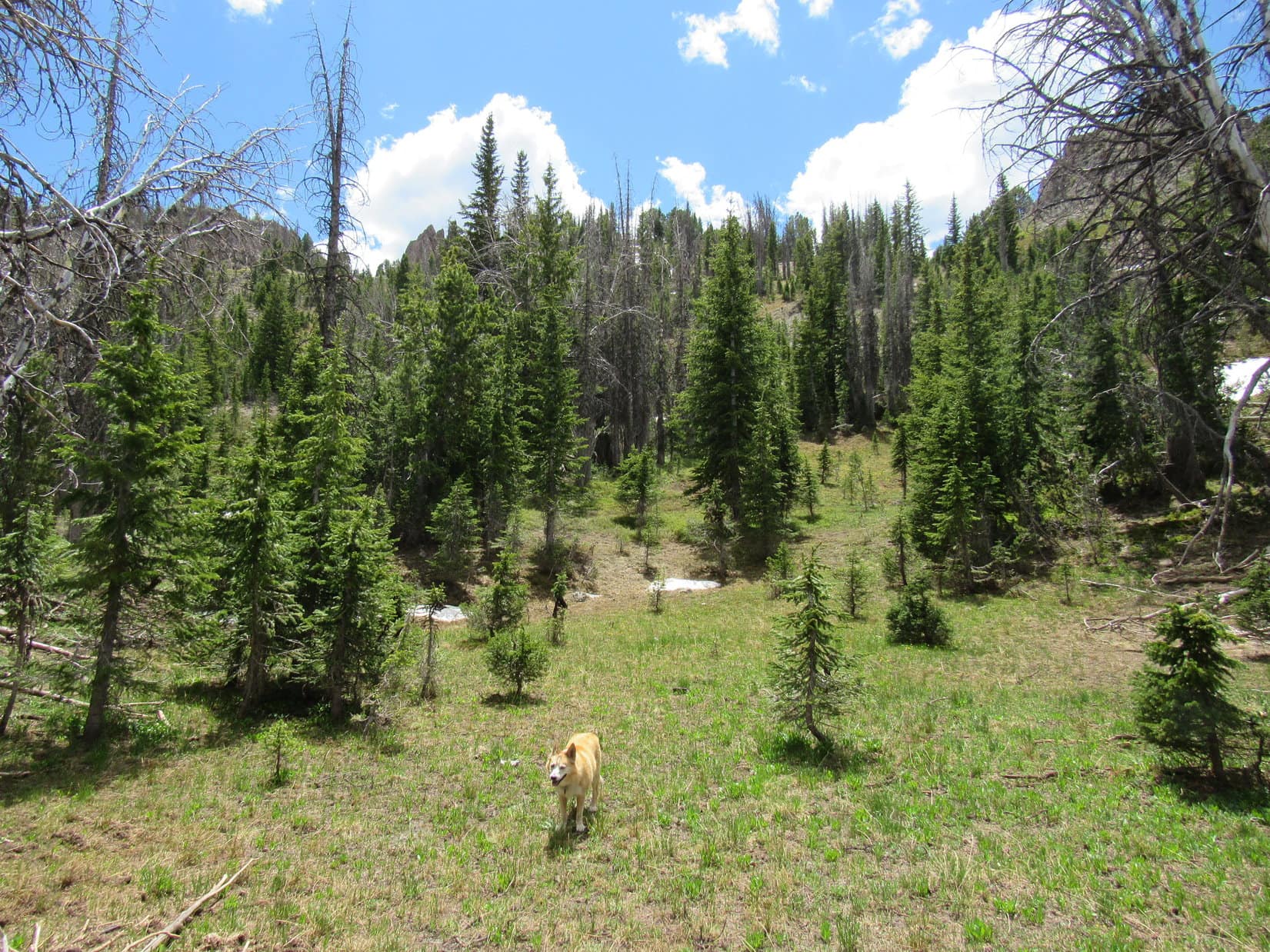
About to head up toward the R. Photo looks S.

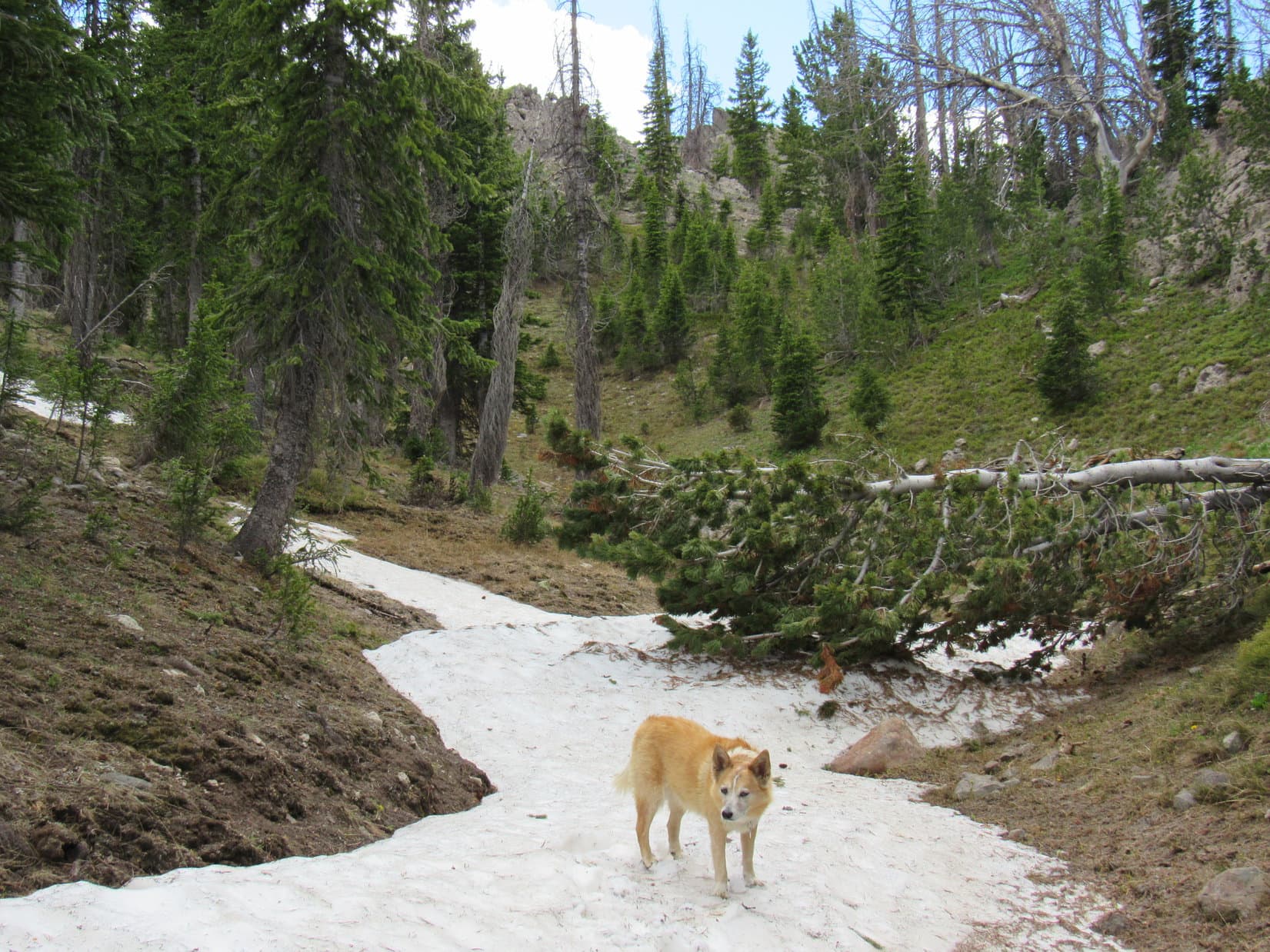
Steep, and about twice as big a climb as it looked like from below, but it worked!  Not at all scary.  Upon reaching the upper end of the steep part, a snowbank partially filled a little valley that wound gradually higher.  This valley soon curved SE and broadened out into another steepish slope, but this one was even easier.

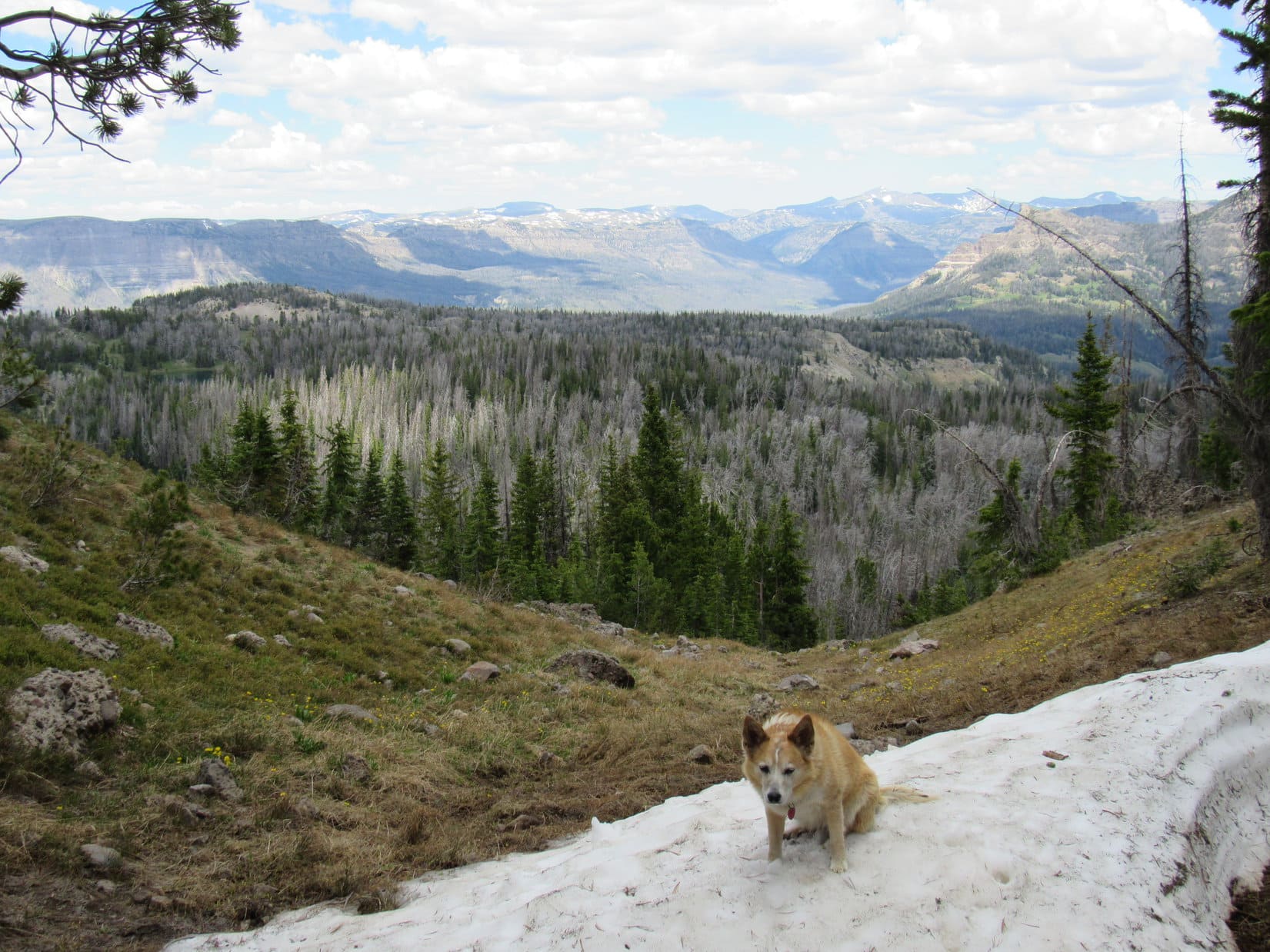
Heading up the steep part. Not bad at all!
Looking back from the top. Photo looks N.
Going up the little valley. Photo looks S.
On the upper slope. Photo looks S.

A short climb and Looper reached a flat, forested hilltop.  Considerably below her to the W was a valley that the route she hadn’t taken must have led to.  Evidently that route would have been less of a climb.  Off to the E, quite close by, was a slightly higher hill than the one Lupe was on.

Hah!  We made it!  That must be HP10332 over there, Looper.

And that enormous hill way off to the S is where we’re going, SPHP?

Yup!  That’s North Breccia Cliffs (11,240 ft.)!

Not very cliffy from this direction, is it?

Nope.  Think you’ve got this one now, Loopster!  Made in the shade!

Well, not quite.  Still a couple of miles to go, and who knew what the true summit might be like?  Furthermore, there was a steep ridge that was in the way, jutting out to the E from the main N ridge.  Happily, it looked like Lupe ought to be able to get past it without too much trouble.

Full of confidence, the American Dingo headed S.
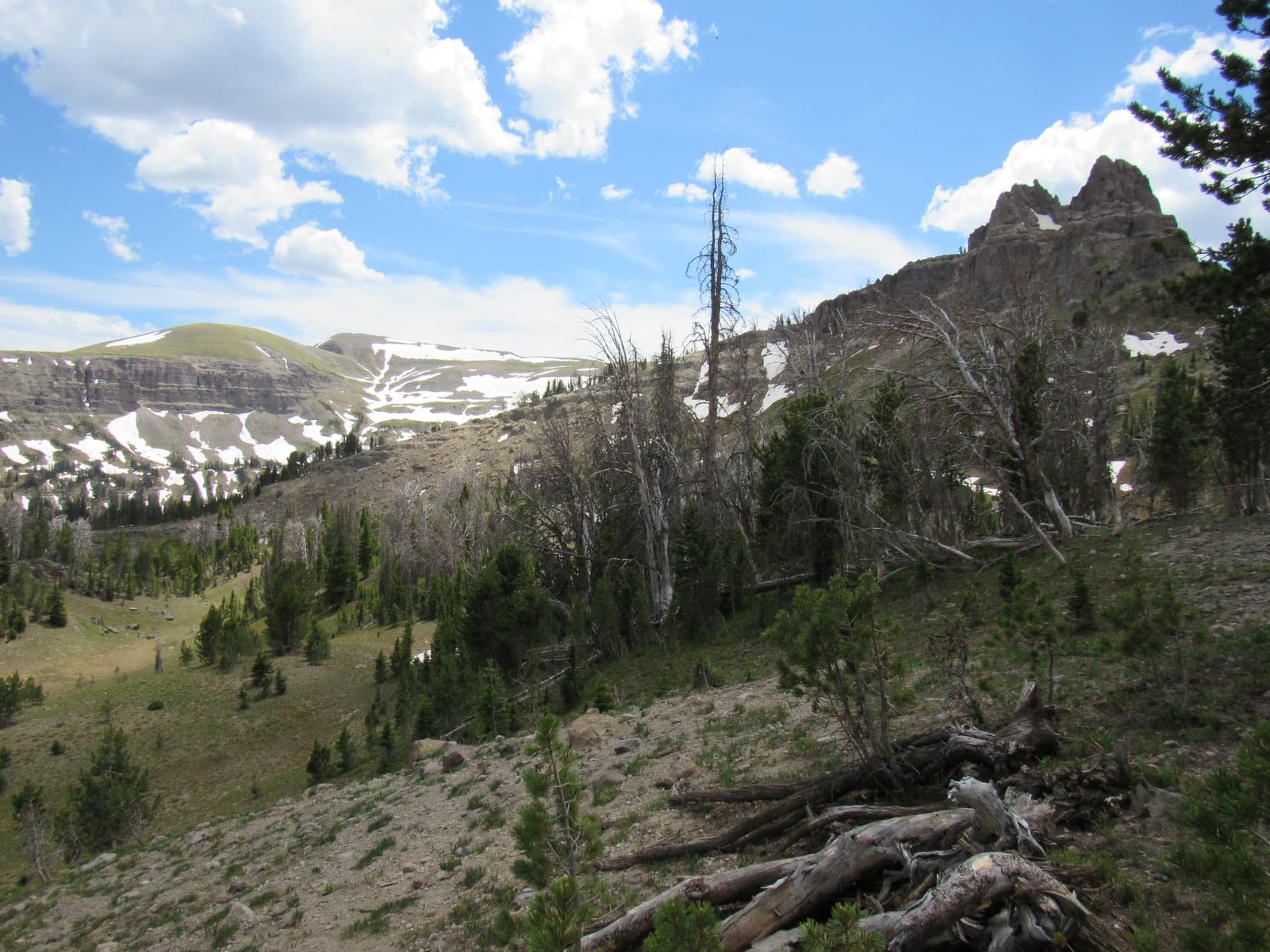
North Breccia Cliffs summit (L) from a little W of HP10332. Photo looks S.

In order to avoid losing too much elevation, Lupe stayed a little toward the W.  She soon came across a decent trail originating from the valley the first route higher must have led to.

This new trail made it all a cinch!  Heading straight toward the E ridge, it got the Carolina Dog around it, no sweat.

The newly discovered trail leading to the next ridge. Photo looks SSE.
Looking back from the E ridge. Lupe came over the pass on the R. Photo looks NNW.

Continuing S beyond the ridgeline, Lupe traveled on fairly level terrain through a mix of forest and meadow.  Before long, the trail faded away.  Angling SW up a short open slope, Looper reached a huge meadow.  Just E of the rugged N ridge, this meadow extended S all the way to the NW end of North Breccia Cliffs.
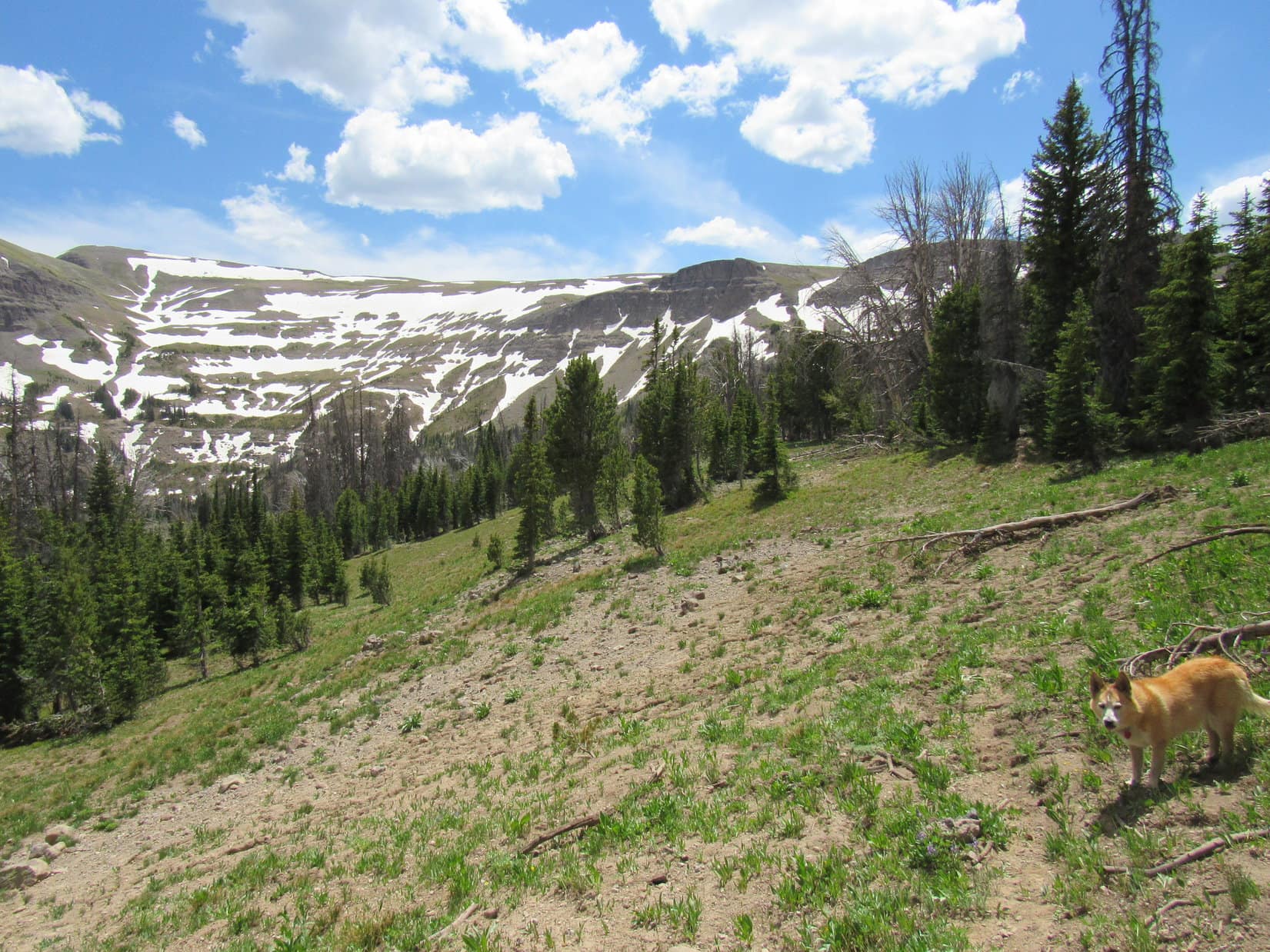
Past the E ridge, where the trail fades away. North Breccia Cliffs summit (L). Photo looks S.
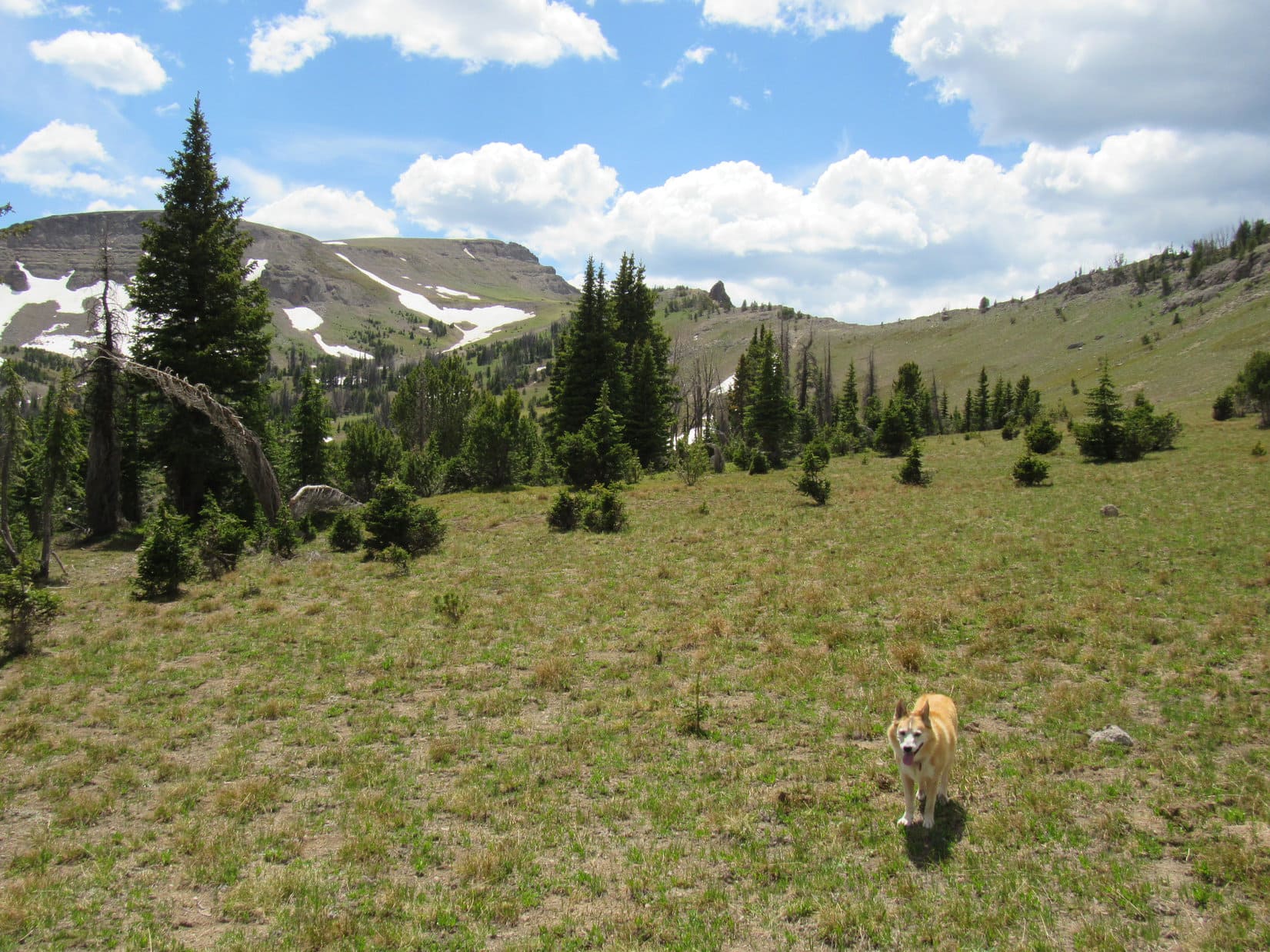
Up on the long meadow that goes all the way to the NW end of North Breccia Cliffs (L). Photo looks SW.

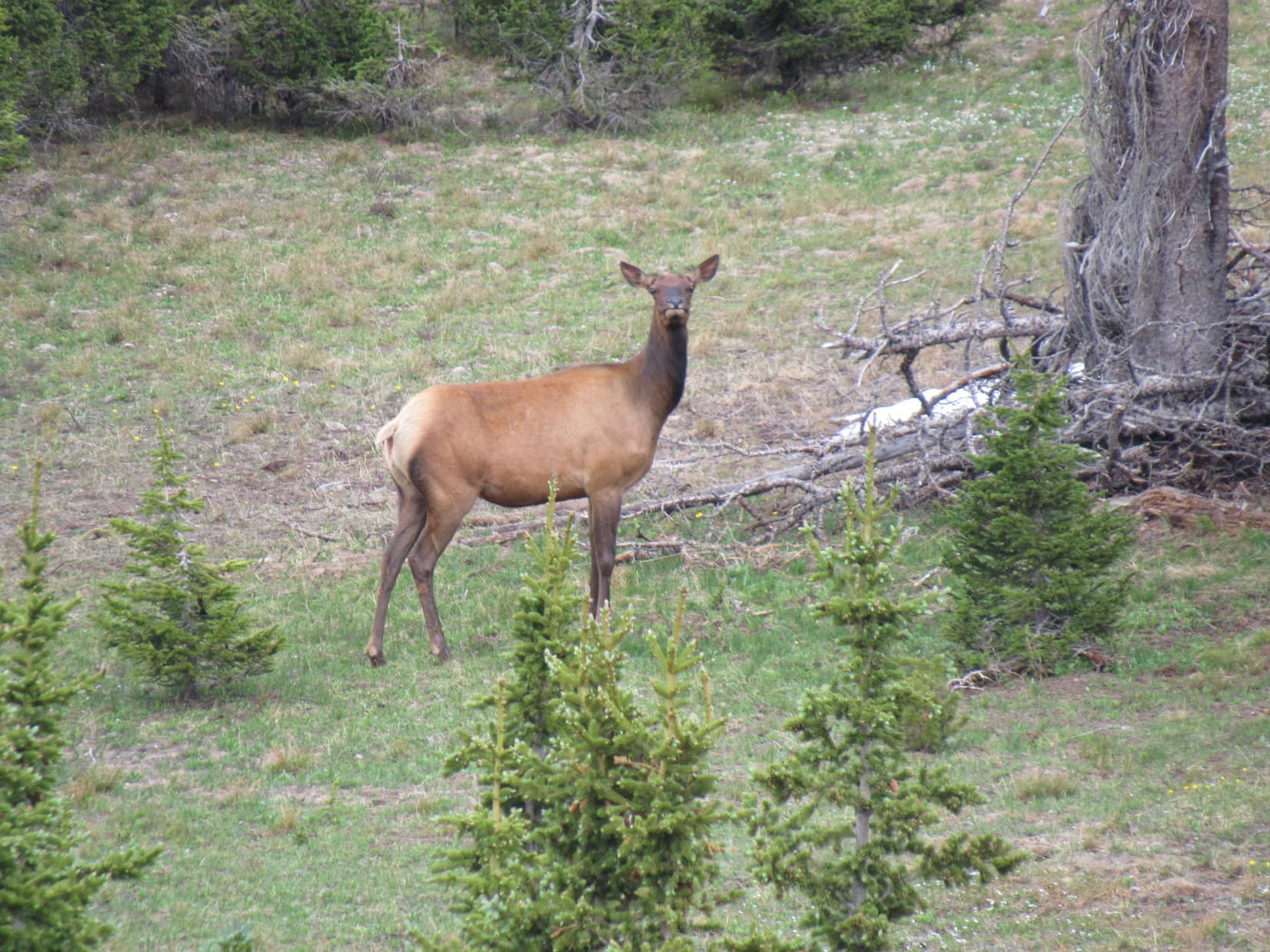
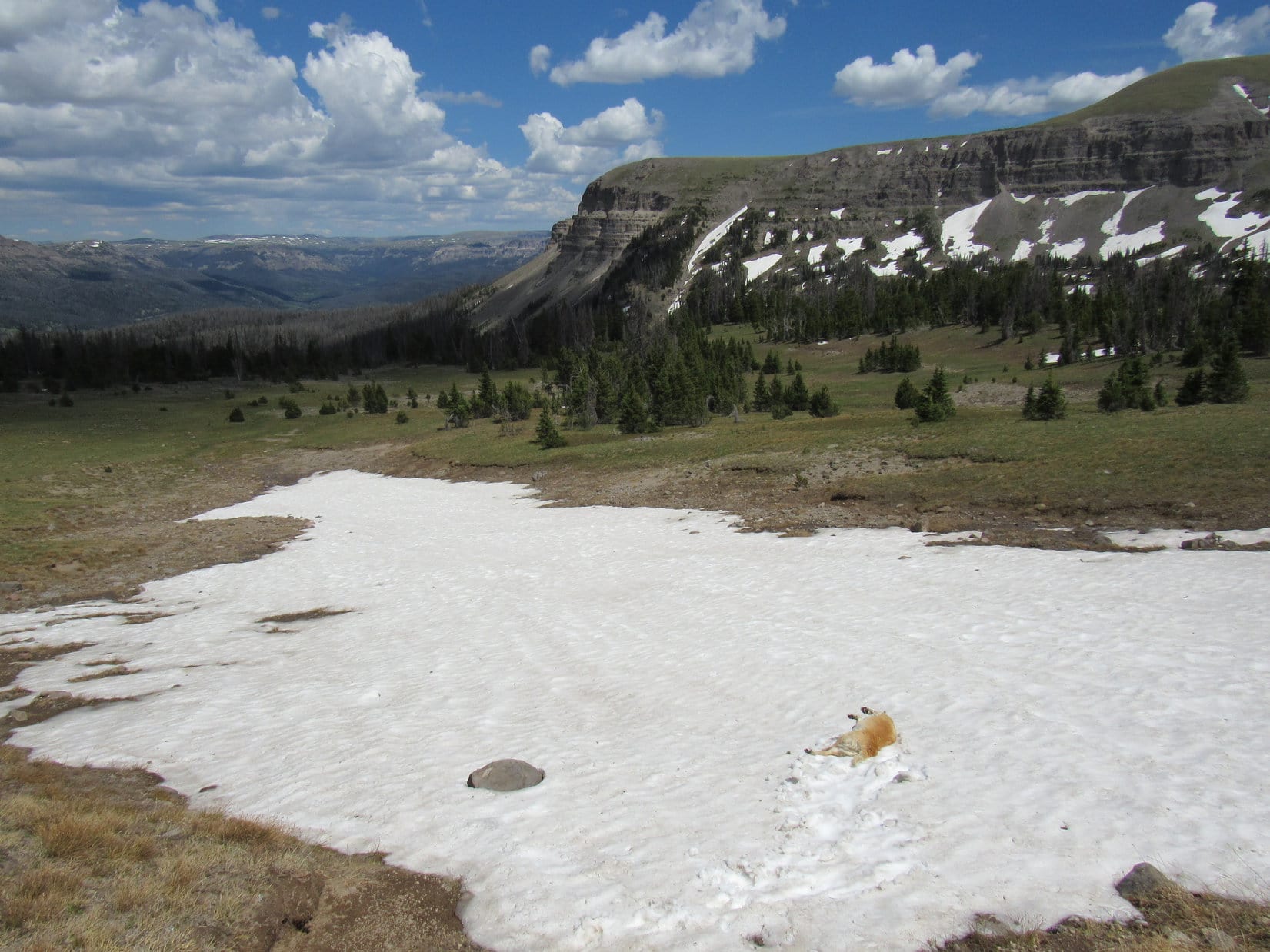
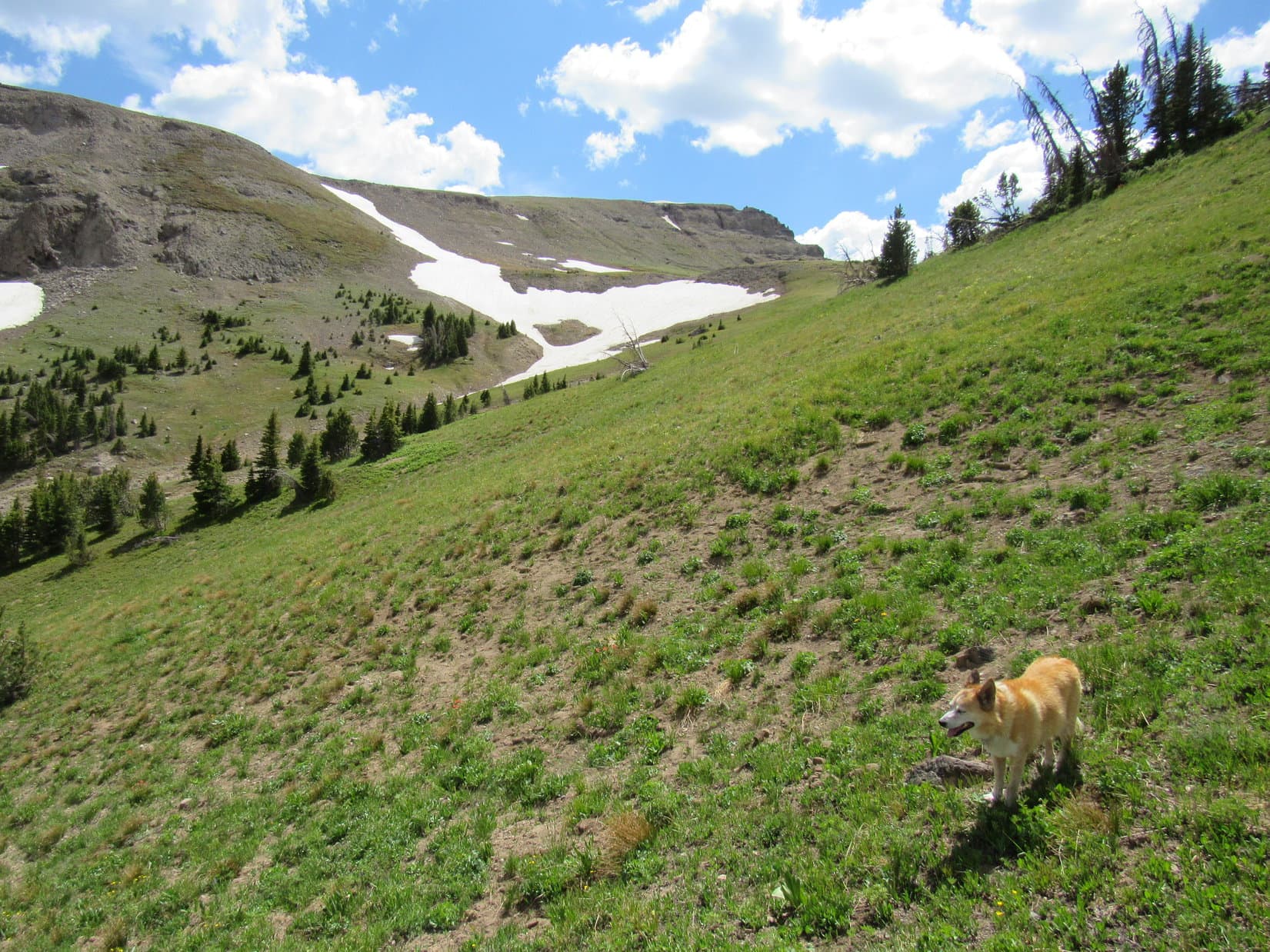
Smooth sailing all the way!  Roaming at will, Lupe raced through the vast meadow sniffing everywhere.  Even SPHP made rapid progress.  Looper spotted a giant deer way down in the upper Holmes Cave Creek drainage to the E.  She frolicked on a huge snowbank.  Glorious fun!  But toward the end, the super easy trek began to steepen.
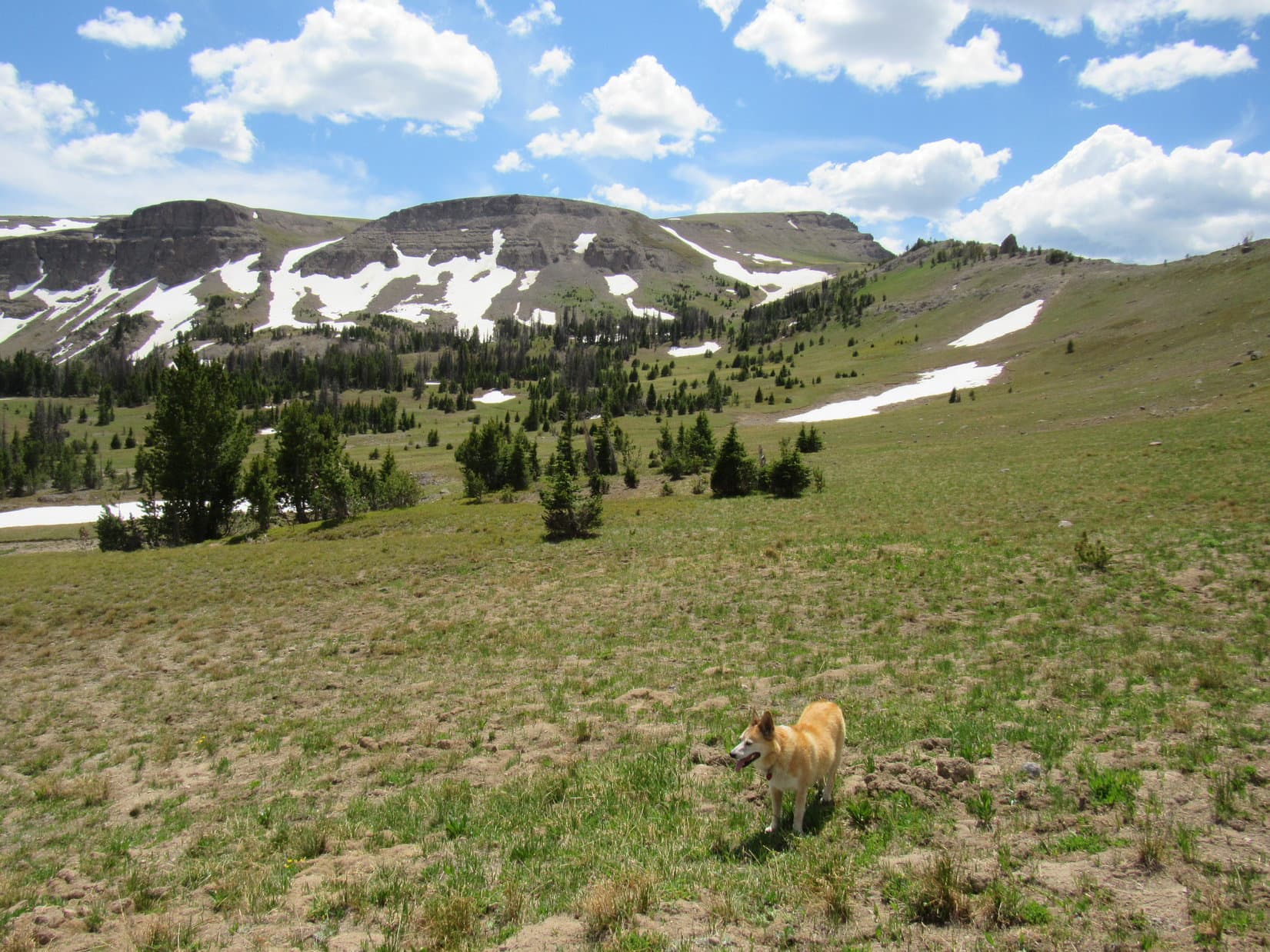
Wow! Dingo heaven! Photo looks S.
North Breccia Cliffs summit (R), HP11444 (Center). Photo looks SE.
Zoomed in on the giant deer.
The joy of snow! Photo looks E.
Closing in on the NW end of North Breccia Cliffs. Photo looks SW.

Shortly before reaching the area above the climber’s chute, Lupe made it to the top of the N ridge.  Wild-looking rock formations stood along the brink of a precipitous drop to the W.  In the distance, she now had quite a view of the Tetons.
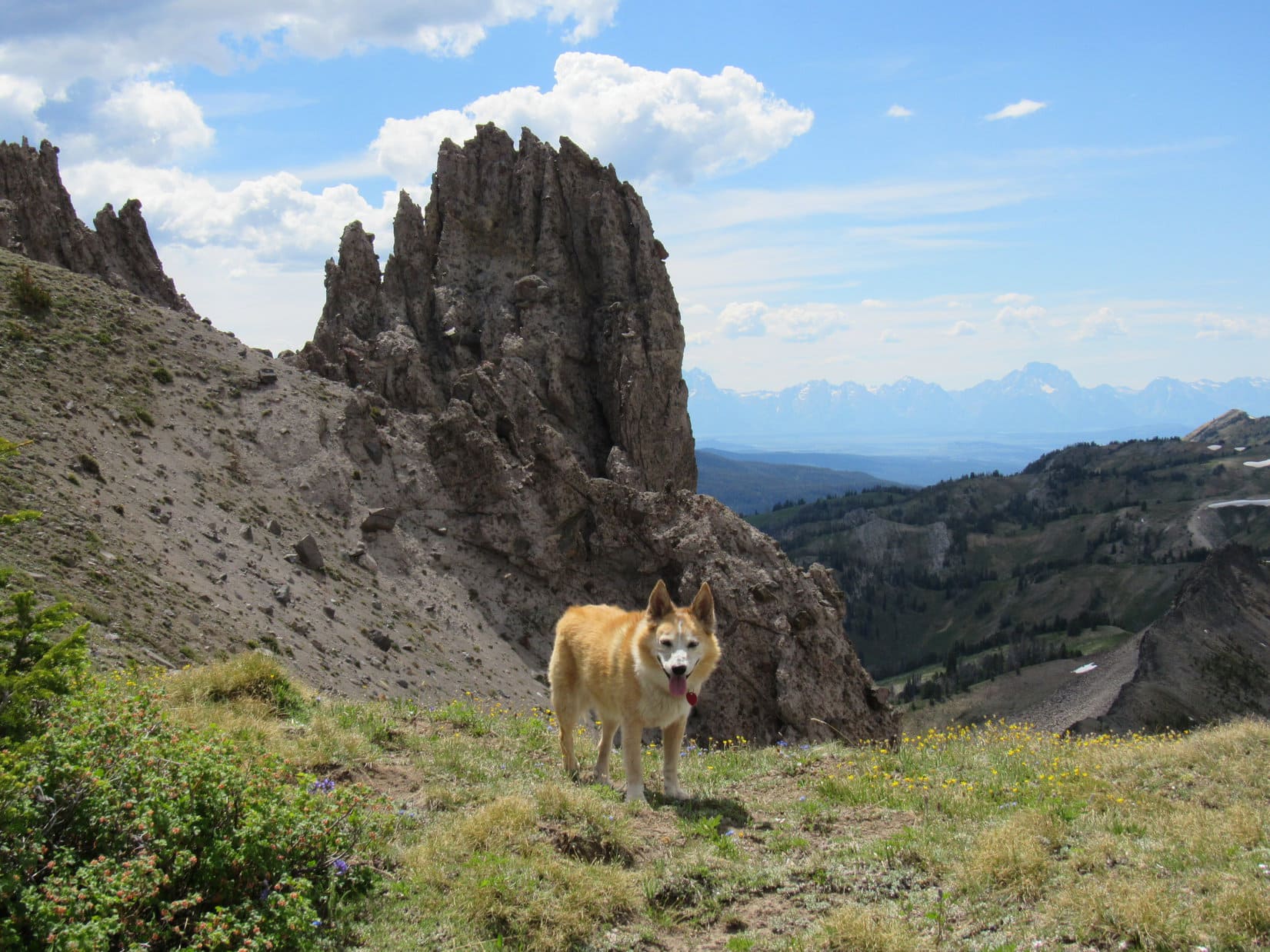
Up on the N ridge. Mount Moran (12,605 ft.) (R) on the horizon. Photo looks W.

6-30-21, 3:25 PM – Certainly took long enough, but the Big Chicken route had worked!  Near the NW end of North Breccia Cliffs’ upper plateau, Lupe reached a sweet meadow.  This was the region that the climber’s chute that SPHP had been so desperate to avoid led up to.  Naturally, the Carolina Dog had to take a look at what she’d missed out on.
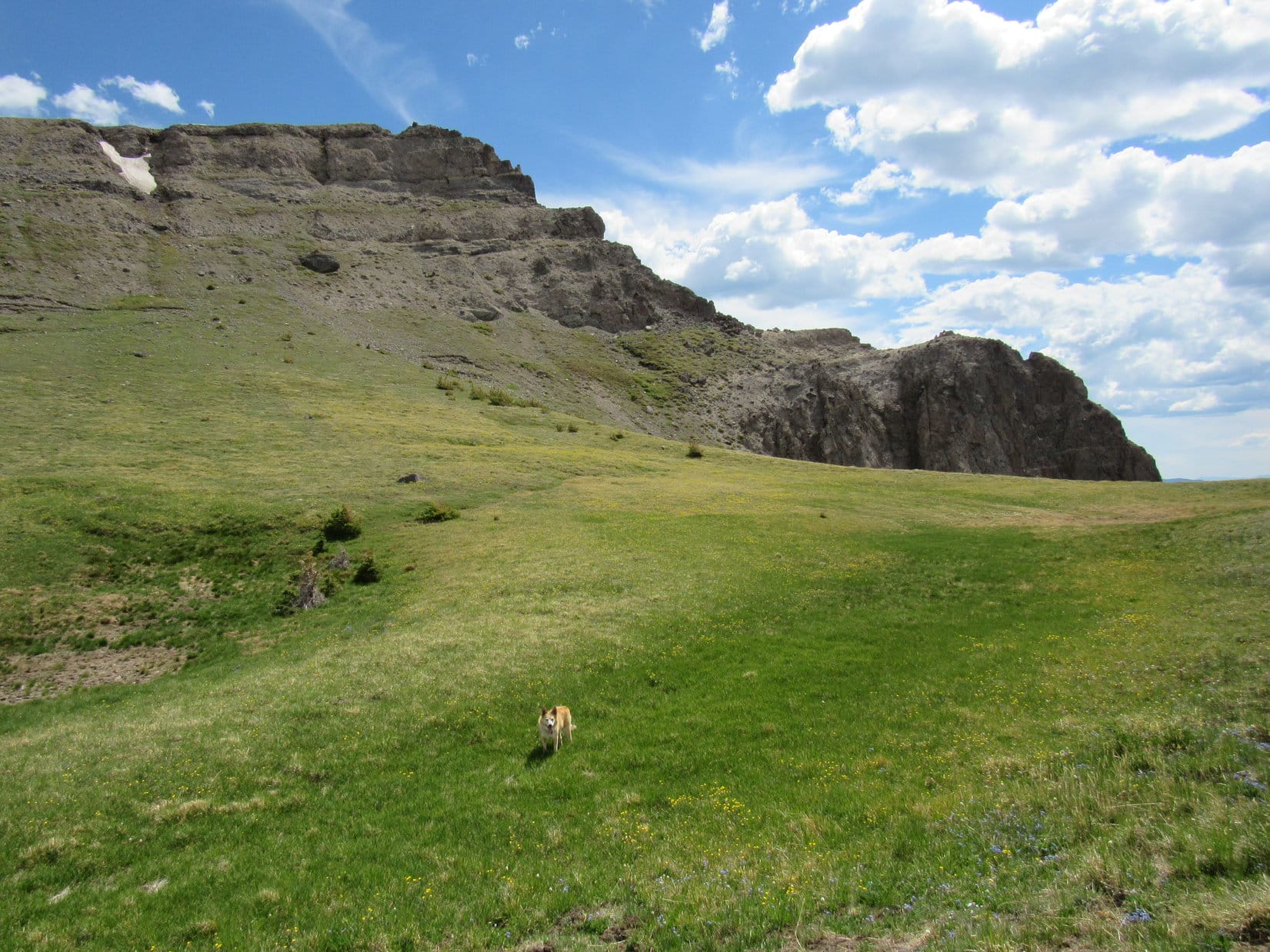
The meadow above the climber’s chute, which is ahead on the R. Photo looks S.
Venturing over to the edge. Angle Mountain (10,600 ft.) (far R). Teton Range on the horizon. Photo looks W.

Yowser!  Can this be right, Loop?  Is this it?  The climber’s chute?

You tell me, SPHP!  You’re the one with the map!

Yeah, I think it is.  Has to be doesn’t it?  But this can’t possibly be Class 2+, can it?  I mean, just look at it!  Ghastly!

Sloping ever more steeply, a grassy funnel-shaped region emptied into an abyss between two cliffs.  The long, loose dirt and rock section of the climber’s chute wasn’t even visible beyond a lip where it all fell away.
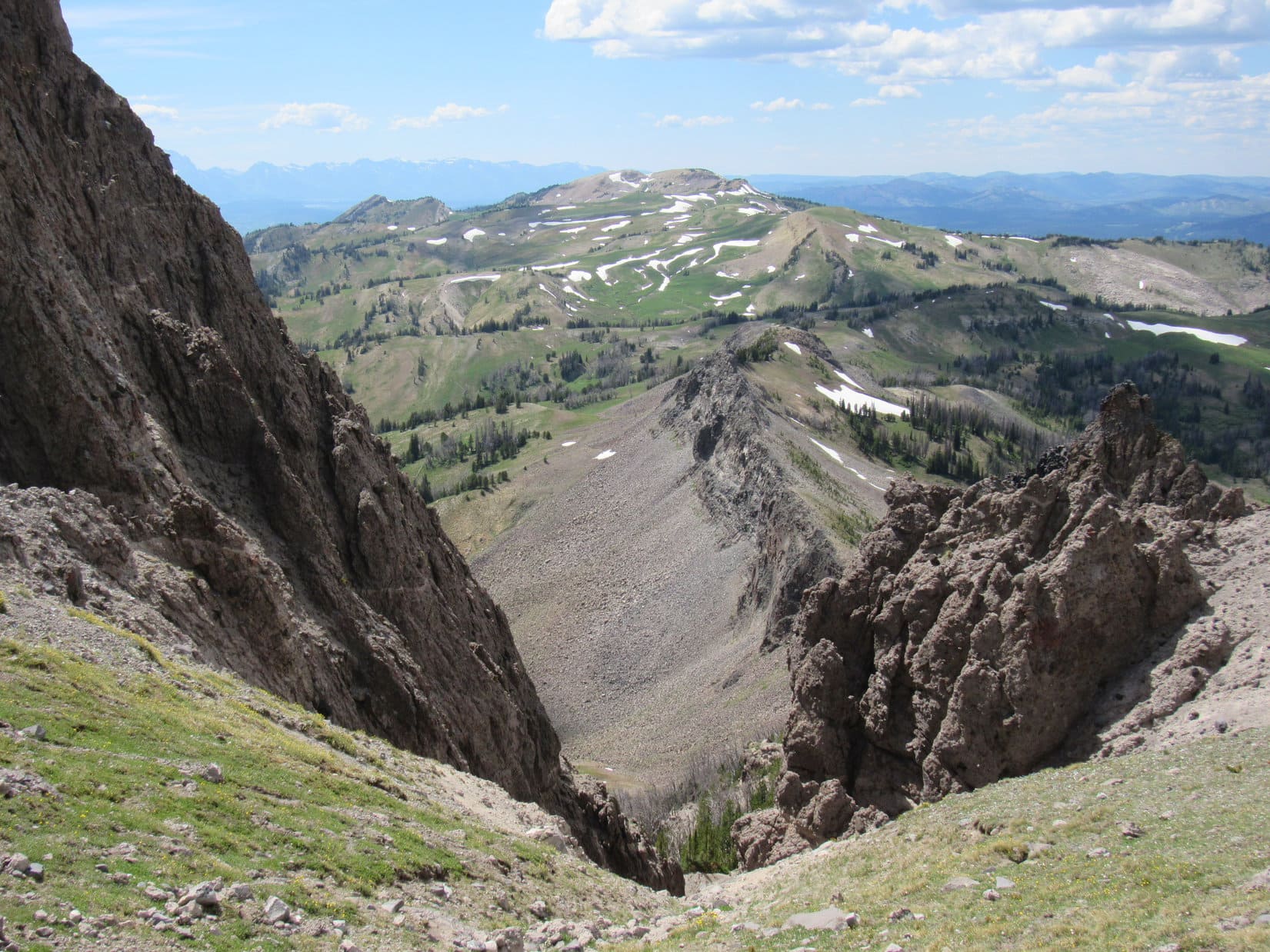
Near the brink of the climber’s chute. Angle Mountain (Center) in the distance. Peak 10385 (Center) along the ridge in the foreground. HP10218 (R). Photo looks NW.

I take it you’re not inclined to save us 4 miles by utilizing this shortcut on the way back, huh, SPHP?

You can bet your sweet curly tail on that, Dingo!  I don’t even dare get close enough for a real look.  Big Chicken route and Holmes Cave Trail No. 6057 all the way, both ways, no matter how long it takes!

A use trail angling SE up a steep slope got Lupe up onto North Breccia Cliffs’ enormous summit plateau.  This plateau sloped gradually down to the N, the long line of SW facing cliffs still out of sight to the S along an edge more than 100 feet higher than where Loop came up.  Beyond a gently rolling, treeless plain, the true summit was more than a mile away over at the SE end.

Crossing occasional big snowfields, Lupe headed straight for the summit.
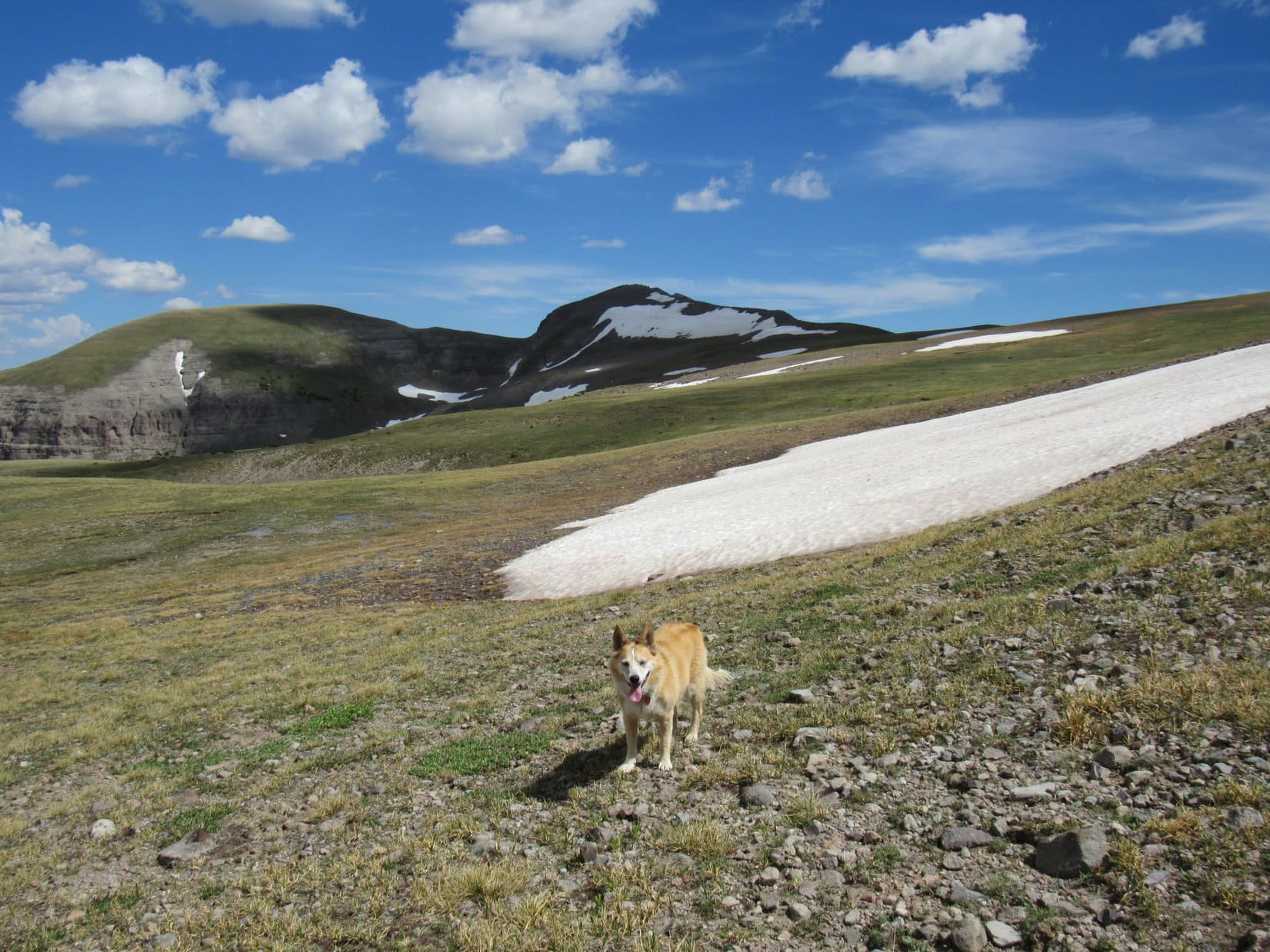
On the upper plateau. Summit (Center). Photo looks SE.

Coming over a slight rise, Lupe beheld a wondrous sight!  A whole herd of giant deers lay basking in the warm, end of June sunshine!
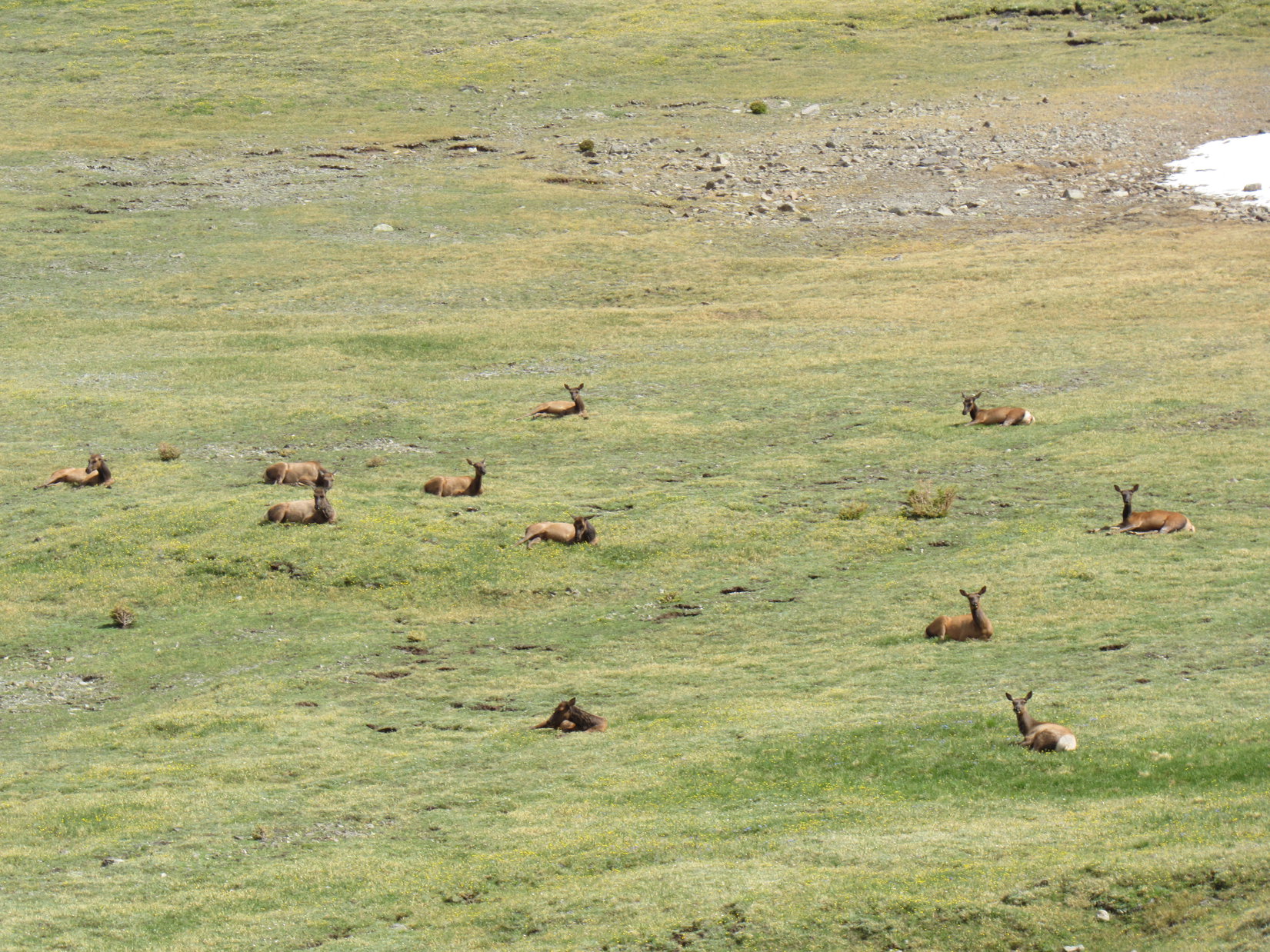
Out in the open like this, it was impossible to get by without spooking them.  Soon the entire herd was racing away down the slope to the N, a splendid and most fascinating sight!

The giant deers vanished.  Lupe continued on toward the summit, finally reaching the edge of the cliffs not too far from it.  The view was terrific, but suddenly, worryingly, actually attaining the true summit didn’t seem quite so certain.  The upper plateau was much narrower here, rapidly compressing to a ridgeline.  Beyond an initial high point stood two more that looked potentially higher.  Whether the ridge connected to the more distant ones without an impassable break wasn’t entirely clear.

Time was suddenly an issue, too.  A long line of showers had developed off to the NW, not too far away.  Showers were one thing, but lightning would be another.  Distant rumbling spurred the Carolina Dog on.
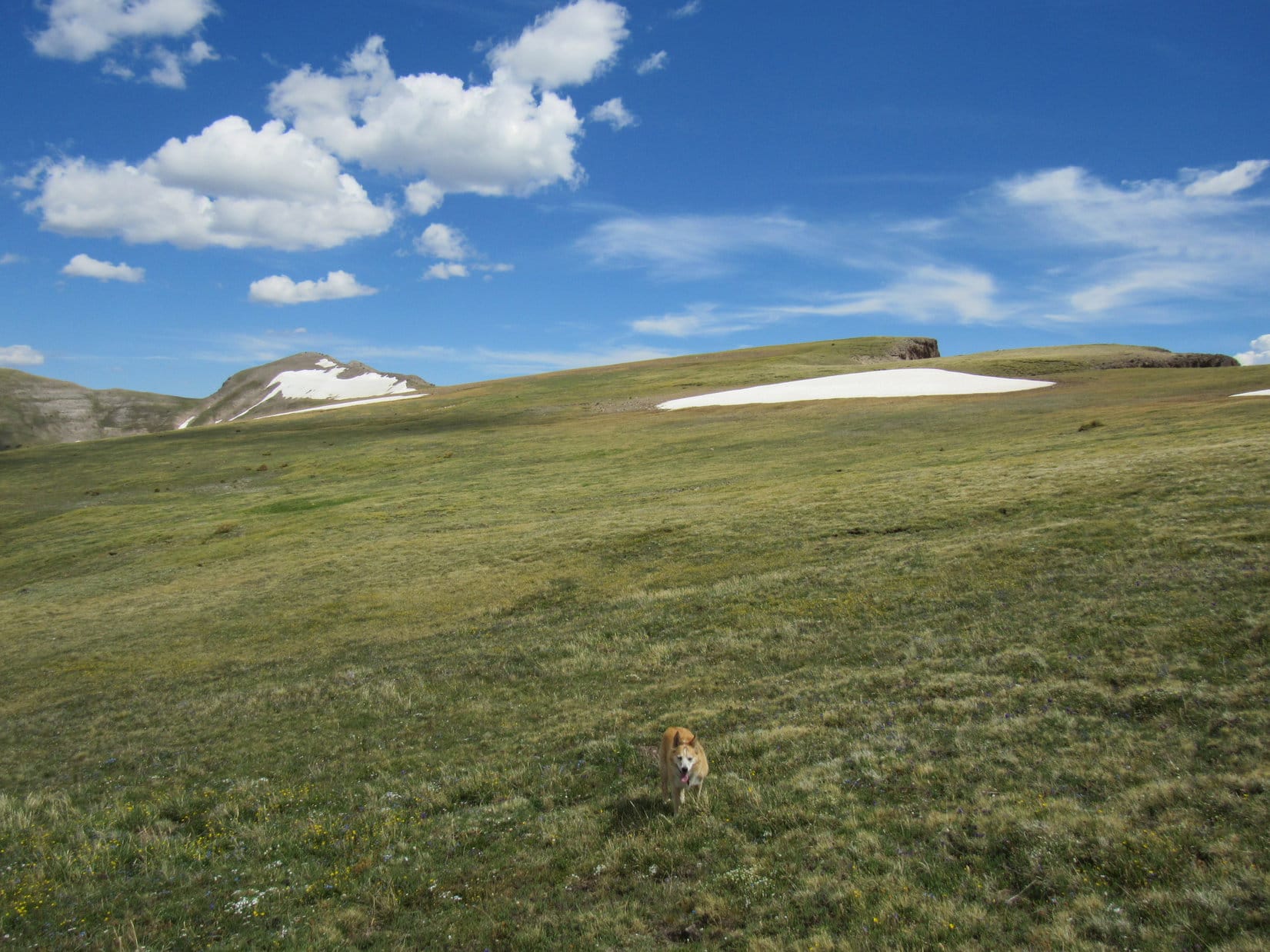
Pressing on after the giant deers ran off. Summit (L). Photo looks SE.
Finally along the edge of North Breccia Cliffs, but which of those high points (L) ahead is the true summit? Photo looks SE.
Climbing toward the first high point (L). Photo looks SE.
Getting there, but the middle high point is looking like the true summit.

Increasingly, the middle high point looked like the true summit.  Better not be!  It was still a way off, and the ridge Looper was on was already narrow enough.  Good chance it wouldn’t be passable that far.
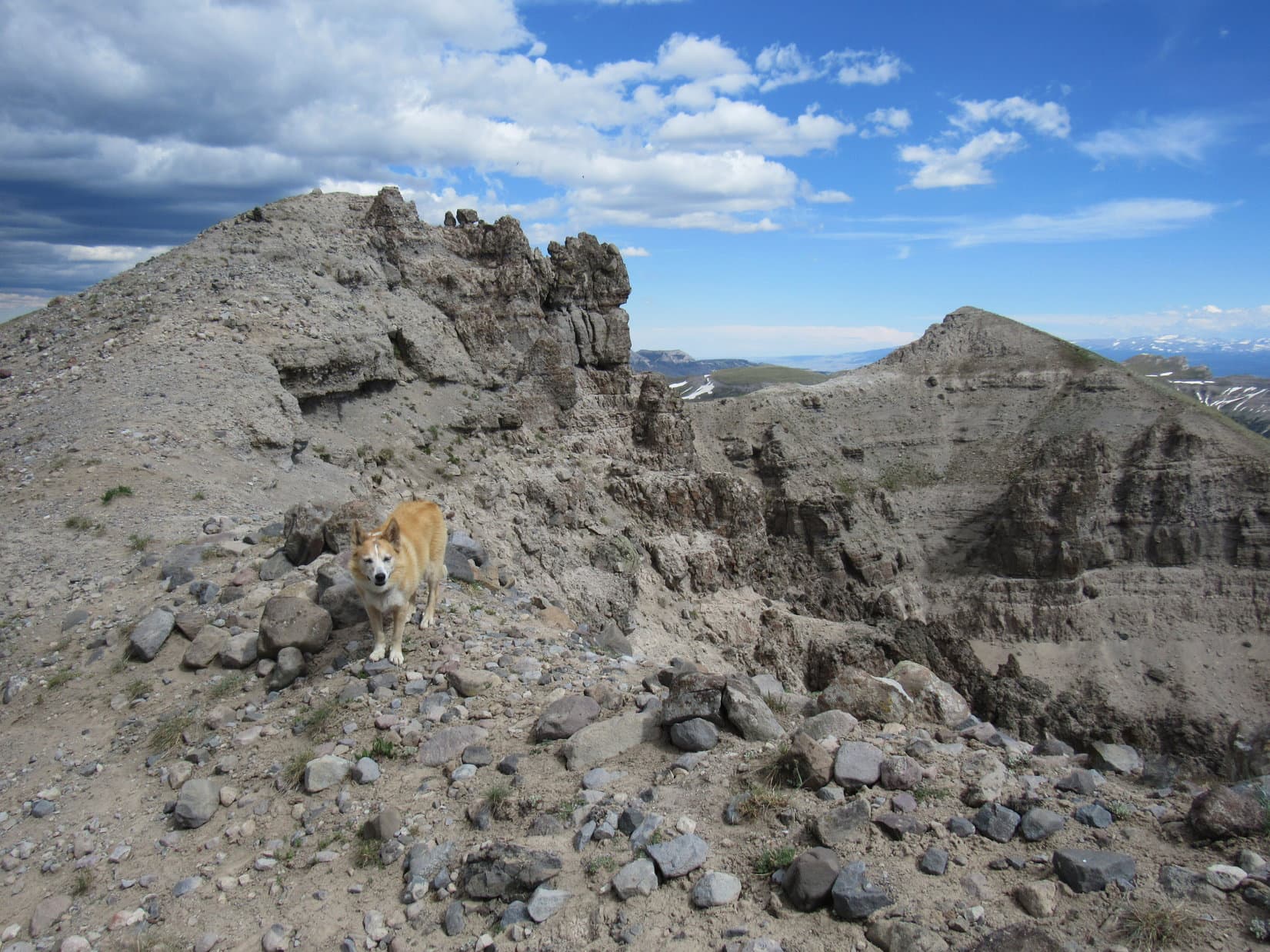
Almost at the first high point! Second one on the R.

Lupe reached the first high point.  Sort of.  The situation turned out to be more complex than was previously evident.  A cluster of 3 separate high spots were strung out along the ridge.  The next 2 weren’t much farther, but both were clearly higher.

Getting to the middle spot was easy.  A boulder decorated with orange lichens perched right along the edge of the fearsome cliffs was the tippy top here, but the last spot, an elevated platform only 25 feet farther SE was even higher.

The ridge narrowed on the way to it.  No problem most of the way, but the last little stretch, a mere 10 feet, connecting to the platform looked dicey.  Super narrow, it featured a cliff on one side and a steep slope that plunged toward a giant free fall on the other.  How much room, if any might be up on that platform wasn’t clear.  Might not even be a foot wide.  Unnerved, SPHP sat down.

Hang on, Looper!  Let’s take a break.

Keep going, SPHP!  Let’s do this before the storm hits!

I don’t like it!  We don’t even know if that’s the true summit yet.  Let me check the topo map.

C’mon, SPHP!  We know that it’s higher than where we are now!

Wait, Loop!  Please, stay!  I gotta calm down.  Give me a few minutes.
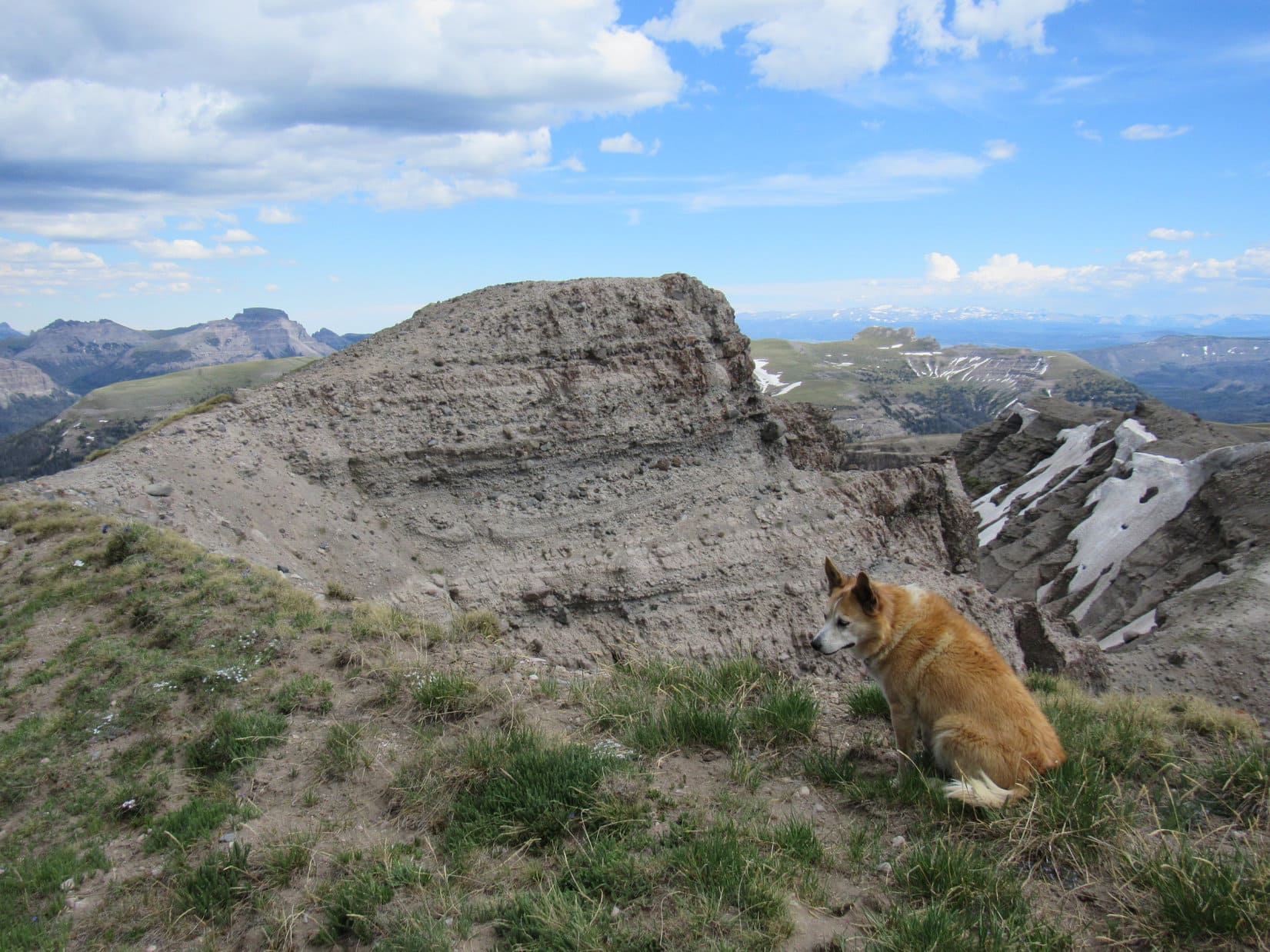
At the rest spot so close to the platform (Center). Photo looks SE.

A sudden single bolt of cloud to ground lightning off to the W added to SPHP’s anxiety.  Total cake walk all this way, and now this!  SPHP shared a half-melted chocolate coconut bar with the American Dingo, then had a look at the topo map.

Gah!  Huge mistake!  The map SPHP had printed out and brought along didn’t extend far enough to include either of the two more distant high points Lupe had seen on the way up.  Even worse, what was shown was on such a large scale that details weren’t legible.  Utterly useless here!

The line of showers to the NW was growing longer at both ends.  Didn’t seem to have moved much, though.  Raining hard now in some spots, but despite all the rumbling, so far only that one bolt of lightning had been seen striking the ground.  Still, better get with it.  Now or never!

Standing up, SPHP walked the remaining distance over to the near end of the scary section of the ridge leading to the platform.

Luck of the Dingo!  Skinny enough, but it wasn’t nearly so bad as it had looked just a few feet from it.  Moments later, Lupe was poised atop the platform!
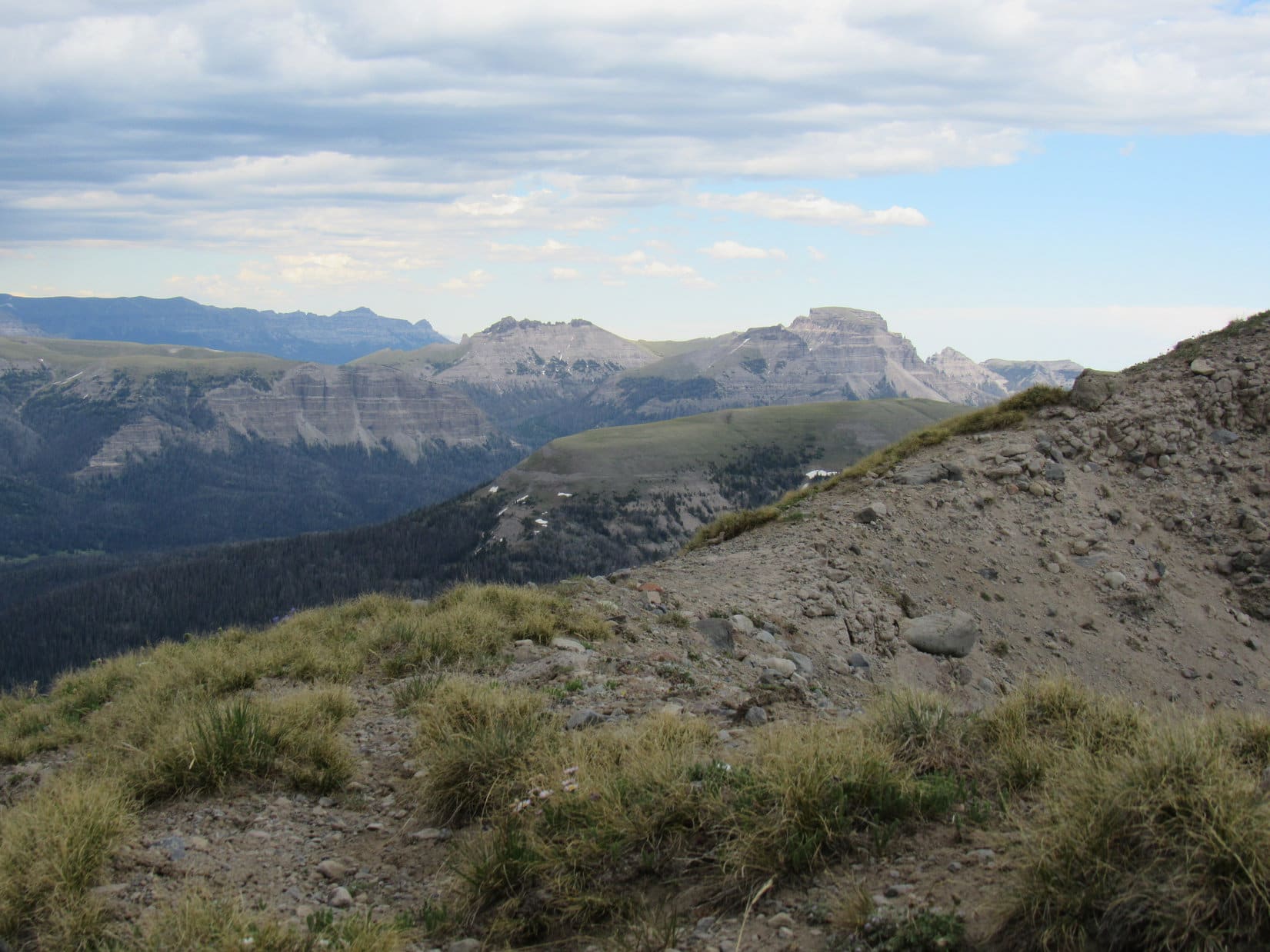
Scary, narrow part of the ridge (R) from close up. Eh, not so bad! Photo looks SE.
Success! Up on the platform.

Congratulations, Loopster!  This is it!  You’ve just reached the true summit of North Breccia Cliffs (11,240 ft.)!

Oh, joy!  It was true!  Lupe stood up on an L-shaped platform that was clearly the highest point around.  Nothing else even in contention!  The platform wasn’t all that large, but there was room enough to stroll around a bit.
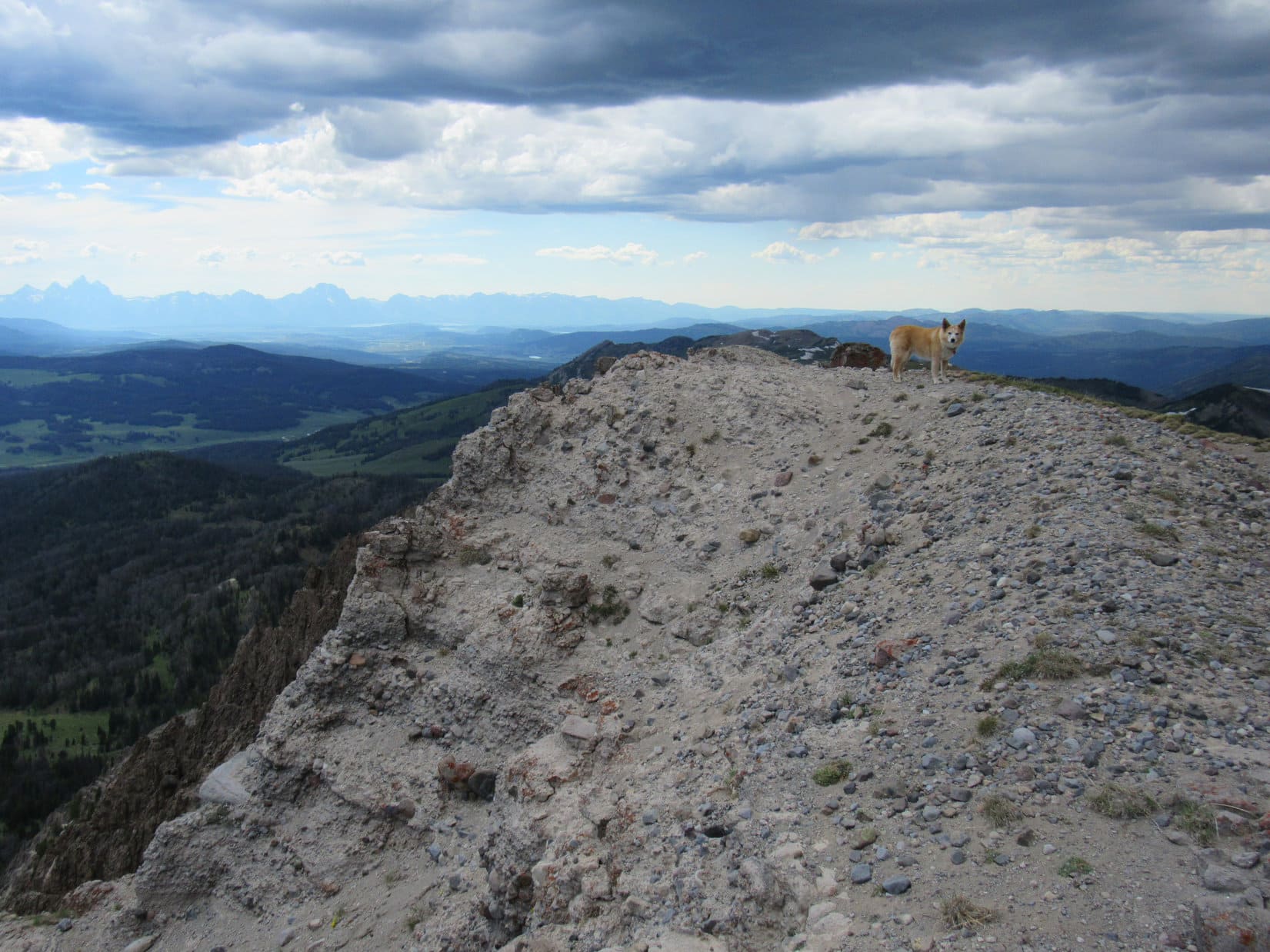
Teton Range (L) from the true summit of North Breccia Cliffs. Photo looks NW.

The true summit of North Breccia Cliffs was an airy place!  Fantastic views in all directions.  Off to the SSE, Mount Sublette (11,060 ft.) was a funny-looking grassy ramp to nowhere launching skyward off the edge of a vast, grassy plain.  The Wind River Range was visible far beyond it.

To the SE, Pinnacle Buttes (11,516 ft.) looked a lot more like a butte than a pinnacle.
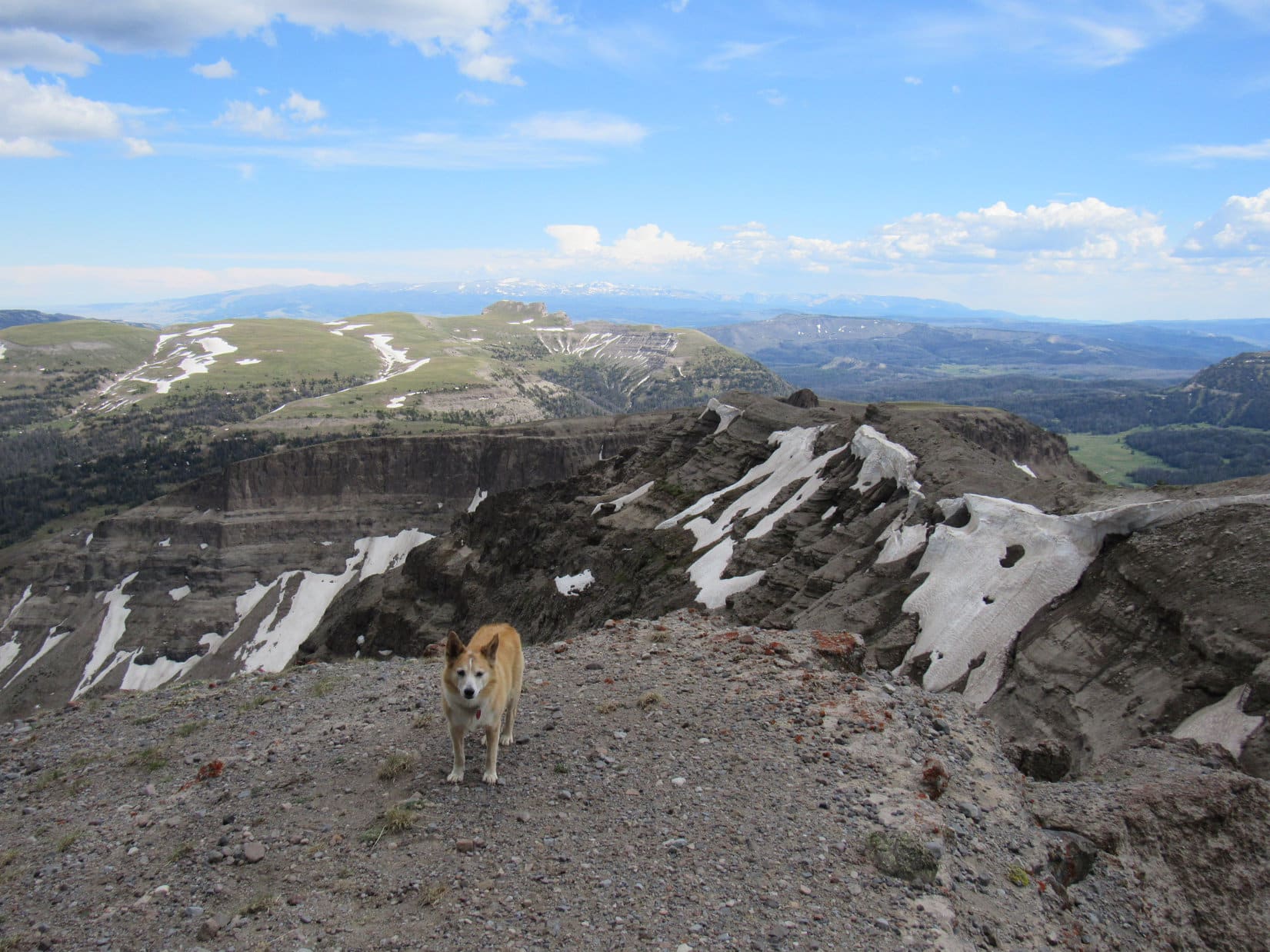
Mount Sublette (L of Center) beyond Lupe. Photo looks SSE.
Zoomed in on Mount Sublette (L) in the foreground. Wind River Range beyond.
Pinnacle Buttes (R) in the distance. Photo looks SE.
HP11444 (L of Center) is the rounded half of a hill in the foreground. Photo looks NNE.

Two Ocean Mountain (10,724 ft.) was due S, and Lost Lake could be seen off to the SW.
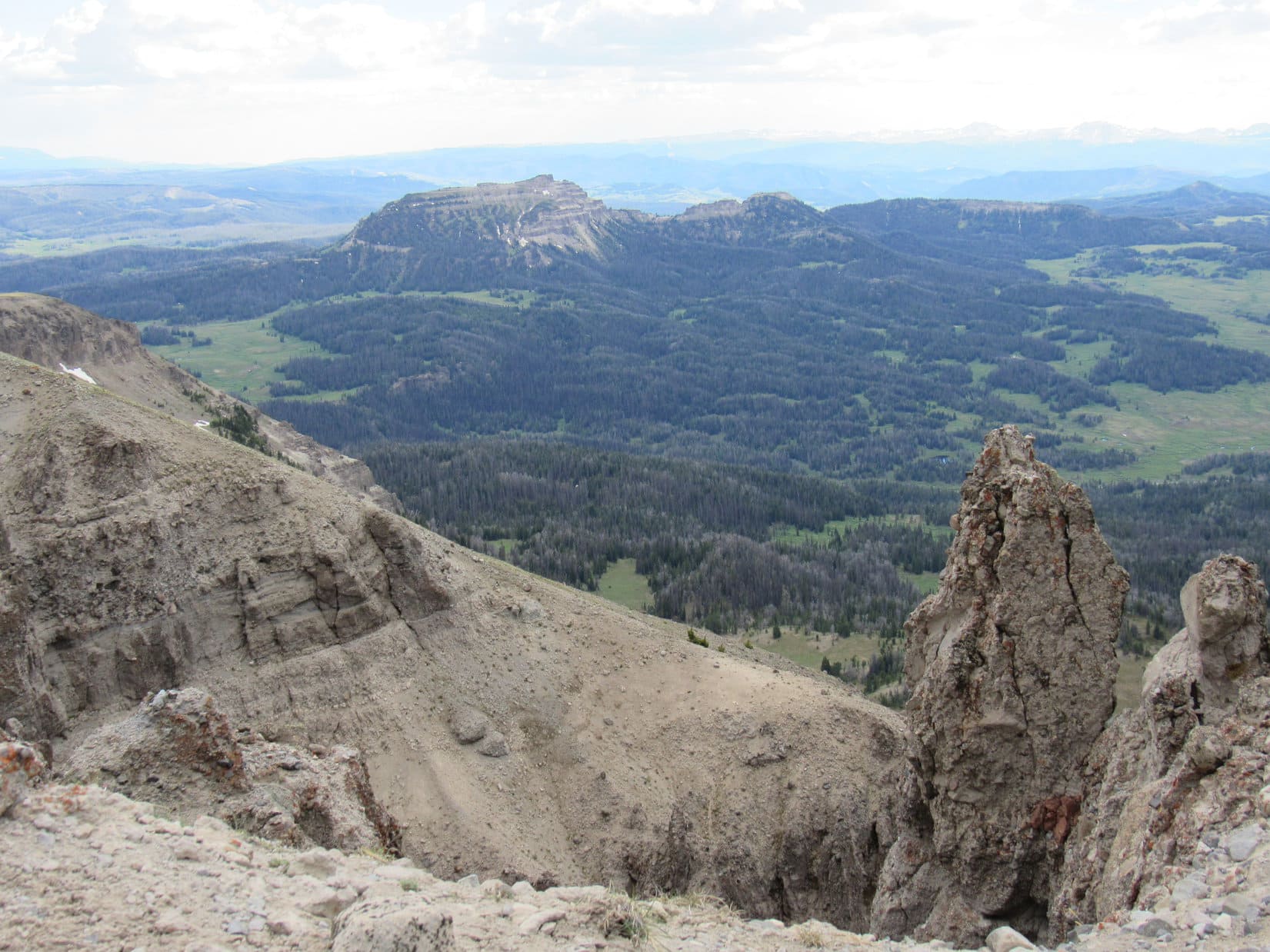
Two Ocean Mountain (L of Center). Photo looks S.
Lost Lake (L of Center). Photo looks SW.

6-30-21, 5:13 PM – The showers drifted away to the E, taking the worst of the thunder along with them, but the weather remained questionable.  Accordingly, Lupe didn’t stay up on the true summit for too long.  Getting late in the day, anyway.  Before leaving the summit region, Lupe checked out the snazzy boulder at the second highest spot.
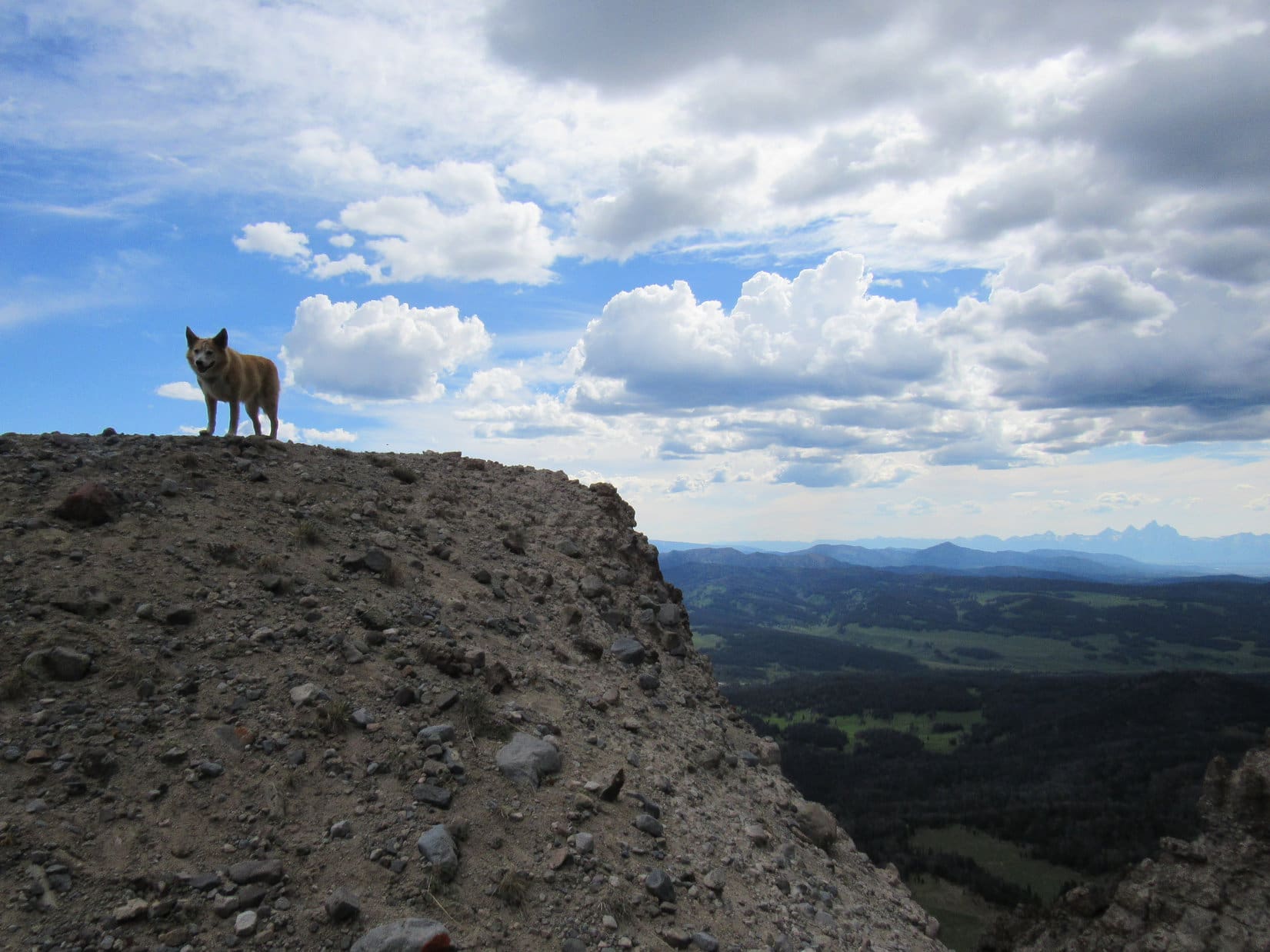
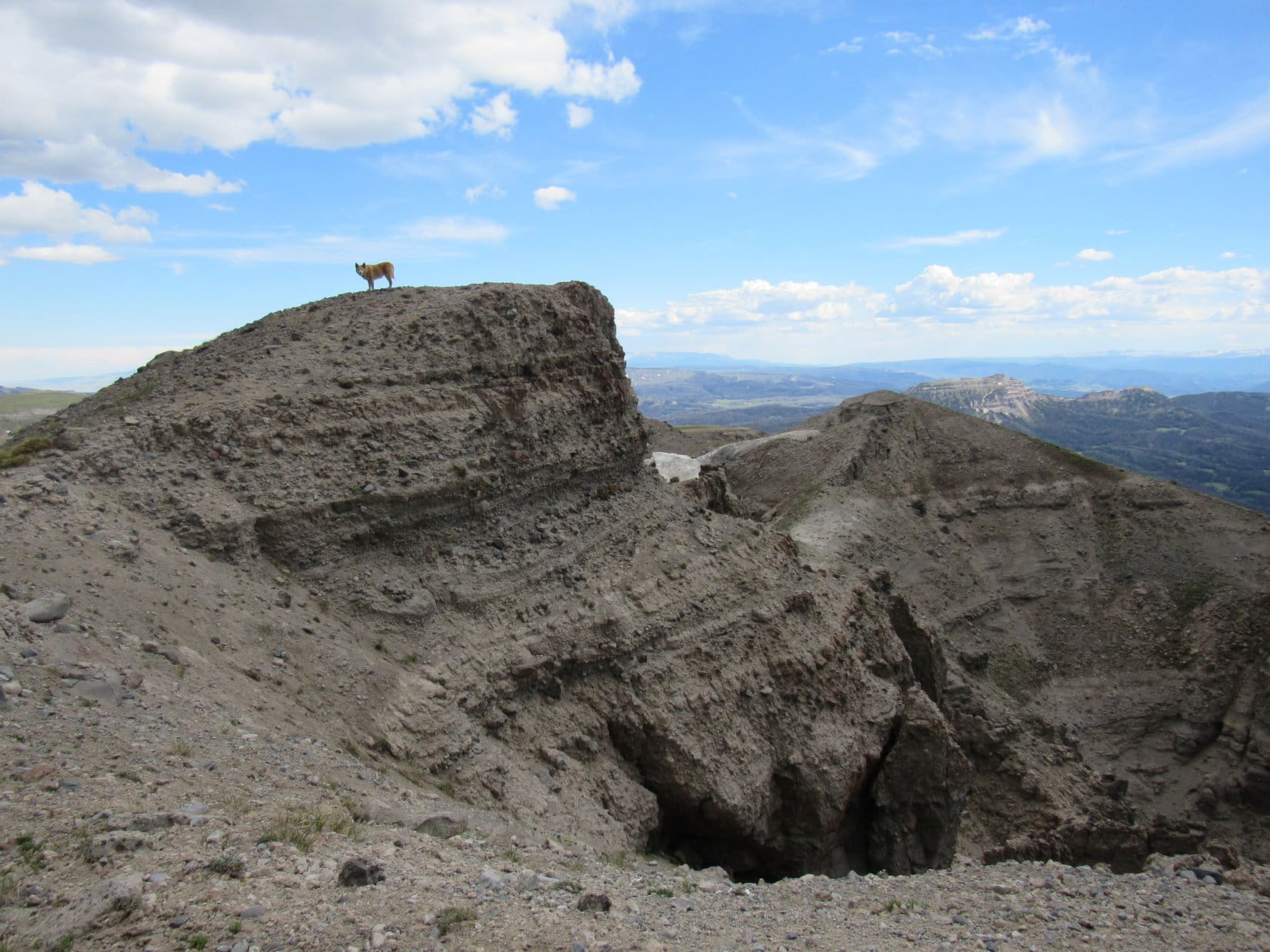
Still up on the true summit platform. Photo looks SW.
Final moments at the true summit. Photo looks SSE.
On the boulder at the middle high point. Grand Teton visible next to Lupe. Mount Moran (R). Photo looks W.
Same spot, different perspective.

Plenty of adventure ahead, with more to see on the long trek back!  Shortly after departing, a fierce cool wind sprang up out of the N while Lupe was still up on the exposed ridge.  Once down to the broader plain, she took shelter in a depression until it passed.
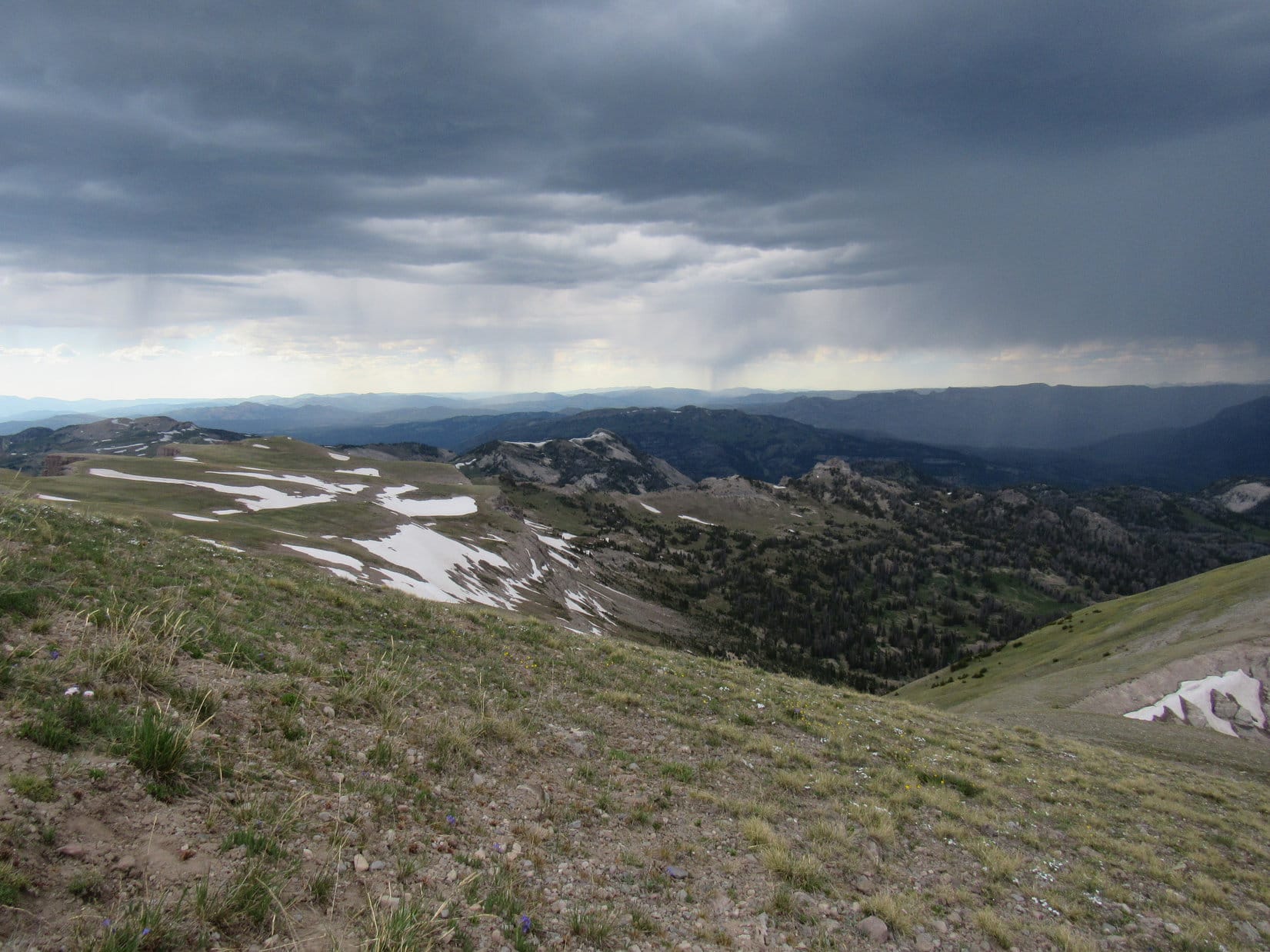
Starting back. Photo looks NW.

Although Loop didn’t hit all the high points along the way, the Carolina Dog stayed near the cliffs as she journeyed NW, enjoying the views from many scenic spots she hadn’t been to earlier.  Before heading down to the meadow above the climber’s chute, she ventured way out to the NW end of the upper plateau.
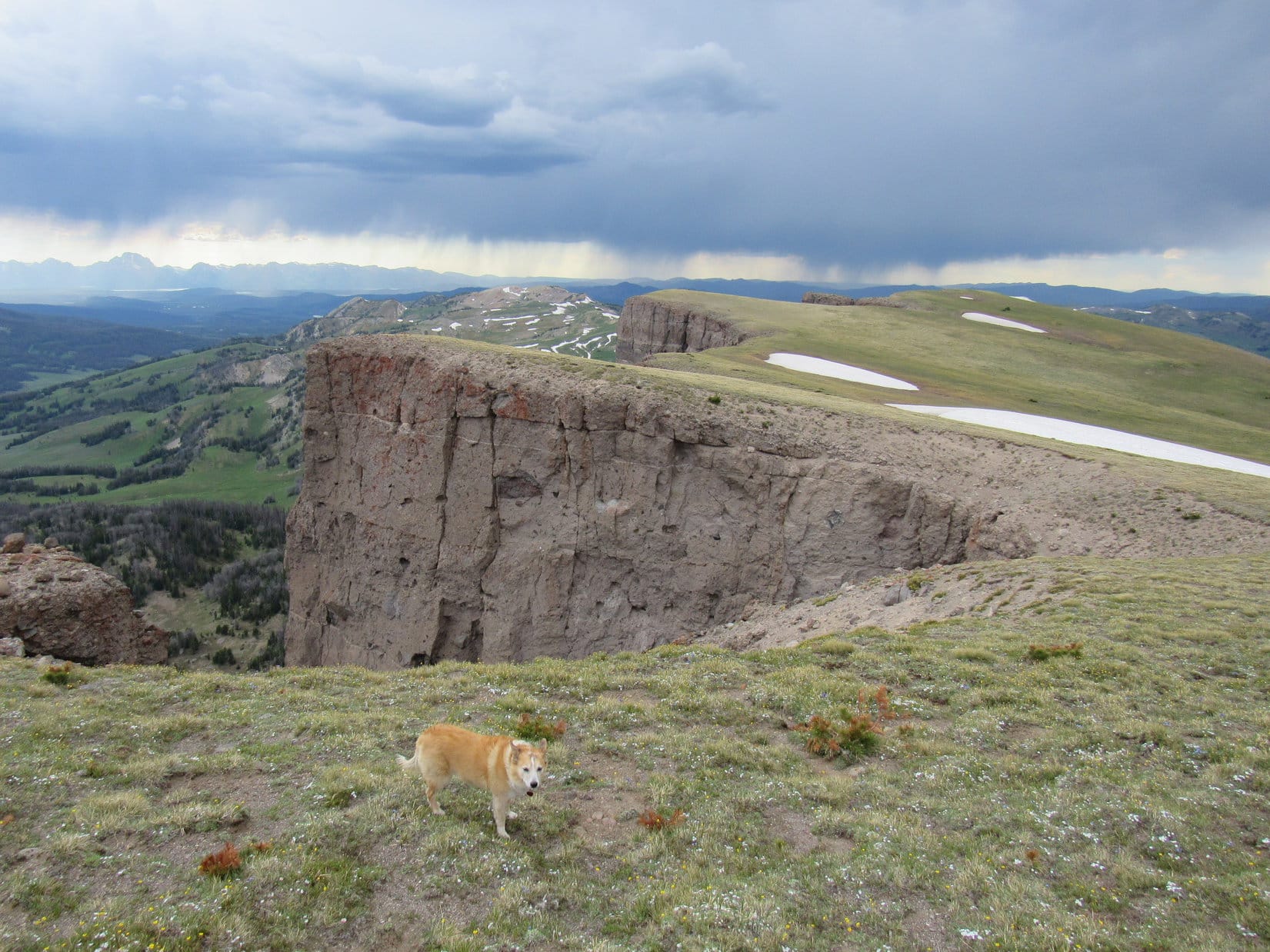
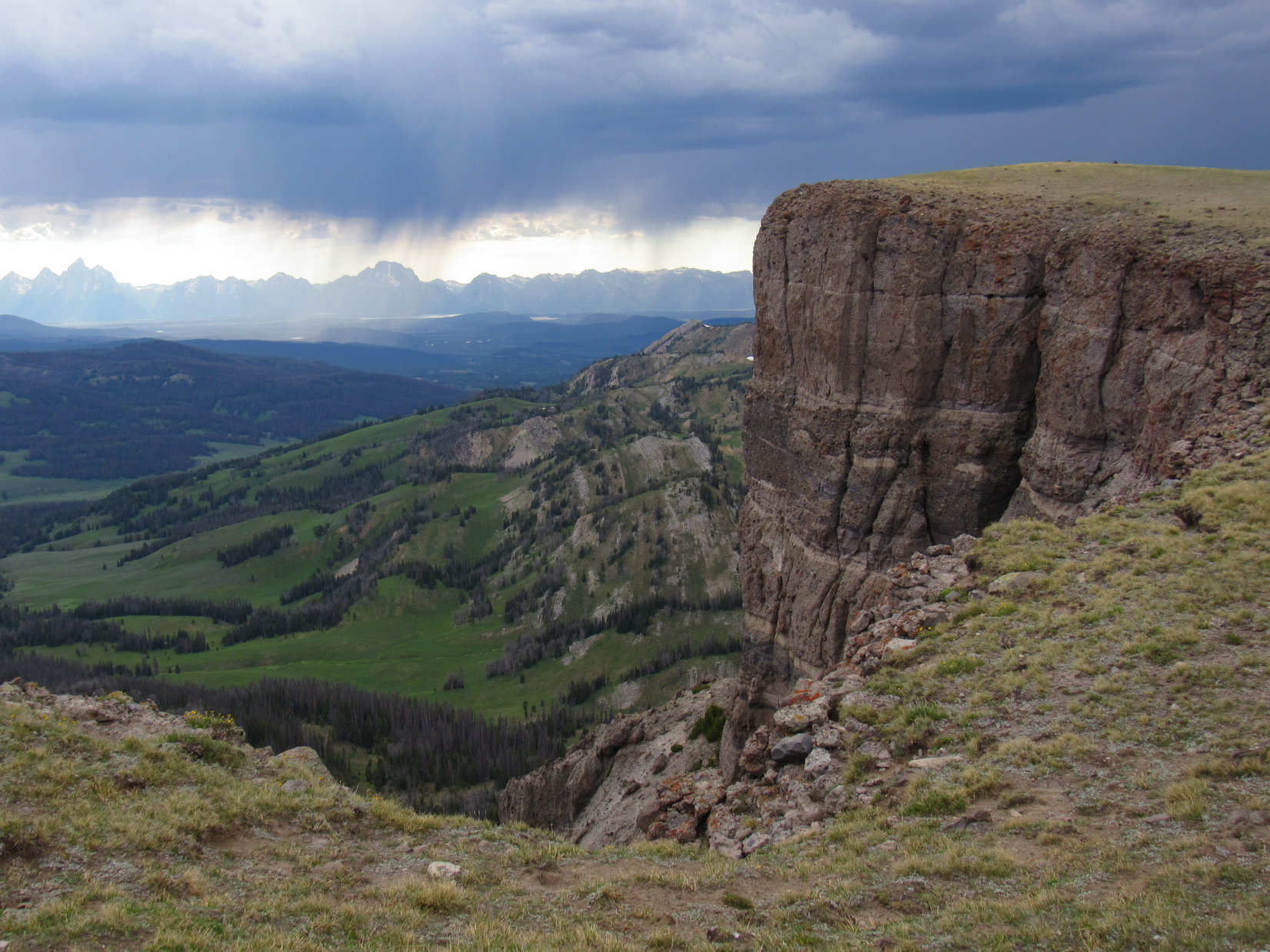
Near the cliffs along the upper plateau. Photo looks NW.
Tetons (L) from the cliff edge. Photo looks W.
At the NW end of the upper plateau. Angle Mountain (Center). Photo looks NW.
Looking down on the N ridge from the upper plateau. Photo looks NE.

Heading NE from the climber’s chute on the Big Chicken route, Lupe stayed up along the N ridgeline enjoying the views for quite a long way.
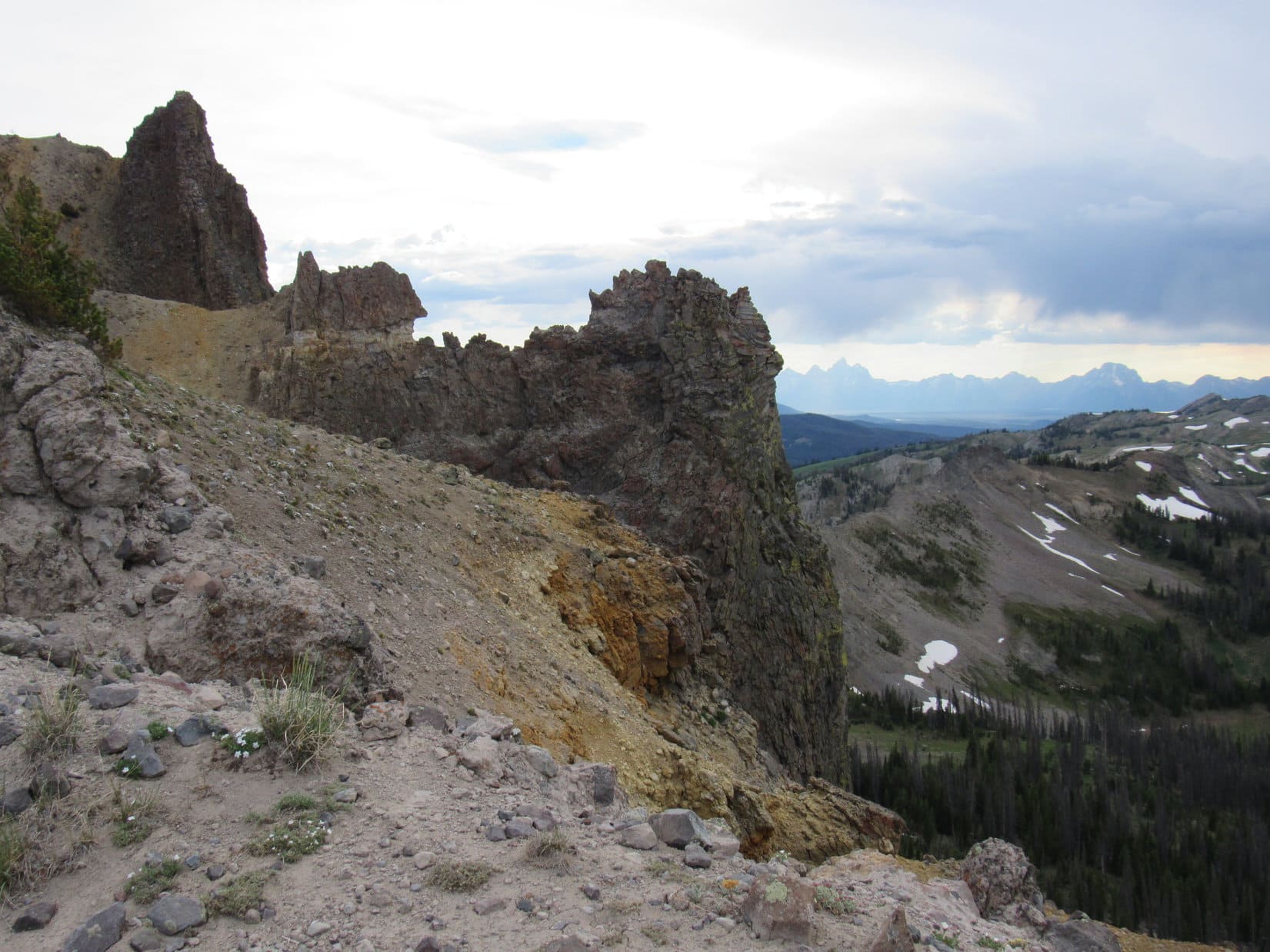
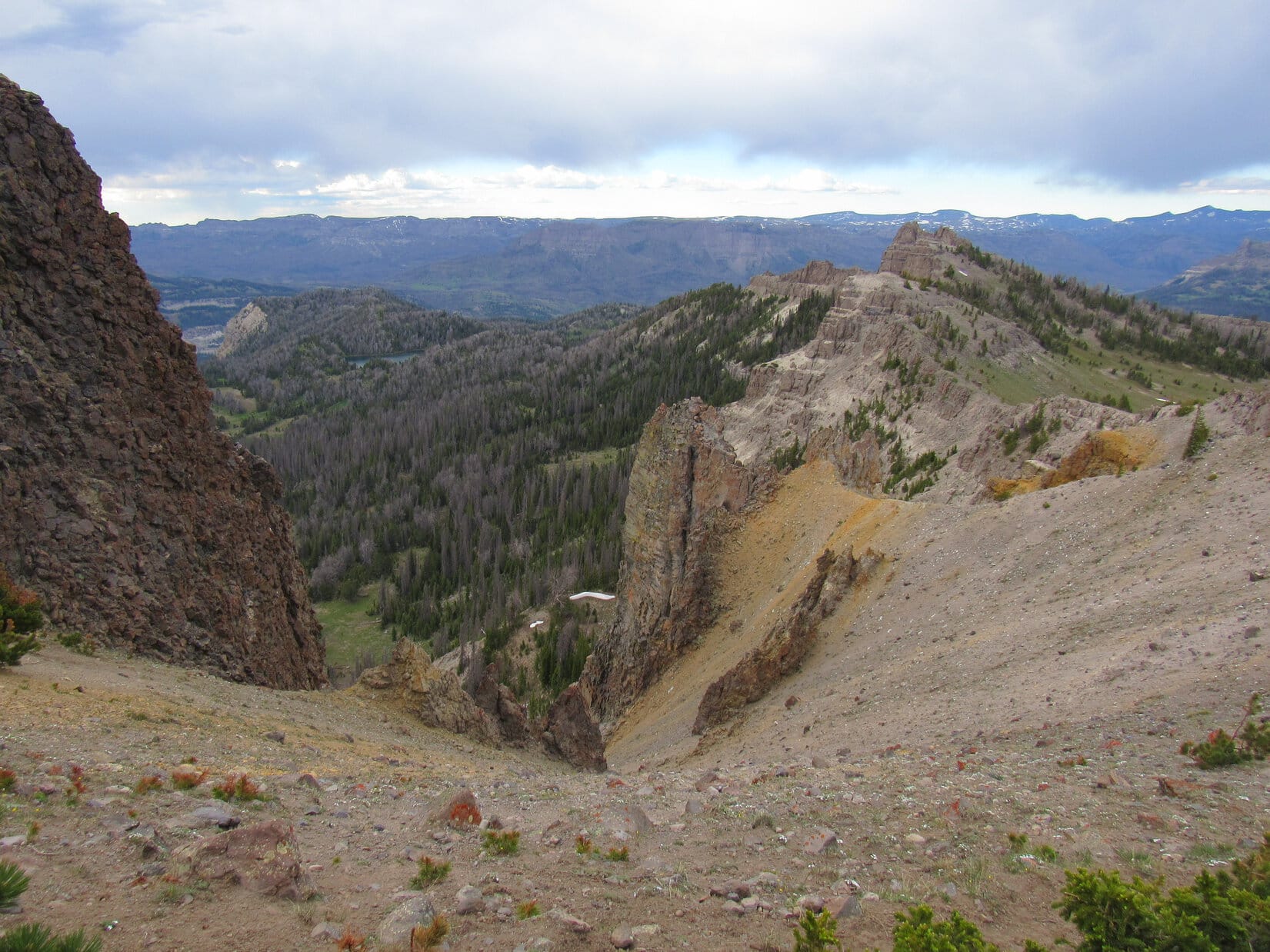
Once on the trail past the E ridge, Loop followed it into the valley she hadn’t explored on the way up.  At the bottom of the steep descent at the end, SPHP built a little cairn, since this was probably the best route.

By the cairn near the best way up along the Big Chicken route. Photo looks S.

Lupe never did get to see Holmes Cave, or even Holmes Cave Lake again.  Instead she wandered through confusing territory on a route meant to be a shortcut back down to the stream.  She eventually got there, but it didn’t seem like any time or distance had been saved.

No worries!  Holmes Cave Trail No. 6057 the rest of the way back now!  Although she’d begged for rest breaks earlier, after crossing the stream, the American Dingo seemed energized by the fading light.  Lupe led the way, often pausing to see if SPHP was still coming.

Night!  A mile before the end, the flashlight had to come out.  In silence, a weary march continued beneath shimmering stars.

Yet what a great day it had been!  Sure hadn’t been any shortcut, quite the opposite, but the Big Chicken route had been a success!  Lupe had made it safely up onto Wyoming’s fabulous North Breccia Cliffs, and that was all that mattered.  (End, 10:37 PM, 46ºF)
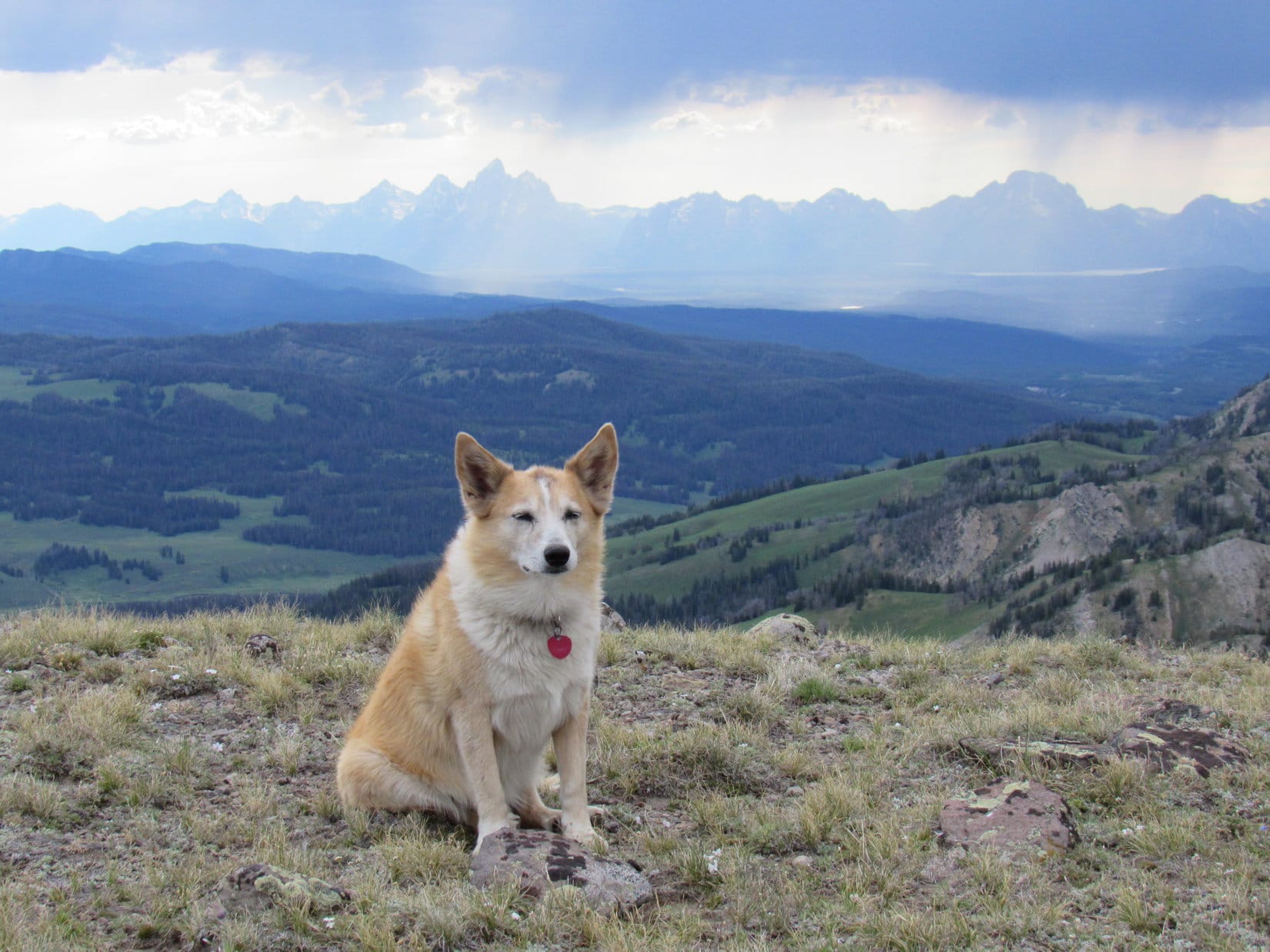
North Breccia Cliffs, Absaroka Range, Wyoming 6-30-21

Links:

Next Adventure                          Prior Adventure

The Much Shorter, More Popular Climber’s Route:

9-5-18 Trip Report & GPS Track by Garrett Carlson

Want more Lupe adventures?  Choose from Lupe’s Summer of 2021 Dingo Vacations to New Mexico, Wyoming & the West Coast Adventure Index, Dingo Vacations Adventure Index or Master Adventure Index.  Or subscribe free to new Lupe adventures.

Black Hills, SD Expedition No. 283 – White Tail Peak (11-6-21)

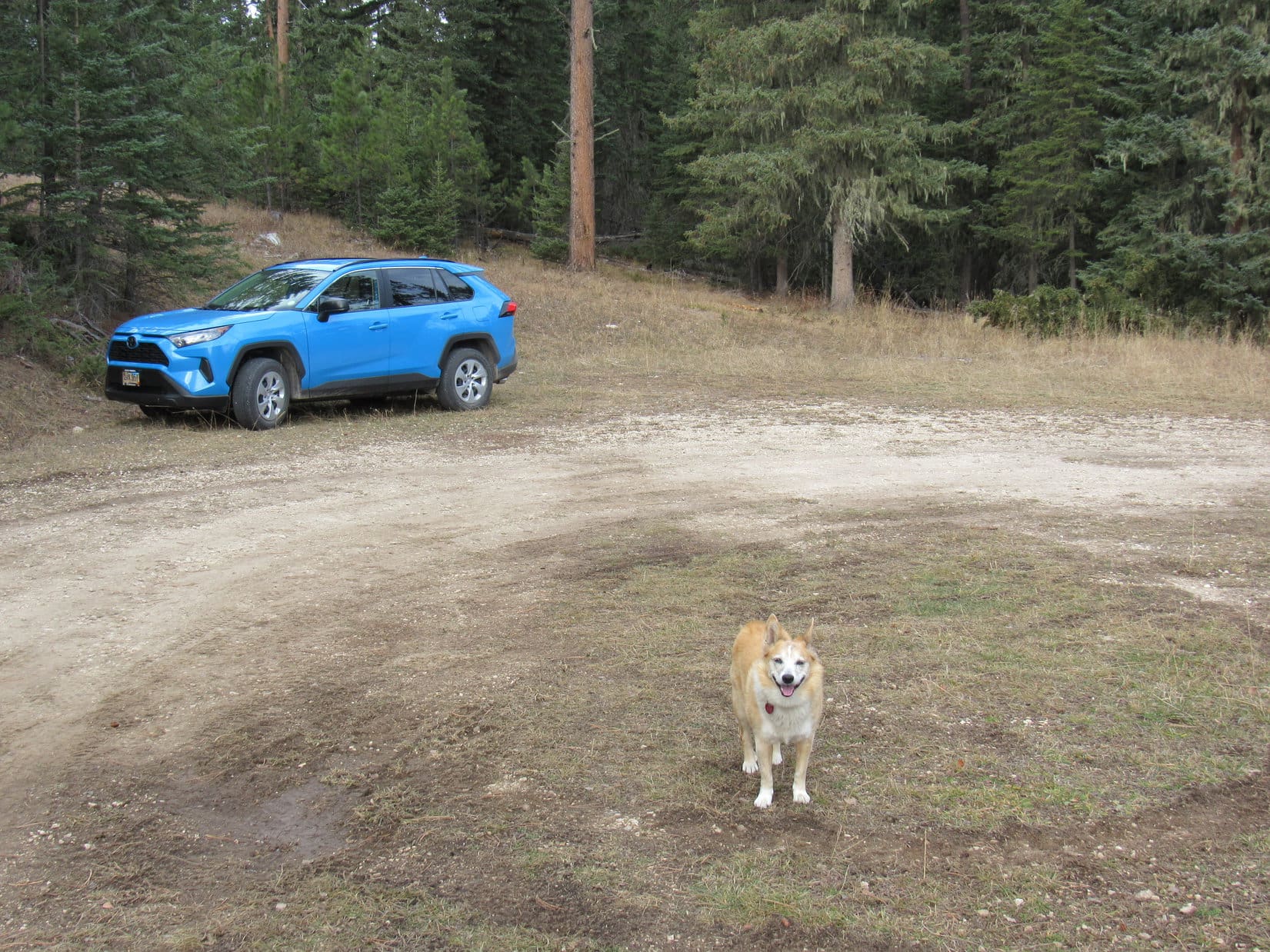
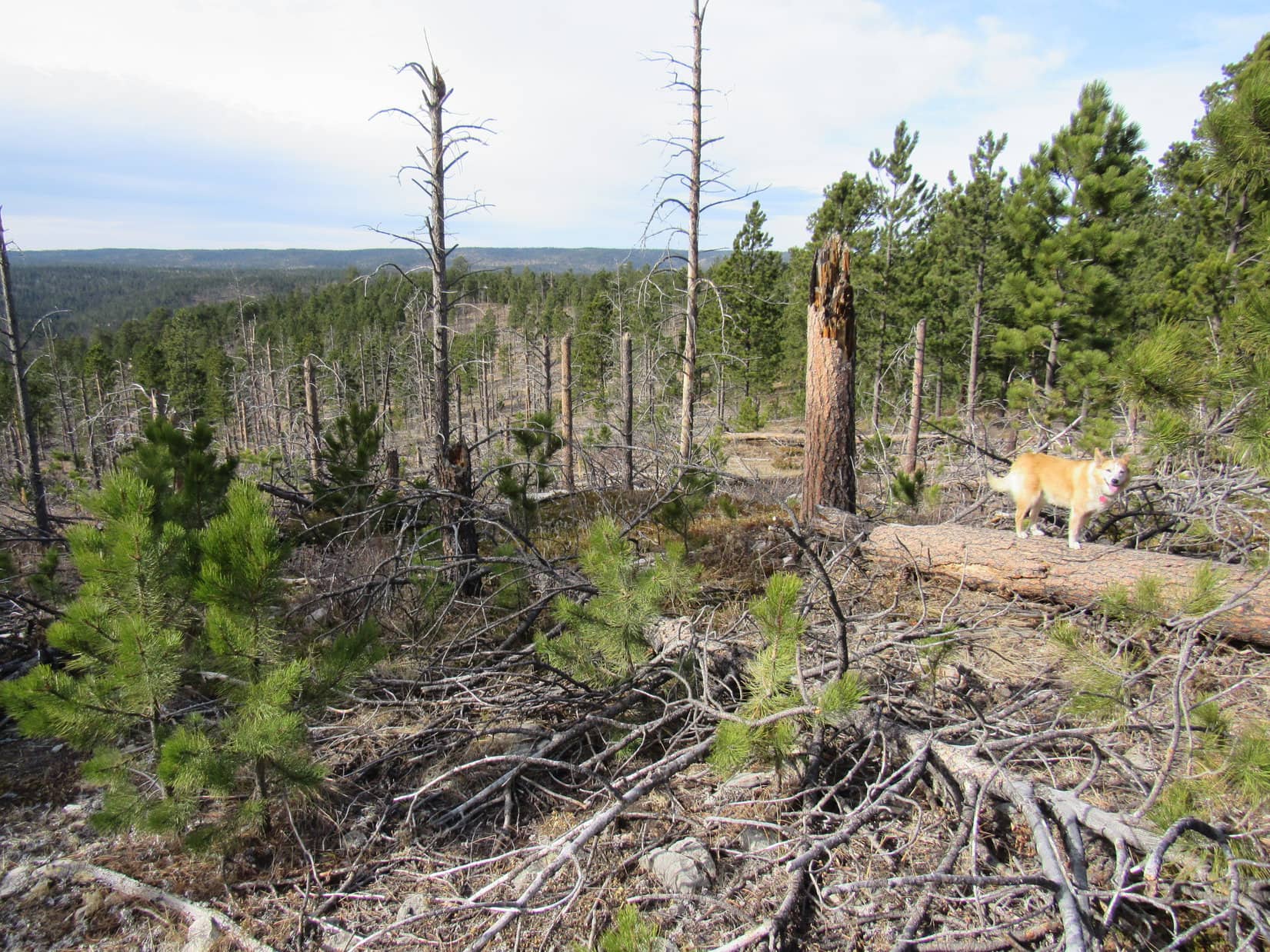
9:49 AM, 54ºF – At the end of USFS Road No. 599, SPHP parked the RAV4 at a big circular turnaround.  Lupe hopped out.  Nice and warm for early November, but she was here a little later than she ought to have been if she wanted to climb both White Tail Peak (6,962 ft.) and Peak 6962.

Parked at the end of USFS Road No. 599. Photo looks NW.

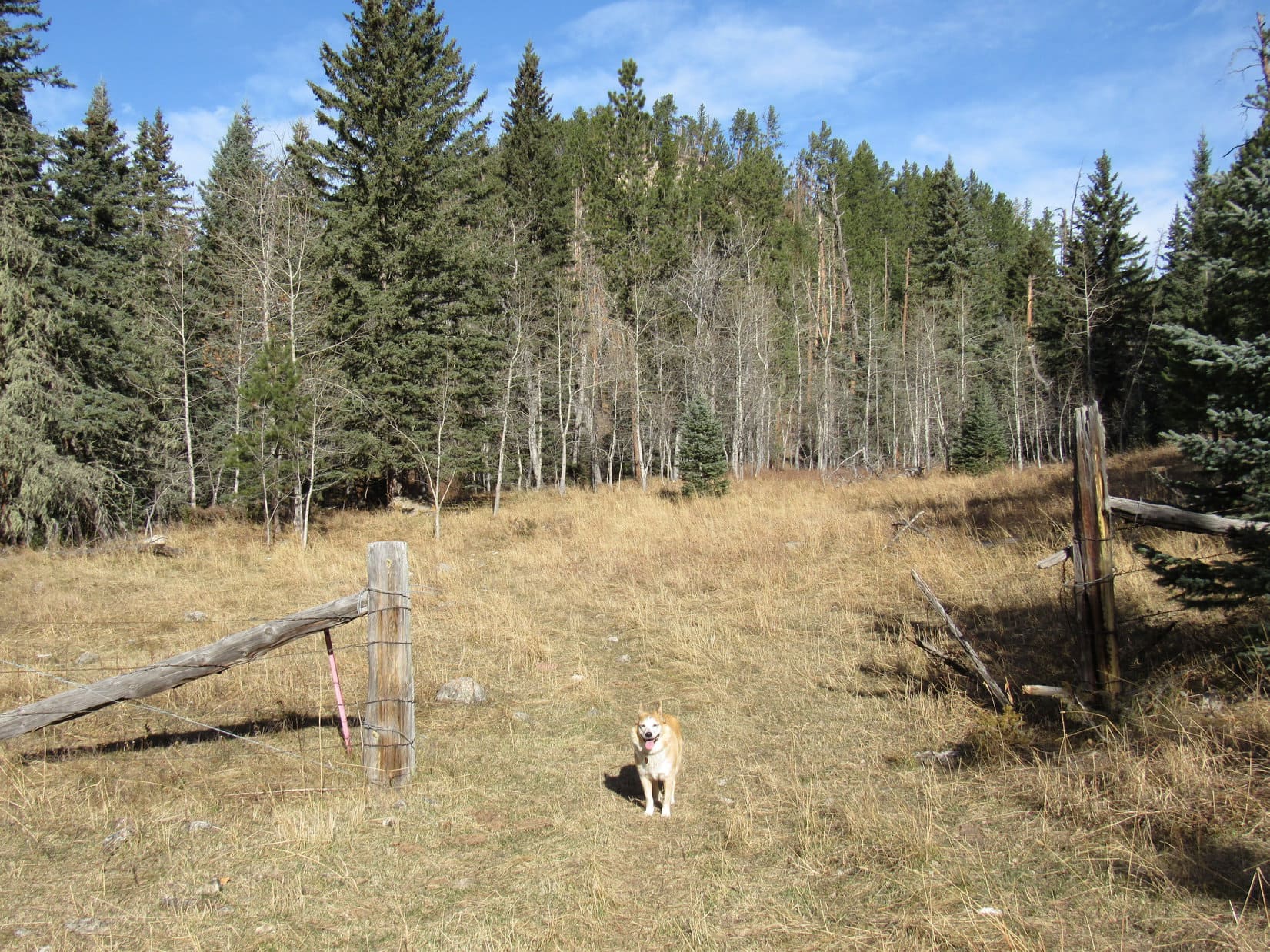
No need to decide which peak to shoot for yet, though.  The first mile would be the same for either one.  Eager to get going, Lupe headed NW into a dense forest, following an old barbed wire fence up the valley of the North Fork of Castle Creek.

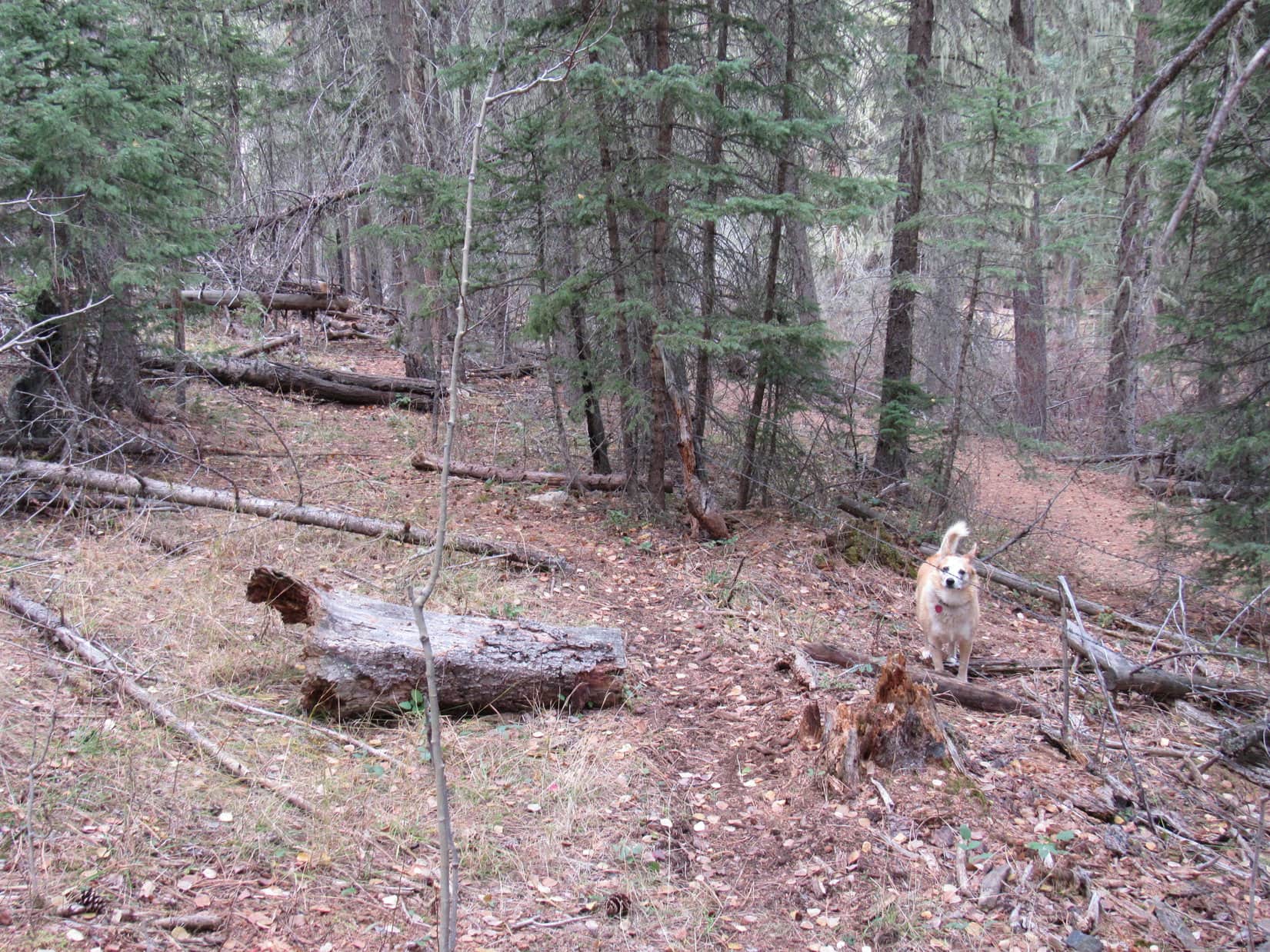
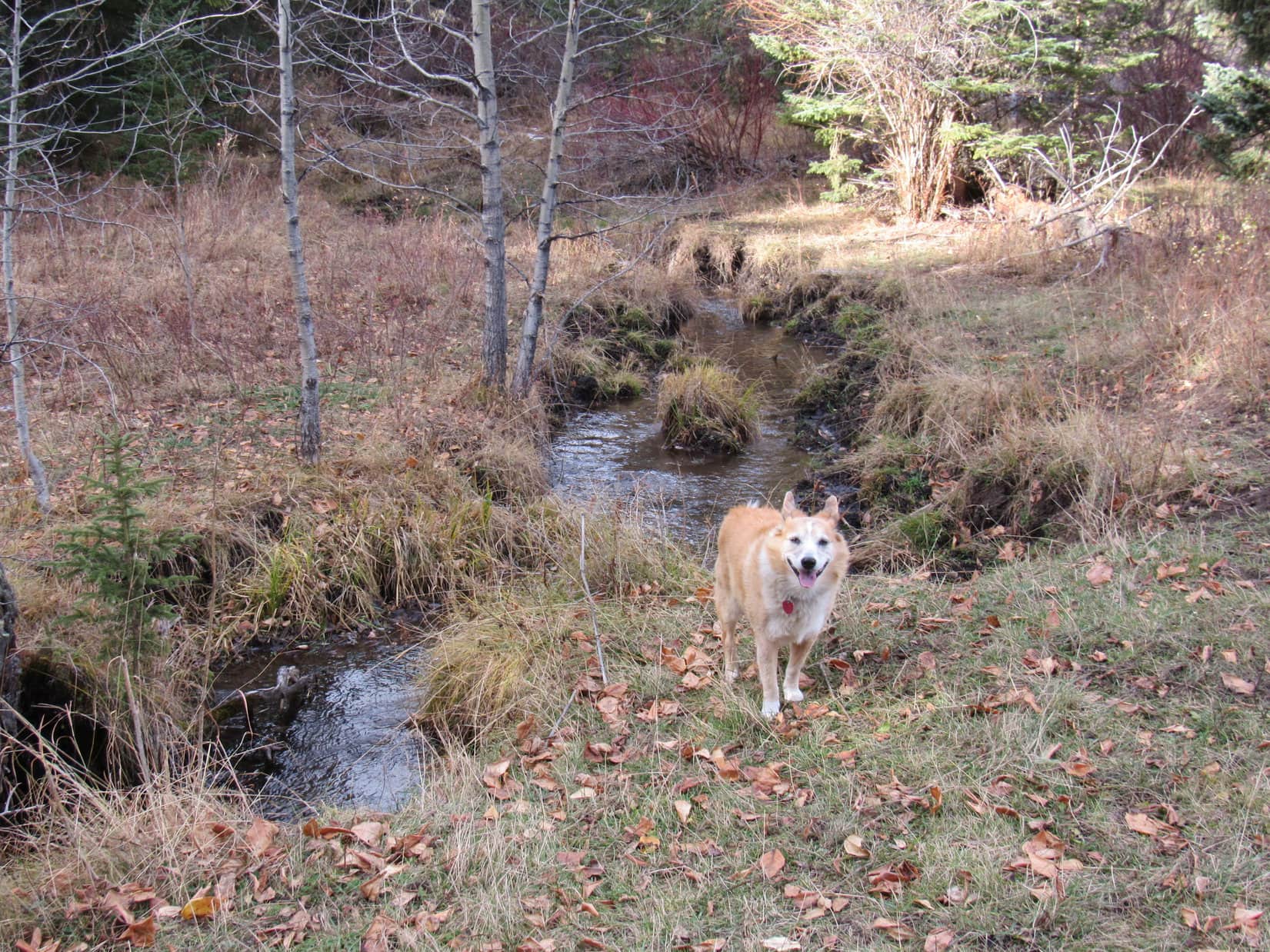
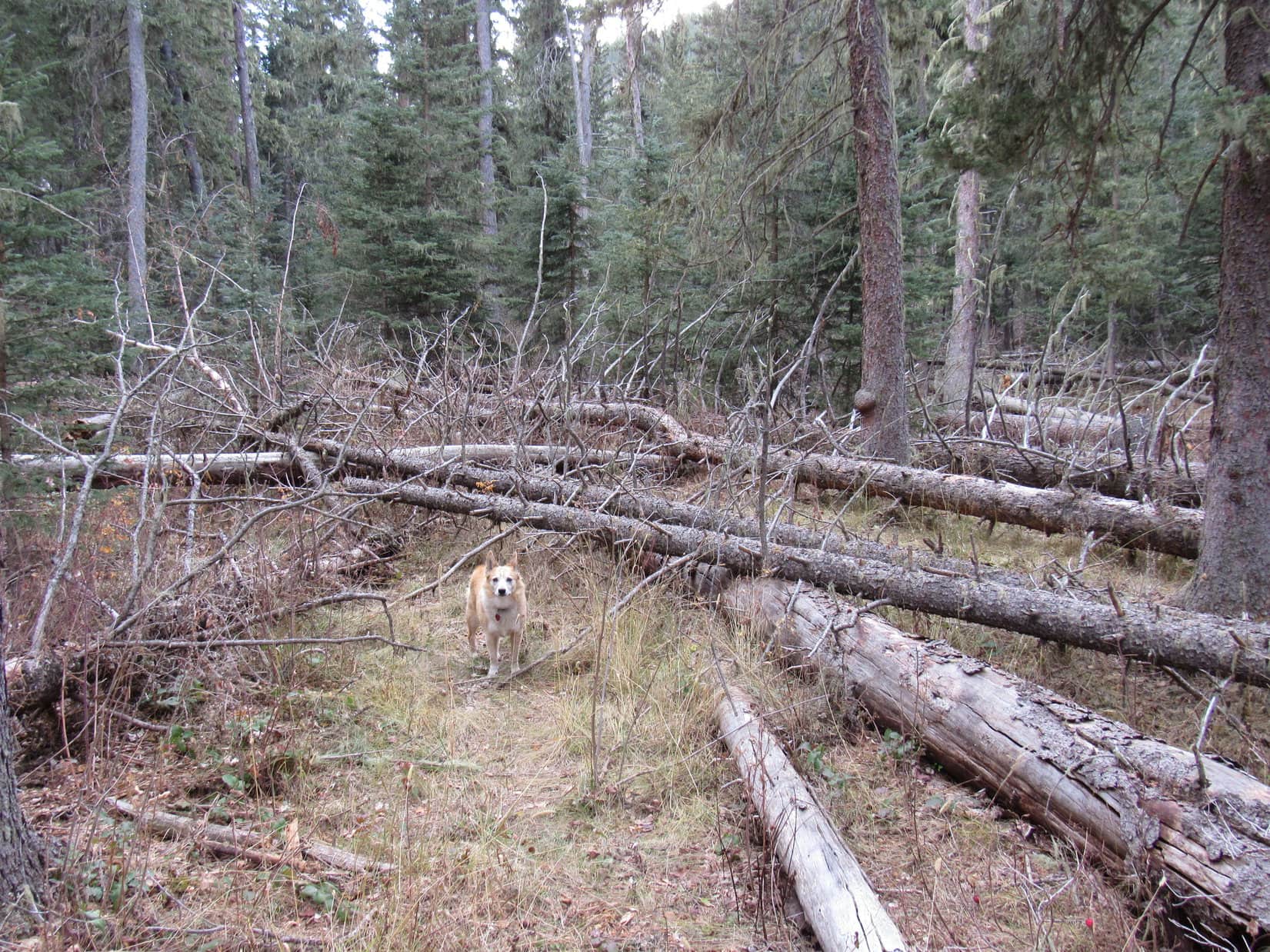
The forest was sort of a mess, full of deadfall.  SPHP’s progress was slow.  Fortunately, Lupe didn’t have far to go, before the forest opened up a bit.  Ducking through the barbed wire fence, she quickly came to the North Fork of Castle Creek.  Although small, the stream had decent flow.

Following the barbed wire fence.
At the first little clearing.
By the North Fork of Castle Creek.

Beyond the creek was a larger clearing with a big stand of aspens at the far end.  Turned out there was an open lane through the aspens.  A faint trail ran through it.  Following the trail, Lupe came to another meadow.  To the N were some limestone cliffs, part of the S end of White Tail Peak.

The first big clearing after crossing the North Fork of Castle Creek. Photo looks NNW.
In the lane leading to the next meadow. Photo looks WNW.
In the second big meadow. Photo looks NW.
Cliffs at the S end of White Tail Peak. Photo looks N.

SPHP was surprised when the trail persisted instead of fading away.  Certainly made life easy!  A mile from the start, Lupe came to a place where the valley divided.  The North Fork of Castle Creek forked here, too.  At a muddy spot, the trail crossed one of the tributaries.
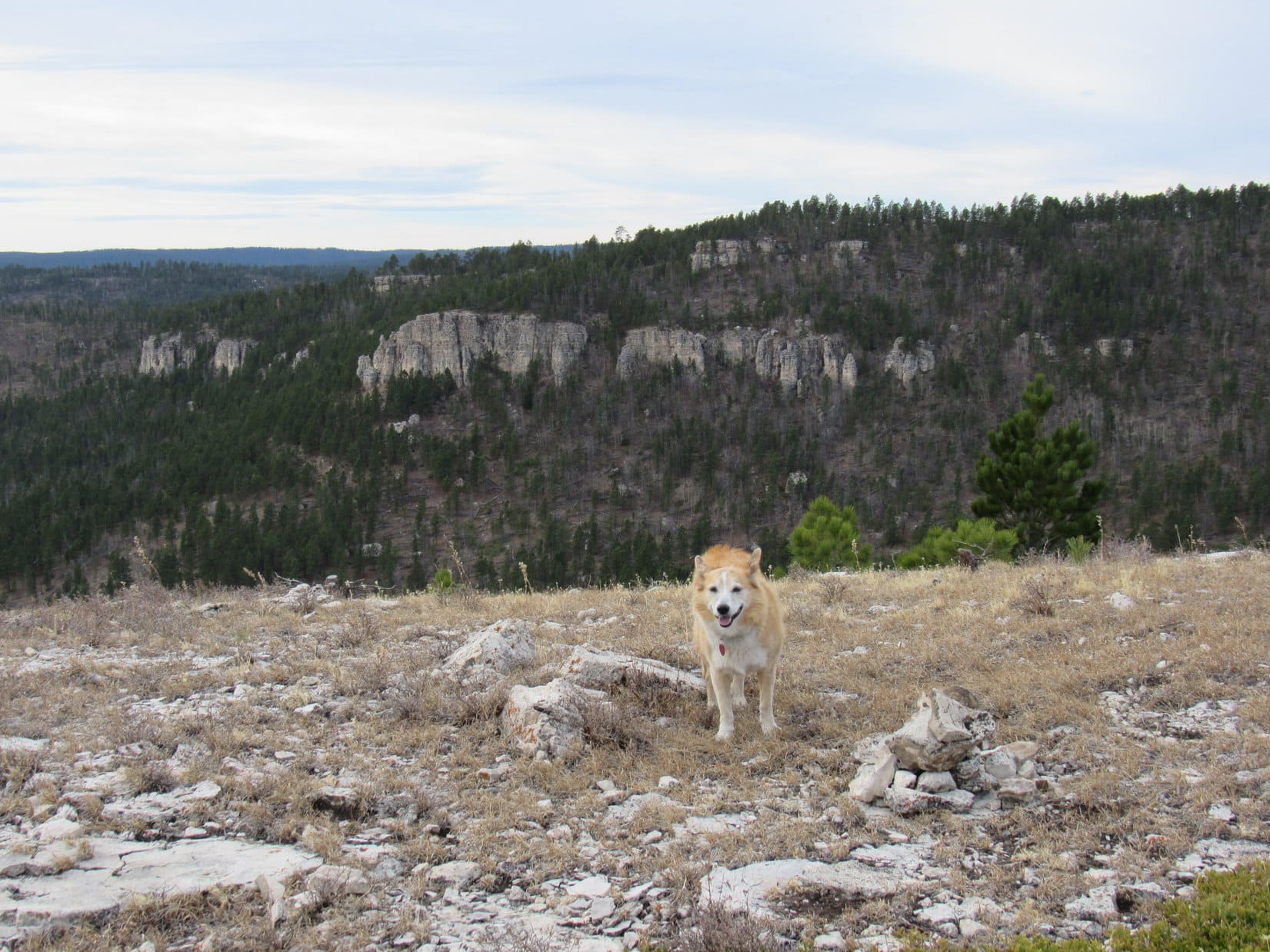
Continuing up the valley. Photo looks W.
About to cross a tributary of the North Fork of Castle Creek. Photo looks W.

Decision time, Loopster!  White Tail Peak or Peak 6962?

Seems like an awfully long time since we’ve been to either one, SPHP.

Oh, it has been for sure!  4 years since we were last at White Tail Peak, and 6 since Peak 6962.

Either one is fine with me, SPHP.  Do you have a preference?  Maybe we can still get to both today?

We’ll give it a shot.  If I had to choose, I’d say White Tail Peak.  Best views, although we really ought to explore Peak 6962 more thoroughly.

Best views won out.  White Tail Peak it was!  The American Dingo left the divide bearing R as she continued up the branch of the valley to the NW.  This decision soon paid off with the discovery of the still considerable remnants of a melting snow bank to frolic on.

Oh, joy! Nothing like finding a snowbank on a warm day! Photo looks SSE.

0.25 mile from the first divide, the valley split again.  What was left of the North Fork of Castle Creek came from the L.  The valley to the R (NE) was completely dry.  Loop was now 1.5 miles SW of White Tail Peak as the crow flies, so that was the way to go.

Nearing the second major divide of the valley. Lupe again went R. Photo looks NNW.

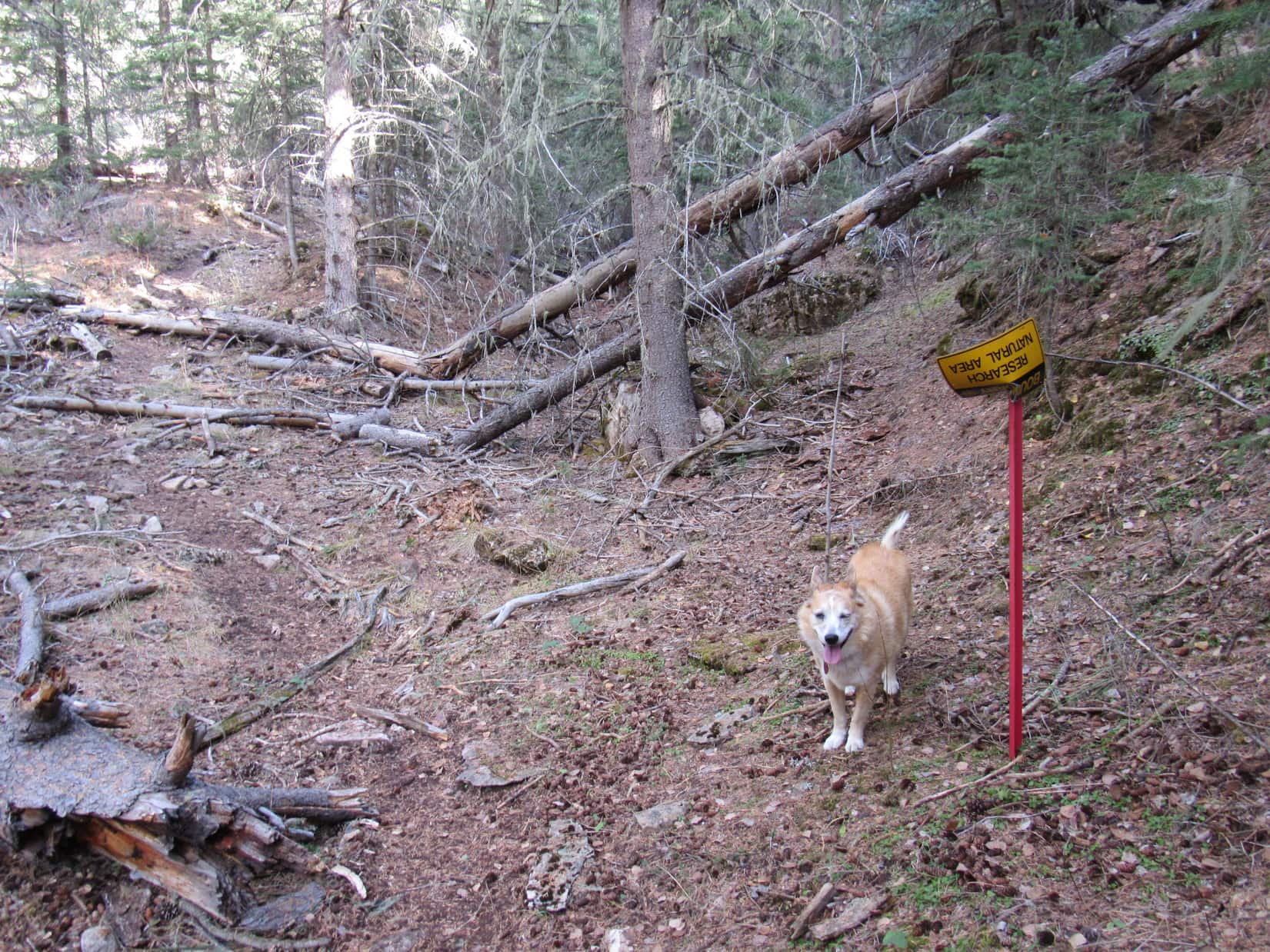
Soon after entering the NE branch, the valley deteriorated into more of a big, steep-sided ravine.  A dense forest grew here, partially choked with deadfall.  If it wasn’t for another unexpected path that wound through it all, passage would have been difficult.  Lupe came to a sign for a defunct research area.  A little farther on, she passed another.

By the first “research natural area” sign.

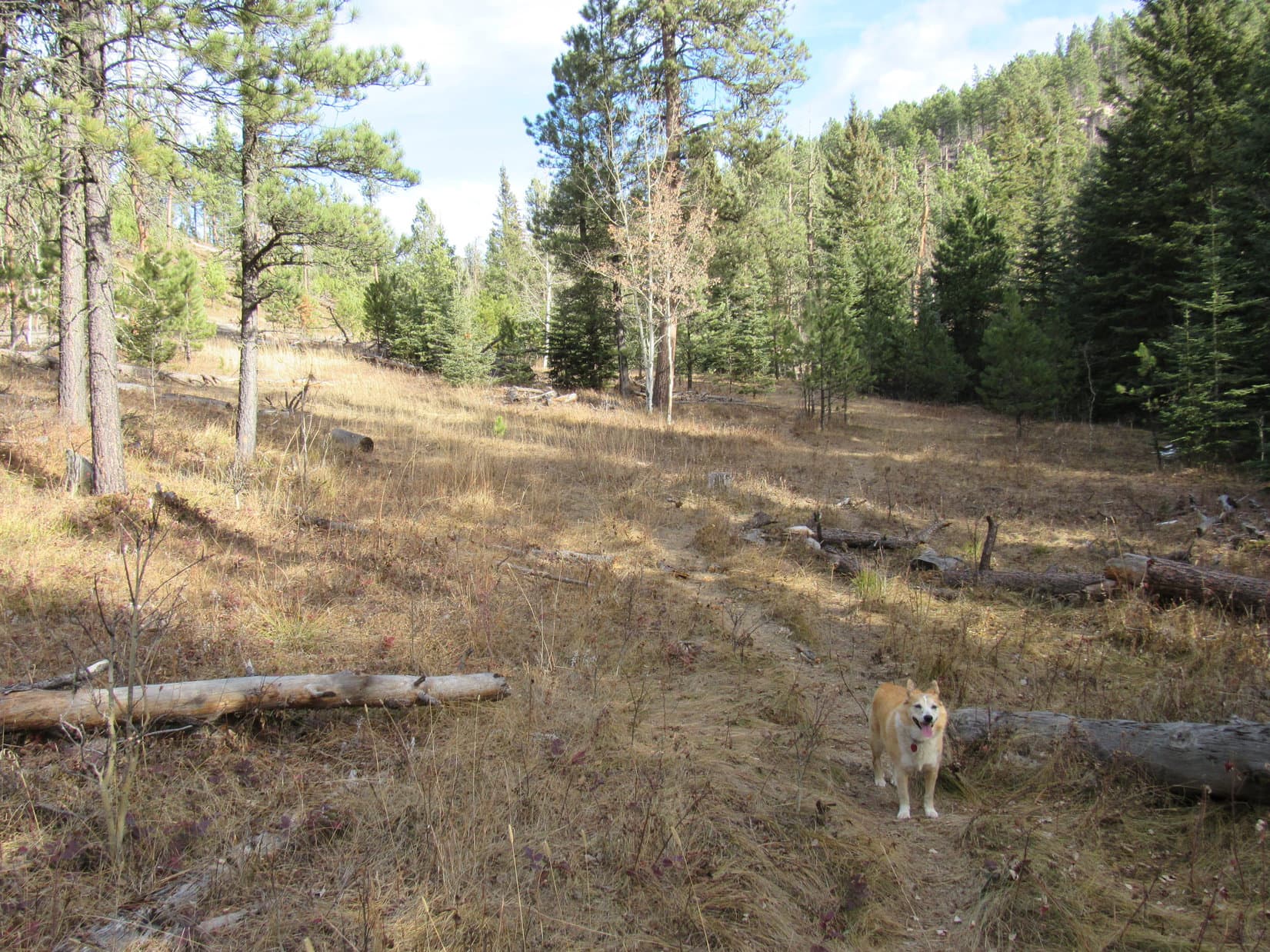
The path in the ravine was steeper than the nearly level trek back by the North Fork of Castle Creek.  Before long, the path climbed partway up the L side of the ravine, well above a V-shaped bottom.  As Looper kept going, she got past the densely forested section into more open territory.  Here the ravine curved N and broadened out.

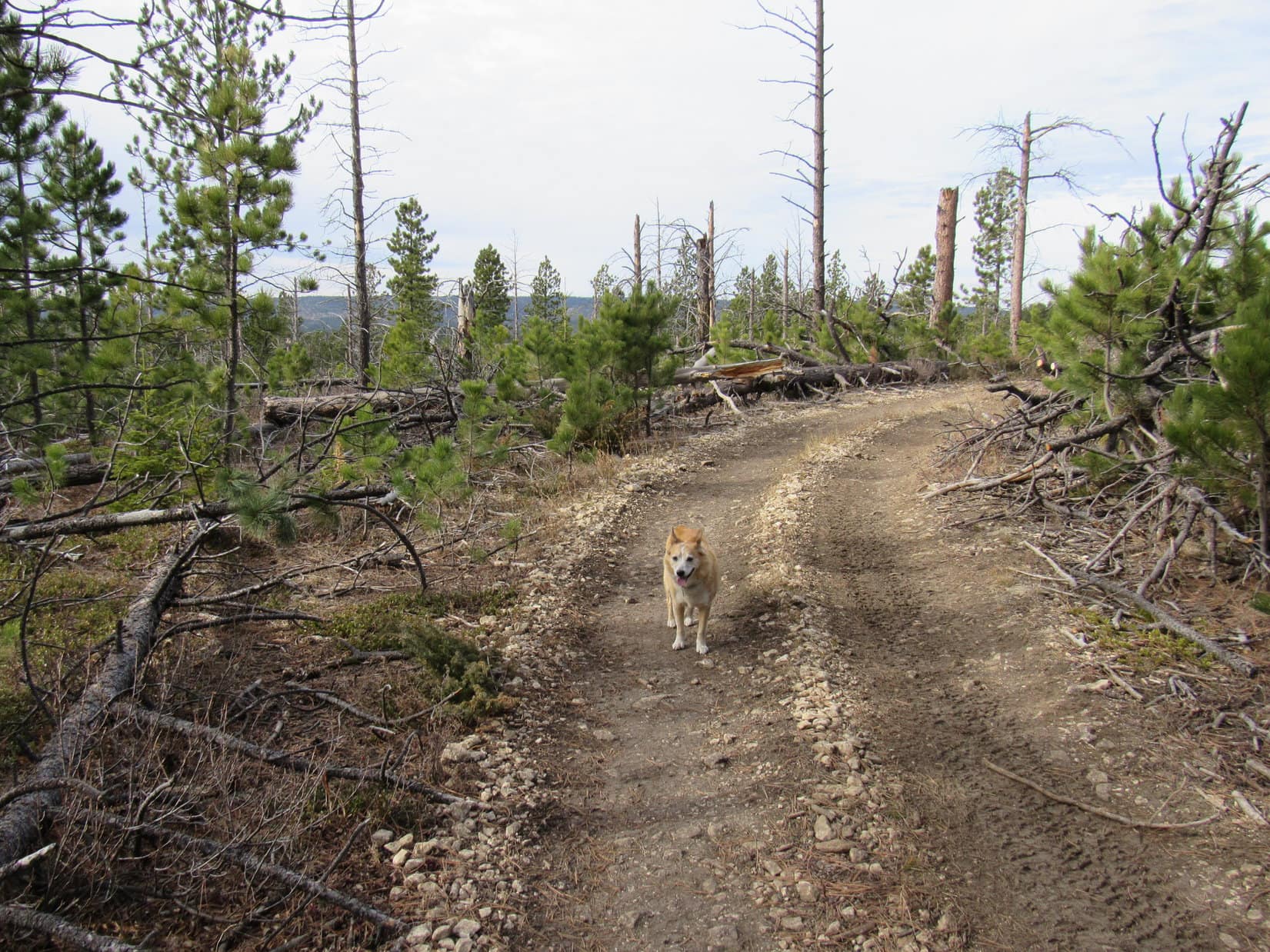
The path ultimately led to the S end of an old abandoned road. This was USFS Road No. 190.1O.  Lupe followed the road N to a large clearing, part of which held the charred remnants of a giant burn pile left over from a logging operation.

By now the ravine had virtually melted away.  This was a more gently sloping region.  Heading NE past the charred area, Lupe came to another old road that went E.  No sign, but this had to be USFS Road No. 190.1P.

Beyond the densely forested part of the ravine where it started to broaden out. Photo looks NNE.
Approaching the burn pile area after leaving USFS Road No. 190.1O. Photo looks NNE.
USFS Road No. 190.1P where Loop reached it. Photo looks E.

Taking No. 190.1P, the road climbed E for a little way, then flattened out as it turned S.  Half a mile on No. 190.1P brought Lupe to a small, flat clearing where the road ended.  This was high territory near the end of White Tail Peak’s long SW ridge overlooking the valley of the North Fork of Castle Creek, but other than a partial view to the SE, trees effectively hid the views.
At the S end of USFS Road No. 190.1P. Photo looks SE.

A higher part of White Tail Peak’s SW ridge was only a little farther NE.  Abandoning USFS Road No. 190.1P, Lupe crossed an open slope littered with deadfall.  This led to a somewhat steeper, but still easy climb in a live forest.  Near the top, Lupe began encountering small limestone outcroppings.

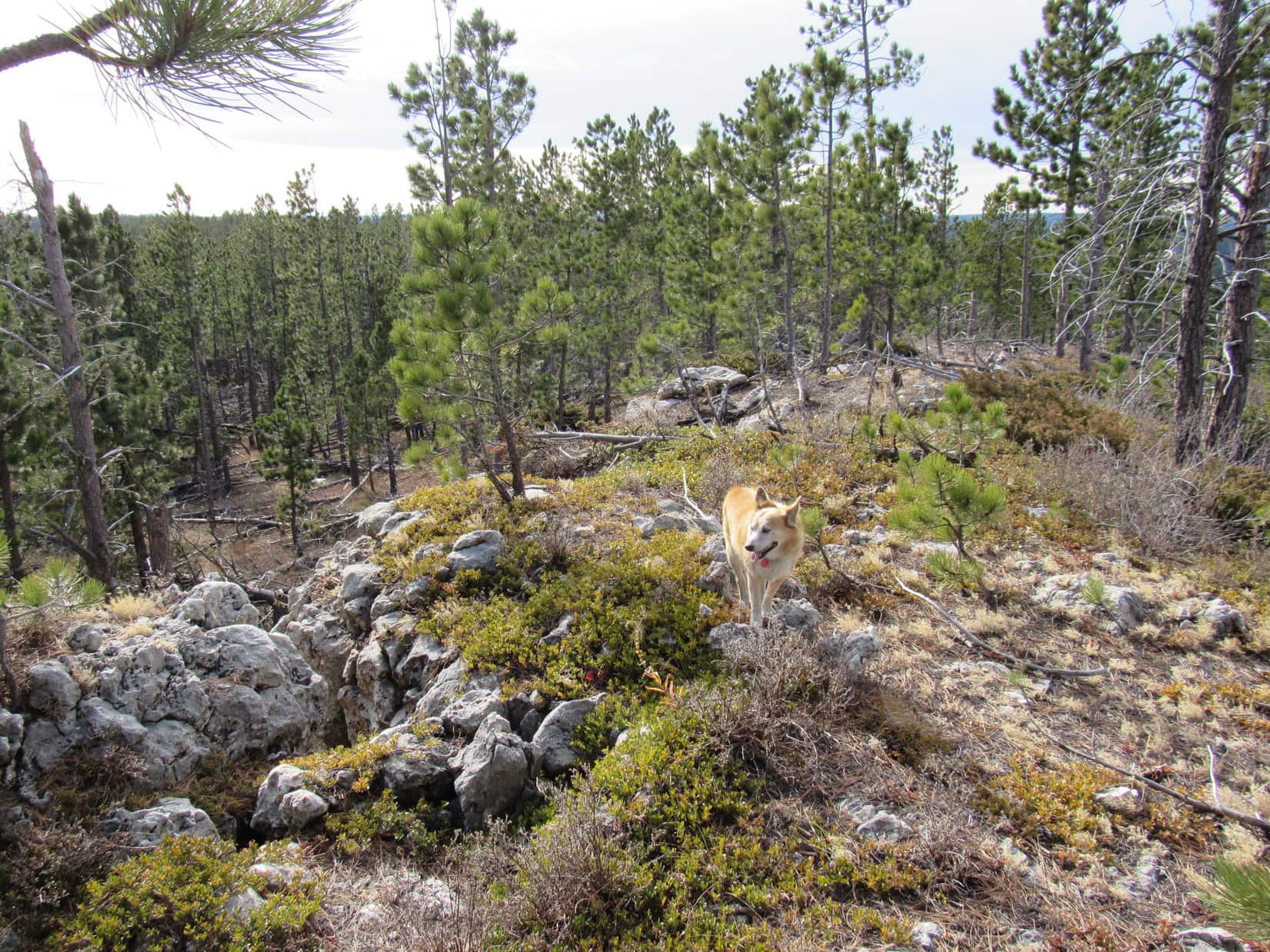
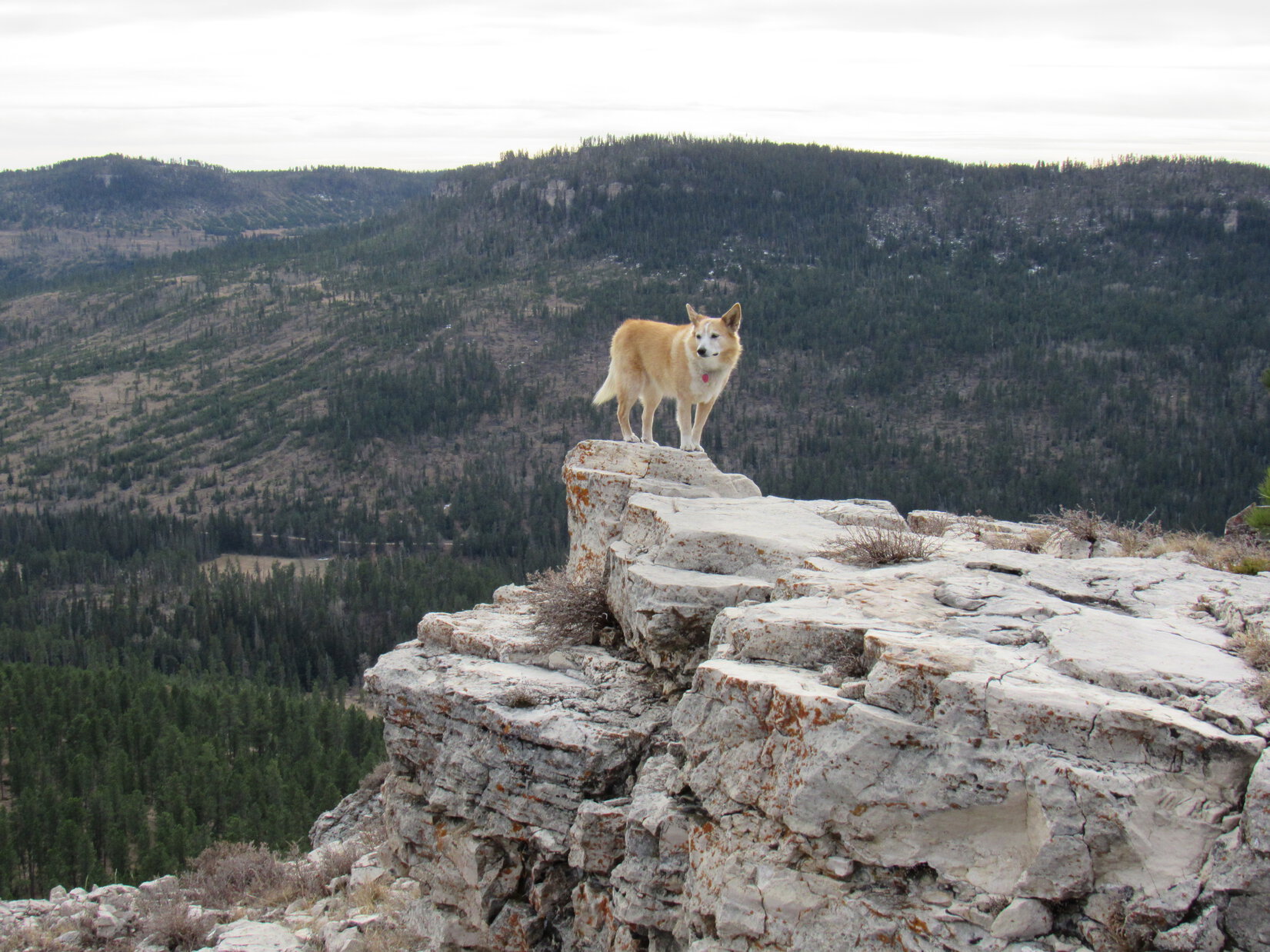
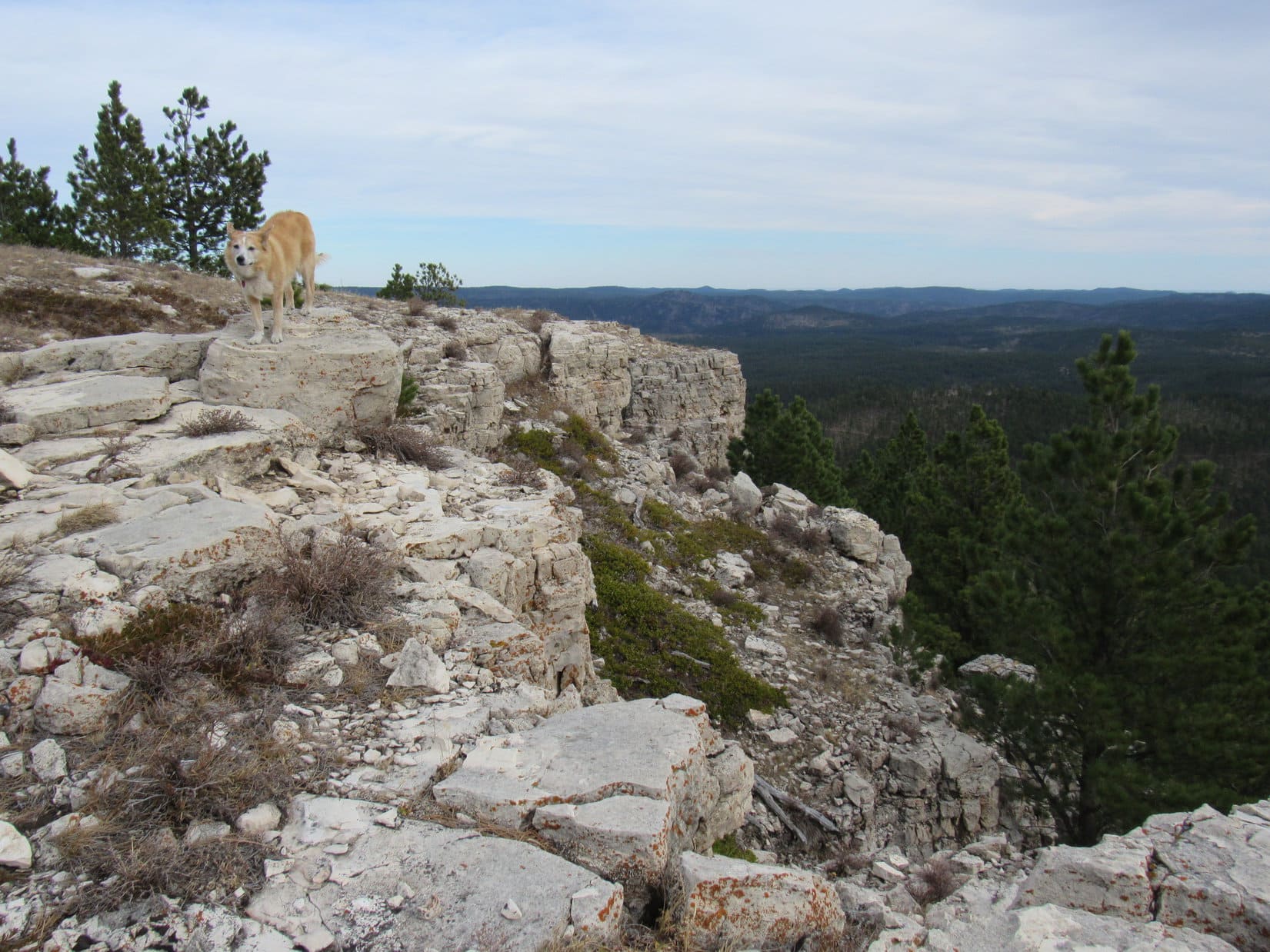
Lupe reached the S end of the upper portion of White Tail Peak’s long SW ridge.  Lots of trees up here, too, but also some nice views from rocks along the edge.

Beyond the valley of the North Fork of Castle Creek, peaks along the E edge of the limestone plateau were in sight.  Peak 6962 was closest.  Flag Mountain (6,937 ft.) was next, then Green Mountain (7,164 ft.) and Copper Mountain (6,920 ft.).  Even Medicine Mountain (6,878 ft.) could be made out.

Far to the SE, Black Elk Peak (7,231 feet) was visible way beyond Reynolds Prairie.

About to leave USFS Road No. 190.1P to cross the deadfall-laden slope behind Lupe. Photo looks NE.
Among the limestone outcroppings. Photo looks NE.
S end of White Tail Peak’s SW ridge looking over the valley of the North Fork of Castle Creek. Flag Mountain (R of the tree) and Peak 6962 (Center). Photo looks S.
Black Elk Peak (L) on the horizon beyond Reynolds Prairie. Medicine Mountain in the distance behind the tree at (Center), then proceeding R: Copper Mountain, Green Mountain, Flag Mountain & Peak 6962. Photo looks SSE.

White Tail Peak (6,962 ft.) is located along the E edge of the limestone plateau country, a large elevated region of the western Black Hills, much of which lies close to the Wyoming border.  It’s a complex peak involving multiple ridges extending out from an unremarkable summit.  Some of the best views are from two ridges, a long one and a short one, that both extend out to the SE.

The end of the long SE ridge was a favorite spot on White Tail Peak.  Lupe had a good view of it from here.

S end of White Tail Peak’s long SE ridge (Center) from the SW ridge. Photo looks ENE.

The plan was to visit both of the SE ridges.  On the way there, Lupe could tag White Tail Peak’s summit, which was still more than 0.67 mile away.  After lingering a few minutes at the S end of the SW ridge, the American Dingo headed  N.

For a little way, Lupe continued to gradually gain elevation.  Eventually the ridge leveled out.  Forest hid most of the views, although Loop did come to one spot with a view to the W.  Nothing too scintillating, just more forested ridges not quite as high as White Tail Peak.

Toward the N end, as the SW ridge merged into the rest of the mountain, the terrain began to rise again curving toward the NE.  Lupe came to a little high point, but this wasn’t the top yet.

Following the nice, wide SW ridge N. Photo looks NNE.
Looking W farther into the limestone plateau country.
At a little high point where the SW ridge joins the rest of the mountain. Photo looks SW.

Beyond this high point the terrain was fairly flat.  The territory to the N contained the shattered remnants of a forest killed by pine bark beetles.  Staying in a live forest, Lupe went ENE along the edge of the dead zone.  Even the live forest contained plenty of deadfall, but she didn’t have far to go before reaching a road.

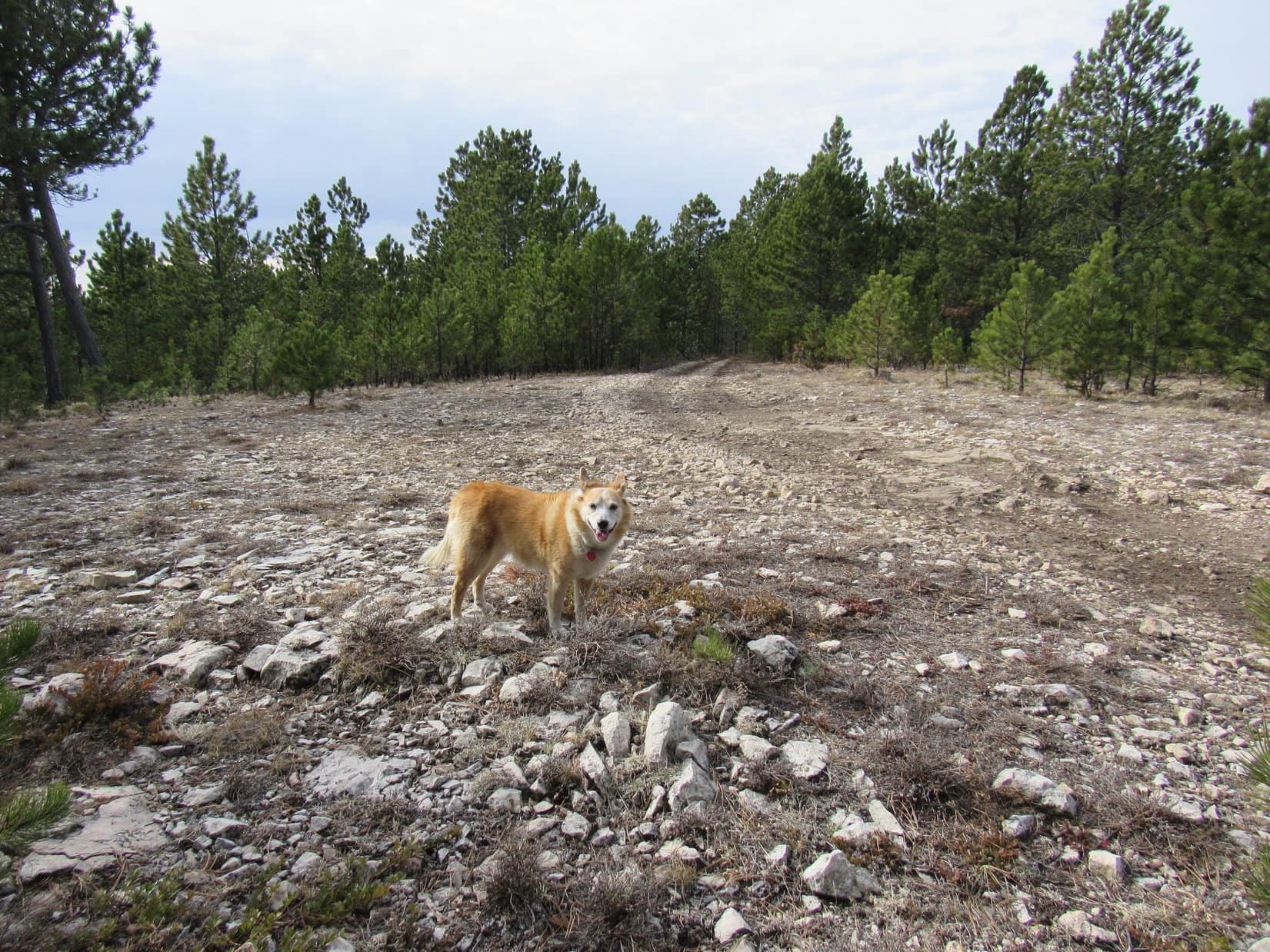
This road was USFS Road No. 190.1Q.  Following it E, the Carolina Dog quickly arrived at the true summit of White Tail Peak (6,962 ft.), a small, flat clearing full of broken limestone slightly elevated above the level of the surrounding terrain.

USFS Road No. 190.1Q. Photo looks WNW.
True summit of White Tail Peak. Photo looks WNW.

No. 190.1Q went right through the clearing.  Not much to see here, so Lupe paused only long enough for a photo before continuing on.  The good stuff was a little farther.  Gradually losing elevation, the road wound SE through the forest, finally coming to the end of White Tail Peak’s short SE ridge.

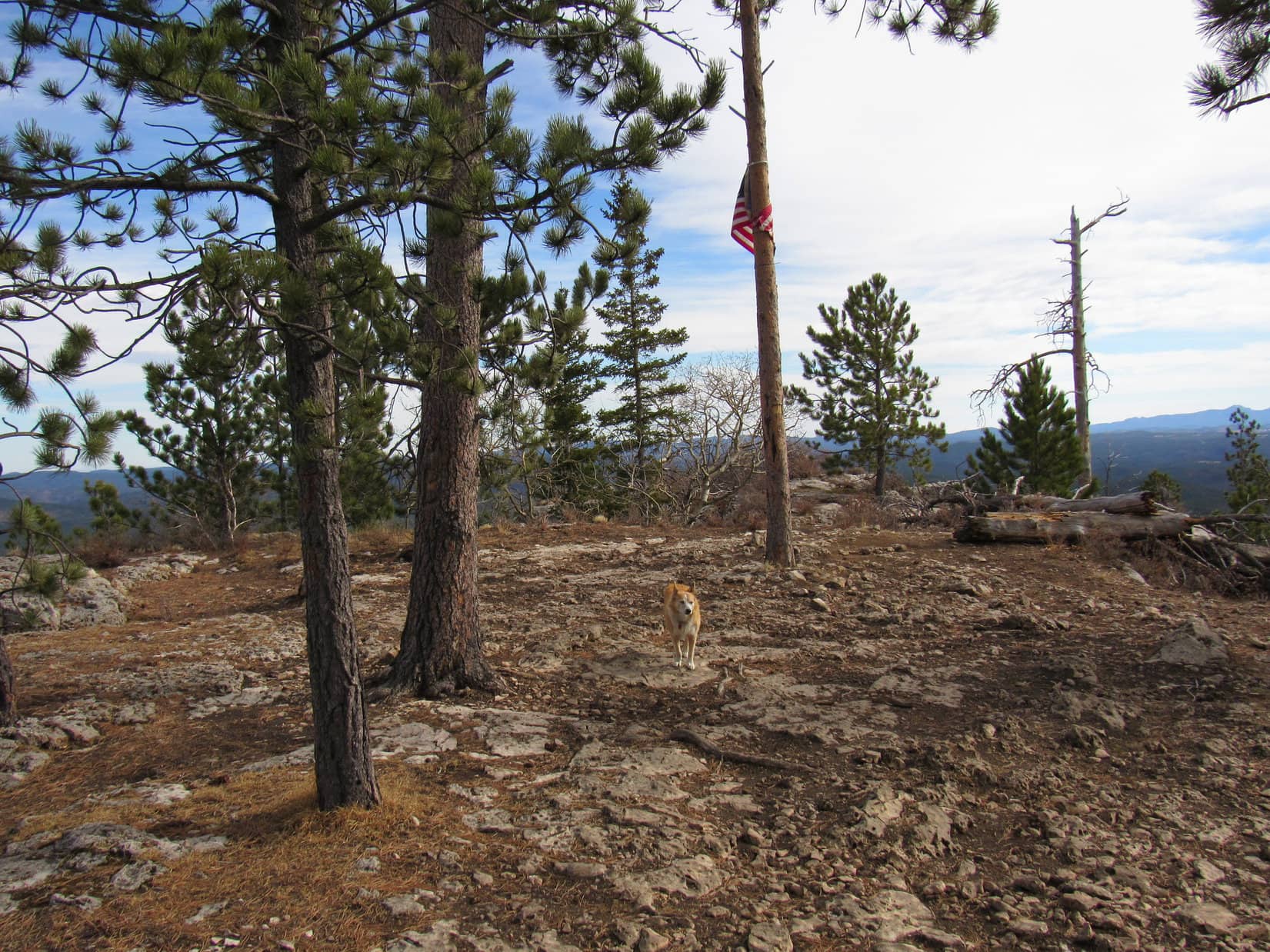
Lupe arrived to find an American flag wrapped around a tree.  Plenty of room to move around a level limestone platform here, and great views to the S and E.  In addition to all the major peaks Loop had seen from the SW ridge, both Custer Peak (6,804 ft.) and Terry Peak (7,064 ft.) were in sight, too.

Near the end of White Tail Peak’s short SE ridge. Photo looks SE.
Terry Peak (Center) in the distance. Photo looks N.
Reynolds Prairie beyond Lupe. Photo looks SSE.
Very end of the short SE ridge. Black Elk Peak (R) on the horizon. Photo looks SE.

A 30 minute break was taken for water, a shared chocolate coconut bar, Taste of the Wild, and an apple, all consumed while enjoying the views.  Pressed for time on a November day, Lupe then left the short SE ridge following No. 190.1Q almost all the way back to the summit.

100 feet before reaching the summit again, Lupe turned L (SW) onto a much fainter jeep trail leading down into the forest.  Heading S, the jeep trail soon leveled out just E of, and 40 feet below, a narrow limestone spine along the start of the long SE ridge.  The road continued another 0.25 mile, coming to an end at a viewpoint where Loop could see the short SE ridge which she had just been to.

On the jeep trail leading onto the long SE ridge. Photo looks S.
White Tail Peak’s short SE ridge as seen from the end of the jeep trail. Photo looks N.

This was not the end of the long SE ridge.  However, the jeep trail went no farther due to a minor, but sudden drop ahead.  Easily negotiating the drop on paw, Lupe continued on.  A short climb followed by a gradual descent and the forest gave way to a big clearing.  The end of the ridge was now just ahead.

Medicine Mountain (L), Copper Mountain (L of Center), Green Mountain (Center), and Flag Mountain (R) with Reynolds Prairie in the foreground. Photo looks S with help from the telephoto lens.

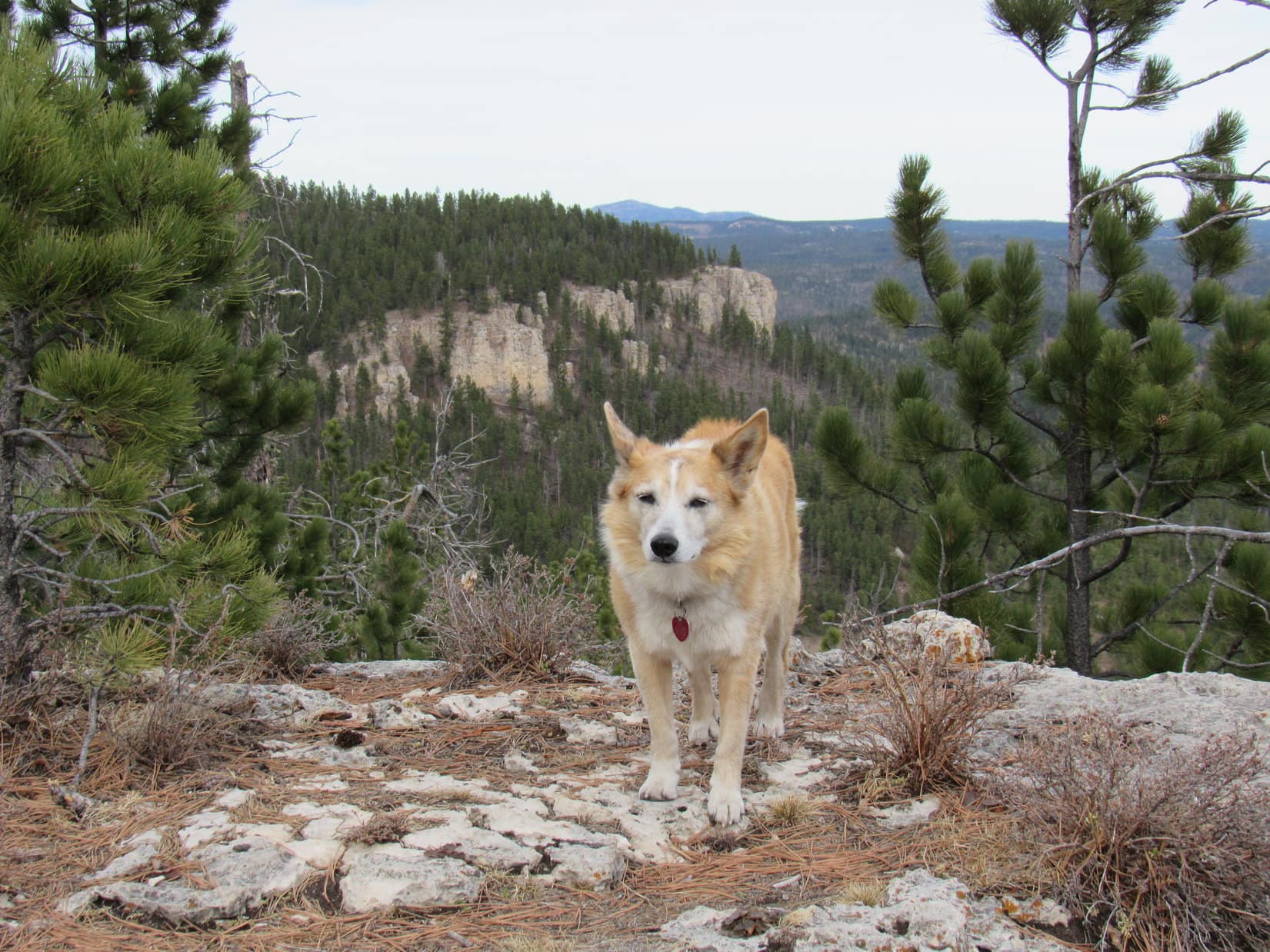
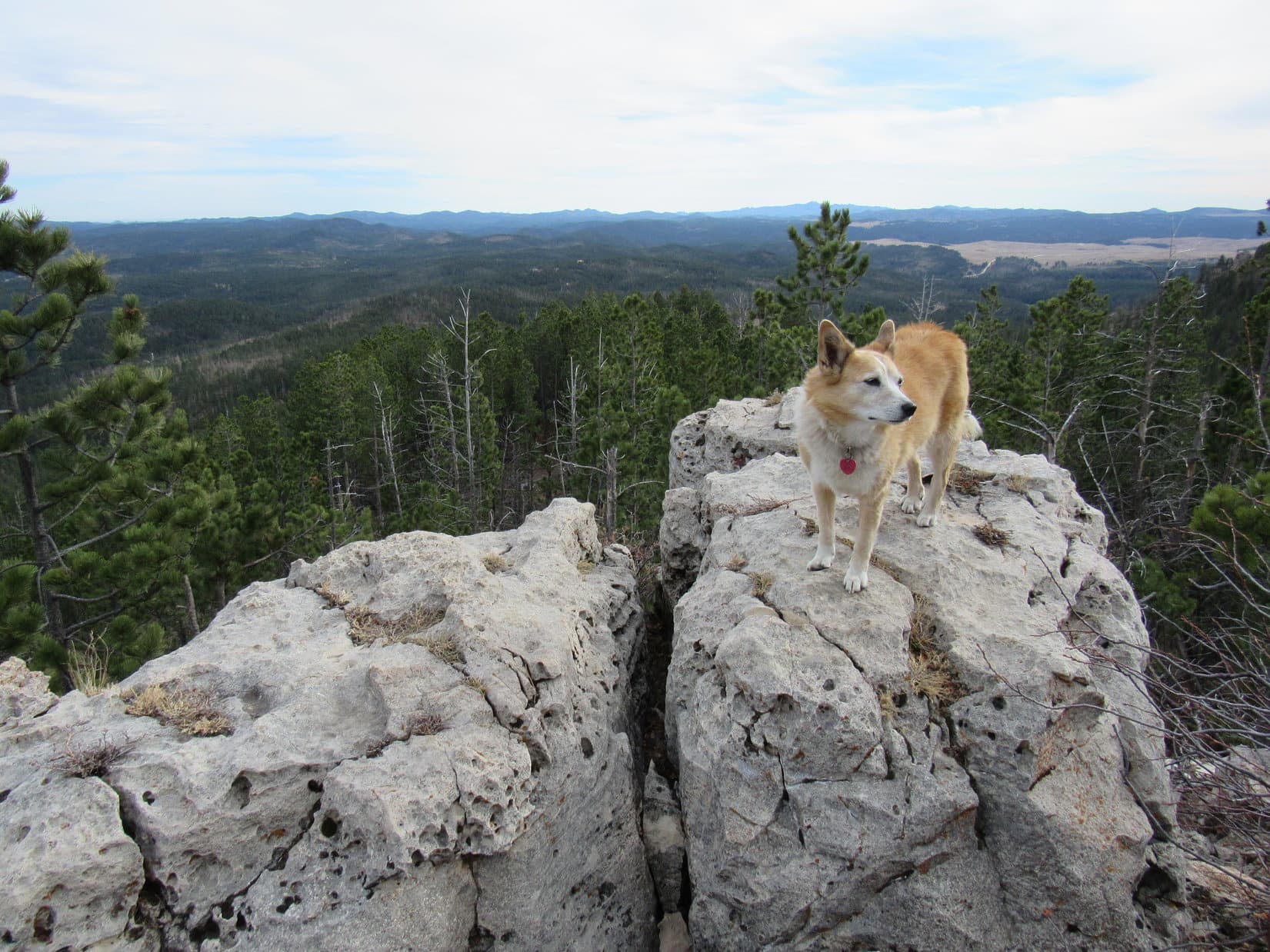
Unobstructed, the views to the S from the end of White Tail Peak’s long SE ridge were wonderful!  Stretching from E to W, they encompassed a vast expanse of the central Black Hills.  Lupe enjoyed the marvelous scene from lofty perches along the edge of limestone cliffs.

Black Elk Peak (L). Photo looks SSE with help from the telephoto lens.
White Tail Peak’s SW ridge from the long SE one. Photo looks WSW.
Along the edge. Photo looks ENE.
Green Mountain (far L), Flag Mountain (L) and Peak 6962 (R of Center). Photo looks S.
Five Points (6,221 ft.) (L) and Black Elk Peak (R). Photo looks SE.

1:03 PM, end of White Tail Peak’s long SE ridge – This was the premier viewpoint of the entire mountain, but whether Lupe could stay a while depended on what else was actually going to be on the agenda.

Gotta love White Tail Peak!  Magnificent view, isn’t it, Loop?  What do you want to do, though?  Still interested in Peak 6962?

Will we have enough time for it, SPHP?

Probably, but the sun will be down before 4:30 PM.  Sort of depends on how hard it is to get up there.  Coming from the W like we did the only other times we’ve been there, the deadfall was terrible.  If it’s like that coming from the N, we might not have enough daylight.  In any case, we’d have to get going right away, if we don’t want to be stumbling around in the dark on the way back.

Well, if we don’t try for Peak 6962, what are our other options?

Oh, we’ve never really fully explored White Tail Peak’s N ridge.  That might be pretty interesting.  Could hang out here for a while then head that way.  Plenty of time to do that.

Right or wrong, ambition won out.  Peak 6962 had been more or less part of the plan all along.  Lupe was soon heading back N again.  Along the way she stopped briefly to admire a great view of the valley of the North Fork of Castle Creek, the same valley she’d explored earlier in the day that would serve as her return route, too.

Peak 6962 (L), valley of the North Fork of Castle Creek (Center). Photo looks SW.

After going over White Tail Peak’s true summit again, Lupe followed USFS Road No. 190.1Q farther N than where she’d reached it on the way up.  She then abandoned the road to turn SW down a broad valley.  This was a shortcut back to the burn area close to No. 190.1O, allowing Loop to avoid having to retrace her earlier exploration of the SW ridge.

Taking a shortcut back to USFS Road No. 190.1O. Photo looks SW.

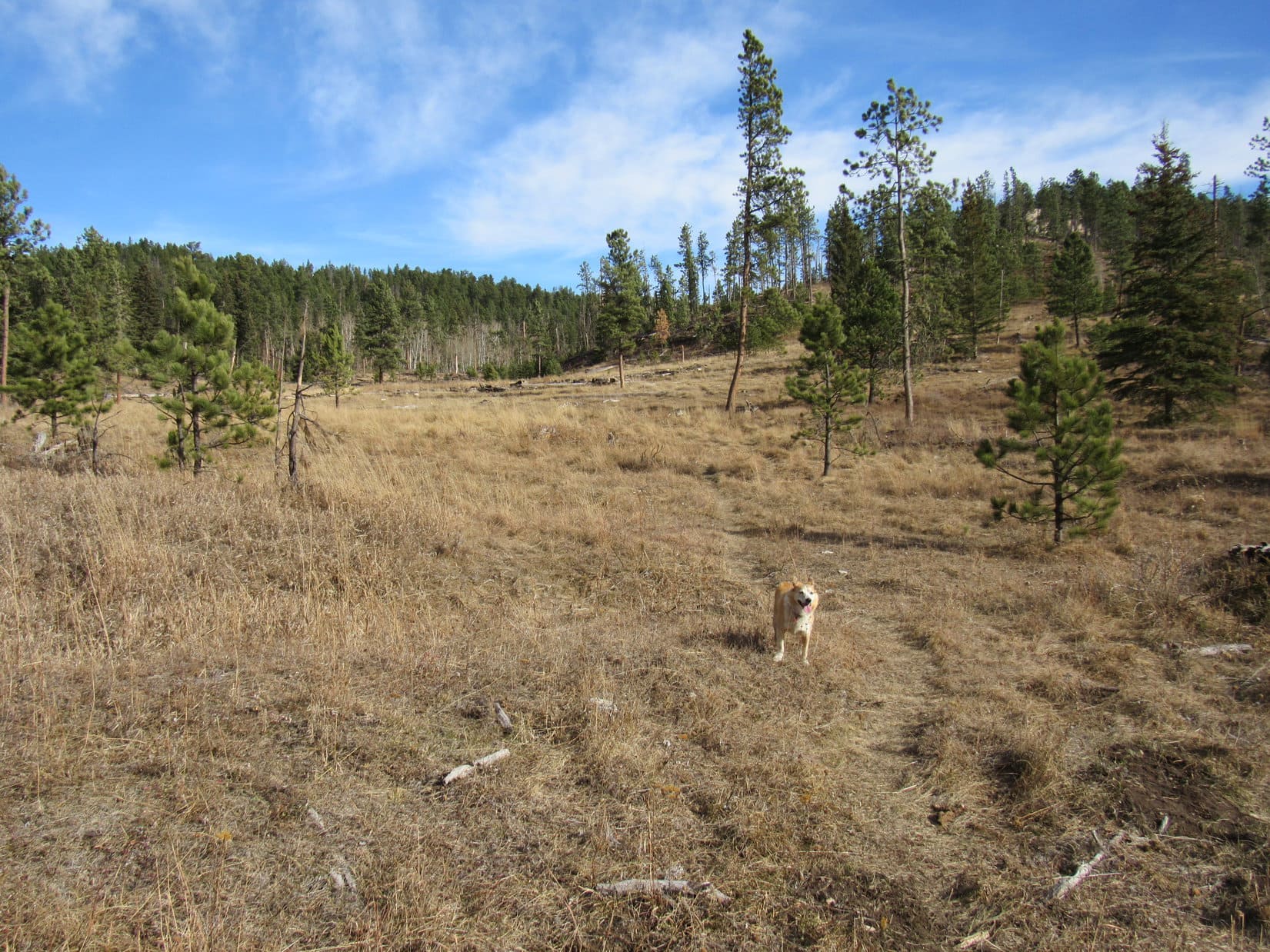
The shortcut worked great!  Loopster made it back to the North Fork of Castle Creek where the valley first divided NW of Peak 6962 with time enough for a quick ascent.  Crossing the creek, she took the branch of the divide she hadn’t explored this morning.  A mile S, then a mile E, and the American Dingo would be back at Peak 6962’s summit for the first time in over 6 years!

About to cross the North Fork of Castle Creek to set out for Peak 6962.

Didn’t happen.  Should have stayed up on White Tail Peak enjoying the views and exploring the N ridge!  Lupe didn’t get far heading S through the valley before coming to serious deadfall.  No fortuitous, unexpected paths through it all here!  When a slow, miserable trek demonstrated no sign that the deadfall was going to end anytime soon, that was it.

Eh, not happening! Photo looks S.

Sorry, Loop.  It’ll be dark by the time we can force our way through 2 miles of this nonsense.

Are we done then, SPHP?

Yes, afraid so.

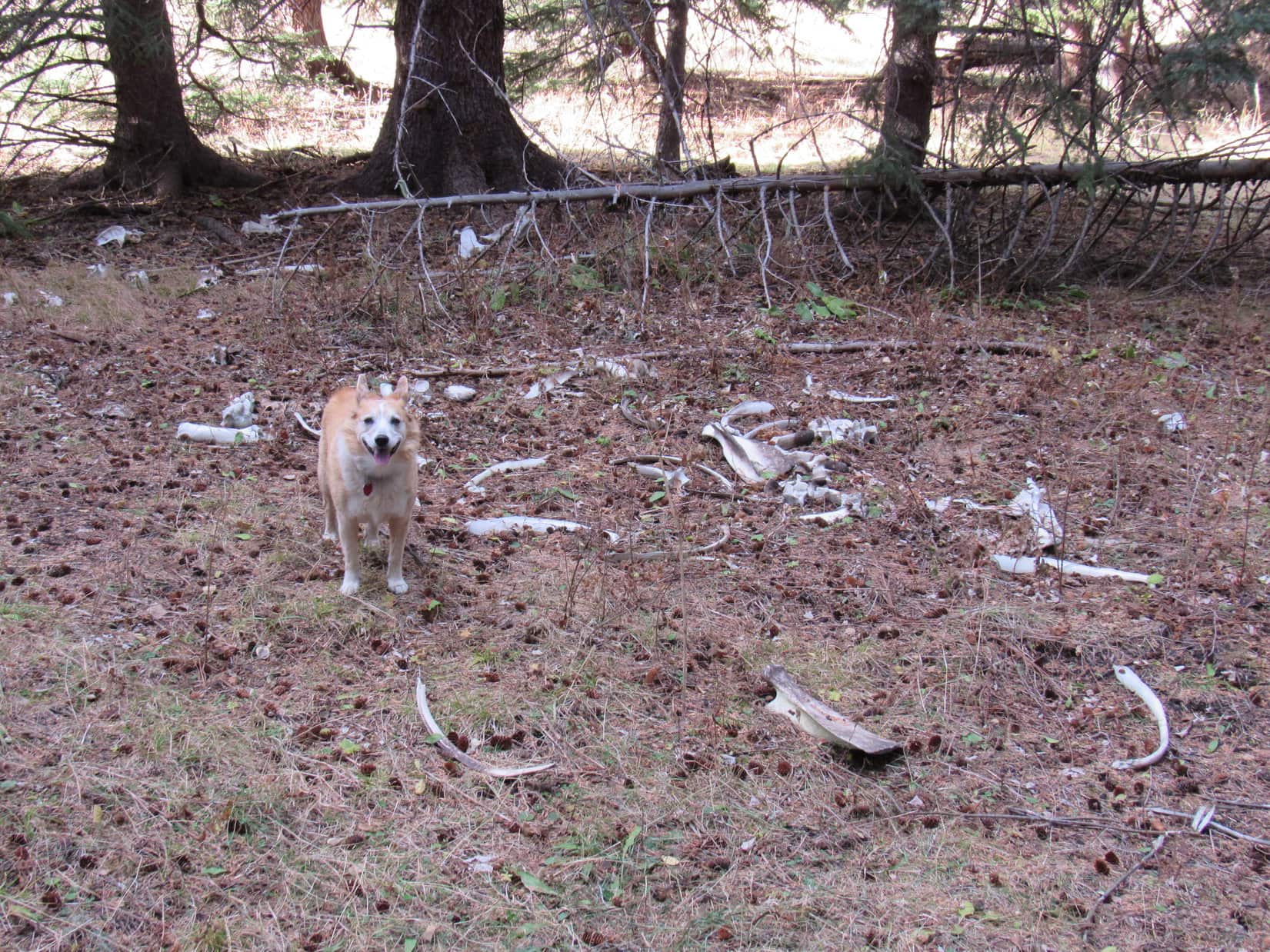
A pleasant mile back E through the valley of the North Fork of Castle Creek was all that remained of Black Hills, SD Expedition No. 283.  Along the way, Lupe discovered the scattered bones of some big animal, which made for some interesting sniffing.  She still made it back to the RAV4 before the sun was down.

At the interesting boneyard.

Guess, the good news is that we still have reasons to come back to visit both Peak 6962 and White Tail Peak another day, SPHP!

Come to think of it, that was good news!  (End 3:30 PM)

Peak 6962 from White Tail Peak, Black Hills of South Dakota 11-6-21

Links:

Next Black Hills Expedition                  Prior Black Hills Expedition

Black Hills, SD Expedition No. 209 – White Tail Peak (10-1-17)

Want more Lupe adventures?  Check out Lupe’s Black Hills, SD & WY Expeditions Adventure Index, Master Adventure Index, or subscribe free to new Lupe adventures!