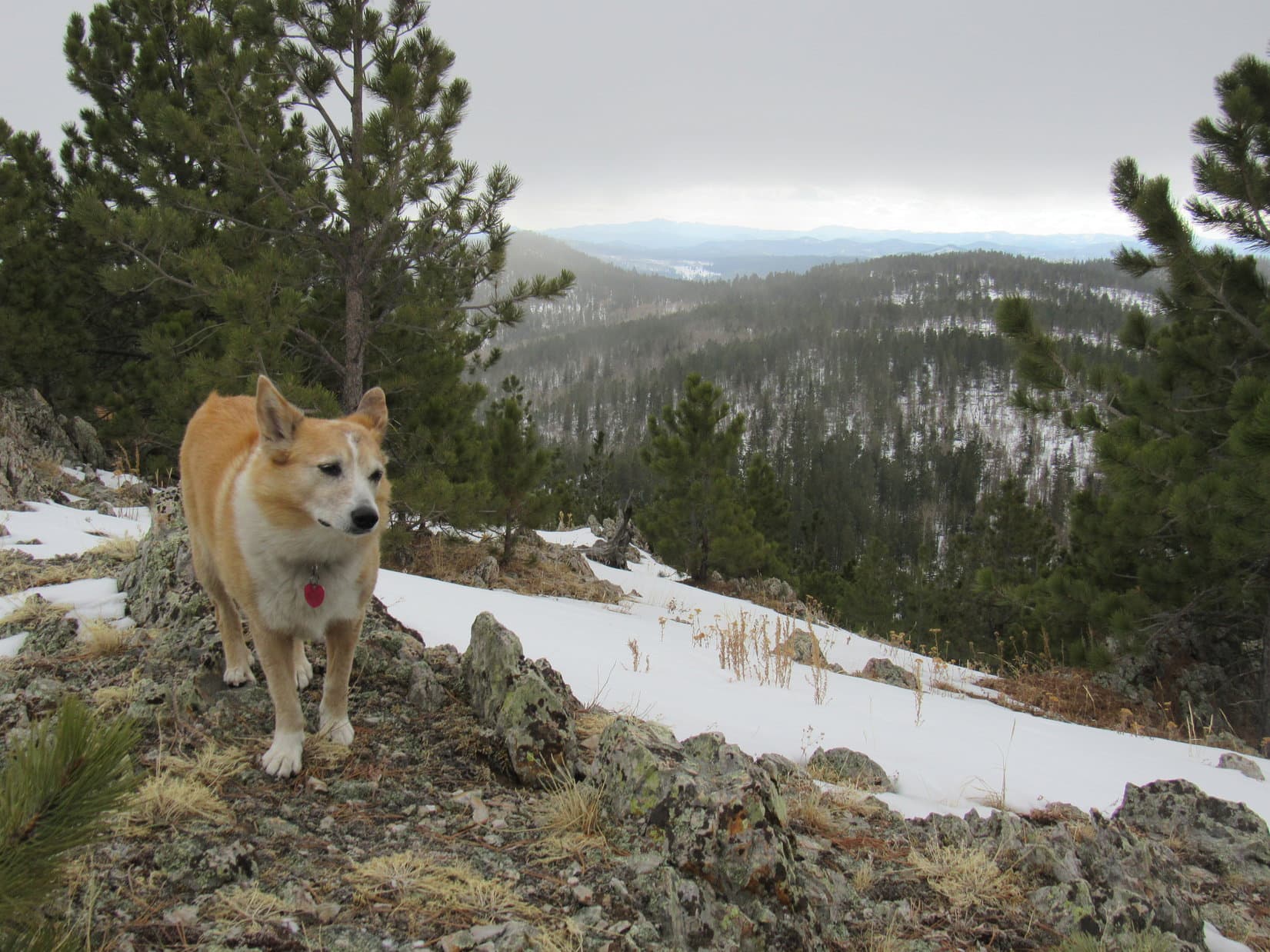
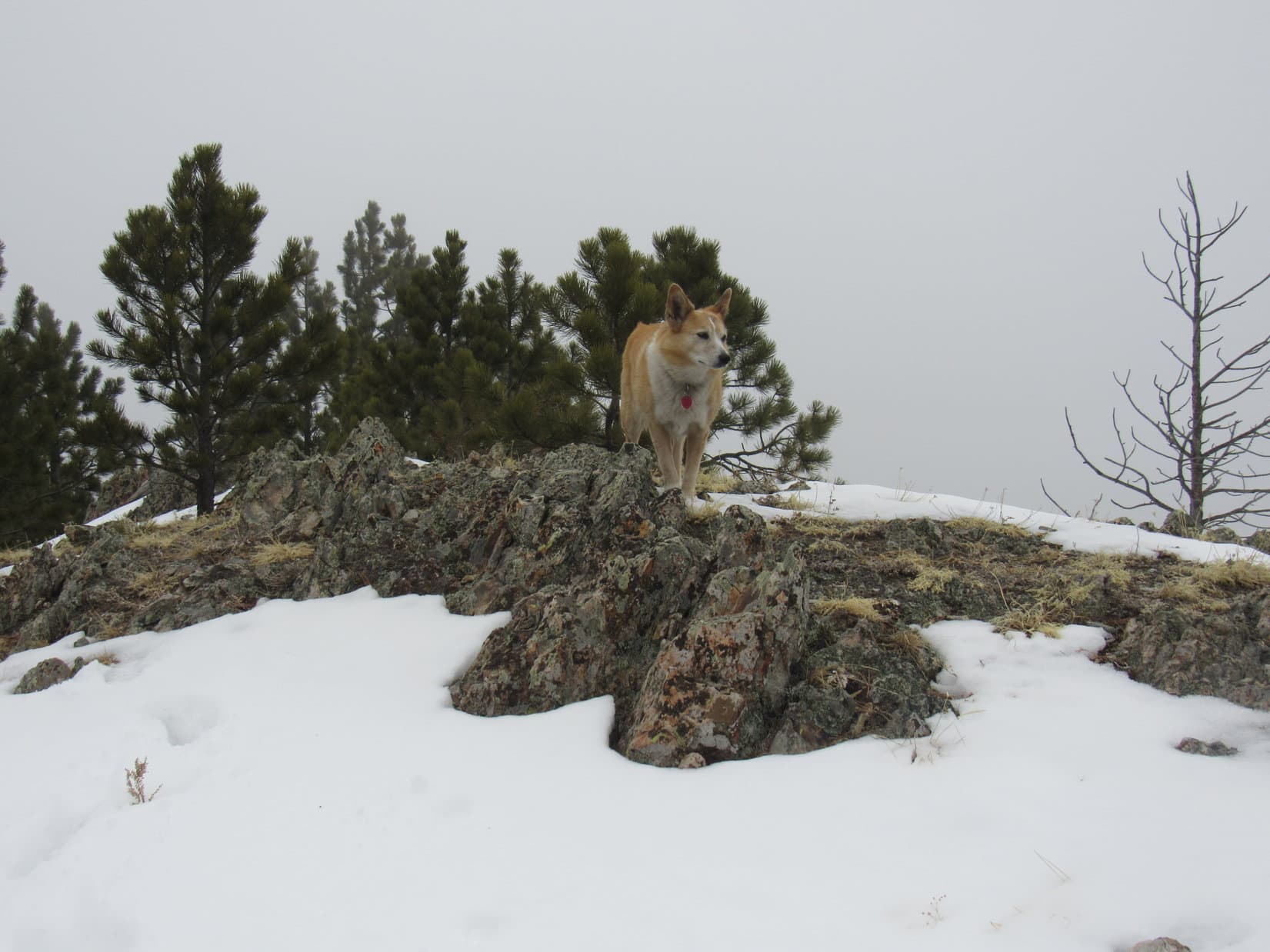
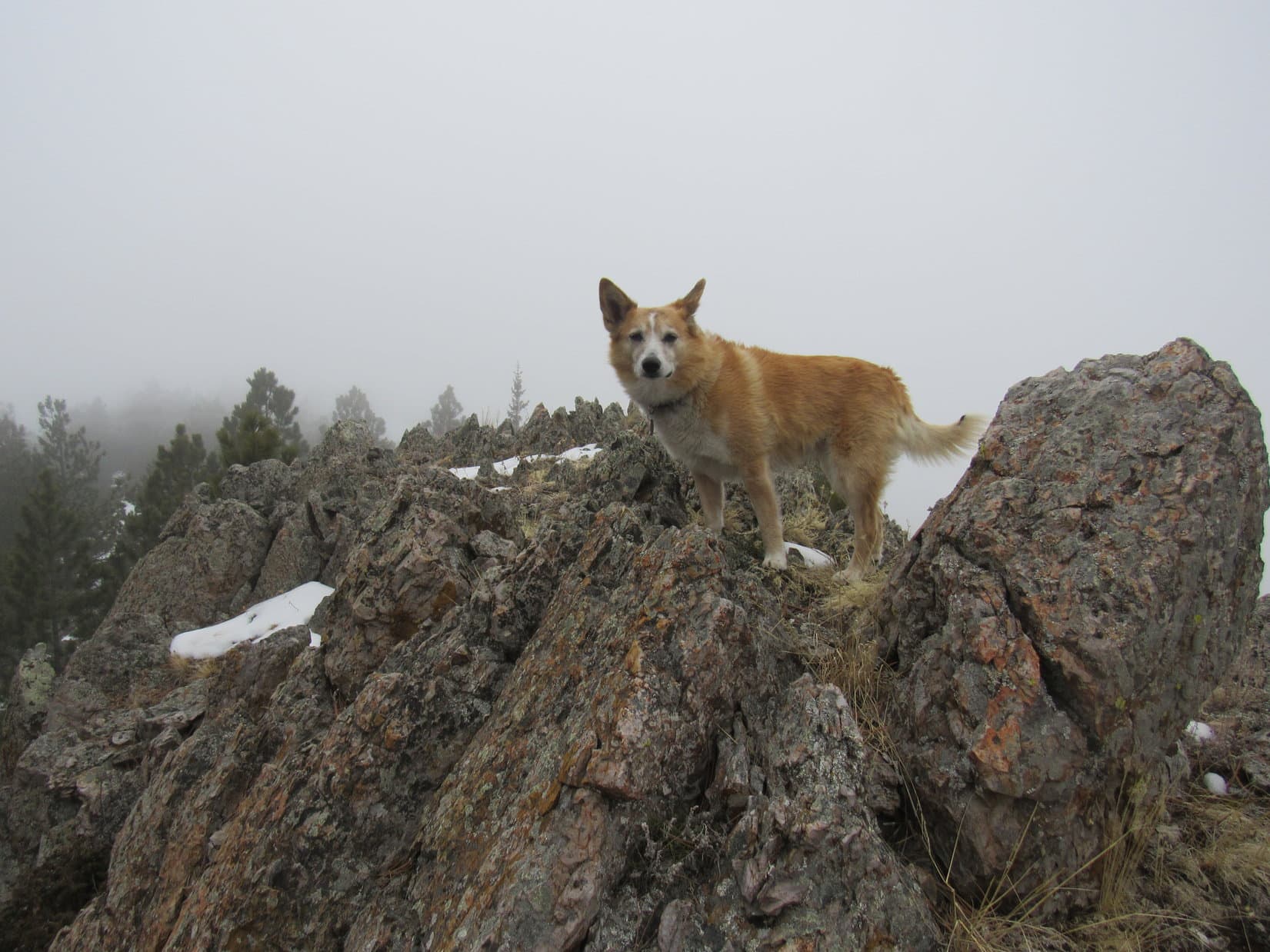
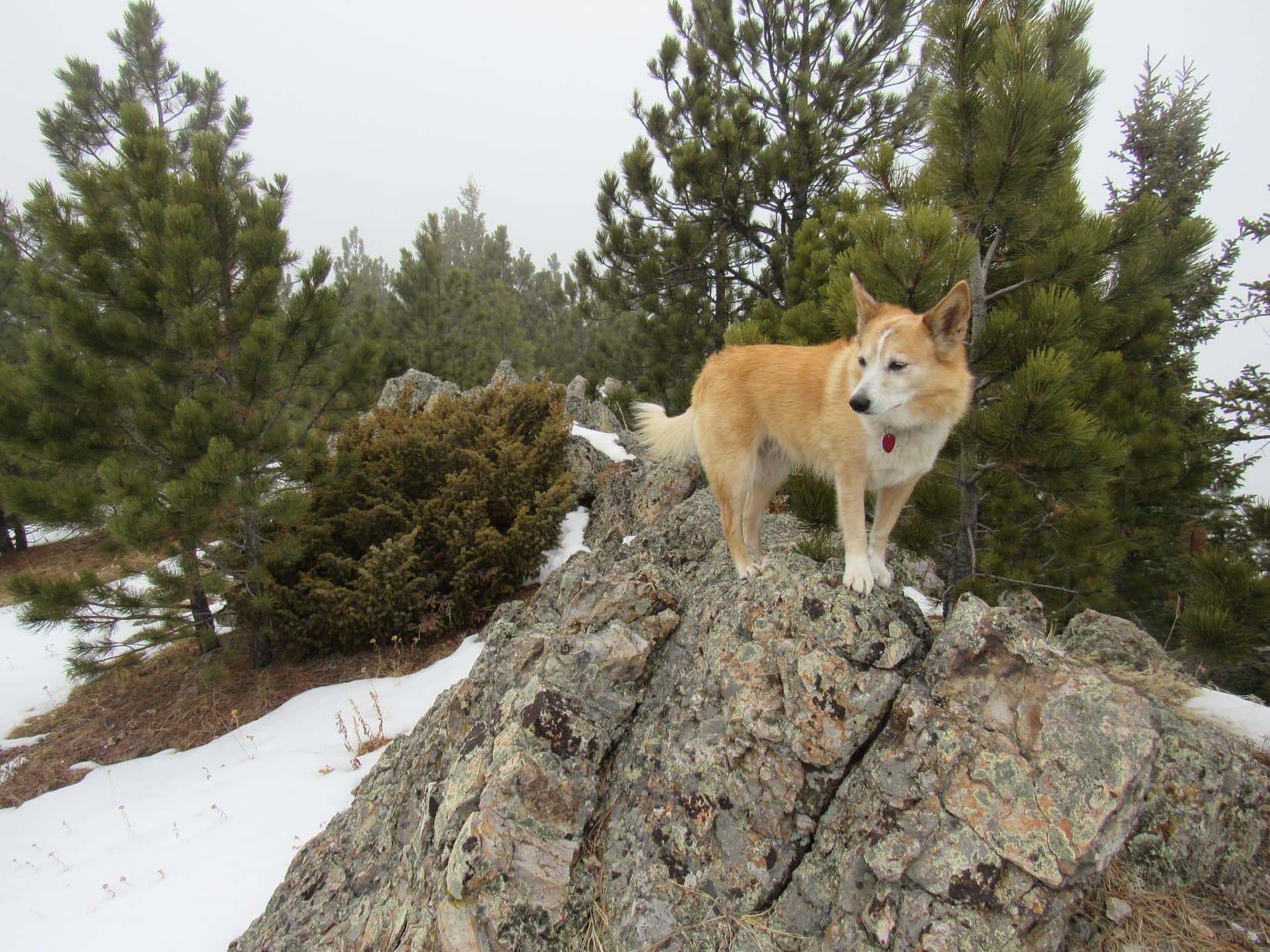
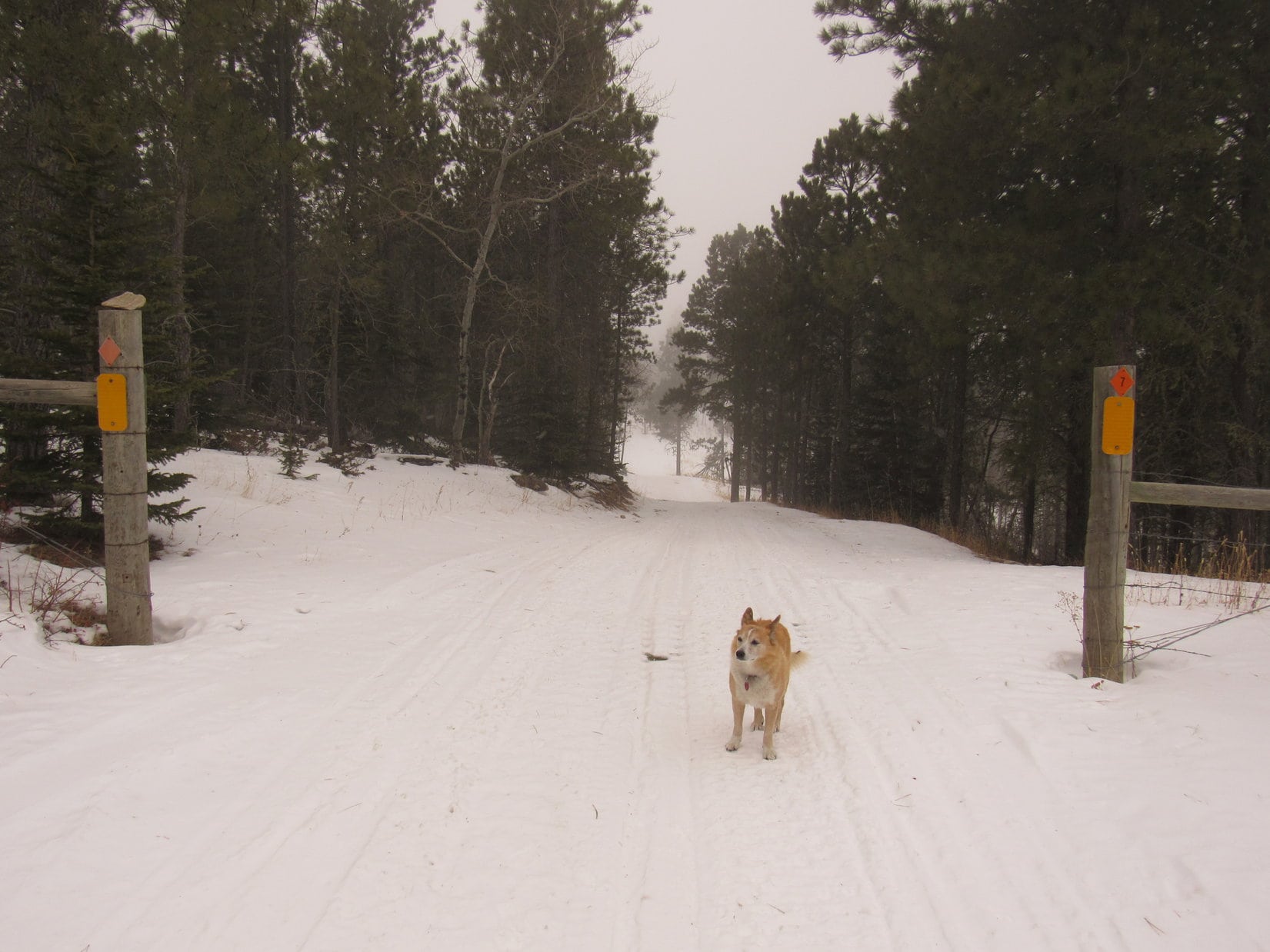
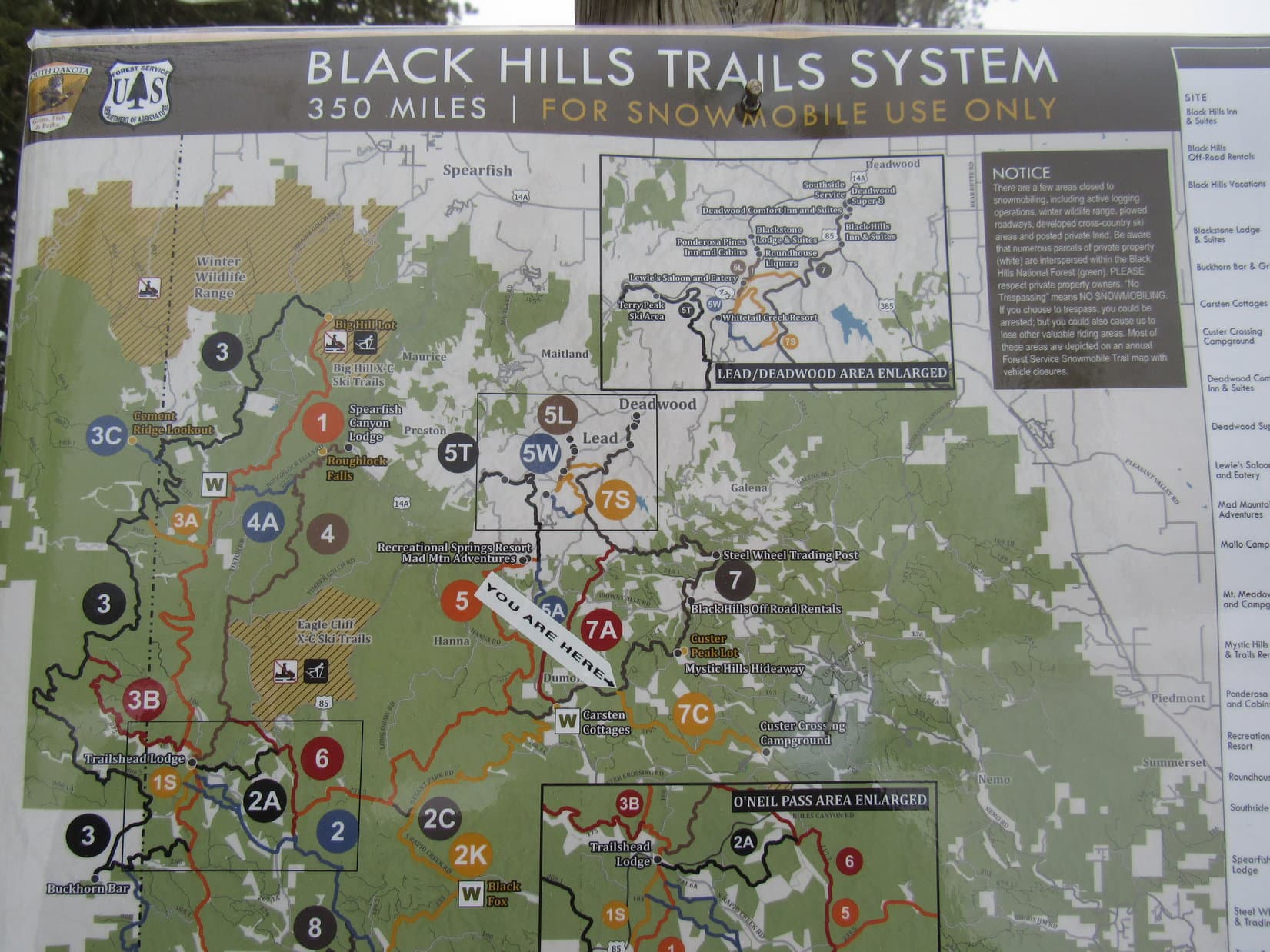
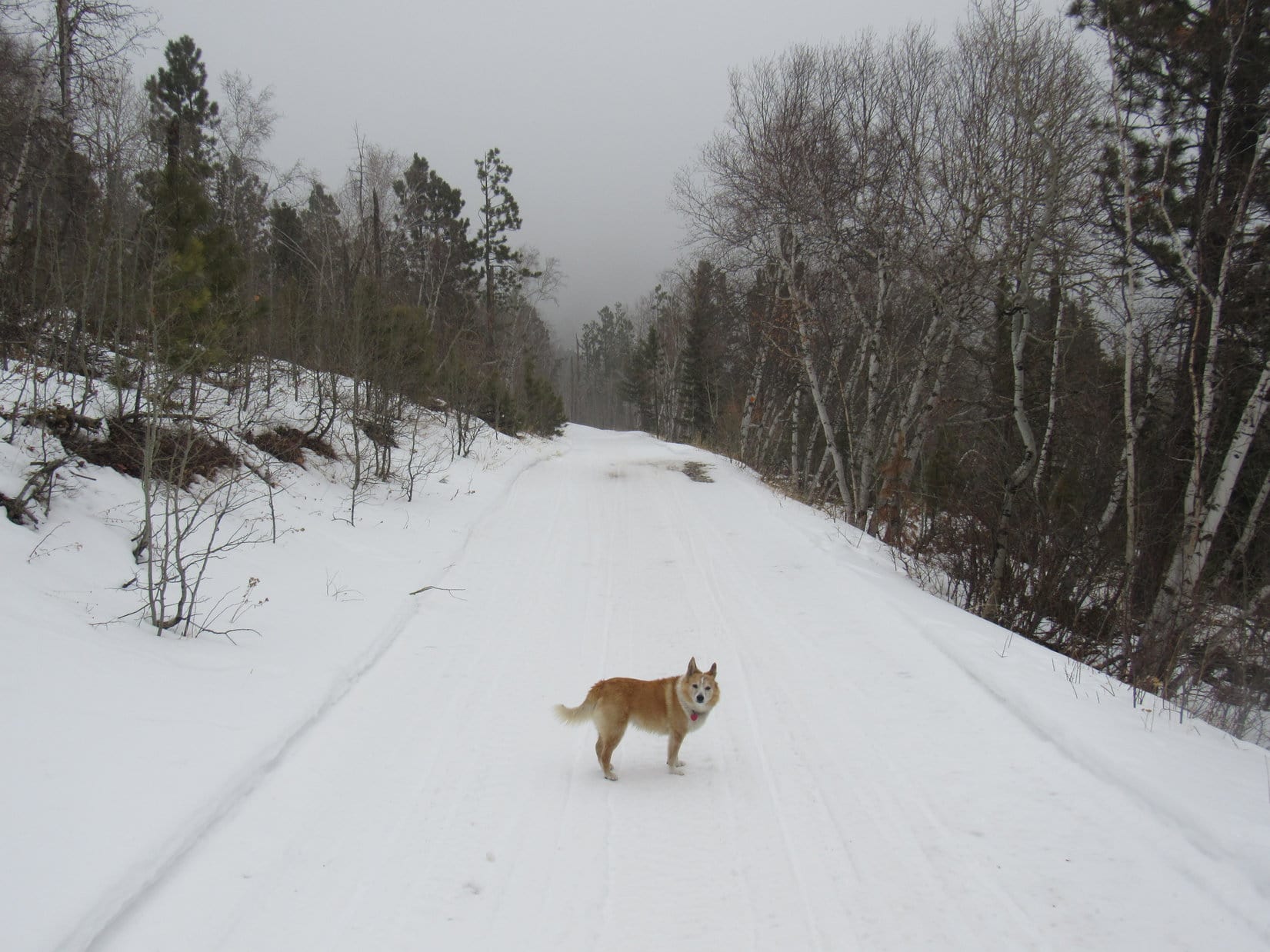
Days 1 & 2 of Lupe’s 4th Summer of 2020 Dingo Vacation to Montana & Wyoming!
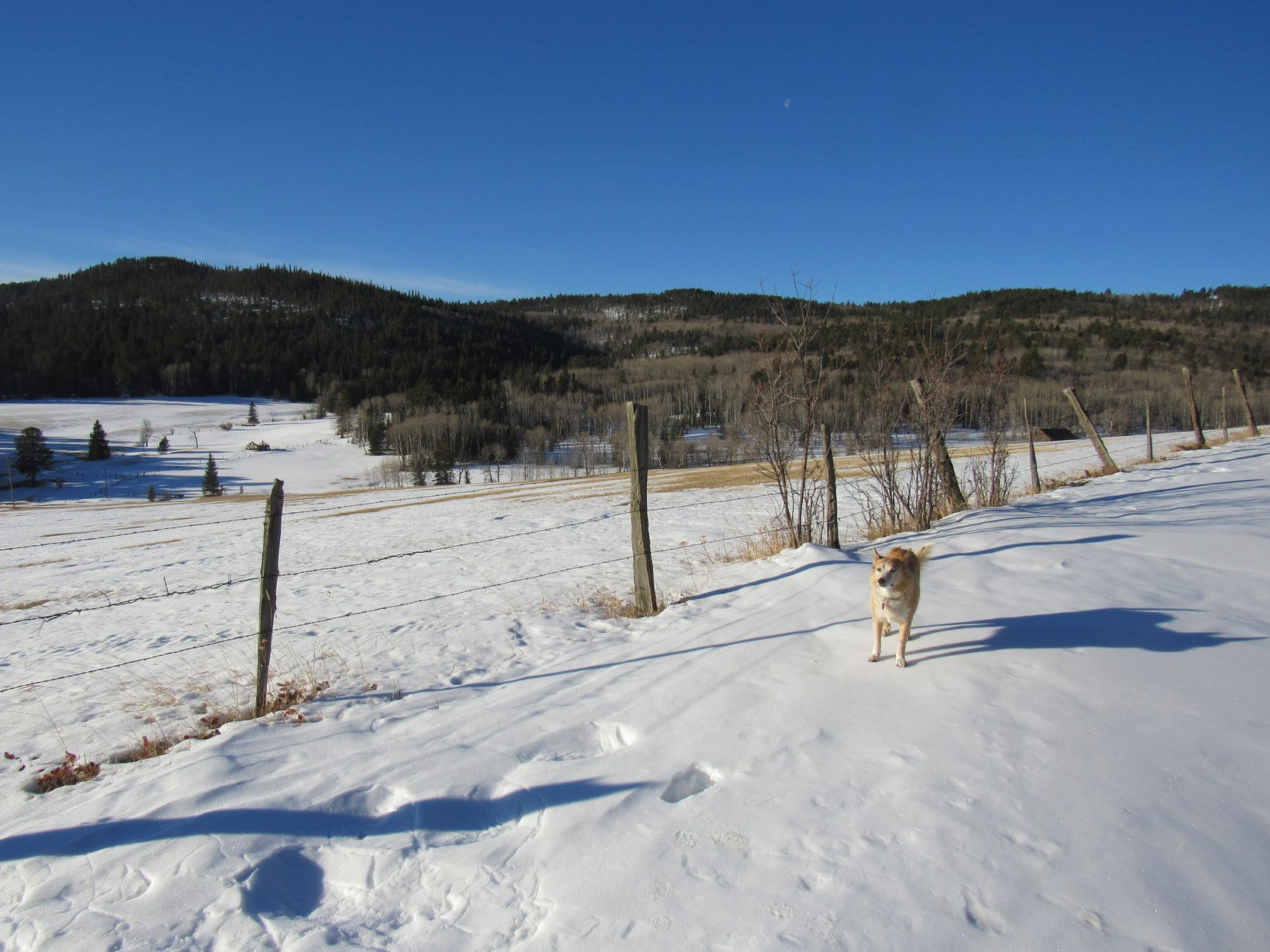
9-2-20, early afternoon, Gillette, Wyoming –
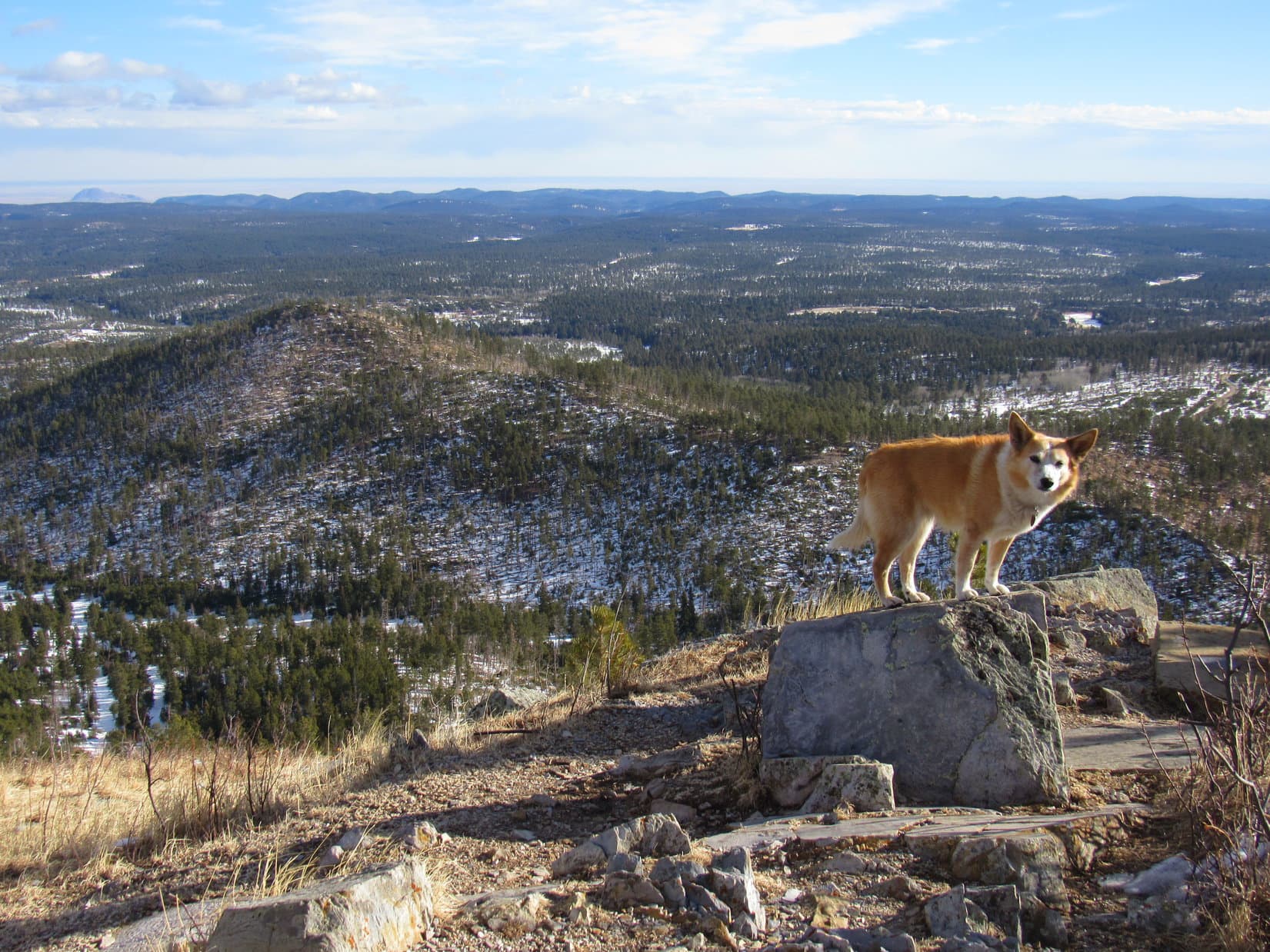
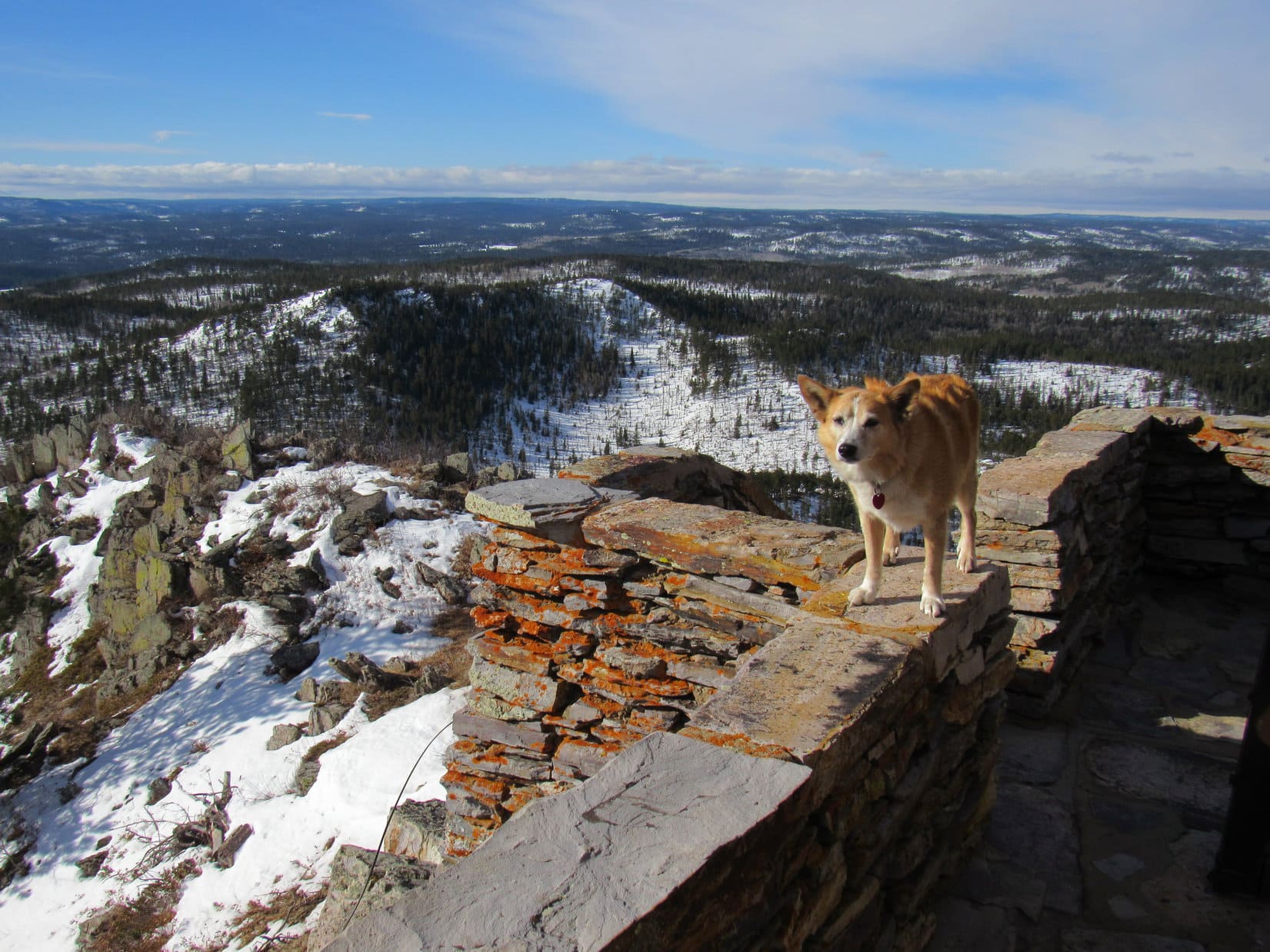
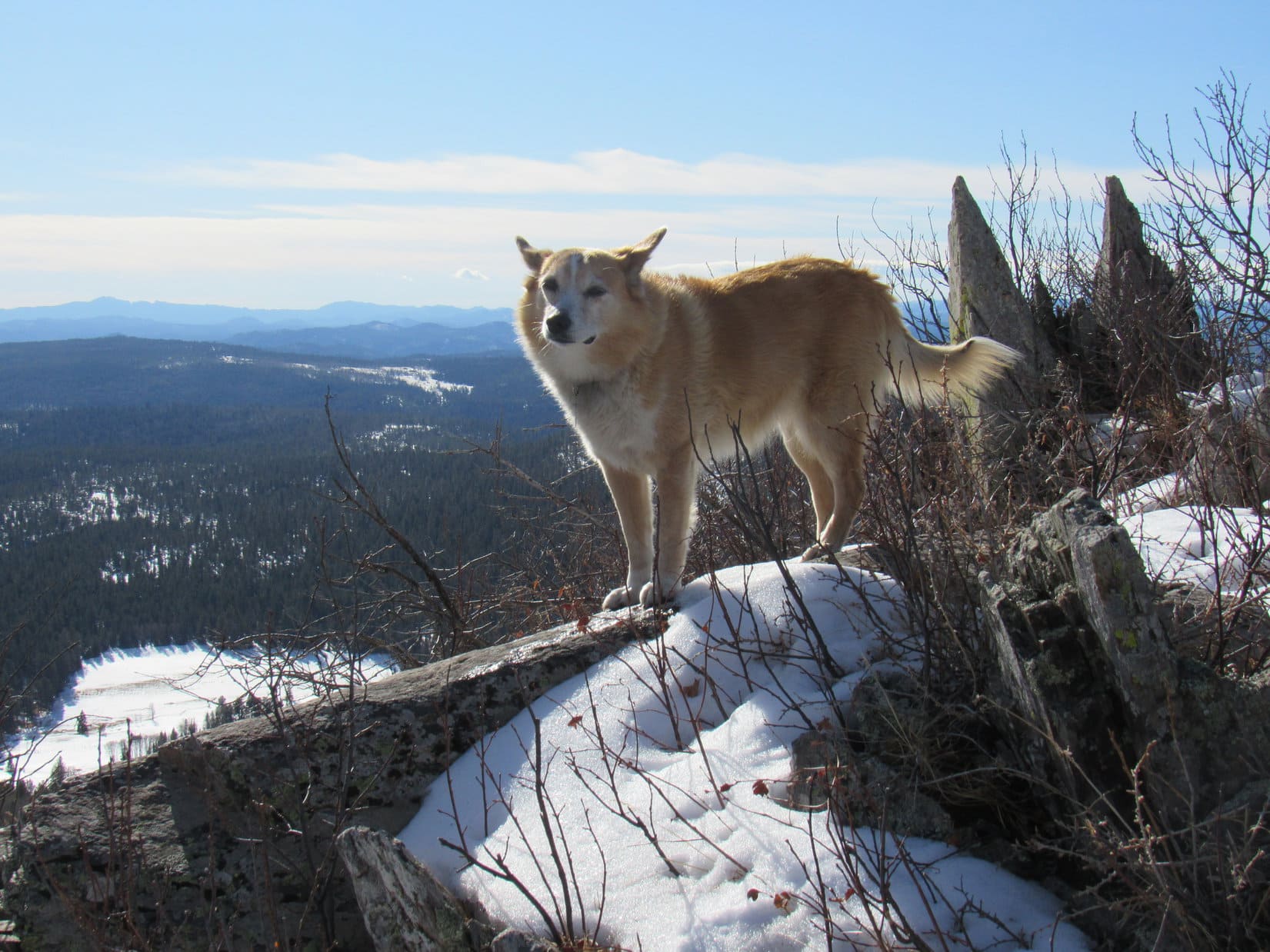
Well, phooey! This has been a complete waste of time. C’mon, Loop, let’s get out of here!
Disappointing, but on to bigger and better things, SPHP!
Absolutely, sweet puppy!
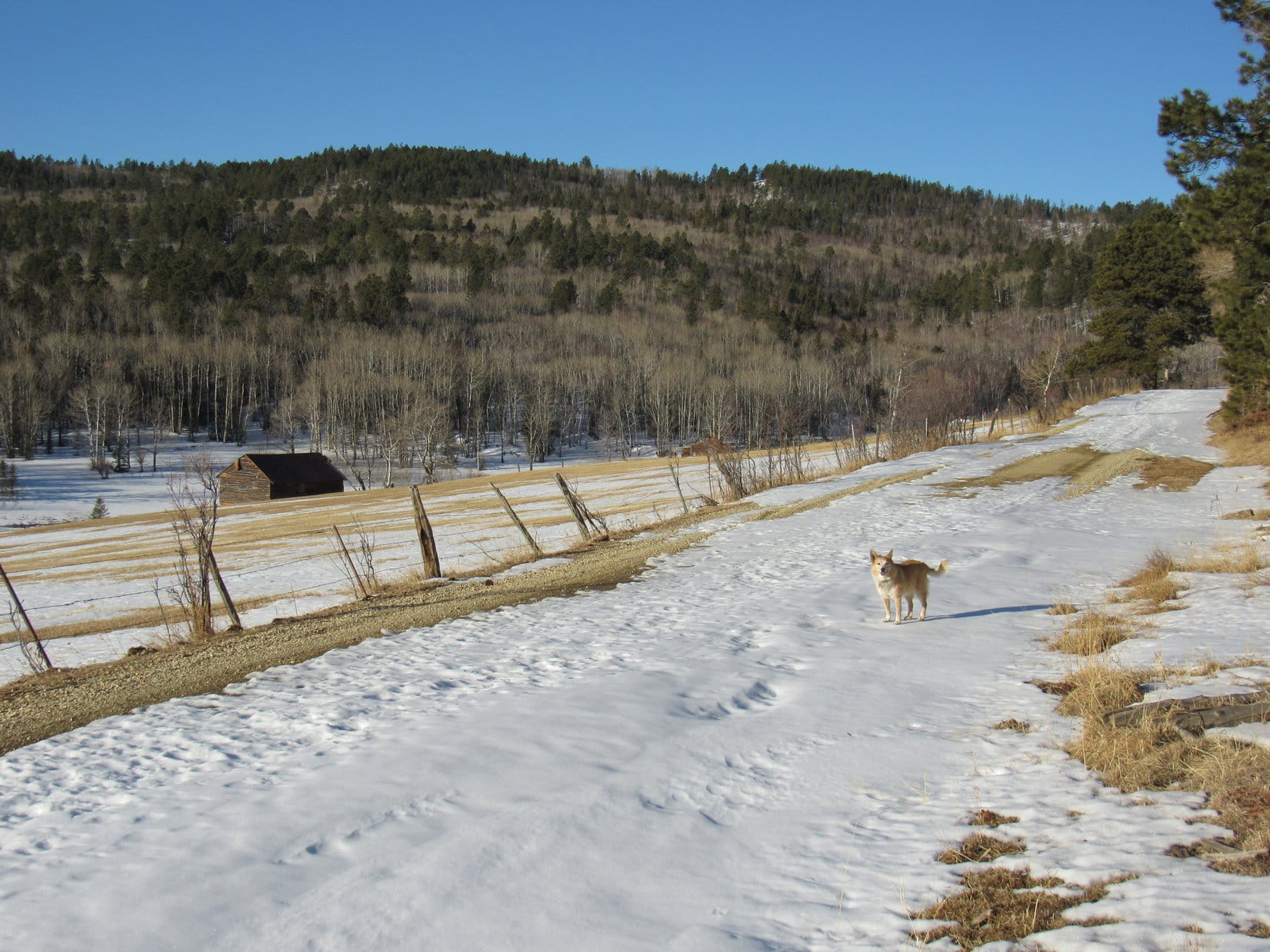
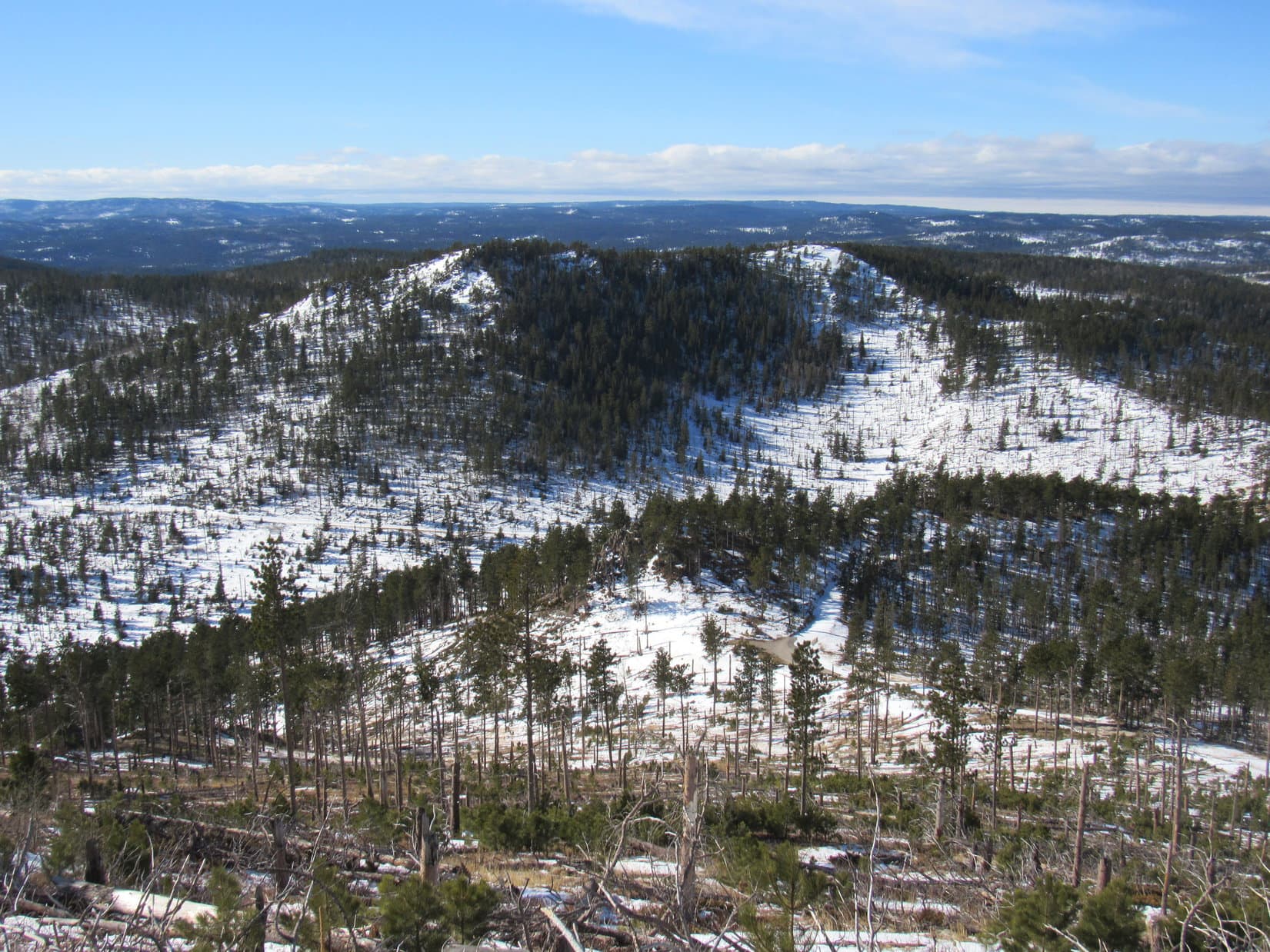
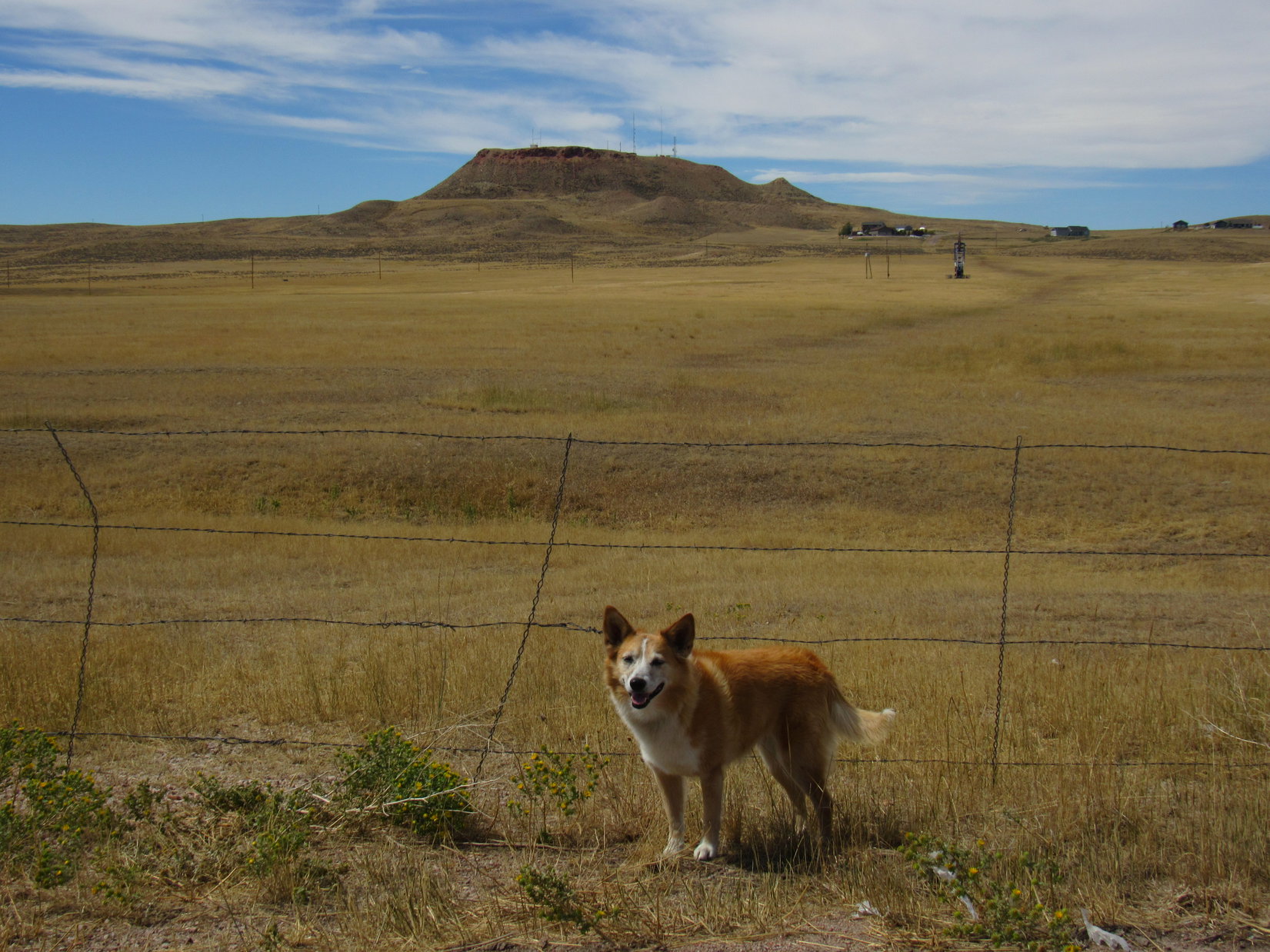
SPHP turned onto I-90, and the Carolina Dog was soon racing W again in the air-conditioned comfort of the G6, putting behind her more than 2 hours of futile searching for the owners of Antelope Butte (5,073 ft.). Antelope Butte wasn’t much as far as mountains go, just a little hill. Lupe could have climbed it in nothing flat.
Antelope Butte did have one claim to fame. It was one of only 19 high points in the mountainous state of Wyoming with more than 25 miles of isolation, meaning no other higher ground within a 25 mile radius.
SPHP had actually found 2 of the 4 owners of Antelope Butte, who were all members of the same family. Result? Permission unequivocally denied!
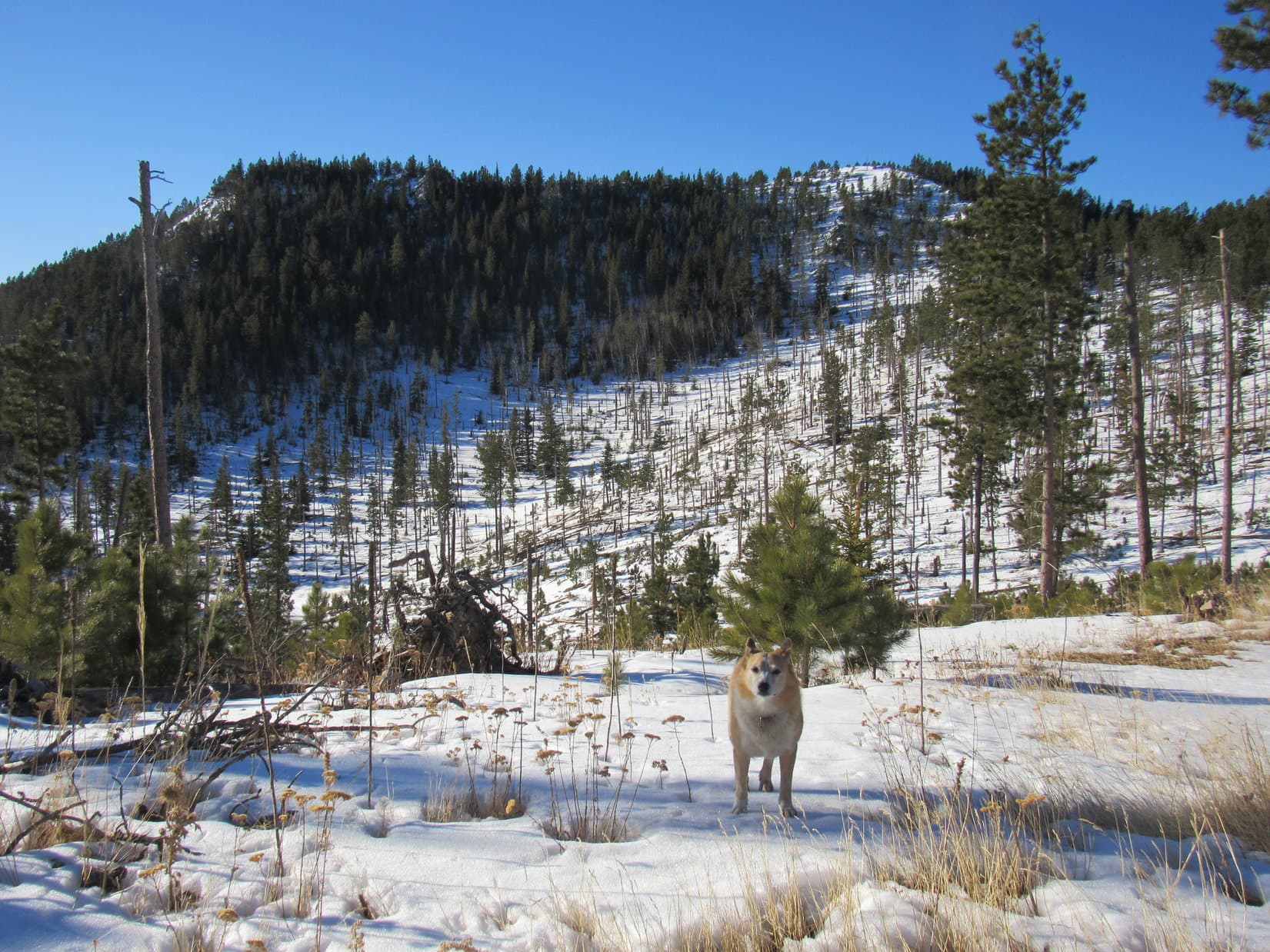
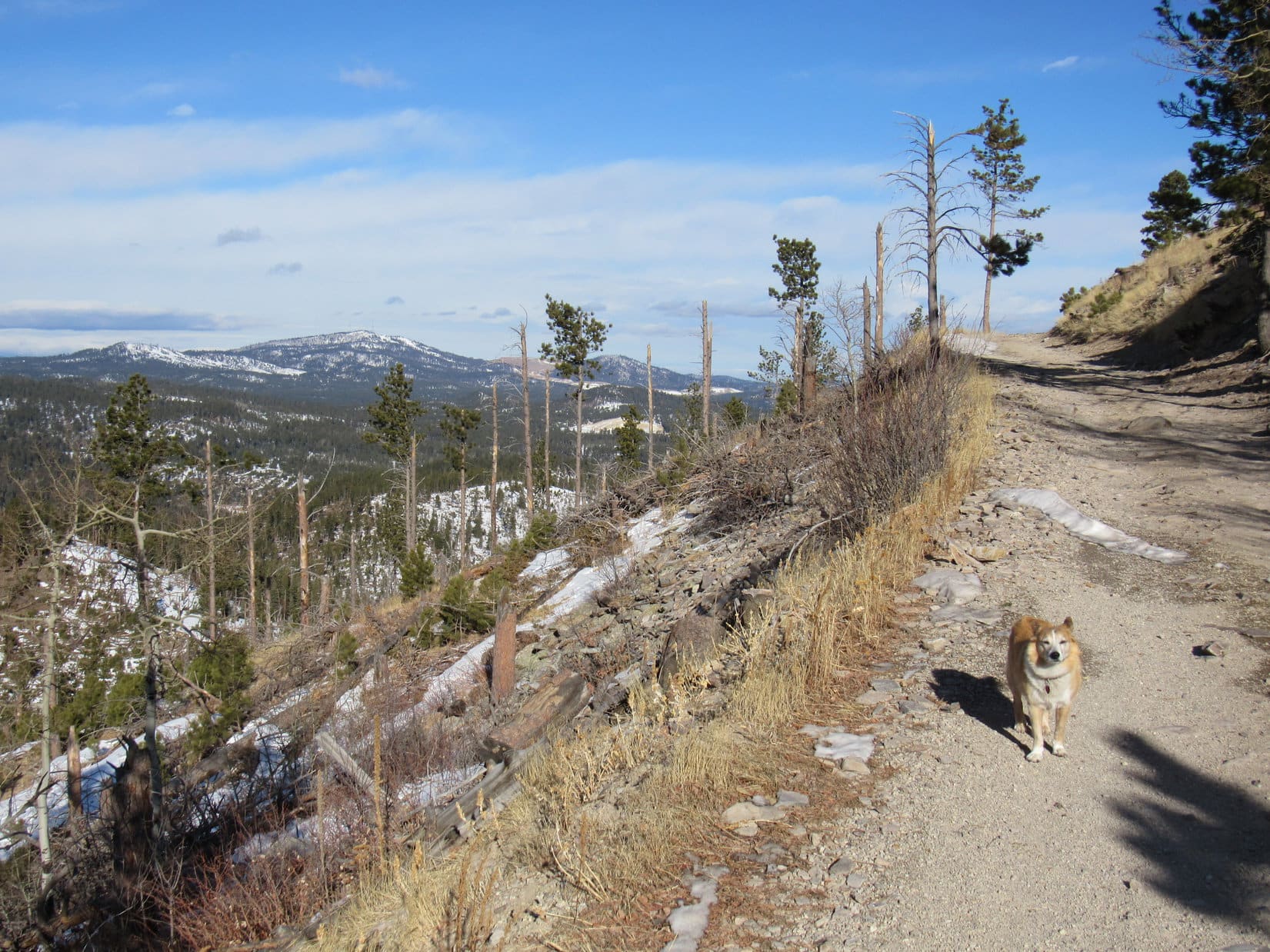
Nothing was going to break the happy mood for long. On to bigger and better things! Lupe’s 4th Dingo Vacation of the summer of 2020 was just getting underway. The G6 hummed NW for hours. It wasn’t until the American Dingo reached Billings, MT that there was any sign of trouble.
Uh-oh! Smoke! Not again! Wyoming had been all sunny and blue. W of Billings, the smoke thickened. Lupe had come such a long way already that she might as well keep going and see what tomorrow would bring. At Columbus, SPHP left I-90, heading S on Hwy 78. S of Absarokee, a R turn on Hwy 419 to Fishtail, then following signs the rest of the way. By dusk, Loopster was at the trailhead.
9-3-20, 7:34 AM, West Rosebud trailhead – As usual first night out on a Dingo Vacation, Lupe had hardly slept a wink. Excited by the prospect of hitting the trail, she’d spent most of the night gazing out the window, watching for any sign of movement. A full moon had risen, illuminating the enormous canyon carved by West Rosebud creek.
Happily, the sky was looking much better this morning. Only a hint of smoke. Lucky! The great moment had arrived. Lupe was on her way.
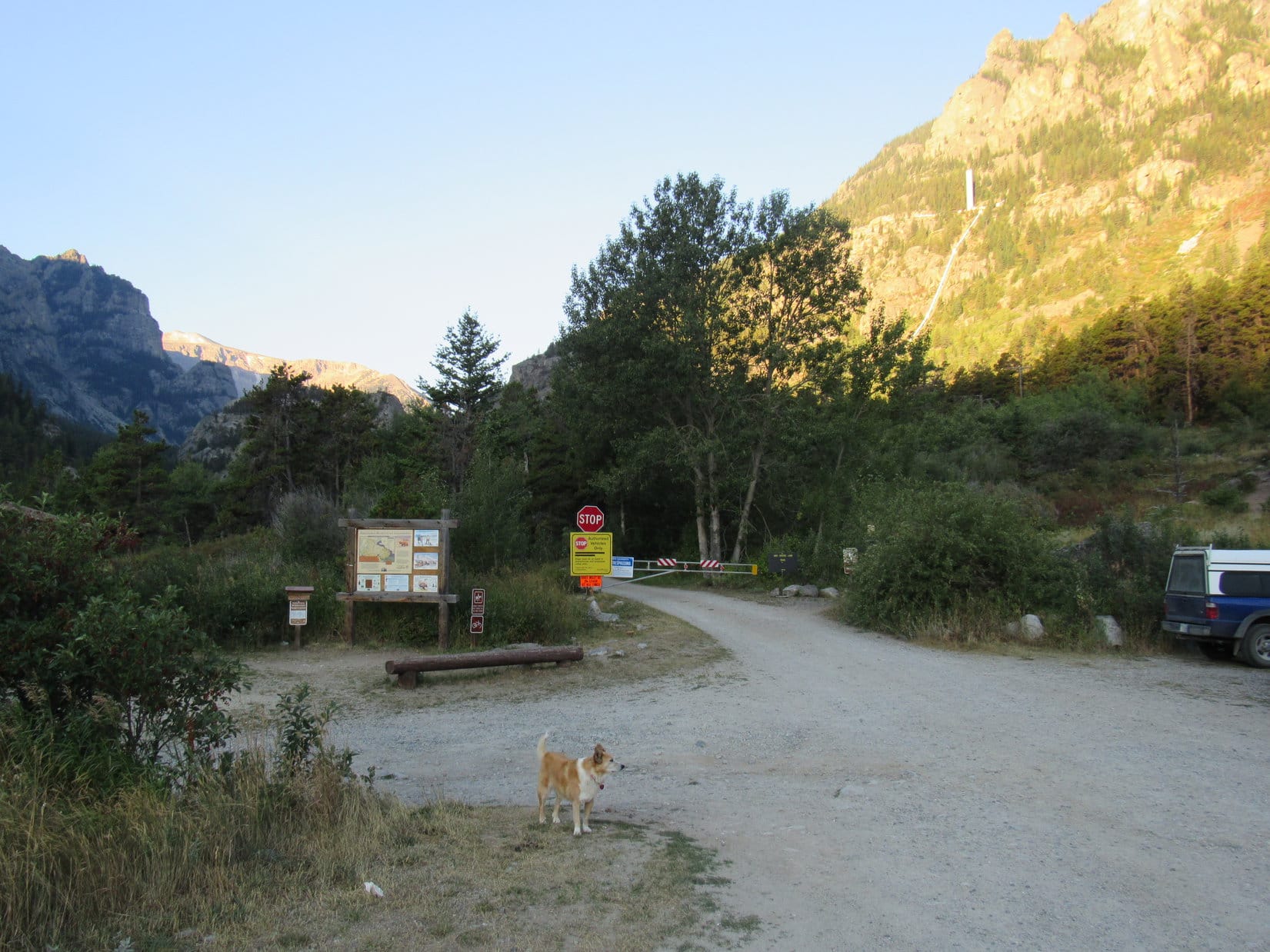
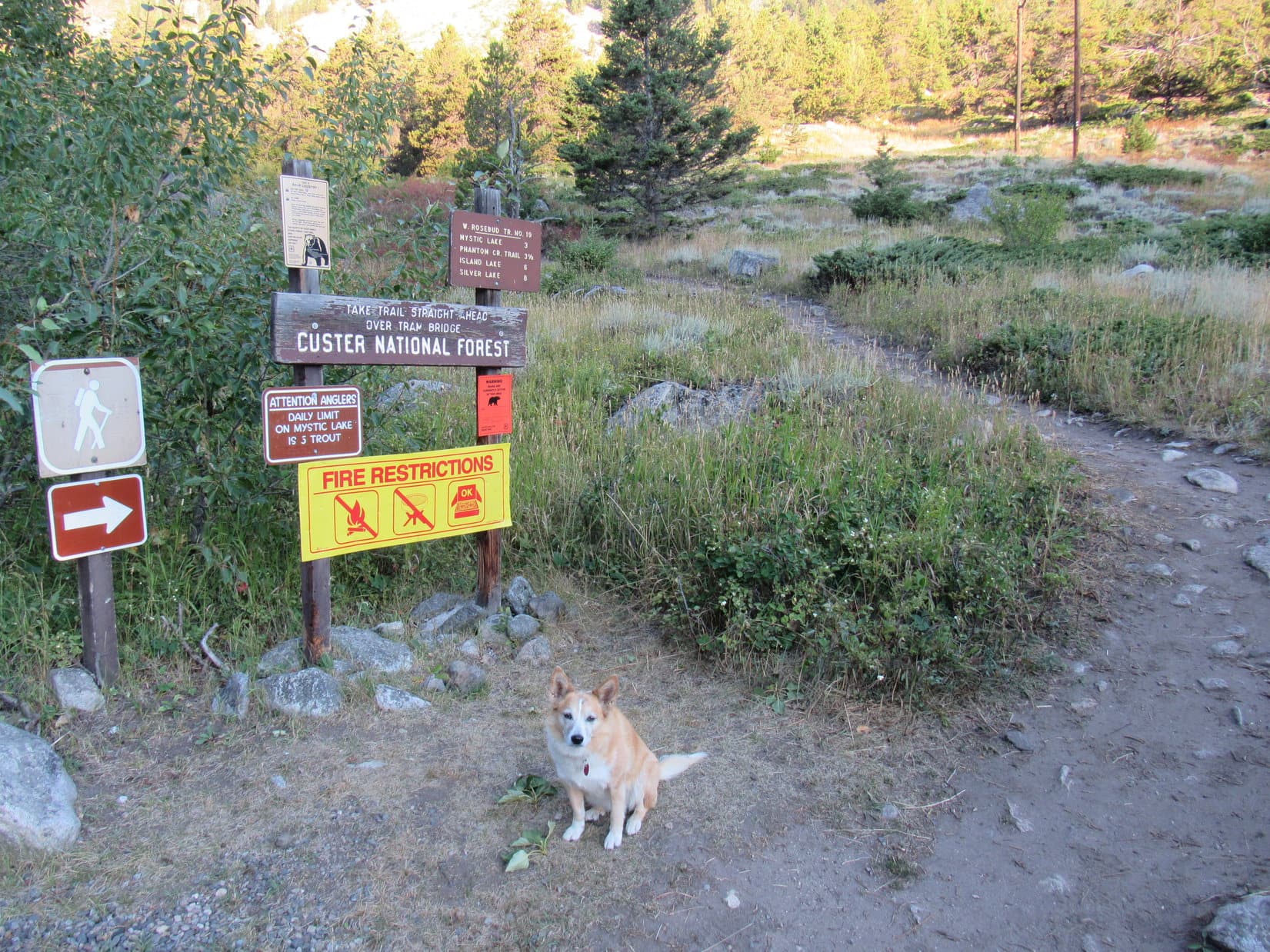
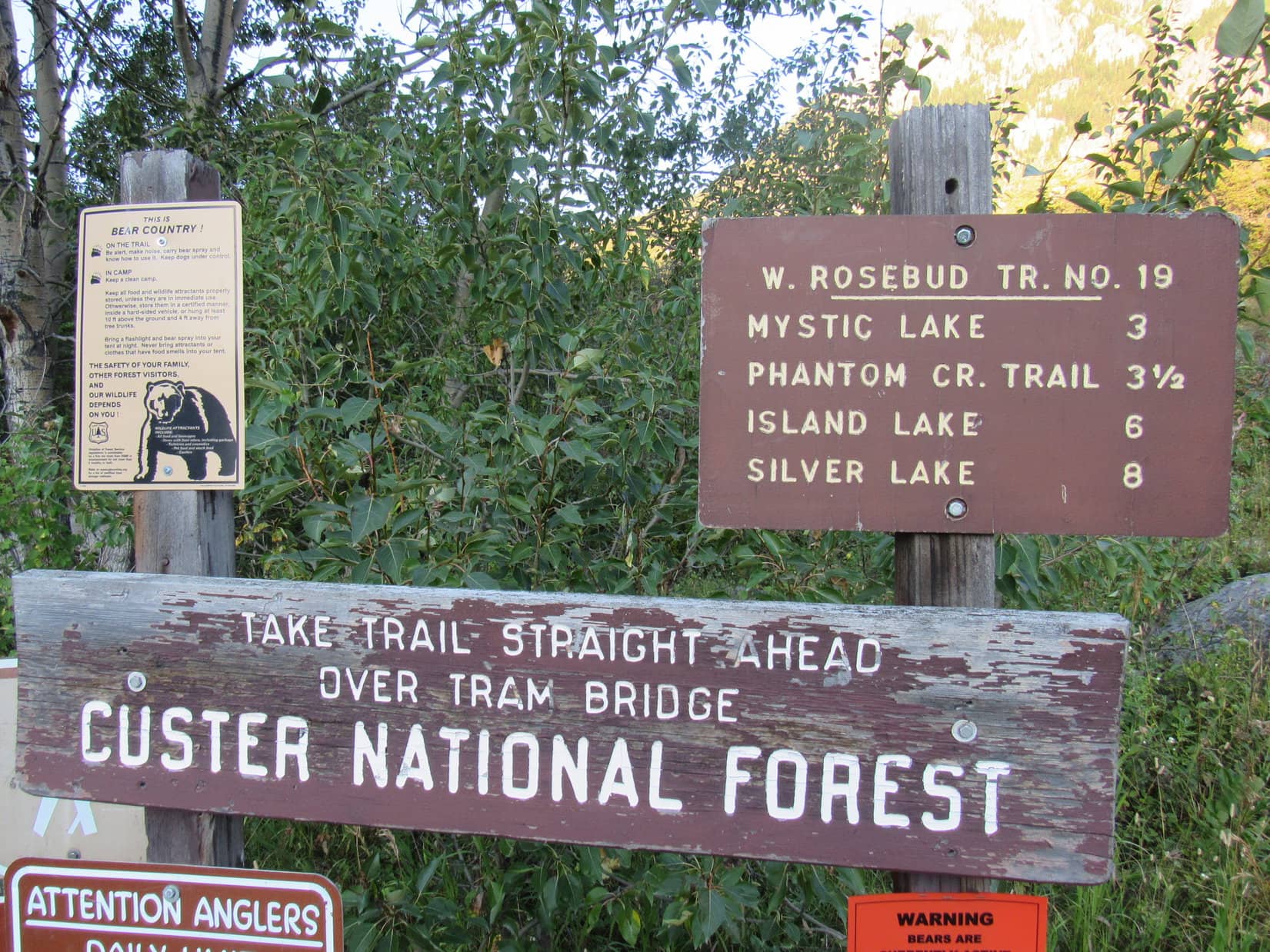
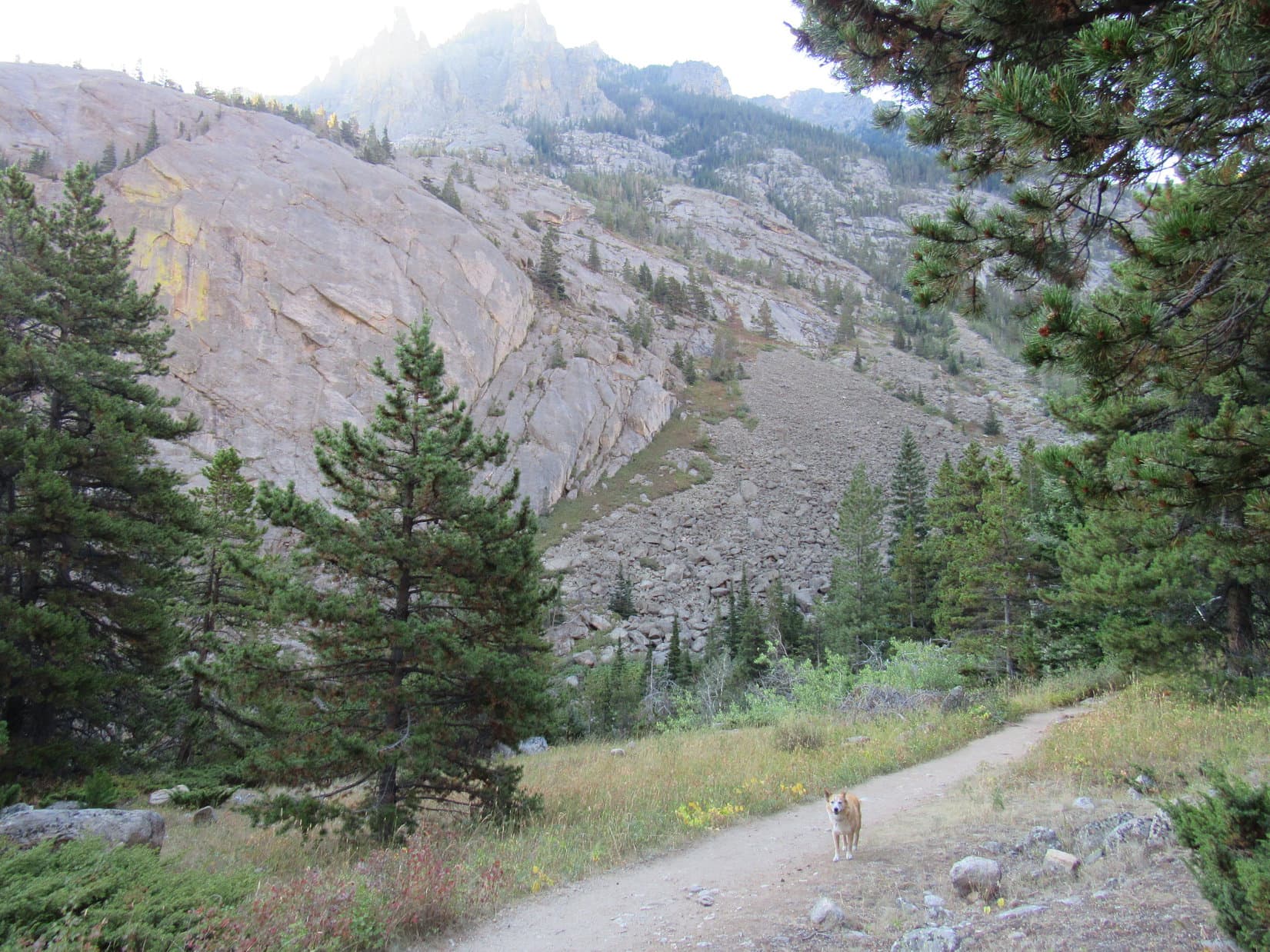
A short climb and West Rosebud trail No. 19 leveled out. This trail went up the West Rosebud creek canyon, the first major destination being Mystic Lake 3 miles from the trailhead. Lupe was up early enough to have the trail to herself at the moment. She trotted along looking for squirrels, but hearing only the hum of a hydro-electric power plant down in the valley.
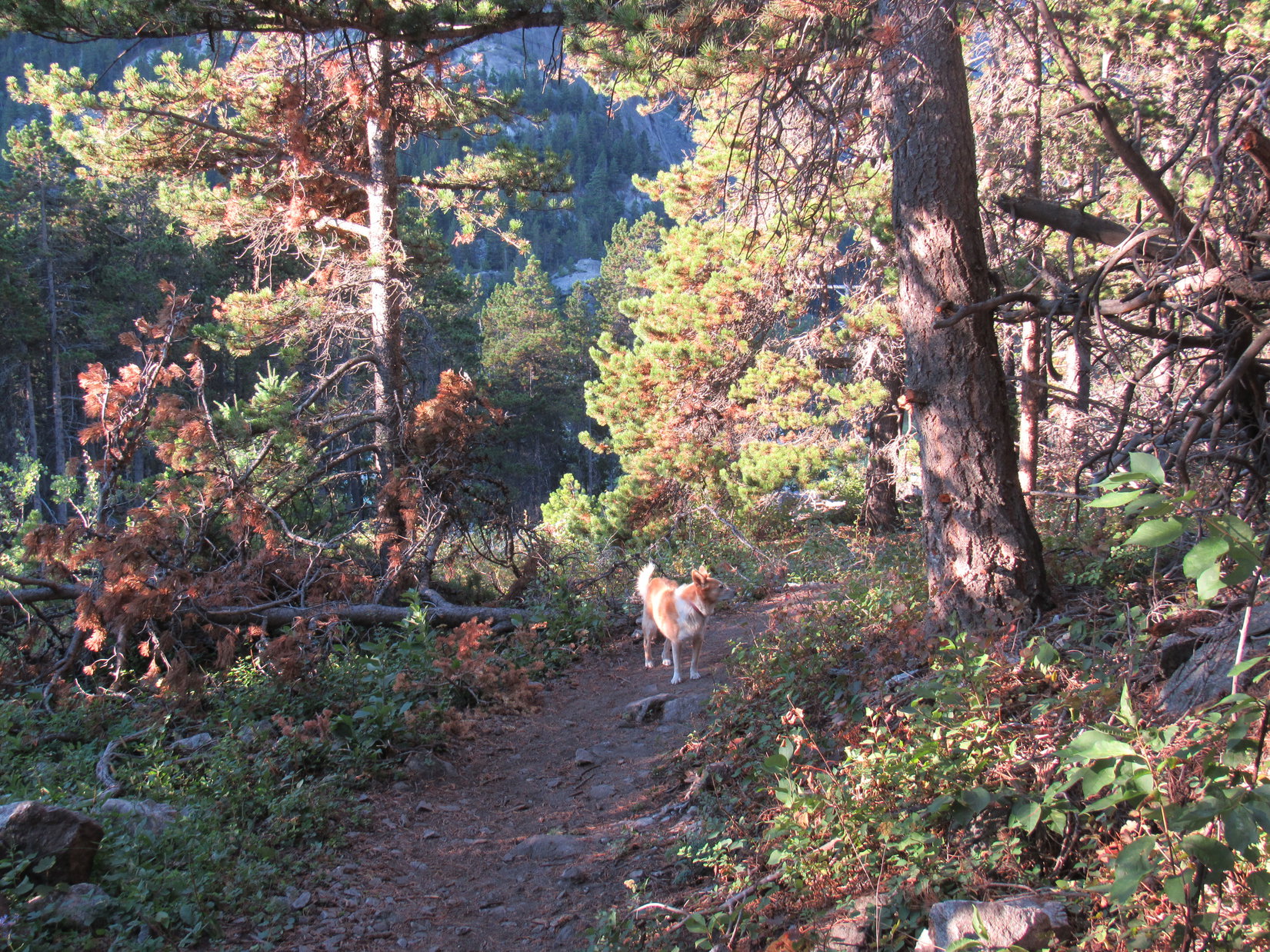

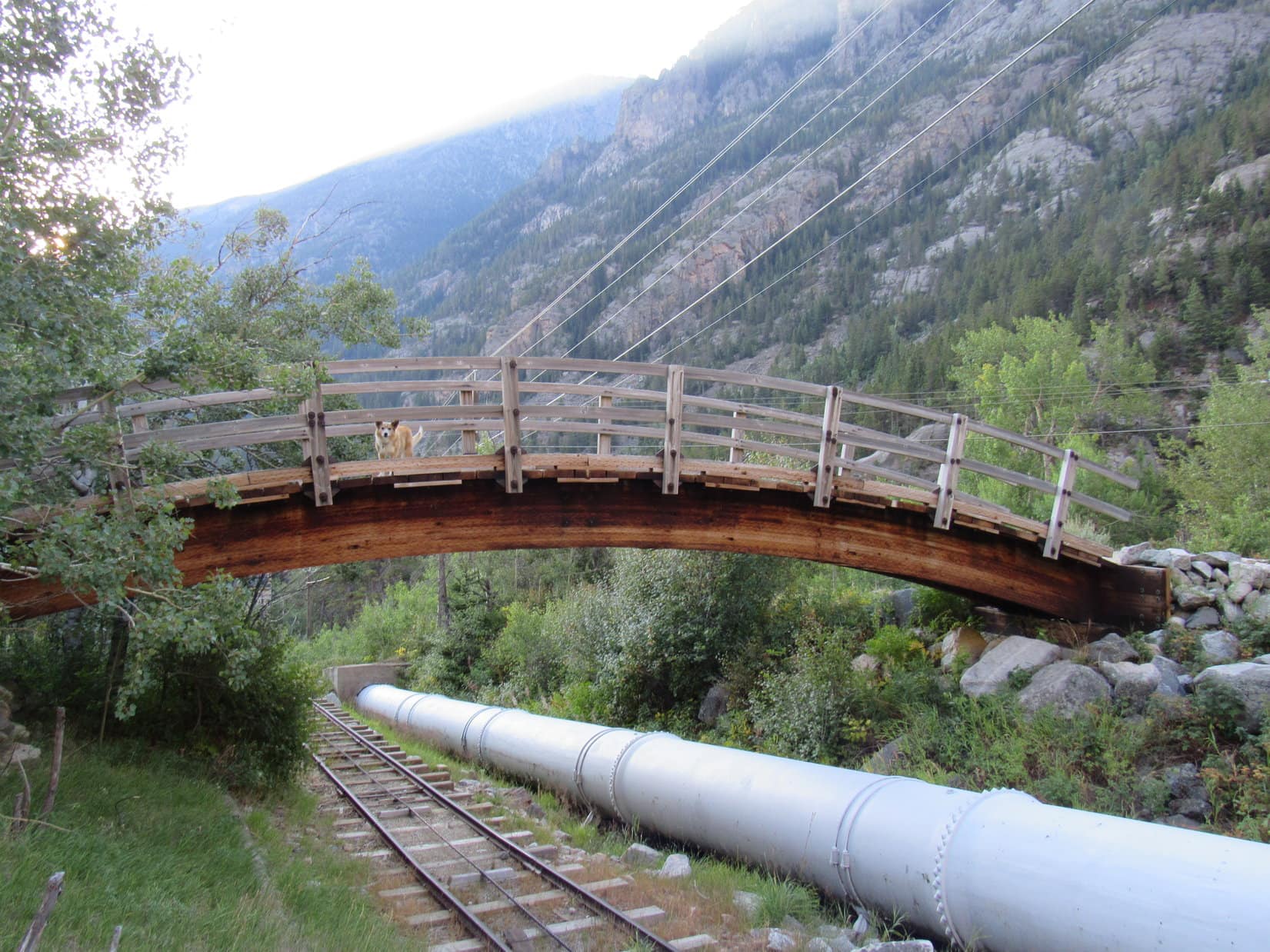
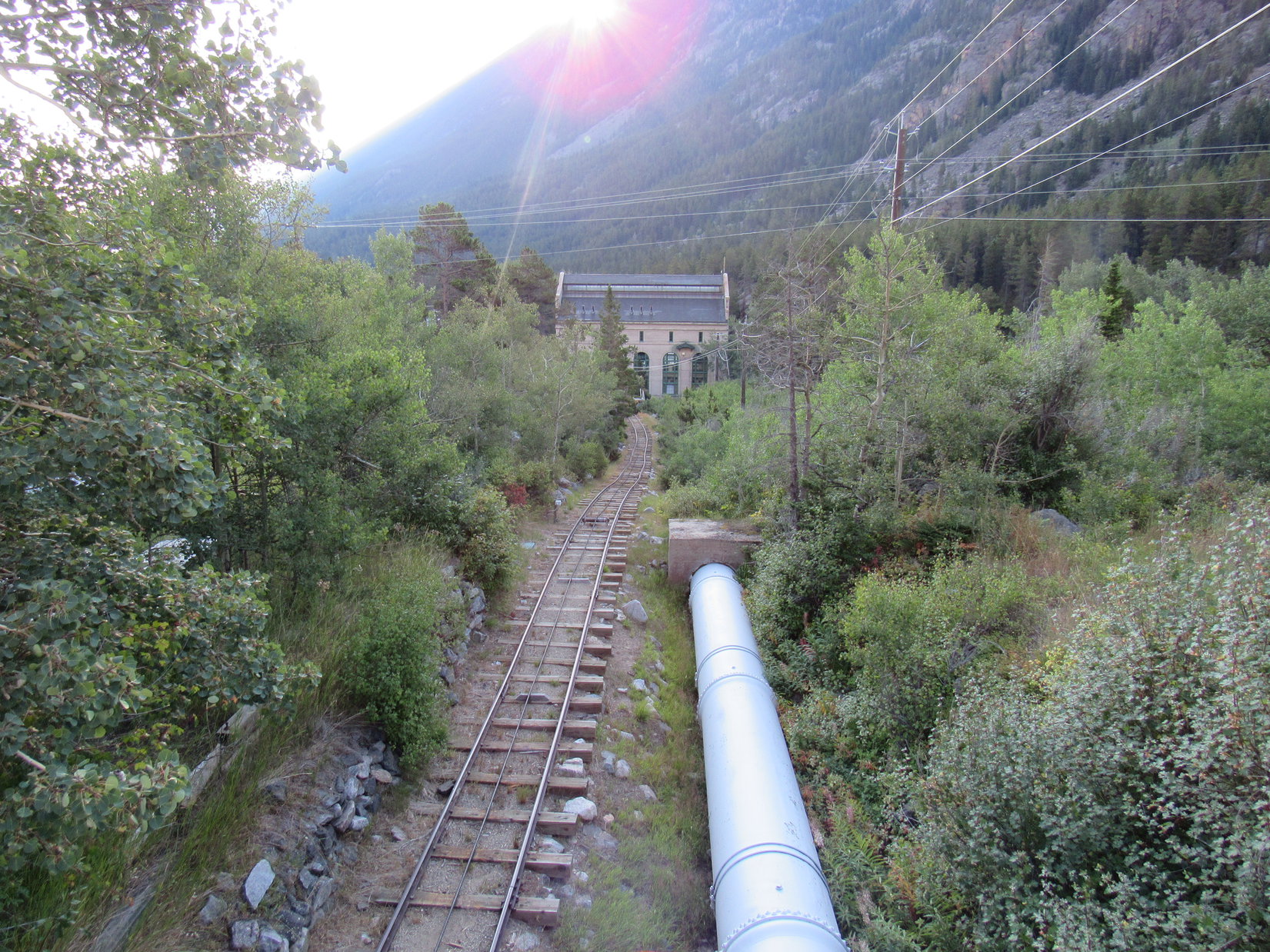
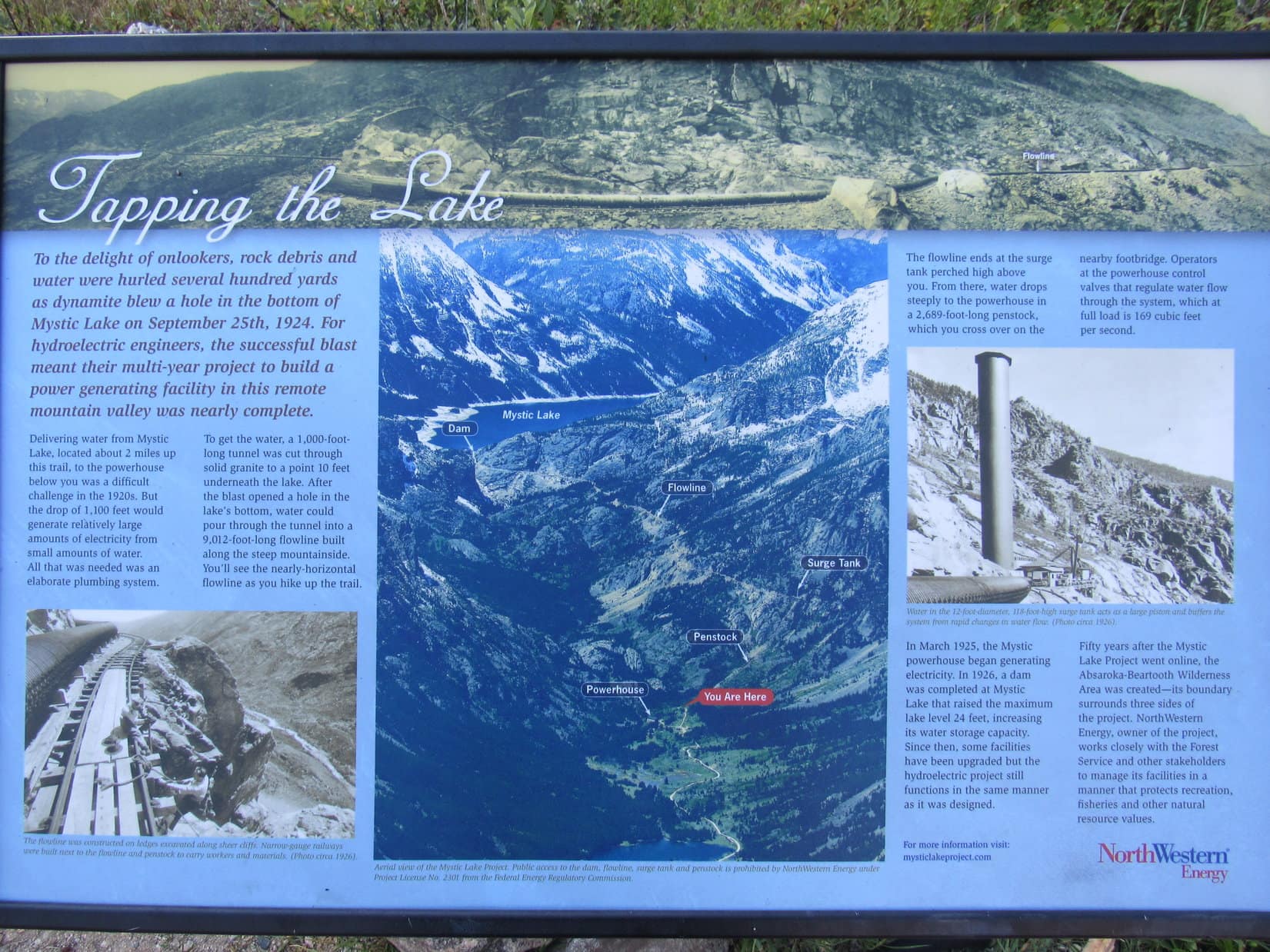
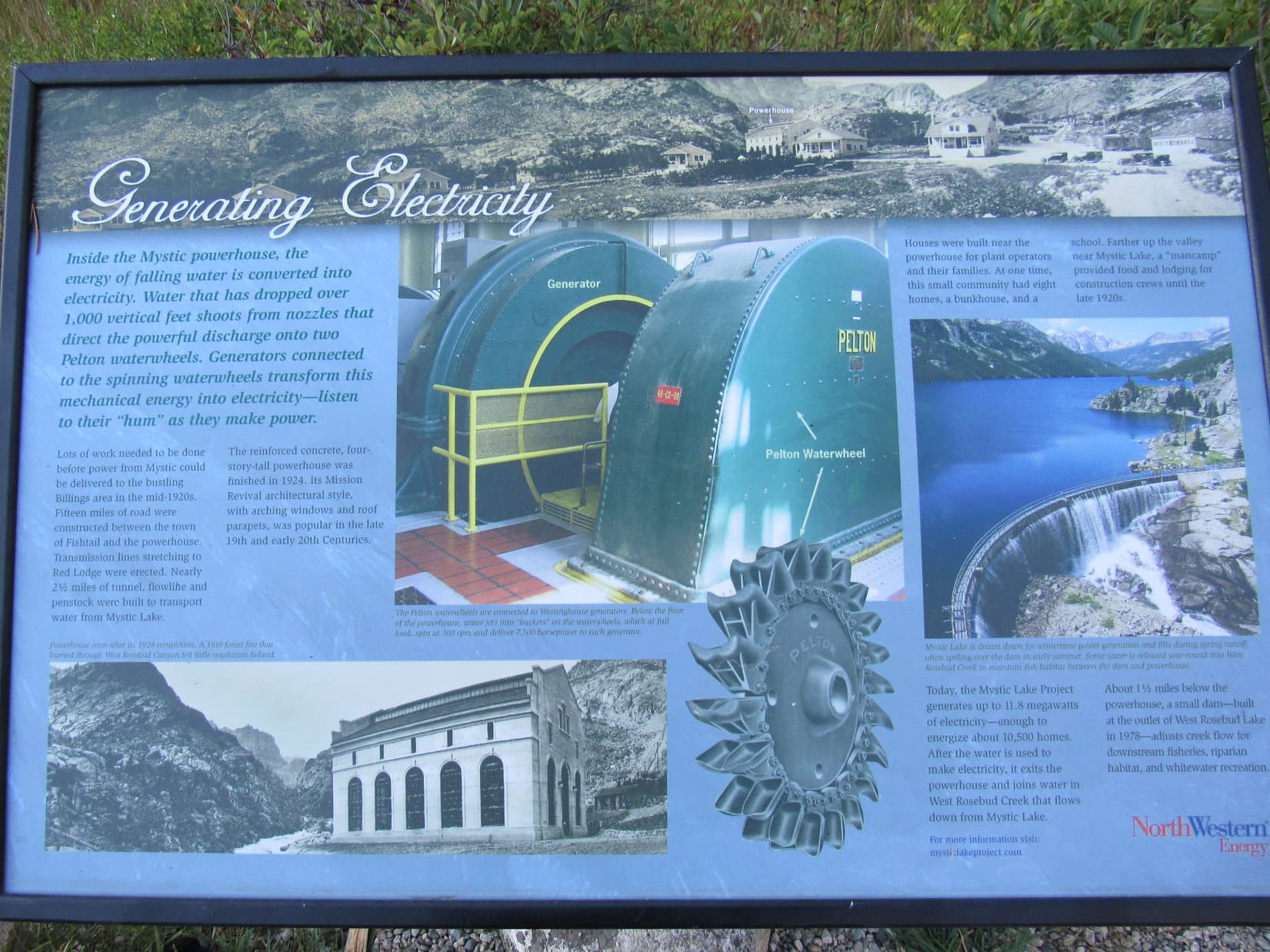
15 minutes from the trailhead, Lupe came to a curved bridge that went over a big white water pipe and a railroad track for a tram. Both started 1,000 feet higher at a surge tank way up on a steep mountainside, and swooped straight down to the hydro-electric plant in the valley. A couple of plaques told the story of this engineering marvel.

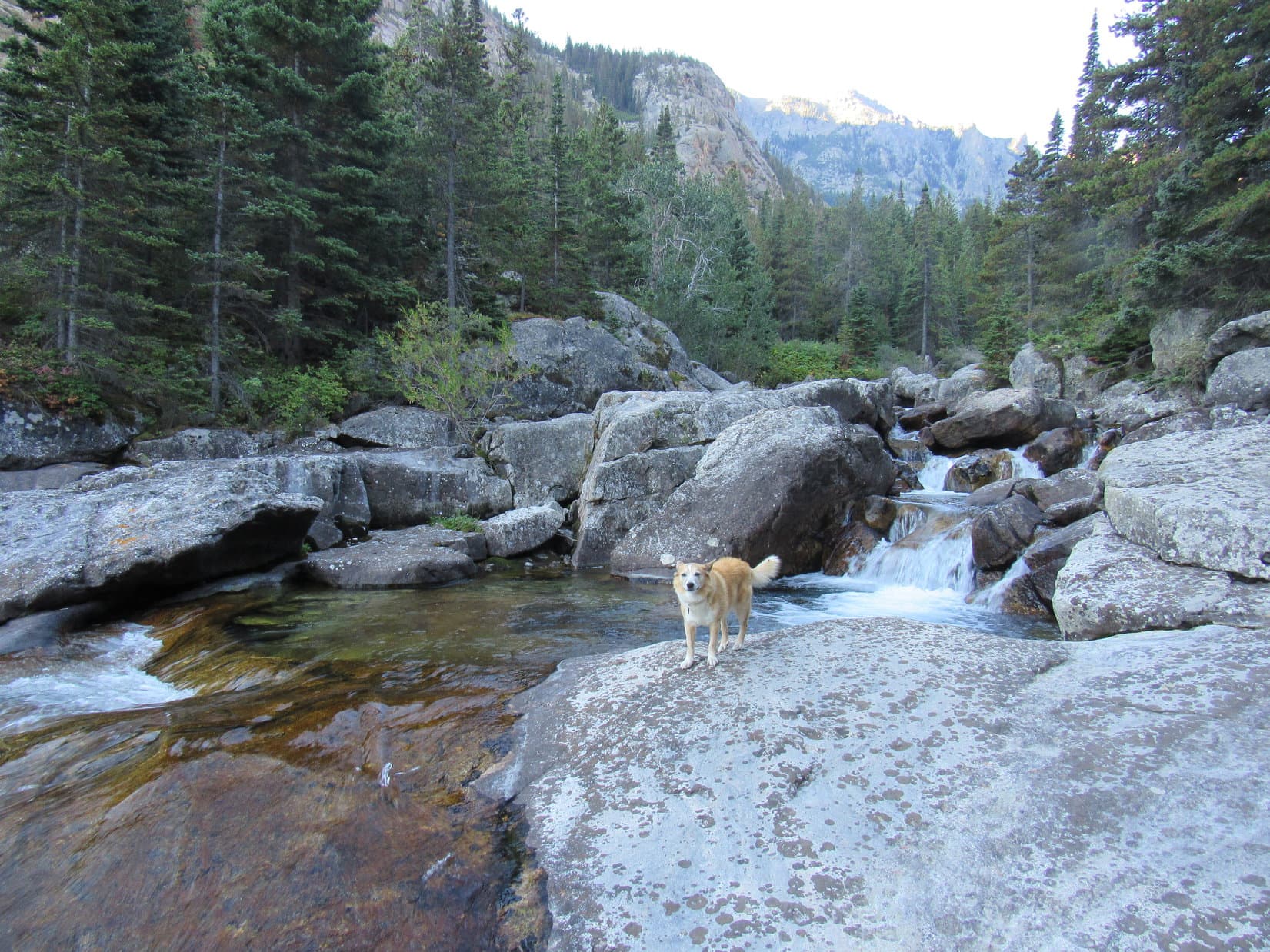
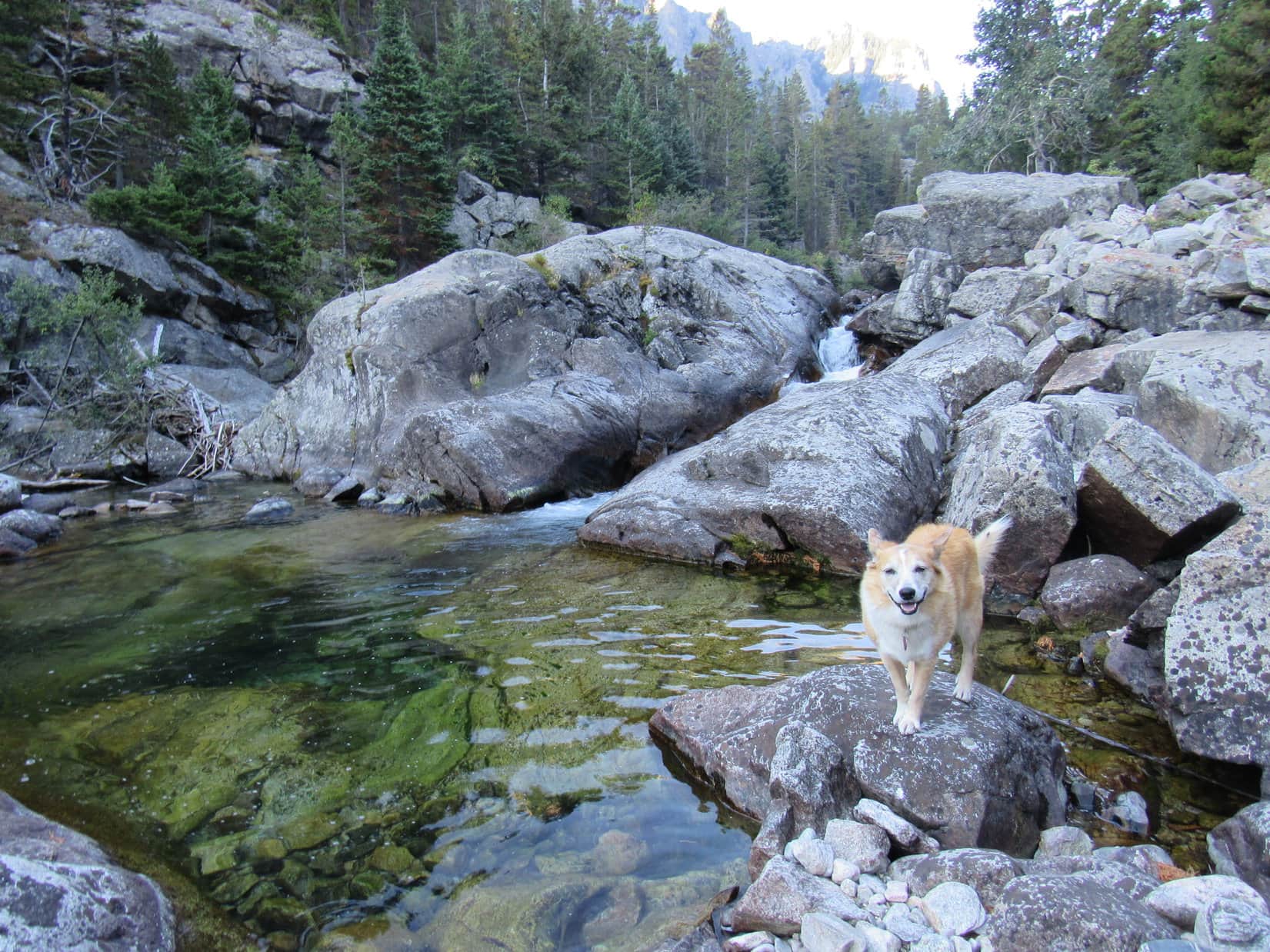
After crossing the bridge, Lupe went on. The West Rosebud trail is very popular, so it was well-worn and a cinch to follow. 15 minutes beyond the curved bridge, the trail reached West Rosebud creek. Scrambling down a short steep bank, Lupe checked it out. The creek had good flow. Crystal clear water tumbled among huge, smoothed boulders in a series of small waterfalls, and gathered in deep pools.
Later in the day, this would be a fabulous spot for a picnic, or even a swim, but it was still very early, so the Carolina Dog kept going.
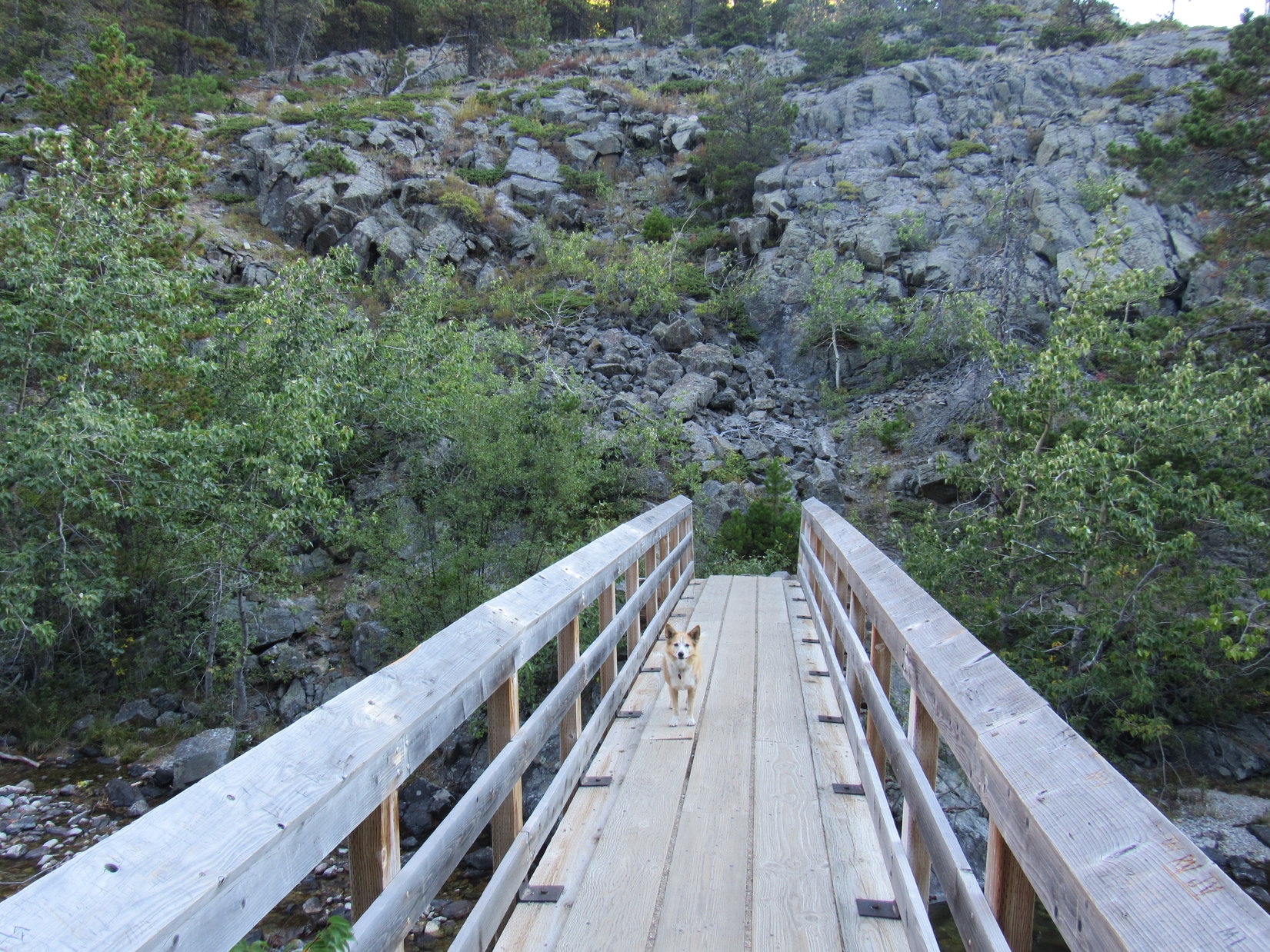
The trail followed the gorgeous creek for only a little way before leading to another bridge. This bridge crossed West Rosebud creek. The trail then headed back into the forest. 5 minutes, and Lupe came to a sign for the Absaroka-Beartooth Wilderness.

Beyond the sign, the West Rosebud trail was still flat for a little while, but it soon started to climb. Lupe had already gained some elevation, but now the trail became a much more relentless upward trek. Still easy to only moderately steep. Looper continued to make good progress, but every now and then, SPHP paused for breath.
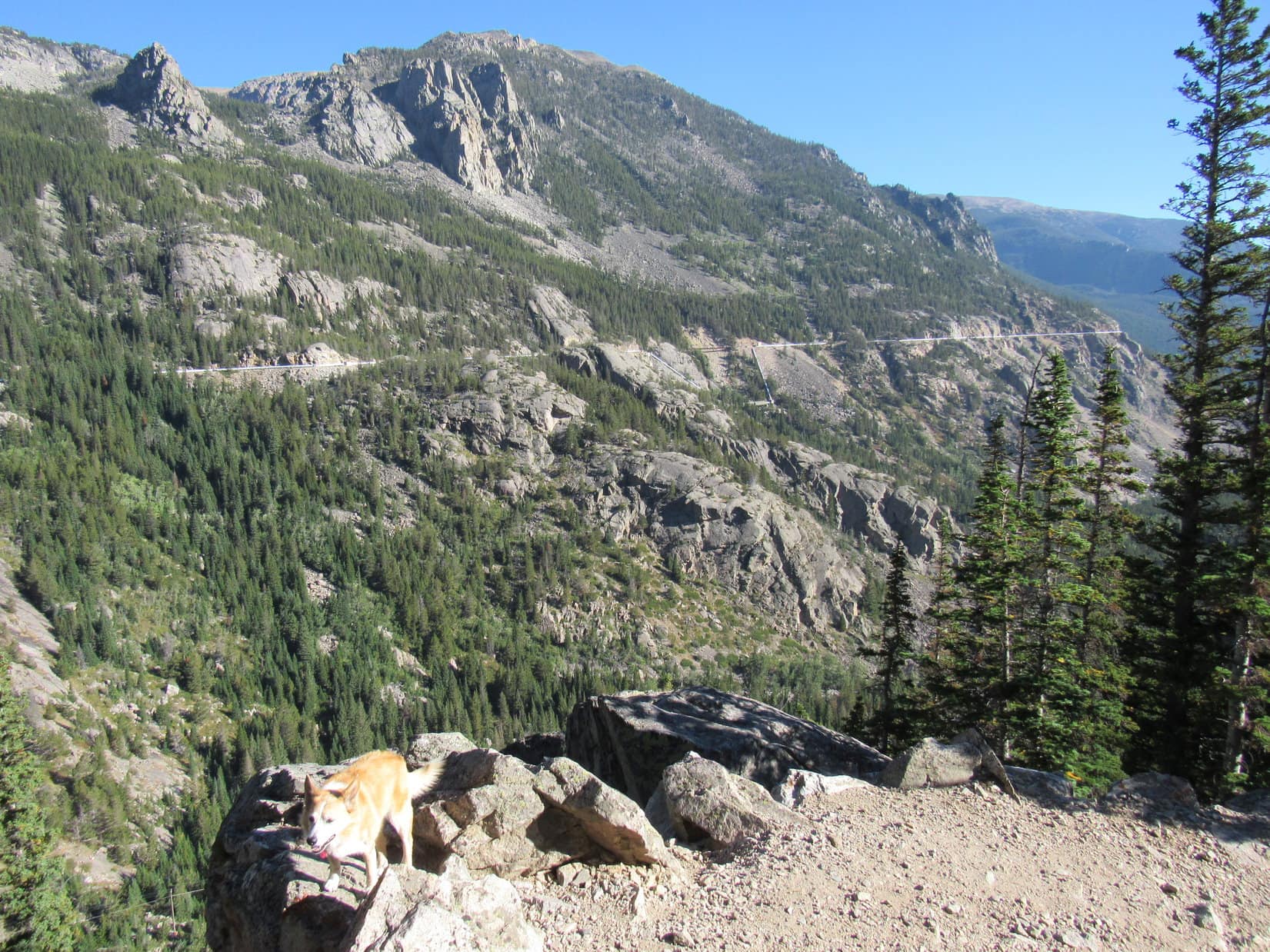
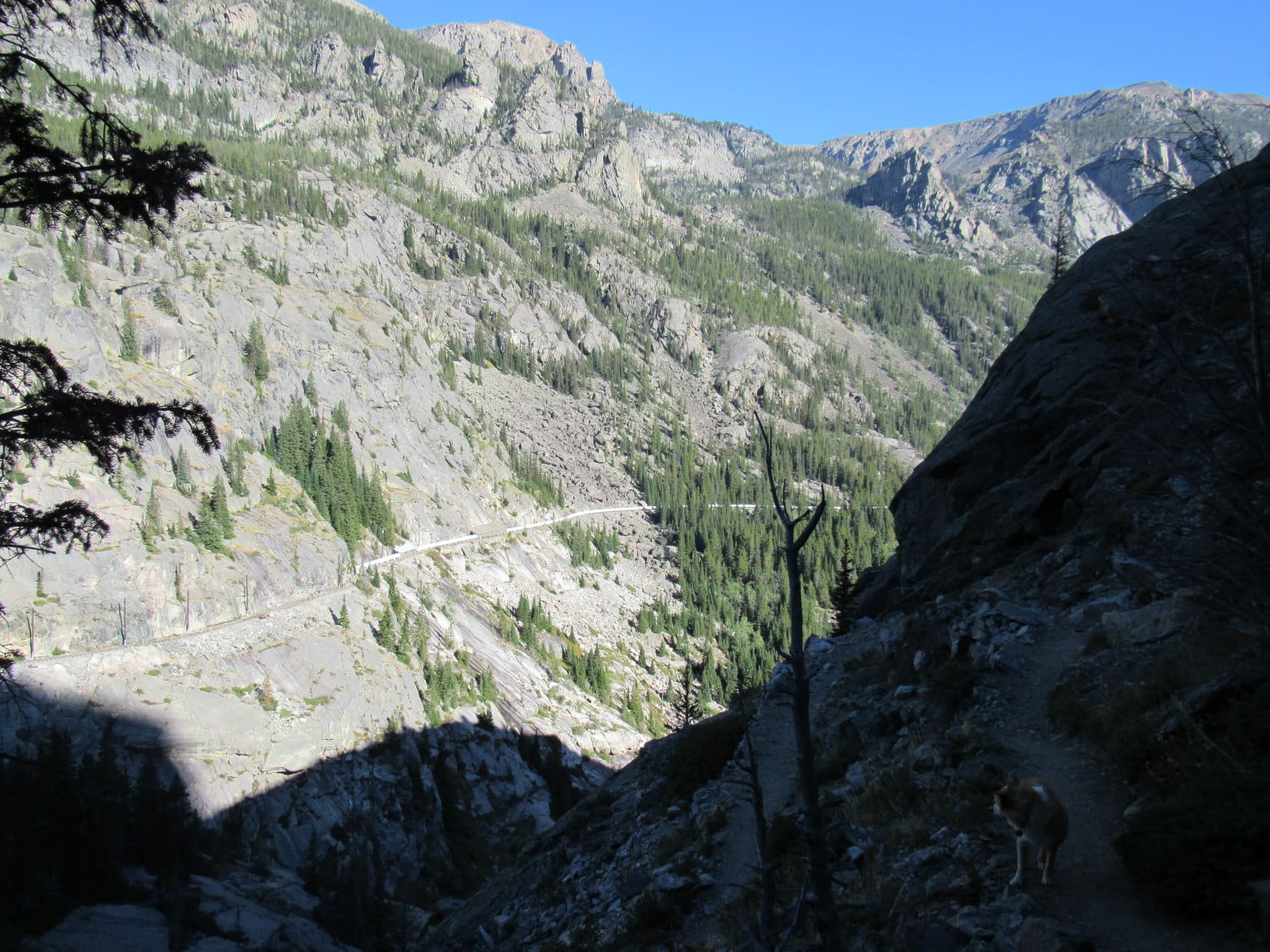
The trail was going SW toward a huge headwall at the upper end of the canyon. As Lupe got closer, the trail began switchbacking higher. The route became much rockier as the trail climbed above the forest. Views improved, and progress could now be measured relative to the big white water pipeline stretching almost horizontally along the opposite canyon wall.
Here on the SE side of the canyon, tremendous rock spires towered way up along the upper edge.
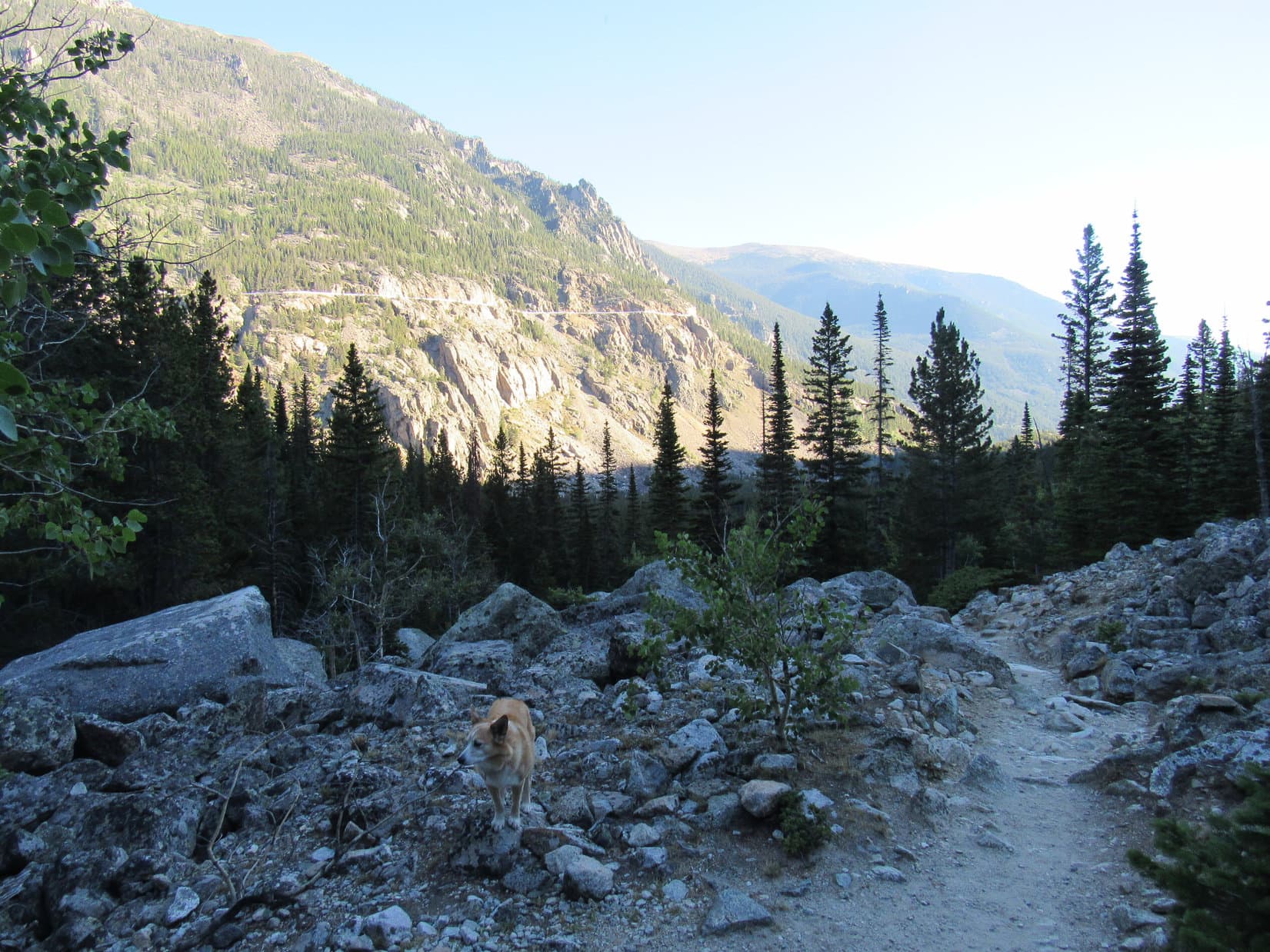
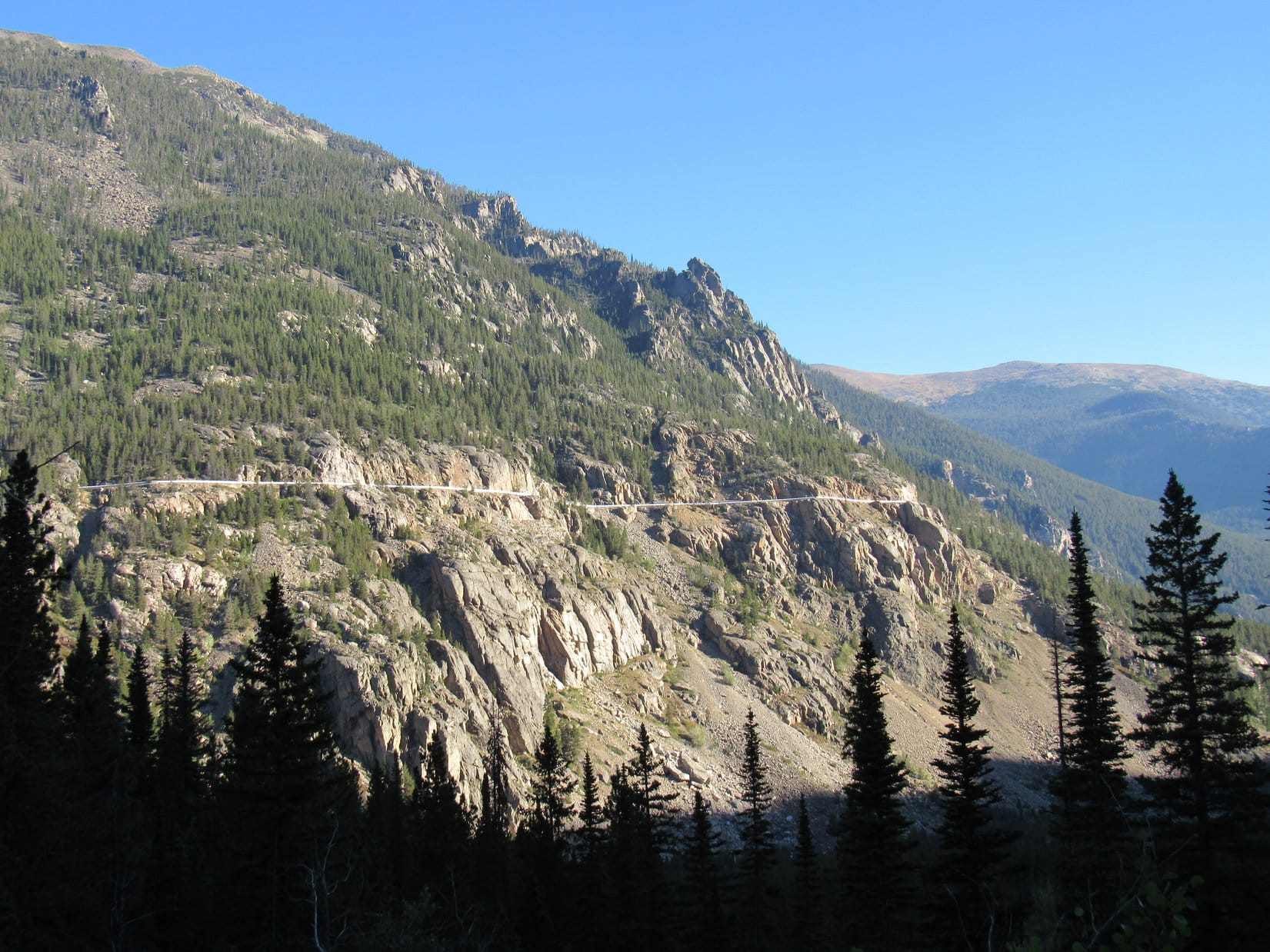
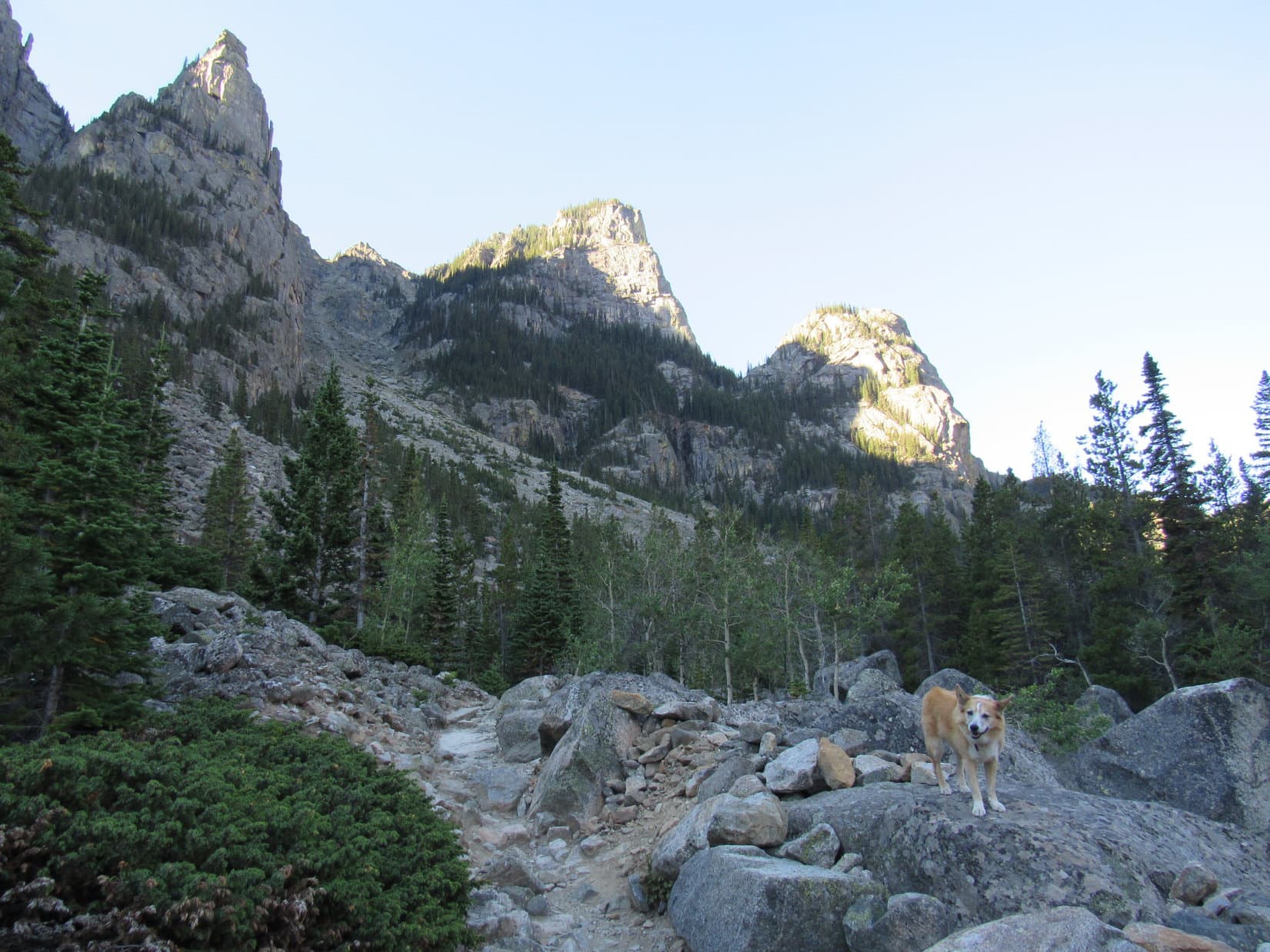

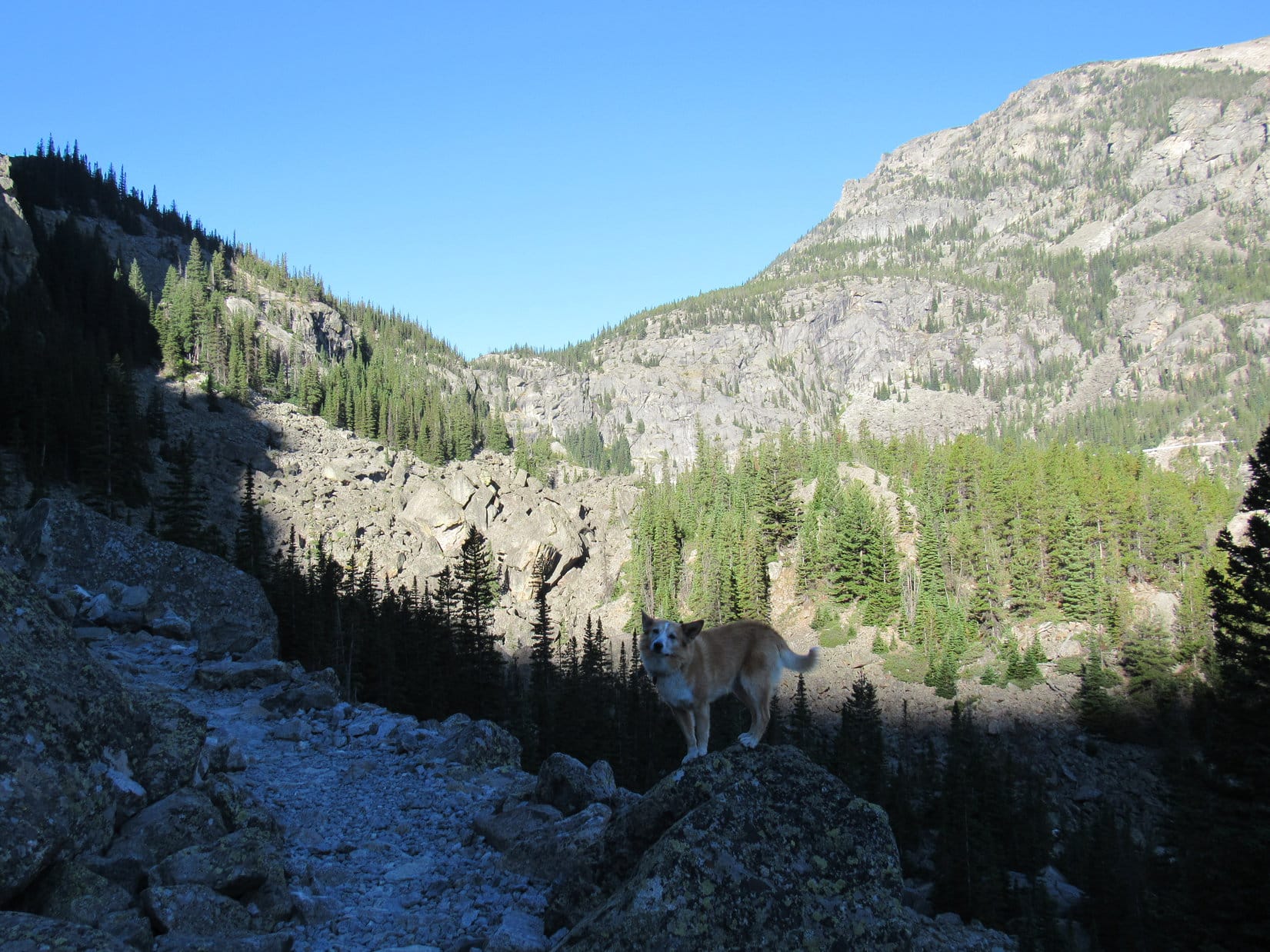
The trail and the big white water pipe were both heading for Mystic Lake, but from opposite sides of the canyon. It wasn’t until Lupe was clearly somewhat higher than the water pipe that she started getting close to the headwall Mystic Lake was hidden beyond.
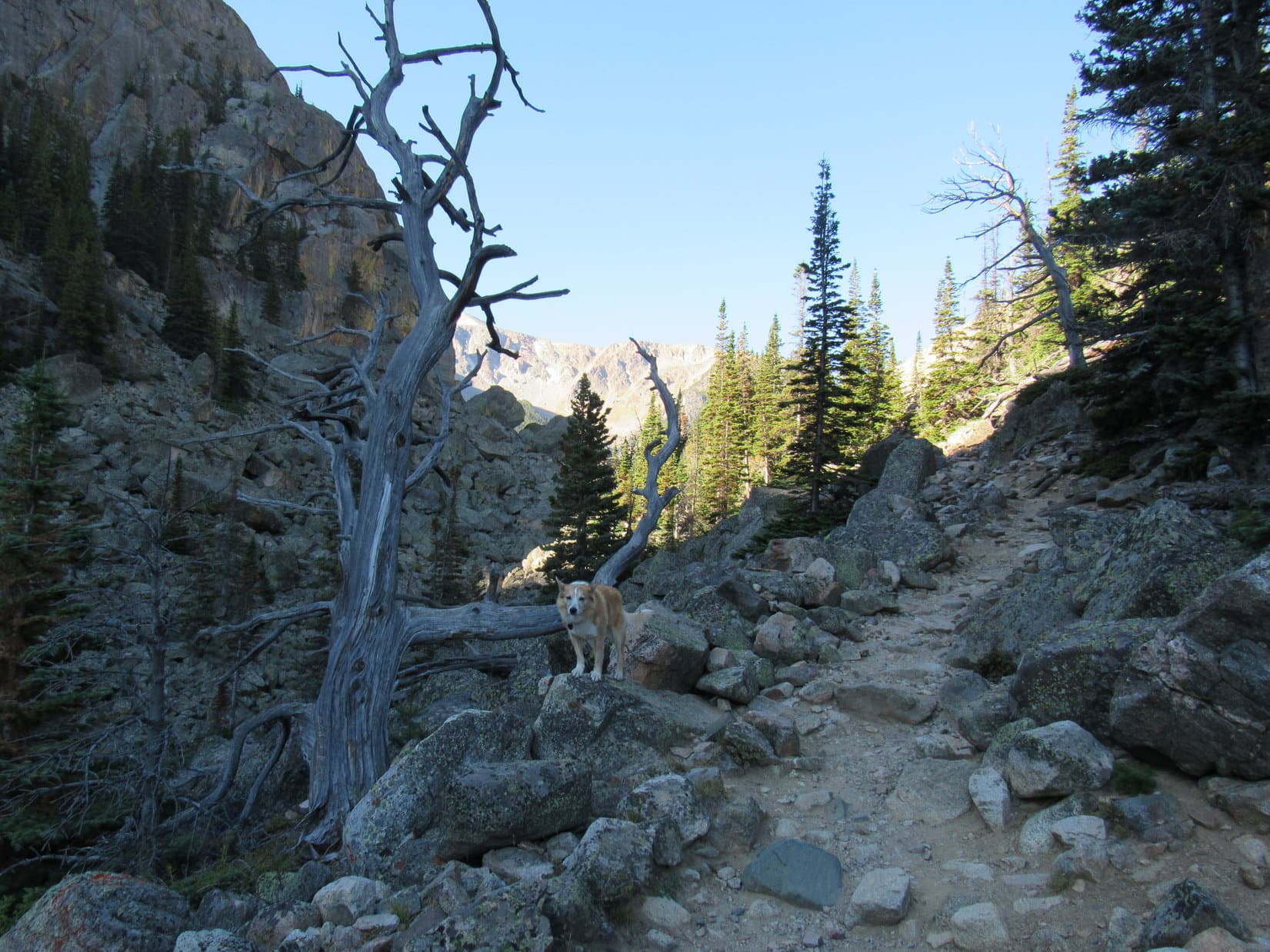
After passing next to several vertical rock walls, the West Rosebud trail finally curved W directly toward the headwall. However, it didn’t go far in this direction before bending back to the SW where it entered a small valley. Climbing gradually through this relatively narrow gap, the trail eventually leveled out.
At the far end of the valley, where the gap was narrowest, a strong, cool breeze blew this way as Lupe approached two large boulders the trail went between. As the American Dingo reached the boulders, she got her first look at Mystic Lake.
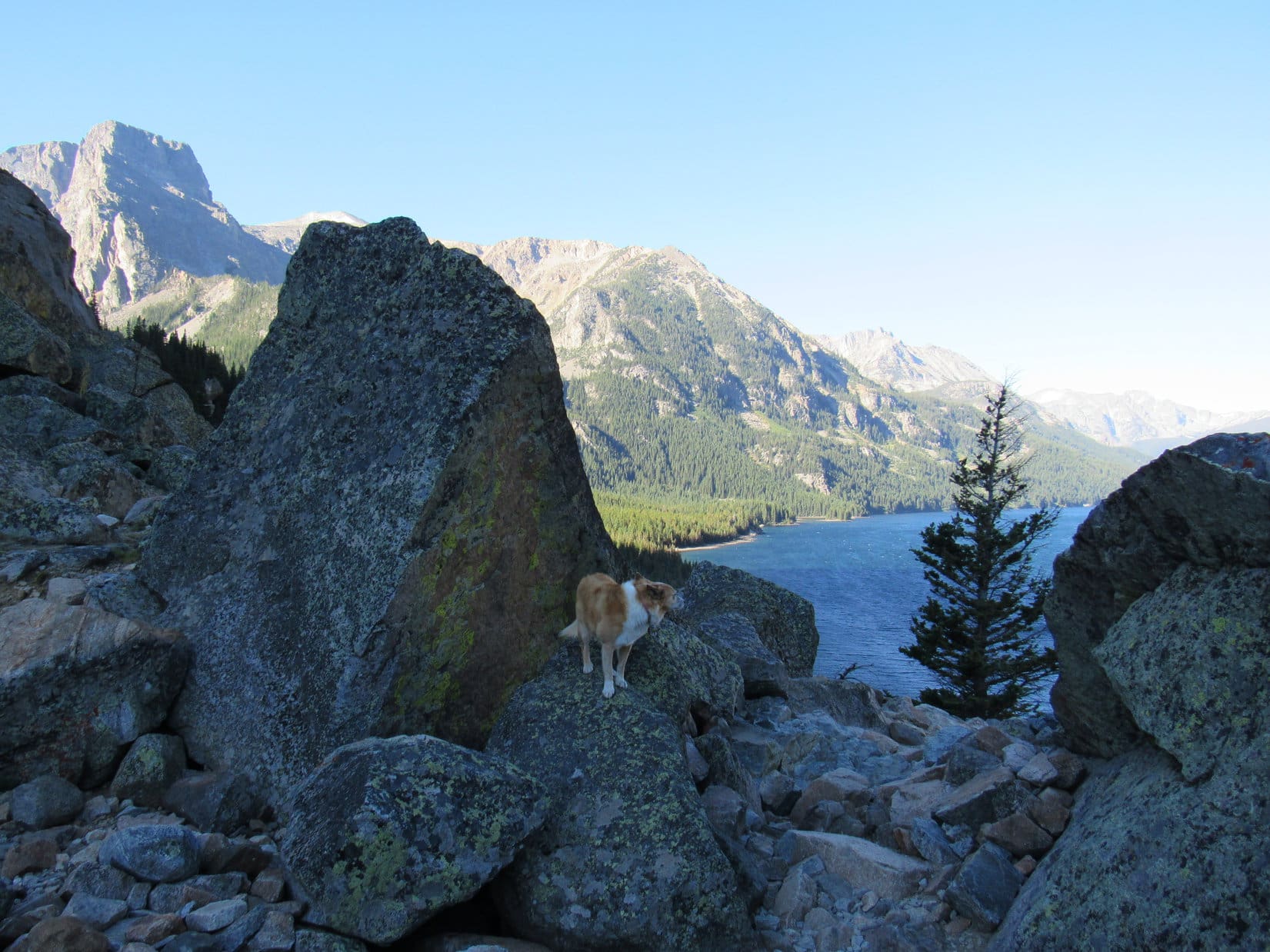
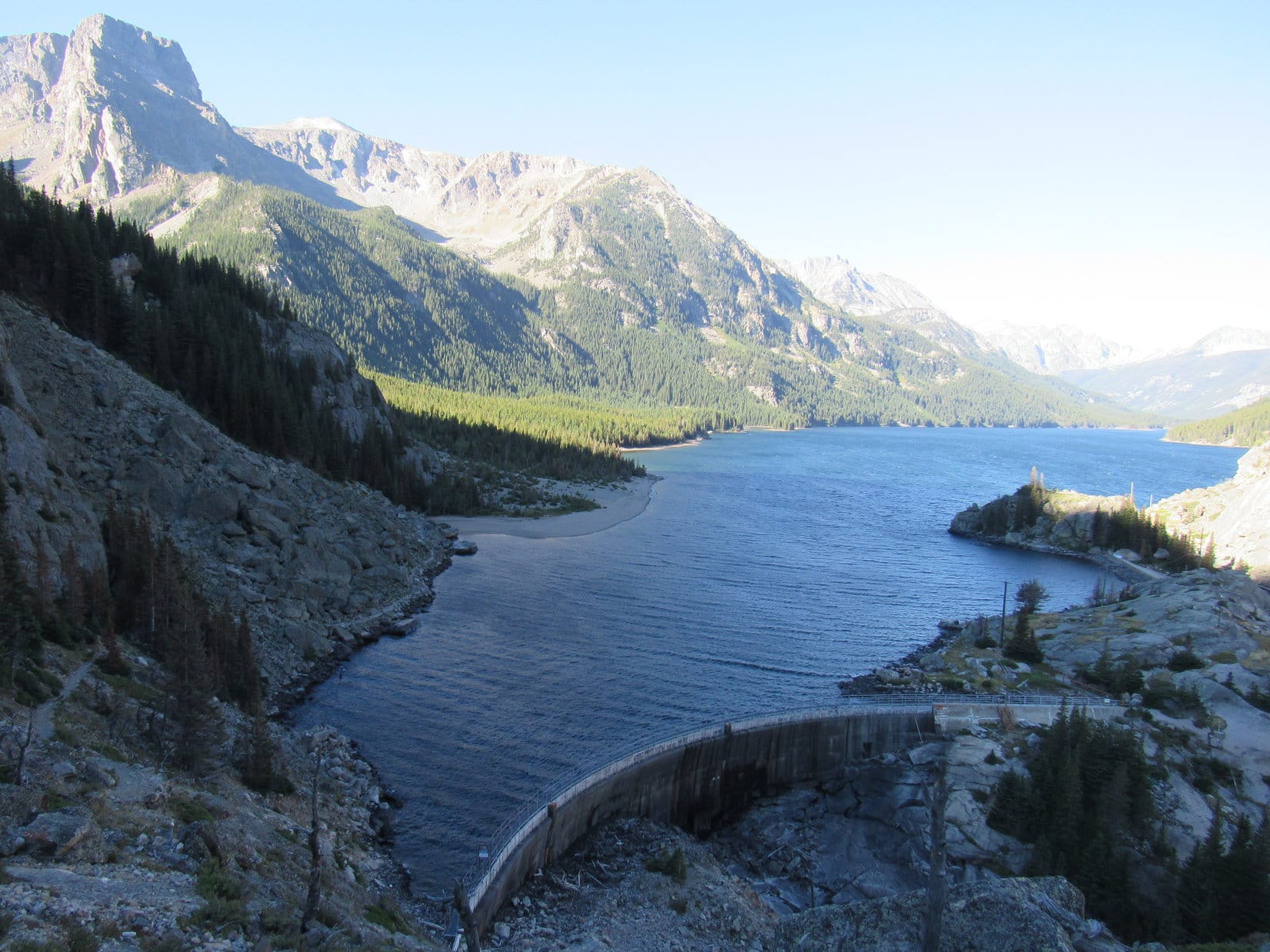
Set in a huge valley surrounded by forests and massive mountains, the deep blue waters of Mystic Lake made a stunning impression! Facing into the stiff, cool breeze coming off the lake, Lupe looked 120 feet down on a curved dam at the E end. Whitecaps could be seen in the middle of Mystic Lake, its far W end beyond vision. Magnificent!
From here, West Rosebud trail No. 19 curved sharply to the R as it began snaking almost all the way down to lake level. The trail reached Mystic Lake slightly above the rocky S shore, where it then headed W toward a pebbly beach.
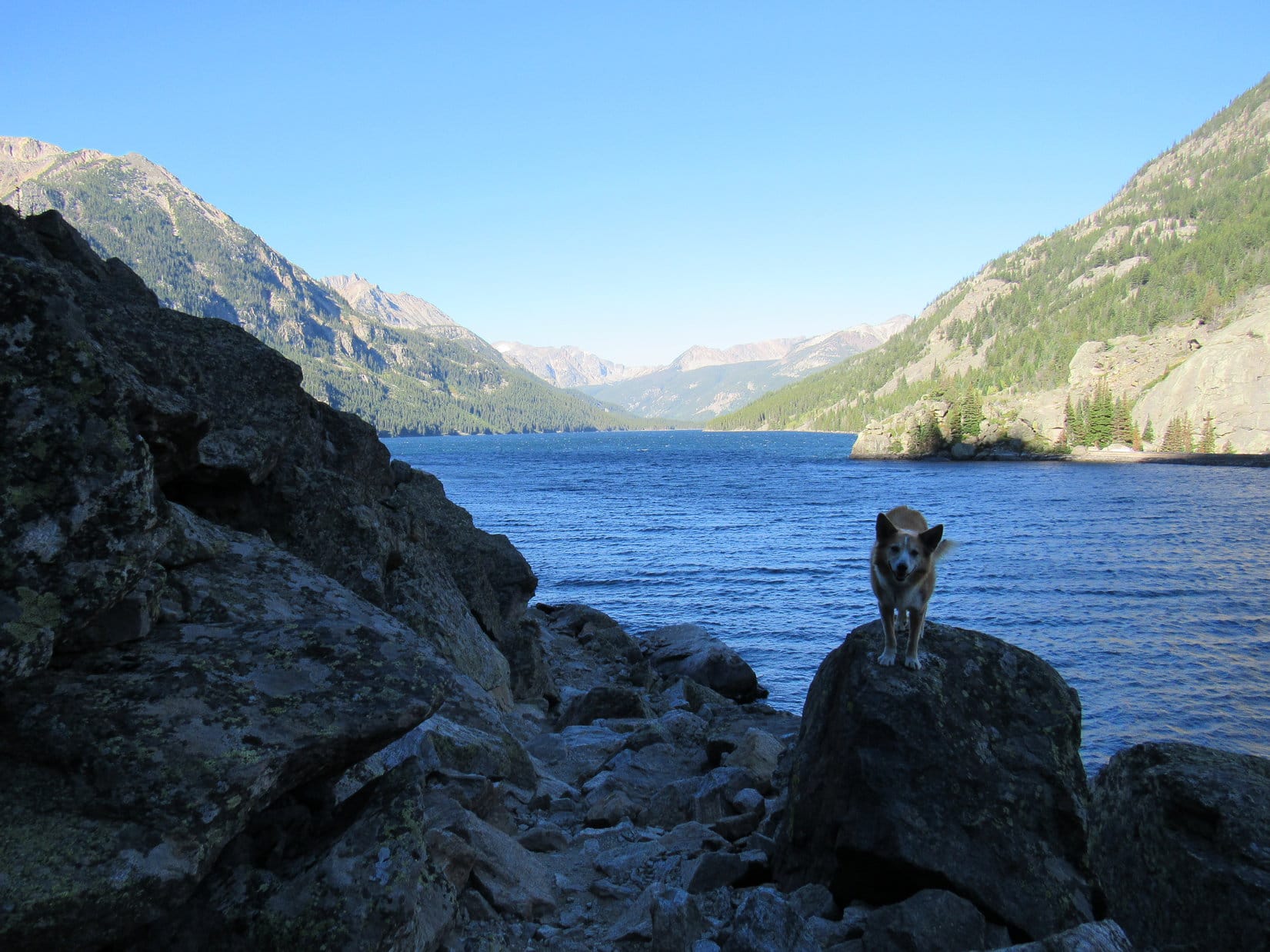
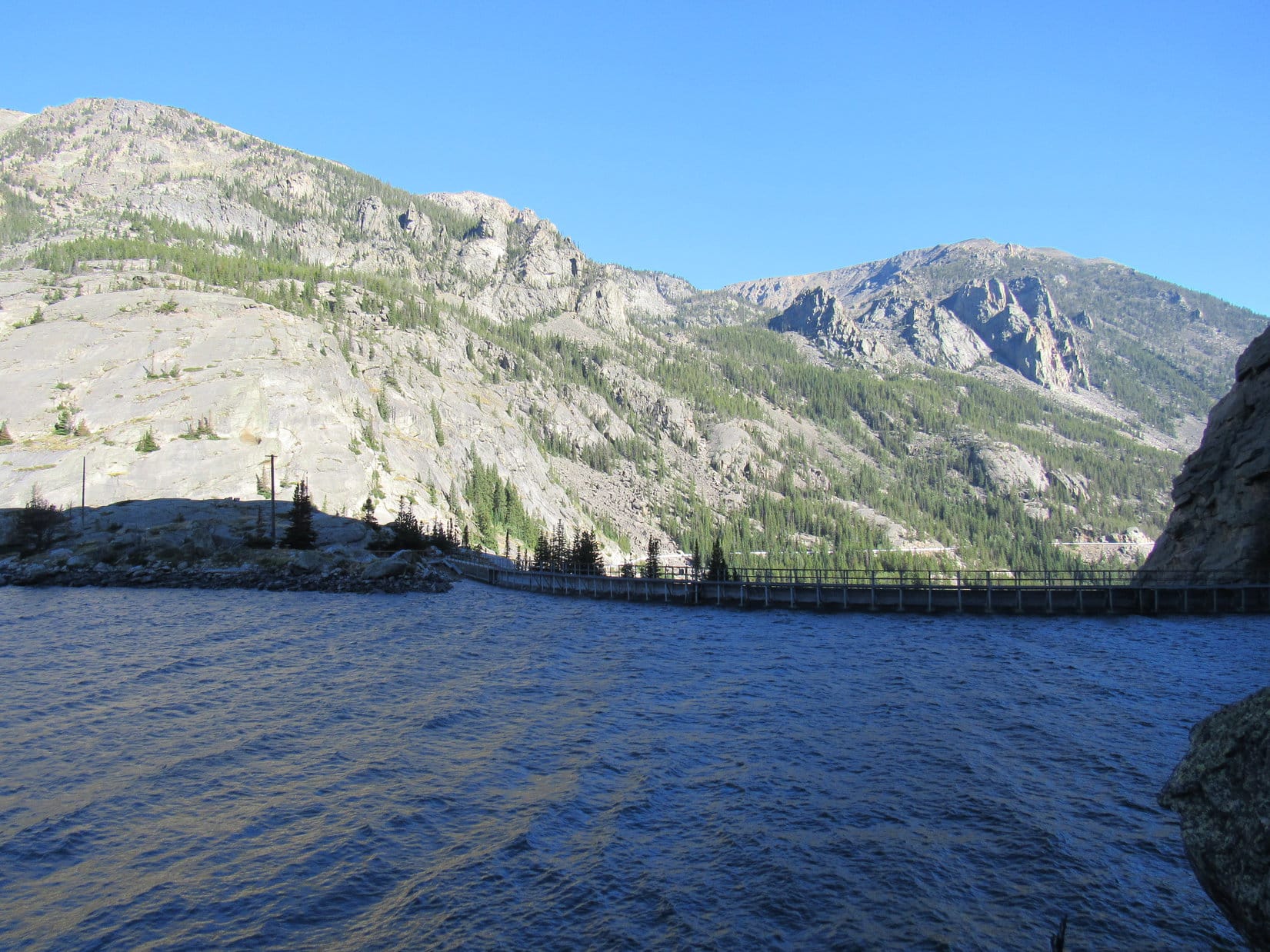
After getting past the initial rocky part of the shoreline, Lupe left the trail to venture out onto the pebbly beach. The American Dingo was the first one here this morning and had the whole place to herself, which was pretty cool. From here she could look back and see the trail winding up to the gap she had come through on top of a wall of rock at the E end of the lake.
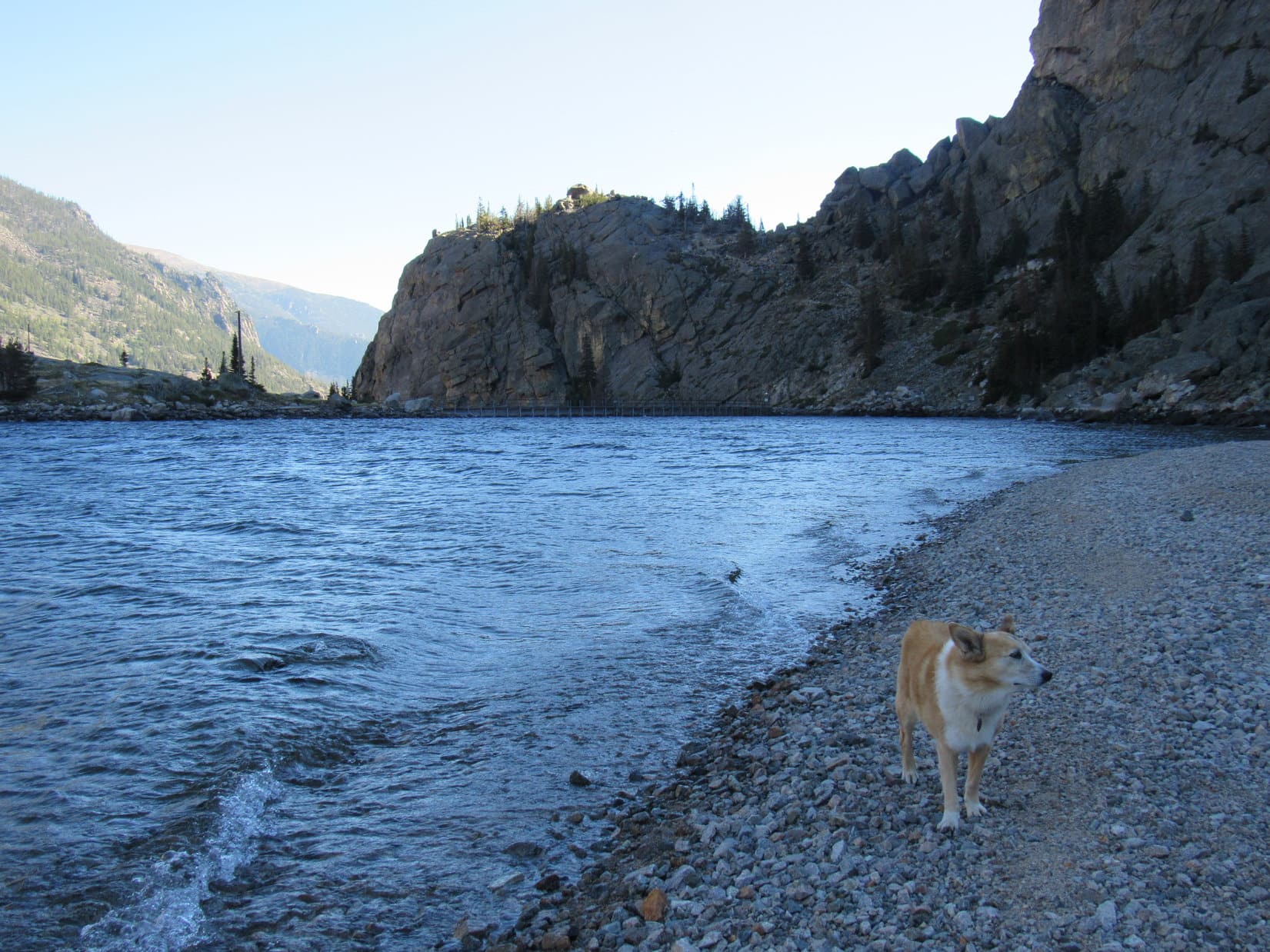
Taking a stroll W along the shore, Lupe explored more of Mystic Lake. She didn’t go too far, just to where the shoreline curved toward the S where more of the main body of the lake was in view. At a weathered log, SPHP sat down for a bit to have some fried chicken while watching the waves roll in, but the Carolina Dog wasn’t hungry yet. Instead, she dashed off into the forest when a squirrel chattered nearby.
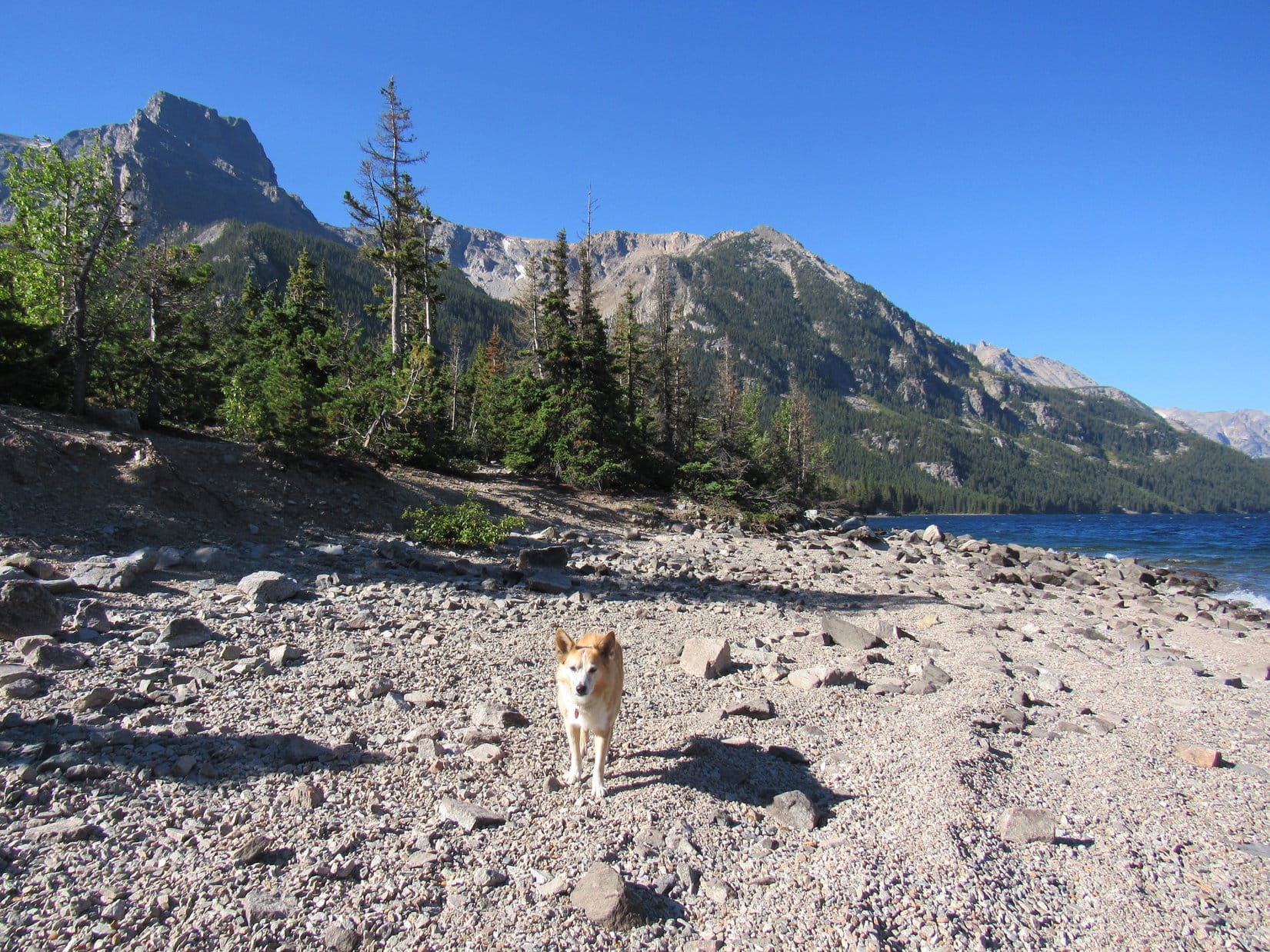
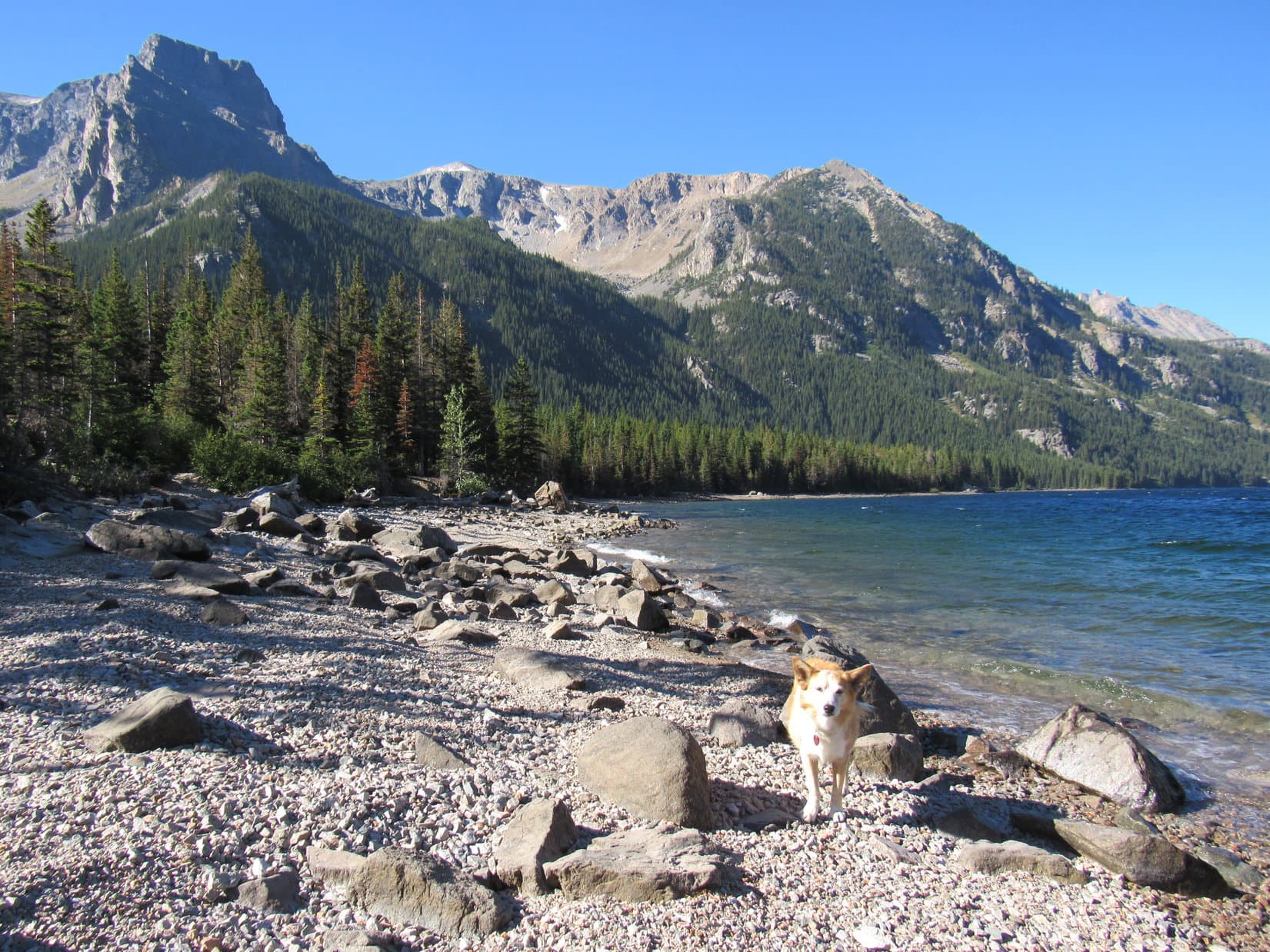
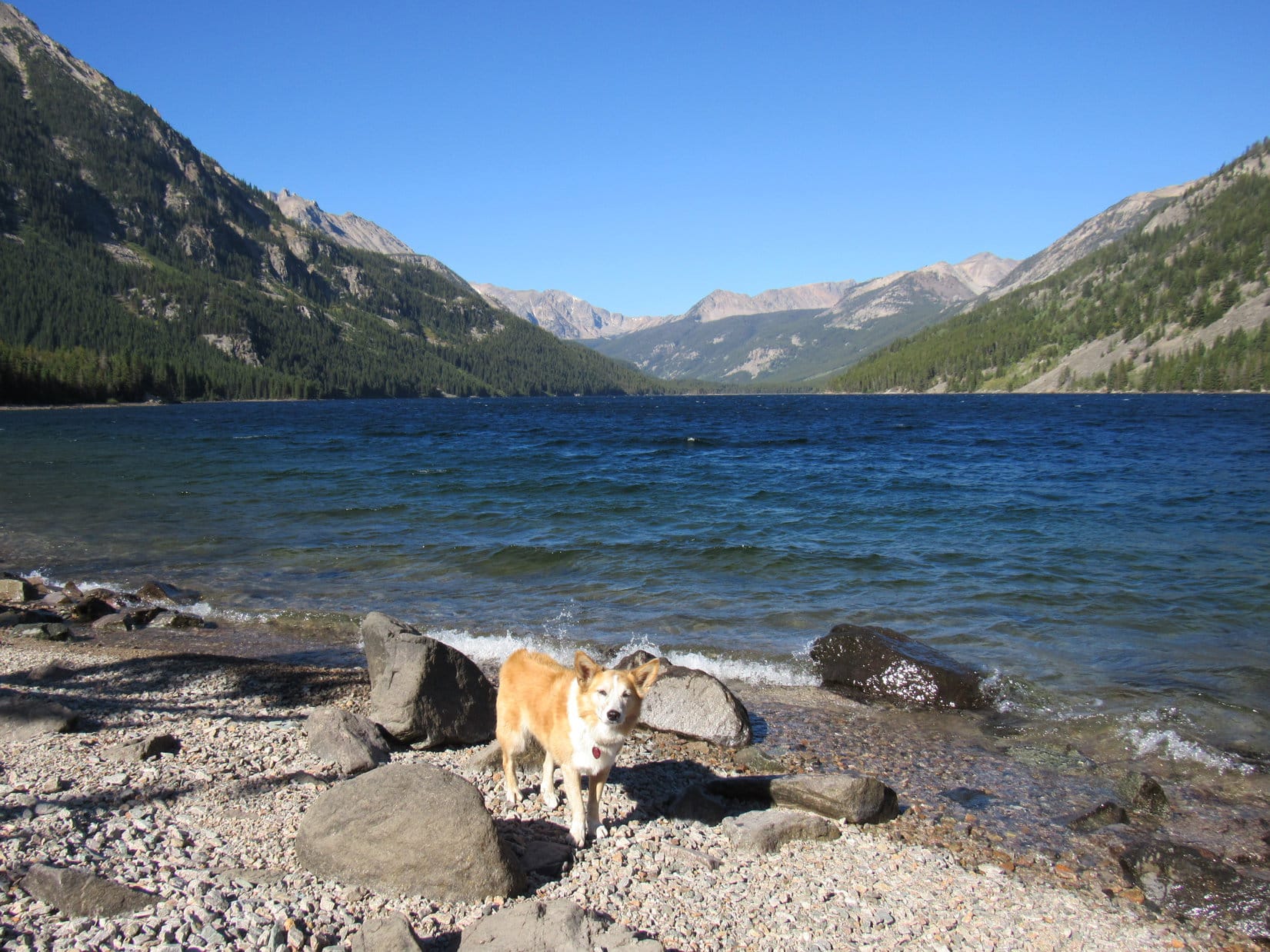

A pleasant half hour was spent along the shore of Mystic Lake, but that was about all SPHP thought Loop could spare. She’d gained a little over 1,000 feet of elevation getting here, but still had another 2,500 feet to go just to get to base camp. Carrying a heavy pack, SPHP was concerned about how difficult that might prove to be.
Somewhat reluctant to desert such a wonderful place so soon, Lupe left fabulous Mystic Lake heading S through the forest looking for the trail, which was some distance from the shore. She quickly ran across it, though, and turning R (SW), continued on her journey.

After 200 or 300 yards, a small clearing appeared ahead. At the same time, Loop reached a junction with a side trail on the L (S). A sign said “Phantom Creek Trail No. 17”. Without going all the way to the clearing, Lupe turned S, following No. 17 as it wound deeper into the forest.

Phantom Creek trail No. 17 wasn’t as wide as the West Rosebud trail had been, but at least it started out in good shape. A huge climb was ahead to get to where Lupe was going, and No. 17 soon began steadily gaining elevation. Switchbacks appeared. Great news! They really helped make life easier on the increasingly steep slope Loop was climbing.

15 minutes after setting out on Phantom Creek trail No. 17, Lupe reached the only significant water she would come to. A small rushing stream crossed the trail twice in rapid succession, and was never seen again. After that, any water encountered was a mere trickle, scarcely enough for Loop to get a drink.

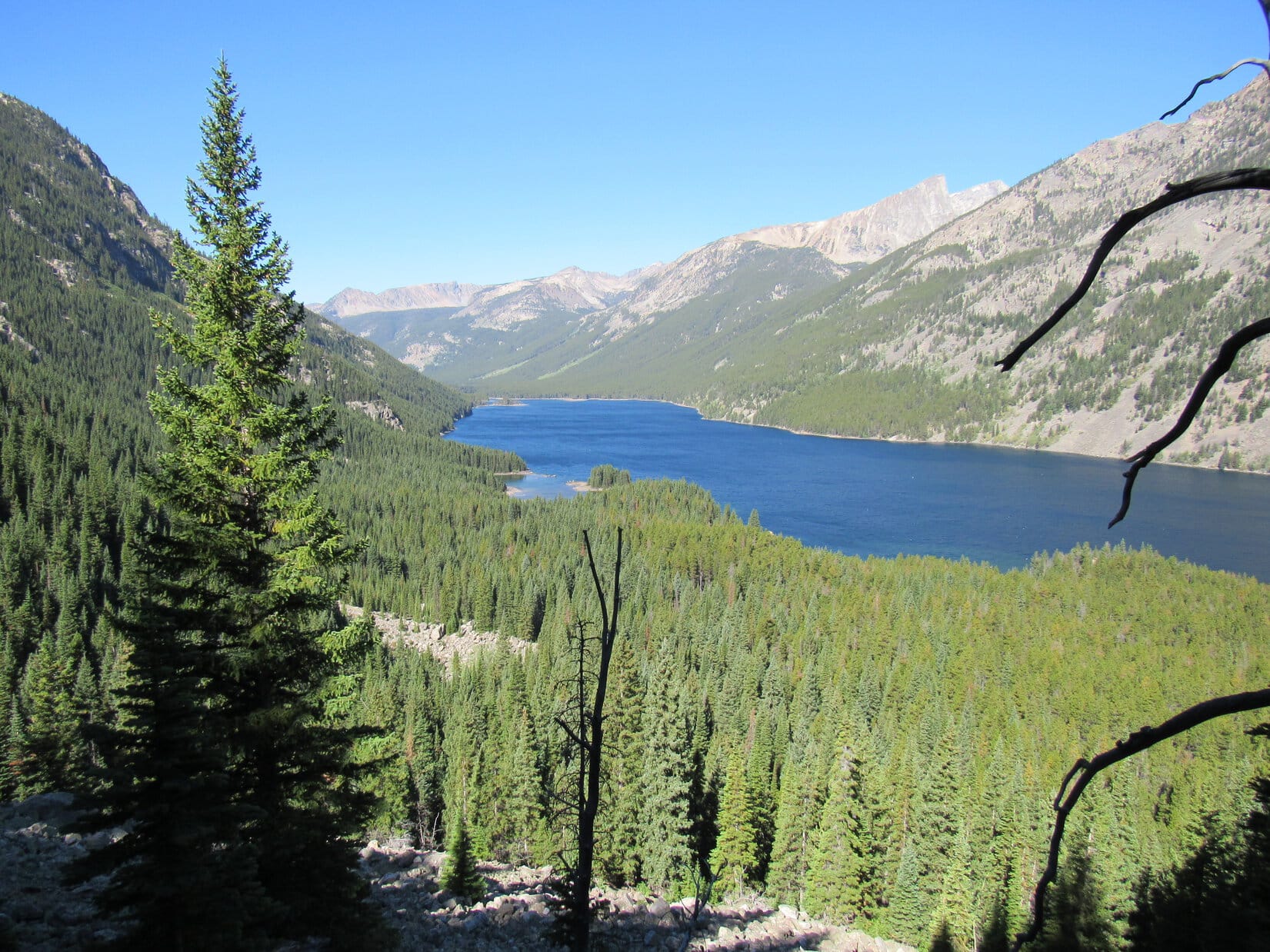
Lupe gained several hundred feet of elevation before getting her first view of Mystic Lake from Trail No. 17 at a small break in the forest. She could see all the way to the W end of the lake from here.
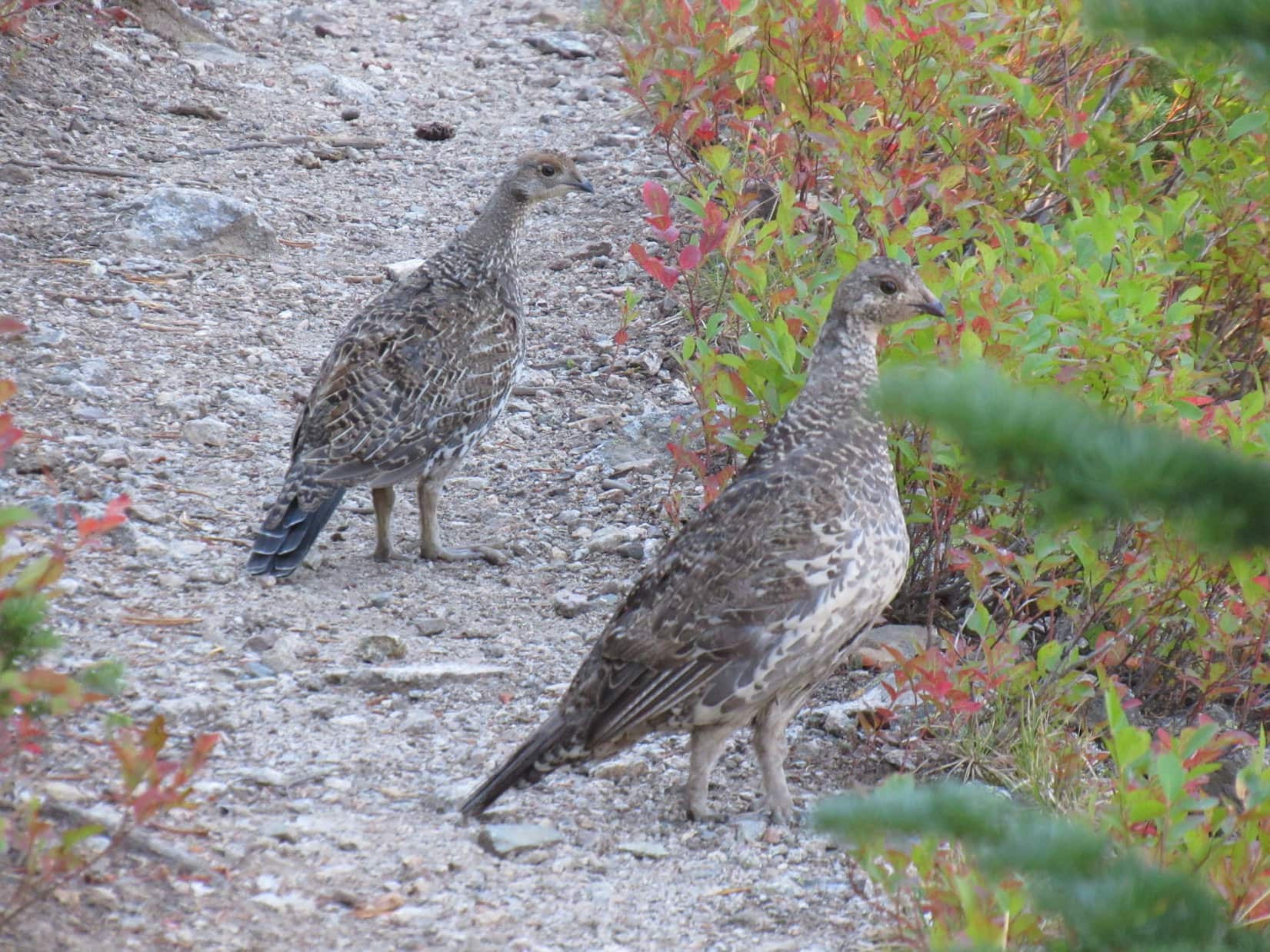
5 minutes later, a couple of partridges, or ptarmigans (?), were on the trail. They hung around just long enough for a photo before flying off.
The switchbacks went on and on. Most were moderately long. Although the trail was never steep, the heavy pack forced SPHP to keep pausing to gasp for breath. Views kept improving. Absolutely spectacular country!
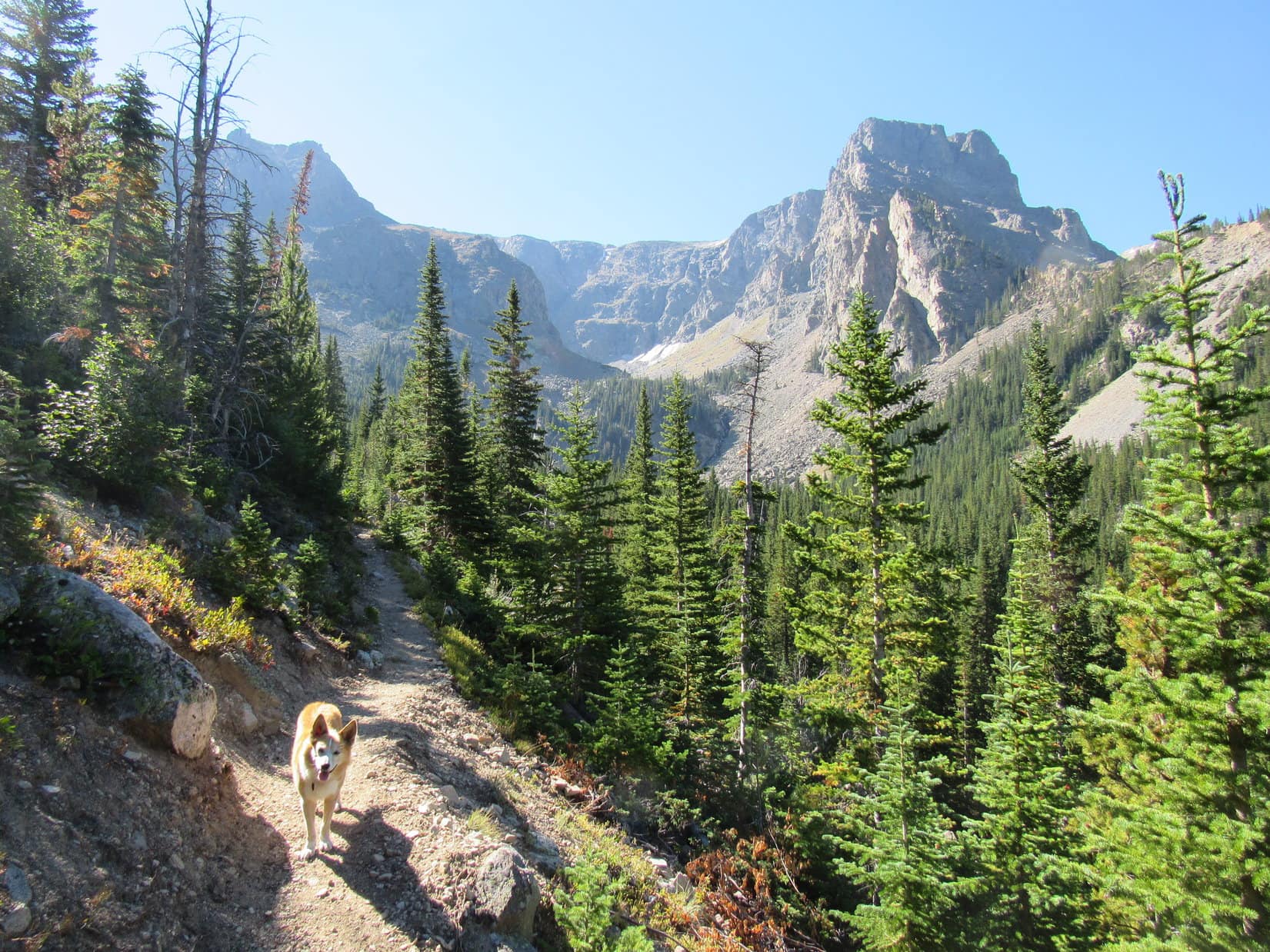
Lupe gained many hundreds of feet of elevation on the same enormous slope. After what seemed like a long trek, the switchbacks finally started getting shorter. Higher up the slope, it kept looking like Loop was about to come to a top, but she never did. Instead, after going around a bend, the trail suddenly straightened and headed E.
By now the forest had thinned considerably. Ahead was an encouraging sign. A bare hilltop! Apparently there actually was a limit to how much higher Looper was going to have to go.

Trail No. 17 crossed a steep drainage, then turned N. More switchbacks! Lupe kept going, zig-zagging higher. The trail finally went clear around to the N side of the mountain before starting to turn E again. By now, the views of Mystic Lake more than 2,000 feet lower were amazing! Part of Island Lake was visible beyond the W end. N of both lakes stood Mount Hague (12,323 ft.), and beyond it Twin Peaks (11,793 ft.).
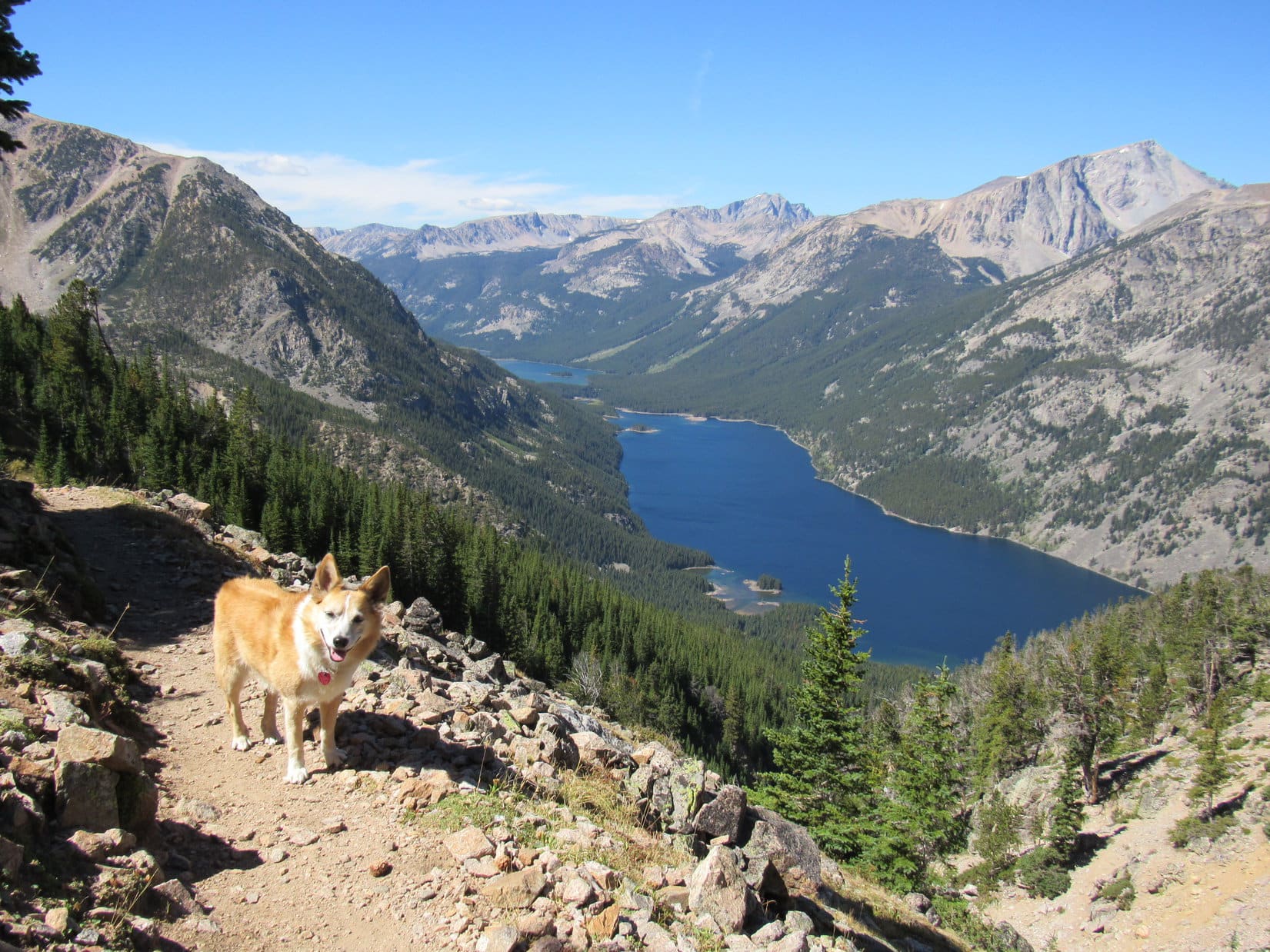
As the trail continued curving E, Lupe came to sort of a little pass. This area was all stunted pine forest, except for a small hill just N of the trail. The W end of this hill was all gravelly. Not much of a climb to get up there. Since this hill might be a last chance to look back at Mystic Lake, Loop ventured up.
Only the W half of Mystic Lake was in sight, but Loopster could see even more of Island Lake than she had been able to before. The amazing, and somewhat horrifying view, though, was of the massive ridge to the S, the same ridge Lupe was trying to get up onto. Oh, my gosh! The Carolina Dog still had a long way to go!
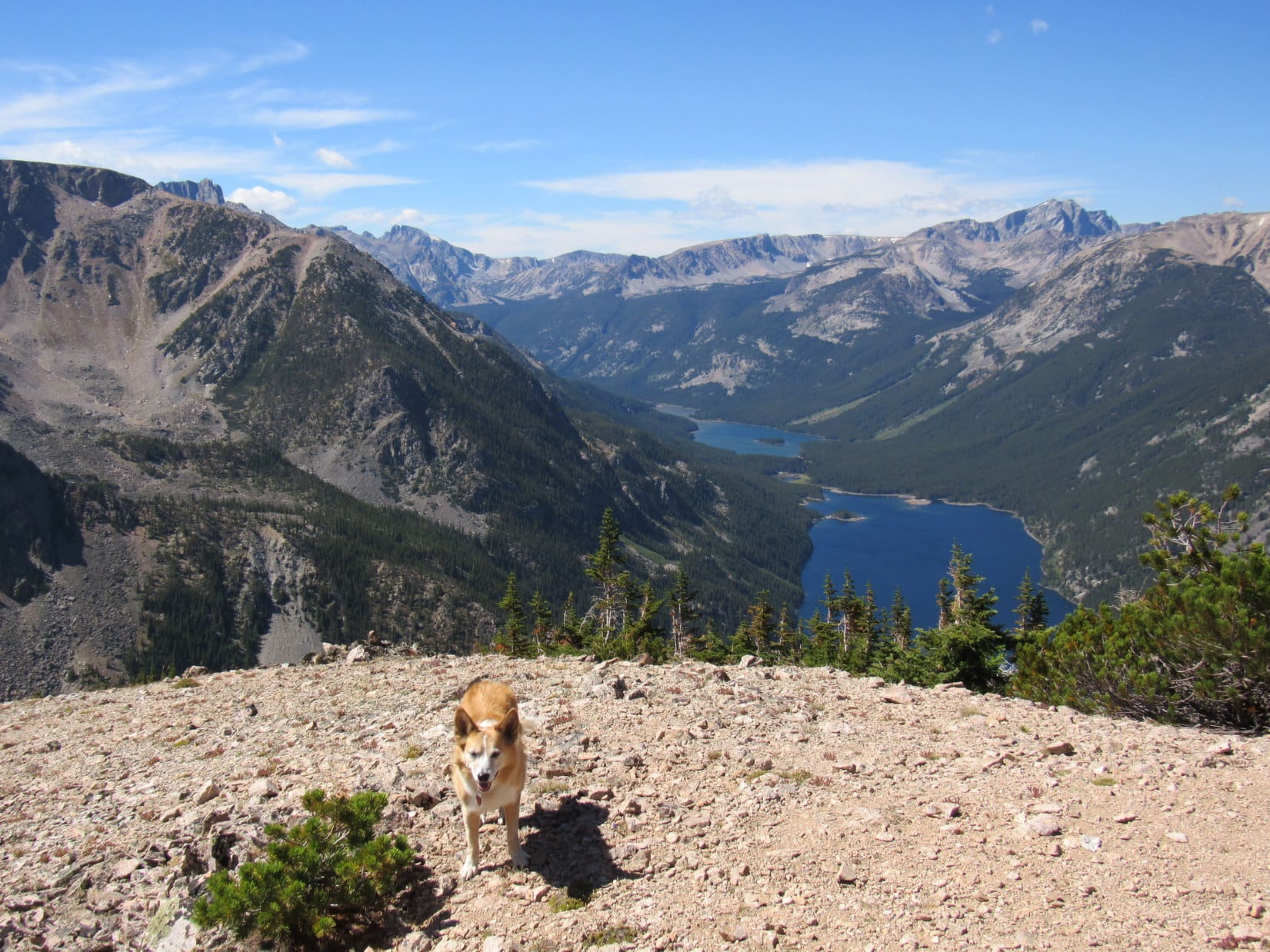
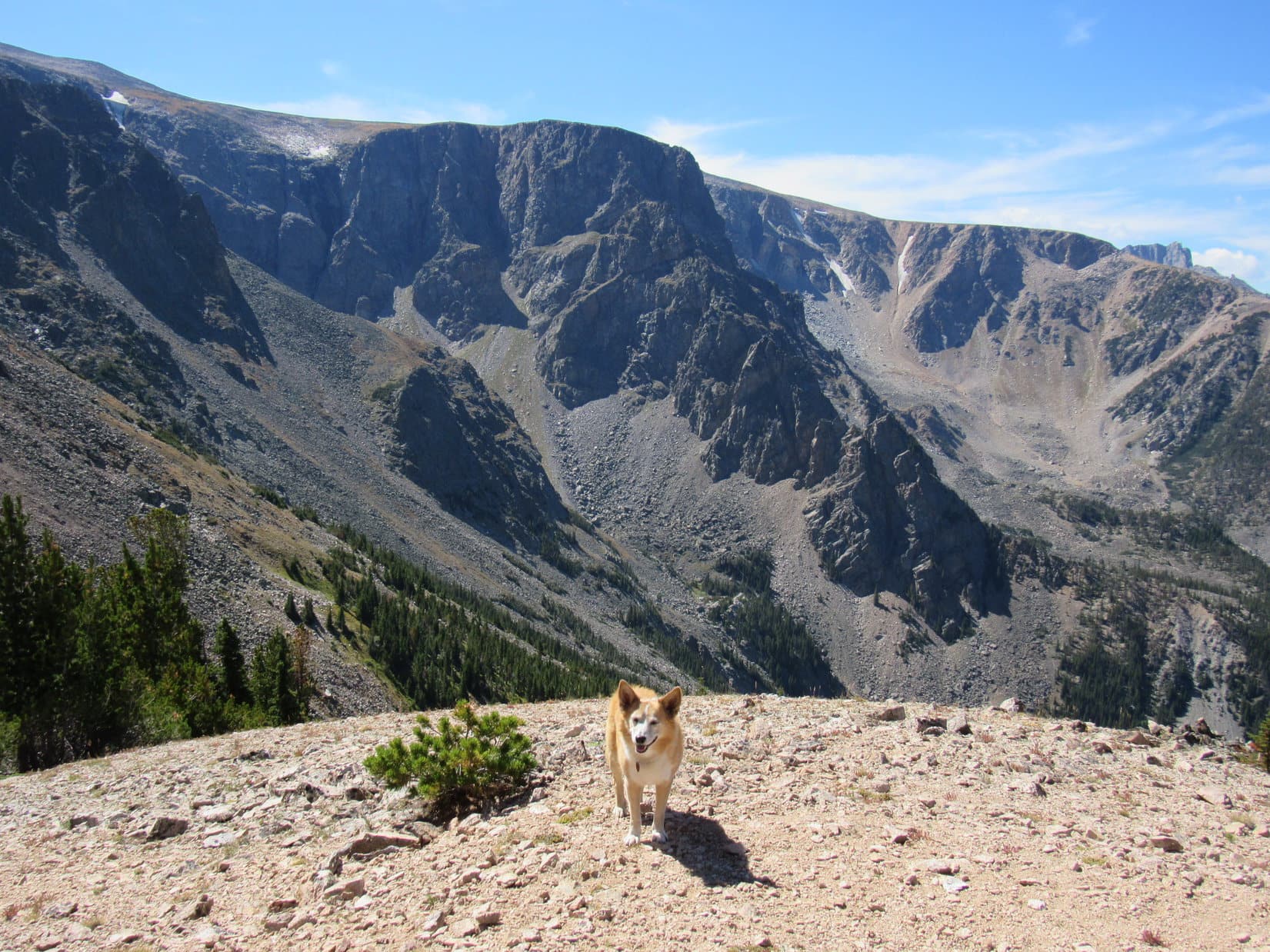
E of the gravelly hill, the forest gave out. Turned out that the gravelly hill had not actually been the last spot to get a good look at Mystic Lake. In fact, the primo viewpoint was an even higher grassy area way up here near the edge of a cliff. Except for a little piece at the far E end near the dam, Lupe could see almost the entire lake. Across the enormous West Rosebud Creek canyon, the top of Mount Wood (12,660 ft.) was now in sight, too!
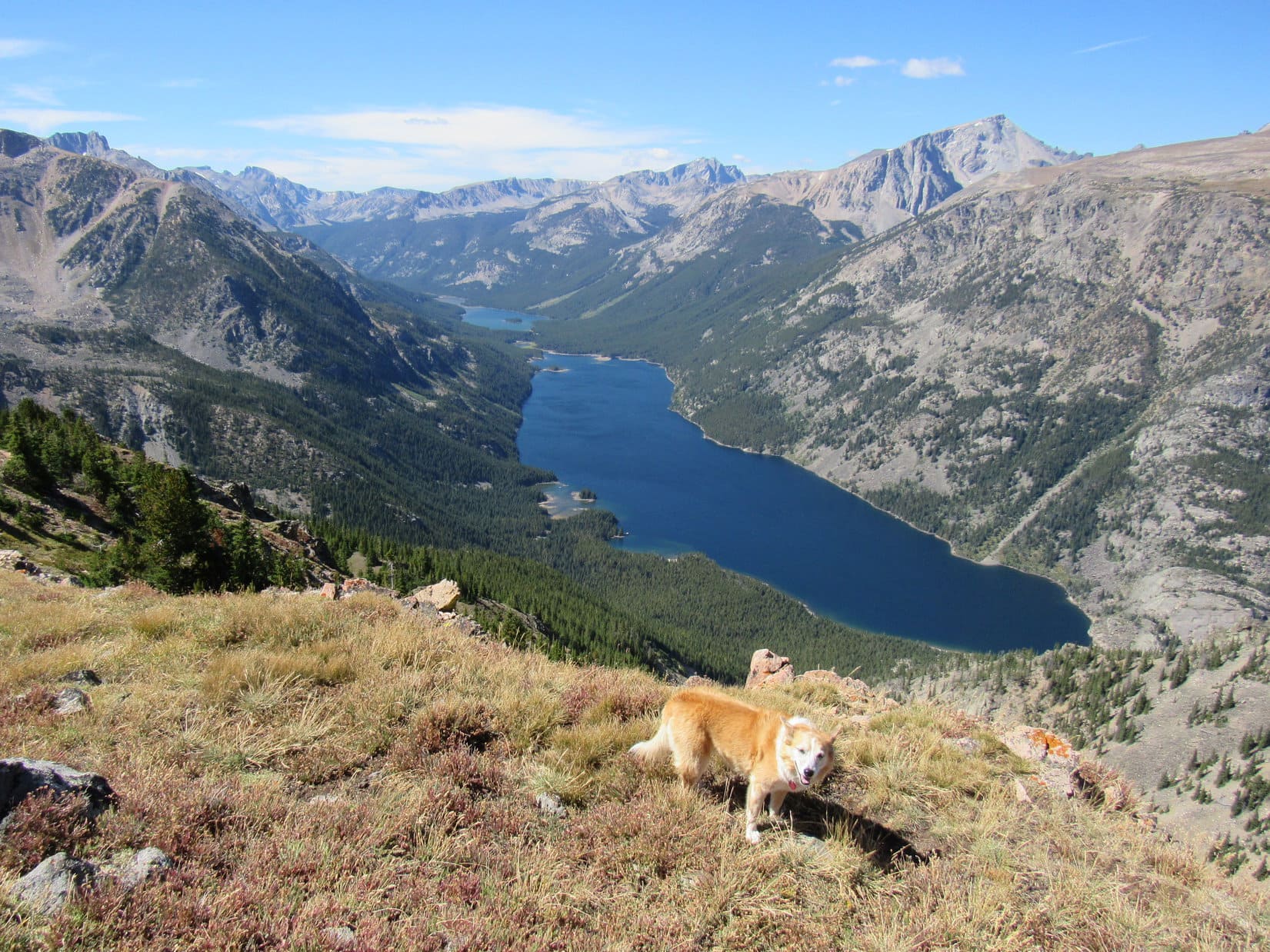
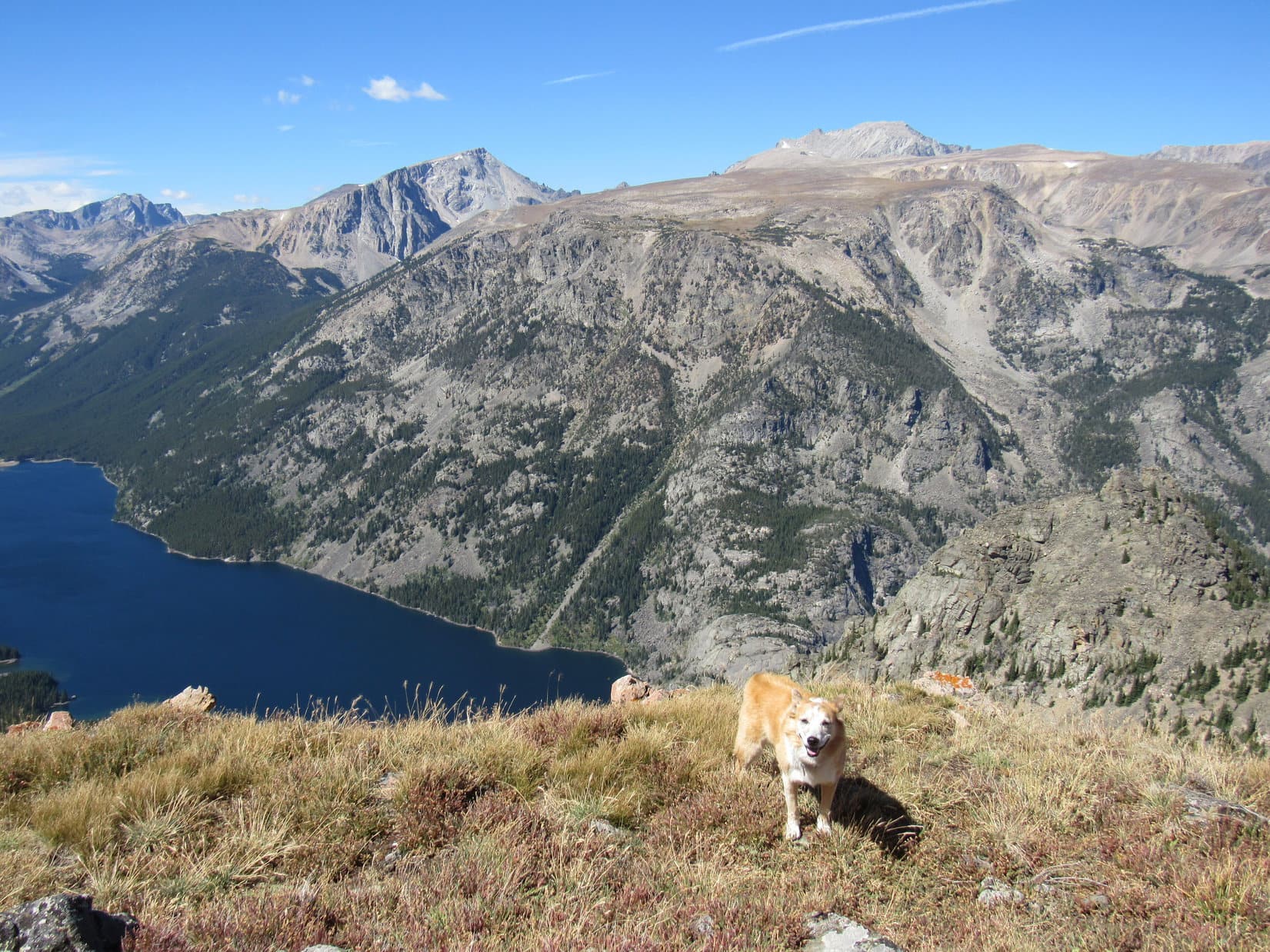
The trail kept climbing, winding its way E. Turned out Lupe didn’t have to gain as much elevation as it had seemed back at the gravelly hill. She was heading for a significantly lower part of that same massive ridge, Pass 10140, an enormous saddle that Phantom Creek trail No. 17 went over on its way to another giant canyon where Phantom Creek was.

Shortly after rounding a corner, an unmarked trail junction appeared. A side trail headed SW up a ravine here, no doubt a shortcut to Montana’s state high point, unseen Granite Peak (12,799 ft.), which was still miles away and a technical climb.
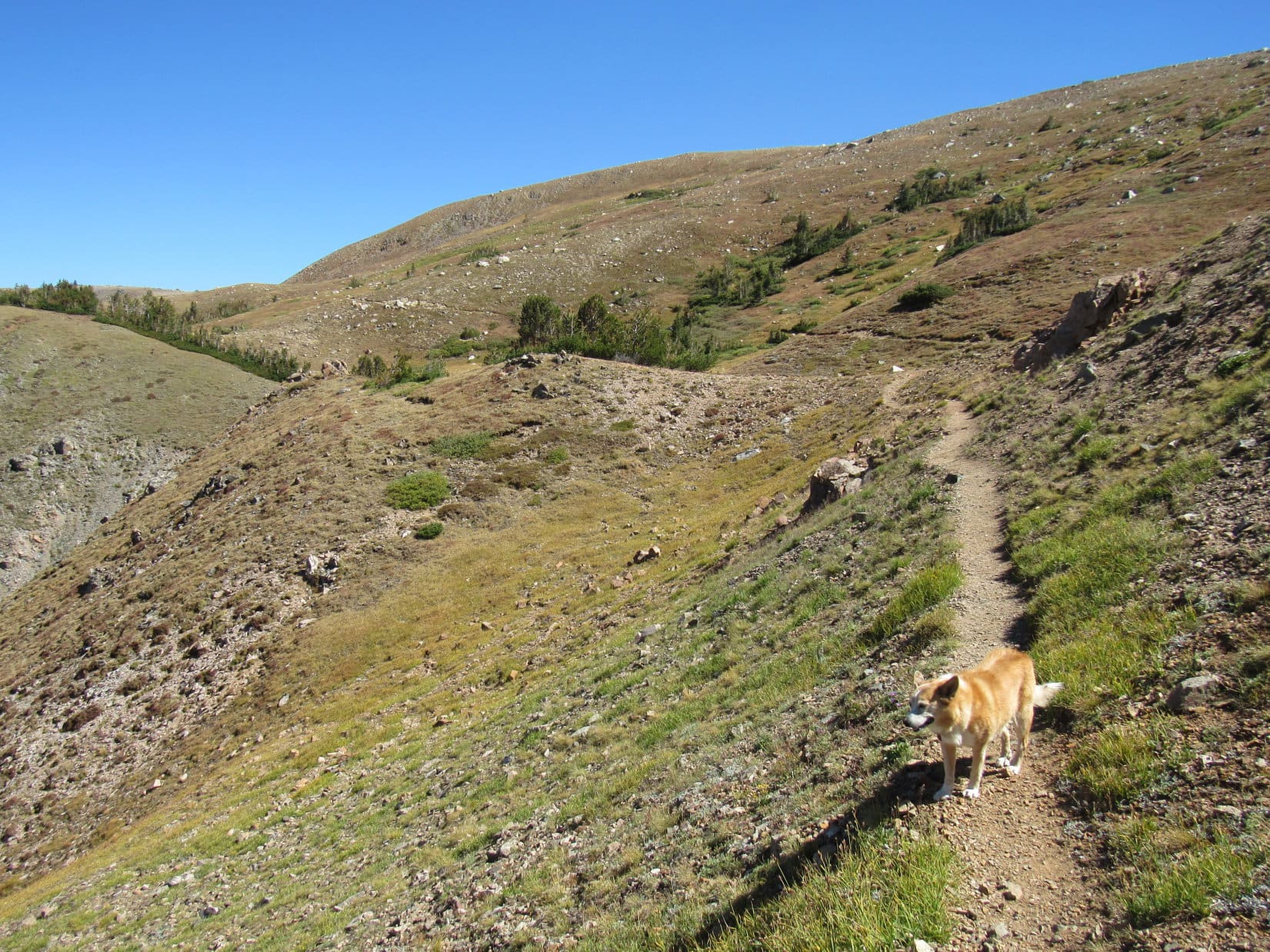
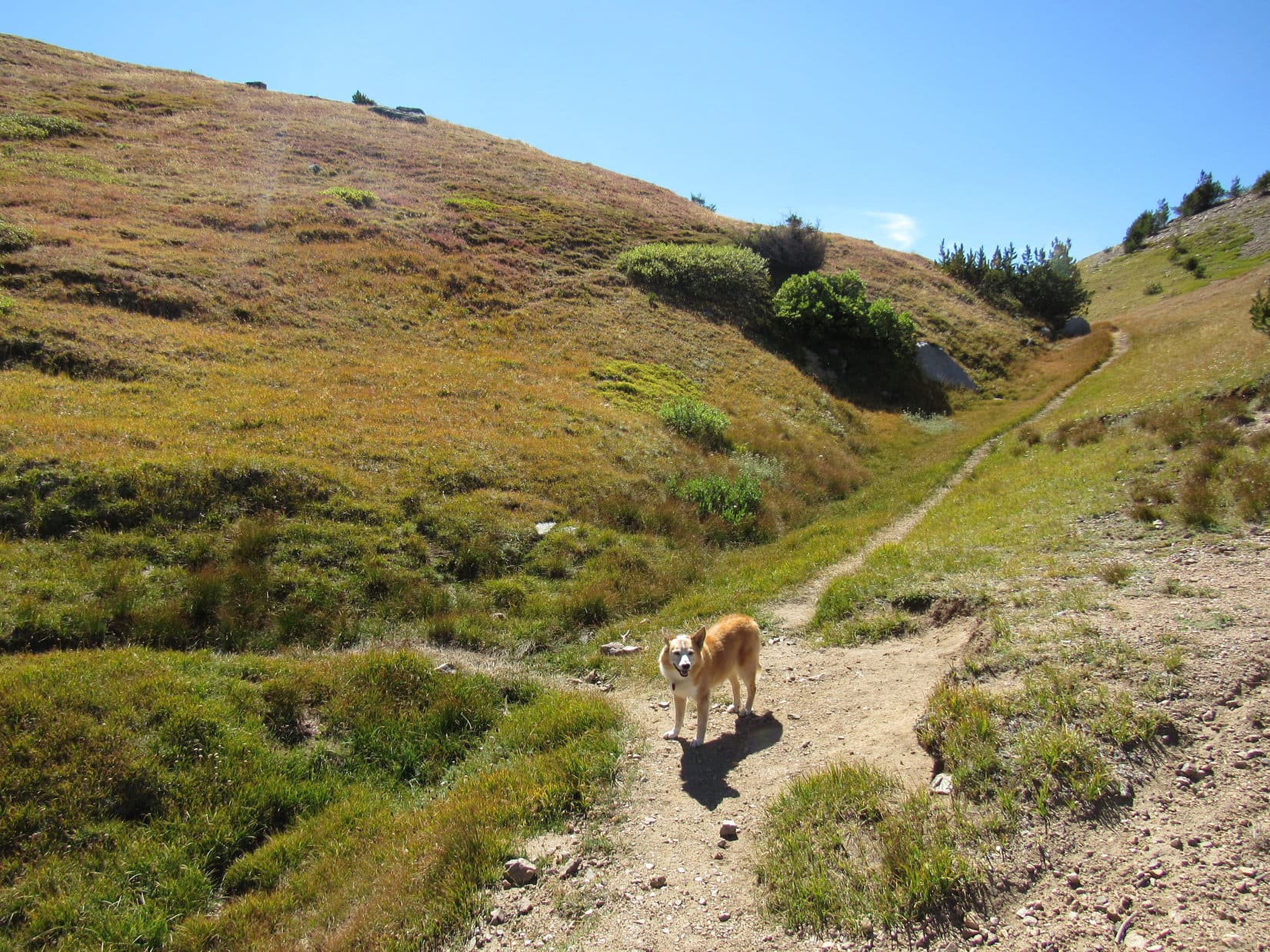
Skipping the shortcut, Lupe continued E on Phantom Creek trail No. 17. The rate of climb was diminishing. Only 0.5 mile now to Pass 10140!
9-3-20, 2:03 PM, Pass 10140 – Suddenly Lupe was there, crossing a vast, sparsely vegetated plain. Two cowboys riding horses were coming this way. Lupe let them go by before heading over to a cairn halfway across the pass. Not the absolute high point, but close enough.
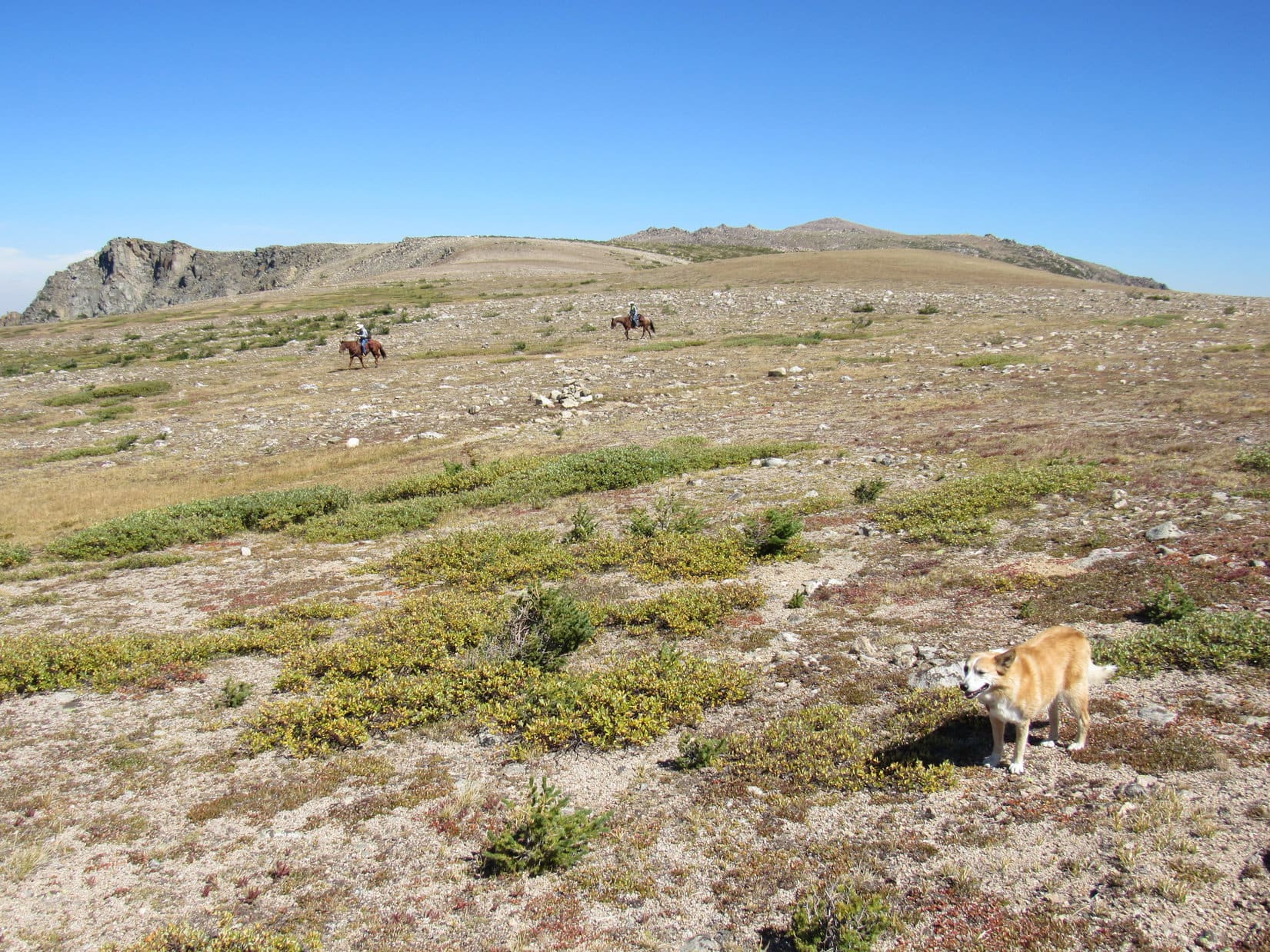
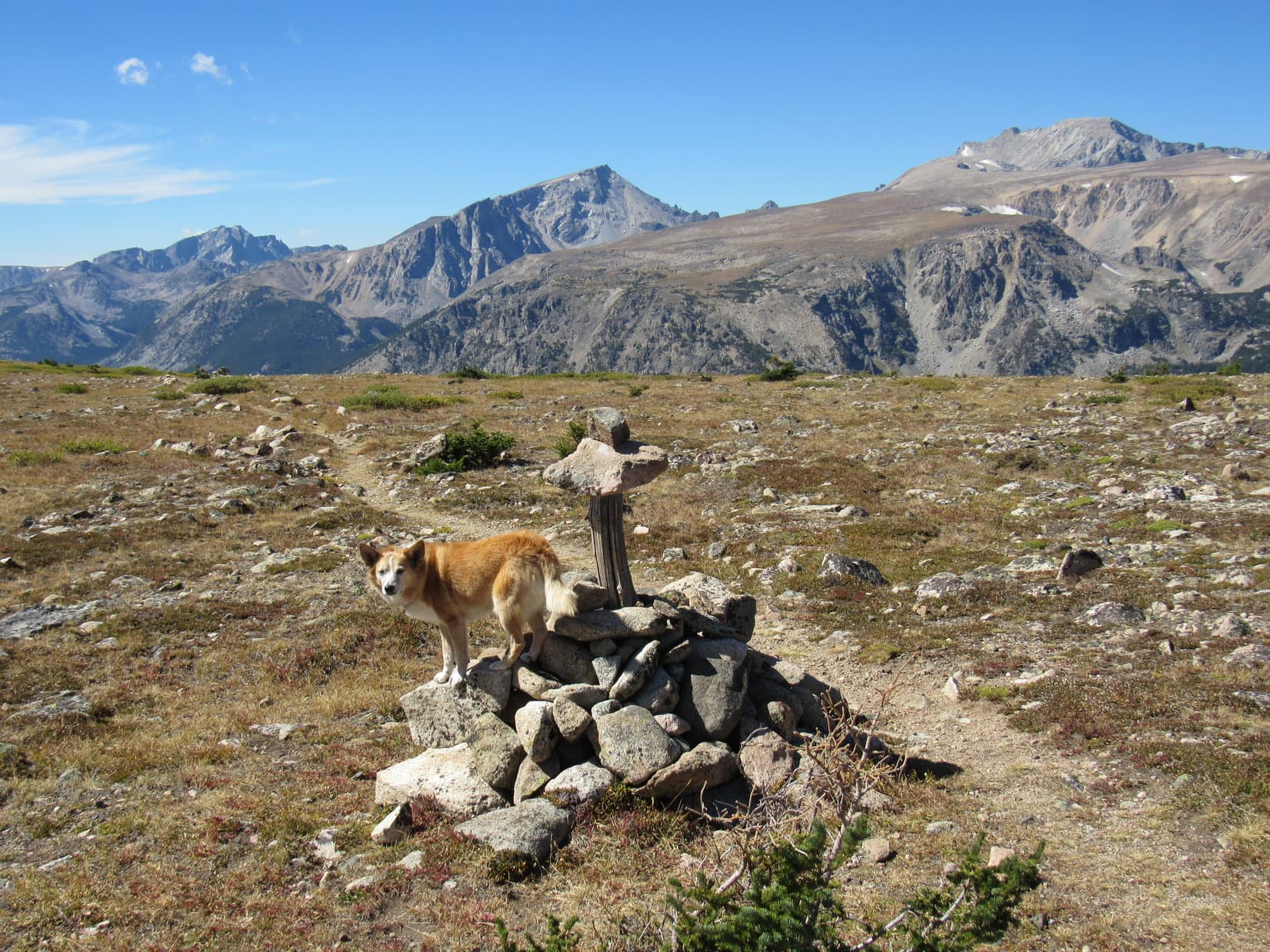
Ho, ho! Loopster, we’re here! Can’t believe it! Been dreading that climb with this dang heavy pack, yet here we are. And so early, too!
We’re here? You mean this is it? We aren’t staying here, are we, SPHP?
Yes, we are! This pass is gonna be base camp. Isn’t it fabulous?
Glad you’re excited, SPHP, but I’m detecting a serious squirrel deficiency.
Squirrels, schmirrels! Sniff around some. You might find something even better than squirrels.
Better than squirrels! Like what?
Oh, I don’t know. Something more exotic, like marmots or mountain goats or grizzly bears. Anyway, I’m pooped. C’mon, let’s go find a spot to pitch your tiny house.
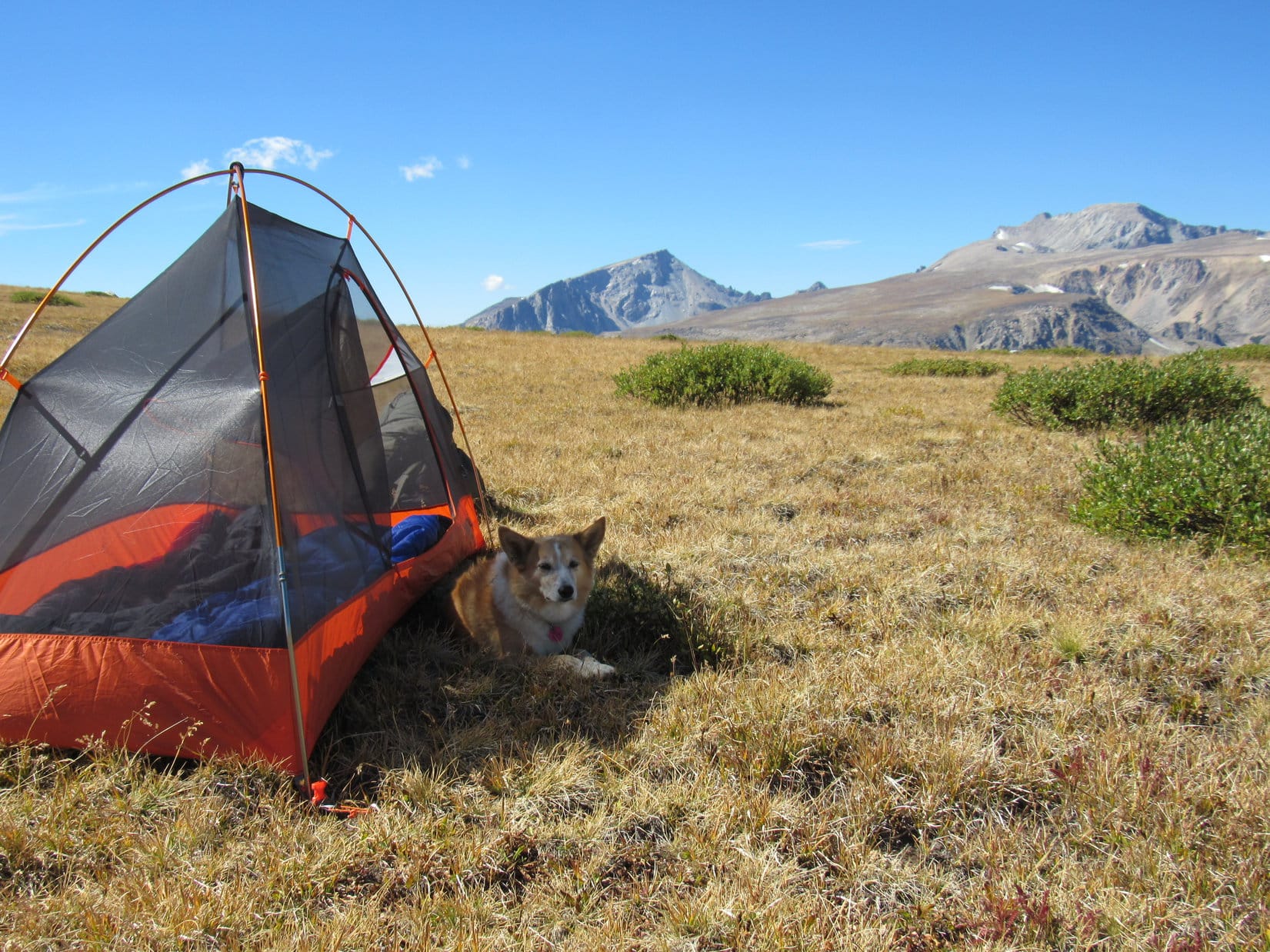
Several hundred feet SW of the trail was a gentle, grassy slope. Not as rocky as the rest of Pass 10140. Looper was soon resting comfortably next to her tiny house with a view of Mount Wood and Mount Hague in the distance.
9-3-20, 4:13 PM, Pass 10140 – Lunch, and 2 hours of rest and relaxation had done wonders. The American Dingo was starting to get restless. Even SPHP felt revived. Nothing planned, but hours of daylight left.
So what now, SPHP? Do you think you’re up to it? Looks easy.
Heh. Yeah, it does. Tempting, but we probably shouldn’t, Looper. Might regret it tomorrow. Another big day coming.
Oh, c’mon! It’s not that far away! Why don’t we give it a go? Can always turn back, if it isn’t panning out. We’re here with time on our paws. If not now, when? I’ll give you a hint. Never! That’s when.
True enough. Well, let me check the topo map.
To the ENE, on the far side of Phantom Creek trail No. 17, was another big chunk of the massive ridge that Pass 10140 was part of. A big conical high point was visible over there, and the terrain leading to it did look pretty easy from here.
The topo map revealed that the cone was likely the site of the “Mystic” survey benchmark, and the top of Saddleback Mountain (10,876 ft.). Loop might also be able to tag Prairieview Mountain (10,575 ft.) along the way. Not that much additional elevation gain on the day, and two 10,000 footers for the price of one! Still, round trip, it would be a good 5 miles, at least. Hmm.
Alrighty, then! Guess we did come here to climb mountains, didn’t we? Onward! Puppy, ho!
That’s the spirit, SPHP!
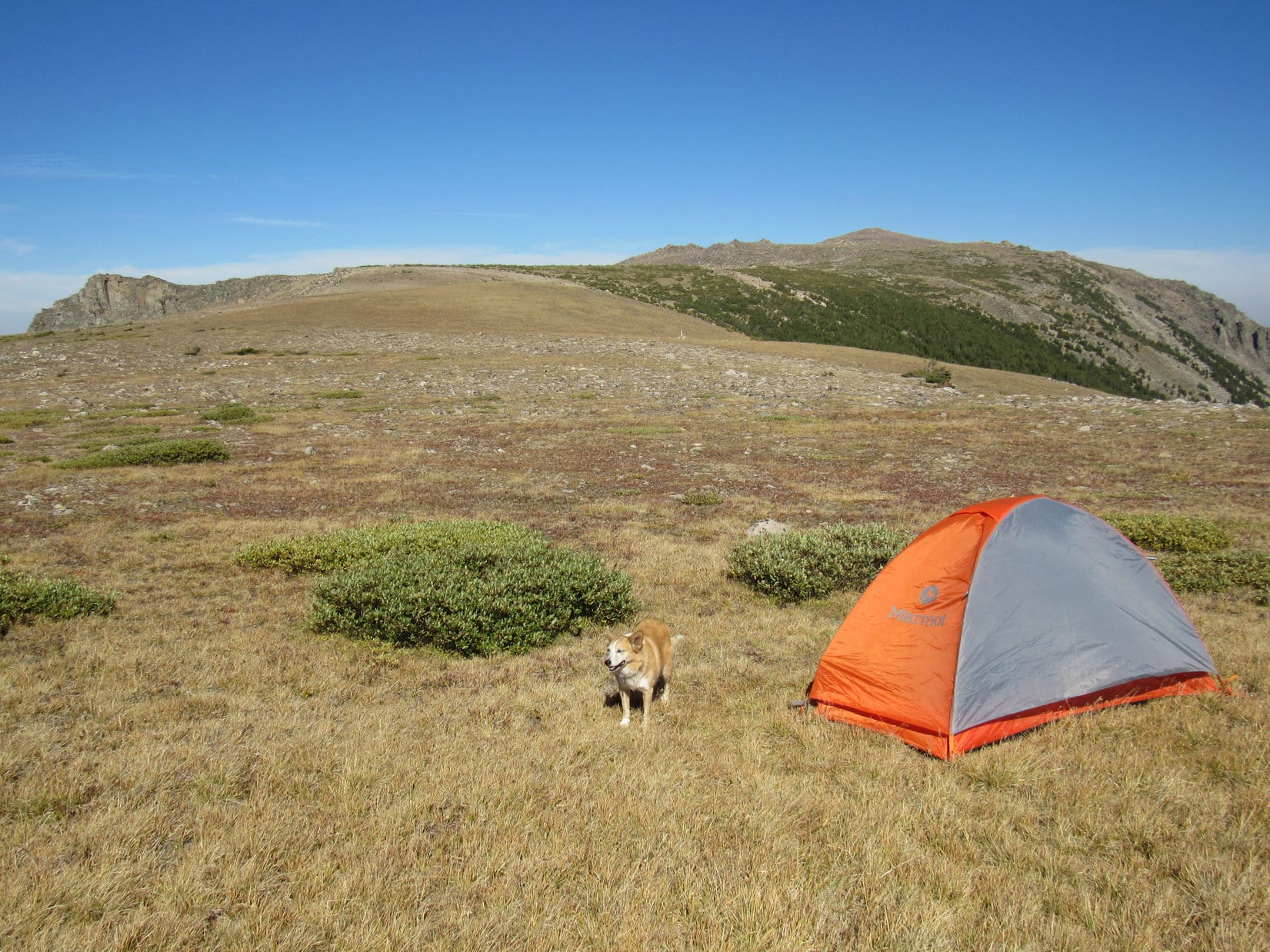
Heading NE, Lupe crossed Phantom Creek trail No. 17, and started up a long, barren slope. Cake! A few rocks, nothing major. Fun trek. Rapid progress. Why had SPHP even hesitated? This was pure brilliance!
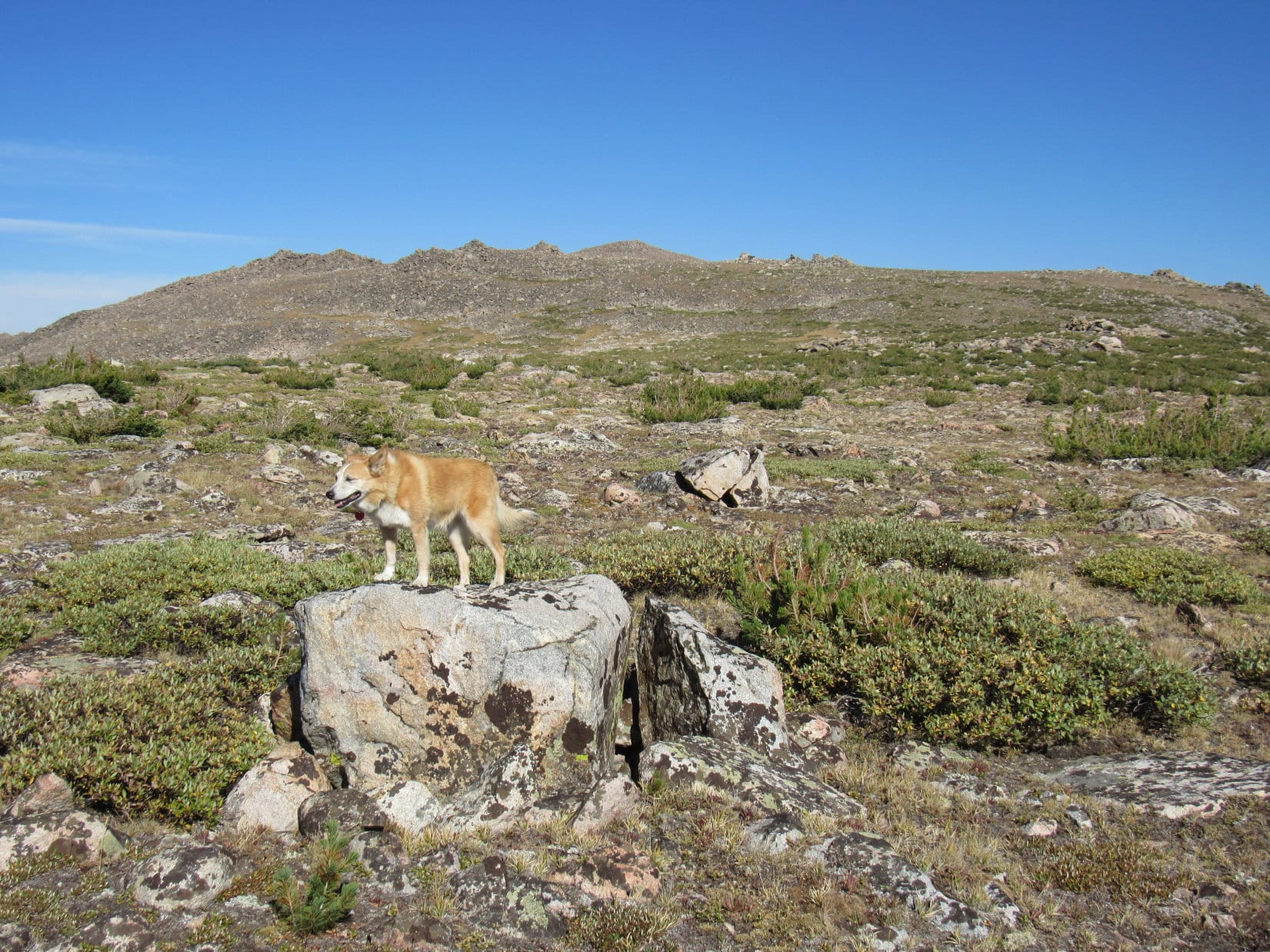
The terrain got rockier. Progress slowed as Loopster scrambled past a minor talus ridge, avoiding the worst of it. Another plain beyond the talus. Scattered bushes and rocks. Still not bad. Prairieview Mountain, an elevated line of rock outcroppings bisecting the enormous ridge, was now just ahead.
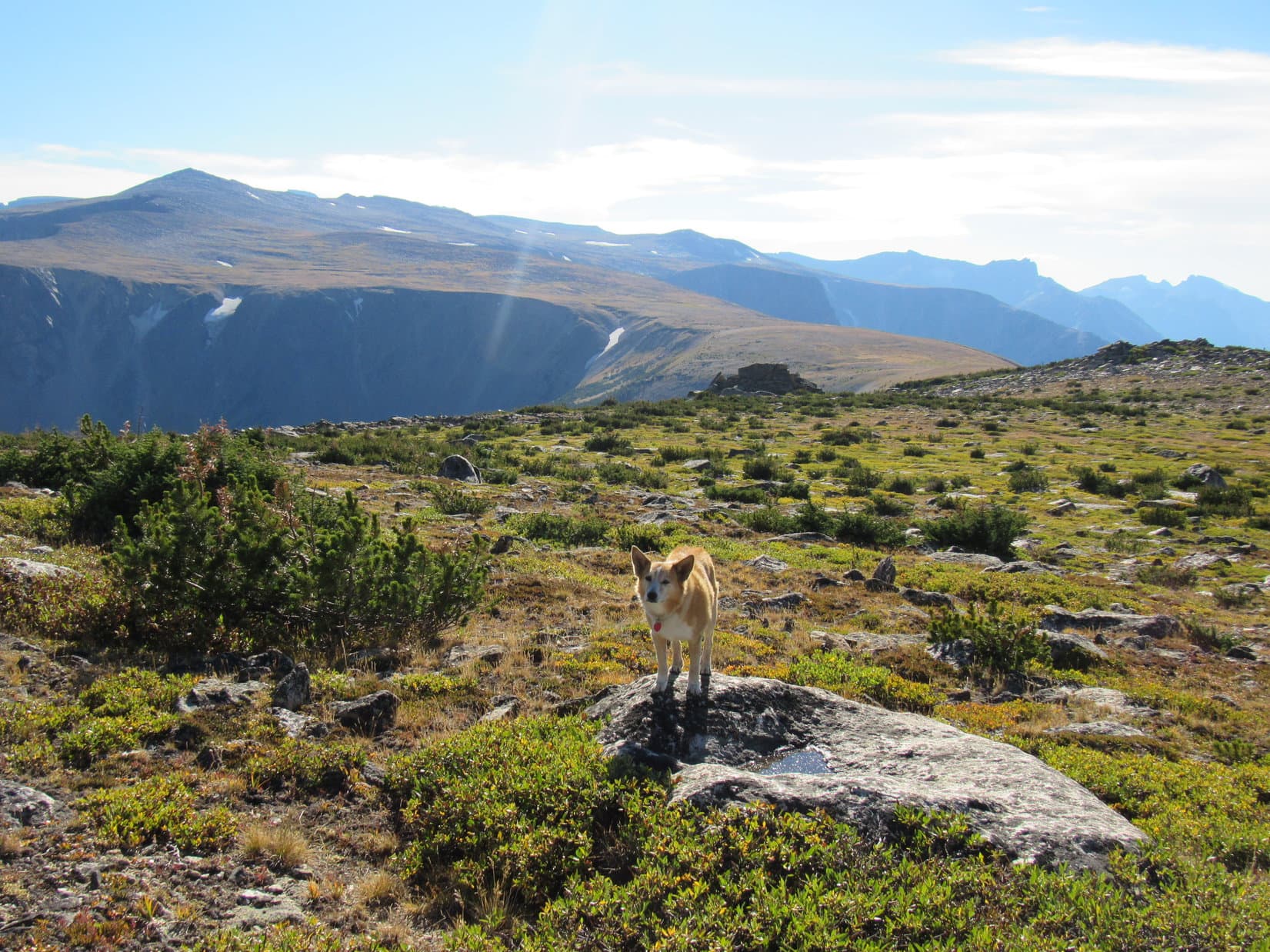
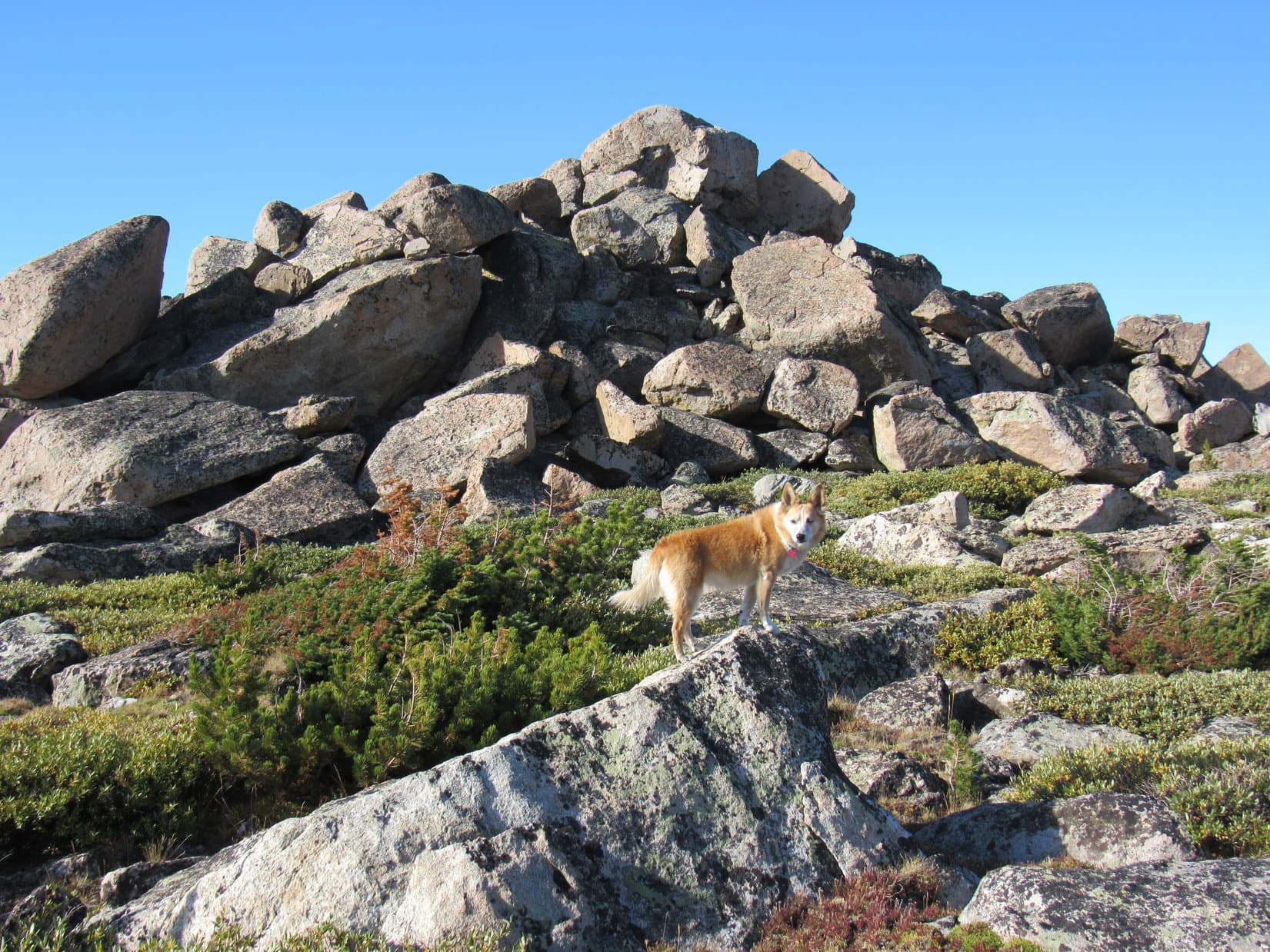
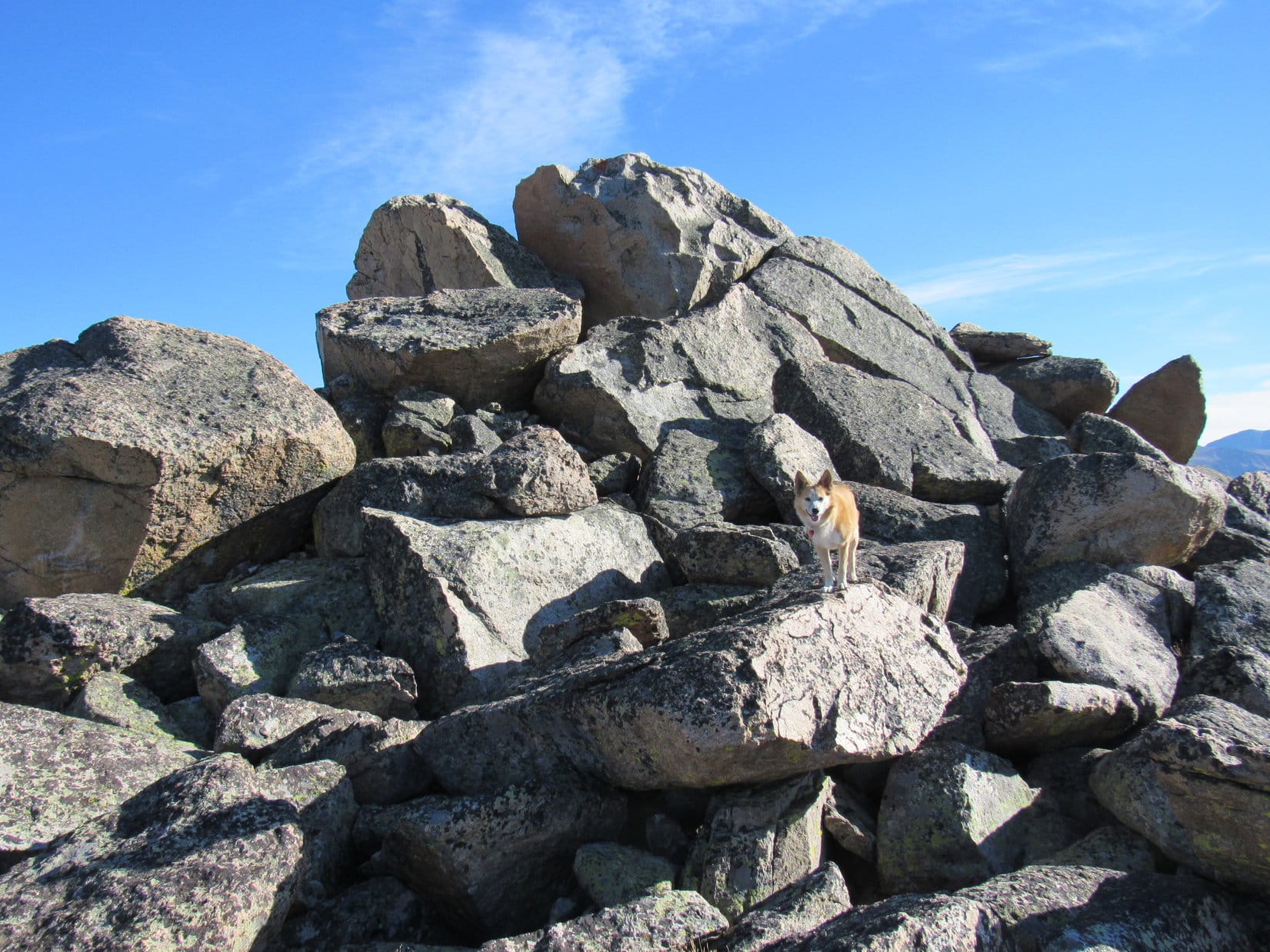
Most of Prairieview Mountain was a gently rounded ridgeline running N/S dotted with scattered bushes and boulders. However, a number of widely separated rock formations 30 to 50 feet high were strung out along the length of this ridge. These rock formations were similar to each other in that they all consisted of big mounds of large talus.
Coming up near the middle of the ridge, or maybe a bit toward the S, it was clear that the summit had to be farther N. Skipping the closest rock formation, Lupe headed for the next one.
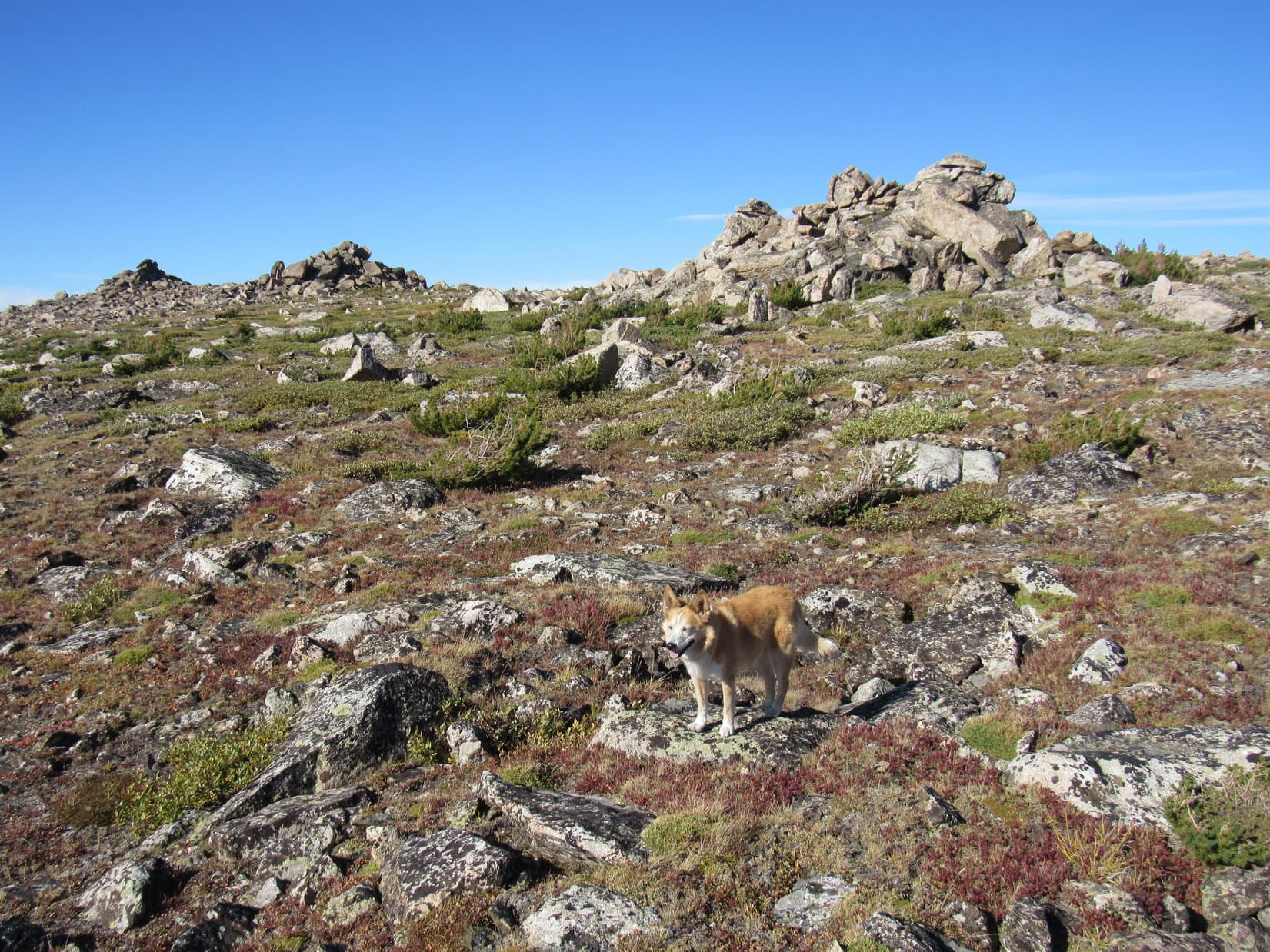
Approaching the next rock formation to the N, the ground became a sea of massive boulders half sunk into the mountain. Between the boulders grew a profusion of bushes that served to hide how deep the holes they occupied were. Sometimes only a few inches, other times several feet. Where possible, boulder hopping was by far the easiest mode of travel.
Climbing from the S, Loopster got near the top of this rock formation, but the stones at the very top were so massive, there was no way the Carolina Dog could get up there. Retreating, she circled around to the W hoping to find a better route. None! The W and N sides were worse.
Hah! Didn’t matter. An even higher rock formation was now in sight a little farther N. Close to the far N end of the whole mountain, the true summit had to be over there.
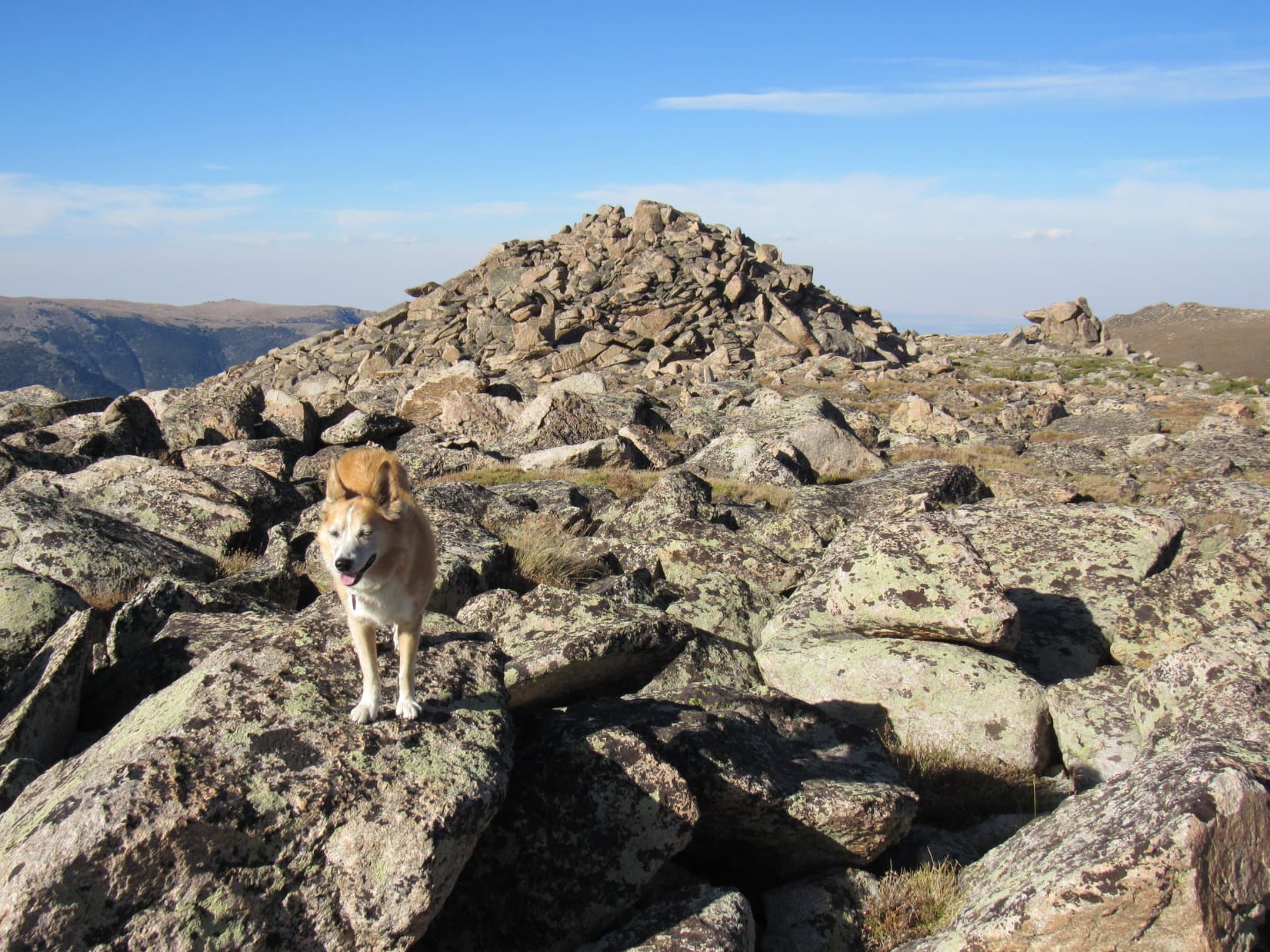
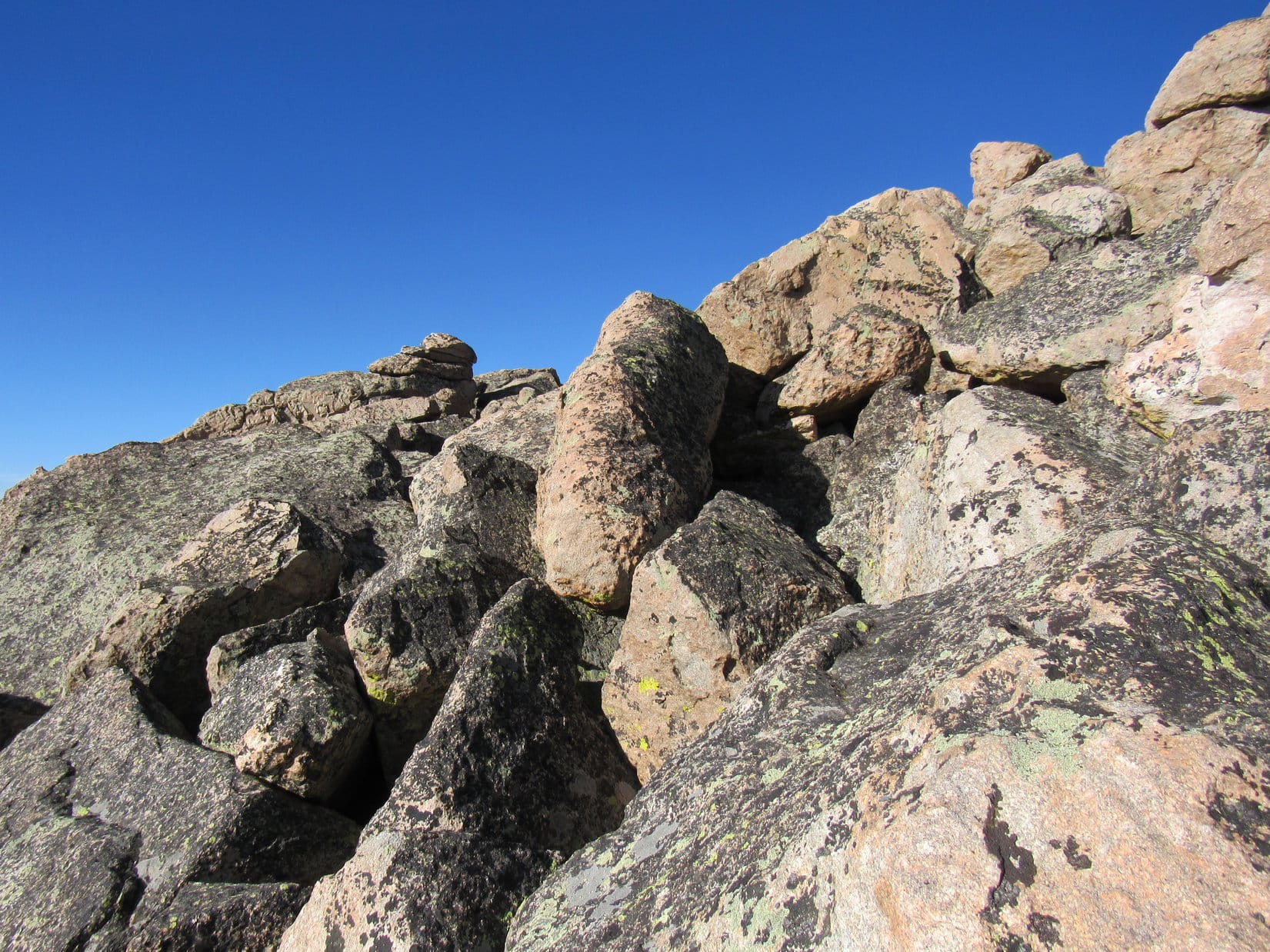
Another boulder hop over to this next jumble of talus, and Lupe once again started up the S side. Too steep! Swinging around to the W, the American Dingo managed to keep gaining elevation, but still couldn’t make it to the top. Every time it seemed like she was getting close, even higher rocks kept appearing a little farther N.
How much farther, SPHP? Can you tell?
Not really. 15 feet, 20, 30? Not at all sure the true summit is even in sight yet, Loop. Can’t be that much higher. At the moment we’re kind of stuck here, though. Practically straight up. We’re going to have to keep working our way around somehow.
Well, how bad do we really want to do this? Isn’t Saddleback Mountain more impressive? Maybe it’s easier than this one?
You might be right! Scrambling around on all this talus is just chewing up a ton of time. We’re gonna break our fool necks, too, if we’re not careful. You got pretty close to the top of Prairieview. Wanna call it, and go on to Saddleback?
Sure! Why waste daylight here, when the glittering prize is over there?
Sort of a shame. Lupe had gotten so close to the top of Prairieview! With enough patience and persistence, she probably could of done it. Oh, well! Life in the mountains. Not always one roaring success after another. A careful descent, and it was on to Saddleback Mountain, still nearly a mile E.
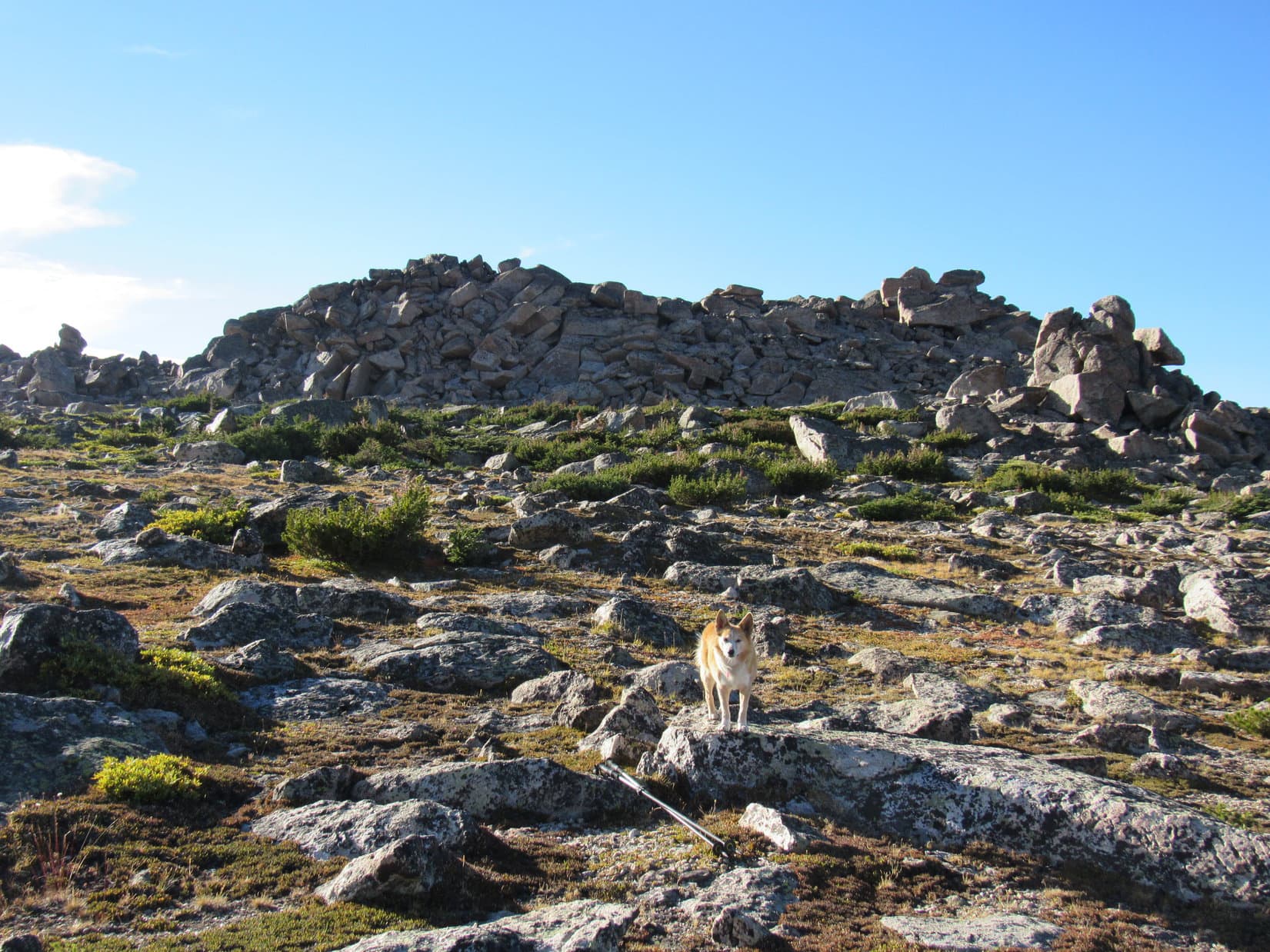
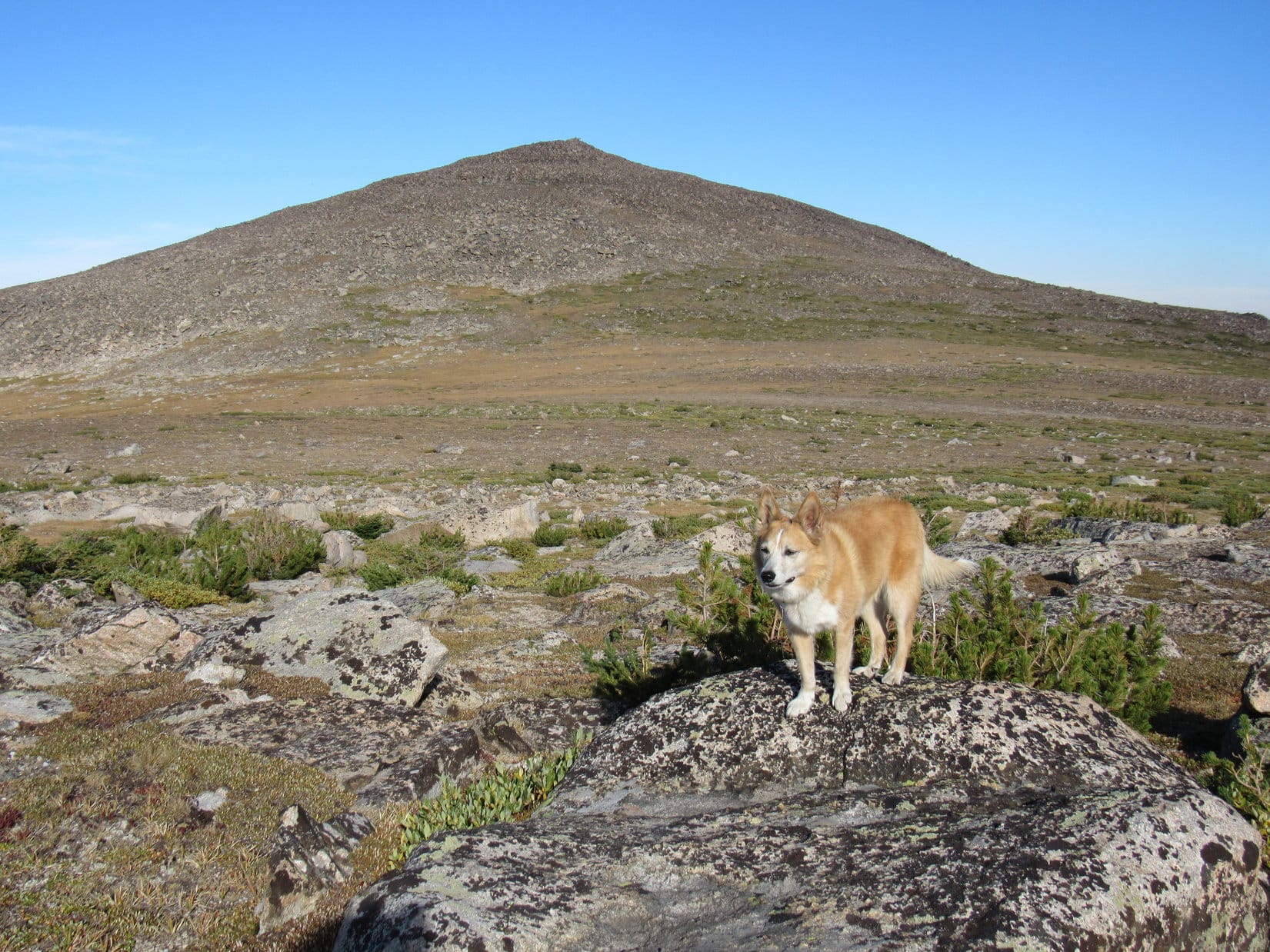
Look back again, SPHP!
Huh? What for, Looper?
At Prairieview Mountain.
Oh, for pity sake!
Good thing we gave up on it!
Eh. You could have done it, Loopster. Just would have taken us forever and a day the way we were going about it.
Looking back at Prairieview Mountain, it was now perfectly clear that the true summit was a big boulder perched way over at the N end of a long talus ridge, the same pile of talus Lupe had started up from the S. She may have reached a point not an awful lot lower than where that highest rock sat before giving up, but she had still been an icky long horizontal scramble from where the true summit actually was.
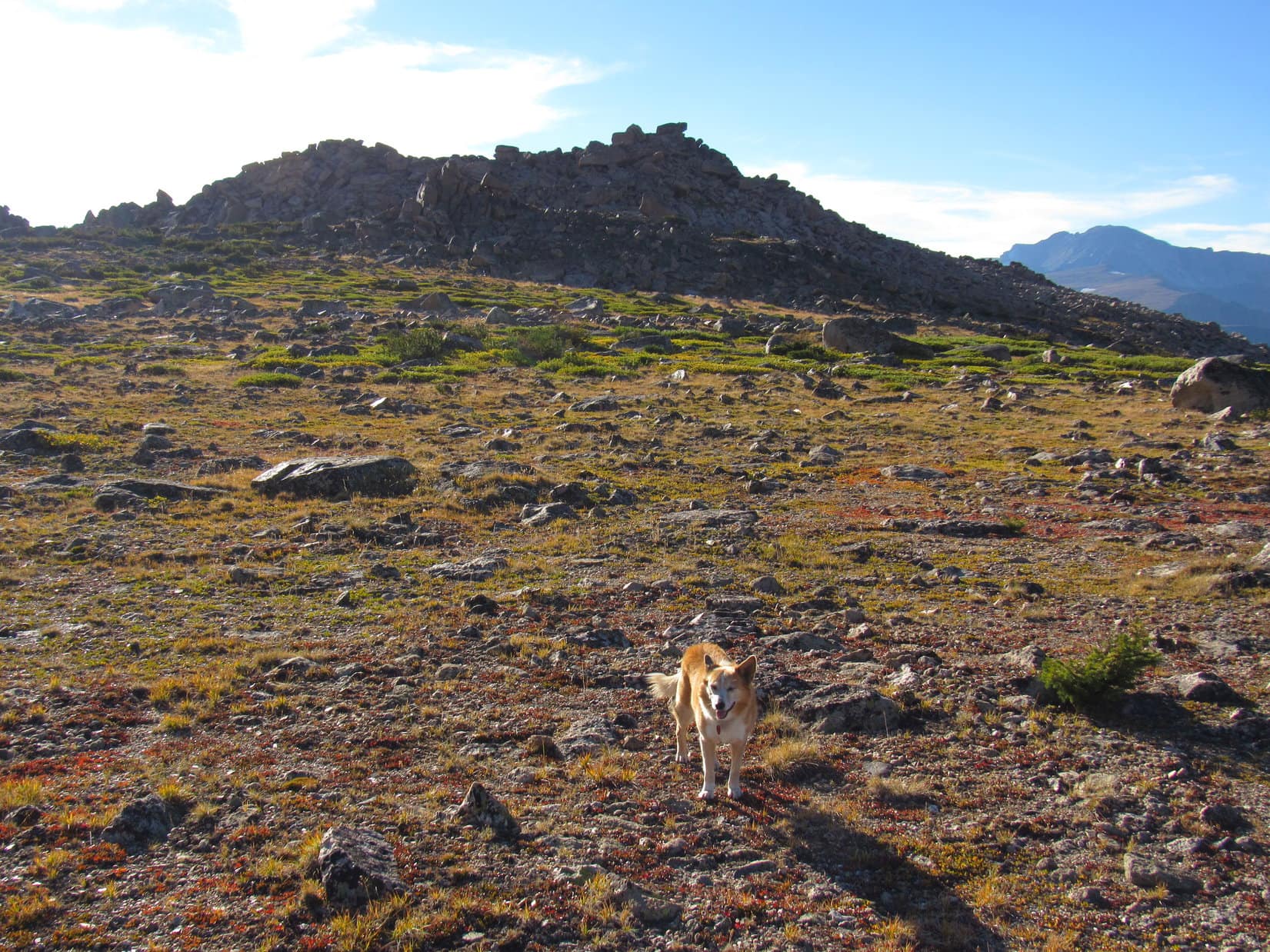
Well, whatever! Focus shifted back to the problem at paw. The closer Lupe was getting to Saddleback Mountain, the rockier the upper slopes were looking. Prairieview Mountain on steroids? Hopefully not. A long, gentle N slope appeared to be the easiest approach, but it was far away. Time was ticking. SPHP headed for the S side of the mountain instead.
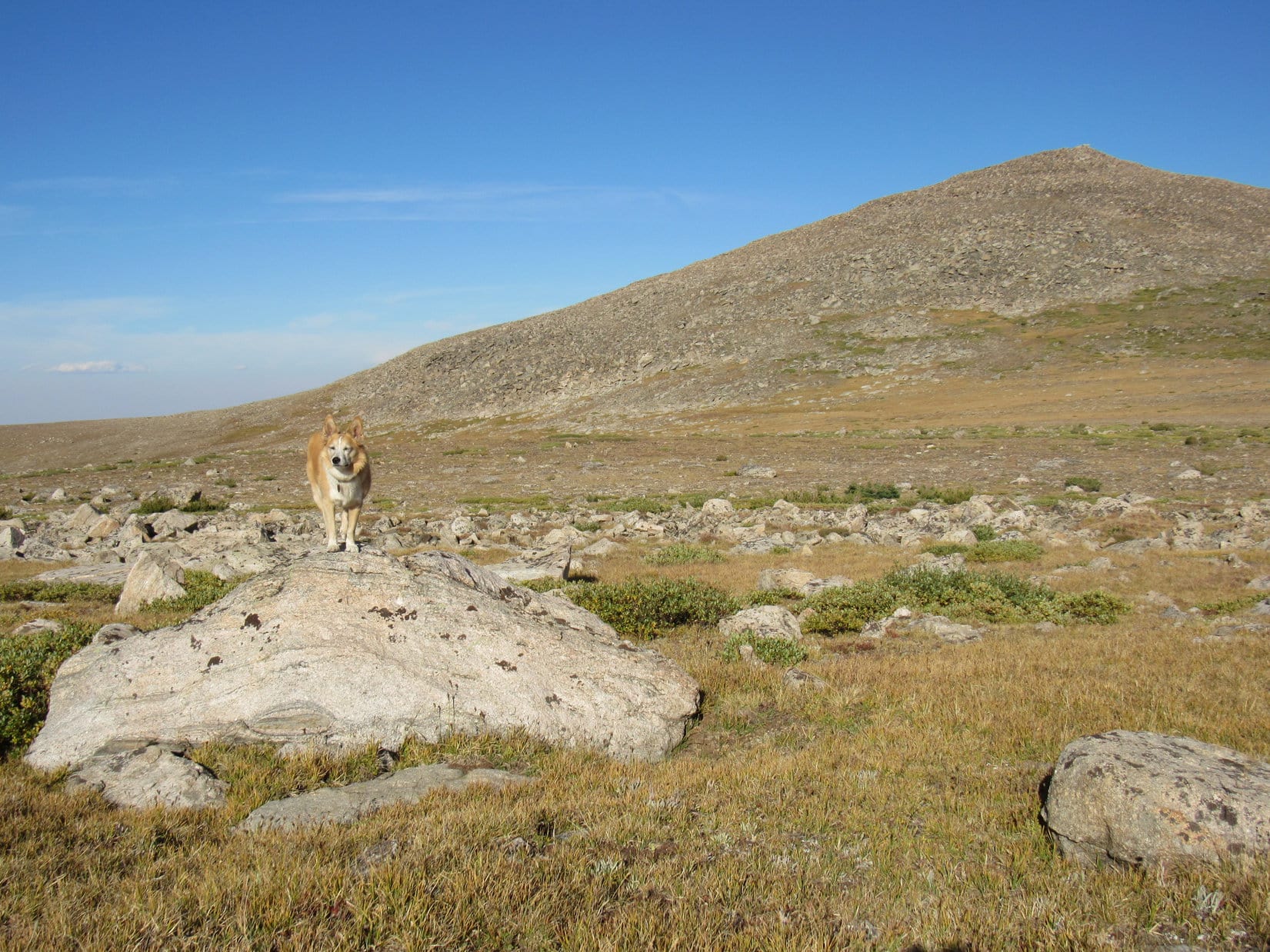
Worked great! At first. Looper gained quite a bit of elevation on grassy S slopes, but she still had hundreds of feet to go when the talus started getting thick. Lanes of vegetation soon got choked off. The Carolina Dog was gradually forced to circle around to the W side of the mountain as she worked her way higher.
In the end, there was no escaping the talus. The last 200 feet were a slow, steep, treacherous, miserable climb, but bit by bit, Loopster was getting there.
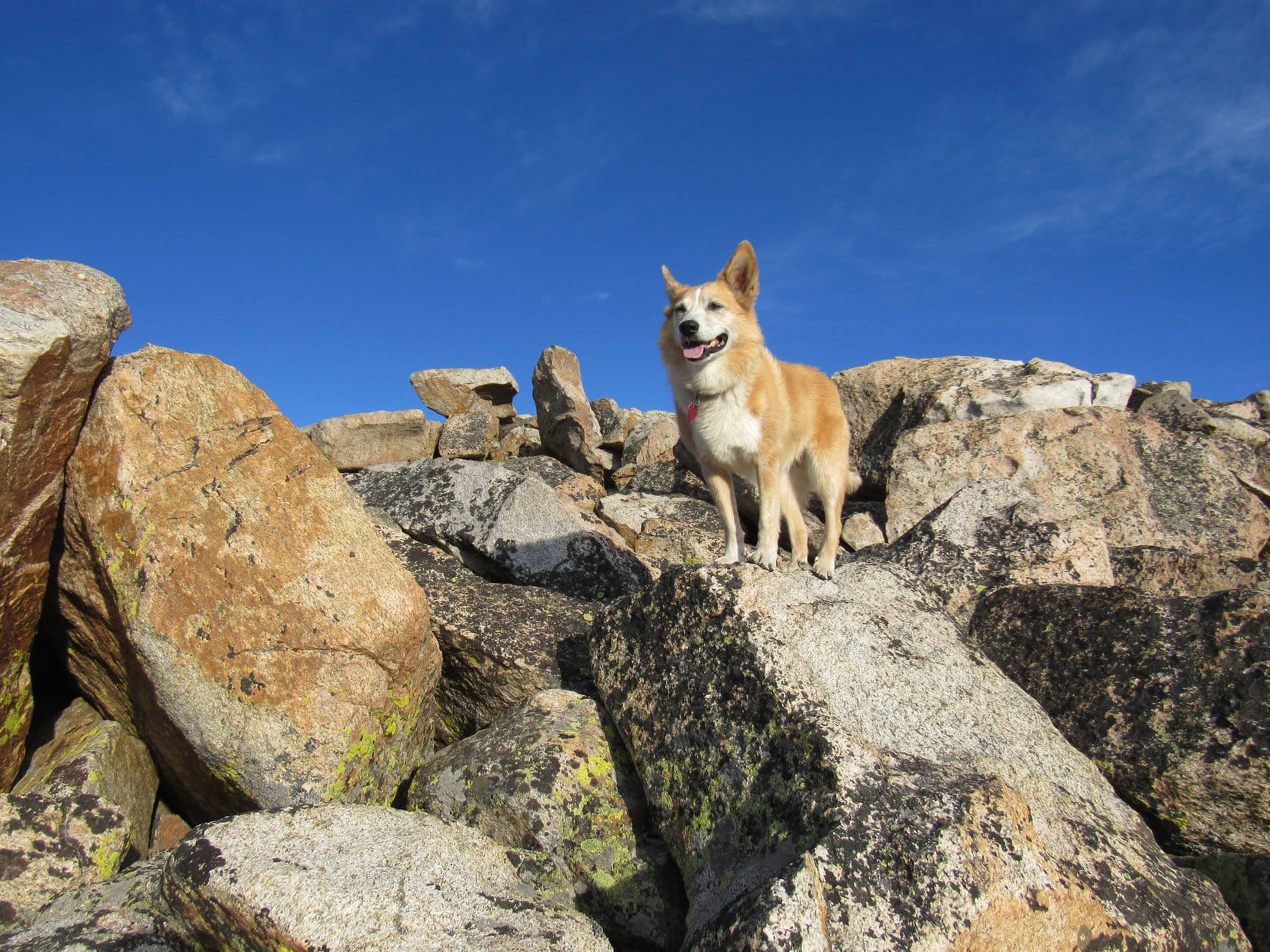
The sun was already getting low when Lupe reached a flatter region above the final steep scramble. Egads! The whole mountaintop was nothing but talus! Pretty big stuff. It all sloped gradually higher to the S, where 250 feet away a modest cairn was visible at the summit.
Success in sight, Lupe boulder-hopped her way to the top of Saddleback Mountain (10,876 ft.).
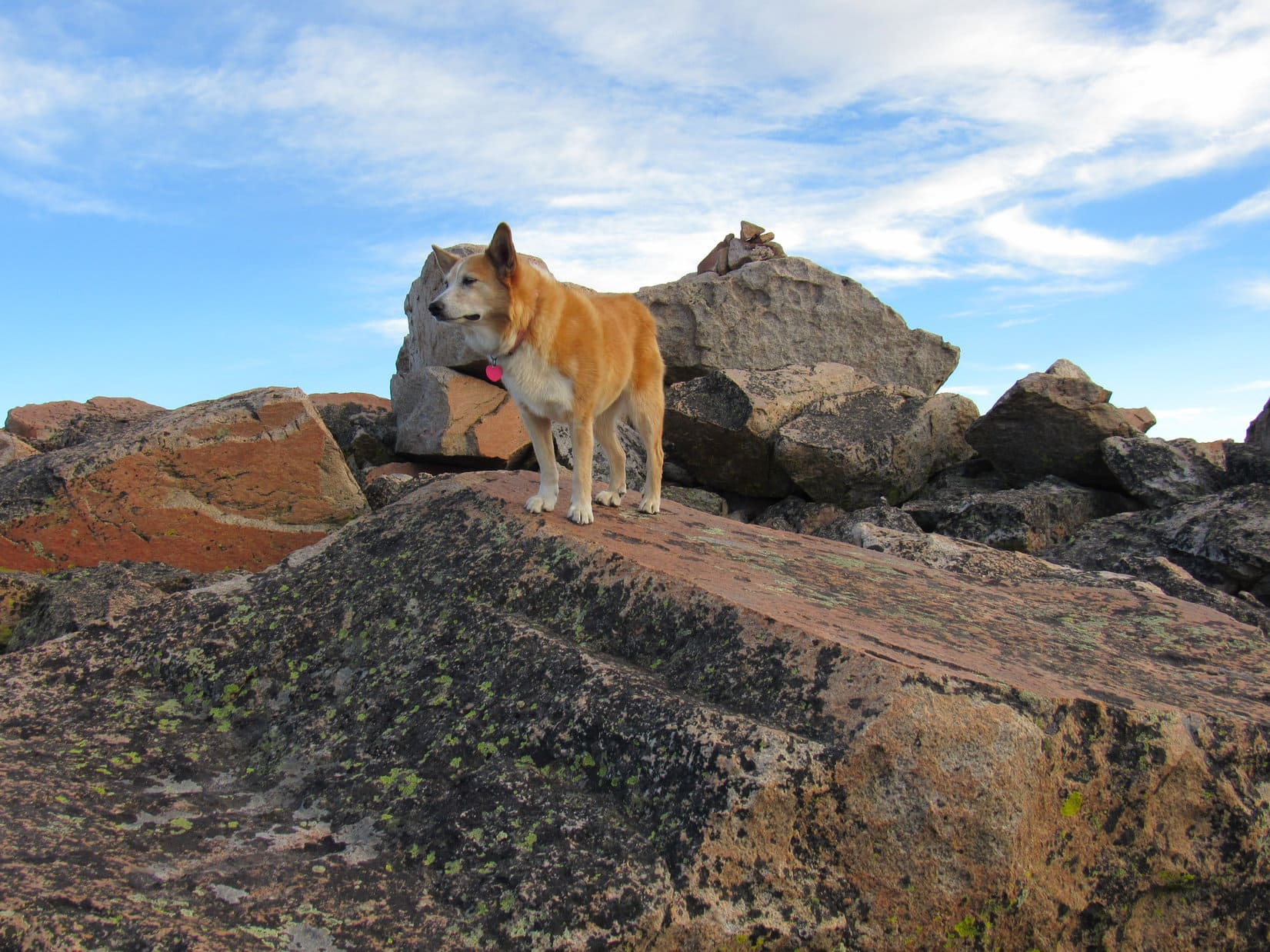
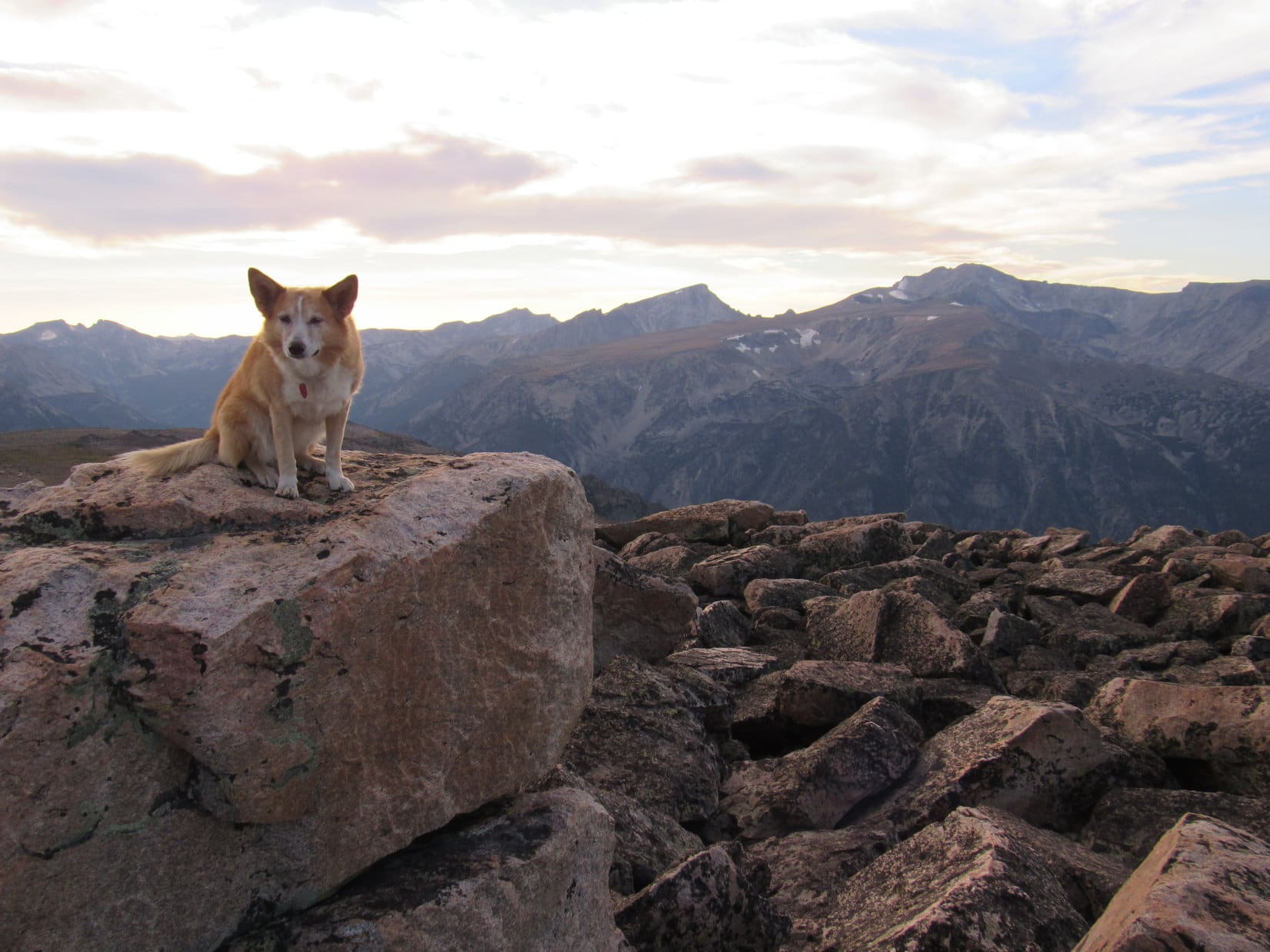
9-3-20, 6:51 PM, Saddleback Mountain – Clouds moved in messing with the light moments before the American Dingo reached the true summit. Too bad, but that’s the way the Milkbone crumbles. The good news was that Lupe now stood next to the cairn on the highest of 3 light pink and gray boulders splotched with black lichens that together constitute the tippy top of Saddleback Mountain.
Tie game! Score: Mountains 1 – Dingoes 1.
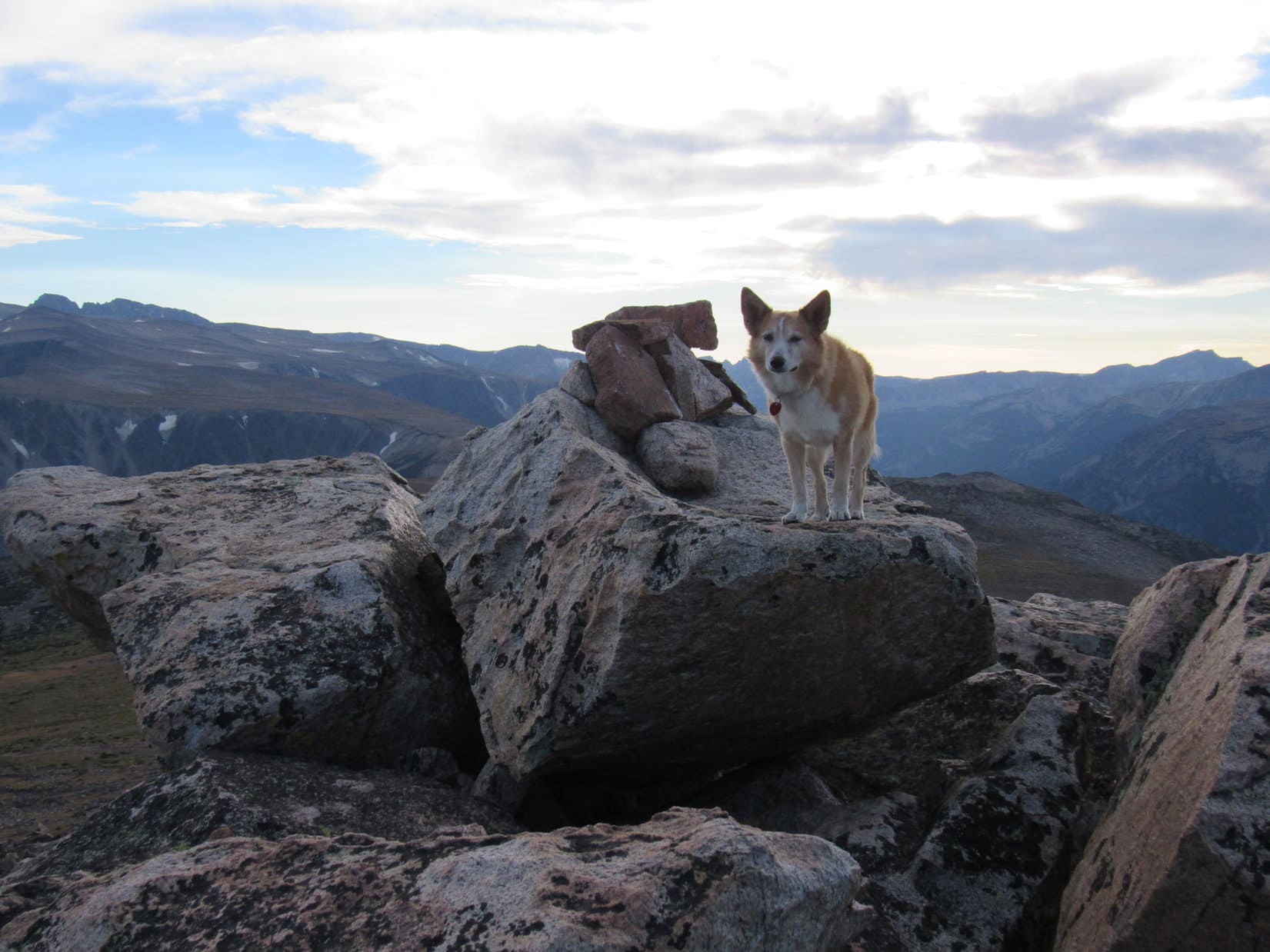
The summit was right next to the S edge of the mountain. In fact, one of the three highest boulders hung halfway out in space. 360 degree views, of course! Massive ridges, deep canyons, and high peaks in all directions except to the NE where Lupe could see clear out to the plains. The air was smoky over there. Lucky that wasn’t the case up here!
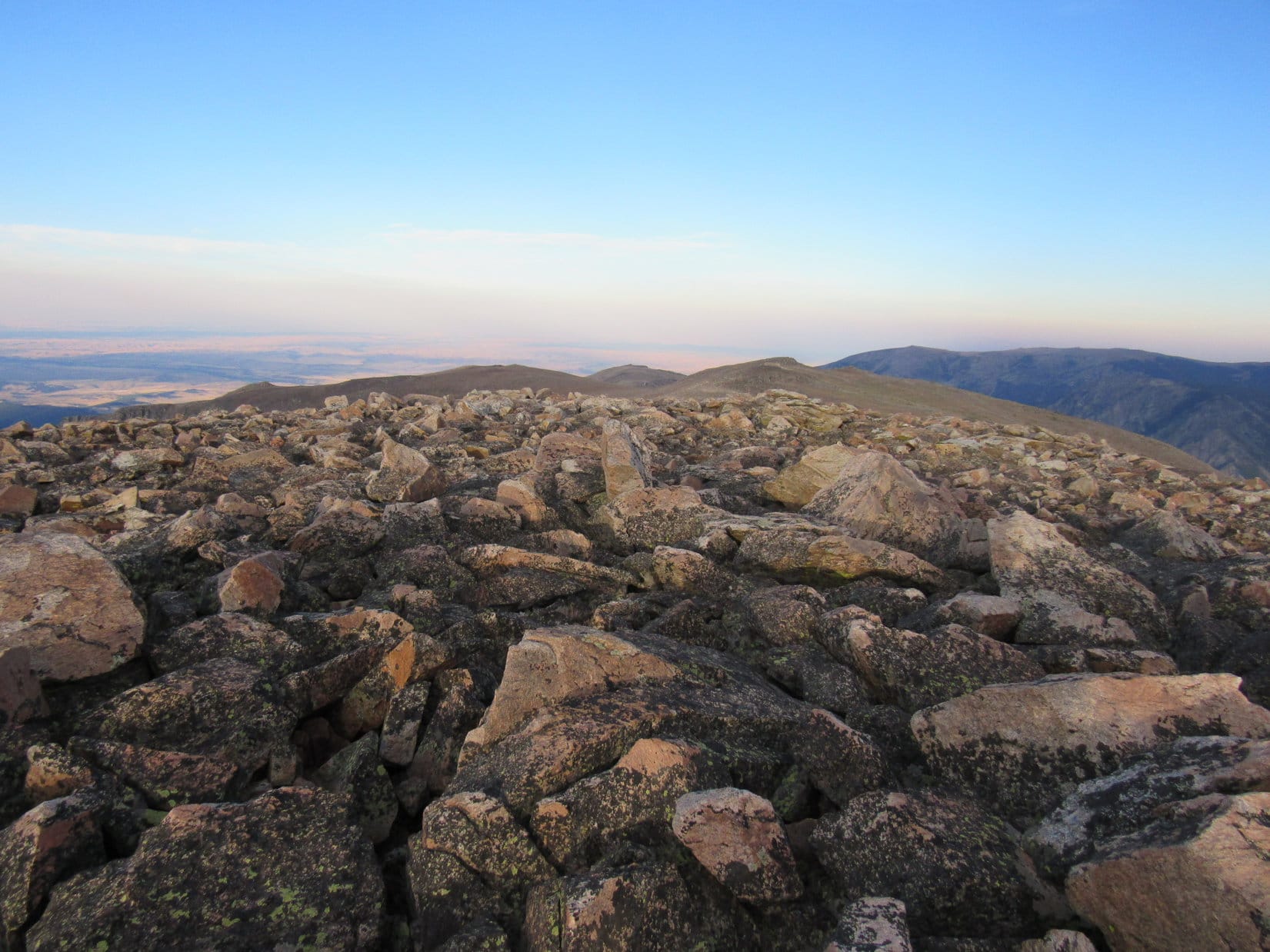
To the NW was another perspective on some of the peaks Lupe had seen on the way up Phantom Creek trail No. 17. Mount Wood (12,660 ft.), Mount Hague (12,323 ft.), Twin Peaks (11,793 ft.) and others farther W.
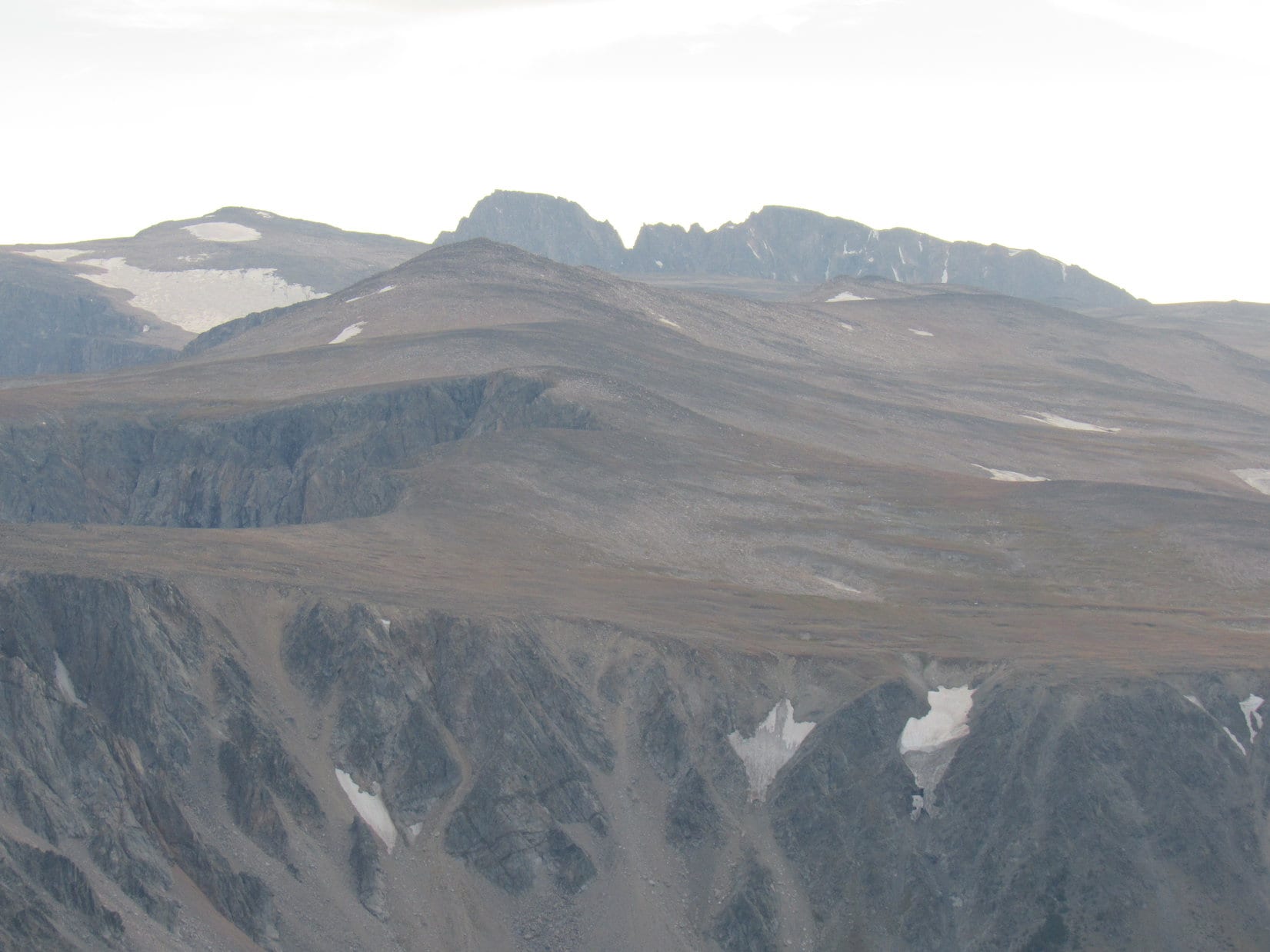
Beyond giant ridges, a line of higher flat-topped peaks was visible far to the SSE. Castle Mountain (12,612 ft.), which Lupe had failed to even get to with her friend Jobe Wymore last month, was somewhere over there. Sky Pilot Mountain (12,047 ft.), too, which she did manage to climb.
SPHP could pick out a peak that looked like Castle Mountain. Sky Pilot would have been hidden beyond it.
The most interesting view of all, though, was to the SW. Phantom Creek and glimpses of Phantom Lake and Froze to Death Lake were visible in a deep canyon. Beyond them stood Mount Peal (12,409 ft.). Farther W, Tempest Mountain (12,469 ft.) and Granite Peak (12,799 ft.), the state high point, soared behind Froze to Death Mountain (11,760 ft.).
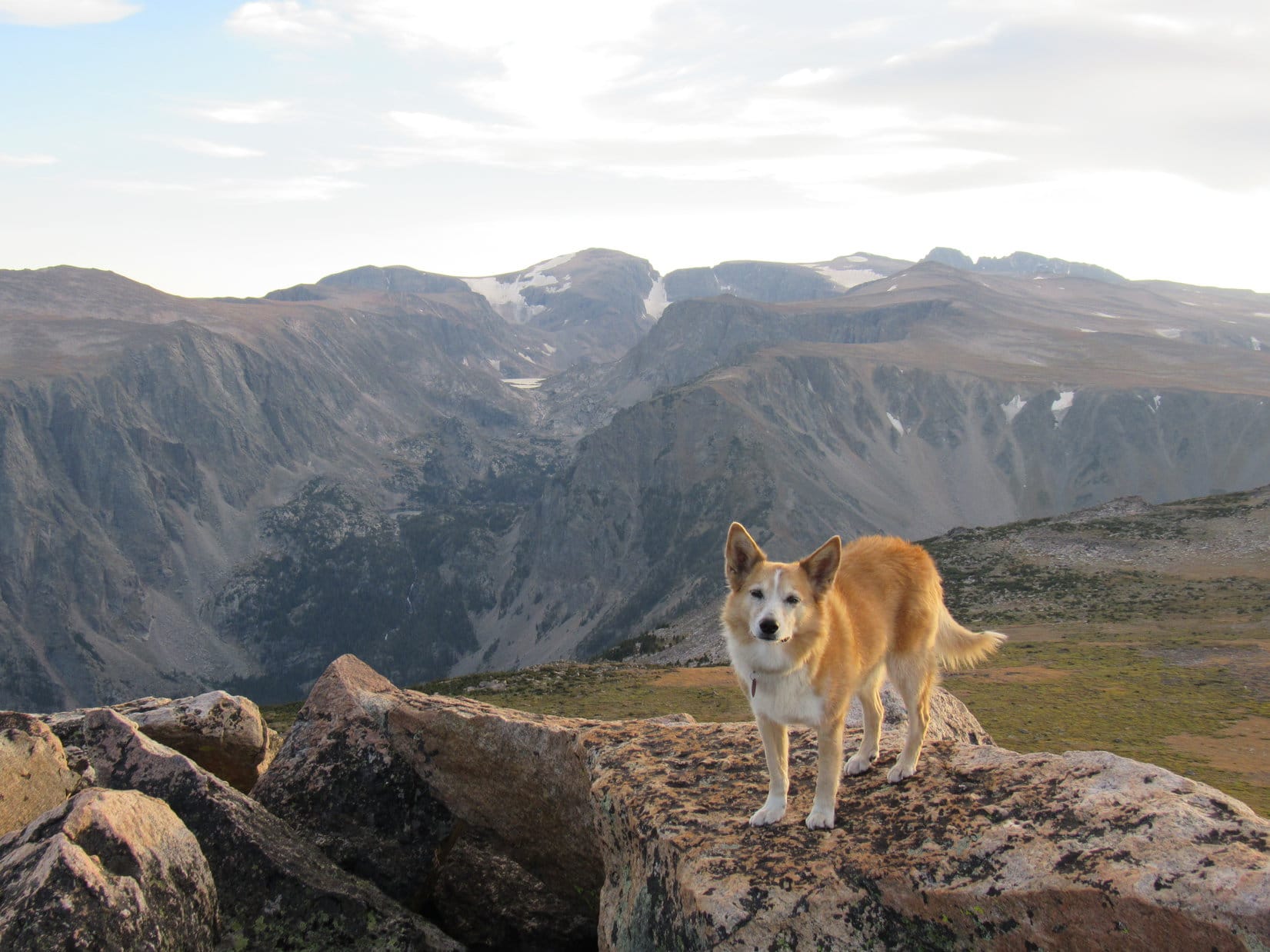
Lupe sat perched on Saddleback Mountain’s summit boulder. Not quite half an hour since she’d arrived. Saddleback had been unplanned bonus peak, but a great one. Sad to have to depart so soon. Better get down, though, before the light was gone.
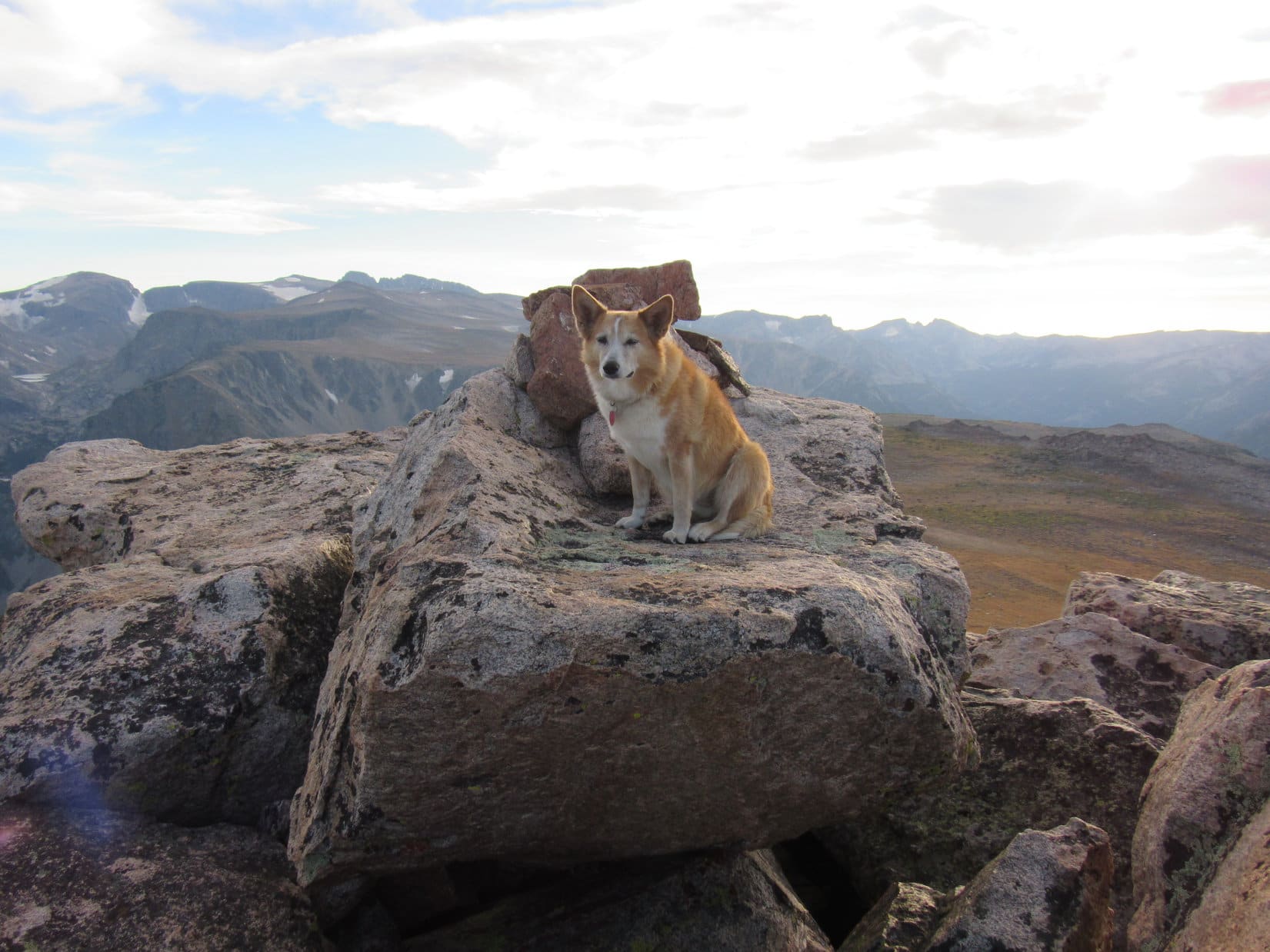
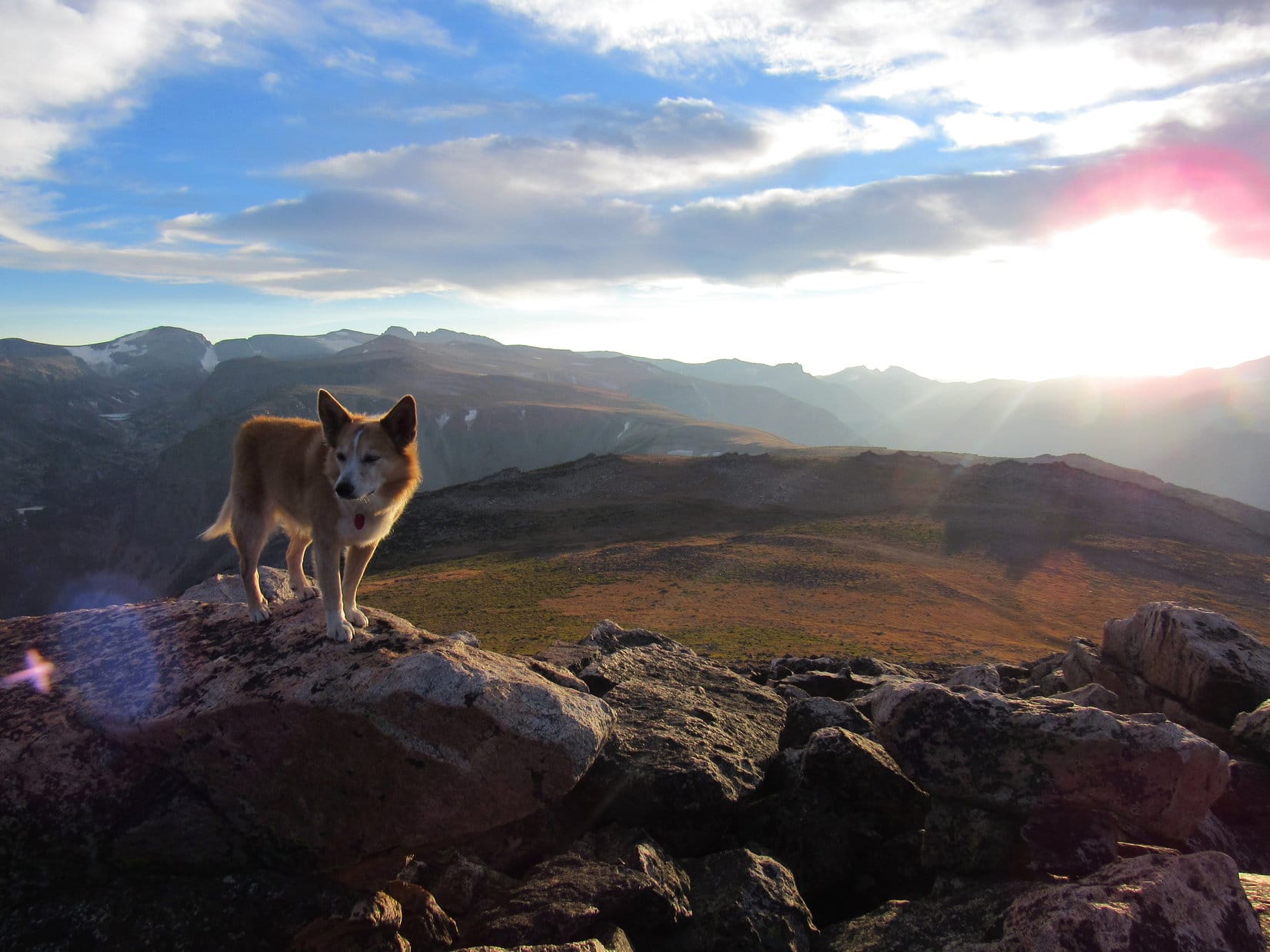
Looper had barely left the summit when the evening sun broke through the clouds. Suddenly the light was exquisite, the world transformed in an explosion of glowing color and sharp contrasts. A fleeting sublime moment. Lupe paused. What a spectacular end to a spectacular day!
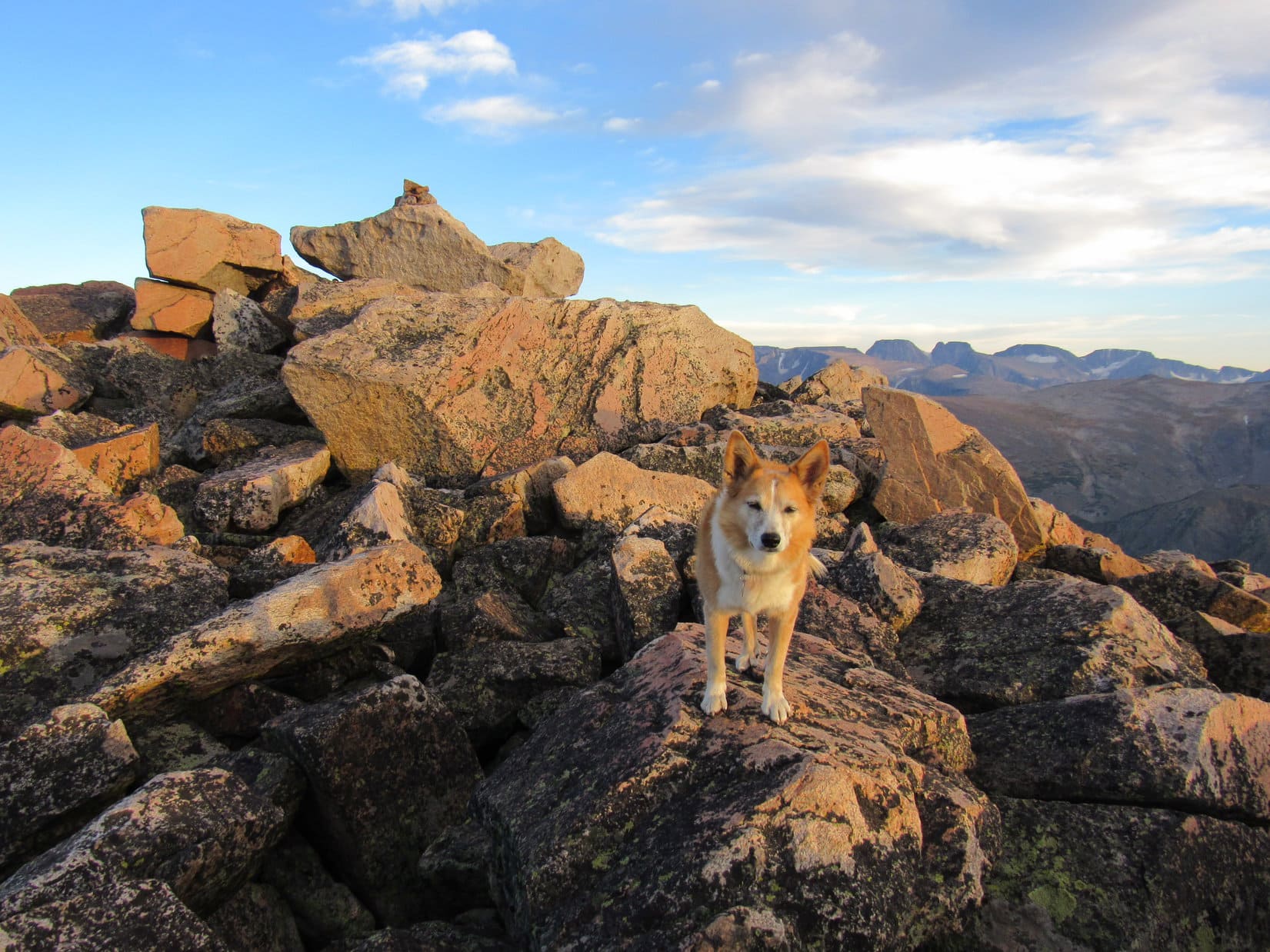
Oh, but it wasn’t over yet, not by a long shot! As always, SPHP was super slow on the long, steep talus descent. Lupe wound up much farther NW than where she’d come up, the sun already long gone by the time SPHP escaped Saddleback Mountain’s tenacious grip.
Dusk deepened, and the first stars glittered, as Loop hurried SW across the plain leading to Prairieview Mountain, dodging scattered boulders and black bush-filled holes between them much of the way.
Reaching Prairieview’s ridgeline a little S of center, the flashlight had to come out. Lupe sniffed and roamed as if it were broad daylight, while SPHP stumbled almost blindly forward through infinite rocks and bushes toward the last minor talus outcroppings farther W.
Beyond them, an hour after dark, dramatic improvement. Easy terrain! A gentle downslope! To the E, a rising ghostly white moon frightened the weakest stars from the night sky. An incredible, but weary moonlit trek! Finally across Phantom Creek trail No. 17 and to the tiny house. A famished American Dingo inhaled dinner, and was gone.
Off to Dingo dreamland! Yeah, it did seem like the place to be.
Links:
Next Adventure Prior Adventure
To the Froze to Death Plateau & Tempest Mountain! – Beartooth Mountains, Montana (9-4-20)
Want more Lupe adventures? Choose from Lupe’s Summer of 2020 Dingo Vacations to Wyoming, Utah & Montana Adventure Index, Dingo Vacations Adventure Index or Master Adventure Index. Or subscribe free to new Lupe adventures.