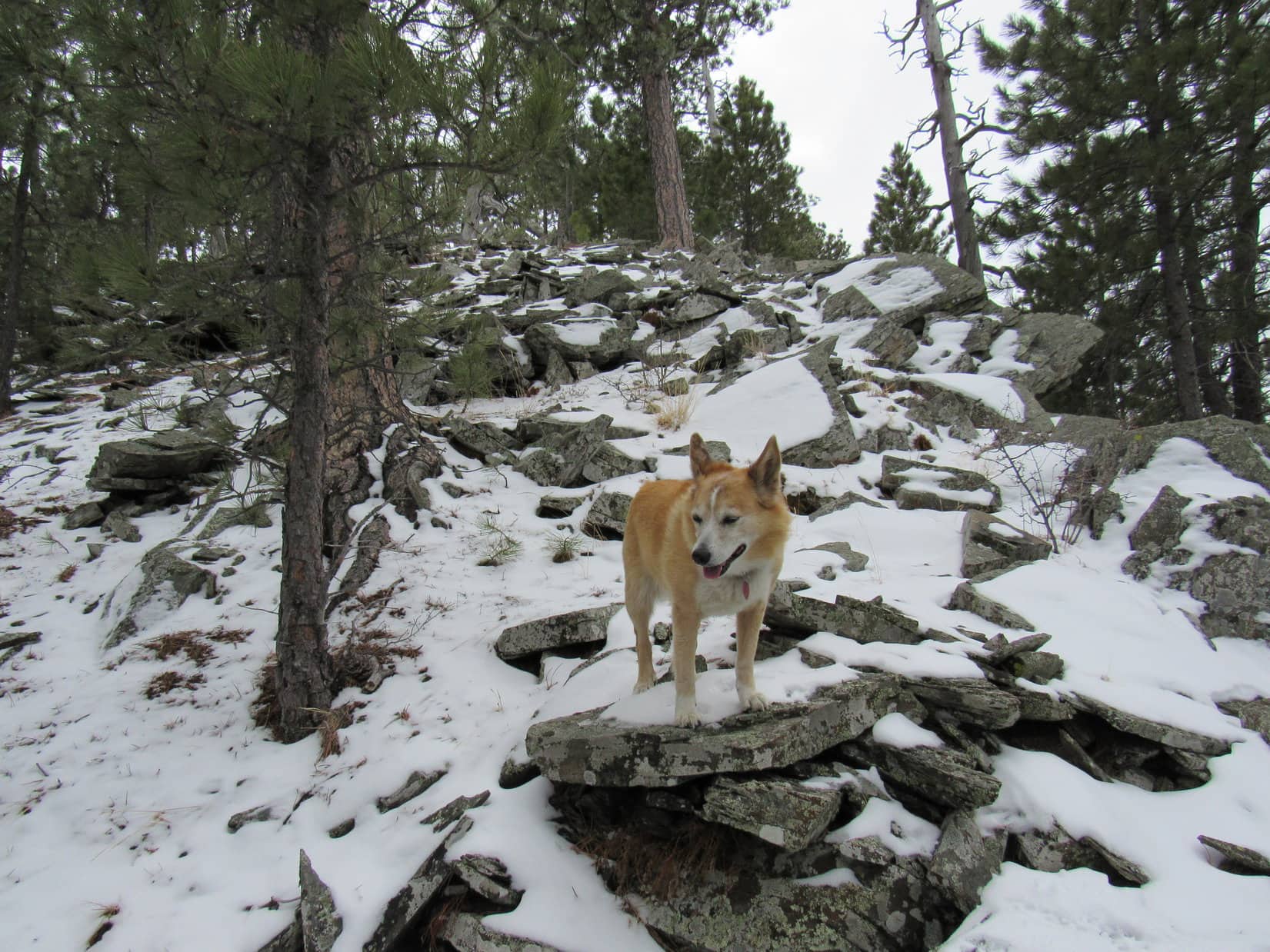
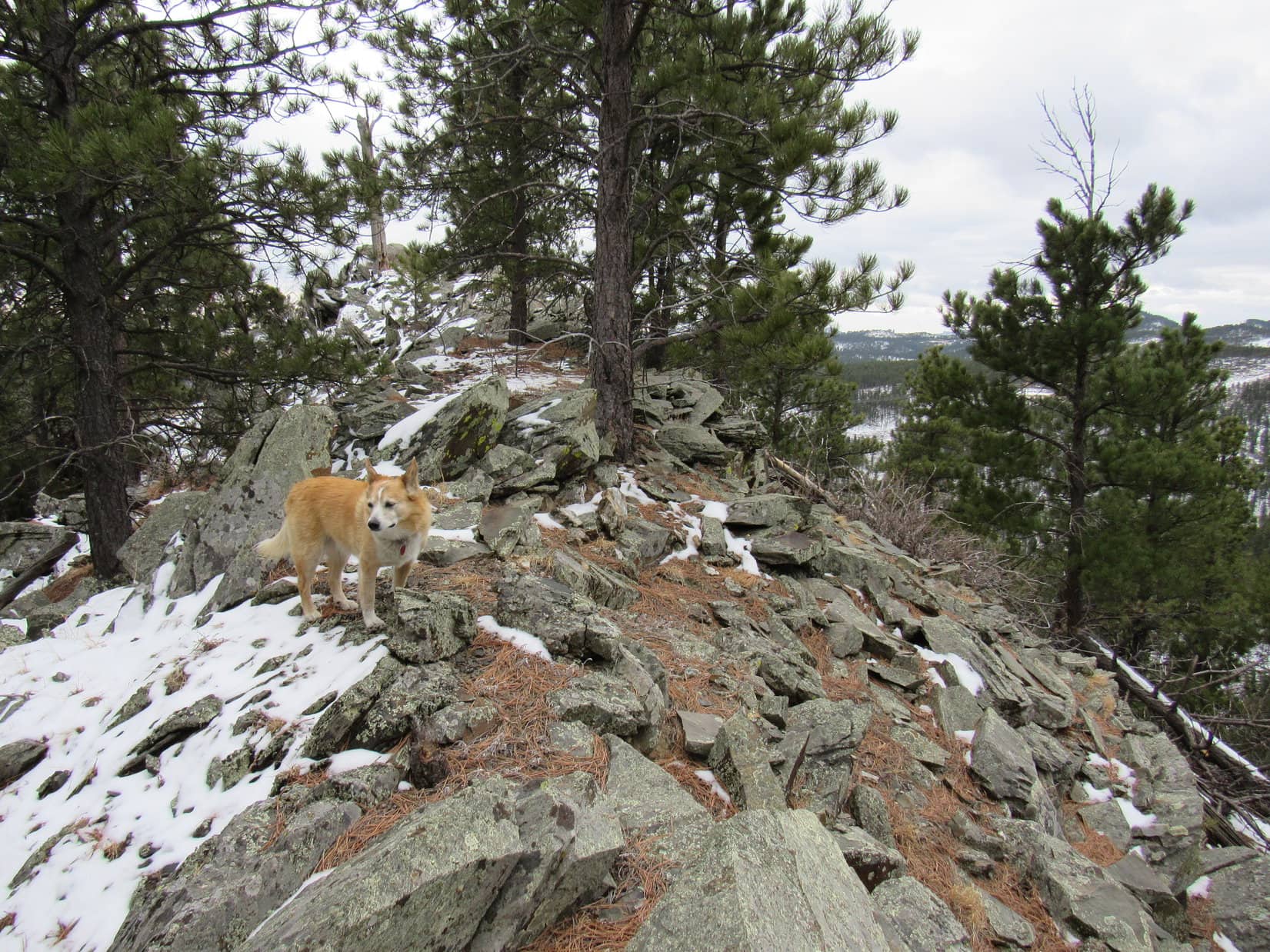
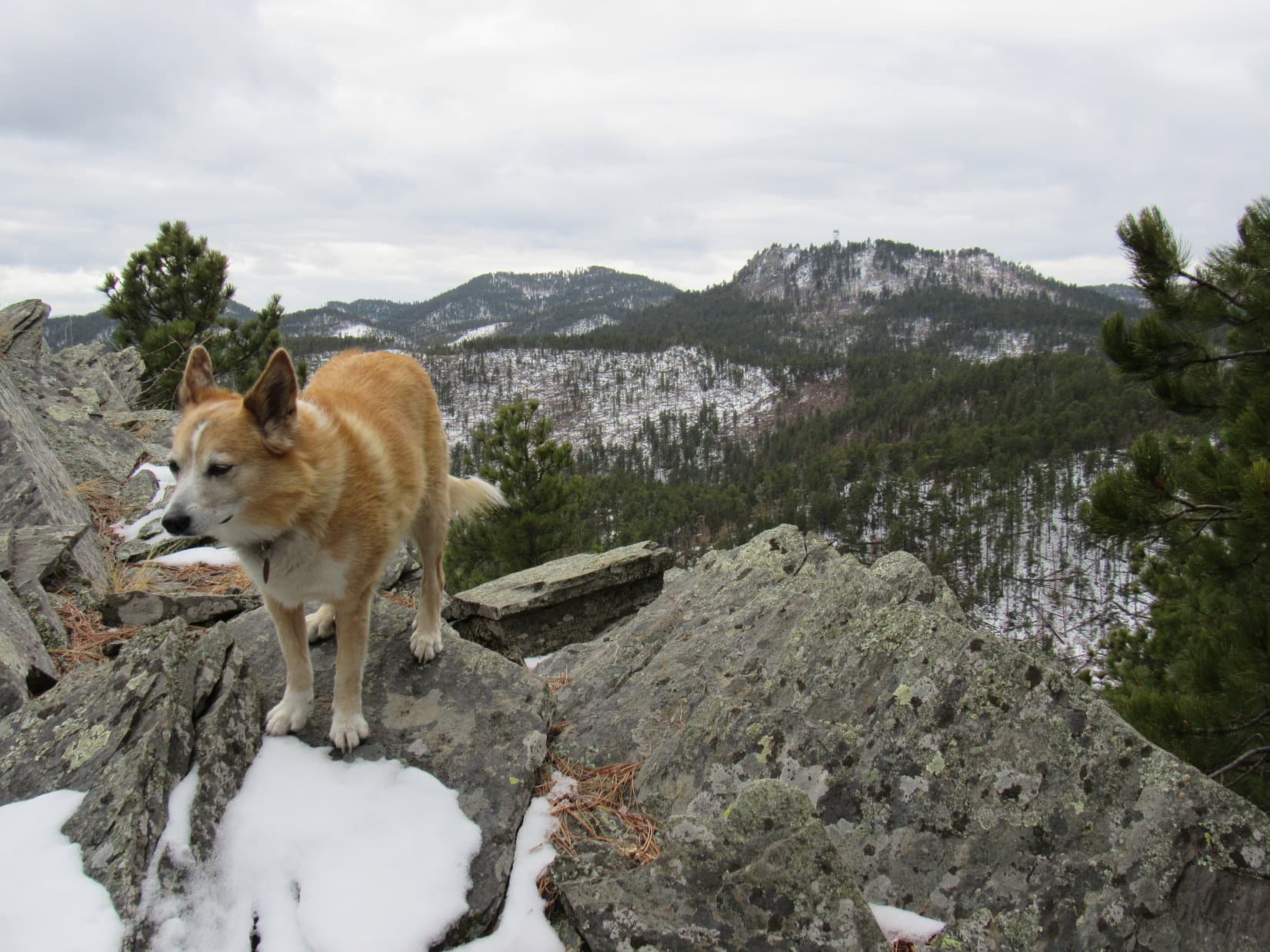
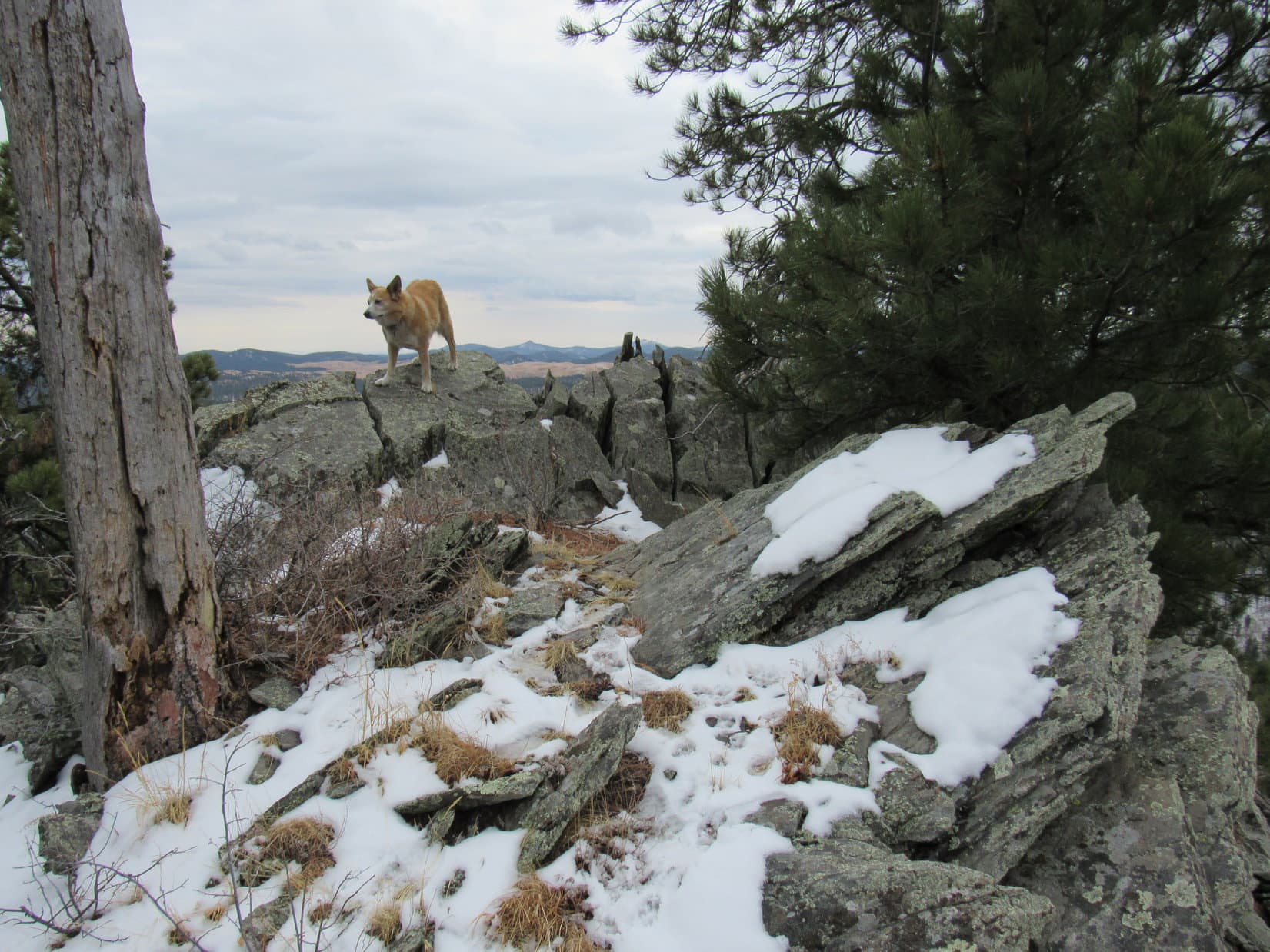
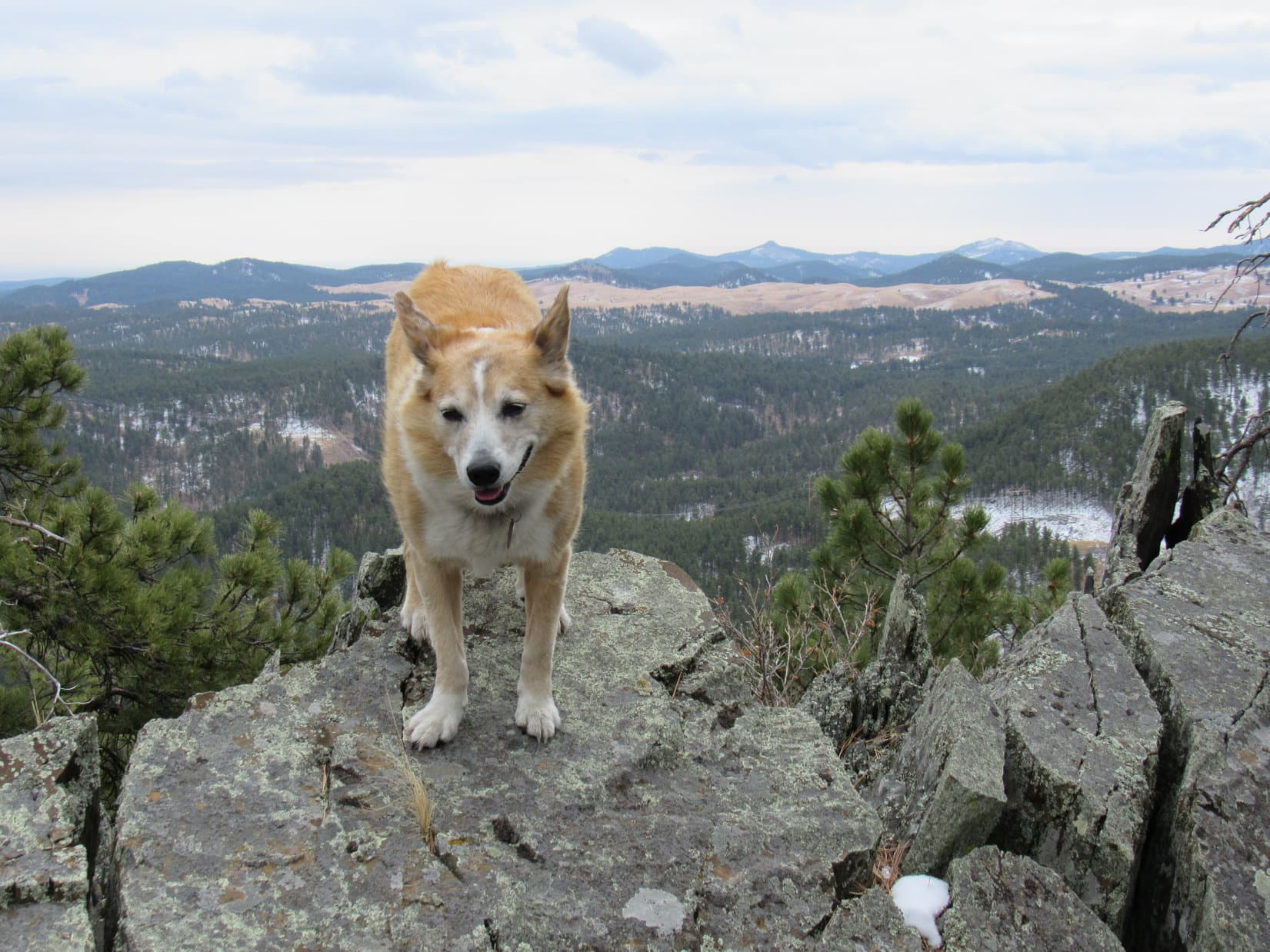
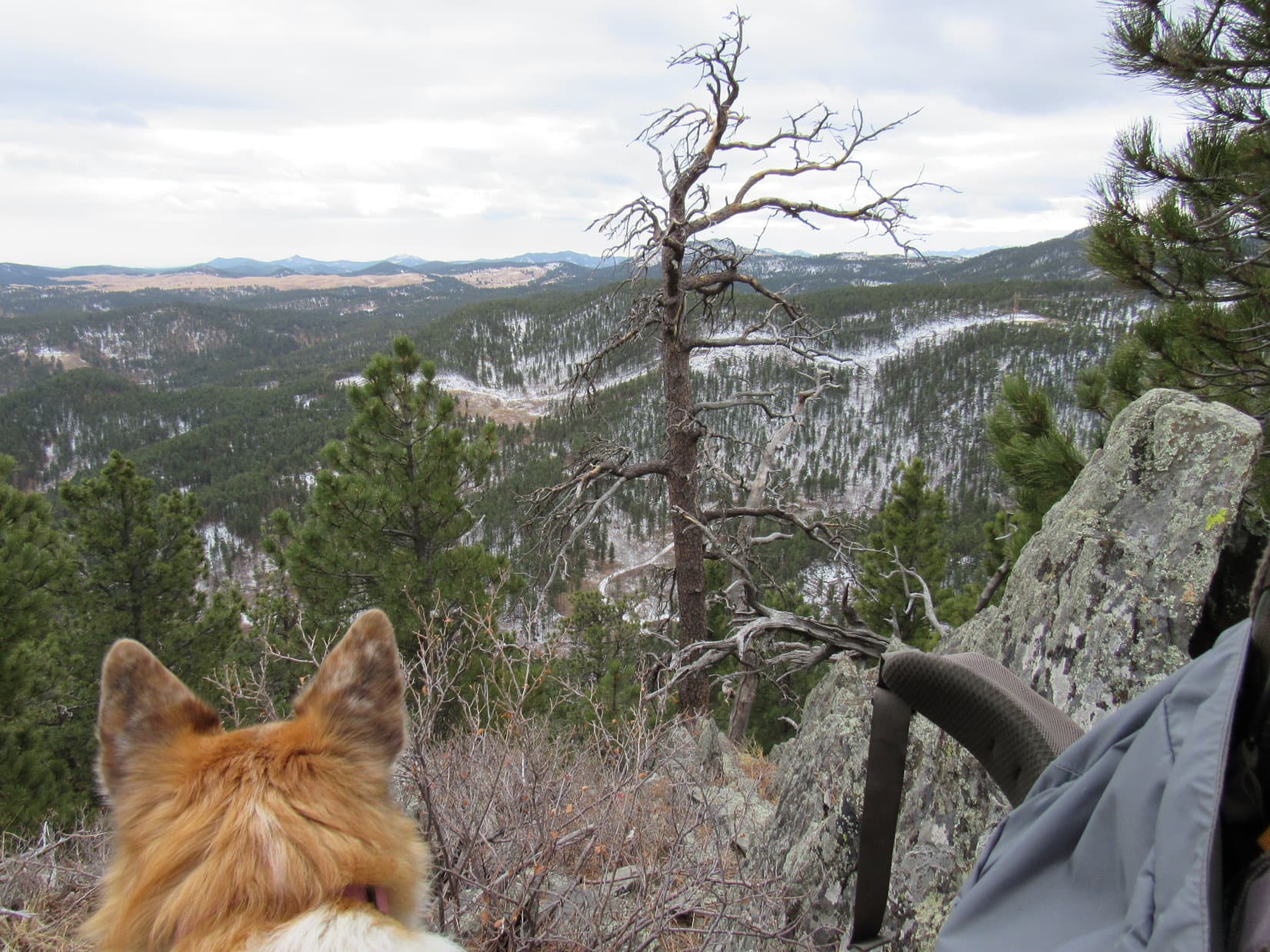
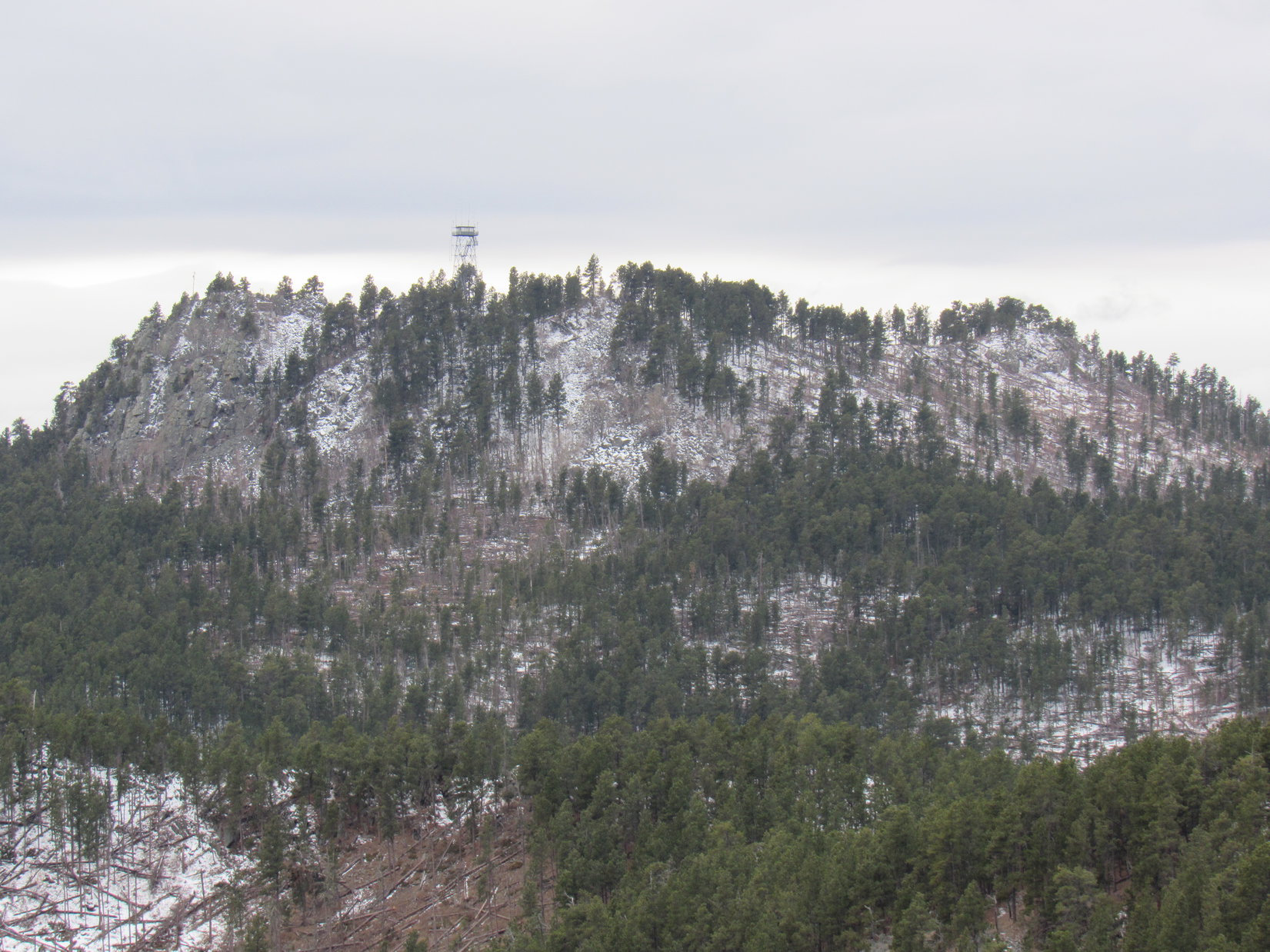
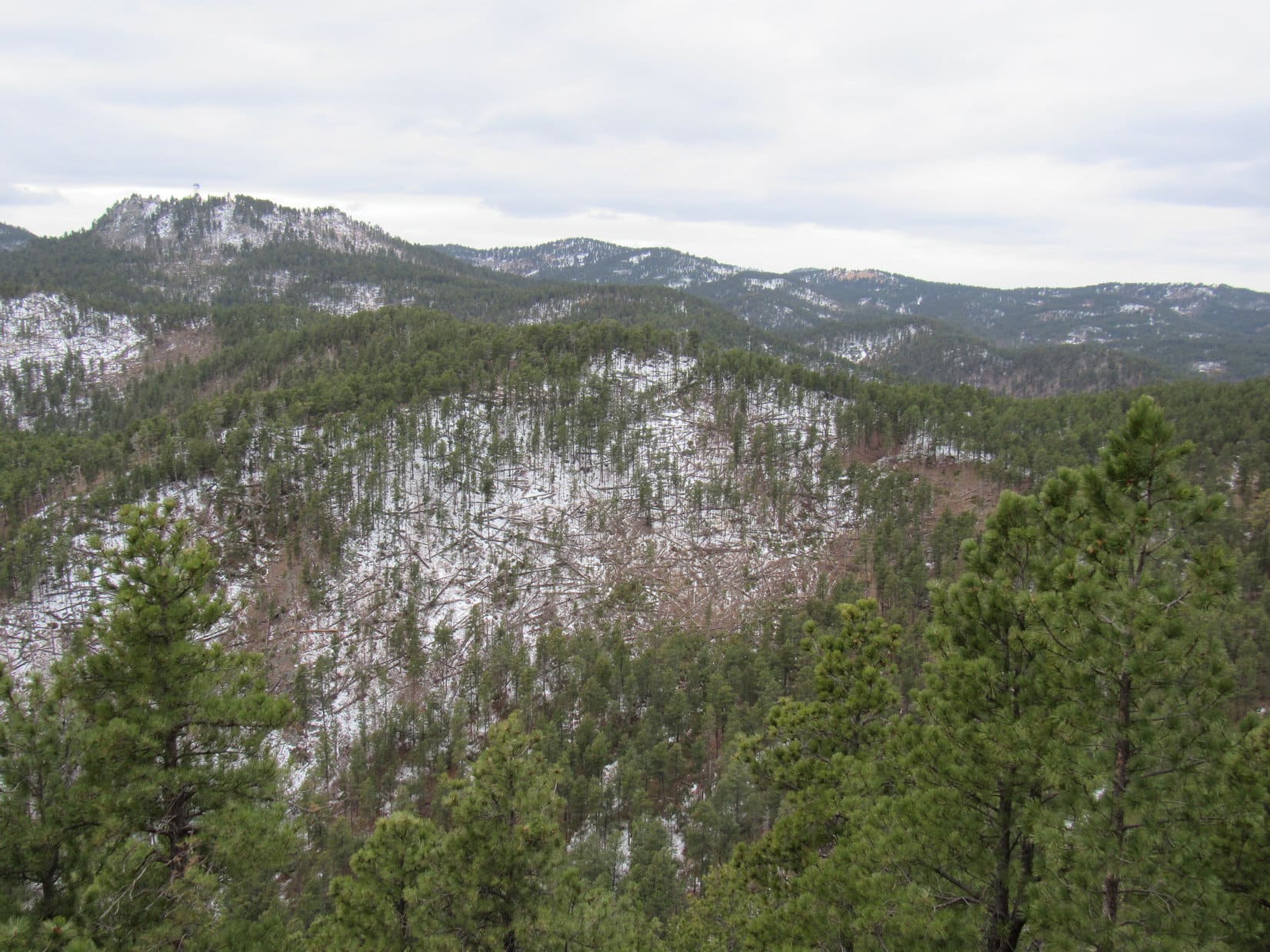
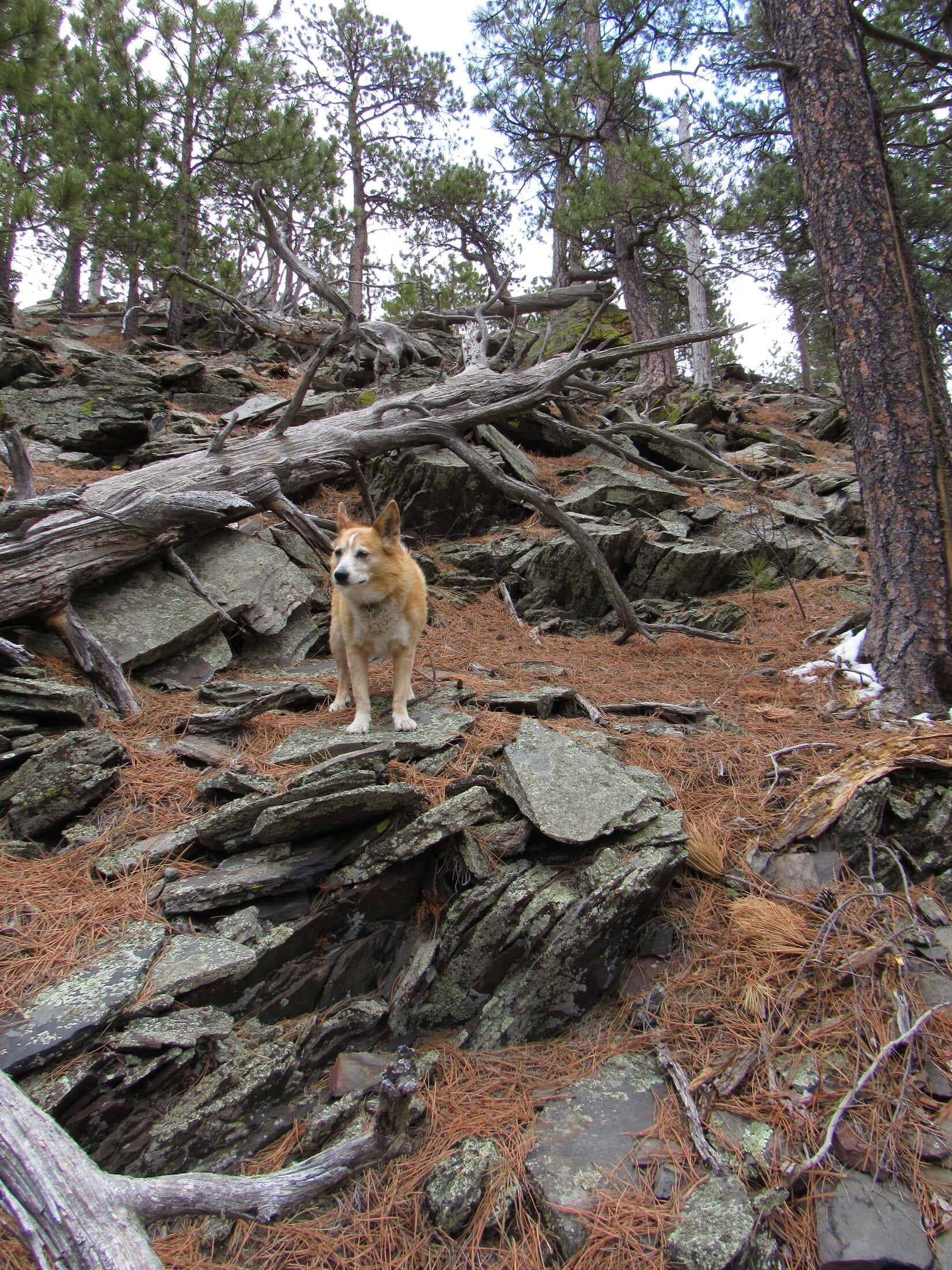
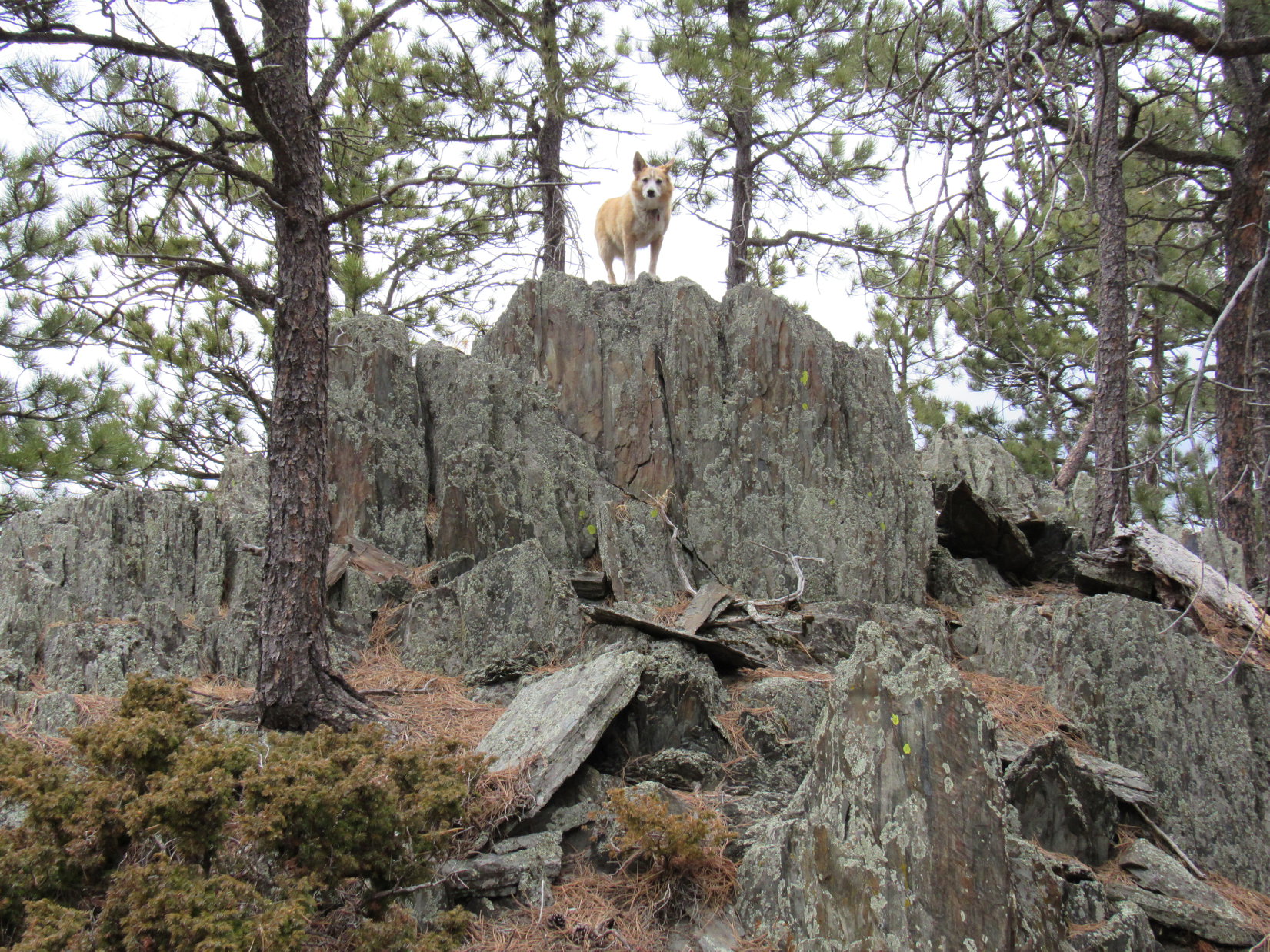
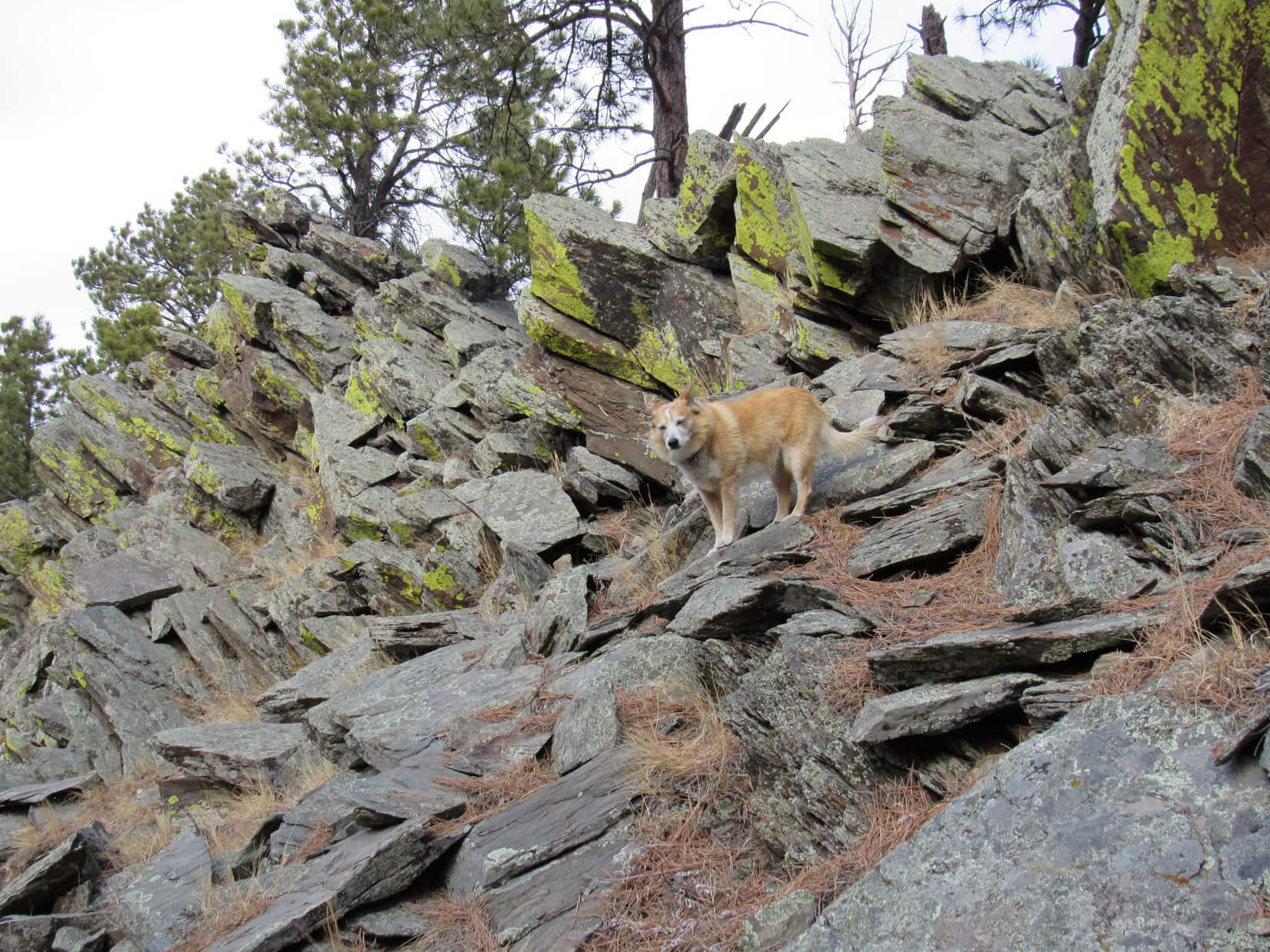
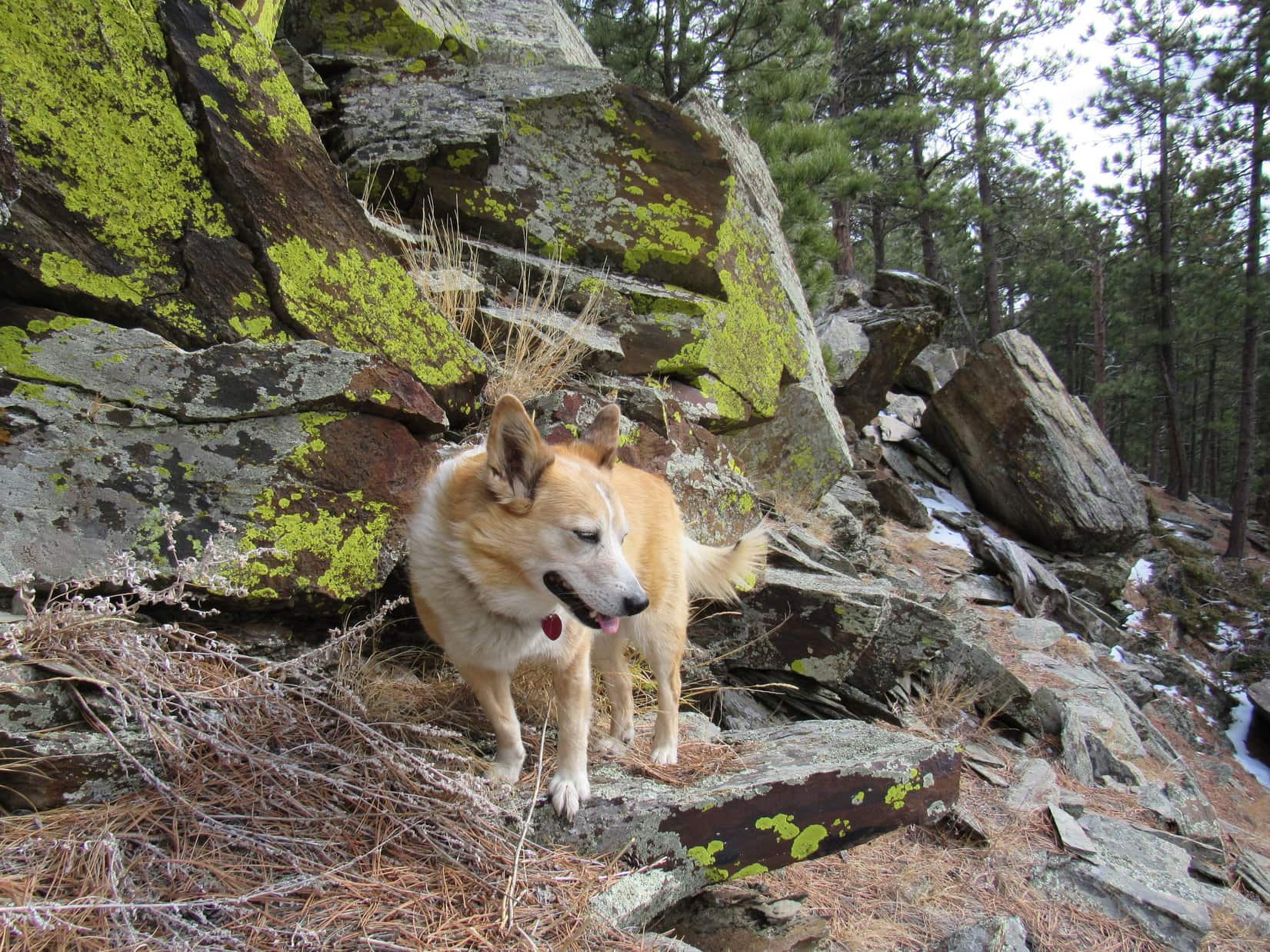
Atlantic Peak, Wind River Range, Wyoming – Part 2: Atlantic Lake to the Summit! (9-15-20)

Days 3-6 of Lupe’s 5th Summer of 2020 Dingo Vacation to Wyoming!

9-15-20, 7:27 AM, Atlantic Lake – Squirrels!  A great way to start any day.  An American Dingo’s shrill enthusiasm broke the tranquility of the mountain air.

Loopster!  Hush!  You’ll wake up the campers.

Well, lucky them!  They’re missing out!  Lots of squirrels here.  No doubt they’ll want to get in on the action!

Yeah, keep that up, and I’m sure they’ll be coming over to thank you any minute now.  Anyway, c’mon, we’re ready.  You can look for more squirrels after we get sufficiently past their camp.

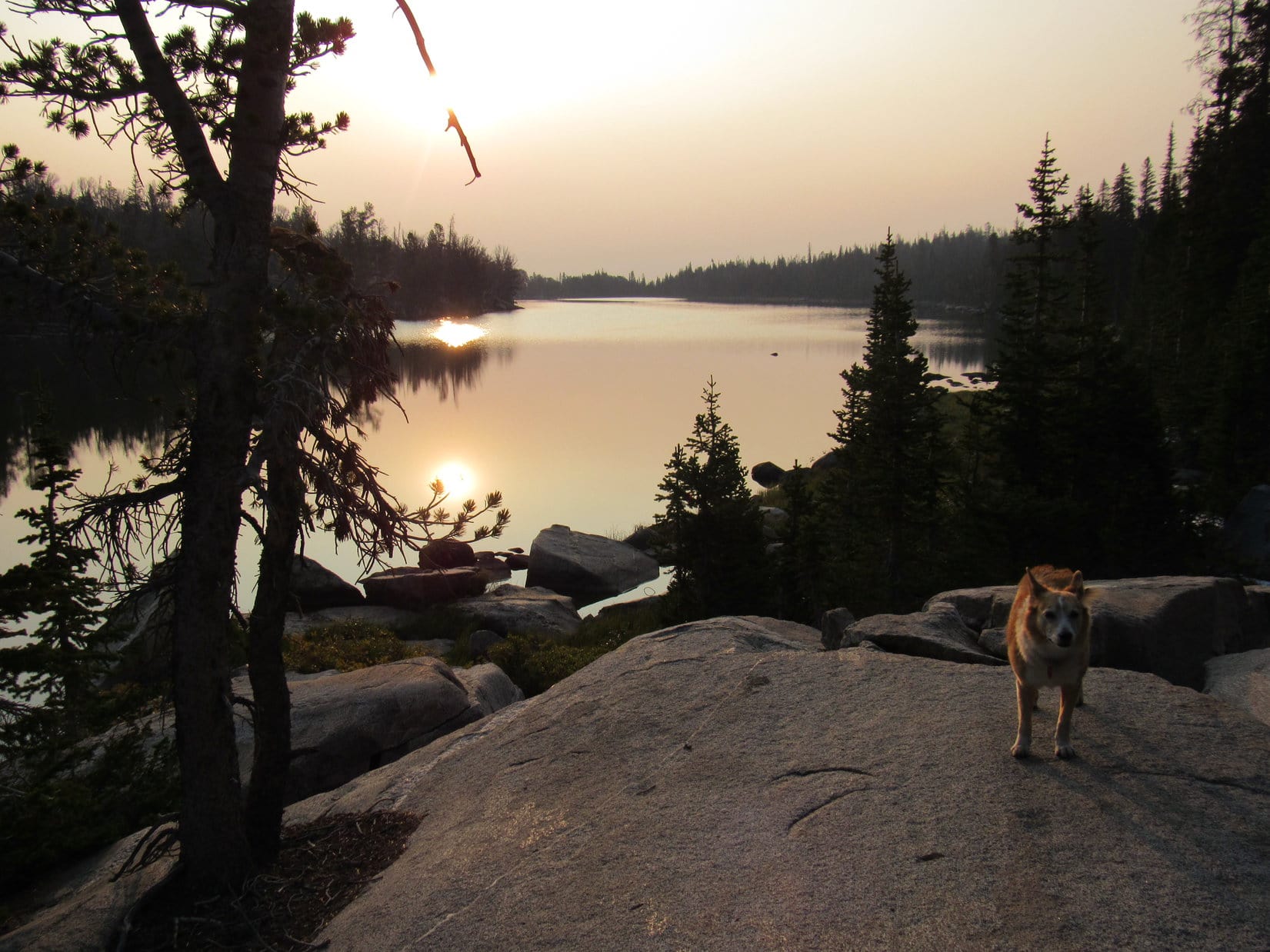
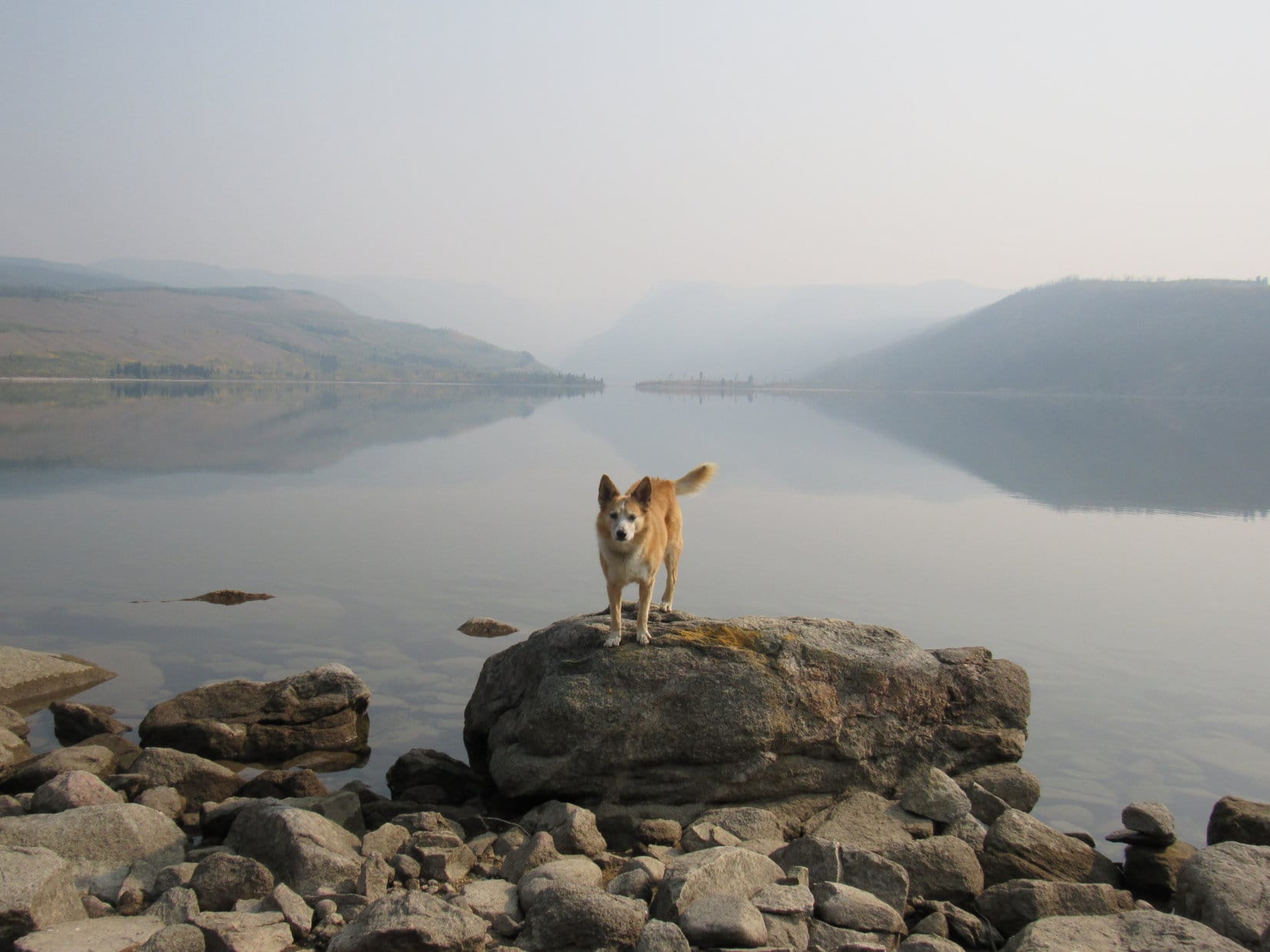
Smooth as silk!  Scarcely a ripple disturbed the surface of Atlantic Lake.  Such a beautiful spot!  Unfortunately, no improvement in air quality.  A little smokier than yesterday, if anything.  Disappointing, but sadly not entirely unexpected.
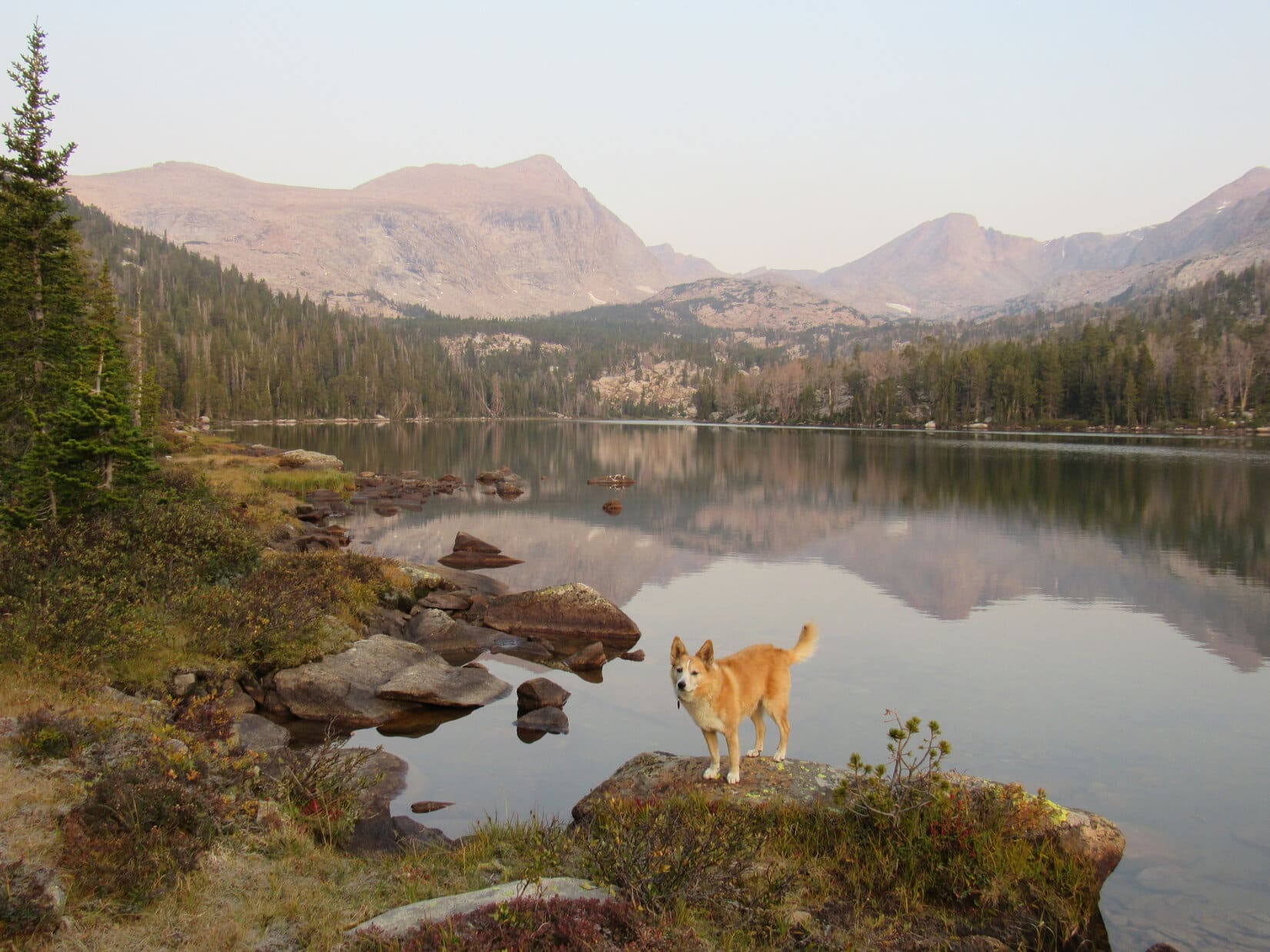
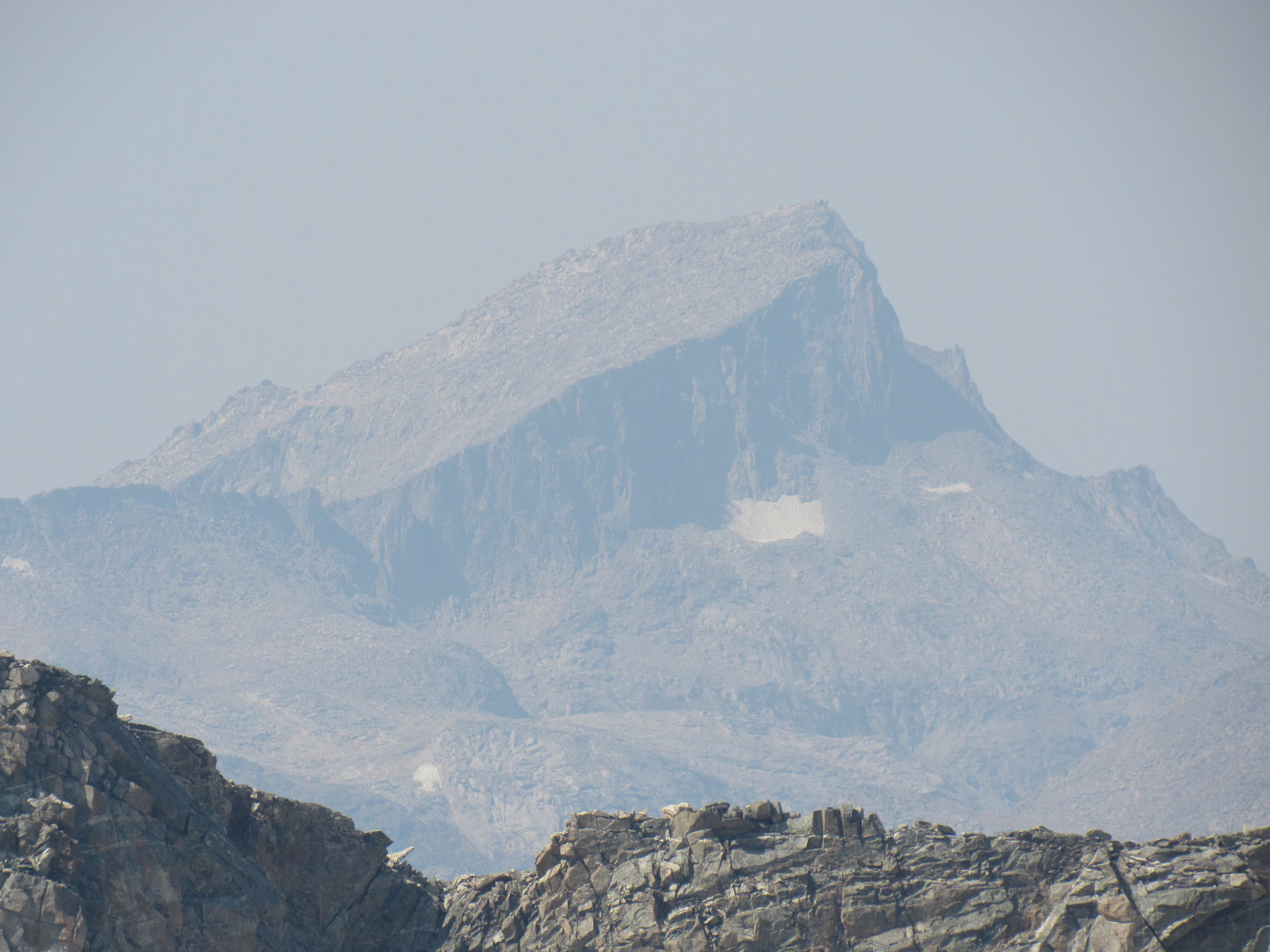
Atlantic Peak (L of Center) from Atlantic Lake. Photo looks WNW.

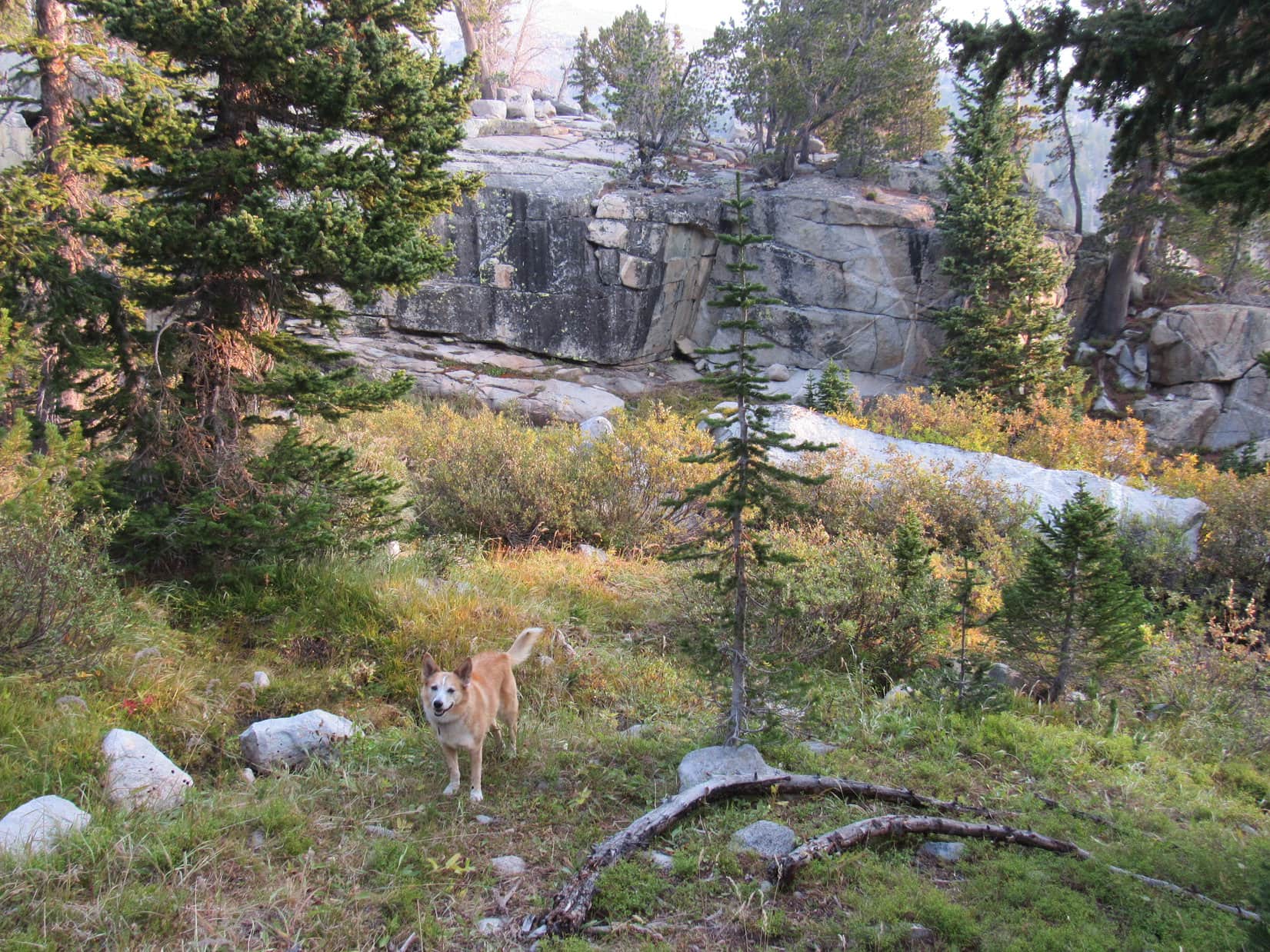
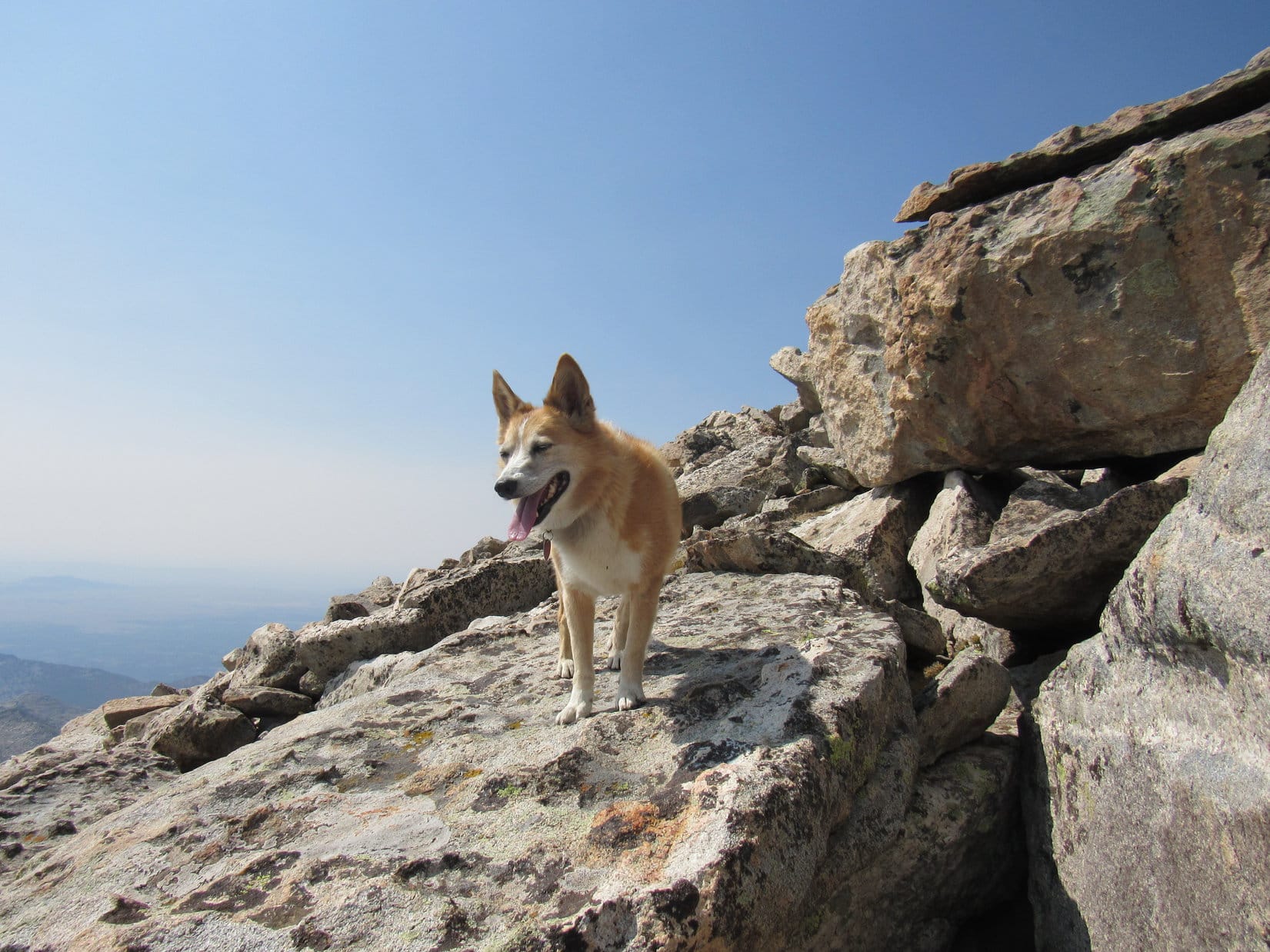
The Carolina Dog set out heading W along the S shore, utilizing a mix of faint use trails.  Soon turned out that there was a better trail a little off in the forest, away from the lake.  As this region narrowed, Lupe traveled along the base of rock formations or slides.  Big rocks sometimes created openings along the shoreline that provided viewpoints.
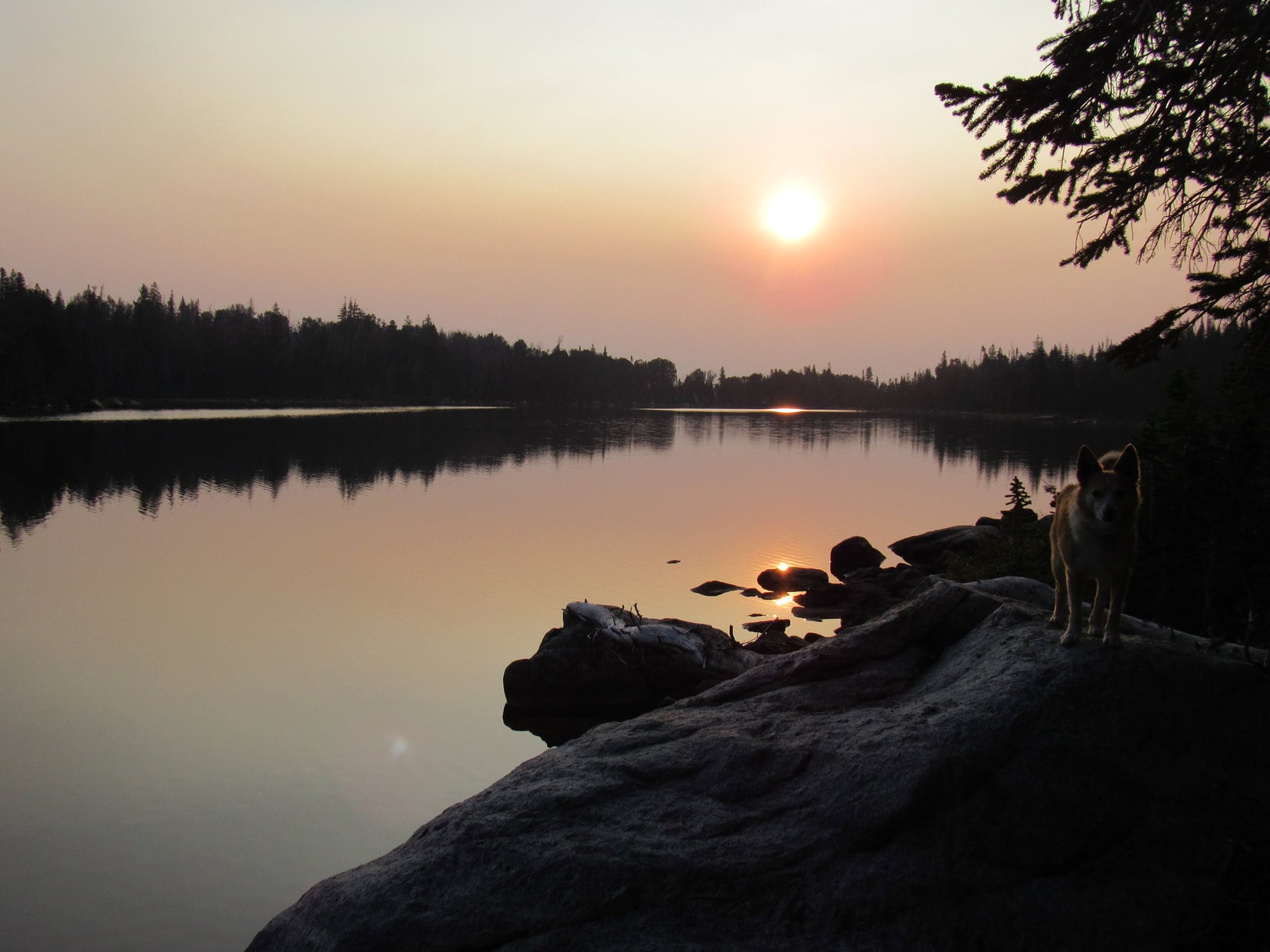
Atlantic Lake shortly after sunrise. Photo looks ESE.
A little farther on.

Near the W end of Atlantic Lake, Lupe came to a vacant campsite.  Not a bad spot!  If SPHP had known about it yesterday, Loop would have spent the night here.  A rushing stream was just beyond the campsite.  Leaving Atlantic Lake, Loopster followed the stream up a steep forested slope.  Crossing the stream after the terrain leveled out to some degree quickly proved to be a mistake.
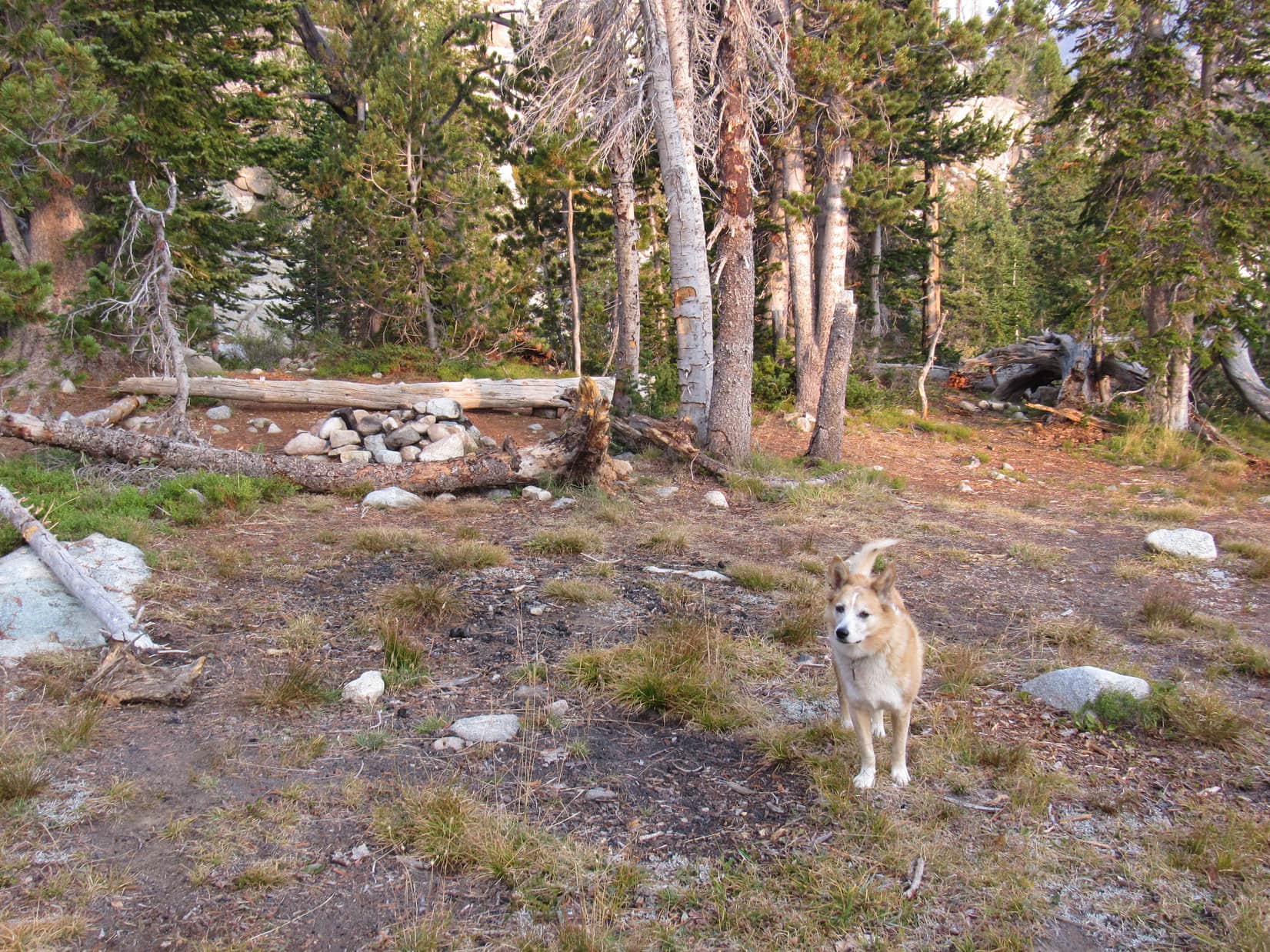
At the campsite near the W end of Atlantic Lake.
Heading up the stream.
Loop crossed the stream (hidden in the bushes) here, but ran into difficult terrain on the other side.

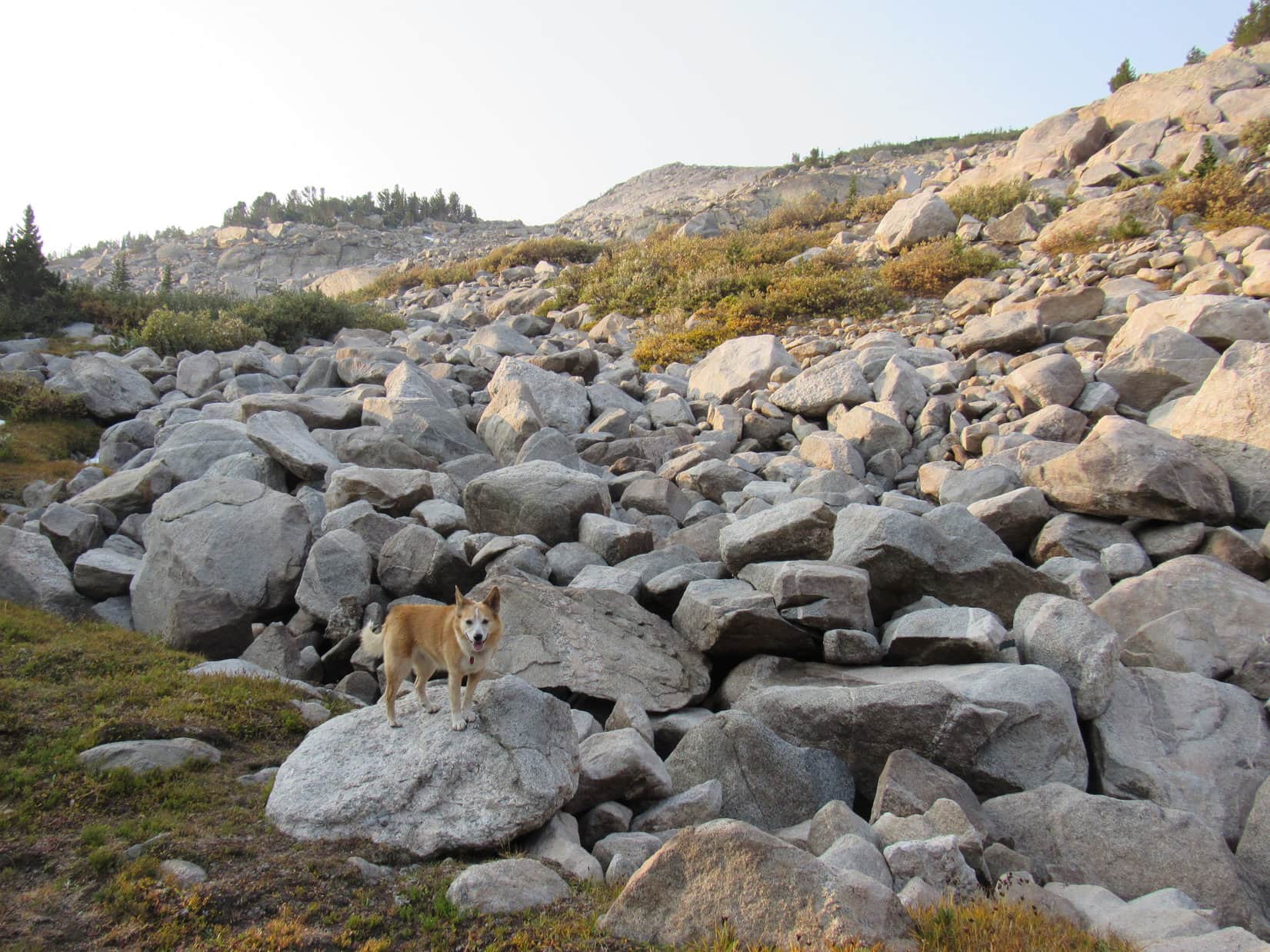
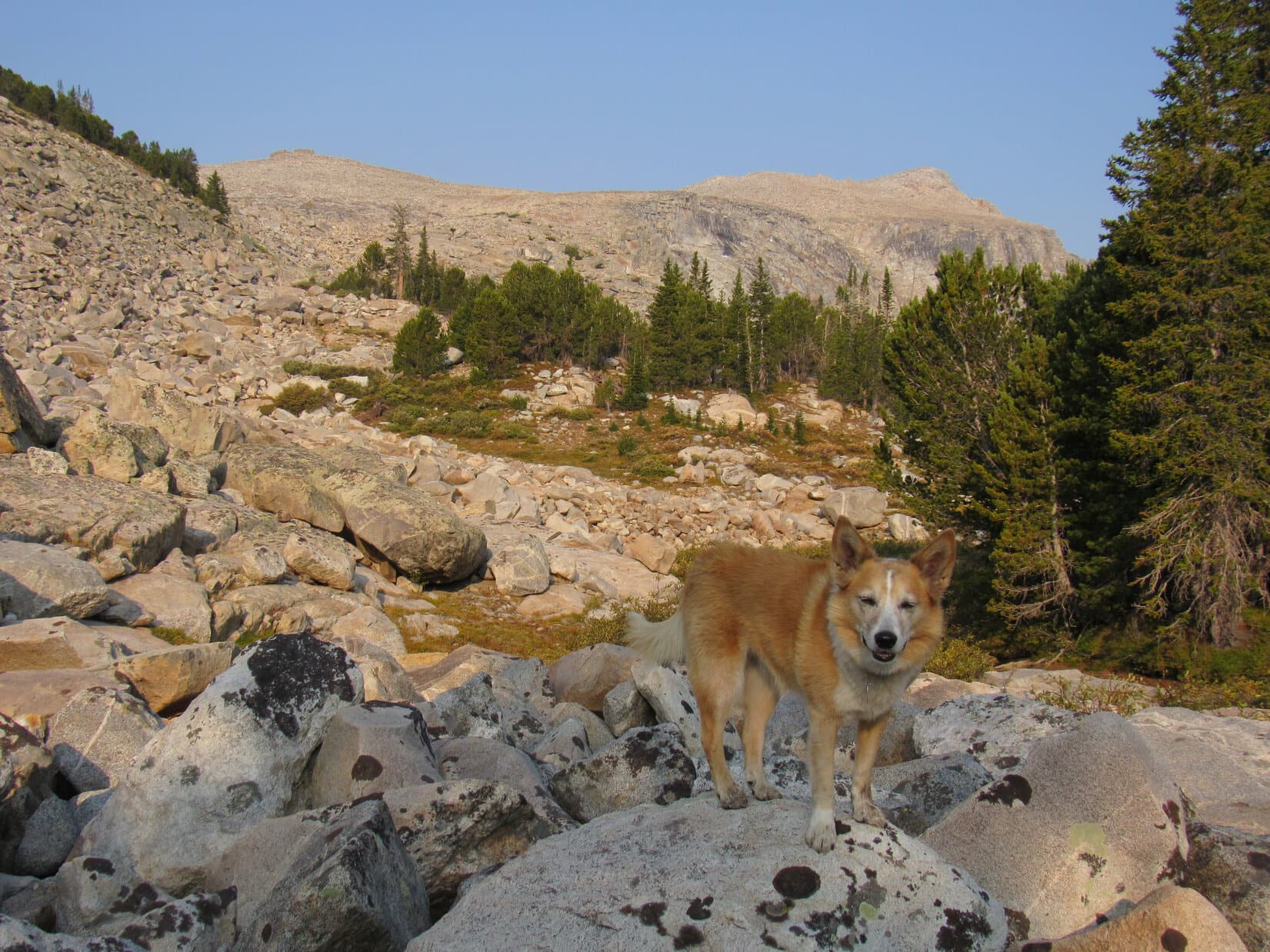
Returning to the S bank, Looper kept going, venturing through a region bounded by a steep rocky slope on the L (S), and the stream and forest on the R (N).  She was often forced to scramble over talus at the base of rock slides.  Only intermittent signs of any use trail now.
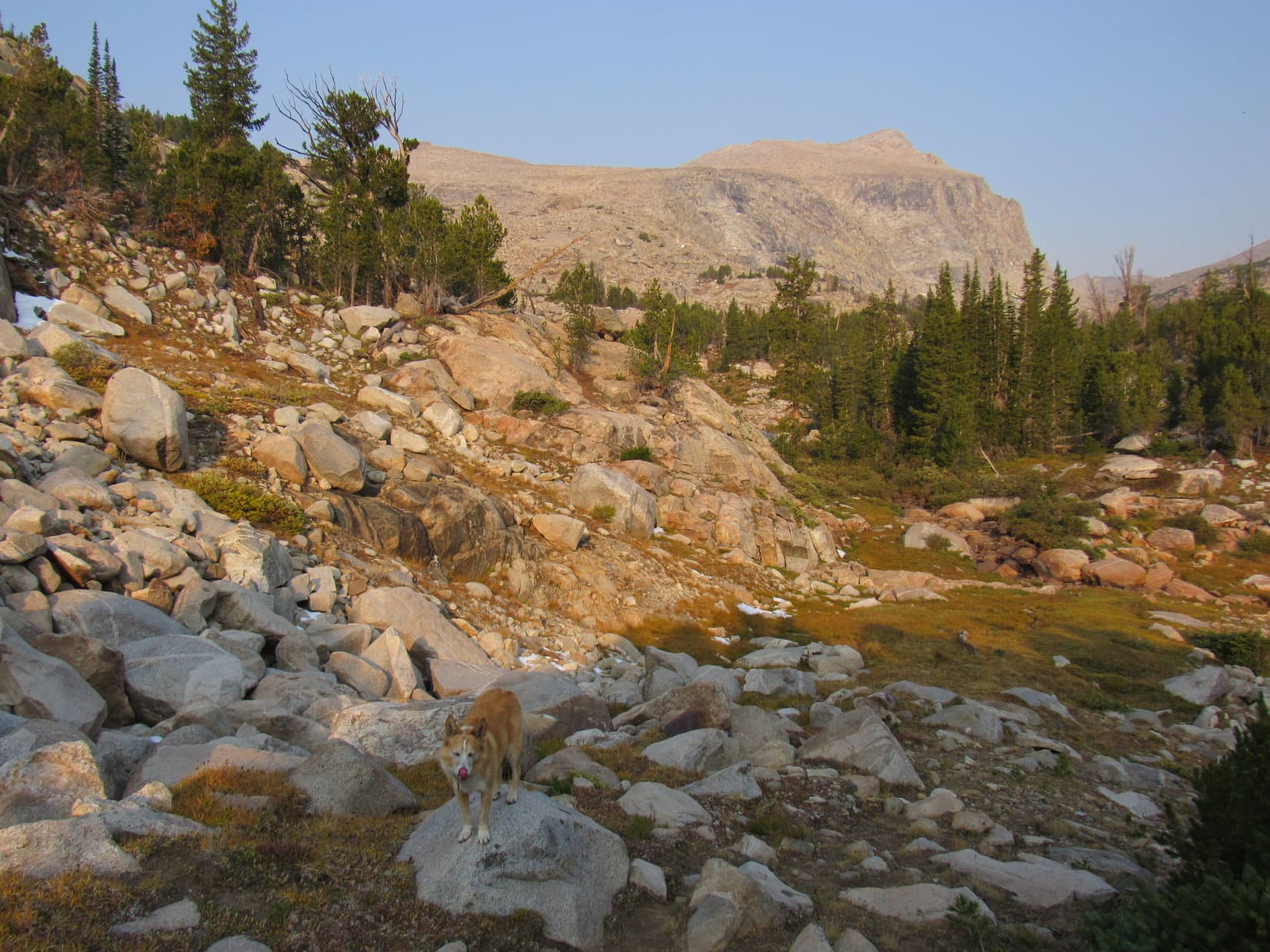
Following the base of the slope. Atlantic Peak (R). Photo looks WNW.
Best to stay low and keep heading W for a while yet! Photo looks S.
Crossing talus. Atlantic Peak straight up from Lupe. Photo looks WNW.

After a while, the stream disappeared in the forest.  Lupe eventually came to the brink of a wide ravine.  She needed to get across it, but was too high.  A pond was visible 50 feet lower off to the N (R).  This seemed like a decent landmark to check progress against, but the topo map didn’t show a pond in this region at all.  Puzzling.
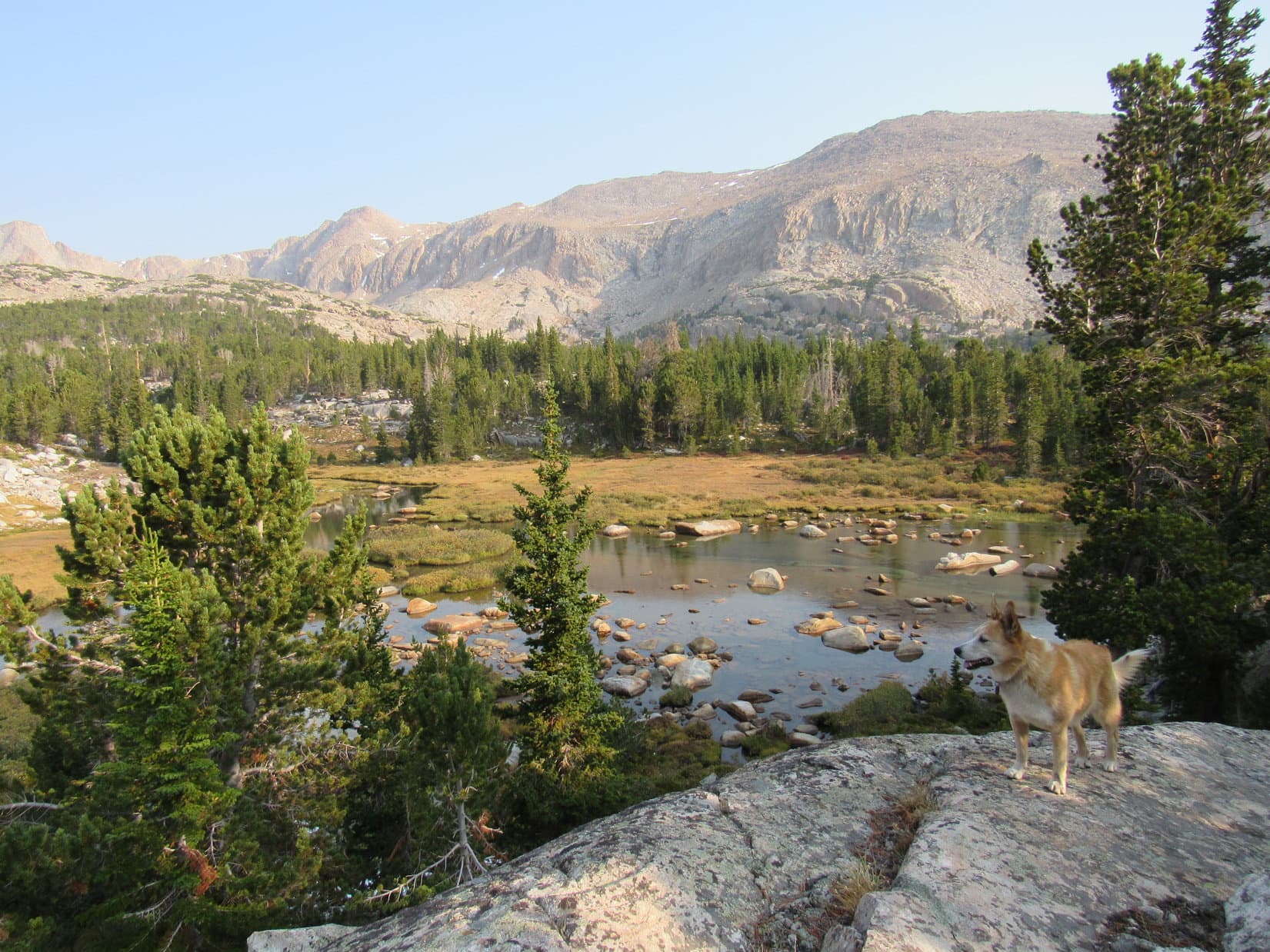
The mysterious unmapped pond. Silas Peak (12,248 ft.) (L). Photo looks NNW.
Need to get over there! Photo looks WNW.

Retreating into the forest, Lupe found a way to get down close to pond level.  The pond was actually a wide spot in the same stream she’d been following earlier.  Crossing only a minor tributary, Loop made it over to the base of the rock formations W of the ravine.  The American Dingo’s ascent of Atlantic Peak (12,490 ft.) was about to start in earnest.
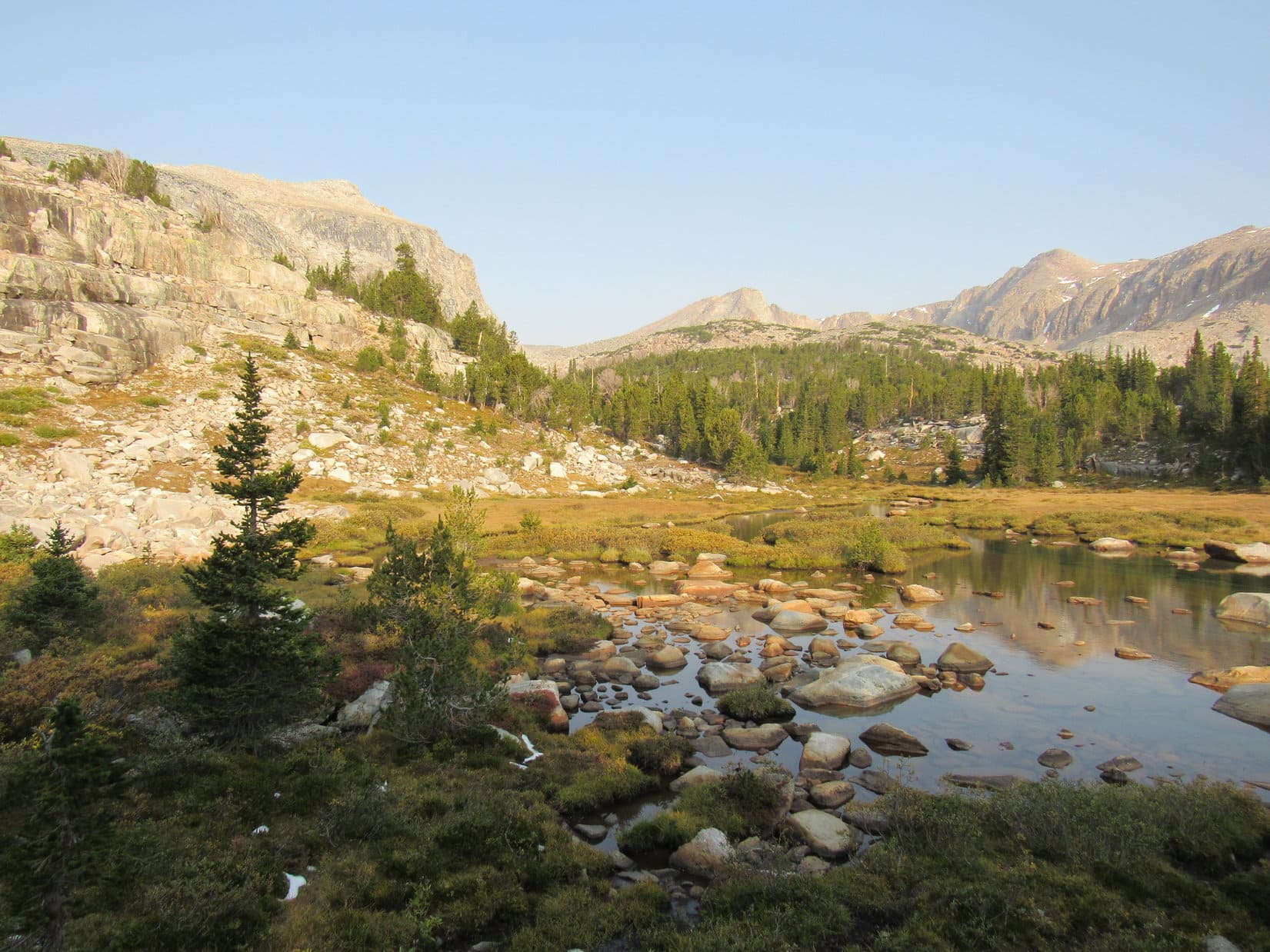
Looking up Atlantic Canyon. Silas Peak (R). Photo looks NW.
Made it across the ravine! Ready to start climbing? Photo looks WSW.

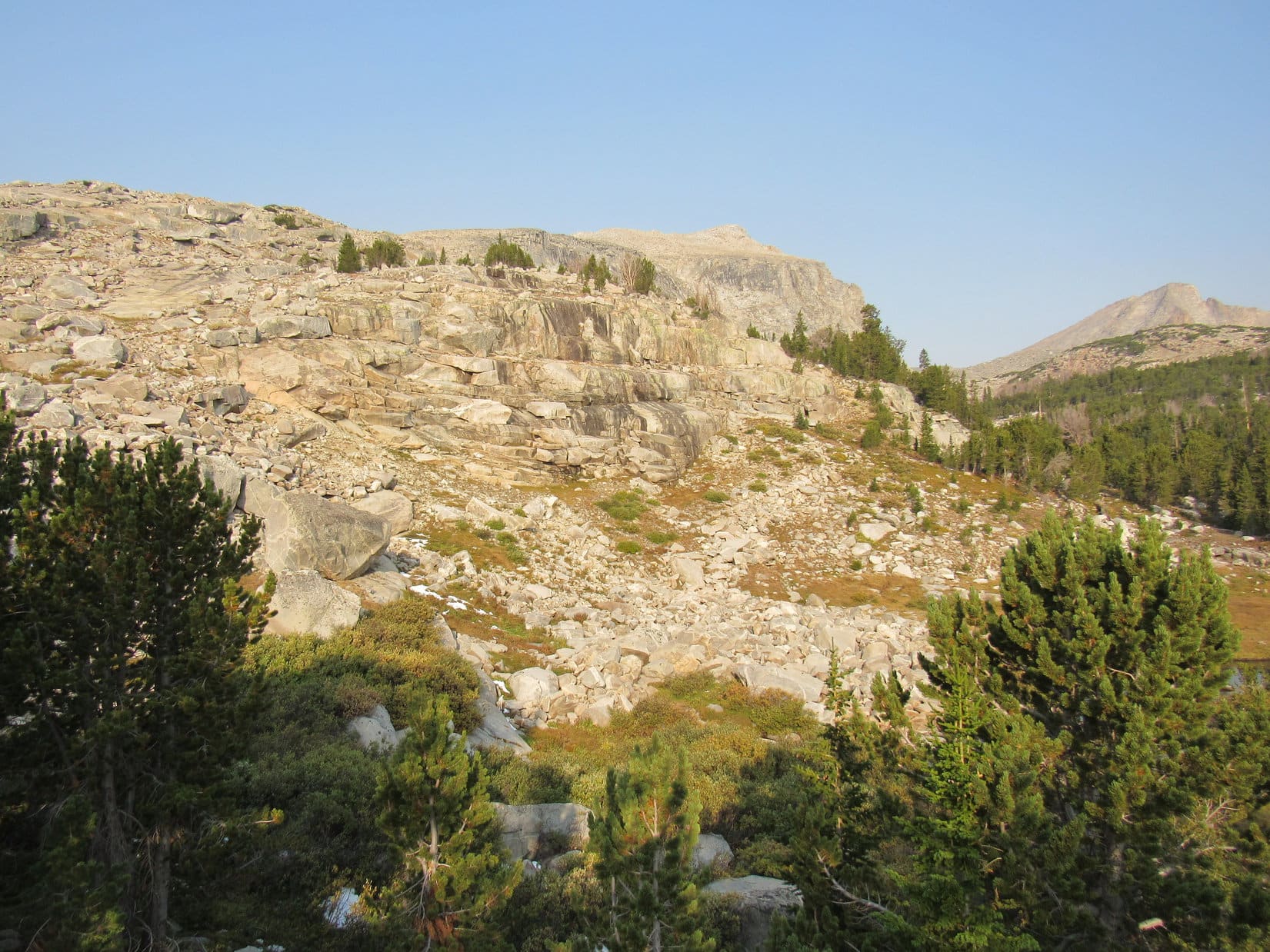
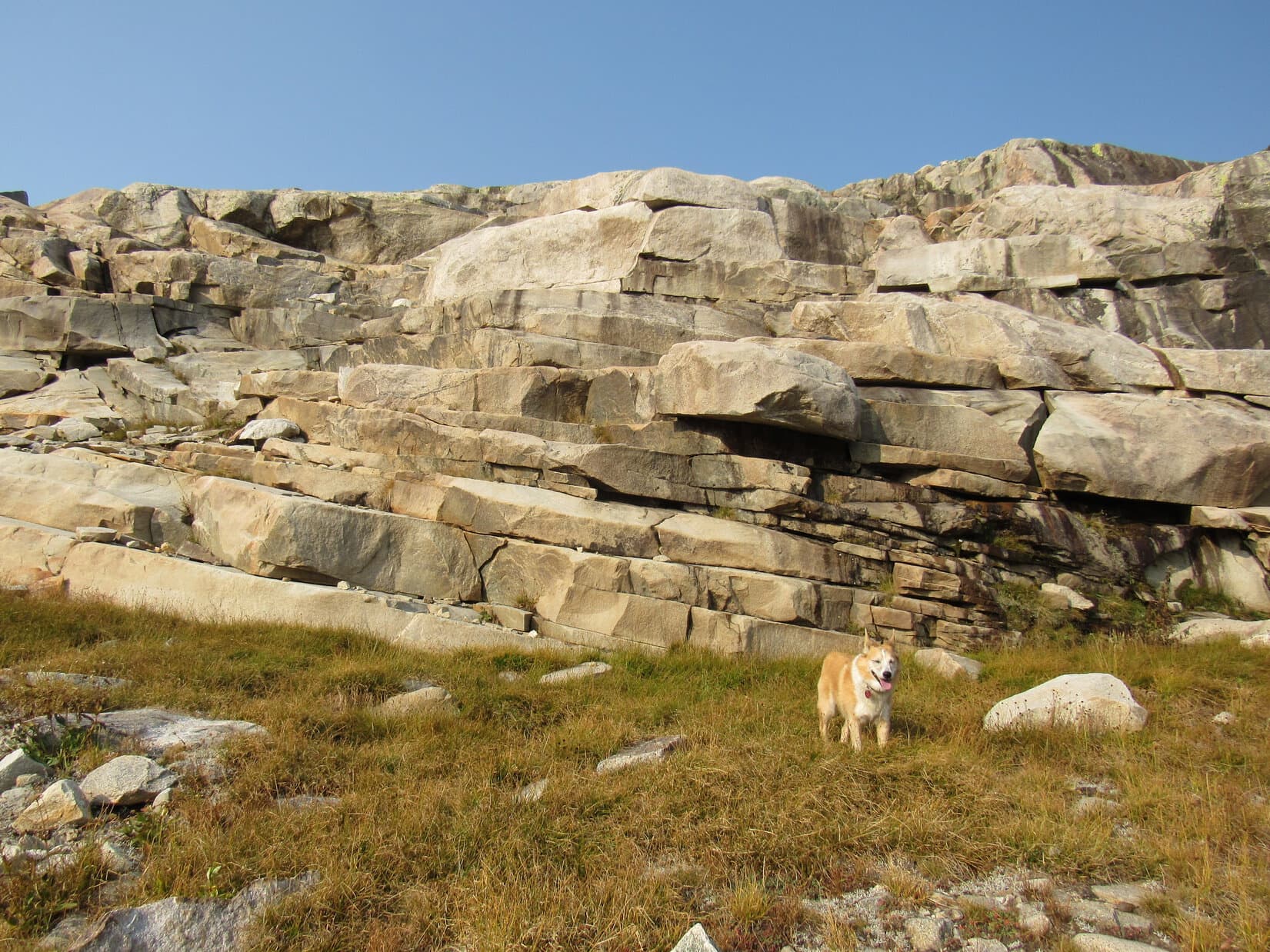
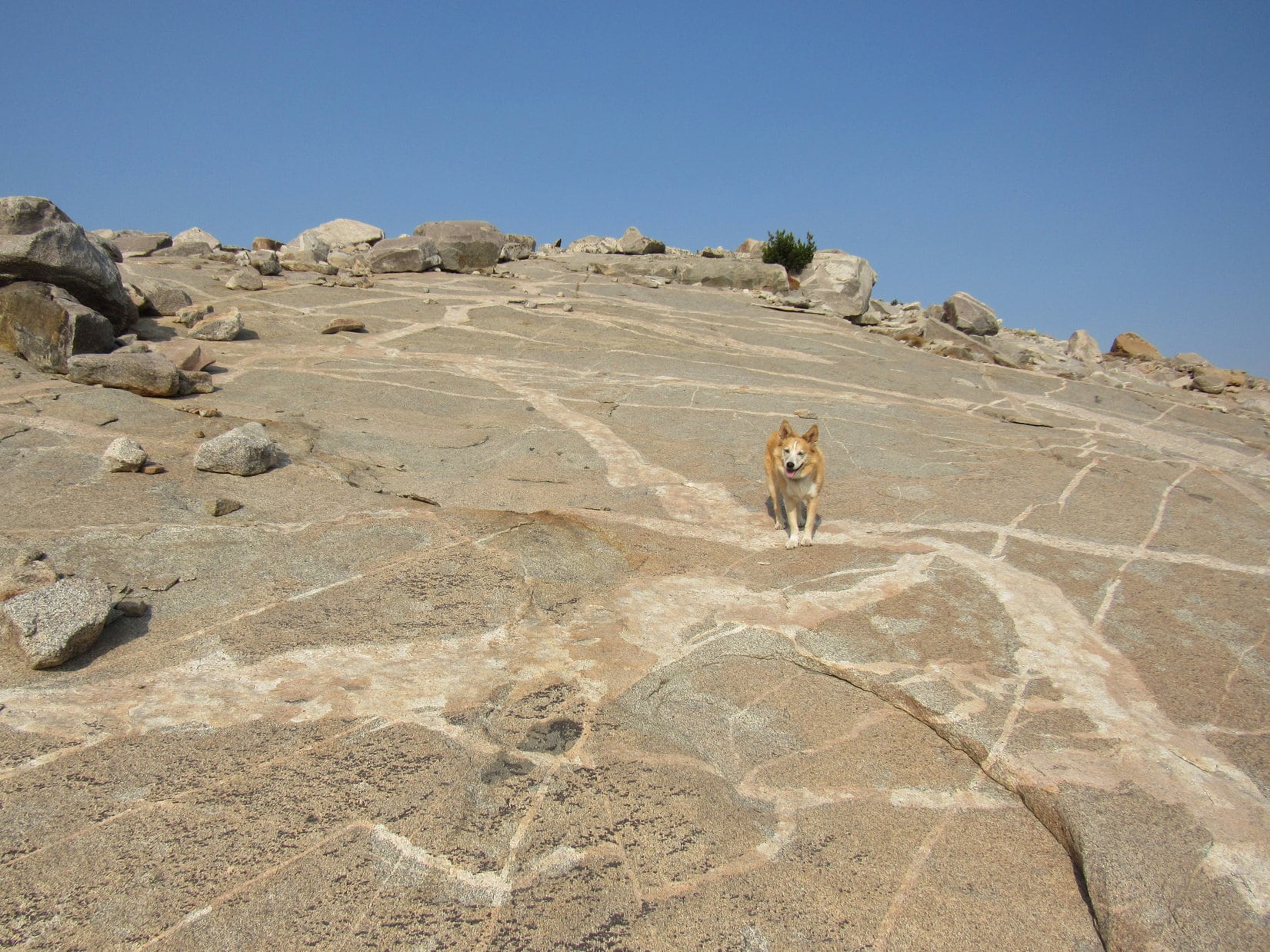
Going around the S side of the first rock formation, Loop found herself on a rocky slope that would have been a slow trudge for SPHP, if not for exposed slabs providing excellent routes higher.  The slabs were steep, but dry, so traction was good.  Staying on the slabs as much as possible, Lupe and SPHP traipsed toward an increasingly blue sky.
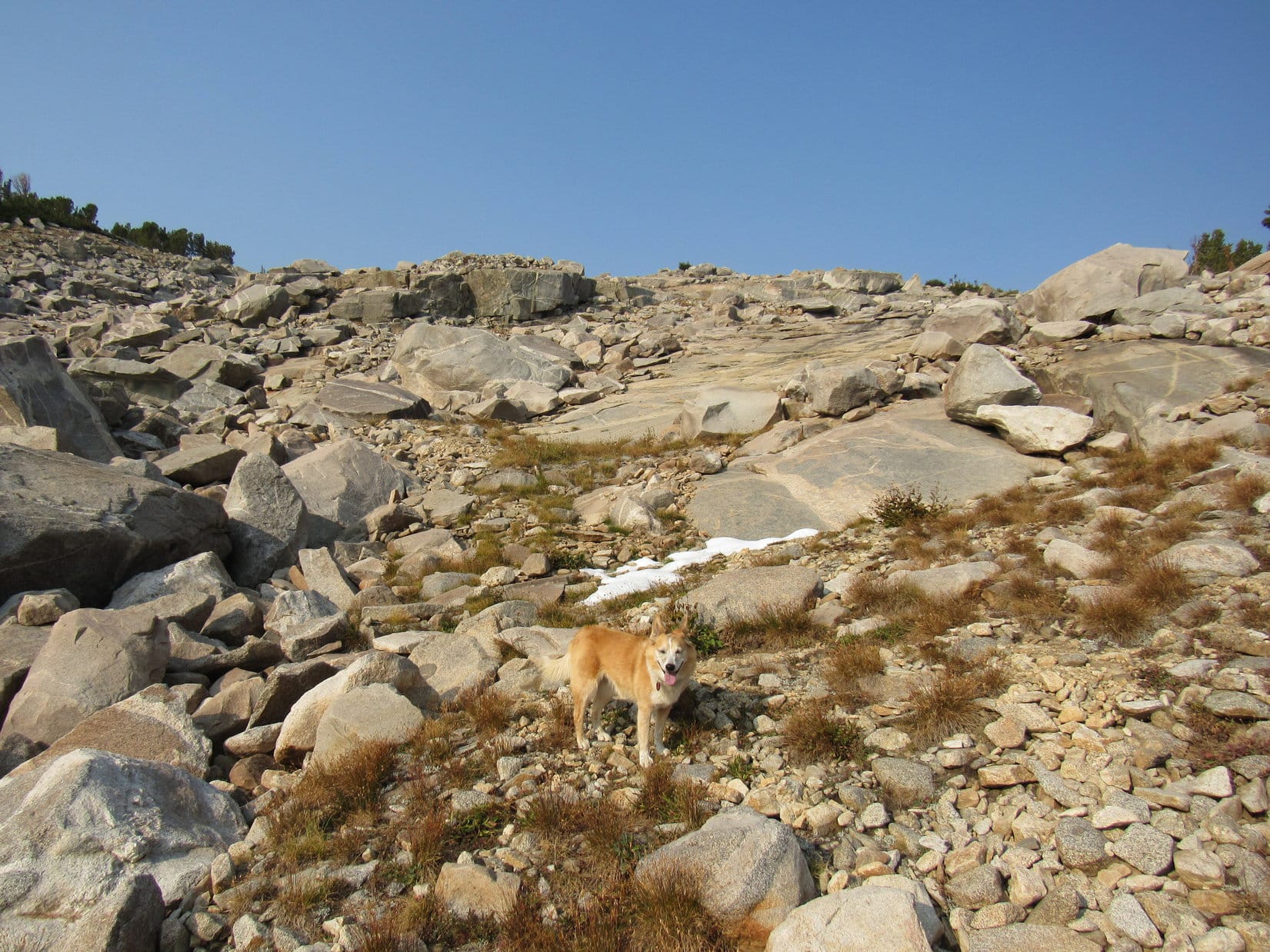
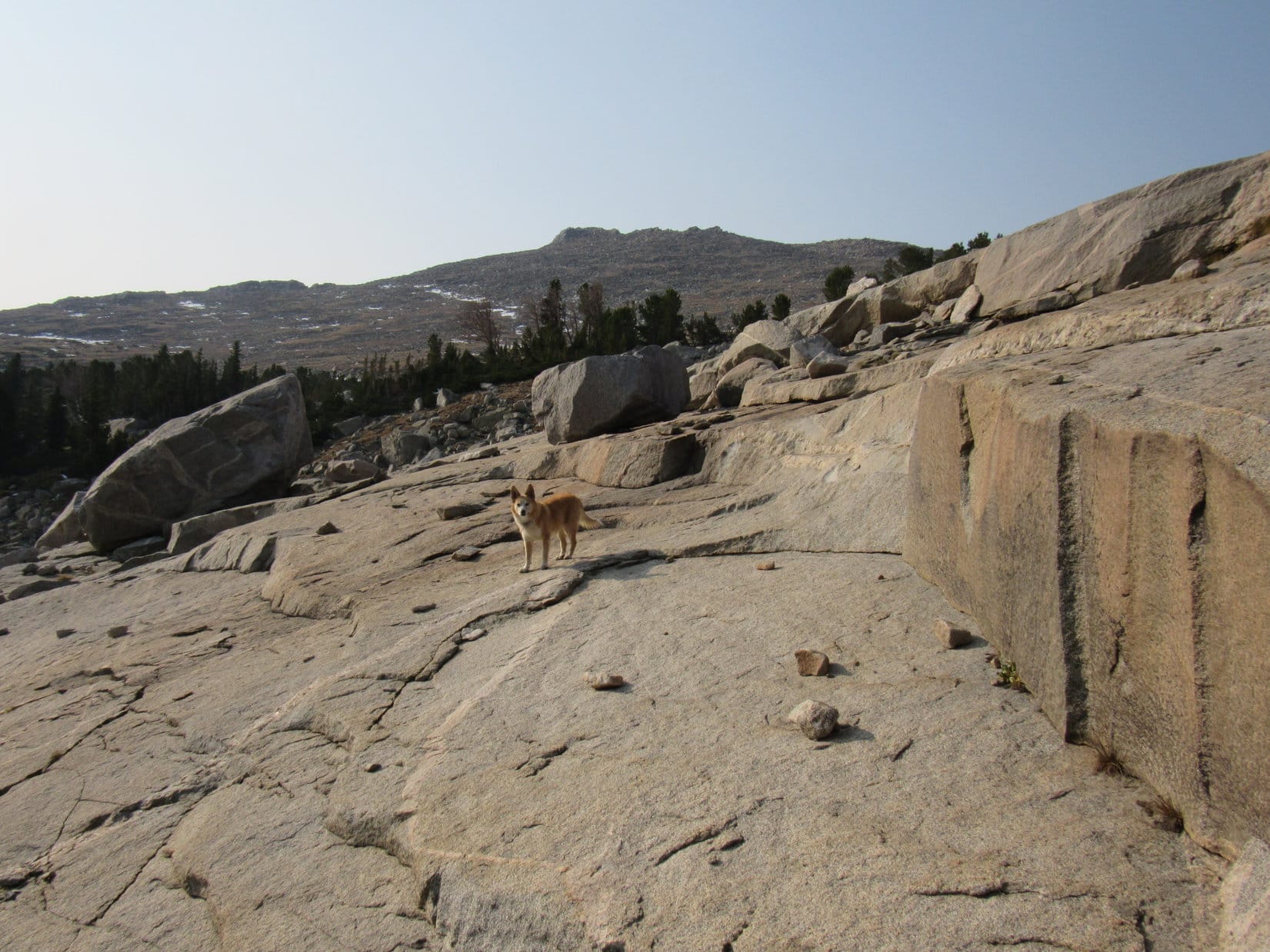
These slabs we’re coming to are the way to go! Photo looks SW.
In the heart of slab country. Photo looks S.
Wouldn’t want it to get too much steeper, but we’re doing great! Photo looks W.

All good things must come to an end, and the slabs did, too.  Lupe came to two high spots densely covered with low evergreens.  Reaching the top of the first one, a world of rock was visible beyond it.  Looked like some pretty rough ground.
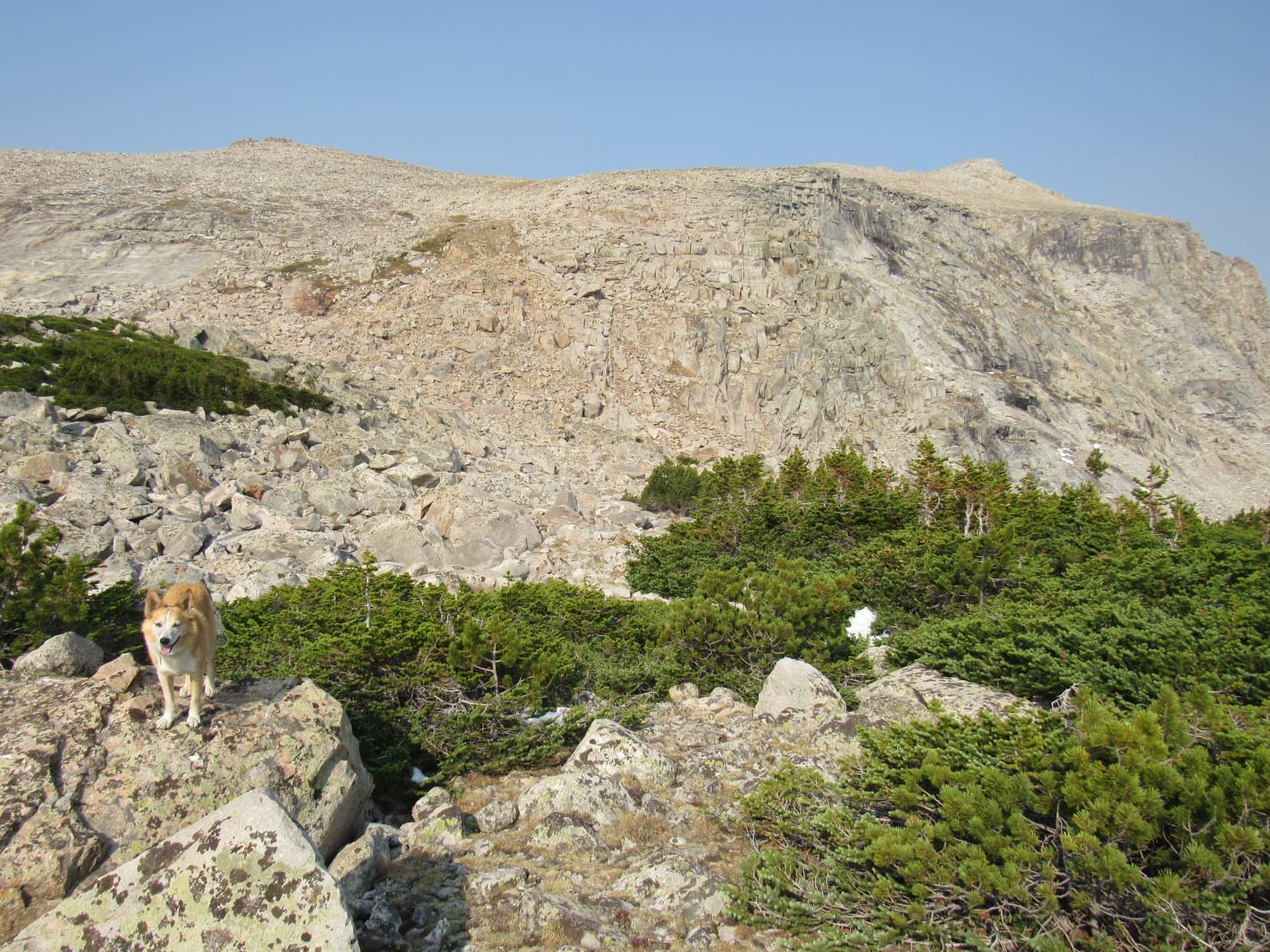
At the first high spot. Second high spot (L) ahead. Photo looks W.

The evergreens were so thick, it was hard to push through them.  Turned out to be easier to avoid them altogether by staying along the N edge of this hill.  After getting past them, Lupe went SW toward the second high spot.  She never quite got to the top of this next high point, again finding it easier to simply avoid the whole evergreen situation by staying NW.

Immediately beyond the second high spot was a ravine choked with talus.  Fortunately, this ravine wasn’t terribly wide, enabling SPHP to rock hop through it all without losing too much time.

Lupe resumed her ascent.  The slope ahead was rocky and steep, but she again came to a series of slabs creating easy routes higher.  Between the slabs, she often found lanes of vegetation to follow.  Progress was good.  At about 11,000 feet, Loop could see a rock-free depression to the S that was somewhat lower.  Maybe a tarn that had gradually filled in with sediment?
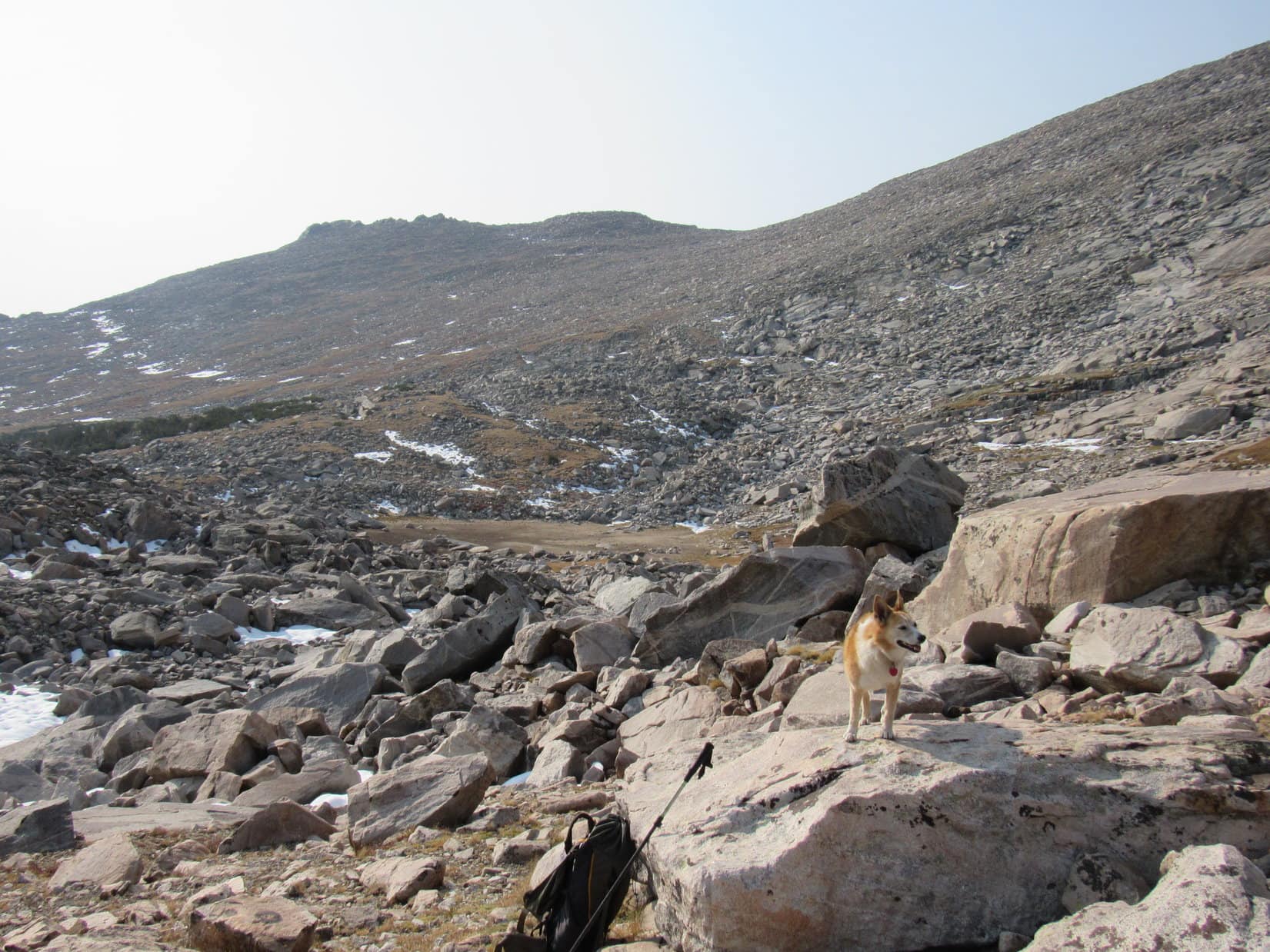
Looking down on the sediment-filled depression (Center). Photo looks SSE.

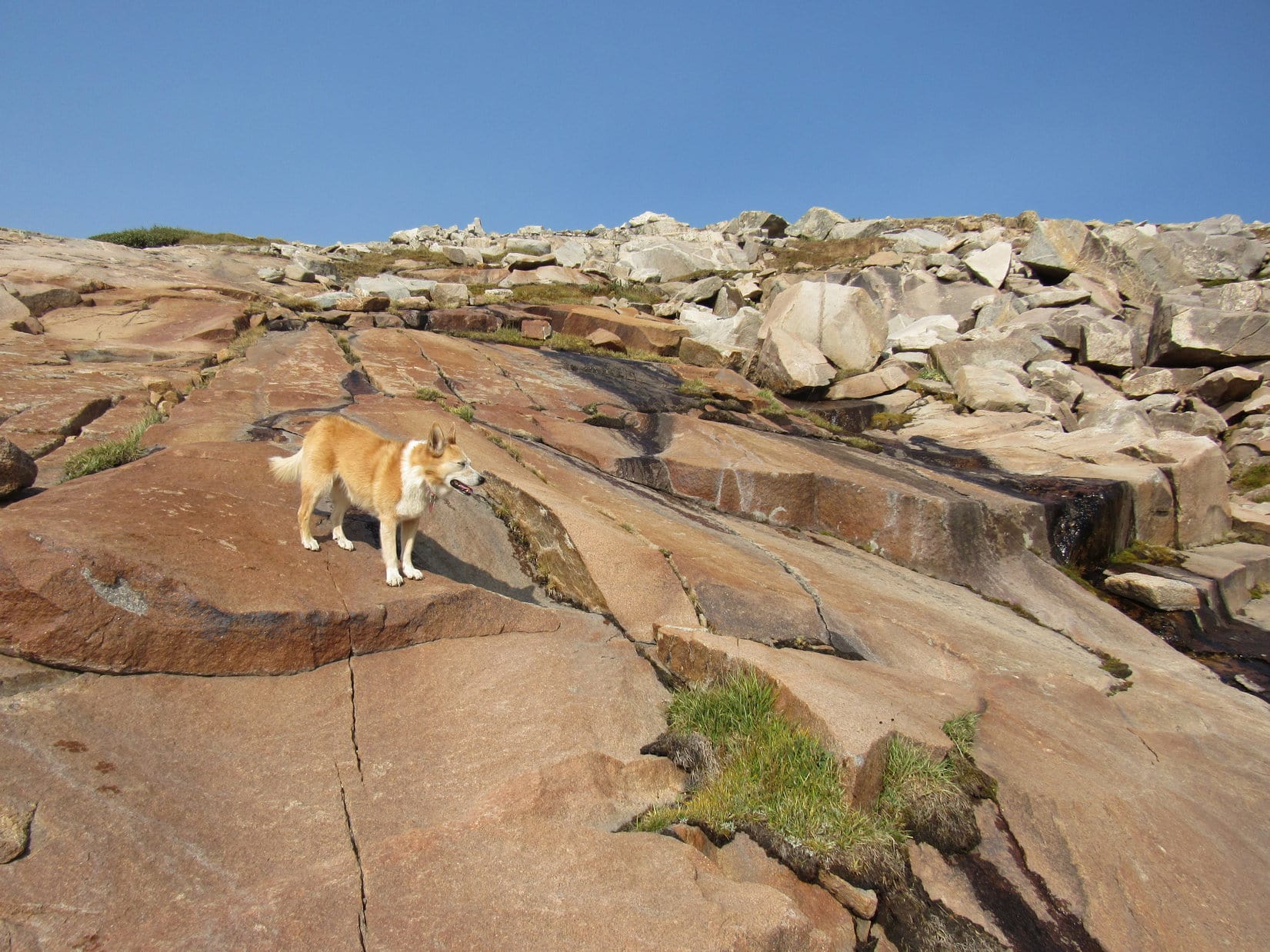
Comprising much of the enormous slope W of the depression was a huge expanse of exposed slabs.  Looked steep at the upper end, and SPHP wasn’t eager to head that far S.  Nevertheless, Lupe inched toward the slabs as she continued up the mountain.  Soon a much smaller orange slab with a tiny meltwater stream appeared ahead.
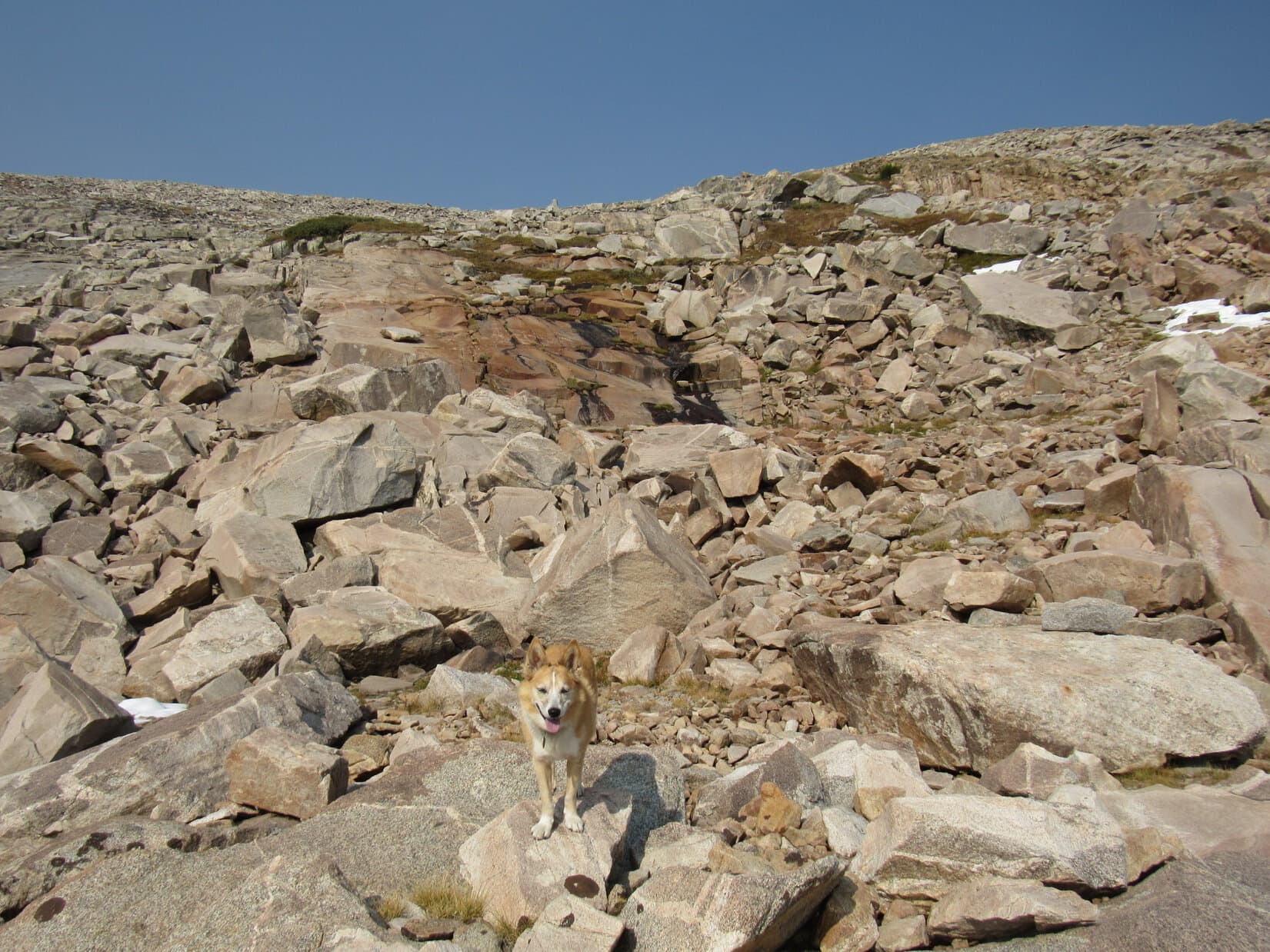
Orange slab dead ahead! Photo looks W.
On the orange slab. Photo looks W.

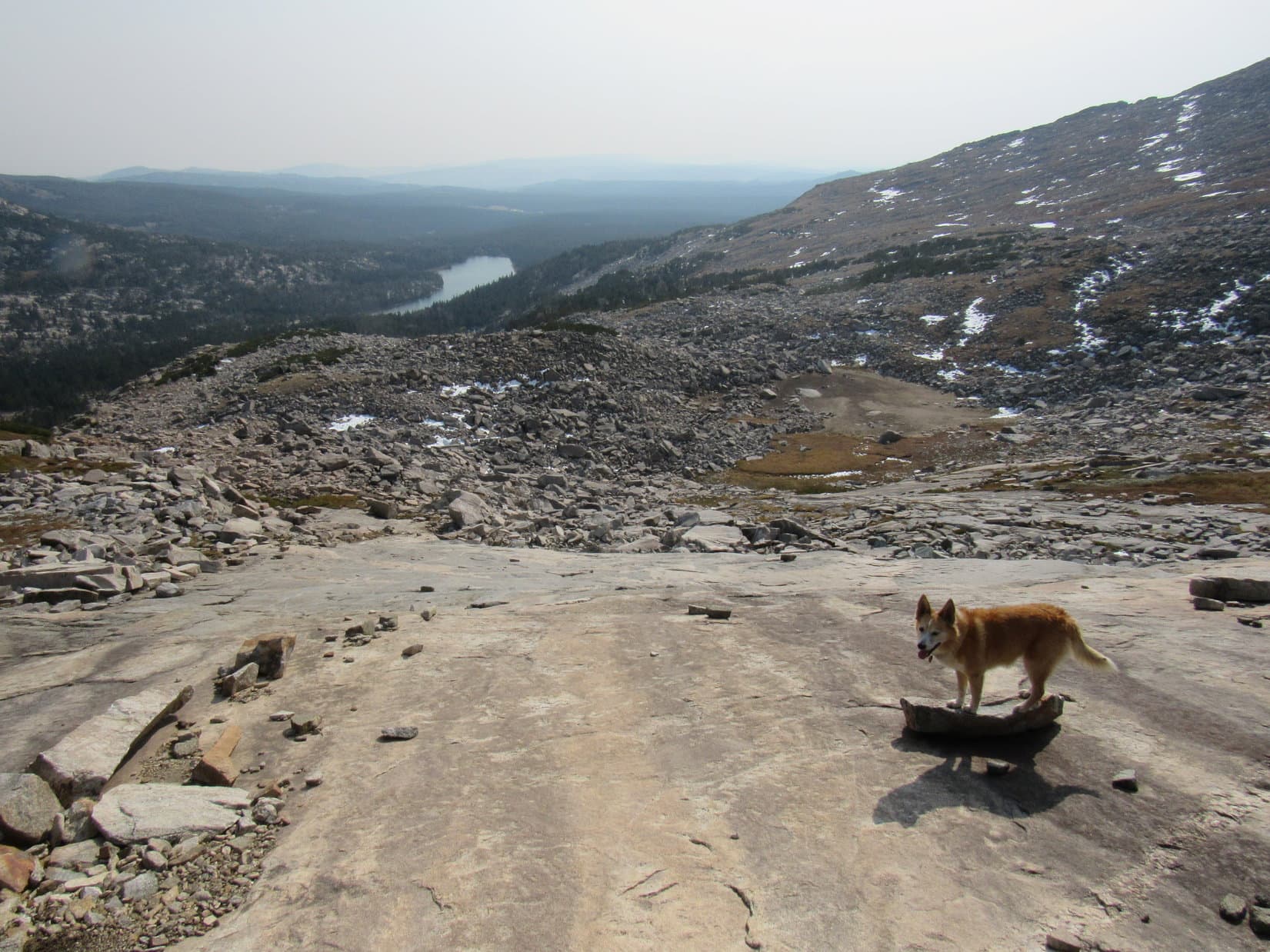
Above the orange slab, a series of grassy benches existed among all the rocks.  Various ramps connecting these benches enabled a winding route higher without having to do much scrambling.  Lupe reached the N edge of the enormous slabby region far above the sediment-filled depression.  A good chunk of Atlantic Lake was now in sight.
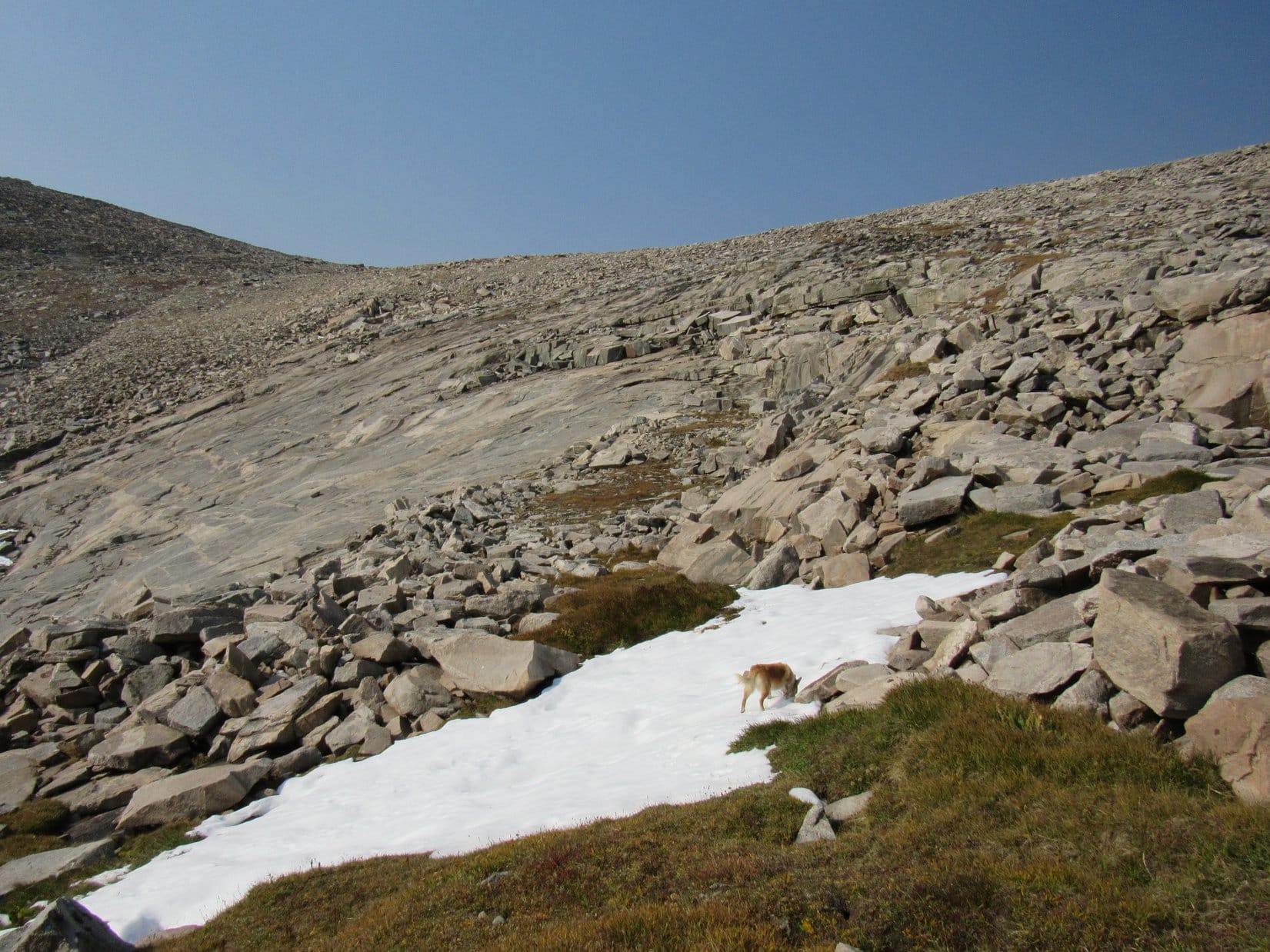
Exploring a grassy bench. Photo looks SW.
Atlantic Lake (L) and the sediment-filled depression (R). Photo looks E.

The slope Lupe was climbing was taking her W toward the ridge SSE of HP12261, Atlantic Peak’s eastern subpeak.  The American Dingo was now getting close to the apparent top of this ridge, but SPHP realized that was merely an illusion.  Fearing a long talus scramble ahead in the as yet unseen region above the slabs, reality ultimately proved to be much kinder.  Far more vegetation and less rock than expected.  Cake!
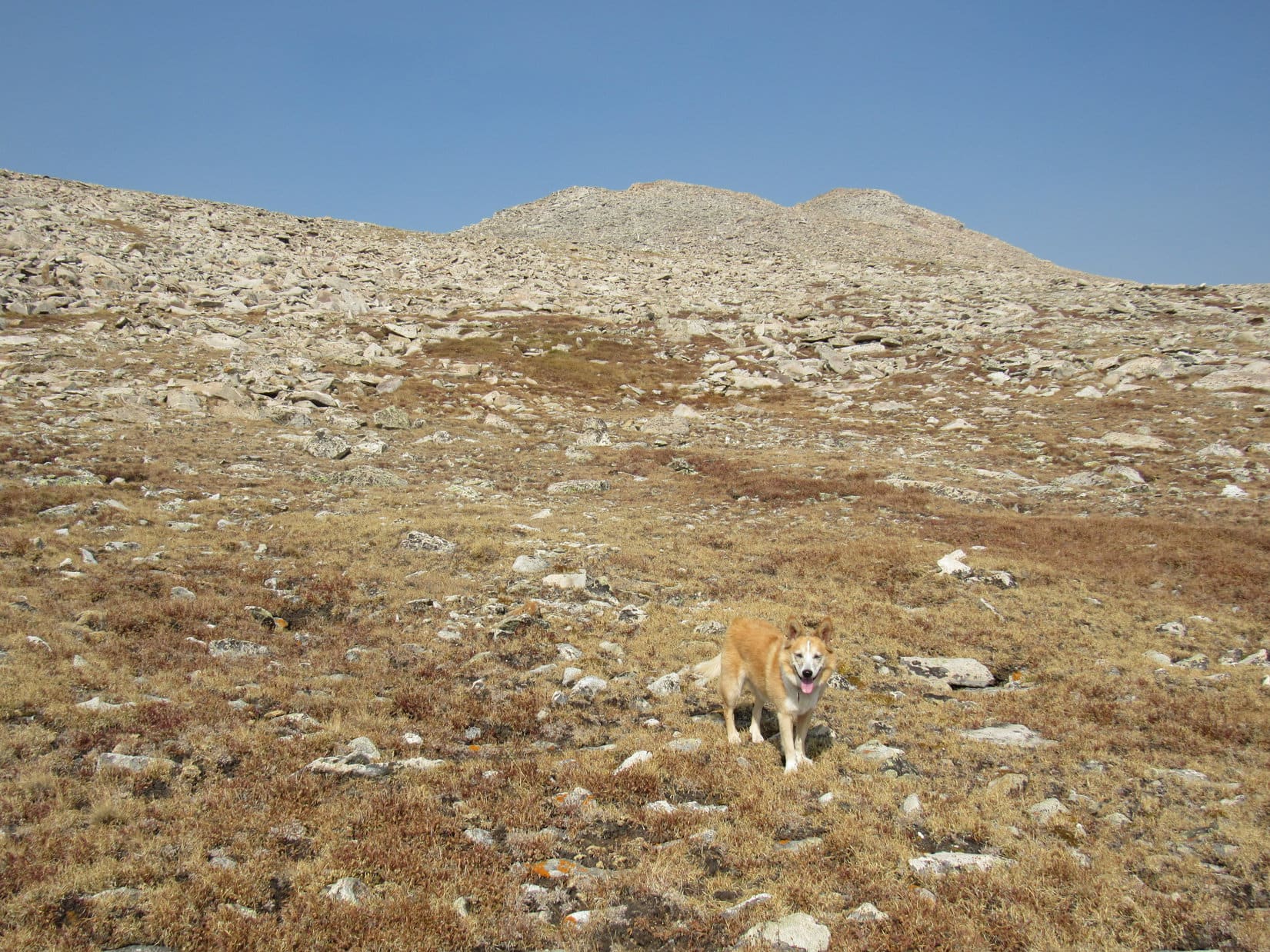
Above all the slabs now, and my, isn’t this nice! HP12261 (R). Photo looks NW.

Before long, Lupe was approaching the genuine top of the ridge, a broad rock-strewn region between HP12261 and HP11801.  The true summit of Atlantic Peak (12,490 ft.) was already coming into view.

Along the W side of the crest of this ridge sat a line of rock formations, several separate mounds of talus of varying size and shape.
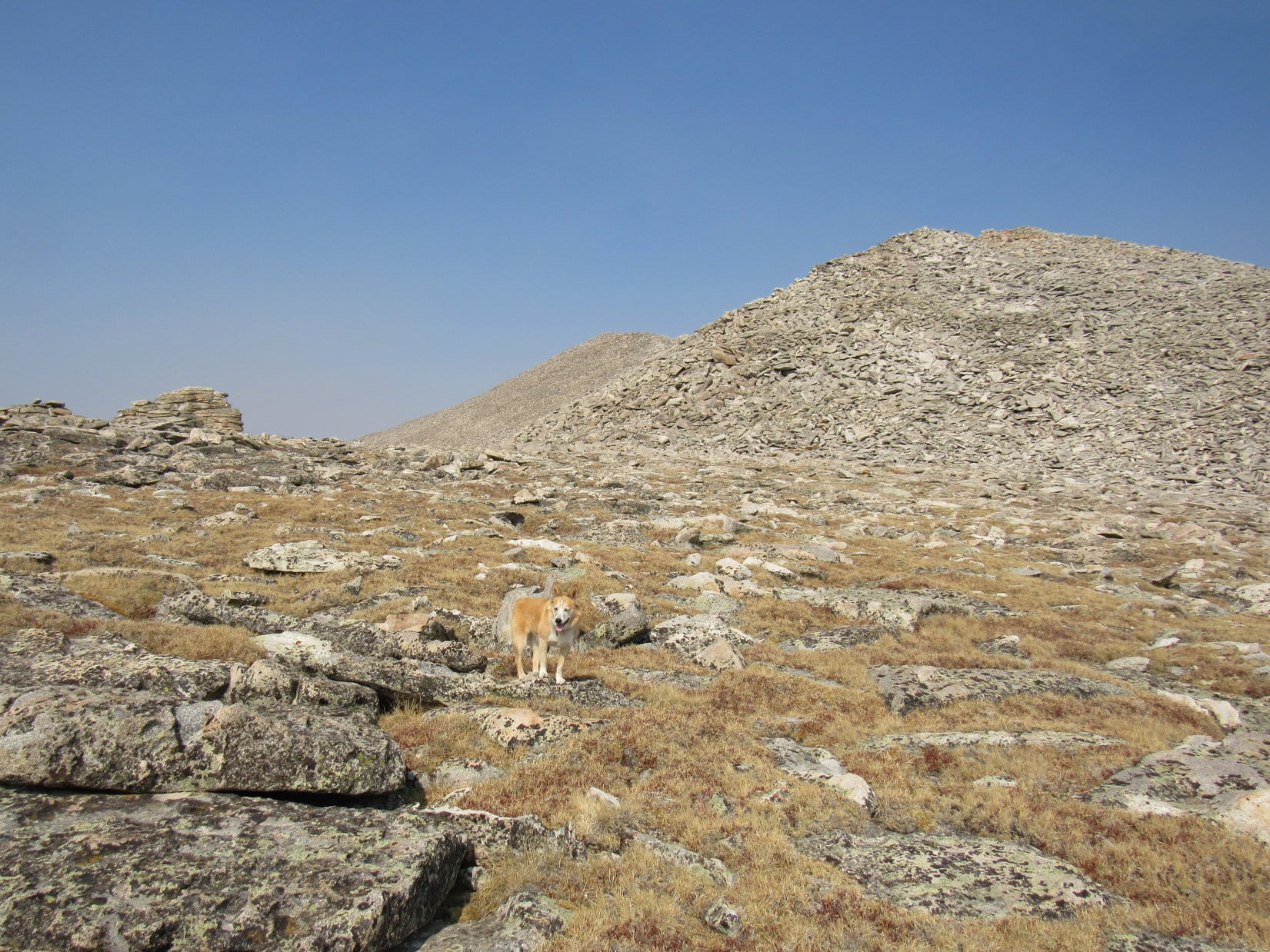
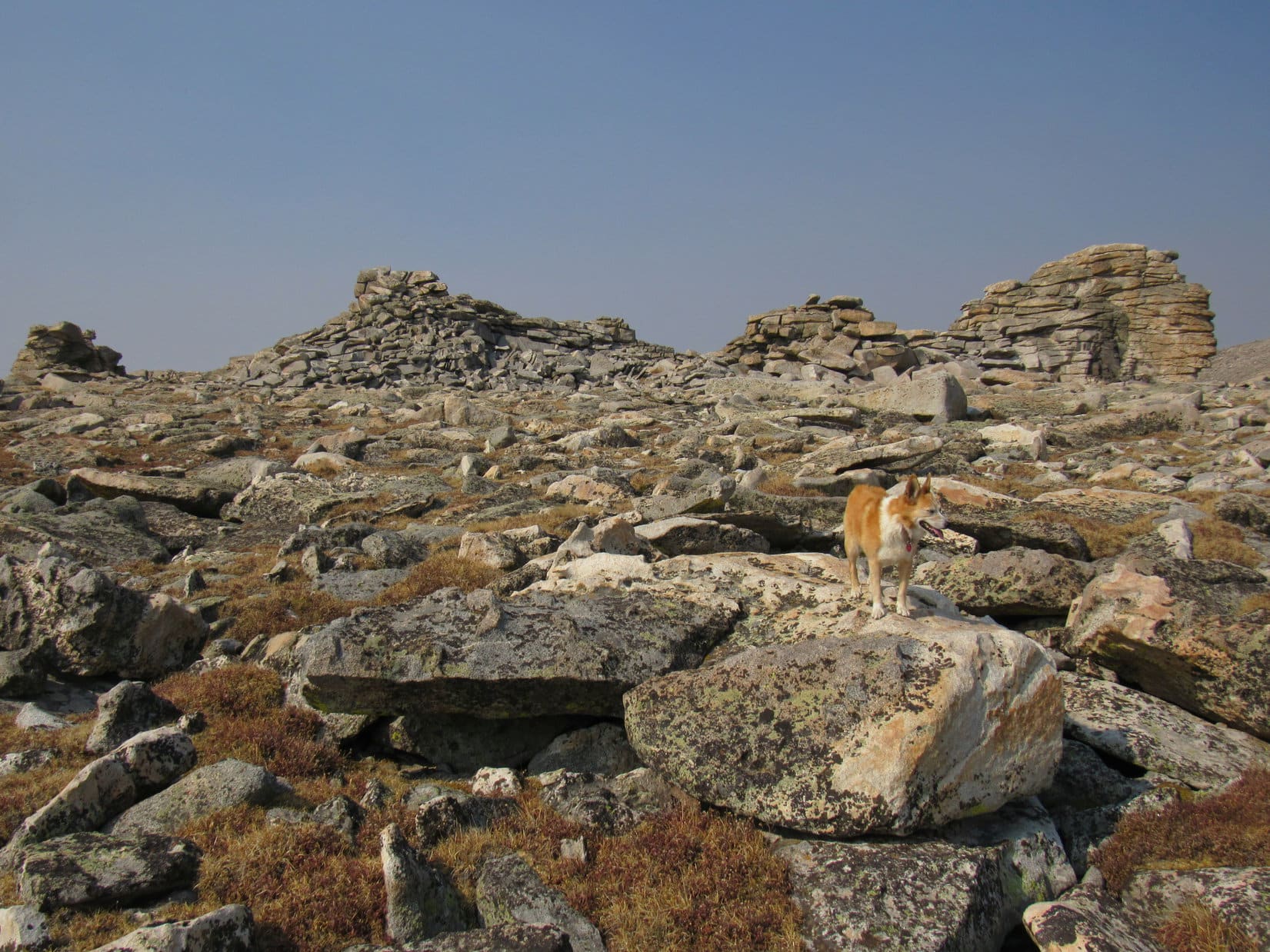
Approaching the ridgeline. Atlantic Peak (Center). Photo looks NW.
Approaching rock formations along the W side of the crest. Photo looks WSW.

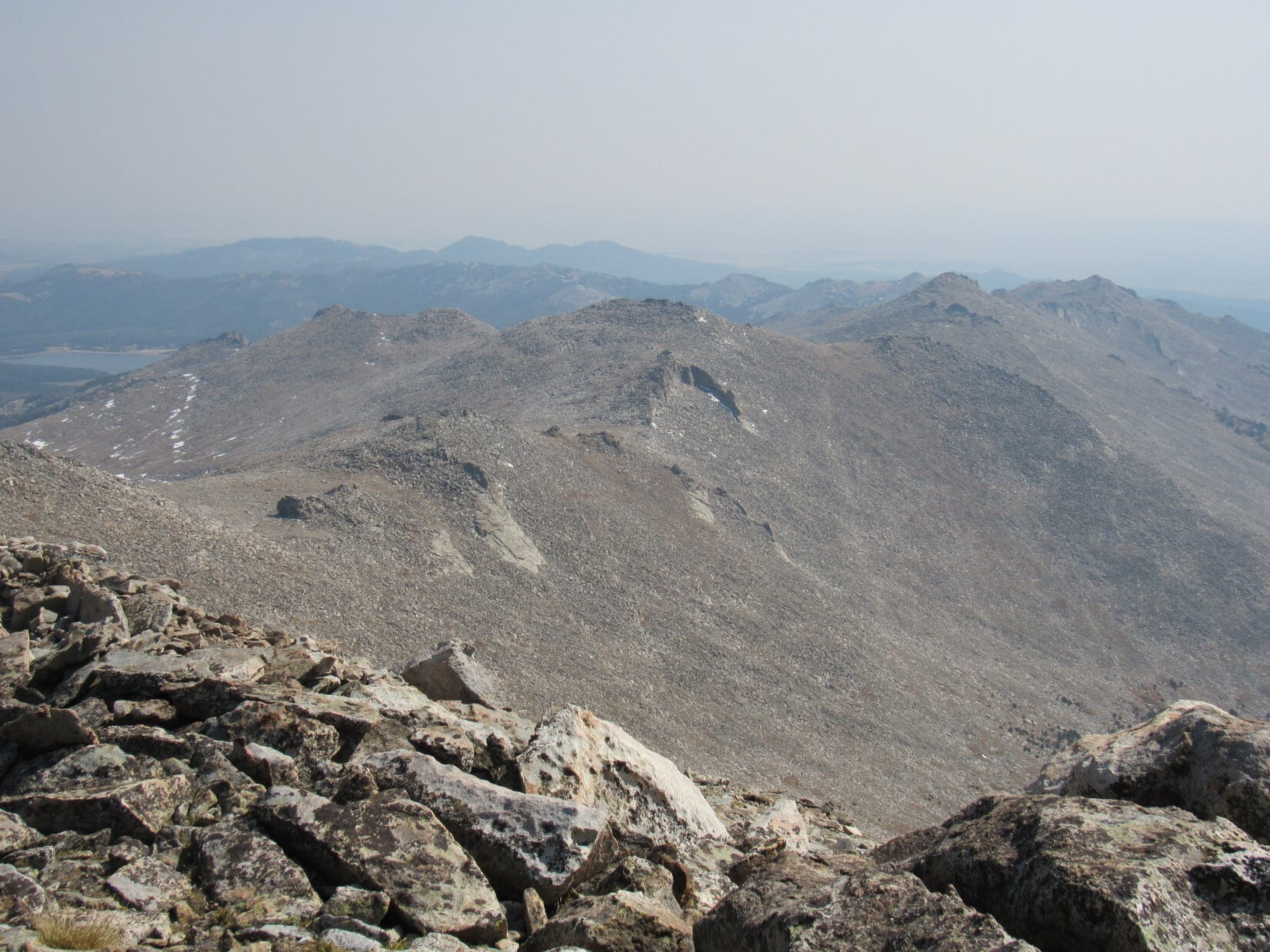
Going to the rock formation at the S end of the line, Loop peered over the edge, getting her first look at a huge expanse of territory S of Atlantic Peak.  Unfortunately, a grand panorama of Wyoming’s sagebrush plains beyond the Wind River Range was hazy and indistinct.  Darn smoke!

The smoke was bad, but it wasn’t terrible.  Lake 9590 was visible in the Blair Creek drainage, and so were the Sweetwater Needles (10,548 ft.) 1.5 miles beyond it.
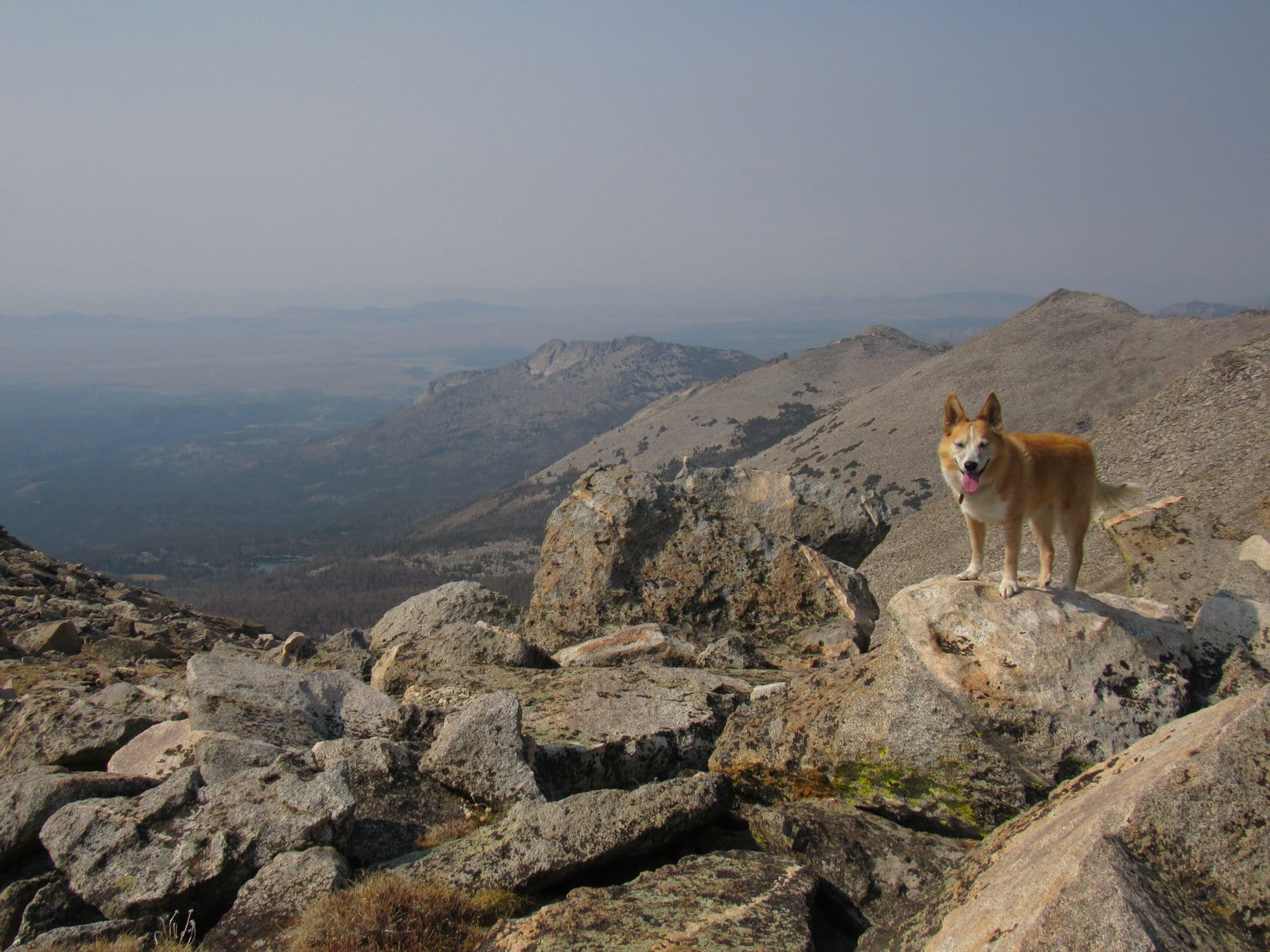
Lake 9590 (L), Sweetwater Needles (Center), Peak 11101 (R), and Peak 11456 (far R). Photo looks SW.

After surveying this smoke-diminished scene, Loop headed N, passing E of the rest of the rock formations.
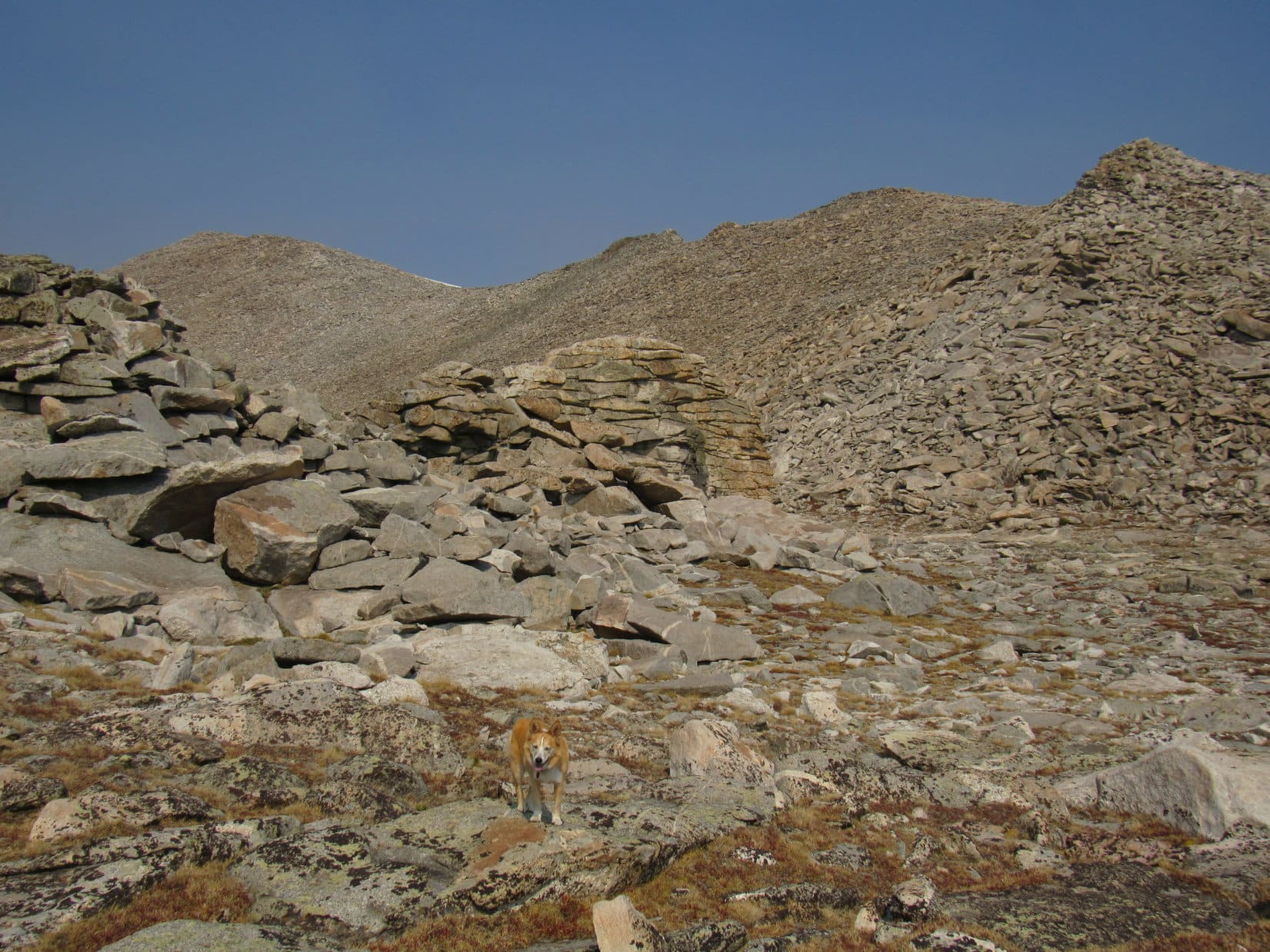
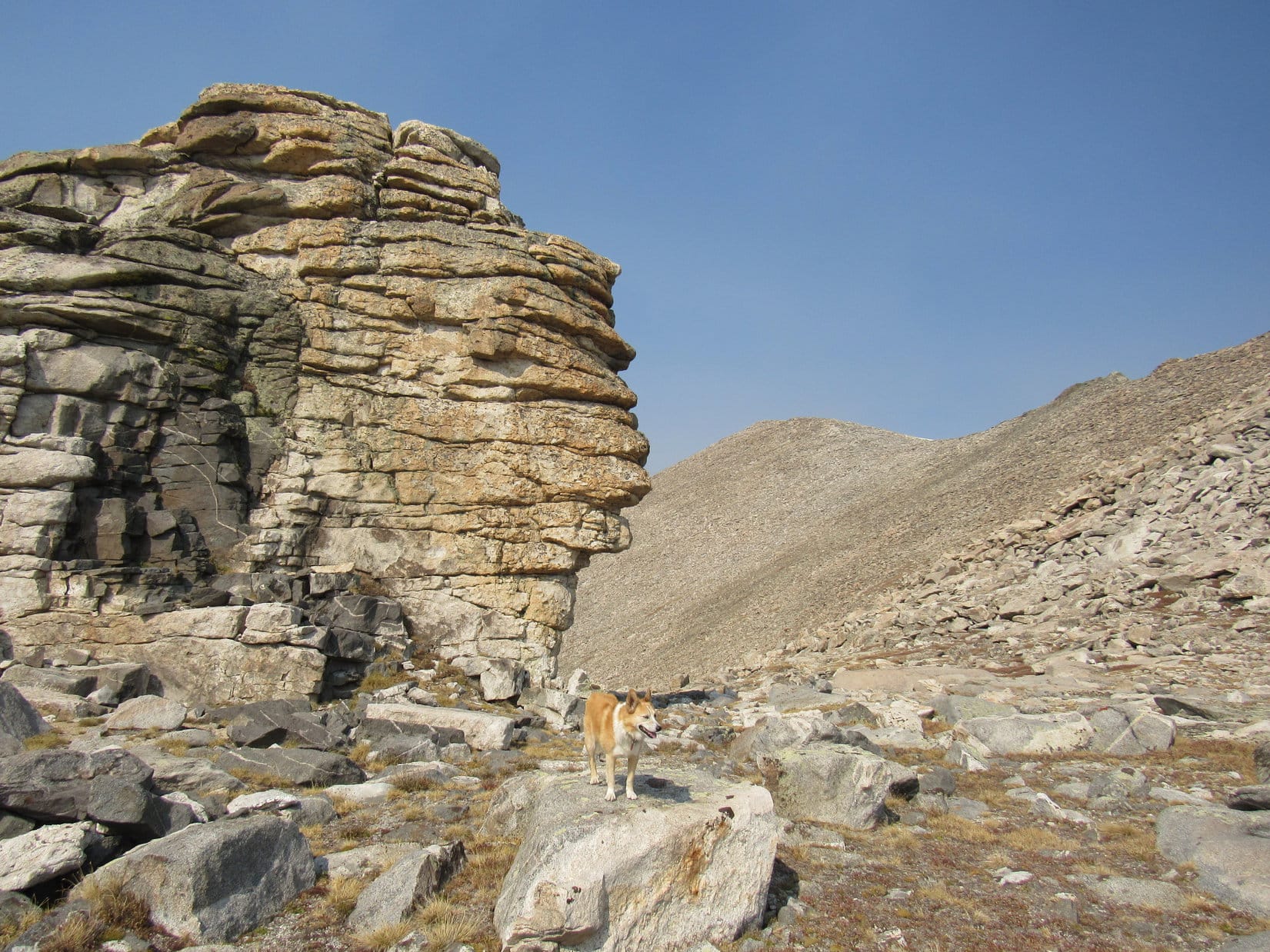
E of the rock formations. Atlantic Peak (L) and HP12261 (R). Photo looks NW.
Atlantic Peak (R of Center) from the N end. Photo looks NW.

From the formation at the N end, Atlantic Peak’s summit was in sight less than 0.75 mile NW.  So were the long slopes leading to it.  Rocky and steep, but nothing intimidating.  Merely a time-consuming grind.  SPHP got things off to a poor start by leading Lupe angling higher, which soon put her in talus.  Would have been better to have stayed lower where there was more vegetation.
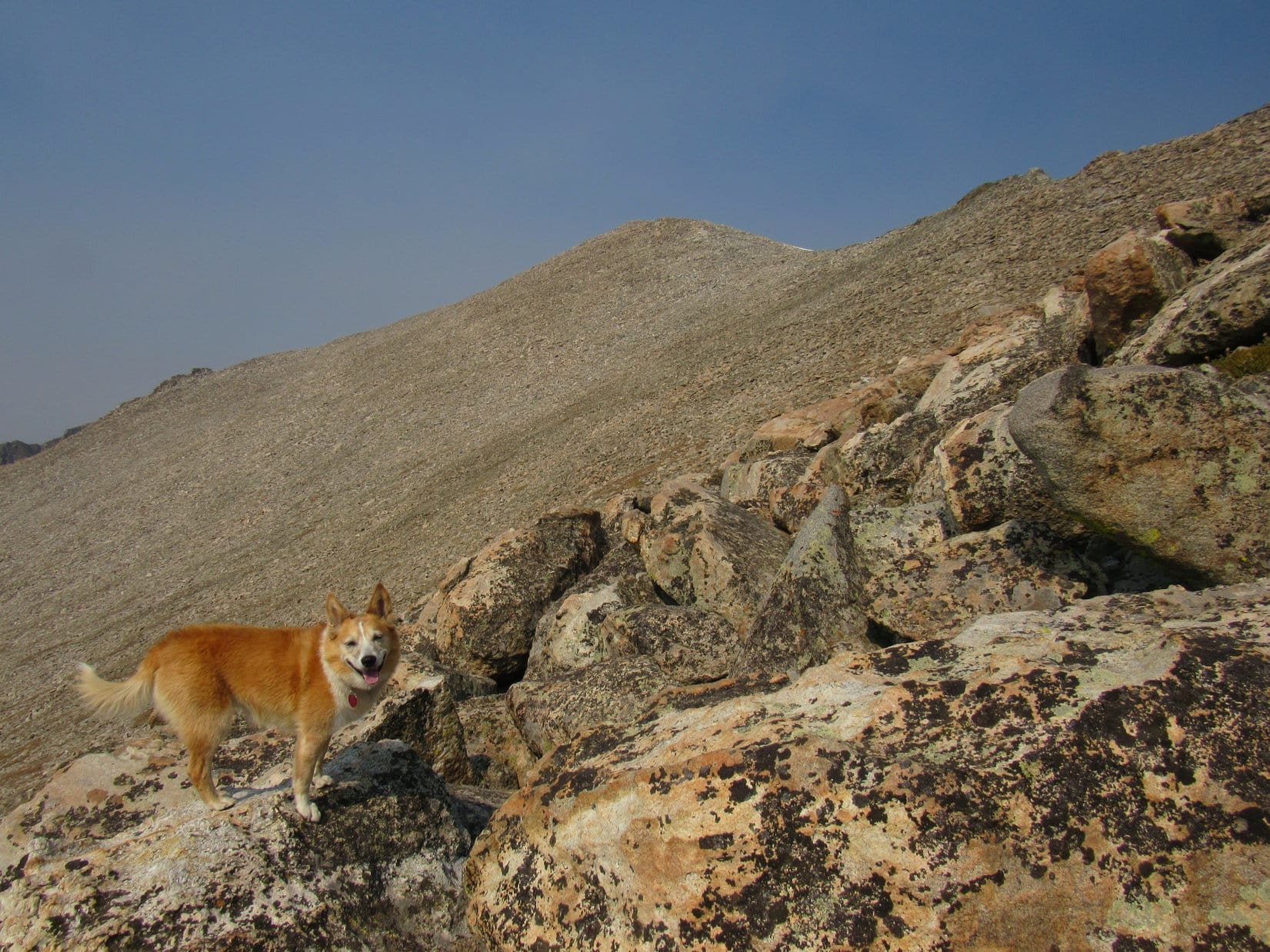
Not that far now! Atlantic Peak (Center). Photo looks NW.
Looking back to the SSE. Peak 11892 (Center) with Peak 11761 poking up just to the R.

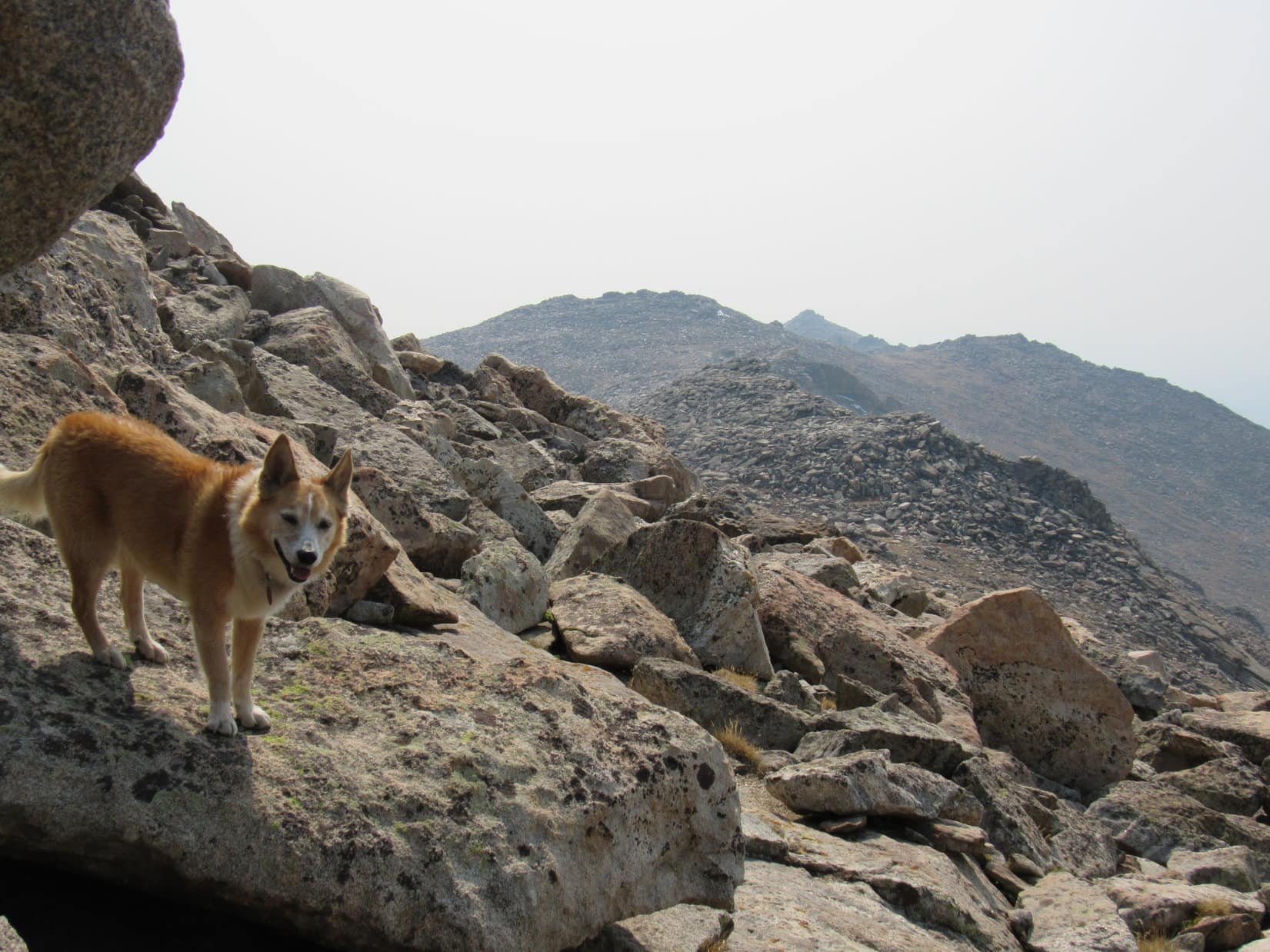
Climbing was often easier than going straight ahead or back down, so Loop kept working her way higher.  Trending NNW, the Carolina Dog gained a fair amount of elevation, but never reached the elusive top of the ridge above.  None of these maneuvers provided significant relief from the talus.

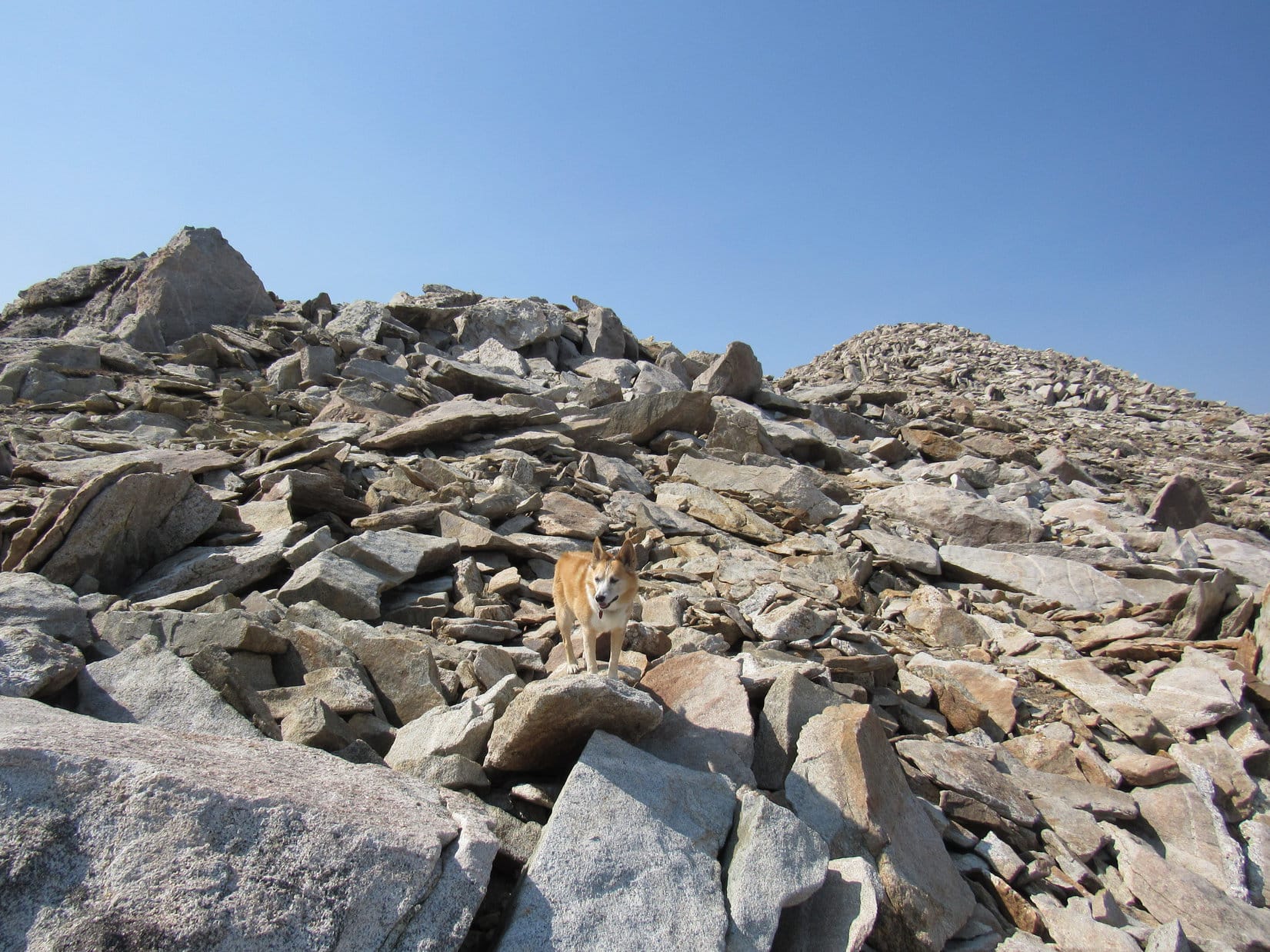
A wretchedly slow traverse, but SPHP eventually got through the worst of it.  A stretch of smaller rock and patches of vegetation allowed spurts of progress.  More rock, including talus still ahead, but not as intense as what Lupe had just come through.
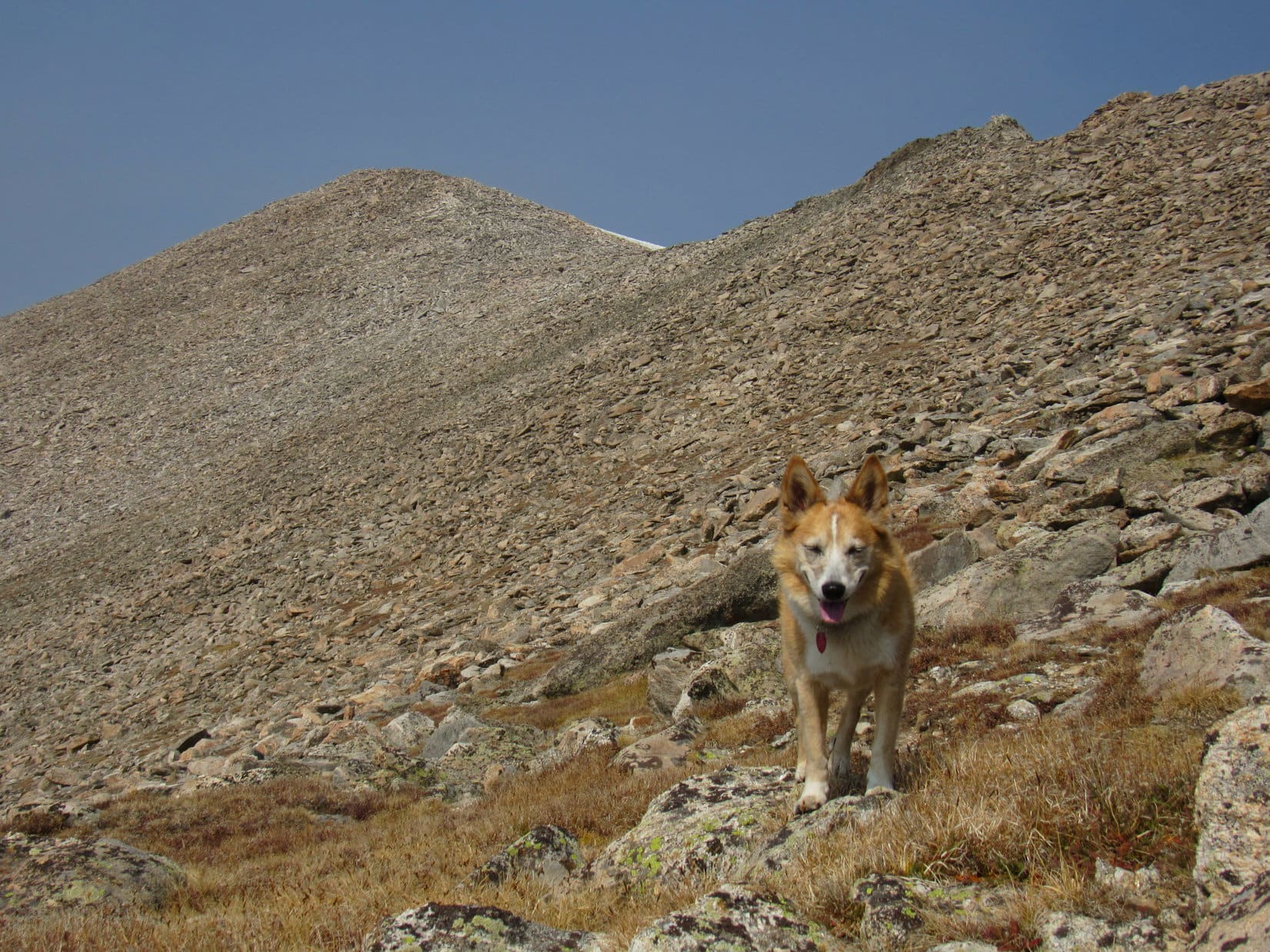
Looking better now! We’ll aim for the saddle near that snowbank. Photo looks NW.

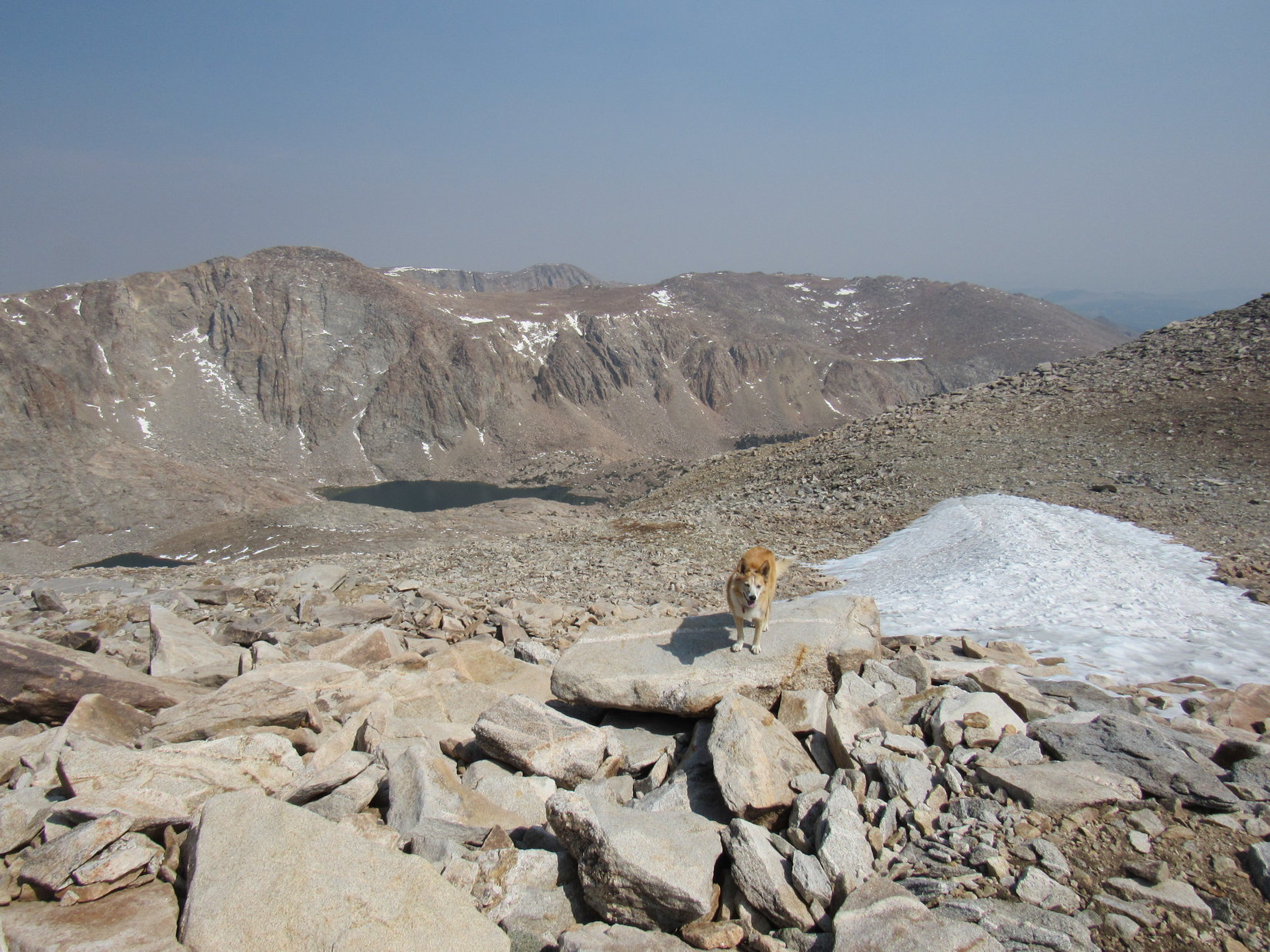
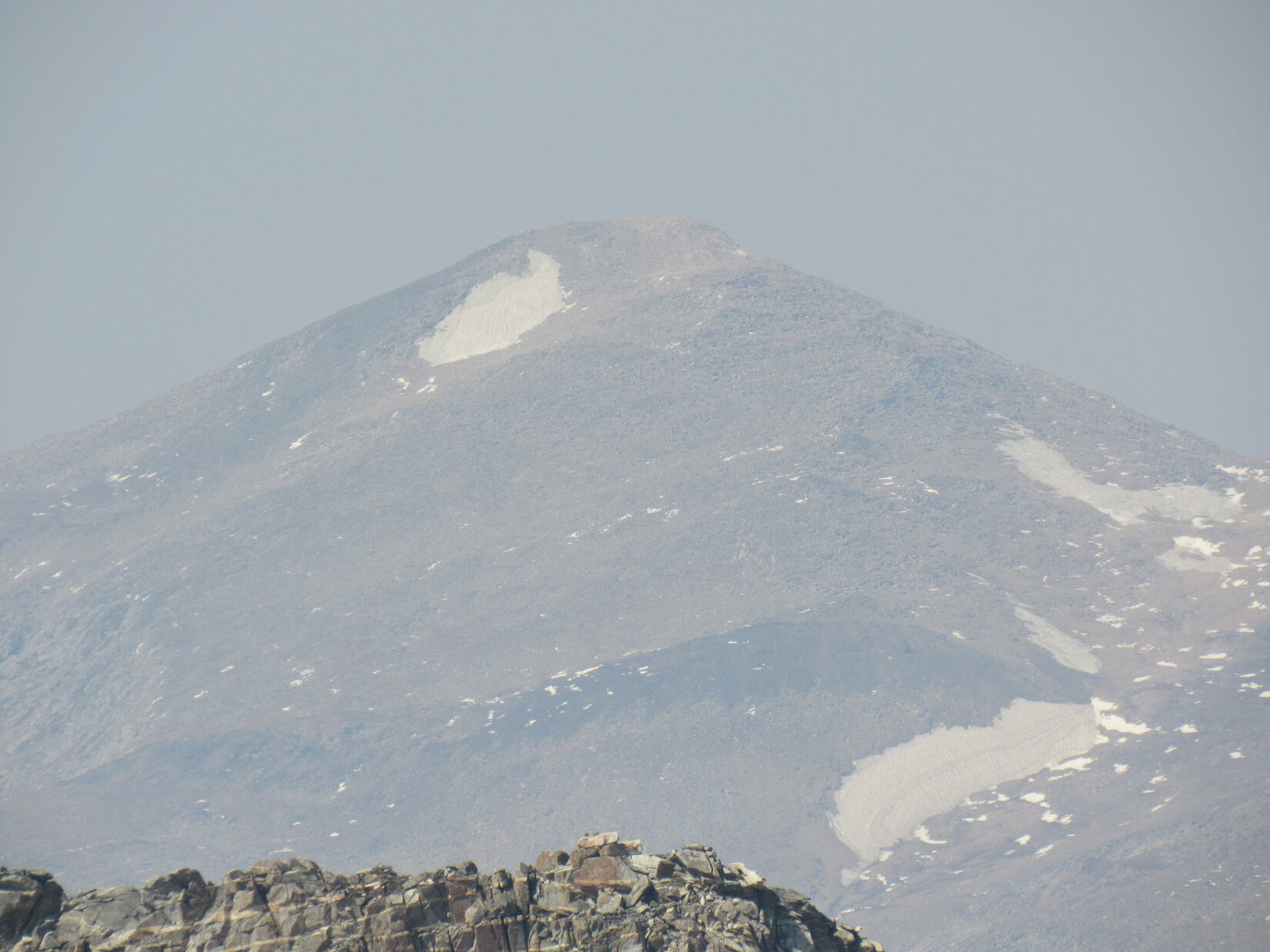
Upon reaching the big saddle between Atlantic Peak and HP12261, Loop had only 300 feet of elevation still to go.  A long, icy snowbank provided a useful ramp up a good part of it.  Above the snow was another talus climb that wasn’t too bad.  Staying toward the N, Lupe skirted a minor subpeak and came to a large flat spot.  Another 50 or 60 foot scramble and she’d be on top!
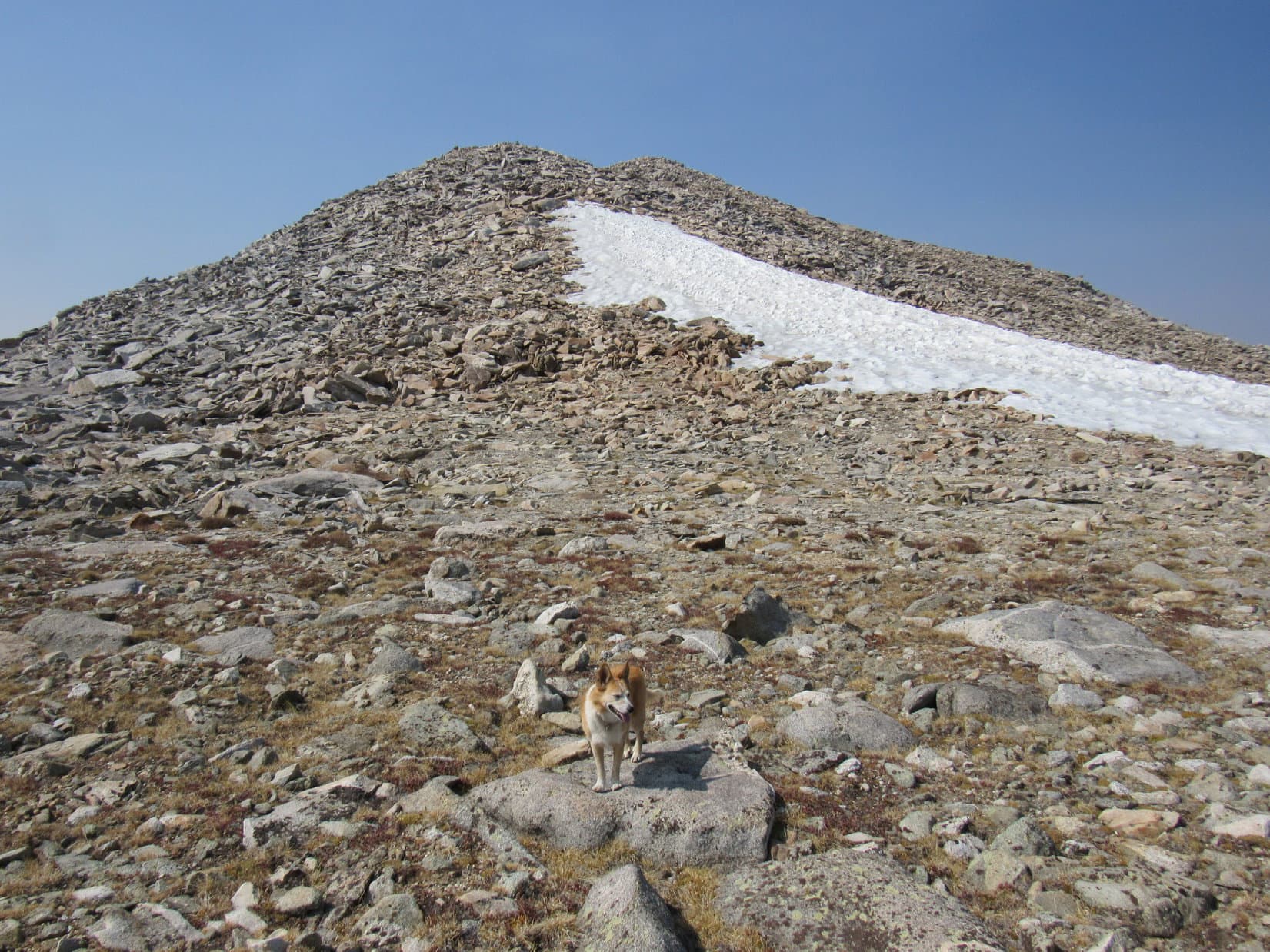
W end of the saddle between Atlantic Peak (Center) and HP12261. Photo looks W.
Heading up the snowbank. Photo looks W.
Glancing back. Silas Peak (L), saddle leading to HP12261 (R). Photo looks ENE.
Coming up to the minor subpeak (L). Atlantic Peak (R). Photo looks W.
Scrambling for the top! Photo looks WSW.

9-15-20, 1:22 PM, Atlantic Peak – Lupe came up at the E end of a 200 foot long E/W summit ridge.  The whole thing was a collection of talus with a steep slope to the S, and an absolute cliff to the N, the highest rocks mostly right along that fearsome N edge.
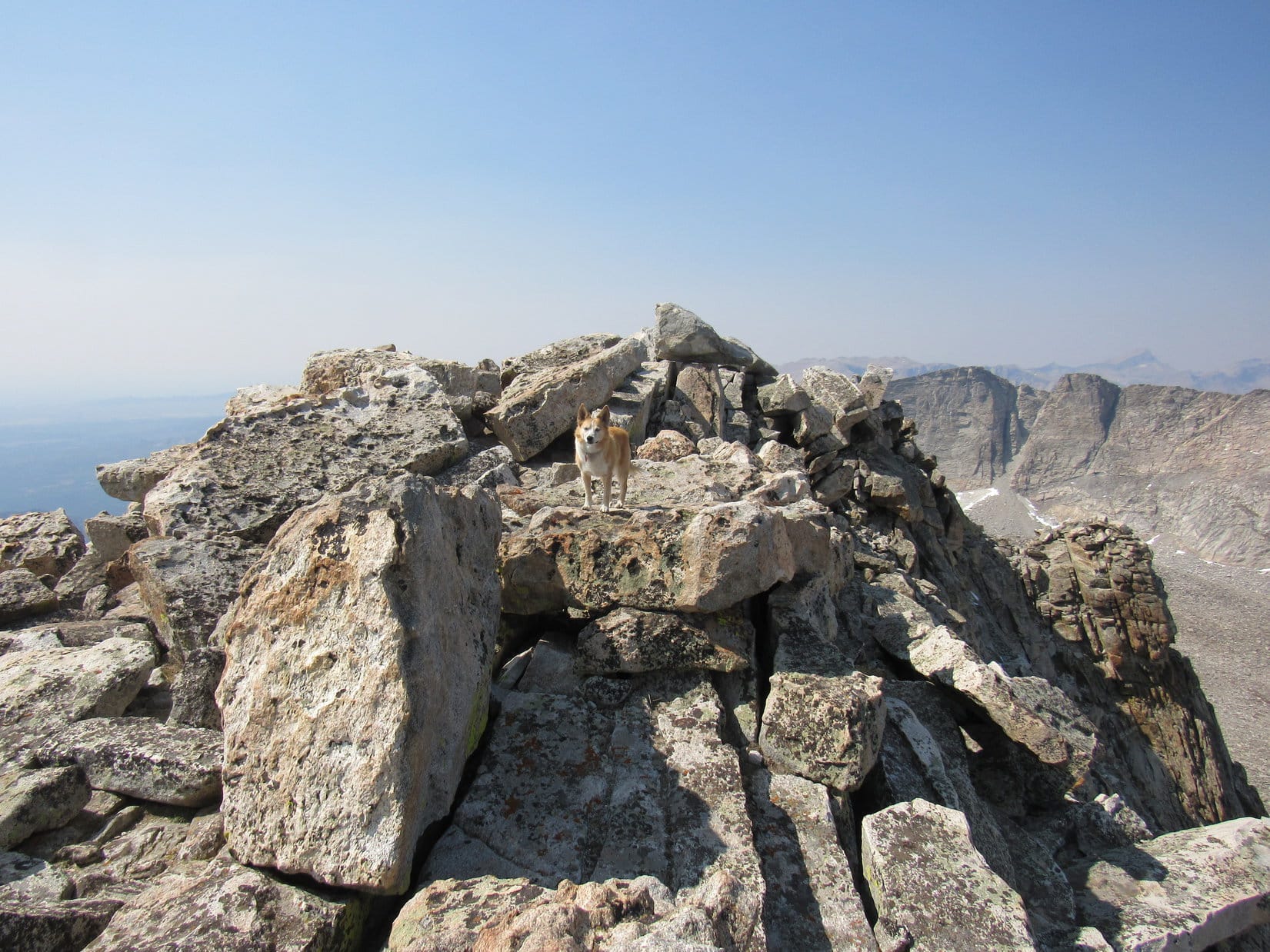
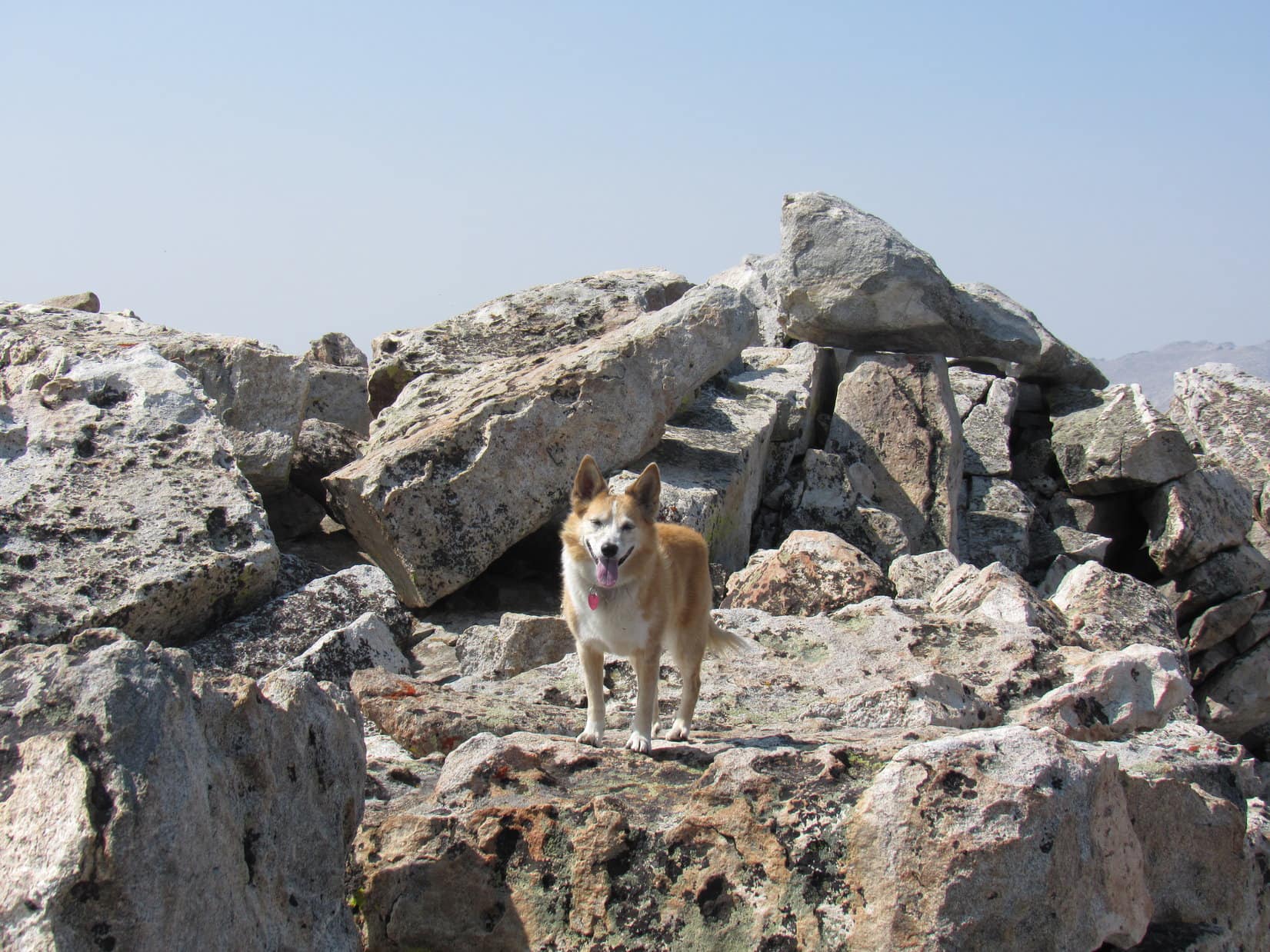
E end of Atlantic Peak’s summit ridge. Photo looks W.
Time to find the true summit and chalk this one up as a peakbagging success!

Although not quite to the true summit yet, the views were tremendous!  Due to the smoke’s interference with the clarity of distant objects, the most interesting view was of the Saddlebag Lakes and another unnamed lake tucked below the vertical S face of Silas Peak (12,248 ft.) way down in Atlantic Canyon.
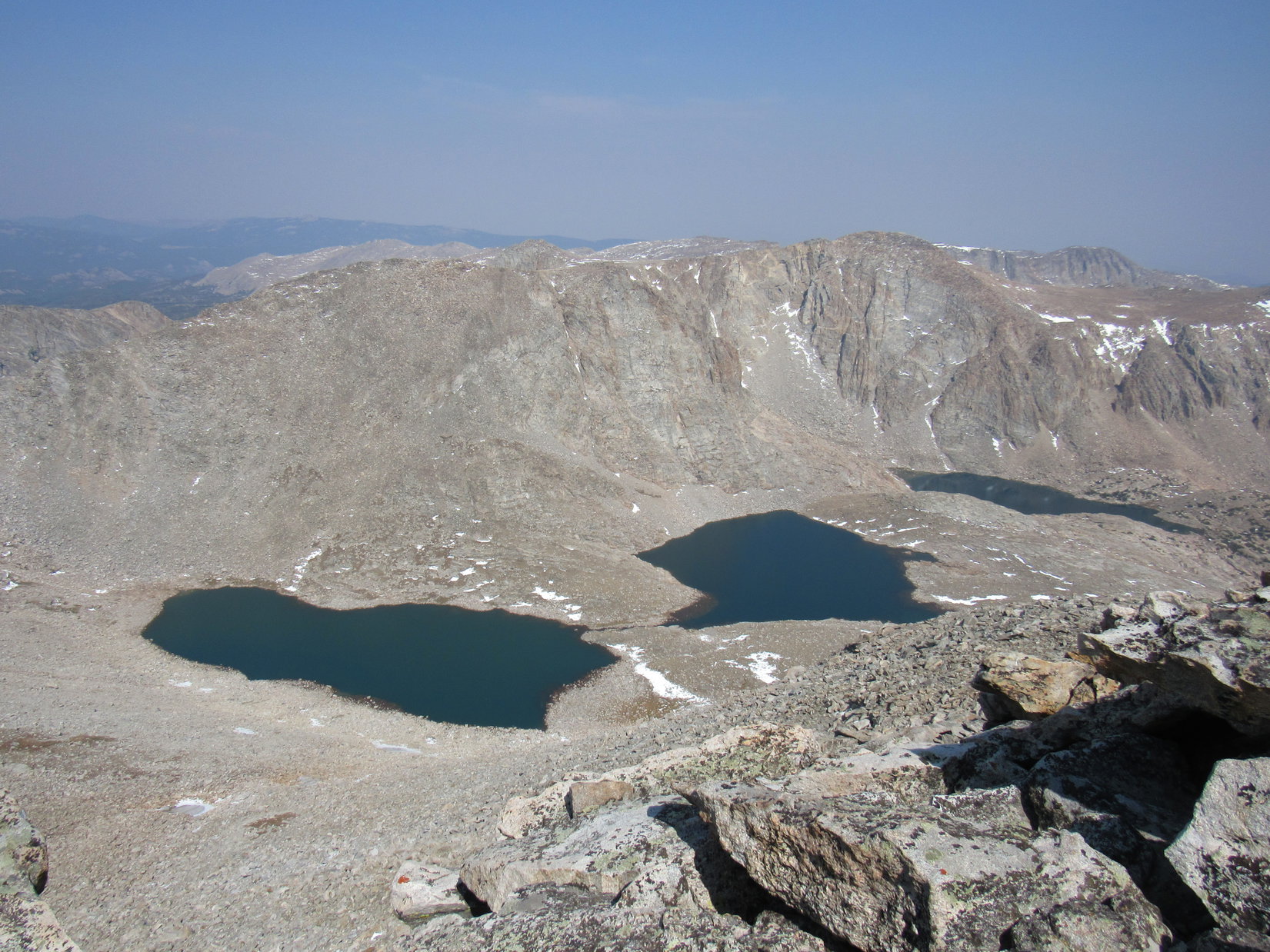
Saddlebag Lakes (L & Center). Silas Peak (R). Photo looks NNE.

Despite the talus, it was relatively easy to maneuver W looking for the true summit.  A white rock resting on a larger boulder, both on the brink of the precipice to the N, proved to be the high point, although another boulder 20 feet farther W appeared to be nearly as high.

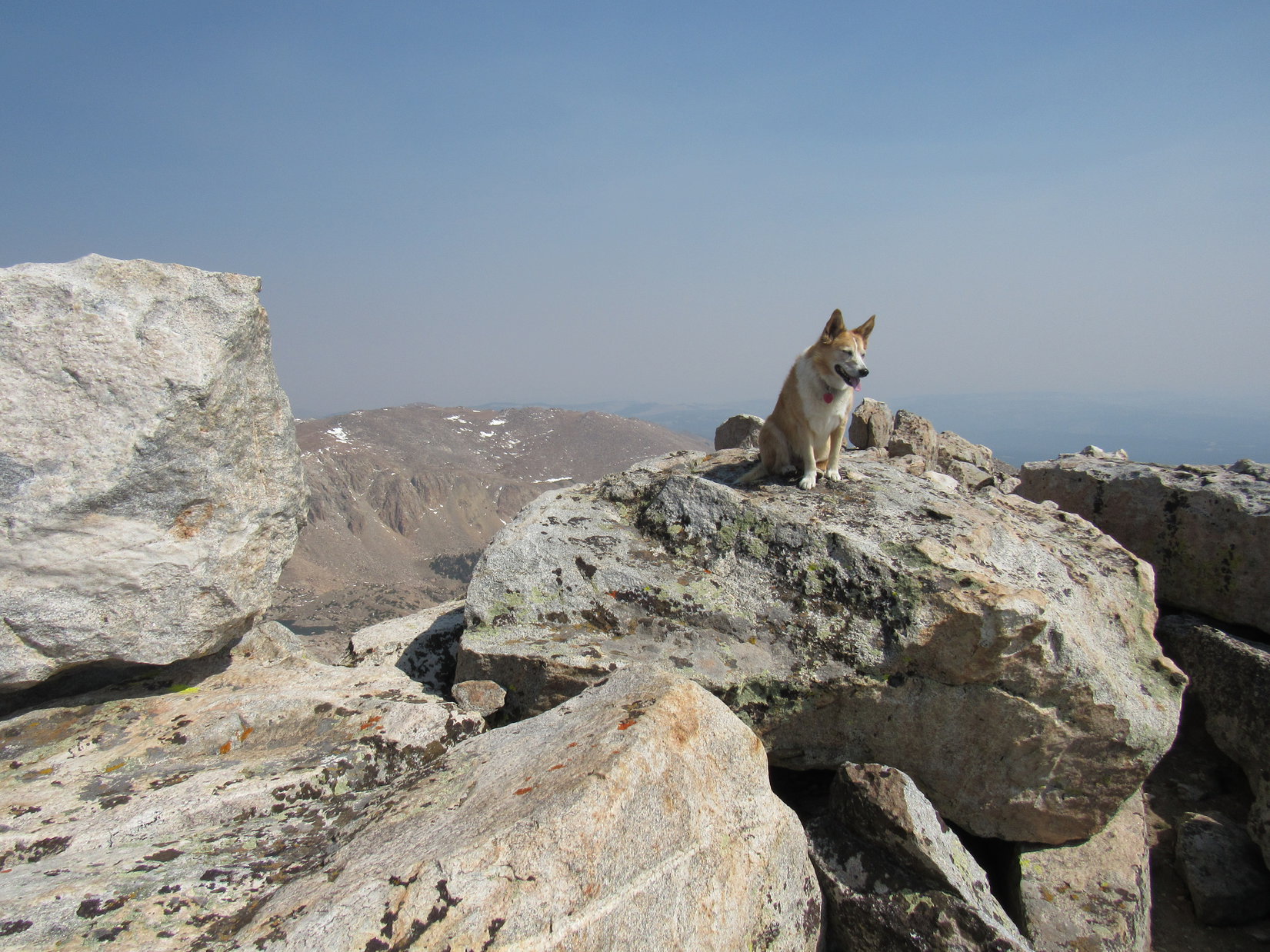
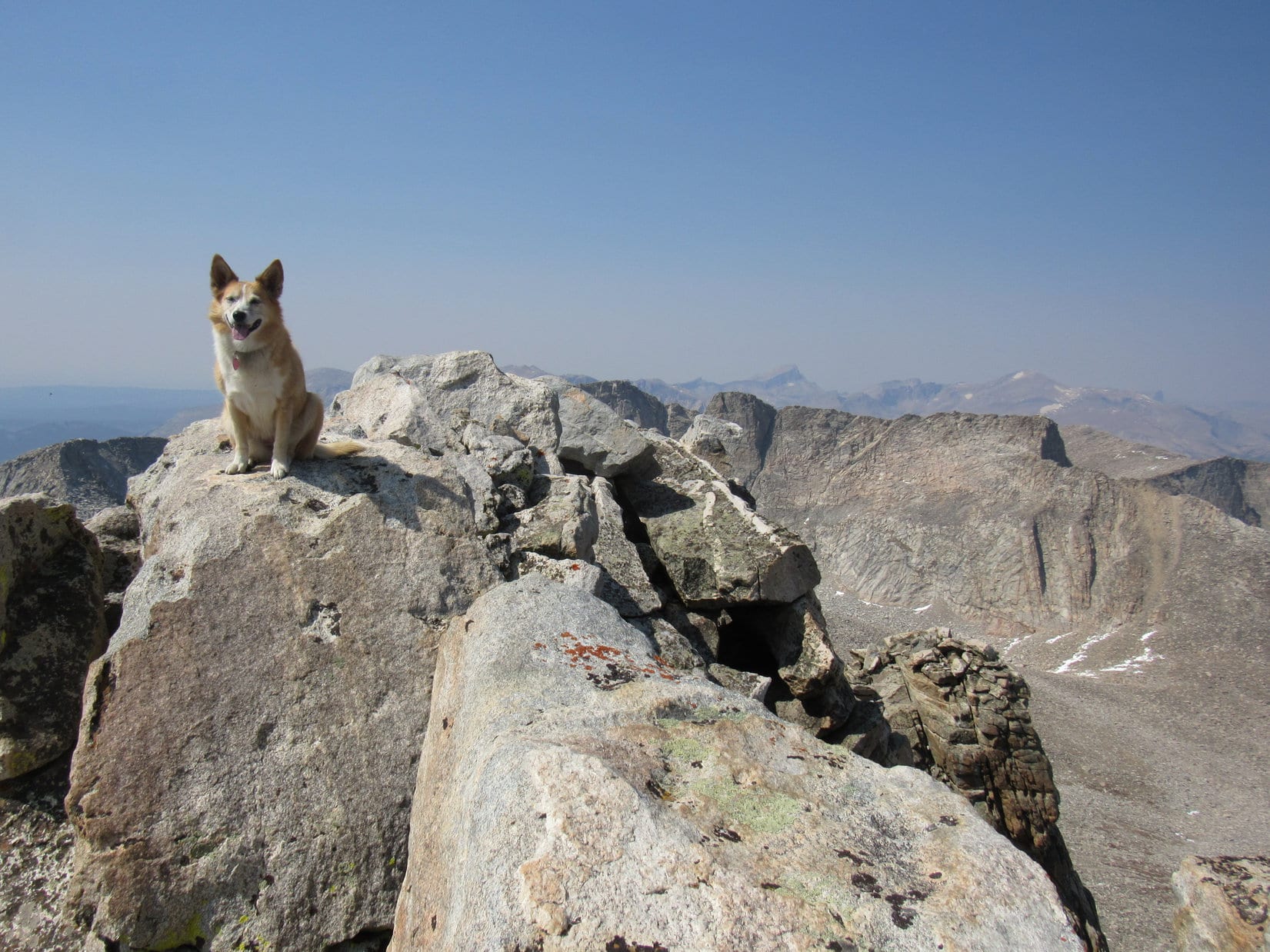
The white rock was too small, sloped, and close to the edge for Lupe to get up on.  However, she could easily touch the top with her paw, and stand on the boulder supporting it.  She also visited that other boulder in contention to the W to complete her peakbagging success.
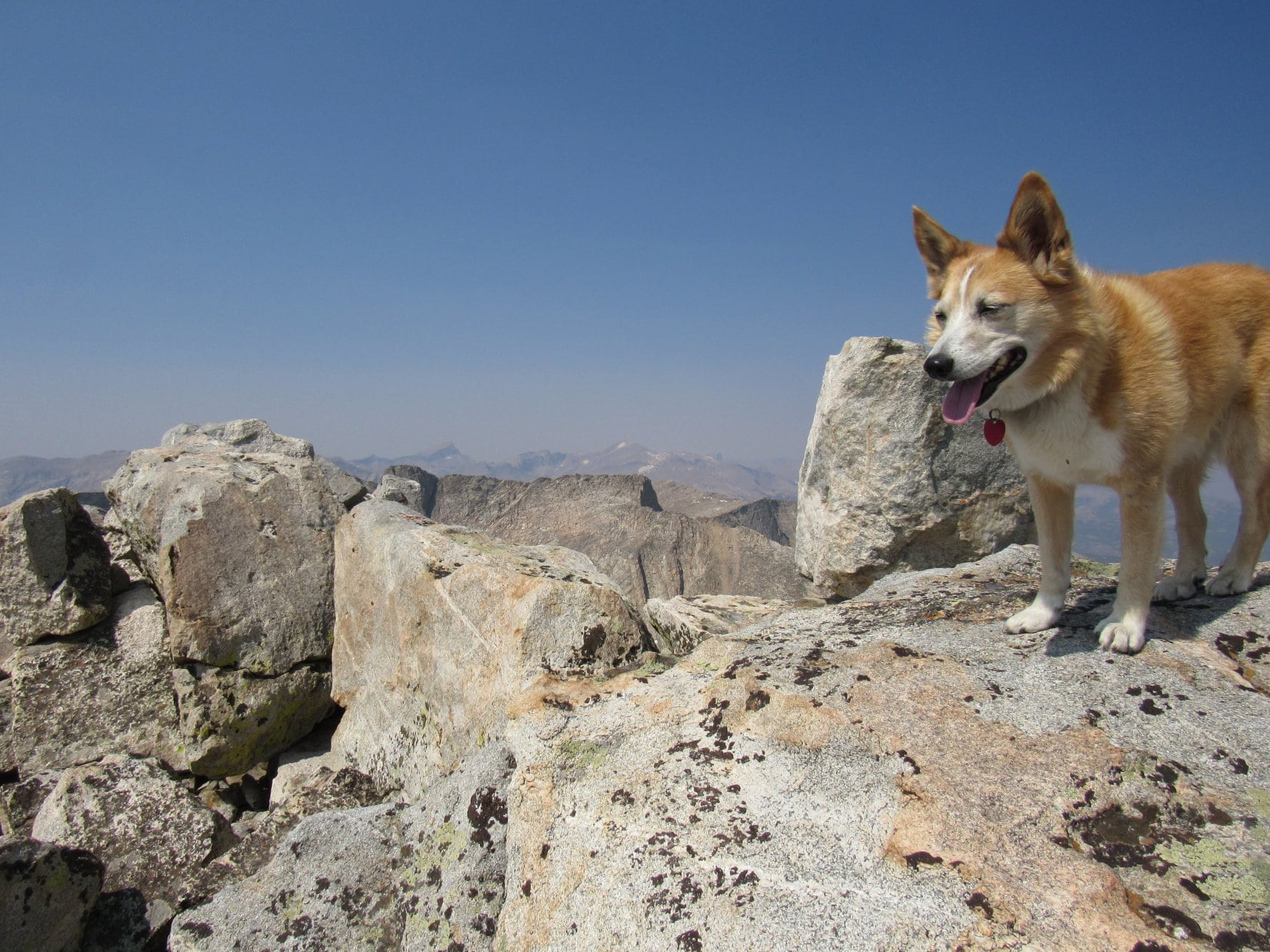
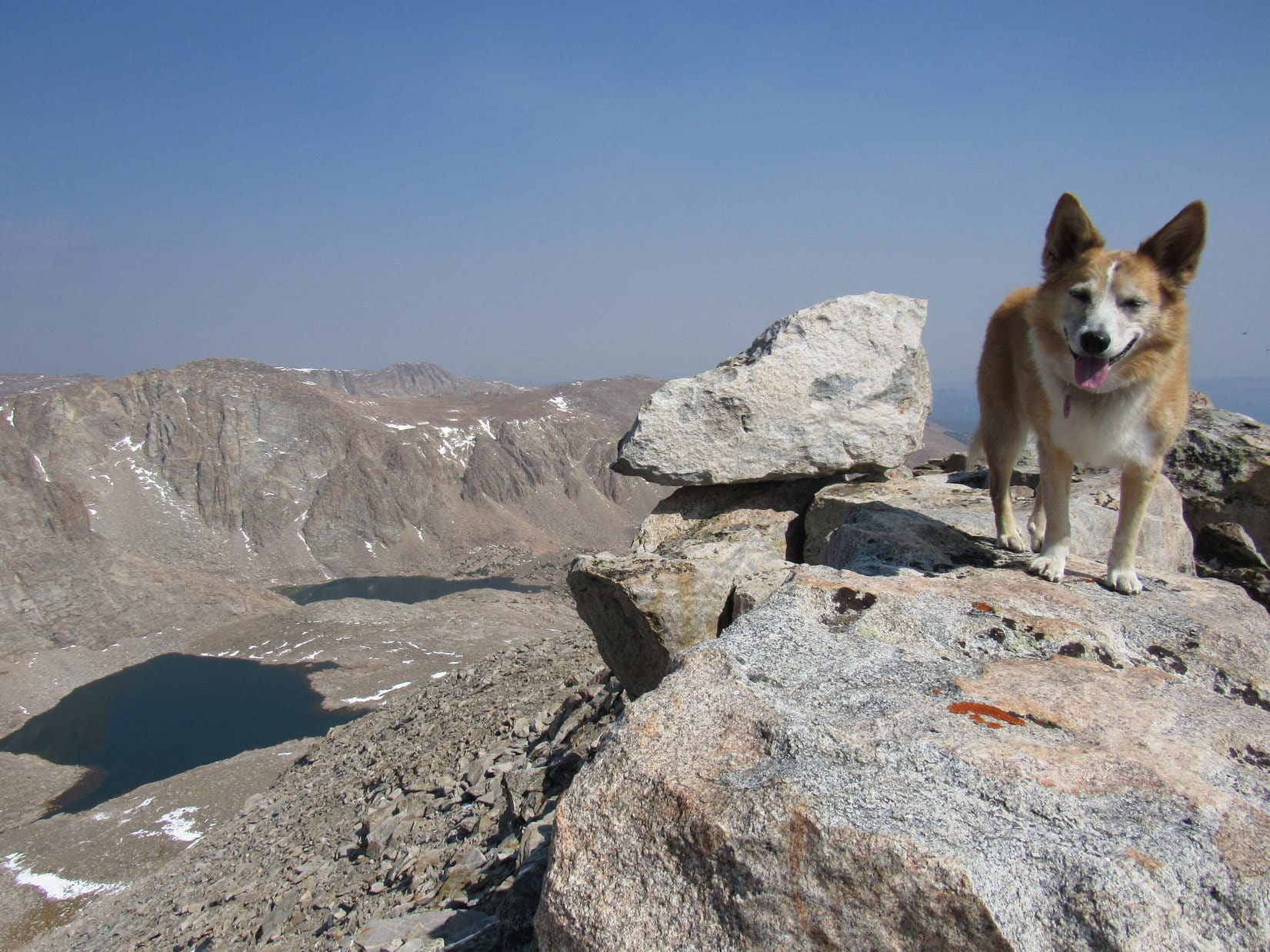
At the true summit of Atlantic Peak. Highest rock next to Loop. 2nd highest rock (L). Photo looks NW.
One of the Saddlebag Lakes (far L) with Silas Peak and an unnamed lake beyond it. True summit rock by Lupe. Photo looks NE.
On the 2nd highest rock. West Atlantic Peak (12,430 ft.) (Center) is the high point of the dark ridge beyond Loop. Photo looks NW.

So much to see!  Atlantic Peak’s long W ridge curled N to a high point that had to be West Atlantic Peak (12,430 ft.).  Miles beyond it, partially obscured by the haze, were several recognizable giants of the SE Wind River Range.  Temple Peak (12,972 ft.), East Temple Peak (12,600 ft.), and mighty Wind River Peak (13,192 ft.) were all dimly displayed.
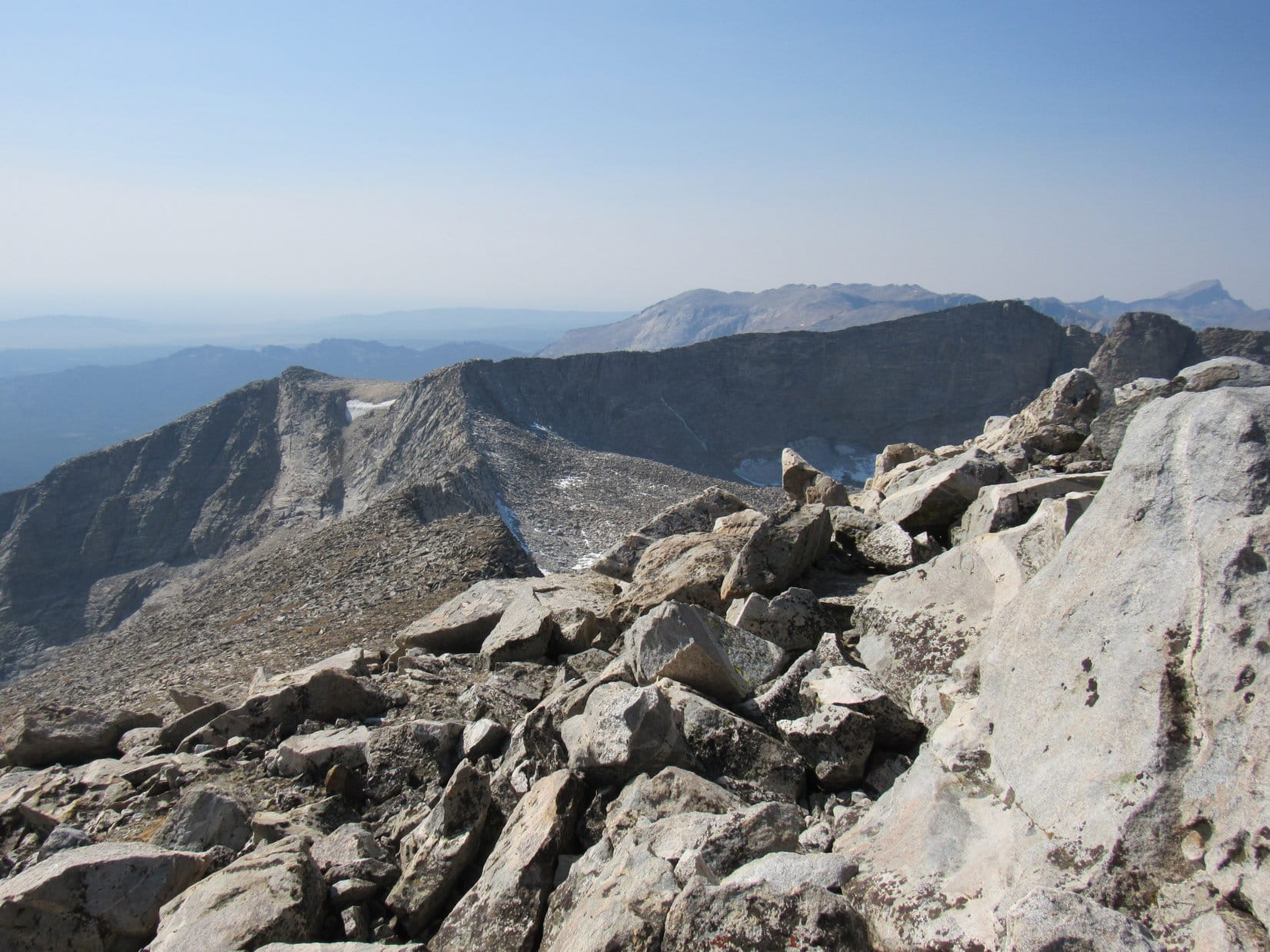
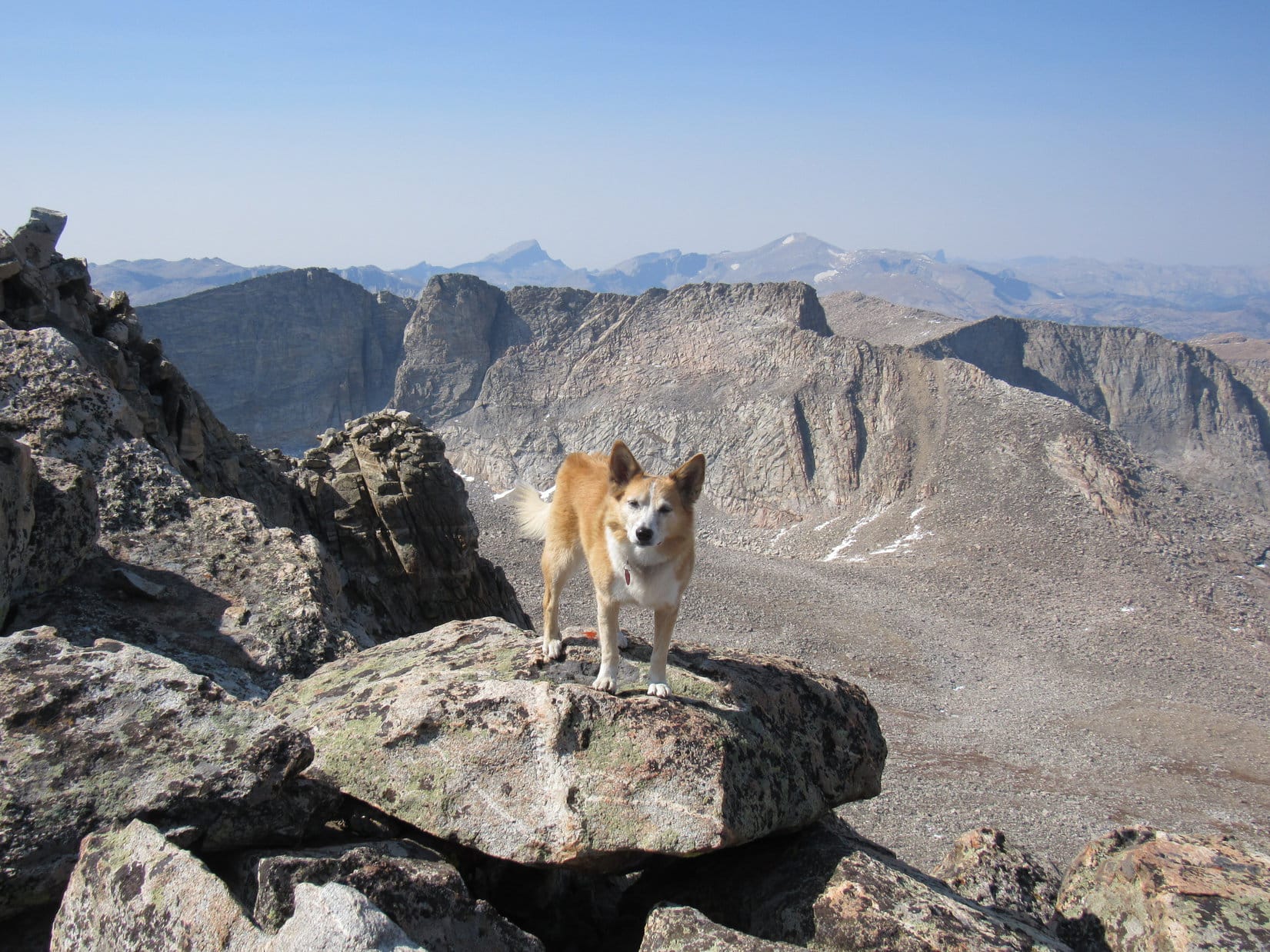
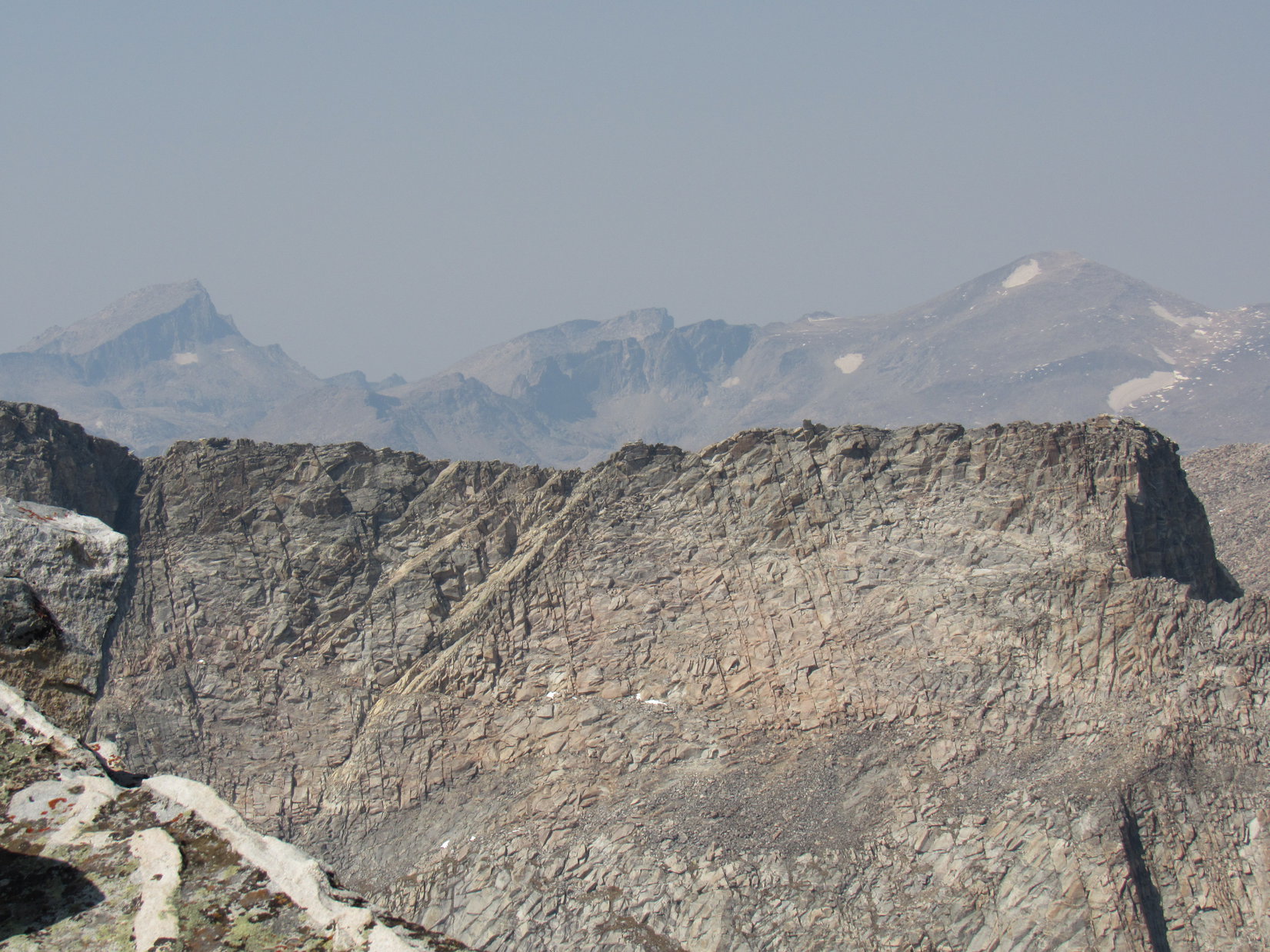
Atlantic Peak’s W ridge (L of Center). Mount Nystrom (12,356 ft.) (R of Center), West Atlantic Peak (R), and Temple Peak (far R) in the distance. Photo looks WNW.
Mount Nystrom (far L), West Atlantic Peak (L), Temple Peak (L of Center), East Temple Peak (Center), and Wind River Peak (R of Center). Photo looks NW.
Temple Peak (L), East Temple Peak (Center), and Wind River Peak (R). Photo looks NW with help from the telephoto lens.
Zoomed in on Temple Peak. Icky haze! Photo looks NW.
Wind River Peak. Same story!

To the SW was the view of Lake 9590 in the Blair Creek drainage and the Sweetwater Needles (10,548) that Lupe had seen before from the rock formations in the saddle between HP11801 and HP12261.  However, she now saw them from a different perspective as she peered down Atlantic Peak’s SW ridge.
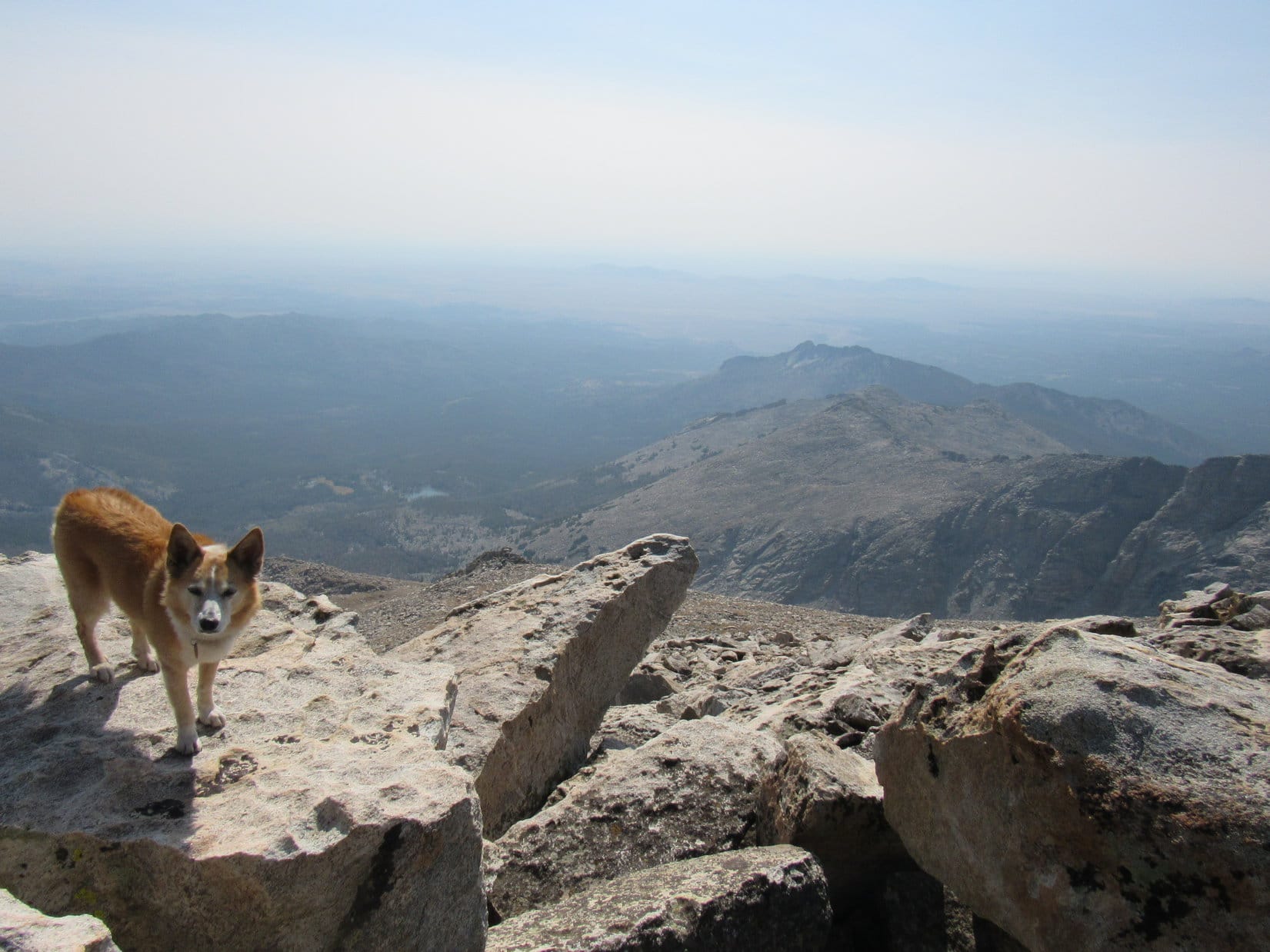
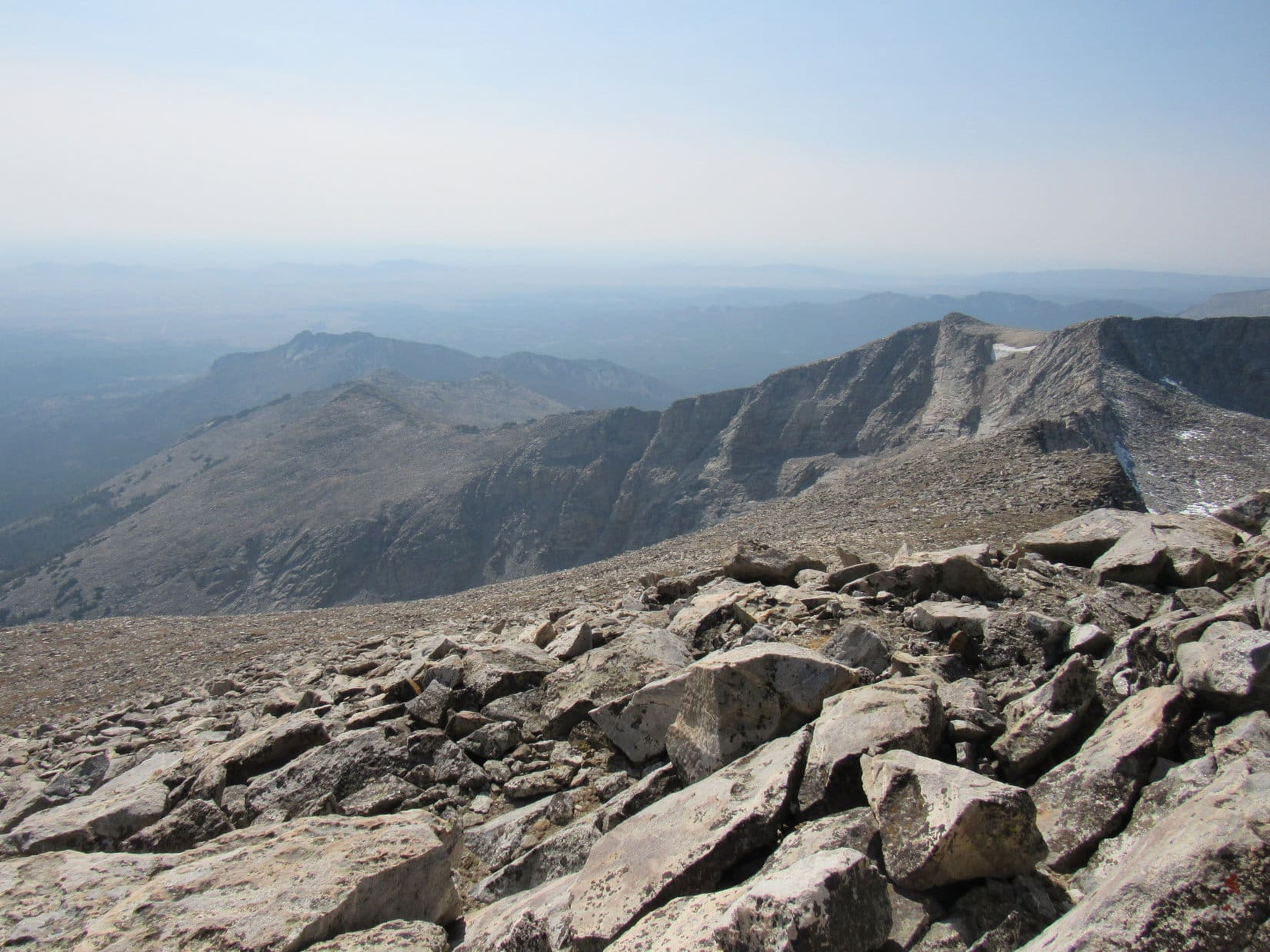
Lake 9590 (L) and the Sweetwater Needles (R). Photo looks SW.
Atlantic Peak’s SW ridge (Center). Sweetwater Needles (L) beyond Peak 11456. Atlantic Peak’s connecting W ridge (R). Photo looks WSW.

Lupe gazed down into Atlantic Canyon, she surveyed the route she’d taken up from the SE, and sat on many a boulder.  After a good long while, though, it was time for a break.

With nowhere to rest close to the true summit, Lupe retreated back to the E, choosing shady spot where SPHP put sweatshirts and a jacket on a rock to provide some cushioning.  Looper munched her Taste of the Wild and inhaled the beef jerky SPHP offered before trying to nap.
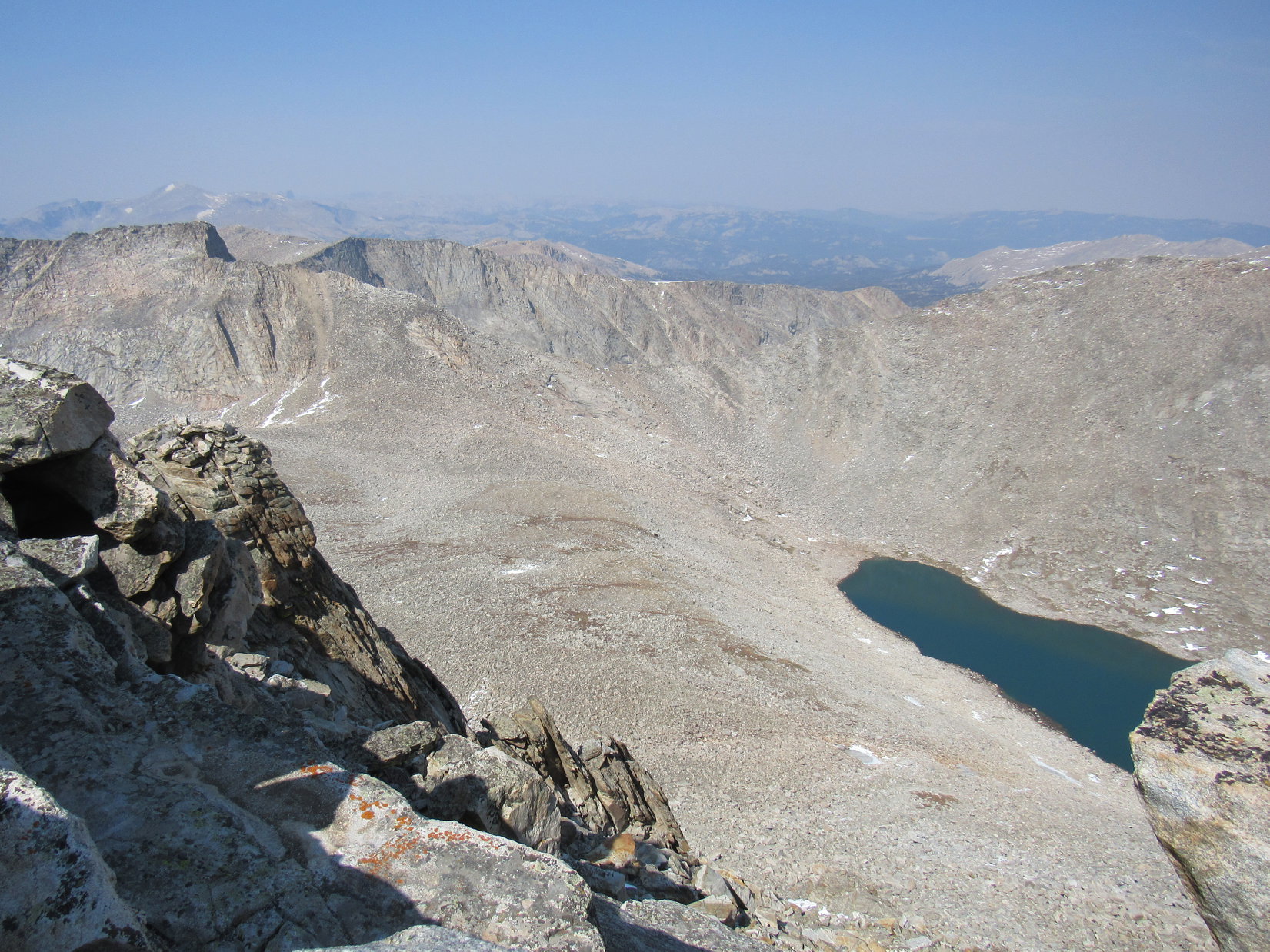
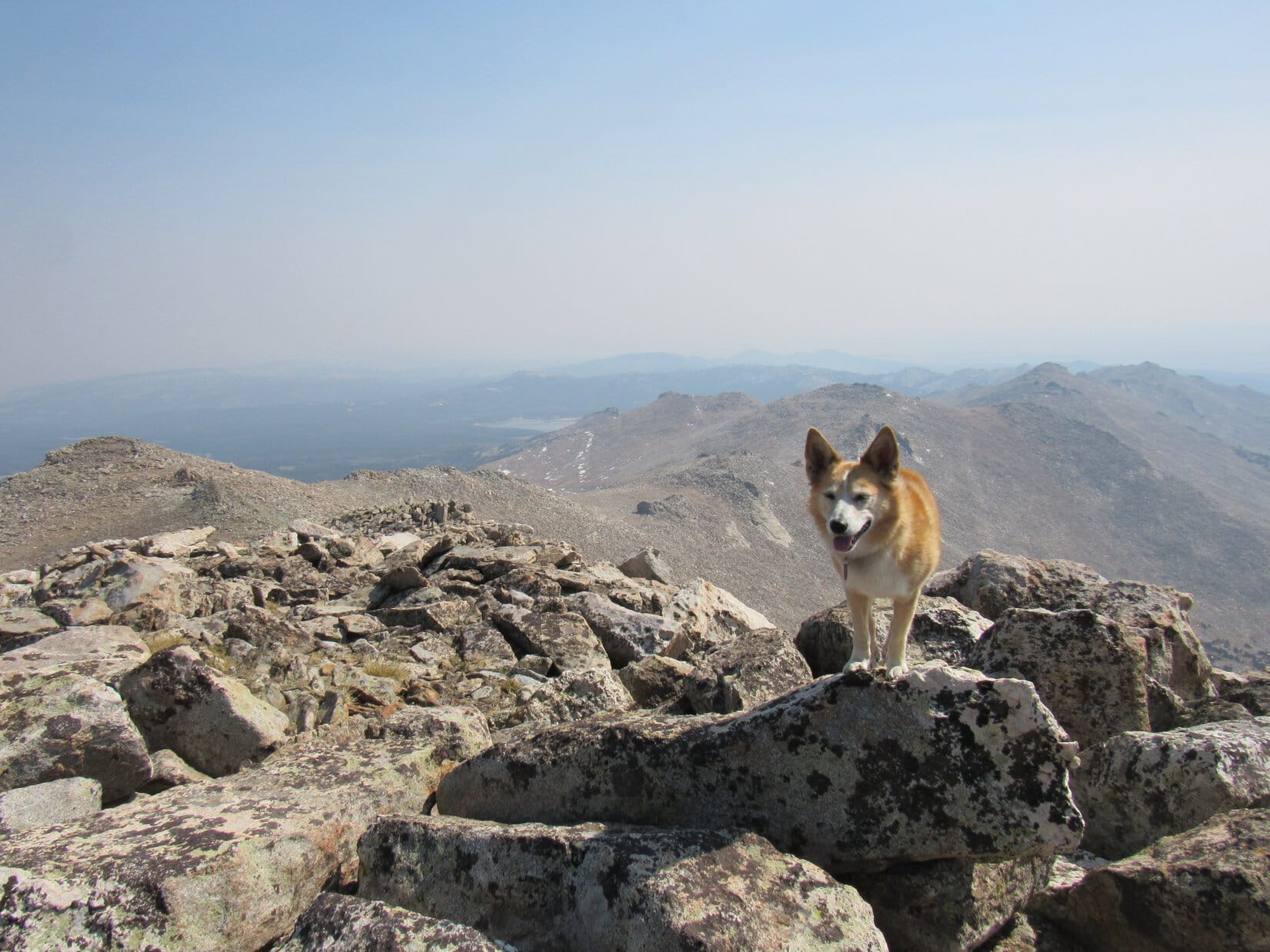
Looking NNW over Atlantic Canyon. One of the Saddlebag Lakes (R).
HP12261 (L), Peak 11892 (straight up from Lupe), Peak 11761 (R). Photo looks SE.
The saddle where Lupe first reached the ridgeline (far L). Peak 11892 (Center) and Peak 11761 (R) all in the foreground. Christina Lake (far L), Granite Peak (10,404 ft.) (L) and Pabst Peak (10,261 ft.) (L of Center) in the distance. Photo looks SE.
Chillin’ on Atlantic Peak. Photo looks E.
High in the mighty Winds of Wyoming! Photo looks NW.
Catching a couple of z’s.

3rd time had been a charm!  The American Dingo finally really was way up here on Atlantic Peak.  SPHP drank a Coke, pondering the splendid scenes in all directions.  A shame it had to be so smoky, but what a spot!

The melancholy moment arrived.  Looper stood again at the summit of Atlantic Peak.  All the planning, long anticipation, and effort to get here!  Not just here, but to any big remote peak.  The joy of success!  Precious minutes savoring it all, the world at your paws!  Then suddenly it’s on the verge of over and done with, a fabulous airy place almost certainly never to be seen again.  An instant both wonderfully real and terrible.
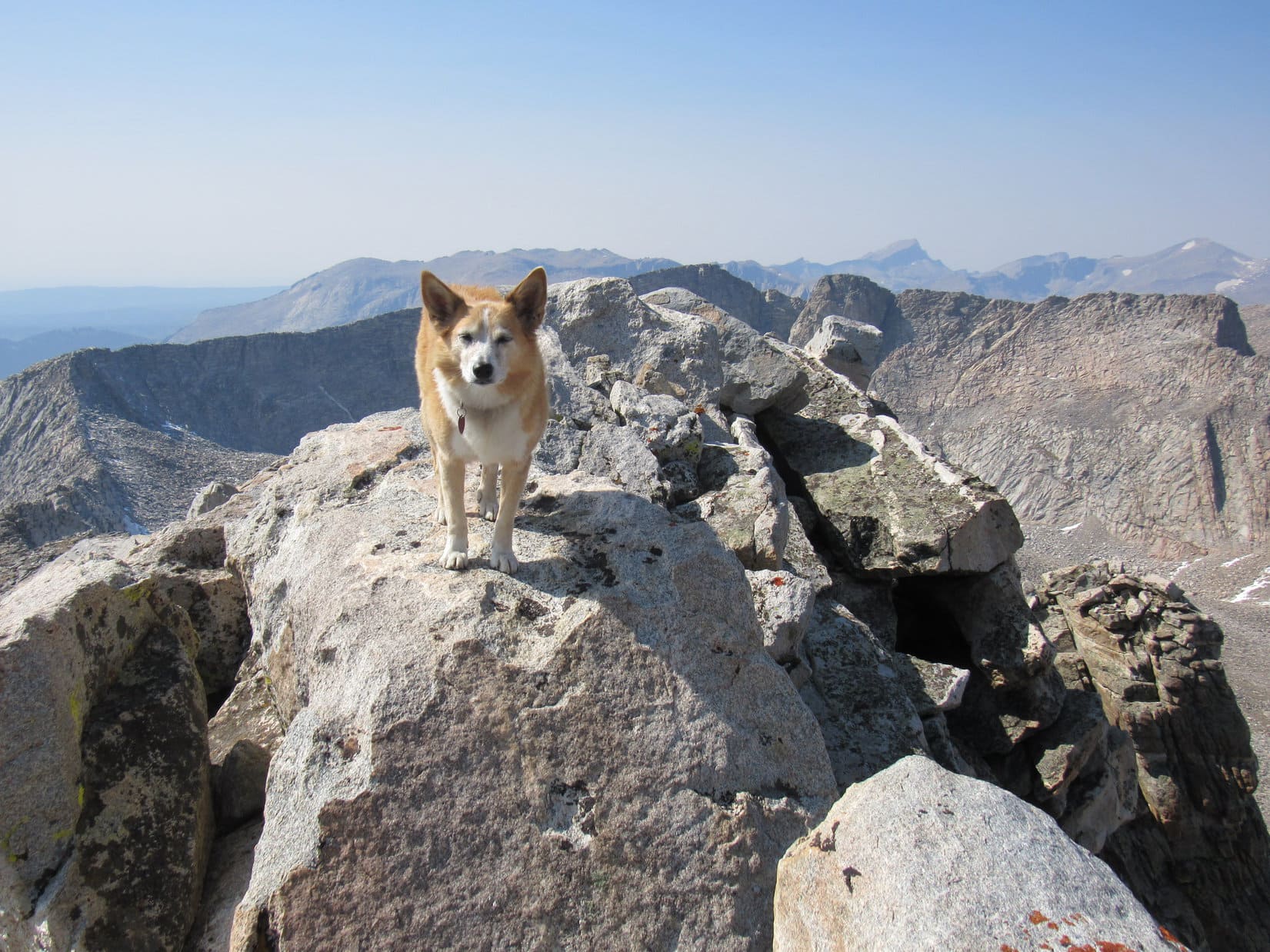
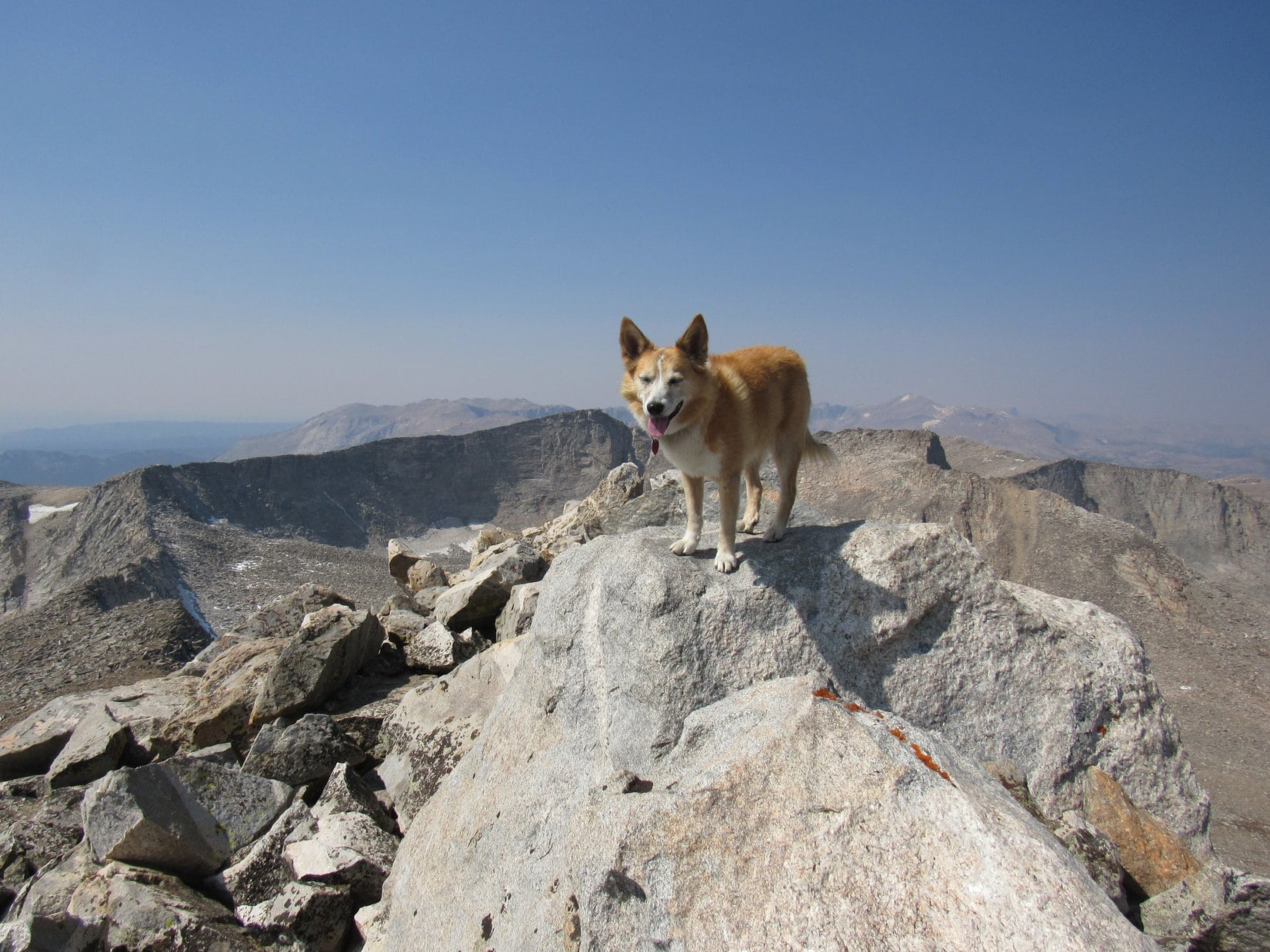
Back on top. Photo looks WNW.

9-15-20, 2:52 PM, Atlantic Peak – Well, no sense in brooding.  Just the way things are, have always been, and always will be.  Plenty of fun yet to come!  1.5 hours after arriving, Lupe left the summit of Atlantic Peak.
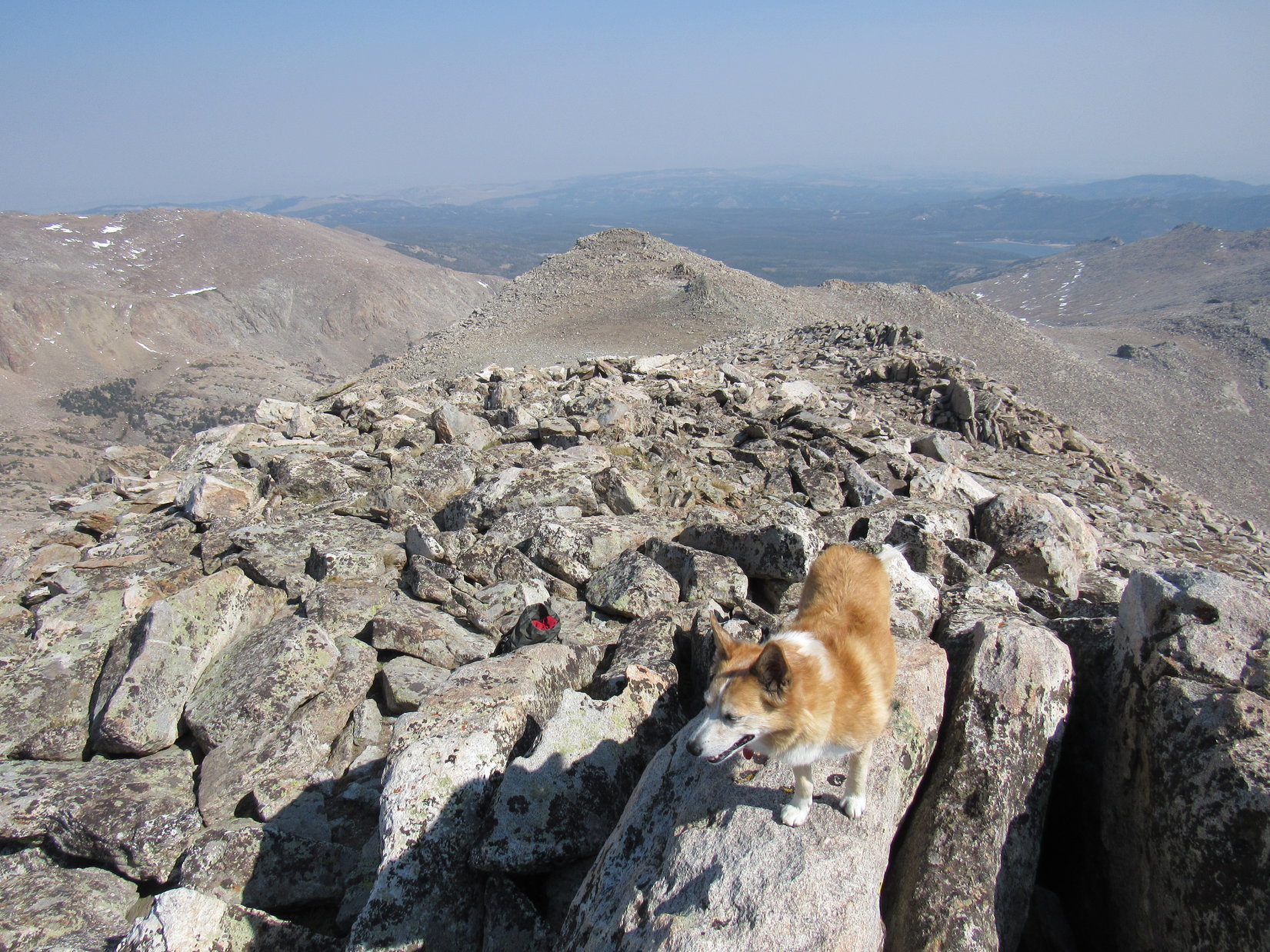
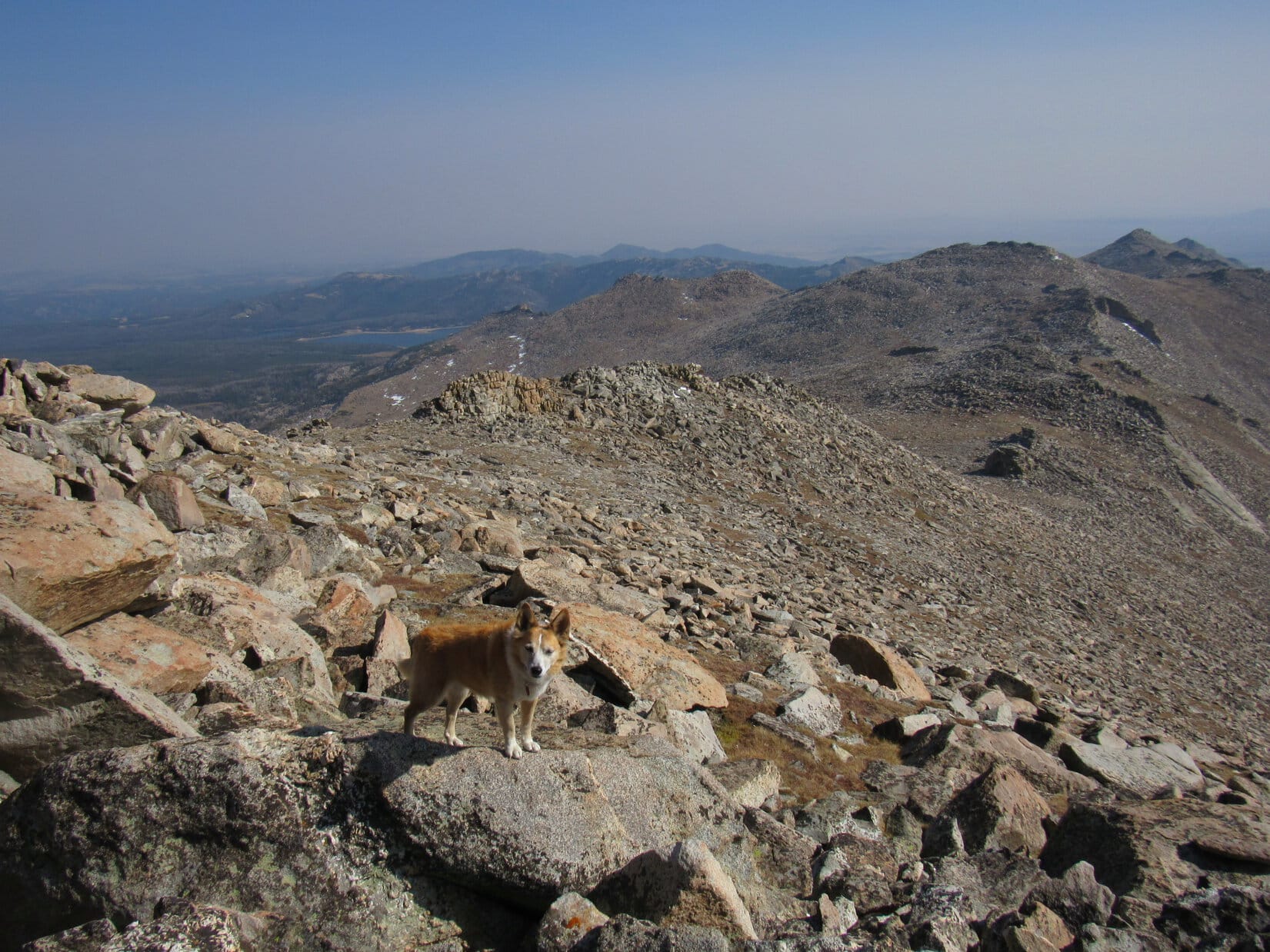
About to head down. HP12261 (Center). Photo looks E.

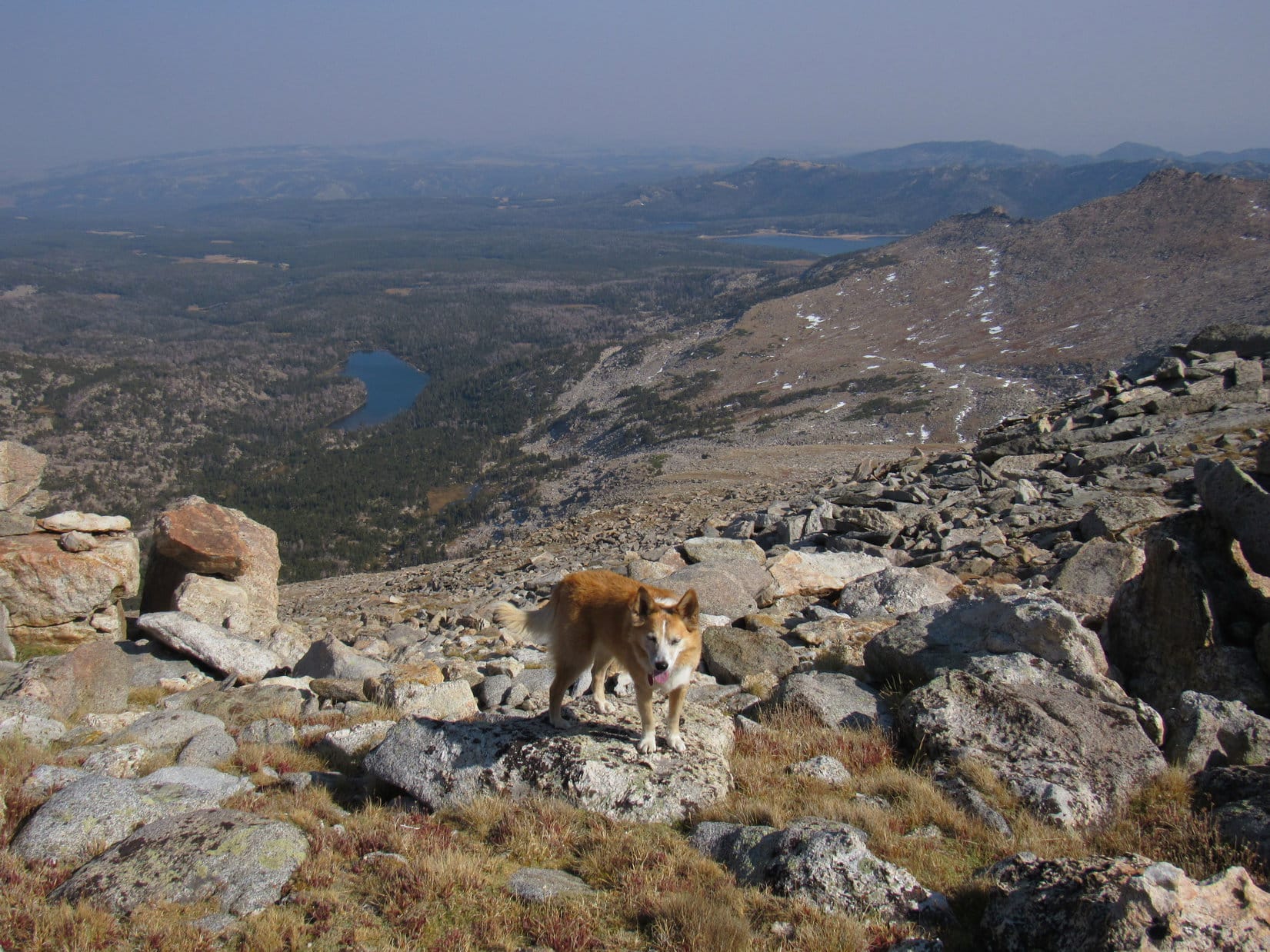
During the return, Lupe varied the route a bit.  Instead of heading back to the saddle between HP12261 and HP11801, she stayed higher going through minor passes SE and SW of HP12261.  After going through the second pass, an enormous long slope was in sight.  Lots of rock.  All the usual travails and little assists.  And way down in the valley, a blue gem, Atlantic Lake!
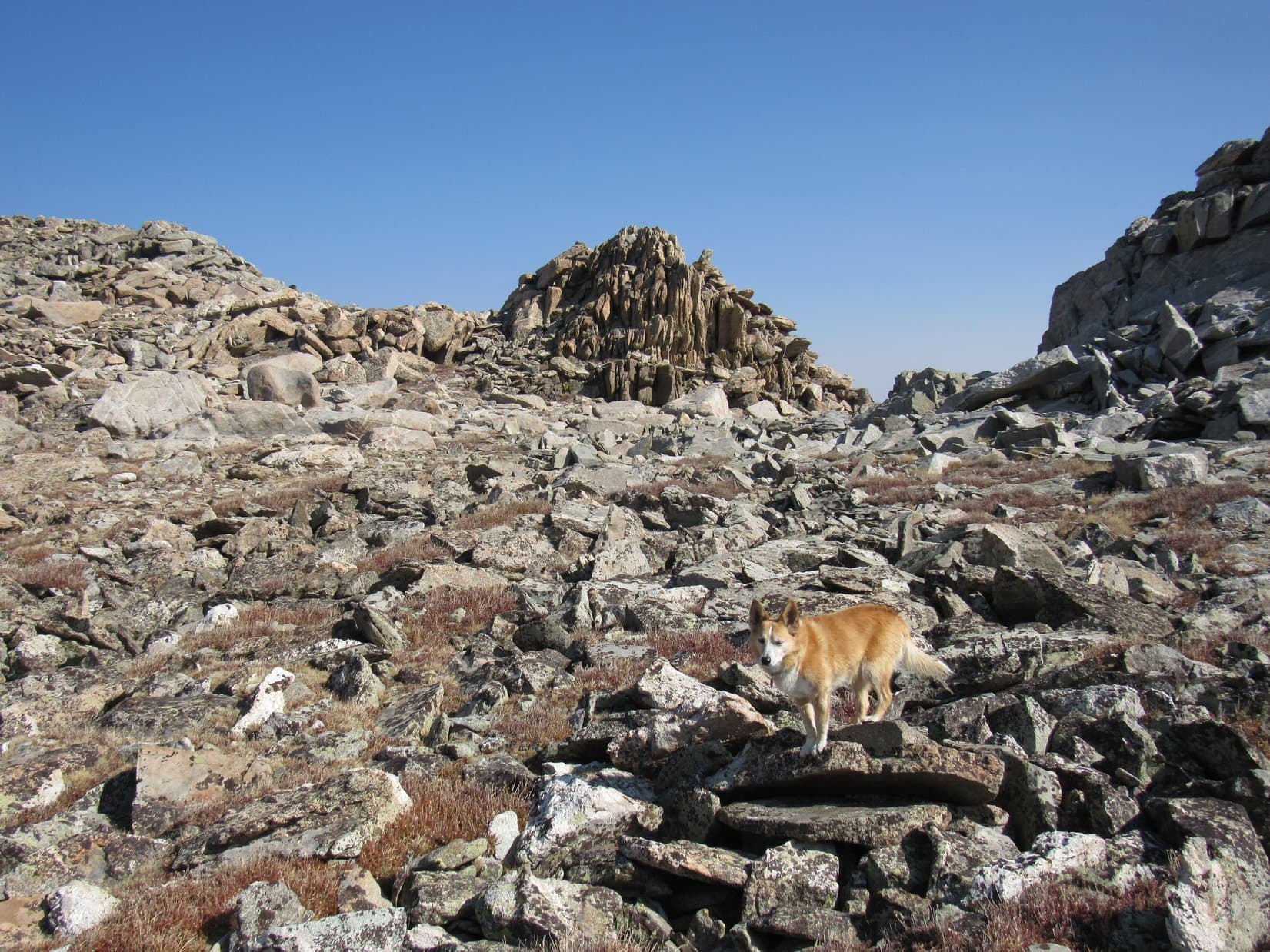
Approaching the first pass SW of HP12261 (R). Photo looks SE.
Second pass SE of HP12261 (L) with Christina Lake beyond it. Lupe’s route up went through the lower pass seen on the R. HP11892 (R) and HP11761 (far R). Photo looks SE.
At least it’s all downhill now! Atlantic Lake (L) and Christina Lake (R of Center). Photo looks SE.

The sun was down and light beginning to fade as Lupe headed E along the S shore of Atlantic Lake.  Not much farther to the tiny house!  SPHP was surprised to see a campfire.  Sort of expected the campers might be gone by now.  Two people!  They hailed SPHP.  Up to greet them.

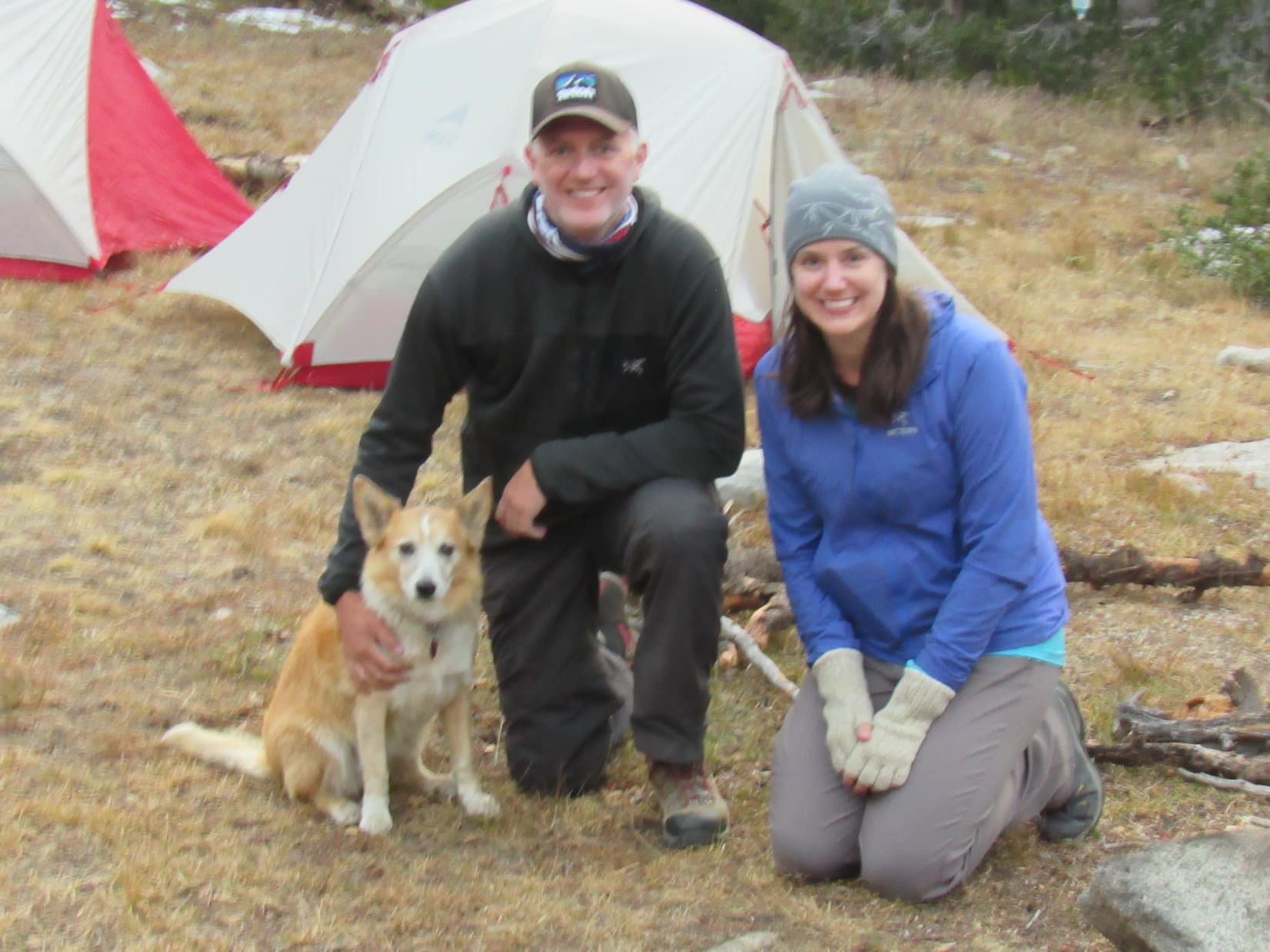
So Lupe and SPHP met Peter and Meghan Cielenski, brother and sister, from Cincinnati, Ohio.  Right away, a miracle!  Peter and Meghan knew Lupe!  What?  Turned out Meghan’s boyfriend, Josh, had found The (Mostly) True Adventures of Lupe while researching a prior trip to Tayo and Coon lakes here in the Wind River Range.  Tayo Lake was on the way to Wind River Peak, which Loop had climbed in 2017.

Astonishing!  First time anyone had ever recognized Lupe from her blog!  SPHP asked Meghan and Peter if they were planning on staying up for a while, and if it would be OK to join them?  Answer – affirmative on both counts!  A quick trip to the tiny house to ditch the backpack and feed Loop before heading back to the campfire.

Starting to get dark already, but maybe enough light for a photo?
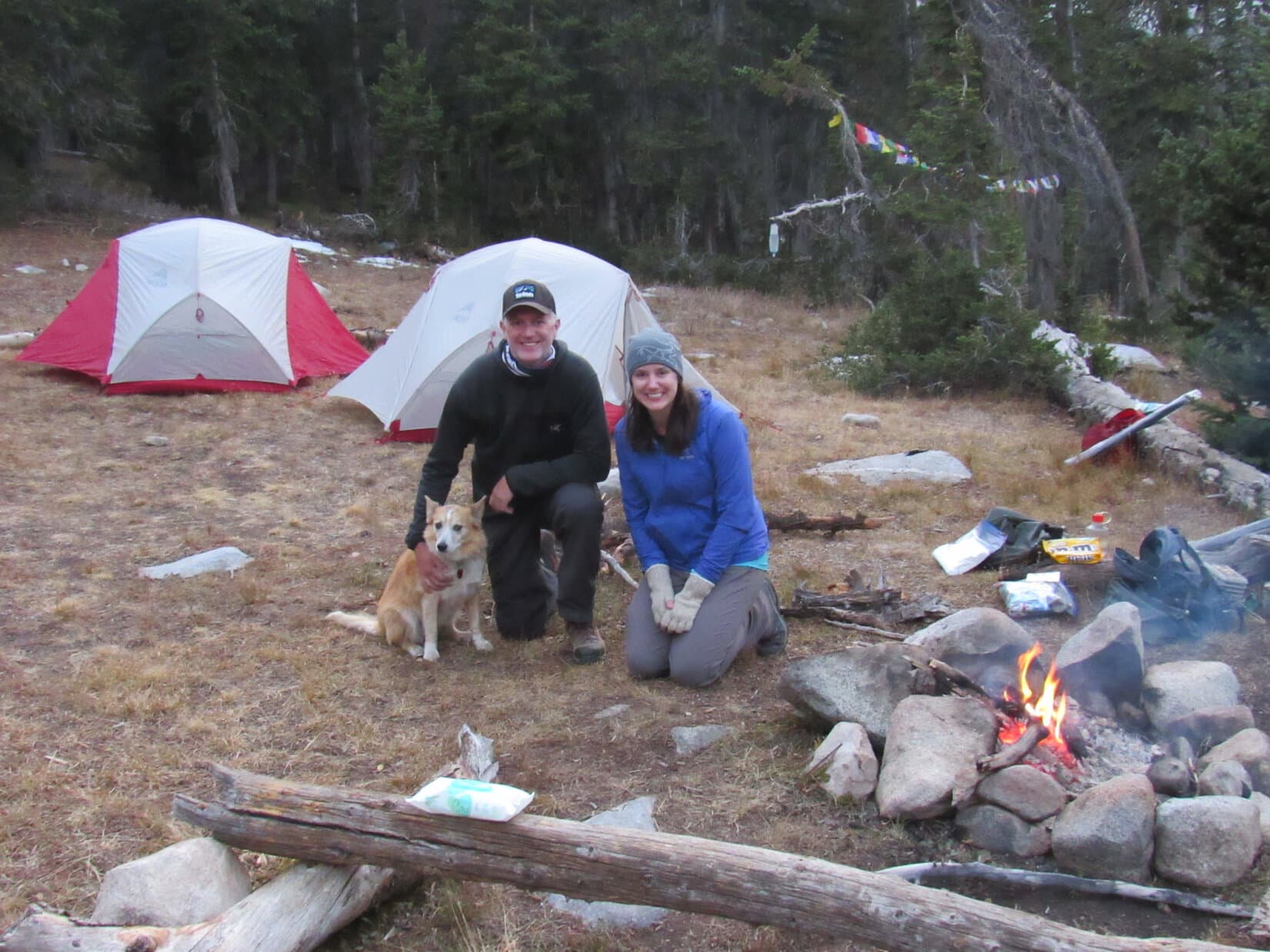
Lupe with Peter & Meghan Cielenski. First (and only so far!) people ever to recognize Lupe from T(M)TAOL.
Peter & Meghan Cielenski with Loop. A little fuzzy due to low light conditions. It was much darker than it looks.

Peter and Meghan were both very friendly, and a fun evening was spent with them.  Unaccustomed to a campfire, Lupe mostly hung back in the shadows, listening to the conversation.

Peter had discovered the Wind River Range back in 2019.  Already on his 3rd trip, he was a fan!  Peter’s main interest was in fly fishing.  He showed SPHP photos of brilliantly colored Golden Trout he’d caught when he and Meghan had gone all the way up Atlantic Canyon to the Saddlebag Lakes yesterday.

Meghan was a runner.  She sometimes runs marathons, and was more into exploring than fishing.  Meghan was hoping to see some shooting stars.  Wyoming wish granted!  The Milky Way appeared in the heavens as the night turned black.  A zillion stars glittered overhead.  A few fell, as sparks from the campfire’s embers sailed skyward in brief, doomed efforts to meet them.

The Cielenskis offered SPHP a Snickers bar, peanut M&M’s, and Babybel cheeses wrapped in cellophane and red wax so they’ll keep.  SPHP had never seen Babybel cheeses before, but they were good, and a really big hit with Lupe!  When the Cielenskis declined beef jerky offered by SPHP, the Carolina Dog made sure none of that went to waste, either.

Dingo recommended!

Good times with Kevin and Meghan!  But the evening wore on, the fire faded to embers, and it got late.  A fabulous, long day in the mountains.  Eventually everyone was ready to say good-night.

9-16-20, 8:04 AM, Atlantic Lake – Ready to go!  If anything, Atlantic Lake was even smoother this morning when Lupe appeared to bid a final farewell to Atlantic Peak.  A few moments to reflect, and it was nearly Puppy, ho! time.  Before departing, the American Dingo ventured back to Peter and Meghan’s camp to say good-bye.  No activity.  Maybe they were already out and about?
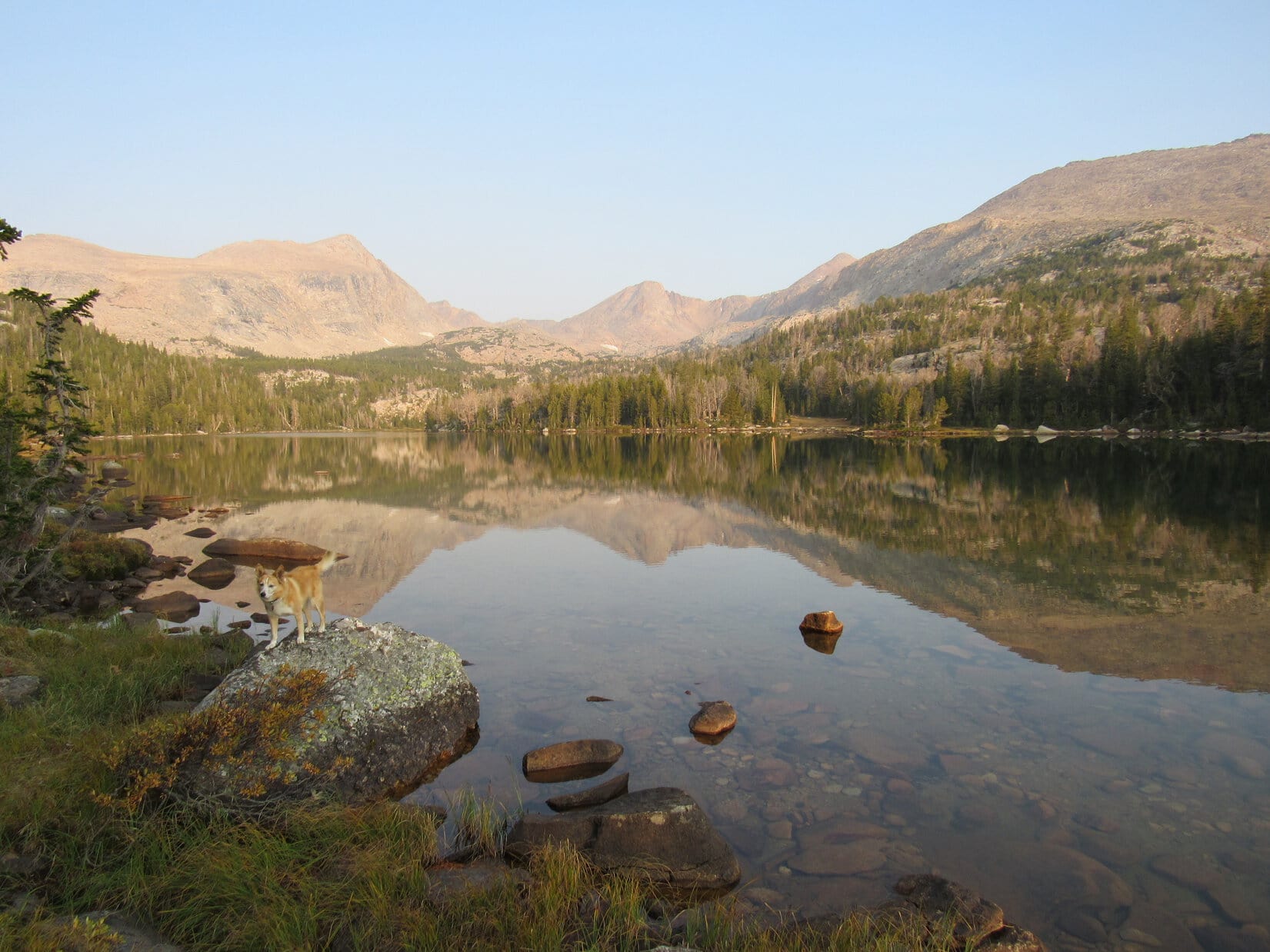
Final moments at Atlantic Lake.

On the way back to the trailhead, several groups of Californians were met.  All had fled the bonfire their drought-stricken home had become.  Some described smoke so thick that day turned to night.  Not good!  Some Year of Perfect Vision this turned out to be!

9-16-20, 1:10 PM, Christina Lake trailhead – The Atlantic Peak adventure was over.  A guy was changing a flat tire on his pickup truck when Lupe got back to the trailhead.  Not especially happy about it, he blamed the sharp gray rock they’d repaired the access road with recently, which he claimed were cheap tailings from an iron mine.  He had relatives that had suffered 8 flats on this road in the past 2 months.

Fortunately, the G6’s tires were fine.  No damage on the way in.  Now all they had to do was survive the trip out.  Still looking good upon reaching pavement on Hwy 28 at the SE end of the Winds.  SPHP turned S.

Lots more to do in the Wind River Range on this Dingo Vacation, if the weather and sky would co-operate!  Looper had a blast barking at cows along the Lander Cutoff.  Wind out of the WSW, though.  The mountains were barely visible when the G6 pulled into Pinedale.  Discouraging.

9-17-20, 2:30 PM, 80ºF, New Fork Lake – Chilly this morning, but the day had warmed up nicely.  Lupe had seen a moose and been entertained for hours by a squirrel in a big spruce tree at the dispersed camping site.  Trip journal caught up, it was time for a last stroll down to the beach.

Dispersed camping site near New Fork Lake.
Squirrel fever!

A hint of fall, aspens on the hillsides were suddenly yellow.  Beautiful!  Not a problem, but the smoke obscuring the mountains was.  No change overnight, or during the day thus far.  Apparently not much chance that the smoke was going to dissipate anytime soon, either.

Might as well face it.  Further delay wasn’t going to help.  Atlantic Peak was it, a one mountain Dingo Vacation!  Terribly inefficient, but it had been great fun.  No regrets!
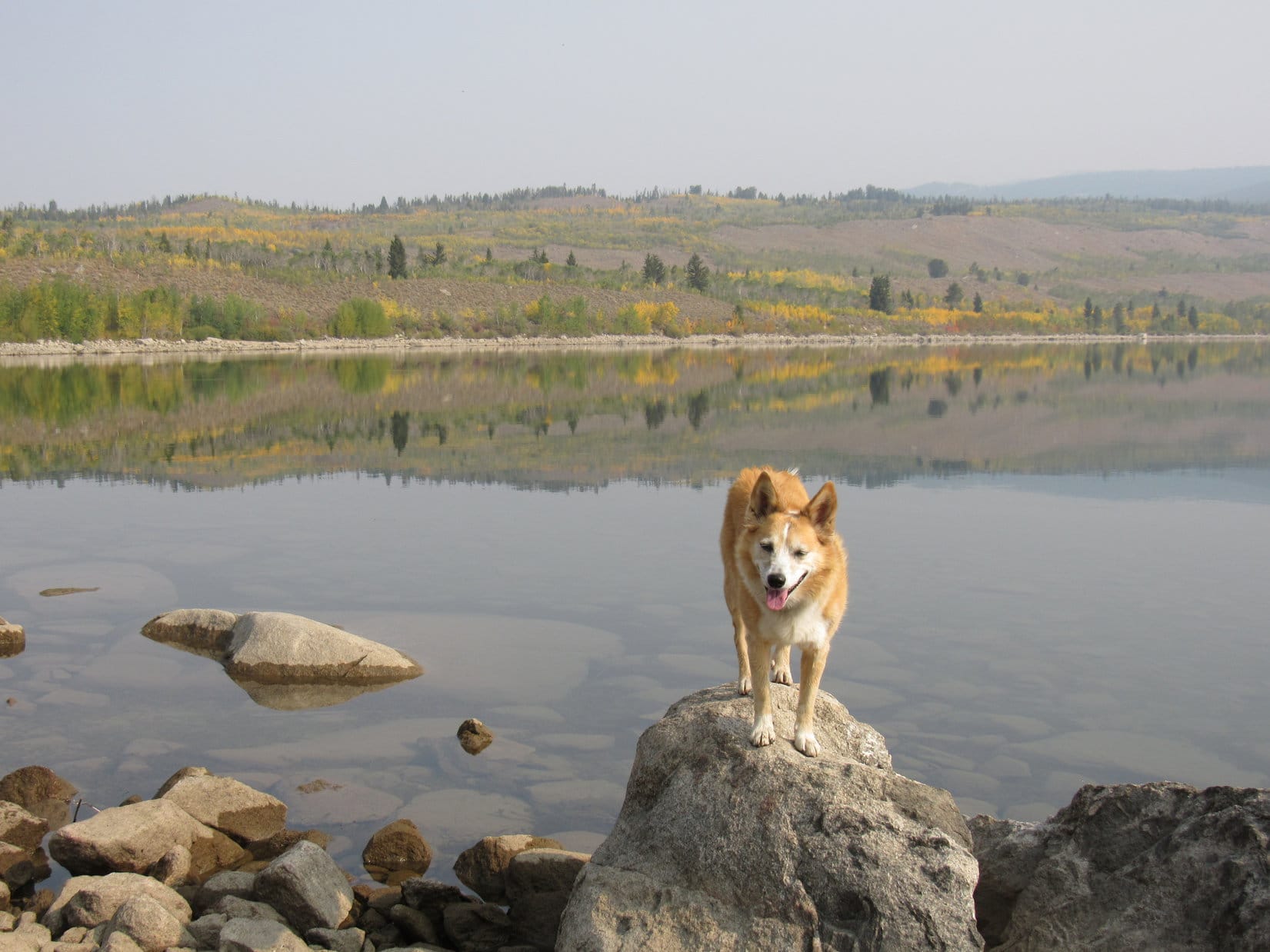
A touch of fall at New Fork Lake.
Hopes dashed at New Fork Lake.

The American Dingo headed for home.  Normally a classic western scenic drive, but smoke was everywhere.

9-18-20, 6:53 AM, Wright, WY – Well, isn’t that special?  The G6’s R rear tire was nearly flat.  After airing it up at a gas station, SPHP asked the convenience store cashier where it might be possible to get it repaired?  R & B Tire, a mile or two back along Hwy 387.

Stroke of luck!  R & B Tire opened at 7:00 AM.  No waiting.  The tire was repaired and the G6 good to go in no time.  $18.00.  Say, by the way, had the mechanic found a nail in the tire, or what was the issue?

Nope, no nail.  A small, sharp shard of gray rock.

Figured.

(End, 9-18-20, 11:10 AM, 66ºF, breezy, smoky)
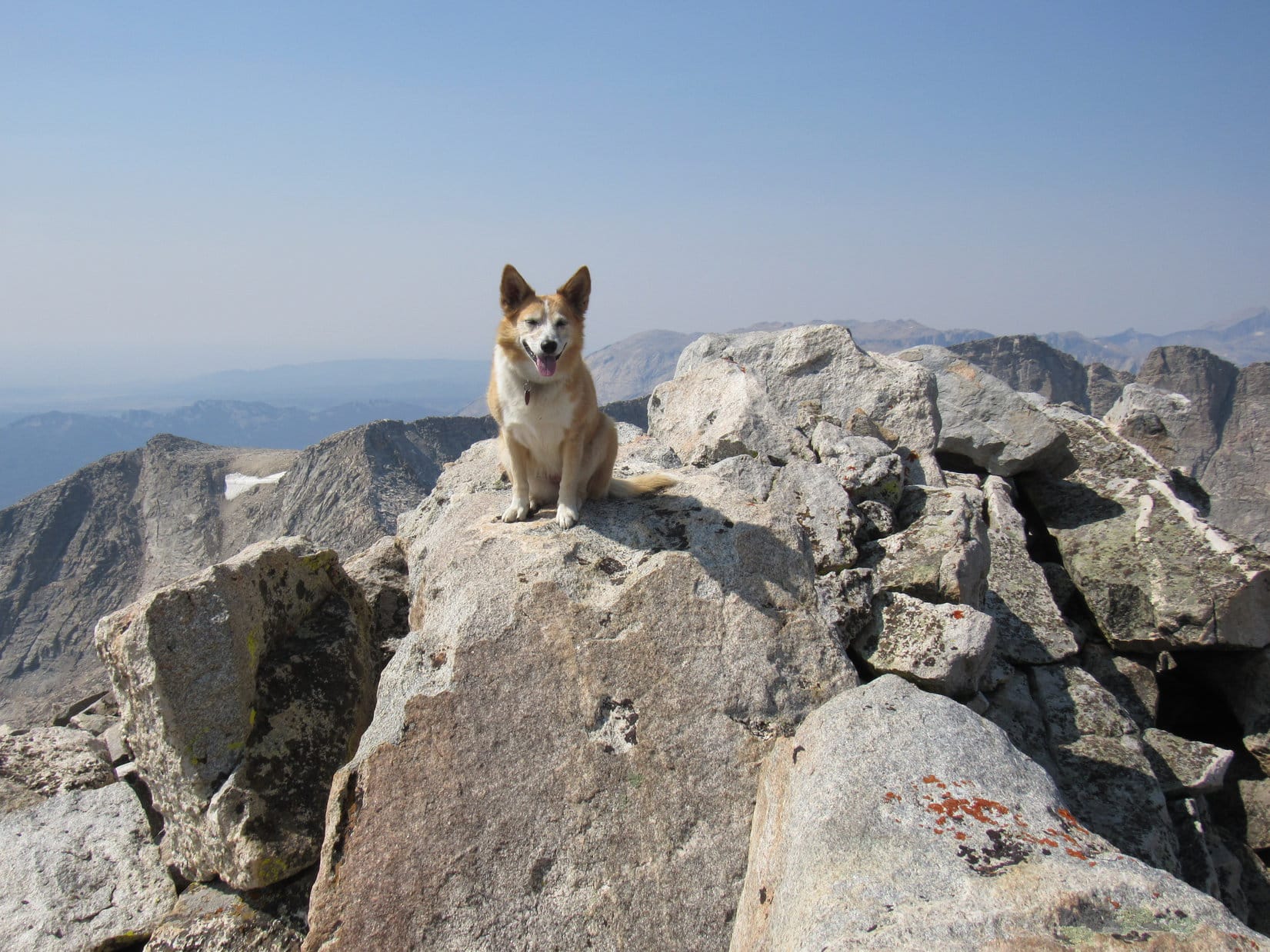
Atlantic Peak, Wind River Range, Wyoming 9-15-20

Links:

Next Adventure                         Prior Adventure

Atlantic Peak, Wind River Range, Wyoming – Part 1: The Christina Lake Trail & Beyond to Atlantic Lake (9-14-20)

Big Sandy to Jackass Pass & Cirque of the Towers, Wind River Range, Wyoming (9-1-15)

Wind River Peak, Wyoming – Part 1: Worthen Meadow to Tayo Park (7-8-17 & 7-9-17)

East Temple Peak, Wind River Range, Wyoming – Part 1: Big Sandy Opening to Clear Lake (7-18-20)

Want more Lupe adventures?  Choose from Lupe’s Summer of 2020 Dingo Vacations to Wyoming, Utah & Montana Adventure IndexDingo Vacations Adventure Index or Master Adventure Index.  Or subscribe free to new Lupe adventures.

Black Hills, SD Expedition No. 269 – Peak 5581 & Scruton Mountain (3-12-21)

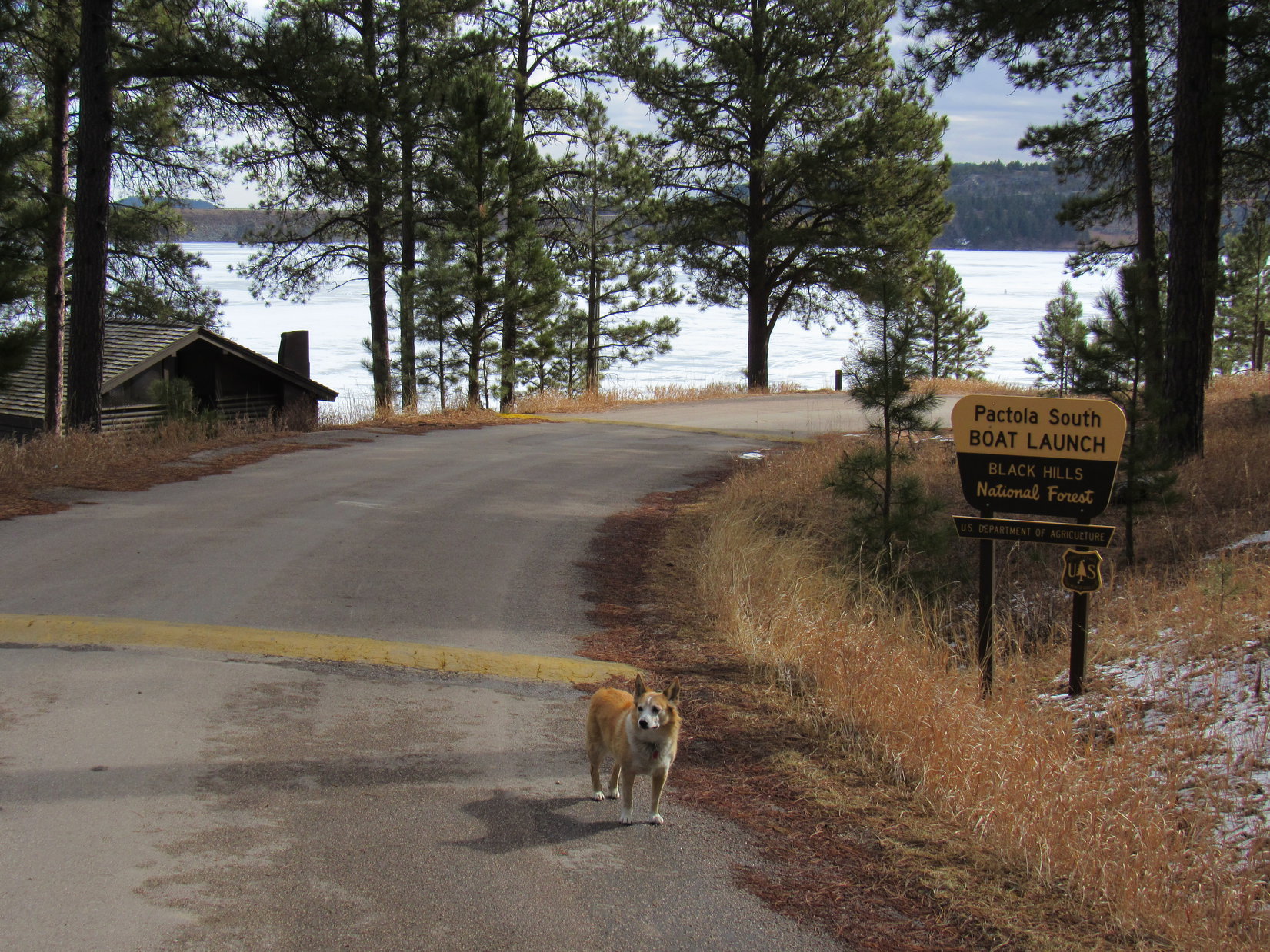
9:14 AM, 41ºF, Pactola Reservoir S boat launch – Several people were out on frozen Pactola Lake when the Carolina Dog sprang from the G6.

Ice fishing!  Are we going ice fishing, SPHP?

S boat launch at Pactola Lake. Perrin Mountain (5,212 ft.) (Center). Photo looks NE.

That would be a new one, wouldn’t it?  But no ice fishing for us, Loopster!  Your mission, should you decide to accept it, is to find and climb Peak 5581.  Maybe a couple of other peaks, too, if that goes well.

Mission impossible, unless you brought a map, SPHP.  Never heard of Peak 5581 before.

I just so happen to have a topo map of the relevant territory, lucky Dingo!  Peak 5581 is only about a mile SW of here.  Shall we?

A mile SW?  Follow me, SPHP!

Taking the boat launch access road, Lupe headed SW back up through the Pactola campground, then plunged into the forest.

Leaving the S boat launch area. Photo looks ENE.
Loopster headed straight into the forest from here. Photo looks SW.
The search for Peak 5581 begins! Photo looks SW.

Shortly after leaving the pavement, Lupe came across a faded remnant of a road on the SE side of a sloping, grassy valley.  Following it farther up into the forest, she soon had a decision to make.  Directly ahead was a very steep hill.  L or R to try to get around it?  SPHP consulted the map.

On the barely detectable road. Photo looks SW.

Go R, Looper!

This is going to be easy with the map, isn’t it, SPHP?

Should be!  That’s why I almost always bring one.

We’ll head W from here. Photo looks WSW.

The terrain steepened as Lupe turned W.  More hills boxed in the upper valley.  A ravine toward the S looked like the best route higher.  The first part of the ravine was full of small pines.  Before long they gave way to rock outcroppings and more open terrain toward the N.
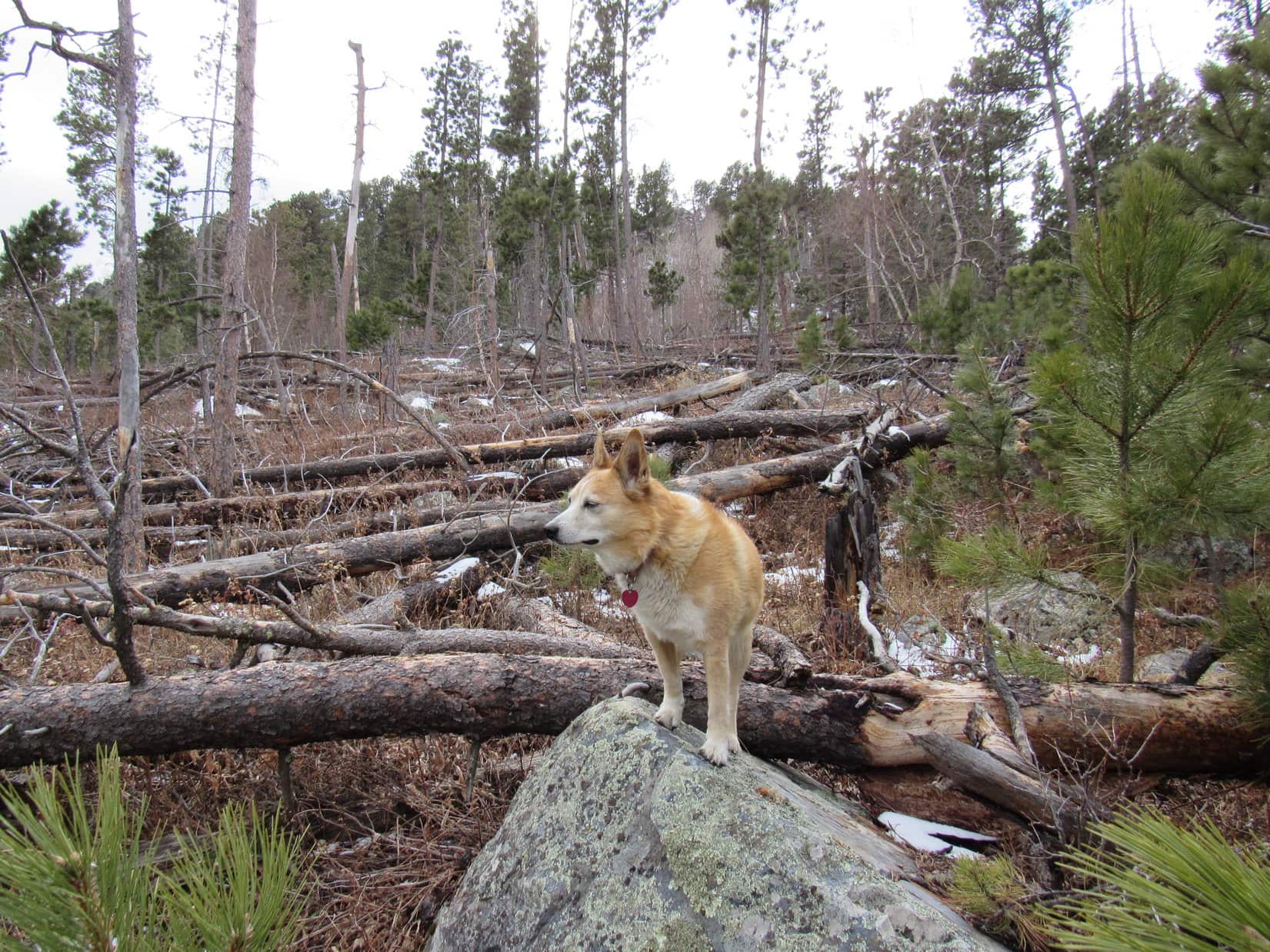
Glancing back down the slope before entering the ravine. Photo looks ENE.
Starting up the ravine. Photo looks WSW.
Near some of the rock formations. Photo looks N.
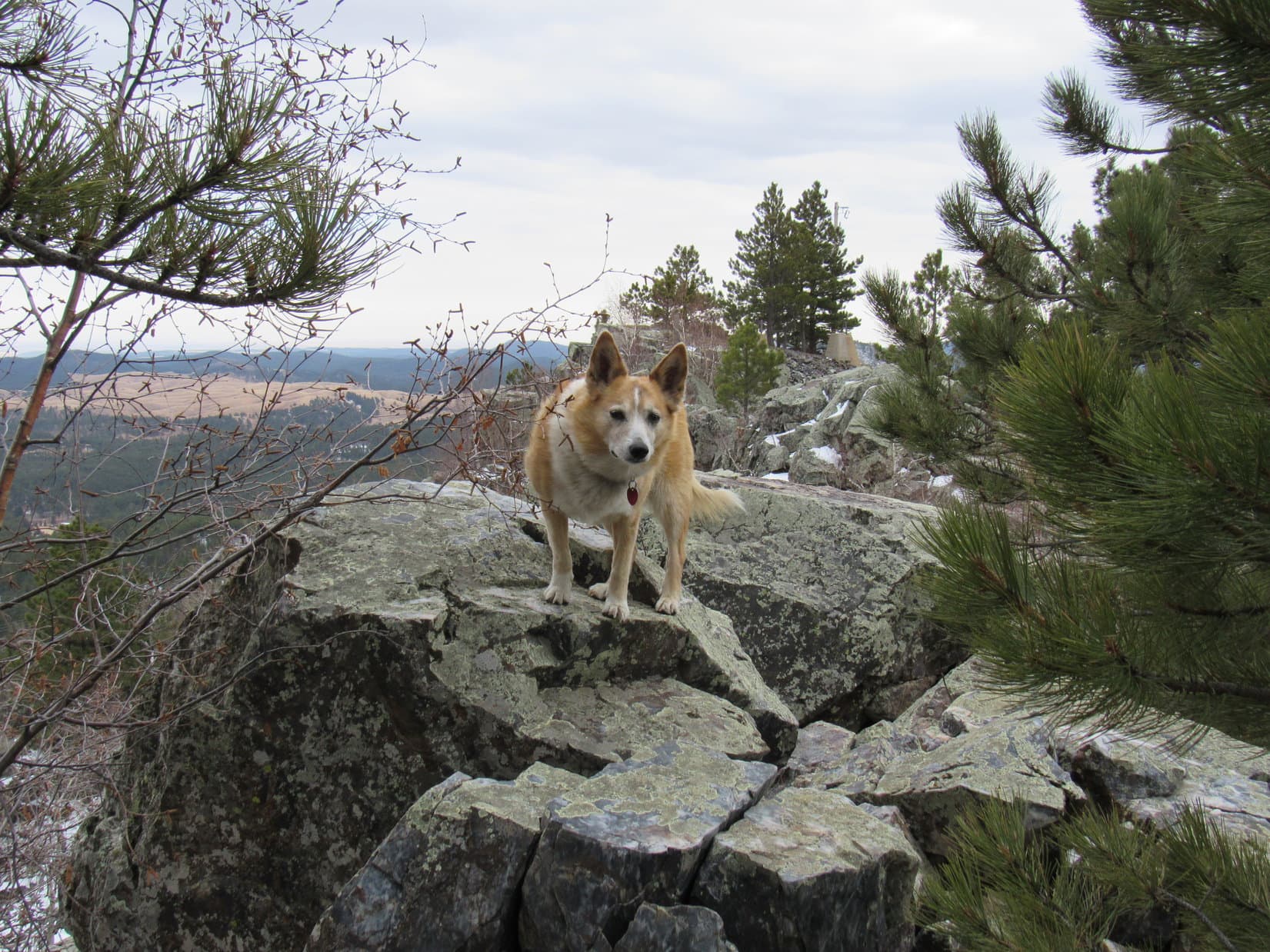
A minor saddle soon appeared on the N side of the ravine.  Lupe went up to it.  Some flat ground, and a small rocky hill to the E.  Very little in the way of views due to the trees, but this spot was identifiable on the map.

Trending WSW from the saddle, Lupe sniffed her way higher staying N of the ravine.  No big rock formations along in here, but plenty of rocks were strewn about the forest.

Past the minor saddle following the N side of the ravine (L). Photo looks SW.

The trek became easier and easier.  Making good progress, Loop came to Kinnikinnick Park, a gently sloping region where the forest must have been thinned years ago.

Kinnikinnick Park, named after the abundant low ground cover. Photo looks SW.

After crossing Kinnikinnick Park, the terrain steepened again.  By now the ravine had disappeared.  Entering denser forest, Looper climbed nearly to the top of a ridge.  Reaching some rock formations at the SE end, Boulder Hill (5,331 ft.) and Silver Mountain (5,405 ft.) were on the SE horizon.

Boulder Hill (L) and Silver Mountain (R). Photo looks SE with help from the telephoto lens.

A point of more immediate interest was visible 0.5 mile SSW.

Peak 5581!  That has to be it, doesn’t it, SPHP?

Yup!  I think so, Looper.  You’ve found it, all we need to do now is climb it!

There it is! Peak 5581! Photo looks SSW.

200+ feet of elevation had to be lost to get over to the base of Peak 5581.  The map showed a steady march down to a saddle along the mountain’s N flank, but reality was more complicated than that.  A descent of only 100 feet led to an initial low point.  Surprisingly, this was followed by an ascent of a modest intervening hill not shown on the map.

On the way down to the first low point. Photo looks S.
Peak 5581 (Center) from the intervening hill. Photo looks SSW.

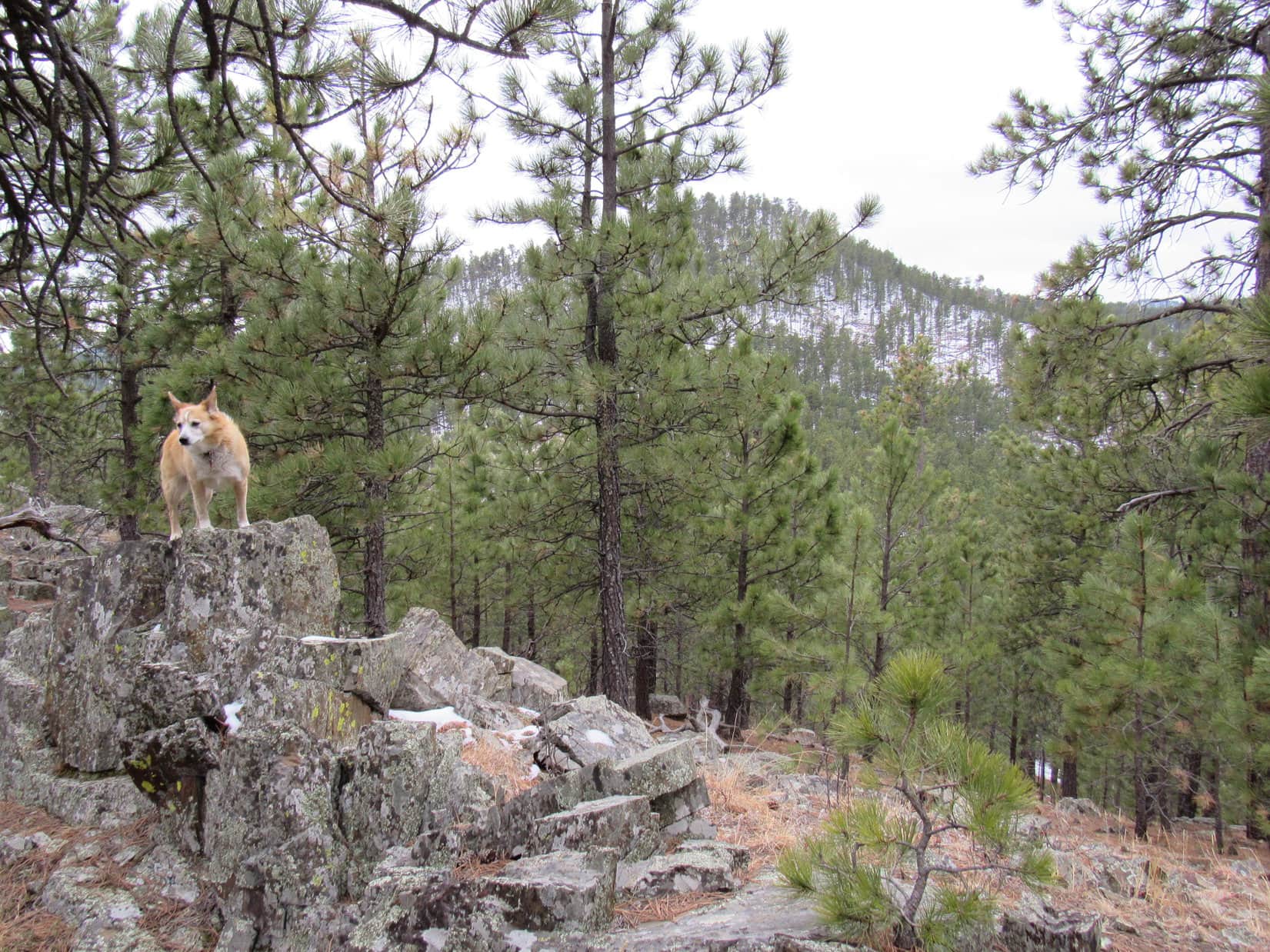
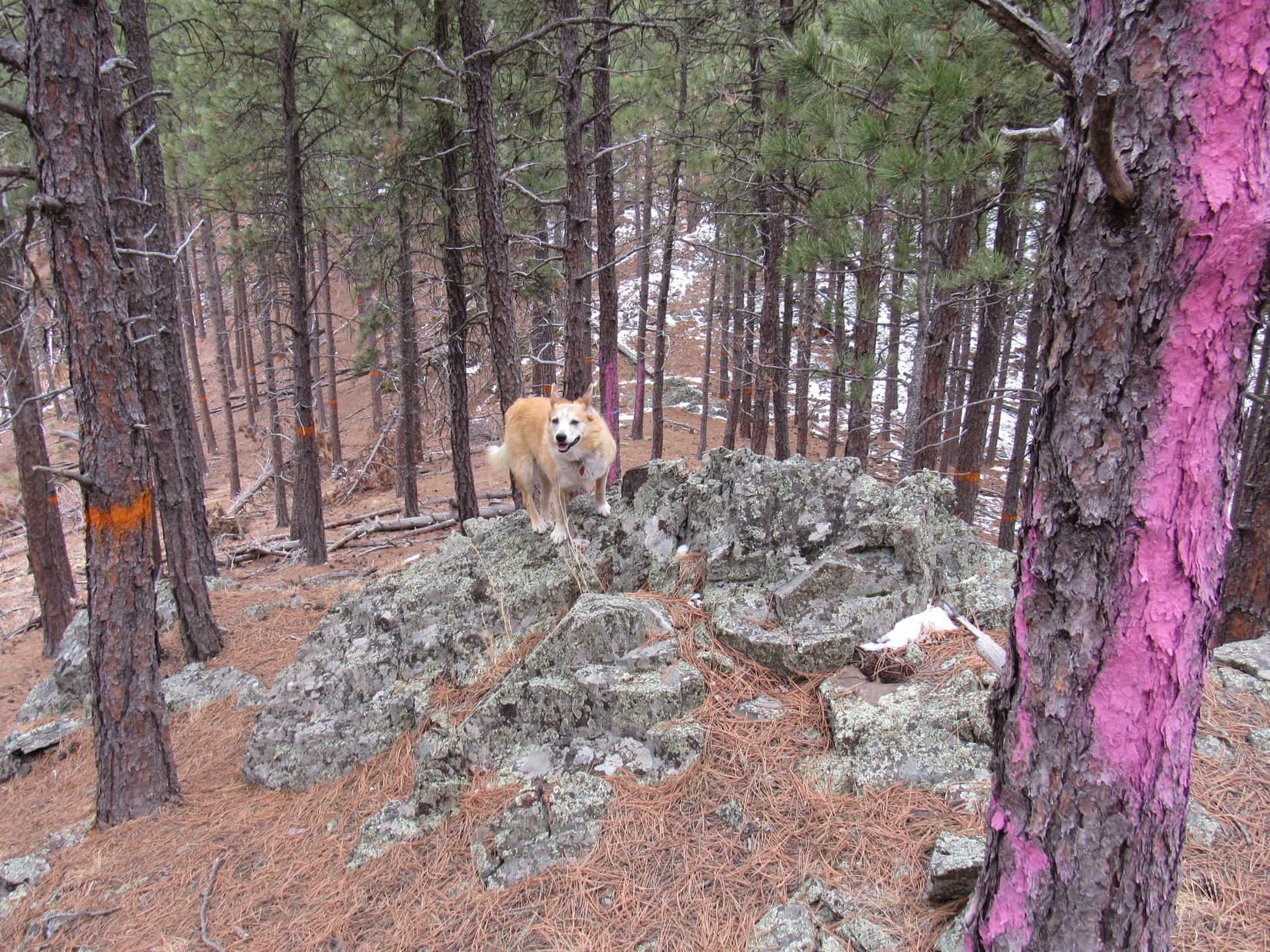
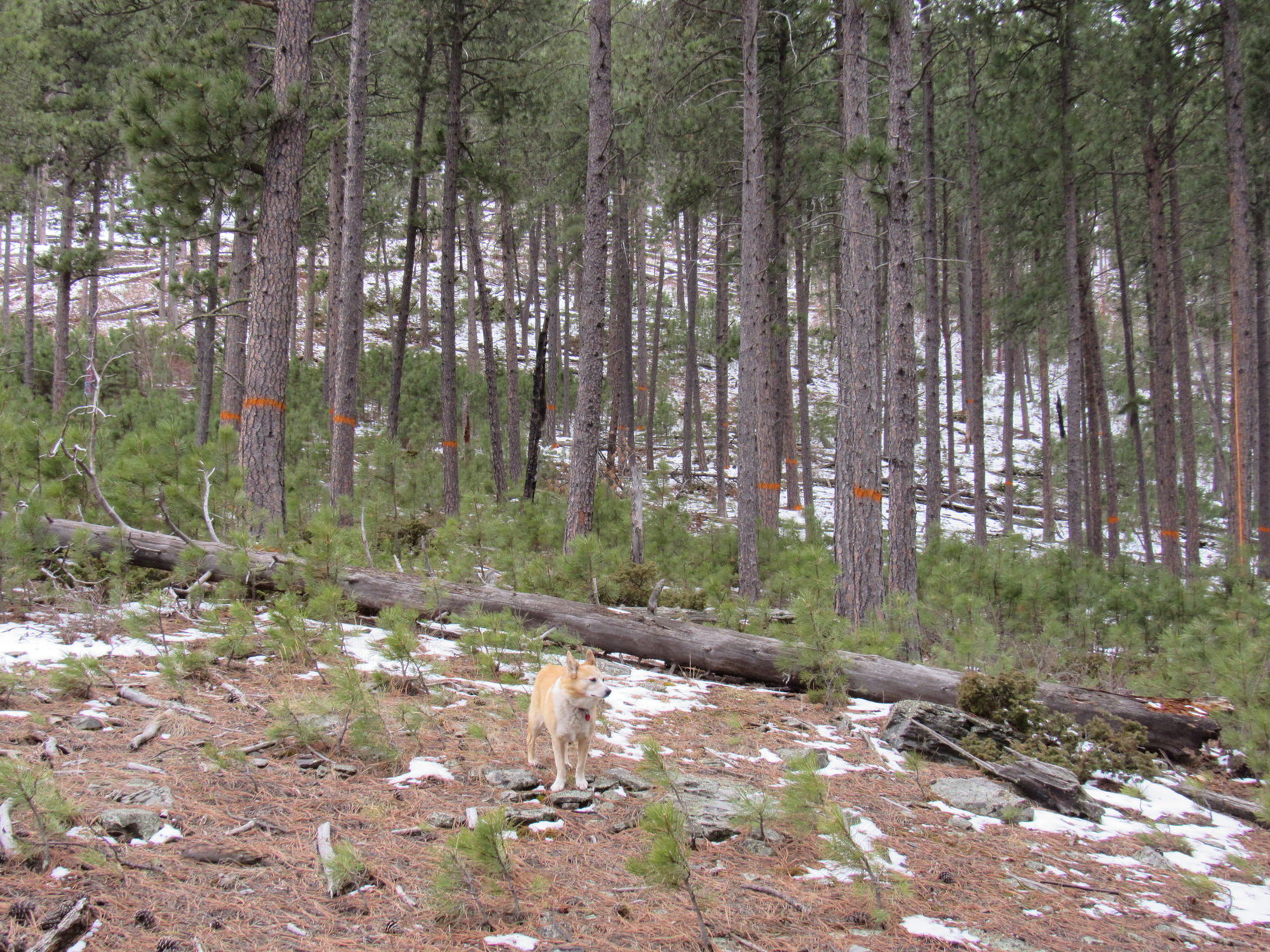
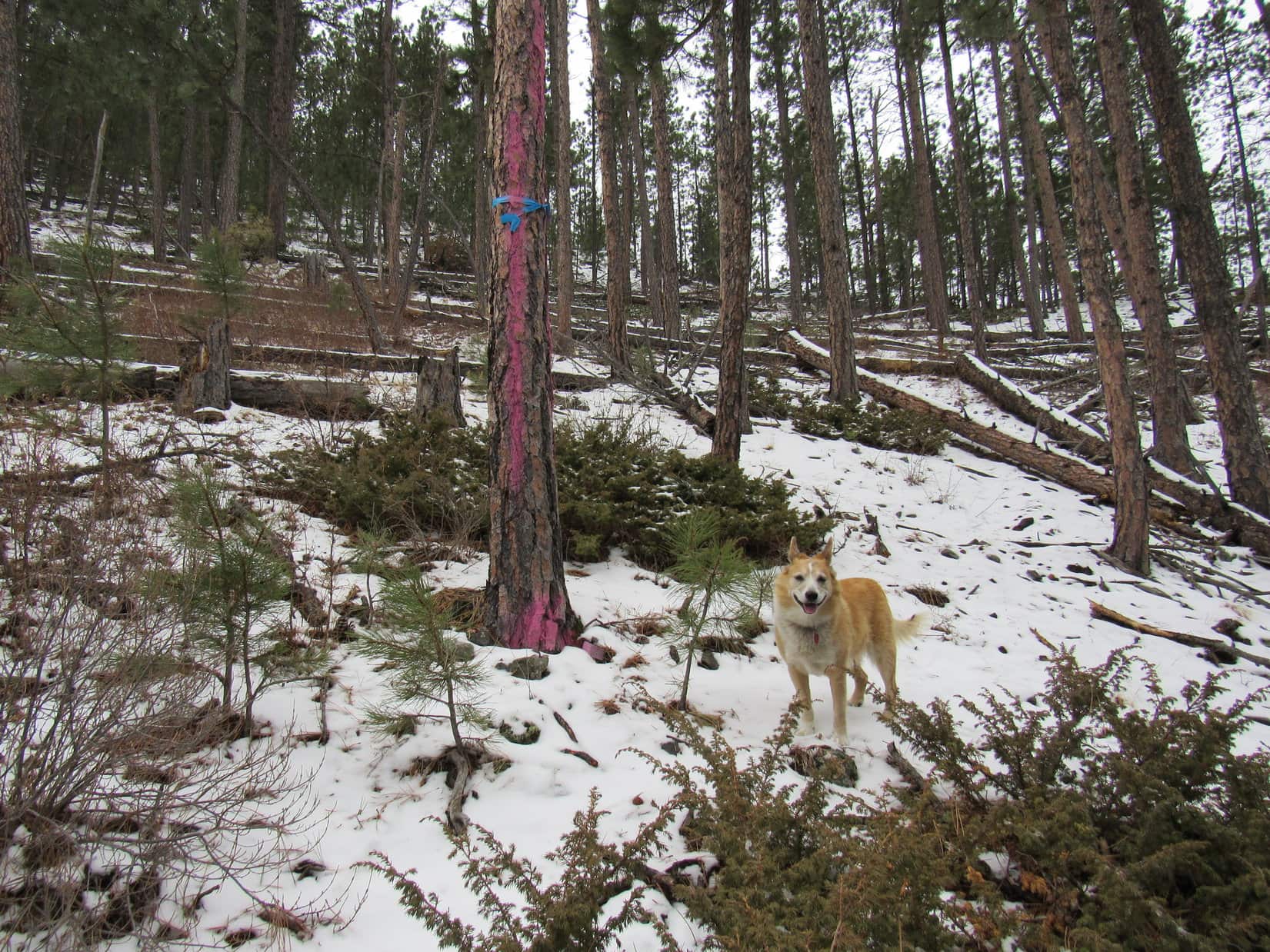
A second descent of at least 100 feet ensued.  This region seemed to be very remote, but loggers must have been scoping out the area recently.  Many of the larger trees were marked with fresh orange or pink paint.  Following a line of pink trees, Loop reached the saddle immediately N of Peak 5581, where hundreds of tiny pines were growing in a clearing.

Getting closer! Keep following the pink trees! Photo looks S.
At the saddle N of Peak 5581. Photo looks S.

Glimpses of Peak 5581’s upper N face on the way over here had looked pretty steep.  SPHP thought the NW ridge might be somewhat easier, so the American Dingo angled toward it as she began her ascent.

Heading for the NW ridge. Photo looks SW.

A fairly steep rocky spine ran straight up the NW ridge.  With her 4 on the floor, Lupe had no problem, but 0.5″ of snow was enough to make the ascent slippery for SPHP.

On the rocky spine of the NW ridge. Photo looks SSE.

The rocky spine went all the way to the top.  The Carolina Dog reached a 100 foot long summit ridge that sloped up to the SE.  Loopster was on her way to the high point when she came to a nice opening with a great view of Scruton Mountain (5,922 ft.) and New Year’s Eve Peak (6,046 ft.).

Getting close to the top. Photo looks SSE.
Peak 5581’s summit ridge. Photo looks SE.
New Year’s Eve Peak (Center) and Scruton Mountain (R). Photo looks SSW.

Going all the way to the SE end of the ridge, the true summit turned out to be a skinny rock standing on end that stuck up several inches higher than any of the others.  Lupe tapped the top of it with her paw, but it was much too small to stand on.  Bigger rocks nearly as high had to serve for her summit photos.

At the true summit. Well, actually the skinny rock at center is it, but close enough! Photo looks SE.
Peak 5581. Photo looks SE.

The best spot to sit near the true summit was just past the highest rocks.  Lupe curled up on SPHP’s lap.  The big view from here was of Boulder Hill and Silver Mountain miles beyond the barren Bald Hills.

Storm Hill (5,192 ft.) (Center), Boulder Hill (R of Center), and Silver Mountain (R). True summit (far R). Photo looks SE with help from the telephoto lens.

So is Peak 5581 one of your Lists of John peaks, SPHP?

Yes, it is, Loop.  Not bad, is it?  Bet hardly anyone ever comes here!

How much prominence?

321 feet.  So, not much above our 300 foot minimum cutoff.  Want to split a chocolate coconut bar to celebrate your successful ascent, Looper?

Thought you’d never ask!

Break time on Peak 5581. Photo looks SE.

Supposed to be sort of a warm day, but it sure wasn’t up here.  Not much above freezing.  The sky was now completely overcast, and every time the SW breeze stirred it felt rather chilly.  45 minutes went by.  Plenty of time yet.  Loop might as well have a go at Scruton Mountain (5,922 ft.).

Scruton Mountain from Peak 5581. Photo looks SW with help from the telephoto lens.

SPHP wasn’t really looking forward to going back down Peak 5581’s slick NW ridge, but the rest of the mountain was even steeper.  Staring down the S slope, though, SPHP got the idea that maybe it wasn’t all that bad?  No snow with the S exposure, which would make a huge difference, and a more direct route to Scruton Mountain, too.

Lupe started down.

Scruton Mountain (L) and the territory Lupe would have to cross to get to get there. Photo looks SW.
Starting down Peak 5581’s S slope. Photo looks NE.

Loose, flat stones and steep for a long way, but the S slope went fine.  Lupe angled toward the saddle W of Peak 5581.  Once SPHP got there, the Carolina Dog crossed the saddle and began climbing SW up the next ridge.  Upon reaching the ridgeline, she turned SE.  Still climbing, Loop made it to a high point where there was a sizable rock formation.

At a high point 0.3 mile SW of Peak 5581. Photo looks NNW.

The ridge headed SSW from here.  At first, Loopster lost elevation as she followed the ridge through the forest, but soon found herself climbing to another even higher spot.  A line of rocks at this second high point wasn’t as impressive.

At the second high point. Photo looks NNE.

A deeper dip in the ridge lay beyond this second high point, but Lupe soon regained part of this elevation loss, too.  The ridge turned SE again, and became a narrow line of layered boulders inclined at a sharp angle.

The American Dingo leapt among the boulders toward a higher, wider part of the ridge.  However, SPHP tired of the scramble, and dropped down to easier terrain SW of the ridgeline.

Leaving the ridgeline. Photo looks N.
Just below the big rocks. Photo looks SE.

The situation was much better below.  Heading SSE, Loop reached a flat region between the ridge she’d been on and Scruton Mountain.  SPHP paused beneath a pine tree, taking another break.  Lupe was content to rest for a while, but was ready to go when SPHP began to stir again.

Ready to leave the saddle for Scruton Mountain! Photo looks SW.

By now Scruton Mountain (5,922 ft.) was only 0.4 mile SW as the crow flies.  If Lupe went just a little SE, she would run into an access road that wound more than twice that far up to the Seth Bullock fire lookout tower on top.  However, it seemed more fun to explore the territory N of the mountain than to trudge along a road.  Loop headed SW into the forest.

Exploring the forest. Photo looks SW.

At first it was pretty easy, but large quantities of deadfall were an issue as Lupe got closer to the mountain.  Scruton’s NW slope wasn’t quite as steep as the N face, so the Carolina Dog worked her way over to it.  Still a fairly steep climb with plenty of deadfall, but Loop made it to the top.

Deadfall N of Scruton Mountain. Photo looks S.
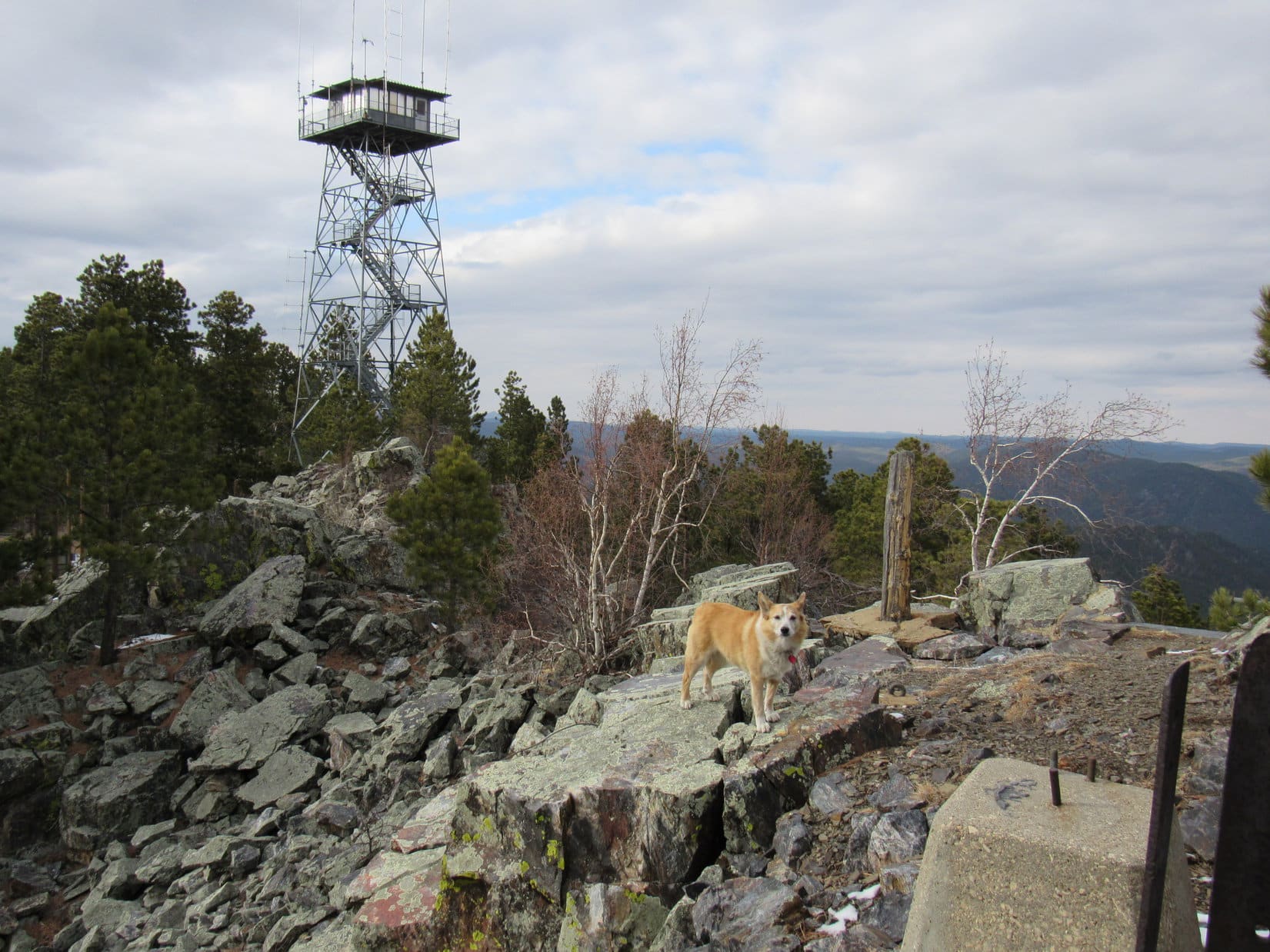
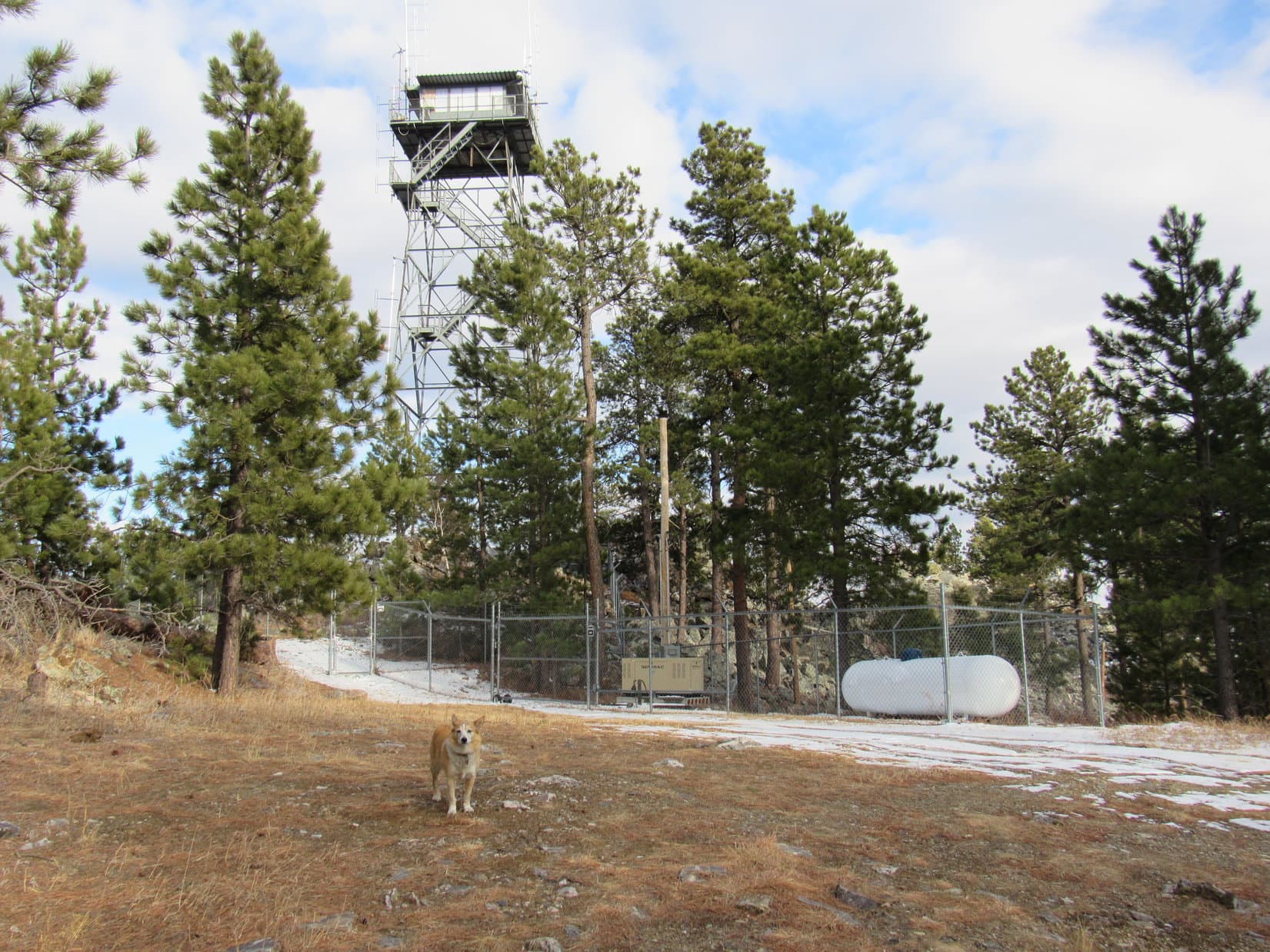
Approaching the Seth Bullock fire lookout tower. Photo looks E.

A tall, chain-link fence denied access to the lookout tower.  Lupe had come up W of it, but it looked like there was higher ground on the other side.  Circling around the S side of the fence, Loop scrambled up to the highest rocks just E of the tower.  Here she had a great view to the S of New Year’s Eve Peak (6,046 ft.) and False North Point (6,130 ft.).

E of the lookout tower. Photo looks SE.
New Year’s Eve Peak (Center) and False North Point (R) in the gap. Photo looks SSE.

The rocky ridge Lupe was on extended another 200 feet SE.  Looked like the highest rocks were somewhere over close to the far end.  Scrambling all the way back down and heading in that direction, Looper discovered a trail to the true summit.

Near the trail to the top (R). Photo looks E.

Tucked back in among a few trees, the true summit was a rock barely any higher than some of the others.  Judging from some old stone steps and various concrete supports and pads, there must have been a cabin and some other USFS installations up here at one time.

Far more interesting were the views of Peak 5581 and the Seth Bullock lookout tower.  Surprisingly little of Pactola Reservoir was in sight from Scruton Mountain (5,922 ft.), only the part near the dam.

The Seth Bullock fire lookout tower from the true summit region. Photo looks NW.
Pactola Lake from the stone steps. Photo looks NE.
Peak 5581 (L) and Pactola Lake (R). Photo looks NE with help from the telephoto lens.

Chocolate coconut bar time, SPHP!

Sounds like a plan, Loop!

The chocolate coconut bar wasn’t the only victim as Lupe curled up on SPHP’s lap.  Most of the Taste of the Wild and the last apple disappeared, too.  Plenty of water leftover, though.  Lupe had been eating snow, and it was still chilly enough so that SPHP didn’t need much water, either.

After being overcast for hours, the sun was trying to break through the clouds.  Scattered patches of blue sky were slowly spreading.  Whenever the sun shone on Scruton Mountain, Lupe and SPHP hopped up hoping to get some better photos.

Opportunities were fleeting.  More often than not, the favorable light vanished almost immediately.  Loopster had some success, including a particularly nice look at Peak 5800 and Peak 5917.

Peak 5800 (L of Center) and Peak 5917 (R). Photo looks SE.
Blue skies beyond the lookout tower. Photo looks NW.

Peak 6070 might have been in the cards, if it had been a little warmer out.  Late enough now, though, so that would have inevitably meant a long march back in darkness.  Still would have been feasible, since roads went all the way back to Pactola Lake.  SPHP dithered before deciding against it.

So Lupe lingered on Scruton Mountain in a chilly SW breeze enjoying the peace, views, and solitude.  An hour and 20 minutes after arriving, the Carolina Dog again stood W of the lookout tower.  Starting down the access road, she stopped at a beautiful view of green pine-scented hills stretching away to the NW.

About to depart. Photo looks E.

Look at that, SPHP!  We’ll always have more to explore in the Black Hills, won’t we!

Forever and ever, sweet Dingo!  Happy days!  (End 5:59 PM, 38ºF)  

Scruton Mountain, Black Hills of South Dakota, 3-12-21

Lupe treasures collected along the roads on the way back to Pactola Lake: 1 glass bottle, 8 aluminum cans, 1 tin can, 2 metal filter housings. 

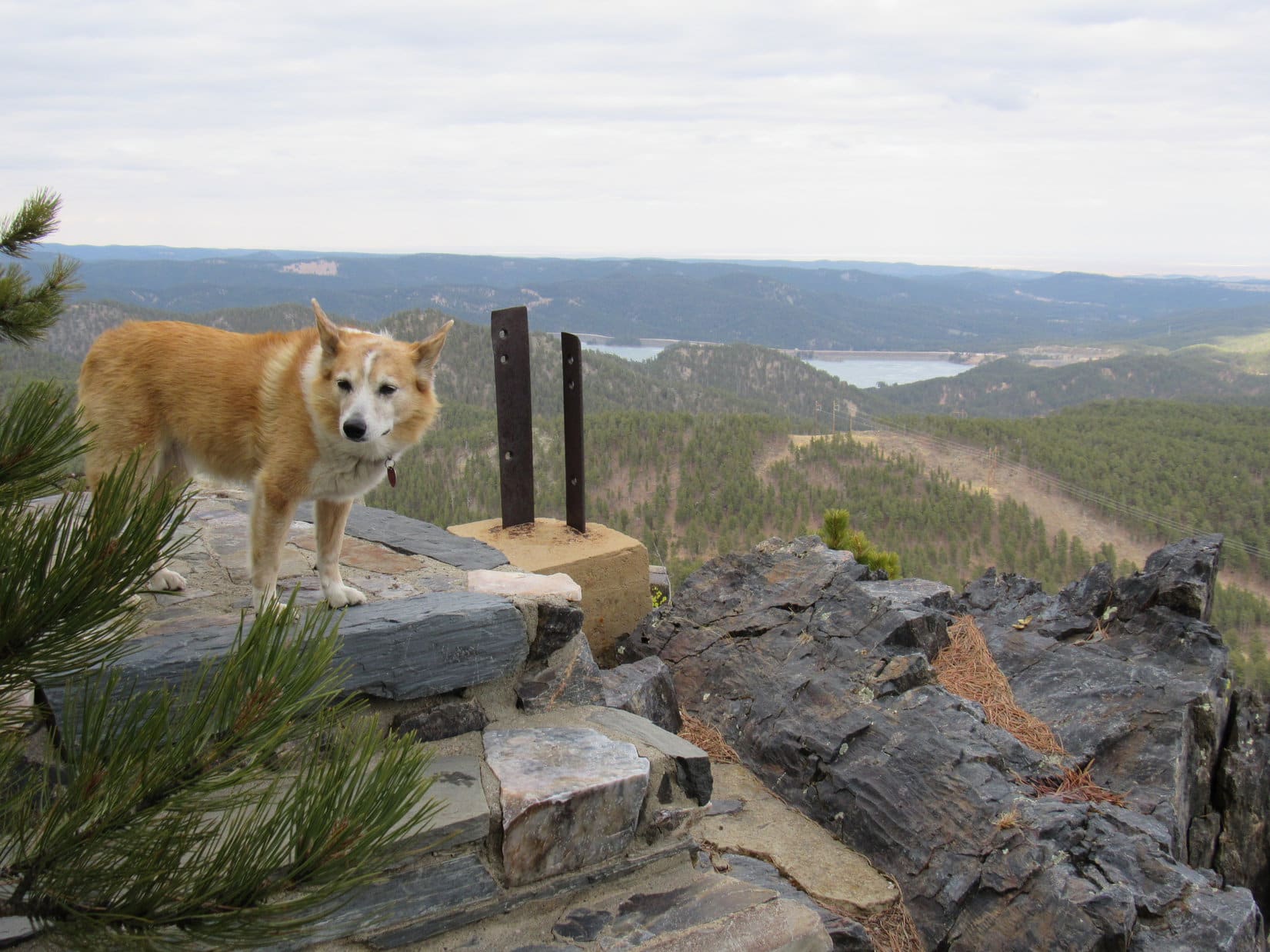
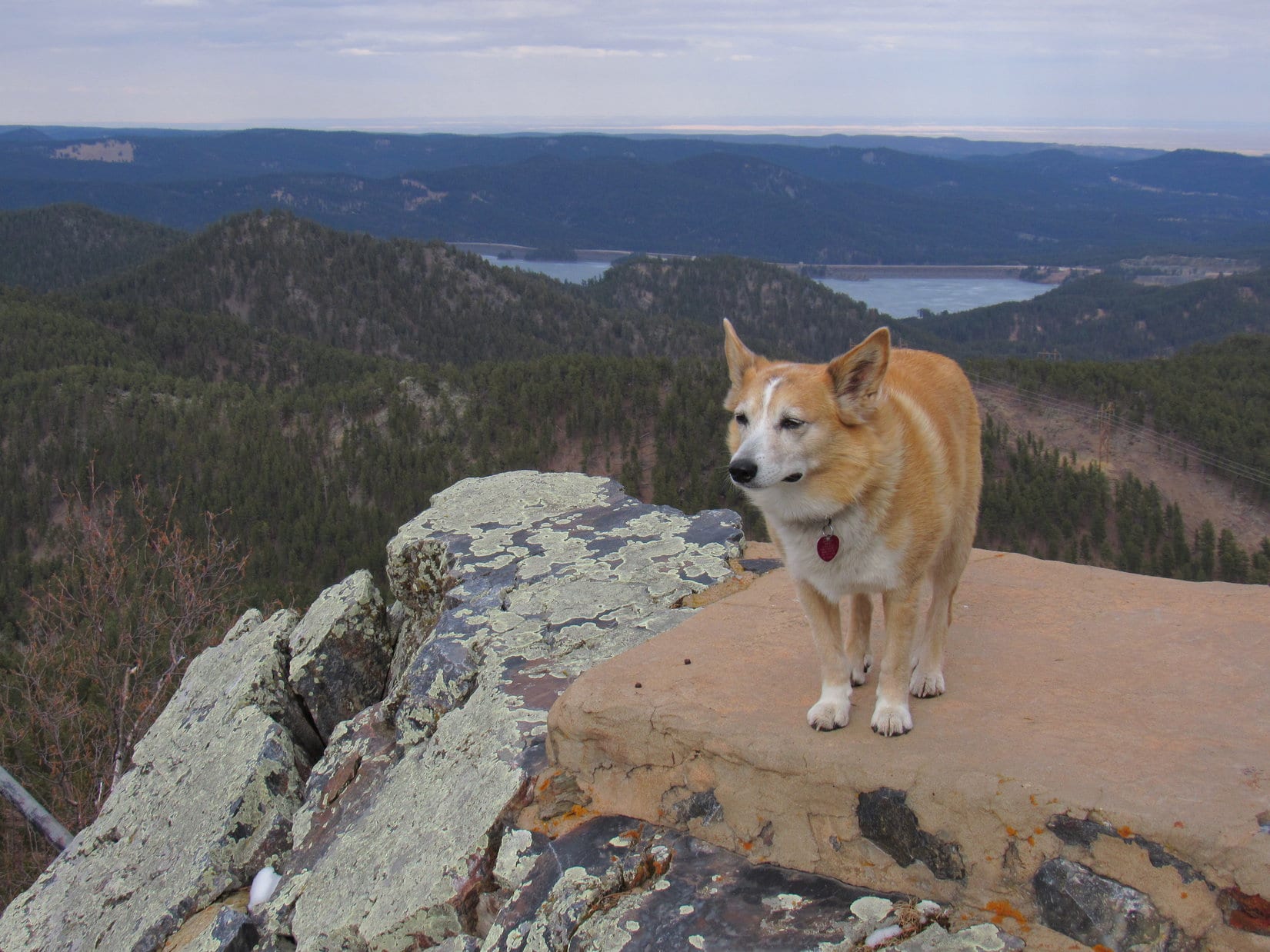
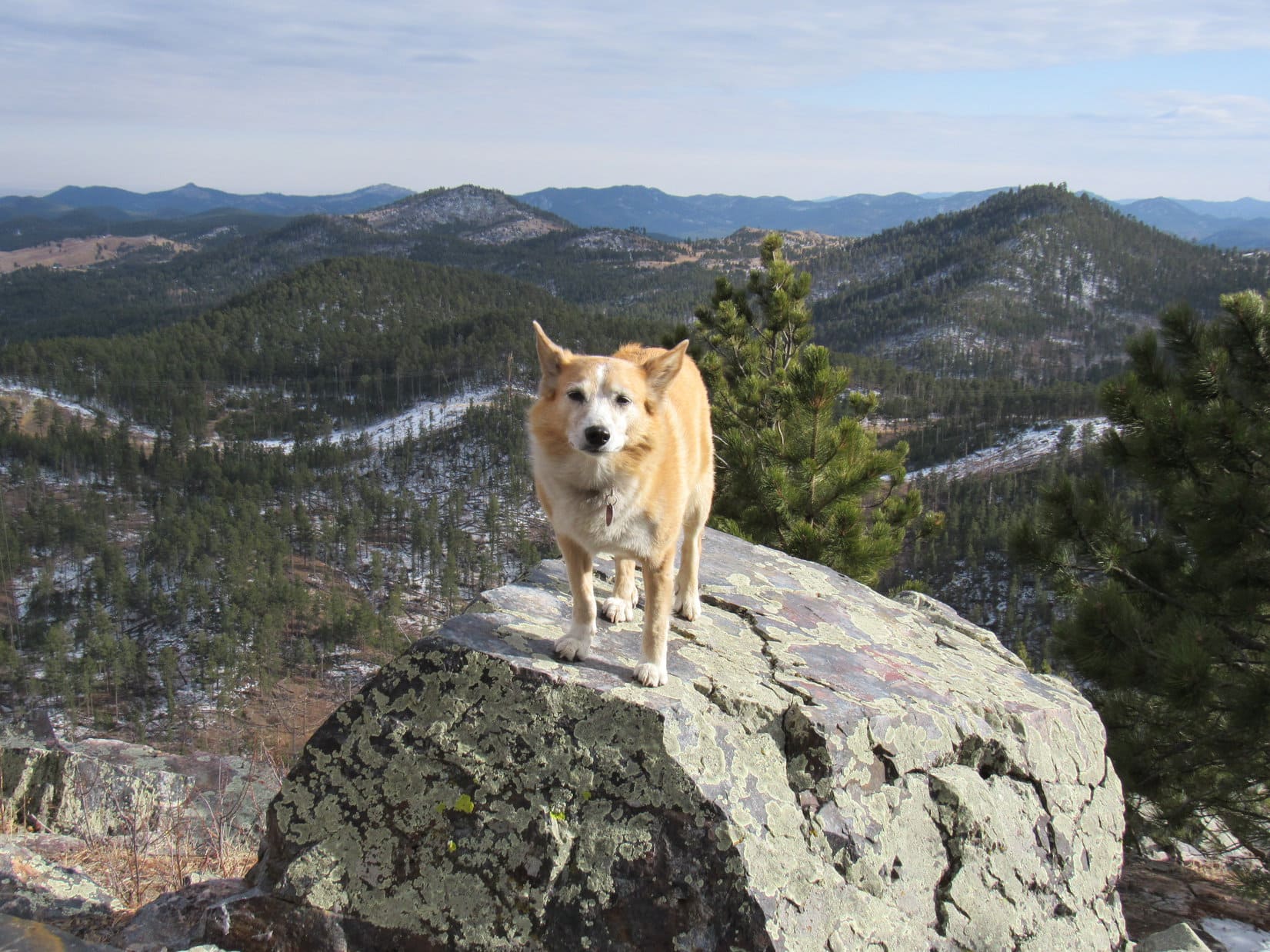
Links:

Next Black Hills Expedition                      Prior Black Hills Expedition

Scruton Mountain on SummitPost.org

Want more Lupe adventures?  Check out Lupe’s Black Hills, SD & WY Expeditions Adventure Index, Master Adventure Index, or subscribe free to new Lupe adventures!