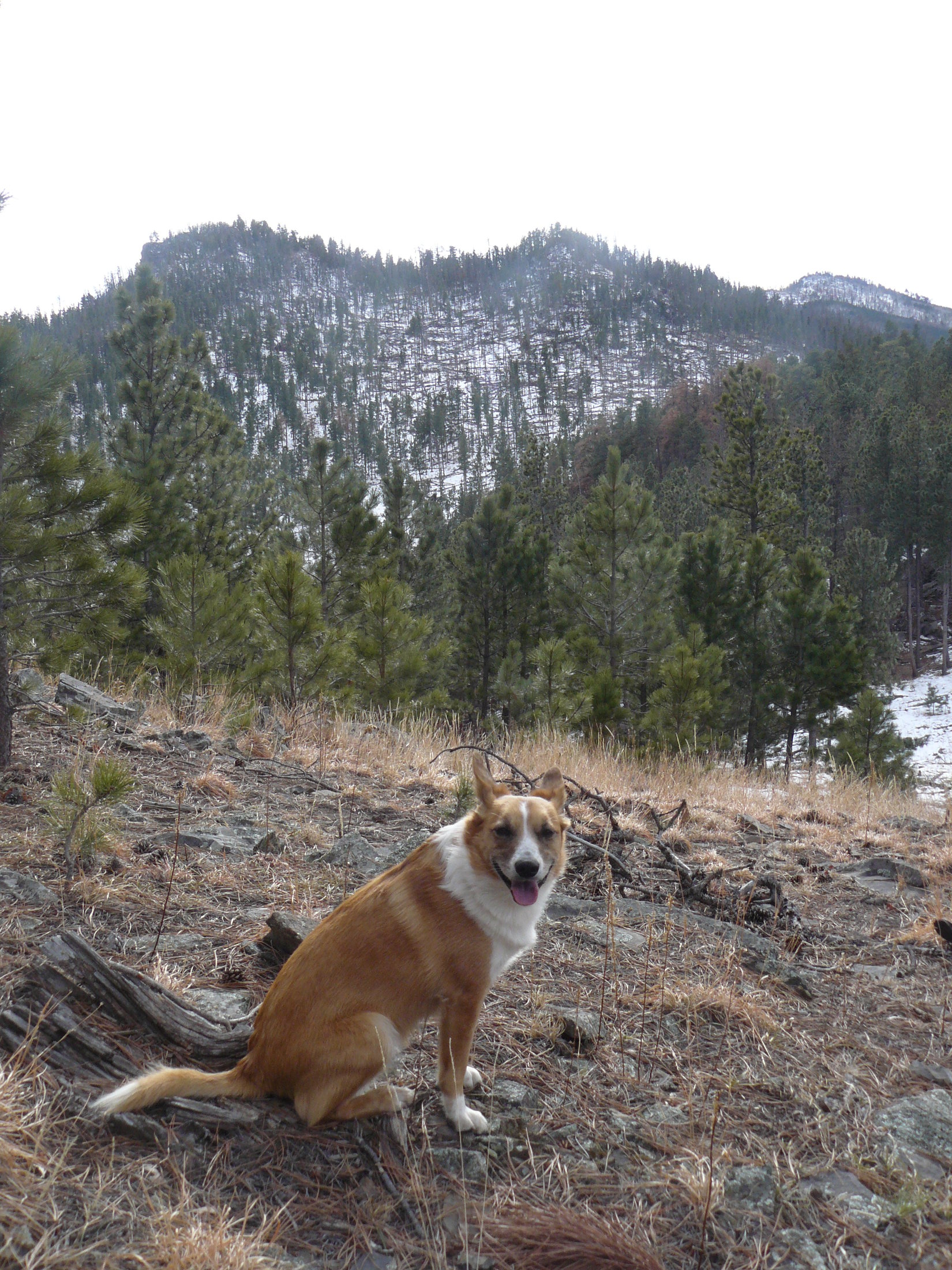
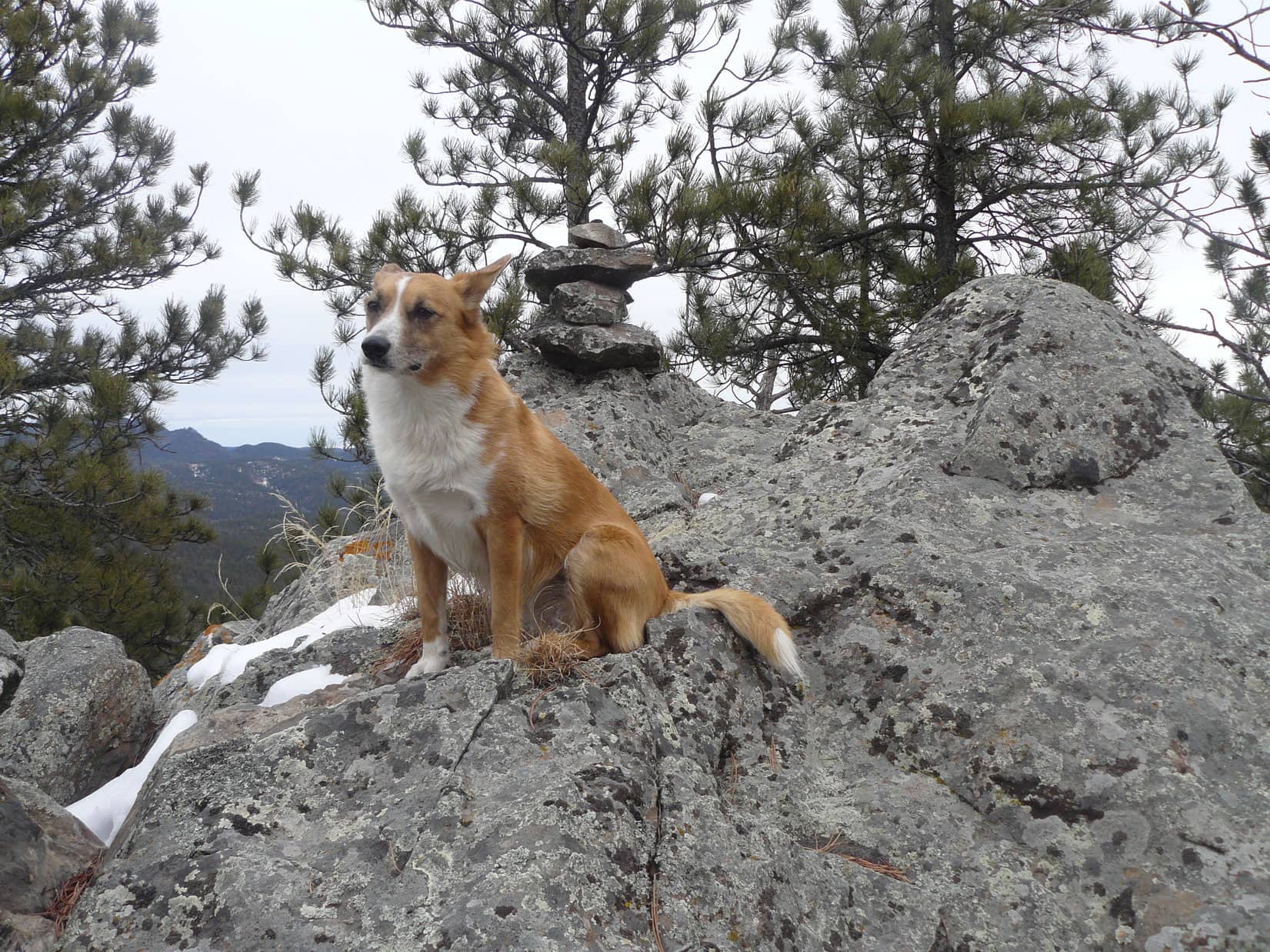
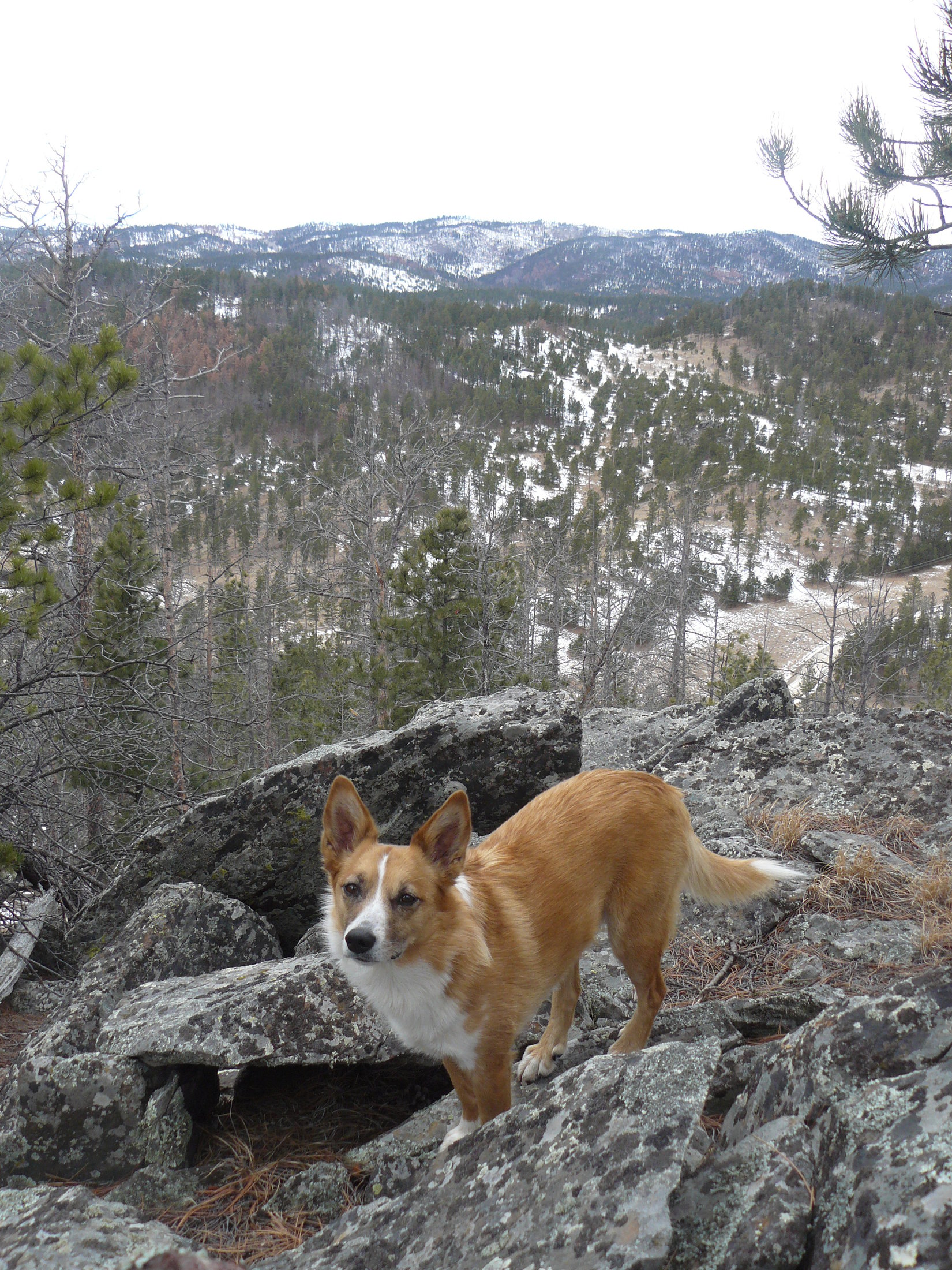
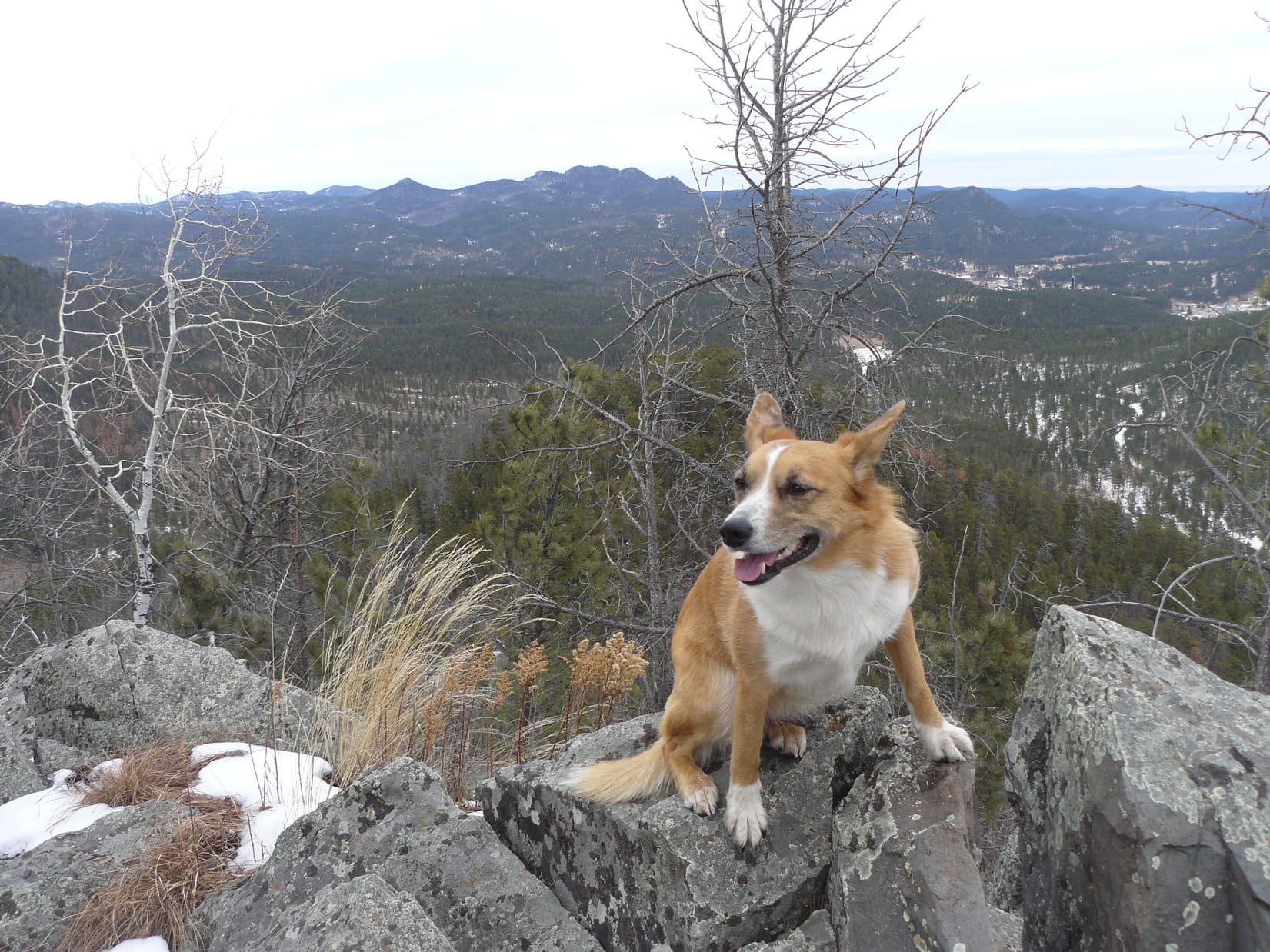
Black Hills, SD Expedition No. 174(a) – Summits on the Air! (Custer Peak, 7-2-16)

Lupe returned from her grand adventures in the Laramie Mountains of Wyoming on June 1, 2016.  Naturally, she expected to resume her explorations of the Black Hills in short order, but it didn’t happen.

May and June are normally the wettest months of the year in the Black Hills, but May had been very dry with temperatures running much above normal.  By early June, the sun was blazing day after day in cloudless skies.  Temperatures frequently soared to near record-breaking levels.  Almost no rain fell.  SPHP may as well have planted saguaros in the garden.  For Lupe, climbing mountains in a fur coat would have been miserable.  The Black Hills just aren’t high enough.

So Lupe’s adventures in June were mostly along the line of adventures in watering the lawn.  She fought with the old garden hose, converting it into a sprinkler hose in the process.  She chewed foot-long pieces off the end.  She played tug-of-war with SPHP, won most of the time, and became a very soggy (and cool!) doggie in the process, as the leaky hose sprayed water in every direction.

When she wasn’t a soggy doggie, Lupe licked ice cream from the freezer and consumed cold Alpo from the refrigerator.  A whole lot of panting and dozing went on the rest of the time.  Whenever the temperature got close to 100°F, SPHP would finally break down and turn on the AC in the bedroom, so Lupe could hide from the heat.

Nothing really changed until July 1st.  That morning, Lupe and SPHP woke up to rain!  It wasn’t raining hard, but at least the air was much cooler and clouds covered the sky.  Within a couple of hours, Lupe had another surprise.  Andrea called!  She was in town with Joe and Dusty!  Did Lupe want to come over to grandma’s house and play?

When she heard the news, Lupe was ecstatic!  She barked and leaped to hurry SPHP along.  Soon she was racing up the steps into grandma’s house to welcome everyone to South Dakota in her most enthusiastic Carolina Dog style.  Grandma had Beggin’ Strips for Lupe and Dusty.  The two dogs got to play ball and Frisbee with Joe and SPHP in the yard, go for walks, and lay on the deck with a view of the canyon.  There was ice cream, too.  July was off to a good start!

Joe is a ham radio operator.  He started telling SPHP about Summits on the Air, “an awards scheme for radio amateurs that encourages portable operation in mountainous areas”.  Peaks are assigned a point value.  Ham radio operators can earn points toward the SOTA “Mountain Goat” award by meeting certain criteria while operating from a peak, or points toward the “Shack Sloth” award for contacting those operating on a peak from home.

The home page for Summits on the Air (SOTA).

Joe had never tried the SOTA system before, but wondered if Lupe and SPHP would like to serve as guides to a suitable peak in the Black Hills?  Since Summits on the Air combines Lupe’s peakbagging interests with Joe’s amateur radio hobby, it sounded like fun!  Following the rain, the next day’s weather was supposed to be good, too, with highs only in the 70’s.  The question was, where to go?

Joe and SPHP looked over the SOTA website.  All of the Black Hills in South Dakota is included in two SOTA regions with a total of 181 listed peaks.  Most of these peaks have never been officially “activated” in the Summits on the Air system by anyone operating a portable radio from the peak.  After considerable discussion, Joe and SPHP selected Custer Peak (6,804 ft.) for Joe’s first SOTA attempt.  Joe created a free Summits on the Air account for himself.

The next morning, Joe posted a notification (called an “alert”) on the SOTA website that Joe (call sign AA0Q) would be operating his portable radio from Custer Peak.  The alert included the frequencies he would be using, and an estimated start time.  Once the alert was posted, Lupe, Dusty, Joe and SPHP dashed off to Custer Peak!

At 10:58 AM (72°F), Joe parked the G6 at Lupe’s usual starting point at the junction of USFS Road No. 216 (Custer Peak Road) and USFS Road No. 216.2A.  Although Lupe was only a little over 0.5 mile SE of the summit, the road to Custer Peak was nearly 2 miles long.  Lupe, Dusty, Joe and SPHP started the trek to the top along No. 216.2A.

Looking S from No. 216.2A near the start of the trek up Custer Peak (not shown).

Although Joe and Dusty had never been to Custer Peak before, this was Lupe’s 6th ascent.  Based on prior experience, SPHP had been telling Joe not to expect to see anyone at all on Custer Peak.  SPHP couldn’t have been more wrong!  SPHP’s pronouncement quickly became a joke.  First, Lupe and Dusty started coming to vehicles parked along the road.  Then dozens of people began to appear, most of them arriving in caravans of 4 or 5 ATV’s.

ATV’s roared up and down the dusty road.  As Lupe, Dusty, Joe and SPHP got higher on the mountain, Lupe also encountered groups of people coming down on foot.  SPHP was totally amazed!  What SPHP had failed to consider was that Lupe normally goes on very few expeditions in the Black Hills during the hot summer months, when everyone else is out and about.  Apparently, Custer Peak is a far more popular summer destination than SPHP ever realized.

Another surprise was in store at the top of the mountain.  The ranger station was manned!  The hatch door to the balcony around the station was unlocked and open.  Lupe, Dusty, Joe and SPHP went up on the balcony for a look around.

Lupe and Dusty on the ranger station's balcony. Although this was Lupe's 6th ascent of Custer Peak, she'd never been up on the balcony before.
Lupe and Dusty on the ranger station’s balcony. Although this was Lupe’s 6th ascent of Custer Peak, she’d never been up on the balcony before.

Joe found the ranger on duty to tell him that he would be operating a portable ham radio using 4 watts from the summit for an hour or so.  He just wanted to make certain it wouldn’t interfere with the ranger’s equipment.

The ranger didn’t think there was any equipment the radio would interfere with.  However, that didn’t mean there wasn’t a problem.  The American people declared independence and proclaimed freedom nearly 240 years ago, but times have changed.  The Land of the Free and Home of the Brave is now the Land of the Over-Regulated and Home of the Bureaucracy.  The ranger was cordial, but insisted that Joe contact the headquarters of the Spearfish district of the Black Hills National Forest to get official permission to operate the ham radio.

Neither Joe nor SPHP had a phone along, but the ranger allowed Joe to use his phone.  Naturally, since it was Saturday on the 4th of July holiday weekend, all Joe got was a recording.  The headquarters of the Spearfish district of the Black Hills National Forest wouldn’t be open until Tuesday.  Joe reasoned with the ranger inside the station.  Meanwhile, SPHP stayed out of it with Lupe and Dusty on the balcony.

It turned out the ranger’s concerns had to do with the ranger station being part of a designated historical site of some sort.  The ranger thought operating a ham radio might somehow break the historical site regulations.  Fortunately, the ranger had a map of the historical site area.  It covered only a relatively small part of the summit area surrounding the ranger station.

Joe and the ranger finally agreed that the NE side of a jagged rock outcropping a little way NW of the ranger station was outside the boundary of the historical site delineated on the map.  The ranger was OK with Joe setting up the ham radio operation over there.  That was a relief!  Lupe, Dusty, Joe and SPHP left the ranger station to go set up the antenna and other equipment.

Joe made a perfect toss of a large metal nut tied to fishing line up over the very top of a tall tree situated near the spine of the jagged rock outcropping.  The fishing line was then used to pull up a thin antenna wire.  Joe instructed SPHP on how to help deploy 4 lateral wires at the base of the antenna.

The ground on the NE side of the ridge was quite steep and rocky, so it took a little time to maneuver around and get set up.  Lupe and Dusty supervised operations from the most comfortable vantage points they could find.
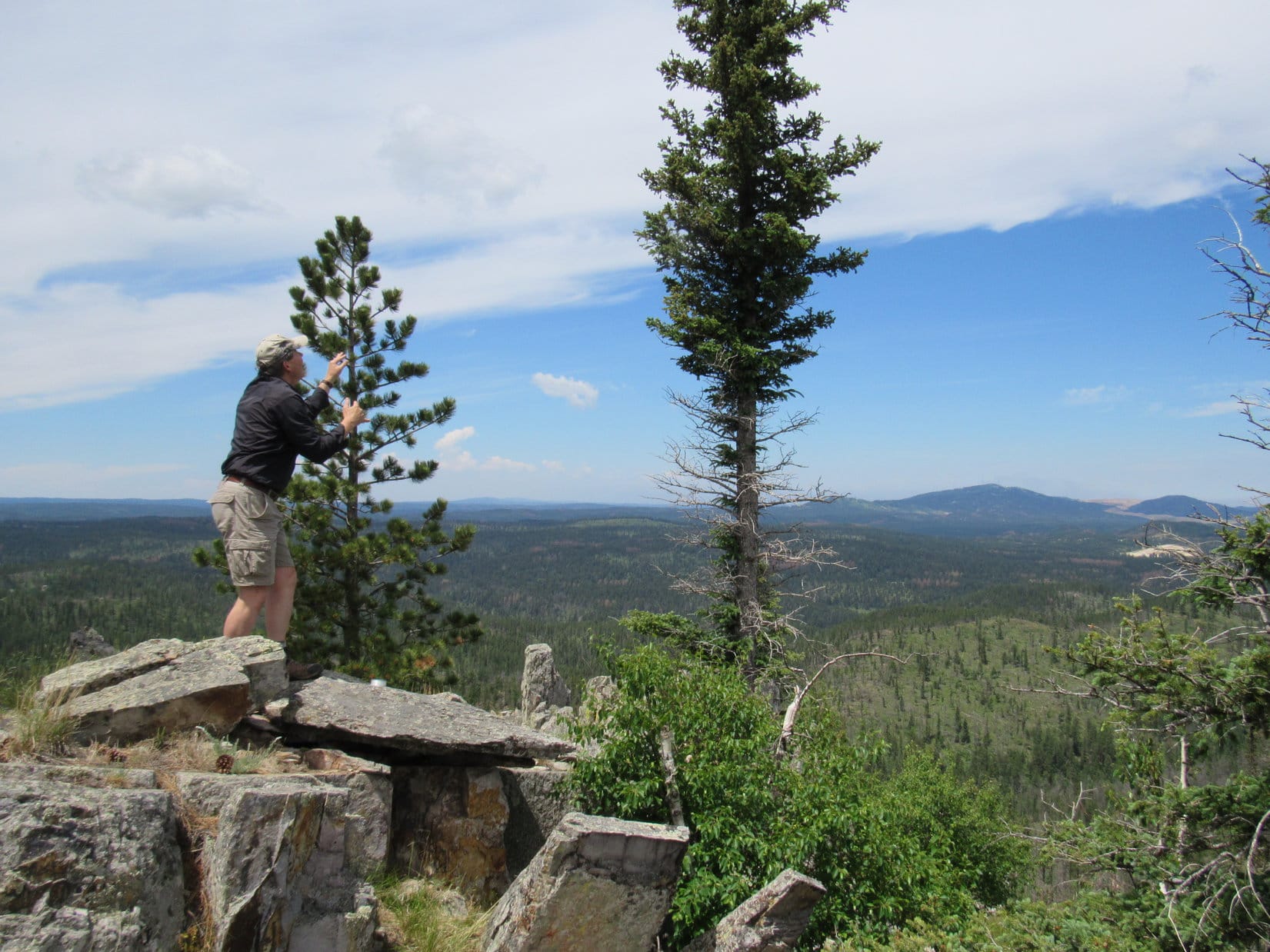
Joe makes a perfect toss of a metal nut tied to fishing line over the top of the tall thin tree near the ridgeline. The fishing line was then tied to a very thin antenna wire, and pulled up to the top of the tree. Photo looks NW.
Lupe supervises from the shade while Joe sets up his portable ham radio NE of a jagged rock outcropping NW of the ranger station.
Joe and Lupe continue working on the portable ham radio setup. Dusty sneaks off to check out SPHP's backpack on the chance there might be something good in it. One of the lateral wires can be seen in front of Dusty. Photo looks SW.
Joe and Lupe continue working on the portable ham radio setup. Dusty sneaks off to check out SPHP’s backpack on the chance there might be something good in it. One of the lateral wires can be seen in front of Dusty. Photo looks S.
Joe nearing completion of the portable ham radio setup. Joe's call sign is AA0Q.
Joe nearing completion of the portable ham radio setup. Joe’s call sign is AA0Q.
Dusty finds a shady spot to rest near some of the lateral wires. Photo looks E.

The ranger’s concerns, and the rough ground where Joe was forced to set up the radio, slowed things down.  By the time Joe was ready to try his very first Summits on the Air peak activation, it was more than half an hour after the time Joe had posted on the SOTA website.  Would any other ham radio operators still be listening for AA0Q on Custer Peak?  Joe had no idea what to expect.

Joe turned on his radio.  AA0Q was on the air on Custer Peak!  Almost immediately, another ham radio operator made contact with Joe.  (A contact is apparently referred to as a QSO.)  The contact told Joe that he would “Spot” him on the SOTA website.  Although Joe has many years of experience with ham radio, he wasn’t prepared for what happened next.

Almost instantly, there was a “pileup”.  Joe shouted out to SPHP that it sounded like 20 people were trying to contact him all at once!
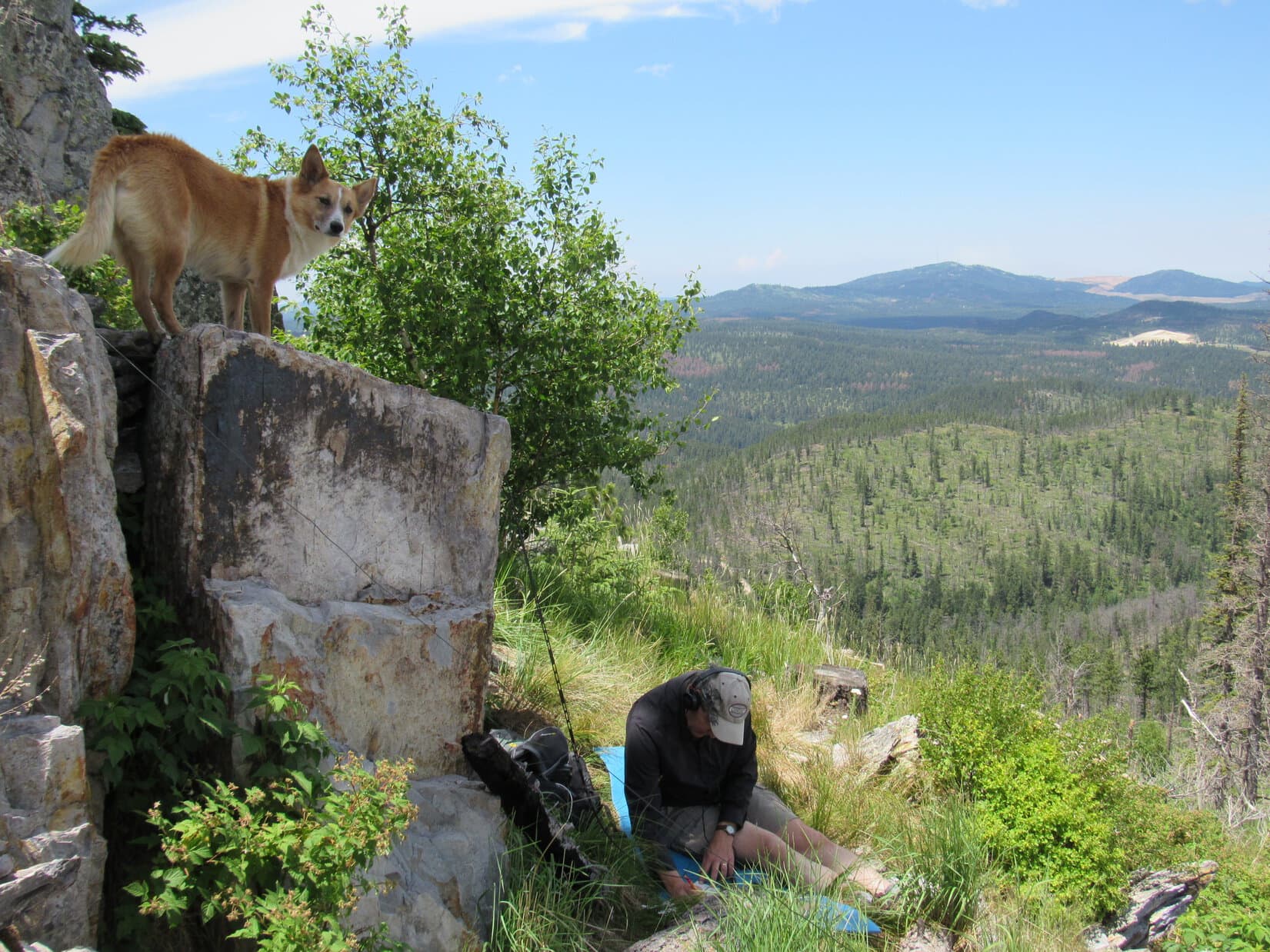
While Lupe looks on, Joe is instantly swamped by the response to his Summits on the Air activation of Custer Peak! Terry Peak (7,064 ft.) (R of Center) is the highest mountain in the distance. Photo looks NW.
Dusty, surrounded by wires, looks happy with all the success Joe is having with his very first ever activation of a peak using Summits on the Air.
AA0Q's portable ham radio during use on Custer Peak.
AA0Q’s portable ham radio during use on Custer Peak.

Joe had a frantic time trying to respond to the enormous demand.  Mostly he was quiet, busy listening intently through the headphones while using Morse Code to reply to as many of the radio operators seeking him as possible.  At the same time, he was trying to log the call signs, time of contact, location and a few other details of each successful contact.  Just to keep Lupe, Dusty and SPHP informed, now and then he called out where the operators he was “working” were from.

The pileup eventually ended as those trying to contact Joe either got through, or gave up on reaching him.  After half an hour, new contacts were sporadic.  Joe kept his radio active another 15 minutes, switching to a voice frequency toward the end.  After one or two voice contacts, Joe was satisfied.  He’d managed to make and log 15 different QSO’s (contacts) from ham radio operators scattered all over the USA.

Joe was pretty happy with his first SOTA experience.  AA0Q had never been so popular and in demand before!  He’d made mistakes that kept him from “working” many of those who had tried to contact him, but Joe had learned a lot.  In the future, it would be easy to correct the worst errors.  Keeping the contacts short was vitally important.  People wanted their “Shack Sloth” points awarded for a successful QSO fast!  No dilly-dallying around allowed in this business.  Next time, Joe would have SPHP do the logging.

After taking down the antenna and putting the radio equipment away, it was time to return to the summit for a few pictures.  Joe also wanted to chat with the ranger to let him know his SOTA radio operation was over.

Up on the jagged ridge before returning to the summit. Photo looks SE from a point not too far from Joe’s SOTA activation of Custer Peak.
Joe, Dusty & Lupe below the ranger station. Photo looks SE.
At the summit.
AA0Q was the first to ever use Lupe's "Radio-Active" American Dingo guide services to a Black Hills peak for a Summits on the Air purpose. Joe earned 8 points toward SOTA's Mountain Goat designation for "activating" Custer Peak (6,804 ft.)! Photo looks NW toward Terry Peak.
AA0Q was the first to ever use Lupe’s “Radio-Active” American Dingo guide services in the Black Hills for a Summits on the Air peak activation. AA0Q earned 8 points toward SOTA’s Mountain Goat designation for “activating” Custer Peak (6,804 ft.)! Photo looks NW toward Terry Peak.
Looking NE.
Looking SSW.

Joe’s operating point on the NE side of the jagged NW ridge hadn’t been the easiest place to work from (or the most comfortable), but it did have a couple things going for it.  The NE side of the ridge was hidden from the trail to the ranger station, so Joe hadn’t been bothered by all the people coming and going.  The site had also been close enough to the top of the mountain to meet SOTA’s standards for a “peak activation”.

Joe and Dusty start down the trail. Joe had conducted his SOTA activation of Custer Peak from the opposite side of the jagged NW ridge seen here. Photo looks N.
Lupe on the jagged NW ridge. Photo looks N.

When Joe, Dusty, Lupe and SPHP got back to grandma’s house, Joe logged all 15 contacts (QSO’s) he’d made into the Summits on the Air website.  Joe was awarded his first 8 of 1,000 points required to earn the “Mountain Goat” designation.  The 15 QSO’s each earned points toward the 1,000 points required for the “Shack Sloth” designation.

The SOTA map showing the activation of Custer Peak by AA0Q earlier in the day.

Joe was happy.  Lupe and Dusty were happy, too.  They had earned extra ice cream and Beggin’ Strips for becoming “Radio-Active”!

Links:

Next Black Hills Expedition                Prior Black Hills Expedition

Want more Lupe adventures?  Choose from Lupe’s Black Hills Expeditions Adventure Index or Master Adventure Index.  Or subscribe free to new Lupe adventures.

Black Hills, SD Expedition No. 115 – Campaign Hill, Peak 6048 & Flag Mountain (1-18-15)

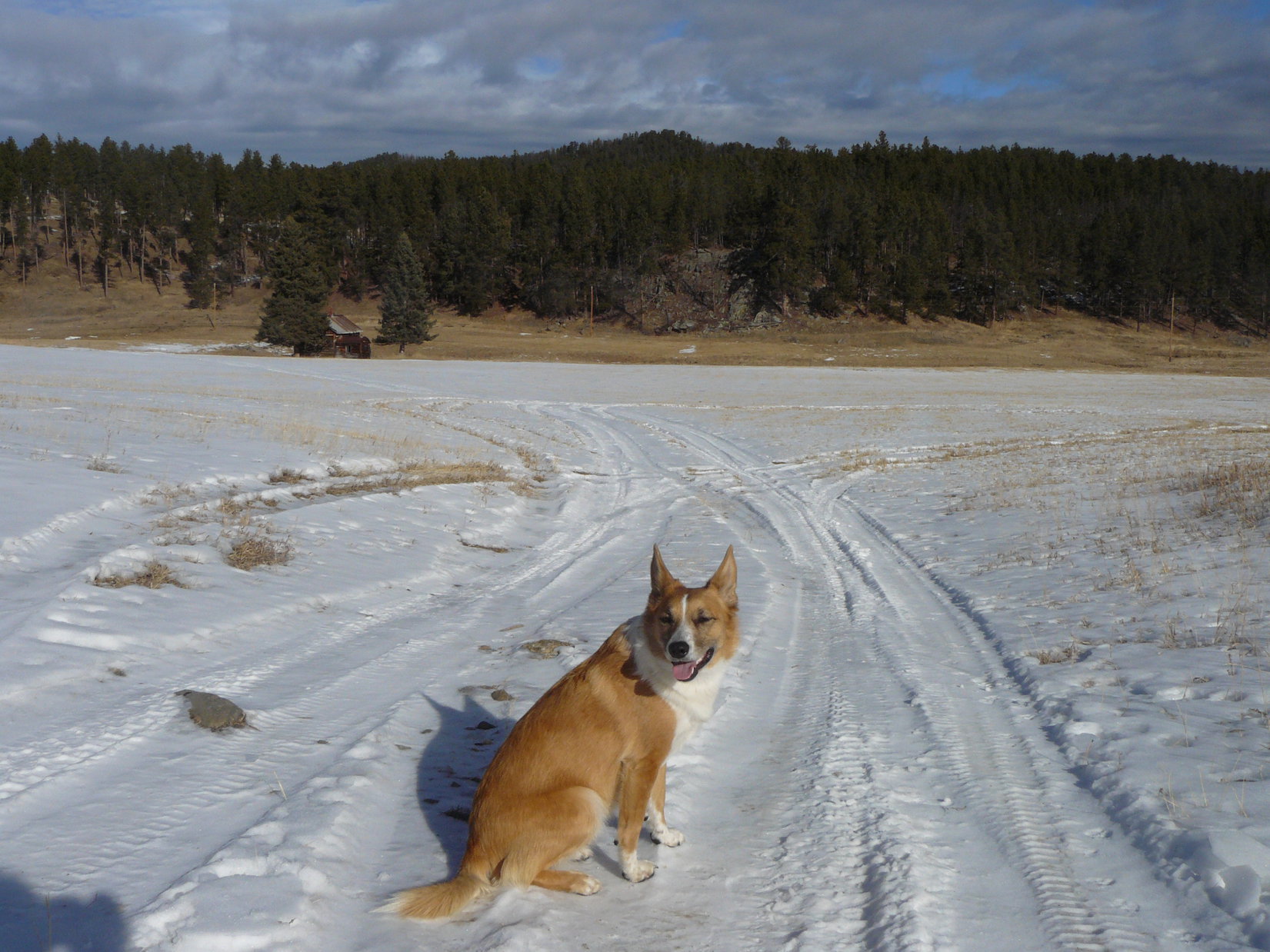
There was too much snow, more than a foot on the ground.  It was everywhere, too.  Lupe sank in up to her belly even where it hadn’t drifted.  Clearly going N had been a mistake.  With a forecast high in the low 50’s °F, SPHP had chosen four peakbagging objectives for Lupe near Galena in the northern Black Hills.  However, as SPHP drove N on Hwy 385, the amount of snow around had increased steadily.

Lupe and SPHP were at Custer Crossing, and hadn’t even reached the starting point for the day’s planned expedition near Galena yet.  Lupe loves the snow, but this wasn’t going to work.  A day spent out here, and even Lupe would wind up freezing and exhausted.  Time for Plan B.  Lupe and SPHP got back in the G6 and headed S.

NW of Hill City, Lupe and SPHP hopped back out of the G6 at Newton Lake, (a little pond really) on Newton Creek.  It was 9:32 AM, but only 35°F.  Maybe the day wasn’t going to be as warm as advertised.  There was still snow around, but much less than back at Custer Crossing.  This would work.

Lupe started off heading W on the Mickelson Trail.  She soon found some squirrels to bark at, so she was happy.  The day was getting off to a good start after all.  Lupe met a couple of cross country skiers on the trail, and sniffed with their big yellow lab.  Less than a mile from Newton Lake, Lupe left the Mickelson Trail and turned S on USFS Road No. 386.USFS Road No. 386 is a major gravel road.  It was slick with packed snow and ice.  The road curved around as it climbed.  SPHP trudged along the uninteresting big road.  Lupe was having some luck finding squirrels to bark at in the forest, though, so she was busy dashing off here and there having a good time.

About a mile S of Deerfield Road, Lupe and SPHP reached the intersection with USFS Road No. 386.1B, a minor road much more to SPHP’s liking.  Lupe and SPHP followed No. 386.1B.  It went E until it got close to the W slopes of Smith Mountain (5,897 ft.) and then turned S.  Lupe stuck with No. 386.1B until it got close to the S end of Smith Mountain.  Then Lupe and SPHP took off heading SSW through the forest.

Lupe soon came to a big open field, which she and SPHP crossed, continuing SSW.  Lupe eventually returned to the forest S of the field.  Before long, Lupe ran into USFS Road No. 727.1F at a point just NW of Flag Mountain (5,896 ft.).  No. 727.1F took Lupe S skirting just W of Flag Mountain.  It linked up with No. 727 just a little W of the saddle between Flag Mountain on the N, and Campaign Hill on the S.

Lupe in the big field SSW of Smith Mountain. Photo looks NE.
The huge field had several branches to it. This photo looks W.

Of course, SPHP actually had a peakbagging goal in mind for Lupe.  Back on Black Hills, SD Expedition No. 106 on 11-28-14, Lupe climbed a couple of mountains she had already passed by today – Smith Mountain and Flag Mountain.  On Expedition No. 106, she hadn’t had time to continue S to Campaign Hill (5,800 ft.), but now she was practically there.

Lupe and SPHP went E on No. 727 just a few hundred feet to the high point of the saddle.  There, Lupe and SPHP left the road to start climbing straight up the N face of Campaign Hill.  Lupe only had to gain a little over 200 feet of elevation from the saddle to reach the summit ridge.  She reached the top of the ridge near the E end.

Lupe reached the top of the Campaign Hill summit ridge close to this point near the E end. Lupe went to check out the rock formation seen here a short distance to the W. Photo looks W along the ridge line.
From this first rock formation toward the W end of the Campaign Hill summit ridge, Lupe was able to see higher rocks to the SSW. Even though Flag Mountain was only 1/3 mile to the N, the forest was so dense Lupe could barely see it. Photo looks NE.

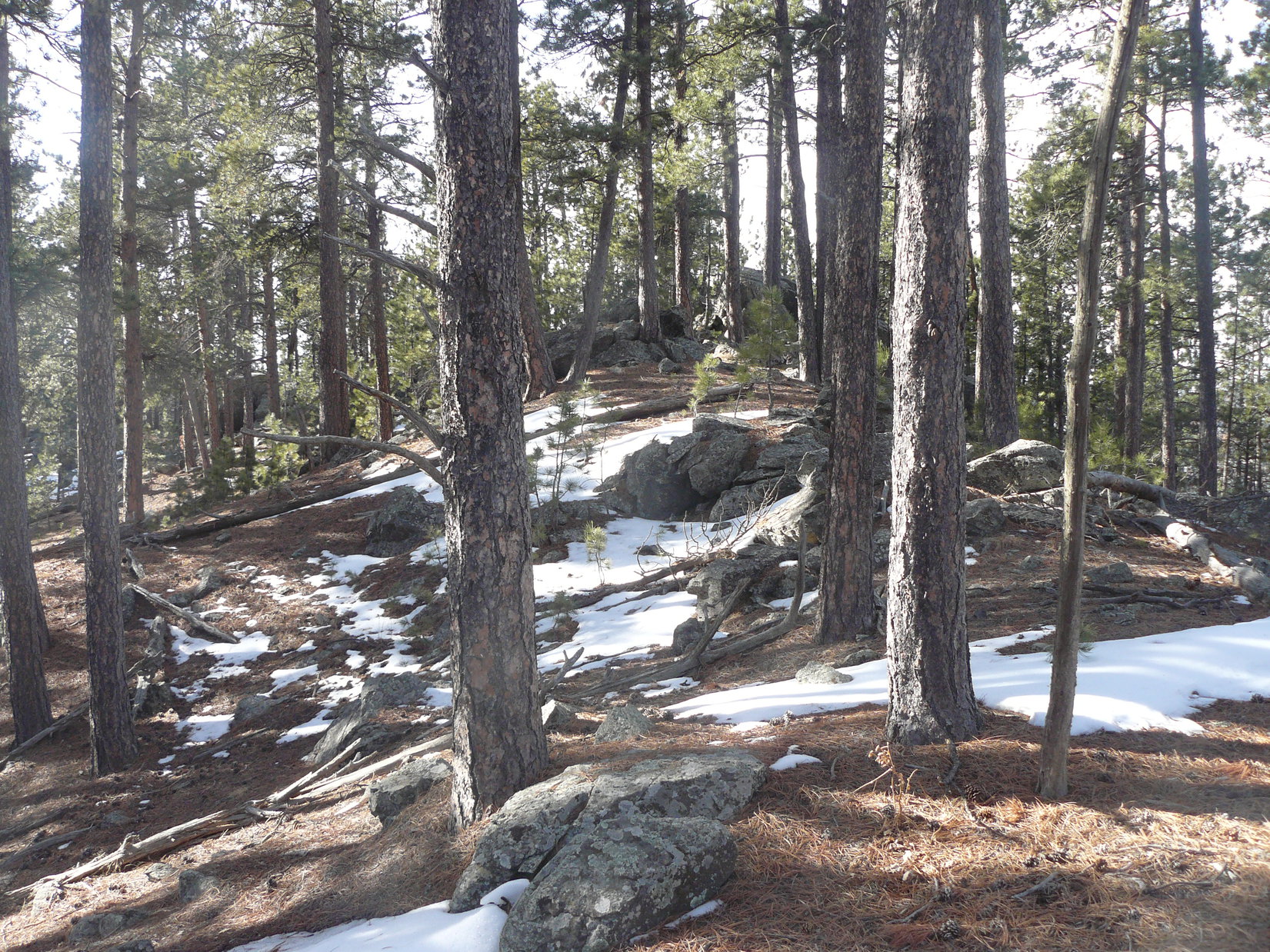
Lupe and SPHP explored the ridge up at the top of Campaign Hill looking for the true summit.  The ridge line went W from the E end of the mountain to the first (NW) rock formation, and then curved SSW.  Lupe climbed up on the first rock formation, but there were so many trees she couldn’t even see Flag Mountain just 1/3 mile to the N.  However, she could see more big rocks off to the SSW.  They looked even higher.  The true summit of Campaign Hill had to be over that way.

Lupe didn’t have to go very far to reach two more high points.  The middle one was higher than the NW high point she had just come from, but the true summit was at the next high point beyond it.  All of the high points featured exposed rock formations.  The largest rock formation was at the summit.

The rock formation at the true summit of Campaign Hill seen from the NE.

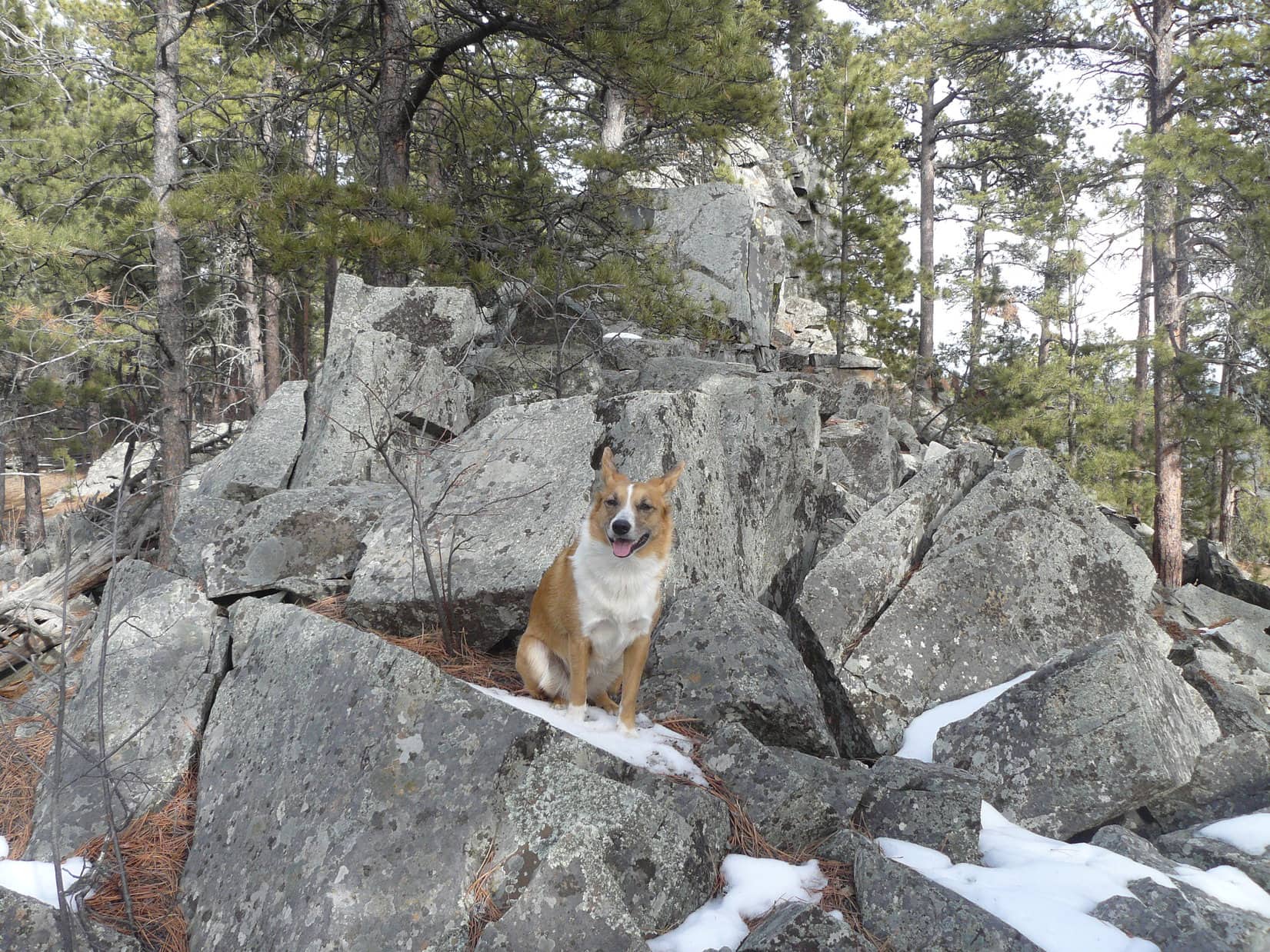
SPHP had to lift Lupe up onto the highest rocks at the true summit of Campaign Hill.  Lupe had accomplished her primary peakbagging goal for the day!  Other than the satisfaction of just being there,  Campaign Hill wasn’t providing much of a reward.  The forest was so thick, there weren’t clear views in any direction.  Lupe could catch only a glimpse of Harney Peak (7,242 ft.) through the trees from the highest rocks, and that was about it.

Lupe on the very top of Campaign Hill. Harney Peak can be glimpsed through the trees toward the L. Photo looks SSE.
Happy Lupe on the rocks just below the summit of Campaign Hill. Photo looks SE.
The summit rock formation from the SW.

There was still plenty of time left in the day.  Why not go visit Peak 6048?  It was just a mile to the S of Campaign Hill, and Lupe and SPHP had never been there before, either.  So Lupe and SPHP headed SSW down along the ridge line from Campaign Hill.  To the E, the terrain dropped off steeply.  To the W, the terrain sloped away much more gently.

A little less than halfway to Peak 6048, there was an opening in the forest along the ridge line as it was dropping down into a saddle.  Here Lupe got her first clear look at Peak 6048.  The steep N face was snowy, and appeared to be covered with a maze of deadfall timber.  Lupe could see that Peak 6048 had a double top, with the true summit being to the E.  It also looked like there were rocks at the E end of the mountain where there might be some pretty decent views.

At this clearing, Lupe had her first clear view of Peak 6048 to the S.

Lupe and SPHP continued down into the little saddle, and then climbed over a small hill heading S.  Beyond the small hill, the ridge line leading to Peak 6048 continued.  The ground to the E still fell off sharply, but to the W the land sloped gently toward sunlit forests and little fields full of snow and light.

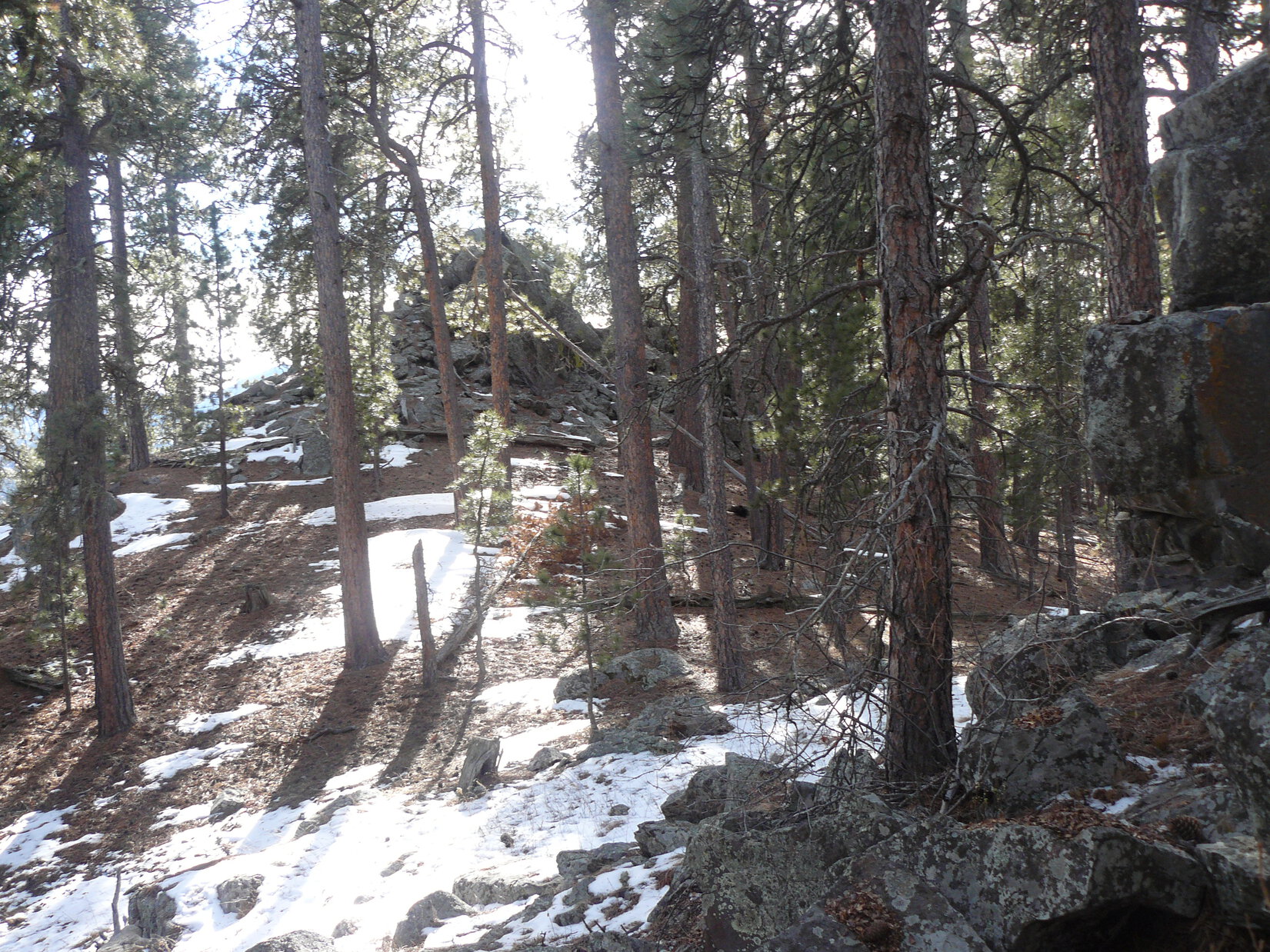
The climb up Peak 6048 from the NW was slow.  A few inches of snow made everything slippery.  The worst obstacle was the large amount of deadfall timber to be navigated.  Lupe reached the NW high point on Peak 6048.  There were some pretty big rocks up here.  Lupe found a cairn at the top of them.  Trees blocked the views in most directions, but it was possible to get a pretty decent view off to the NW.

Lupe reaches the NW high point of Peak 6048. The true summit was farther to the SE.
Looking NW from the NW high point of Peak 6048.

Lupe continued SE looking for the true summit of Peak 6048.  She lost only a little elevation, and then came to another snowy climb through more deadfall.  For a short stretch, SPHP was reduced to climbing up on hands and knees while clinging to rocks and trees.

At the SE summit, there were two large rock formations.  The one farthest to the SE seemed to be slightly higher and the true summit of Peak 6048.

Lupe achieves a 2nd peakbagging goal for the day by reaching the true summit of Peak 6048 for the first time. Five Points is seen in the distance just to the L of the dead tree. Photo looks NE.
Lupe achieves a 2nd peakbagging goal for the day by reaching the true summit of Peak 6048 for the first time. Five Points (6,221 ft.) is seen in the distance just to the L of the dead tree. Photo looks NE.
Zimmer Ridge can be seen through a forest of dead trees from Peak 6048. Photo looks SSW.
Zimmer Ridge (6,600 ft.) can be seen through a forest of dead trees from Peak 6048. Photo looks SSW.

The best views from Peak 6048 were not at the summit.  They were from the top of a cliff about 25 feet lower than the summit and a short distance to the E.  Naturally, Lupe and SPHP had to check it out.  There were sweeping open views all the way from the N around to the SE.  This cliff with the fabulous views was a good spot to take a little break.  Lupe had her Taste of the Wild.  SPHP had an apple.

Yes, this is more like it! Harney Peak from the E cliff on Peak 6048. Photo looks SE.
Another view of Harney Peak. At 7,242 feet, Harney is the tallest mountain in South Dakota.
Campaign Hill is the forested hill in the foreground just R of center. Flag Mountain is just beyond and to the L of it at center. The low forested ridge on the L side of the photo is Smith Mountain. Photo looks N from Peak 6048.
Five Points is just above Loopster's head. Photo looks NE from the E cliff on Peak 6048.
Five Points is just above Loopster’s head. Photo looks NE from the E cliff on Peak 6048.
"I thought Carolina Dogs lived in the swamps. How come you never take me to any swamps, SPHP? It would be more relaxing than all this standing next to the edge of cliffs!"
“I thought Carolina Dogs lived in the swamps. How come you never take me to any swamps, SPHP? It would be more relaxing than all this standing next to the edge of cliffs!”

After hanging out at the E cliff for a little while, it was time to go.  Lupe and SPHP climbed back up to the true summit of Peak 6048.  The 2nd large rock outcropping, the one that wasn’t quite as high, was nearby to the NW.  Lupe and SPHP went over there for a few minutes.  Even though these rocks weren’t quite as high as the true summit, the whole rock formation was more interesting.  The American Dingo graciously posed for a couple of photos.

Yeah, these rocks are pretty cool! Glad they aren't really the true summit of Peak 6048, though. The last few feet up to the top look steeper than a Carolina Dog might want to tackle. Would probably call it good right here.
Yeah, these rocks are pretty cool! Glad they aren’t really the true summit of Peak 6048, though. The last few feet up to the top look steeper than a Carolina Dog might want to tackle. Would probably call it good right here.

Lupe on Peak 6048, 1-18-15Lupe and SPHP did a little more exploring of the summit area over towards the W, before beginning the journey down the mountain.  A pleasant sunlit ledge offered a nice view to the NW.

The sunlit ledge with a view to the NW. Lupe and SPHP liked this quiet sunny spot, even though it wasn't the highest point and didn't offer the grandest view from the mountain. Sometimes beautiful places are just where you find them.
The sunlit ledge with a view to the NW. Lupe and SPHP liked this quiet sunny spot, even though it wasn’t the highest point and didn’t offer the grandest view from the mountain. Sometimes beautiful places are just where you find them.

The trek down the NW slopes of Peak 6048 seemed to take a long time for no farther than it was.  Going down, the snow seemed more slippery.  The deadfall seemed denser and more bothersome.  Finally, SPHP was down off the steepest part of the mountain, and Lupe could race on ahead.

Just for fun, and since it was on the way back to the G6, Lupe and SPHP returned to climb Campaign Hill again.  Before reaching it, Harney Peak was visible from the ridge line all lit up in the slanting rays of the January afternoon sun.

Although it had been fairly cloudy out most of the day, by the time Lupe was on her way to climb Campaign Hill for a 2nd time, the skies had cleared enough for the afternoon sun to light up Harney Peak.

Lupe went clear up to the very top of Campaign Hill for a 2nd time, but didn’t stay there long.  SPHP still wanted to climb Flag Mountain to the N, too.  Lupe and SPHP went past the other high points along the ridge, and then headed down the N slope of Campaign Hill.  Lupe crossed USFS Road No. 727 at the saddle, and started up the SW slope of Flag Mountain.

The climb up Flag Mountain from the SW was easier than expected.  It was kind of steep, but there wasn’t any snow.  There wasn’t much deadfall timber either, except near the very top.  The sun was starting to get low in the SW by the time Lupe arrived on top of Flag Mountain.  A cool NW breeze was starting to blow.

Lupe on Flag Mountain, the last mountain she climbed on Expedition No. 115. Photo looks SW.
Yes, yes, it's true! Another shot of Harney Peak from the NW. This one, of course, was taken from Flag Mountain. Read enough of The (Mostly) True Adventures of Lupe, and you will eventually see Harney Peak from just about every conceivable direction.
Yes, yes, it’s true! Another shot of Harney Peak from the NW. This one, of course, was taken from Flag Mountain. Read enough of The (Mostly) True Adventures of Lupe, and you will eventually see Harney Peak from just about every conceivable direction.
The top of Flag Mountain. Photo looks W toward the small rocks that jut up at highest point.

It was getting to be time to hurry on.  Lupe left Flag Mountain heading down the N slope.  SPHP lost a lot of time again picking a way slowly down through the snow and plentiful deadfall timber.  After losing sufficient elevation, the terrain began to level out a bit and there was much less deadfall.  Lupe and SPHP could make progress again.

Lupe crossed Patterson Creek in a big field N of Flag Mountain.  This field connected to the big open field she had traversed earlier in the day.  By now the sun was on the horizon.

Lupe after crossing Patterson Creek. Photo looks WSW at the field the creek flows through.

After crossing Patterson Creek and the big field, Lupe was almost to USFS Road No. 386.1B just SW of Smith Mountain again.  Before Lupe and SPHP could even reach the road, the sunset suddenly developed into a beautiful display of color.  It almost looked like the forest was on fire!

Sunset SW of Smith Mountain.

The glorious sky faded as quickly as it arrived.  Lupe and SPHP reached USFS Road No. 386.1B again.  The rest of Lupe’s return trip to the G6 was just a retracement of the first part of her day’s journey.  She still had 3 miles to go to get to the G6.

Lupe and SPHP trudged onward in the gathering gloom.  Every now and then, Lupe would hear something undetectable to SPHP in the forest.  Each time she raced off to investigate, returning to SPHP a few minutes later with a big grin on her face, as if some animal out there had told her a really good joke.

It was 6:40 PM, and still a balmy 43°F out when Lupe reached the G6.  Lupe jumped very willingly into the G6, and curled up.  Black Hills, SD Expedition No. 115 was over.  It had been a great day.  Lupe hardly stirred on the drive home.  She must have had a great day, too!

Links:

Next Black Hills Expedition                 Prior Black Hills Expedition

Want more Lupe adventures?  Choose from Lupe’s Black Hills Expeditions Adventure Index or Master Adventure Index.  Or subscribe free to new Lupe adventures.